Article

Dual-Motor Electro-Hydraulic Braking System Based on Fuzzy Sliding Mode Control

1
School of Automotive and Traffic Engineering, Wuxi College of Transportation Technology, Wuxi 214026, China
2
Intelligent Vehicle Team, Hunan University, Changsha 410082, China
3
School of Automotive and Traffic Engineering, Jiangsu University, Zhenjiang 212013, China
4
Automotive Engineering Research Institute, Jiangsu University, Zhenjiang 212013, China
*
Author to whom correspondence should be addressed.
World Electr. Veh. J. 2026, 17(2), 107; https://doi.org/10.3390/wevj17020107
Submission received: 9 January 2026 / Revised: 13 February 2026 / Accepted: 15 February 2026 / Published: 23 February 2026
(This article belongs to the Section Propulsion Systems and Components)

Abstract

The brake-by-wire system is a fundamental and critical component of intelligent electric vehicles. Achieving precise actuator motor response is essential for brake-by-wire braking performance. To address this issue, this article proposes a fuzzy sliding-mode control method for a dual-motor electro-hydraulic braking system. An innovative model of the braking system is established, incorporating the motor, deceleration mechanism, brake master cylinder, brake wheel cylinder, and hydraulic system. Firstly, dynamic models for the permanent magnet synchronous motor (PMSM), the reduction mechanism, the brake master cylinder, and the brake wheel cylinder are developed. Subsequently, the feasibility of the redundant structure is verified. Finally, a novel composite convergence law-based fuzzy adaptive sliding mode control (SMC) method is designed. Simulation results demonstrate that this approach effectively reduces motor response time and enhances braking performance.

1. Introduction

The invention of the automobile is a significant milestone in the history of human industrial development, and its emergence has fundamentally transformed human transportation and travel efficiency. With the progression of time, automotive electrification and intelligence have followed suit [1], leading to new demands on the automotive braking system. The traditional vacuum booster braking system has become inadequate, giving rise to an advanced brake-by-wire braking system known as the electro-hydraulic braking (EHB) system. Evolving from the conventional vacuum booster braking system by replacing it entirely with a motor and reduction mechanism while retaining other hydraulic components, EHB enables real-time independent regulation of fluid pressure in all four-wheel cylinders.
EHB offers the advantages of reliable braking, fast response, real-time adjustable braking force, good comfort, easy integration of regenerative braking, and a compact design. As a key actuator in new energy vehicles, the EHB system plays a crucial role and has become a research hotspot in brake-by-wire (BBW) technology [2].
The composition of the traditional braking system mainly includes a vacuum booster, master cylinder, brake caliper, and hydraulic piping [3], which has the disadvantages of low braking efficiency, slow braking response, poor robustness, and easy leakage of brake fluid, causing pollution. The electro-hydraulic braking system has a compact structure, does not need a vacuum booster, and improves the degree of modularity, which reduces the number of automotive parts and thus increases the flexibility of automotive structural design.
Permanent magnet synchronous motors have garnered significant attention due to their exceptional power density, high efficiency, and rapid dynamic response, rendering them indispensable components of braking systems [4,5,6,7]. Numerous studies employ diverse control methods for these motors, including linear techniques such as the widely adopted proportional-integral (PI) control technique [8]. Recent studies have further demonstrated that PI controllers with parameter optimization or gain scheduling are capable of achieving high-performance control in PMSM systems [9,10]. However, linear control methods are generally less effective in systems with nonlinear and time-varying parameters, such as induction motors, due to the impact of parameter variations like resistance on motor performance. Direct PI control of motor speed is susceptible to disturbances and parameter variations [11,12], resulting in speed errors and fluctuations. In electric vehicles, accuracy and stability of motor speed and torque are crucial for optimal performance and control system stability [13]. Hence, advanced nonlinear control methods are imperative in managing nonlinear system controls. Previous research encompasses adaptive control [14,15], robust control [16,17], fuzzy logic control [18,19,20], model predictive control MPC [21,22,23], neural networks [24,25], and sliding mode control [26,27,28,29], among other approaches.
Amongst the various nonlinear control techniques, the advantage of SMC lies in its resilience against disturbances and the absence of model parameters [30,31]. However, the conventional SMC suffers from jitter, and many solutions have been proposed, such as SMC with a disturbance observer [32,33] and super torsion SMC [34]. Although the integral SMC method and back-stepping SMC method [35] partially address the jitter problem by effectively handling time-invariant or slowly varying disturbance effects, perturbation observer-based SMC can mitigate jitter vibration to some extent [36,37]; its performance is still limited, thus further development of SMC methods is necessary [38].
In SMC, the design of the reaching law plays a critical role in eliminating chattering, as it directly affects the system’s dynamic response [39,40]. The exponential SMC method accelerates convergence by incorporating an exponential component, but it still cannot ensure sufficiently fast and smooth arrival at the sliding surface, leaving chattering unresolved [41]. Terminal SMC offers better convergence speed and chattering suppression compared to conventional and exponential methods [4]; however, there is still room for improvement. This highlights the need for further advancement, which motivates the development of the novel fuzzy sliding mode control strategy proposed in this paper, aimed at enhancing dynamic performance and reducing chattering for PMSM speed control.
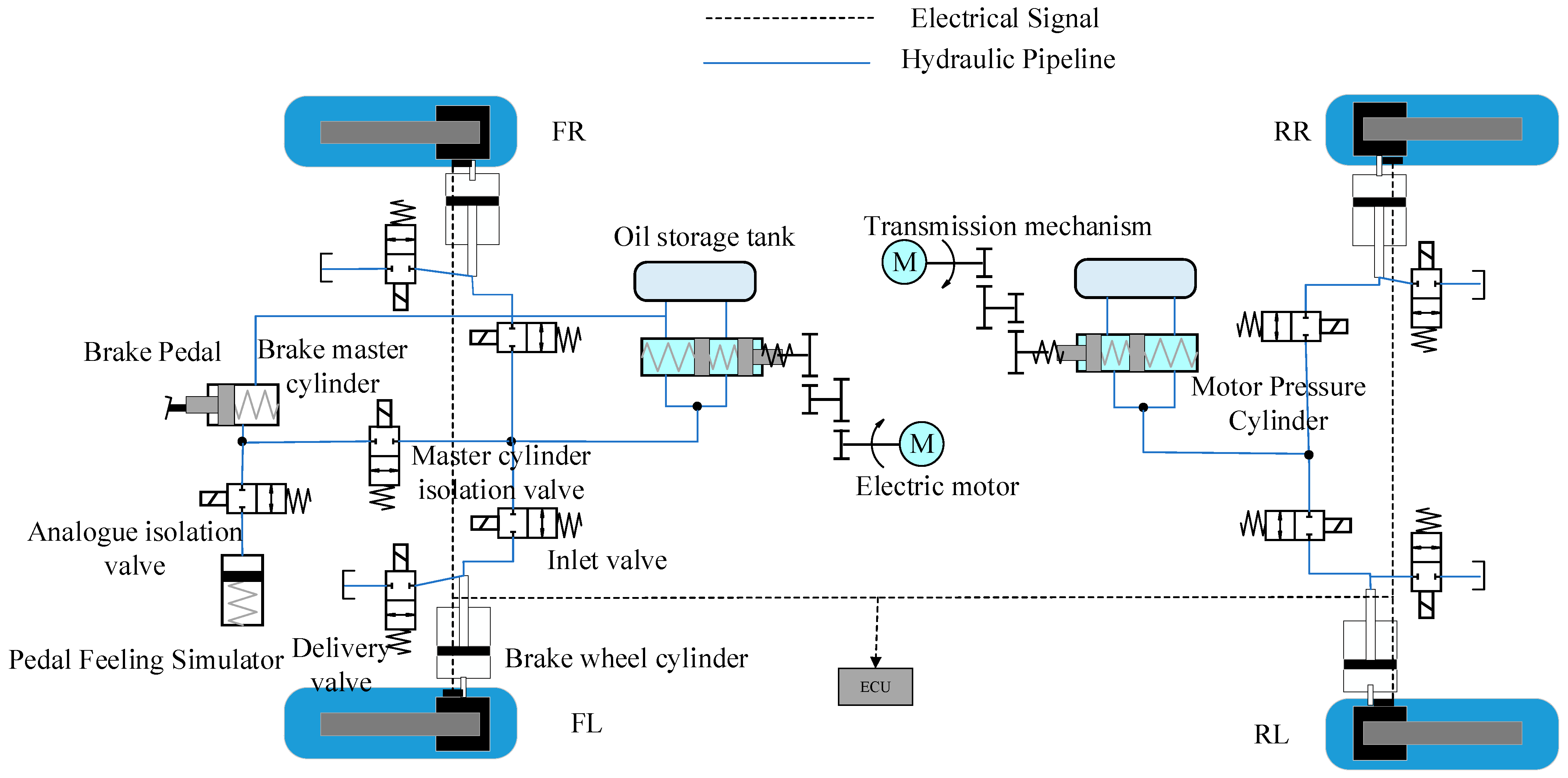
The schematic structure of the proposed electro-hydraulic braking system is illustrated in Figure 1. As shown, the input signal activates the motor, which drives the master cylinder piston rod through a torque-amplifying transmission mechanism, thereby generating the required braking force at the brake disc. Meanwhile, the actual hydraulic pressure is measured by the wheel-side pressure sensor and fed back to the electronic control unit (ECU) for real-time regulation of the braking force.
By integrating and optimizing the advantages of existing electro-hydraulic braking architectures, the proposed system achieves improved actuation performance and control flexibility. Based on this system configuration, the main innovations and contributions of this paper are summarized as follows:
(1)
Establishment of a new structure for an electro-hydraulic braking system that enables redundant braking even during system failure;
(2)
Development of a fuzzy sliding mode algorithm to control the motor and enhance its dynamic response performance;
(3)
Addressing insufficient vehicle braking redundancy through various brake failure configurations with corresponding methods, which holds significant practical significance and fills a gap in the practical application of redundant braking.
The remainder of this article is organized as follows: Part 2 establishes a system model based on theoretical analysis and proposes a new configuration for the braking system; Part 3 introduces the siding mode algorithm used for motor control; Part 4 presents simulation setup and result analysis; Part 5 experimental verification was performed on a hard-ware-in-the-loop experimental platform; finally, Part 6 concludes this paper.

2. System Description and Modeling

This section firstly describes the hardware details of the EHB system and gives the modeling process of the system, including the brake master cylinder model, permanent magnet synchronous motor model, transmission mechanism model, and brake wheel cylinder model.

2.1. Structural Components

The two-motor electro-hydraulic braking system is illustrated in Figure 1. The system comprises three primary components: a pedal-operated brake master cylinder (with a pedal feel simulator), a motor-driven pressure build cylinder, and a wheel cylinder equipped with a solenoid valve. Additionally, several general components are incorporated into the arrangement, including a pedal displacement sensor, a master cylinder pressure sensor, and an unlabeled wheel cylinder pressure sensor.
In this study, the proposed dual-motor electro-hydraulic braking system is designed as a drive-by-wire type, featuring front and rear single-chamber master cylinders that reduce the overall length and complexity of the hydraulic lines. Unlike traditional systems, it does not require interconnections between the front and rear axles, and the braking force is distributed directly and proportionally at the motor ends. The system employs permanent magnet synchronous motors to actuate the master cylinders, enabling rapid hydraulic braking, while solenoid valves allow the braking force to be continuously maintained.
As shown in Figure 1, the system can independently control all four wheel cylinders via the solenoid valves, meeting the majority of vehicle braking control requirements. The dual-motor configuration not only simplifies the hydraulic layout but also ensures that the braking system can meet the demands of various operating conditions in intelligent vehicles.

2.2. Permanent Magnet Synchronous Motor Model

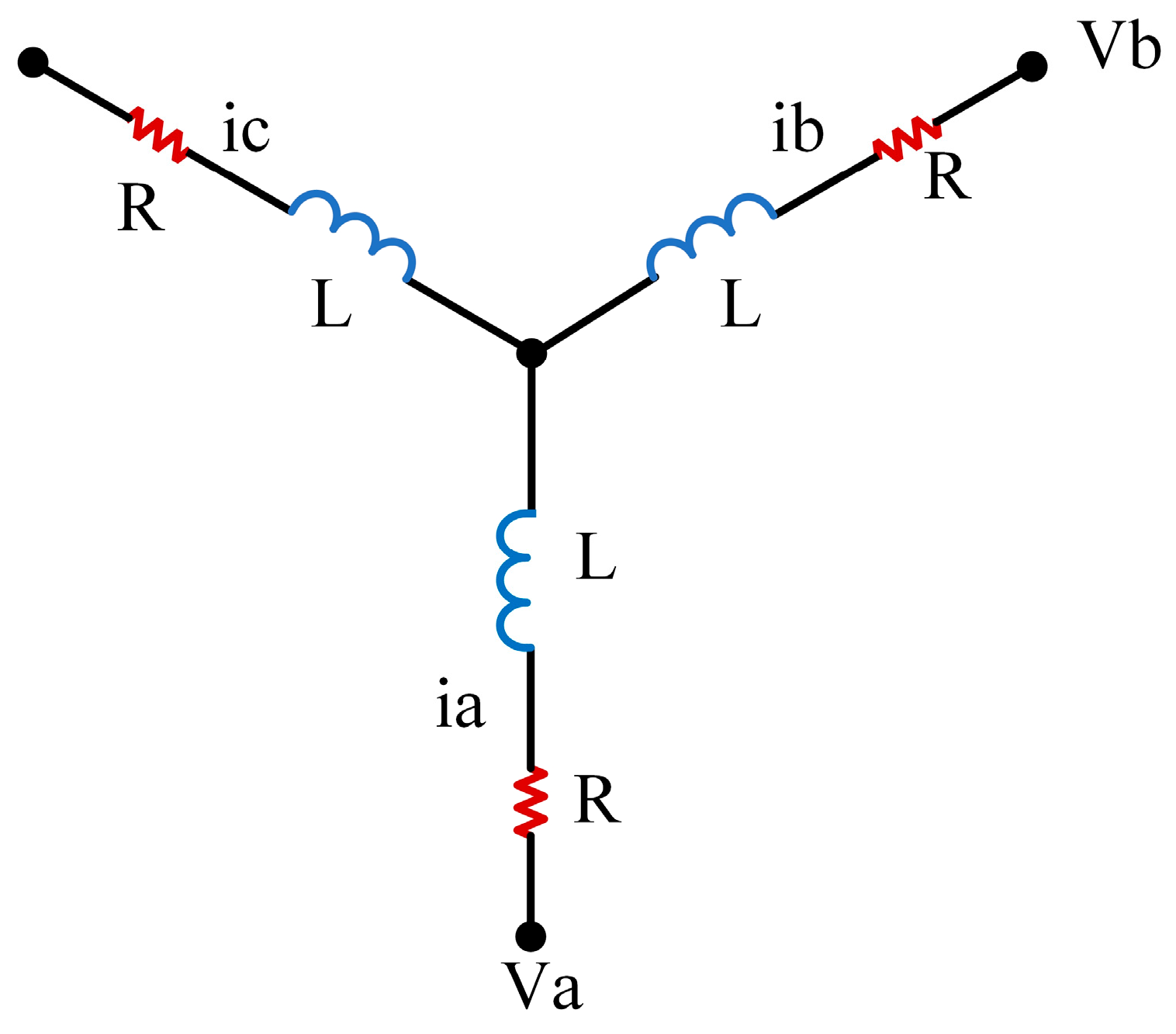
An induction motor consists of two main components: the rotor and the stator windings. Three-phase voltage is applied to the stator windings, causing current to flow through them.
Figure 2 illustrates the internal magnetic field of a PMSM. The three-phase currents in the stator generate a rotating magnetic field, which induces voltage in the rotor conductors according to Faraday’s law of electromagnetic induction. As a result, alternating current begins to flow in the rotor, and the rotor rotates due to the interaction between its magnetic field and the stator’s rotating field.
The dynamic voltage equation of PMSM in the d-q axis coordinate system is as follows:
U d = R i d ω e L q i q + L d d i d d t
U q = R i q + ω e L d i d + ω e ψ f + L q d i q d t
where U d and U q denote the d-axis and q-axis voltages, respectively; R is the stator resistance; i d and i q are the d-axis and q-axis currents, respectively; ω e is the electrical angular velocity of the PMSM; and ψ f represents the permanent magnet flux linkage.
The electromagnetic torque equation is as follows:
T e = 3 2 P n ψ f i q
where T e denotes the electromagnetic torque of the motor, and P n represents the number of pole pairs.
The equilibrium equation of motion is:
J d ω m d t = T e T f T L
where J denotes the rotational inertia of the motor, ω m is the mechanical angular velocity of the motor, T f represents the friction torque, and T L denotes the load torque acting on the motor shaft.
The union of the above two equations gives:
J d ω m d t = 3 2 P n ψ f i q T f T L

2.3. Transmission System Model

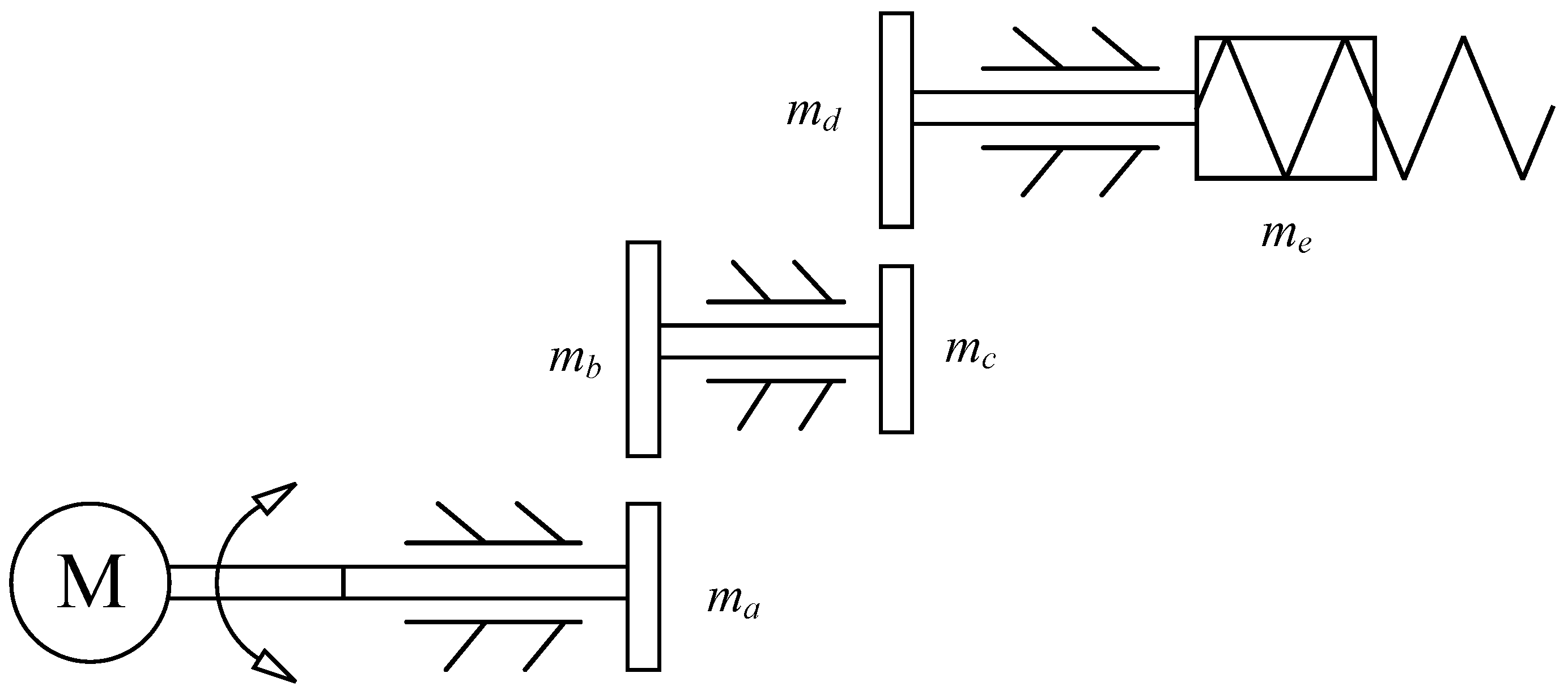
Figure 3 presents a sketch of the connection from the motor output to the drive train and then to the ball screw. Through the joint action of the planetary gear reduction mechanism and the ball screw in the servo brake unit, the rotating mechanical angle of the motor is converted into the horizontal displacement of the screw on the one hand, and on the other hand, the output torque of the motor is transferred to the screw and forms a horizontal servo force.
According to Figure 3, we have
J = 1 2 m a r a 2 + 1 2 m b r b 2 i a 2 i b 2 + 1 2 m c r c 2 i b 2 i c 2 + 1 2 m d r d 2 i a 2 i c 2 i b 2 i d 2 + 1 4 π 2 m e L 2 i a 2 i c 2 i b 2 i d 2
θ m = 2 π L k i x s
F m = 2 π L k i T e

2.4. Brake Master Cylinder Model

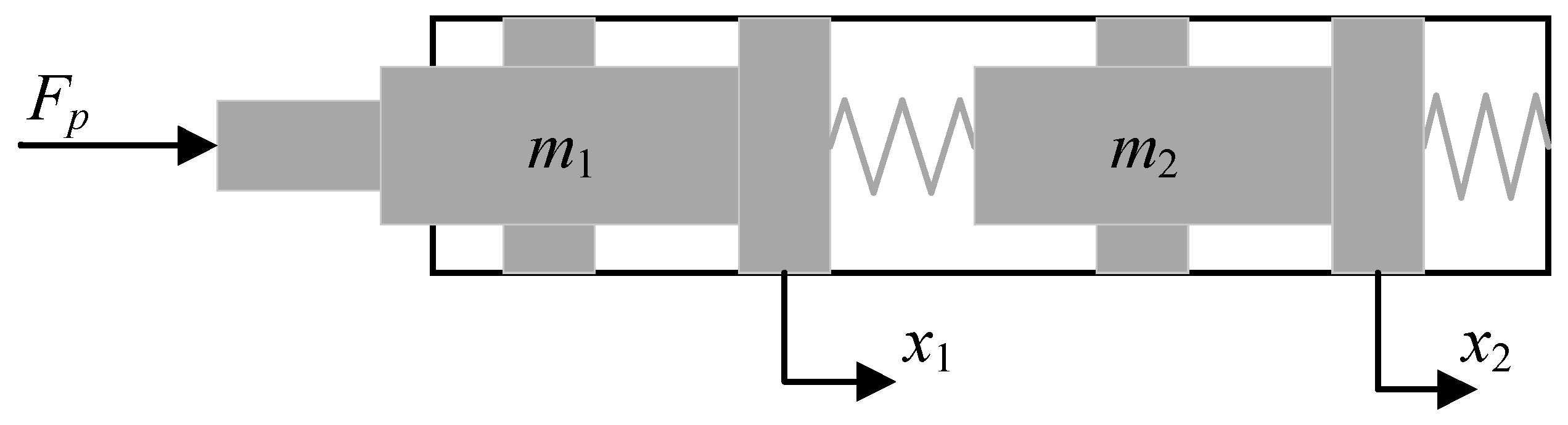
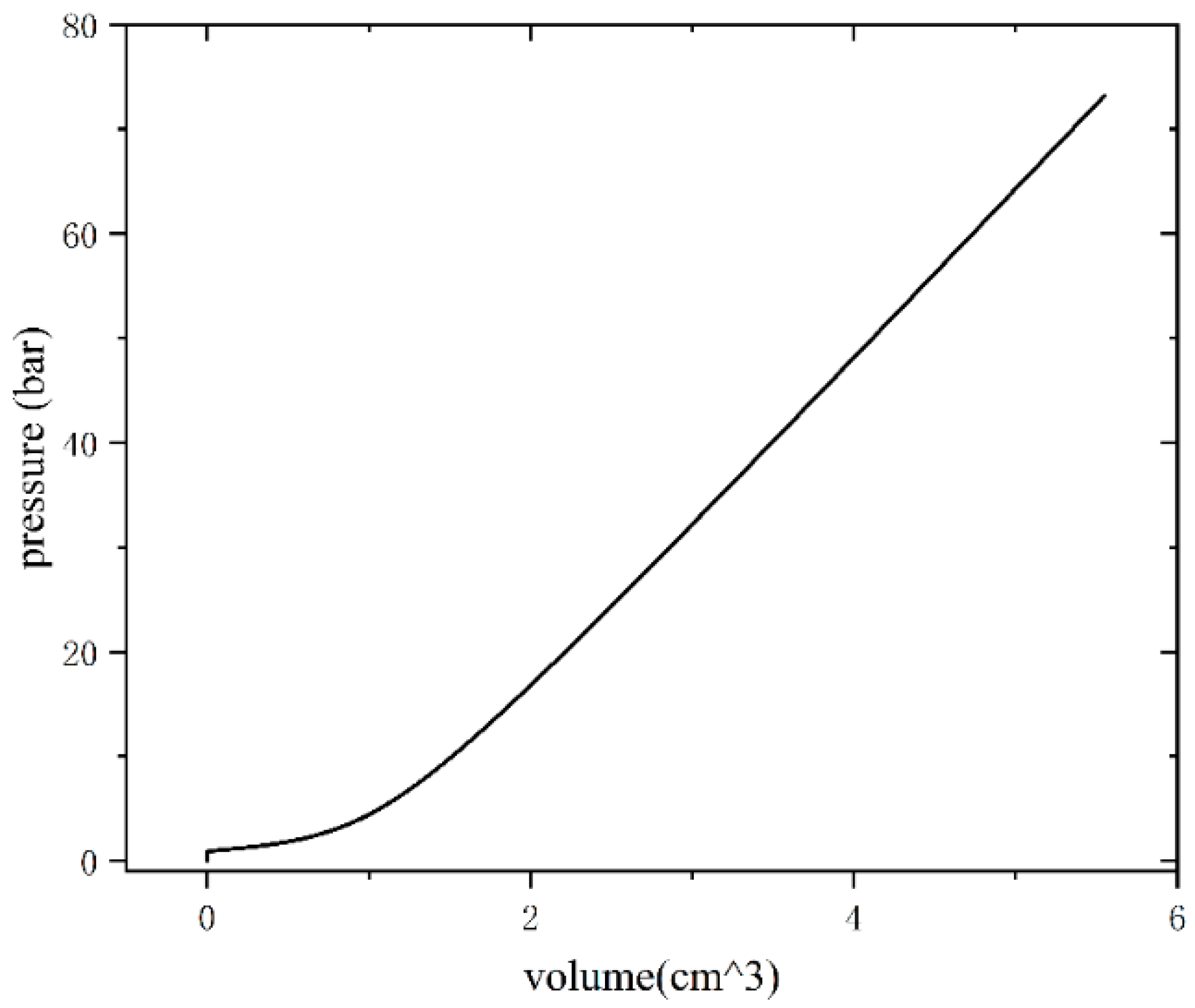
In this study, the brake system is equipped with a tandem master cylinder. As shown in Figure 4, the input to the system is the rod force transmitted from the drivetrain, which acts on the master cylinder piston and drives hydraulic fluid into the brake lines. The characteristic curve of the master cylinder is presented in Figure 5.
The master cylinder is modeled as a two-mass spring-damper system, assuming the hydraulic fluid to be incompressible, while piston friction and leakage are neglected at this stage due to their minimal impact on the system dynamics. The preloads, P r e l o a d 1 and P r e l o a d 2 , represent the initial forces of the springs. The dynamic equations of the two pistons are formulated as follows:
m 1 d 2 x 1 d t 2 + c 1 d x 1 d t d x 2 d t + k 1 x 1 x 2 = F p p 1 A P r e l o a d 1 , w h e n   x 1 > 0
m 2 d 2 x 2 d t 2 + c 1 d x 2 d t d x 1 d t + c 2 d x 2 d t + k 1 x 2 x 1 + k 2 x 2 = p 1 A p 2 A + P r e l o a d 1 P r e l o a d 2 ,   when   x 2 > 0

2.5. Brake Wheel Cylinder Model

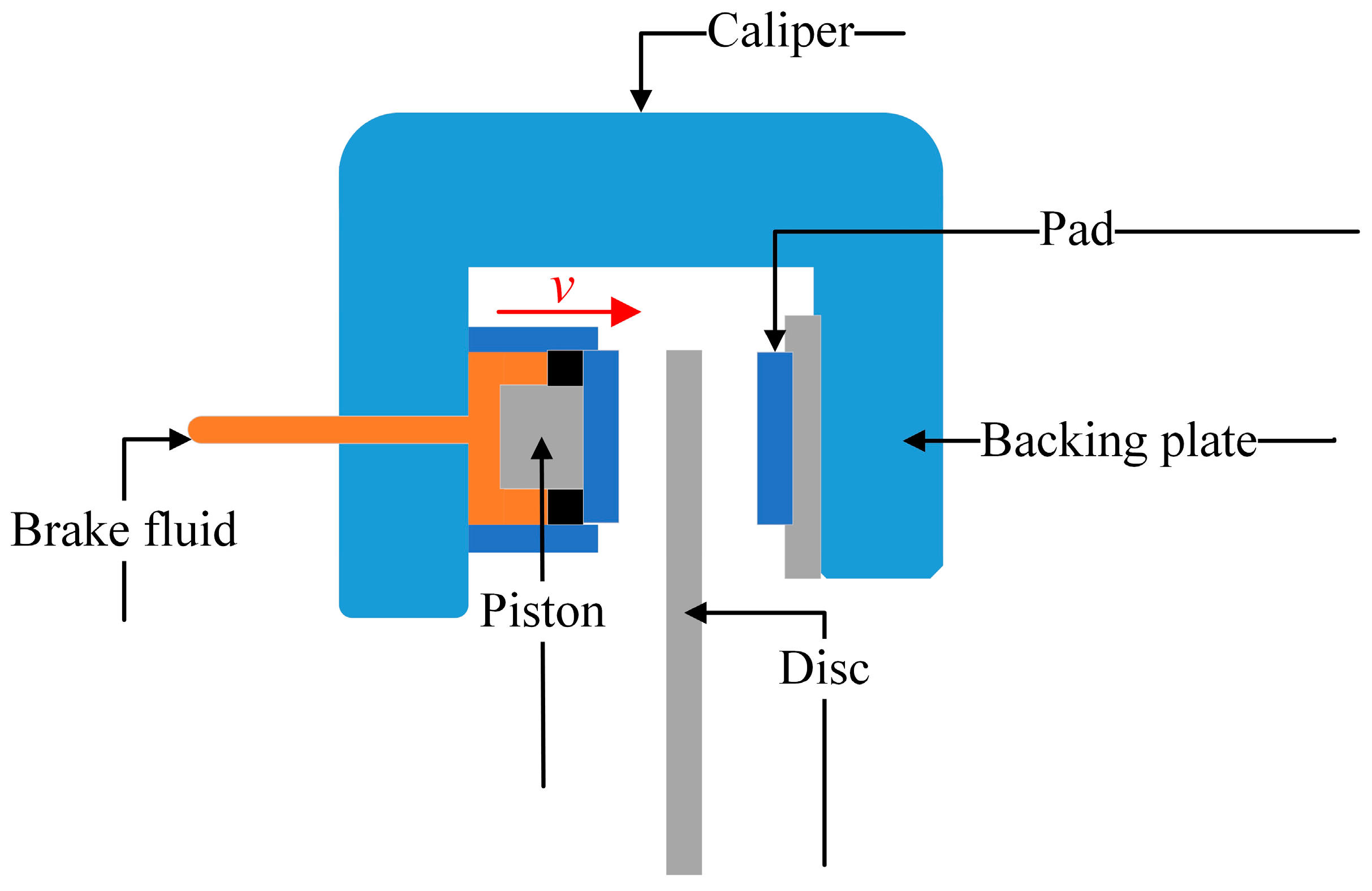
The vehicle has four wheel cylinders, one at each wheel. As shown in Figure 6, pressing the brake pedal pressurizes the master cylinder, forcing the wheel cylinder pistons outward. The pistons push the inner brake pads against the rotating discs, while the caliper or cylinder housing moves slightly to bring the outer pads into contact. This ensures that both pads engage the disc, providing effective and balanced braking at each wheel.
Each wheel cylinder is represented as a single-mass spring-damper piston system. The hydraulic fluid is considered incompressible, and piston friction is neglected at this stage. The dynamic equation of the wheel cylinder is formulated as follows:
m w c d 2 x w c d t 2   =   A w c P w c C w c d x w c d t K x w c P r e l o a d 3
The symbols and parameter values used in the braking system modeling are listed in Table 1.

3. Control Method

3.1. Converse Law Design

Sliding mode controllers play a vital role in the control of nonlinear systems such as permanent magnet synchronous motors because of their nonlinear characteristics. The advantage of sliding mode control is that the system parameters and external disturbances have little effect on it.
The sliding mode control method has a slow response speed, large jitter amplitude, and vibration. The system response speed can be increased by designing the convergence law to reduce the jitter vibration of the sliding mode.
The commonly used convergence law is the exponential convergence law:
s ˙ = ε s g n s k s ε , k > 0
where ε s g n s represents the velocity convergence term, k s represents the exponential convergence term, and s is the slip mode surface. When the system state is far away from the sliding mode surface, the exponential convergence term takes effect and is used to increase the convergence speed; when the system state is close to the sliding mode surface, the effect of the velocity convergence term on the speed is more significant, which reduces the jitter vibration to some extent.
However, the conventional exponential convergence law often results in significant jitter near the sliding surface, which can limit the system’s response smoothness and tracking accuracy. To address this limitation, this paper introduces a new convergence law that combines exponential and power-law terms:
s ˙ = ε s a s g n s k s s b s g n s 1
where s is the sliding mode surface, k > 0 , ε > 0 , 0 < a < 1 , 0 < b < 1 .
If the system state is far from the sliding mode surface, i.e., s is large, then ( 1 ε 1 ) e δ s 0   and s g n ( s 1 ) = 1 . In this case, the system state approaches the sliding surface under the influence of the variable coefficient term ε s a and the power-law term k s s b . As the system state nears the sliding surface ( s decreases), the term k s s b s g n ( s 1 ) converges to k s , and the convergence law can be simplified as ε s a s g n ( s ) k s .
The first term, ε s a s g n ( s ) , accelerates convergence when the system is far from the sliding surface, while the second term, k s s b s g n ( s 1 ) , gradually reduces the convergence rate as the system approaches the surface, thereby reducing chattering. Practically, this allows the system to converge rapidly when s is large, and slow down near the surface for smoother settling. Therefore, this convergence law accelerates convergence when the system is far from the sliding surface and slows it down near the surface, achieving both faster response and reduced jitter.

3.2. Conventional Sliding Mode Speed Controller Design

Take the state variables of the PMSM system as follows:
x 1 = ω r ω m x 2 = t x 1 d t = t ( ω r ω m ) d t
where ω r and ω m are the motor’s given speed and actual speed.
From Equations (3), (4), and (14):
x ˙ 1 = ω m ˙ = 1 J 3 2 n p ψ f i q T L x ˙ 2 = x 1 = ω r ω m
The sliding mode surface selected is as follows:
s = x 1 + c x 2
where s is the sliding mode surface, c is a constant, and c > 0.
Derivation of the above equation gives the following:
s ˙ = x ˙ 1 + c x ˙ 2 = ω m ˙ + c x 1
The output of the sliding mode controller can be obtained as follows:
i q * = J 1.5 P n ψ f ε s a s g n s + k s s b s g n s 1 + c x 1 T L J
To guarantee finite-time convergence to the sliding surface from any initial condition, the Lyapunov function is defined as follows:
V = 1 2 s 2
Derive the above equation:
V ˙ = s s ˙
Associative convergence law:
V ˙ = s ε s a s g n s k s s b s g n ( s 1 )
The first term can be simplified as s [ ε s a sgn ( s ) ] = ε s a s sgn ( s ) = ε s a + 1 0 , with equality only when s = 0 , which ensures convergence towards the sliding surface. The second term becomes s [ k s s b sgn ( s 1 ) ] = k s 2 s b sgn ( s 1 ) . When s > 1 , sgn ( s 1 ) = 1 , and the term is strictly negative; when s 1 , sgn ( s 1 ) = 1 , producing a non-negative value. In this case, the magnitude of the first term dominates the second term due to the appropriate selection of the parameters ε , a , k , b , ensuring that the sum remains non-positive. Therefore, the combined derivative can be expressed as:
V ˙ = ε s a + 1 k s b + 1 0
From the Lyapunov stability criterion, this new composite convergence law sliding mode controller is asymptotically stable, and the error converges to zero in finite time.
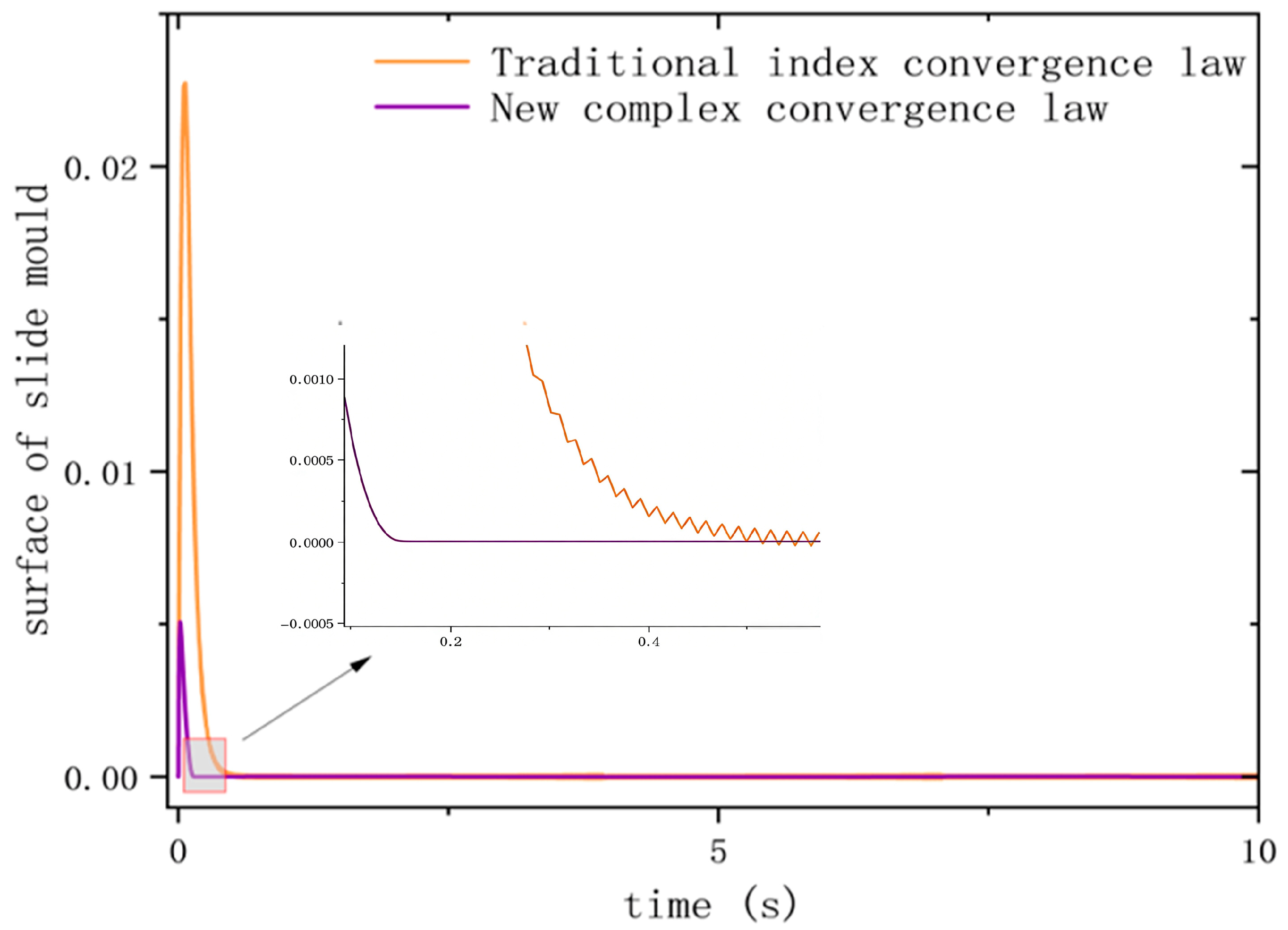
As illustrated in Figure 7, compared with the traditional exponential convergence law, the proposed composite convergence law achieves a substantially faster convergence speed and reduced response time. In addition, the observed jitter is markedly suppressed, demonstrating the effectiveness of the composite design in enhancing both transient response and control smoothness.

3.3. Fuzzy Controller

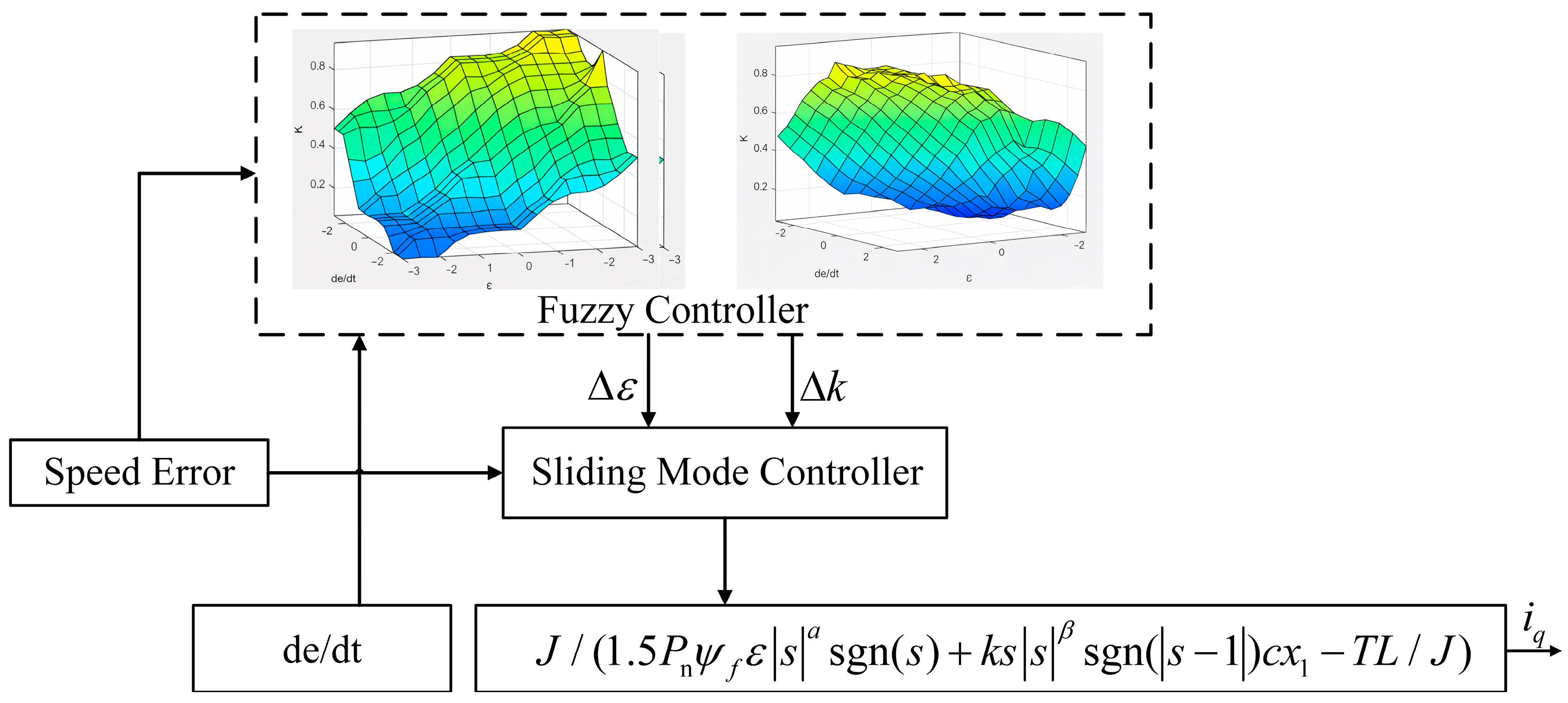
To weaken the jitter vibration problem in the sliding mode control, fuzzy control theory will be introduced here, so that when the operation of the permanent magnet synchronous motor is subject to external disturbances and internal parameters change, the parameters in the new convergence law can be adjusted at any time to improve the system’s ability to resist disturbances and stability.
The fuzzy logic design for the proposed control system does not rely on a complex model of the controlled object, but instead focuses on the formulation of fuzzy rules that integrate expert knowledge and control objectives. The core design principle is to ensure that when the system states are far from the sliding mode surface, the control law accelerates the system towards the surface. As the system approaches the surface, the control action is gradually slowed to prevent overshoot and to maintain stability. This adaptive behavior guarantees smooth convergence and minimizes chattering.
The fuzzy controller is integrated into the sliding mode control framework to adjust the parameters of the reaching law adaptively. The fuzzy system is implemented as a Mamdani-type controller, with defuzzification performed using the centroid method. The fuzzy control inputs are the sliding mode error e and its derivative e ˙ , representing the instantaneous deviation from the sliding surface and its convergence trend, respectively. These quantities are critical for adjusting the system’s convergence speed, enabling the controller to increase speed when the deviation is large and slow down near the surface for finer control.
Based on the operating range of the sliding variable in the PMSM system, the input universes are defined as e [ 20 ,   20 ] and e ˙ [ 5 , 5 ] . Each input is partitioned into seven triangular membership functions { N B , N M , N S , Z O , P S , P M , P B } with approximately 30–40% overlap. Triangular functions were selected for their simplicity, computational efficiency, and smooth transitions, which help reduce oscillations and overshoot. The overlaps were tuned through iterative simulations to balance fast convergence when far from the sliding surface and smooth control as the system approaches it, effectively suppressing chattering.
The fuzzy outputs correspond to the adaptive reaching law parameters Δ k and ε , which directly determine the convergence rate and robustness of the sliding mode. Their universes are defined as Δ k [ 0.8 ,   0.8 ] and ε [ 10 , 10 ] , based on the stability requirements of the reaching law and practical limits on SMC gains. The same linguistic terms are used for inputs and outputs to ensure consistency in the rule base. The diagonal distribution of the fuzzy rules, as detailed in Table 2, reflects the complementary relationship between the error and its derivative: larger deviations drive faster convergence, while smaller deviations ensure smoother control near the sliding surface, thereby maintaining stability and minimizing chattering.
Figure 8 shows the speed loop control of the motor, using the speed difference and its derivative brought into the sliding mode controller and fuzzy controller, substituting the calculated q-axis current formula, and finally obtaining the q-axis current of the motor.
The parameters of the fuzzy sliding mode controller are
k = k 1 + Δ k ε = ε 1 + Δ ε
where k , ε are the parameters of the modified integral sliding mode controller; k 1 , ε 1 are the initial values of the parameters of the motor before starting; Δ k , Δ ε are the fuzzy control according to the parameters of the motor when running in real time, correcting the amount of change in the parameters of the sliding mode controller.

4. Verification and Analysis

In this section, to verify that the fuzzy SMC can better attenuate the vibration of the system when a load is applied to the motor, a comparative simulation study of the SMC and the fuzzy SMC is carried out in MATLAB R2023b, respectively, and the simulations are carried out with two different controllers for the motor speed loop and PI control for the current loop. At the same time, the motor model is combined with the braking system model, and simulations are conducted in Carsim and Simulink to verify the effectiveness of the new composite convergence law and the dual-motor structure.

4.1. MATLAB-Simulink Simulation

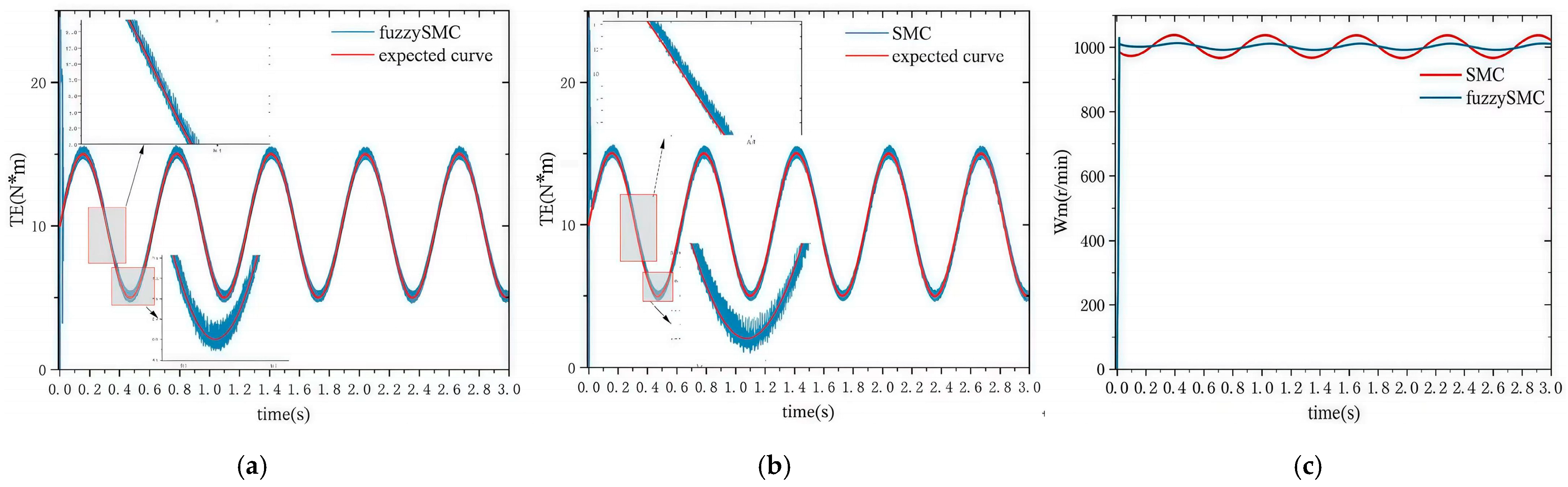
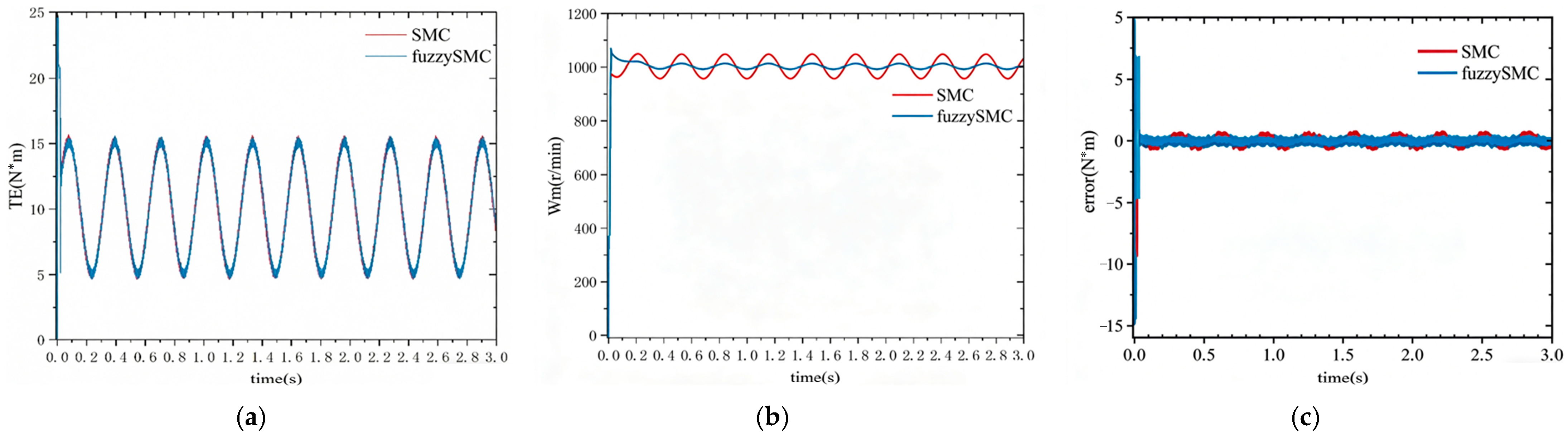
To verify the feasibility of the proposed novel compliant convergence law and the fuzzy controller, Simulink is used to run experiments on the PMSM model. Figure 9 shows the comparison of PMSM torque and speed. The waveform of the input load torque is sinusoidal with an amplitude of 5, bias of 10, frequency of 10, and simulation time of 3 s. As shown in Figure 10, the torque curve of the permanent magnet synchronous motor PMSM using the new composite convergence law and fuzzy controller oscillates above and below the ideal curve. In contrast, the torque curve of the PMSM with the conventional SMC method tends to be consistently above the ideal curve. Additionally, the PMSM controlled by the proposed method exhibits better tracking of the ideal rotational speed curve, with a more accurate response. The PMSM in this paper can quickly track the desired speed despite torque fluctuations.
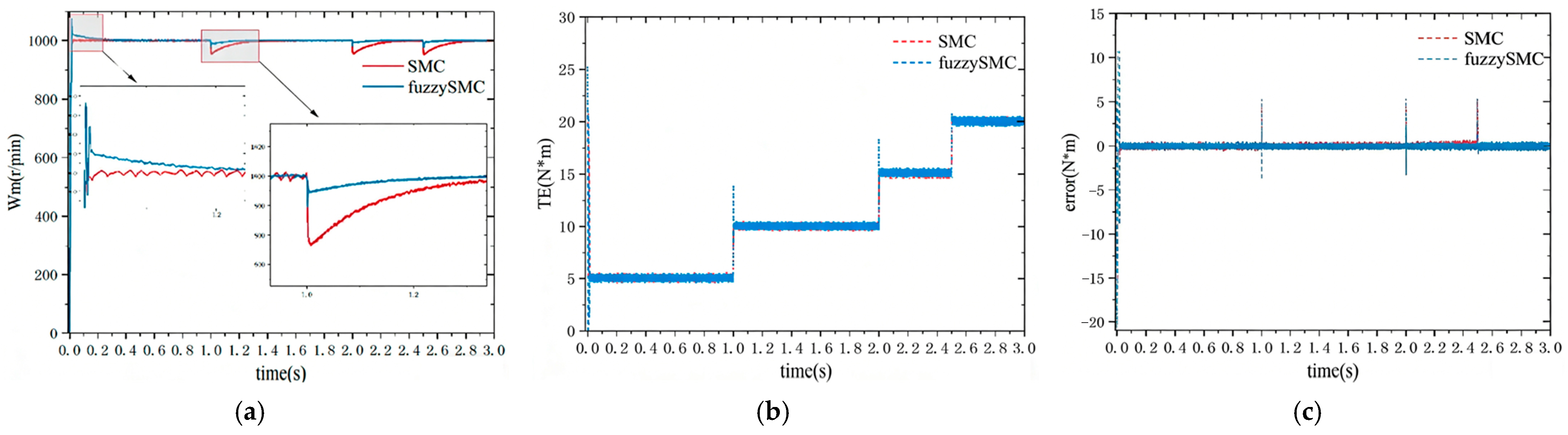
Figure 11 compares the stepping torque tracking of the controlled motor. As shown, the proposed control method exhibits faster speed response compared to conventional SMC. Although the torque slightly overshoots relative to that of standard SMC, the amplitude of torque fluctuations remains small, and the effect of motor load disturbances is minimal.

4.2. CarSim and MATLAB-Simulink Joint Simulation

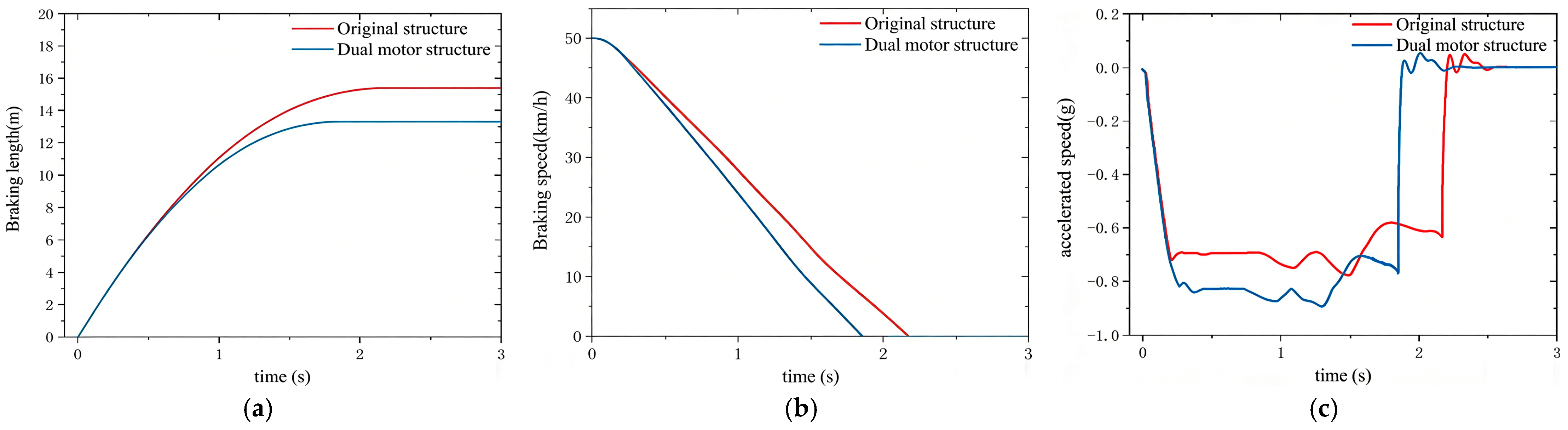
Figure 12 presents a comparative simulation of a braking scenario with an initial vehicle speed of 50 km/h, aimed at validating the feasibility of the proposed dual-motor electro-hydraulic braking architecture. The braking performance of the conventional dual-motor configuration is compared with that of the newly proposed structure. As illustrated in the figure, the proposed architecture brings the vehicle to a complete stop within a braking distance of 13.3 m and a braking time of 1.84 s. Compared with the original configuration, the braking distance and braking time are reduced by 13.6% and 14.8%, respectively. In addition, the proposed structure achieves a higher braking deceleration throughout the braking process, reflecting more effective braking force generation.
Table 3 compares the braking response time, acceleration, and distance for the original and dual-motor structures.

5. Hardware-in-the-Loop Experiment

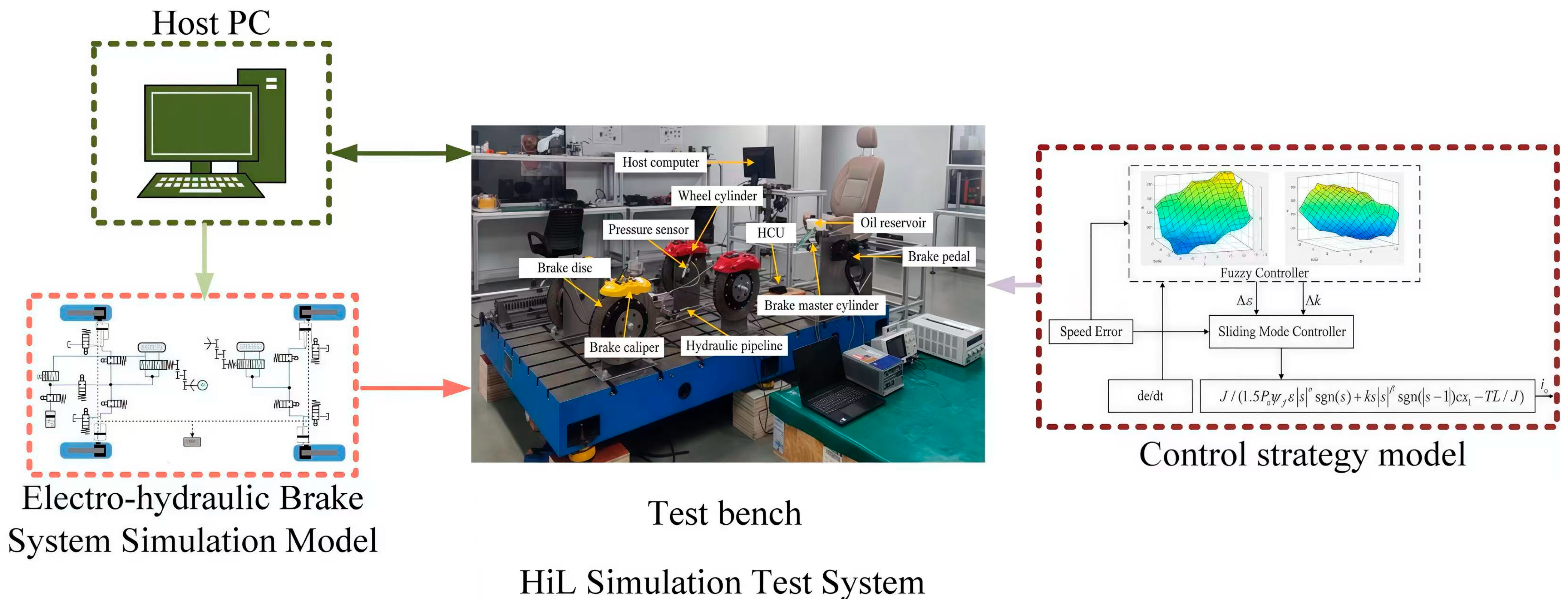
Hardware-in-the-loop (HIL) experiments were conducted using the proposed control system to validate the effectiveness of the dual-motor electro-hydraulic braking system under realistic operating conditions for electric and hybrid vehicles. Figure 13 illustrates the complete HIL experimental platform, which comprises a host computer, a brake pedal, an iBooster, a brake master cylinder, a hydraulic control unit (HCU), hydraulic pipelines, pressure sensors, brake wheel cylinders, brake calipers, and brake discs.
The HIL setup comprises a host computer, a dSPACE real-time simulator, a motor controller, and a brake test rig, all interconnected via a CAN communication network. The dynamic model of the dual-motor electro-hydraulic braking system, developed in simulation, is deployed on the dSPACE platform. The host computer is responsible for building the Simulink-based model, configuring test scenarios, and logging input and output signals. The dSPACE unit executes the model in real time and facilitates signal exchange between the virtual plant and the physical controller. The motor controller runs the proposed improved fuzzy sliding mode control algorithm and generates control commands for the test rig, which measures motor torque and speed, as well as brake disc speed and braking force. All signals are sampled at a frequency of 1 kHz. The real-time simulation step size on the dSPACE platform is configured to be consistent with the controller sampling period to ensure synchronous closed-loop execution. Each HIL test is conducted under real-time conditions with a total runtime of 3 s.
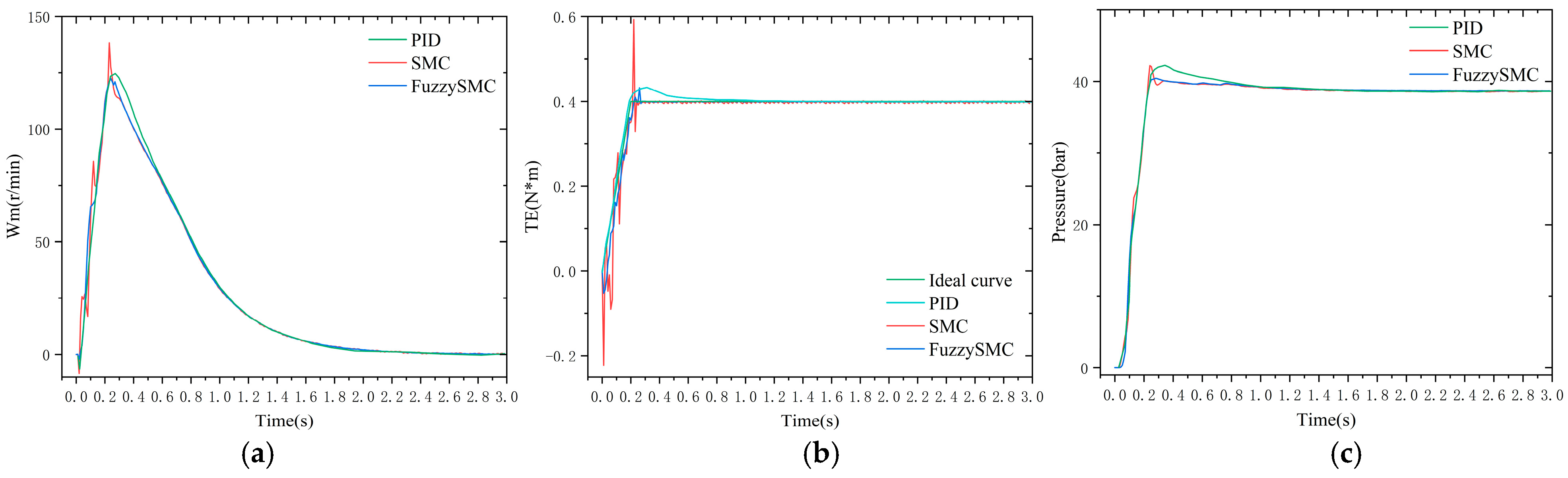
The HIL experimental results shown in Figure 14 extend the findings of Section 4.1. Figure 14a,c demonstrate that the output fluctuations of the proposed fuzzy sliding mode controller are smaller than those of the conventional PID controller and the sliding mode controller, indicating smoother control performance. Figure 14b shows more precise tracking with the proposed controller, highlighting its advantage. In addition, as summarized in Table 4, the motor speed overshoot decreases from about 20% to 5%, a 75% reduction, and the speed settling time shortens from 1.0 s to 0.4 s. The steady-state motor torque deviation drops from 0.2 N·m to 0.05 N·m. Meanwhile, the pressure overshoot falls from approximately 30% to 5%, an 83.3% reduction, and the pressure settling time reduces from 0.8 s to 0.2 s. These results demonstrate the effectiveness of the proposed control strategy under real-time network conditions and confirm its superior tracking and chattering suppression performance.

6. Conclusions

In this paper, an electro-hydraulic braking system based on two motors is proposed, and a fuzzy sliding mode control method based on a new convergence law performance optimization of a permanent magnet synchronous motor is also proposed.
The results indicate that the vehicle can come to a complete stop within 13.3 m in 1.84 s, representing reductions of 13.6% in braking distance and 14.8% in braking time compared to the original configuration, while also achieving higher braking deceleration. Under low- and high-frequency sinusoidal signals as well as step inputs, the fuzzySMC demonstrates superior tracking performance compared to conventional sliding mode control. HIL experiments further confirm the effectiveness of the proposed method, demonstrating its ability to improve tracking accuracy and suppress system jitter, thereby enhancing overall braking performance and vehicle safety.
However, the current study does not fully account for practical factors such as actuator saturation, mechanical gaps, hydraulic transmission losses, and sensor noise. In future full-vehicle experiments, actuator saturation will be handled by incorporating saturation constraints and anti-windup mechanisms into the control design, while hydraulic losses and mechanical gaps will be addressed through more detailed hydraulic and mechanical modeling. In addition, sensor noise will be explicitly considered by introducing noise models and appropriate filtering techniques, and friction nonlinearity, particularly significant in low-speed operation of high-precision PMSM systems [42], will also be explicitly modeled and compensated. Future work will also focus on extending the proposed control algorithms to the coordinated control of the dual-motor structure and the front and rear PMSMs, enabling their application to vehicle safety systems such as ACC, AEB, and ABS, and further verifying the robustness and practical applicability of the proposed approach under realistic driving conditions.

Author Contributions

Conceptualization, L.D. and H.Q.; validation, H.Z.; writing—original draft preparation, L.D.; writing—review and editing, R.D.; supervision, R.D. All authors have read and agreed to the published version of the manuscript.

Funding

This research received no external funding.

Data Availability Statement

The original contributions presented in this study are included in the article. Further inquiries can be directed to the corresponding author.

Conflicts of Interest

The authors declare no conflicts of interest.

Nomenclature

AbbreviationsUnit
U d Vd-axis voltage
U q Vq-axis voltage
i d Ad-axis current
i q Aq-axis current
ω e irad/selectrical angular velocity of the PMSM
ψ f Wbpermanent magnet flux linkage
T e N*melectromagnetic torque of the motor
P n number of pole pairs
J k g · m 2 rotational inertia of the motor
ω m rad/smechanical angular velocity of the motor
T f N*mfriction torque
T L N*mload torque acting on the motor shaft
m a kgmass of the a-th rotor
r a mradius of the a-th solid of revolution
m e kgMass of Linear Motion Components
i a number of teeth on gear A
Lm/revLead of Ball Screw
θ m radmechanical angle of rotation of the motor
x s mlinear displacement of the load
k i transmission ratio coefficient
F m Nelectromagnetic thrust acting on a linear load
m 1 , m 2 kgthe mass of the first and second pistons
x 1 , x 2 mdisplacement of the first and second pistons
C 1 N · s / m damping coefficient for the relative motion between the first and second pistons
C 2 N · s / m damping coefficient of relative motion between the second piston and the cylinder block
k 1 N / m Master Cylinder Return Spring Stiffness
k 2 N / m spring stiffness on the opposite side of the second piston
F p N Master Cylinder Input Force
p 1 Pahydraulic pressure in the chamber ahead of the first piston
p 2 Pahydraulic pressure in the chamber in front of the second piston
A m 2 effective cross-sectional area of the piston
P r e l o a d 1 N first piston spring preload
P r e l o a d 2 N second piston spring preload
x w c mRotary Piston Displacement
P w c Pahydraulic pressure inside the wheel cylinder
P r e l o a d 2 N preload of the wheel cylinder spring

Abbreviations

Abbreviationsfull name
PMSMpermanent magnet synchronous motor
SMCsliding mode control
EHBelectro-hydraulic braking
BBWbrake-by-wire
PIproportional-integral
MPCModel Predictive Control
ECUelectronic control unit
HILhardware-in-the-loop
HCUhydraulic control unit
CANController Area Network

References

  1. Li, D.X.; Tan, C.; Ge, W.Q.; Cui, J.; Gu, C.F.; Chi, X.W. Review of Brake-by-Wire System and Control Technology. Actuators 2022, 11, 80. [Google Scholar] [CrossRef]
  2. Yu, X.; Lin, C.; Xie, P.; Liang, S. A novel real-time energy management strategy based on Monte Carlo Tree Search for coupled powertrain platform via vehicle-to-cloud connectivity. Energy 2022, 256, 14. [Google Scholar] [CrossRef]
  3. Xiong, L.; Han, W.; Yu, Z.P. Adaptive sliding mode pressure control for an electro-hydraulic brake system via desired-state and integral-antiwindup compensation. Mechatronics 2020, 68, 13. [Google Scholar] [CrossRef]
  4. Kivanc, O.C.; Ozturk, S.B. Sensorless PMSM Drive Based on Stator Feedforward Voltage Estimation Improved with MRAS Multiparameter Estimation. IEEE-ASME Trans. Mechatron. 2018, 23, 1326–1337. [Google Scholar] [CrossRef]
  5. Yan, Y.D.; Yang, J.; Sun, Z.X.; Zhang, C.L.; Li, S.H.; Yu, H.Y. Robust Speed Regulation for PMSM Servo System with Multiple Sources of Disturbances via an Augmented Disturbance Observer. IEEE-ASME Trans. Mechatron. 2018, 23, 769–780. [Google Scholar] [CrossRef]
  6. Huang, G.; She, J.H.; Fukushima, E.F.; Zhang, C.F.; He, J. Robust Reconstruction of Current Sensor Faults for PMSM Drives in the Presence of Disturbances. IEEE-ASME Trans. Mechatron. 2019, 24, 2919–2930. [Google Scholar] [CrossRef]
  7. Kommuri, S.K.; Park, Y.; Lee, S.B. High-Resistance Fault Control in Permanent Magnet Synchronous Motors. IEEE-ASME Trans. Mechatron. 2020, 25, 271–281. [Google Scholar] [CrossRef]
  8. Liu, Z.H.; Nie, J.; Wei, H.L.; Chen, L.; Li, X.H.; Zhang, H.Q. A Newly Designed VSC-Based Current Regulator for Sensorless Control of PMSM Considering VSI Nonlinearity. IEEE J. Emerg. Sel. Top. Power Electron. 2021, 9, 4420–4431. [Google Scholar] [CrossRef]
  9. Niu, L.; Xu, D.; Yang, M.; Gui, X.; Liu, Z. On-line Inertia Identification Algorithm for PI Parameters Optimization in Speed Loop. IEEE Trans. Power Electron. 2015, 30, 849–859. [Google Scholar] [CrossRef]
  10. Yang, C.; Liu, W.; Song, B.; Xie, X.; Niu, S.; Chau, K.T. Signal-Injection-Based Efficient Direct-Determination of Controller Gains and Nonlinear Friction Compensation Values in SPMSM Drives. IEEE Trans. Power Electron. 2026, 41, 1627–1633. [Google Scholar] [CrossRef]
  11. Rajeev, V.K.A.; Prasad, V. Online Adaptive Gain for Passivity-Based Control for Sensorless BLDC Motor Coupled with DC Motor for EV Application. IEEE Trans. Power Electron. 2023, 38, 13625–13634. [Google Scholar] [CrossRef]
  12. Junejo, A.K.; Xu, W.; Mu, C.X.; Ismail, M.M.; Liu, Y. Adaptive Speed Control of PMSM Drive System Based a New Sliding-Mode Reaching Law. IEEE Trans. Power Electron. 2020, 35, 12110–12121. [Google Scholar] [CrossRef]
  13. Mahapatro, S.R.; Subudhi, B.; Ghosh, S. Design of a robust optimal decentralized PI controller based on nonlinear constraint optimization for level regulation: An experimental study. IEEE-CAA J. Autom. Sin. 2020, 7, 187–199. [Google Scholar] [CrossRef]
  14. Sun, Y.P.; Lan, Y.P.; Shi, X.L.; Xu, Z.L.; Lei, C. Variable speed sliding mode control of magnetic suspension linear synchronous motor based on feedback linearization. J. Mech. Sci. Technol. 2023, 37, 5843–5853. [Google Scholar] [CrossRef]
  15. Xu, W.; Jiang, Y.J.; Mu, C.X.; Blaabjerg, F. Improved Nonlinear Flux Observer-Based Second-Order SOIFO for PMSM Sensorless Control. IEEE Trans. Power Electron. 2019, 34, 565–579. [Google Scholar] [CrossRef]
  16. Jang, G.U.; Kim, C.W.; Bae, D.; Cho, Y.; Lee, J.J.; Cho, S. Reliability-based robust design optimization for torque ripple reduction considering manufacturing uncertainty of interior permanent magnet synchronous motor. J. Mech. Sci. Technol. 2020, 34, 1249–1256. [Google Scholar] [CrossRef]
  17. Mwasilu, F.; Jung, J.W. Enhanced Fault-Tolerant Control of Interior PMSMs Based on an Adaptive EKF for EV Traction Applications. IEEE Trans. Power Electron. 2016, 31, 5746–5758. [Google Scholar] [CrossRef]
  18. Du, G.; Xu, W.; Zhu, J.; Huang, N. Effects of Design Parameters on the Multiphysics Performance of High-Speed Permanent Magnet Machines. IEEE Trans. Ind. Electron. 2020, 67, 3472–3483. [Google Scholar] [CrossRef]
  19. Mani, P.; Rajan, R.; Shanmugam, L.; Joo, Y.H. Adaptive Fractional Fuzzy Integral Sliding Mode Control for PMSM Model. IEEE Trans. Fuzzy Syst. 2019, 27, 1674–1686. [Google Scholar] [CrossRef]
  20. Xu, D.Z.; Huang, J.; Su, X.J.; Shi, P. Adaptive command-filtered fuzzy backstepping control for linear induction motor with unknown end effect. Inf. Sci. 2019, 477, 118–131. [Google Scholar] [CrossRef]
  21. Ammar, A.; Benakcha, A.; Bourek, A. Adaptive MRAC-based direct torque control with SVM for sensorless induction motor using adaptive observer. Int. J. Adv. Manuf. Technol. 2016, 91, 1631–1641. [Google Scholar] [CrossRef]
  22. Du, H.; Chen, X.; Wen, G.; Yu, X.; Lu, J. Discrete-Time Fast Terminal Sliding Mode Control for Permanent Magnet Linear Motor. IEEE Trans. Ind. Electron. 2018, 65, 9916–9927. [Google Scholar] [CrossRef]
  23. Xu, W.; Zou, J.Q.; Mu, C.X. Improved Model Predictive Current Control Strategy-Based Rotor Flux for Linear Induction Machines. IEEE Trans. Appl. Supercond. 2016, 26, 5. [Google Scholar] [CrossRef]
  24. Yu, J.P.; Shi, P.; Dong, W.J.; Chen, B.; Lin, C. Neural Network-Based Adaptive Dynamic Surface Control for Permanent Magnet Synchronous Motors. IEEE Trans. Neural Netw. Learn. Syst. 2015, 26, 640–645. [Google Scholar] [CrossRef]
  25. Sathishkumar, H.; Parthasarathy, S.S. A novel neural network intelligent controller for vector controlled induction motor drive. In Proceedings of the International Conference on Alternative Energy in Developing Countries and Emerging Economies (AEDCEE), Bangkok, Thailand, 25–26 May 2017; pp. 692–697. [Google Scholar]
  26. Tan, L.; Gao, J.; Luo, Y.; Zhang, L. Super-twisting sliding mode control with defined boundary layer for chattering reduction of permanent magnet linear synchronous motor. J. Mech. Sci. Technol. 2021, 35, 1829–1840. [Google Scholar] [CrossRef]
  27. Liu, J.; Li, H.W.; Deng, Y.T. Torque Ripple Minimization of PMSM Based on Robust ILC Via Adaptive Sliding Mode Control. IEEE Trans. Power Electron. 2018, 33, 3655–3671. [Google Scholar] [CrossRef]
  28. Yin, Z.; Gong, L.; Du, C.; Liu, J.; Zhong, Y. Integrated Position and Speed Loops Under Sliding-Mode Control Optimized by Differential Evolution Algorithm for PMSM Drives. IEEE Trans. Power Electron. 2019, 34, 8994–9005. [Google Scholar] [CrossRef]
  29. Jiang, Y.J.; Xu, W.; Mu, C.X.; Liu, Y. Improved Deadbeat Predictive Current Control Combined Sliding Mode Strategy for PMSM Drive System. IEEE Trans. Veh. Technol. 2018, 67, 251–263. [Google Scholar] [CrossRef]
  30. Mao, J.K.; Li, H.M.; Zhou, Y.N.; Yang, L.G.; Huang, J.D. Direct Speed Composite Control of SPMSM Drive System. IEEE J. Emerg. Sel. Top. Power Electron. 2023, 11, 5120–5130. [Google Scholar] [CrossRef]
  31. Zhu, W.J.; Li, X.W.; Cao, X.Y.; Li, Y.F.; Zhou, K.L. An Improved Modulation Strategy Without Current Zero-Crossing Distortion and Control Method for Vienna Rectifier. IEEE Trans. Power Electron. 2023, 38, 15199–15213. [Google Scholar] [CrossRef]
  32. Zheng, B.C.; Park, J.H. Sliding mode control design for linear systems subject to quantization parameter mismatch. J. Frankl. Inst.-Eng. Appl. Math. 2016, 353, 37–53. [Google Scholar] [CrossRef]
  33. Argha, A.; Li, L.; Su, S.W.; Nguyen, H. On LMI-based sliding mode control for uncertain discrete-time systems. J. Frankl. Inst. 2016, 353, 3857–3875. [Google Scholar] [CrossRef]
  34. Kim, W.; Shin, D.; Won, D.; Chung, C.C. Disturbance-Observer-Based Position Tracking Controller in the Presence of Biased Sinusoidal Disturbance for Electrohydraulic Actuators. IEEE Trans. Control Syst. Technol. 2013, 21, 2290–2298. [Google Scholar] [CrossRef]
  35. Li, Z.; Wang, F.X.; Ke, D.L.; Li, J.X.; Zhang, W. Robust Continuous Model Predictive Speed and Current Control for PMSM with Adaptive Integral Sliding-Mode Approach. IEEE Trans. Power Electron. 2021, 36, 14398–14408. [Google Scholar] [CrossRef]
  36. Xu, W.; Junejo, A.K.; Liu, Y.; Hussien, M.G.; Zhu, J. An Efficient Antidisturbance Sliding-Mode Speed Control Method for PMSM Drive Systems. IEEE Trans. Power Electron. 2021, 36, 6879–6891. [Google Scholar] [CrossRef]
  37. Ouchen, S.; Benbouzid, M.; Blaabjerg, F.; Betka, A.; Steinhart, H. Direct Power Control of Shunt Active Power Filter Using Space Vector Modulation Based on Supertwisting Sliding Mode Control. IEEE J. Emerg. Sel. Top. Power Electron. 2021, 9, 3243–3253. [Google Scholar] [CrossRef]
  38. Kardous, Z.; Braiek, N.B. Stabilizing multimodel sliding mode control for homogeneous TS-bilinear systems. J. Frankl. Inst. 2015, 352, 177–188. [Google Scholar] [CrossRef]
  39. Mu, C.; Xu, W.; Sun, C. On switching manifold design for terminal sliding mode control. J. Frankl. Inst. 2016, 353, 1553–1572. [Google Scholar] [CrossRef]
  40. Knight, J.; Shirsavar, S.; Holderbaum, W. An improved reliability cuk based solar inverter with sliding mode control. IEEE Trans. Power Electron. 2006, 21, 1107–1115. [Google Scholar] [CrossRef]
  41. Van Gorp, J.; Defoort, M.; Veluvolu, K.C.; Djemai, M. Hybrid sliding mode observer for switched linear systems with unknown inputs. J. Frankl. Inst. 2014, 351, 3987–4008. [Google Scholar] [CrossRef]
  42. Yang, C.; Liu, W.; Niu, S.; Lyu, J.; Chau, K.T. Parameter-Tuning-Free Two-Step Identification of Mechanical Parameters for PMSM Drives. IEEE Trans. Ind. Electron. 2025, 72, 12378–12392. [Google Scholar] [CrossRef]
Figure 1. Structure of an electro-hydraulic braking system based on dual motor control.
Wevj 17 00107 g001
Figure 2. Equivalent circuit diagram of stator winding.
Wevj 17 00107 g002
Figure 3. Transmission system structure.
Wevj 17 00107 g003
Figure 4. Brake master cylinder structure schematic.
Wevj 17 00107 g004
Figure 5. Brake wheel cylinder pressure.
Wevj 17 00107 g005
Figure 6. Brake wheel cylinder structure schematic.
Wevj 17 00107 g006
Figure 7. Variation curves of sunder two different convergence laws.
Wevj 17 00107 g007
Figure 8. Block diagram of fuzzy SMC.
Wevj 17 00107 g008
Figure 9. Sinusoidal torque tracking for motor control (low frequency): (a) Fuzzy SMC motor torque; (b) SMC motor torque; (c) Motor speed.
Wevj 17 00107 g009
Figure 10. Sinusoidal torque tracking for motor control (high frequency): (a) Motor torque; (b) Motor speed; (c) Torque error.
Wevj 17 00107 g010
Figure 11. Stepping torque tracking for motor control: (a) Motor speed; (b) Motor torque; (c) Torque error.
Wevj 17 00107 g011
Figure 12. Comparison between the general structure of fuzzy sliding mode motor control and the dual motor structure: (a) Vehicle braking distance; (b) Vehicle braking speed; (c) Vehicle braking.
Wevj 17 00107 g012
Figure 13. HIL system configuration.
Wevj 17 00107 g013
Figure 14. Motor speed, torque, and wheel cylinder pressure plots under the hardware-in-the-loop co-simulation platform: (a) Motor speed; (b) Motor torque; (c) Wheel cylinder pressure.
Wevj 17 00107 g014
Table 1. System parameters employed in this study.
SymbolsPhysical Meaning and UnitNumerical Value
c 1 , c 2 The damping coefficient of piston I and piston II0.001 N·s/m
k 1 , k 2 Coefficients for left and right springs28 kN/m
m 1 , m 2 Masses of piston 1 and 20.2 kg
m w c Piston mass of the brake wheel cylinder0.2 kg
A w c Piston area of the brake wheel cylinder0.0002566 m2
C w c Damping coefficient of the piston of the brake wheel cylinder1000 N·s/m
K Stiffness coefficient of the spring in the brake wheel cylinder20 kN/m
P n Number of pole pairs of the motor4
J Moment of inertia of the motor0.003 kg·m2
Table 2. Fuzzy control rules.
e e ˙
NBNMNSZOPSPMPB
NBPB, PBPB, PMPM, PMPM, PSPS, PSPS, ZOZO, ZO
NMPB, PMPM, PMPM, PSPS, PSPS, ZOZO, ZOZO, NS
NSPM, PSPM, PSPS, ZOPS, ZOZO, NSZO, NSNS, NM
ZOPS, ZOPS, ZOZO, NSZO, ZOZO, NSNS, ZONS, ZO
PSPS, ZOZO, NSZO, NSNS, NMNS, NMNM, NMNM, NB
PMZO, NSZO, NMNS, NMNS, NMNM, NBNM, NBNB, NB
PBZO, NMNS, NBNM, NBNM, NBNB, NBNB, NBNB, NB
Table 3. Comparison of two structural datasets.
VariablesA (m/s2)T (s)L (m)
original structure6.402.1715.39
dual-motor structure7.511.8513.29
Difference1.110.322.1
Percentage17.34%14.74%13.64%
Table 4. Comparison of two strategies.
Performance MetricsSMCFuzzy SMCImprovement
Motor speed overshoot (%)20575%
Motor speed settling time (s)10.460%
Torque steady-state deviation (N·m)0.20.0575%
Pressure overshoot (%)30583.3%
Pressure settling time (s)0.80.275%
Disclaimer/Publisher’s Note: The statements, opinions and data contained in all publications are solely those of the individual author(s) and contributor(s) and not of MDPI and/or the editor(s). MDPI and/or the editor(s) disclaim responsibility for any injury to people or property resulting from any ideas, methods, instructions or products referred to in the content.