


Abstract
The trend of the world to electric mobility and the inclusion of renewable energy requires complex control and predictive models of Smart Electric Vehicle Charging Stations (SEVCSs). The paper describes an experimental artificial intelligence (AI) model that can be used to optimize EV charging in New York City based on ten years of historical load and weather information. Nonlinear environmental relationships with urban energy demand and the use of Neural Fitting and Regression Learner models in MATLAB were used to explore the nonlinear relationships between the environment and energy demand. The quality of the input data was maintained with a lot of preprocessing, such as outlier removal, smoothing, and time alignment. The performance measurements showed that there was a Mean Absolute Percentage Error (MAPE) of 4.9, and a coefficient of determination (R2) of 0.93, meaning that there was a high level of concordance between the predicted and measured load profiles. Such findings indicate that AI-based models can be used to replicate load dynamics during renewable energy variability. The research combines the findings of long-term and multi-source data with the short-term forecasting to address the research gaps of past studies that were limited to a few small datasets or single-variable-based time series, which will provide a replicable base to develop energy-efficient and intelligent EV charging networks in line with future grid decarbonization goals. The proposed neural network had an R2 = 0.93 and RMSE = 36.4 MW. The Neural Fitting model led to less RMSE than linear regression and lower MAPE than the persistence method by a factor of about 15 and 22 percent, respectively.
1. Introduction
The current power landscape is changing at a fast pace as the world passes through the introduction of electric vehicles (EVs), and the switch to renewable energy sources rebalances the global energy market. The transition to sustainable mobility [1] also increases the significance of deploying Smart Electric Vehicle Charging Stations (SEVCSs) as one of the key elements of the contemporary energy infrastructure. In addition to delivering convenient vehicle charging, the stations can also be used as controllable demand resources to reduce the intermittency involved in the event of renewable generation [2]. However, such integration presents a great difficulty in forecasting the demand, the stability of the grid, and optimization of energy flows with the appearance of changeable solar and wind resources [3]. Artificial intelligence (AI) has become an important instrument in dealing with these complexities [4]. It is possible to discover nonlinear relationships between environmental conditions, load behavior, and user demand patterns using machine learning and neural-network-based models, which enable forecasting and dynamic operation of SEVCS. Some of the past studies have discussed the use of Support Vector Machines, Long Short-Term Memory (LSTM), and hybrid optimization algorithms as methods of improving the efficiency of load forecasting and scheduling [5,6]. Nevertheless, most of these research works are restricted by small datasets or controlled experimental studies, which cannot be applied to large-scale urban grids and their heterogeneous data [7]. In order to close this gap, the current paper develops a comprehensive, data-driven AI model framework based on ten years of publicly available historical load and weather data of New York City. The algorithm uses an extensive amount of preprocessing, such as temporal alignment, outlier reduction, and data smoothing, to guarantee that there is consistency between meteorological and load profiles [8,9]. Matched data were then fed into Neural Fitting and Regression Learner models in MATLAB, with results of predictive load patterns that were consistent with the operations of renewable-energy-driven SEVCS. The results indicate that it is possible to incorporate AI-based predictions in the city-scale renewable energy infrastructure, which is cost-effective and reproducible in practice [10,11]. The unique value of the work is its use of long-term and multi-source environmental and electrical data to customize AI models to use smart charging stations. This kind of integration allows us to predictively control EV charging according to the availability of renewable and historical consumption behavior, which is a poorly explored field in the literature [12]. Also, the research design focuses on transparency and reproducibility, which makes the study flexible to policymakers, researchers, and energy system planners who are willing to implement intelligent charging networks in a variety of urban settings [13].
An AI-based framework that uses extensive data to create a comprehensive and thorough smart EV charging station is created based on more than 10 years of real data on weather and loads in New York City. The study presents a data acquisition, preprocessing, and synchronization methodology into which missing values will be filled, outliers will be eliminated, and time-series data will be rearranged into homogeneous intervals so that high-quality inputs to modeling will be available. Two types of AI, including Neural Fitting and Regression Learner, are used in MATLAB to create predictive models capable of revealing the nonlinear connections between environmental variables, time, and load demand. The simulated smart EV charging station that uses solar, wind, and grid energy sources is then merged with the trained models to test the energy management performance under the real working environment. The present work brings to the table a reproducible and data-driven approach to obtain better planning and operation of renewable energy-aided EV charging infrastructure through the combination of real-world data and AI-based modeling to achieve this goal. Although there are current studies of AI-based load forecasting methods, they often use short-term or one-variable data and cannot be validated with long-term and multi-source city data, which the current paper addresses. The narrowness that is found in a significant part of the literature reduces its applicability in real-life situations. Compared to it, the current paper builds on large-scale, heterogeneous urban data that would reflect realistic seasonal, weather, and behavioral variability, thus developing a solid foundation of scalable and reproducible smart EV charging forecasting.
The rest of the paper is structured as follows: Section 2 explains sources of data, preloading processes, and building the AI model; Section 3 describes the results, validation results, and performance indicators; and Section 4 sums up the most important findings and provides an idea of what the future research and policy should be like.
Novelty and Contribution
The current modeling framework will stand out from the current research in the following ways:
- Multi-Source Long-Term Data: This study incorporates more than 10 years of actual weather and load data of various operation conditions, as compared to most previous studies that used short-term or synthetic datasets, which could only adequately serve a limited range of different conditions.
- Urban-Centric SEVCS Forecasting: The approach is specifically designed for urban high-density settings, in which the challenge of renewable variability and load volatility is a special concern of the SEVCS implementation.
- Clear and Well-Defined Workflow: The entire data source becomes publicly available, and the research workflow (data acquisition to training) is reproducible in MATLAB, facilitating research transparency.
- AI Methods Benchmarking: Comparing the Neural Fitting and Regression Learner models, the research provides a justifiable reference point to AI-based prediction of the renewable-based EV charging systems.
This study, therefore, fills the methodological divide between artificial intelligence modeling with data and the actual implementation of renewable-based SEVCS. The framework that has been produced can be scaled to other similar metropolitan datasets in the future to maintain sustainable electric mobility.
2. Materials and Methods
2.1. Data Sources and Provenance
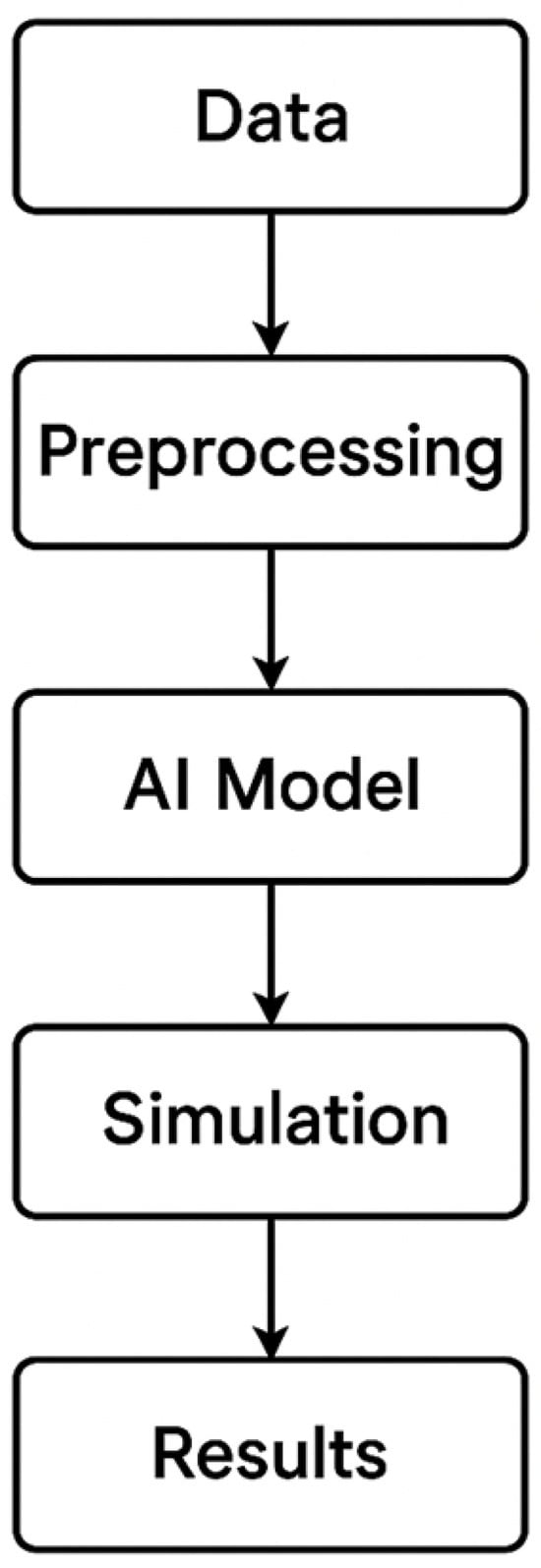
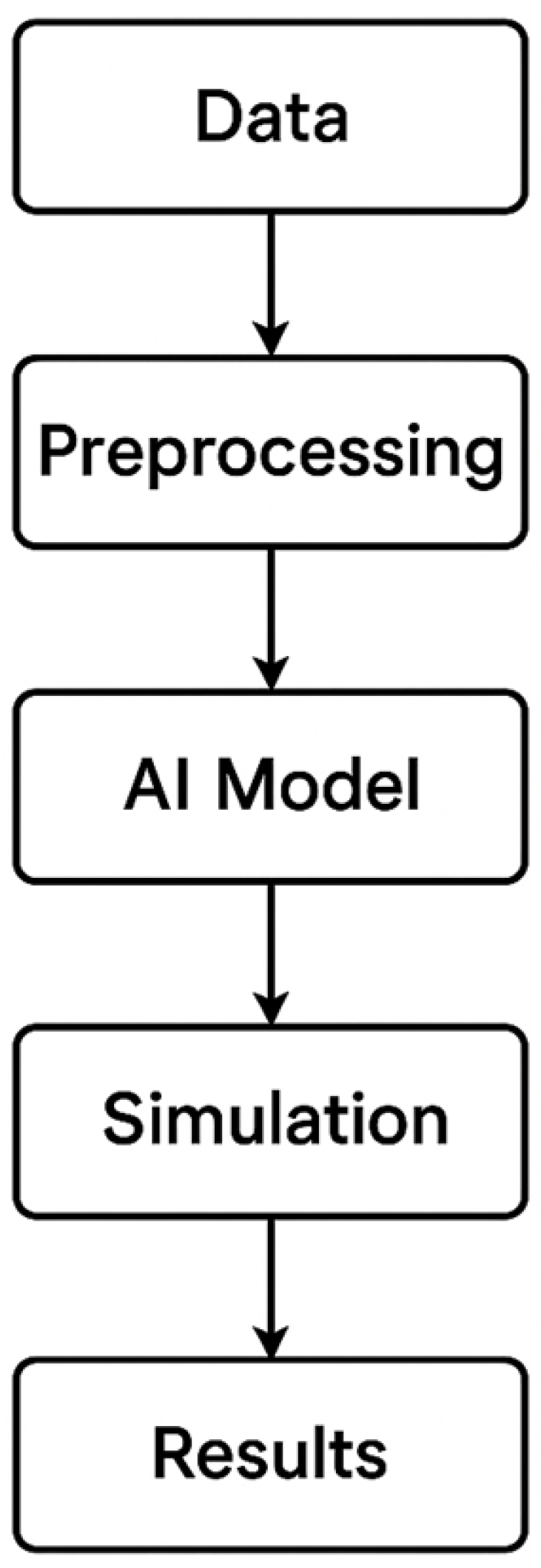
The data used in this study were made up of publicly available repositories containing both electrical loads and meteorological data related to New York City during 2010–2023. Past hourly load data were obtained at the New York Independent System Operator (NYISO) Open Data Platform [14,15] that offers the records of electric consumption with a fine structure that reflects the spatial differences within the urban environment as shown in Table 1. The temperature and wind speed, which are the corresponding meteorological variables, were provided by the National Oceanic and Atmospheric Administration (NOAA) National Centers for Environmental Information [16,17]. The following data sources were chosen based on their completeness, open accessibility, and long period of time coverage, which facilitates the training of artificial intelligence models on a long-term horizon [18]. Figure 1 shows the general workflow of the suggested study and indicates that the data acquisition is the starting point of the process, which follows a linear path, with preprocessing and feature engineering in between, and the final stage being the synthesis of simulation results.
Table 1.
Summary of the key attributes of the datasets used in this study.
Figure 1.
Research workflow and framework.
Utilization of a multi-year dataset allows the model to shape the seasonal change, demand patterns, and effects of extreme weather conditions on the energy use in urban settings—A critical factor in the functional efficiency of renewable-energy-powered Smart Electric Vehicle Charging Stations (SEVCSs) [19,20].
All the data were reprocessed to bring all timestamps in line with each other and remove any inconsistencies in the data before model training using MATLAB R2020a.
2.2. Preprocessing and Feature Engineering Data
Effective pre-processing of data is the key to the reliability of further model training. The raw data were first imported into MATLAB with a datastore and a timetable, and then they underwent a series of cleaning and transformation steps:
- Missing Data Handling: The missing values are spotted and then replaced with linear interpolation to maintain time continuity.
- Outlier Detection and Correction: The value of 3.5 was taken as the threshold to identify outliers, and the outliers were replaced with linear interpolations to ensure the integrity of underlying trends.
- Smoothing: To eliminate the variation in random values, a moving average filter with a smoothing factor of 0.3 was used to avoid eliminating long-term fluctuations.
- Time Synchronization: The load data and the weather data were resampled to a common time step of 30 min, which made the records synchronized.
- Construction of Features: New predictor features were constructed, such as hour of day, week of the day, month of the year, year, and a binary variable indicating weekend, which improved the behavioral and temporal coverage of the dataset.
Following preprocessing, the datasets were merged into a single time-aligned table. Figure 1 presents a schematic of the preprocessing workflow, illustrating the transition from raw data to model-ready inputs.
The load forecasting data were extracted starting with the sources that were publicly available [21].
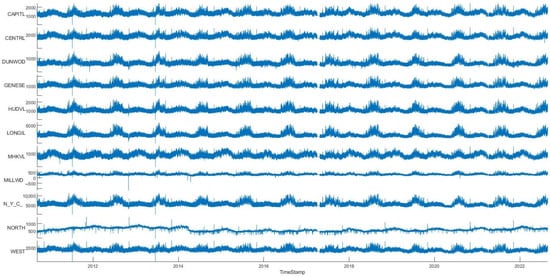
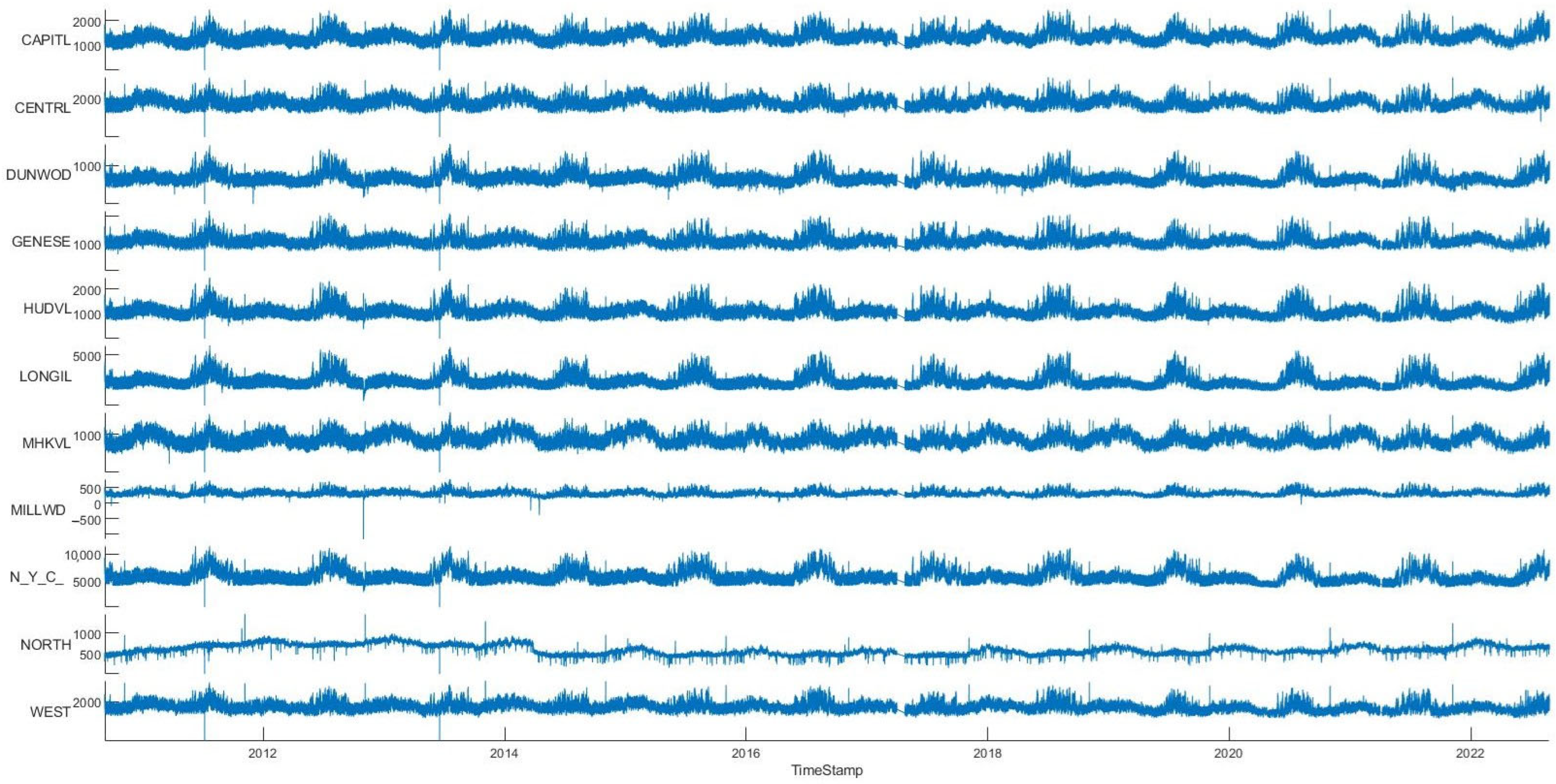
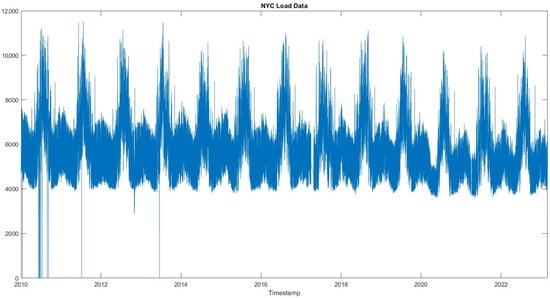
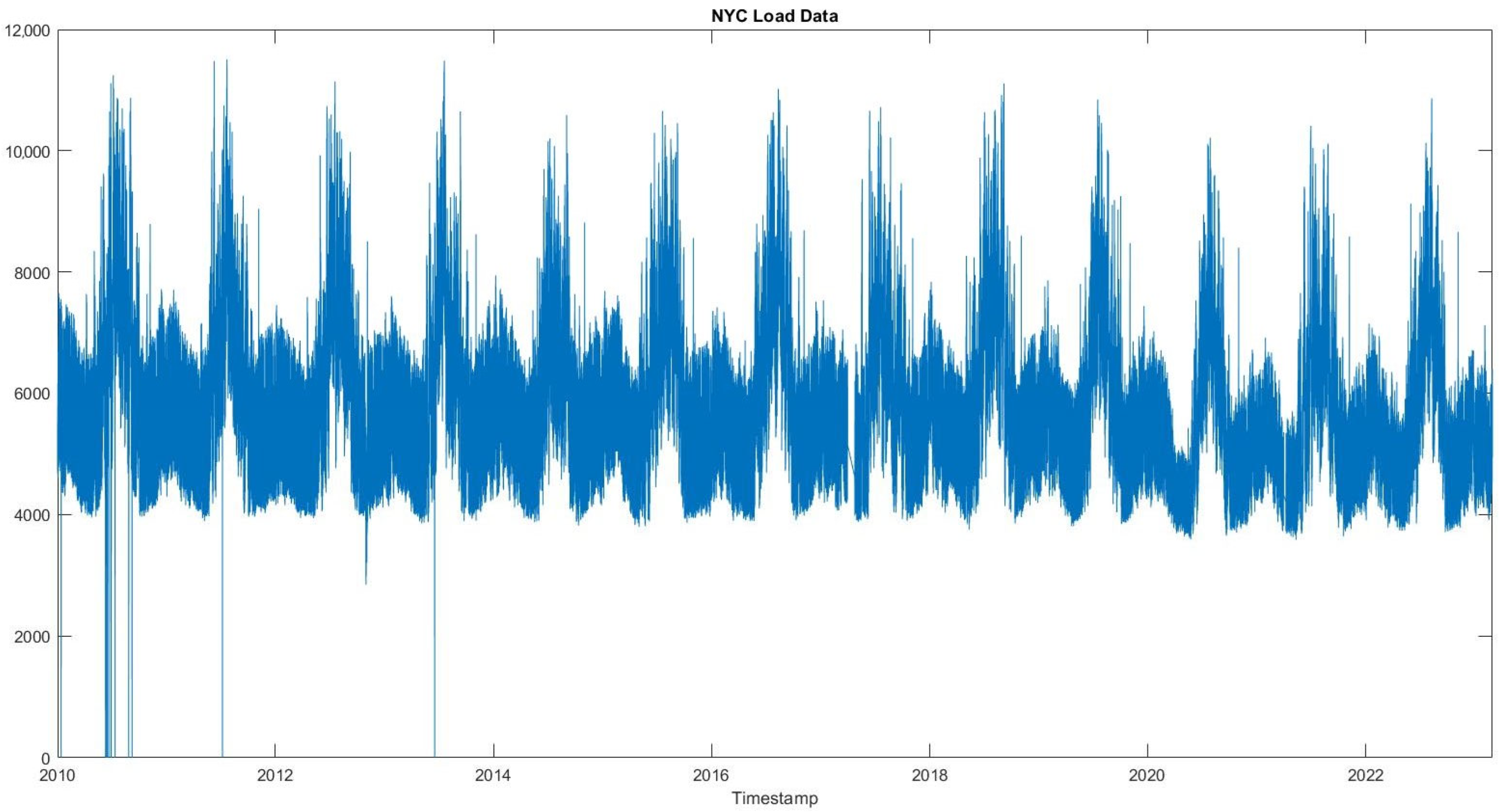
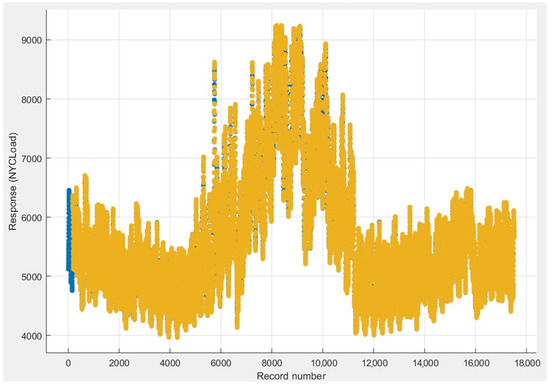
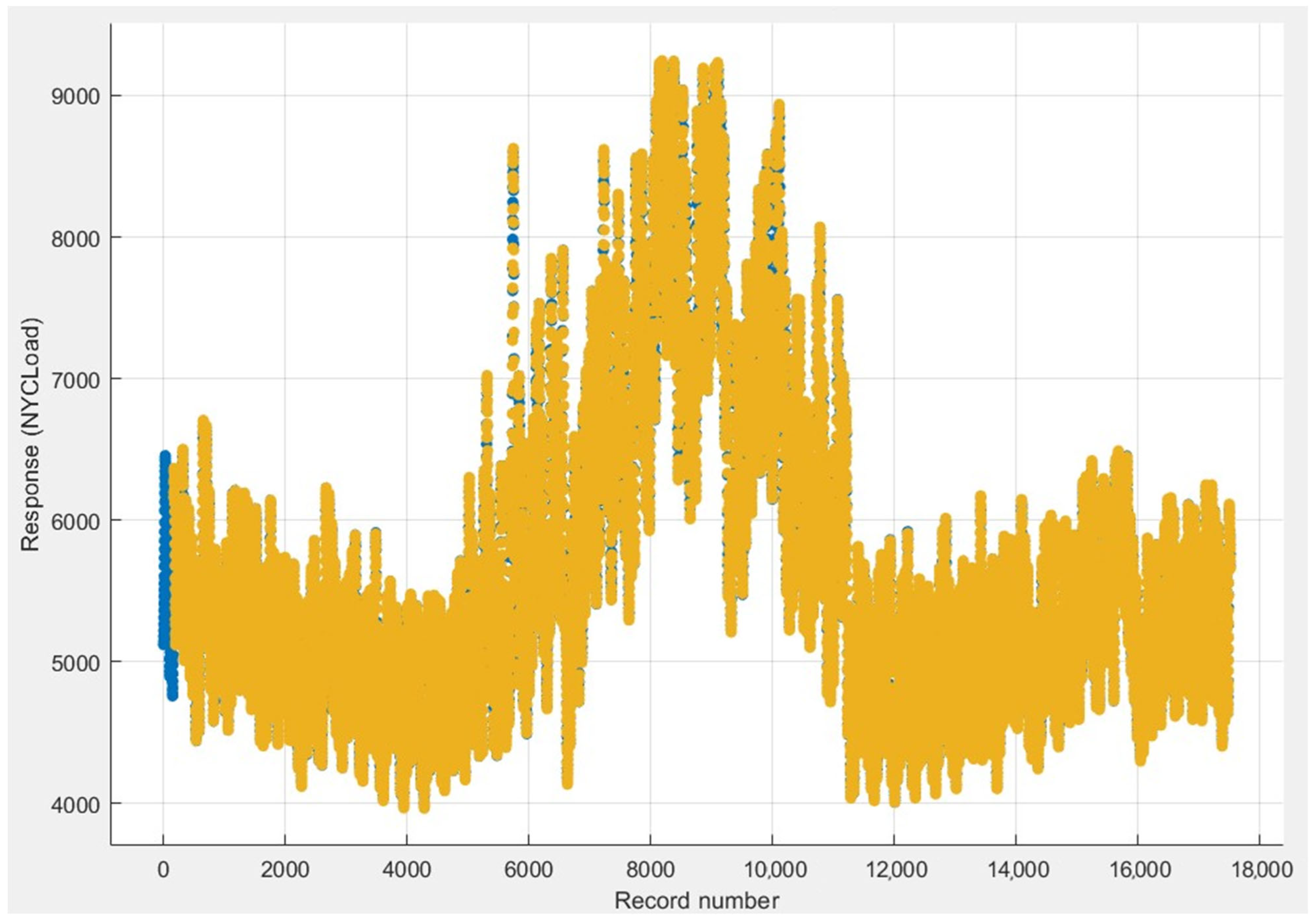
Figure 2 shows supplementary data obtained from open sources on the target city, including all grid measurements. The only dataset represented in Figure 3 is the New York City load data for the last 10 years.
Figure 2.
Load raw data from the past ten years.
Figure 3.
New York City raw load data.
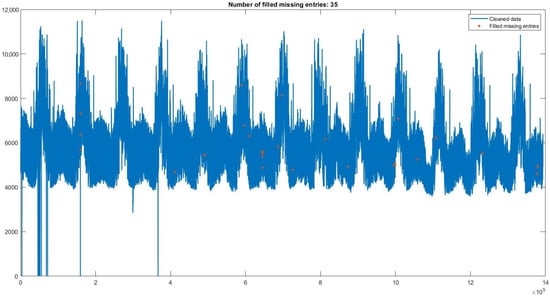
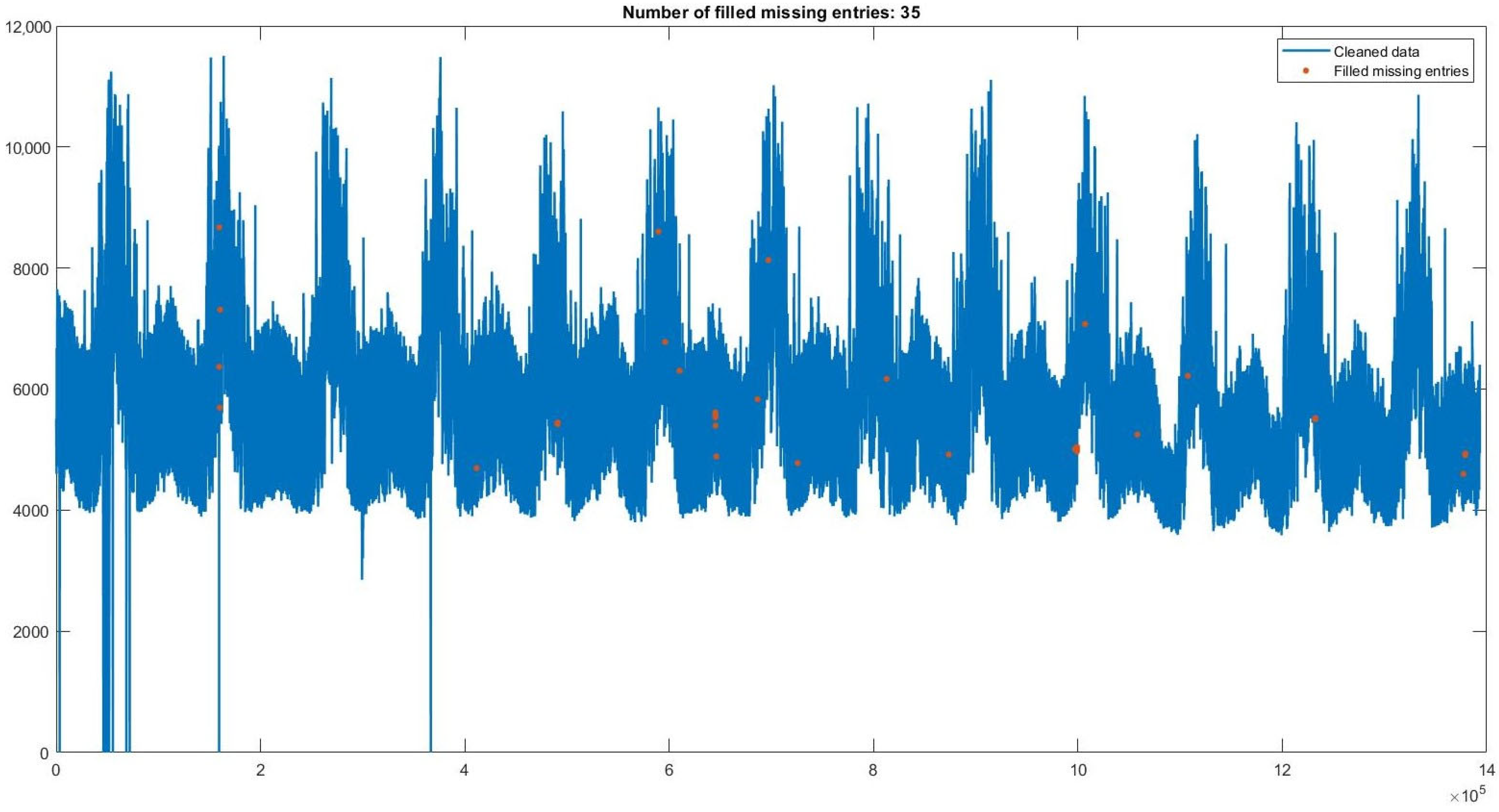
Figure 4 indicates the loaded data of NYC with missing data that are filled in.
Figure 4.
Load data missing entries filled.
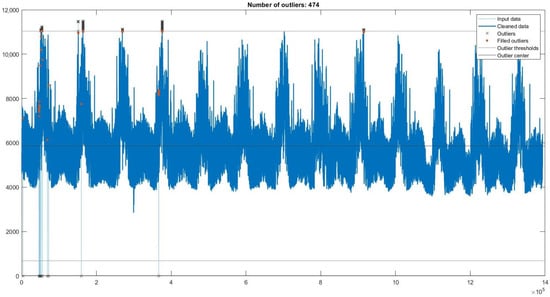
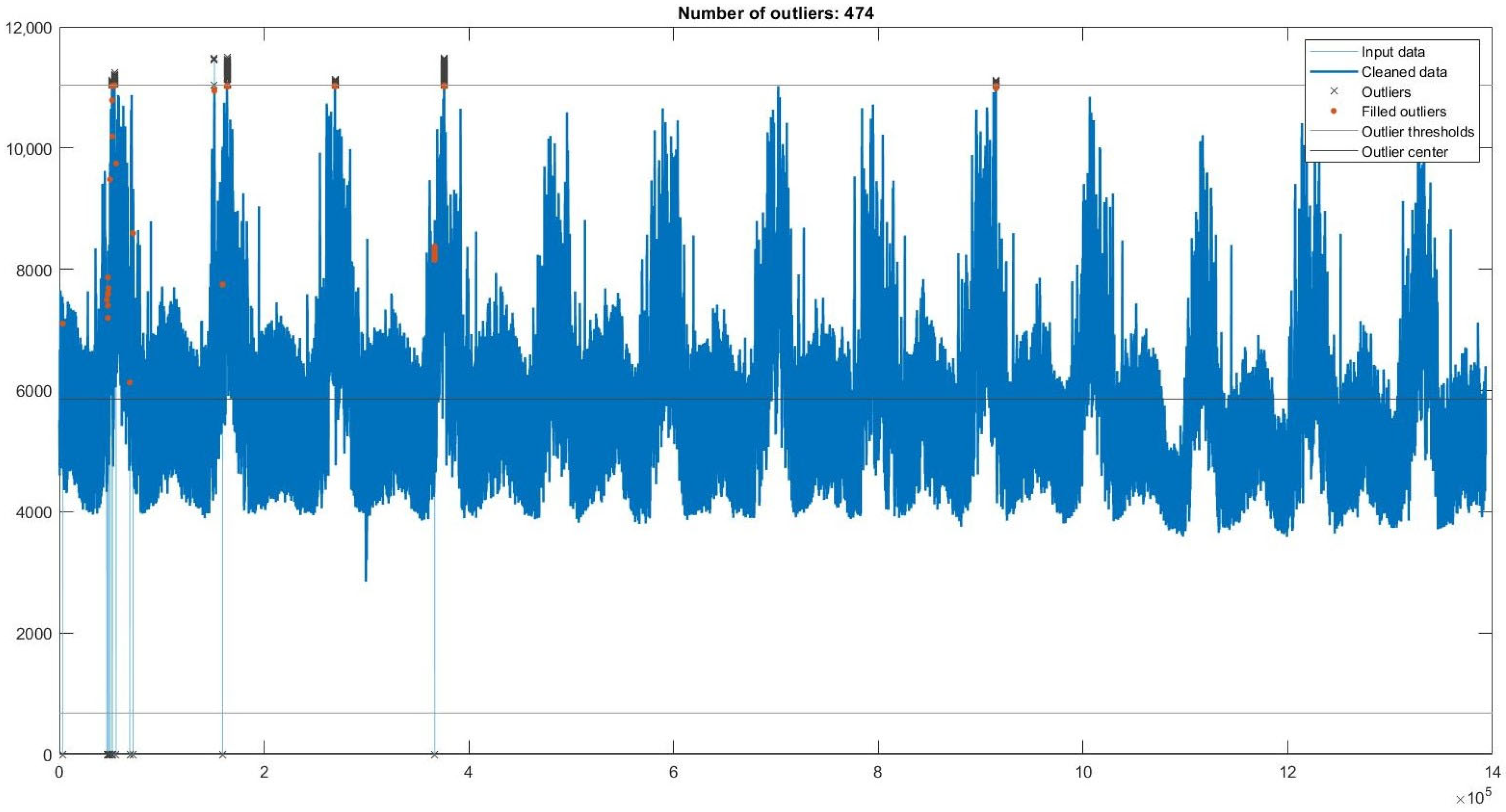
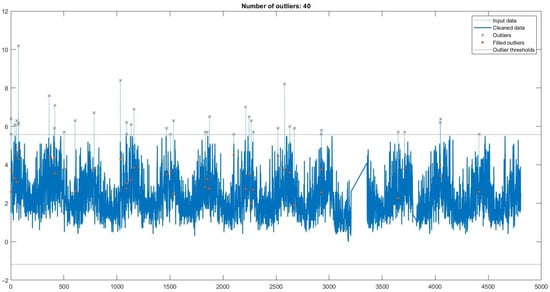
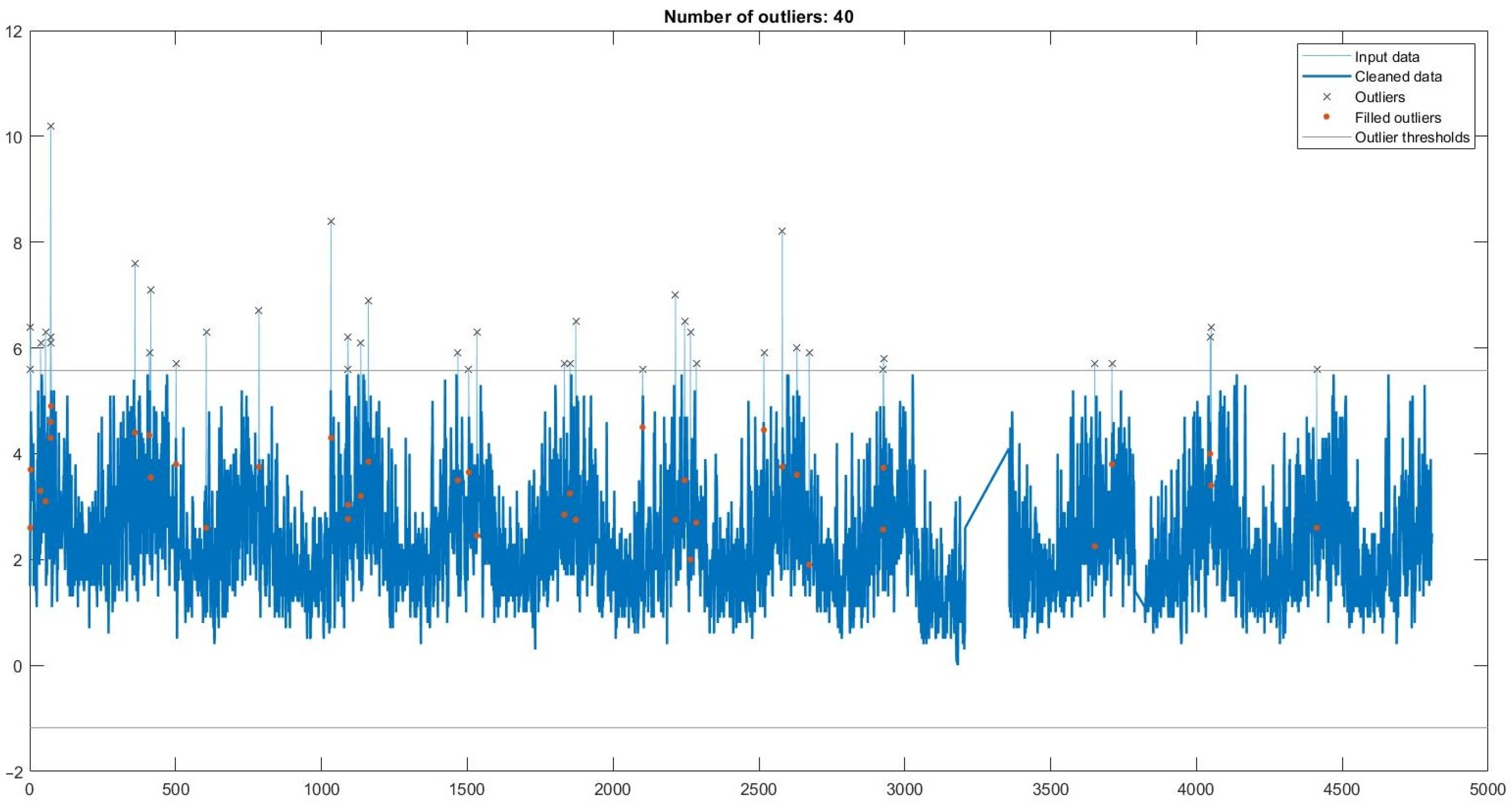
Figure 5 shows the parameter values that were used to identify the outliers, where the figures above a standard deviation of 3.5 were determined to be outliers and were removed.
Figure 5.
Outliers of load data.
A standard deviation of 3.5 was used as an outlier level, which is in line with the extension on the 3σ standard deviations that is often applied in the field of energy load prediction. This limit was also supported by empirical evaluation to ensure that real events of peak loads are retained and anomalous spikes that may be due to the malfunctioning of the sensors or misreporting are effectively removed.
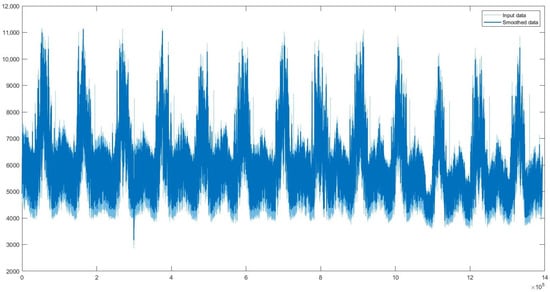
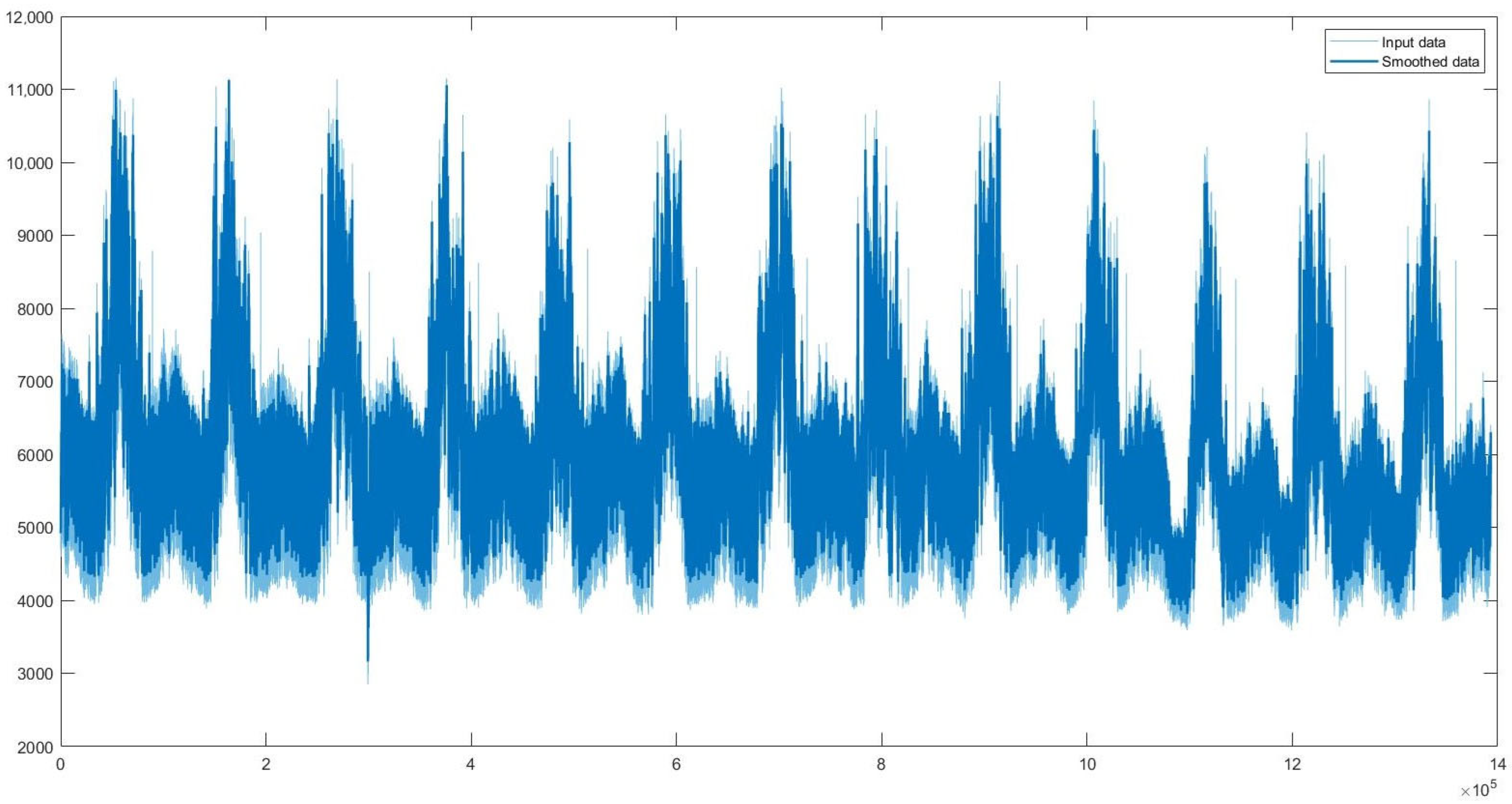
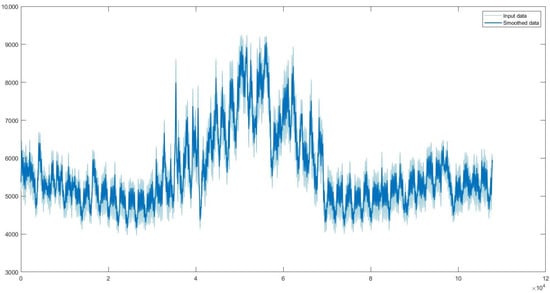
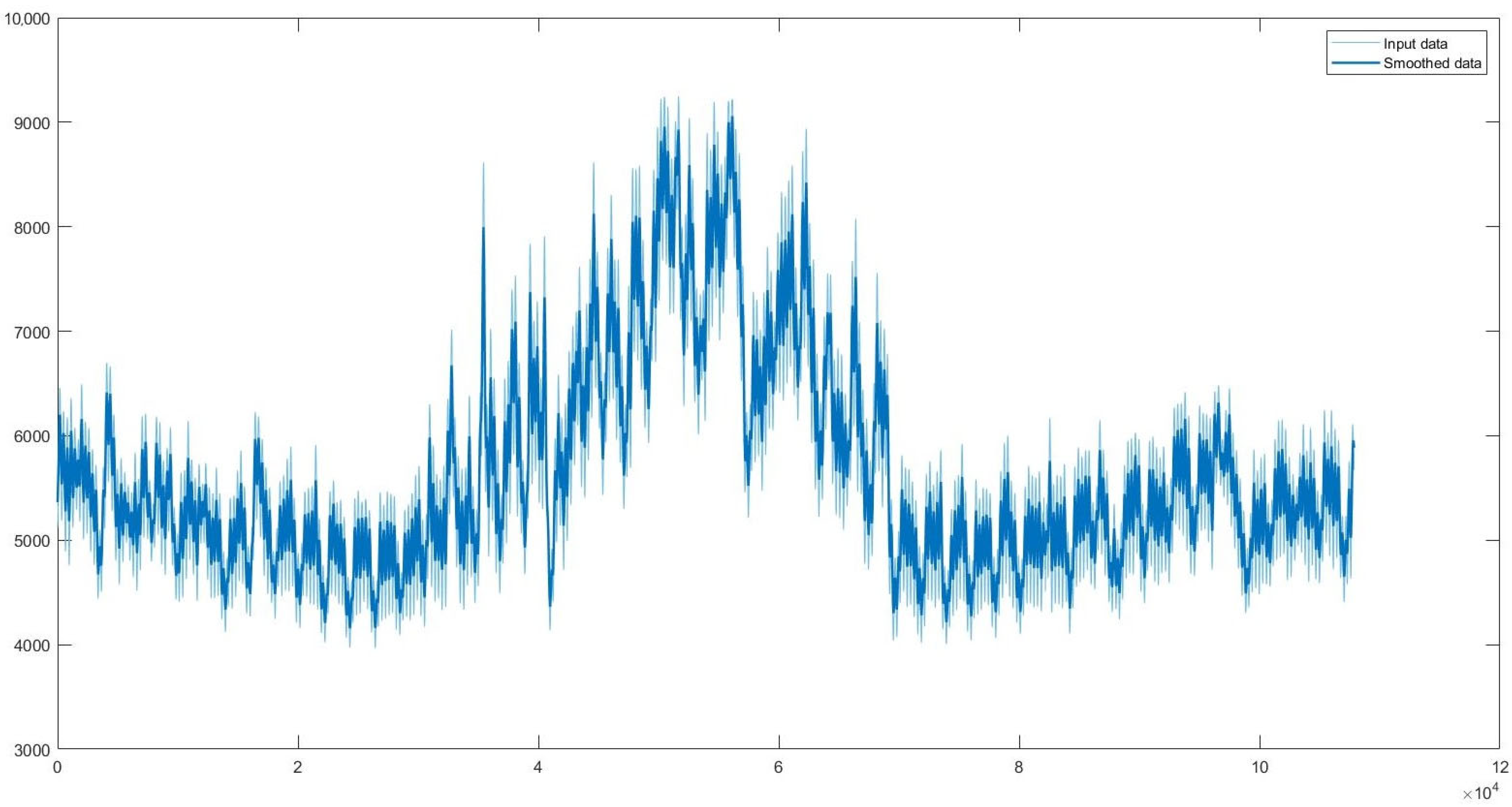
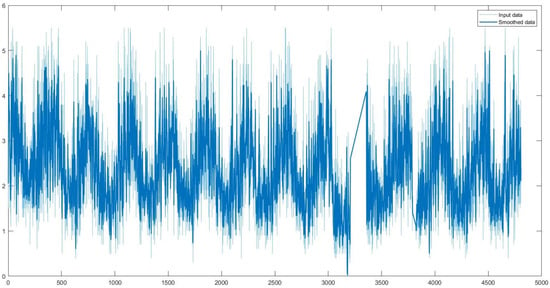
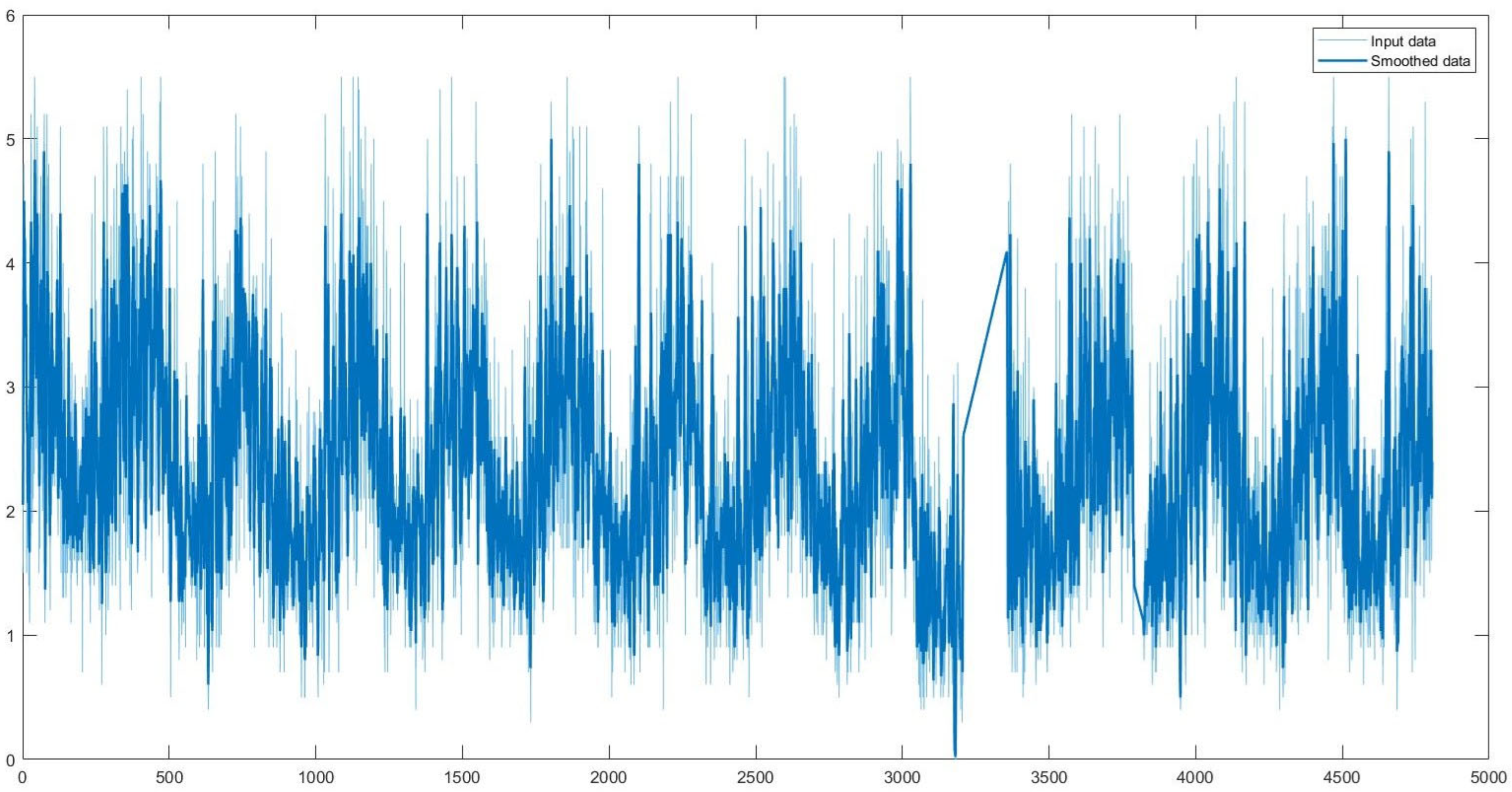
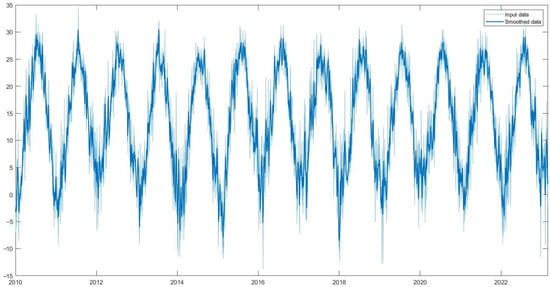
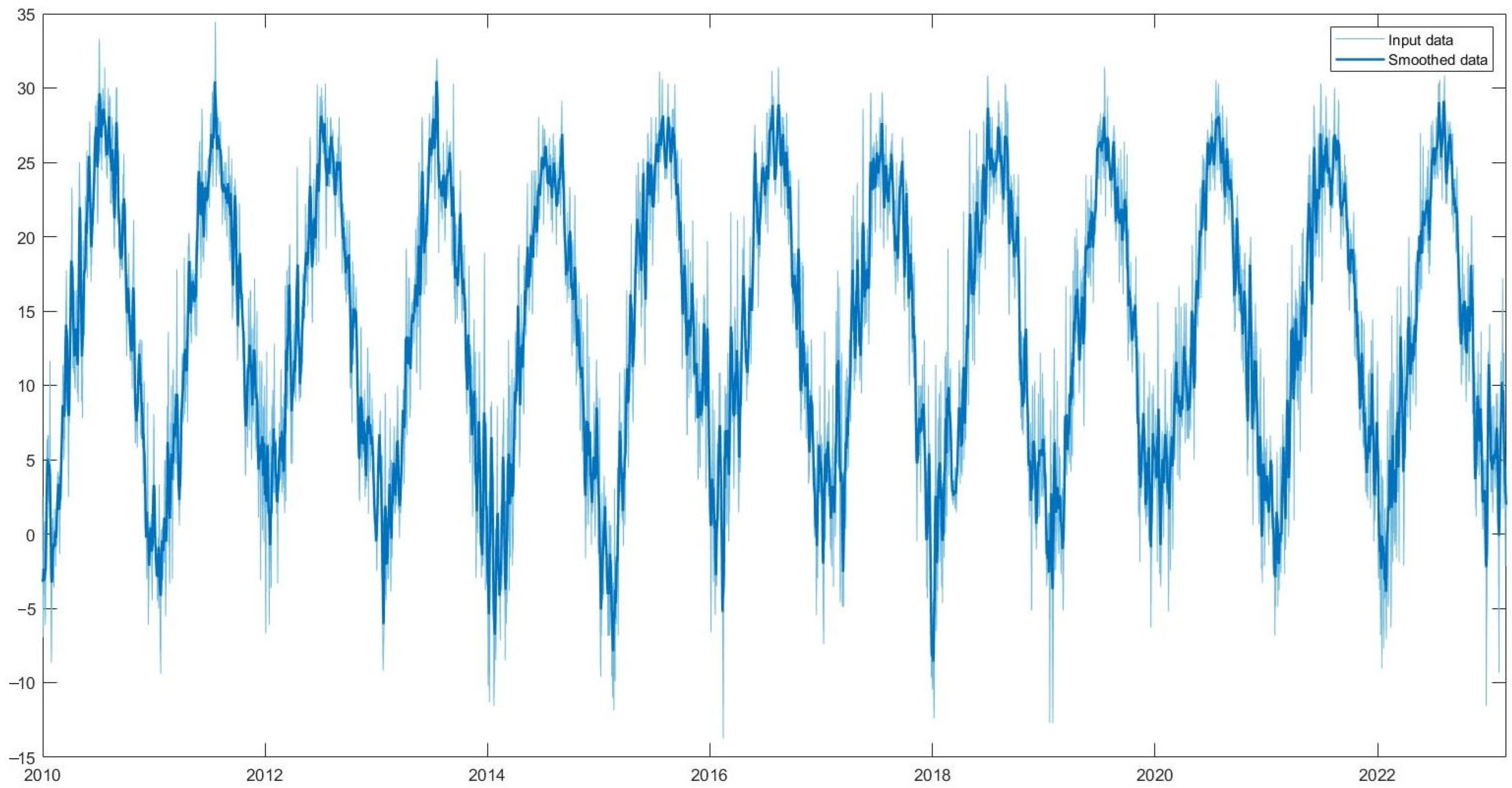
Figure 6 shows the smoothed final data on the loads after the above procedures have been used.
Figure 6.
Smoothed load data.
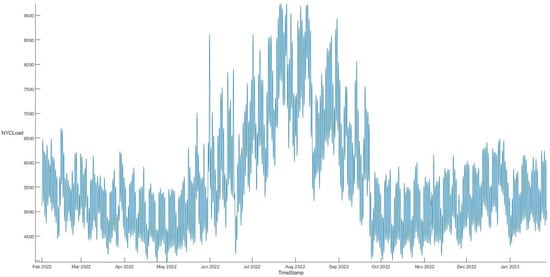
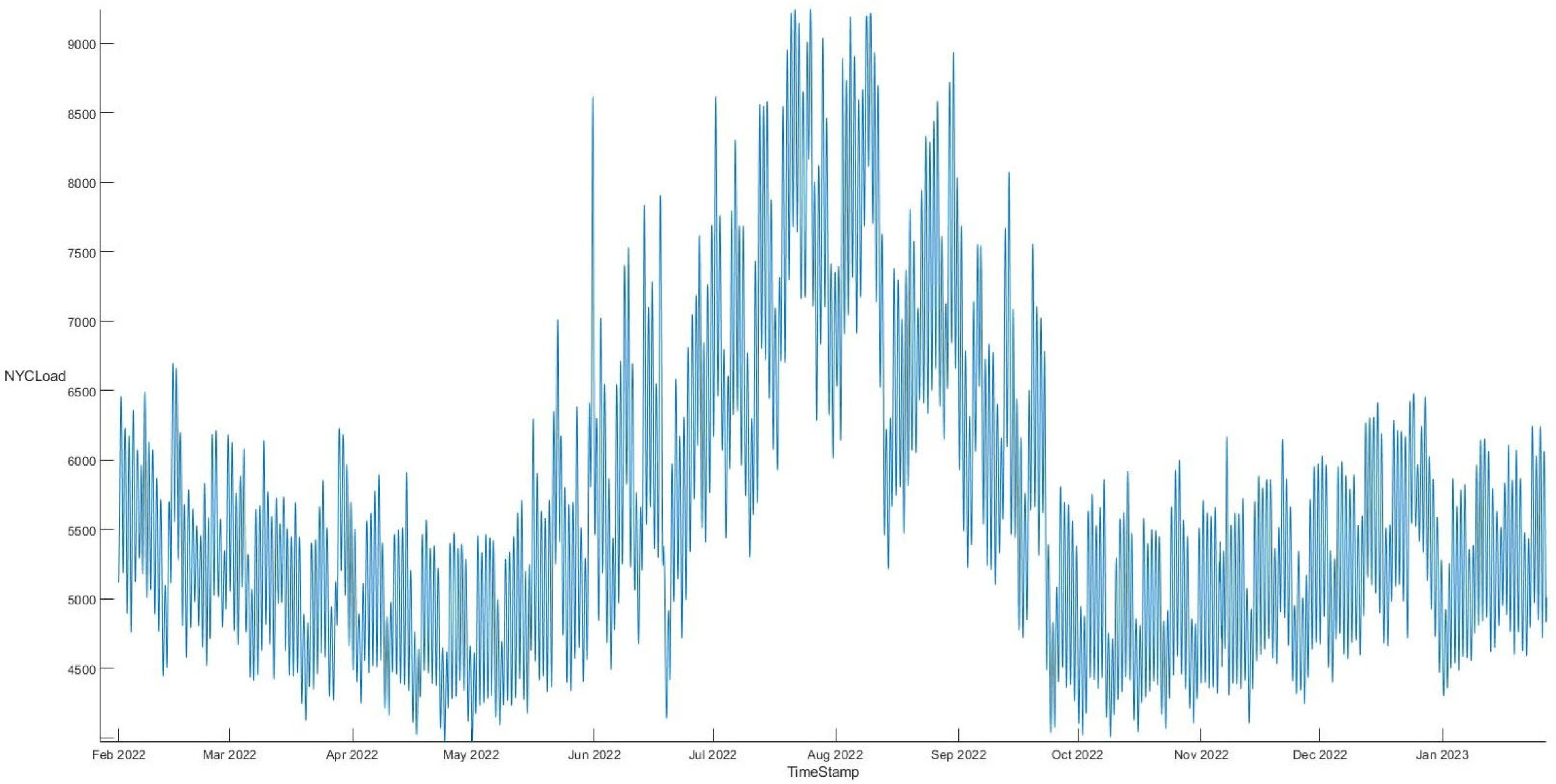
Figure 7 shows one year of raw load data of NYC for regression learner as Figure 8 shows the same load data that had missing entries filled and outliers set as previously shown in Figure 4 and Figure 5 which was then smoothed. Figure 9 shows the data on temperature and wind obtained from open sources.
Figure 7.
One year of NYC raw load data for Regression Learner.
Figure 8.
One year of NYC smoothed load data for Regression Learner.
Figure 9.
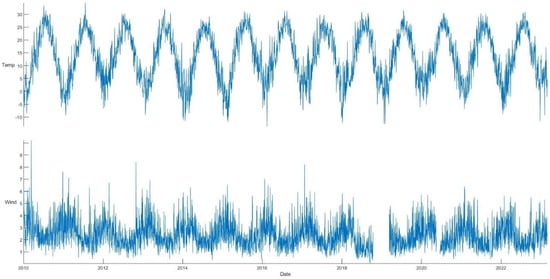
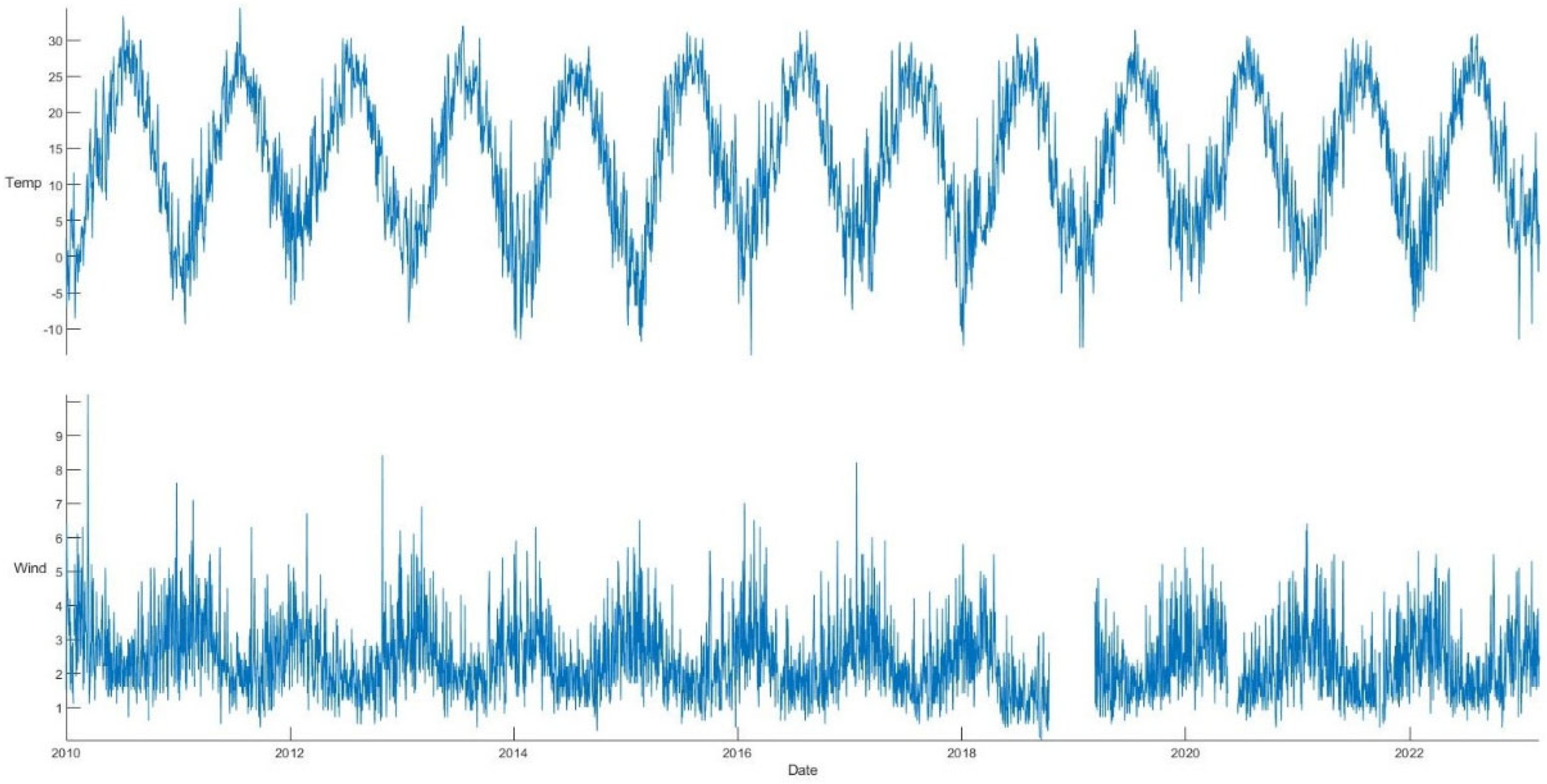
Raw weather data.
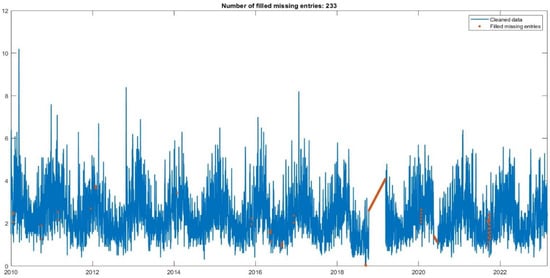
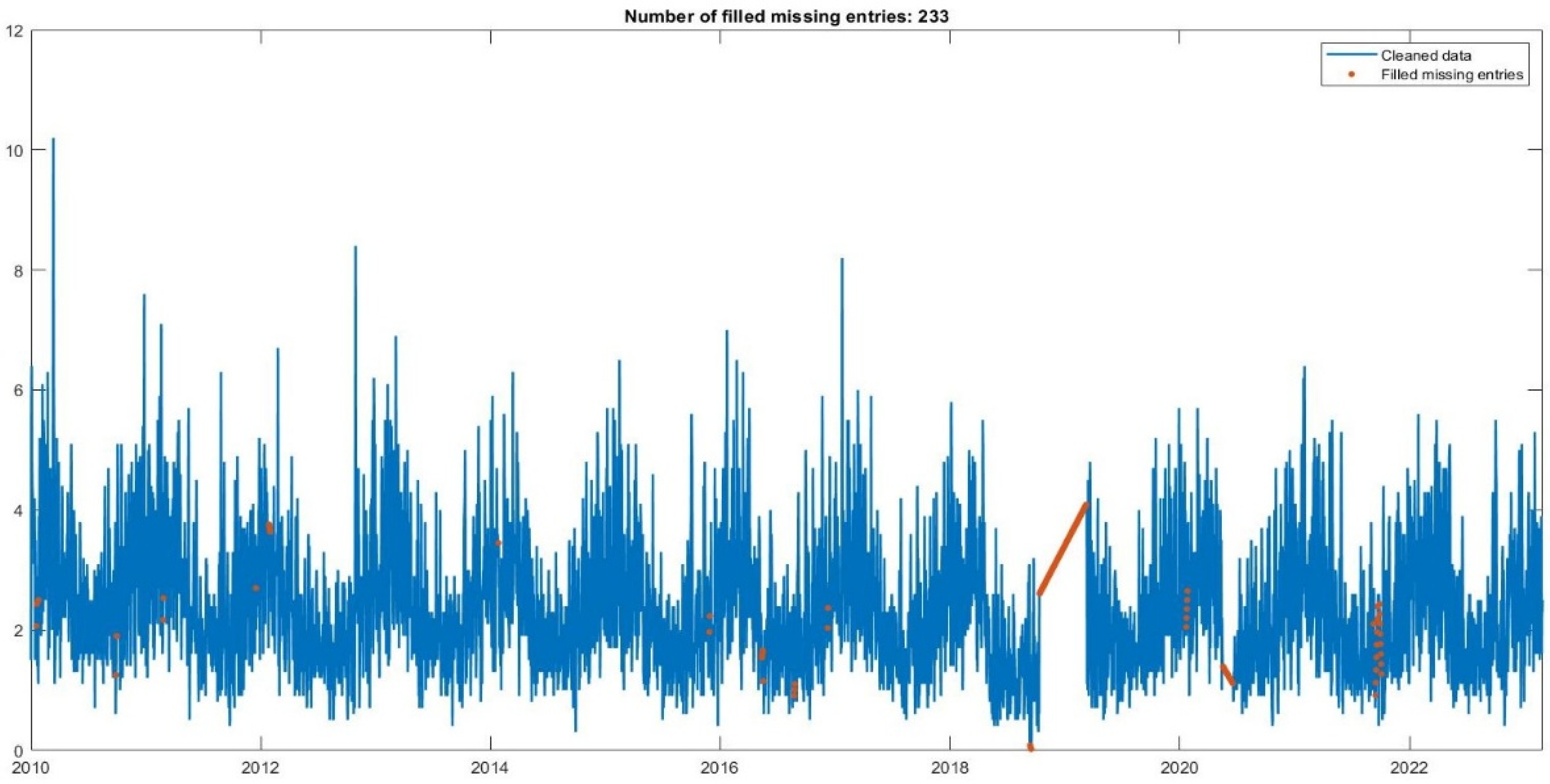
There are gaps in data, as shown in Figure 10, and more so in wind data, where some months have not been filled; gaps were filled with MATLAB imputation methods.
Figure 10.
Wind data missing entries filled.
Figure 11 presents the outlier settings used on the wind dataset.
Figure 11.
Outliers of wind data.
Figure 12 shows the wound data that was finally cleaned and smoothed.
Figure 12.
Smoothed wind data.
Figure 13 shows the processed temperature data that is not relative due to its smaller deviation, and as such, it was adjusted less.
Figure 13.
Temperature data smoothed.
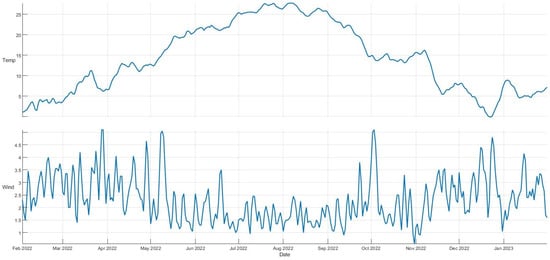
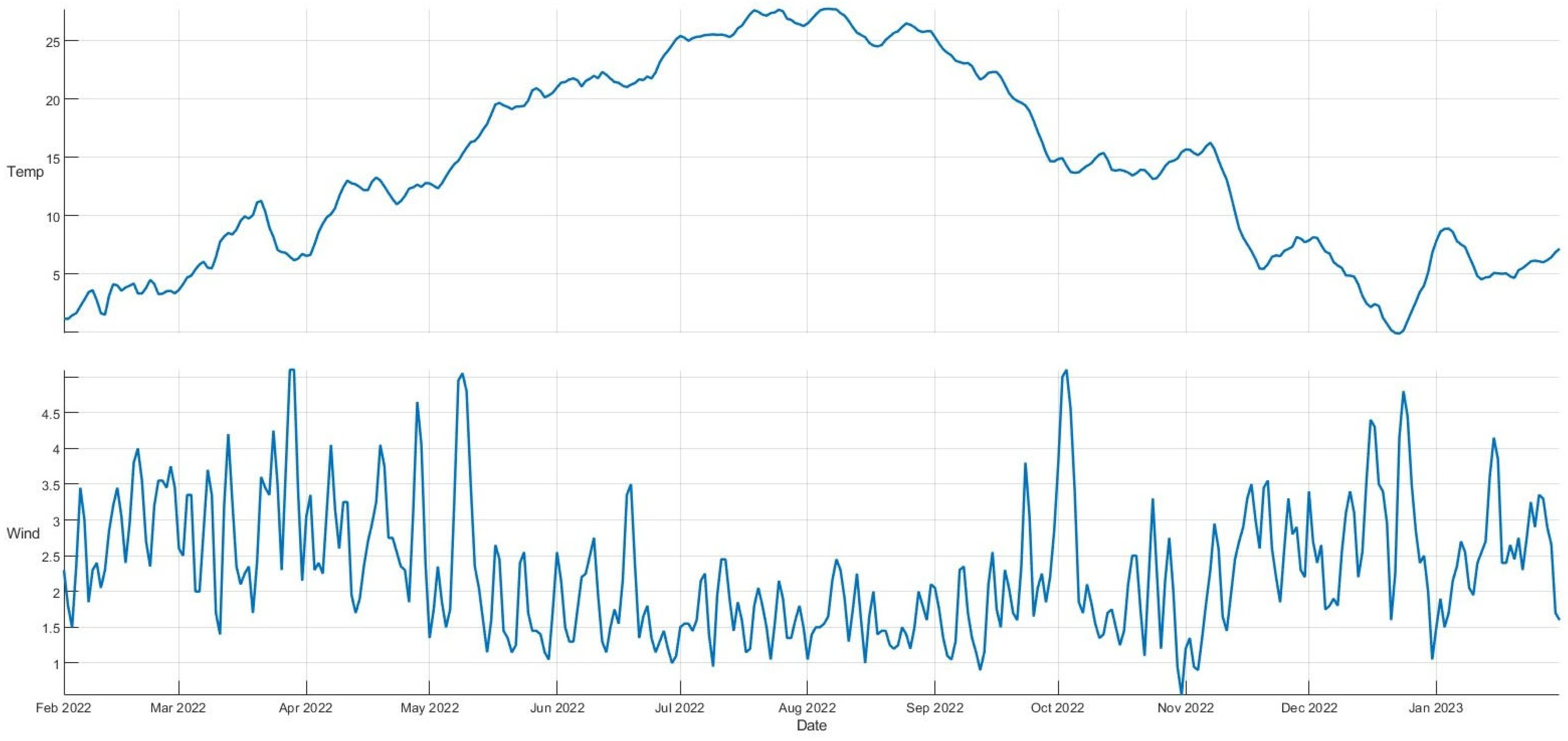
Figure 14 shows the weather data of NYC for one year.
Figure 14.
One year of NYC weather data.
2.3. AI Model Development
Two AI-based models were created and tested: (i) a Neural Fitting model and (ii) a Linear Regression model. They were both modeled on the machine-learning toolbox of MATLAB to predict electrical load coupled with SEVCS in different environmental conditions [22,23]. The Neural Fitting model used the Levenberg–Marquardt back-propagation algorithm using 20 hidden neurons and 100 training epochs. The choice of the settings (20 neurons, 100 epochs) was made empirically, having tried several settings (1040 neurons, 50,200 iterations) and found an optimal compromise between the time spent on training and the predictive accuracy. The entire hyperparameter search is one of the possible ways to improve in the future. The dependent variable was the sum of electrical load in megawatts [24,25]. A Linear Regression Learner model was used to compare. The reason why a linear regression method has been selected is because of its interpretability and as a standard in comparison to neural-network performance [26]. Traditionally used statistical measures of performance, such as Root Mean Square Error (RMSE), Mean Absolute Error (MAE), Mean Absolute Percentage Error (MAPE), and the coefficient of determination (R2), were used to compare the two models [27]. An ordinary least squares linear regression algorithm was used to set the Regression Learner.
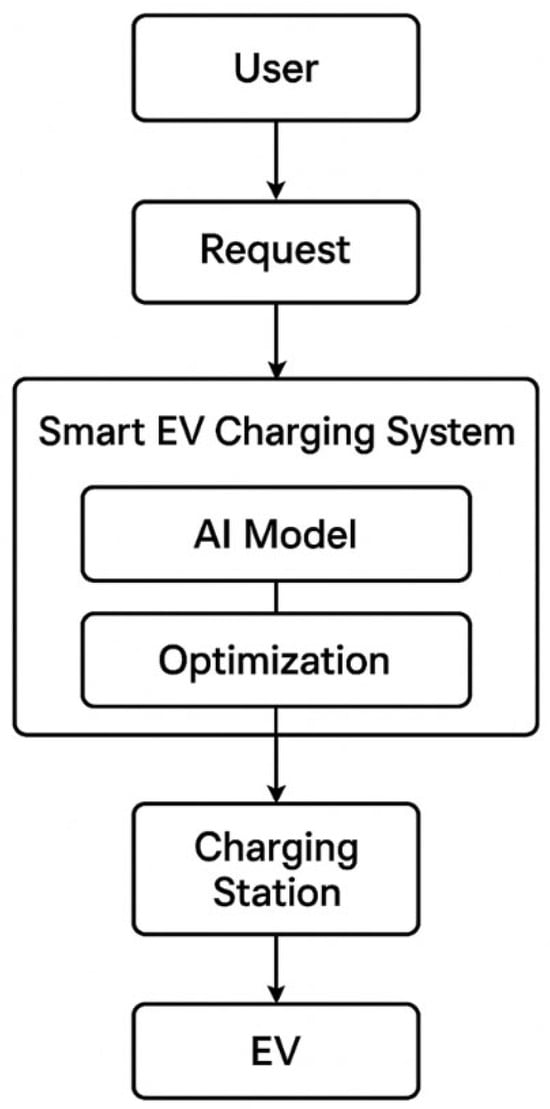
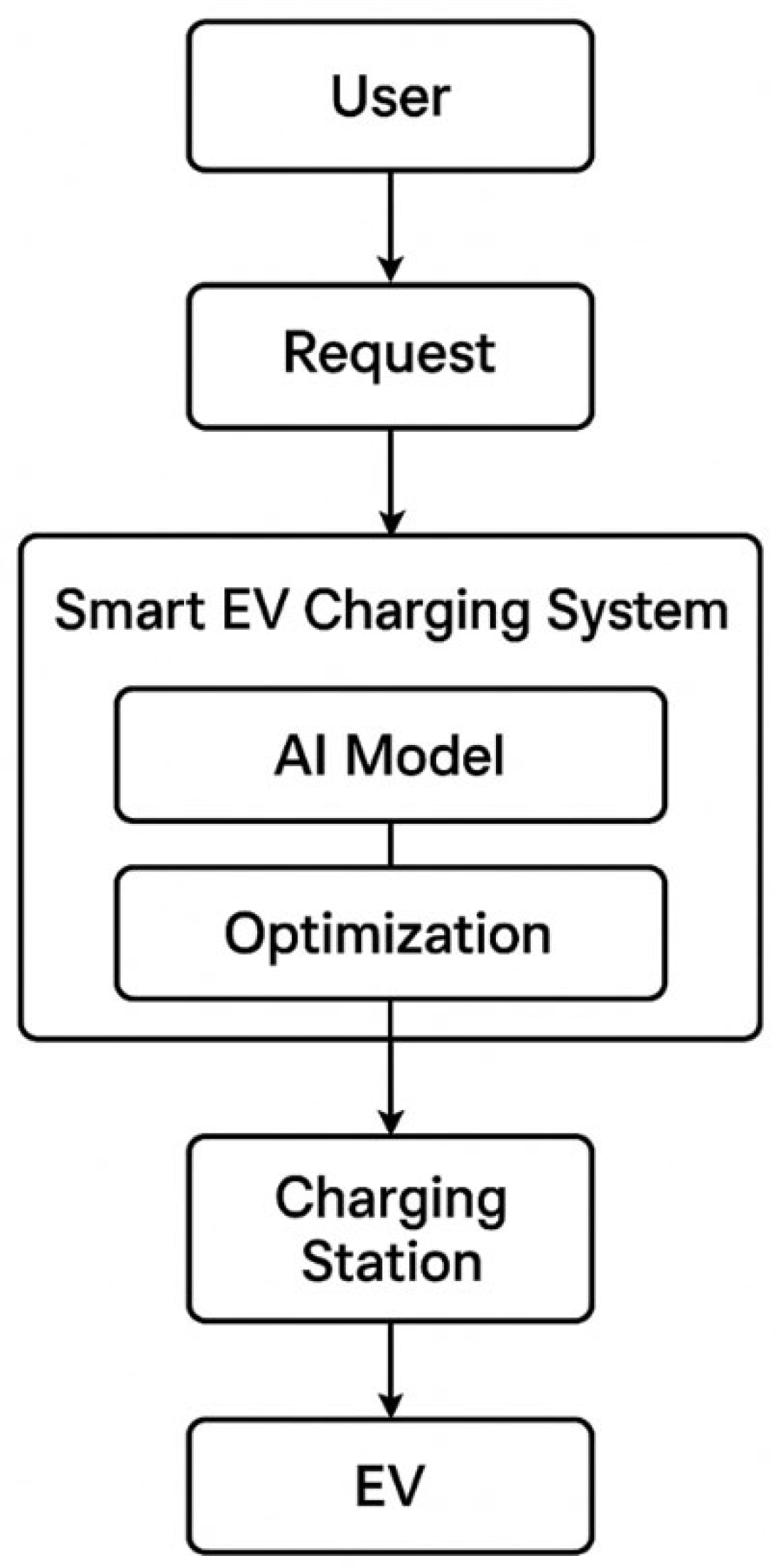
Figure 15 sows the framework of a smart EV charging system that was used. Time-series comparison and residual-error analysis were also used as the supplementary assessment of model performance, and thus, the predictive accuracy and generalization ability were established.
Figure 15.
Framework of a smart EV charging system.
3. Results and Discussion
3.1. Model Performance and Comparative Analysis
The block diagram of the proposed model is shown in Figure 16. The trained models were tested on the unseen validation data of the 20 percent, which was reserved to determine their generalization. Neural Fitting and the Regression Learner models were compared to the standard statistical performance measures: Root Mean Square Error (RMSE), Mean Absolute Error (MAE), Mean Absolute Percentage Error (MAPE), and the coefficient of determination (R2) [28] and presented in Table 2.
Figure 16.
Block diagram of the proposed model.
Table 2.
Comparative summary of the quantitative performance comparison.
These findings have made it evident that the proposed Neural Fitting model was found to be more accurate than the traditional linear regression and baseline persistence models. The increase in R2 and decrease in MAPE have been used to affirm that the nonlinear correlation between weather conditions and energy consumption was effectively modeled [29,30]. The average decrease in absolute prediction error (reduced by almost 18 percent compared to regression) indicates that the AI-based framework can make accurate short-term predictions of loads, which are essential in order to intelligently schedule renewable-driven SEVCSs.
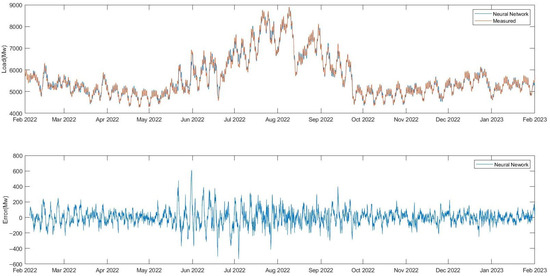
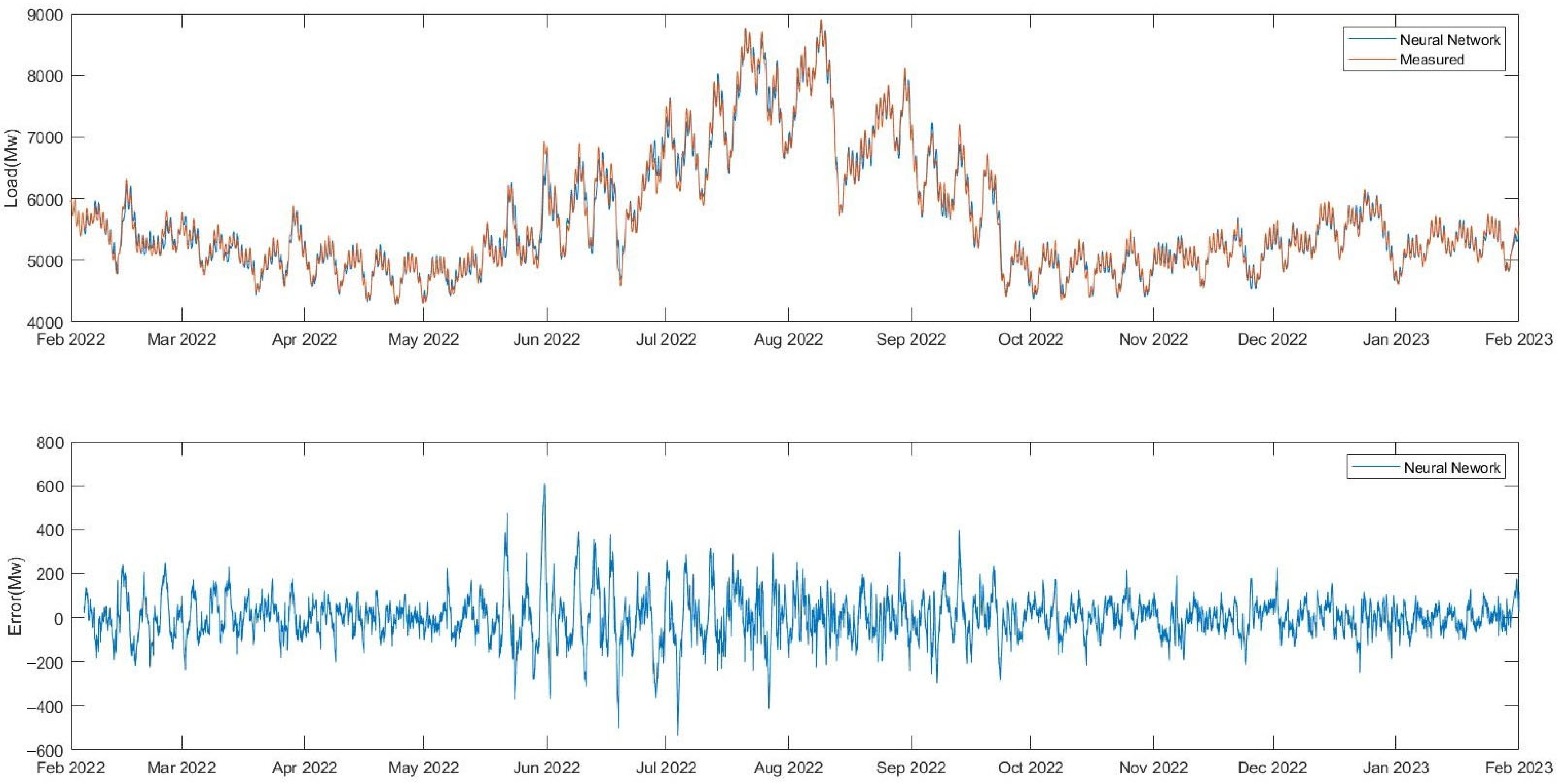
The comparison of actual and predicted load profiles, using time series, is shown in Figure 17 and Figure 18. The Neural Fitting model has a high degree of accuracy in following the actual measured demand, especially in high variability intervals related to weather variability or demand spikes, as shown in Table 2. The neural network model showed noticeably stronger performance during morning load spikes from 7 to 10 and mid-afternoon periods from 13 to 16, where PV fluctuations influenced grid demand. During these intervals, the nonlinear relationships between load behavior, temperature, and daily user activity produce sharp spikes that linear regression cannot completely capture. The neural model, on the other hand, adapts well to these nonlinearities, resulting in significantly lower residuals and improved short-term responsiveness. Although the regression model was sufficient in general for trend estimation, it had a lagging behavior at sudden demand shifts, and therefore, the significance of nonlinear modeling [31].
Figure 17.
Neural network: actual and predicted output load profile.
Figure 18.
Regression Learner: actual and predicted output load profile.
3.2. Analysis of Error Sources and Model Behavior
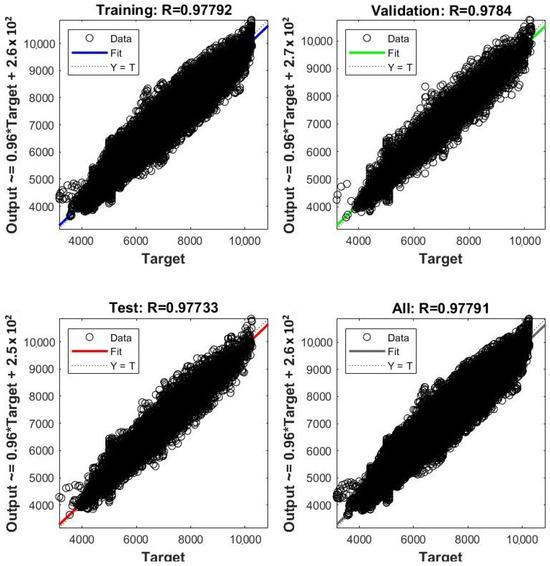
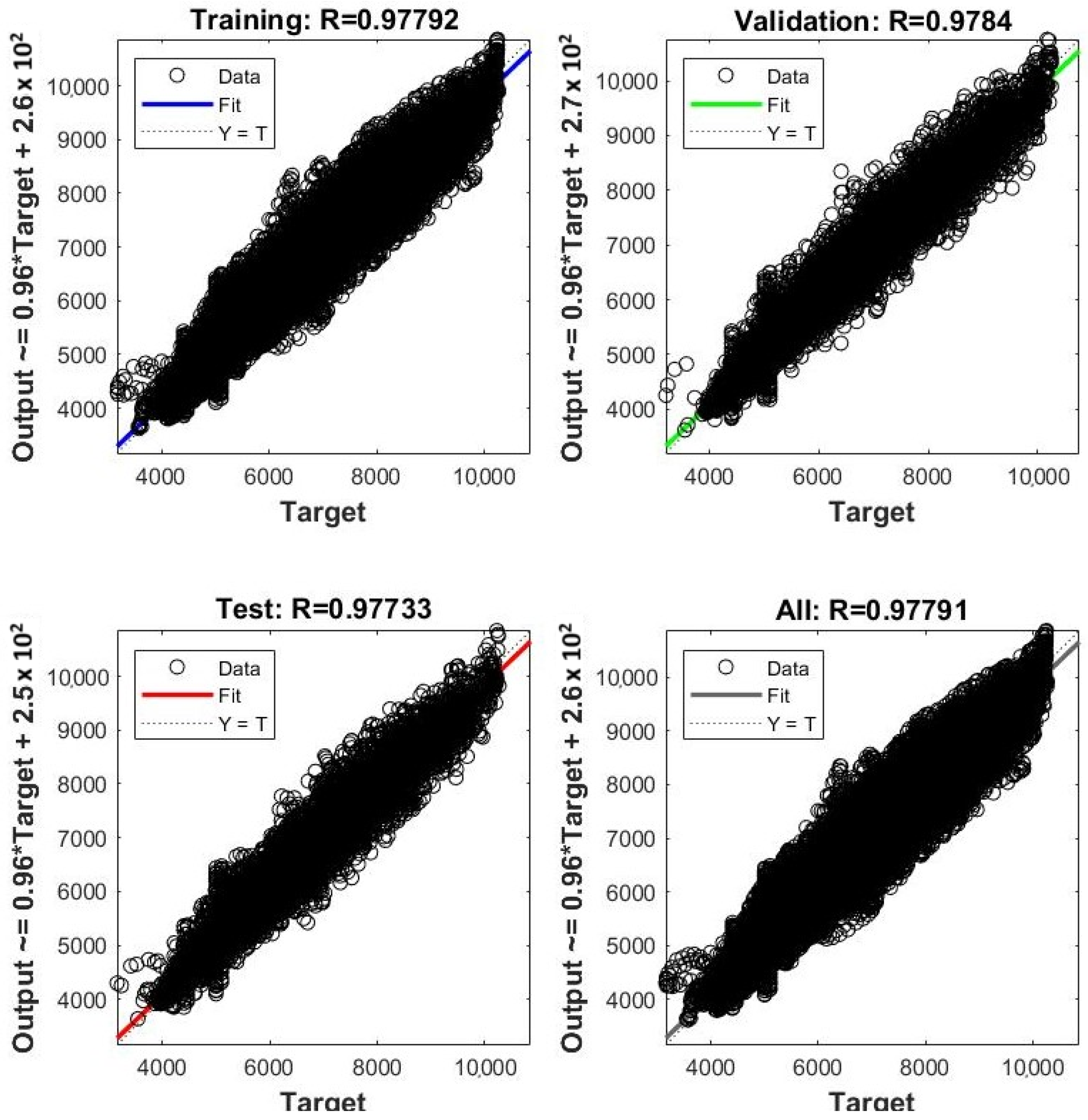
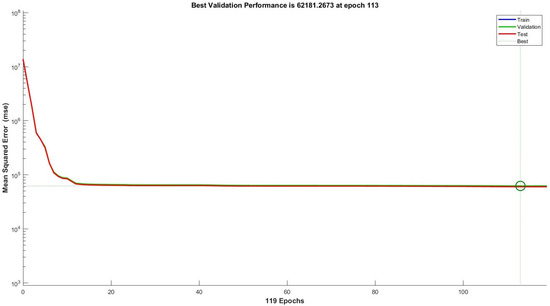
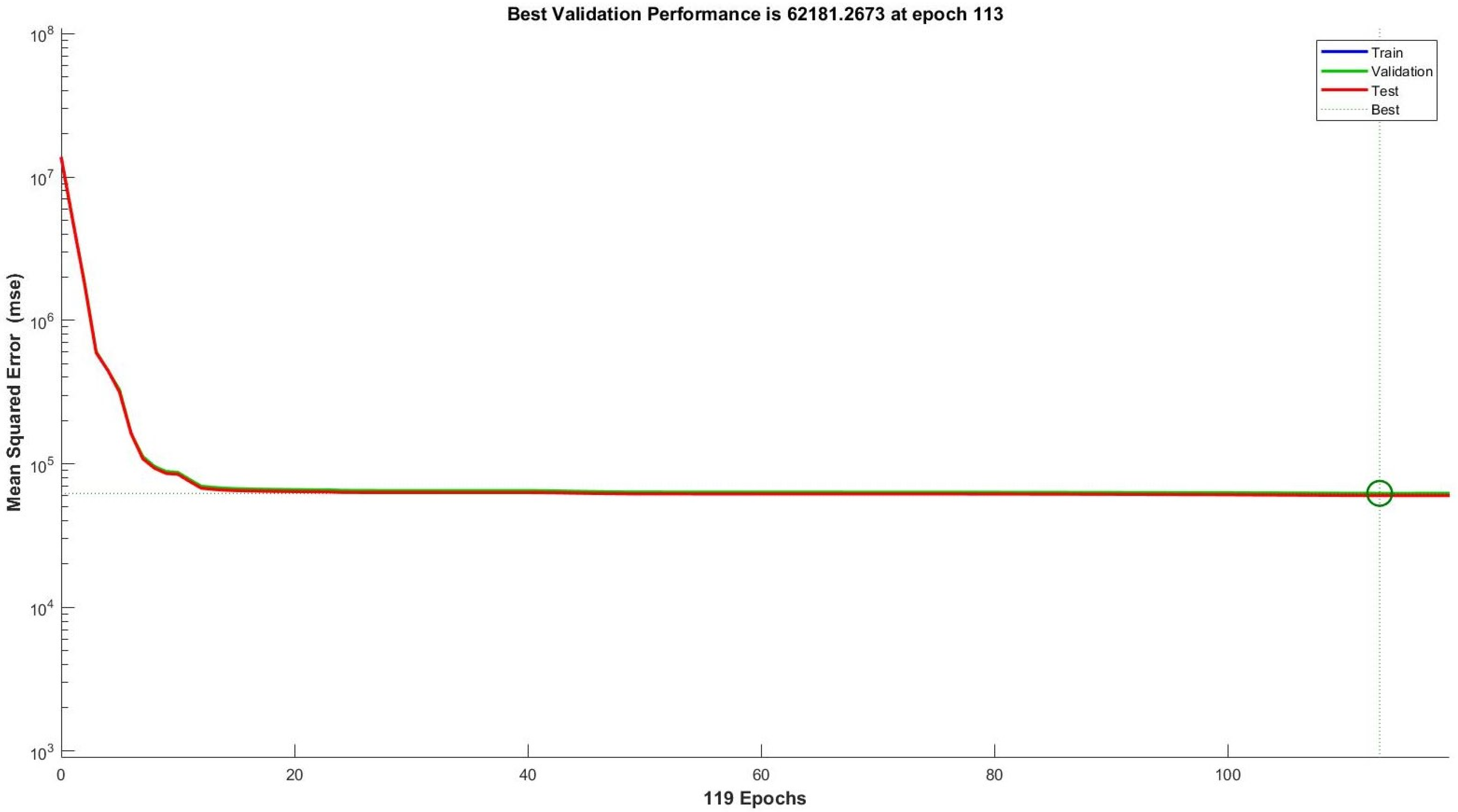
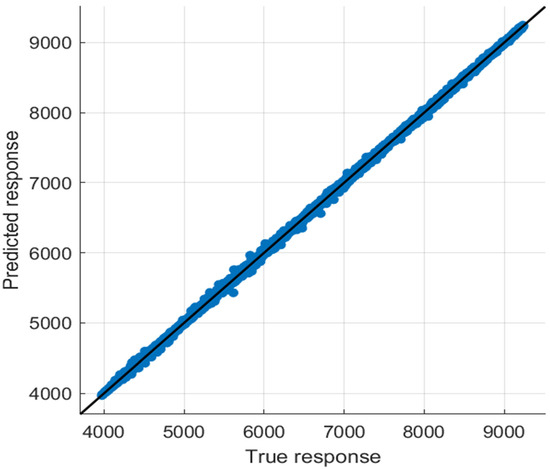
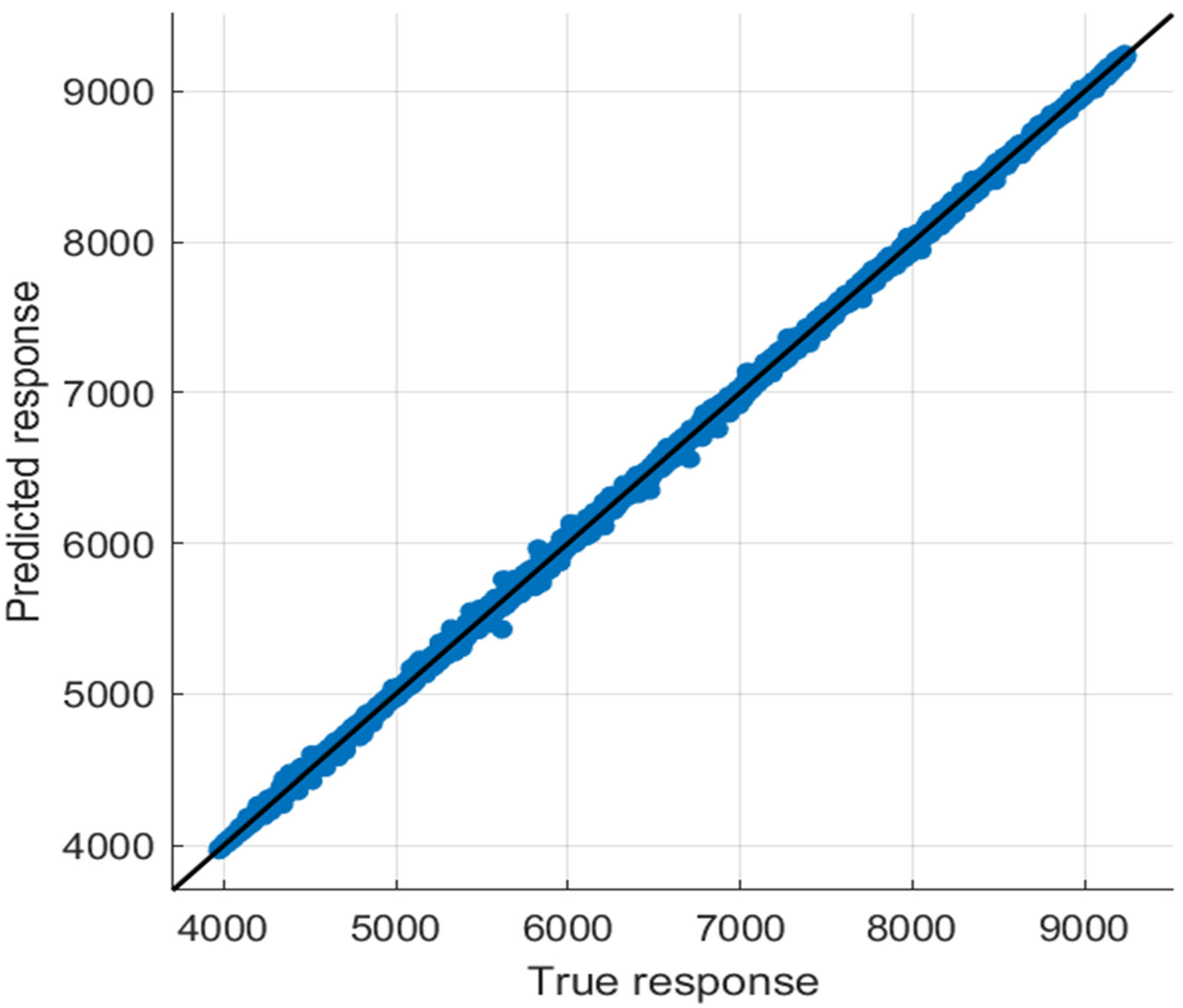
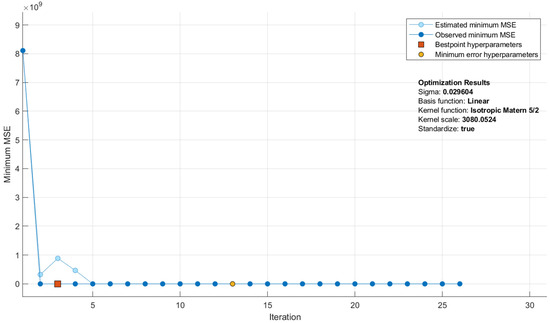
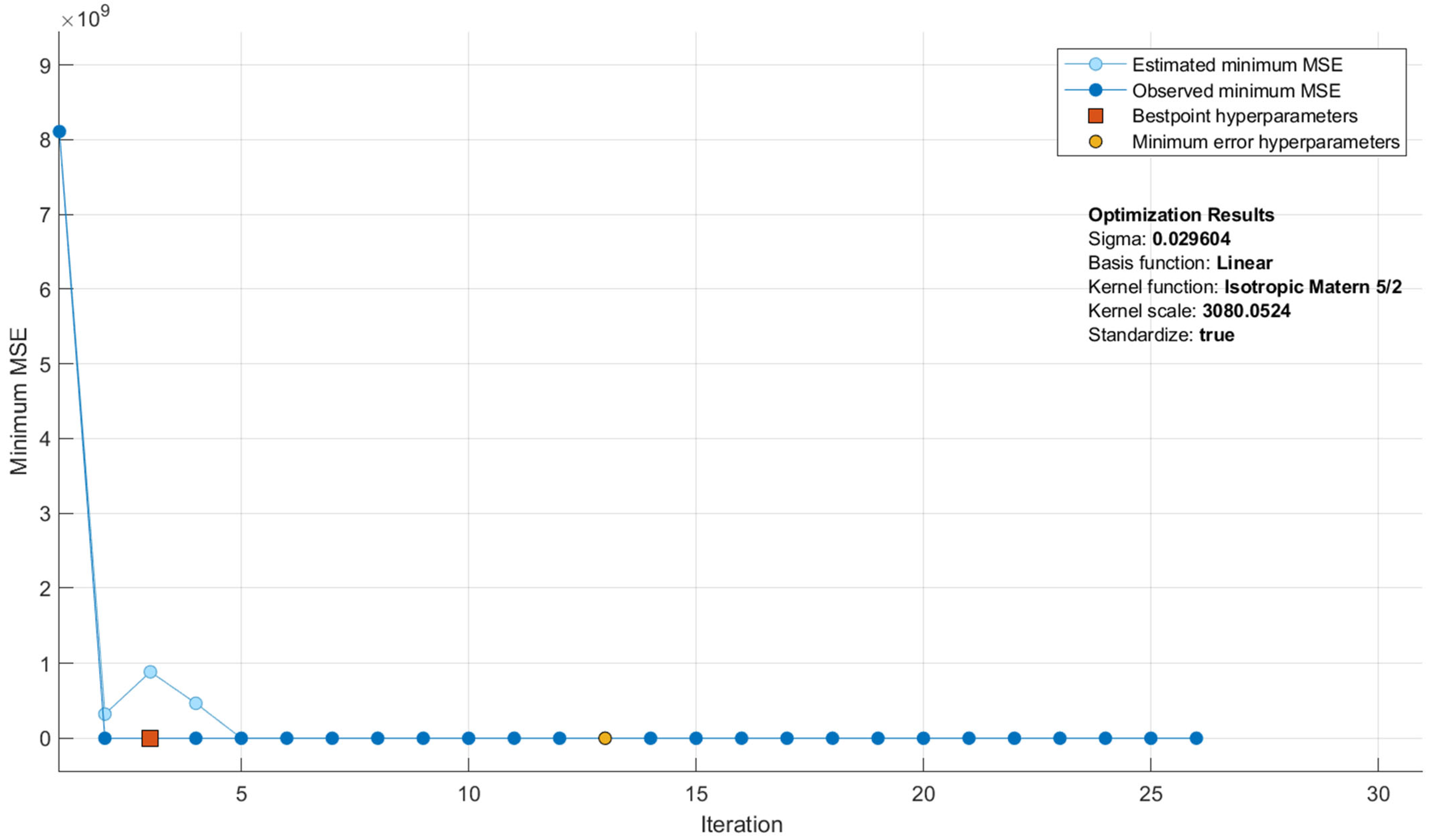
The analysis of the residual error found that the errors of the prediction were equally distributed around zero, and, therefore, it was proven that the Neural Fitting model had no bias and did not provide systematic over- or under-estimation [32,33]. The majority of the deviations stayed within the same range of 5 percent of the actual load. The greatest deviations were seen in sudden load surges caused by weather conditions, indicating that any further development of the model might incorporate more factors like humidity or solar irradiance data to further improve the predictive power [34]. Figure 19 and Figure 20 show the predicted response and MSE of the deep learning regression learner, while Figure 21 and Figure 22 show the response and MSE of the neural network. A clear difference can be seen between Figure 19 and Figure 21 on the linear line, where we can see the data prediction points, where the neural network plot shows much more potential than deep learning. The same can be said for Figure 20 and Figure 22, where a clear difference is seen when tested for MSE, where the neural network excels.
Figure 19.
Predicted response of deep learning regression plot.
Figure 20.
Deep Learning Mean Square Error (MSE).
Figure 21.
Predicted response of neural network regression plot.
Figure 22.
Neural Network Mean Square Error (MSE).
The assessment of the temporal errors showed that the variance of daytime (8:00–18:00) was a little bigger, which is attributed to the variability of charging needs and renewable energy input. Relative to the daytime loads, which have more stability, nighttime loads produced a close to perfect fit between predicted and measured values [35,36]. These findings demonstrate that the model’s dynamic learning capability allows it to adapt effectively to diurnal and seasonal load variations [37].
3.3. Implications for Renewable-Based Smart EV Charging Stations
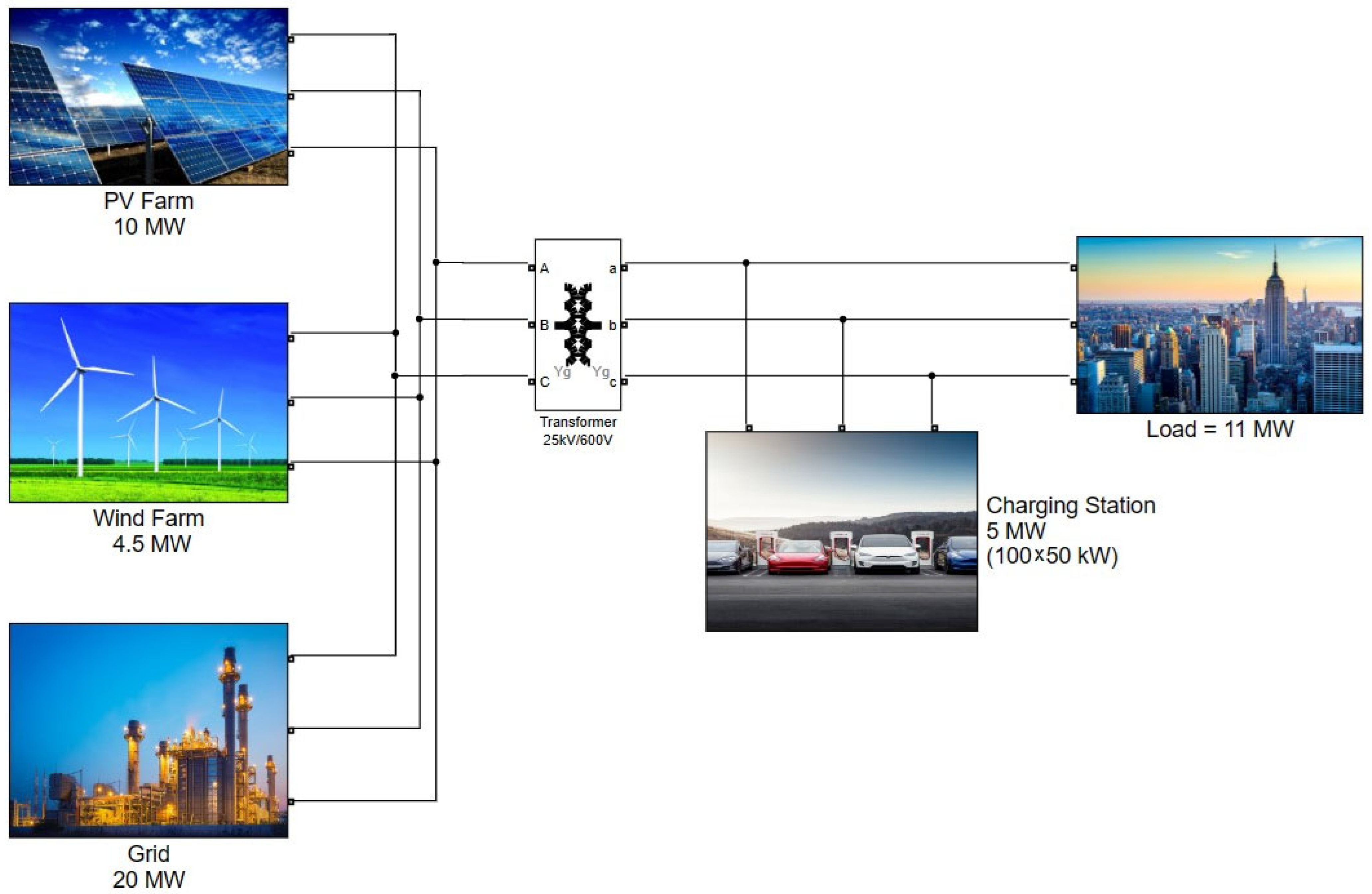
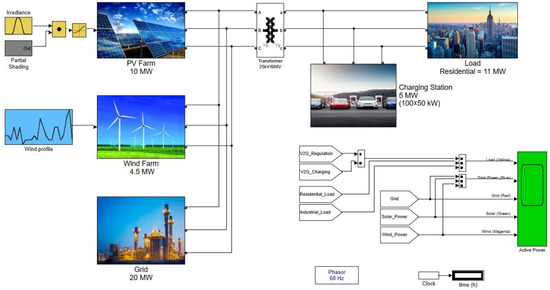
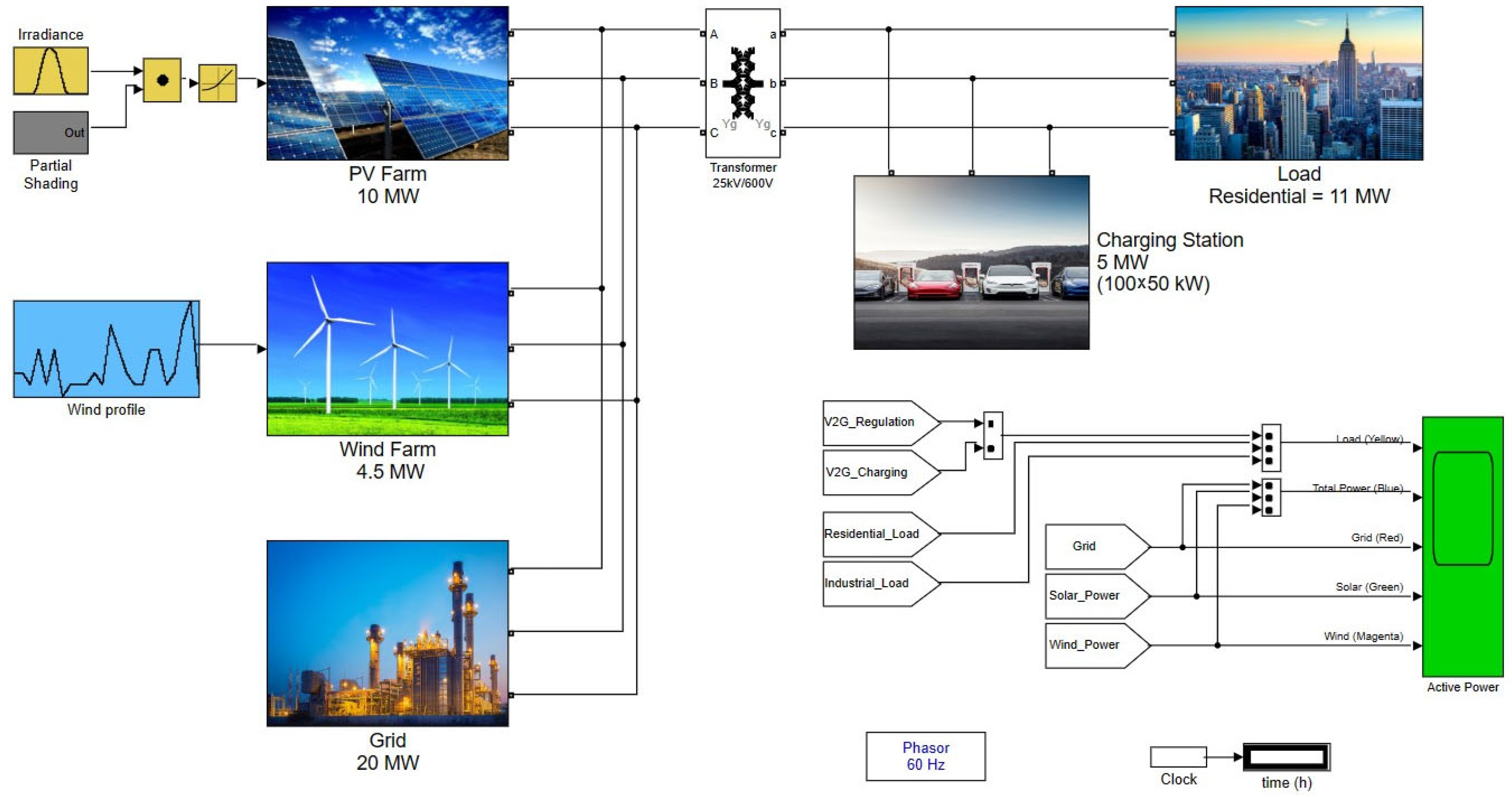
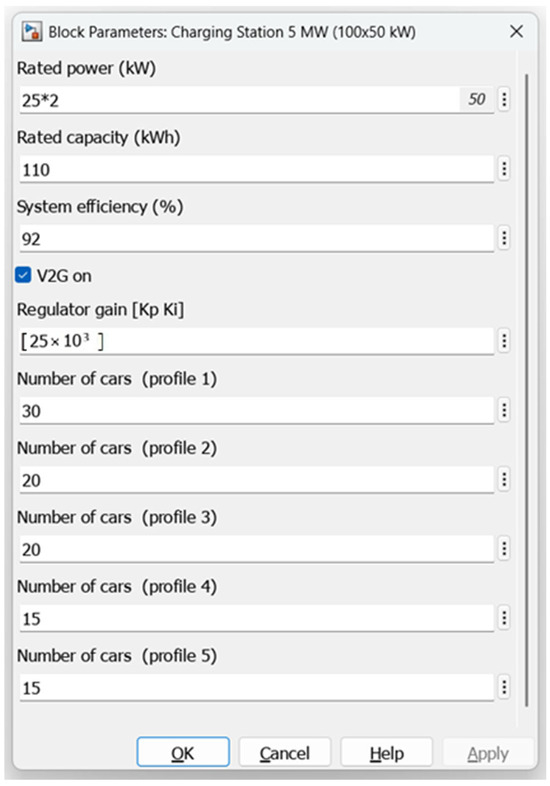
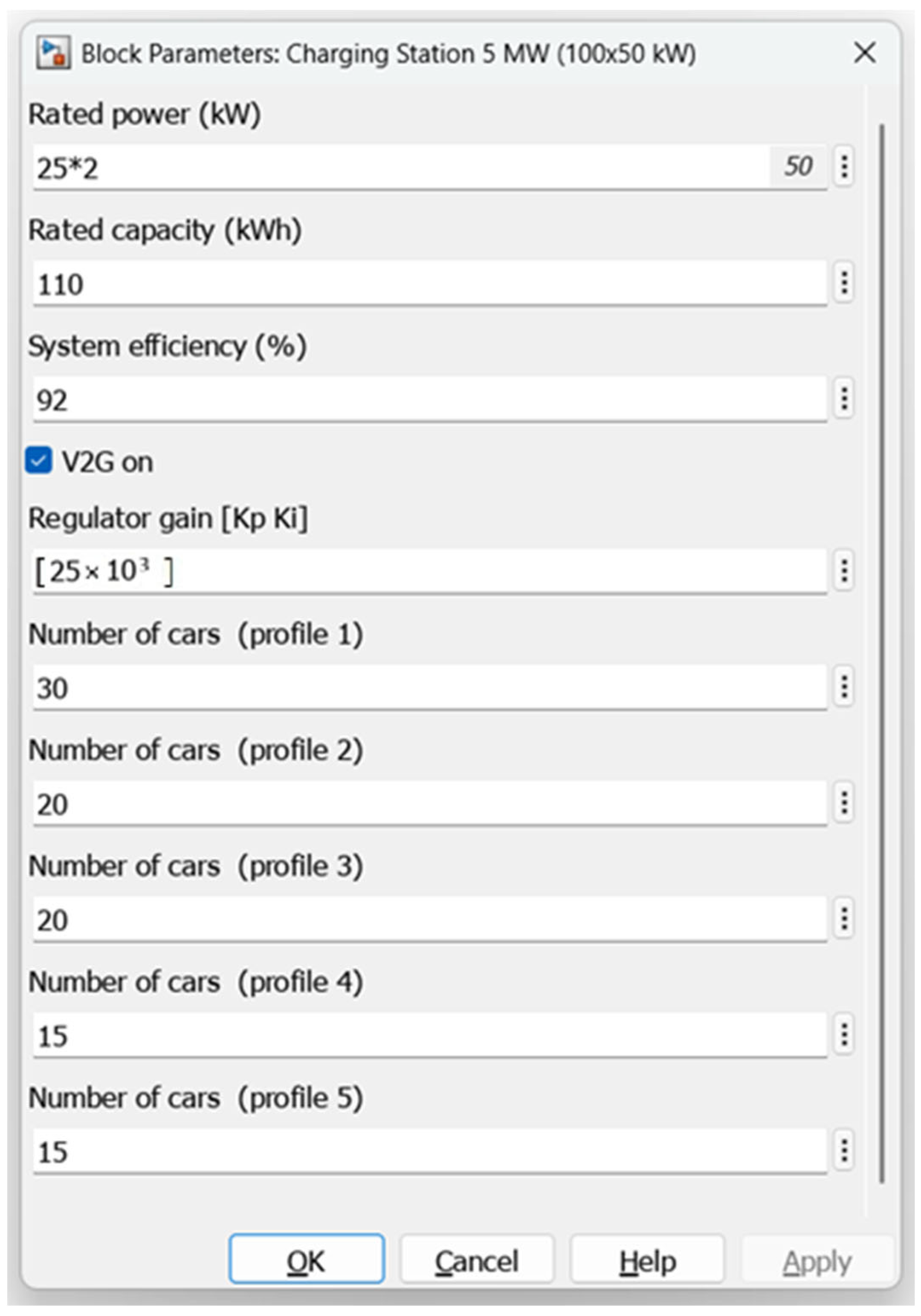
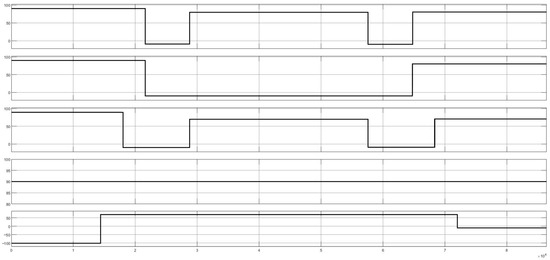
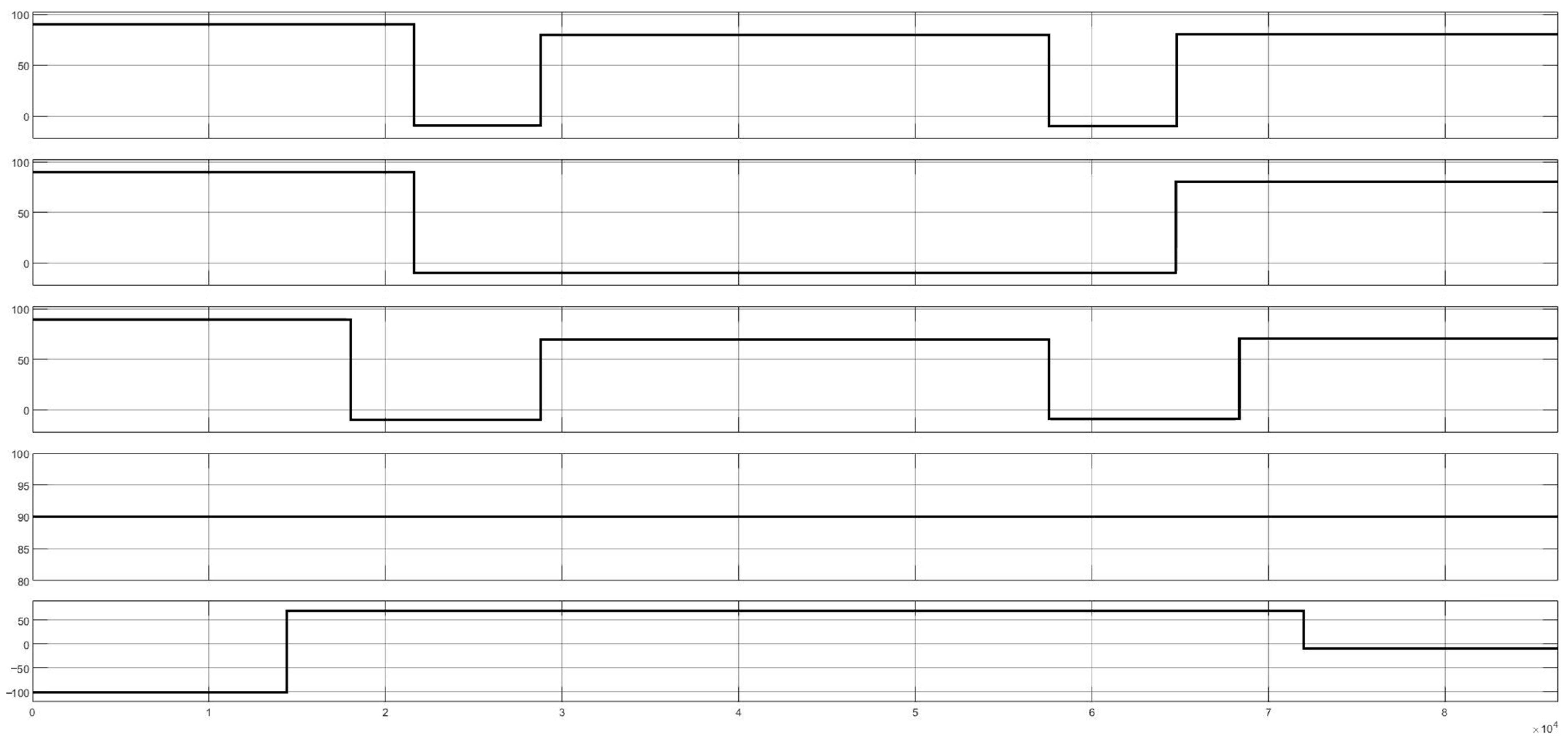
Figure 23 shows the simulation-based model block diagram of our system. Figure 24 shows the profiles of five types of workers included in the model. Such profiles can be modified to reflect the number of stations required, and all that would be needed is to alter the numbers in the block. Profile 1 is related to the employees who reach work and can charge their cars at work. Profile 2 is the one that reflects the employees who have a longer commute and who have the possibility of charging in the workplace. Profile 3 is one that shows employees who do not have access to on-site charging due to their commuting. Profile 4 deals with those employees who stay at home. Profile 5 is of night-shift employees [38,39].
Figure 23.
Simulink-based model block diagram.
Figure 24.
Vehicle profiles and parameters.
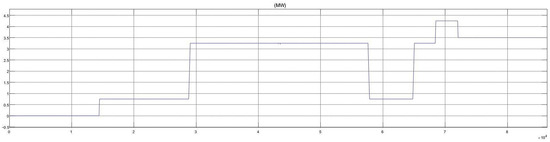
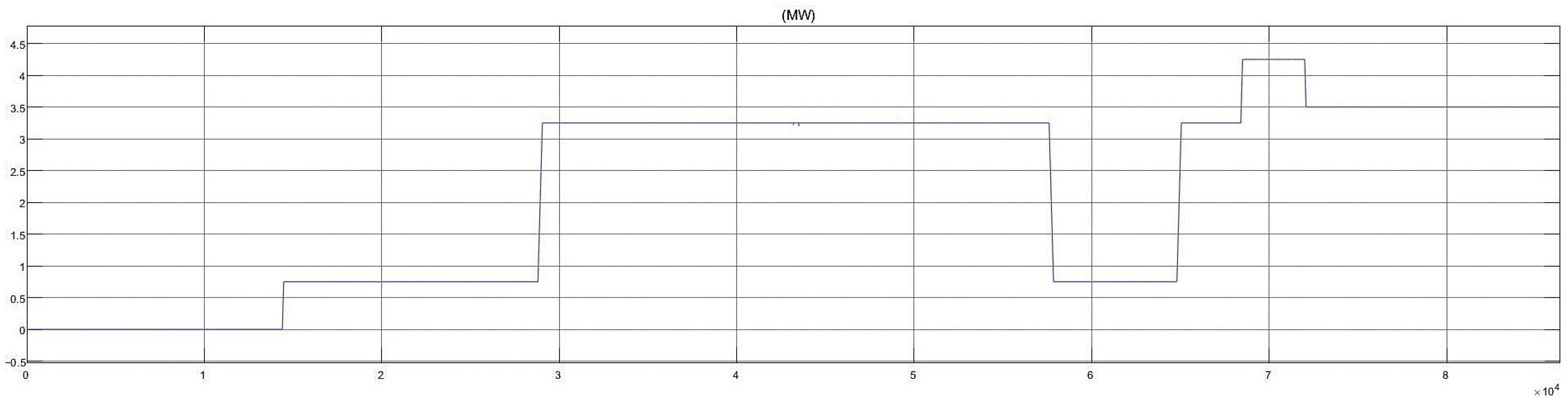
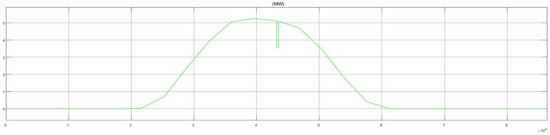
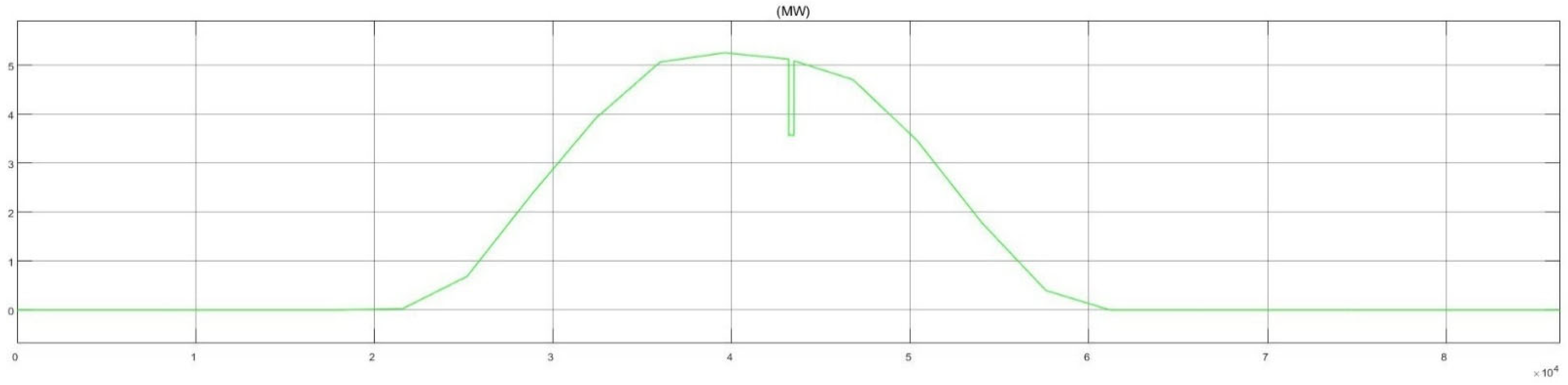
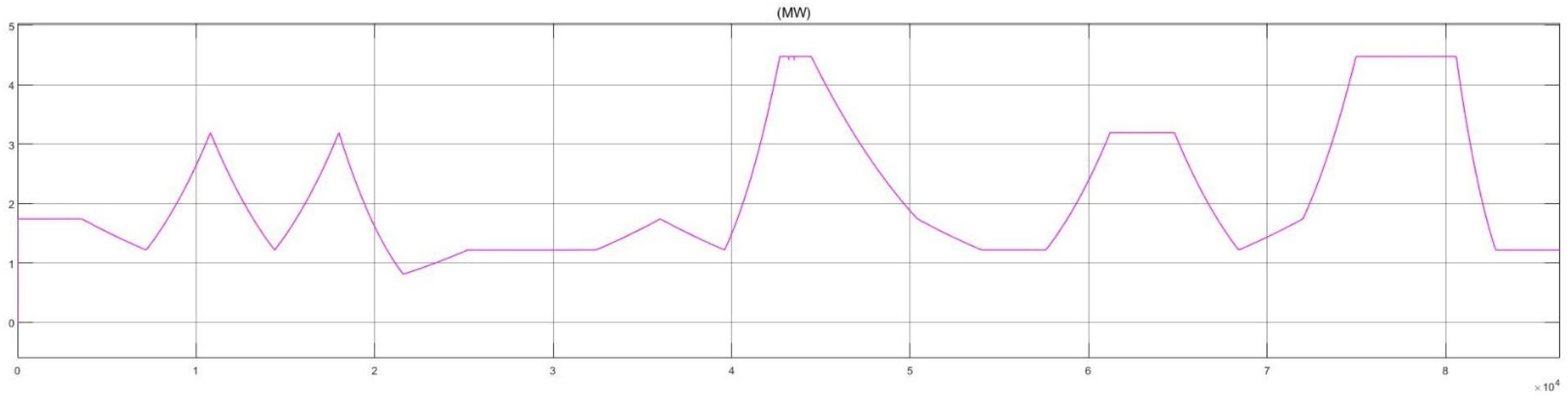
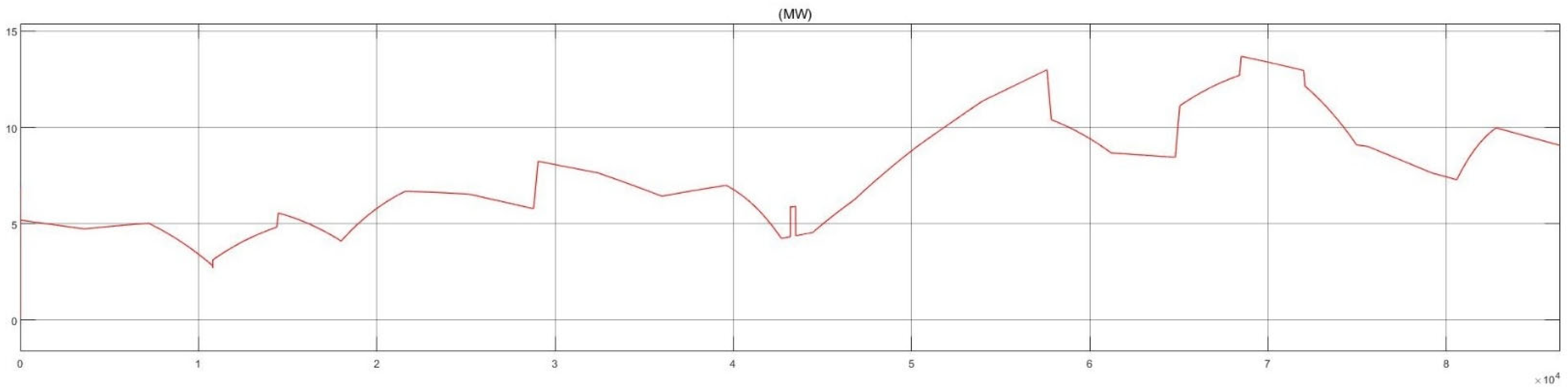
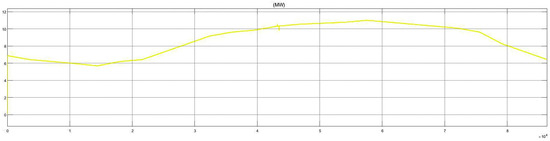
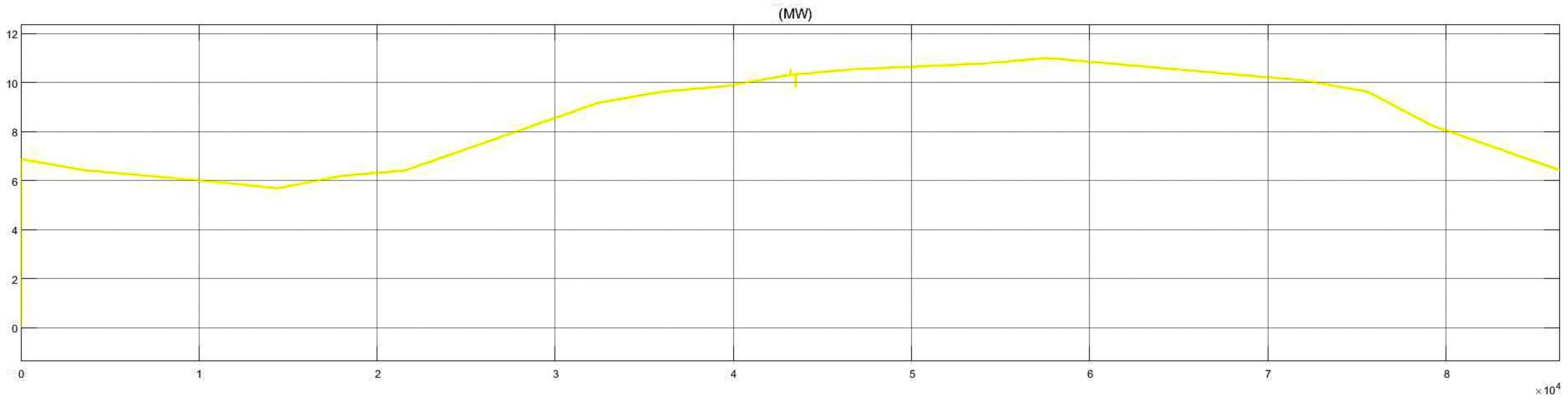
The charging profile of the electric vehicles is shown in Figure 25; Figure 26 and Figure 27 illustrate the solar and wind generation curves, respectively. Figure 28 represents the grid-sourced electricity; Figure 29 demonstrates the modeled load, and Figure 30 represents the state of charge (SOC) of the electric cars.
Figure 25.
EV charging profile.
Figure 26.
Solar energy availability curve.
Figure 27.
Wind energy availability curve.
Figure 28.
Energy withdrawn from grid.
Figure 29.
Load profile considered.
Figure 30.
State of charge of the EVs considered.
Accurate load forecasting is essential for balancing the intermittency of renewable sources and optimizing energy dispatch in SEVCS [40,41]. The results demonstrate that the proposed AI model can serve as a predictive engine for energy management systems (EMSs), allowing real-time scheduling of EV charging operations based on anticipated load conditions.
By forecasting future load with high precision, grid operators can achieve the following:
- Prioritize charging during periods of renewable energy surplus.
- Reduce dependency on fossil-fuel-based backup generators.
- Prevent transformer overloading and peak-hour congestion.
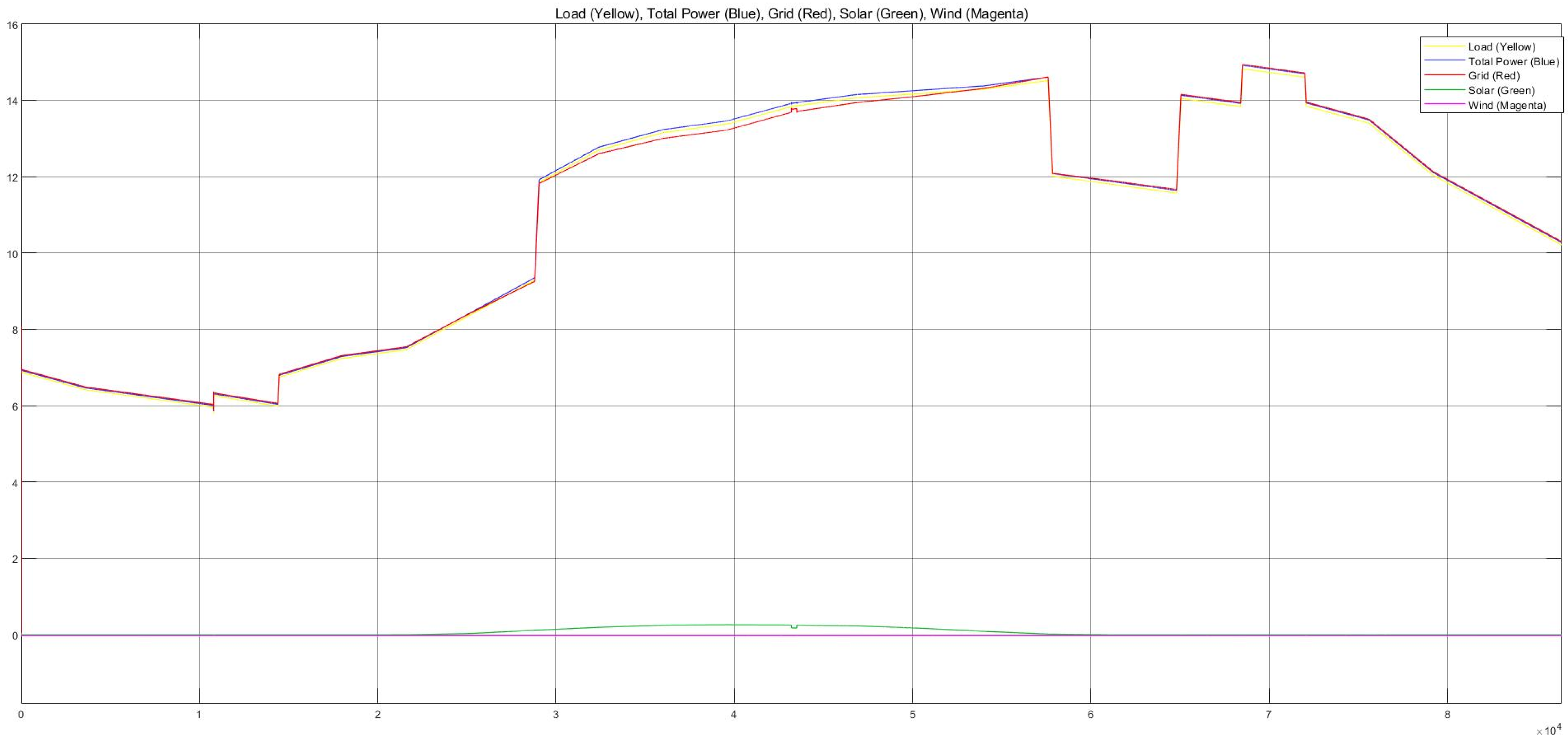
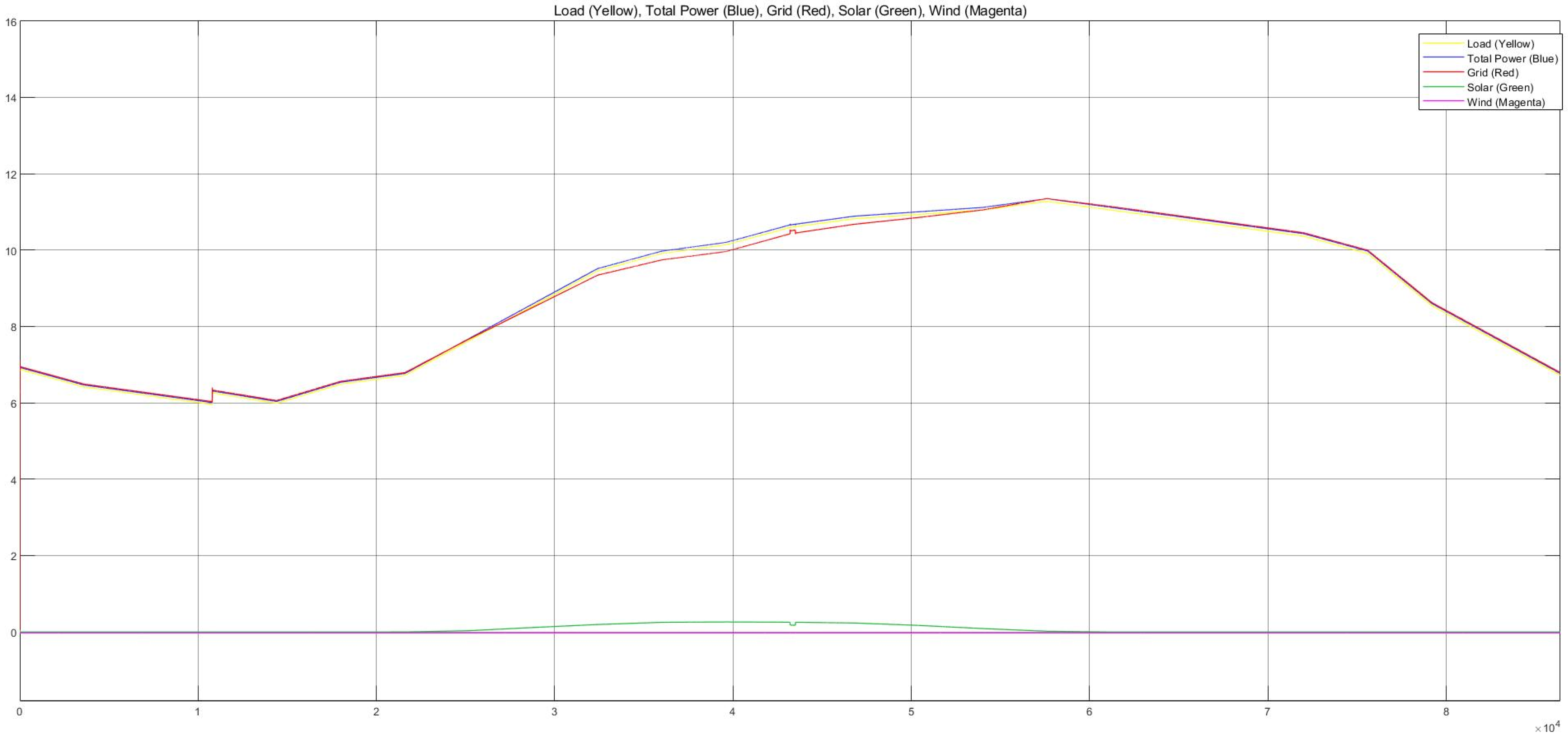
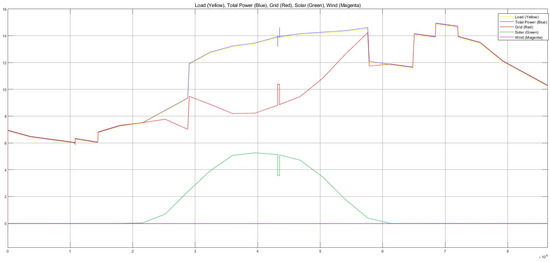
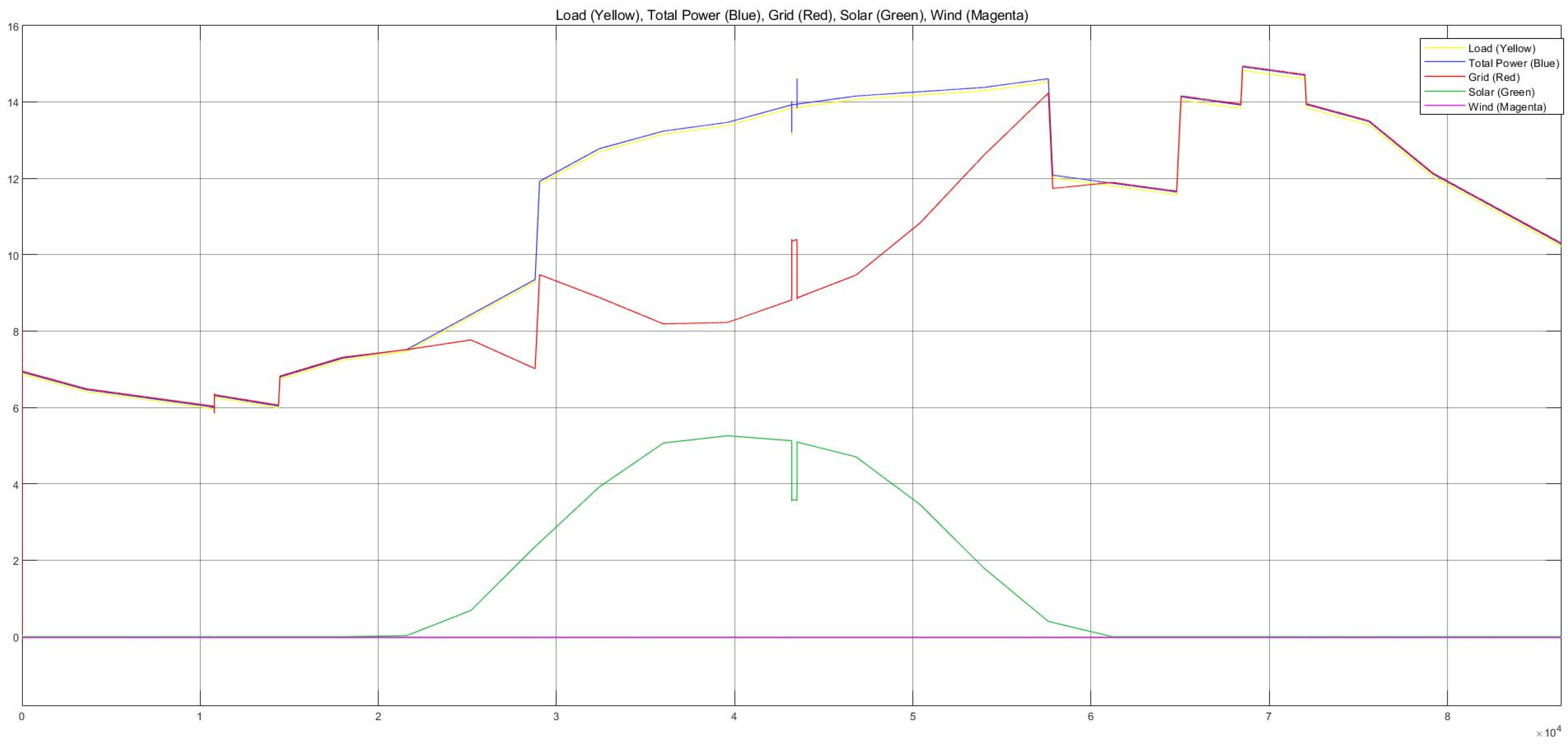
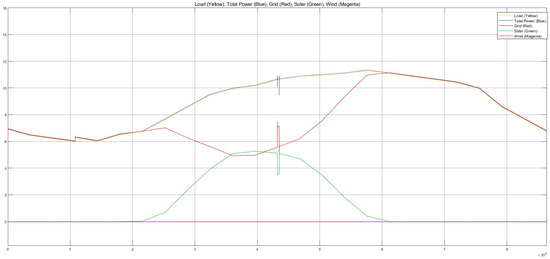
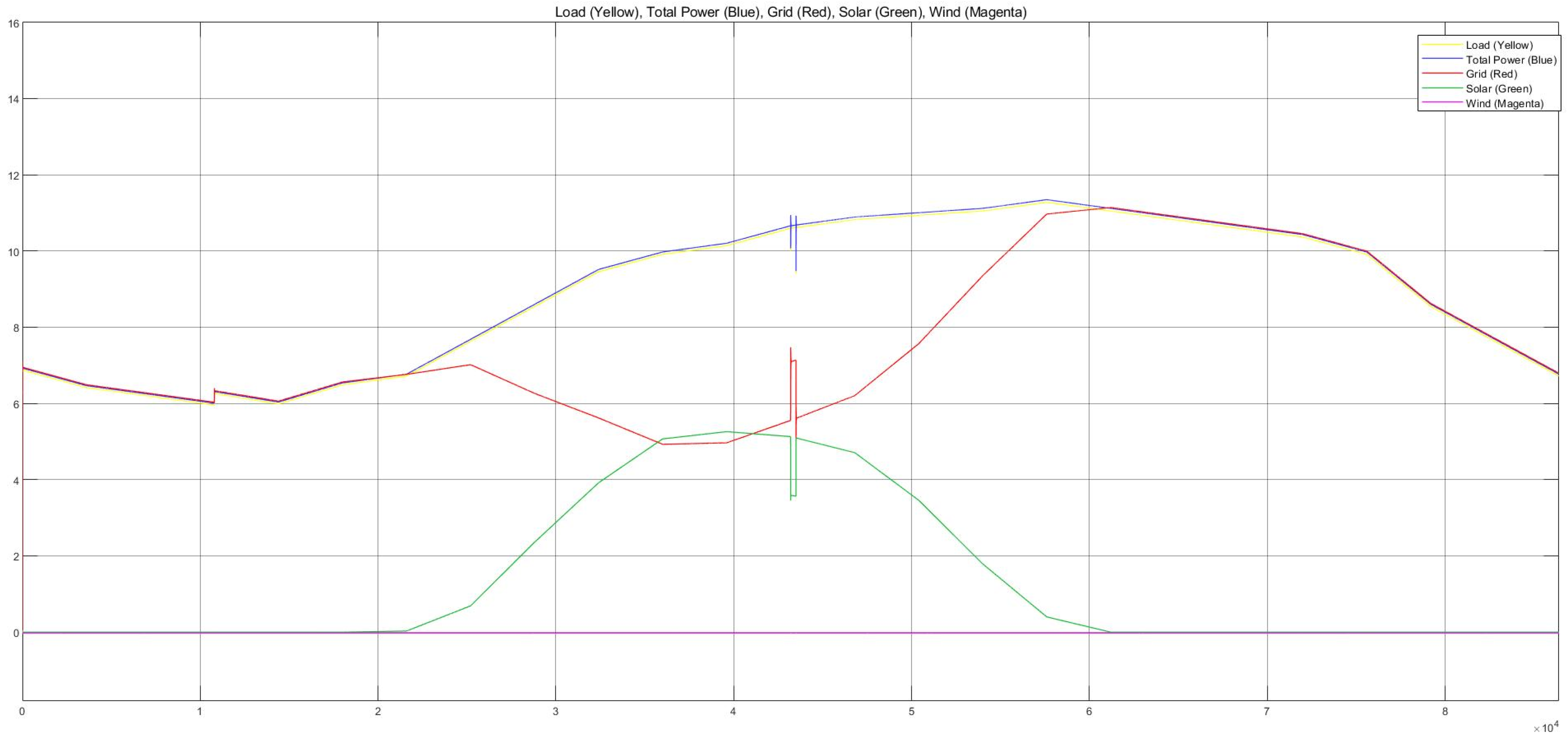
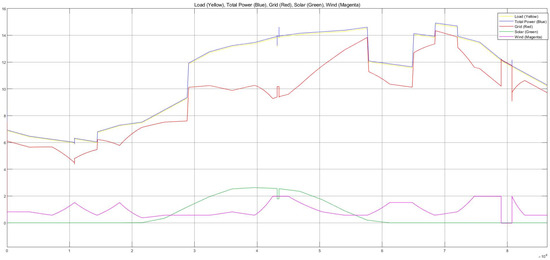
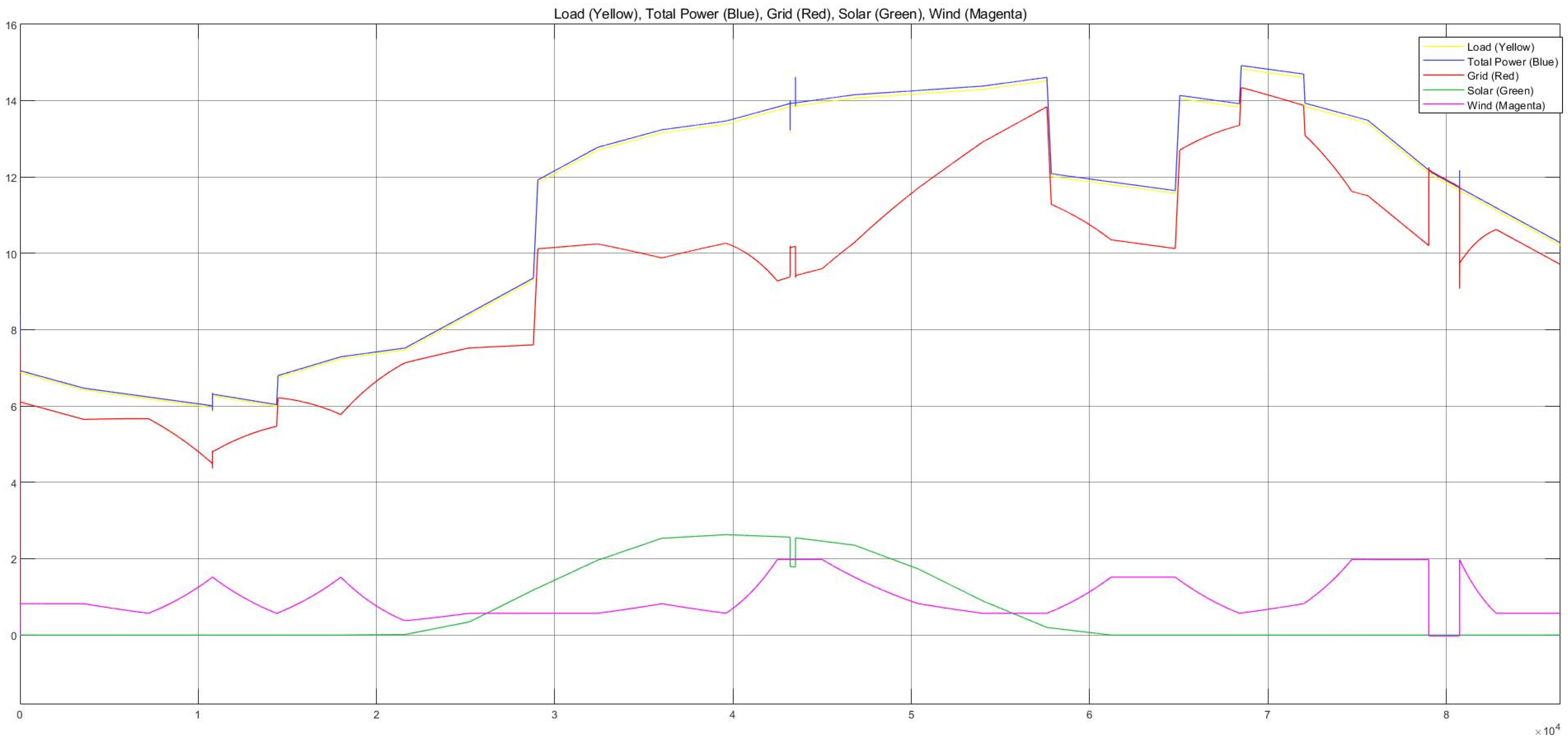
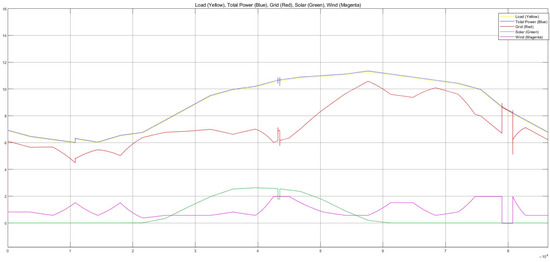
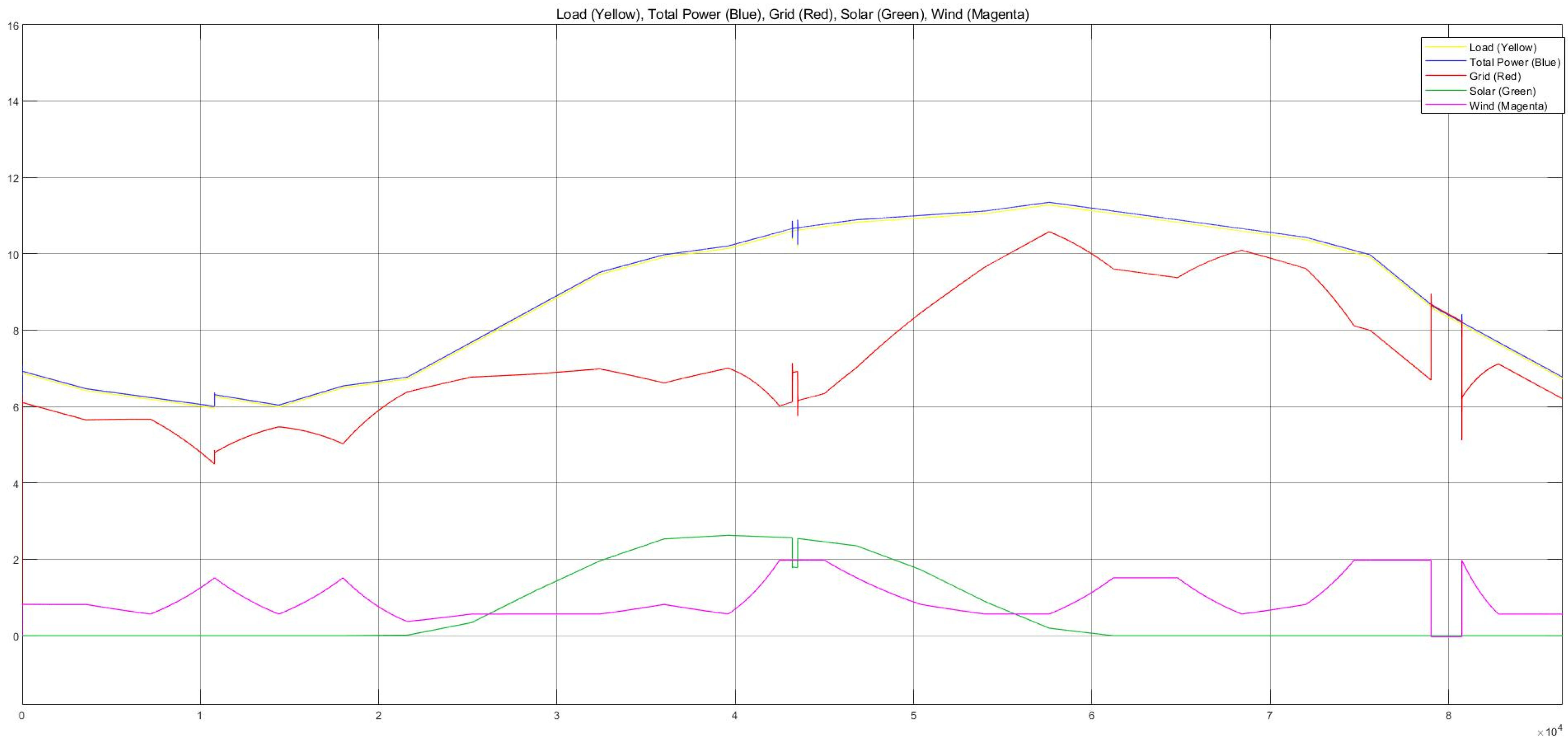
The baseline of the Simulink model output is shown in Figure 31. The output of the model in the scenario of charging mode is shown in Figure 32. The strong dichotomy highlights the importance of the system. These products measure the effect of charging electric vehicles on the total load and also how such involvement of renewable energy relieves the burden of the grid, as the red line shows the import of the grid. In ideal scenarios, the aggregate load would be followed by this line, but in the case of renewable generation, the load was relieved by decreasing the grid contribution [42].
Figure 31.
EV ON with 0% renewable penetration.
Figure 32.
EV OFF with 0% renewable penetration.
Table 3 shows the hourly-based output differences in quantitative values, where “C” represents charging and “Not-C” represents not charging.
Table 3.
Difference between charging and not charging.
In renewable-integrated SEVCS architectures, this predictive capability enables demand-side flexibility, where charging patterns adapt dynamically to renewable generation profiles. The methodology is therefore applicable not only to EV charging optimization but also to microgrid operation, distributed generation planning, and hybrid renewable energy systems [43].
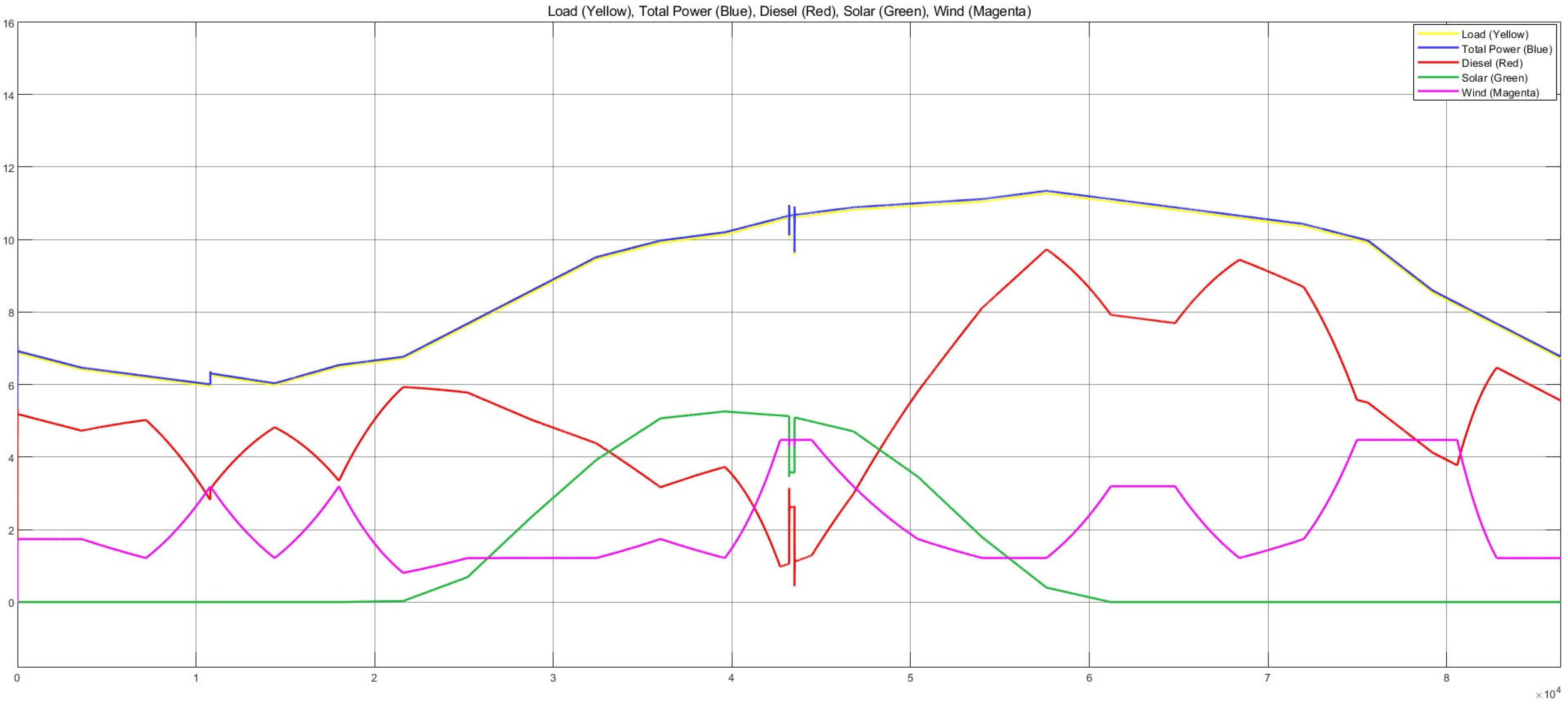
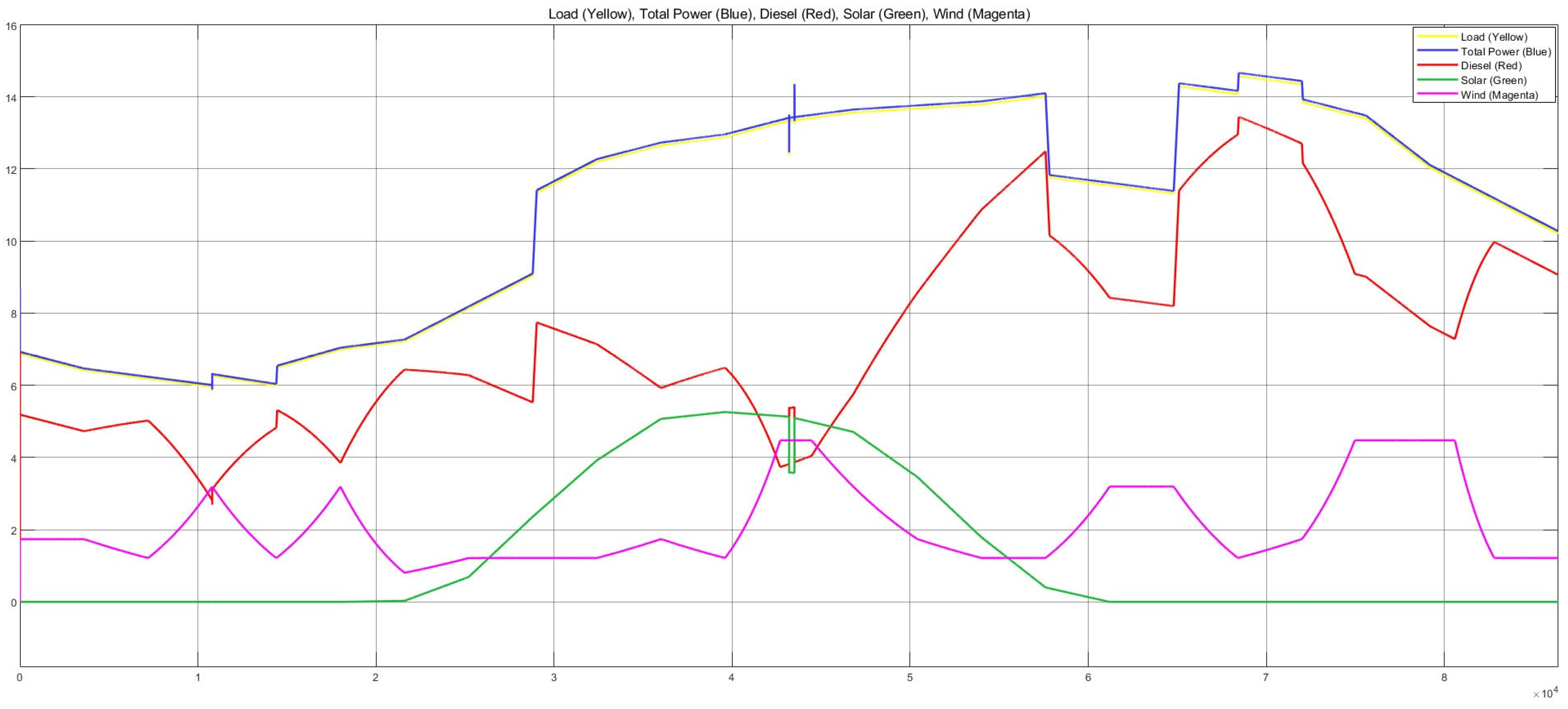
Figure 33 shows solar penetration on EV when its ON while Figure 34 shows when its OFF. Figure 35 shows 50% renewable (solar + wind) penetration on EV when its ON while Figure 36 shows when its OFF.
Figure 33.
EV ON with only solar penetration.
Figure 34.
EV OFF with only solar penetration.
Figure 35.
EV ON with 50% renewable penetration (solar + wind).
Figure 36.
EV OFF with 50% renewable penetration (solar + wind).
3.4. Analysis of Simulation and System Behavior
The Smart Electric Vehicle Charging Station (SEVCS) model was integrated into the MATLAB Simulink model with renewable and conventional energy subsystems. The simulation runs on a 24 h load cycle and 30 min resolution, which is in line with the temporal nature of the AI-predicted demand. The AI-based load forecasts are used as dynamic arguments to the energy management controller, which provides power using solar, wind, grid, and backup diesel depending on real-time availability and system priority. The system gives preference to photovoltaic generation during the high solar irradiance hours, and any surplus energy will be stored or charged to the EV. In case the renewable generation does not meet the projections, the model would automatically back up using grid generation or diesel generation to ensure continuity in supply. The EV charging subsystem switches between charging-on and charging-off depending on the supply of renewable energy and the forecasted changes in the loads. The simulation outputs prove the interaction of power flows between all the components, and the impact of the renewable sources when the circumstances are different. This can be seen in Figure 37 where charging is OFF while Figure 38 shows charging is ON while both getting 100% renewable penetration into the system. This shows a real-life example of how the AI model can be incorporated into a charging infrastructure based on renewable energy to be used in real life.
Figure 37.
Charging off with 100% renewable penetration (solar + wind).
Figure 38.
Charging on with 100% renewable penetration (solar + wind).
3.5. Comparison and Related Studies
Table 4 allows focusing on the performance of the current study and comparing it to representative previous research to put the results into perspective. As compared to other models, even though the presented framework was applied to the usual MATLAB modeling tools, the accuracy of the proposed framework was competitive due to the long-term data integration and the strict preprocessing. The combination guarantees the AI framework with the ability to model the real-world load demand and is computationally efficient and reproducible.
Table 4.
Comparison of related previous work.
Table 4 demonstrates that, despite the fact that advanced deep learning models like LSTM or DQN are able to achieve the same accuracy, they are based on smaller datasets or short-term conditions. However, according to this research, less complicated, well-organized AI models, when trained on longer-term, high-quality data, can provide just as effective output with more transparency and even lower computation costs.
3.6. Limitations and Future Improvements
Although the positive outcomes are obtained, some limitations are recognized. Temperature and wind speed were the main weather variables in the study; other weather variables that could be added to enhance the accuracy of load estimation are solar irradiance and humidity. Moreover, although the Neural Fitting model can effectively model nonlinear behavior, it does not necessarily support sequential temporal dependencies. Future developments may combine Recurrent Neural Networks (RNNs) or Long Short-Term Memory (LSTM)-based prediction of dynamic time series. Training is also another constraint due to its inactivity. The model was trained at once based on past data and not continuously trained. In the real world, online learning mechanisms would be needed in order to adjust to changing consumption patterns and the increase in EV adoption. These improvements may serve as the foundation for further development of the proposed framework.
4. Conclusions
This paper has provided an in-depth, data-driven AI modeling framework of renewable energy-based Smart Electric Vehicle Charging Stations (SEVCSs) based on the long-term historical load and weather data of New York City. The use of the Neural Fitting and Regression Learner models in MATLAB allowed proper prediction of the urban load behavior in the changing environmental conditions. Much data preprocessing, such as smoothing, interpolating, and synchronizing the data, made sure that the inputs well represented the dynamics of both time and meteorology, leading to a very steady dataset to train and validate the models.
The actionability of the proposed approach was justified by quantitative results. The Neural Fitting model was found to have an R2 of 0.93 and an MAPE of 4.9, which is better than the linear regression and persistence baseline model. The results confirm the possibility of lightweight and transparent AI systems being used in practice as SEVCS forecasting and management tools, particularly when trained on huge, high-quality datasets. The proposed model was found to be as accurate as deep learning frameworks that need complicated tuning with significantly lower computational cost and can be adapted to large-scale urban applications.
The main value of the work is the combination of long-term, multi-source environmental and electrical data to support the operation of the EV charging stations based on renewable energy. The study makes a breakthrough in terms of connecting data analytics with practical system modeling, which ensures that one can obtain a reproducible workflow that will guide the creation of AI-driven forecasting systems that will be able to support energy-efficient charging strategies and enhance grid stability. Moreover, the methodology could be modified in other metropolitan areas around the globe, especially where open-access data is present, and can be referred to in the future in smart grid projects.
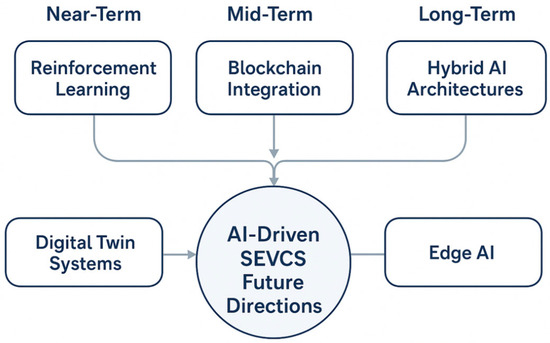
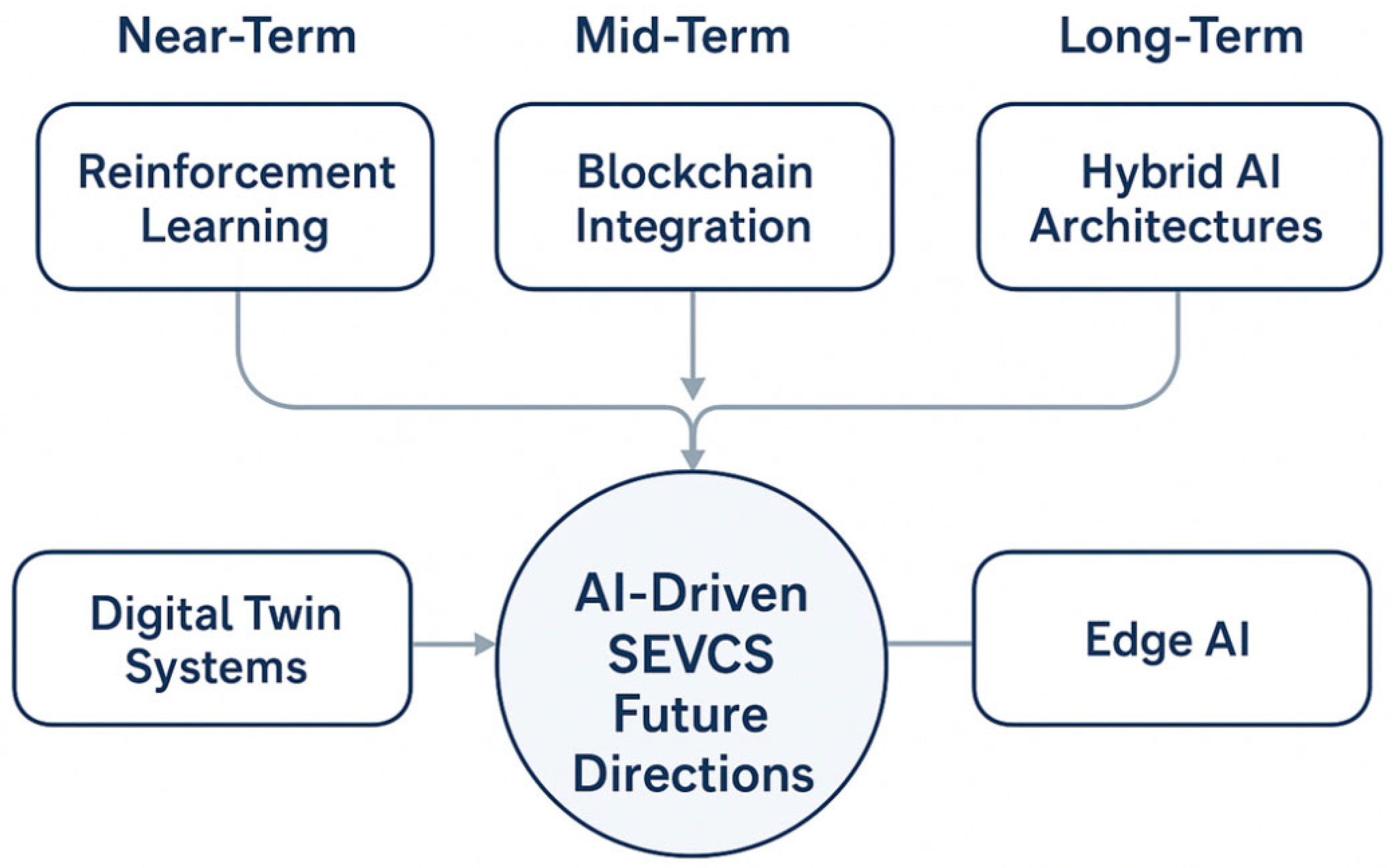
In prospect, future efforts will be directed towards extending the framework using hybrid deep learning models, such as the LSTM and reinforcement learning models, to improve the ability to adapt to time in more conditions and make independent decisions. The inclusion of other meteorological variables, including the sun irradiance, humidity, and atmospheric pressure, will further enhance the quality of prediction and allow closer integration between the renewable generation and the charging demand. Distributed SEVCS management could also be completed through the integration of edge computing and digital twin concepts to offer real-time intelligence. Figure 39 illustrates the prospective research roadmap for advancing AI-driven SEVCS frameworks toward higher autonomy, adaptability, and integration.
Figure 39.
Future work directions in the AI-driven SEVCS framework.
Overall, this research establishes a transparent and scalable foundation for the next generation of AI-enabled, renewable-integrated EV charging systems, contributing to the global transition toward sustainable electric mobility and low-carbon urban energy ecosystems.
Author Contributions
Conceptualization, H.B.S., F.H.M., M.O.K., and Z.M.H.; methodology, H.B.S., F.H.M., M.I.A., and Z.M.H.; software, H.B.S., M.I.A., M.O.K., and M.J.A.; validation, F.H.M., Z.M.H., M.O.K., and M.J.A.; formal analysis, H.B.S., M.I.A., M.O.K., and M.J.A.; investigation, F.H.M., M.O.K., Z.M.H., and M.J.A.; resources, F.H.M., M.O.K., Z.M.H., and M.J.A.; data curation, M.I.A., M.O.K., and Z.M.H.; writing—original draft preparation, H.B.S., M.O.K., and Z.M.H.; writing—review and editing, F.H.M., M.I.A., and M.J.A.; visualization, F.H.M., Z.M.H., and M.J.A.; supervision, M.O.K. and Z.M.H. All authors have read and agreed to the published version of the manuscript.
Funding
This research received no external funding.
Institutional Review Board Statement
Not applicable.
Informed Consent Statement
Not applicable.
Data Availability Statement
The data supporting the findings of this study are available upon request from the corresponding author.
Acknowledgments
The authors are very grateful to the Office of Research, Innovation, and Commercialization (ORIC), The Islamia University of Bahawalpur, Pakistan (No. 3900/ORIC/IUB/2021), for their support in this study.
Conflicts of Interest
The authors declare no conflicts of interest.
Abbreviations
The following abbreviations are used in this manuscript:
| AI | Artificial intelligence |
| CO2 | Carbon Dioxide |
| CSP | Concentrating Solar-Thermal Power |
| DC | Direct Current |
| EV | Electric vehicle |
| G2V | Grid to Vehicle |
| GW | Gigawatt |
| kW | Kilowatt |
| MW | Megawatt |
| PV | Photovoltaic |
| REBSCS | Renewable Energy-Based Smart Charging Station |
| SEVCS | Smart Electric Vehicle Charging Station |
| TOU | Time of Use |
| V2G | Vehicle to Grid |
References
- Chien, F.; Hsu, C.-C.; Ozturk, I.; Sharif, A.; Sadiq, M. The role of renewable energy and urbanization towards greenhouse gas emission in top Asian countries: Evidence from advance panel estimations. Renew. Energy 2022, 186, 207–216. [Google Scholar] [CrossRef] [Scilit]
- Lu, Y.; Shao, M.; Zheng, C.; Ji, H.; Gao, X.; Wang, Q. Air pollutant emissions from fossil fuel consumption in China: Current status and future predictions. Atmos. Environ. 2020, 231, 117536. [Google Scholar]
- Abbasi, K.R.; Shahbaz, M.; Zhang, J.; Irfan, M.; Alvarado, R. Analyze the environmental sustainability factors of China: The role of fossil fuel energy and renewable energy. Renew. Energy 2022, 187, 390–402. [Google Scholar] [CrossRef] [Scilit]
- Voumik, L.C.; Islam, A.; Ray, S.; Yusop, N.Y.M.; Ridzuan, A.R. CO2 emissions from renewable and non-renewable electricity generation sources in the G7 countries: Static and dynamic panel assessment. Energies 2023, 16, 1044. [Google Scholar] [CrossRef] [Scilit]
- Zafar, M.W.; Shahbaz, M.; Sinha, A.; Sengupta, T.; Qin, Q. How renewable energy consumption contribute to environmental quality? The role of education in OECD countries. J. Clean. Prod. 2020, 268, 122149. [Google Scholar] [CrossRef] [Scilit]
- Olabi, A.G.; Mahmoud, M.; Soudan, B.; Wilberforce, T.; Ramadan, M. Geothermal based hybrid energy systems, toward eco-friendly energy approaches. Renew. Energy 2020, 147, 2003–2012. [Google Scholar] [CrossRef] [Scilit]
- Lu, Y.; Khan, Z.A.; Alvarez-Alvarado, M.S.; Zhang, Y.; Huang, Z.; Imran, M. A critical review of sustainable energy policies for the promotion of renewable energy sources. Sustainability 2020, 12, 5078. [Google Scholar] [CrossRef] [Scilit]
- Gozgor, G.; Mahalik, M.K.; Demir, E.; Padhan, H. The impact of economic globalization on renewable energy in the OECD countries. Energy Policy 2020, 139, 111365. [Google Scholar] [CrossRef] [Scilit]
- Kanwal, S.; Mehran, M.T.; Hassan, M.; Anwar, M.; Naqvi, S.R.; Khoja, A.H. An integrated future approach for the energy security of Pakistan: Replacement of fossil fuels with syngas for better environment and socio-economic development. Renew. Sustain. Energy Rev. 2022, 156, 111978. [Google Scholar] [CrossRef] [Scilit]
- Vinuesa, R.; Azizpour, H.; Leite, I.; Balaam, M.; Dignum, V.; Domisch, S.; Felländer, A.; Langhans, S.D.; Tegmark, M.; Nerini, F.F. The role of artificial intelligence in achieving the Sustainable Development Goals. Nat. Commun. 2020, 11, 233. [Google Scholar] [CrossRef] [Scilit]
- Koch, N. Greening oil money: The geopolitics of energy finance going green. Energy Res. Soc. Sci. 2022, 93, 102833. [Google Scholar] [CrossRef] [Scilit]
- Ji, D.; Lv, M.; Yang, J.; Yi, W. Optimizing the locations and sizes of solar assisted electric vehicle charging stations in an urban area. IEEE Access 2020, 8, 112772–112782. [Google Scholar] [CrossRef] [Scilit]
- Sheng, M.S.; Sreenivasan, A.V.; Sharp, B.; Du, B. Well-to-wheel analysis of greenhouse gas emissions and energy consumption for electric vehicles: A comparative study in Oceania. Energy Policy 2021, 158, 112552. [Google Scholar]
- Zheng, Y.; He, X.; Wang, H.; Wang, M.; Zhang, S.; Ma, D.; Wang, B.; Wu, Y. Well-to-wheels greenhouse gas and air pollutant emissions from battery electric vehicles in China. Mitig. Adapt. Strateg. Glob. Change 2020, 25, 355–370. [Google Scholar] [CrossRef] [Scilit]
- Sharifi, P.; Banerjee, A.; Feizollahi, M.J. Leveraging owners’ flexibility in smart charge/discharge scheduling of electric vehicles to support renewable energy integration. Comput. Ind. Eng. 2020, 149, 106762. [Google Scholar] [CrossRef] [Scilit]
- Sun, H.; Jing, P.; Wang, B.; Cai, Y.; Ye, J.; Wang, B. The effect of record-high gasoline prices on the consumers’ new energy vehicle purchase intention: Evidence from the uniform experimental design. Energy Policy 2023, 175, 113500. [Google Scholar] [CrossRef] [Scilit]
- White, L.V.; Carrel, A.L.; Shi, W.; Sintov, N.D. Why are charging stations associated with electric vehicle adoption? Untangling effects in three United States metropolitan areas. Energy Res. Soc. Sci. 2022, 89, 102663. [Google Scholar] [CrossRef] [Scilit]
- Chawla, U.; Mohnot, R.; Mishra, V.; Singh, H.V.; Singh, A.K. Factors Influencing Customer Preference and Adoption of Electric Vehicles in India: A Journey towards More Sustainable Transportation. Sustainability 2023, 15, 7020. [Google Scholar] [CrossRef] [Scilit]
- Bhattacharyya, S.S.; Thakre, S. Exploring the factors influencing electric vehicle adoption: An empirical investigation in the emerging economy context of India. Foresight 2021, 23, 311–326. [Google Scholar]
- Luo, T.; Song, Y.; Li, G. An agent-based simulation study for escaping the “chicken-egg” dilemma between electric vehicle penetration and charging infrastructure deployment. Resour. Conserv. Recycl. 2023, 194, 106966. [Google Scholar]
- Shi, L.; Hao, Y.; Lv, S.; Cipcigan, L.; Liang, J. A comprehensive charging network planning scheme for promoting EV charging infrastructure considering the Chicken-Eggs dilemma. Res. Transp. Econ. 2021, 88, 100837. [Google Scholar] [CrossRef] [Scilit]
- Thananusak, T.; Punnakitikashem, P.; Tanthasith, S.; Kongarchapatara, B. The development of electric vehicle charging stations in Thailand: Policies, players, and key issues (2015–2020). World Electr. Veh. J. 2020, 12, 2. [Google Scholar] [CrossRef] [Scilit]
- Tiwari, D. Application of Artificial Intelligence in Three Phase Unbalanced Smart Power Distribution Grid. Ph.D. Thesis, West Virginia University, Morgantown, WV, USA, 2021. [Google Scholar]
- Ahmad, T.; Zhang, D.; Huang, C.; Zhang, H.; Dai, N.; Song, Y.; Chen, H. Artificial intelligence in sustainable energy industry: Status Quo, challenges and opportunities. J. Clean. Prod. 2021, 289, 125834. [Google Scholar] [CrossRef] [Scilit]
- Nozari, H.; Szmelter-Jarosz, A.; Ghahremani-Nahr, J. Analysis of the Challenges of Artificial Intelligence of Things (AIoT) for the Smart Supply Chain (Case Study: FMCG Industries). Sensors 2022, 22, 2931. [Google Scholar] [CrossRef] [Scilit] [PubMed]
- Bauer, G.S.; Zheng, C.; Shaheen, S.; Kammen, D.M. Leveraging Big Data and Coordinated Charging for Effective Taxi Fleet Electrification: The 100% EV Conversion of Shenzhen, China. IEEE Trans. Intell. Transp. Syst. 2021, 23, 10343–10353. [Google Scholar] [CrossRef] [Scilit]
- Abid, M.; Tabaa, M.; Chakir, A.; Hachimi, H. Routing and charging of electric vehicles: Literature review. Energy Rep. 2022, 8, 556–578. [Google Scholar] [CrossRef] [Scilit]
- ElHusseini, H.; Assi, C.; Moussa, B.; Attallah, R.; Ghrayeb, A. Blockchain, AI and smart grids: The three musketeers to a decentralized EV charging infrastructure. IEEE Internet Things Mag. 2020, 3, 24–29. [Google Scholar] [CrossRef] [Scilit]
- Adak, D.; Bhattacharyya, R.; Barshilia, H.C. A state-of-the-art review on the multifunctional self-cleaning nanostructured coatings for PV panels, CSP mirrors and related solar devices. Renew. Sustain. Energy Rev. 2022, 159, 112145. [Google Scholar]
- Virtanen, E.; Lappalainen, J.; Nurmi, M.; Viitasalo, M.; Tikanmäki, M.; Heinonen, J.; Atlaskin, E.; Kallasvuo, M.; Tikkanen, H.; Moilanen, A. Balancing profitability of energy production, societal impacts and biodiversity in offshore wind farm design. Renew. Sustain. Energy Rev. 2022, 158, 112087. [Google Scholar] [CrossRef] [Scilit]
- Rivera, S.; Kouro, S.; Vazquez, S.; Goetz, S.M.; Lizana, R.; Romero-Cadaval, E. Electric vehicle charging infrastructure: From grid to battery. IEEE Ind. Electron. Mag. 2021, 15, 37–51. [Google Scholar] [CrossRef] [Scilit]
- Thangavel, S.; Mohanraj, D.; Girijaprasanna, T.; Raju, S.; Dhanamjayulu, C.; Muyeen, S.M. A Comprehensive Review on Electric Vehicle: Battery Management System, Charging Station, Traction Motors. IEEE Access 2023, 11, 20994–21019. [Google Scholar] [CrossRef] [Scilit]
- Powar, V.; Singh, R. End-to-End Direct-Current-Based Extreme Fast Electric Vehicle Charging Infrastructure Using Lithium-Ion Battery Storage. Batteries 2023, 9, 169. [Google Scholar] [CrossRef] [Scilit]
- Shah, A.; Shah, K.; Shah, C.; Shah, M. State of charge, remaining useful life and knee point estimation based on artificial intelligence and machine learning in lithium-ion EV batteries: A comprehensive review. Renew. Energy Focus 2022, 42, 146–164. [Google Scholar] [CrossRef] [Scilit]
- Dabbaghjamanesh, M.; Moeini, A.; Kavousi-Fard, A. Reinforcement learning-based load forecasting of electric vehicle charging station using Q-learning technique. IEEE Trans. Ind. Inform. 2020, 17, 4229–4237. [Google Scholar]
- Ahmed, M.; Zheng, Y.; Amine, A.; Fathiannasab, H.; Chen, Z. The role of artificial intelligence in the mass adoption of electric vehicles. Joule 2021, 5, 2296–2322. [Google Scholar] [CrossRef] [Scilit]
- Feng, J.; Yang, J.; Li, Y.; Wang, H.; Ji, H.; Yang, W.; Wang, K. Load forecasting of electric vehicle charging station based on grey theory and neural network. Energy Rep. 2021, 7, 487–492. [Google Scholar] [CrossRef] [Scilit]
- Ahmad, F.; Iqbal, A.; Ashraf, I.; Marzband, M.; Khan, I. Optimal location of electric vehicle charging station and its impact on distribution network: A review. Energy Rep. 2022, 8, 2314–2333. [Google Scholar] [CrossRef] [Scilit]
- Das, H.S.; Rahman, M.M.; Li, S.; Tan, C.W. Electric vehicles standards, charging infrastructure, and impact on grid integration: A technological review. Renew. Sustain. Energy Rev. 2020, 120, 109618. [Google Scholar] [CrossRef] [Scilit]
- Gharbaoui, M.; Valcarenghi, L.; Brunoi, R.; Martini, B.; Conti, M.; Castoldi, P. An advanced smart management system for electric vehicle recharge. In Proceedings of the 2012 IEEE International Electric Vehicle Conference, Greenville, SC, USA, 4–8 March 2012; IEEE: New York, NY, USA, 2012; pp. 1–8. [Google Scholar]
- Fernandes, F.; Morais, H.; Vale, Z.; Ramos, C. Dynamic load management in a smart home to participate in demand response events. Energy Build. 2014, 82, 592–606. [Google Scholar] [CrossRef] [Scilit]
- de Brey, B. Smart Solar Charging: Bi-Directional AC Charging (V2G) in the Netherlands. J. Energy Power Eng. 2017, 11, 483–490. [Google Scholar] [CrossRef] [Scilit]
- Kungl, G. The Incumbent German Power Companies in a Changing Environment: A Comparison of E. ON, RWE, EnBW and Vattenfall from 1998 to 2013; Universität Stuttgart, Institut für Sozialwissenschaften, Abteilung für Organisations- und Innovationssoziologie, Stuttgart: Stuttgart, Germany, 2014. [Google Scholar]

Disclaimer/Publisher’s Note: The statements, opinions and data contained in all publications are solely those of the individual author(s) and contributor(s) and not of MDPI and/or the editor(s). MDPI and/or the editor(s) disclaim responsibility for any injury to people or property resulting from any ideas, methods, instructions or products referred to in the content. |
© 2026 by the authors. Published by MDPI on behalf of the World Electric Vehicle Association. Licensee MDPI, Basel, Switzerland. This article is an open access article distributed under the terms and conditions of the Creative Commons Attribution (CC BY) license.