

User Experience of Public Electric Vehicle Charging Infrastructure in Shanghai: A Quantitative Analysis



Abstract
1. Introduction
2. Literature Review
2.1. Public Charging Infrastructure in China and Shanghai
2.2. User Experience as a Critical Success Factor
2.3. Factors Influencing Charging Infrastructure Satisfaction
3. Research Methodology
3.1. Research Framework Design
3.2. Instrument Development
- Demographic Information;
- Usage Patterns;
- Satisfaction with Infrastructure Attributes (e.g., cost, layout, speed, signage);
- Perceptions of Safety and Value-added Services.
3.3. Conceptualization of User Satisfaction
- Infrastructure layout and accessibility: The spatial distribution and proximity of charging stations relative to users’ daily travel and residential patterns.
- Cost and pricing transparency: Users’ perceptions of affordability, fairness, and clarity in charging fees.
- Safety and environmental reassurance: Features such as lighting, surveillance, and general security that contribute to comfort and perceived reliability.
- Service quality and usability: Operational efficiency, interface clarity, payment convenience, and responsiveness to malfunctions.
3.4. Data Collection Procedure
- Questionnaire Star, the country’s largest online survey platform;
- WeChat, a social application with integrated distribution and targeting functions.
- Completion time: surveys completed in under one minute were excluded;
- Straight-line answering: responses showing uniform answers across items were removed;
- Duplicated IP addresses: multiple submissions from the same IP were excluded;
- Location: only respondents reporting residence in Shanghai were retained.
3.5. Data Preprocessing and Validation
- Missing values;
- Outliers;
- Response consistency.
3.6. Statistical Analysis Strategy
- Descriptive Statistics—To summarize respondent profiles and satisfaction distributions, measures such as means, standard deviations, and frequency tables were computed.
- Inferential Analysis—Multiple linear regression was used to identify predictors of overall user satisfaction.
- Independent variables included:
- Frequency of use;
- Perceived cost;
- Safety perception;
- Convenience and infrastructure features.
3.7. Ethical and Legal Compliance

| QUESS-PAC: Quantitative User Experience Survey Strategy for Public EV Charging Analysis in Cities BEGIN QUESS_PAC_Study //1. Define Research Framework SET Research_Philosophy = “Positivism” SET Research_Approach = “Deductive” SET Research_Strategy = “Cross-sectional Online Survey” SET Method_Type = “Mono-method Quantitative” //2. Design Questionnaire INITIALIZE Questionnaire with Sections: - Demographics - Usage_Patterns - Infrastructure_Satisfaction (cost, speed, layout, etc.) - Safety_And_Auxiliary_Perception SET Scale_Type = “5-point Likert” PERFORM Pilot_Test on N_pilot = 15 REFINE Questionnaire based on Pilot_Feedback //3. Data Collection SET Collection_Window = [June 5, 2024 → June 20, 2024] SET Platforms = [“Questionnaire Star”, “WeChat”] DISTRIBUTE Questionnaire via Platforms RECEIVE Responses_Total = 206 FILTER Responses_Valid where: - Time > 1 min - Location = “Shanghai” SET Responses_Final = 197 //4. Data Preprocessing and Validation REMOVE Outliers CHECK Missing_Values VALIDATE Response_Consistency //5. Statistical Analysis LOAD Data into SPSS COMPUTE Descriptive_Statistics: - Means, SD, Frequencies PERFORM Multiple_Linear_Regression: - DV = Overall_Satisfaction - IVs = [Usage_Frequency, Cost_Perception, Safety_Perception, etc.] EVALUATE Model_Fit: - R2, Adjusted R2, p-values - Check Multicollinearity (VIF) //6. Ethical and Legal Compliance OBTAIN Ethics_Approval from “Newcastle University” INFORM Participants via Consent_Form ANONYMIZE Data STORE Data Securely under PIPL_Compliance //7. Document Limitations IDENTIFY Limitations: - Self-report bias - Tech-literacy bias - Short time window RETURN Insights_for_Policy_and_Planning END QUESS_PAC_Study |
4. Experimental Results
4.1. Measurement of Reliability and Validity
4.2. Demographic Profile
4.3. Descriptive Statistics of Satisfaction Variables
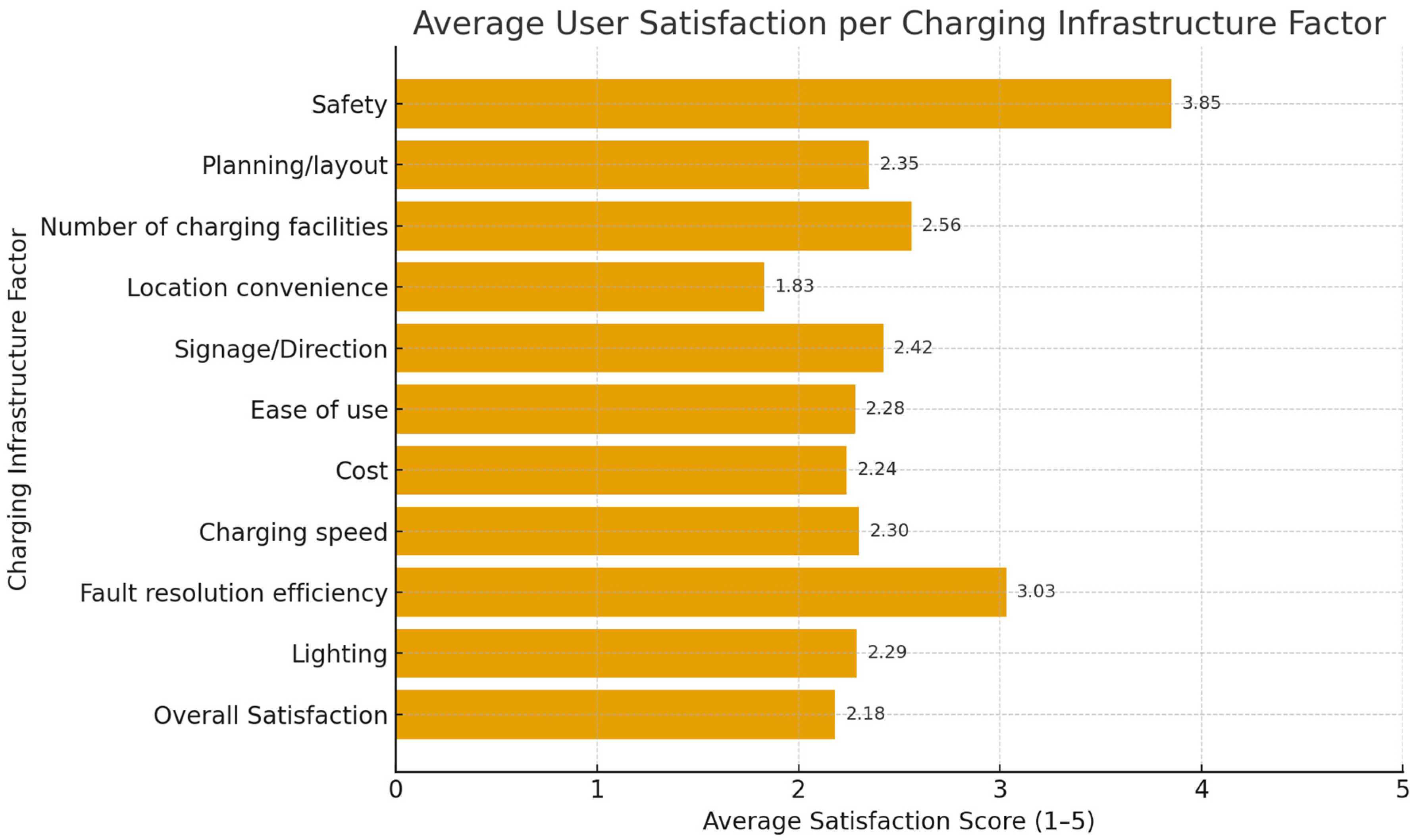
- Planning and layout of infrastructure scored a mean of (2.35), suggesting variability in perception depending on location.
- The number of available chargers yielded a slightly higher mean (2.56) likely due to spatial disparities in charger distribution.
- Location convenience had the lowest satisfaction (mean = 1.83), signaling user frustration with charger placement.
- Low satisfaction was also reported for ease of use (mean = 2.28), signage (mean = 2.42), and charging speed (mean = 2.30).
- Interestingly, lighting (mean = 2.29) and cost (mean = 2.24) were seen as insufficient, with substantial variance.
- Notably, fault resolution efficiency (mean = 3.03) and safety (mean = 3.85) received the highest ratings, suggesting diverging experiences across locations or time-of-day use.
4.4. Regression Model Diagnostics
4.5. Multiple Regression Linear Analysis
4.6. Spatial Usage
4.7. Variation in Satisfaction Across Demographics
4.8. Visual Diagnostics of Predictors
5. Discussion
5.1. Summary of Findings
5.2. Divergences and Contextual Factors
5.3. Practical Contributions
5.4. Theoretical Contributions in Travel Behavior and UX
5.4.1. Constructs and Empirical Anchors
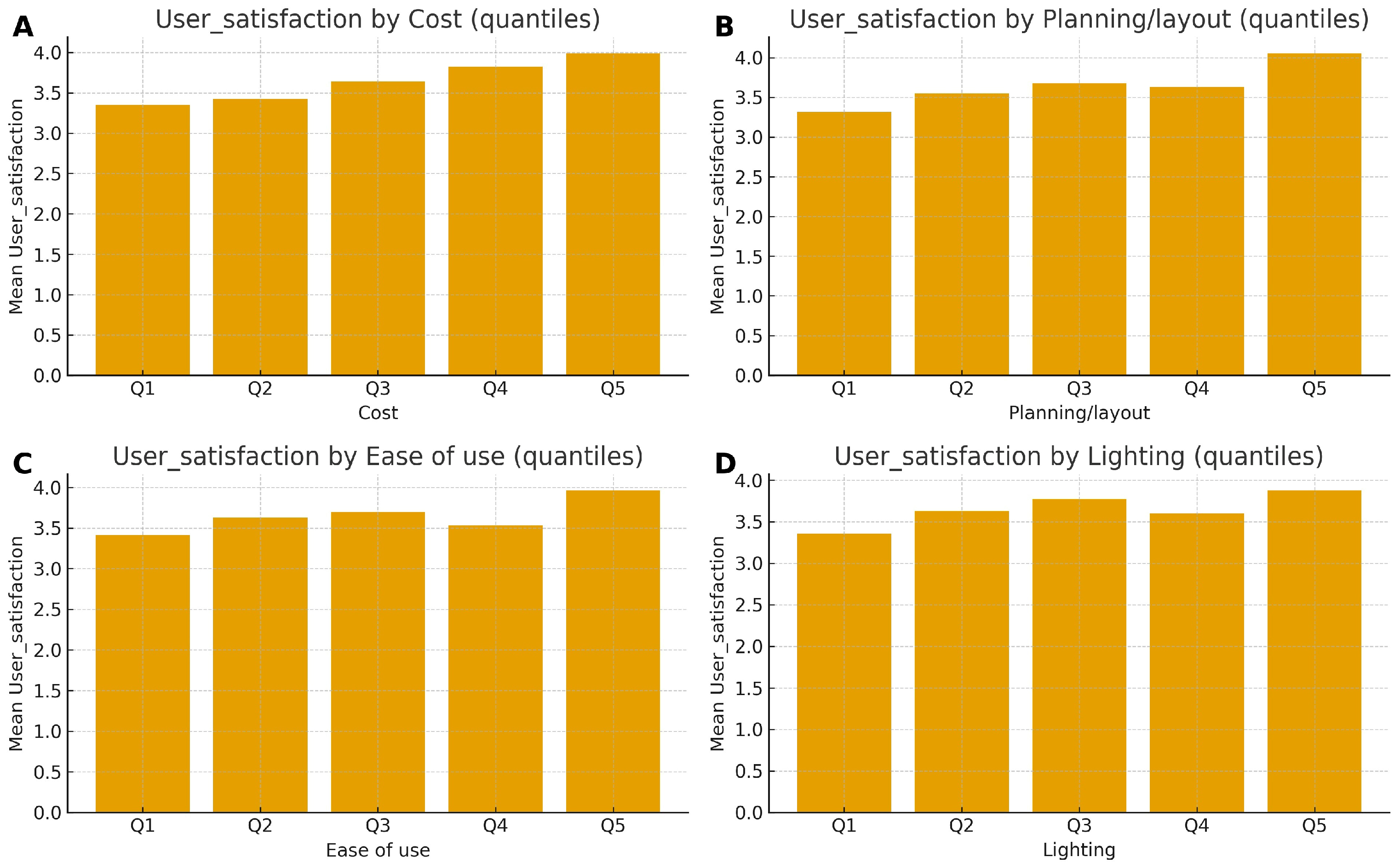
- Pricing salience = perceived affordability and fairness; the first-order acceptability filter for using public chargers (largest standardized effect).
- Spatial fit (planning/layout) = alignment of site placement, access, and on-site flow with users’ daily activity spaces; narrowing intention–action gaps (significant; also among lowest rated descriptively).
- Cognitive load reduction (ease of use) = interface/payment clarity that reduces errors and abandonment (significant positive predictor).
- Environmental reassurance (lighting) = hygiene factor that stabilises comfort at low cognitive cost, especially at night (smallest but significant β).
5.4.2. Mechanism Schema
5.4.3. Moderators and Heterogeneity (Evidence-Led)
- Income strengthens pricing salience (greater price sensitivity at lower income). Preliminary interaction exploration suggests this pattern. Proposition T1. The cost→satisfaction slope is steeper for lower-income users.
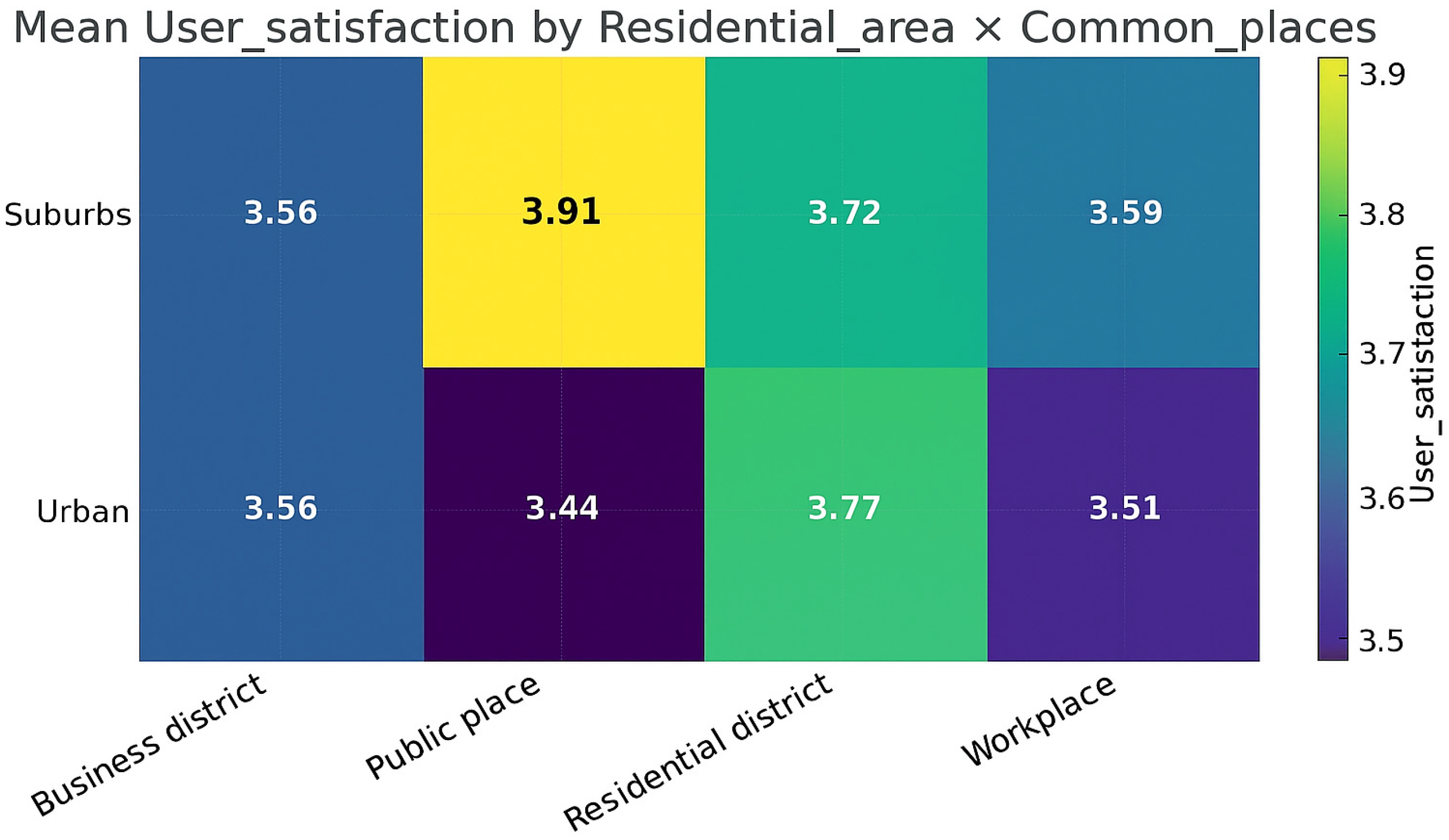
- Residential context (urban vs. suburban) amplifies spatial fit effects due to longer detours and parking constraints. T2. Planning/layout exerts larger effects for suburban residents than urban residents.
- Time pressure/care obligations (proxy via usage patterns) magnifies ease-of-use effects. T3. Ease-of-use benefits users on tighter schedules more strongly.
- Time-of-day moderates lighting; reassurance value rises at night. T4. Lighting’s effect increases under low-illumination use conditions. (Descriptive show wide variance in safety/lighting experience.)
6. Comparative Analysis with Existing Studies
6.1. Comparison with Other Cities in China
6.2. Comparison with Global EV Charging UX Research
7. Policy Recommendations
- Incentivize off-peak charging through time-of-use tariffs. Differentiated pricing for electricity consumption at different times of day can encourage balanced utilization of charging stations, helping to alleviate congestion during peak hours and improving overall user experience.
- Introduce targeted subsidies for low-income EV users. Given the link between cost perceptions and satisfaction, financial support mechanisms—such as reduced service fees, usage credits, or targeted vouchers—could address affordability concerns among economically vulnerable user groups.
- Promote equitable deployment through public–private partnerships. Collaboration among municipal authorities, state-owned enterprises, and private operators can support strategic placement of charging stations in under-served areas, including suburban and peri-urban neighborhoods, to improve accessibility and reduce spatial inequities in coverage.
- Improve usability and standardize user interfaces. Consistent payment methods, intuitive UI/UX design, and clear operational instructions across operators can reduce complexity, minimize errors, and enhance ease of use.
- Enhance environmental reassurance and perceived safety. While safety was not a statistically significant predictor in this study, proper lighting, well-maintained facilities, and visible security measures were associated with higher satisfaction, particularly in suburban and less-dense areas.
- Integrate supportive technologies and feedback mechanisms. Real-time information on charger availability, mobile app integration, and user feedback channels can empower users, facilitate planning, and enable operators to respond quickly to service issues.
- Increase chargers in mixed-use districts with both commercial and residential demand. Expanding public charging infrastructure in mixed-use districts—areas that combine residential, commercial, and recreational facilities—can substantially enhance both accessibility and utilization rates of EV chargers.
- Urban design integration. Integrating EV charging infrastructure into urban design frameworks ensures that charging stations are not treated as isolated utilities but as functional elements of the built environment. Urban design integration involves aligning charger placement with land-use planning, pedestrian flow, parking layout, lighting, and public amenities to enhance both aesthetic coherence and user convenience.
8. Conclusions and Future Work
8.1. Conclusions
- Identifying areas where charging stations could be expanded or redistributed to improve accessibility;
- Enhancing usability through interface design and operational flow;
- Improving pricing transparency to reduce dissatisfaction related to perceived costs.
8.2. Limitations and Future Work
Author Contributions
Funding
Institutional Review Board Statement
Informed Consent Statement
Data Availability Statement
Conflicts of Interest
Appendix A. Robustness Check
Appendix B. Data Cleaning and Abnormal Value Detection
Appendix B.1. Initial Screening
- Completion time: Responses completed in under one minute were excluded to eliminate overly rapid or careless submissions.
- Straight-line answering: Responses exhibiting identical answers across all items were removed, as these patterns indicate low engagement.
- Duplicated IP addresses: Multiple submissions from the same IP were excluded to prevent repeated participation.
- Location verification: Only respondents reporting residence in Shanghai were retained.
Appendix B.2. Abnormal Value Detection
- Standard deviation method: Responses with z-scores exceeding ±3 were flagged as outliers.
- Inspection and documentation: Identified extreme values were reviewed to ensure that they did not reflect plausible responses or data entry errors.
Appendix B.3. Data Anonymization
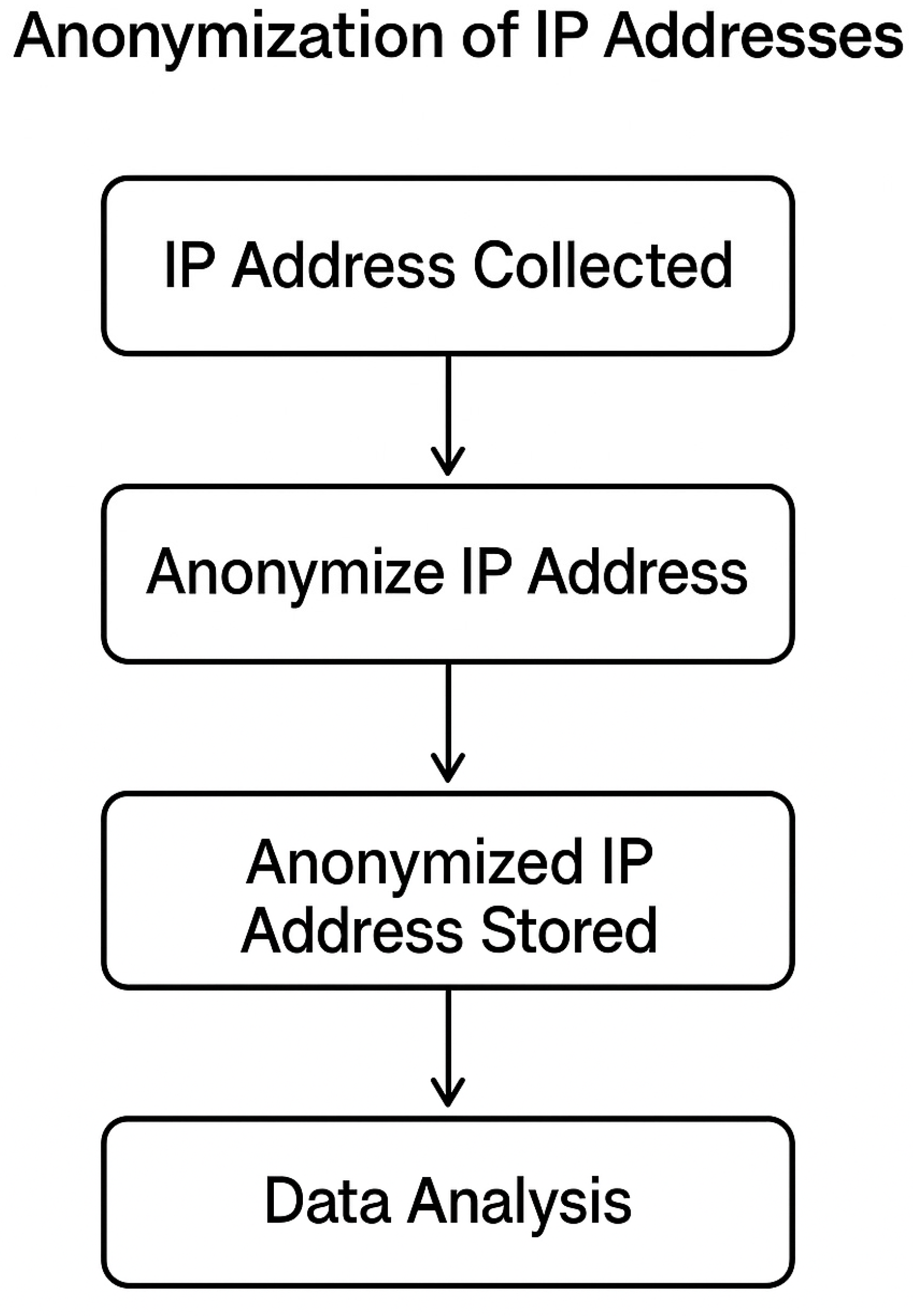
- IP addresses and any personally identifying information were anonymized.
- All cleaned datasets used for analysis contain no direct identifiers, ensuring respondent confidentiality.

References
- IEA [International Energy Agency]. Global EV Outlook 2023. Available online: https://www.iea.org/reports/global-ev-outlook-2023 (accessed on 20 June 2025).
- EEA [European Environment Agency]. Greenhouse Gas Emissions by Sector. 2023. Available online: https://www.eea.europa.eu/ (accessed on 23 June 2025).
- Hedges & Company. Global Car Ownership Statistics. 2021. Available online: https://hedgescompany.com/ (accessed on 20 June 2025).
- Kováčiková, K.; Novák, A.; Novák Sedláčková, A.; Kováčiková, M. The Environmental Consequences of Engine Emissions in Air and Road Transport. Atmosphere 2024, 15, 903. [Google Scholar] [CrossRef]
- McKinsey & Company. The Energy Transition: Challenges and Opportunities. 2022. Available online: https://www.mckinsey.com/ (accessed on 23 June 2025).
- Cano, Z.P.; Banham, D.; Ye, S.; Hintennach, A.; Lu, J.; Fowler, M.; Chen, Z. Batteries and fuel cells for emerging electric vehicle markets. Nat. Energy 2018, 3, 279–289. [Google Scholar] [CrossRef]
- Sun, X.; Chen, Z.; Yin, Y. Integrated planning of static and dynamic charging infrastructure for electric vehicles. Transp. Res. Part D Transp. Environ. 2020, 83, 102331. [Google Scholar] [CrossRef]
- Rajper, S.Z.; Albrecht, J. Prospects of Electric Vehicles in the Developing Countries: A Literature Review. Sustainability 2020, 12, 1906. [Google Scholar] [CrossRef]
- People’s Daily. China’s Charging Infrastructure Reaches Record Highs. 2024. Available online: https://www.people.cn/ (accessed on 21 June 2025).
- Hardman, S.; Jenn, A.; Tal, G.; Axsen, J.; Beard, G.; Daina, N.; Figenbaum, E.; Jakobsson, N.; Jochem, P.; Kinnear, N.; et al. A review of consumer preferences of and interactions with electric vehicle charging infrastructure. Transp. Res. Part D Transp. Environ. 2018, 62, 508–523. [Google Scholar] [CrossRef]
- IEA [International Energy Agency]. Global EV Outlook 2024: Trends in Electric Vehicle Charging. 2024. Available online: https://www.iea.org/reports/global-ev-outlook-2024 (accessed on 21 June 2025).
- ICCT [International Council on Clean Transportation]. China’s New Energy Vehicle Industrial Development Plan for 2021 to 2035. Available online: https://theicct.org/publication/chinas-new-energy-vehicle-industrial-development-plan-for-2021-to-2035/ (accessed on 22 June 2025).
- AUTOVISTA. BYD Took Control of the 2023 Chinese EV Market 2023. Available online: https://autovista24.autovistagroup.com/news/byd-took-control-of-the-2023-chinese-ev-market (accessed on 22 June 2025).
- Carbon Peaking and Carbon Neutrality China’s Plans and Solutions. Available online: https://english.www.gov.cn/archive/whitepaper/202511/08/content_WS690ee812c6d00ca5f9a076cd.html (accessed on 22 June 2025).
- Shanghai Bureau of Transportation. Annual Vehicle Ownership Report; Urban Transport Bulletin; Shanghai Bureau of Transportation: Shanghai, China, 2023. [Google Scholar]
- Consultancy.asia Report: China Leads the Way in EV Charging Infrastructure Globally. Consultancy Asia. 2024. Available online: https://www.consultancy.asia/news/5674/report-china-leads-the-way-in-charging-infrastructure-globally (accessed on 24 June 2025).
- Roland Berger GmbH. EV Charging Index 2024—Deep Dive: Norway. 2024. Available online: https://www.rolandberger.com/publications/publication_pdf/roland_berger_ev_charging_index_deep_dive_norway.pdf (accessed on 24 June 2025).
- Wang, Y.; Chi, Y.; Xu, J.-H.; Yuan, Y. Consumers’ Attitudes and Their Effects on Electric Vehicle Sales and Charging Infrastructure Construction: An Empirical Study in China. Energy Policy 2022, 165, 112983. [Google Scholar] [CrossRef]
- J.D. Power. U.S. Electric Vehicle Experience (EVX) Public Charging Study; J.D. Power: Troy, MI, USA, 2023; Available online: https://www.jdpower.com/business/press-releases/2023-us-electric-vehicle-experience-evx-public-charging-study (accessed on 24 June 2025).
- Malarkey, D.; Singh, R.; MacKenzie, D.; U.S. Department of Energy; U.S. Department of Energy; U.S. Department of Energy; Joint Office of Energy and Transportation; ChargeX Consortium; University of Washington; Plug In America; et al. Customer Experience at Public Charging Stations and Its Effects on the Purchase and Use of Electric Vehicles. 2023. Available online: https://inl.gov/content/uploads/2023/07/Customer-Experience-at-Public-Charging-Stations_INLRPT-23-74951_12-12-23_Optimized-1.pdf?__cf_chl_f_tk=2ZsxIn1Z6ZBYy6aUuW7zEZSOwR7iLlJq41CGMbYw7D0-1766672356-1.0.1.1-BStIDx651H39F3peOQ2cXlIh5DOHGFg6ZbtssLNJz00 (accessed on 24 June 2025).
- Sarda, J.; Patel, N.; Patel, H.; Vaghela, R.; Brahma, B.; Bhoi, A.K.; Barsocchi, P. A Review of the Electric Vehicle Charging Technology, Impact on Grid Integration, Policy Consequences, Challenges and Future Trends. Energy Rep. 2024, 12, 5671–5692. [Google Scholar] [CrossRef]
- Chen, Y.; Lin, B. Are Consumers in China’s Major Cities Happy with Charging Infrastructure for Electric Vehicles? Appl. Energy 2022, 327, 120082. [Google Scholar] [CrossRef]
- Philipsen, R.; Schmidt, T.; Van Heek, J.; Ziefle, M. Fast-Charging Station Here, Please! User Criteria for Electric Vehicle Fast-Charging Locations. Transp. Res. Part F Traffic Psychol. Behav. 2016, 40, 119–129. [Google Scholar] [CrossRef]
- Hosseini, S.; Sarder, M. Development of a Bayesian Network Model for Optimal Site Selection of Electric Vehicle Charging Station. Int. J. Electr. Power Energy Syst. 2018, 105, 110–122. [Google Scholar] [CrossRef]
- Yi, T.; Cheng, X.-b.; Zheng, H.; Liu, J.-p. Research on Location and Capacity Optimization Method for Electric Vehicle Charging Stations Considering User’s Comprehensive Satisfaction. Energies 2019, 12, 1915. [Google Scholar] [CrossRef]
- Saunders, M.; Lewis, P.; Thornhill, A. Research Methods for Business Students, 8th ed.; Pearson Education: New York, NY, USA, 2019. [Google Scholar]
- Ryan, G. Introduction to positivism, interpretivism and critical theory. Nurse Res. 2018, 25, 14–20. [Google Scholar] [CrossRef] [PubMed]
- Davis, F.D. Technology acceptance model: TAM. In Information Seeking Behavior and Technology Adoption; Al-Suqri, M.N., Al-Aufi, A.S., Eds.; IGI Global: Hershey, PA, USA, 1989; pp. 205–219. [Google Scholar]
- Parasuraman, A.B.L.L.; Zeithaml, V.A.; Berry, L. SERVQUAL: A multiple-item scale for measuring consumer perceptions of service quality. J. Retail. 1988, 64, 12–40. [Google Scholar]
- Fabianek, P.; Madlener, R. Multi-Criteria Assessment of the User Experience at E-Vehicle Charging Stations in Germany. Transp. Res. Part D Transp. Environ. 2023, 121, 103782. [Google Scholar] [CrossRef]
- Li, C.; Zhang, S.; Ling, W.; Zhao, L.; Pan, Y. Enhancing user experience in Electric Vehicle Charging Applications (EVCA): A comprehensive analysis in the Chinese Context. J. Knowl. Econ. 2024, 15, 18495–18530. [Google Scholar] [CrossRef]
- Lin, B.; Yang, M. Changes in consumer satisfaction with electric vehicle charging infrastructure: Evidence from two cross-sectional surveys in 2019 and 2023. Energy Policy 2024, 185, 113924. [Google Scholar] [CrossRef]
- Hou, Y.; Wang, P.; Yao, Z.; Zheng, X.; Chen, Z. Enhancing Electric Vehicle Charging Infrastructure Planning with Pre-Trained Language Models and Spatial Analysis: Insights from Beijing User Reviews. ISPRS Int. J. Geo-Inf. 2025, 14, 325. [Google Scholar] [CrossRef]
- Ji, Y.; Huang, Y.; Yang, M.; Leng, H.; Ren, L.; Liu, H.; Chen, Y. Physics-informed deep learning for virtual rail train trajectory following control. Reliab. Eng. Syst. Saf. 2025, 261, 111092. [Google Scholar] [CrossRef]



| Count | Table N% | ||
|---|---|---|---|
| Gender | Do not want to say | 20 | 10.2% |
| Male | 92 | 46.7% | |
| Female | 85 | 43.1% | |
| Age | 18–25 years old | 48 | 24.4% |
| 26–35 years old | 58 | 29.4% | |
| 36–45 years old | 44 | 22.3% | |
| 46–55 years old | 29 | 14.7% | |
| 56 years old and over | 18 | 9.1% | |
| Residential area | Suburbs of Shanghai | 106 | 53.8% |
| Shanghai urban district | 91 | 46.2% | |
| Frequency of use | Rarely used | 11 | 5.6 |
| Daily | 76 | 38.6 | |
| Monthly | 14 | 7.1 | |
| Weekly | 96 | 48.7 | |
| Commonly used places | Workplace | 49 | 24.9 |
| Public place | 38 | 19.3 | |
| Business district | 27 | 13.7 | |
| Residential district | 80 | 40.6 | |
| Profession | Office staff | 139 | 70.6 |
| Do not want to say | 2 | 1 | |
| Unemployed | 6 | 3 | |
| Retiree | 2 | 1 | |
| Student | 19 | 9.6 | |
| Self-employed | 29 | 14.7 | |
| Years owned or leased | Less than 1 year | 46 | 23.4 |
| 1–3 years | 53 | 26.9 | |
| 3–5 years | 31 | 15.7 | |
| 5–10 years | 35 | 17.8 | |
| More than 10 years | 32 | 16.2 |
| Variables | Average | Statistics of Average Value | Standard Deviation |
|---|---|---|---|
| Overall satisfaction with public charging infrastructure | 2.18 | 0.067 | 0.939 |
| Satisfaction with the planning and layout of charging infrastructure | 2.35 | 0.076 | 1.066 |
| Satisfaction of the number of public charging infrastructure | 2.56 | 0.089 | 1.246 |
| Satisfaction of the location convenience of public charging infrastructure | 1.83 | 0.057 | 0.794 |
| Satisfaction with directions and instructions for public charging infrastructure | 2.42 | 0.075 | 1.054 |
| Satisfaction with ease of use of public charging infrastructure | 2.28 | 0.076 | 1.064 |
| Satisfaction with the cost of public charging infrastructure | 2.24 | 0.078 | 1.093 |
| Satisfaction of charging speed | 2.30 | 0.074 | 1.038 |
| Satisfaction with the efficiency of fault resolution | 3.03 | 0.117 | 1.243 |
| Satisfaction of lighting in public charging infrastructure | 2.29 | 0.077 | 1.080 |
| Satisfaction with the safety of public charging infrastructure | 3.85 | 0.182 | 2.554 |
| Model | Square Sum | Degrees of Freedom | Mean Square | F | Significance |
|---|---|---|---|---|---|
| Regression | 59.680 | 12 | 4.973 | 19.690 | <0.001 |
| Residual | 25.258 | 100 | 0.253 | ||
| Total | 84.938 | 112 |
| Predictor | B (Unstandardized) | SE | 95% CI | β (Standardized) | t | p |
|---|---|---|---|---|---|---|
| (Constant) | −0.402 | 0.373 | [−1.133, 0.329] | – | −1.078 | 0.284 |
| Planning and layout | 0.265 | 0.059 | [0.149, 0.381] | 0.299 | 4.466 | <0.001 |
| Number of chargers | 0.027 | 0.051 | [−0.073, 0.127] | 0.036 | 0.531 | 0.596 |
| Location convenience | 0.112 | 0.071 | [−0.027, 0.251] | 0.097 | 1.572 | 0.119 |
| Directions/instructions | 0.082 | 0.055 | [−0.026, 0.190] | 0.093 | 1.488 | 0.140 |
| Ease of use | 0.200 | 0.058 | [0.086, 0.314] | 0.218 | 3.456 | <0.001 |
| Cost | 0.283 | 0.057 | [0.171, 0.395] | 0.341 | 4.977 | <0.001 |
| Charging speed | 0.068 | 0.063 | [−0.056, 0.192] | 0.082 | 1.073 | 0.286 |
| Fault resolution | −0.031 | 0.146 | [−0.318, 0.256] | −0.013 | −0.214 | 0.831 |
| Lighting | 0.142 | 0.052 | [0.041, 0.243] | 0.163 | 2.721 | 0.008 |
| Safety | −0.008 | 0.018 | [−0.043, 0.027] | −0.025 | −0.451 | 0.653 |
| Study | Scope & Location | Method & Sample | Key UX/Satisfaction Factors | Relevance to Present Study |
|---|---|---|---|---|
| Current Study | Shanghai, China | Quantitative survey; n = 197 | Layout, pricing, ease of use, safety, lighting | - |
| [31] | Multi-city (China) | Mixed-methods; n = 573 | User-friendliness, payment convenience, information reliability, functionality, interactivity, privacy | Strong alignment on usability & pricing; complements by focusing on digital UX |
| [22] | Major Chinese cities | National survey | Accessibility, cost transparency, reliability | Confirms widespread dissatisfaction with infrastructure across China |
| [32] | China (2019 & 2023) | Cross-sectional national surveys; n > 3700 | Infrastructure quality, access, pricing, user confidence | Shows national trends that mirror difficulties observed in Shanghai |
| [33] | Beijing megacity | Text mining of 168,000 reviews + spatial analysis | Lighting, safety, district accessibility, maintenance | Very strong thematic overlap: lighting & safety emerge as core concerns |
| [30] | Germany | Field-based multi-criteria evaluation | Accessibility, pricing clarity, reliability | Confirms universality of key UX drivers |
| [19] | United States | National EV charging satisfaction survey | Reliability, ease of use, payment experience | Supports international consistency in user priorities |
Disclaimer/Publisher’s Note: The statements, opinions and data contained in all publications are solely those of the individual author(s) and contributor(s) and not of MDPI and/or the editor(s). MDPI and/or the editor(s) disclaim responsibility for any injury to people or property resulting from any ideas, methods, instructions or products referred to in the content. |
© 2026 by the authors. Published by MDPI on behalf of the World Electric Vehicle Association. Licensee MDPI, Basel, Switzerland. This article is an open access article distributed under the terms and conditions of the Creative Commons Attribution (CC BY) license.
Share and Cite
Xie, X.; Raval, S.; Deb, S. User Experience of Public Electric Vehicle Charging Infrastructure in Shanghai: A Quantitative Analysis. World Electr. Veh. J. 2026, 17, 28. https://doi.org/10.3390/wevj17010028
Xie X, Raval S, Deb S. User Experience of Public Electric Vehicle Charging Infrastructure in Shanghai: A Quantitative Analysis. World Electric Vehicle Journal. 2026; 17(1):28. https://doi.org/10.3390/wevj17010028
Chicago/Turabian StyleXie, Xinyuan, Sanket Raval, and Sanchari Deb. 2026. "User Experience of Public Electric Vehicle Charging Infrastructure in Shanghai: A Quantitative Analysis" World Electric Vehicle Journal 17, no. 1: 28. https://doi.org/10.3390/wevj17010028
APA StyleXie, X., Raval, S., & Deb, S. (2026). User Experience of Public Electric Vehicle Charging Infrastructure in Shanghai: A Quantitative Analysis. World Electric Vehicle Journal, 17(1), 28. https://doi.org/10.3390/wevj17010028