Perspective

A Perspective on Imiquimod Microneedles for Treating Warts

1
Department of Dermatology, Changhua Christian Hospital, Changhua County 50094, Taiwan
2
Department of Biomedical Engineering, Chung Yuan Christian University, Taoyuan City 320314, Taiwan
3
Institute of Medicine, Chung Shan Medical University, Taichung City 40201, Taiwan
4
Institute of Biomedical Engineering and Nanomedicine, National Health Research Institutes, Miaoli County 35053, Taiwan
5
Clinical Laboratory, Chung Shan Medical University Hospital, Taichung City 40201, Taiwan
6
Nanotechnology Innovation Station, National Institute for Materials Science, Tsukuba, Ibaraki 3050047, Japan
*
Author to whom correspondence should be addressed.
Pharmaceutics 2021, 13(5), 607; https://doi.org/10.3390/pharmaceutics13050607

Submission received: 26 February 2021 / Revised: 17 April 2021 / Accepted: 20 April 2021 / Published: 22 April 2021
(This article belongs to the Special Issue Topical Drug Delivery: Innovative Controlled Release Systems)

Abstract

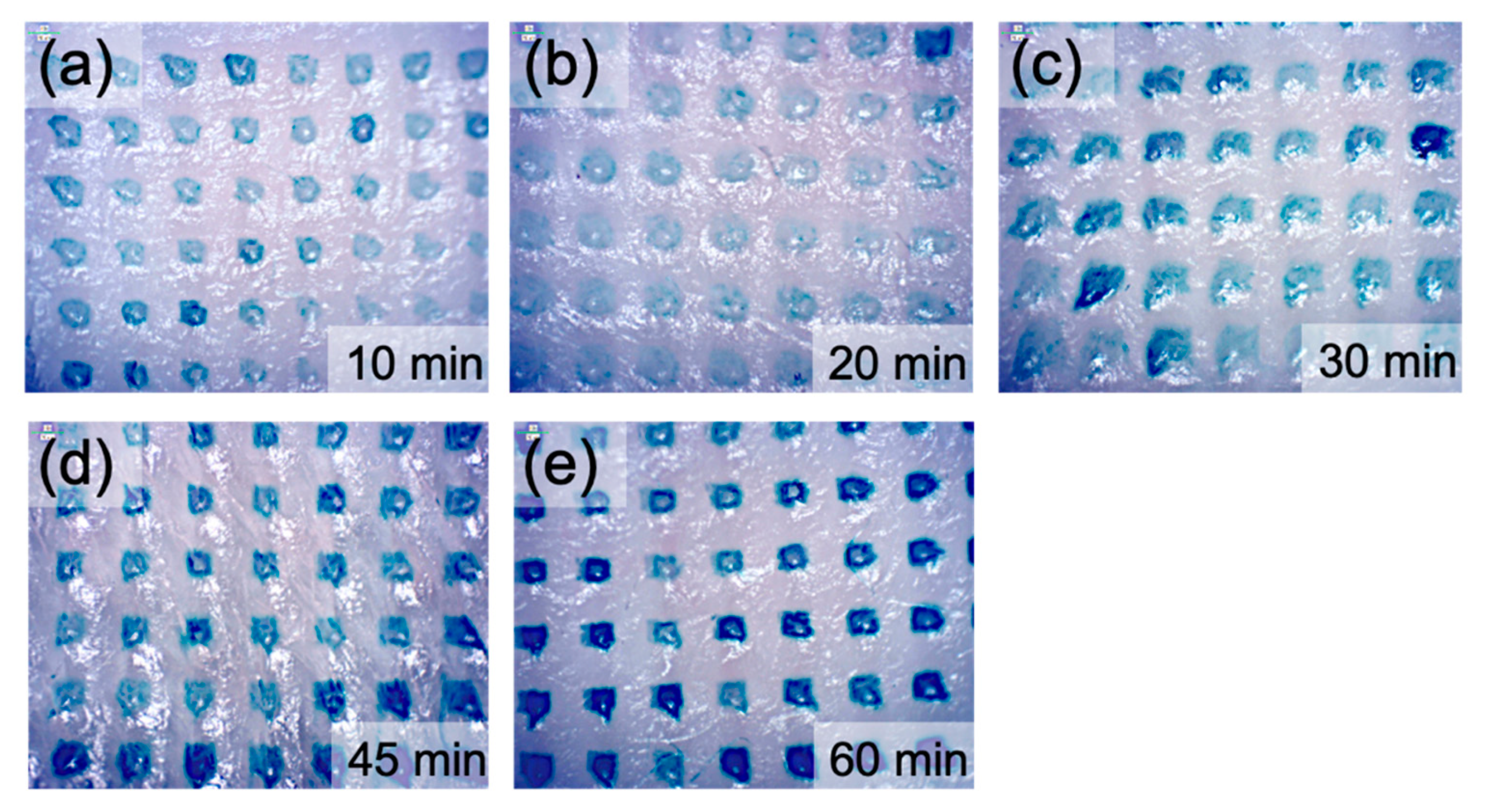
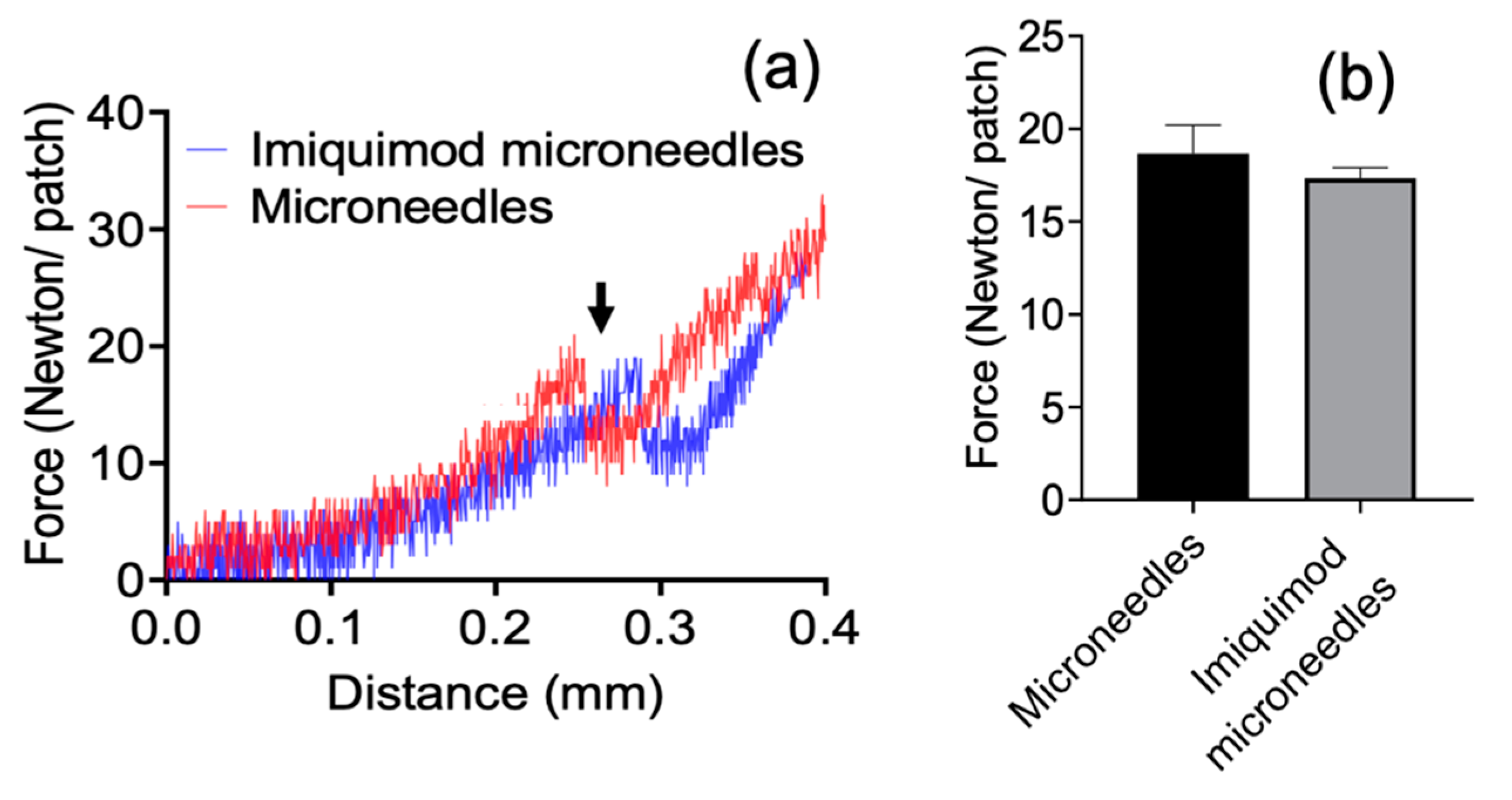
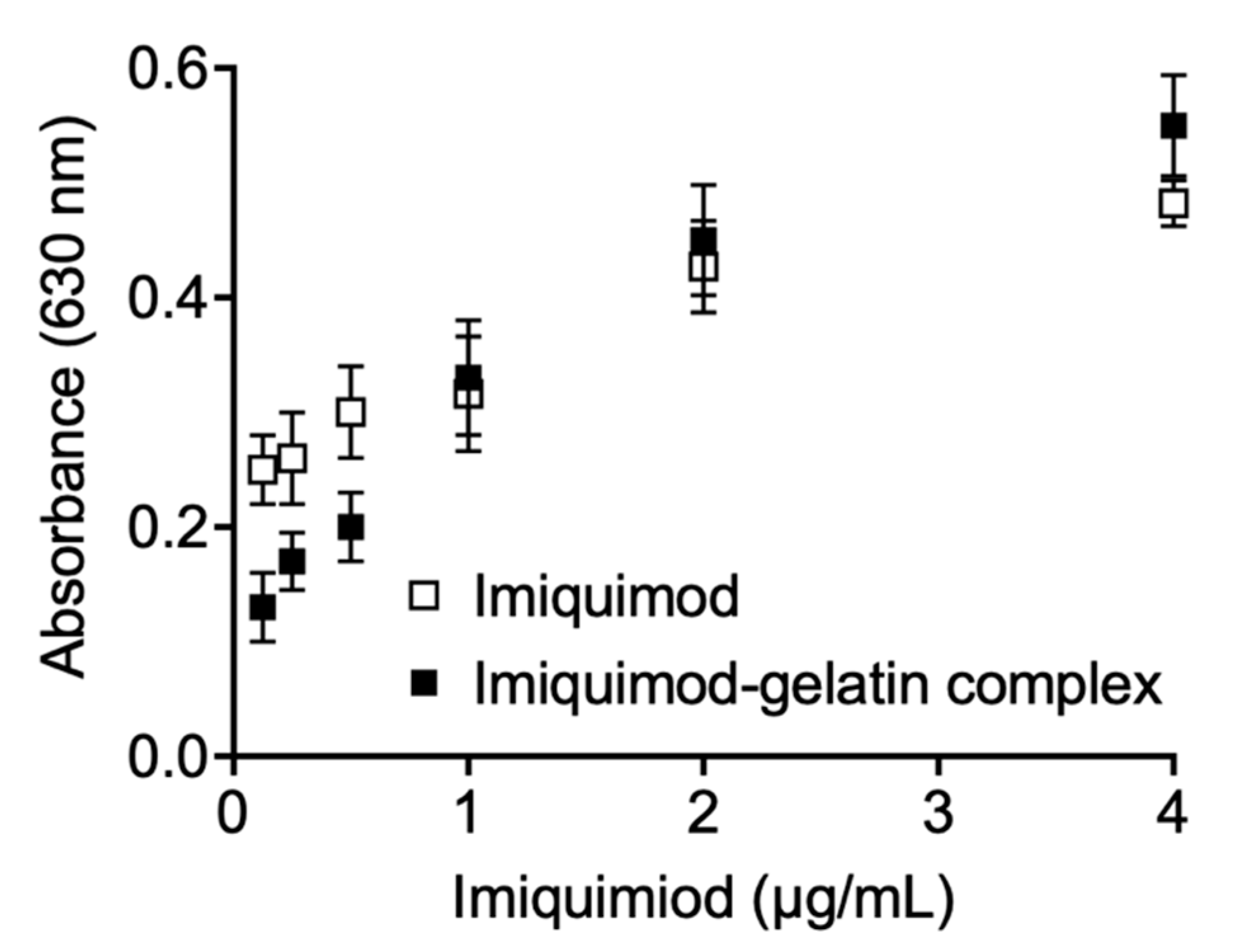
Warts are a common skin problem and are caused by infection with a virus. Warts are currently mainly treated by therapies involving ablating tissue or interrupting cellular division. However, all these existing treatments are either invasive or cause skin pain and tissue destruction. Imiquimod is a synthetic compound that belongs to the imidazoquinolinone family. It has been successfully used as a topical drug to treat external anogenital warts. However, topical imiquimod cream for warts is restricted by low skin permeability, and several side effects such as itching, pain, and erosions occur most frequently following topical treatment. Microneedle technology, a minimally invasive drug delivery system, has the potential to overcome the barrier of the stratum corneum. This technique would also offer a painless treatment choice and provide personalized therapies. In the study, we loaded imiquimod within dissolving microneedles using the molding method. Gelatin was used as a structural material for microneedle formation without adding a crosslinker. To our knowledge, this is the first study of using dissolving microneedles and exploring their utilization with imiquimod for the treatment of warts. First, we added fluorescent dye and trypan blue into the microneedles to evaluate the status of drugs in the microneedles and the degradation property of microneedles made of gelatin, respectively. Here we also prove the strength of the imiquimod microneedles and study their capability to penetrate the skin. The results show no apparent differences in mechanical failure after an additional imiquimod-loaded. Besides, we provide evidence that imiquimod microneedles induce secreted embryonic alkaline phosphatase (SEAP) in the RAW 264.7 macrophages. Gelatin does not affect the imiquimod in microneedles; a similar immune response was affected by the imiquimod alone or imiquimod complexed with gelatin. Our research demonstrates a proof of concept of using imiquimod microneedles for future warts treatment.
Keywords: warts; dissolving microneedles; gelatin; imiquimod; immunomodulator warts; dissolving microneedles; gelatin; imiquimod; immunomodulator