Friend Spleen Focus-Forming Virus Activates the Tyrosine Kinase sf-Stk and the Transcription Factor PU.1 to Cause a Multi-Stage Erythroleukemia in Mice

Abstract
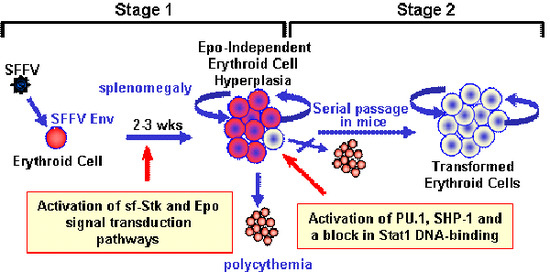
1. Introduction
2. Biological Effects of SFFV
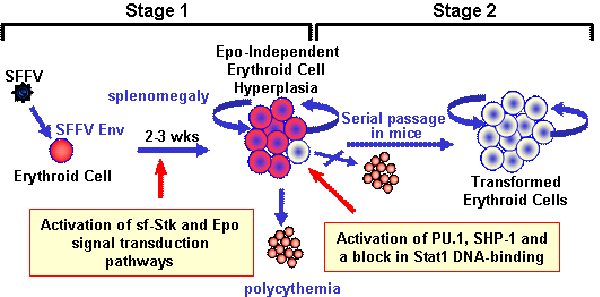
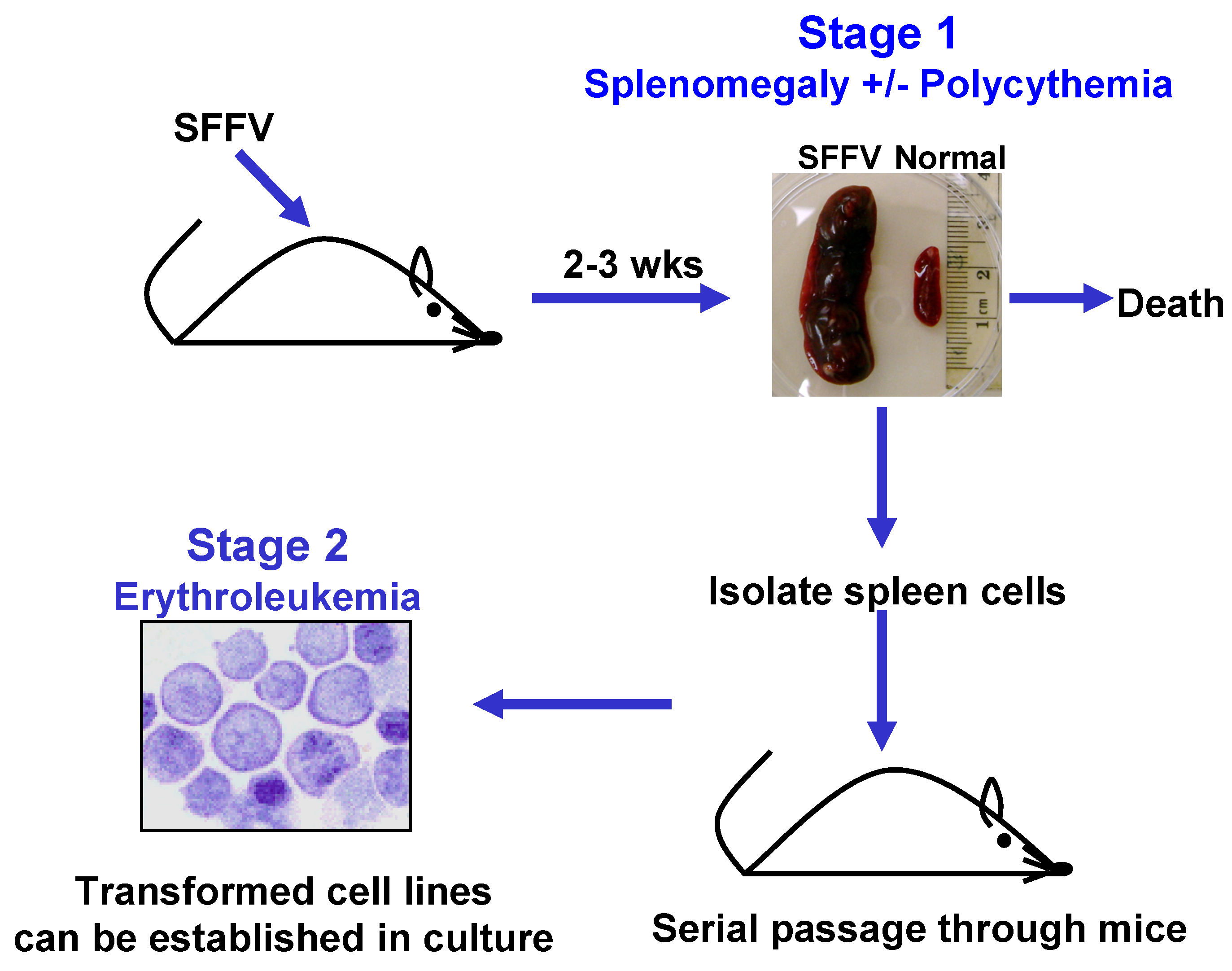
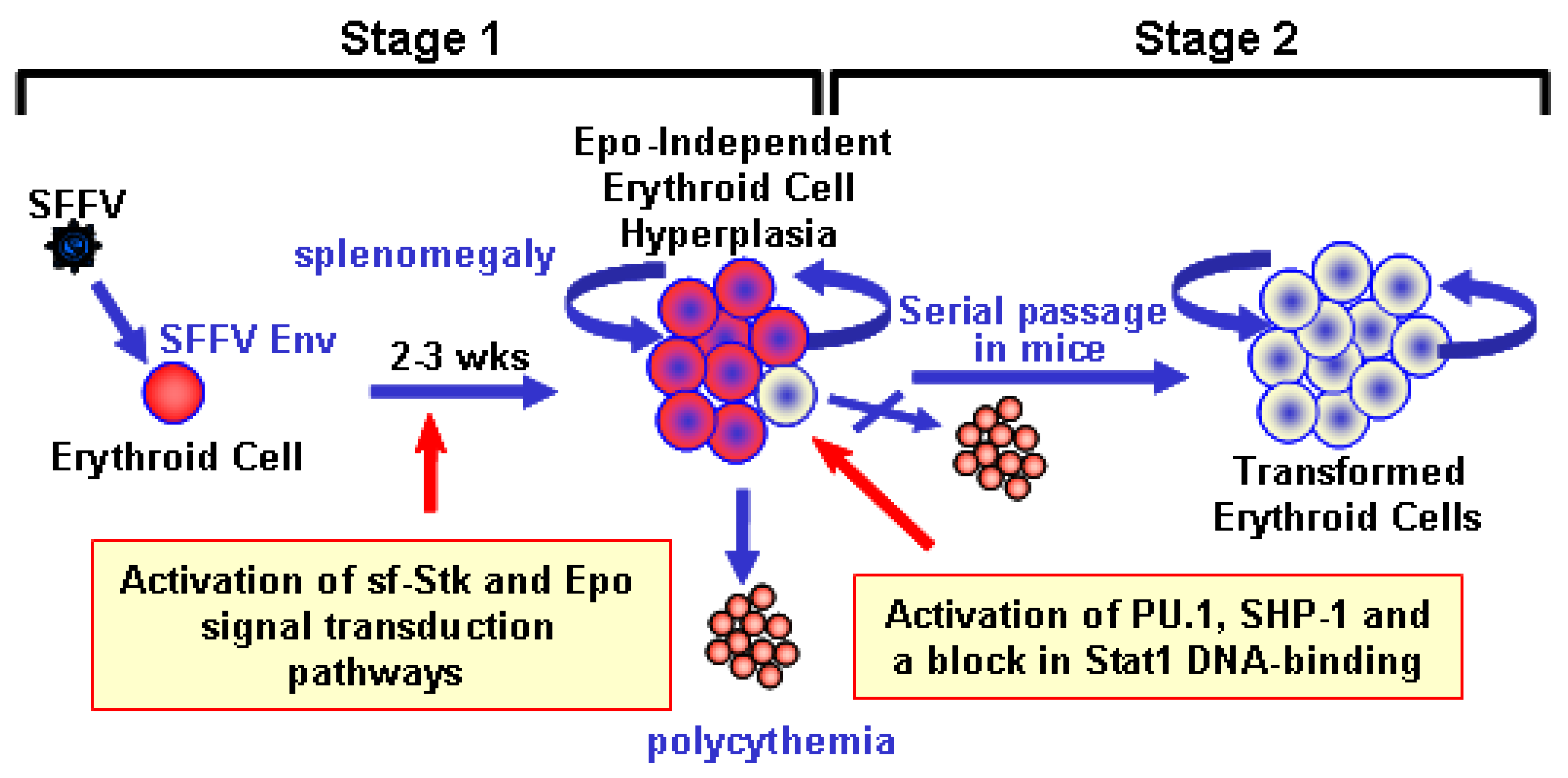
2.1. Induction of Erythroid Hyperplasia by SFFV
2.2. Transformation of Erythroid Cells by SFFV
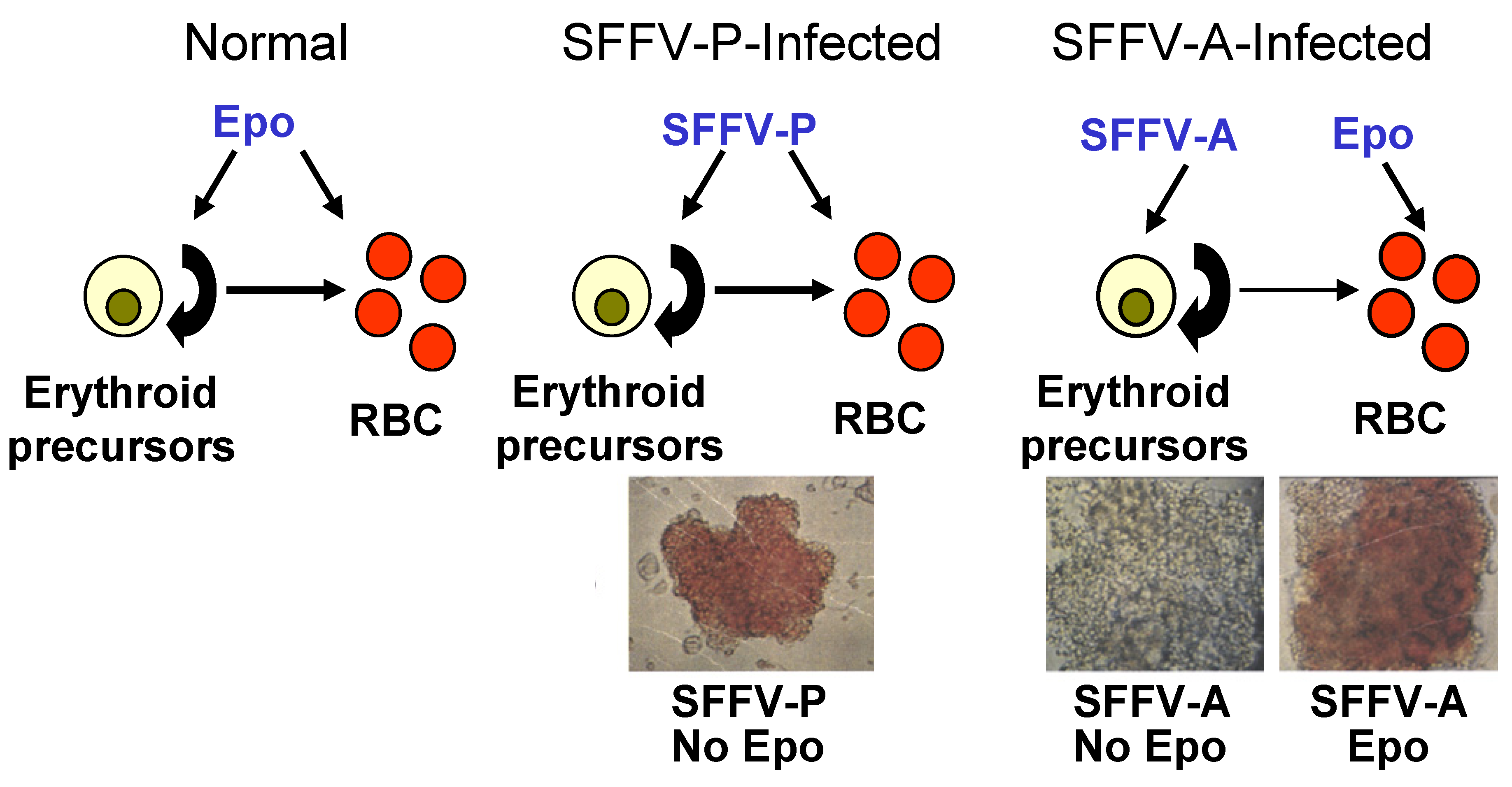
3. Molecular Basis for the Epo-independent Erythroid Hyperplasia Induced by SFFV
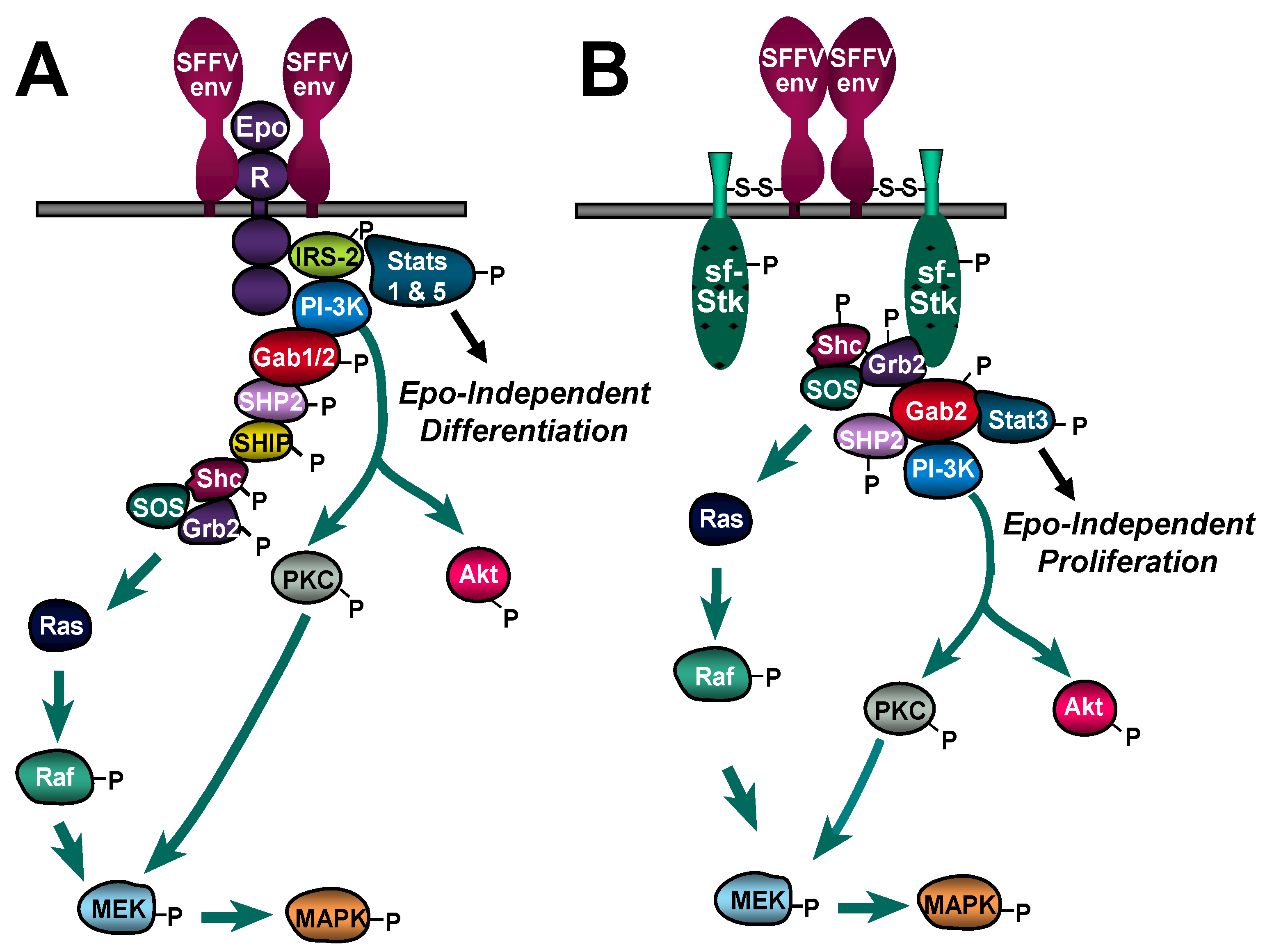
3.1. Constitutive Activation of Signal Transduction Pathways by SFFV

| Signaling Components of Epo/EpoR Pathway | SFFV-P | SFFV-A | Reference |
|---|---|---|---|
| Shc | + | + | [47] |
| Grb2 | + | + | [47] |
| Ras | + | + | [47] |
| Raf-1 | + | + | [46] |
| MEK | + | + | [46] |
| ERK 1/2 | + | + | [46] |
| JNK | + | + | [48] |
| Stat1 | + | − | [50,51,52] |
| Stat3 | + | + | [50,51,52] |
| Stat5 | + | − | [50,51,52] |
| PI 3-kinase | + | + | [43] |
| IRS-2 | + | + | [43] |
| Gab1 | + | + | [43] |
| Gab2 | + | + | [43] |
| PKC | + | + | [47] |
| Akt | + | + | [43] |
| SHIP | + | + | [43] |
3.2. Interaction of SFFV Env with the EpoR
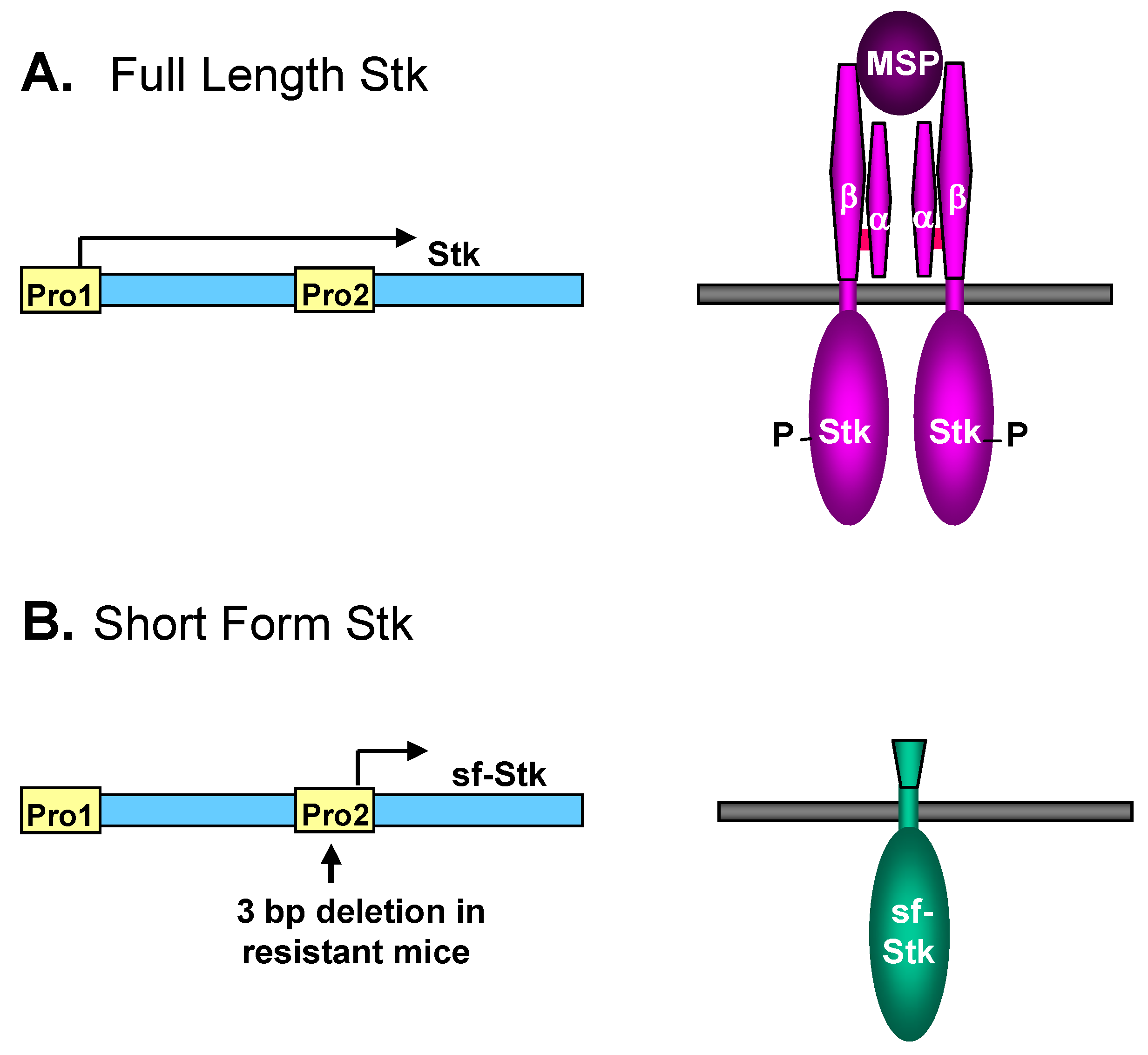
3.3. Interaction of SFFV Env with the Receptor Tyrosine Kinase sf-Stk
3.4. Different Roles of EpoR Signaling and sf-Stk in SFFV-induced Disease
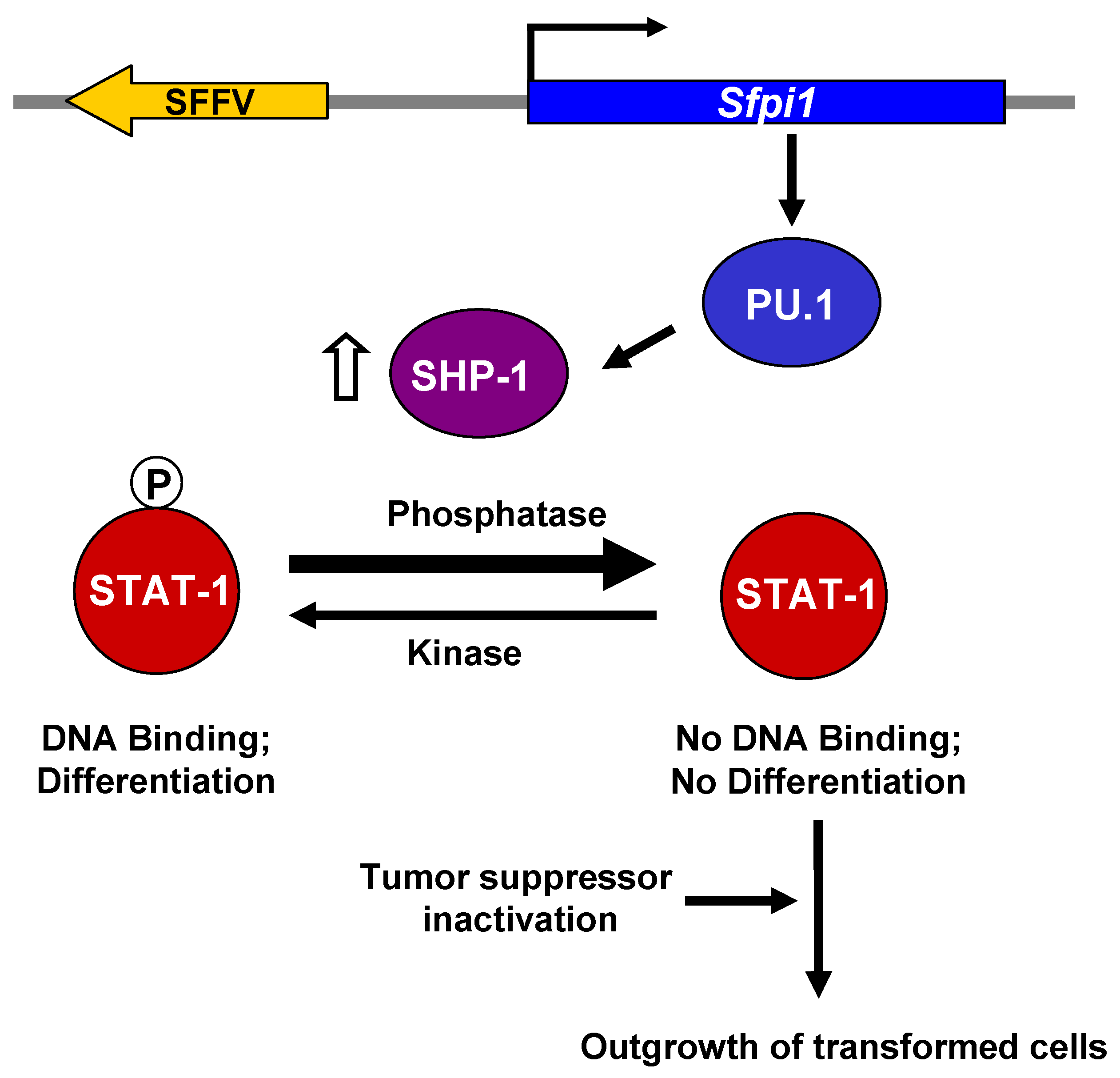
4. Molecular Basis for the Transformation of Erythroid Cells by SFFV
5. Conclusions
References and Notes
- Friend, C. Cell-Free Transmission in Adult Swiss Mice of a Disease Having the Character of a Leukemia. J. Exp. Med. 1957, 105, 307–318. [Google Scholar] [CrossRef] [Scilit] [PubMed]
- Aizawa, S.; Suda, Y.; Furuta, Y.; Yagi, T.; Takeda, N.; Watanabe, N.; Nagayoshi, M.; Ikawa, Y. Env-derived gp55 gene of Friend spleen focus-forming virus specifically induces neoplastic proliferation of erythroid progenitor cells. EMBO J. 1990, 9, 2107–2116. [Google Scholar] [CrossRef] [Scilit] [PubMed]
- Wolff, L.; Ruscetti, S. The spleen focus-forming virus (SFFV) envelope gene, when introduced into mice in the absence of other SFFV genes, induces acute erythroleukemia. J. Virol. 1988, 62, 2158–2163. [Google Scholar] [CrossRef] [Scilit] [PubMed]
- Amanuma, H.; Katori, A.; Obata, M.; Sagata, N.; Ikawa, Y. Complete nucleotide sequence of the gene for the specific glycoprotein (gp55) of Friend spleen focus-forming virus. Proc. Natl. Acad. Sci. U. S. A. 1983, 80, 3913–3917. [Google Scholar] [CrossRef] [Scilit]
- Clark, S.P.; Mak, T.W. Complete nucleotide sequence of an infectious clone of Friend spleen focus-forming provirus: gp55 is an envelope fusion glycoprotein. Proc. Natl. Acad. Sci. U. S. A. 1983, 80, 5037–5041. [Google Scholar] [CrossRef] [Scilit]
- Wolff, L.; Scolnick, E.; Ruscetti, S. Envelope gene of the Friend spleen focus-forming virus: Deletion and insertions in 3’ gp70/p15E-encoding region have resulted in unique features in the primary structure of its protein product. Proc. Natl. Acad. Sci. U. S. A. 1983, 80, 4718–4722. [Google Scholar] [CrossRef] [Scilit]
- Amanuma, H.; Watanabe, N.; Nishi, M.; Ikawa, Y. Requirement of the single base insertion at the 3’ end of the env-related gene of Friend spleen focus-forming virus for pathogenic activity and its effect on localization of the glycoprotein product (gp55). J. Virol. 1989, 63, 4824–4833. [Google Scholar] [CrossRef] [Scilit]
- Srinivas, R.V.; Kilpatrick, D.R.; Tucker, S.; Rui, Z.; Compans, R.W. The hydrophobic membrane-spanning sequences of the gp52 glycoprotein are required for the pathogenicity of Friend spleen focus-forming virus. J. Virol. 1991, 65, 5272–5280. [Google Scholar] [CrossRef] [Scilit]
- Watanabe, N.; Nishi, M.; Ikawa, Y.; Amanuma, H. A deletion in the Friend spleen focus-forming virus env gene is necessary for its product (gp55) to be leukemogenic. J. Virol. 1990, 64, 2678–2686. [Google Scholar] [CrossRef] [Scilit]
- Watanabe, N.; Yugawa, T.; Ikawa, Y.; Amanuma, H. Both the changes of six amino acids and the C-terminal truncation caused by a one-base insertion in the defective env gene of Friend spleen focus-forming virus significantly affect the pathogenic activity of the encoded leukemogenic membrane glycoprotein (gp55). J. Virol. 1995, 69, 7606–7611. [Google Scholar]
- Gliniak, B.C.; Kabat, D. Leukemogenic membrane glycoprotein encoded by Friend spleen focus-forming virus: Transport to cell surfaces and shedding are controlled by disulfide-bonded dimerization and by cleavage of a hydrophobic membrane anchor. J. Virol. 1989, 63, 3561–3568. [Google Scholar] [CrossRef] [Scilit] [PubMed]
- Ruscetti, S.K.; Linemeyer, D.; Feild, J.; Troxler, D.; Scolnick, E.M. Characterization of a protein found in cells infected with the spleen focus-forming virus that shares immunological cross-reactivity with the gp70 found in mink cell focus-inducing virus particles. J. Virol. 1979, 30, 787–798. [Google Scholar] [CrossRef] [Scilit]
- Ruta, M.; Clarke, S.; Boswell, B.; Kabat, D. Heterogeneous metabolism and subcellular localization of a potentially leukemogenic membrane glycoprotein encoded by Friend erythroleukemia virus. Isolation of viral and cellular processing mutants. J. Biol. Chem. 1982, 257, 126–134. [Google Scholar] [CrossRef] [Scilit] [PubMed]
- Srinivas, R.V.; Compans, R.W. Membrane association and defective transport of spleen focus-forming virus glycoproteins. J. Biol. Chem. 1983, 258, 14718–14724. [Google Scholar] [CrossRef] [Scilit]
- Ferro, F.E., Jr.; Kozak, S.L.; Hoatlin, M.E.; Kabat, D. Cell surface site for mitogenic interaction of erythropoietin receptors with the membrane glycoprotein encoded by Friend erythroleukemia virus. J. Biol. Chem. 1993, 268, 5741–5747. [Google Scholar] [CrossRef] [Scilit] [PubMed]
- Li, J.P.; Bestwick, R.K.; Spiro, C.; Kabat, D. The membrane glycoprotein of Friend spleen focus-forming virus: Evidence that the cell surface component is required for pathogenesis and that it binds to a receptor. J. Virol. 1987, 61, 2782–2792. [Google Scholar] [CrossRef] [Scilit]
- Ruta, M.; Bestwick, R.; Machida, C.; Kabat, D. Loss of leukemogenicity caused by mutations in the membrane glycoprotein structural gene of Friend spleen focus-forming virus. Proc. Natl. Acad. Sci. U. S. A. 1983, 80, 4704–4708. [Google Scholar] [CrossRef] [Scilit] [PubMed]
- Mager, D.L.; Mak, T.W.; Bernstein, A. Quantitative colony method for tumorigenic cells transformed by two distinct strains of Friend leukemia virus. Proc. Natl. Acad. Sci. U. S. A. 1981, 78, 1703–1707. [Google Scholar] [CrossRef] [Scilit]
- Berger, S.A.; Sanderson, N.; Bernstein, A.; Hankins, W.D. Induction of the early stages of Friend erythroleukemia with helper-free Friend spleen focus-forming virus. Proc. Natl. Acad. Sci. U. S. A. 1985, 82, 6913–6917. [Google Scholar] [CrossRef] [Scilit]
- Bestwick, R.K.; Hankins, W.D.; Kabat, D. Roles of helper and defective retroviral genomes in murine erythroleukemia: Studies of spleen focus-forming virus in the absence of helper. J. Virol. 1985, 56, 660–664. [Google Scholar] [CrossRef] [Scilit]
- Wolff, L.; Ruscetti, S. Malignant transformation of erythroid cells in vivo by introduction of a nonreplicating retrovirus vector. Science 1985, 228, 1549–1552. [Google Scholar] [CrossRef] [Scilit] [PubMed]
- Wolff, L.; Tambourin, P.; Ruscetti, S. Induction of the autonomous stage of transformation in erythroid cells infected with SFFV: Helper virus is not required. Virology 1986, 152, 272–276. [Google Scholar] [CrossRef] [Scilit] [PubMed]
- Horoszewicz, J.S.; Leong, S.S.; Carter, W.A. Friend leukemia: Rapid development of erythropoietin-independent hematopoietic precursors. J. Natl. Cancer Inst. 1975, 54, 265–267. [Google Scholar] [CrossRef] [Scilit] [PubMed]
- Liao, S.K.; Axelrad, A.A. Erythropoietin-independent erythroid colony formation in vitro by hemopoietic cells of mice infected with friend virus. Int. J. Cancer 1975, 15, 467–482. [Google Scholar] [CrossRef] [Scilit]
- Steinheider, G.; Seidel, H.J.; Kreja, L. Comparison of the biological effects of anemia inducing and polycythemia inducing Friend virus complex. Experientia 1979, 35, 1173–1175. [Google Scholar] [CrossRef] [Scilit]
- Tambourin, P.E.; Wendling, F.; Jasmin, C.; Smadja-Joffe, F. The physiopathology of Friend leukemia. Leuk. Res. 1979, 3, 117–129. [Google Scholar] [CrossRef] [Scilit]
- Hoatlin, M.E.; Kozak, S.L.; Lilly, F.; Chakraborti, A.; Kozak, C.A.; Kabat, D. Activation of erythropoietin receptors by Friend viral gp55 and by erythropoietin and down-modulation by the murine Fv-2r resistance gene. Proc. Natl. Acad. Sci. U. S. A. 1990, 87, 9985–9989. [Google Scholar] [CrossRef] [Scilit]
- Li, J.P.; D’Andrea, A.D.; Lodish, H.F.; Baltimore, D. Activation of cell growth by binding of Friend spleen focus-forming virus gp55 glycoprotein to the erythropoietin receptor. Nature 1990, 343, 762–764. [Google Scholar] [CrossRef] [Scilit]
- Ruscetti, S.K.; Janesch, N.J.; Chakraborti, A.; Sawyer, S.T.; Hankins, W.D. Friend spleen focus-forming virus induces factor independence in an erythropoietin-dependent erythroleukemia cell line. J. Virol. 1990, 64, 1057–1062. [Google Scholar] [CrossRef] [Scilit]
- Constantinescu, S.N.; Wu, H.; Liu, X.; Beyer, W.; Fallon, A.; Lodish, H.F. The anemic Friend virus gp55 envelope protein induces erythroid differentiation in fetal liver colony-forming units-erythroid. Blood 1998, 91, 1163–1172. [Google Scholar] [CrossRef] [Scilit]
- Chung, S.W.; Wolff, L.; Ruscetti, S.K. Transmembrane domain of the envelope gene of a polycythemia-inducing retrovirus determines erythropoietin-independent growth. Proc. Natl. Acad. Sci. U. S. A. 1989, 86, 7957–7960. [Google Scholar] [CrossRef] [Scilit] [PubMed]
- Wolff, L.; Kaminchik, J.; Hankins, W.D.; Ruscetti, S.K. Sequence comparisons of the anemia- and polycythemia-inducing strains of Friend spleen focus-forming virus. J. Virol. 1985, 53, 570–578. [Google Scholar] [CrossRef] [Scilit] [PubMed]
- Constantinescu, S.N.; Liu, X.; Beyer, W.; Fallon, A.; Shekar, S.; Henis, Y.I.; Smith, S.O.; Lodish, H.F. Activation of the erythropoietin receptor by the gp55-P viral envelope protein is determined by a single amino acid in its transmembrane domain. EMBO J. 1999, 18, 3334–3347. [Google Scholar] [CrossRef] [Scilit] [PubMed]
- Fang, C.; Choi, E.; Nie, L.; Li, J.P. Role of the transmembrane sequence of spleen focus-forming virus gp55 in erythroleukemogenesis. Virology 1998, 252, 46–53. [Google Scholar] [CrossRef] [Scilit] [PubMed]
- Rosenberg, N.; Jolicoeur, P. Retroviral pathogenesis. In Retroviruses; Coffin, J.M., Hughes, S.H., Varmus, H.E., Eds.; Cold Spring Harbor Laboratory Press: Plainsview, NY, USA, 1997; pp. 475–585. [Google Scholar]
- Lilly, F. Fv-2: Identification and location of a second gene governing the spleen focus response to Friend leukemia virus in mice. J. Natl. Cancer Inst. 1970, 45, 163–169. [Google Scholar] [PubMed]
- Persons, D.A.; Paulson, R.F.; Loyd, M.R.; Herley, M.T.; Bodner, S.M.; Bernstein, A.; Correll, P.H.; Ney, P.A. Fv2 encodes a truncated form of the Stk receptor tyrosine kinase. Nat. Genet. 1999, 23, 159–165. [Google Scholar] [CrossRef] [Scilit]
- Friend, C.; Haddad, J.R. Tumor formation with transplants of spleen or liver from mice with virus-induced leukemia. J. Natl. Cancer Inst. 1960, 25, 1279–1285. [Google Scholar]
- Friend, C.; Pateleia, M.C.; DeHarven, E. Erythrocytic maturation in vitro of murine (Friend) virus-induced leukemia cells. Natl. Cancer Inst. Monogr. 1966, 22, 505–520. [Google Scholar]
- Marks, P.A.; Rifkind, R.A. Erythroleukemic differentiation. Annu. Rev. Biochem. 1978, 47, 419–448. [Google Scholar] [CrossRef] [Scilit]
- Friend, C.; Sher, W.; Holland, J.G.; Sato, T. Hemoglobin synthesis in murine virus-induced leukemai cells in vitro: Stimulation of erythroid differentiation by dimethylsulfoxide. Proc. Natl. Acad. Sci. U. S. A. 1971, 68, 378–382. [Google Scholar] [CrossRef] [Scilit]
- Richmond, T.D.; Chohan, M.; Barber, D.L. Turning cells red: Signal transduction mediated by erythropoietin. Trends Cell Biol. 2005, 15, 146–155. [Google Scholar] [CrossRef] [Scilit] [PubMed]
- Nishigaki, K.; Hanson, C.; Ohashi, T.; Thompson, D.; Muszynski, K.; Ruscetti, S. Erythroid cells rendered erythropoietin independent by infection with Friend spleen focus-forming virus show constitutive activation of phosphatidylinositol 3-kinase and Akt kinase: Involvement of insulin receptor substrate-related adapter proteins. J. Virol. 2000, 74, 3037–3045. [Google Scholar] [CrossRef] [Scilit] [PubMed]
- Verdier, F.; Chretien, S.; Billat, C.; Gisselbrecht, S.; Lacombe, C.; Mayeux, P. Erythropoietin induces the tyrosine phosphorylation of insulin receptor substrate-2. An alternate pathway for erythropoietin-induced phosphatidylinositol 3-kinase activation. J. Biol. Chem. 1997, 272, 26173–26178. [Google Scholar] [CrossRef] [Scilit] [PubMed]
- Zang, H.; Sato, K.; Nakajima, H.; McKay, C.; Ney, P.A.; Ihle, J.N. The distal region and receptor tyrosines of the Epo receptor are non-essential for in vivo erythropoiesis. EMBO J. 2001, 20, 3156–3166. [Google Scholar] [CrossRef] [Scilit] [PubMed]
- Muszynski, K.W.; Ohashi, T.; Hanson, C.; Ruscetti, S.K. Both the polycythemia- and anemia-inducing strains of Friend spleen focus-forming virus induce constitutive activation of the Raf-1/mitogen-activated protein kinase signal transduction pathway. J. Virol. 1998, 72, 919–925. [Google Scholar] [CrossRef] [Scilit]
- Muszynski, K.W.; Thompson, D.; Hanson, C.; Lyons, R.; Spadaccini, A.; Ruscetti, S.K. Growth factor-independent proliferation of erythroid cells infected with Friend spleen focus-forming virus is protein kinase C dependent but does not require Ras-GTP. J. Virol. 2000, 74, 8444–8451. [Google Scholar] [CrossRef] [Scilit] [PubMed]
- Nishigaki, K.; Hanson, C.; Thompson, D.; Yugawa, T.; Ruscetti, S. Activation of the Jun N-terminal kinase pathway by Friend spleen focus-forming virus and its role in the growth and survival of Friend virus-induced erythroleukemia cells. J. Virol. 2005, 79, 12752–12762. [Google Scholar] [CrossRef] [Scilit]
- Finkelstein, L.D.; Ney, P.A.; Liu, Q.P.; Paulson, R.F.; Correll, P.H. Sf-Stk kinase activity and the Grb2 binding site are required for Epo-independent growth of primary erythroblasts infected with Friend virus. Oncogene 2002, 21, 3562–3570. [Google Scholar] [CrossRef] [Scilit]
- Ohashi, T.; Masuda, M.; Ruscetti, S.K. Induction of sequence-specific DNA-binding factors by erythropoietin and the spleen focus-forming virus. Blood 1995, 85, 1454–1462. [Google Scholar] [CrossRef] [Scilit]
- Ohashi, T.; Masuda, M.; Ruscetti, S.K. Constitutive activation of Stat-related DNA-binding proteins in erythroid cells by the Friend spleen focus-forming virus. Leukemia 1997, 11, 251–254. [Google Scholar]
- Zhang, J.; Randall, M.S.; Loyd, M.R.; Li, W.; Schweers, R.L.; Persons, D.A.; Rehg, J.E.; Noguchi, C.T.; Ihle, J.N.; Ney, P.A. Role of erythropoietin receptor signaling in Friend virus-induced erythroblastosis and polycythemia. Blood 2006, 107, 73–78. [Google Scholar] [CrossRef] [Scilit]
- Ruscetti, S.; Hanson, C. National Cancer Institute, Frederick, MD, USA. Unpublished work, 2004.
- Socolovsky, M.; Fallon, A.E.; Wang, S.; Brugnara, C.; Lodish, H.F. Fetal anemia and apoptosis of red cell progenitors in Stat5a-/-5b-/- mice: A direct role for Stat5 in Bcl-XL induction. Cell 1999, 98, 181–191. [Google Scholar] [CrossRef] [Scilit] [PubMed]
- Ruscetti, S.; Yugawa, T. National Cancer Institute, Frederick, MD, USA. Unpublished work, 2005.
- Umehara, D.; Watanabe, S.; Ochi, H.; Anai, Y.; Ahmed, N.; Kannagi, M.; Hanson, C.; Ruscetti, S.; Nishigaki, K. Role of phosphatidylinositol 3-kinase in friend spleen focus-forming virus-induced erythroid disease. J. Virol. 2010, 84, 7675–7682. [Google Scholar] [CrossRef] [Scilit]
- Tsushima, H.; Urata, Y.; Miyazaki, Y.; Fuchigami, K.; Kuriyama, K.; Kondo, T.; Tomonaga, M. Human erythropoietin receptor increases GATA-2 and Bcl-xL by a protein kinase C-dependent pathway in human erythropoietin-dependent cell line AS-E2. Cell Growth Differ. 1997, 8, 1317–1328. [Google Scholar] [PubMed]
- Datta, S.R.; Dudek, H.; Tao, X.; Masters, S.; Fu, H.; Gotoh, Y.; Greenberg, M.E. Akt phosphorylation of BAD couples survival signals to the cell-intrinsic death machinery. Cell 1997, 91, 231–241. [Google Scholar] [CrossRef] [Scilit] [PubMed]
- Casadevall, N.; Lacombe, C.; Muller, O.; Gisselbrecht, S.; Mayeux, P. Multimeric structure of the membrane erythropoietin receptor of murine erythroleukemia cells (Friend cells). Cross-linking of erythropoietin with the spleen focus-forming virus envelope protein. J. Biol. Chem. 1991, 266, 16015–16020. [Google Scholar] [CrossRef] [Scilit]
- Zon, L.I.; Moreau, J.F.; Koo, J.W.; Mathey-Prevot, B.; D’Andrea, A.D. The erythropoietin receptor transmembrane region is necessary for activation by the Friend spleen focus-forming virus gp55 glycoprotein. Mol. Cell. Biol. 1992, 12, 2949–2957. [Google Scholar]
- Constantinescu, S.N.; Keren, T.; Russ, W.P.; Ubarretxena-Belandia, I.; Malka, Y.; Kubatzky, K.F.; Engelman, D.M.; Lodish, H.F.; Henis, Y.I. The erythropoietin receptor transmembrane domain mediates complex formation with viral anemic and polycythemic gp55 proteins. J. Biol. Chem. 2003, 278, 43755–43763. [Google Scholar] [CrossRef] [Scilit]
- Witthuhn, B.A.; Quelle, F.W.; Silvennoinen, O.; Yi, T.; Tang, B.; Miura, O.; Ihle, J.N. JAK2 associates with the erythropoietin receptor and is tyrosine phosphorylated and activated following stimulation with erythropoietin. Cell 1993, 74, 227–236. [Google Scholar] [CrossRef] [Scilit]
- Subramanian, A.; Hegde, S.; Correll, P.H.; Paulson, R.F. Mutation of the Lyn tyrosine kinase delays the progression of Friend virus induced erythroleukemia without affecting susceptibility. Leuk. Res. 2006, 30, 1141–1149. [Google Scholar] [CrossRef] [Scilit]
- Wang, M.H.; Iwama, A.; Skeel, A.; Suda, T.; Leonard, E.J. The murine stk gene product, a transmembrane protein tyrosine kinase, is a receptor for macrophage-stimulating protein. Proc. Natl. Acad. Sci. U. S. A. 1995, 92, 3933–3937. [Google Scholar] [CrossRef] [Scilit] [PubMed]
- Waltz, S.E.; Toms, C.L.; McDowell, S.A.; Clay, L.A.; Muraoka, R.S.; Air, E.L.; Sun, W.Y.; Thomas, M.B.; Degen, S.J. Characterization of the mouse Ron/Stk receptor tyrosine kinase gene. Oncogene 1998, 16, 27–42. [Google Scholar] [CrossRef] [Scilit]
- Iwama, A.; Okano, K.; Sudo, T.; Matsuda, Y.; Suda, T. Molecular cloning of a novel receptor tyrosine kinase gene, STK, derived from enriched hematopoietic stem cells. Blood 1994, 83, 3160–3169. [Google Scholar] [CrossRef] [Scilit] [PubMed]
- Rulli, K.; Yugawa, T.; Hanson, C.; Thompson, D.; Ruscetti, S.; Nishigaki, K. Ex vivo and in vivo biological effects of a truncated form of the receptor tyrosine kinase Stk when activated by interaction with the friend spleen focus-forming virus envelope glycoprotein or by point mutation. J. Virol. 2004, 78, 4573–4581. [Google Scholar] [CrossRef] [Scilit]
- Nishigaki, K.; Thompson, D.; Hanson, C.; Yugawa, T.; Ruscetti, S. The envelope glycoprotein of friend spleen focus-forming virus covalently interacts with and constitutively activates a truncated form of the receptor tyrosine kinase Stk. J. Virol. 2001, 75, 7893–7903. [Google Scholar] [CrossRef] [Scilit] [PubMed]
- He, S.; Ni, S.; Hegde, S.; Wang, X.; Sharda, D.R.; August, A.; Paulson, R.F.; Hankey, P.A. Activation of the N-terminally truncated form of the Stk receptor tyrosine kinase Sf-Stk by Friend virus-encoded gp55 is mediated by cysteine residues in the ecotropic domain of gp55 and the extracellular domain of Sf-Stk. J. Virol. 2010, 84, 2223–2235. [Google Scholar] [CrossRef] [Scilit] [PubMed]
- Teal, H.E.; Ni, S.; Xu, J.; Finkelstein, L.D.; Cheng, A.M.; Paulson, R.F.; Feng, G.S.; Correll, P.H. GRB2-mediated recruitment of GAB2, but not GAB1, to SF-STK supports the expansion of Friend virus-infected erythroid progenitor cells. Oncogene 2006, 25, 2433–2443. [Google Scholar] [CrossRef] [Scilit]
- Ni, S.; Zhao, C.; Feng, G.S.; Paulson, R.F.; Correll, P.H. A novel Stat3 binding motif in Gab2 mediates transformation of primary hematopoietic cells by the Stk/Ron receptor tyrosine kinase in response to Friend virus infection. Mol. Cell. Biol. 2007, 27, 3708–3715. [Google Scholar] [CrossRef] [Scilit]
- Nishigaki, K.; Hanson, C.; Jelacic, T.; Thompson, D.; Ruscetti, S. Friend spleen focus-forming virus transforms rodent fibroblasts in cooperation with a short form of the receptor tyrosine kinase Stk. Proc. Natl. Acad. Sci. U. S. A. 2005, 102, 15488–15493. [Google Scholar] [CrossRef] [Scilit]
- Jelacic, T.M.; Thompson, D.; Hanson, C.; Cmarik, J.; Nishigaki, K.; Ruscetti, S. The tyrosine kinase sf-stk and its downstream signals are required for maintenance of friend spleen focus-forming virus-induced fibroblast transformation. J. Virol. 2008, 82, 419–427. [Google Scholar] [CrossRef] [Scilit]
- Hegde, S.; Ni, S.; He, S.; Yoon, D.; Feng, G.S.; Watowich, S.S.; Paulson, R.F.; Hankey, P.A. Stat3 promotes the development of erythroleukemia by inducing Pu.1 expression and inhibiting erythroid differentiation. Oncogene 2009, 28, 3349–3359. [Google Scholar] [CrossRef] [Scilit]
- Turkson, J.; Jove, R. STAT proteins: Novel molecular targets for cancer drug discovery. Oncogene 2000, 19, 6613–6626. [Google Scholar] [CrossRef] [Scilit] [PubMed]
- Subramanian, A.; Hegde, S.; Porayette, P.; Yon, M.; Hankey, P.; Paulson, R.F. Friend virus utilizes the BMP4-dependent stress erythropoiesis pathway to induce erythroleukemia. J. Virol. 2008, 82, 382–393. [Google Scholar] [CrossRef] [Scilit]
- Moreau-Gachelin, F.; Tavitian, A.; Tambourin, P. Spi-1 is a putative oncogene in virally induced murine erythroleukaemias. Nature 1988, 331, 277–280. [Google Scholar] [CrossRef] [Scilit] [PubMed]
- Paul, R.; Schuetze, S.; Kozak, S.L.; Kabat, D. A common site for immortalizing proviral integrations in Friend erythroleukemia: Molecular cloning and characterization. J. Virol. 1989, 63, 4958–4961. [Google Scholar] [CrossRef] [Scilit] [PubMed]
- Paul, R.; Schuetze, S.; Kozak, S.L.; Kozak, C.A.; Kabat, D. The Sfpi-1 proviral integration site of Friend erythroleukemia encodes the ets-related transcription factor Pu.1. J. Virol. 1991, 65, 464–467. [Google Scholar] [CrossRef] [Scilit]
- Schuetze, S.; Paul, R.; Gliniak, B.C.; Kabat, D. Role of the PU.1 transcription factor in controlling differentiation of Friend erythroleukemia cells. Mol. Cell. Biol. 1992, 12, 2967–2975. [Google Scholar]
- Halupa, A.; Bailey, M.L.; Huang, K.; Iscove, N.N.; Levy, D.E.; Barber, D.L. A novel role for STAT1 in regulating murine erythropoiesis: Deletion of STAT1 results in overall reduction of erythroid progenitors and alters their distribution. Blood 2005, 105, 552–561. [Google Scholar] [CrossRef] [Scilit]
- Nishigaki, K.; Hanson, C.; Ohashi, T.; Spadaccini, A.; Ruscetti, S. Erythroblast transformation by the friend spleen focus-forming virus is associated with a block in erythropoietin-induced STAT1 phosphorylation and DNA binding and correlates with high expression of the hematopoietic phosphatase SHP-1. J. Virol. 2006, 80, 5678–5685. [Google Scholar] [CrossRef] [Scilit]
- Klingmuller, U.; Lorenz, U.; Cantley, L.C.; Neel, B.G.; Lodish, H.F. Specific recruitment of SH-PTP1 to the erythropoietin receptor causes inactivation of JAK2 and termination of proliferative signals. Cell 1995, 80, 729–738. [Google Scholar] [CrossRef] [Scilit]
- Fisher, R.C.; Slayton, W.B.; Chien, C.; Guthrie, S.M.; Bray, C.; Scott, E.W. PU.1 supports proliferation of immature erythroid progenitors. Leuk. Res. 2004, 28, 83–89. [Google Scholar] [CrossRef] [Scilit] [PubMed]
- Ben David, Y.; Prideaux, V.R.; Chow, V.; Benchimol, S.; Bernstein, A. Inactivation of the p53 oncogene by internal deletion or retroviral integration in erythroleukemic cell lines induced by Friend leukemia virus. Oncogene 1988, 3, 179–185. [Google Scholar] [PubMed]
- Lavigueur, A.; Bernstein, A. p53 transgenic mice: Accelerated erythroleukemia induction by Friend virus. Oncogene 1991, 6, 2197–2201. [Google Scholar] [PubMed]
- Mowat, M.; Cheng, A.; Kimura, N.; Bernstein, A.; Benchimol, S. Rearrangements of the cellular p53 gene in erythroleukaemic cells transformed by Friend virus. Nature 1985, 314, 633–636. [Google Scholar] [CrossRef] [Scilit]
- Munroe, D.G.; Peacock, J.W.; Benchimol, S. Inactivation of the cellular p53 gene is a common feature of Friend virus-induced erythroleukemia: Relationship of inactivation to dominant transforming alleles. Mol. Cell. Biol. 1990, 10, 3307–3313. [Google Scholar]
- Prasher, J.M.; Elenitoba-Johnson, K.S.; Kelley, L.L. Loss of p53 tumor suppressor function is required for in vivo progression of Friend erythroleukemia. Oncogene 2001, 20, 2946–2955. [Google Scholar] [CrossRef] [Scilit]
- Schlaberg, R.; Choe, D.J.; Brown, K.R.; Thaker, H.M.; Singh, I.R. XMRV is present in malignant prostatic epithelium and is associated with prostate cancer, especially high-grade tumors. Proc. Natl. Acad. Sci. U. S. A. 2009, 106, 16351–16356. [Google Scholar] [CrossRef] [Scilit]
- Urisman, A.; Molinaro, R.J.; Fischer, N.; Plummer, S.J.; Casey, G.; Klein, E.A.; Malathi, K.; Magi-Galluzzi, C.; Tubbs, R.R.; Ganem, D.; Silverman, R.H.; DeRisi, J.L. Identification of a novel Gammaretrovirus in prostate tumors of patients homozygous for R462Q RNASEL variant. PLoS Pathog. 2006, 2, e25. [Google Scholar] [CrossRef] [Scilit]
- Lombardi, V.C.; Ruscetti, F.W.; Das Gupta, J.; Pfost, M.A.; Hagen, K.S.; Peterson, D.L.; Ruscetti, S.K.; Bagni, R.K.; Petrow-Sadowski, C.; Gold, B.; Dean, M.; Silverman, R.H.; Mikovits, J.A. Detection of an infectious retrovirus, XMRV, in blood cells of patients with chronic fatigue syndrome. Science 2009, 326, 585–589. [Google Scholar] [CrossRef] [Scilit]
- Lee, K.; Jones, K.S. The path well traveled: Using mammalian retroviruses to guide research on XMRV. Mol. Interv. 2010, 10, 20–24. [Google Scholar] [CrossRef] [Scilit]
- Kim, S.; Kim, N.; Dong, B.; Boren, D.; Lee, S.A.; Das Gupta, J.; Gaughan, C.; Klein, E.A.; Lee, C.; Silverman, R.H.; Chow, S.A. Integration site preference of xenotropic murine leukemia virus-related virus, a new human retrovirus associated with prostate cancer. J. Virol. 2008, 82, 9964–9977. [Google Scholar] [CrossRef] [Scilit] [PubMed]


© 2010 by the authors. Licensee MDPI, Basel, Switzerland. This article is an open access article distributed under the terms and conditions of the Creative Commons Attribution (CC BY) license (http://creativecommons.org/licenses/by/3.0/).
Share and Cite
Cmarik, J.; Ruscetti, S. Friend Spleen Focus-Forming Virus Activates the Tyrosine Kinase sf-Stk and the Transcription Factor PU.1 to Cause a Multi-Stage Erythroleukemia in Mice. Viruses 2010, 2, 2235-2257. https://doi.org/10.3390/v2102235
Cmarik J, Ruscetti S. Friend Spleen Focus-Forming Virus Activates the Tyrosine Kinase sf-Stk and the Transcription Factor PU.1 to Cause a Multi-Stage Erythroleukemia in Mice. Viruses. 2010; 2(10):2235-2257. https://doi.org/10.3390/v2102235
Chicago/Turabian StyleCmarik, Joan, and Sandra Ruscetti. 2010. "Friend Spleen Focus-Forming Virus Activates the Tyrosine Kinase sf-Stk and the Transcription Factor PU.1 to Cause a Multi-Stage Erythroleukemia in Mice" Viruses 2, no. 10: 2235-2257. https://doi.org/10.3390/v2102235
APA StyleCmarik, J., & Ruscetti, S. (2010). Friend Spleen Focus-Forming Virus Activates the Tyrosine Kinase sf-Stk and the Transcription Factor PU.1 to Cause a Multi-Stage Erythroleukemia in Mice. Viruses, 2(10), 2235-2257. https://doi.org/10.3390/v2102235