Cancer Genes: Origins and Directions


Department of Molecular and Cellular Biology, The Scripps Research Institute, 10550 North Torrey Pines Road, La Jolla, San Diego, CA 92037, USA
Viruses 2026, 18(7), 702; https://doi.org/10.3390/v18070702
Submission received: 13 May 2026
/
Revised: 18 June 2026
/
Accepted: 19 June 2026
/
Published: 25 June 2026
(This article belongs to the Section General Virology)
Abstract
Avian viruses formed the foundation of early retrovirology. The historical line extends from the discovery of the first sarcoma virus by Peyton Rous to the quantitative determination of oncogenic activity in cell culture by the focus assay. As a viral group, avian retroviruses offered exclusive advantages that allowed the assembly of a unique and powerful tool chest for the analysis of viral activity. Among the fundamental discoveries facilitated by these tools were viral and cellular oncogenes, cell surface receptors, virus-specific detection of inapparent infection, high-frequency genetic recombination between retroviruses, and the genetic maps of simple retroviruses. The work with avian viruses was soon complemented by research on mammalian retroviruses, and several oncogenes that became the basis of successful targeted therapies were defined. The field of cancer genes is at a point of transition. Future developments will be driven by new technologies and interpretations. They will also require a more comprehensive approach.
1. Introduction
The purpose of this communication is to describe, analyze and assess the origins and consequences of cancer genes. The commentary consists of two parts, “Origins” and “Considerations”. The section “Origins” is not a comprehensive historical review or a coherent outline of discoveries, but a targeted and intentionally narrow selection of highlights that illuminate sources and growth in the field of cancer genes. The emphasis is on avian retroviruses, because this viral group provided unique technical advantages that made it the driving force of the field. The subject is restricted to genes that induce oncogenesis by gain of function; it does not include the broad category of tumor suppressor genes, which act by loss of function. The section “Considerations” is an attempt to point out developments that open new perspectives, but also to focus on deficiencies in our present understanding of cancer.
2. Origins
Research on avian tumor viruses defined the leading edge of early retrovirology. Two elements contributed to the prevalence of avian viruses at the onset of retrovirology: history and serendipity.
2.1. The Historical Origin
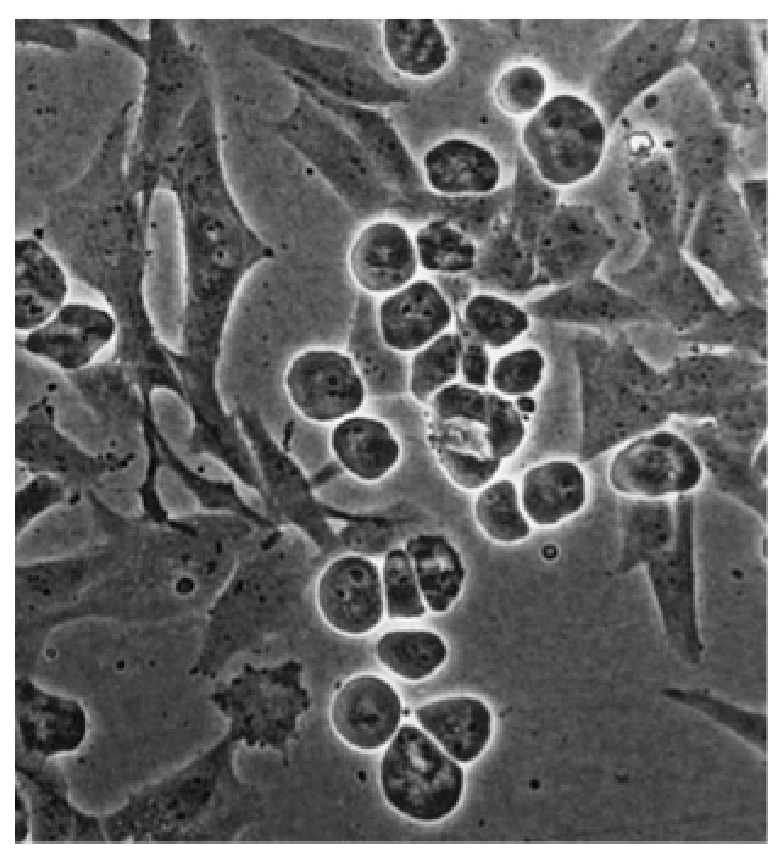
Tumor virology started with the discovery of a virus that could cause solid tumors in vertebrate animals. This discovery, made by Peyton Rous in 1910, marked the beginning of a scientific development that led to the recognition of cancer as a genetic disease [1]. In the first five decades after 1910, work with Rous sarcoma virus (RSV) was conducted exclusively in animals. It included studies on expanding the viral host range from chickens to other animal species and observations on the immune response to the virus [2,3,4,5]. By the middle of the last century, work with RSV had created a formidable body of knowledge, and innovative research was being pursued in several areas [6,7,8]. Then, in vitro cell culture, notably that of chicken embryo fibroblasts, became a widely adopted laboratory tool [9,10,11]. This technical innovation moved the attention in animal virology from animals to cultured cells. The critical impulse for that change came from phage research. The main representatives of that movement are the groups around Delbrück, Lwoff and Luria [12,13,14,15]. They followed strictly reductionist approaches and emphasized quantitation over description, ushering in the concept of quantitative biology. The principal technique of that scientific approach was the phage plaque assay [16]. Plaques are discrete areas of bacterial lysis induced by a single replicating viral particle. The phage plaque assay had been adapted to cytocidal animal viruses, with poliovirus and monkey kidney cells as first examples [17]. The approach was extended to Rous sarcoma virus, but instead of cell lysis, discrete foci of morphologically transformed cells in monolayers of avian fibroblasts became the indicator of viral infection and oncogenic activity [18]. This focus assay induced a fundamental change in the thinking of tumor virologists and became the backbone technique for early retrovirology. It is rapid, reliable and simple (Figure 1) [19]. In today’s cancer research, the focus assay is a fringe technique, but it has found new and valuable applications, thanks to novel vectors based on the RSV genome. It can now be used with a large number of cancer-inducing DNA sequences [20,21].
2.2. Serendipity
The serendipitous aspects contributing to the early prevalence of the avian field emerged from the unique structural and biological properties of avian retroviruses. These properties provided the components for building an exclusive, powerful, and novel set of tools and, thus, contributed decisively to our understanding of retroviruses.
The most important of these unusual properties of the avian retroviruses is the non-defectiveness of the RSV genome, combining the information needed for viral replication with the ability to transform cells [22]. RSV is unique in this respect. All other retroviruses carrying cellular oncogenes have exchanged viral genetic information for cellular sequences and, consequently, are defective in replication. But genomic non-defectiveness is a prerequisite for genetic analysis; and the groundbreaking studies of retroviral gene function and gene mapping depended on it. The singularity of non-defective RSV could reflect a unique feature of the viral capsid that allows the accommodation of a genome carrying an additional, nonviral gene.
Notations for RSV in the scientific literature always include a “strain” designation. The common strains are the Prague, Carr–Zilber, and Schmidt–Ruppin strains and the presumably independent viral isolate of B77. All of these are non-defective. The Bryan Hi-titer strain is an exception to this rule, carrying a defective genome that lacks the information for the viral glycoprotein. This defectiveness probably resulted from a method of virus production that selected for rapid growth and high yield. It is a strategy bound to generate short, defective viral genomes that depend on a ubiquitous helper virus that lacks an oncogene.
The second and less obvious of these serendipitous features consists of the multiplicity of viral surface glycoproteins. Avian retroviruses occur in nine distinct surface glycoproteins (Table 1) [23,24,25,26,27]. Each of these glycoproteins defines a viral subgroup and targets a specific cell surface receptor. Several of the most common cell surface receptors have been molecularly cloned. If they encode a dispensable gene, that gene can be deleted or inactivated, generating cells and animals that are genetically resistant to the corresponding subgroup of avian retroviruses (Table 2). More importantly, the viral glycoproteins give rise to the phenomenon of viral interference [28,29,30]. A cell infected with an avian retrovirus produces an excess of viral surface glycoprotein, which presumably saturates the cell surface receptor. Consequently, these cells become resistant to superinfection with a virus of the same subgroup but remain susceptible to infection with viruses of other subgroups (Table 3). Before DNA sequencing and nucleic acid hybridization became routine experimental techniques, viral interference was a specific and powerful tool to discover inapparent infection. Such inapparent infections are common with retroviruses, which can replicate in cultured cells without inducing any change in cell morphology or growth rate. However, their presence and subgroup affiliation can be readily detected by viral interference. Detection of inapparent infections is essential for genetic investigations. Viral glycoproteins and mutated cell surface receptors were also instrumental in the discoveries of high-frequency genetic recombination and of phenotypic mixing between retroviruses [31,32,33].
The findings of multiple glycoproteins, cell surface receptors, viral interference, and genetic non-defectiveness could be dismissed as merely archival information (Table 4), yet these tools played critical parts in experiments that led to fundamental discoveries. Here are two further examples:
A fast and reliable identification of viral surface proteins was essential in the experiments that showed early DNA synthesis in retroviral infection is virus-specific, which suggested the possible presence of a DNA polymerase in the viral particle [34]. It triggered the race that led to the discovery of reverse transcriptase [35,36].
The ability to detect inapparent infections led to the identification of the first oncogene, src. Serial passage of non-defective RSV commonly generates two types of progeny: one identical to the parental virus, capable of active replication and of inducing oncogenic cellular transformation, and a second one that produces infectious progeny without the ability to transform [30,37]. At the time, the transformation-defective virus was detectable only by viral interference, and this method revealed that, eventually, the transformation-defective virus prevails and constitutes most of the progeny virus. A possible reason for this enhanced fitness of the transformation-defective variant is a smaller genome that grows faster and, thus, replaces the parent. It has lost the genetic information that is essential for oncogenic transformation.
2.3. The src Paradigm
A comparison of genome length between transforming and transformation-defective viruses showed that this hypothesis is correct and that the RNA of the transforming virus is larger than that of the transformation-defective virus (Figure 2) [38]. This observation signaled the discovery of the viral oncogene src, the first principal proof of a molecular underpinning of the cancer gene hypothesis [38,39].
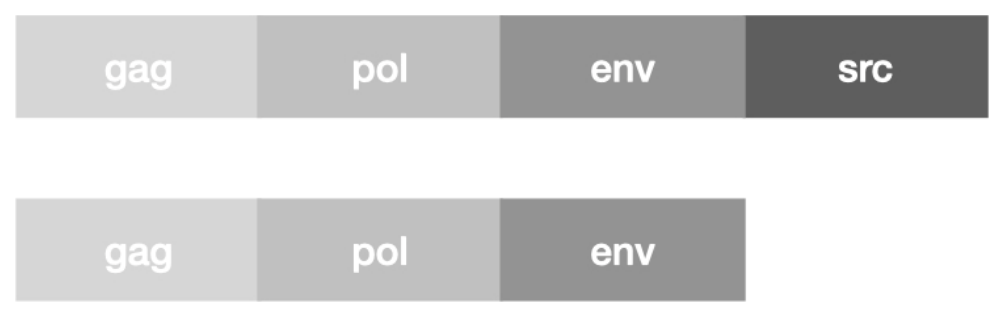
Reverse transcriptase was discovered at the same time, and it opened the door to the molecular genetics of retroviruses [35,36]. Single-stranded DNA generated by reverse transcriptase from the genome of transformation-competent RSV was subjected to subtractive hybridization with the RNA of the transformation-defective variant. This allowed the purification of a single-stranded DNA probe specific for the src gene. The probe showed the presence of src sequences in the cellular genome, fundamentally changing the concept of oncogene from viral to cellular [40]. The corresponding SRC protein, discovered a few years later and shown to be a tyrosine kinase, provided a basic understanding of the regulatory role that oncoproteins play in cancer [41,42]. In the following years, a basic map of the RSV genome emerged that defined four protein-coding regions starting from the 5’ end: the viral gag, pol, and env, and the cell-derived src (Figure 3). Oligonucleotide mapping and conventional genetics, including temperature-sensitive mutants, genome deletions and truncations, were essential for achieving this result [43,44,45,46,47,48,49,50].
2.4. The Discovery of myc
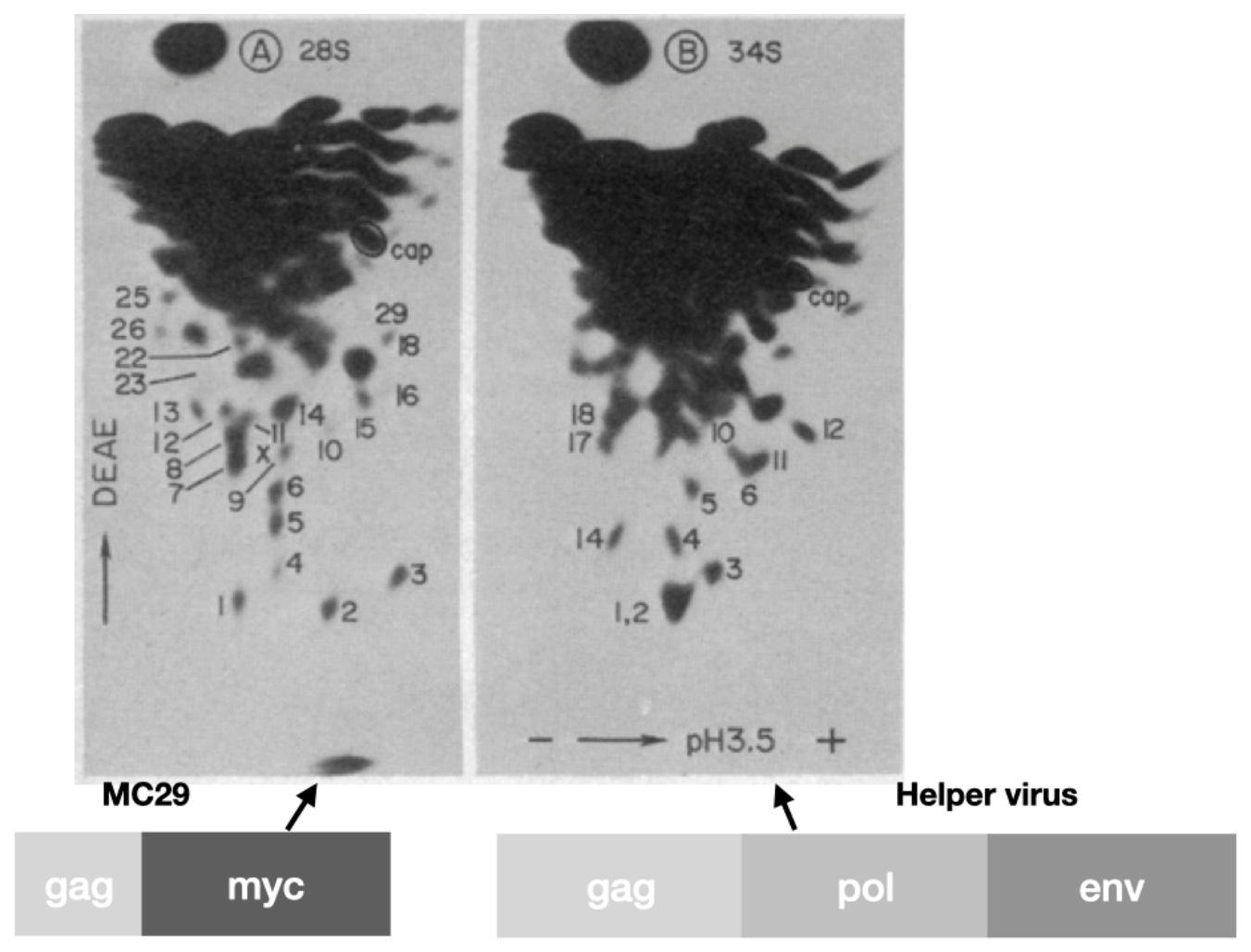
After src and RSV, there were other avian retroviruses that attracted attention. Among them was avian myelocytomatosis virus 29 (MC29), isolated in Bulgaria in 1967. Unlike common avian leukemia viruses, which induce inapparent infections, MC29 can form foci of transformed cells in avian embryo fibroblast cultures [51,52,53]. MC29 is replication-defective, and its genome is smaller than that of a replication-competent retrovirus. This size difference facilitated the separation of the MC29 RNA from that of its associated helper virus. Oligonucleotide fingerprints of MC29 RNA, and of the RNA of its helper virus, revealed non-viral sequences in the MC29 genome [54]. Complementary information came from the analysis of viral proteins produced by MC29-transformed cells. These cells synthesize a large protein, in which parts of the viral gag sequences are fused to non-viral sequences presumed to represent the oncogene (Figure 4) [54,55]. Together, oligonucleotide maps and protein analysis marked the discovery of a new oncogene, which was later termed myc. The non-viral sequences of MC29 were soon shown to be derived from the cellular genome, suggesting that the host cell is the universal source of viral oncogenes [56]. Following the genetic and structural analysis of the MC29 genome, the myc oncogene was also discovered in other avian retroviruses, including CMII, OK10, and MH2 [57]. The mechanism leading to multiple viral transductions of the same cellular oncogene is not understood. A possible explanation is provided by the retroviral life cycle. It includes recombination with the cellular genome that can lead to the acquisition of host sequences. With the exception of RSV, such acquisitions generate shorter, defective viral genomes that show enhanced fitness in replication.
The retroviral transduction of cellular genes with oncogenic potential provided the foundation for the genetic interpretation of cancer.
The MYC protein contains a dimerization and a DNA-binding domain, referred to as basic helix–loop–helix leucine zipper (bHLH-LZ) structure. The unliganded MYC is intrinsically disordered, but when it is bound to its partner protein MAX, forms a sequence-specific DNA-binding complex [58,59,60]. MYC was the first retroviral oncogene whose cellular counterpart was shown to be involved in human cancer [61]. It acts as a driving force in most human cancers [62,63,64,65], but has not been successfully targeted by a small, clinically approved inhibitor. However, the field of MYC inhibition is increasingly active [66,67], with interesting attempts to circumvent existing hurdles [68].
MYC was also the first cellular oncogene found to be activated by retroviral insertional mutagenesis [69]. It was shortly followed by the discovery of the WNT oncogene, activated by insertion of the mouse mammary tumor retrovirus genome into the host genome [70,71]. Activation of cellular oncogenes by retroviral insertion represents a distinct mechanism of tumorigenesis. It has been used to identify and characterize new genes and signaling pathways important in cancer [72,73].
Detailed biochemical analysis of the MC29-related retrovirus MH2 revealed that its genome contains, in addition to myc, a second, independently expressed, cell-derived insert termed mil [74,75]. At the same time, a cell-derived insert termed raf was found in the genome of a murine sarcoma virus [76]. mil and raf turned out to be derived from orthologous genes in the chicken and the mouse [60,77]. They represent a unique example of retroviral infection in two different classes of animals, leading to the transduction of the same gene. The Human Gene Nomenclature Committee has chosen the term RAF for the human ortholog. In the human genome, RAF represents a family of genes; one of these is referred to as BRAF. Mutated BRAF acts as an important driver in several human tumors, notably cancers of the colon and lung, and melanoma [78].
2.5. From Avian Erythroblastosis to HER2
Avian erythroblastosis is caused by a group of closely related retroviruses that are commonly designated as AEV “strains” [79,80,81,82,83,84]. Early molecular investigations used the AEV strain ES4 and identified two independently transcribed putative viral oncogenes, referred to as erbA and erbB [85,86,87], with erbB emerging as the likely driver of the disease. This possibility was confirmed by work on avian erythroblastosis virus strain H. Strain H carries only the erbB oncogene, yet it is fully capable of causing the disease [88,89]. erbA, a homolog of the thyroid hormone receptor, is connected to oncogenesis in a different context [90,91]. For erbB, the analysis of nucleotide and of amino acid sequences showed that it is a homolog of the epidermal growth factor receptor (EGFR) [92,93]. The EGFR family of proteins gained additional importance for cancer by the discovery of a related oncogene in a chemically induced tumor [94]. The gene, originally termed neu or erbB-2, but now referred to as HER2, also encodes an EGFR-related protein. HER2 is frequently amplified in breast cancer [95] and, like other EGFRs, it is expressed at the cell surface. That made it accessible to monoclonal antibodies leading to the development of the drug Herceptin [96]. Herceptin represents a prime example of successful targeted cancer therapy [97]. It is connected to avian erythroblastosis through a series of pivotal discoveries.
2.6. Finding New Viral Oncogenes
The incidence of cancer increases with age. Screening populations of old animals enhances the chances of making new discoveries. Chickens constitute the largest populations of animals that are professionally screened for tumors. Older birds, referred to as “retired layers”, used to be processed for human consumption and, hence, were inspected by a veterinarian of the Department of Agriculture. A single such processing plant would typically handle a minimum of 30,000 birds per day. Several spontaneous tumors detected in the course of two days in a plant in Los Angeles led to the discovery of multiple novel oncogenes. Three representative examples are jun, recovered from avian sarcoma virus 17 (ASV 17) [98]; qin, from ASV 31 [99]; and phosphoinositide 3-kinase (pi3k), from ASV 16 [100].
Jun was the first oncogene found to encode a transcriptional regulator. It is a leucine zipper protein and dimerizes with the related leucine zipper oncoprotein Fos to form the transcriptional activator complex AP1 [101,102,103].
The qin protein belongs to the family of Fox proteins and is now officially referred to as FoxG1 [99]. It is expressed exclusively in the telencephalon and is essential for the development of the brain in vertebrates. FoxG1 represents the only homeotic gene that has been recruited as an oncogene by a retrovirus.
Phosphoinositide 3-kinase (pi3k), a lipid kinase, became a promising drug target when overexpression and somatic mutation of the α isoform were discovered in human cancer [104]. The mutations are clustered in three sites of the gene and cause gain of function of the enzyme [104,105]. Expression of the mutated gene in cultured cells induces oncogenic transformation [106].
In the genomes of ASV17, ASV31, and ASV16, the 5’-ends of the respective oncogenes are fused to partial viral gag sequences, and in the virus-induced animal tumors, these oncogenes are expressed as gag fusion proteins. The gag sequence can contribute to the oncogenicity of the cellular sequences by determining cellular location or by enhancing the efficiency of translation.
In the following section of this commentary, we will briefly cite a few examples of oncogenes derived from mammalian retroviruses.
2.7. Ras
Two murine sarcoma viruses, the Harvey [107] and the Kirsten viruses [108], yielded oncogenic members of the Ras gene family, referred to as HRas and KRas. Early work was devoted to the genome structure of these viruses and the presence of host-derived sequences in their genomes [109,110,111]. The identification of the human HRAS as the determinant of the oncogenic phenotype of a human cancer cell line led to a burst of discoveries that showed the pervasive involvement of RAS, especially KRAS, in human cancer [112,113,114,115,116,117,118]. RAS is the most mutated oncogene in human cancer. The activating mutations map to a few hot spots of the gene and are single amino acid substitutions that lock the protein in its activated, GTP-bound form. Mutated RAS proteins are critical therapeutic targets. However, conventional paths to the design of small molecule inhibitors were ruled out by the apparent lack of suitable binding pockets and by the extremely high affinity of the protein for its target. These obstacles were overcome by fundamentally novel approaches that resulted in the identification of covalently binding, mutant-specific inhibitors [119].
2.8. Fos
Fos is the oncogene of the Finkel–Biskis–Jinkins (FBJ) mouse osteosarcoma virus [120,121]. In the virus-infected cell, it is expressed as a gag-fos fusion protein. The oncogenic activity of this protein is not dependent on its gag component, but on structural changes in the fos sequence [122,123], probably a result of the DNA-damaging agents that caused the original FBJ tumor. As already mentioned, fos binds to the jun protein using its leucine repeat sequence, forming the transcriptional enhancer factor AP1 [102,103,124].
2.9. Abl
The source of the retroviral oncogene abl is the Abelson leukemia virus [125]. A molecular investigation of its genome structure and expression detected a transformation-specific gag-abl fusion protein that functions as a tyrosine-specific protein kinase [126,127,128]. The significance of the abl oncogene for human cancer rests in the chromosomal translocation that fuses the human ABL gene on chromosome 9 to the BCR gene on chromosome 22, generating the fusion protein BCR-ABL [129,130,131]. BCR-ABL is a critical factor in the development of chronic myeloblastic leukemia [132,133]. The BCR-ABL fusion protein retains the kinase activity of ABL and was recognized as an attractive and promising drug target. Development of a small molecule inhibitor generated the compound STI571, marketed as Gleevec [134]. Therapeutic inhibition of BCR-ABL with Gleevec induces long-lasting remissions of chronic myelogenous leukemia [135,136]. Treatment with Gleevec or similar kinase inhibitors is now an important part in the standard of care of chronic myelogenous leukemia [136]. It is one of the most successful examples of targeted therapy.
3. Considerations
In this essay, we have followed an intentionally tight and confined path from the discovery of retroviral oncogenes to human cancer. It is a small segment of the abundant data that show that mutated genes play a critical role in the causation of cancer. Cancer genome landscapes reveal multiple somatic mutations that, in concert, contribute to uncontrolled cell growth [62,137]. Some of the most prevalent driver genes and their products were first identified in retroviruses. The functional significance of these oncoproteins is strongly supported by multiple dependency maps [138,139] (see also the cancer dependency project carried out at the Broad Institute, https://depmap.org/portal/ (accessed on 17 June 2026)). Cancer genetics is now fully integrated in clinical practice [140,141]. It is the origin and basis of targeted therapy. Cancer genetics is also the elementary tool for non-invasive early diagnosis [142].
However, advances in technologies, interpretations, and concepts are reshaping the field. Among the technologies that have undergone transformative developments are DNA and RNA sequencing and proteomics. Nucleic acid sequencing has made large gains in rapidity and can be scaled to single cell and single gene. New RNA sequencing methods have been introduced, and DNA sequencing has been expanded to long reads [143,144,145,146]. The results include novel insights into cancer genes and gene signatures, and the roles of genes in the origin and development of cancers [147,148,149]. New sequencing technologies have also led to a better understanding of the workings and failures of targeted therapy [150,151]. Additionally, they were instrumental in recognizing cellular plasticity as an important hallmark of cancer [152,153]. Plasticity, or mesenchymal drift, further plays a critical role in a recent proposal on the origin and nature of cancer, which integrates our knowledge of embryonal development and evolution in the process of oncogenesis [154]. Proteomics has undergone similar changes, with great improvements in speed and scale at single-cell level [155,156,157,158,159,160,161]. A technical fusion of proteomics and nucleic acid sequencing has also become an option [162].
Sequencing has further opened the door to an exploration of noncoding RNAs. The importance of the noncoding transcriptome as the genetic regulator of cell fate is experimentally supported and widely acknowledged [163]. One class of noncoding RNAs, the micro RNAs (miRNAs), has become an important part of cancer genetics, guiding diagnosis and treatment [164]. This discovery was facilitated by the fact that all miRNAs share basic molecular mechanisms of biogenesis and action [165]. But the large remainder of the noncoding genome is poorly understood. Most of these transcripts are long noncoding RNAs (lncRNAs, transcripts of more than 200 nucleotides). First discovered in a study of X-chromosome inactivation [166], they share several characteristic properties [167]. Although numerous publications have linked one or several lncRNAs to a specific cancer, there has not been a paradigmatic breakthrough that could integrate the entire class of lncRNAs into cancer development [167,168,169,170,171].
Ultimately, all questions that are raised by current cancer research merge into one unifying problem: the control of gene expression, specifically gene expression in higher vertebrates. The prevailing opinion of the control of transcription and gene regulation sees it primarily, if not exclusively, based on protein (transcription factor)–DNA interactions. The exclusivity of this view is almost certainly incorrect.
Early voices have pointed out the fundamental deficiencies and the inadequacy of these views, especially when applied to higher forms of life. One of them was Barbara McClintock, who focused on transposable elements as mediators of gene regulation [172,173,174,175].
A comprehensive hypothesis of the control of gene expression in the development and evolution of higher organisms was offered by Eric Davidson and collaborators [176,177]. They were the first to propose an essential role of regulatory RNA in the control of transcription. Their revolutionary concepts on hierarchical gene regulatory networks did not fit into the dominant views and, therefore, were initially ignored [178]. Today, the basic elements of the Davidson hypothesis are widely discussed [179,180,181,182,183], but have still not become part of the molecular biology canon.
A more recent voice emphasizing the centrality of regulatory RNA comes from John Mattick [184]. It is based on transcriptomic deep sequencing [185]. Mattick presents a compelling argument for the need of a “Kuhnian Revolution”, a paradigm shift, in molecular biology [186] and supports this with a comprehensive account of ideas and data from the past and the present in his book “RNA, the epicenter of genetic information” [163]. Contemporary reviews of transcriptional mechanisms and of RNA–protein interactions point in the same direction [187,188].
Much current work in biochemistry and chemistry is ultimately aimed at drug discovery. Proteins are the standard targets; RNAs are much less approachable. This situation creates a hidden bias that should not be extended to our understanding of the molecular mechanisms governing life. We need to remain open to ideas that contradict established dogma and that may have no immediate utilitarian value.
A final thought: Sequencing and proteomic technologies have introduced a fundamental change in the conduct of cancer research and of research in general. The reductionist fervor that started quantitative biology has yielded to a detached, statistics-guided analysis of large data sets. The philosophical consequences of this shift in approaching the unknown and in conducting science are frequently mentioned, but have not been fully explored [189].
Funding
This manuscript was published with generous support from the Scripps Research Institute.
Institutional Review Board Statement
Not applicable.
Informed Consent Statement
Not applicable.
Data Availability Statement
No new data were created or analyzed in this study.
Acknowledgments
I want to express my deep gratitude to Anja Zembrzycki, for her expert help in producing this manuscript, and to Klaus Bister, for stimulating discussions and suggestions.
Conflicts of Interest
The author declares no conflicts of interest.
References
- Rous, P. A Transmissible Avian Neoplasm. (Sarcoma of the Common Fowl.). J. Exp. Med. 1910, 12, 696–705. [Google Scholar] [CrossRef] [Scilit] [PubMed]
- Rous, P.; Lange, L.B. The Characters of a Third Transplantable Chicken Tumor Due to a Filterable Cause. A Sarcoma of Intracanalicular Pattern. J. Exp. Med. 1913, 18, 651–664. [Google Scholar] [CrossRef] [Scilit] [PubMed]
- Rous, P.; Murphy, J.B. On the Causation by Filterable Agents of Three Distinct Chicken Tumors. J. Exp. Med. 1914, 19, 52–68. [Google Scholar] [CrossRef] [Scilit] [PubMed]
- Rous, P.; Murphy, J.B. On Immunity to Transplantable Chicken Tumors. J. Exp. Med. 1914, 20, 419–432. [Google Scholar] [CrossRef] [Scilit] [PubMed]
- Furth, J. The Relation of Leukosis to Sarcoma of Chickens: Iii. Sarcomata of Strains 11 and 15 and Their Relation to Leukosis. J. Exp. Med. 1936, 63, 145–155. [Google Scholar] [CrossRef] [Scilit] [PubMed]
- Groupe, V.; Manaker, R.A. Discrete foci of altered chicken embryo cells associated with Rous sarcoma virus in tissue culture. Virology 1956, 2, 838–840. [Google Scholar] [CrossRef] [Scilit] [PubMed]
- Groupe, V.; Dunkel, V.C.; Manaker, R.A. Improved pock counting method for the titration of Rous sarcoma virus in embryonated eggs. J. Bacteriol. 1957, 74, 409–410. [Google Scholar] [CrossRef] [Scilit] [PubMed]
- Dougherty, R.M.; Stewart, J.A.; Morgan, H.R. Quantitative studies of the relationships between infecting dose of Rous sarcoma virus, antiviral immune response, and tumor growth in chickens. Virology 1960, 11, 349–370. [Google Scholar] [CrossRef] [Scilit] [PubMed]
- Shannon, J.E., Jr.; Earle, W.R. Qualitative comparison of the growth of chick heart and strain L fibroblasts planted as suspensions on pyrex glass and perforated cellophane substrates. J. Natl. Cancer Inst. 1951, 12, 155–177. [Google Scholar] [CrossRef] [Scilit] [PubMed]
- Abercrombie, M.; Heaysman, J.E. Observations on the social behaviour of cells in tissue culture. I. Speed of movement of chick heart fibroblasts in relation to their mutual contacts. Exp. Cell Res. 1953, 5, 111–131. [Google Scholar] [CrossRef] [Scilit] [PubMed]
- Littlefield, J.W. Control mechanisms in animal cell cultures. Arch. Biochem. Biophys. 1968, 125, 410–415. [Google Scholar] [CrossRef] [Scilit] [PubMed]
- Ellis, E.L.; Delbruck, M. The Growth of Bacteriophage. J. Gen. Physiol. 1939, 22, 365–384. [Google Scholar] [CrossRef] [Scilit] [PubMed]
- Luria, S.E. Reactivation of Irradiated Bacteriophage by Transfer of Self-Reproducing Units. Proc. Natl. Acad. Sci. USA 1947, 33, 253–264. [Google Scholar] [CrossRef] [Scilit] [PubMed]
- Lwoff, A. Lysogeny. Bacteriol. Rev. 1953, 17, 269–337. [Google Scholar] [CrossRef] [PubMed]
- Cairns, J.; Stent, G.S.; Watson, J.D. (Eds.) Phage and the Origins of Molecular Biology—The Centennial Edition; Cold Spring Harbor Laboratory Press: Long Island, NY, USA, 2017; p. 394. [Google Scholar]
- Jones, D.; Krueger, A.P. A rapid slide plaque technic for bacteriophage assay. J. Gen. Physiol. 1951, 34, 347–357. [Google Scholar] [CrossRef] [Scilit] [PubMed]
- Dulbecco, R.; Vogt, M. Plaque formation and isolation of pure lines with poliomyelitis viruses. J. Exp. Med. 1954, 99, 167–182. [Google Scholar] [CrossRef] [Scilit] [PubMed]
- Temin, H.M.; Rubin, H. Characteristics of an assay for Rous sarcoma virus and Rous sarcoma cells in tissue culture. Virology 1958, 6, 669–688. [Google Scholar] [CrossRef] [Scilit] [PubMed]
- Himly, M.; Foster, D.N.; Bottoli, I.; Iacovoni, J.S.; Vogt, P.K. The DF-1 chicken fibroblast cell line: Transformation induced by diverse oncogenes and cell death resulting from infection by avian leukosis viruses. Virology 1998, 248, 295–304. [Google Scholar] [CrossRef] [Scilit] [PubMed]
- Aoki, M.; Batista, O.; Bellacosa, A.; Tsichlis, P.; Vogt, P.K. The akt kinase: Molecular determinants of oncogenicity. Proc. Natl. Acad. Sci. USA 1998, 95, 14950–14955. [Google Scholar] [CrossRef] [Scilit] [PubMed]
- Hughes, S. The RCAS System. Available online: https://ccr.cancer.gov/hiv-dynamics-and-replication-program/resources/rcas-system (accessed on 2 April 2026).
- Vogt, P.K. The Importance of Being Non-Defective: A Mini Review Dedicated to the Memory of Jan Svoboda. Viruses 2019, 11, 80. [Google Scholar] [CrossRef] [Scilit] [PubMed]
- Duff, R.G.; Vogt, P.K. Characteristics of two new avian tumor virus subgroups. Virology 1969, 39, 18–30. [Google Scholar] [CrossRef] [Scilit] [PubMed]
- Vogt, P.K. Envelope classification of avian RNA tumor viruses. In Comparative Leukemia Research 1969; Karger Publishers: Basel, Switzerland, 1971; pp. 153–167. [Google Scholar] [CrossRef] [Scilit] [PubMed]
- Fujita, D.J.; Chen, Y.C.; Friis, R.R.; Vogt, P.K. RNA tumor viruses of pheasants: Characterization of avian leukosis subgroups F and G. Virology 1974, 60, 558–571. [Google Scholar] [CrossRef] [Scilit] [PubMed]
- Troesch, C.D.; Vogt, P.K. An endogenous virus from Lophortyx quail is the prototype for envelope subgroup 1 of avian retroviruses. Virology 1985, 143, 595–602. [Google Scholar] [CrossRef] [Scilit] [PubMed]
- Payne, L.N.; Howes, K.; Gillespie, A.M.; Smith, L.M. Host range of Rous sarcoma virus pseudotype RSV(HPRS-103) in 12 avian species: Support for a new avian retrovirus envelope subgroup, designated J. J. Gen. Virol. 1992, 73, 2995–2997. [Google Scholar] [CrossRef] [Scilit] [PubMed]
- Vogt, P.K.; Ishizaki, R. Patterns of viral interference in the avian leukosis and sarcoma complex. Virology 1966, 30, 368–374. [Google Scholar] [CrossRef] [Scilit] [PubMed]
- Vogt, P.K. Cooperative and antagonistic interactions among RNA tumor viruses. Natl. Cancer Inst. Monogr. 1968, 29, 421–426. [Google Scholar] [PubMed]
- Vogt, P.K. Spontaneous segregation of nontransforming viruses from cloned sarcoma viruses. Virology 1971, 46, 939–946. [Google Scholar] [CrossRef] [Scilit] [PubMed]
- Vogt, P.K. Phenotypic mixing in the avian tumor virus group. Virology 1967, 32, 708–717. [Google Scholar] [CrossRef] [Scilit] [PubMed]
- Vogt, P.K. Genetically stable reassortment of markers during mixed infection with avian tumor viruses. Virology 1971, 46, 947–952. [Google Scholar] [CrossRef] [Scilit] [PubMed]
- Kawai, S.; Hanafusa, H. Genetic recombination with avian tumor virus. Virology 1972, 49, 37–44. [Google Scholar] [CrossRef] [Scilit] [PubMed]
- Duesberg, P.H.; Vogt, P.K. On the role of DNA synthesis in avian tumor virus infection. Proc. Natl. Acad. Sci. USA 1969, 64, 939–946. [Google Scholar] [CrossRef] [Scilit] [PubMed]
- Baltimore, D. RNA-dependent DNA polymerase in virions of RNA tumour viruses. Nature 1970, 226, 1209–1211. [Google Scholar] [CrossRef] [Scilit] [PubMed]
- Temin, H.M.; Mizutani, S. RNA-dependent DNA polymerase in virions of Rous sarcoma virus. Nature 1970, 226, 1211–1213. [Google Scholar] [CrossRef] [Scilit] [PubMed]
- Estis, L.F.; Temin, H.M. Suppression of multiplication of avian sarcoma virus by rapid spread of transformation-defective virus of the same subgroup. J. Virol. 1979, 31, 389–397. [Google Scholar] [CrossRef] [Scilit] [PubMed]
- Duesberg, P.H.; Vogt, P.K. Differences between the ribonucleic acids of transforming and nontransforming avian tumor viruses. Proc. Natl. Acad. Sci. USA 1970, 67, 1673–1680. [Google Scholar] [CrossRef] [Scilit] [PubMed]
- Bister, K. Discovery of oncogenes: The advent of molecular cancer research. Proc. Natl. Acad. Sci. USA 2015, 112, 15259–15260. [Google Scholar] [CrossRef] [Scilit] [PubMed]
- Stehelin, D.; Varmus, H.E.; Bishop, J.M.; Vogt, P.K. DNA related to the transforming gene(s) of avian sarcoma viruses is present in normal avian DNA. Nature 1976, 260, 170–173. [Google Scholar] [CrossRef] [Scilit] [PubMed]
- Brugge, J.S.; Erikson, R.L. Identification of a transformation-specific antigen induced by an avian sarcoma virus. Nature 1977, 269, 346–348. [Google Scholar] [CrossRef] [Scilit] [PubMed]
- Hunter, T.; Sefton, B.M. Transforming gene product of Rous sarcoma virus phosphorylates tyrosine. Proc. Natl. Acad. Sci. USA 1980, 77, 1311–1315. [Google Scholar] [CrossRef] [Scilit] [PubMed]
- Mason, W.S.; Friis, R.R.; Linial, M.; Vogt, P.K. Determination of the defective function in two mutants of Rous sarcoma virus. Virology 1974, 61, 559–574. [Google Scholar] [CrossRef] [Scilit] [PubMed]
- Wang, L.H.; Duesberg, P.; Beemon, K.; Vogt, P.K. Mapping RNase T1-resistant oligonucleotides of avian tumor virus RNAs: Sarcoma-specific oligonucleotides are near the poly(A) end and oligonucleotides common to sarcoma and transformation-defective viruses are at the poly(A) end. J. Virol. 1975, 16, 1051–1070. [Google Scholar] [CrossRef] [Scilit] [PubMed]
- Blair, D.G.; Mason, W.S.; Hunter, E.; Vogt, P.K. Temperature-sensitive mutants of avian sarcoma viruses: Genetic recombination between multiple or coordinate mutants and avian leukosis viruses. Virology 1976, 75, 48–59. [Google Scholar] [CrossRef] [Scilit] [PubMed]
- Wang, L.; Galehouse, D.; Mellon, P.; Duesberg, P.; Mason, W.S.; Vogt, P.K. Mapping oligonucleotides of Rous sarcoma virus RNA that segregate with polymerase and group-specific antigen markers in recombinants. Proc. Natl. Acad. Sci. USA 1976, 73, 3952–3956. [Google Scholar] [CrossRef] [Scilit] [PubMed]
- Alevy, M.C.; Vogt, P.K. Ts pol mutants of avian sarcoma viruses: Mapping and demonstration of single cycle recombinants. Virology 1978, 87, 21–33. [Google Scholar] [CrossRef] [Scilit] [PubMed]
- Hu, S.F.; Lai, M.M.; Vogt, P.K. Characterization of the env gene in avian oncoviruses by heteroduplex mapping. J. Virol. 1978, 27, 667–676. [Google Scholar] [CrossRef] [Scilit] [PubMed]
- Duesberg, P.H.; Wang, L.H.; Beemon, K.; Kawai, S.; Hanafusa, H. Sequences and functions of Rous sarcoma virus RNA. Hamatol. Bluttransfus. 1976, 19, 327–340. [Google Scholar] [CrossRef] [Scilit] [PubMed]
- Wang, L.H.; Duesberg, P.H.; Kawai, S.; Hanafusa, H. Location of envelope-specific and sarcoma-specific oligonucleotides on RNA of Schmidt-Ruppin Rous sarcoma virus. Proc. Natl. Acad. Sci. USA 1976, 73, 447–451. [Google Scholar] [CrossRef] [Scilit] [PubMed]
- Mladenov, Z.; Heine, U.; Beard, D.; Beard, J.W. Strain MC29 avian leukosis virus. Myelocytoma, endothelioma, and renal growths: Pathomorphological and ultrastructural aspects. J. Natl. Cancer Inst. 1967, 38, 251–285. [Google Scholar] [CrossRef] [Scilit] [PubMed]
- Bolognesi, D.P.; Langlois, A.J.; Sverak, L.; Bonar, R.A.; Beard, J.W. In vitro chick embryo cell response to strain MC29 avian leukosis virus. J. Virol. 1968, 2, 576–586. [Google Scholar] [CrossRef] [Scilit] [PubMed]
- Ishizaki, R.; Langlois, A.J.; Chabot, J.; Beard, J.W. Component of strain MC29 avian leukosis virus with the property of defectiveness. J. Virol. 1971, 8, 821–827. [Google Scholar] [CrossRef] [Scilit] [PubMed]
- Duesberg, P.H.; Bister, K.; Vogt, P.K. The RNA of avian acute leukemia virus MC29. Proc. Natl. Acad. Sci. USA 1977, 74, 4320–4324. [Google Scholar] [CrossRef] [Scilit] [PubMed]
- Bister, K.; Hayman, M.J.; Vogt, P.K. Defectiveness of avian myelocytomatosis virus MC29: Isolation of long-term nonproducer cultures and analysis of virus-specific polypeptide synthesis. Virology 1977, 82, 431–448. [Google Scholar] [CrossRef] [Scilit] [PubMed]
- Sheiness, D.; Bishop, J.M. DNA and RNA from uninfected vertebrate cells contain nucleotide sequences related to the putative transforming gene of avian myelocytomatosis virus. J. Virol. 1979, 31, 514–521. [Google Scholar] [CrossRef] [Scilit] [PubMed]
- Bister, K.; Jansen, H.W. Oncogenes in retroviruses and cells: Biochemistry and molecular genetics. Adv. Cancer Res. 1986, 47, 99–188. [Google Scholar] [CrossRef] [Scilit] [PubMed]
- Blackwood, E.M.; Eisenman, R.N. Max: A helix-loop-helix zipper protein that forms a sequence-specific DNA-binding complex with Myc. Science 1991, 251, 1211–1217. [Google Scholar] [CrossRef] [Scilit] [PubMed]
- Fieber, W.; Schneider, M.L.; Matt, T.; Krautler, B.; Konrat, R.; Bister, K. Structure, function, and dynamics of the dimerization and DNA-binding domain of oncogenic transcription factor v-Myc. J. Mol. Biol. 2001, 307, 1395–1410. [Google Scholar] [CrossRef] [Scilit] [PubMed]
- Stefan, E.; Bister, K. MYC and RAF: Key Effectors in Cellular Signaling and Major Drivers in Human Cancer. Curr. Top. Microbiol. Immunol. 2017, 407, 117–151. [Google Scholar] [CrossRef] [Scilit] [PubMed]
- Dalla-Favera, R.; Bregni, M.; Erikson, J.; Patterson, D.; Gallo, R.C.; Croce, C.M. Human c-myc onc gene is located on the region of chromosome 8 that is translocated in Burkitt lymphoma cells. Proc. Natl. Acad. Sci. USA 1982, 79, 7824–7827. [Google Scholar] [CrossRef] [Scilit] [PubMed]
- Vogelstein, B.; Papadopoulos, N.; Velculescu, V.E.; Zhou, S.; Diaz, L.A., Jr.; Kinzler, K.W. Cancer genome landscapes. Science 2013, 339, 1546–1558. [Google Scholar] [CrossRef] [Scilit] [PubMed]
- Gabay, M.; Li, Y.; Felsher, D.W. MYC activation is a hallmark of cancer initiation and maintenance. Cold Spring Harb. Perspect. Med. 2014, 4, a014241. [Google Scholar] [CrossRef] [Scilit] [PubMed]
- Dhanasekaran, R.; Deutzmann, A.; Mahauad-Fernandez, W.D.; Hansen, A.S.; Gouw, A.M.; Felsher, D.W. The MYC oncogene—The grand orchestrator of cancer growth and immune evasion. Nat. Rev. Clin. Oncol. 2022, 19, 23–36. [Google Scholar] [CrossRef] [Scilit] [PubMed]
- Das, S.K.; Lewis, B.A.; Levens, D. MYC: A complex problem. Trends Cell Biol. 2023, 33, 235–246. [Google Scholar] [CrossRef] [Scilit] [PubMed]
- Hart, J.R.; Garner, A.L.; Yu, J.; Ito, Y.; Sun, M.; Ueno, L.; Rhee, J.K.; Baksh, M.M.; Stefan, E.; Hartl, M.; et al. Inhibitor of MYC identified in a Krohnke pyridine library. Proc. Natl. Acad. Sci. USA 2014, 111, 12556–12561. [Google Scholar] [CrossRef] [Scilit] [PubMed]
- Llombart, V.; Mansour, M.R. Therapeutic targeting of “undruggable” MYC. eBioMedicine 2022, 75, 103756. [Google Scholar] [CrossRef] [Scilit] [PubMed]
- Diamond, P.D.; Sauer, P.V.; Holm, M.; Swanson-Swett, C.J.; Ferguson, L.; Bratset, N.M.; Wienker, G.W.; Sim, J.S.; Adams, H.K.; Kenner, L.; et al. Context-dependent translation inhibition as a novel oncology therapeutic modality. bioRxiv 2025. [Google Scholar] [CrossRef] [Scilit]
- Hayward, W.S.; Neel, B.G.; Astrin, S.M. Activation of a cellular onc gene by promoter insertion in ALV-induced lymphoid leukosis. Nature 1981, 290, 475–480. [Google Scholar] [CrossRef] [Scilit] [PubMed]
- Nusse, R.; Varmus, H.E. Many tumors induced by the mouse mammary tumor virus contain a provirus integrated in the same region of the host genome. Cell 1982, 31, 99–109. [Google Scholar] [CrossRef] [Scilit] [PubMed]
- Rijsewijk, F.; Schuermann, M.; Wagenaar, E.; Parren, P.; Weigel, D.; Nusse, R. The Drosophila homolog of the mouse mammary oncogene int-1 is identical to the segment polarity gene wingless. Cell 1987, 50, 649–657. [Google Scholar] [CrossRef] [Scilit] [PubMed]
- Mikkers, H.; Berns, A. Retroviral insertional mutagenesis: Tagging cancer pathways. Adv. Cancer Res. 2003, 88, 53–99. [Google Scholar] [CrossRef] [Scilit] [PubMed]
- Uren, A.G.; Kool, J.; Berns, A.; van Lohuizen, M. Retroviral insertional mutagenesis: Past, present and future. Oncogene 2005, 24, 7656–7672. [Google Scholar] [CrossRef] [Scilit] [PubMed]
- Jansen, H.W.; Ruckert, B.; Lurz, R.; Bister, K. Two unrelated cell-derived sequences in the genome of avian leukemia and carcinoma inducing retrovirus MH2. EMBO J. 1983, 2, 1969–1975. [Google Scholar] [CrossRef] [Scilit] [PubMed]
- Coll, J.; Righi, M.; Taisne, C.; Dissous, C.; Gegonne, A.; Stehelin, D. Molecular cloning of the avian acute transforming retrovirus MH2 reveals a novel cell-derived sequence (v-mil) in addition to the myc oncogene. EMBO J. 1983, 2, 2189–2194. [Google Scholar] [CrossRef] [Scilit] [PubMed]
- Rapp, U.R.; Goldsborough, M.D.; Mark, G.E.; Bonner, T.I.; Groffen, J.; Reynolds, F.H., Jr.; Stephenson, J.R. Structure and biological activity of v-raf, a unique oncogene transduced by a retrovirus. Proc. Natl. Acad. Sci. USA 1983, 80, 4218–4222. [Google Scholar] [CrossRef] [Scilit] [PubMed]
- Jansen, H.W.; Lurz, R.; Bister, K.; Bonner, T.I.; Mark, G.E.; Rapp, U.R. Homologous cell-derived oncogenes in avian carcinoma virus MH2 and murine sarcoma virus 3611. Nature 1984, 307, 281–284. [Google Scholar] [CrossRef] [Scilit] [PubMed]
- Smiech, M.; Leszczynski, P.; Kono, H.; Wardell, C.; Taniguchi, H. Emerging BRAF Mutations in Cancer Progression and Their Possible Effects on Transcriptional Networks. Genes 2020, 11, 1342. [Google Scholar] [CrossRef] [Scilit] [PubMed]
- Engelbreth-Holm, J.; Meyer, A.R. On the connection between erythroblastosis (hæmocytoblastosis), myelosis and sarcoma in chicken. Acta Pathol. Microbiol. Scand. 1935, 12, 352–365. [Google Scholar] [CrossRef] [Scilit]
- Wallbank, A.M.; Sperling, F.G.; Stubbs, E.L.; Hubben, K. Studies of avian sarcoma and erythroblastosis (strain 13). II. Virus susceptibility to ether and chloroform. Proc. Soc. Exp. Biol. Med. 1962, 110, 809–811. [Google Scholar] [CrossRef] [Scilit] [PubMed]
- Bonar, R.A.; Purcell, R.H.; Beard, D.; Beard, J.W. Virus of Avian Myeloblastosis (Bai Strain a). Xxiv. Nucleotide Composition of the Pentosenucleic Acid and Comparison with Strain R (Erythroblastosis). J. Natl. Cancer Inst. 1963, 31, 705–716. [Google Scholar] [CrossRef] [Scilit] [PubMed]
- Graf, T. In vitro transformation of chicken bone marrow cells with avian erythroblastosis virus. Z. Naturforsch C Biosci. 1975, 30, 847–849. [Google Scholar] [CrossRef] [Scilit] [PubMed]
- Nedialkov, S.; Todorov, G. Sensitivity of avian leukosis (erythroblastosis) strain E-26 to ether, chloroform and different pH values. Acta Microbiol. Virol. Immunol. 1975, 2, 64–68. [Google Scholar] [PubMed]
- Karakoz, I.; Geryk, J.; Svoboda, J. In vivo effect of three transformation-defective mutants of subgroup C avian sarcoma viruses. Folia Biol. 1980, 26, 62–69. [Google Scholar] [CrossRef] [Scilit]
- Sheiness, D.; Vennstrom, B.; Bishop, J.M. Virus-specific RNAs in cells infected by avian myelocytomatosis virus and avian erythroblastosis virus: Modes of oncogene expression. Cell 1981, 23, 291–300. [Google Scholar] [CrossRef] [Scilit] [PubMed]
- Privalsky, M.L.; Bishop, J.M. Proteins specified by avian erythroblastosis virus: Coding region localization and identification of a previously undetected erb-B polypeptide. Proc. Natl. Acad. Sci. USA 1982, 79, 3958–3962. [Google Scholar] [CrossRef] [Scilit] [PubMed]
- Vennstrom, B.; Bishop, J.M. Isolation and characterization of chicken DNA homologous to the two putative oncogenes of avian erythroblastosis virus. Cell 1982, 28, 135–143. [Google Scholar] [CrossRef] [Scilit] [PubMed]
- Yamamoto, T.; Hihara, H.; Nishida, T.; Kawai, S.; Toyoshima, K. A new avian erythroblastosis virus, AEV-H, carries erbB gene responsible for the induction of both erythroblastosis and sarcomas. Cell 1983, 34, 225–232. [Google Scholar] [CrossRef] [Scilit] [PubMed]
- Yamamoto, T.; Kawai, S.; Koyama, T.; Hihara, H.; Shimizu, T.; Toyoshima, K. Newly generated avian erythroblastosis virus produces noninfectious particles lacking env-gene products. Virology 1983, 129, 31–39. [Google Scholar] [CrossRef] [Scilit] [PubMed]
- Privalsky, M.L. v-erb A, nuclear hormone receptors, and oncogenesis. Biochim. Biophys. Acta 1992, 1114, 51–62. [Google Scholar] [CrossRef] [Scilit] [PubMed]
- Sap, J.; Munoz, A.; Damm, K.; Goldberg, Y.; Ghysdael, J.; Leutz, A.; Beug, H.; Vennstrom, B. The c-erb-A protein is a high-affinity receptor for thyroid hormone. Nature 1986, 324, 635–640. [Google Scholar] [CrossRef] [Scilit] [PubMed]
- Downward, J.; Yarden, Y.; Mayes, E.; Scrace, G.; Totty, N.; Stockwell, P.; Ullrich, A.; Schlessinger, J.; Waterfield, M.D. Close similarity of epidermal growth factor receptor and v-erb-B oncogene protein sequences. Nature 1984, 307, 521–527. [Google Scholar] [CrossRef] [Scilit] [PubMed]
- Merlino, G.T.; Xu, Y.H.; Ishii, S.; Clark, A.J.; Semba, K.; Toyoshima, K.; Yamamoto, T.; Pastan, I. Amplification and enhanced expression of the epidermal growth factor receptor gene in A431 human carcinoma cells. Science 1984, 224, 417–419. [Google Scholar] [CrossRef] [Scilit] [PubMed]
- Bargmann, C.I.; Hung, M.C.; Weinberg, R.A. The neu oncogene encodes an epidermal growth factor receptor-related protein. Nature 1986, 319, 226–230. [Google Scholar] [CrossRef] [Scilit] [PubMed]
- Slamon, D.J.; Clark, G.M.; Wong, S.G.; Levin, W.J.; Ullrich, A.; McGuire, W.L. Human breast cancer: Correlation of relapse and survival with amplification of the HER-2/neu oncogene. Science 1987, 235, 177–182. [Google Scholar] [CrossRef] [Scilit] [PubMed]
- Shepard, H.M.; Jin, P.; Slamon, D.J.; Pirot, Z.; Maneval, D.C. Herceptin. In Therapeutic Antibodies; Handbook of Experimental Pharmacology, vol 181; Springer: Berlin/Heidelberg, Germany, 2008; pp. 183–219. [Google Scholar] [CrossRef] [Scilit] [PubMed]
- Finn, R.S.; Slamon, D.J. Monoclonal antibody therapy for breast cancer: Herceptin. Cancer Chemother. Biol. Response Modif. 2003, 21, 223–233. [Google Scholar] [CrossRef] [Scilit] [PubMed]
- Maki, Y.; Bos, T.J.; Davis, C.; Starbuck, M.; Vogt, P.K. Avian sarcoma virus 17 carries the jun oncogene. Proc. Natl. Acad. Sci. USA 1987, 84, 2848–2852. [Google Scholar] [CrossRef] [Scilit] [PubMed]
- Li, J.; Vogt, P.K. The retroviral oncogene qin belongs to the transcription factor family that includes the homeotic gene fork head. Proc. Natl. Acad. Sci. USA 1993, 90, 4490–4494. [Google Scholar] [CrossRef] [Scilit] [PubMed]
- Chang, H.W.; Aoki, M.; Fruman, D.; Auger, K.R.; Bellacosa, A.; Tsichlis, P.N.; Cantley, L.C.; Roberts, T.M.; Vogt, P.K. Transformation of chicken cells by the gene encoding the catalytic subunit of PI 3-kinase. Science 1997, 276, 1848–1850. [Google Scholar] [CrossRef] [Scilit] [PubMed]
- Bohmann, D.; Bos, T.J.; Admon, A.; Nishimura, T.; Vogt, P.K.; Tjian, R. Human proto-oncogene c-jun encodes a DNA binding protein with structural and functional properties of transcription factor AP-1. Science 1987, 238, 1386–1392. [Google Scholar] [CrossRef] [Scilit] [PubMed]
- Curran, T.; Franza, B.R., Jr. Fos and Jun: The AP-1 connection. Cell 1988, 55, 395–397. [Google Scholar] [CrossRef] [Scilit] [PubMed]
- Rauscher, F.J., 3rd; Cohen, D.R.; Curran, T.; Bos, T.J.; Vogt, P.K.; Bohmann, D.; Tjian, R.; Franza, B.R., Jr. Fos-associated protein p39 is the product of the jun proto-oncogene. Science 1988, 240, 1010–1016. [Google Scholar] [CrossRef] [Scilit] [PubMed]
- Samuels, Y.; Wang, Z.; Bardelli, A.; Silliman, N.; Ptak, J.; Szabo, S.; Yan, H.; Gazdar, A.; Powell, S.M.; Riggins, G.J.; et al. High frequency of mutations of the PIK3CA gene in human cancers. Science 2004, 304, 554. [Google Scholar] [CrossRef] [Scilit] [PubMed]
- Samuels, Y.; Ericson, K. Oncogenic PI3K and its role in cancer. Curr. Opin. Oncol. 2006, 18, 77–82. [Google Scholar] [CrossRef] [Scilit] [PubMed]
- Kang, S.; Bader, A.G.; Vogt, P.K. Phosphatidylinositol 3-kinase mutations identified in human cancer are oncogenic. Proc. Natl. Acad. Sci. USA 2005, 102, 802–807. [Google Scholar] [CrossRef] [Scilit] [PubMed]
- Harvey, J.J. An unidentified virus which causes the rapid production of tumours in mice. Nature 1964, 204, 1104–1105. [Google Scholar] [CrossRef] [Scilit] [PubMed]
- Scolnick, E.M.; Rands, E.; Williams, D.; Parks, W.P. Studies on the nucleic acid sequences of Kirsten sarcoma virus: A model for formation of a mammalian RNA-containing sarcoma virus. J. Virol. 1973, 12, 458–463. [Google Scholar] [CrossRef] [Scilit] [PubMed]
- Scolnick, E.M.; Parks, W.P. Harvey sarcoma virus: A second murine type C sarcoma virus with rat genetic information. J. Virol. 1974, 13, 1211–1219. [Google Scholar] [CrossRef] [Scilit] [PubMed]
- Scolnick, E.M.; Goldberg, R.J.; Williams, D. Characterizatiion of rat genetic sequences of Kirsten sarcoma virus: Distinct class of endogenous rat type C viral sequences. J. Virol. 1976, 18, 559–566. [Google Scholar] [CrossRef] [Scilit] [PubMed]
- Shih, T.Y.; Williams, D.R.; Weeks, M.O.; Maryak, J.M.; Vass, W.C.; Scolnick, E.M. Comparison of the genomic organization of Kirsten and Harvey sarcoma viruses. J. Virol. 1978, 27, 45–55. [Google Scholar] [CrossRef] [Scilit] [PubMed]
- Parada, L.F.; Tabin, C.J.; Shih, C.; Weinberg, R.A. Human EJ bladder carcinoma oncogene is homologue of Harvey sarcoma virus ras gene. Nature 1982, 297, 474–478. [Google Scholar] [CrossRef] [Scilit] [PubMed]
- Vachtenheim, J. Occurrence of ras mutations in human lung cancer. Minireview. Neoplasma 1997, 44, 145–149. [Google Scholar] [PubMed]
- Piva, S.; Ganzinelli, M.; Garassino, M.C.; Caiola, E.; Farina, G.; Broggini, M.; Marabese, M. Across the universe of K-RAS mutations in non-small-cell-lung cancer. Curr. Pharm. Des. 2014, 20, 3933–3943. [Google Scholar] [CrossRef] [Scilit] [PubMed]
- Luo, J. KRAS mutation in pancreatic cancer. Semin. Oncol. 2021, 48, 10–18. [Google Scholar] [CrossRef] [Scilit] [PubMed]
- Singhal, A.; Li, B.T.; O’Reilly, E.M. Targeting KRAS in cancer. Nat. Med. 2024, 30, 969–983. [Google Scholar] [CrossRef] [Scilit] [PubMed]
- Drizyte-Miller, K.; Talabi, T.; Somasundaram, A.; Cox, A.D.; Der, C.J. KRAS: The Achilles’ heel of pancreas cancer biology. J. Clin. Investig. 2025, 135, e191939. [Google Scholar] [CrossRef] [Scilit] [PubMed]
- Zhang, M.; Wu, D.; Tang, Y.; Zhang, L.; Zhang, S.; Li, W.; Li, N.; Yan, X. Targeting KRAS in colorectal cancer (Review). Mol. Clin. Oncol. 2025, 23, 78. [Google Scholar] [CrossRef] [Scilit] [PubMed]
- Ostrem, J.M.L.; Peters, U.; Shokat, K.M. Direct RAS inhibitors turn 10. Nat. Chem. Biol. 2024, 20, 1238–1241. [Google Scholar] [CrossRef] [Scilit] [PubMed]
- Finkel, M.P.; Biskis, B.O.; Jinkins, P.B. Virus induction of osteosarcomas in mice. Science 1966, 151, 698–701. [Google Scholar] [CrossRef] [Scilit] [PubMed]
- Curran, T.; Teich, N.M. Identification of a 39,000-dalton protein in cells transformed by the FBJ murine osteosarcoma virus. Virology 1982, 116, 221–235. [Google Scholar] [CrossRef] [Scilit] [PubMed]
- Miller, A.D.; Verma, I.M.; Curran, T. Deletion of the gag region from FBR murine osteosarcoma virus does not affect its enhanced transforming activity. J. Virol. 1985, 55, 521–526. [Google Scholar] [CrossRef] [Scilit] [PubMed]
- Cohen, D.R.; Curran, T. The structure and function of the fos proto-oncogene. Crit. Rev. Oncog. 1989, 1, 65–88. [Google Scholar] [PubMed]
- Abate, C.; Curran, T. Encounters with Fos and Jun on the road to AP-1. Semin. Cancer Biol. 1990, 1, 19–26. [Google Scholar] [PubMed]
- Abelson, H.T.; Rabstein, L.S. Lymphosarcoma: Virus-induced thymic-independent disease in mice. Cancer Res. 1970, 30, 2213–2222. [Google Scholar] [PubMed]
- Sefton, B.M.; Hunter, T.; Raschke, W.C. Evidence that the Abelson virus protein functions in vivo as a protein kinase that phosphorylates tyrosine. Proc. Natl. Acad. Sci. USA 1981, 78, 1552–1556. [Google Scholar] [CrossRef] [Scilit] [PubMed]
- Wang, J.Y.; Prywes, R.; Baltimore, D. Structure and function of the Abelson murine leukemia virus transforming gene. Prog. Clin. Biol. Res. 1983, 119, 57–63. [Google Scholar] [PubMed]
- Yi, C.R.; Rosenberg, N. Gag influences transformation by Abelson murine leukemia virus and suppresses nuclear localization of the v-Abl protein. J. Virol. 2007, 81, 9461–9468. [Google Scholar] [CrossRef] [Scilit] [PubMed]
- Nowell, P.C.; Hungerford, D.A. Chromosome studies on normal and leukemic human leukocytes. J. Natl. Cancer Inst. 1960, 25, 85–109. [Google Scholar] [CrossRef] [Scilit] [PubMed]
- Rowley, J.D. Letter: A new consistent chromosomal abnormality in chronic myelogenous leukaemia identified by quinacrine fluorescence and Giemsa staining. Nature 1973, 243, 290–293. [Google Scholar] [CrossRef] [Scilit] [PubMed]
- Heisterkamp, N.; Groffen, J. Molecular insights into the Philadelphia translocation. Hematol. Pathol. 1991, 5, 1–10. [Google Scholar] [PubMed]
- Sawyers, C.L. The bcr-abl gene in chronic myelogenous leukaemia. Cancer Surv. 1992, 15, 37–51. [Google Scholar] [PubMed]
- Sawyers, C.L. Molecular consequences of the BCR-ABL translocation in chronic myelogenous leukemia. Leuk. Lymphoma 1993, 11, 101–103. [Google Scholar] [CrossRef] [Scilit] [PubMed]
- Druker, B.J.; Talpaz, M.; Resta, D.J.; Peng, B.; Buchdunger, E.; Ford, J.M.; Lydon, N.B.; Kantarjian, H.; Capdeville, R.; Ohno-Jones, S.; et al. Efficacy and safety of a specific inhibitor of the BCR-ABL tyrosine kinase in chronic myeloid leukemia. N. Engl. J. Med. 2001, 344, 1031–1037. [Google Scholar] [CrossRef] [Scilit] [PubMed]
- Druker, B.J. Imatinib as a paradigm of targeted therapies. Adv. Cancer Res. 2004, 91, 1–30. [Google Scholar] [CrossRef] [Scilit] [PubMed]
- Druker, B.J. Translation of the Philadelphia chromosome into therapy for CML. Blood 2008, 112, 4808–4817. [Google Scholar] [CrossRef] [Scilit] [PubMed]
- Vogelstein, B.; Kinzler, K.W. Cancer genes and the pathways they control. Nat. Med. 2004, 10, 789–799. [Google Scholar] [CrossRef] [Scilit] [PubMed]
- Tsherniak, A.; Vazquez, F.; Montgomery, P.G.; Weir, B.A.; Kryukov, G.; Cowley, G.S.; Gill, S.; Harrington, W.F.; Pantel, S.; Krill-Burger, J.M.; et al. Defining a Cancer Dependency Map. Cell 2017, 170, 564–576.e516. [Google Scholar] [CrossRef] [Scilit] [PubMed]
- Pacini, C.; Duncan, E.; Goncalves, E.; Gilbert, J.; Bhosle, S.; Horswell, S.; Karakoc, E.; Lightfoot, H.; Curry, E.; Muyas, F.; et al. A comprehensive clinically informed map of dependencies in cancer cells and framework for target prioritization. Cancer Cell 2024, 42, 301–316.e9. [Google Scholar] [CrossRef] [Scilit] [PubMed]
- Varmus, H.E. Viruses, genes, and cancer. I. The discovery of cellular oncogenes and their role in neoplasia. Cancer 1985, 55, 2324–2328. [Google Scholar] [CrossRef] [Scilit]
- Varmus, H.; Pao, W.; Politi, K.; Podsypanina, K.; Du, Y.C. Oncogenes come of age. Cold Spring Harb. Symp. Quant. Biol. 2005, 70, 1–9. [Google Scholar] [CrossRef] [Scilit] [PubMed]
- Wang, Y.; Joshu, C.E.; Curtis, S.D.; Douville, C.; Burk, V.A.; Ru, M.; Popoli, M.; Ptak, J.; Dobbyn, L.; Silliman, N.; et al. Detection of Cancers Three Years prior to Diagnosis Using Plasma Cell-Free DNA. Cancer Discov. 2025, 15, 1794–1802. [Google Scholar] [CrossRef] [Scilit] [PubMed]
- Satija, R.; Farrell, J.A.; Gennert, D.; Schier, A.F.; Regev, A. Spatial reconstruction of single-cell gene expression data. Nat. Biotechnol. 2015, 33, 495–502. [Google Scholar] [CrossRef] [Scilit] [PubMed]
- Logsdon, G.A.; Vollger, M.R.; Eichler, E.E. Long-read human genome sequencing and its applications. Nat. Rev. Genet. 2020, 21, 597–614. [Google Scholar] [CrossRef] [Scilit] [PubMed]
- Lobato-Moreno, S.; Yildiz, U.; Claringbould, A.; Servaas, N.H.; Vlachou, E.P.; Arnold, C.; Bauersachs, H.G.; Campos-Fornes, V.; Kim, M.; Berest, I.; et al. Single-cell ultra-high-throughput multiplexed chromatin and RNA profiling reveals gene regulatory dynamics. Nat. Methods 2025, 22, 1213–1225. [Google Scholar] [CrossRef] [Scilit] [PubMed]
- Yildiz, U.; Lobato-Moreno, S.; Claringbould, A.; Bauersachs, H.G.; Servaas, N.H.; Vlachou, E.P.; Arnold, C.; Campos-Fornes, V.; Prummel, K.D.; Zaugg, J.B.; et al. Single-cell ultra-high-throughput multiplexed chromatin accessibility and gene expression sequencing (SUM-seq). Nat. Protoc. 2026; Online ahead of print. [CrossRef] [Scilit] [PubMed]
- Martincorena, I.; Raine, K.M.; Gerstung, M.; Dawson, K.J.; Haase, K.; Van Loo, P.; Davies, H.; Stratton, M.R.; Campbell, P.J. Universal Patterns of Selection in Cancer and Somatic Tissues. Cell 2018, 173, 1823. [Google Scholar] [CrossRef] [Scilit] [PubMed]
- Tate, J.G.; Bamford, S.; Jubb, H.C.; Sondka, Z.; Beare, D.M.; Bindal, N.; Boutselakis, H.; Cole, C.G.; Creatore, C.; Dawson, E.; et al. COSMIC: The Catalogue of Somatic Mutations in Cancer. Nucleic Acids Res. 2019, 47, D941–D947. [Google Scholar] [CrossRef] [Scilit] [PubMed]
- Alexandrov, L.B.; Kim, J.; Haradhvala, N.J.; Huang, M.N.; Tian Ng, A.W.; Wu, Y.; Boot, A.; Covington, K.R.; Gordenin, D.A.; Bergstrom, E.N.; et al. The repertoire of mutational signatures in human cancer. Nature 2020, 578, 94–101. [Google Scholar] [CrossRef] [Scilit] [PubMed]
- Krishnan, V.; Schmidt, F.; Nawaz, Z.; Venkatesh, P.N.; Lee, K.L.; Ren, X.; Chan, Z.E.; Yu, M.; Makheja, M.; Rayan, N.A.; et al. A single-cell atlas identifies pretreatment features of primary imatinib resistance in chronic myeloid leukemia. Blood 2023, 141, 2738–2755. [Google Scholar] [CrossRef] [Scilit] [PubMed]
- Warfvinge, R.; Geironson Ulfsson, L.; Dhapola, P.; Safi, F.; Sommarin, M.; Soneji, S.; Hjorth-Hansen, H.; Mustjoki, S.; Richter, J.; Thakur, R.K.; et al. Single-cell multiomics analysis of chronic myeloid leukemia links cellular heterogeneity to therapy response. eLife 2024, 12, RP92074. [Google Scholar] [CrossRef] [PubMed]
- Derynck, R.; Weinberg, R.A. EMT and Cancer: More Than Meets the Eye. Dev. Cell 2019, 49, 313–316. [Google Scholar] [CrossRef] [Scilit] [PubMed]
- Hanahan, D. Hallmarks of Cancer: New Dimensions. Cancer Discov. 2022, 12, 31–46. [Google Scholar] [CrossRef] [Scilit] [PubMed]
- Frank, S.A. How cancer arises: Genetics releases, plasticity creates, genetics stabilizes. Proc. Natl. Acad. Sci. USA 2025, 122, e2505377122. [Google Scholar] [CrossRef] [Scilit] [PubMed]
- Mesri, M. Advances in Proteomic Technologies and Its Contribution to the Field of Cancer. Adv. Med. 2014, 2014, 238045. [Google Scholar] [CrossRef] [Scilit] [PubMed]
- Gomes, F.P.; Yates, J.R., 3rd. Recent trends of capillary electrophoresis-mass spectrometry in proteomics research. Mass Spectrom. Rev. 2019, 38, 445–460. [Google Scholar] [CrossRef] [Scilit] [PubMed]
- Yates, J.R., 3rd. Recent technical advances in proteomics. F1000Research 2019, 8, 351. [Google Scholar] [CrossRef] [Scilit] [PubMed]
- Santos, M.D.M.; Lima, D.B.; Fischer, J.S.G.; Clasen, M.A.; Kurt, L.U.; Camillo-Andrade, A.C.; Monteiro, L.C.; de Aquino, P.F.; Neves-Ferreira, A.G.C.; Valente, R.H.; et al. Simple, efficient and thorough shotgun proteomic analysis with PatternLab V. Nat. Protoc. 2022, 17, 1553–1578. [Google Scholar] [CrossRef] [Scilit] [PubMed]
- Movassaghi, C.S.; Sun, J.; Jiang, Y.; Turner, N.; Chang, V.; Chung, N.; Chen, R.J.; Browne, E.N.; Lin, C.; Schweppe, D.K.; et al. Recent Advances in Mass Spectrometry-Based Bottom-Up Proteomics. Anal. Chem. 2025, 97, 4728–4749. [Google Scholar] [CrossRef] [Scilit] [PubMed]
- Melby, J.A.; Su, P.; Gomes, F.P. Recent Advances in Top-Down Proteomics for Single-Cell Research. Mass Spectrom. Rev. 2026; Online ahead of print. [CrossRef] [Scilit] [PubMed]
- Zhu, G.; Alvarez Rodriguez, D.A.; Gould, N.; Ivanov, A.R.; Jooss, K.; Sun, L. Recent Advances (2023–2025) of Capillary Electrophoresis-Mass Spectrometry (CE-MS) for Top-Down Proteomics. Mass Spectrom. Rev. 2026; in press. [CrossRef] [Scilit] [PubMed]
- Karlsson, F.; Kallas, T.; Thiagarajan, D.; Karlsson, M.; Schweitzer, M.; Navarro, J.F.; Leijonancker, L.; Geny, S.; Pettersson, E.; Rhomberg-Kauert, J.; et al. Molecular pixelation: Spatial proteomics of single cells by sequencing. Nat. Methods 2024, 21, 1044–1052. [Google Scholar] [CrossRef] [Scilit] [PubMed]
- Mattick, J.; Amaral, P. RNA, the Epicenter of Genetic Information: A New Understanding of Molecular Biology; CRC Press: Abingdon, UK, 2022. [Google Scholar]
- Kim, T.; Croce, C.M. MicroRNA: Trends in clinical trials of cancer diagnosis and therapy strategies. Exp. Mol. Med. 2023, 55, 1314–1321. [Google Scholar] [CrossRef] [Scilit] [PubMed]
- O’Brien, J.; Hayder, H.; Zayed, Y.; Peng, C. Overview of MicroRNA Biogenesis, Mechanisms of Actions, and Circulation. Front Endocrinol. 2018, 9, 402. [Google Scholar] [CrossRef] [Scilit] [PubMed]
- Lee, J.T.; Jaenisch, R. The (epi)genetic control of mammalian X-chromosome inactivation. Curr. Opin. Genet. Dev. 1997, 7, 274–280. [Google Scholar] [CrossRef] [Scilit] [PubMed]
- Mattick, J.S.; Amaral, P.P.; Carninci, P.; Carpenter, S.; Chang, H.Y.; Chen, L.L.; Chen, R.; Dean, C.; Dinger, M.E.; Fitzgerald, K.A.; et al. Long non-coding RNAs: Definitions, functions, challenges and recommendations. Nat. Rev. Mol. Cell Biol. 2023, 24, 430–447. [Google Scholar] [CrossRef] [Scilit] [PubMed]
- Cheetham, S.W.; Gruhl, F.; Mattick, J.S.; Dinger, M.E. Long noncoding RNAs and the genetics of cancer. Br. J. Cancer 2013, 108, 2419–2425. [Google Scholar] [CrossRef] [Scilit] [PubMed]
- Kopp, F.; Mendell, J.T. Functional Classification and Experimental Dissection of Long Noncoding RNAs. Cell 2018, 172, 393–407. [Google Scholar] [CrossRef] [Scilit] [PubMed]
- Mattick, J.S. The State of Long Non-Coding RNA Biology. Noncoding RNA 2018, 4, 17. [Google Scholar] [CrossRef] [Scilit] [PubMed]
- Chen, L.L.; Kim, V.N. Small and long non-coding RNAs: Past, present, and future. Cell 2024, 187, 6451–6485. [Google Scholar] [CrossRef] [Scilit] [PubMed]
- McClintock, B. Controlling elements and the gene. Cold Spring Harb. Symp. Quant. Biol. 1956, 21, 197–216. [Google Scholar] [CrossRef] [Scilit] [PubMed]
- McClintock, B. The significance of responses of the genome to challenge. Science 1984, 226, 792–801. [Google Scholar] [CrossRef] [Scilit] [PubMed]
- Jones, R.N. McClintock’s controlling elements: The full story. Cytogenet. Genome Res. 2005, 109, 90–103. [Google Scholar] [CrossRef] [Scilit] [PubMed]
- Fedoroff, N.V. McClintock’s challenge in the 21st century. Proc. Natl. Acad. Sci. USA 2012, 109, 20200–20203. [Google Scholar] [CrossRef] [Scilit] [PubMed]
- Britten, R.J.; Davidson, E.H. Gene regulation for higher cells: A theory. Science 1969, 165, 349–357. [Google Scholar] [CrossRef] [Scilit] [PubMed]
- Erwin, D.H.; Davidson, E.H. The evolution of hierarchical gene regulatory networks. Nat. Rev. Genet 2009, 10, 141–148. [Google Scholar] [CrossRef] [Scilit] [PubMed]
- Rothenberg, E.V. Eric Davidson: Steps to a gene regulatory network for development. Dev. Biol. 2016, 412, S7–S19. [Google Scholar] [CrossRef] [Scilit] [PubMed]
- Deichmann, U. From Gregor Mendel to Eric Davidson: Mathematical Models and Basic Principles in Biology. J. Comput Biol. 2019, 26, 637–652. [Google Scholar] [CrossRef] [Scilit] [PubMed]
- Rothenberg, E.V. Causal Gene Regulatory Network Modeling and Genomics: Second-Generation Challenges. J. Comput Biol. 2019, 26, 703–718. [Google Scholar] [CrossRef] [Scilit] [PubMed]
- Nguyen, P.; Pease, N.A.; Kueh, H.Y. Scalable control of developmental timetables by epigenetic switching networks. J. R. Soc. Interface 2021, 18, 20210109. [Google Scholar] [CrossRef] [Scilit] [PubMed]
- Deichmann, U. Self-Organization and Genomic Causality in Models of Morphogenesis. Entropy 2023, 25, 873. [Google Scholar] [CrossRef] [Scilit] [PubMed]
- Andrews, S.S.; Wiley, H.S.; Sauro, H.M. Design patterns of biological cells. Bioessays 2024, 46, e2300188. [Google Scholar] [CrossRef] [Scilit] [PubMed]
- Morris, K.V.; Mattick, J.S. The rise of regulatory RNA. Nat. Rev. Genet. 2014, 15, 423–437. [Google Scholar] [CrossRef] [Scilit] [PubMed]
- Clark, M.B.; Amaral, P.P.; Schlesinger, F.J.; Dinger, M.E.; Taft, R.J.; Rinn, J.L.; Ponting, C.P.; Stadler, P.F.; Morris, K.V.; Morillon, A.; et al. The reality of pervasive transcription. PLoS Biol. 2011, 9, e1000625. [Google Scholar] [CrossRef] [Scilit] [PubMed]
- Mattick, J.S. A Kuhnian revolution in molecular biology: Most genes in complex organisms express regulatory RNAs. Bioessays 2023, 45, e2300080. [Google Scholar] [CrossRef] [Scilit] [PubMed]
- Henninger, J.E.; Young, R.A. An RNA-centric view of transcription and genome organization. Mol. Cell 2024, 84, 3627–3643. [Google Scholar] [CrossRef] [Scilit] [PubMed]
- Hentze, M.W.; Sommerkamp, P.; Ravi, V.; Gebauer, F. Rethinking RNA-binding proteins: Riboregulation challenges prevailing views. Cell 2025, 188, 4811–4827. [Google Scholar] [CrossRef] [Scilit] [PubMed]
- Saetra, H.S. Science as a Vocation in the Era of Big Data: The Philosophy of Science behind Big Data and humanity’s Continued Part in Science. Integr. Psychol. Behav. Sci. 2018, 52, 508–522. [Google Scholar] [CrossRef] [Scilit] [PubMed]
Figure 1.
Chicken embryo fibroblasts infected by Rous sarcoma virus (RSV) form a focus of morphologically altered cells (adapted from [19]).
Figure 1.
Chicken embryo fibroblasts infected by Rous sarcoma virus (RSV) form a focus of morphologically altered cells (adapted from [19]).

Figure 2.
Viral genome size is correlated with oncogenic activity: The discovery of the src oncogene. Gel electrophoresis of RNA from an avian sarcoma virus capable of replication and oncogenic transformation (a). RNA from a transformation-defective but replication-competent derivative of the sarcoma virus (b) (adapted from [38]).
Figure 2.
Viral genome size is correlated with oncogenic activity: The discovery of the src oncogene. Gel electrophoresis of RNA from an avian sarcoma virus capable of replication and oncogenic transformation (a). RNA from a transformation-defective but replication-competent derivative of the sarcoma virus (b) (adapted from [38]).
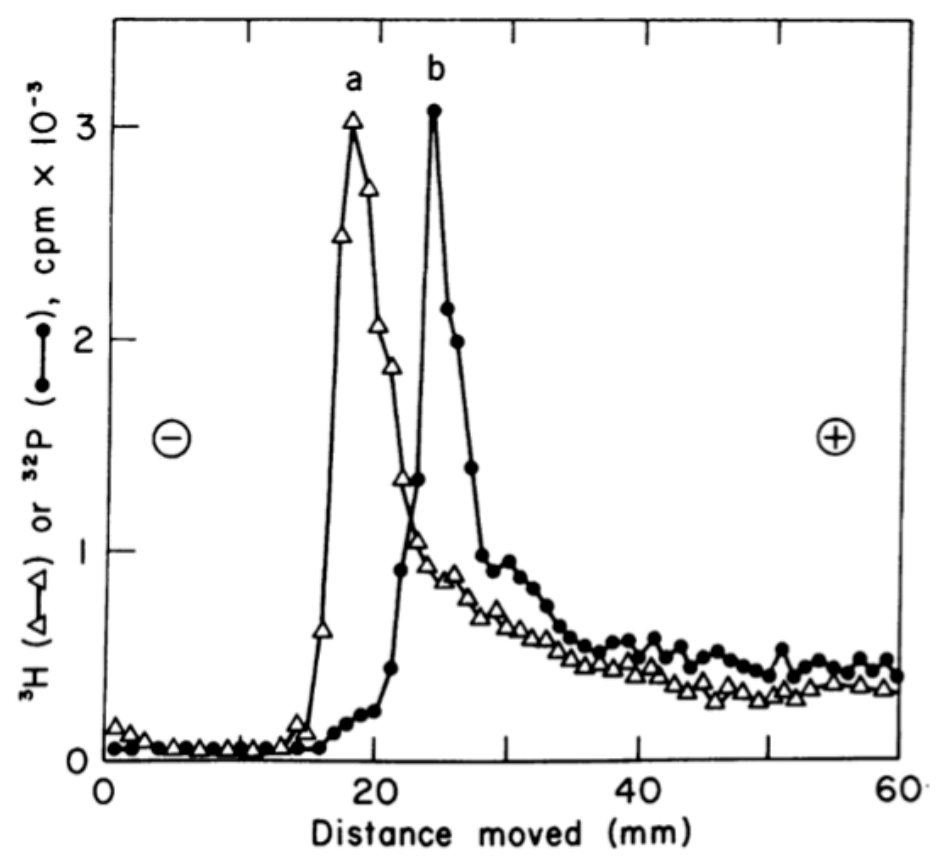
Figure 3.
The src paradigm. Schematic representation of the genomes of an avian sarcoma virus capable of replication and of oncogenic transformation (top) and a deletion mutant of that virus that still replicates but cannot induce transformation (bottom). Gag, pol, and env are viral gene regions necessary for replication; src mediates oncogenicity.
Figure 3.
The src paradigm. Schematic representation of the genomes of an avian sarcoma virus capable of replication and of oncogenic transformation (top) and a deletion mutant of that virus that still replicates but cannot induce transformation (bottom). Gag, pol, and env are viral gene regions necessary for replication; src mediates oncogenicity.

Figure 4.
The discovery of myc. Oligonucleotide maps reveal unique sequences in MC29 (left, A) compared to the helper virus (right, B). The oncogenic virus MC29 is replication-defective, with a short genome that encodes a single gag-myc fusion protein (left, A). The helper virus genome (right, B) provides the missing replicating functions (adapted from [54,55]).
Figure 4.
The discovery of myc. Oligonucleotide maps reveal unique sequences in MC29 (left, A) compared to the helper virus (right, B). The oncogenic virus MC29 is replication-defective, with a short genome that encodes a single gag-myc fusion protein (left, A). The helper virus genome (right, B) provides the missing replicating functions (adapted from [54,55]).


Table 1.
Viral surface glycoproteins define avian retroviral subgroups.
| Subgroup | Viral Glycoprotein |
|---|---|
| A | gp85-A |
| B | gp85-B |
| C | gp85-C |
| […] | |
| J | gp85-J |
Table 2.
Viral surface glycoproteins interact with cell surface receptors.
| Subgroup | Cell Surface Receptors |
|---|---|
| A | tv-a (dispensable gene) |
| B | tv-b (dispensable gene) |
| C | tv-c (dispensable gene) |
| […] | |
| J | tv-j (dispensable gene) |
Table 3.
Viral interference.
| Pre-Infecting Virus | Excluded Super-Infecting Virus | |||||
|---|---|---|---|---|---|---|
| Subgroup | A | B | C | D | E | J |
| A | ★ | |||||
| B | ★ | |||||
| C | ★ | |||||
| D | ★ | |||||
| E | ★ | |||||
| J | ★ | |||||
Table 4.
Important features of avian retroviruses.
|
|
|
|
Disclaimer/Publisher’s Note: The statements, opinions and data contained in all publications are solely those of the individual author(s) and contributor(s) and not of MDPI and/or the editor(s). MDPI and/or the editor(s) disclaim responsibility for any injury to people or property resulting from any ideas, methods, instructions or products referred to in the content. |
© 2026 by the author. Licensee MDPI, Basel, Switzerland. This article is an open access article distributed under the terms and conditions of the Creative Commons Attribution (CC BY) license.
Share and Cite
MDPI and ACS Style
Vogt, P.K. Cancer Genes: Origins and Directions. Viruses 2026, 18, 702. https://doi.org/10.3390/v18070702
AMA Style
Vogt PK. Cancer Genes: Origins and Directions. Viruses. 2026; 18(7):702. https://doi.org/10.3390/v18070702
Chicago/Turabian StyleVogt, Peter K. 2026. "Cancer Genes: Origins and Directions" Viruses 18, no. 7: 702. https://doi.org/10.3390/v18070702
APA StyleVogt, P. K. (2026). Cancer Genes: Origins and Directions. Viruses, 18(7), 702. https://doi.org/10.3390/v18070702
Note that from the first issue of 2016, this journal uses article numbers instead of page numbers. See further details here.