Article

Symptom-Based Predictive Model of COVID-19 Disease in Children

by
Jesús M. Antoñanzas
1,†,
Aida Perramon
2,†,
Cayetana López
1,
Mireia Boneta
1,
Cristina Aguilera
1,
Ramon Capdevila
3,
Anna Gatell
4,
Pepe Serrano
4,
Miriam Poblet
5,
Dolors Canadell
6,
Mònica Vilà
7,
Georgina Catasús
8,
Cinta Valldepérez
4,
Martí Català
2,9,
Pere Soler-Palacín
10,
Clara Prats
2,
Antoni Soriano-Arandes
10,* and
the COPEDI-CAT Research Group
1
Barcelona School of Informatics, Universitat Politècnica de Catalunya (UPC⋅BarcelonaTech), 08034 Barcelona, Spain
2
Department of Physics, Universitat Politècnica de Catalunya (UPC⋅BarcelonaTech), 08028 Barcelona, Spain
3
ABS Borges Blanques, Institut Català de Salut (ICS), 25400 Lleida, Spain
4
Equip Pediatria Territorial Alt Penedès-Garraf, Institut Català de Salut (ICS), 28036 Barcelona, Spain
5
Equip Territorial Pediàtric Sabadell Nord, Institut Català de Salut (ICS), 08206 Barcelona, Spain
6
CAP Barberà del Vallés, 08210 Barcelona, Spain
7
EAP Horta, 08024 Barcelona, Spain
8
CAP Drassanes, 08001 Barcelona, Spain
9
Comparative Medicine and Bioimage Centre of Catalonia (CMCiB), Fundació Institut d’Investigació en Ciències de la Salut Germans Trias i Pujol (IGTP), 58525 Badalona, Spain
10
Paediatric Infectious Diseases and Immunodeficiencies Unit, Hospital Universitari Vall d’Hebron, 08035 Barcelona, Spain
*
Author to whom correspondence should be addressed.
These authors contributed equally to this work.
Collaborators/Membership of the Group Team Name is provided in the Supplementary Material.
Viruses 2022, 14(1), 63; https://doi.org/10.3390/v14010063
Submission received: 17 November 2021 / Revised: 24 December 2021 / Accepted: 27 December 2021 / Published: 30 December 2021
(This article belongs to the Collection SARS-CoV-2 and COVID-19)

Abstract

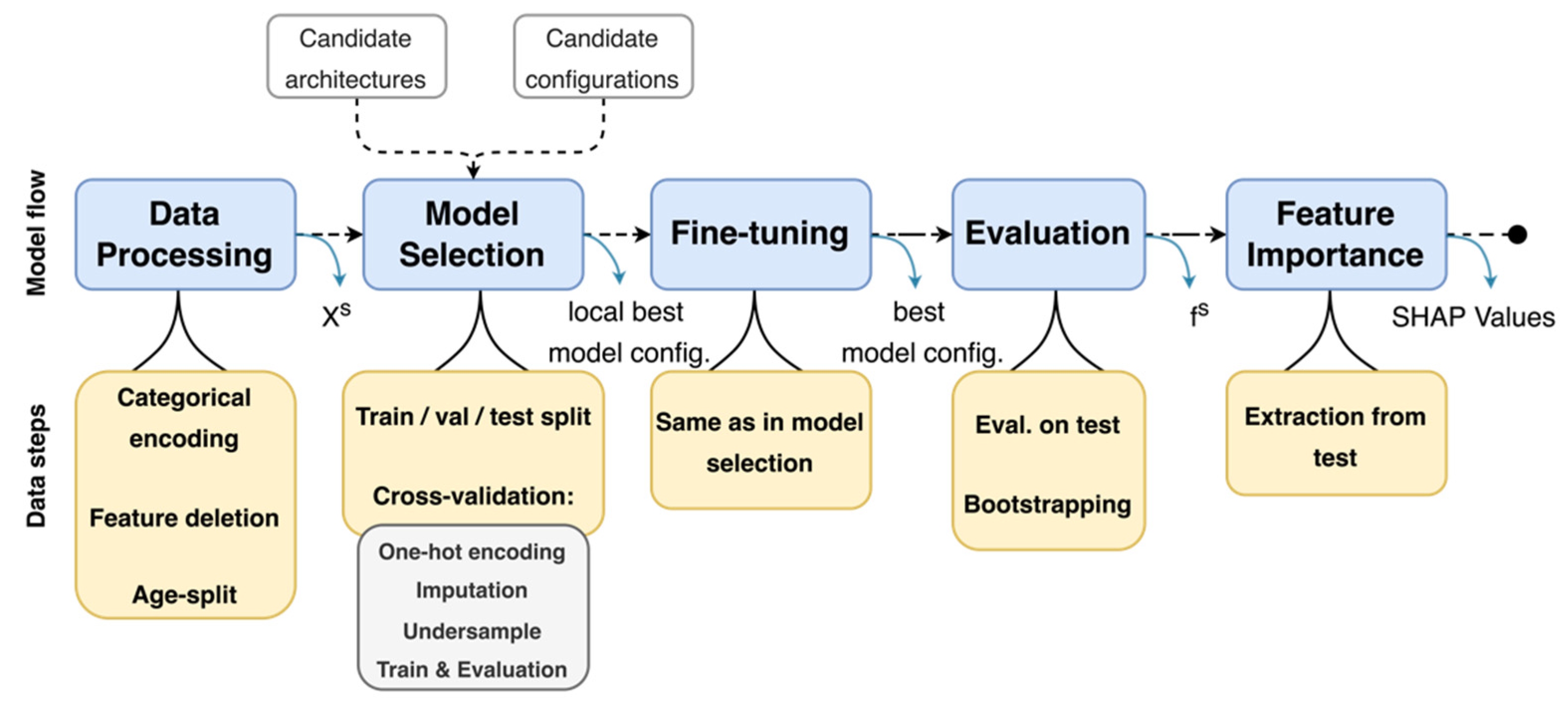
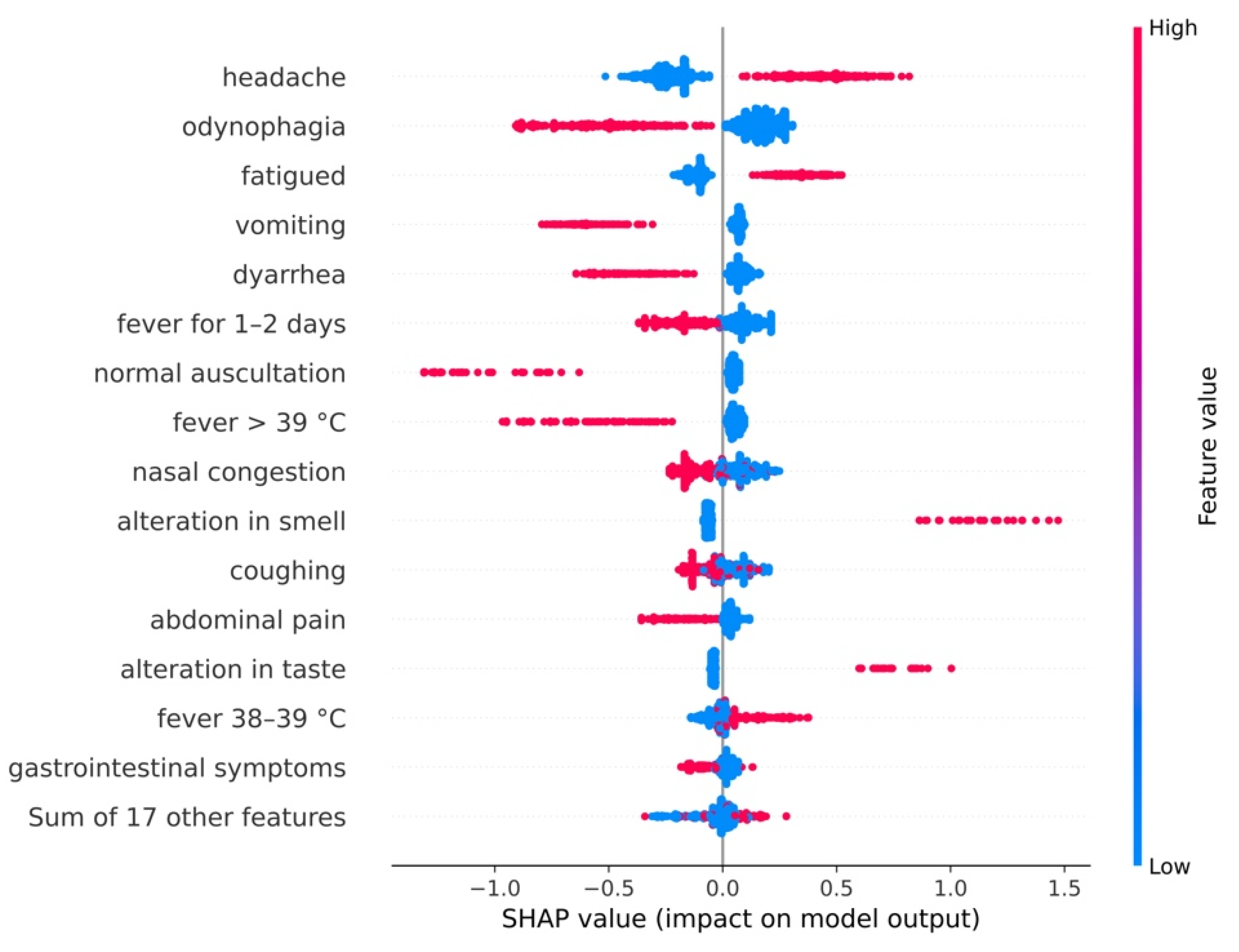
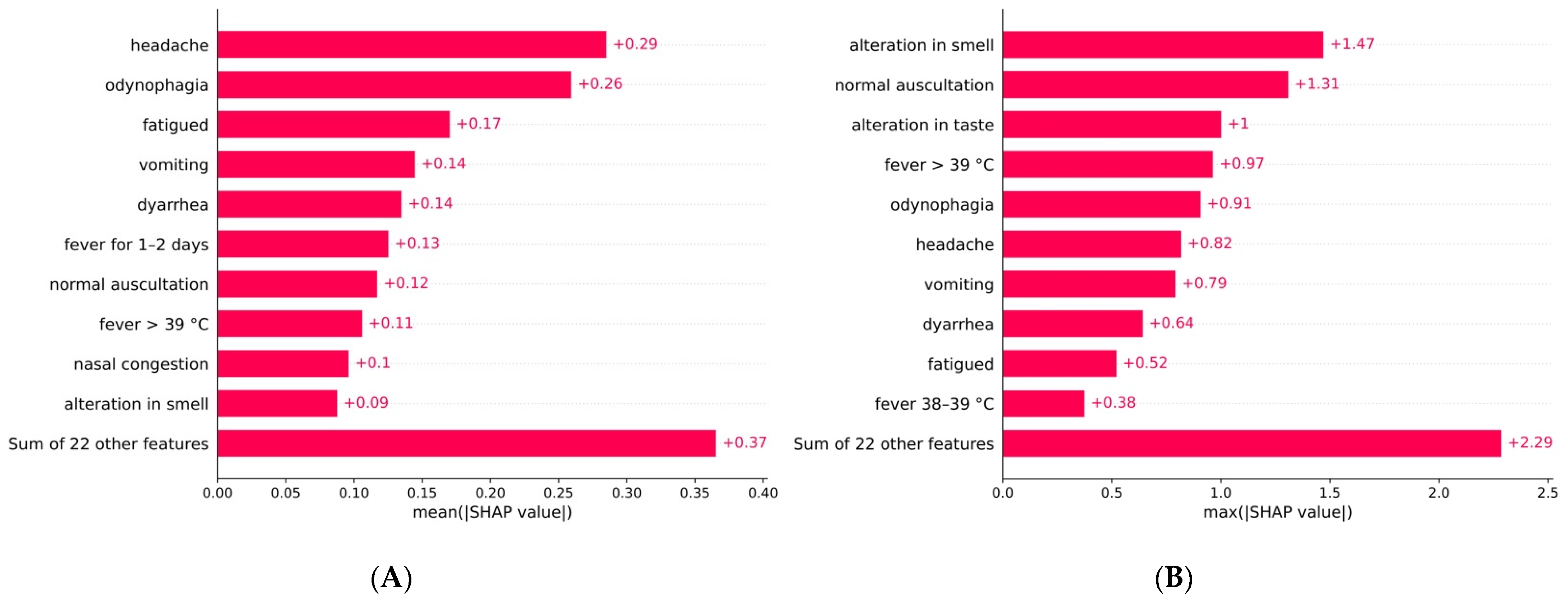
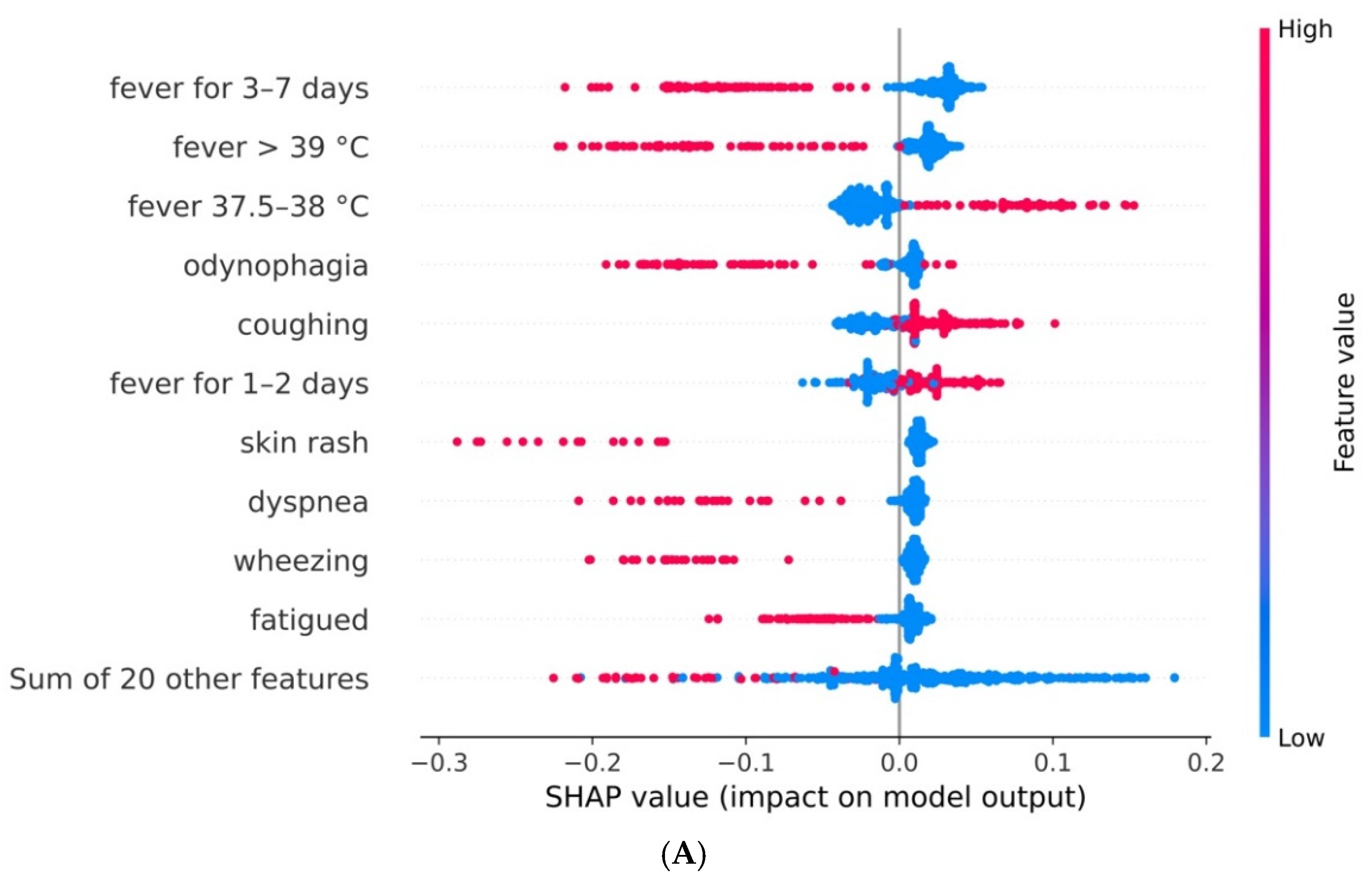
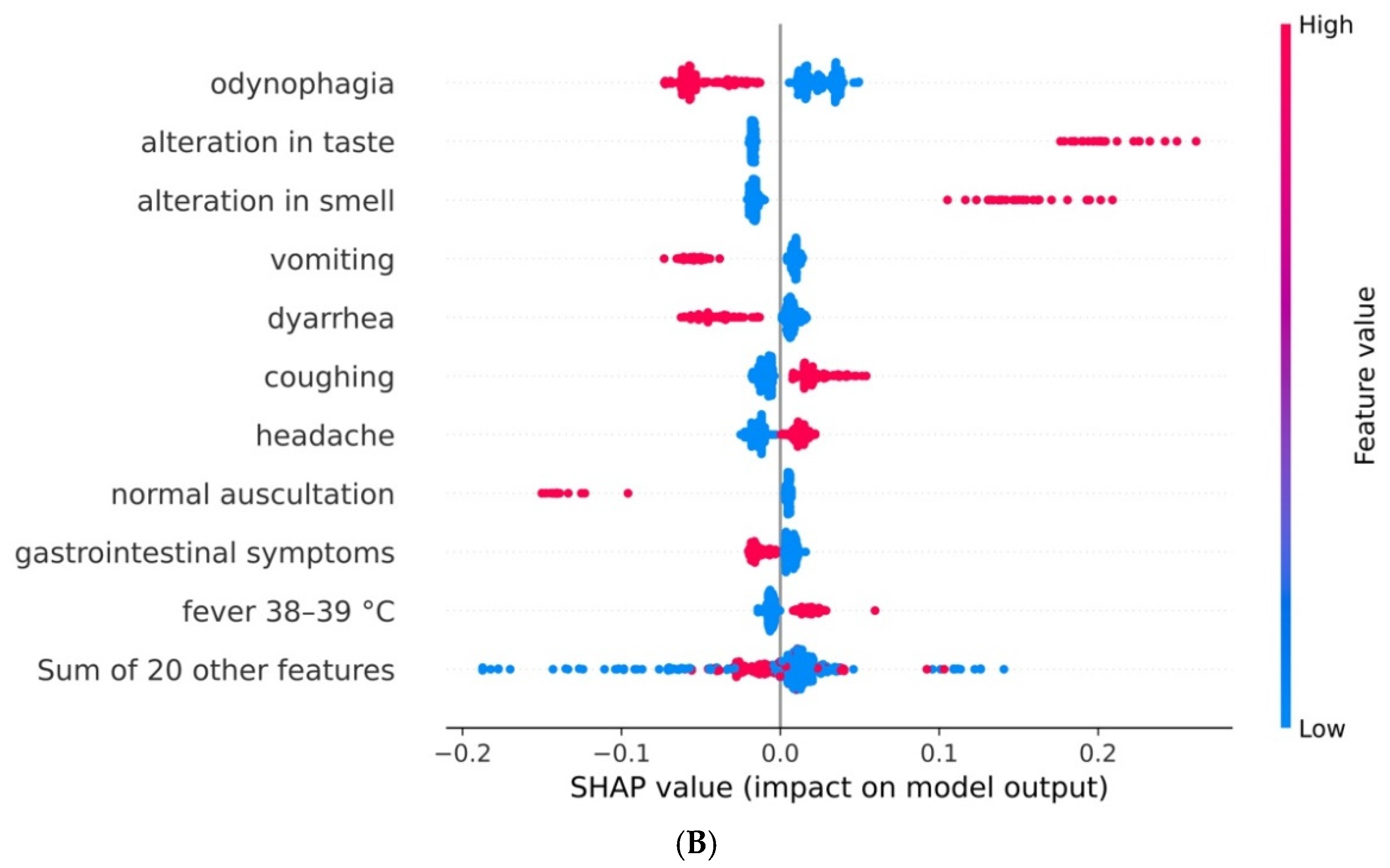
Background: Testing for severe acute respiratory syndrome coronavirus 2 (SARS-CoV-2) infection is neither always accessible nor easy to perform in children. We aimed to propose a machine learning model to assess the need for a SARS-CoV-2 test in children (<16 years old), depending on their clinical symptoms. Methods: Epidemiological and clinical data were obtained from the REDCap® registry. Overall, 4434 SARS-CoV-2 tests were performed in symptomatic children between 1 November 2020 and 31 March 2021, 784 were positive (17.68%). We pre-processed the data to be suitable for a machine learning (ML) algorithm, balancing the positive-negative rate and preparing subsets of data by age. We trained several models and chose those with the best performance for each subset. Results: The use of ML demonstrated an AUROC of 0.65 to predict a COVID-19 diagnosis in children. The absence of high-grade fever was the major predictor of COVID-19 in younger children, whereas loss of taste or smell was the most determinant symptom in older children. Conclusions: Although the accuracy of the models was lower than expected, they can be used to provide a diagnosis when epidemiological data on the risk of exposure to COVID-19 is unknown.
Keywords: machine learning; deep learning; paediatrics; SARS-CoV-2; COVID-19; epidemiology; microbiology machine learning; deep learning; paediatrics; SARS-CoV-2; COVID-19; epidemiology; microbiology