Article

Spatio-Temporal Mutational Profile Appearances of Swedish SARS-CoV-2 during the Early Pandemic


1
Department of Medical Biochemistry and Microbiology, Zoonosis Science Center, University of Uppsala, SE-751 23 Uppsala, Sweden
2
Department of Cell and Molecular Biology, Karolinska Institutet, SE-171 77 Stockholm, Sweden
3
School of Life Sciences, Sun Yat-sen University, Guangzhou 510275, China
4
International Livestock Research Institute, Nairobi 00100, Kenya
5
Swedish University of Agricultural Research, SE-750 07 Uppsala, Sweden
6
Zoonosis Science Center, Department of Medical Sciences, Uppsala University, SE-751 23 Uppsala, Sweden
*
Authors to whom correspondence should be addressed.
These authors contribute equally to this work.
Viruses 2020, 12(9), 1026; https://doi.org/10.3390/v12091026
Submission received: 26 August 2020 / Revised: 11 September 2020 / Accepted: 12 September 2020 / Published: 14 September 2020
(This article belongs to the Collection Coronaviruses)

Abstract

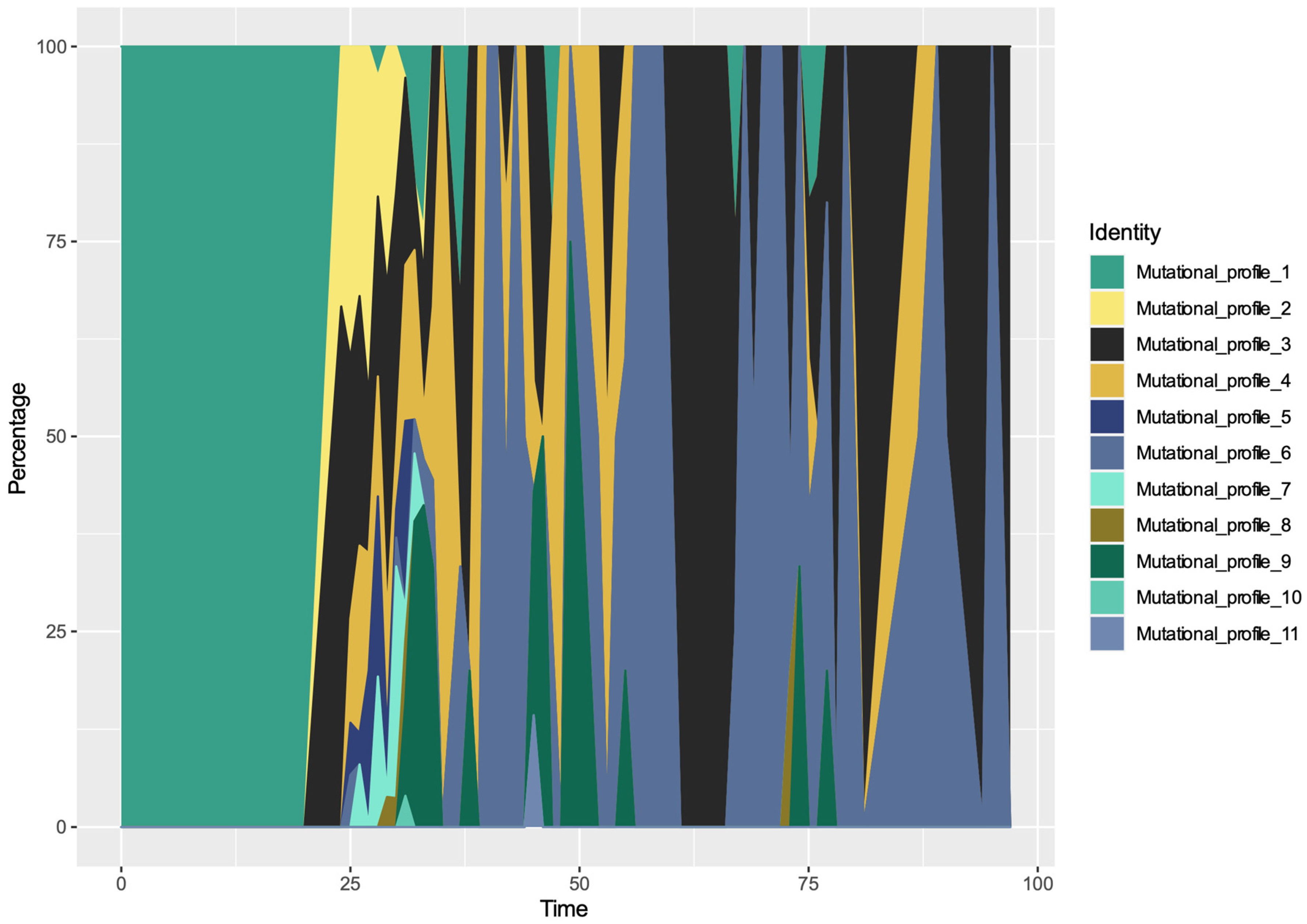
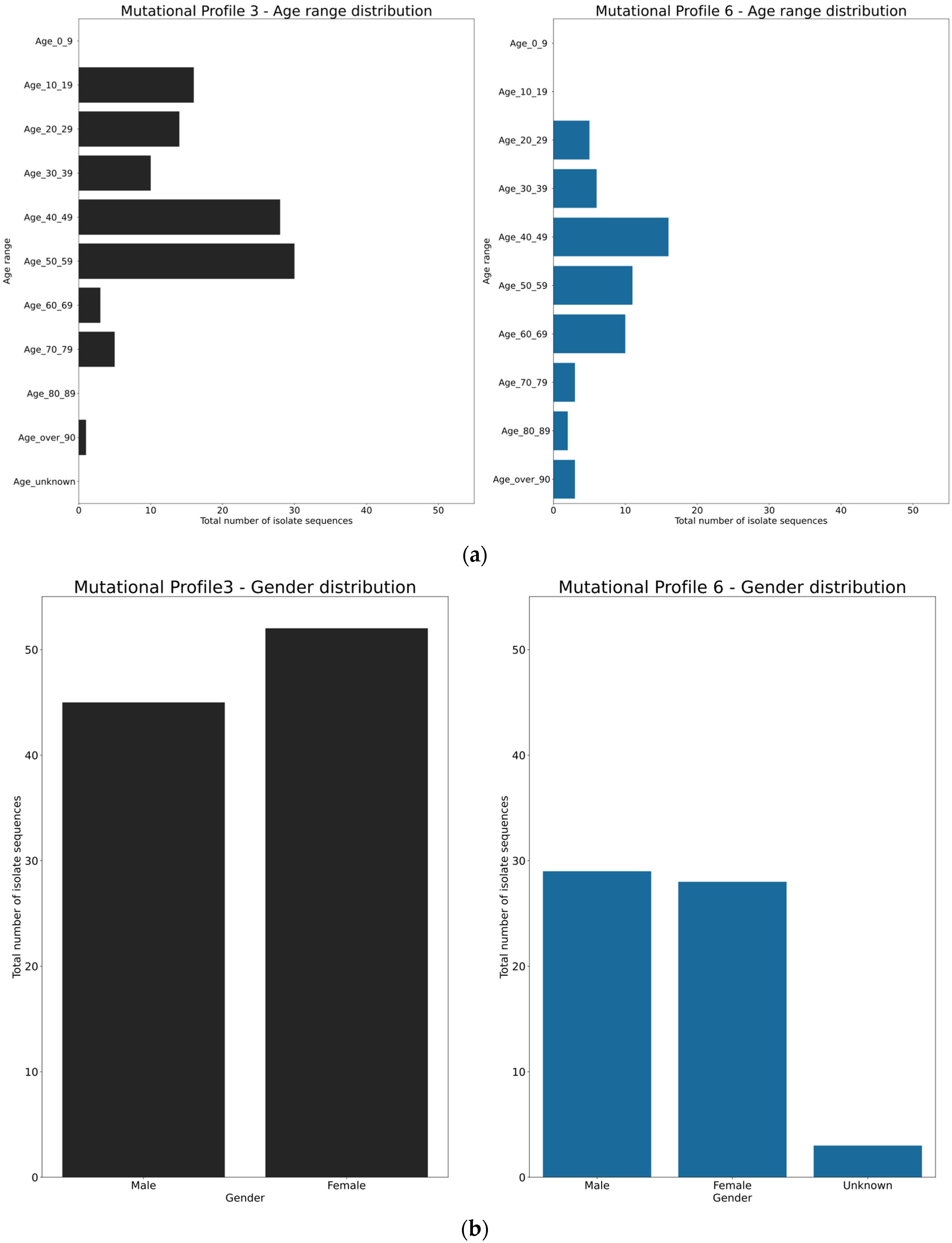
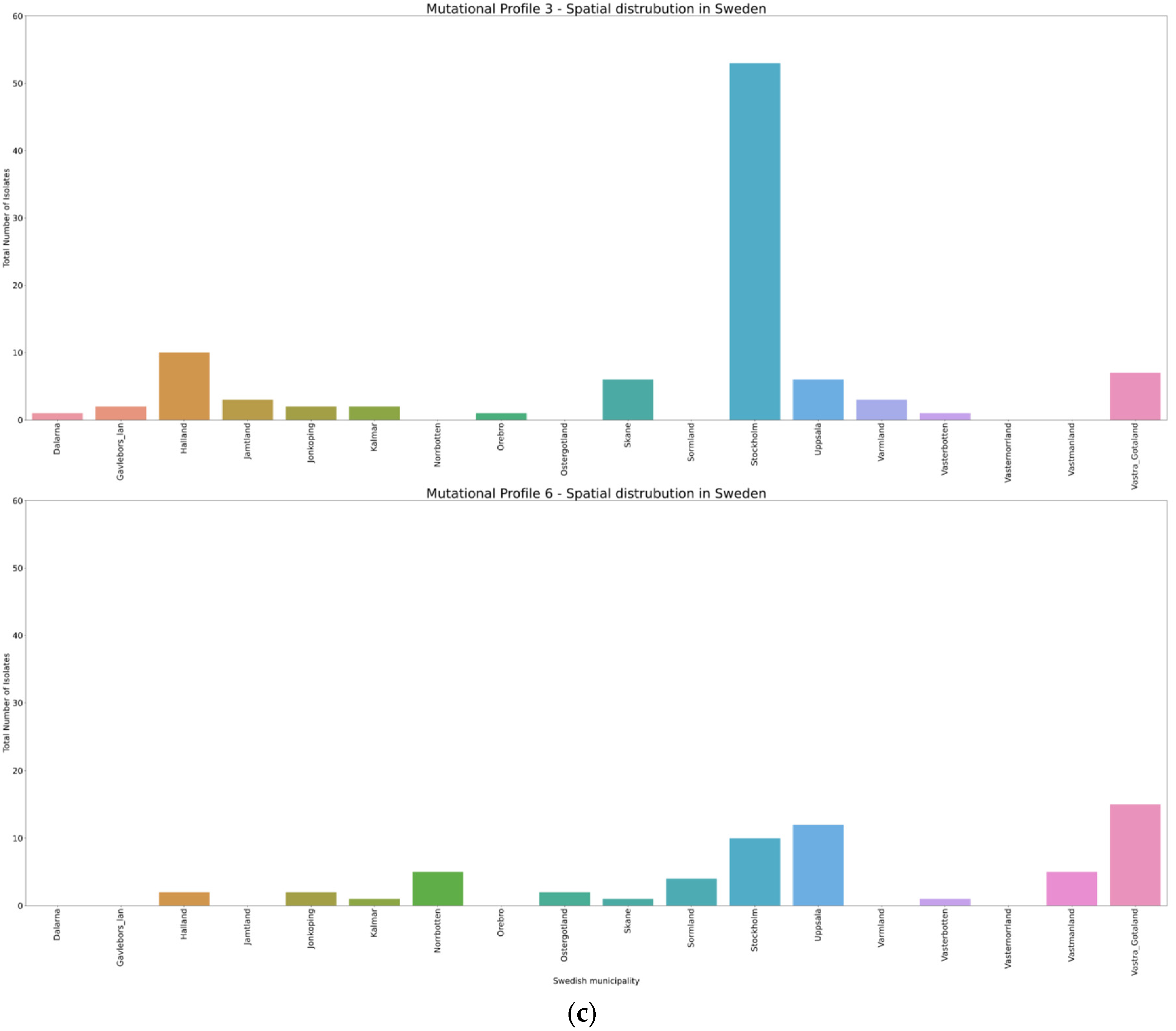
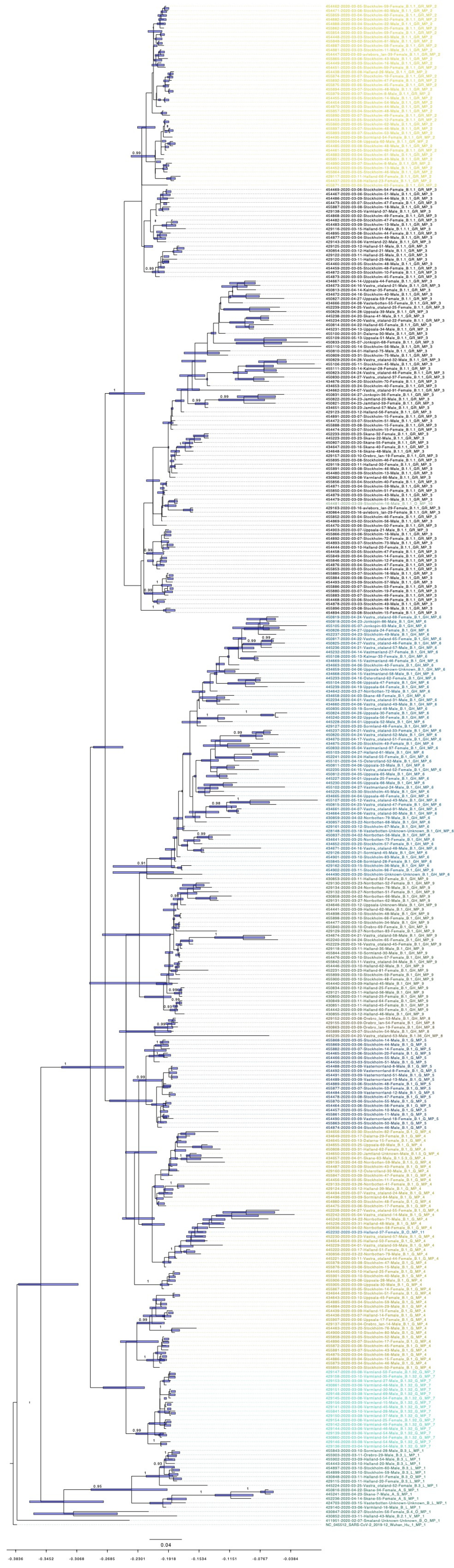
Background: During the COVID-19 pandemic, the virus evolved, and we therefore aimed to provide an insight into which genetic variants were enriched, and how they spread in Sweden. Methods: We analyzed 348 Swedish SARS-CoV-2 sequences freely available from GISAID obtained from 7 February 2020 until 14 May 2020. Results: We identified 14 variant sites ≥5% frequency in the population. Among those sites, the D936Y substitution in the viral Spike protein was under positive selection. The variant sites can distinguish 11 mutational profiles in Sweden. Nine of the profiles appeared in Stockholm in March 2020. Mutational profiles 3 (B.1.1) and 6 (B.1), which contain the D936Y mutation, became the predominant profiles over time, spreading from Stockholm to other Swedish regions during April and the beginning of May. Furthermore, Bayesian phylogenetic analysis indicated that SARS-CoV-2 could have emerged in Sweden on 27 December 2019, and community transmission started on February 1st with an evolutionary rate of 1.5425 × 10⁻³ substitutions per year. Conclusions: Our study provides novel knowledge on the spatio-temporal dynamics of Swedish SARS-CoV-2 variants during the early pandemic. Characterization of these viral variants can provide precious insights on viral pathogenesis and can be valuable for diagnostic and drug development approaches.
Keywords: SARS-CoV-2; evolution; mutation; spike protein SARS-CoV-2; evolution; mutation; spike protein