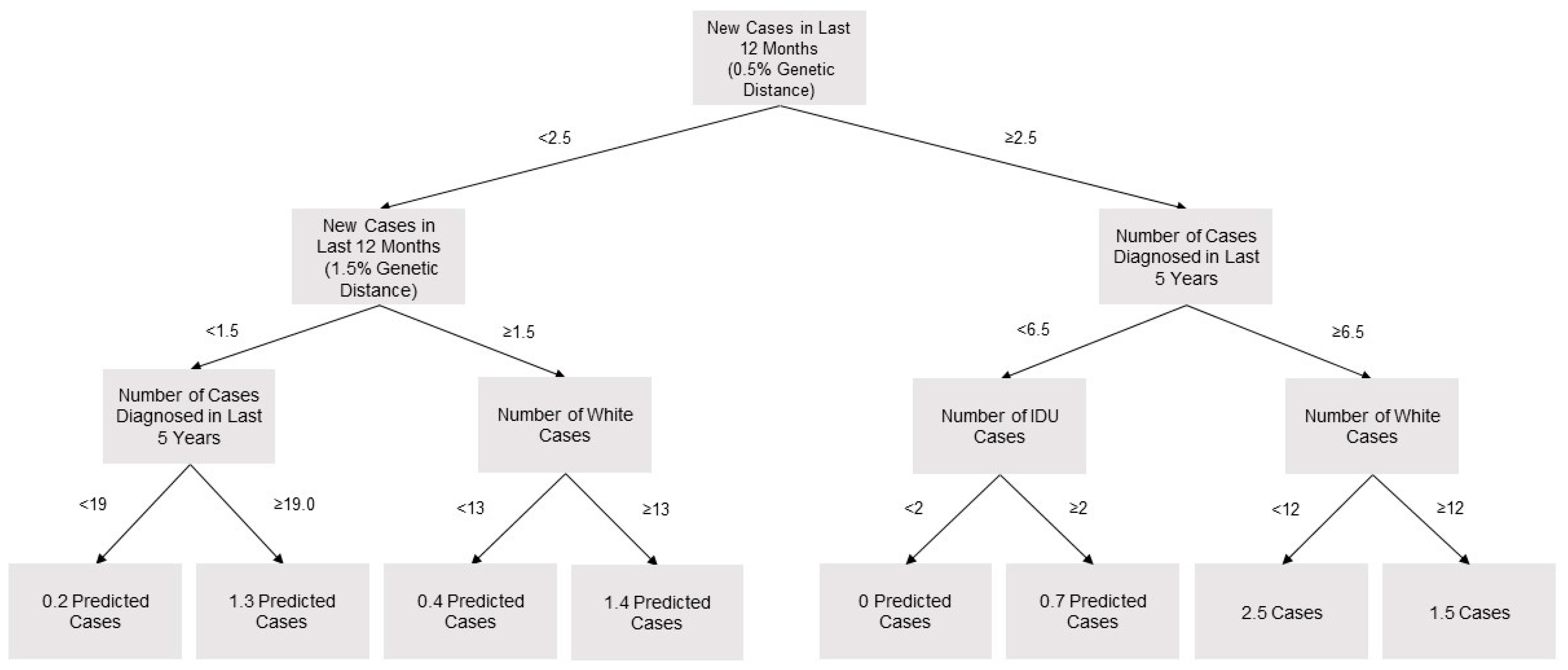
Characterization of Molecular Cluster Detection and Evaluation of Cluster Investigation Criteria Using Machine Learning Methods and Statewide Surveillance Data in Washington State


Abstract
Share and Cite
Erly, S.J.; Herbeck, J.T.; Kerani, R.P.; Reuer, J.R. Characterization of Molecular Cluster Detection and Evaluation of Cluster Investigation Criteria Using Machine Learning Methods and Statewide Surveillance Data in Washington State. Viruses 2020, 12, 142. https://doi.org/10.3390/v12020142
Erly SJ, Herbeck JT, Kerani RP, Reuer JR. Characterization of Molecular Cluster Detection and Evaluation of Cluster Investigation Criteria Using Machine Learning Methods and Statewide Surveillance Data in Washington State. Viruses. 2020; 12(2):142. https://doi.org/10.3390/v12020142
Chicago/Turabian StyleErly, Steven J., Joshua T. Herbeck, Roxanne P. Kerani, and Jennifer R. Reuer. 2020. "Characterization of Molecular Cluster Detection and Evaluation of Cluster Investigation Criteria Using Machine Learning Methods and Statewide Surveillance Data in Washington State" Viruses 12, no. 2: 142. https://doi.org/10.3390/v12020142
APA StyleErly, S. J., Herbeck, J. T., Kerani, R. P., & Reuer, J. R. (2020). Characterization of Molecular Cluster Detection and Evaluation of Cluster Investigation Criteria Using Machine Learning Methods and Statewide Surveillance Data in Washington State. Viruses, 12(2), 142. https://doi.org/10.3390/v12020142