Article

Comparative Analysis of 37 Acinetobacter Bacteriophages


1
Department of Applied Sciences, Faculty of Health and Applied Sciences, University of the West of England, Coldharbour Lane, Bristol BS16 1QY, UK
2
Faculty of Medicine, Department of Microbiology, Immunology and Infectiology, Université Laval, Quebec, QC G1X 46, Canada
3
Departments of Food Science, Molecular and Cellular Biology; and Pathobiology, University of Guelph, Guelph, ON N1G 2W1, Canada
4
Laboratory of Gene Technology, KU Leuven, Kasteelpark Arenberg 21, box 2462, 3001 Leuven, Belgium
5
National Infections Service, Public Health England, Porton Down, Salisbury, Wiltshire SP4 0JG, UK
*
Author to whom correspondence should be addressed.
Deceased.
Viruses 2018, 10(1), 5; https://doi.org/10.3390/v10010005
Submission received: 4 December 2017 / Revised: 21 December 2017 / Accepted: 22 December 2017 / Published: 24 December 2017
(This article belongs to the Special Issue Bacteriophage Genomes and Genomics: News from the Wild)

Abstract

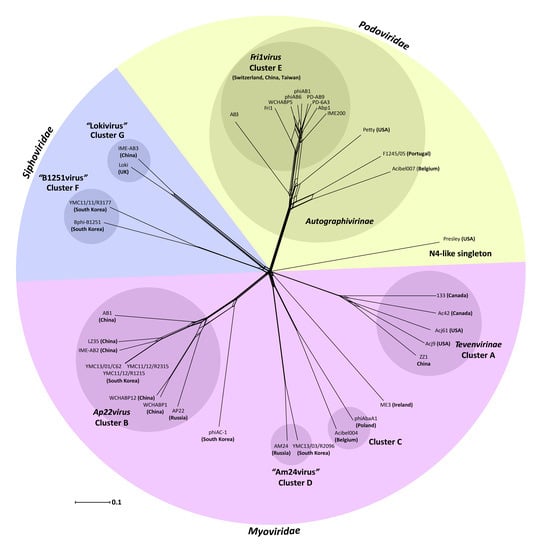

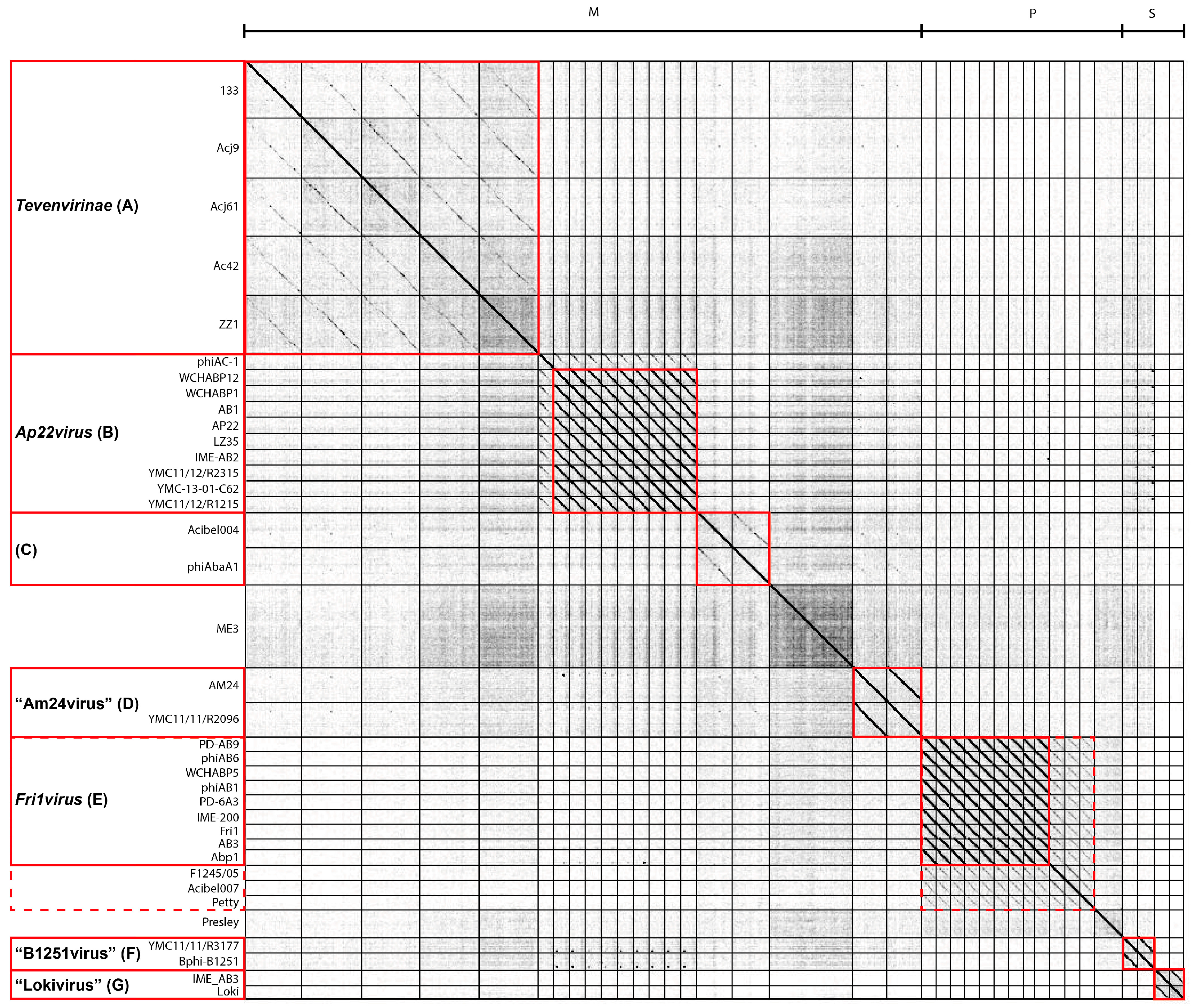
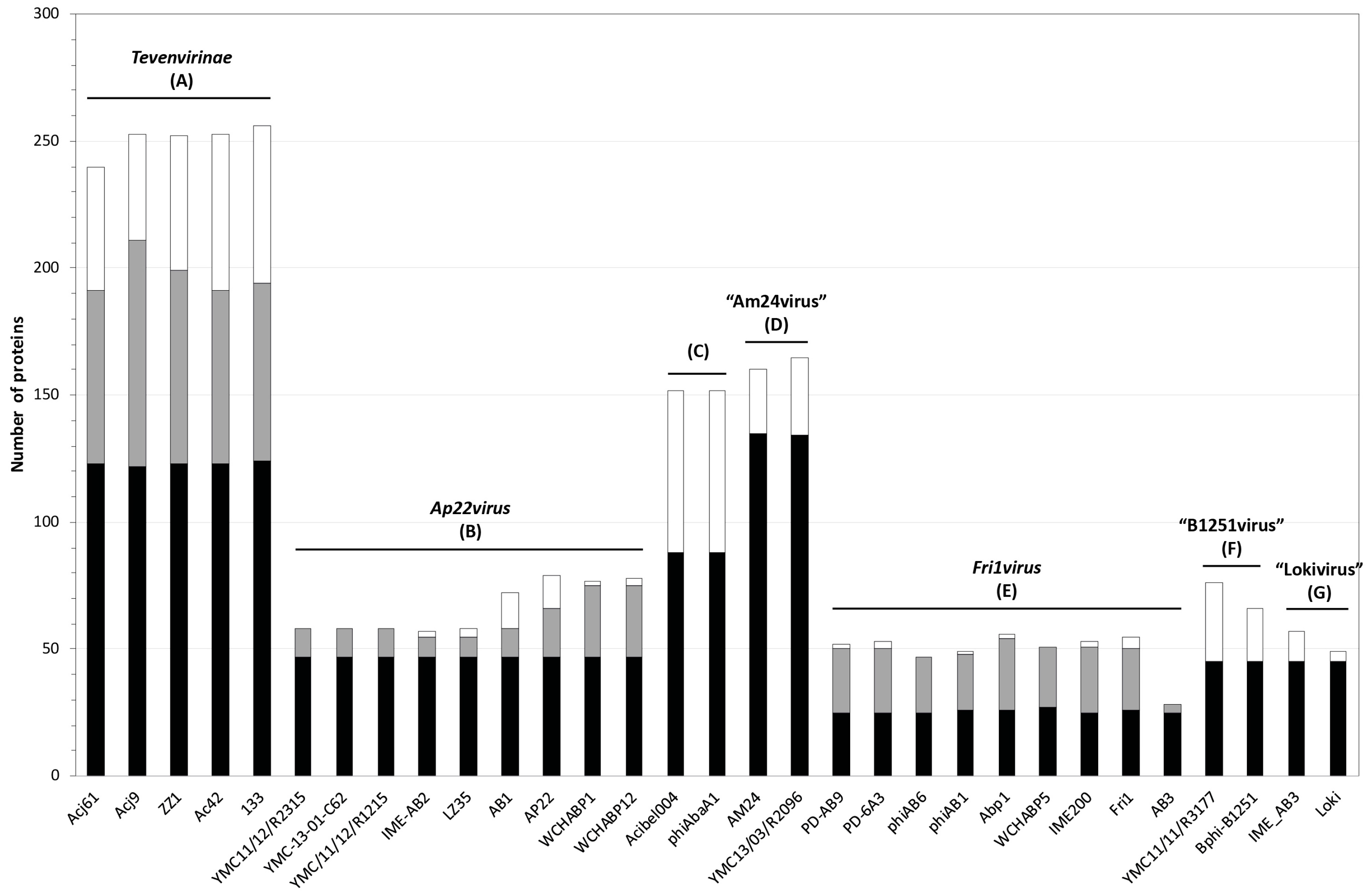
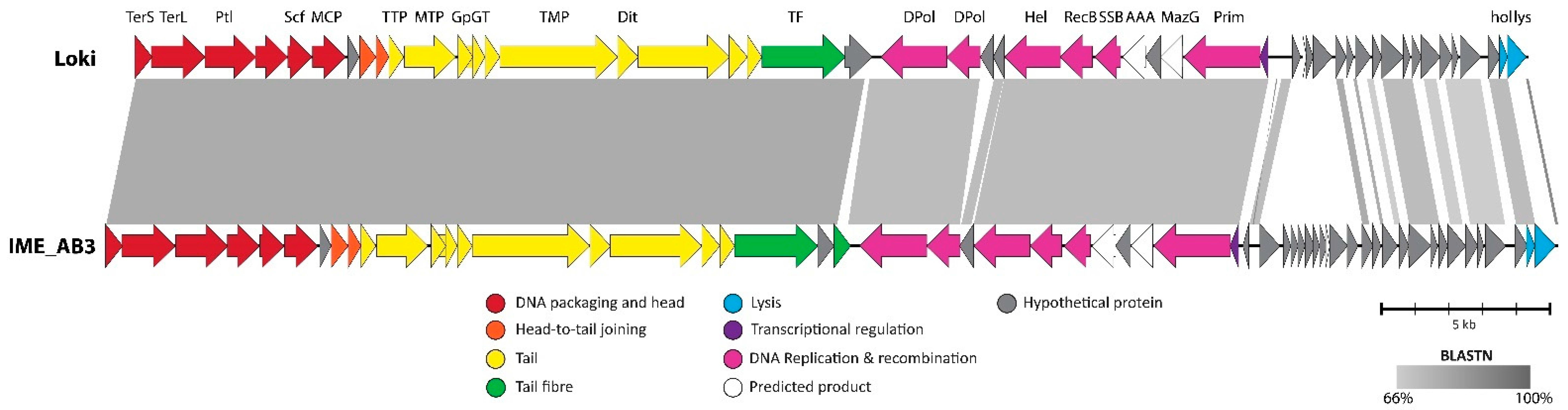
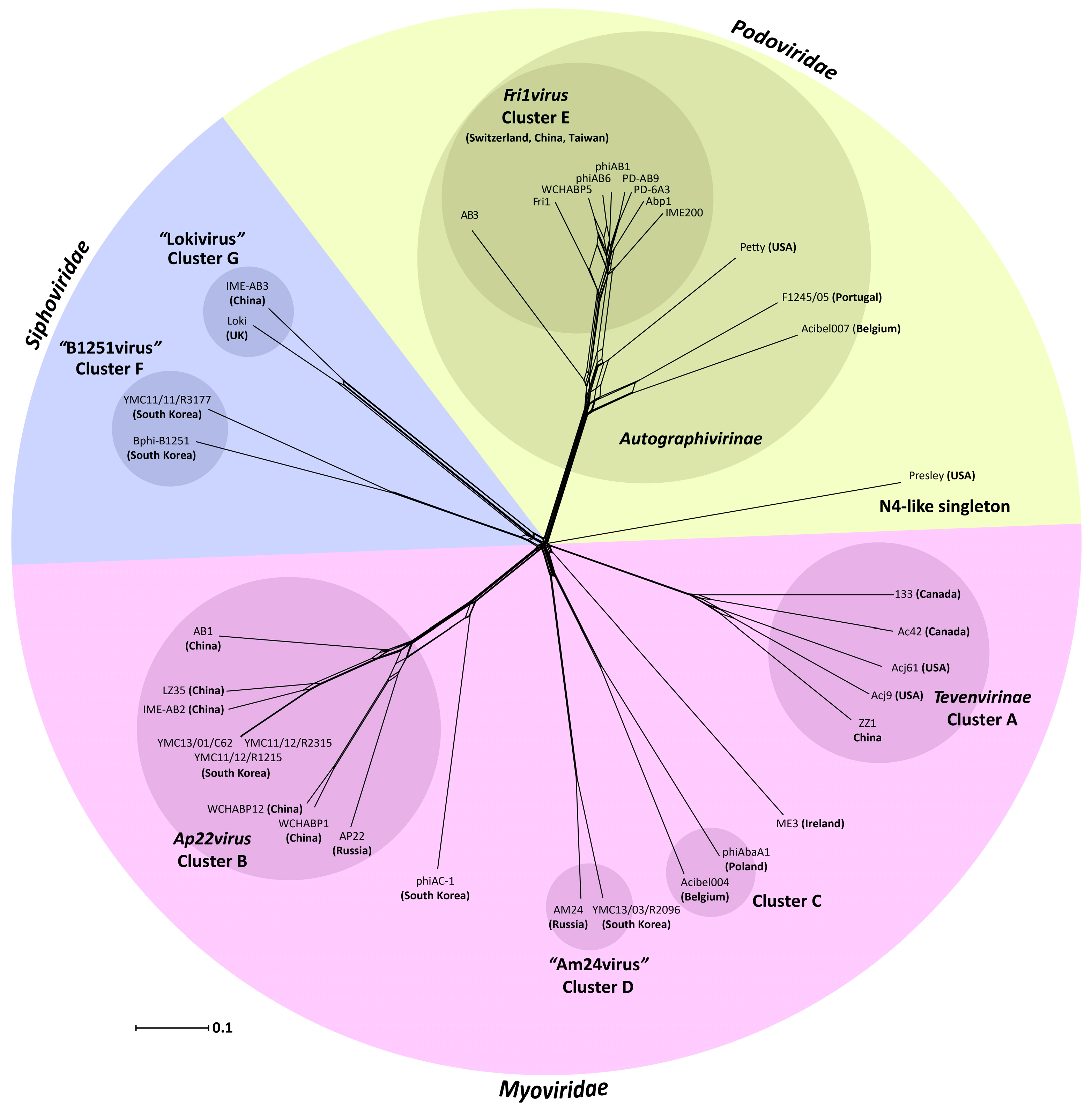
Members of the genus Acinetobacter are ubiquitous in the environment and the multiple-drug resistant species A. baumannii is of significant clinical concern. This clinical relevance is currently driving research on bacterial viruses infecting A. baumannii, in an effort to implement phage therapy and phage-derived antimicrobials. Initially, a total of 42 Acinetobacter phage genome sequences were available in the international nucleotide sequence databases, corresponding to a total of 2.87 Mbp of sequence information and representing all three families of the order Caudovirales and a single member of the Leviviridae. A comparative bioinformatics analysis of 37 Acinetobacter phages revealed that they form six discrete clusters and two singletons based on genomic organisation and nucleotide sequence identity. The assignment of these phages to clusters was further supported by proteomic relationships established using OrthoMCL. The 4067 proteins encoded by the 37 phage genomes formed 737 groups and 974 orphans. Notably, over half of the proteins encoded by the Acinetobacter phages are of unknown function. The comparative analysis and clustering presented enables an updated taxonomic framing of these clades.
Keywords: Acinetobacter baumannii; Acinetobacter phages; bacteriophages; bioinformatics; Comparative genomics; protein clustering; phylogeny Acinetobacter baumannii; Acinetobacter phages; bacteriophages; bioinformatics; Comparative genomics; protein clustering; phylogeny
Graphical Abstract