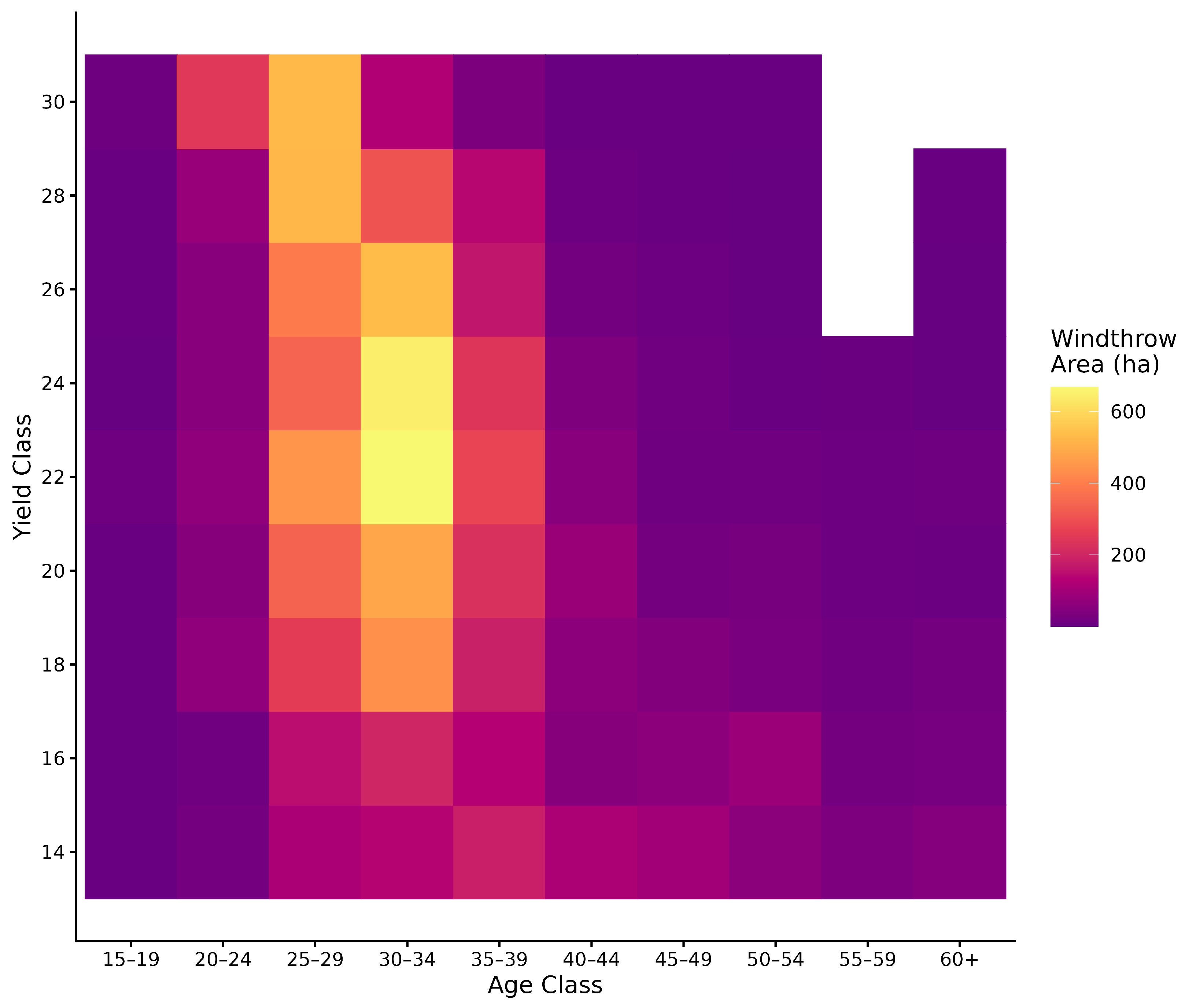
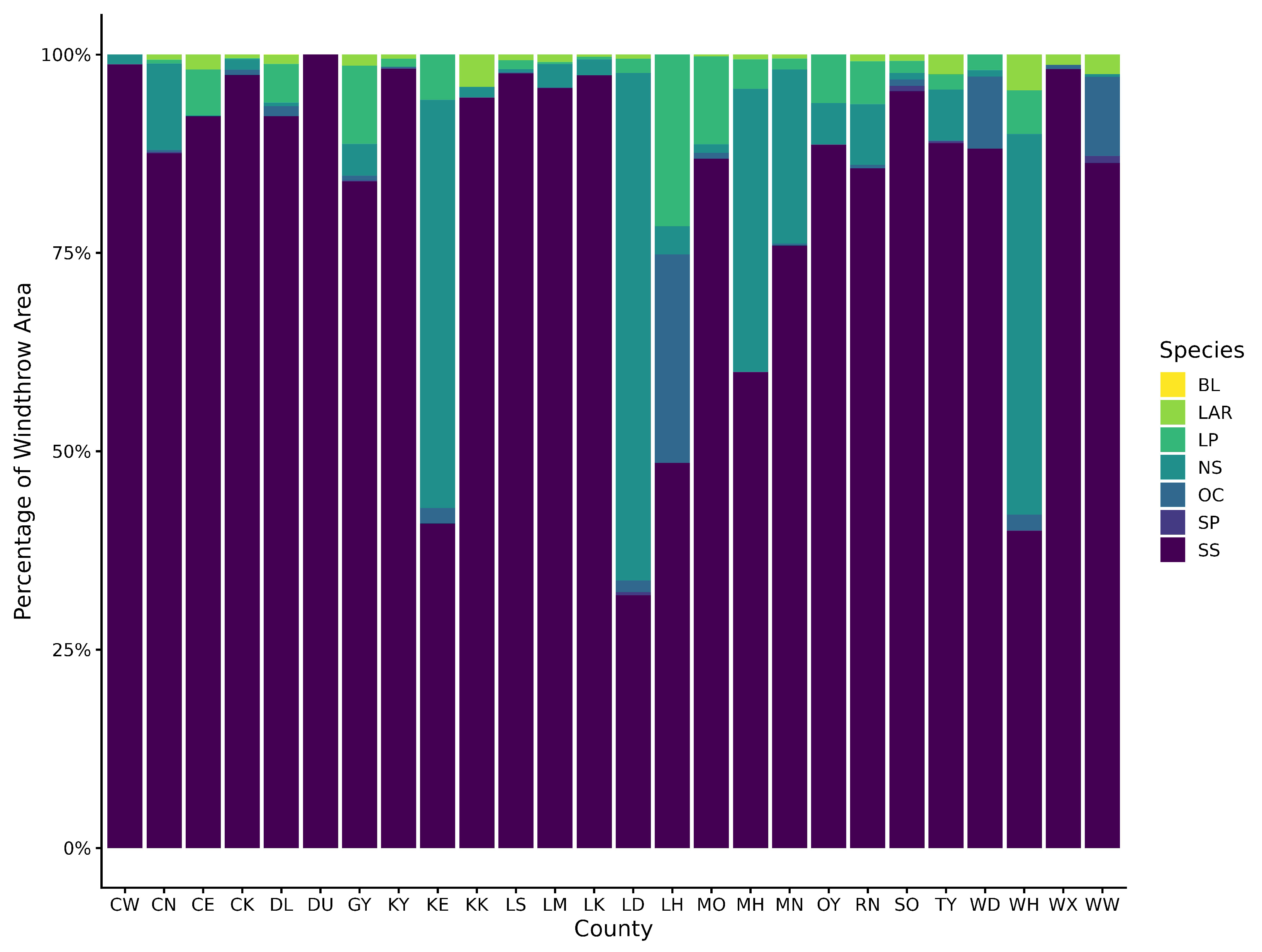
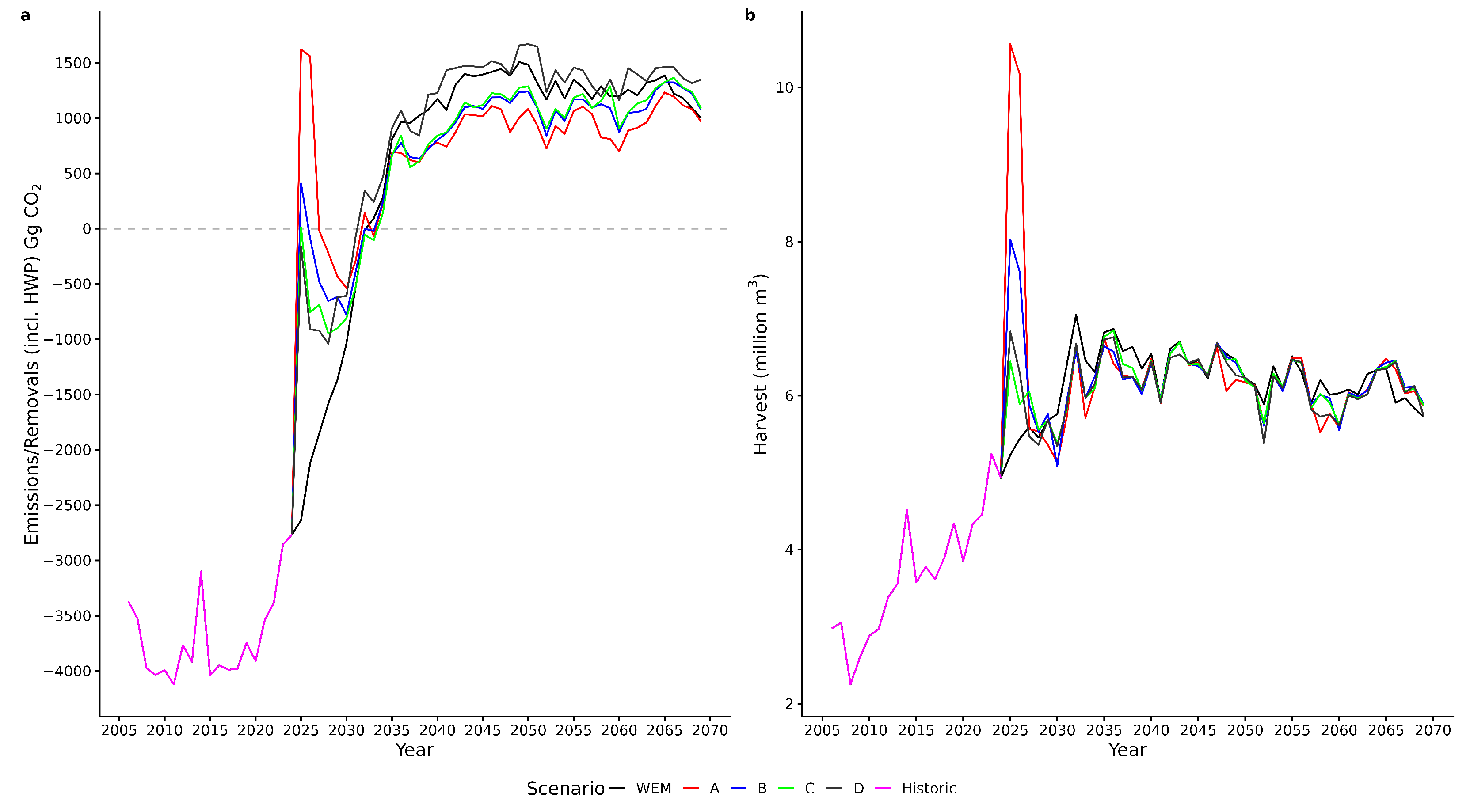
1. Introduction
As an island nation on the edge of the Atlantic Ocean, Ireland experiences some of the wettest and windiest weather in Europe. Current climate change projections include an increase in the frequency of storms and an increase in wind speeds and rainfall, which will likely expose forests to more frequent damage from wind in the future [
1,
2]. Damage to trees by strong winds is the most important abiotic hazard in Irish Forestry [
3]. Windthrow refers to the uprooting or breakage (windsnap) of trees by wind, and ranges in severity from small-scale disturbances affecting a small proportion of trees to large-scale, catastrophic disturbances occurring over extensive areas [
4]. Windthrow and the associated damage has significant economic, social, and ecological impacts including increased harvesting costs and lost revenue, safety concerns for forest workers, and restriction on public access. Furthermore, the impacts of wind damage also affect greenhouse gas profiles associated with forest lands.
Wind damage to Irish forests occurs frequently, but the level and intensity vary. The effects of storm damage to private estate forests were first well documented in 1839, famously referred to as the “Night of the Big Wind” [
5]. However, the economic and forest productivity impact of wind damage was not documented until the 1970s, when the forest sector was more developed. Over the period 1971–1993, an average of 85,000 m
3 of timber was windthrown annually, representing ca. 5% of annual timber harvest [
6,
7]. Since the 1990s, wind damage has been expected to increase as stands in the “young” forest estate approached tree heights susceptible to windthrow and as a result of climate change. As a result, it is now common silvicultural practice to manage forests to reduce windthrow risk by clearfelling at premature rotation ages, which has been suggested to have an adverse climate change mitigation impact [
8]. In 2014, Storm Darwin caused catastrophic damage resulting in approximately 8000 ha of windthrown trees, which was equivalent to circa 2.4 million m
3 [
9].
Between December 2024 and January 2025, Ireland was hit by two significant storms, which resulted in unprecedented levels of damage to forestry, infrastructure, and utilities. From a forestry perspective, it was necessary to quickly assess and map the wind damage across the estate, as this was required to assist with strategic and tactical planning but also to ensure that windthrown trees could be quickly removed to reduce financial losses and limit further impacts from pests and diseases. While reconnaissance surveys are frequently employed in the immediate aftermath of storm events to provide an indicative assessment of damage, the use of Earth Observation (EO) and associated mapping techniques are frequently used. A rapid post-storm, design-based estimate of 23,600 ha (5900) of windthrow was calculated for the Irish forest estate, providing an initial indication of the scale of damage. This figure was subsequently revised upward to ca. 27,400 ha following the wall-to-wall mapping and which represented ca. 10 million m
3 of timber. This is more than double the current annual timber harvest rate of 4.5 million m
3 per year and 7% of the national growing stock (142 million m
3, [
10]).
It is widely accepted that natural disturbances have a significant impact on forest GHG balances, resulting in decreased carbon stocks and turning forests from a carbon sink into a carbon source for a period of time [
11]. However, GHG inventories that rely solely on National Forest Inventory (NFI) data as the primary source of activity data often lack timely information on the impacts of natural disturbances on disturbed area extent, timber volumes, and age class structure. This limitation is particularly acute where NFIs operate on 5–10 year cycles, meaning disturbance events occurring since the most recently completed inventory, which in Ireland’s case is 2022. The integration of Earth Observation (EO) techniques therefore offers a valuable complement to NFI data, enabling the spatial quantification and characterisation of natural disturbance events and facilitating the updating of forest carbon balance estimates at greater temporal frequency.
1.1. Wind Damage Assessment Supported by EO
Various approaches can be used to assess wind damage to forests depending on the scale and forest management objectives. Although field surveys can be used, they are typically very time-consuming and inaccurate due to the difficulty in working in these challenging environments caused by hazards from fallen trees. As such, the synoptic view offered by EO data, such as satellite imagery, aerial photography, and drone imagery, provides a very efficient and cost-effective approach.
EO data have been used widely to detect and map wind damage in forests. Post-storm digital surface models from high-altitude aerial photogrammetric data were used by Honkavaara et al. [
12] to assess wind damage in Finnish forests. Chirici et al. [
13] used a two-stage sampling strategy to estimate the extent (both area and volume) of wind-storm damage using single-date post-event EO data. In this case study, the authors used airborne laser scanning (ALS) data for Tuscany following a storm in March 2015. The ALS data were used in two ways: (1) evaluate ALS data using photo-interpretation techniques, and (2) a sample-based approach whereby probabilities and confidence intervals could be calculated. For the sample-based approach, a simple random sample of stands known to have suffered wind damage were taken, and line intercept sampling (LIS) was performed on these samples by assessors recording ground truth measurements. While high-resolution orthophotography and ALS data provide very accurate datasets to identify and map windthrow, it is frequently very challenging and expensive to quickly acquire over large areas.
Spaceborne satellite imagery has been routinely used as a result of its low-cost and frequent acquisitions. Very high-resolution imagery from the RapidEye constellation was used by Einzmann et al. [
14] with a two-stage change detection procedure to detect wind damage following Storm Niklas affecting Southern Germany in 2015.
Çinar et al. [
15] monitored the regeneration and rehabilitation of areas that had experienced windthrow damage using a random forest classifier with their case study that focused on the Düzce Tatlıdere Forest District (DTFD) region in Türkiye. They examined the classification accuracy of a random forest classifier trained on vegetation indices derived from aerial images and tested with the same indices derived from Sentinel-2A imagery. In their study area, the most accurate results came from using the PSRI (Plant Senescence Reflectance Index) and the NDRE (Normalized Difference Red Edge Index). However, their case study focused on a specific site within the DTFD and the accuracy of using these indices outside this region was not examined.
Hinko-Najera et al. [
16] quantified the severity and extent of the damaged forest area, from the change in percentage canopy cover, caused by storms in 2021 using remotely sensed data from Victoria, Australia. The percentage canopy cover was calculated from high-resolution aerial images of randomly selected sites to train their random forest model to predict landscape-scale canopy cover from Sentinel-2 images. The change in canopy cover is further classified depending on the severity of damage caused. This provided the first quantitative mapping of windthrow severity mapping for a temperate eucalypt forest in Southeastern Australia.
Multi-temporal Sentinel-2 data were extensively used to assess wind blow in the north-east of Italy after Storm Vaia [
17,
18,
19]. Giannetti et al. [
19] used tri-temporal change detection using the normalised burn ratio (NBR) time series derived from Sentinel-2 satellite data. In order to map and estimate the damaged areas, the authors used two modelling approaches: the Bayesian estimator of abrupt change, seasonal change, and trend (BEAST) and the continuous change detection and classification (CCDC). Both approaches achieved accurate and usable results employing data acquired 7 months after the initial storm; however, accurate results were not achieved when using imagery gathered within the first six months of the storm.
Other examples have used multi-temporal Sentinel-1 data and a range of supervised classification techniques to map windthrow in Southern Finland with an accuracy of 79% when compared to a validation dataset [
20]. Sentinel data provide a robust platform to support windthrow mapping activities. Sentinel-1 is highly valuable for rapid windthrow detection in Ireland’s persistently cloudy conditions, but its coarser spatial resolution and speckle noise can limit the precise delineation of smaller or fragmented damage areas. Sentinel-2 offers high-resolution multispectral data with strong sensitivity to vegetation damage and excellent visual interpretability, although its effectiveness is frequently constrained by cloud cover and low winter illumination during storm events.
Although not explicitly focussing on windthrow, Francini et al. [
21] constructed a spatially explicit forest disturbance map for 2018 in Italy. This map was constructed using Google Earth Engine (GEE) and the implementation of the Three Indices Three Dimensions (3I3D) algorithm. In their case study, this analysis investigates three disturbances: clear-cutting, fire, and wind. Although wind damage was the smallest (area-wise) of the three disturbances examined, it was accurately predicted and mapped. While the proposed methodology can be used in other areas to calculate damaged areas with associated uncertainties, it is dependent on a large reference sample of independently photo-interpreted points, which may not always be readily available.
Machado Nunes Romeiro et al. [
22] conducted an extensive literature review on modelling approaches for various natural disturbance risks to European forests, including damage from wind, wildfire, and root rot. Of the thirty-nine different modelling approaches reviewed, twelve different models were originally published to examine wind damage and two models were published to analyse the damage caused by both wind and snow. Some models associated with wind damage estimate the critical wind speed, the speed required to break or uproot trees within a forest, and the probability of this speed occurring at specific locations. Of the models reviewed, five models estimated both the probability of windthrow occurrence and the effects of windthrow (damage separated by DBH, tree height, or tree species) jointly. These models are more suitable for risk assessment when compared to models that predict the probability or effects of windthrow individually. Both empirical and mechanistic approaches are used for modelling and reviewed, with both approaches offering their own advantages and disadvantages.
Despite the range of approaches reviewed above, no studies have demonstrated a fully operational, near-real-time two-stage framework that combines statistically design-based estimation with wall-to-wall expert-assisted EO mapping at national scale, and directly integrates both outputs into a calibrated national GHG accounting model within weeks of a storm event. This is a clear demonstration of how rapid EO-derived disturbance products can be quickly translated into carbon accounting and recovery scenarios relevant to national GHG reporting.
1.2. Impact of Wind Damage on Carbon Balance
Natural disturbances, such as forest fires and windthrow events can have a significant impact on the forest carbon budget and in Europe are suggested to contribute to the saturation of the carbon sink [
23]. This is in part due to the emissions from reduced photosynthesis, decomposition of windthrown trees and harvesting of salvaged timber. In addition, it reduces the sink capacity of forests, as typically impacted forest stands are harvested sooner than their biological rotation. The modelling and estimation of Ireland’s GHG inventory and projections for the forest sector are done using Carbon Budget Model developed by the Canadian Forest Service (CBM-CFS3) [
8,
24]. The current version of CBM-CFS3 deals with windthrow impacts by including additional salvage logging as part of normal clearfell events in the year storm damage occurs. However, it is unlikely that the forest sector has the capacity to harvest 10 million m
3 of timber from the winter 2024/2025 storms, in addition to the already scheduled 5 million m
3 in 2025. Therefore, new disturbance matrices and a modelling capacity are needed to simulate windthrow with and without salvage logging, delayed salvage logging of windthrown areas and secondary impacts such as the increase in mortality due to pests and diseases as a result of large windthrow events [
25].
EO-based disturbance mapping provides spatially explicit information on the location, extent, and severity of windthrow damage, directly affecting the disturbance matrices and activity data required by CBM-CFS3. Improved disturbance detection reduces uncertainty in the estimation of affected biomass, dead organic matter transfers, salvage logging assumptions, and subsequent carbon fluxes. Therefore, more accurate disturbance characterisation improves the representation of disturbance-related emissions and post-disturbance recovery dynamics within national forest carbon accounting.
In addition, NFIs are typically carried out on 5 year cycles, which means that the impact of large-scale disturbance events is only reflected in GHG profiles every 5–6 years, often many years after the storm occurred. Consequently, the multi-source approach outlined in this manuscript demonstrates the flexibility with which large-scale disturbance events can be quickly updated and reflected within national GHG profiles to support forest management and policy decision making.
2. Materials and Methods
2.1. Storm Darragh
Storm Darragh was the fourth named storm of the 2024/25 storm season, reaching Ireland during the night of 6 December through the early hours of 7 December. Met Éireann issued its highest and most severe warning, a red weather warning, for seven counties and its second most severe warning, an orange weather warning, for the remaining counties. These warnings illustrated the severity of the storm and the potential threat to both life and infrastructure.
At Mace Head in County Galway, wind gusts peaked at 141 km/h, with sustained wind speeds (>10 min) of 111 km/h, categorising it as a Force 11, or “Violent Storm”, on the Beaufort scale. The storm led to significant disruptions throughout Ireland, including power outages affecting approximately 395,000 properties and severely affecting various transportation networks.
2.2. Storm Éowyn
Storm Éowyn was the fifth named storm of the 2024/25 storm season, making landfall during the night of the 23rd January and in the early hours of the 24th of January, 48 days after Storm Darragh reached Ireland. Mace Head in County Galway recorded a max wind gust of 184 km/h and sustained wind speeds of 142 km/h [
26], which are significantly larger than the recordings at the same station during Storm Darragh (
Section 2.1). Storm Éowyn reached Force 12 or “Hurricane” wind speeds, though due to its formation, it was not classified as a hurricane.
Storm Éowyn caused severe disruptions to electricity, telecom and road infrastructures across Ireland with over 725,000 homes and businesses without electricity in the immediate aftermath, with around 39,000 without power 10 days after the storm [
27].
2.3. Study Area
Due to the timing of Storm Darragh, before Christmas, and poor weather for gathering aerial and satellite images, a full assessment of damage to the forestry sector was not completed for this storm. The assessment of windthrow following both storms focused on the full extent of the Irish national forest estate. This constitutes a total forest area of 808,848 ha equivalent to ca. 11.6% of the total land area and there is broadly a 50:50 split between public and private forests. Conifer species represent almost 70% of the stocked forest area, while almost 40% of the stocked forest is less than 20 years of age.
For the purposes of assessing windthrow damage, a primary area of interest (AOI) focusing on conifer forests that were older than 15 years of age was prioritised. The threshold of 15 years of age was considered appropriate for various reasons including previous studies showing that the probability of catastrophic windthrow increases sharply with stand age beyond this threshold [
3,
28], and due to management prescriptions stands under 15 years typically remaining below the critical height range at which aerodynamic drag forces exceed anchorage capacity [
29]. Given the time of year of the storms, broadleaved forests may have been less susceptible to wind damage compared to the summer months, and were therefore excluded from the initial AOI. This resulted in an assessment mask of ca. 400,000 ha that was analysed in a first phase, while a cursory review of the remaining parts of the estate was done during the windthrow mapping effort.
2.4. Data
2.4.1. Irish National Forest Inventory Data
The National Forest Inventory, or NFI, is a detailed periodic survey of permanent forest sample plots based on a randomised systematic grid sample design [
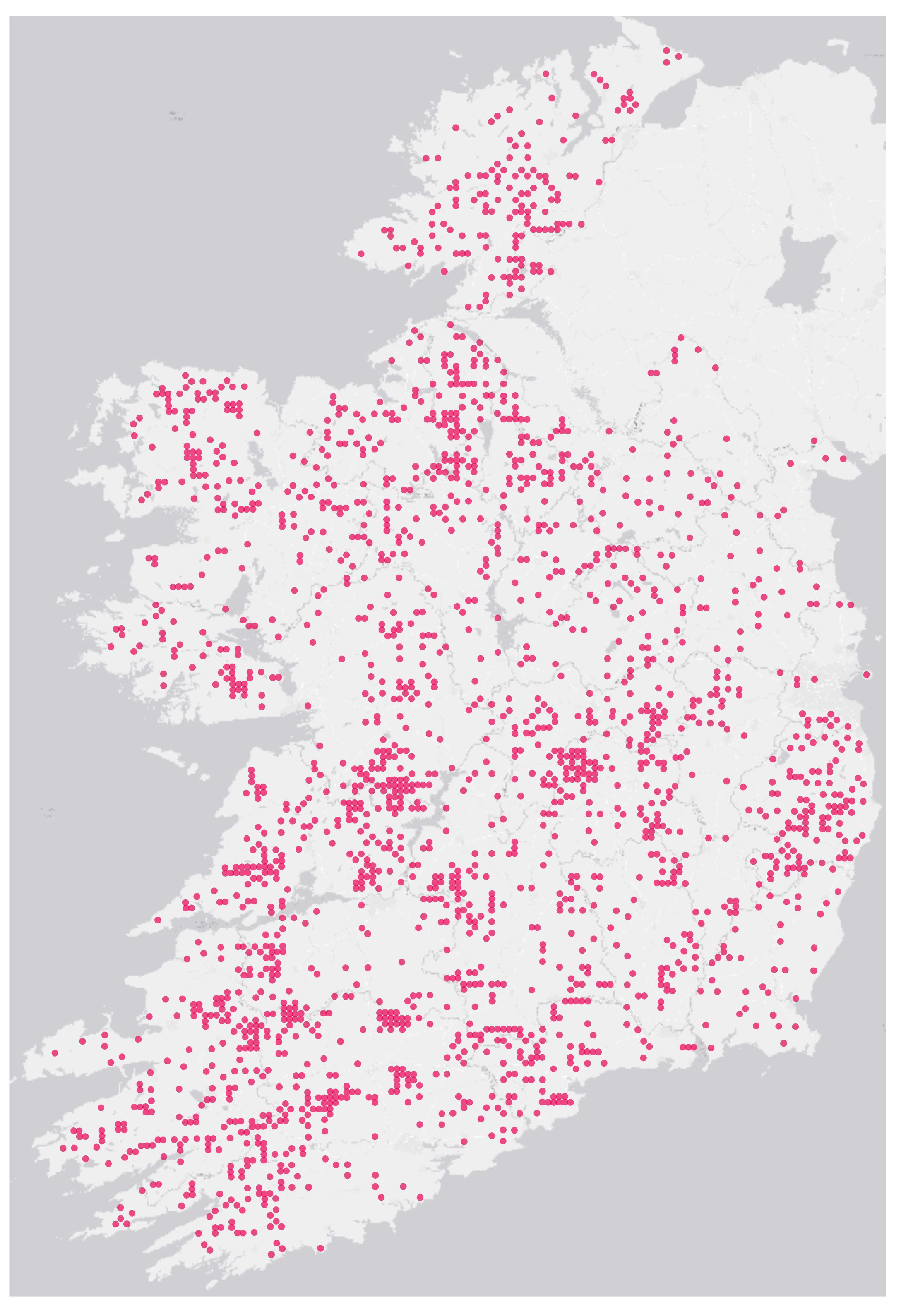
10]. There is a total of 17,423 plots in the NFI, each representing approximately 400 ha. Circa 2000 NFI plots are located in forest land (
Figure 1) and are measured every three years. Each circular NFI sample plot measures 25.24 m in diameter, comprising 500 m
2.
2.4.2. EO Data
A range of EO datasets were used to assess the extent of wind damage within both public and private forests across the Republic of Ireland. They included pre- and post-storm optical satellite imagery from Sentinel-2 and Planet’s PlanetScope. Other data sources were imagery derived from Planet’s SkySat constellation, aerial photography, and self-acquired drone imagery. In addition, historical EO datasets were also available to further assist with assessments, including multi-temporal aerial photography, LiDAR data, and a range of forest inventory related Geographic Information System (GIS) datasets.
A summary of the EO datasets used is provided in
Table 1, with further details provided in the following sections. No radiometric cross-calibration was applied between sensors, as each dataset was used independently at distinct stages of the hierarchical workflow, rather than being integrated simultaneously within a single image-classification process.
Sentinel-2 (S2) is an EO mission from the Copernicus Programme, managed by the European Commission [
30]. Sentinel-2 consists of a constellation of two identical satellites in the same orbit, resulting in a revisit time of 3-4 days over Ireland. Each satellite carries an innovative wide-swath (290 km) high-resolution multispectral imager with 13 spectral bands. A range of vegetation indices were calculated for the pre- and post-storm S2 satellite images. The differences between the vegetation indices pre- and post-storm were used as a triage tool to initially prioritise candidate damage areas.
Planet, previously known as Planet Labs, operates a variety of space-borne sensors including PlanetScope, Tanager, and SkySat. For the purposes of this project, Planet data and in particular SkySat satellite imagery were identified as the most suitable imagery to support the mapping and assessment of EO data across the estate. Both PlanetScope and SkySat data were leveraged upon for the rapid damage assessment.
SkySat consists of a constellation of 15 satellites that have a ground sampling distance of 50 cm across four spectral bands (Red, Green, Blue and Infra-red). SkySat was selected, as it provided significant flexibility in terms of tasking and prioritisation of data acquisition. Moreover, the very high spatial resolution was necessary to support the detailed mapping required by end users.
In addition, for Planet’s PlanetScope, monthly mosaics were used to support the mapping effort, as the data’s ground sampling distance of 3 m provided a useful time-series to support pre- and post-storm verification of windthrow.
Aerial photography available from BlueSky (surveying company headquartered in Leicestershire, UK) was available via a web map tile service (WMTS) with a spatial resolution of 12.5 cm collected between 2021 and 2023. This imagery, together with other aerial photography WMTS from Bing and Google, was used in the assessment and validation of the windthrow mapping analysis.
Unmanned Aerial Vehicles
Unmanned Aerial Vehicles (UAVs) were employed to acquire imagery from areas with no planned SkySat acquisition. These images were later used to create orthomosaics using SiteScan. The mapping UAV used was the DJI Mavic 3 Enterprise, flying on average between 90 and 120 m above ground level. All flights were planned to ensure a ground sampling distance of approximately 3 cm resolution.
An archive of LiDAR data dating back to 2018 for state forests managed by Coillte (State Forestry Company) was also available for this analysis. For the windthrow mapping, the canopy height model (CHM) with a ground sampling distance ranging from 0.5 to 1 m was employed as a pre-storm snapshot of forests within the AOI.
2.5. Spatial Temporal Asset Catalog
In order to support the rapid dissemination of the SkySat imagery to both operational end-users and stakeholders, a cloud-native Spatio Temporal Asset Catalog (STAC) infrastructure was developed to manage, index, and serve the multiple SkySat acquisitions generated throughout the storm response period. The adoption of a STAC-based architecture represented a key innovation within the workflow, enabling scalable and interoperable management of very high-resolution commercial satellite imagery in a near real-time operational context. By structuring all imagery assets using open geospatial standards, the system facilitated efficient discovery, querying, and downstream integration of imagery products across multiple platforms and applications.
Imagery rendering and delivery were implemented using eoAPI and its associated component, titiler-pgstac, which enabled dynamic on-the-fly rendering of imagery directly from STAC search queries without the need for pre-generated map products. This significantly reduced data preparation overheads and allowed users to visualise newly acquired SkySat scenes almost immediately after ingestion. Unlike conventional static dissemination workflows, the architecture provided flexible, query-driven access to imagery collections based on spatial extent and acquisition dates. To support interoperability with existing GIS environments, Web Map Tile Services (WMTS) were published using MapCache and the ZOO-Project, enabling seamless integration into desktop GIS, web mapping platforms, and stakeholder decision-support systems.
The overall system was specifically designed to prioritise low-latency dissemination, scalability, and operational resilience, representing a novel application of cloud-native geospatial technologies within an Irish forestry emergency-response context. The infrastructure was containerised using Docker and deployed within a Kubernetes-orchestrated cloud environment, allowing individual services to scale dynamically in response to demand and enabling the rapid updating of imagery services as new SkySat acquisitions became available.
2.6. Windthrow Damage Assessment
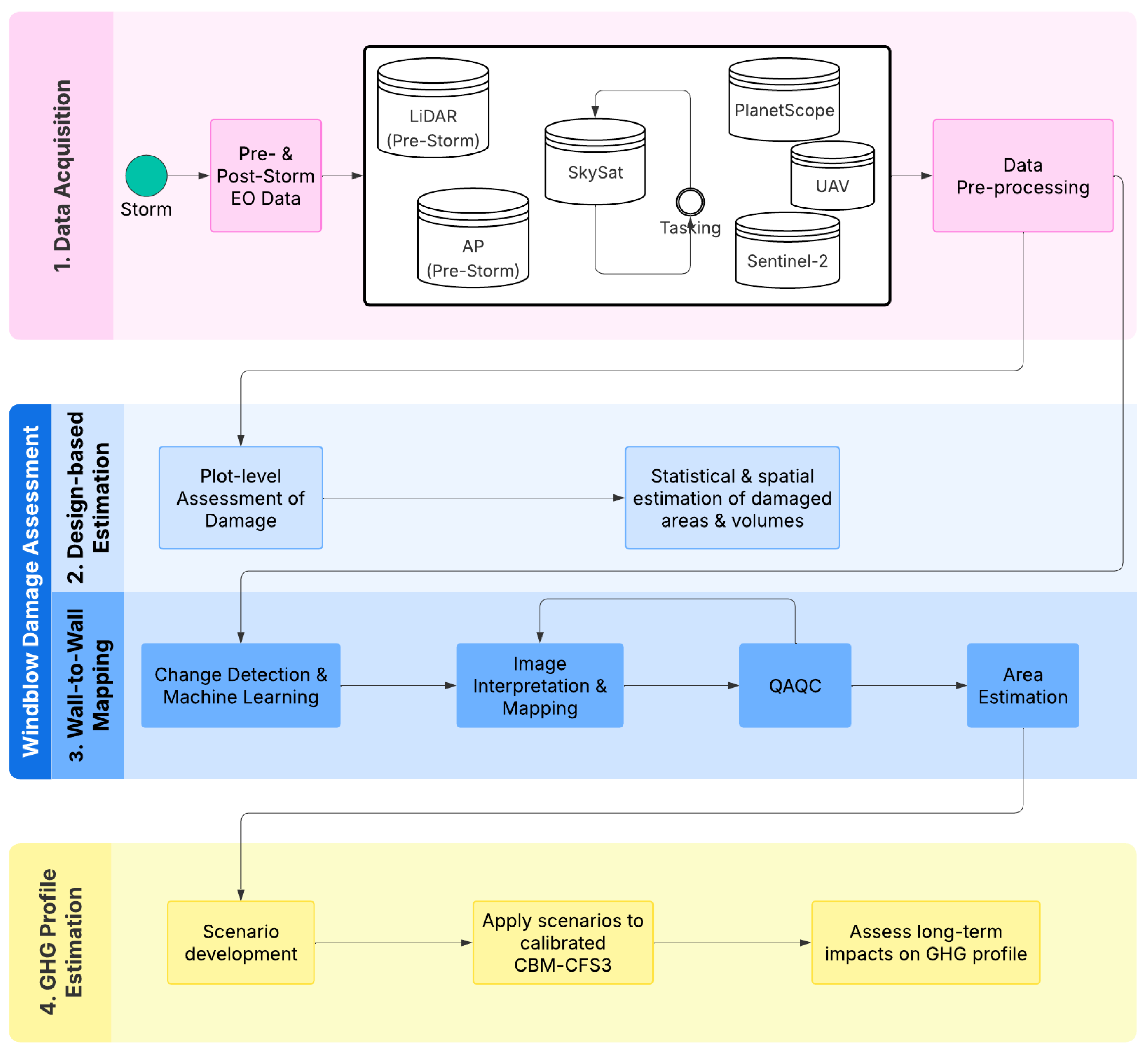
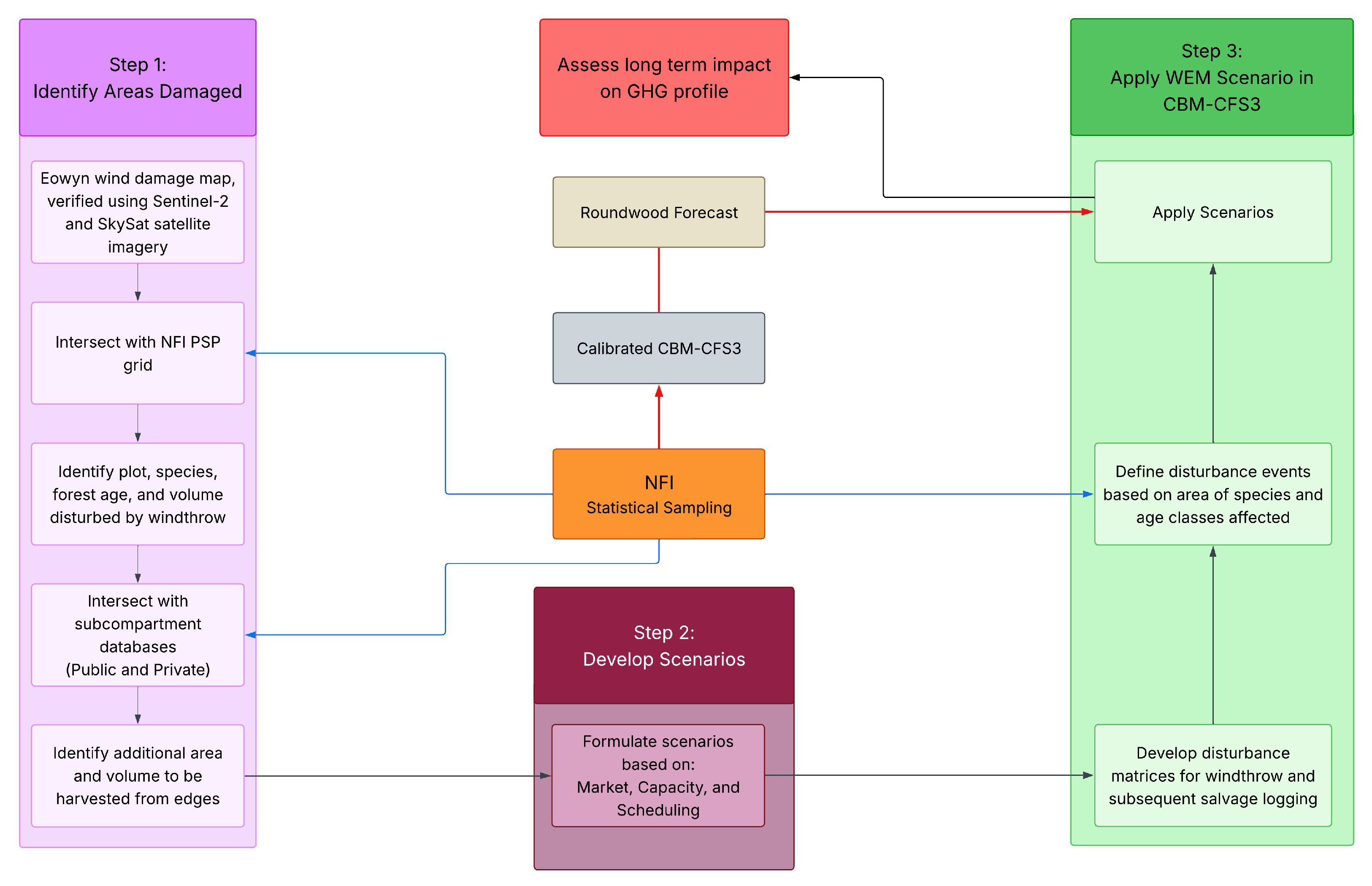
The methodology is structured in four sequential stages: (1) data reconciliation: collection of pre- and post-storm EO datasets from multiple sensors (Sentinel-2, PlanetScope, SkySat, UAV, LiDAR) and compilation of NFI plot data and forest GIS layers; (2) windthrow damage assessment: a two-stage process comprising a rapid design-based statistical estimation using the NFI sampling and a wall-to-wall manual mapping exercise; (3) GHG impact simulation: parametrisation and execution of four salvage-logging scenarios in CBM-CFS3 using the damage area and species-age class breakdown derived from stages 1 and 2; and (4) scenario analysis and reporting: interpretation of GHG profiles across scenarios and communication of results to DAFM and other stakeholders. This workflow is illustrated in
Figure 2. Each stage of the two-stage process used for windthrow damage assessment is described in turn.
2.6.1. Design-Based Estimation
In the immediate aftermath of the storm, there was an urgent operational need to generate a rapid, indicative estimate of the total windthrown area and associated timber volume affected by the two storms. Consequently, a design-based estimation approach was employed, integrating the Irish National Forest Inventory (NFI) sampling framework [
31] with the available satellite imagery. The objective was to provide a timely national-scale estimate to inform emergency response, salvage planning, and early impact assessment, rather than a comprehensive inventory of all damaged stands.
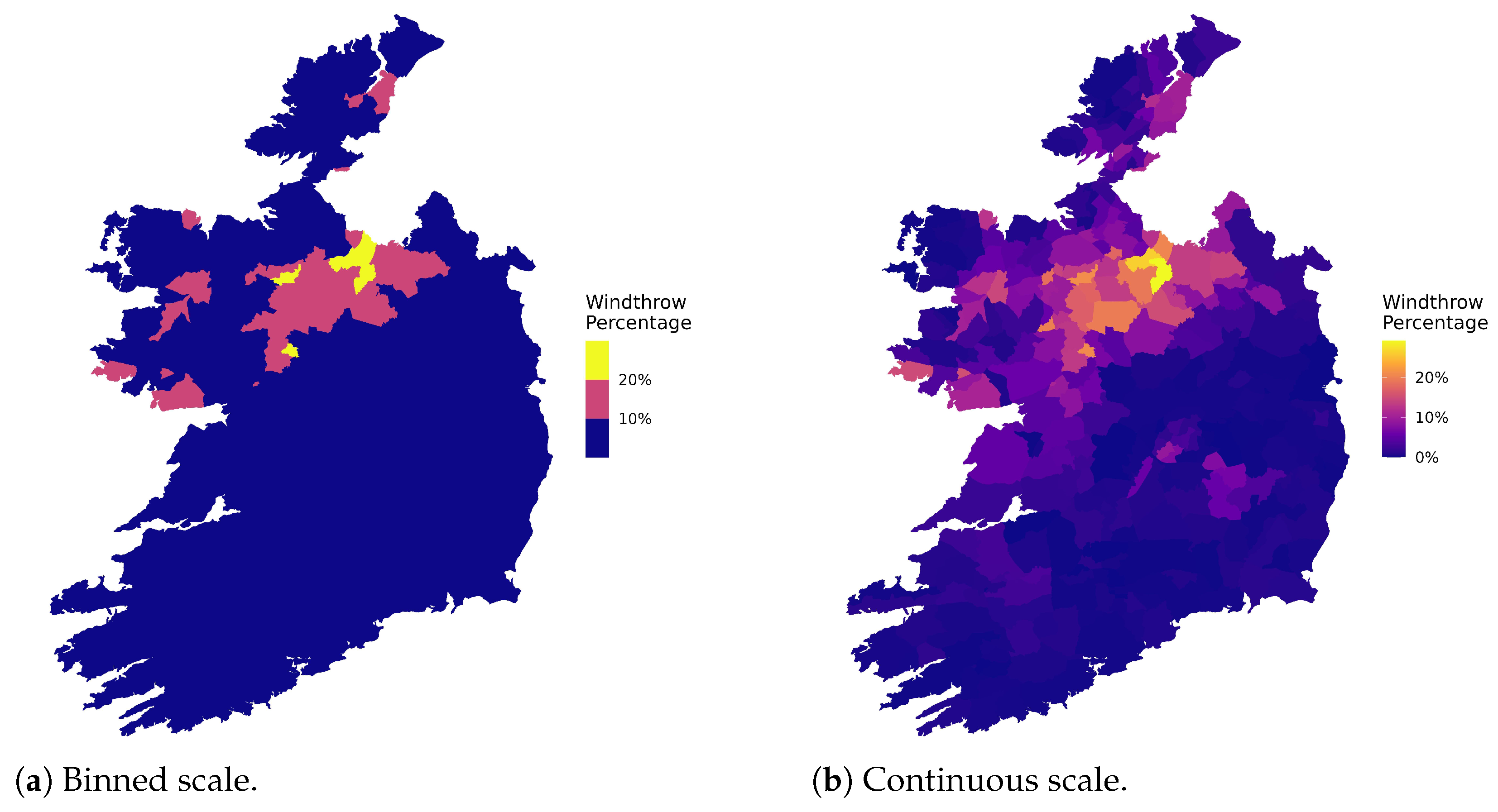
For the purposes of the analysis, a subset of the NFI plots that had a stand age of at least 15 years and had a land use type of conifer high forest or mixed high forest was used as the primary sample, resulting in 1115 plots. For the purposes of this analysis, we assumed that the remaining 905 NFI plots had a low probability of windthrow and were less susceptible to wind damage. This binary classification was adopted under two operational constraints, which were firstly that a preliminary estimate was required within one week of the storm for strategic planning purposes, and secondly that while the SkySat imagery was suitable for stand-level mapping and patch detection, it was not fully capable of quantifying the percentage canopy loss within the plot footprint.
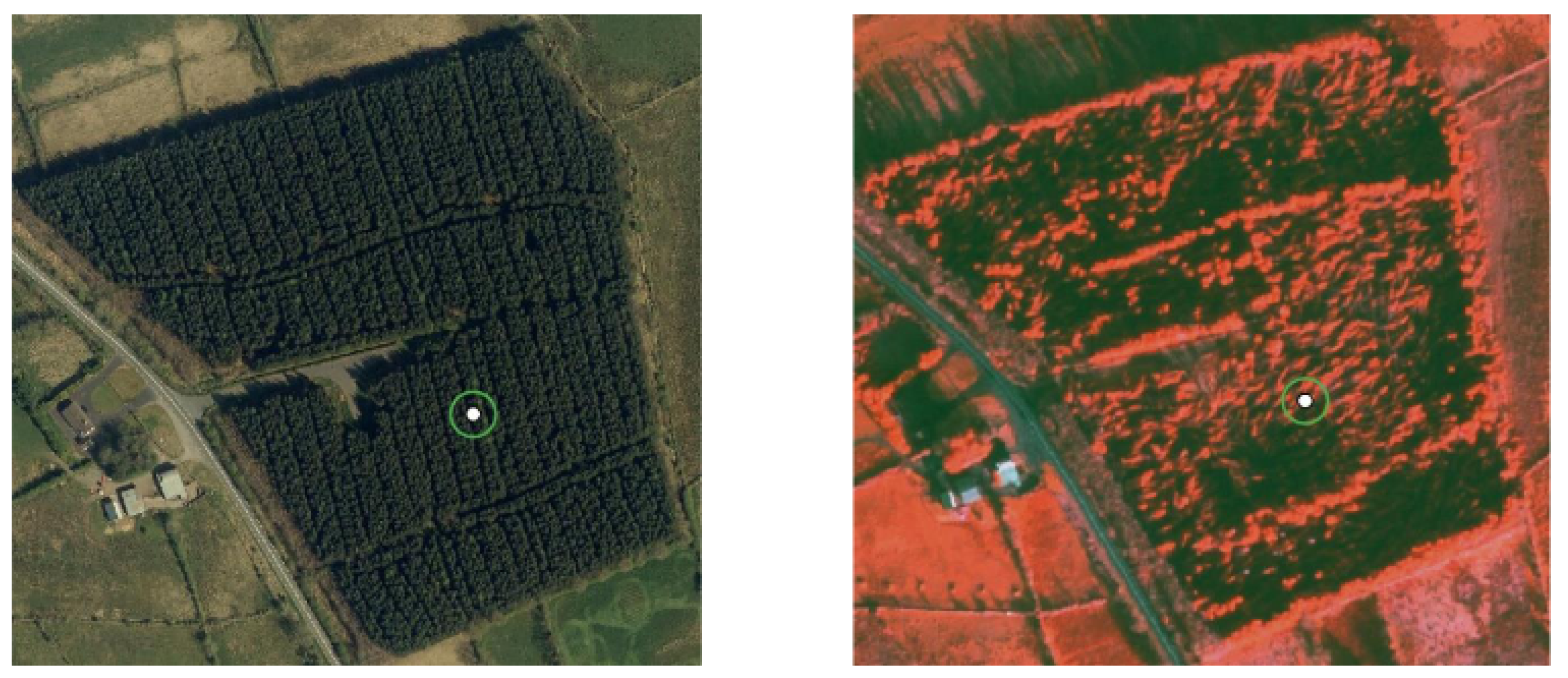
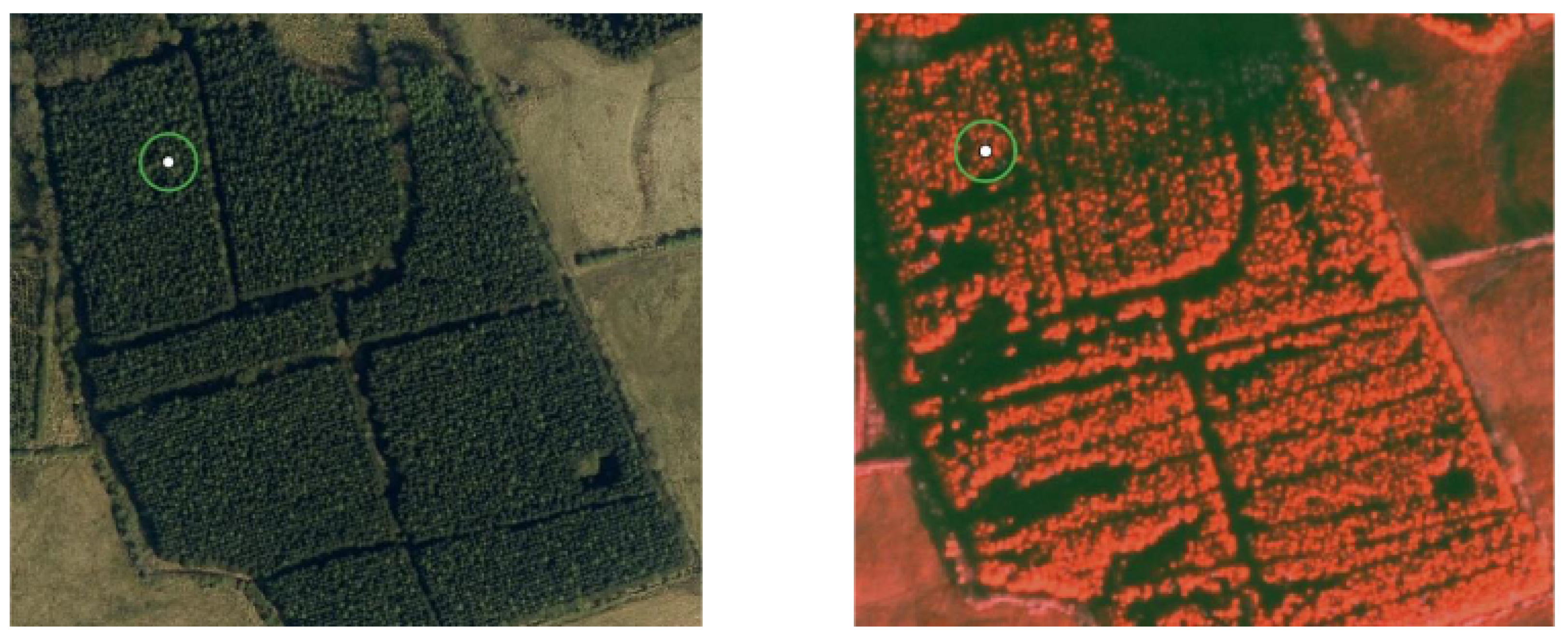
Each NFI plot was analysed using the available EO datasets to determine if it had been affected by wind damage. A plot was labelled as windthrown if part or all of the plot had evidence of windthrow. In some instances, the classification of the plots was very clear, particularly where a large proportion of a forest stand (and in turn), the NFI plot had been impacted (
Figure 3). In other cases, the impact of the windthrow on the NFI plot was moderate but still present and needed to be confirmed through the use of pre-storm data (e.g., aerial photography or LIDAR data, with an example shown in
Figure 4).
2.6.2. Manual Classification
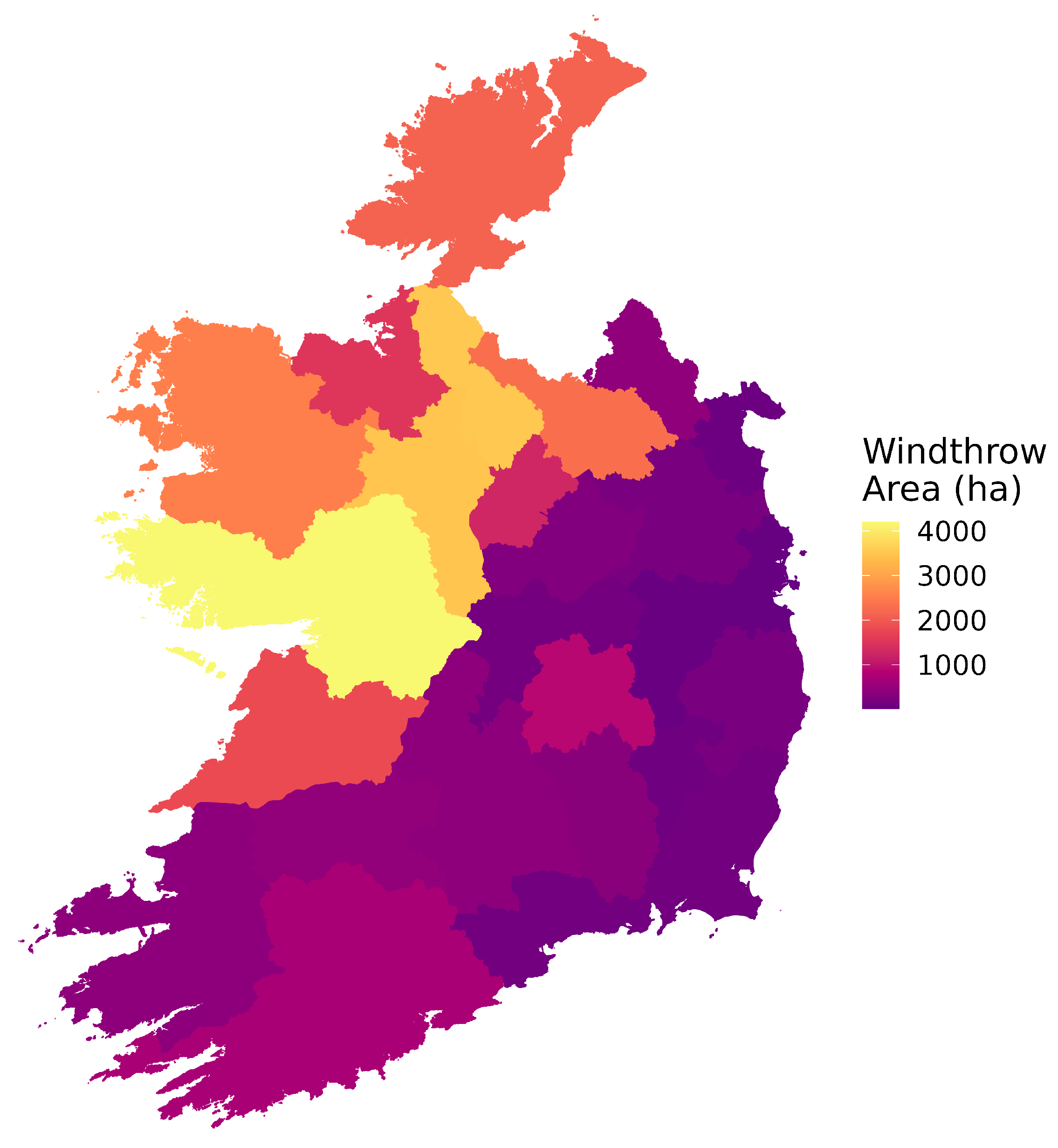
The windthrow mapping for the entire estate was undertaken on the basis of photo-interpretation of SkySat imagery as well as other sources of pre-storm EO data. The forest estate was sub-divided into 320 administrative units with an approximate forest area of 2500 ha in each unit. They were each analysed in turn, with a minimum mapping unit of 0.1 ha applied throughout.
The interpretation followed a two-step protocol. In the first step, analysts reviewed a Sentinel-2 NDVI change product (pre-storm minus post-storm composite) for each administrative unit to identify areas of significant spectral change that could indicate windthrow damage. This change layer served as a preliminary tool to highlight areas of significant damage but was not used as the primary delineation source. In the second step, each flagged area was examined using SkySat 50 cm false-colour composites, cross-referenced with pre-storm aerial photography and LiDAR CHMs where available, to confirm windthrow and delineate its extent. Ambiguous polygons, where the Sentinel-2 change signal was present but SkySat imagery did not clearly confirm canopy removal, were flagged for secondary review by a senior analyst and excluded from the final map if confirmation could not be obtained.
A quality control protocol was applied throughout the process. A senior analyst reviewed a random sample of approximately 75% in each administrative unit, and any area that exceeded 1 ha triggered mandatory peer review. Field observations and drone imagery collected by Coillte field teams were used to cross-check and validate delineated windthrow polygons.
2.7. Simulating GHG Impacts
The CBM-CFS3 modelling framework [
32] is widely used to report forest GHG inventory data as specified under the Intergovernmental Panel on Climate Change (IPCC) Good Practice Guidance for Land Use, Land-Use Change, and Forestry (LULUCF). There are numerous examples of its use at the European scale by the European Commission’s Joint Research Centre [
33,
34] and for individual countries, e.g., the Czech Republic [
35] and Ireland [
24]. The model was initially set up for use in Ireland in 2018 for GHG reporting to the UNFCCC using the European Archive Index Data Base [
34] and nationally derived forest growth and biomass equations from the 2006-2021 NFIs [
24]. The model integrates NFI data (stands age, area, species, productivity classes and soil types), merchantable volume increment curves, equations to convert volume to biomass components, data on disturbances and simulates transfers of C between pools and the atmosphere (
Figure 5). The equations and parameter values for growth, biomass to volume conversions, biomass components, turnover and C transfers for each species, management and disturbance type are defined in an Archive Index Database [
36], with country-specific parameters [
8]. Full details of the CBM-CFS3 set up, control of harvests and other disturbances for Ireland can be found in Black et al. [
8] and the Irish National Inventory report [
24].
Figure 5 outlines the workflow developed to simulate the short- and long-term GHG impacts of the winter storms 2024/2025 using the calibrated CBM-CFS3 model for Ireland [
8]. The CBM-CFS3 model was calibrated using the activity data (area and volumes) based on the NFI plots that intersected the EO-derived wall-to-wall windthrow product (see
Section 2.6.2). Identified plot locations provided information of species strata and age when wind damage occurred to inform the scheduled salvage operations in CBM-CFS3.
Harvest targets for already scheduled timber are taken from a policy baseline projection referred to as ’With Existing Measures’ (WEM) [
8]. Scenarios for the salvage logging were developed based on an analysis of current market demand, current harvesting capacity in Ireland and salvage harvest scheduling information from Coillte. Four basic scenarios were developed (
Table 2) in addition to the WEM scenario, which is described in detail by Black et al. [
8].
Due to current national harvest capacity constraints, it was assumed that salvage logging will be carried out over 5 years, with 90% of the windthrow area harvested within 2 years to reduce the risk of pests and diseases and to minimise economic losses. This involves harvesting 45% of the windthrown area in 2025 and 45% in 2026, with the remaining salvage logging to be carried out in the period 2027–2029 (
Table 2). While limited data exist for storms of this magnitude in Ireland, this assumption of 90% of the windthrown area being successfully salvaged in two years is plausible as areas scheduled for intervention (clearfelling or thinning) that were not impacted were postponed, new markets have been developed for the exportation of sawlog [
37], and additional machinery has been brought into Ireland to assist in the harvesting of storm damaged areas [
38]. Additionally, to remain free of bark beetle, importation of coniferous roundwood from Scotland has ceased [
39], with approximately 225,000 m
3 imported annually between 2020 and 2024 [
40]. Moreover, 4.6 million m
3 (including imports) was available for processing in 2024 [
41], with Irish sawmills to increase capacity by 30% to clear damage to a total capacity to process 5.95 million m
3 [
42]. Scenario A assumes that all of the already scheduled harvests in the WEM projection [
8] will be carried out in addition to the salvage harvest. Scenario B does not consider the constraints from harvesting contractors, but assumes that the maximum all-Ireland roundwood harvest rate can be attained (ca. 7.5 million m
3). Scenario C represents the best case where harvest is constrained by the sectors capacity to harvest and process timber. Scenario D is the same as C, but it is assumed that 10% is not salvaged in 2027–2029 due to financial reasons (i.e., the value of the crop is lower than harvest and extraction costs), and there is an increase in the risk of pests and diseases, resulting in an average of 2% mortality per year (derived from Palm-Hellenurm et al. [
25]), modelled as 20% mortality every 10 years for 20% of the spruce areas (approximately 90,000 ha) from 2040 to 2070.
It is important to note that there is no information available on salvage logging management approaches, impacts on market demand or export, industry harvest capacity and subsequent occurrence of pest or disease outbreaks due to the low occurrence of large-scale wind events impacting the Irish forest sector. Considering that these factors will have a significant impact on future harvest rates and the GHG profiles, the GHG analysis adopted a scenario based-approach as a proxy for uncertainty analysis to provide a range of potential GHG profile outcomes due to the recent storm events. The scenarios represent the best to worst potential outcomes based on expert key assumptions derived from information provided by the Forest Service and Coillte.
Key assumptions include:
The harvest capacity of the forest sector, including contractors from the EU and UK, is expected not to exceed 6.5 million m3 per year in 2025 and 2026.
10% of the salvage harvest is assumed to be exported as roundwood, based on recent market trends. This is based on recent trends in the export of sawlog from the island of Ireland for the first time in the history of the state [
37]. This timber is excluded from harvested wood product (HWP) inflows, because the accounting rules under the EU-LULUCF regulation are for domestic production of HWP from domestic harvest only.
To account for blocking, an additional 10% to 20% of standing trees are included in the total impacted areas as this accounts for adjacent stand edges that are not windthrown but would be included as part of salvage logging operations due to the practical need to harvest contiguous management blocks.
There is no pest and disease risk for scenarios A to C because most of the windthrown material is removed within 2 years following windthrow.
No windthrow adaptation measures are considered except for current silviculture practice, which is already reflected in the WEM scenario.
Inflows into HWP assume the same allocation to semi-finished products as outlined for the WEM scenario [
8]. Besides the 10% of exported roundwood, there is no change to the allocation of roundwood to semi-finished products.
No harvest residues or deadwood pools are used for bioenergy or firewood in Ireland.
Bespoke disturbance event matrices were developed to facilitate carbon flows between biomass, the dead organic matter pools and HWP inflows for windthrow within the CBM-CFS3 model framework (
Table 3).
Additional transition events are scheduled in CBM-CFS3 to allocate windthrown areas after DISTID 10 to a “Windthrow” species stratum, which has a zero growth increment curve. Once windthrown stands are harvested, another transition facilitates replanting of the stands with species of choice. For scenarios A-D the same pre-existing species before windthrow were replanted.
4. Discussion and Conclusions
A number of considerations need to be considered regarding the mapping and assessment of the windthrow following the storms of winter 2024/2025. The majority of the windthrow analysis was undertaken using satellite imagery acquired during the winter, which resulted in imagery with more cloud shadow as a result of low sun angle. Satellite data acquired during spring and summer provided better opportunities to assess and refine the windthrow mapping as the sun angle increased and the incidence of cloud-cover reduced. It is important to note that despite the analysis of the imagery by expert analysts and the associated QA process, there were still omissions within the windthrow product. This is confirmed by the calculated Producer’s Accuracy of 84%.
Spatial uncertainty can be an issue in relation to the interpretation of the NFI plots, when compared to satellite imagery, such as Sentinel-2 that has a ground sampling distance of 10-m. However, the observed spatial mismatch between GPS-located NFI plots and the reprojected Sentinel-2-derived EO layers was generally within approximately 10–20 m (i.e., around 1–2 Sentinel-2 pixels). This level of uncertainty is consistent with expected geolocation, reprojection, and field GPS errors in operational forest disturbance mapping workflows. No plots were excluded solely due to this mismatch, although plot interpretation near disturbance boundaries was treated with additional caution.
Despite these challenges, the approach adopted in this manuscript to map windthrow and model its impacts within GHG scenarios demonstrates strong performance within the national forest estate. However, it relies on proprietary, very high resolution imagery (SkySat), expert visual interpretation, manual delineation, and national forest inventory data; resources that may not always be universally accessible. Open data alternatives such as Sentinel-2 could substitute for proprietary imagery, though this would likely introduce greater uncertainty and reduced detection accuracy, particularly for smaller or fragmented windthrow patches given the coarser spatial resolution. A limitation of the approach is the dependence on manual interpretation, but there was a high expectation for a detailed, ready-to-use windthrow product that could be used for forest management and planning by end users and stakeholders.
Maintenance and compilation of windthrow mapping datasets is important as it is required for forest planning and management as well as for time-series analysis and modelling. Forzieri et al. [
43] developed the FORWIND database, which consists of more than 80,000 spatially delineated wind blow areas for the period 2000–2018, while ref. [
44] developed a pan-European forest disturbance database that included wind damage to forests. These databases provide the basis for undertaking spatio-temporal analysis of windthrow at national and/or regional scale in conjunction with other spatial datasets and climate projections. Such an analysis can provide insight and understanding into the factors that influence the extent of storm damage.
Gardiner et al. [
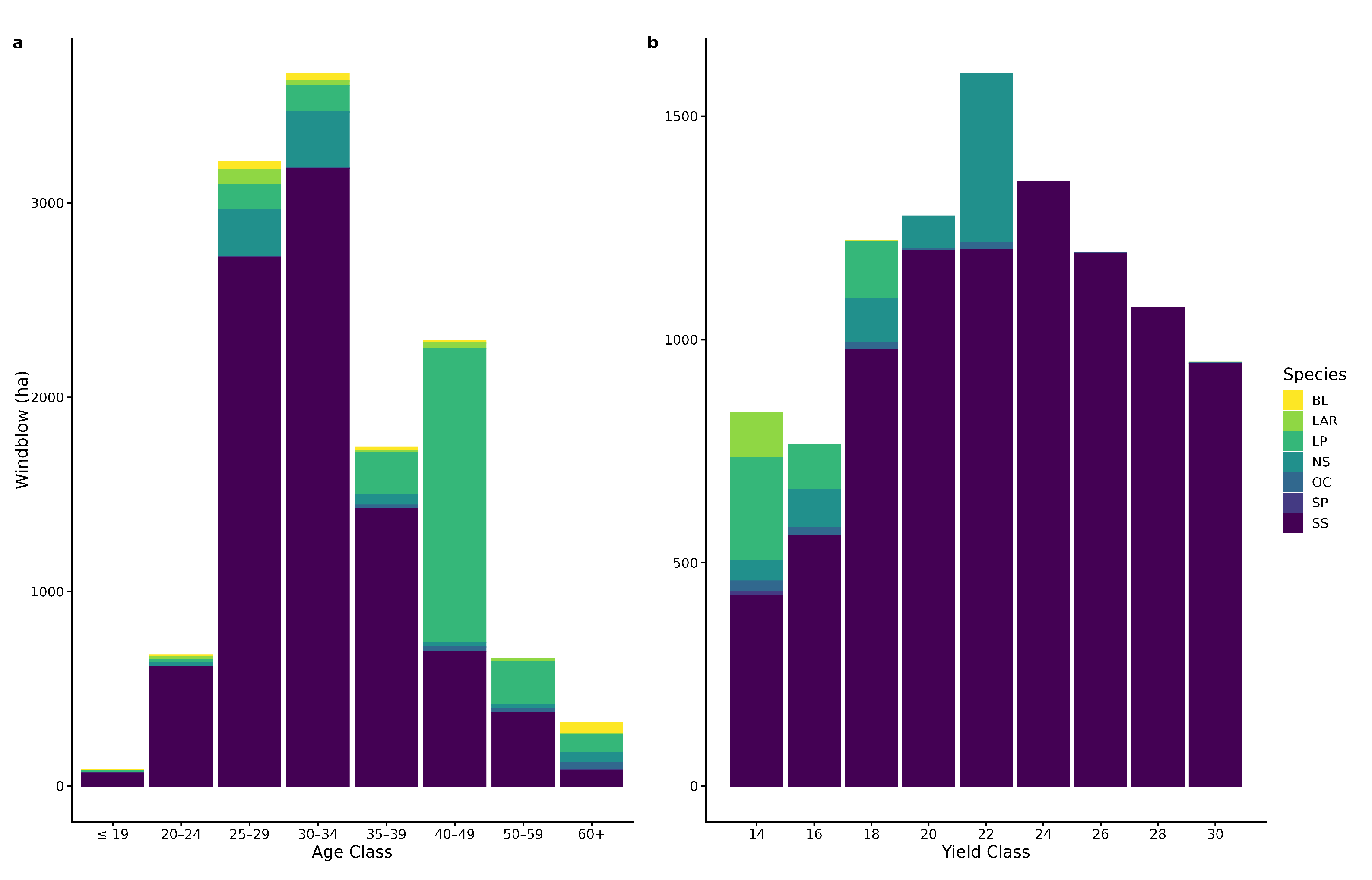
45] outline that storms are responsible for more than 50% of all primary abiotic and biotic damage by volume to European forests. A comprehensive list of contributing factors is included, while current and future trends are described, which can be grouped into three categories. Firstly, weather-related drivers are noted as being a principal factor in affecting the severity of windthrow and include peak wind speeds typically above 150 km/h; storm duration and accompanying rainfall. Secondly, the rotation lengths, critical heights and forest structure determine the vulnerability of stands to wind events. In addition, on some site types, conifers have a lower mechanical resistance due to their shallow rooting system compared to broadleaf species. Thirdly, the timing and intensity of forest management practices, such as thinning interventions, can make stands more or less resilient to wind. For example, recent thinning and continuous cover forestry interventions, particularly in more mature stands can temporarily weaken due to wind stability. With respect to the impacts of the winter storms 2024/2025, it is evident that several of these combined factors, such as wind speeds, affected stand composition in terms of species and age, had a significant impact on the resulting damage.
Gliksman et al. [
46] note that in order to predict damage or identify areas at risk of wind or storm damage, indices based on several factors influencing wind damage are a vital tool in assessing the likelihood and magnitude of damage in a given sector or environment. In Ireland, Ní Dhubháin et al. [
28] developed a wind throw risk model for Sitka spruce in Ireland. The proposed logistic regression model can be used to predict the probability of windthrow in a given area, although no distinction is made between catastrophic and sporadic damage.
ForestGALES [
29] is a mechanistic wind-risk model that estimates the critical wind speed required to cause stem breakage or uprooting in forest stands based on tree size, stand structure, soil conditions, and exposure, and is widely used in Europe and has been tested and evaluated under Irish conditions to assess windthrow vulnerability and support forest management decisions.
The objective of generating the GHG profiles was to develop more detailed simulations of windthrow damage in CBM-CFS3 and to provide an early assessment of the GHG impact due to large storms before official UNFCCC inventory submissions are published. EO-based disturbance mapping provides spatially explicit information on the extent and severity of windthrow damage, improving the representation of disturbance-related emissions, biomass losses, and post-disturbance recovery dynamics within CBM-CFS3 and national forest carbon accounting. Unlike conventional NFI cycles, which may only capture major disturbance impacts every five years, the multi-source approach presented here enables near real-time updating of GHG profiles to support timely forest management, salvage planning, and climate policy decision-making.
A number of scenarios in CBM-CFS3 were developed to understand the impacts of the storm on the GHG profile. In the context of the EU-LULUCF regulation, the generated profiles demonstrate that there are implications over a 30 year period that need to be considered. In the near term (event year to 1–2 years), forests experience an abrupt loss of carbon uptake as living biomass is transferred to dead wood and litter pools, resulting in reduced removals rather than instantaneous emissions, while soil disturbance causes small emissions of CH4 and N2O. In the short term (2–5 years), decomposition of windthrown biomass becomes the dominant process, generating sustained CO2 emissions and often shifting forest land temporarily from a net sink to a net source. In the medium to long term (5–30+ years), emissions from deadwood decline and forest regrowth increasingly dominate the carbon balance, with recovering stands restoring CO2 removals and returning carbon stocks towards pre-disturbance levels.
Ireland’s Climate Action Plan (CAP 24) policy targets for the LULUCF sector fully align with the revised EU LULUCF Regulation (EU) 2023/839 national target for 2030, which is a net reduction in emissions of 626 Gg CO
2 eq. per year by 2030 relative to the mean emissions for 2016–2018 [
47]. However, the WEM scenario shows that the national forest estate sink is declining from an annual mean value of −6095 Gg CO
2 eq. for 2016–2018 to −1034 Gg CO
2 eq. by 2030. Based on our WEM scenarios, and if one assumes no technical corrections to the inventory or no mitigation measures for the other LULUCF subcategories, the distance to the target for the LULUCF sector would increase from 626 to 5687 Gg CO
2 by 2030 [
8]. The distance to the target would increase further by 8307 to 3854 Gg CO
2 eq. by 2030, for the worst (WEM + A) and best (WEM + D) case windthrow scenarios. It is important to note that the associated uncertainty of each scenario was not calculated as part of this study but that the selection of scenarios and associated assumptions were chosen to reflect the potential range of uncertainty associated with the resulting GHG profiles.
The findings from this paper highlight the potential for large-scale windthrow events to substantially alter Ireland’s forest carbon trajectory and challenge the achievement of short-term national and EU LULUCF climate targets. Consequently, it reinforces the need for rapid disturbance monitoring supported by Earth Observation and improved integration of disturbance dynamics within national carbon accounting frameworks.



 ,
,