Article

Energy Consumption During Drilling Mounting Holes in Furniture Elements Made of Particleboards Based on Alternative Raw Materials


1
Department of Furniture Design, Faculty of Forestry and Wood Technology, Poznań University of Life Sciences, 38/42 Wojska Polskiego St., 60-627 Poznań, Poland
2
Łukasiewicz Research Network—Poznań Institute of Technology, 6 Ewarysta Estkowskiego St., 61-755 Poznań, Poland
*
Author to whom correspondence should be addressed.
Forests 2026, 17(6), 695; https://doi.org/10.3390/f17060695
Submission received: 15 April 2026 / Revised: 10 June 2026 / Accepted: 11 June 2026 / Published: 12 June 2026
(This article belongs to the Special Issue Performance Testing of Wood and Wood-Based Materials)

Abstract

Global particleboard production reached almost 123 million m3 in 2024. Such quantities require intensified search for alternative lignocellulosic materials in accordance with the principles of the circular economy. The research aim was to determine the total energy consumption (Emax) and specific cutting work (SCW) when drilling holes in boards made from 100% forest biomass, agricultural biomass, and wood-based post-production residues. The experiments were carried out on a CNC (computerize numerical control) center at a constant speed of 6000 rpm and variable feed rates of 0.2, 2, and 20 mm/min, using conventional particleboard as a reference. The results showed that the feed rate has a dominant influence on energy consumption. As the speed increased, the average SCW value decreased from 22.32 J/mm3 to 6.11 J/mm3. Conventional board required the highest energy input in all variants, and statistical analyses showed no significant differences (p > 0.05) between boards made from alternative raw materials and the reference. This proves that the variability of energy consumption depends mainly on the process parameters and not on the material itself. The research confirms the technological feasibility of using alternative biomass sources in the furniture industry without increasing energy consumption during processing, which promotes the implementation of sustainable development principles.

1. Introduction

According to the latest data, global particleboard production amounted to 122,986,457 m3 in 2024. Asia accounted for 53.7% of this (China approx. 51.5 million m3), and Europe for 45.5%, with Poland dominating at approx. 5.2 million m3 and Germany at 4.6 million m3 [1]. Particleboard, widely used in furniture manufacturing, interior design elements, and construction, is one of the most important products of the wood industry in Europe. This, together with production quantity data, confirms the sector’s leading position in the materials economy [2]. Such a broad scope covers almost the entire European wood processing market and is an important reference for technological and environmental analyses. Most of the raw material used in board production is softwood obtained from sawmills, recycling and primary processing. Consequently, the particleboard sector plays a paramount role in accelerating the circularity of the entire wood industry. From a materials science perspective, and regardless of current resource availability or biomass prices, particleboard manufacturing is virtually the only sector capable of incorporating highly diverse raw materials into distinct structural fractions of the final product. This unique technological flexibility allows for the simultaneous processing of various wood species, secondary industrial co-products, and post-consumer recycled streams [3]. Furthermore, scientific focus is increasingly shifting toward expanding this circular model by evaluating non-wood alternative components [4]. The ability to utilize diverse lignocellulosic materials across distinct particle fractions highlights particleboard’s unique position as the primary technological driver of closed-loop resource management [5].
In the face of increasing pressure on raw materials, legislative changes and the need to implement circular economy principles, the use of alternative lignocellulosic sources is being increasingly considered [6]. The most important groups of such raw materials include: post-production residues from wood processing plants, forest biomass from felled trees (such as branches and crowns), as well as agricultural biomass, in particular various types of straw [7], excluding typical cereal straw due to the need for additional processing and the use of binders other than conventional resins [8]. The use of these types of raw materials has several environmental and economic benefits—it reduces the amount of organic waste, allows for more complete utilization of already harvested wood, and provides an alternative to primary forest raw materials, the availability of which is becoming increasingly limited [9,10]. The growing interest in alternative lignocellulosic raw materials is also driven by the need to reduce the environmental footprint of wood-based panel production, particularly in terms of greenhouse gas emissions and resource efficiency [11]. Previous studies have demonstrated that implementing circular economy strategies in material-intensive industries, including wood-based panel production, can significantly reduce environmental impacts while maintaining economic performance [12].
In European industrial practice, softwood, mainly pine and spruce [13,14], remains the primary raw material for particleboard manufacturing. In countries with well-established wood-based industries, such as Germany, Poland, Austria, and Romania, wood from joiner’s plants and post-production waste are also used. The use of recycled wood as a raw material for particleboard production varies significantly across European countries, mainly due to differences in recycling systems and resource availability. Its share may be minimal in some regions, reaching as little as about 1% in Estonia. In countries with highly developed recycling systems, such as Italy, it can account for as much as 95%–100% of the raw material base [15,16]. More detailed analyses show that in Italy, the share of recycled wood may be approaching a complete replacement of virgin raw materials, while in countries such as Belgium, the United Kingdom, and Denmark, it typically accounts for about half of raw material consumption [17].
In southern Europe, e.g., in Italy and Spain, hardwood, especially poplar from plantations, is increasingly being used. This approach allows production to continue while reducing consumption of high-quality construction timber [18]. On other continents, the raw material structure is more diverse and depends on the availability of local species. In Southeast Asia, rubberwood (Hevea brasiliensis) from plantations where the trees are no longer a source of latex is widely used [19]. Additionally, in Indonesia and Malaysia, fast-growing species such as Paraserianthes falcataria (sengon), Leucaena leucocephala or Kelempayan (Neolamarckia cadamba) are also gaining increasing attention [20,21,22]. In South America, particularly in Brazil, eucalyptus is used for board production, making it a reliable source of industrial raw material through intensive plantation cultivation [15,23]. In some cases, fiber plants that do not belong to the classic wood category, such as bamboo, which is increasingly used in Asian countries, are also used as complementary raw materials [24]. It is worth noting that many of these solutions are regional in nature and depend on local climatic conditions, the availability of plantations, and the logistics of raw material supply.
However, changing the raw material base affects not only the ecological balance of production, but also the technological properties of the finished boards, which have a direct impact on their further use, especially in the furniture industry. The introduction of particles with different densities, structures and chemical compositions can lead to variability in mechanical and physical parameters, such as bending strength, swelling resistance and core homogeneity [4,25,26,27]. One of the technological aspects that has remained poorly studied to date is the machinability of these materials, including drilling holes for furniture fittings. The energy and technical efficiency of this process is vital for manufacturing plants, as it affects tool wear, manufacturing costs, and the durability of fittings in finished furniture [28].
To assess the material’s technological quality, the specific cutting operation can be specified. Specific cutting work (SCW) is the amount of total energy needed to remove a unit of material volume, which is broader thermodynamically than specific cutting energy, which is mechanical energy required to remove a unit volume of material. This value allows us to assess whether the material is difficult or easy to machine and helps in selecting the appropriate machining parameters so that this work is as small as possible. The amount of specific cutting work depends not only on the type of material being machined, but also on the machining parameters (e.g., feed rate, rotational speed, amount of material being cut) and the geometry of the tool. By comparing SCW values, we can select appropriate machining parameters for a specific material to maximize energy efficiency. In practice, SCW can be measured in two basic ways. One of them is to determine the cutting work by measuring the cutting force and determining the tool path. The cutting work determined in this way, after dividing it by the volume of the removed layer, allows the SCW to be calculated. This method is not commonly used due to the difficulty and cost of measurement and the possibility of measuring only one component of the force, which imposes limitations on its applicability. The second method for determining SCW is based on cutting power and the volume of the machined layer. In this method, two power consumption measurements are taken. The first is performed with the machine tool idling and the second during material machining. After subtracting the power consumed during idling from the power consumed during machining, we obtain the actual cutting power. Dividing by the volume of the cut layer yields the SCW. The second method, known as the energy method, is better because it considers the actual cutting conditions, including friction and plastic deformation, and is well suited for comparing materials and tools. With the development of measurement equipment, it is now possible to determine the energy consumed by the machine during operation. The energy consumed by the machine tool, read in kWh from the measuring device, can be easily converted into work specified in J, and by dividing this value by the volume of the cut layer, we obtain SCW. This method is definitely more universal because it can be applied to any type of machining regardless of the geometry of the tool and considers all the forces acting on the material during machining [29,30].
The process of drilling in wood-based materials is associated with the generation of cutting resistance, the level of which depends on the board structure, the type of particles used, their geometric and physicochemical properties, and the density distribution across the material cross-section [28,31]. A parameter with practical and energy-related significance is electricity consumption during drilling, which can be used as an indicator of processing difficulty and an indirect indicator of the board’s structural quality. Previous research has focused mainly on boards made from virgin or recycled wood, with little data available on boards manufactured exclusively from a single type of alternative raw material. The variable properties of materials of agricultural, forestry or post-production origin, such as irregular particle shape and differences in density or water absorption, can significantly affect cutting resistance and the energy consumption of the drilling process. This study analyzed three-layer particleboards, each made 100% of one type of raw material: agricultural biomass, forest biomass, or post-production residues from the wood industry. This approach allows for the unambiguous attribution of the influence of a specific type of raw material on energy consumption during hole-drilling for furniture fittings, and for assessing the extent to which differences in material structure translate into technological properties relevant to the further use of these boards.
Drilling is a key operation in cabinet furniture technology. Holes and sockets deter-mine how elements are joined, how fittings are assembled, how they can be adjusted, and how the furniture’s interior is equipped. In a typical box of furniture, several to several dozen holes and/or sockets are drilled. Therefore, the drilling process affects the quality of the product, production organization and energy consumption. Drilling in furniture elements can be divided into:
  • Making structural sockets and assembly holes, including drilling for dowels, confirmats and eccentric fasteners. They are drilled after formatting and veneering narrow surfaces and before assembling the bodies. They are most often performed on multi-spindle drilling machines or CNC centers. The accuracy of the drilling layout is essential for the rigidity and geometry of the furniture.
  • Fitting sockets and hardware mounting holes for fittings such as concealed hinges, drawer runners and other mounting fittings. These are made at a later stage of component processing, often on multi-spindle drilling machines or CNC centers.
  • Functional and system drilling (32 mm system/25 mm system) includes operations for shelf supports and interior fittings for furniture bodies. They require high positioning accuracy.
  • Process, technological and auxiliary holes are made for assembly screws and auxiliary fasteners for the temporary fixing of elements. They are often made together with structural holes in a single machining cycle.
Multi-spindle drilling machines or CNC machining centers are mainly used in the production of box furniture. Multi-spindle drilling machines are used to drill rows of holes in wide or narrow planes of structural element blanks. CNC centers are flexible drilling and milling stations used for mass production and short-run production. The choice of machines depends on the scale of production, from individual stations in small workshops to automated lines in large factories.
The quality of the slots and holes, as well as the energy required to create them, de-pends not only on the choice of machining equipment but also on the appropriate selection of tools. Drilling parameters are selected based on the board type, thickness, and joint type [32,33,34].
Although alternative raw materials are increasingly used in particleboard production to meet sustainability and circular economy requirements, knowledge of their machinability and processing performance remains limited, particularly for drilling operations used in furniture manufacturing. Previous studies have mainly focused on conventional wood-based panels, while insufficient attention has been paid to the energy demand and specific cutting work associated with machining particleboards produced from alternative raw materials. Drilling is one of the most common machining operations in the furniture industry and directly affects production efficiency, energy consumption, tool wear, and manufacturing costs. Therefore, the obtained results may expand current knowledge on the machining behavior of innovative wood-based materials and support the optimization of machining parameters as well as the implementation of more sustainable raw materials in furniture production. In this context, the main aim of this study was to evaluate the parameters of the drilling process for mounting holes in terms of energy efficiency, specifically assessing total energy consumption and specific cutting work, during the processing of prototype three-layer particleboards manufactured from alternative raw materials. This study hypothesizes that the type of alternative raw material used in particleboards significantly influences energy consumption and the specific cutting work during drilling of mounting holes in furniture elements made from such materials.

2. Materials and Methods

Three types of particleboards manufactured from different alternative raw materials were used in the study. These were particleboards made from: post-production residues (P), agricultural biomass (L) and forest biomass Scots pine branches (Pinus sylvestris L.) (S). The raw materials were processed into shavings using a Pallmann shredder (Pallmann, Zweibrücken, Germany), with the exception of agricultural residues, which were ground using a Condux cutting mill (Condux, Mankato, MN, USA). The resulting particles were classified using an Allgaier vibrating screen (Allgaier, Uhingen, Germany) with mesh sizes of 8.0, 2.0, 1.0, and 0.5 mm. The core layer was composed of particles retained on the 2.0 mm screen, while the surface layers consisted of fractions collected from the 0.5 and 1.0 mm screens. It is worth noting that while mechanical screening isolates specific dimensional fractions, it partially masks the geometric diversity of the particles, such as their slenderness and flatness ratios. Due to the different anatomical structures of the raw materials and the distinct shredding mechanisms used, particles within the same mesh fraction exhibited qualitative variations in morphology. Nevertheless, this approach was adopted intentionally to assess the technological impact of each specific type of raw material, while maintaining a processing configuration that closely reflects actual industrial production conditions.
Prior to adhesive application, the particles were dried to a moisture content of approximately 2%–3%. A melamine-urea-formaldehyde (MUF) resin (Swiss Krono Sp. z o.o., Żary, Poland) was used as the binder, with a 40% ammonium nitrate (NH4NO3) water solution acting as the hardener. The resin content, calculated based on the dry weight of the particles, was set at 12% for the surface layers and 10% for the core layer. Additionally, a paraffin emulsion was applied at a constant rate of 0.3% for all layers.
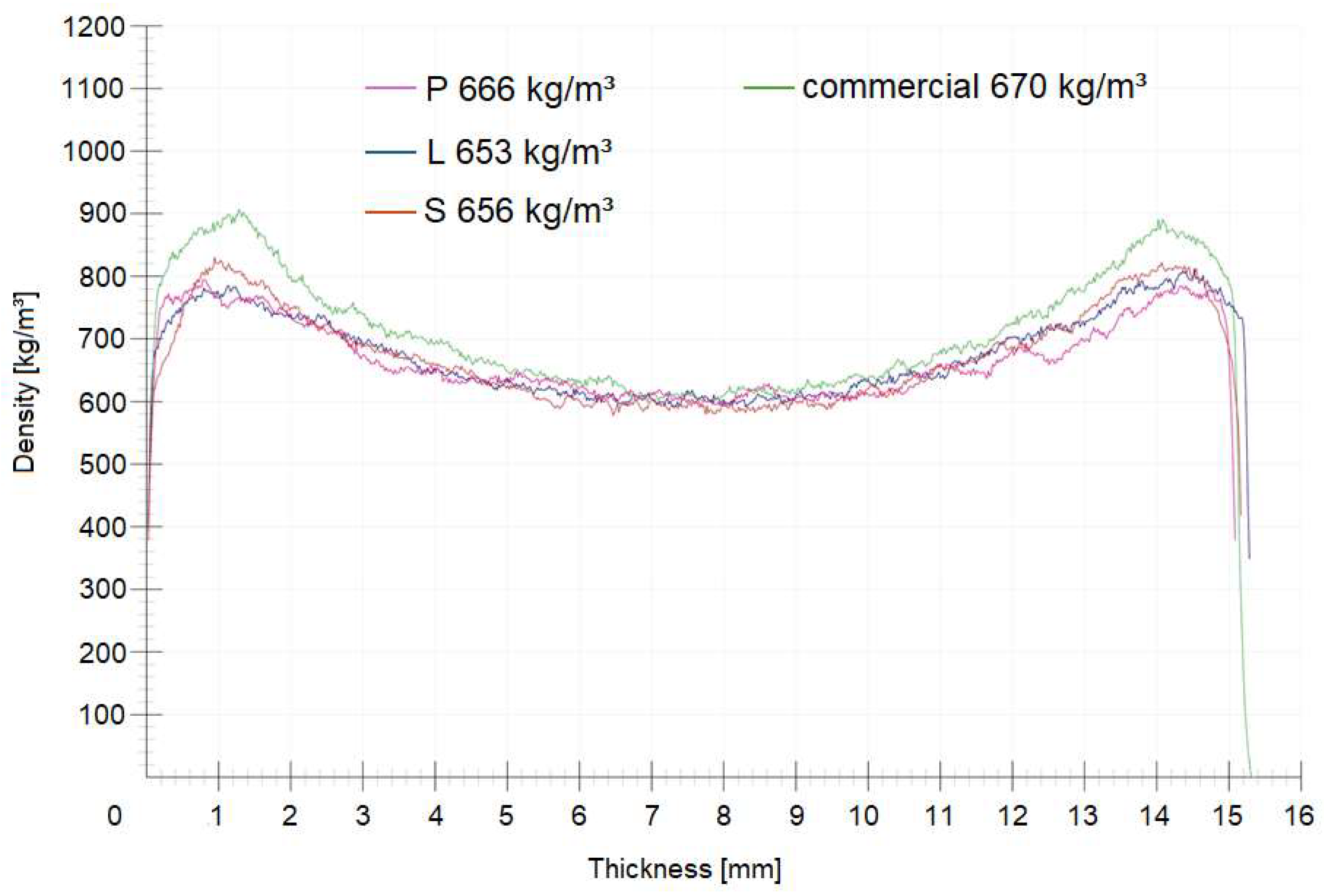
All the particleboards (one of each kind) were three-layer boards with a nominal thickness of 15 mm and corresponded to type P2 in accordance with PN-EN 312. The particleboards were pressed on a single-level hydraulic press (Simpelkamp, Krefeld, Germany) using pressing parameters: nominal pressure of 2.5 MPa, temperature of 190 °C, and pressing ratio of 10 s per one mm of nominal board thickness. The share of the surface layers was 30%. Before testing, the particleboard panels were conditioned in a climate-controlled chamber at a relative humidity of 65 ± 5% and a temperature of 20 ± 2 °C. Their density profiles were determined from cross-sectional profiles using the GreCon DAX (Fagus-GreCon Greten GmbH & Co. KG, Alfeld (Leine), Germany) laboratory density profile measuring system. The profiles of average board density are presented in Figure 1.
An investigation into the energy consumption of the drilling process was conducted utilizing a PQ-box 150 (A:Eberle, Nürnberg, Germany) energy quality analyzer. The analyzer was connected to the Felder machine tool.
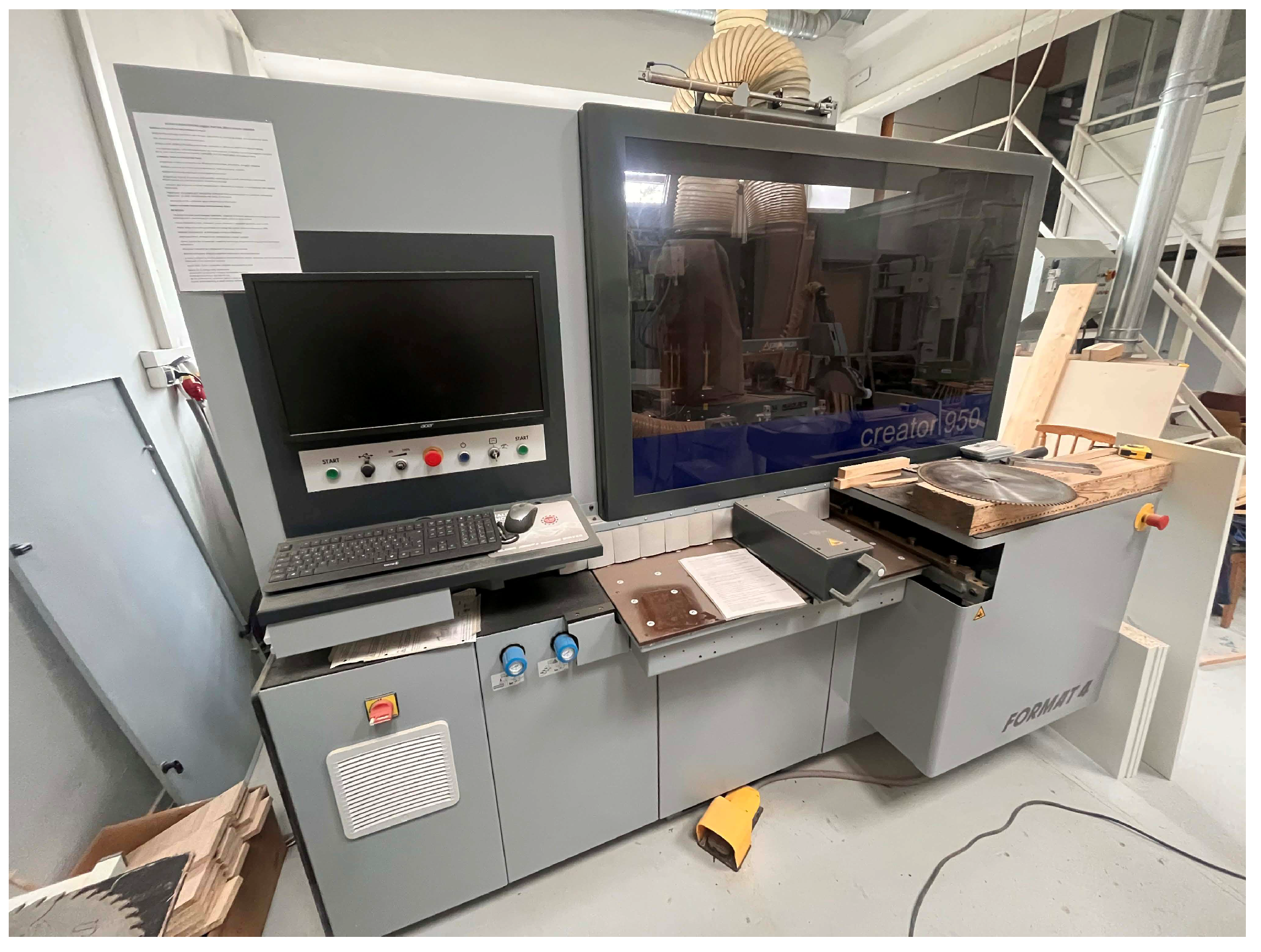
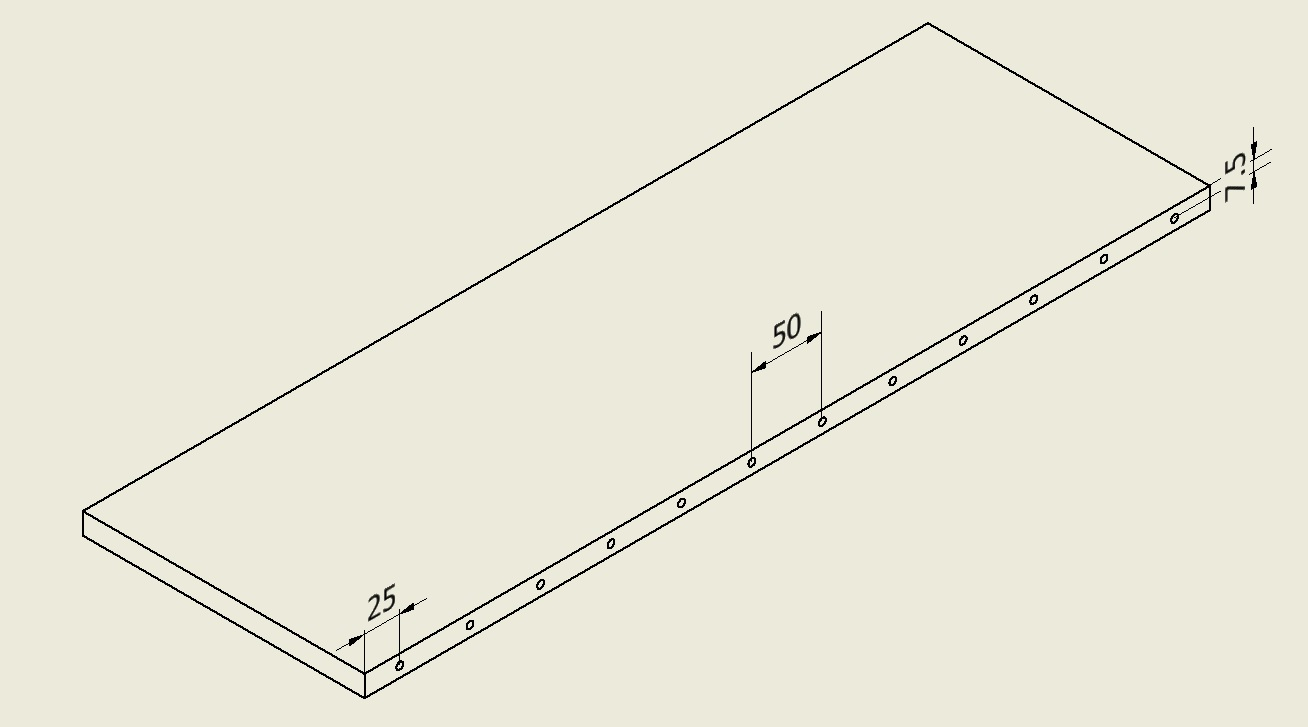
Programs were developed for the CNC Creator 950 by Felder machine tool presented in Figure 2 and drilling was performed according to the specified parameters. The drilling process involved drilling 12 holes with a 5 mm diameter, 50 mm spacing, and 25 mm depth once per board. The holes were drilled into a narrow section of the plate, halfway through its thickness. The location of the drill holes is shown schematically in Figure 3.
The drilling process was conducted using Leitz HW-massiv/D5/NL35/S10 × 27/GL70 drill bits. The tests were carried out at feed rates of 0.2, 2, and 20 mm/min and a constant rotational speed of 6000 rpm.
Energy consumption tests were carried out for each of the three materials. These tests were carried out in two stages. In the initial stage, energy consumption was determined. At the same time, the machine executed a predetermined machining cycle without contacting the material (to ascertain the machine’s energy consumption without accounting for the energy required for actual cutting), denoted E0max. In the subsequent stage, the material under investigation was fully machined, during which energy consumption (Emax) was measured. The results obtained with the energy analyzer in the first and second stages were used to calculate the energy consumed to produce one hole in each plate-speed variant (Ep). The energy consumption during wood material cutting was directly measured. By combining these measurements with the volume (V) of the resulting hole, the specific cutting work (SCW) was calculated from the following equation. The results obtained in this way could be used to calculate the actual cutting energy during the connection and the total energy required to make the joint. The total energy consumption (Ep) to make the joint can be calculated from Equation (1):
E p = E m a x 12 [ W h ]
  • Emax—total energy consumption for executing the machining program for all holes to make a joint [Wh].
The specific cutting work (SCW) was calculated based on Equation (2):
S C W = E j m a x E 0 m a x n = 1 i V n [ J / m m 3 ]
  • Ejmax—total energy consumption during joint execution [Wh];
  • E0max—total energy consumption during the zero test [Wh];
  • Vn—volume of holes needed to make the connection;
  • i—number of holes depending on the connection;
  • j—test’s number.
A Welch two-sample t-test was performed on the SCW data, to see if the SCW varies in the same proportions for different plate types. A series of calculations was conducted to determine whether the total energy and SCW change in the same proportions across the different types of board.

3. Results

Emax values are presented in Table 1 for various feed speed parameters and particleboard variants differing in the raw material used for production (P, L, S). Comparing the results across these categories shows significant differences. For P the Emax values are 25.17 Wh for a feed rate of 0.2, 8.16 Wh for a feed rate of 2, and 7.15 Wh for a feed rate of 20. A downward trend is evident; as the feed rate increases, the Emax value decreases, suggesting that higher feed rates lead to lower maximum energy consumption. A similar trend can be observed for L, where Emax is 25.76 Wh at a feed rate of 0.2, 8.09 Wh at 2, and 7.06 Wh at 20. These values are close to those in the P column, though slightly higher for the lower feed rate and marginally lower for the higher feed rates. For S, the Emax values also decrease with increasing feed rate: 26.24 Wh at 0.2, 8.22 Wh at 2, and 6.98 Wh at 20. This is the highest value for a low feed rate compared to P and L, but at higher feed rates, the trend remains similar: energy consumption decreases. The highest Emax values appear in the particleboard category, where energy consumption is significantly higher. For a 0.2 feed rate, Emax reaches 68.92 Wh, which is substantially greater than in other cases. At a feed rate of 2, it is 23.80 Wh, and at 20, it is 18.81 Wh.
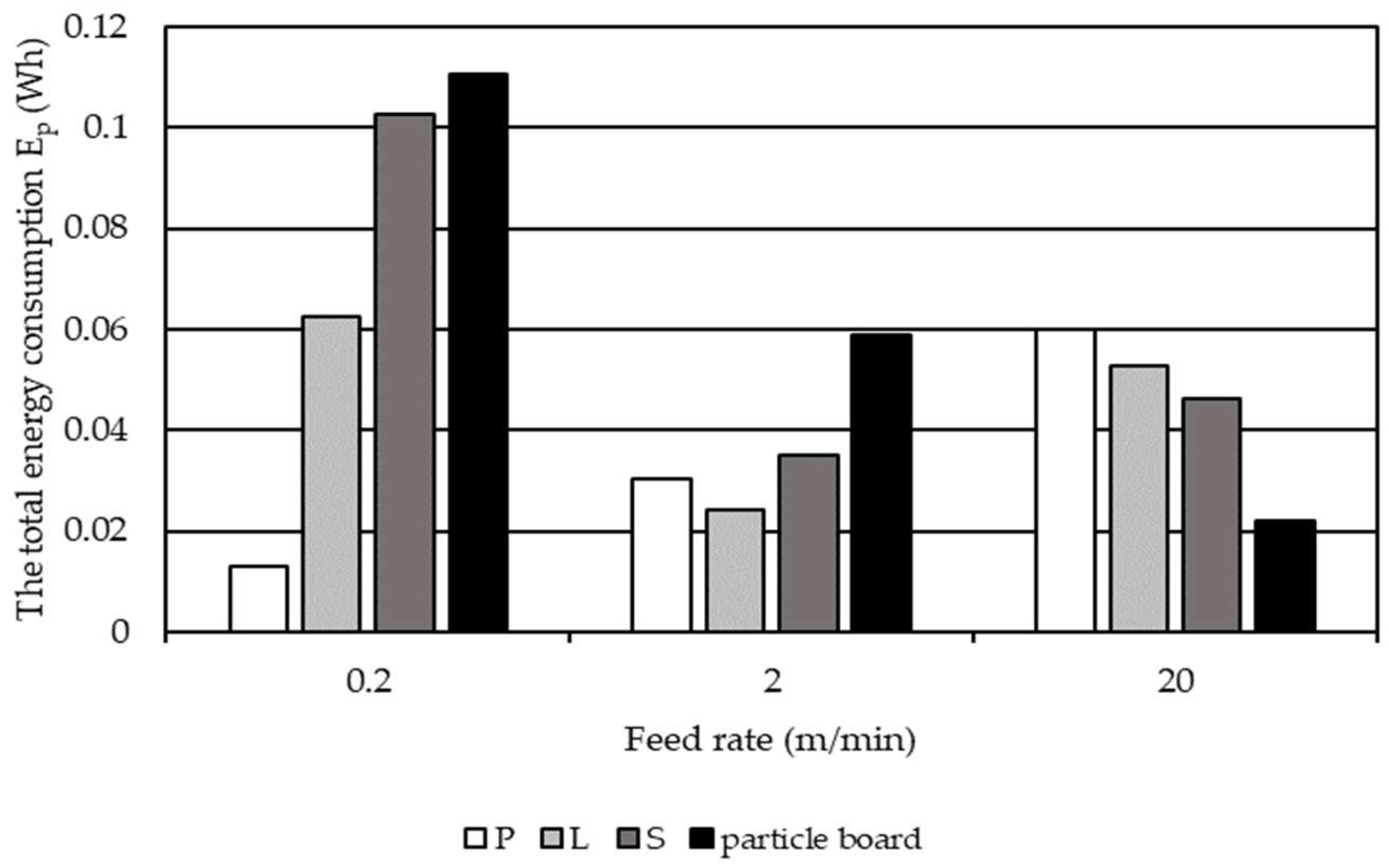
In summary, in all cases, an increase in feed rate leads to a decrease in Emax, which may be due to energy dissipation at higher machining speeds. The highest energy values are for commercial particleboard, indicating that it requires significantly more energy to process than the other materials. Differences between P, L, and S are minor; however, S shows a slightly higher value at low feed rates, suggesting better energy efficiency under these conditions; see Figure 4.
It is evident that at the lowest feed rate (0.2 m/min), SCW reaches its maximum values, particularly for commercial particleboard (16.20 J/mm3), while the minimum value is observed for P (1.15 J/mm3). The mean SCW at this feed rate equals 7.97 J/mm3, indicating the highest unit energy demand at the reduced feed rate. At a feed rate of 2 m/min, SCW decreases substantially, with a mean value of 4.14 J/mm3. The lowest SCW is recorded for L (2.13 J/mm3), whereas the highest remains for commercial particleboard (8.66 J/mm3). At 20 m/min, SCW reaches an average of 4.30 J/mm3. The lowest value is obtained for commercial particleboard (3.21 J/mm3), while P again exhibits the highest SCW (5.28 J/mm3). Welch’s t-tests were conducted to compare the SCW variable between three groups—L, P and S—and the commercial particleboard. The results indicated no statistically significant differences between the groups, as all p-values were greater than 0.05, suggesting that the observed differences in mean SCW values may be attributed to random variation. The comparison between groups L and P (t = 0.66641, p = 0.5427) showed no significant differences, with the confidence interval including zero. Similar results were obtained for the comparisons between L and S (t = −0.63144, p = 0.5713) and between P and S (t = −1.078, p = 0.3506), where the confidence intervals also included zero, indicating no statistically significant differences among the analyzed groups.
The statistical comparison between group L and commercial particleboard (t = −0.61926, p = 0.5829) revealed no significant differences, despite the slightly higher mean value observed for commercial particleboard. Likewise, the comparison between group p and commercial particleboard (t = −1.0045, p = 0.3882) did not demonstrate statistical significance. Similar findings were obtained for the comparison between group S and commercial particleboard (t = −0.066835, p = 0.9501), where the mean values were nearly identical, confirming the absence of statistically significant differences between these materials.

4. Discussion

The results obtained in this study demonstrate that feed rate was the dominant factor affecting the specific cutting work during drilling, whereas the influence of raw material type was comparatively limited. Increasing the feed rate led to a systematic reduction in SCW values across all analyzed boards. This trend can be explained by the shorter machining time associated with higher feed rates, which decreases the total energy consumed per drilled hole despite the increase in instantaneous power demand. Similar relationships have been reported in drilling studies on metallic and composite materials, where higher feeds increased cutting forces and power but reduced total energy consumption because of reduced process duration [22,23,28]. The present results confirm that this mechanism also applies to wood-based composites manufactured from alternative lignocellulosic resources. Conventional particleboard exhibited the highest SCW values across most machining conditions. This may be related to its greater structural heterogeneity and density variation, which can increase resistance during chip formation. In contrast, the boards produced from alternative biomass materials showed comparable or lower energy demand during drilling. These findings indicate that incorporating agricultural or forest-based residues does not negatively affect machinability in terms of energy consumption. Similar observations were reported by Wronka and Kowaluk [10], who demonstrated that particleboards manufactured with pine branch particles maintained acceptable processing performance despite changes in raw material composition. Reh et al. [11] also found that the addition of lesser-used wood species did not significantly deteriorate the machining-related properties of particleboards. The observed reduction in SCW with increasing feed rate is also consistent with studies concerning other wood-machining operations. In milling processes, higher feed rates have been associated with lower specific energy consumption because the removed material volume increases faster than the required cutting energy [35]. Comparable behavior has been reported during the sawing of wood composites and plywood, where cutting energy per unit volume decreased at higher feed speeds despite increased cutting forces. Pakuła et al. [26], investigating drilling in birch plywood, similarly observed that machining parameters had a stronger effect on energy demand than on material variability. The agreement between these studies and the present results suggests that the relationship between feed rate and machining energy is relatively universal across different wood-based materials and machining operations. An important finding is that the alternative biomass boards did not significantly differ statistically from conventional particleboard in terms of SCW. This indicates that replacing traditional wood particles with agricultural or forest residues can be implemented without increasing drilling energy requirements. From an industrial perspective, this is particularly important because drilling is one of the most frequently performed machining operations in furniture manufacturing [30]. Maintaining comparable energy demand while introducing alternative raw materials supports both production efficiency and sustainability objectives. The results also suggest that the optimization of machining parameters may have a greater impact on reducing energy consumption than modifications in board composition alone. Although raw material structure influences machinability, the process conditions primarily determine the overall energy efficiency of drilling. Therefore, when implementing alternative lignocellulosic materials in industrial particleboard production, attention should be focused not only on board formulation but also on selecting machining parameters that minimize energy consumption while maintaining required hole quality and tool life.

5. Conclusions

SCW during drilling for all the tested boards indicated improved energy efficiency at higher machining speeds. At lower feed rates, commercial particleboard showed the highest energy demand, likely due to greater structural heterogeneity and cutting resistance. In contrast, the boards manufactured from alternative lignocellulosic materials exhibited comparable or lower energy consumption, with only minor differences between the material groups. Statistical analysis confirmed that the type of raw material did not significantly affect SCW values, suggesting that machining parameters play a more important role in determining drilling energy requirements than board composition itself. The results indicate that alternative biomass-based particleboards can be used in furniture manufacturing without increasing machining energy demand, supporting the development of more sustainable and resource-efficient production systems.

Author Contributions

Conceptualization, M.P. and Z.P.; methodology, Z.P., M.P. and B.P.; software, B.P.; validation, K.W., M.P. and Z.P.; formal analysis, B.P. and M.P.; investigation, M.P. and B.P.; resources, M.P.; data curation, Z.P.; writing—original draft preparation, B.P.; writing—review and editing, B.P.; visualization, M.P.; supervision, T.R.; project administration, T.R.; funding acquisition, T.R. All authors have read and agreed to the published version of the manuscript.

Funding

This research received no external funding.

Data Availability Statement

The original contributions presented in the study are included in the article; further inquiries can be directed to the corresponding author.

Conflicts of Interest

The authors declare no conflicts of interest.

References

  1. FAO. FAOSTAT: Forestry Production and Trade. Available online: https://www.fao.org/faostat/en/#data/FO (accessed on 20 August 2025).
  2. Lee, S.H.; Lum, W.C.; Boon, J.G.; Kristak, L.; Antov, P.; Pędzik, M.; Rogoziński, T.; Taghiyari, H.R.; Lubis, M.A.R.; Fatriasari, W.; et al. Particleboard from Agricultural Biomass and Recycled Wood Waste: A Review. J. Mater. Res. Technol. 2022, 20, 4630–4658. [Google Scholar] [CrossRef] [Scilit]
  3. Garcia, R.; Calvez, I.; Koubaa, A.; Landry, V.; Cloutier, A. Sustainability, Circularity, and Innovation in Wood-Based Panel Manufacturing in the 2020s: Opportunities and Challenges. Curr. For. Rep. 2024, 10, 420–441. [Google Scholar] [CrossRef] [Scilit] [PubMed]
  4. Mensah, P.; Govina, J.; Owusu-Asante, J.O.; Seidu, H.; Rodolfo Junior, F.; Paula, E.A.D.O.; Pedrosa, T.D.; Melo, R.R.D. Durability and Resistance of Eco-Friendly Particleboards Produced from Agroforestry Residues. Matér. Rio Jan. 2023, 28, e20230027. [Google Scholar] [CrossRef] [Scilit]
  5. Nguyen, D.L.; Luedtke, J.; Nopens, M.; Krause, A. Production of Wood-Based Panel from Recycled Wood Resource: A Literature Review. Eur. J. Wood Wood Prod. 2023, 81, 557–570. [Google Scholar] [CrossRef] [Scilit]
  6. Yang, S.; Li, M.; Wang, Y.; Liu, X.; Qing, Y.; Li, X.; Wu, Y.; Liu, M.; Zhang, X. Industrial-Scale Manufacturing of Particleboards Using Agricultural Waste Camellia Oleifera Shells. Constr. Build. Mater. 2024, 424, 135922. [Google Scholar] [CrossRef] [Scilit]
  7. Ikubanni, P.P.; Adeleke, A.A.; Adekanye, T.A.; Aladegboye, O.J.; Agboola, O.O.; Ogunsemi, B.T. Particleboard from Biomass Wastes: A Review of Production Techniques, Properties, and Future Trends. Res. Eng. Struct. Mater. 2024, 11, 713–740. [Google Scholar] [CrossRef] [Scilit]
  8. Hýsková, P.; Hýsek, Š.; Schönfelder, O.; Šedivka, P.; Lexa, M.; Jarský, V. Utilization of Agricultural Rests: Straw-Based Composite Panels Made from Enzymatic Modified Wheat and Rapeseed Straw. Ind. Crops Prod. 2020, 144, 112067. [Google Scholar] [CrossRef] [Scilit]
  9. Okeke, F.O.; Ahmed, A.; Imam, A.; Hassanin, H. Study on Agricultural Waste Utilization in Sustainable Particleboard Production. E3S Web Conf. 2024, 563, 02007. [Google Scholar] [CrossRef] [Scilit]
  10. Uemura Silva, V.; Nascimento, M.F.; Resende Oliveira, P.; Panzera, T.H.; Rezende, M.O.; Silva, D.A.L.; Borges De Moura Aquino, V.; Rocco Lahr, F.A.; Christoforo, A.L. Circular vs. Linear Economy of Building Materials: A Case Study for Particleboards Made of Recycled Wood and Biopolymer vs. Conventional Particleboards. Constr. Build. Mater. 2021, 285, 122906. [Google Scholar] [CrossRef] [Scilit]
  11. Faraca, G.; Tonini, D.; Astrup, T.F. Dynamic Accounting of Greenhouse Gas Emissions from Cascading Utilisation of Wood Waste. Sci. Total Environ. 2019, 651, 2689–2700. [Google Scholar] [CrossRef] [Scilit]
  12. Rossi, L.; Miccio, L.A.; Ciannamea, E.M.; Stefani, P.M. From Agricultural Residues to Sustainable Boards: Complex Network Analysis of Binderless Composites. Polymers 2025, 17, 3082. [Google Scholar] [CrossRef] [Scilit] [PubMed]
  13. Wronka, A.; Kowaluk, G. Upcycling Different Particle Sizes and Contents of Pine Branches into Particleboard. Polymers 2022, 14, 4559. [Google Scholar] [CrossRef] [Scilit]
  14. Reh, R.; Izdinsky, J.; Hrusovsky, D.; Kral, P.; Pipiska, T.; Jopek, M. Usability of Particles Made from Lesser-Used European Wood Species Mixed with Spruce Particles in the Particleboard Core Layer. Polymers 2025, 17, 1291. [Google Scholar] [CrossRef] [Scilit] [PubMed]
  15. Missiatto Gavioli, L.; Lopes Silva, D.A.; Bueno, C.; Rossignolo, J.A. Life Cycle Assessment as a Circular Economy Strategy to Select Eco-Efficient Raw Materials for Particleboard Production. Resour. Conserv. Recycl. 2025, 212, 107921. [Google Scholar] [CrossRef] [Scilit]
  16. Bais-Moleman, A.L.; Sikkema, R.; Vis, M.; Reumerman, P.; Theurl, M.C.; Erb, K.-H. Assessing Wood Use Efficiency and Greenhouse Gas Emissions of Wood Product Cascading in the European Union. J. Clean. Prod. 2018, 172, 3942–3954. [Google Scholar] [CrossRef] [Scilit]
  17. Besserer, A.; Troilo, S.; Girods, P.; Rogaume, Y.; Brosse, N. Cascading Recycling of Wood Waste: A Review. Polymers 2021, 13, 1752. [Google Scholar] [CrossRef] [Scilit]
  18. Pra, A.; Masiero, M.; Barreiro, S.; Tomé, M.; Martinez De Arano, I.; Orradre, G.; Onaindia, A.; Brotto, L.; Pettenella, D. Forest Plantations in Southwestern Europe: A Comparative Trend Analysis on Investment Returns, Markets and Policies. For. Policy Econ. 2019, 109, 102000. [Google Scholar] [CrossRef] [Scilit]
  19. Gava, M.; Müzel, S.D.; De Lima, L.R.; Barbosa, J.C.; Garcia, J.N.; Ferreira, B.S.; Servolo Filho, H.J.; Bernardes, M.S.; De Araujo, V.A. Production of Particleboards from Hevea Brasiliensis Clones and Castor Oil-Based Polyurethane Resin. BioResources 2015, 10, 6896–6905. [Google Scholar] [CrossRef] [Scilit]
  20. Sakinah Mohamed Tamat, N.; Hazim Mohamad Amini, M.; Hermawan, A.; Fatimah Mhd Ramle, S.; Suriyani Faliq Adeeba Wan Ibrahim, W.; Mohd Nazri Wan Abdul Rahman, W. Performance of Particleboard from Fast-Growing Species. Mater. Today Proc. 2023, S2214785323049702. [Google Scholar] [CrossRef] [Scilit]
  21. Rahman, W.M.N.W.A.; Yatim, A.A.M.; Zlan, A.A.M.; Kasim, J.; Yunus, N.Y.M. Effects of the Resin Content and Particle Size on the Properties of Particleboard Made of Neolamarckia and Leucaena Particles. BioResources 2019, 14, 6079–6087. [Google Scholar] [CrossRef] [Scilit]
  22. Karlinasari, L.; Lestari, A.T.; Priadi, T. Evaluation of Surface Roughness and Wettability of Heat-Treated, Fast-Growing Tropical Wood Species Sengon (Paraserianthes falcataria (L.) I.C.Nielsen), Jabon (Anthocephalus cadamba (Roxb.) Miq), and Acacia (Acacia mangium Willd.). Int. Wood Prod. J. 2018, 9, 142–148. [Google Scholar] [CrossRef] [Scilit]
  23. Gomes, R.M.; Gonçalves Tibiriçá, A.C.; Franco De Carvalho, J.M.; Nalon, G.H.; Pedroti, L.G.; Oliveira De Paula, M. Wood Waste Quantification from the Furniture Industry in Ubá (Brazil) and Its Reuse Prospects in Civil Construction. Front. Built Environ. 2025, 11, 1623281. [Google Scholar] [CrossRef] [Scilit]
  24. Brito, F.M.S.; Bortoletto Júnior, G.; Paes, J.B.; Belini, U.L.; Tomazello-Filho, M. Technological Characterization of Particleboards Made with Sugarcane Bagasse and Bamboo Culm Particles. Constr. Build. Mater. 2020, 262, 120501. [Google Scholar] [CrossRef] [Scilit]
  25. Engehausen, N.; Benthien, J.T.; Lüdtke, J. Influence of Particle Size on the Mechanical Properties of Single-Layer Particleboards. Fibers 2024, 12, 32. [Google Scholar] [CrossRef] [Scilit]
  26. Kariuki, S.W.; Wachira, J.; Kawira, M.; Murithi, G. Crop Residues Used as Lignocellulose Materials for Particleboards Formulation. Heliyon 2020, 6, e05025. [Google Scholar] [CrossRef] [Scilit]
  27. Choupani Chaydarreh, K.; Lin, X.; Guan, L.; Hu, C. Interaction between Particle Size and Mixing Ratio on Porosity and Properties of Tea Oil Camellia (Camellia oleifera Abel.) Shells-Based Particleboard. J. Wood Sci. 2022, 68, 43. [Google Scholar] [CrossRef] [Scilit]
  28. Trzepieciński, T.; Szwajka, K.; Zielińska-Szwajka, J.; Szewczyk, M. Current Trends in Monitoring and Analysis of Tool Wear and Delamination in Wood-Based Panels Drilling. Machines 2025, 13, 249. [Google Scholar] [CrossRef] [Scilit]
  29. Alves, G.A.; Rebeyka, C.J.; Da Costa, D.D. Energy Efficiency and Consumption in Drilling: A Review. Int. J. Adv. Manuf. Technol. 2025, 141, 2423–2445. [Google Scholar] [CrossRef] [Scilit]
  30. Teimouri, R.; Amini, S.; Lotfi, M.; Alinaghian, M. Sustainable Drilling Process of 1045 Steel Plates Regarding Minimum Energy Consumption and Desired Work Quality. Int. J. Lightweight Mater. Manuf. 2019, 2, 397–406. [Google Scholar] [CrossRef] [Scilit]
  31. Arnič, D.; Krajnc, L.; Gričar, J.; Prislan, P. Relationships Between Wood-Anatomical Features and Resistance Drilling Density in Norway Spruce and European Beech. Front. Plant Sci. 2022, 13, 872950. [Google Scholar] [CrossRef] [Scilit] [PubMed]
  32. Szwajka, K.; Zielińska-Szwajka, J.; Trzepieciński, T. Experimental Analysis of Smart Drilling for the Furniture Industry in the Era of Industry 4.0. Materials 2024, 17, 2033. [Google Scholar] [CrossRef] [Scilit] [PubMed]
  33. Pakuła, W.; Prałat, B.; Potok, Z.; Wiaderek, K.; Rogoziński, T. Energy Consumption for Furniture Joints during Drilling in Birch Plywood. Polymers 2024, 16, 1045. [Google Scholar] [CrossRef] [Scilit]
  34. Bedelean, B.; Ispas, M.; Răcășan, S. Optimizing Wood Composite Drilling with Artificial Neural Network and Response Surface Methodology. Forests 2024, 15, 1600. [Google Scholar] [CrossRef] [Scilit]
  35. Pałubicki, B. Cutting Forces in Peripheral Up-Milling of Particleboard. Materials 2021, 14, 2208. [Google Scholar] [CrossRef] [Scilit] [PubMed]
Figure 1. The profiles of average particleboard density.
Forests 17 00695 g001
Figure 2. The CNC Creator 950 by Felder.
Forests 17 00695 g002
Figure 3. Drilling layout for boards.
Forests 17 00695 g003
Figure 4. Differences in total energy consumption between P, L, S and commercial particleboard.
Forests 17 00695 g004
Table 1. The collective results of the energy consumption and SCW survey.
ParticleboardFeed Rate [m/min]Emax [Wh]Emax − E0max [Wh]Ep [Wh]SCW [J/mm3]
commercial0.268.922.200.1116.20
223.801.180.118.66
2018.810.430.0213.21
P0.225.170.150.011.15
28.160.360.032.67
207.150.720.065.28
L0.225.760.740.065.49
28.090.290.022.13
207.060.630.054.63
S0.226.241.230.109.04
28.220.420.033.10
206.980.550.044.08
Disclaimer/Publisher’s Note: The statements, opinions and data contained in all publications are solely those of the individual author(s) and contributor(s) and not of MDPI and/or the editor(s). MDPI and/or the editor(s) disclaim responsibility for any injury to people or property resulting from any ideas, methods, instructions or products referred to in the content.