1. Introduction
Forests encompass approximately 310 million hectares across the United States, more than one-third of the nation’s land area [
1]. This represents the fourth largest forested land base globally [
2]. The National Forest System (NFS), administered by the U.S. Department of Agriculture (USDA) Forest Service, accounts for about one-fifth of the nation’s total forest area, approximately 59 million hectares, and encompasses 35 percent of U.S. forest lands reserved from timber harvesting, an area that totals more than 11 million hectares [
1].
As with other forestlands, U.S. National Forests supply goods and services for building, expanding, and sustaining human communities [
2]. The first U.S. National Forests were created in the late 19th and early 20th centuries with a focus on ensuring a sustainable timber supply and on watershed protection [
3,
4]. In more recent decades, U.S. federal law has expanded the administrative scope of the 155 National Forests to include ecosystem management and collaborative stewardship [
3]. The Forest and Rangeland Renewable Resources Act of 1974, for example, requires that forests within the NFS be “maintained in appropriate forest cover … to secure the maximum benefits of multiple use sustained yield management in accordance with land management plans” [
1]. The management of U.S. National Forests is complex because they are coupled human and natural systems that, as specified in federal regulations, must accommodate multiple uses including the extraction of timber, production of fossil fuels and minerals, public recreation, and the preservation of biodiversity, clean air, water, and soils [
5,
6,
7].
Forests in the United States, as elsewhere, face many threats to their sustainability, including more intense and frequent wildfires [
8,
9], uncharacteristically long and hot drought conditions [
10,
11], mortality and compositional changes caused by invasive insects and diseases [
12,
13], competition from non-native plant species [
14,
15], and forest fragmentation and conversion to other land uses [
16,
17]. Changing climatic conditions are intensifying the impacts of some of these threats [
18,
19,
20]. The increasing frequency and severity of such stressors are expected to diminish the ability of U.S. National Forests to provide ecosystem services and forest products [
21,
22]. In light of the potential deterioration of forest conditions across broad scales, the need to assess forest health is acute, ideally encompassing the consistent, large-scale, and long-term monitoring of key indicators of forest health status, change, and trends [
23].
Forest health indicators are central to efforts by the USDA Forest Service to assess the sustainability of U.S. forests [
2,
24,
25,
26]. To provide assessments of forest health across large areas, indicator systems often aggregate plot-level (or otherwise fine-scale) information about tree and forest conditions to landscape, regional, or national scales [
27]. In the United States, the Nationwide Forest Inventory (NFI) administered by the USDA Forest Service’s Forest Inventory and Analysis (FIA) program [
28] is a rich source of data for broad-scale, indicator-based assessments. It encompasses tens of thousands of permanent plots that are regularly inventoried using consistent protocols and are distributed in a spatially balanced manner across all forested lands and ownerships [
29]. These NFI data can inform the development of numerous forest health indicators, including those associated with species diversity and structural diversity [
30,
31]; forest density, biomass, and carbon [
32,
33]; forest tree regeneration [
34,
35]; and invasive plant species [
36,
37].
Ownership may be the most important factor influencing forest management and protection [
38]. Previous research has found significant differences in forest health indicators based on land ownership, generally with an emphasis on comparing protected areas with unprotected areas. For example, National Parks in the eastern United States have forests with greater live tree basal area, a larger volume of coarse woody debris, and greater proportions of late-successional tree species than nearby forests, while also exhibiting lower growth and mortality rates [
39]. An analysis of protected forests in the eastern United States found that 18 percent of National Park forests were invaded by harmful non-native plants, compared to 36 percent for de facto protected federal land (including National Forests) and 46 percent and 60 percent, respectively, for unprotected nonfamily owned and family-owned forest [
40]. Meanwhile, protected areas globally preserve greater biodiversity than unprotected areas [
41,
42], a trend also demonstrated for tree diversity between National Parks and surrounding forests in the northeastern United States [
43]. Such comparisons between forests in and outside of conservation ownership can highlight the direct and indirect impacts of forest management activities and identify aspects that are working or could use improvement [
39].
Thus far, no work has comprehensively assessed the degree to which forest health indicators differ between U.S. National Forests and neighboring forests under other ownership. Such an analysis is valuable given the extensive forest area under National Forest management [
1] and the USDA Forest Service mission to sustain the health, diversity, and productivity of forests in the United States for present and future generations [
2]. We used U.S. NFI data to test four hypotheses: (1) Forests within the National Forest System have higher biodiversity (as measured by species and structural diversity) than neighboring forests in other ownerships; (2) Forests in the NFS are denser and encompass more biomass than neighboring forests; (3) NFS forests are experiencing more regeneration than neighboring forests; and (4) NFS forests are less invaded by non-native invasive plants than neighboring forests. We tested these hypotheses for forests across the conterminous 48 States, within four regions, and across 22 common forest type groups. Additionally, we used NFI data to quantify mean plot-level indicators of forest health by NFS unit and region.
2. Materials and Methods
The FIA program’s NFI provides unbiased estimates of forest characteristics across ownerships in all 50 States. The NFI is built on a probabilistic sample design of one plot per 2428 ha, with plot locations selected using a national lattice of regular hexagons [
28]. Field crews visit accessible and non-hazardous plot locations determined to be forested (≥0.4 ha in area, 37 m wide, and with ≥10% tree canopy cover) using remotely sensed data [
44]. Each plot represents a 0.405 ha sample area and encompasses four 7.31 m radius subplots arranged at the vertices and center of an equilateral triangle. Field crews record diameter, height and species for every tree on each subplot with a diameter at breast height (DBH) ≥ 12.7 cm. Saplings (trees with DBH ≥2.54 cm and <12.7 cm) are also tallied and measured in a single 2.07 m-radius microplot within each subplot. Seedlings (woody stems with a DBH <2.54 cm and height ≥30.48 cm if a hardwood or a height of ≥15.24 cm if a conifer [
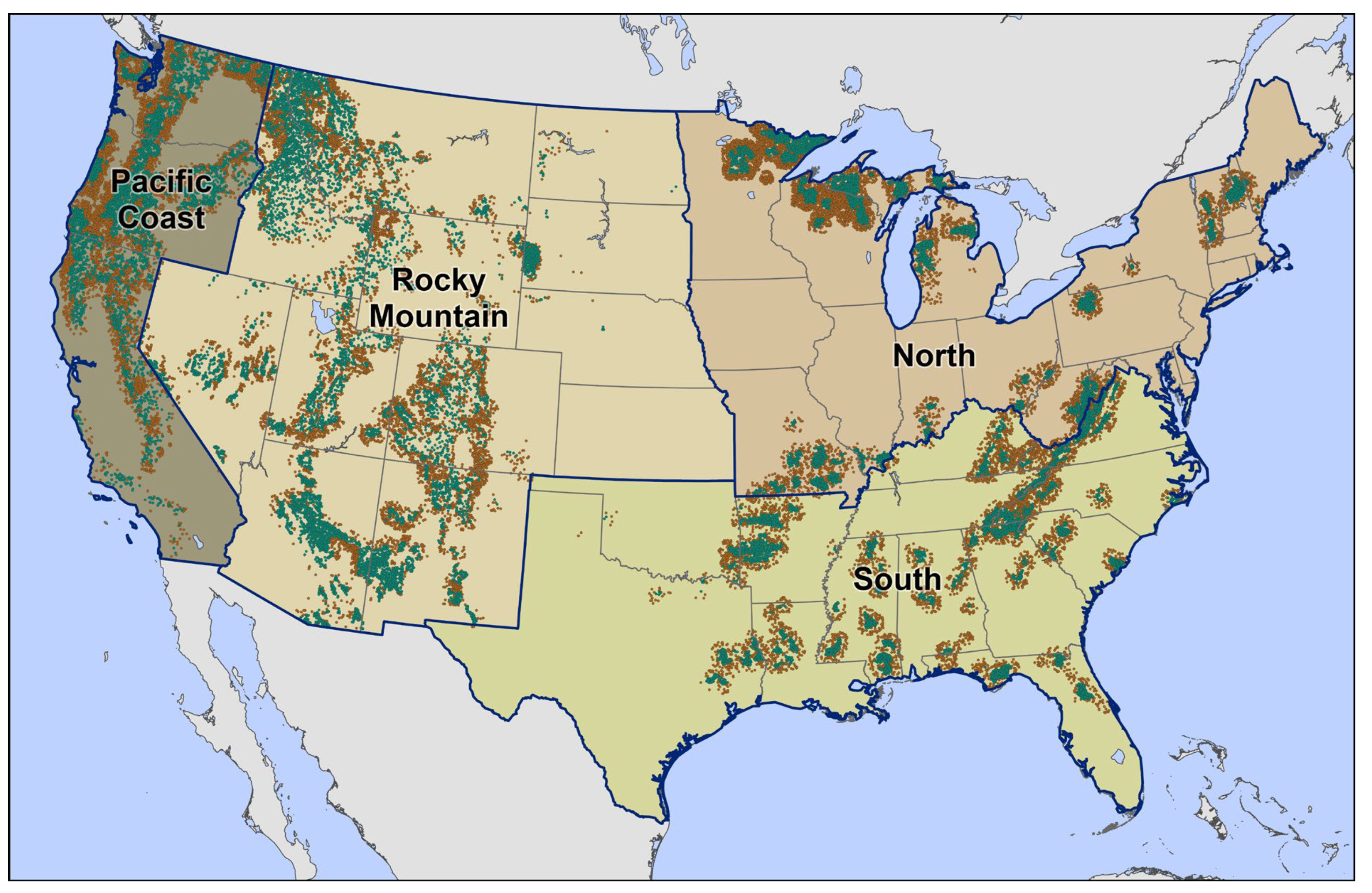
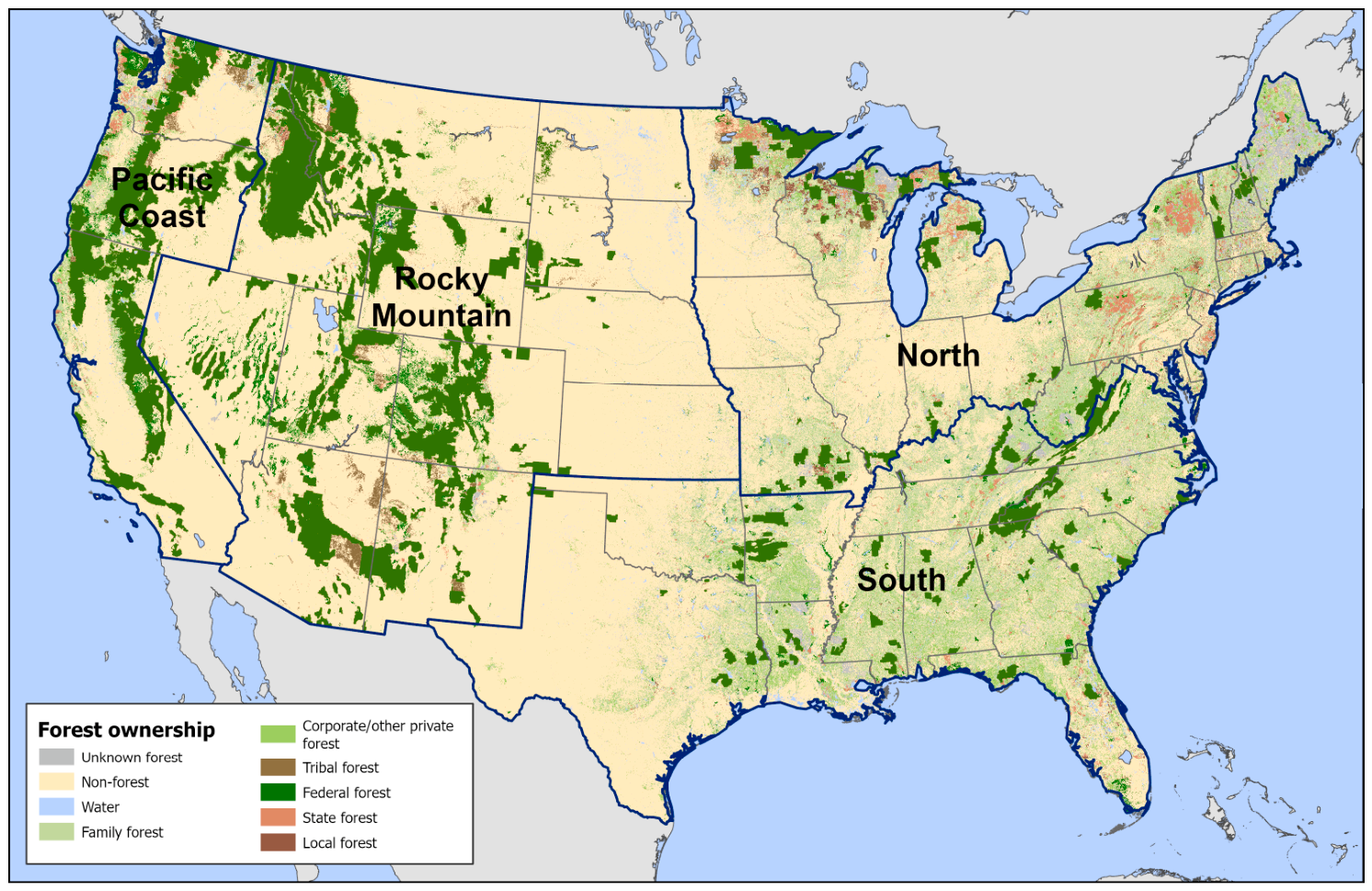
44]) are counted by species within the microplots. Crews visit plots typically every 5–7 years in the eastern United States and every 10 years in the West, with plot data organized into discrete evaluation periods that differ by State. Attributes recorded for plots, or for portions of plots, include ownership class (private, state and local, National Forest, and other federal) and forest type group, which is determined based on tree species composition. Our initial dataset, from which we selected subsets of plots for analysis, incorporated 35,016 NFI plots located within U.S. National Forests across the conterminous 48 States and 35,336 plots located on other land ownerships within 25 km of a National Forest boundary (
Figure 1) to sample forests in geographically and ecologically similar locations. These were selected using ArcGIS Pro version 3.3.1 [
45]. We conducted all subsequent analyses using R version 4.5.1 [
46].
We used recent plot-level NFI tree data collected from 2010 to 2022 in eastern States (mostly from 2015 to 2021) and from 2007 to 2021 in western States (mostly from 2010 to 2019) to compile a set of forest health indicators in three categories: biodiversity, density and biomass, and regeneration. The biodiversity category encompassed metrics of tree species diversity at the plot level (tree species richness and Shannon evenness) and structural diversity (height and diameter class richness and Shannon diversity, calculated using data on both native trees and relatively uncommon non-native trees). To calculate diameter diversity, we binned trees into 12.7 cm DBH classes for those with DBH up to 127 cm and into 25.4 cm classes for those with larger DBH. To calculate height diversity, we binned trees into 3.05 m height classes for those up to 30.5 m in height and into 6.1 m classes for taller trees. Diversity and evenness values were then calculated based on the number of diameter and height classes present on each plot. The tree density and biomass indicator category encompassed basal area (m
2/hectare) and biomass (metric tons/hectare). The aboveground dry biomass of wood and bark (excluding foliage) of each stem with a DBH ≥ 2.54 cm was calculated using the component ratio method, which calculates and sums the dry weight of the tree components [
47]. As an indicator of tree density, basal area incorporates both the number of trees on a plot and the sizes of those trees [
48]. The basal area and biomass metrics were calculated by scaling plot-level data to per hectare estimates [
44]. The regeneration category of forest health encompassed metrics of saplings and seedlings per hectare (sapling and seedling density), calculated by scaling micro-plot sapling and seedling data to generate area estimates.
We additionally used invasive plant species data, collected at the subplot level, for a fourth category of forest health indicators: invasion by non-native plants. This encompassed two metrics, invasive plant species richness (the number of monitored invasive plant species occurring on an NFI plot) as an indicator of invasive plant establishment [
15] and invasive percent cover (the total percent cover of all monitored invasive plants averaged across the four subplots on each NFI plot) as an indicator of invasive species dominance [
49]. Field crews estimated the subplot cover of monitored invasive plant species from regional lists of the most problematic invasive plant species defined by experts [
50]. These problematic species were defined based on their potential to cause economic or environmental damage or harm to human health [
51]. Because these lists encompass only the non-native plants currently understood to be the most problematic, our analyses did not include all non-native plant species and thus also underestimated the total abundance of non-native plants in U.S. forests. We did not assess invasive species indicators in the Pacific Coast region because invasive plant data are not collected on NFI plots anywhere in the states of Washington and Oregon, or in California outside of National Forests. Additionally, plots in the North region were inventoried for invasive plants at a lower intensity than those in the South and Rocky Mountain regions.
Before analyzing the relationship between forest health indicators and location inside or outside of a National Forests, we applied propensity score matching, a statistical matching technique that produces a control group in which the distribution of covariates is similar to that of a treatment group [
52]. Carefully preprocessing raw data in this way enables subsequent statistical tests and models that result in causal inferences that are more accurate, less biased, and less model dependent [
53]. In this process, a propensity score is a measure of the degree to which the distribution of covariates between two groups is similar; two groups with the same propensity score would have the same distribution of covariates [
54]. We used a nonparametric matching algorithm provided by the MatchIt package (version 4.7.2) [
55] to create a dataset, taken from our initial set of ~35,000 plots each inside and outside National Forests, in which plots were balanced between the groups for a set of environmental and geographic covariates that were on average initially dissimilar. At the national scale, this encompassed plot-level longitude and latitude, elevation, slope, conifer tree species importance value, site productivity, and geographic region. Conifer importance value (IV) is a measure of the degree of dominance of conifers on a plot based on the relative abundance and relative basal area encompassed by conifers compared to the total abundance and basal area of all species [
56]. Site productivity is a categorical variable measuring the relative productivity of a site for growing trees [
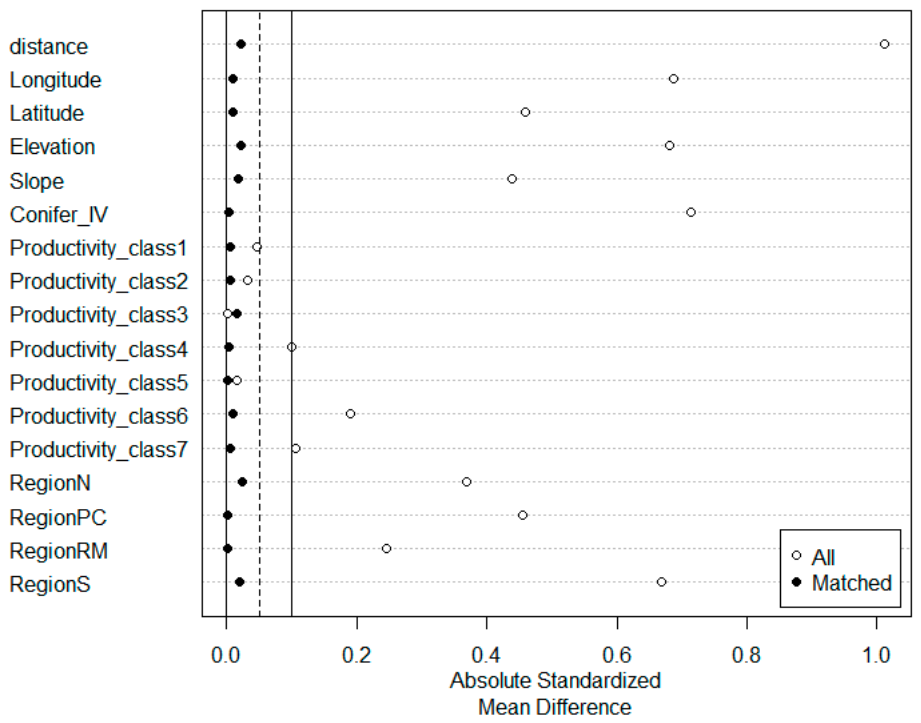
44]. Initial data analyses detected high levels of difference between plots inside and outside National Forests for these covariates (
Table A1,
Figure A1). We applied the “nearest” matching algorithm, which pairs each “treatment” sample (here, a plot in a National Forest) to the “control” sample (here, a plot outside National Forests) with the most similar propensity score, using a generalized linear model to estimate the propensity score via logistic regression. In this process, plots that did not meet a relatively strict maximum distance threshold (a caliper of 0.05) were not matched and excluded from further analyses. For our national analysis, this resulted in 20,004 plots within each analysis group with minimal covariate differences (
Table A1,
Figure A1). We repeated the propensity score matching as described above for each of four regions (
Figure 1) and within 22 common forest type groups. We excluded geographic region as a covariate when selecting plots for region-specific analyses and for analyses of forest type groups limited to a single region. We used a less strict maximum distance threshold (a caliper of 0.2) for forest type groups to ensure adequate sample sizes.
We calculated the plot-level means for each of the 12 forest health indicators inside and outside of National Forests across the conterminous states, within the four regions, and within the forest type groups (each with at least 50 NFI plots both inside and outside National Forests). To test our hypotheses that significant differences exist in forest health indicators between forests within U.S. National Forest boundaries and those in neighboring ownerships, we conducted a series of non-parametric Wilcoxon-Mann–Whitney significance tests using the stats package (version 4.5.1) in R [
46]. Specifically, we tested whether significant differences existed in the forest health indicators between plots in National Forests and plots in any other ownership (non-National Forest plots) nationally, by region, and by forest type group. For each set of analyses (i.e., nationally, within the four regions, and within the forest type groups) we then employed the FDRestimation package (version 1.0.1) [
57], using the Benjamini–Hochberg procedure [
58], to adjust the
p-values for the false discovery rate associated with multiple comparisons. We did not conduct analyses of the plant invasion indicators for the Pacific Coast region, or for forest type groups limited to this region, because these data were not available (see above). We used the effectsize package (version 1.0.2) [
59] to calculate Cohen’s D as a standardized effect size comparing the degree of difference between the groups in each of our comparisons. Cohen’s D is a measure that compares the mean difference between two groups to the pooled variability in the groups, with larger values indicating a greater effect size relative to the variation in the data [
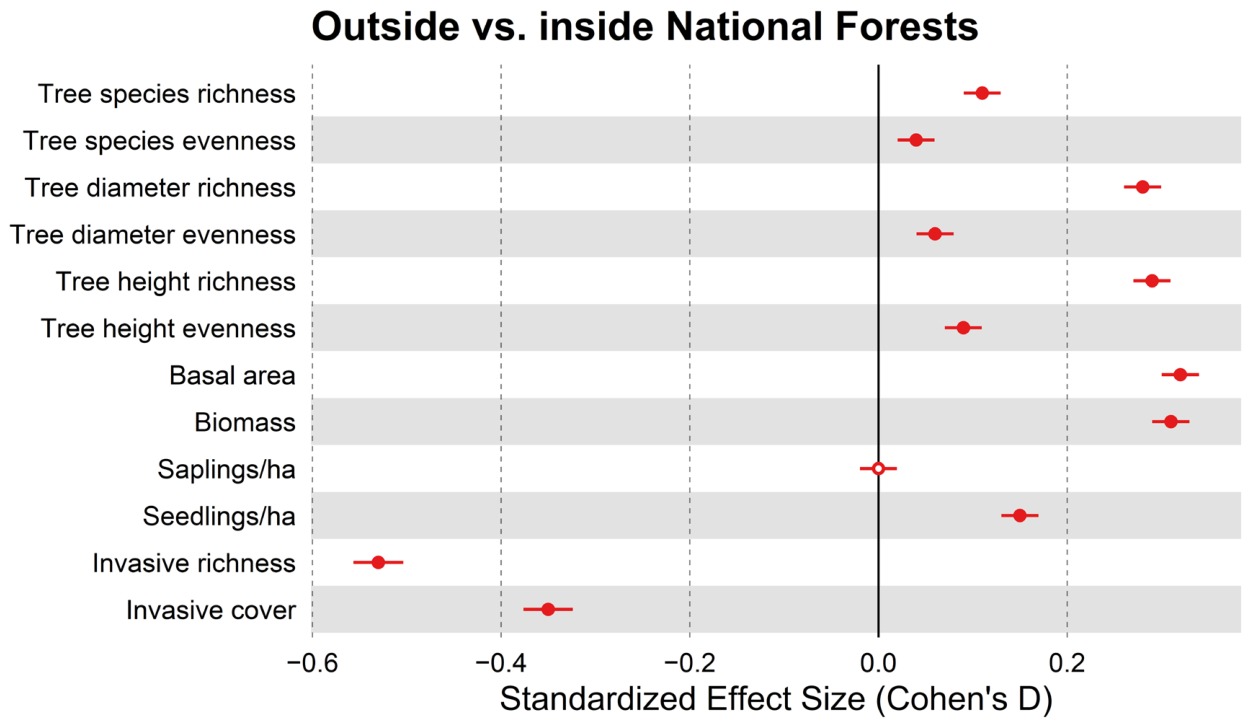
60]. It is useful for comparing effect sizes across variables because it is a unitless value. Because we calculated Cohen’s D as the mean indicator value on plots inside National Forests minus that mean indicator value for plots outside National Forests (with the difference divided by the pooled standard deviation of the two), the standardized effect sizes were positive for indicator values that were higher inside National Forests and negative for those that were higher outside. We visualized the results using the package ggforestplot (version 0.1.0) [
61]. We emphasize that the primary objective of this study was to assess the status of forest health indicators on National Forests across broad scales in comparison to neighboring forests, not to attribute these differences to ecological drivers. The application of multivariate modeling approaches could be a fruitful future research direction to achieve this goal, but this is beyond the scope of the current project.
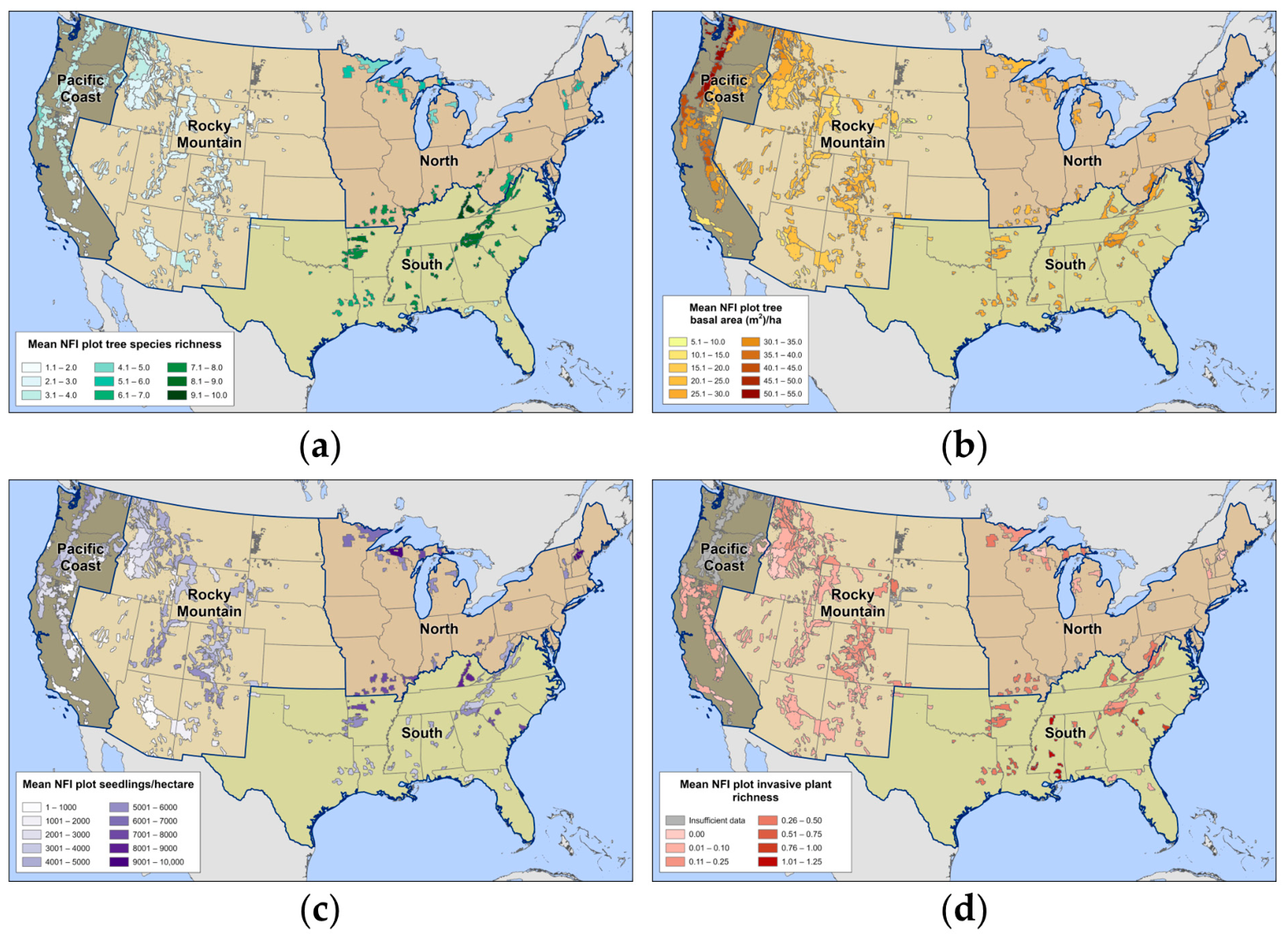
Finally, we summarized the mean plot values of the forest health indicators by National Forest System unit to visually inspect regional differences and conducted Wilcoxon–Mann–Whitney significance tests to assess regional differences in forest health indicators in NFS forests, specifically between the East (encompassing the North and South regions) and the West (encompassing the Pacific Coast and Rocky Mountain regions) and between the two regions within both the East and West.
4. Discussion
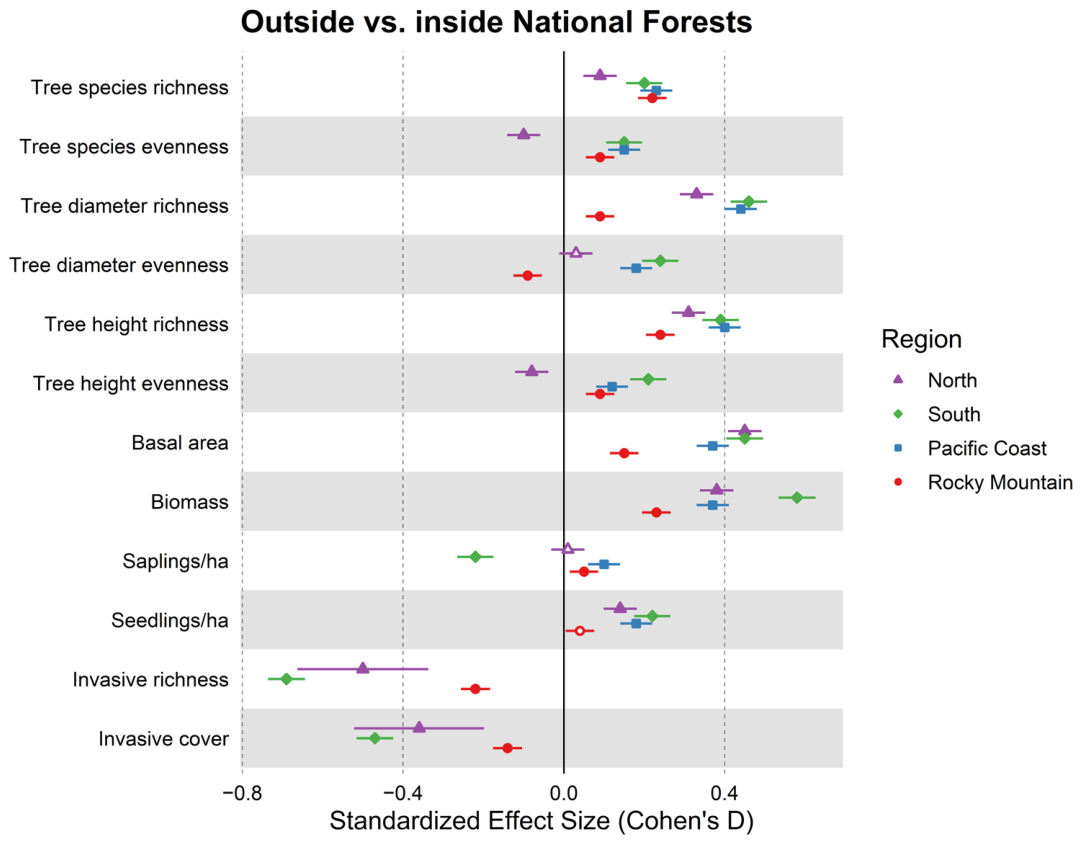
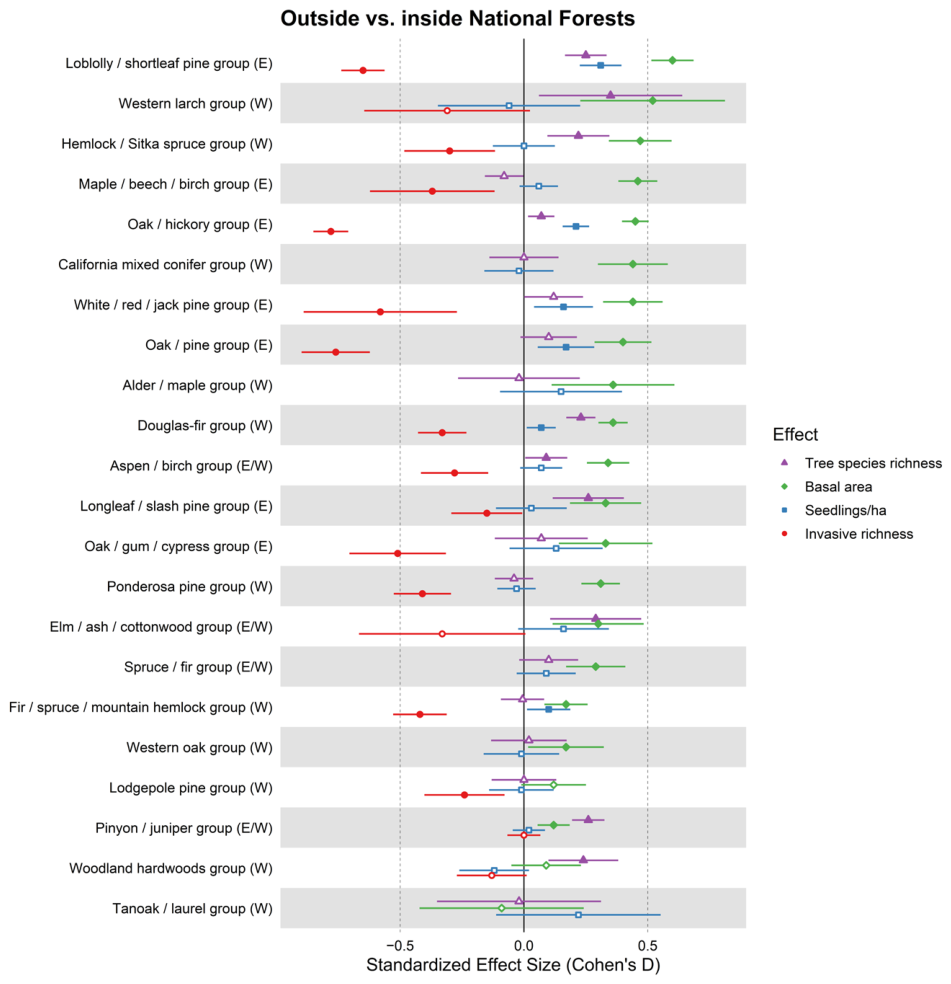
In this national-scale assessment, we tested whether plots within National Forests (1) have higher biodiversity, (2) are denser and encompass more biomass, (3) are experiencing more regeneration, and (4) are less invaded by non-native invasive plants than plots in other ownerships within 25 km of National Forest boundaries. Controlling for environment, geography and forest composition, we found that NFS forest plots had significantly greater tree species and structural diversity and evenness, basal area and biomass per hectare, and seedling density than other ownerships, and that they were less invaded by non-native plants. These findings were consistent nationally, within each of four regions, and across many forest type groups. Tree basal area, for example, was significantly higher on NFS forests across regions and for 19 of 22 forest type groups.
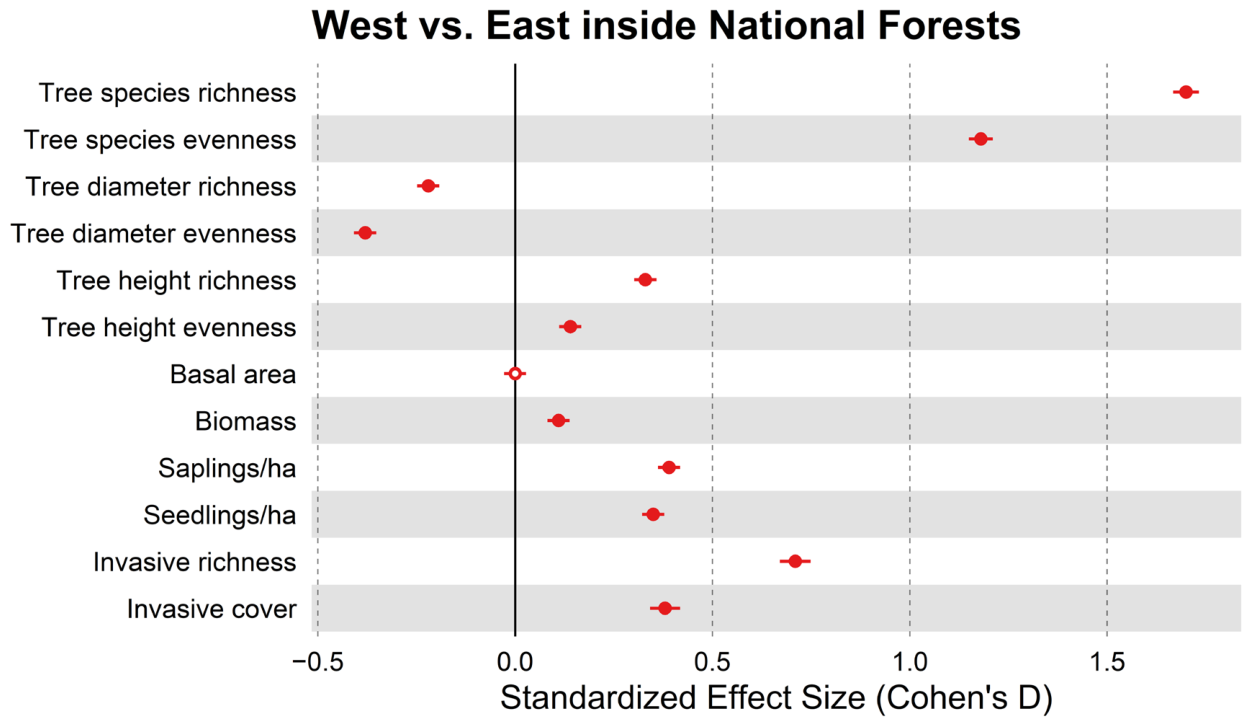
We additionally quantified strong regional differences in forest health indicators on NFS lands, particularly between the East and the West. Tree species richness and evenness, tree height class richness and evenness, biomass density, regeneration (seedling and sapling), and non-native plant invasion were all higher in eastern National Forests, while tree diameter richness and evenness were higher in western National Forests. There was no regional difference in basal area. These differences are not unexpected given the marked regional dissimilarities in floristic, climatic, and edaphic factors [
62,
63] as well as patterns in these forest health indicators across predominant regional ownerships. Eastern forests across ownerships have much higher tree species richness, particularly in the Southern Appalachian and Cumberland Plateau regions, while basal area density is considerably higher in the West, especially in the Pacific Coast states of Washington, Oregon, and California [
31]. The higher sapling and seedling density indicators in the East indicate greater recruitment than in the West. Meanwhile, higher degree of plant invasion in the East is likely associated with different forest ownership patterns than in the West [
15,
36], with a much higher proportion of privately owned forest in the East [
64] which is more likely to be invaded than publicly managed forests [
40].
It is important to note that higher values for forest health indicators do not necessarily equate to healthier forests. For example, while higher structural and tree species diversity tend to increase the resistance of forests to insect and pathogen outbreaks [
65,
66], higher forest density, as measured by total tree basal area, may counteract this effect and may in fact serve as a useful indicator for identifying landscapes, forest types, or ecosystems that may be at risk from insect and pathogen disturbances [
48]. By that measure, National Forests in all four regions (North, South, Rocky Mountain, and Pacific Coast) and in 19 of 22 forest type groups may be more vulnerable to insect and pathogen impacts than neighboring forests under other ownership. We determined that most forest health indicator values were higher for forests inside National Forest boundaries than outside them across regions, despite notable differences in the history and landscape context of NFS lands between the West and East. Indicators of plant invasion were significantly lower within National Forests. Importantly, most NFS land in the West was reserved from the public domain before European development. Thus, a higher proportion of these NFS forests are classified as old-growth or mature [
67,
68]. In the East, meanwhile, nearly all lands had been in private hands since relatively early in U.S. history. There, National Forest lands are previously private forests that were purchased by the federal government, often while highly degraded, following the enactment of the Weeks Act of 1911 [
3,
69]. As a result, western NFS lands often constitute the forest matrix with little nearby forest in other ownerships, while eastern NFS lands are typically embedded in a matrix of other land ownerships, especially private [
70,
71] (
Figure A2). Our findings thus indicate that National Forests in both the East and the West have similar indicator conditions relative to neighboring ownerships despite different land-use and management histories—a focus on restoration of degraded forests on less productive land in the East and a focus on maintaining existing forests in the West.
Like the work of Miller et al. [
39,
43], who used NFI data to compare forest health indicator values between eastern U.S. National Parks and matrix forests, our results suggest the existence of different dynamics between eastern NFS forests and neighboring forests under other ownerships. This includes higher structural complexity, higher tree species richness, greater live tree basal area, and greater density of live trees within the publicly owned forests. Structural differences in particular appear to indicate that NFS forests, like National Park forests, generally encompass the more complex forest structure typical of older forests [
39]. Indeed, NFS forests nationally tend toward maturity, predominantly being older than 60 years of age, especially in the North and the West [
1].
These differences may be the result of contrasting environmental conditions, land-use histories, and management strategies inside and outside of National Forest boundaries. While we were able to control for differences in site productivity and environmental conditions such as elevation and slope, forests inside National Forests may differ in other characteristics that we were not able to capture using currently available datasets, such as soil or hydrological conditions. Additionally, National Forests are likely to have experienced land-use histories that differed considerably from neighboring forests, where agricultural and residential development have been continuous for longer periods of time and where disturbance pressures associated with higher human population density have likely been more acute. These differences may have set the stage for greater biodiversity, density, and regeneration, in addition to less non-native plant invasion, inside National Forests. Finally, management histories for National Forests are often different from those of neighboring forests.
The management objectives of forests administered by the NFS differ from those of private landowners and other public owners such as state forests. Typically, industrial forest managers focus on timber production and land investment, while family forest owners have a variety of reasons for owning their forests, including the protection of nature, recreation, hunting, harvesting timber, and as an investment [
64,
72]. Meanwhile, public land agencies in the United States make management decisions, including timber harvest levels, with direction and input from public and private stakeholders [
73]. While National Park forests are largely protected from timber harvesting [
43], approximately 80 percent of NFS forest land (about 48 million hectares) is open to tree removals via harvests and thinning for fire management [
1]. Only about 0.2 percent of total NFS standing tree volume is removed each year, however, with half of that occurring in the Pacific Coast states; this is much less than the removals on private land, which represent 89 percent of timber harvested annually [
1]. Management objectives and strategies vary between States and federal agencies such as the USDA Forest Service in part because State forests often receive no outside funding and must be self-sustaining, which influences their management decision-making. Policy decisions governing the management of federal forests, including National Forests, can change over time, as they did during the 1990s with the Northwest Forest Plan, which shifted the management focus of federal public lands in the Pacific Northwest from timber harvesting to multiple policy objectives, including the conservation of endangered species habitat [
74,
75]. As a result of that and other policy changes, timber removals on National Forests (mostly in the West) decreased by 15 percent between 1976 and 2010, with corresponding increases in harvesting from private forests (mostly in the South) [
76,
77].
Miller et al. [
43] concluded that protection from forest harvesting for many decades is likely an important factor in explaining why forests in eastern National Parks have greater tree species diversity than matrix forests. It is possible that reductions in forest harvesting on NFS forests in recent decades may have contributed to the indicator differences we observed in our study. An additional key factor may be the policy [
7] that requires National Forest management plans to include standards or guidelines relating to the maintenance or restoration of the ecological integrity of ecosystems. While the concept of ecological integrity is complex and multifaceted [
78], maintaining the ecological integrity of a forest ecosystem requires that desired stand conditions are consistent with the ecosystem’s natural or historical range of variation in composition, structure, and function [
79]. When a forest ecosystem possesses adequate ecological integrity, and thus possesses its desired conditions, its needed management regime may be passive, allowing natural processes and disturbances to determine its characteristics rather than more direct human intervention [
80]. In other situations, more active management may be required to maintain ecological integrity. In some situations, this includes restoring degraded habitats and removing invasive species [
43]. Some forest ecosystems, such as longleaf pine savannahs in the southeastern United States, which depend on frequent low-to moderate intensity fires, require regular disturbance to maintain stand health and to support biodiversity [
81,
82]. Even mature and old-growth forests can be subject to a range of management tools across a gradient of intensities to maintain or improve their ecological integrity [
80]. On NFS lands, this includes mechanical thinning, harvesting, prescribed fire, and improvement cutting to help reduce competition among individual trees, to change fuel conditions, or to alter species composition and thus reduce the vulnerability of forests to disturbance [
83]. In areas where harvesting is the main objective and not primarily a tool for enhancing ecological integrity, moderate intensity harvesting methods, such as a medium selection or a shelterwood treatment, can result in relatively high tree species diversity as well as relatively high economic returns [
84], though there are also situations where even-aged silviculture may be better suited for maintaining ecological diversity and processes [
85].
Another meaningful management difference between National Forests and private forests (included in neighboring non-National Forest plots in our analyses) is that forest regeneration on NFS land is almost exclusively natural, with only about 4 percent planted nationally, while 13 percent of private woodlands have been planted, much of this in the Southern and Pacific Coast states [
1]. Our results indicate that natural regeneration on National Forests appears to be successful, at least to the extent that seedlings generally are being produced in greater numbers than on surrounding forests in other ownerships (where regeneration via planting may be more common).
In addition to dissimilarities in management objectives associated with ownership, the size and stability over time of public landholdings, including National Forests, are generally greater than those of private landholdings. These enable managers to establish the necessary large-scale spatial and temporal context to apply stand-level knowledge effectively [
86]. From a restoration or conservation perspective, a large-scale approach is needed to conserve or imitate the processes that create diversity at many spatial and temporal scales, across all stages of forest development [
87]. In other words, larger areas of management and longer public land tenure better enable progress toward desirable benchmarks for forest health indicators, such as less non-native plant invasion and higher species and structural diversity, more regeneration, and higher density and biomass.
The landscape implications of our study findings differ regionally. In the eastern United States, reserved areas like National Forests encompass a small proportion of the landscape. In that region, an understanding of forest health indicators in neighboring forestlands helps to quantify the ecological value of the reserved forests while indicating how attributes of the regional landscape, such as ownership and land-use patterns, may affect reserved forests [
39]. For example, forest invasion by non-native plants in the eastern United States is associated with forest fragmentation and with agricultural and developed land cover [
88], all of which are higher on private than public lands and hence represent a potential source of non-native plant propagules invading National Forests. Similarly, lower tree diversity on neighboring non-Forest Service lands may correlate with higher densities of host species that may help facilitate the spread of insects or diseases into National Forests. In the western United States, meanwhile, NFS forests often constitute the matrix with private forestland uncommon in the vicinity and thus private forests have less of an influence on the status of forest health indicators on NFS forestlands. In both regions, the higher structural complexity and diversity of NFS forests may confer greater resilience to climate change and other stressors [
39,
43].
The objective of this study was to assess the status of forest health indicators on National Forests across broad scales in comparison to neighboring forests, and we identified important differences. Future work could employ multivariate modeling to attribute these differences to ecological and socioeconomic drivers, while accounting for interactions and correlations among these factors. An additional objective of forest health monitoring—and a potential focus of future work—is to identify when and where ecological resources are changing in response to cumulative stresses, which requires long-term assessments of trends in forest health indicators across broad scales [
23]. Such monitoring will show how National Forests respond to climate change and other stressors and will clarify whether changes in management actions are needed to maintain forest biodiversity and function [
43].




 ,
,