Article

Biostimulant-Mediated Suppression of Phytophthora cinnamomi Rands and Enhancement of Quercus suber Physiology


by
Katherine Onoszko
1,*,
Jesús Campos-Serrano
1,
Antonio Ángel García Mayoral
1,
Roberto Jesús Cabrera-Puerto
1,
Hamada Abdelrahman
2 and
Francisco José Ruiz-Gómez
1,3
1
Department of Forest Engineering, Universidad de Cordoba, Campus de Rabanales, Edificio Leonardo Da Vinci, Laboratorio de Repoblaciones, Crta. N-IV km. 396, 14071 Cordoba, Spain
2
Soil Science Department, Faculty of Agriculture, Cairo University, Giza 12613, Egypt
3
Instituto Interuniversitario del Sistema Tierra de Andalucía (IISTA), Córdoba Headquarters, Campus de Rabanales, Edificio Leonardo Da Vinci, Crta. N-IV km. 396, 14071 Cordoba, Spain
*
Author to whom correspondence should be addressed.
Forests 2026, 17(4), 435; https://doi.org/10.3390/f17040435
Submission received: 2 March 2026 / Revised: 26 March 2026 / Accepted: 27 March 2026 / Published: 31 March 2026

Abstract

Phytophthora cinnamomi Rands, an oomycete pathogen of global relevance, is a major driver of cork oak (Quercus suber L.) decline and mortality in Mediterranean forests. Its management remains challenging in multifunctional landscapes where forestry and agriculture intersect, such as Mediterranean oak dehesas. Conventional fungicides are used against P. cinnamomi, but their negative environmental impacts underscore the need for alternative management in agroforestry systems. This study evaluated whether a commercially available microbial biostimulant, VESTA, enhances physiological performance and mitigates pathogen pressure in Q. suber. Seedlings were inoculated with P. cinnamomi and treated with the bioinoculant via fertigation or watering to substrate saturation, under controlled greenhouse conditions. Plant physiological parameters and soil oomycete inoculum concentrations were measured to assess treatment efficacy. Both application methods significantly improved physiological performance in inoculated and mock-inoculated plants. Photosynthesis, stomatal regulation, and water balance were most affected. Quantitative PCR analyses revealed a strong pathogen reduction, with DNA concentrations approximately tenfold lower in treated substrates (~0.001 ng mL−1) than untreated controls (~0.011 ng mL−1). Overall, the product enhanced Q. suber resilience by improving plant physiological responses and reducing pathogen abundance, supporting its potential as a bio-based tool for nurseries and restoration in Mediterranean ecosystems. Field studies are needed to validate these findings under natural variability and optimize long-term application strategies.

1. Introduction

Forest decline is threatening the sustainability of forest ecosystems worldwide, particularly in the Mediterranean region, where it jeopardizes the environmental stability of one of the most important agroforestry systems in the Iberian Peninsula: the holm oak (Quercus ilex L. subsp. ballota) and cork oak (Quercus suber L.) dehesas [1,2,3]. This decline is driven by different factors, including alterations in climatic conditions and alien invasive forest pathogens (AIFPs), both considered global change drivers [4]. In addition, human activities and associated agricultural expansion, changes and intensification of land use must be considered to fully understand forest decline dynamics and etiology [3,5].
Among the causes, Phytophthora cinnamomi Rands stands out as a major driver of Quercus ilex and Q. suber mortality in oak decline across the Mediterranean Basin, leading to extensive root rot, severe defoliation, and ultimately tree mortality [5]. Its effects are being further intensified by climate change [5,6]. This soil-borne oomycete is regarded as one of the most destructive plant pathogens worldwide, with over 5000 reported host species [7], many of which are woody plants. It induces lesions in fine roots that can progressively extend to larger roots and ultimately impact the crown status.
This aggressive species is a heterothallic, soilborne, opportunistic pathogen, with a short asexual reproduction cycle, producing biflagellate spores (motile zoospores) that can spread through soil solution. Phytophthora cinnamomi is well adapted to extreme climatic conditions, including high temperatures, and is able to persist in dry soil for long periods in the form of resistant structures (chlamydospores and stromata). It may behave as a biotroph, necrotroph, or saprophyte depending on the conditions [8]. However, it exhibits low saprophytic competitiveness in soils with high microbial biodiversity, suggesting that diverse microbial communities can provide natural suppression of the pathogen [9]. Therefore, the Mediterranean oak woodlands might counterbalance these impacts by keeping high biodiversity and resilience levels that allow the ecosystem to adapt and regenerate itself towards a functional balance [10,11,12].
Plant health is closely linked to the structure and functional diversity of soil microbial communities [13,14]. Soil microorganisms, ranging from bacteria to fungi and oomycetes, play key roles in nutrient cycling, modulation of plant physiological processes, and activation of plant defense responses. It is known that endophytes and beneficial microorganisms can help reduce the infection rate of soilborne Phytophthora through different mechanisms, such as niche competition, physical displacement, chemical attack or direct mycoparasitism [15]. However, some soilborne phytopathogens can disrupt these interactions, leading to severe ecological and economic consequences, including biodiversity loss and reduced productivity in both natural and managed ecosystems [16].
Managing soilborne pathogens such as P. cinnamomi remains a major challenge [17,18]. Despite advances in plant protection technologies, conventional fungicides are relatively effective in controlling root rot diseases [19]. Furthermore, their extensive use poses risks to animal and human health as well as to that of the environment, disrupting soil microbial balance and natural regulatory processes [20,21,22]. Consequently, there is a growing interest in sustainable, biologically based alternatives that enhance soil and plant health while maintaining ecological integrity [23,24].
Soil microbial biodiversity represents a key biological resource for maintaining ecosystem resilience and should be integrated into forest management and disease control strategies [25,26]. It has been demonstrated that soil microbiota composition significantly influences both pathogen abundance and host tree health status [27,28]. Beneficial microbial groups such as rhizobacteria, microsymbionts, and antagonistic fungi can enhance nutrient uptake, improve soil fertility, and reduce pathogen incidence [29]. Among these, plant growth-promoting microorganisms (PGPMs) have emerged as promising tools for improving soil fertility and suppressing diseases, enhancing soil health, and improving plant stress tolerance [30,31]. In this context, biostimulants and soil inoculants based on synthetic and natural microbial consortia have emerged as viable alternatives to chemical control. Biostimulants are defined as natural environmentally friendly products based on living microorganisms and/or substances produced by microorganisms that are able to enhance plant processes such as growth, flowering, fruit set and quality, crop productivity, and nutrient use efficacy and to improve tolerance against a wide range of stressors [32], reducing the environmental impact produced by their chemical synthetic counterparts, fertilizer and pesticides.
In the present work, we evaluated a commercial biostimulant, VESTA, based on wide-spectrum microbial consortium of plant growth promoting bacteria (PGPB) and mutualistic fungi, together with other substances derived from natural aerobic incubation and fermentation processes. The main objective of this study was to evaluate the efficacy of this product in mitigating P. cinnamomi-induced root rot in Q. suber seedlings under controlled greenhouse mesocosm conditions. Specifically, we aimed to (i) assess the impact of two different application methods (fertigation and flooding) on physiological responses in plants subjected to biotic stress and (ii) quantify the effect of the bioinoculant on P. cinnamomi soil inoculum concentration using quantitative Polymerase Chain Reaction (qPCR). We hypothesize that the application of biostimulant can enhance the physiological performance of Q. suber seedlings and reduce pathogen abundance, providing a promising and sustainable approach for managing soilborne diseases in the Mediterranean forest ecosystems.

2. Materials and Methods

2.1. Experimental Design

In this study, we evaluated the effectiveness of a commercially available inoculant (VESTA, Sovitae Spain, S.L., Sevilla, Spain) in protecting Q. suber seedlings against P. cinnamomi root rot. VESTA is a liquid formula developed through a proprietary biological aerobic incubation and fermentation process, derived from several feedstock materials, including leonardite and seaweed. This bioinoculant contains a broad spectrum of microorganisms, organic acids, and fermentation byproducts. With its wide-spectrum microbial composition, it is designed to enhance rhizosphere microbial activity, nutrient availability, and plant resilience, although its direct effects on soil microbial communities and host physiology remain largely uncharacterized.
According to the information received from Sovitae, VESTA exerts both direct suppressive effects on P. cinnamomi and indirect plant-mediated effects via enhancement of host physiological status, consistent with known functions of microbial consortia and biostimulant-derived metabolites. In the rhizosphere, pathogen reduction was attributed to (i) niche competition for space, carbon substrates, and nutrients; (ii) metabolite-mediated inhibition (e.g., organic acids affecting pathogen growth, reproduction, and spore viability); (iii) enzymatic and functional antagonism; and (iv) plant-mediated effects, including priming of defense responses.
Enhanced seedling physiological performance due to VESTA application has been related to (i) increased nutrient transformation and availability in the rhizosphere, improving uptake efficiency, including Ca and Si mobilization via CO2-driven carbonate dissolution under elevated root respiration; (ii) improved redox regulation, promoting root development, rhizosheath formation, and plant–water relations (reflected in stomatal conductance), as well as Fe and Mn uptake, contributing to higher electron transport rates and PSII efficiency; and (iii) optimized carbon allocation, associated with reduced carbon costs for nutrient acquisition, allowing maintenance of metabolic activity under infection stress.
Studies in strawberry [33] revealed substantial changes in the strawberry root microbiome following treatment with the amendment, due to modulating and enrichment of the compositional profile of existing root and soil microbes. In addition, the soil inoculant showed an ability to inhibit Armillaria mellea, the causal agent of Armillaria root disease of grapevine [34].
Twelve-month-old Q. suber seedings were grown in 3 L plastic pots containing commercial growth substrate manufactured by Inferco S. L. (Sagunto, Spain), composed of Sphagnum peat, black peat, wood fiber, coconut fiber, perlite, and 3 g/L of organic fertilizer (6-7-7), and with 40.565% organic matter, bulk density 349 kg/m3, pH 6, electrical conductivity 147.10 mS/m and particle size 0–20 mm. Given the age of the seedlings, no additional fertilization was applied. Seedlings were grown with temperatures ranging from 10 up to 35 °C and relative humidity maintained above 40%, under a regular irrigation regime prior to the experiment start.
A 45-day trial was conducted in the experimental facilities of the Rabanales Campus at University of Córdoba (Spain; 37°55′07.8″ N, 4°43′28.3″ W; 135 m.a.s.l.) in a polyethylene-covered greenhouse with sidewall ventilation and no supplemental lighting. The experiment was developed under semi-controlled conditions similar to the seedling growth period stated earlier.
The experimental design comprised 4 treatment blocks and 2 control blocks (Table 1), with each block containing 20 seedlings, resulting in a total of 120 plants. The positive control block (PC) consisted of seedlings inoculated with P. cinnamomi (grown in a mixture of millet seeds and carrot broth), whereas the negative control (NC) received a mock inoculum consisting of a sterile mixture of millet seeds and carrot broth. The isolate used in the experiment was obtained from the collection of the University of Córdoba. It was originally isolated from research plots located in the province of Huelva and is identified by the accession number MN755703.1 (GenBank Sequence ID). VESTA was applied following two distinct protocols: fertigation and two applications of irrigation until substrate saturation.
In the fertigation treatment (VESTA1–V1), each pot received 100 mL of VESTA solution every 15 days, replacing irrigation water. This treatment included two subgroups: VESTA1 Negative (V1N), consisting of VESTA application without P. cinnamomi inoculation (mock-inoculated), and VESTA1 Positive (V1P), consisting of P. cinnamomi inoculation over pots irrigated with VESTA. The treatment of two applications until substrate saturation with VESTA (VESTA2; V2) involved two applications of 500 mL of VESTA solution. The V2 treatment was carried out 48 h after finishing the initial flooding and again 30 days after the start of the experiment. Two control subgroups were established: VESTA2 Negative (V2N), consisting of irrigating to field capacity with VESTA and without P. cinnamomi, and VESTA2 Positive (V2P), consisting of P. cinnamomi inoculated plants irrigated with VESTA at field capacity. This experimental setup allowed the assessment of the effects of VESTA application methods on both disease suppression and physiological performance of Q. suber seedlings under pathogen pressure.

2.2. Soil Infection with P. cinnamomi

Soil infection with P. cinnamomi was performed using a millet-based inoculum [35]. The inoculum was prepared by cultivating P. cinnamomi isolates in 500 mL Erlenmeyer flasks containing a blend of vermiculite and decorticated millet seeds moistened with carrot broth. Each flask was inoculated with eight 5 mm plugs excised from the actively growing margins of P. cinnamomi cultures in potato dextrose agar (PDA). The cultures were incubated at 25 °C for four weeks to allow full colonization of the substrate. Following incubation, 20 mL of the colonized millet inoculum was incorporated into the substrate of each pot assigned to the inoculated treatments (V1P and V2P) and positive control (PC). Negative control plants (NC, V1N and V2N) received an equivalent volume (20 mL) of the same mixture prepared without P. cinnamomi.
To stimulate sporangia production and release of motile zoospores, pots were flooded with tap water immediately after inoculation for 48 h and then at 3-week intervals (sporangia activation flooding). Flooding was conducted by placing pots in 10 L containers with water levels approximately 1 cm above the soil surface. This procedure ensured conditions favorable for P. cinnamomi multiplication and infection [36]. Effectiveness of infection was assessed using Lupinus luteus plantlets as sensitive control and Q. suber leaves as bait. L. luteus is very sensitive to the infection of P. cinnamomi [37], developing characteristic symptoms such as yellowing, stem lesions, and root necrosis upon infection. The appearance of these symptoms confirmed the presence of viable inoculum and active zoospore production. Q. suber leaves were used as bait by floating them in water in contact with the flooded substrate, allowing zoospores to infect the tissue. Infected leaves showed typical water-soaked, dark necrotic lesions, confirming the presence of viable P. cinnamomi and active zoospore production.

2.3. Biostimulant Application

The application of VESTA was initiated 48 h after the first sporangia activation flooding event to allow adequate substrate drainage and stabilization of moisture content, as well as to enable P. cinnamomi to establish within the secondary root system and initiate infection. VESTA was applied in its original formulation, without dilution or modification.
For the VESTA fertigation treatment (V1N and V1P), each seedling received 100 mL of VESTA solution applied through irrigation using laboratory beaker. For the VESTA irrigation until saturation treatment (V2N and V2P), a total of 500 mL of VESTA solution was applied directly on the soil surface using a laboratory beaker. The first treatment was be divided into two consecutive doses to avoid product loss by drainage. Therefore, 200 mL of VESTA was applied 48 h after sporangia activation flooding and an additional 300 mL was applied 24 h later. This procedure was repeated 30 days after the start of the experiment, following the same protocol. Between VESTA applications and after the second treatment, plants were irrigated with chlorinated tap water when necessary.
The watering regime of the V2N and V2P treatments differed from V1N and V1P in the volume applied in the punctual treatments of V2N and V2P. Watering was scheduled to maintain optimal humidity conditions in plants, avoiding drought stress and excessive drainage. After VESTA treatments in V2N and V2P, the substrate maintained high soil moisture for 17–20 days, while the fertigation treatment was irrigated more regularly. Therefore, the watering period was out of sync between fertigation and irrigation until saturation. Control blocks (NC and PC, without VESTA) received the same volume of water as applied to the fertigation treatment.

2.4. Plant Physiology Assessment and Monitoring

To evaluate the effects of VESTA on both mock-inoculated and P. cinnamomi-infected plants, physiological performance and pathogen presence in the substrate were assessed.
Plant physiology was assessed around solar noon (between 11:30 and 15:00 h) using a Portable Photosynthesis Analyzer (LiCor Li6400XT, Li-Cor, Inc., Lincoln, NE, USA) to determine the main physiological variables (Table 2).
Leaf-level gas exchange and chlorophyll fluorescence parameters were measured to assess plant physiological status. Net CO2 assimilation rate (A), stomatal conductance (Gs), transpiration rate (E), electron transport rate (ETR), photosynthetic efficiency (ΦPSII) and water use efficiency were assessed (Table 2). Water use efficiency (WUE) was calculated as the ratio between A and E.

2.5. Pathogen Re-Isolation and Quantification

To confirm the persistence and viability of P. cinnamomi in the pots throughout the experiment, baiting was carried out during each flooding event using young Quercus suber leaves. At the end of the experiment, a soil baiting test was carried out following the procedure described in Jung et al. [38], with the substrate of two pots aleatorily chosen among the pots of each treatment. All the tests corresponding to treatments inoculated with P. cinnamomi resulted in a positive re-isolation; meanwhile, it was not possible to recover the pathogen from the baits corresponding to the mock-inoculated treatments.
Quantitative assessment of P. cinnamomi inoculum was performed using qPCR. Subsamples of 10 g of potting substrate were collected from five plants aleatorily chosen from each treatment. Then, total DNA was extracted following a standardized soil DNA extraction protocol using the “genomic DNA from soil” kit (NucleoSpin Soil, Macherey-Nagel, Düren, Germany). The extracted DNA concentrations were measured with a fluorometric method by means of a Qubit® 4.0 fluorometer (Thermo Fisher Scientific, Waltham, MA, USA) using the Qubit dsDNA Broad Range Reagent Kit (Thermo Scientific, Waltham, MA, USA).
Subsequently, quantitative PCR (qPCR) amplification was conducted following the protocol established by Drais et al. (2025) [39], with the P. cinnamomi-specific Phygen F primer pair (Phygen F forward: 5′-CACGTGAACCGTATCAACCC-3′ and PhygenF reverse 5′-CCCCGAGAGGGACCCAAA-3′), targeting the Internal Transcribed Spacer 2 (ITS2) region of the ribosomal DNA.

2.6. Statistical Analyses

All variables were tested for normality and homogeneity of variances using the Anderson–Darling and Levene tests (p > 0.05) (Supplementary Material, Table S1). When assumptions of normality were not met, data transformations were applied to enable the use of parametric tests (Supplementary Material, Table S1). Variables conforming to normality, either raw or transformed, were analyzed using multivariate ANOVA (MANOVA) to identify interactions between biostimulant treatment, P. cinnamomi inoculation and time. After proving that time did not interact together with inoculation and bioinoculant application (Supplementary Material, Table S2), two-way ANOVA was applied to assess the effects of P. cinnamomi infection and VESTA treatment at the beginning (T0) and at the end of the experiment (45 days after, T2), as well as their interaction over physiological parameters. Post hoc pairwise comparisons were performed using Tukey’s Honestly Significant Difference (HSD) test [40].
For variables that remained non-normal after transformation, non-parametric analyses were conducted. Chi-square and rank-sum (Dunn) tests were used jointly to detect multifactorial differences. Statistical significance was determined at p < 0.05. All analyses were performed in the R environment [41] using the RStudio interface (R version 4.3.1).

3. Results

3.1. Disease Symptoms and Inoculum Levels

Plants inoculated with P. cinnamomi exhibited visible stress symptoms, primarily leaf wilting and reduced growth. No additional disease symptoms were observed during the experimental period. At the conclusion of the trial, negative control plants maintained a healthy appearance (Figure 1).
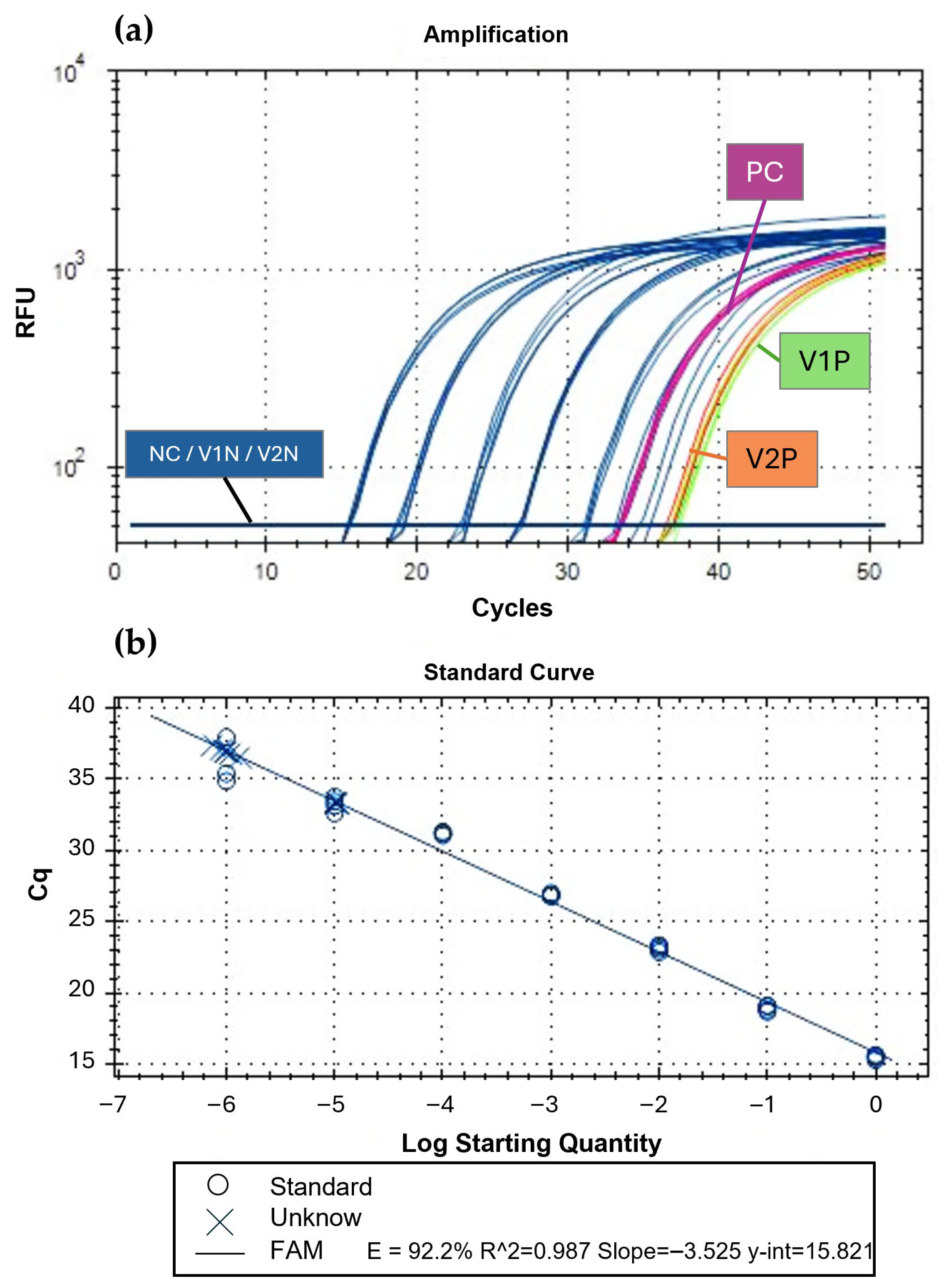
The quantitative PCR results confirmed a significant reduction in P. cinnamomi DNA in the substrates treated with VESTA (F = 3040, p < 0.001). Both the fertigation (V1P) and flooding (V2P) VESTA treatments in the inoculated blocks displayed notably higher quantification cycle (Cq) values (36.97 and 36.67, respectively) (Table 3, Figure 2) compared to the positive control (PC; Cq = 33.18), indicating a substantially lower pathogen load. Correspondingly, DNA concentrations in V1P and V2P treatments were approximately 0.001 ng mL−1, an order of magnitude lower than those in the control (0.011 ng mL−1).
The absence of amplification of the target sequence of P. cinnamomi in the negative control (NC) further confirms the reliability and specificity of the molecular detection assay, validating that the observed reductions were attributable to treatment effects rather than cross-contamination.

3.2. Physiological Response Assessment

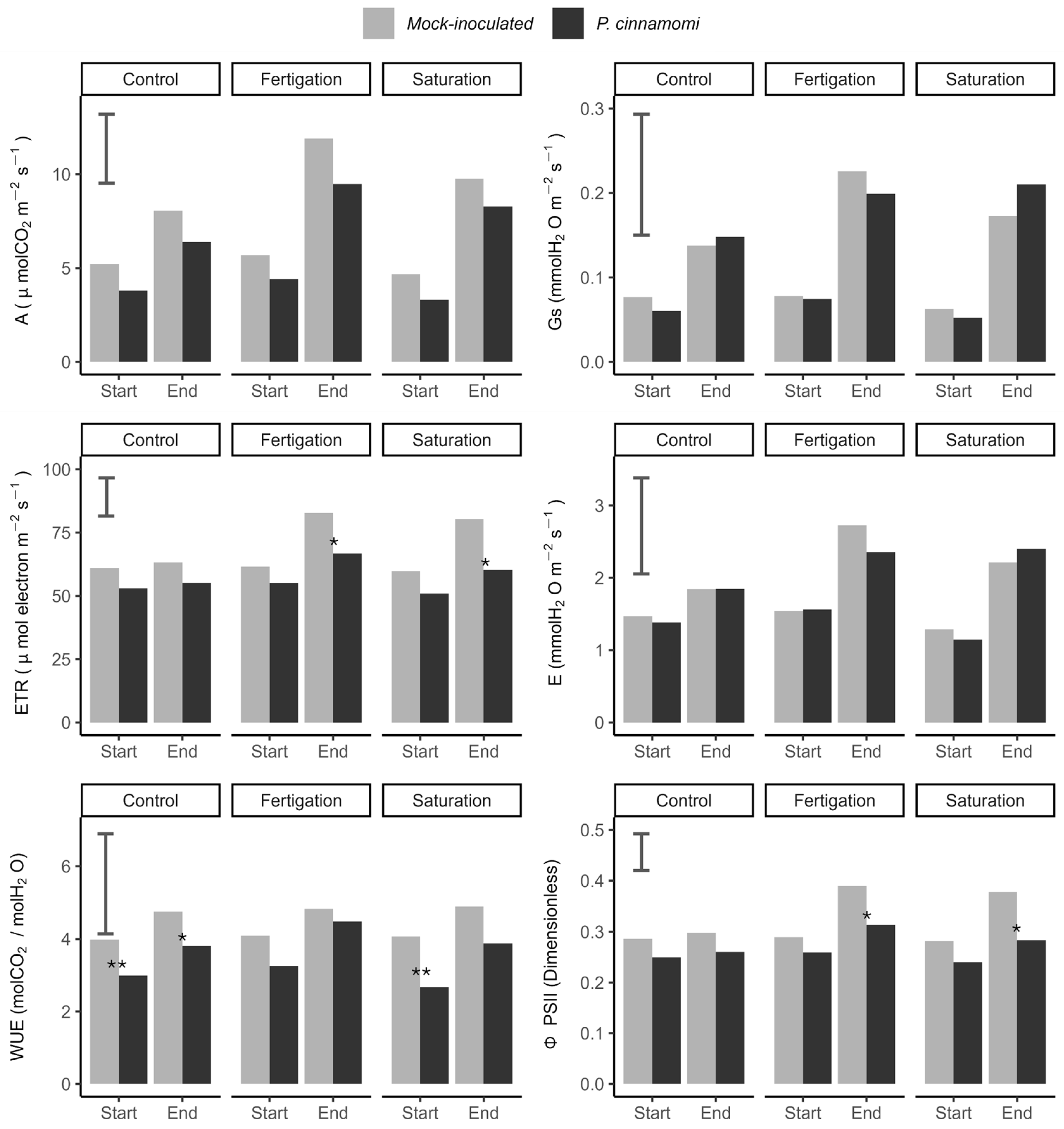
Physiological assessments revealed significant differences between the infected and control plants. The effect of the inoculation with P. cinnamomi was independent of time for all the studied variables, while the effect of VESTA changed with time for A, Gs, ETR and ΦPSII (Supplementary Material, Table S2). Differences in the response of Q. suber seedlings to the bioinoculant treatment were observed in infected plants. The treatments with VESTA (V1P and V2P) mitigated the negative effects of P. cinnamomi, leading to significant differences in physiological responses between the treated–infected group and seedlings of the control group (both PC and NC).
At the beginning of the trial (T0), differences in net photosynthetic assimilation (A) were attributable solely to the inoculation with P. cinnamomi (F = 6.74; p < 0.05) (Figure 3). After 45 days, differences due to P. cinnamomi inoculation were still present (F = 11.78; p < 0.01), but seedlings treated with VESTA exhibited greater A values than their respective controls (F = 12.44; p < 0.01), both in mock-inoculated and infected plants, with significant differences between the fertigation and saturation applications following Tukey results (padj < 0.05) (Supplementary Material, Table S3). Infection with P. cinnamomi significantly reduced photosynthetic rates; however, VESTA-treated plants did not show significant differences between inoculation and mock-inoculation at the end of the experiment and showed greater A values compared with the positive control (PC) (padj < 0.05). Seedlings from the V1 block showed the greatest assimilation rates, exceeding both control groups (NC and PC), while no significant differences were detected between NC and V2P.
Stomatal conductance (Gs) was strongly influenced by VESTA application. At the end of the experiment, VESTA-treated seedlings showed a highly significant increase in stomatal conductance, regardless of P. cinnamomi infection (F = 5.12, p < 0.05). Total leaf transpiration (E) also increased significantly in response to VESTA application (F = 5.314, p < 0.01), showing significant differences between V1 and controls of T0.
Water use efficiency (WUE) significantly varied between the beginning and the end of the experiment (F = 7.72; p < 0.01). This variable was also strongly influenced by P. cinnamomi infection independently of time, both at the beginning of the experiment (F = 12.21, p < 0.001) and after 45 days (F = 12.13; p < 0.001). However, the application of VESTA in infected plants allowed inoculated seedlings to reach similar WUE values as the mock-inoculated ones by the end of the experiment for both V1 and V2 applications.
The multivariable ANOVA showed that efficiency of Photosystem II (ΦPSII) was significantly influenced by all the factors. Plants irrigated with VESTA presented higher values of quantum efficiency compared with the rest after 45 days (F = 7.95; p < 0.01) for both V1 and V2 treatments (padj < 0.05). In contrast, P. cinnamomi-infected plants showed lower ΦPSII compared with mock-inoculated ones (F = 23.39; p < 0.001). As expected, the electron transport rate (ETR) followed the same trend as ΦPSII, with significant differences due to the application of the bioinoculant (F = 8.01; p < 0.01) and P. cinnamomi inoculation (F = 23.45; p < 0.001) after 45 days. However, this variable also showed significant differences at the beginning of the experiment (T0) due to P. cinnamomi infection (F = 4.11; p < 0.05). In the case of ΦPSII, these differences were only marginal (F = 4.02; p < 0.1).

4. Discussion

There is increasing scientific evidence supporting the use of biostimulants as alternatives or complements to conventional fertilizers in agricultural systems [32,42], with some recent examples also in forestry systems [43]. In addition, their capacity to enhance plant health status and modulate soil microbiota has positioned them as promising tools for the prevention and management of plant diseases [44]. Their application in forestry is more limited, mainly focusing on high-value areas such as urban forests [45] and species with high market value [46] as enhancers of plant productivity and physiological status. However, to the best of our knowledge, this work represents the first attempt to evaluate a commercially available biostimulant as a protective strategy within the context of a forest decline syndrome.
Our results demonstrate a dual mode of action of the biostimulant VESTA, which concurrently enhanced plant physiological performance and reduced pathogen inoculum levels. This effect likely limited pathogen establishment in the rhizosphere while indirectly improving photosynthetic efficiency, plant–water relations, and overall metabolic activity. Effective management of soilborne diseases requires not only the suppression of pathogen inoculum but also reinforcement of plant resilience under stress conditions [47]. VESTA appears to operate through both pathways. The integration of these effects provides a more sustainable and robust protective strategy than approaches based solely on pathogen suppression or physiological stimulation and does so without reliance on phytosanitary products that may disrupt the structure and composition of the soil microbiome.

4.1. Plant Physiological Response

No seedling mortality attributable to P. cinnamomi infection was recorded during the mesocosm trial, likely due to the optimal growing conditions maintained throughout the experimental period. Although infection trials with other species reported seedling mortality due to P. cinnamomi infection [38,48,49,50], their experimental conditions were established to subject the plants to stress, while we established optimal conditions for plant development because we were interested in the effect of the biostimulant over plant physiology and inoculum concentration in the substrate. Therefore, our results are consistent with previous studies reporting that Q. suber is less susceptible to root rot caused by P. cinnamomi compared to the oak species used in previous trials, such as Quercus canariensis and Quercus ilex, which have been described as highly susceptible [5,35,38]. However, even though the conditions were established to avoid abiotic stress that would interfere with plant physiological processes, differences in symptom expression were observed at the end of the experiment between positive control plants and those treated with the bioinoculant, in agreement with the physiological data. These findings indicate that infection exerted a measurable impact on plant functioning, and that biostimulant application mitigated these effects by enhancing plant performance and limiting pathogen development in the substrate.
At the onset of the experiment, differences in the photosynthetic assimilation (A) were exclusively related to inoculation with P. cinnamomi, confirming the initial homogeneity of plant physiological status and the effect of the pathogen in plant physiology, in agreement with previous studies [51,52]. However, at the end of the trial, seedlings treated with the biostimulant, particularly under fertigation, showed significantly higher photosynthetic rates than their respective controls, in both infected and non-infected plants. These results indicate that the bioinoculant not only mitigated the deleterious effects of P. cinnamomi on photosynthetic performance but also enhanced the overall metabolic activity of seedlings.
Root rot impairs the uptake of water and nutrients, triggering a shift in metabolic allocation towards defense compound synthesis [50], often at the expense of primary metabolism. In this context, the maintenance of higher photosynthetic rates in seedlings treated with the bioinoculant suggests a dual mechanism of action: first, a reduction in pathogen pressure and root damage, and second, a possible stimulation of physiological processes related to carbon assimilation and energy balance, agreeing with the effects reported for plant growth promoting bacteria in crops [53]. The superior performance of the fertigation treatment (V1) compared to flooding (V2) further highlights the importance of application method in determining biostimulant efficacy. Controlled fertigation likely facilitates a more uniform distribution and uptake of the biostimulant product, promoting beneficial interactions within the rhizosphere. Conversely, application until substrate saturation may result in less effective colonization or transient hypoxia, attenuating the positive effects observed. The enhanced photosynthetic capacity of VESTA-treated plants, even under infection, implies an improved functioning of the photosynthetic apparatus and a more balanced redox state, which might be related to the abundance in microbial consortia with known roles in redox regulation in soil [54]. Similar findings have been reported for other microbial or non-microbial products that improve plant performance under biotic and abiotic stress by enhancing antioxidant activity and maintaining chloroplast function [55,56]. This suggests that the addition of microbial consortia used as a biostimulant could act through comparable physiological and biochemical pathways, supporting plant vitality and tolerance to root pathogens.
The application of the biostimulant exerted a remarkable influence on gas exchange parameters, particularly stomatal conductance (Gs) and leaf transpiration (E), reflecting an improvement in the overall physiological status of Q. suber seedlings. The significant increase in Gs observed in VESTA-treated seedlings, irrespective of P. cinnamomi infection, indicates that VESTA promoted a more active stomatal regulation and higher photosynthetic potential. This enhancement in stomatal activity is consistent with the elevated rates of net photosynthetic assimilation (A) previously reported, suggesting coordinated stimulation of carbon assimilation and water vapor exchange. The concomitant increase in leaf transpiration (E) in non-infected plants treated with VESTA further supports the assumption that the biostimulant product improved water relations and hydraulic efficiency. Enhanced transpiration typically reflects greater stomatal aperture and increased sap flow, leading to improved nutrient transport within the leaf and aboveground plant tissues [57]. However, the absence of a similar increase in transpiration in the infected seedling in the fertigation block suggests that P. cinnamomi infection partially restricted the hydraulic response, likely due to xylem dysfunction associated with pathogen colonization [58]. Despite the infection, maintaining higher stomatal conductance under infection, in comparison to the control group, points to the biostimulant role in alleviating pathogen-induced stress, possibly by preserving root functionality.
Photosynthetic efficiency, a chlorophyll fluorescence parameter, reflects the proportion of absorbed light energy used for photochemistry and is associated with the number of electrons transferred through the photosynthetic apparatus [59]. The enhancement of Photosystem II efficiency (ΦPSII) observed in VESTA-treated seedlings indicates that it positively influences photochemical performance and the overall functionality of the photosynthetic apparatus. Higher ΦPSII values suggest that the biostimulant improved the capacity of seedlings to utilize absorbed light energy for photochemistry, thereby optimizing photosynthetic efficiency under both mock-inoculation and stress conditions. These findings are consistent with the corresponding increases in photosynthetic assimilation (A), demonstrating that the microbial consortium of VESTA enhances not only carbon fixation but also the underlying electron transport processes that sustain primary metabolism. In infected plants, the observed reduction in ΦPSII without a corresponding decrease in net assimilation may indicate a shift toward increased secondary metabolism or an energy imbalance associated with defense activation.
Water use efficiency (WUE) reflects the ratio between CO2 assimilation and water loss through transpiration and provides an integrated measure of plant performance by linking carbon assimilation with evapotranspiration, and it is often used as an indicator of plant adaptability to stress [60]. Its enhancement is typically constrained by plant genetics and environmental conditions and often declines under stress that disrupts water uptake or transpiration [61]. In the present study, P. cinnamomi infection markedly affected WUE of the plants not treated with VESTA, confirming the pathogen’s disruptive impact on root function and water relations. However, fertigation with the biostimulant significantly mitigated these effects, allowing both infected and non-infected seedlings to achieve comparable WUE values by the end of the experiment. In plants inoculated with P. cinnamomi, the maintenance or even improvement of WUE when the bioinoculant was added is particularly relevant, as the pathogen impairs root hydraulic conductivity and often triggers stomatal closure, leading to carbon starvation and reduced growth [50,62]. The improved water use strategy could contribute to greater resilience of Q. suber seedlings under pathogen stress, supporting their establishment and survival in Mediterranean environments where P. cinnamomi and drought frequently co-occur.
Overall, our results underline the potential of the use of a microbial consortia as an effective biostimulant to mitigate P. cinnamomi-induced physiological stress. By sustaining photosynthetic activity and enhancing root health, the product we tested contributes to improved plant performance under infection pressure.

4.2. Inoculum Reduction by the Application of the Biostimulant

Beyond its physiological benefits to plants, the microbial consortium of VESTA also showed a capacity to reduce soil inoculum levels of P. cinnamomi. The suppression of soilborne pathogens is a critical challenge for sustainable forest and nursery management [63,64]. In ecosystems increasingly affected by P. cinnamomi, strategies that reduce soil inoculum levels are essential to prevent disease spread and support the long-term resilience of host species such as Quercus suber.
Specifically, our findings indicate that VESTA application, irrespective of the delivery method, effectively suppressed the establishment and/or persistence of P. cinnamomi in the substrate. The definition of biostimulant does not include the functioning of the product as a pesticide, fungicide or herbicide, but it is well recognized that the structure and composition of the soil microbiome affects the impact of soilborne pathogens through mechanisms of competence [65], also considering that P. cinnamomi is a poor competitor under saprophytic environments [9,28,66]. Considering that VESTA is a biostimulant containing very stable microbial consortium, our results suggest that VESTA contribution to reducing soil inoculum density is likely through the improvement of microbial community structure in the substrate and/or through the induction of plant-mediated defense responses. The composition of VESTA includes both beneficial microorganisms and their metabolites, suggesting that the combined action of these components may contribute to effective pathogen control. A growing body of research shows that manipulating the rhizosphere via beneficial microbes or organic amendments can lower P. cinnamomi propagule density and disease pressure. Several complementary approaches reported in the literature on the use of antagonistic fungi [36,67]; plant-associated bacteria, e.g., Bacillus spp. [68,69]; and suppressive organic amendments [70] have yielded reductions in pathogen abundance and symptom severity, although efficacy and temporal dynamics vary with agent, formulation and environmental context. Moreover, an indirect effect of inoculum concentration may occur through the enhancement of plant self-defense mechanisms, potentially mediated by endophytic microorganisms or improved nutritional status [5,66].

5. Conclusions

This study demonstrates that the use of a biostimulant product based on a microbial consortium exerts a strong positive influence on the physiological performance of Q. suber seedlings, both under normal conditions and in the presence of P. cinnamomi infection. Across all evaluated parameters, the seedlings treated with VESTA exhibited enhanced photosynthetic assimilation, higher stomatal conductance, and improved photochemical efficiency of Photosystem II, indicating a stimulation of primary metabolism and more efficient use of light energy in both healthy and infected plants. Leaf–water balance and transpiration control were also improved by increasing stomatal conductance and optimizing water use efficiency. This result further highlights the product’s role in optimizing the balance between carbon assimilation and transpiration, suggesting enhanced stomatal regulation and water management, which are critical for maintaining growth and productivity under stress.
Besides its effects on plant physiology, treatment with VESTA effectively reduced soil inoculum levels of P. cinnamomi compared with positive control, indicating a strong suppressive effect on the pathogen’s survival and proliferation in the rhizosphere. In this sense, the biostimulant may act through the establishment of a microbial community in the substrate that limits pathogen inoculum density, thereby reducing disease progression.
Overall, VESTA application enhanced the coordination among photosynthesis, plant–water relations, and photochemical activity, thereby conferring greater physiological stability to Q. suber seedlings under pathogen pressure. In parallel, it improved pathogen biocontrol, likely through modifications of the soil microbial community structure in conjunction with enhanced plant health status.
By simultaneously promoting disease suppression and improved plant functioning, this product represents a promising tool to support nursery production of high-quality planting stock for reforestation and restoration programs aimed at increasing Q. suber resilience in Mediterranean ecosystems affected by P. cinnamomi decline. Furthermore, it may serve as a viable option for incorporating microorganism-based soil treatments into comprehensive and sustainable management strategies, including integrated pest management protocols in Q. suber dehesas and forests impacted by oak decline. However, its persistence and long-term effects under field conditions require further validation.
Future research should focus on elucidating the mechanistic basis of action of the microbial consortium, particularly its role in modulating antioxidant responses and phytohormone signaling pathways, in order to optimize application strategies for forest restoration and management under pathogen stress.

Supplementary Materials

The following supporting information can be downloaded at: https://www.mdpi.com/article/10.3390/f17040435/s1, Supplementary Materia, Excel file containing the following tables: Table S1, results of the Anderson-Darling normality test; Table S2, results of the Multivariate ANOVA; Table S3, results of the post-hoc Tukey analysis; and Table S4, results of the Two-way ANOVA for time-independent analyses.

Author Contributions

Conceptualization, F.J.R.-G. and H.A.; methodology, F.J.R.-G., H.A. and R.J.C.-P.; formal analysis, F.J.R.-G. and K.O.; investigation, J.C.-S., A.Á.G.M., R.J.C.-P. and K.O.; resources, F.J.R.-G.; data curation, F.J.R.-G. and K.O.; writing—original draft preparation, K.O.; writing—review and editing, F.J.R.-G., H.A. and K.O.; supervision, K.O.; project administration, F.J.R.-G.; funding acquisition, F.J.R.-G. All authors have read and agreed to the published version of the manuscript.

Funding

This research was funded by the EU Commission through the project Life FAGESOS, grant reference LIFE21-CCA-IT-LIFE-FAGESOS/101074466.

Data Availability Statement

All the data analyzed are available in the Supplementary Material provided. Raw data may be available upon request to the corresponding author.

Acknowledgments

The authors would thank the support of Agrolainez S.L. and Sovitae S.L. for providing the biostimulant product used in the experiment. Moreover, the authors acknowledge the “Campus de Excelencia Agroalimentario CeiA3” and the “Servicio Centralizado de Apoyo a la Investigación” (SCAI) of the University of Córdoba for providing greenhouse installations and logistic support during the mesocosm experiment. We also thank all the staff of the Research Group ERSAF (PAIDI RNM360) for their support in both experimental activities and administrative processes.

Conflicts of Interest

The authors declare no conflicts of interest.

References

  1. Brasier, C.M.; Robredo, F.; Ferraz, J.F.P. Evidence for Phytophthora cinnamomi Involvement in Iberian Oak Decline. Plant Pathol. 1993, 42, 140–145. [Google Scholar] [CrossRef]
  2. de Sampaio e Paiva Camilo-Alves, C.; da Clara, M.I.E.; de Almeida Ribeiro, N.M.C. Decline of Mediterranean Oak Trees and Its Association with Phytophthora cinnamomi: A Review. Eur. J. For. Res. 2013, 132, 411–432. [Google Scholar] [CrossRef]
  3. Marques, M.; Bugalho, M.N.; Acácio, V.; Catry, F.X. Disentangling Research on Oak Decline Factors in Mediterranean-Type Climate Regions: A Systematic Review. Trees For. People 2025, 19, 100803. [Google Scholar] [CrossRef]
  4. Encinas-Valero, M.; Esteban, R.; Hereş, A.-M.; Vivas, M.; Fakhet, D.; Aranjuelo, I.; Solla, A.; Moreno, G.; Curiel Yuste, J. Holm Oak Decline Is Determined by Shifts in Fine Root Phenotypic Plasticity in Response to Belowground Stress. New Phytol. 2022, 235, 2237–2251. [Google Scholar] [CrossRef] [PubMed]
  5. Ruiz-Gómez, F.J.; Pérez-de-Luque, A.; Navarro-Cerrillo, R.M. The Involvement of Phytophthora Root Rot and Drought Stress in Holm Oak Decline: From Ecophysiology to Microbiome Influence. Curr. For. Rep. 2019, 5, 251–266. [Google Scholar] [CrossRef]
  6. Alderotti, F.; Verdiani, E. God Save the Queen! How and Why the Dominant Evergreen Species of the Mediterranean Basin Is Declining? AoB Plants 2023, 15, plad051. [Google Scholar] [CrossRef]
  7. Hardham, A.R.; Blackman, L.M. Phytophthora cinnamomi. Mol. Plant Pathol. 2018, 19, 260–285. [Google Scholar] [CrossRef]
  8. EPPO. Phytophthora cinnamomi. In Diagnostic Protocols for Regulated Pests; EPPO: Paris, France, 2004; p. 7. [Google Scholar]
  9. Onoszko, K.; González-Moreno, P.; Ruiz-Gómez, F.J. Unravelling the Diversity of Soil Fungal and Oomycete Communities in the Quercus ilex L. Rhizosphere of Dehesa Grasslands: A Metabarcoding Approach. Plant Soil 2025. [Google Scholar] [CrossRef]
  10. Folke, C.; Carpenter, S.R.; Walker, B.; Scheffer, M.; Chapin, T.; Rockström, J. Resilience Thinking: Integrating Resilience, Adaptability and Transformability. Ecol. Soc. 2010, 15, 20. [Google Scholar] [CrossRef]
  11. Lopes-Fernandes, M.; Martínez-Fernández, E.; Alves, R.; Boa-Nova, D.; Branquinho, C.; Bugalho, M.N.; Campos-Mardones, F.; Coca-Pérez, A.; Frazão-Moreira, A.; Marques, M.; et al. Cork Oak Woodlands and Decline: A Social-Ecological Review and Future Transdisciplinary Approaches. Agrofor. Syst. 2024, 98, 1927–1944. [Google Scholar] [CrossRef]
  12. Onoszko, K.; Gómez, F.J.R.; Lazzaro, L.; González, Á.L.; González-Moreno, P. Diversity Patterns of Herbaceous Community in Environmental Gradients of Dehesa Ecosystems. Glob. Ecol. Conserv. 2024, 54, e03162. [Google Scholar] [CrossRef]
  13. Janvier, C.; Villeneuve, F.; Alabouvette, C.; Edel-Hermann, V.; Mateille, T.; Steinberg, C. Soil Health through Soil Disease Suppression: Which Strategy from Descriptors to Indicators? Soil Biol. Biochem. 2007, 39, 1–23. [Google Scholar] [CrossRef]
  14. Wang, R.; Zhang, H.; Sun, L.; Qi, G.; Chen, S.; Zhao, X. Microbial Community Composition Is Related to Soil Biological and Chemical Properties and Bacterial Wilt Outbreak. Sci. Rep. 2017, 7, 343. [Google Scholar] [CrossRef] [PubMed]
  15. Vinale, F.; Sivasithamparam, K.; Ghisalberti, E.L.; Marra, R.; Woo, S.L.; Lorito, M. Trichoderma–Plant–Pathogen Interactions. Soil Biol. Biochem. 2008, 40, 1–10. [Google Scholar] [CrossRef]
  16. Lamichhane, J.R.; Barbetti, M.J.; Chilvers, M.I.; Pandey, A.K.; Steinberg, C. Exploiting Root Exudates to Manage Soil-Borne Disease Complexes in a Changing Climate. Trends Microbiol. 2024, 32, 27–37. [Google Scholar] [CrossRef] [PubMed]
  17. Koike, S.T.; Subbarao, K.V.; Davis, R.M.; Turini, T.A. Vegetable Diseases Caused by Soilborne Pathogens; University of California, Agriculture and Natural Resources: Davis, CA, USA, 2003; ISBN 978-1-60107-273-3. [Google Scholar]
  18. Mawar, R.; Ranganathan, S. Green Management of Pathogens for Plant Health Improvement by Utilizing Sustainable Practices. Asia Pac. Biofertil. Biopestic. Inf. Platf. 2023. [Google Scholar] [CrossRef]
  19. Bernardes, M.F.F.; Pazin, M.; Pereira, L.C.; Dorta, D.J. Impact of Pesticides on Environmental and Human Health. In Toxicology Studies: Cells, Drugs and Environment; InTech: Houston, TX, USA, 2015. [Google Scholar] [CrossRef]
  20. Kim, K.-H.; Kabir, E.; Jahan, S.A. Exposure to Pesticides and the Associated Human Health Effects. Sci. Total Environ. 2017, 575, 525–535. [Google Scholar] [CrossRef]
  21. Tudi, M.; Daniel Ruan, H.; Wang, L.; Lyu, J.; Sadler, R.; Connell, D.; Chu, C.; Phung, D.T. Agriculture Development, Pesticide Application and Its Impact on the Environment. Int. J. Environ. Res. Public Health 2021, 18, 1112. [Google Scholar] [CrossRef]
  22. Zhang, L.; Yan, C.; Guo, Q.; Zhang, J.; Ruiz-Menjivar, J. The Impact of Agricultural Chemical Inputs on Environment: Global Evidence from Informetrics Analysis and Visualization. Int. J. Low-Carbon Technol. 2018, 13, 338–352. [Google Scholar] [CrossRef]
  23. Mącik, M.; Gryta, A.; Frąc, M. Chapter Two—Biofertilizers in Agriculture: An Overview on Concepts, Strategies and Effects on Soil Microorganisms. In Advances in Agronomy; Sparks, D.L., Ed.; Academic Press: Cambridge, MA, USA, 2020; Volume 162, pp. 31–87. [Google Scholar]
  24. Moreira, B.C.; Prates Júnior, P.; Dell, B.; Kasuya, M.C.M. Roots and Beneficial Interactions with Soil Microbes. In Subsoil Constraints for Crop Production; de Oliveira, T.S., Bell, R.W., Eds.; Springer International Publishing: Cham, Switzerland, 2022; pp. 263–287. ISBN 978-3-031-00317-2. [Google Scholar]
  25. Thambugala, K.M.; Daranagama, D.A.; Phillips, A.J.L.; Kannangara, S.D.; Promputtha, I. Fungi vs. Fungi in Biocontrol: An Overview of Fungal Antagonists Applied Against Fungal Plant Pathogens. Front. Cell. Infect. Microbiol. 2020, 10, 604923. [Google Scholar] [CrossRef]
  26. Volynchikova, E.; Kim, K.D. Biological Control of Oomycete Soilborne Diseases Caused by Phytophthora capsici, Phytophthora infestans, and Phytophthora nicotianae in Solanaceous Crops. Mycobiology 2022, 50, 269–293. [Google Scholar] [CrossRef]
  27. Gómez-Aparicio, L.; Domínguez-Begines, J.; Villa-Sanabria, E.; García, L.V.; Muñoz-Pajares, A.J. Tree Decline and Mortality Following Pathogen Invasion Alters the Diversity, Composition and Network Structure of the Soil Microbiome. Soil Biol. Biochem. 2022, 166, 108560. [Google Scholar] [CrossRef]
  28. Ruiz Gómez, F.J.; Navarro-Cerrillo, R.M.; Pérez-de-Luque, A.; Oβwald, W.; Vannini, A.; Morales-Rodríguez, C. Assessment of Functional and Structural Changes of Soil Fungal and Oomycete Communities in Holm Oak Declined Dehesas through Metabarcoding Analysis. Sci. Rep. 2019, 9, 5315. [Google Scholar] [CrossRef] [PubMed]
  29. Swift, M.J. Towards the Second Paradigm: Integrated Biological Management of Soil. In Inter-Relação Fertilidade, Biologia Do Solo e Nutrição de Plantas; UFLA: Lavras, Brazil, 1999; pp. 11–24. [Google Scholar]
  30. Ansabayeva, A.; Makhambetov, M.; Rebouh, N.Y.; Abdelkader, M.; Saudy, H.S.; Hassan, K.M.; Nasser, M.A.; Ali, M.A.A.; Ebrahim, M. Plant Growth-Promoting Microbes for Resilient Farming Systems: Mitigating Environmental Stressors and Boosting Crops Productivity—A Review. Horticulturae 2025, 11, 260. [Google Scholar] [CrossRef]
  31. Wang, H.; Liu, R.; You, M.P.; Barbetti, M.J.; Chen, Y. Pathogen Biocontrol Using Plant Growth-Promoting Bacteria (PGPR): Role of Bacterial Diversity. Microorganisms 2021, 9, 1988. [Google Scholar] [CrossRef]
  32. Rouphael, Y.; Colla, G. Editorial: Biostimulants in Agriculture. Front. Plant Sci. 2020, 11, 40. [Google Scholar] [CrossRef]
  33. Deng, S.; Wipf, H.M.-L.; Pierroz, G.; Raab, T.K.; Khanna, R.; Coleman-Derr, D. A Plant Growth-Promoting Microbial Soil Amendment Dynamically Alters the Strawberry Root Bacterial Microbiome. Sci. Rep. 2019, 9, 17677. [Google Scholar] [CrossRef]
  34. Baumgartner, K.; Warnock, A.E. A Soil Inoculant Inhibits Armillaria mellea In Vitro and Improves Productivity of Grapevines with Root Disease. Plant Dis. 2006, 90, 439–444. [Google Scholar] [CrossRef]
  35. Robin, C.; Capron, G.; Desprez-Loustau, M.L. Root Infection by Phytophthora cinnamomi in Seedlings of Three Oak Species. Plant Pathol. 2001, 50, 708–716. [Google Scholar] [CrossRef]
  36. Cabrera-Puerto, R.J.; Ruiz-Gómez, F.J.; Navarro-Cerrillo, R.M. Beneficial Microorganisms and Water Stress Influence Quercus ilex Seedlings’ Response to Phytophthora cinnamomi Rands. Forests 2023, 14, 870. [Google Scholar] [CrossRef]
  37. Serrano, M.S.; Fernández-Rebollo, P.; De Vita, P.; Carbonero, M.D.; Trapero, A.; Sánchez, M.E. Lupinus luteus, a New Host of Phytophthora cinnamomi in Spanish Oak-Rangeland Ecosystems. Eur. J. Plant Pathol. 2010, 128, 149–152. [Google Scholar] [CrossRef]
  38. Jung, T.; La Spada, F.; Pane, A.; Aloi, F.; Evoli, M.; Horta Jung, M.; Scanu, B.; Faedda, R.; Rizza, C.; Puglisi, I.; et al. Diversity and Distribution of Phytophthora Species in Protected Natural Areas in Sicily. Forests 2019, 10, 259. [Google Scholar] [CrossRef]
  39. Drais, M.I.; Turco, S.; Morales-Rodríguez, C.; Vannini, A.; Mazzaglia, A. Enhanced TaqMan qPCR Assay for Phytophthora cinnamomi Detection and Quantification. For. Pathol. 2025, 55, e70012. [Google Scholar] [CrossRef]
  40. De Mendiburu, F. Agricolae Statistical Procedures for Agricultural Research. R Package. Available online: https://www.scirp.org/reference/referencespapers?referenceid=2882125 (accessed on 3 November 2025).
  41. R Core Team. R: A Language and Environment for Statistical Computing; R Foundation for Statistical Computing: Vienna, Austria, 2023. [Google Scholar]
  42. Calvo, P.; Nelson, L.; Kloepper, J.W. Agricultural Uses of Plant Biostimulants. Plant Soil 2014, 383, 3–41. [Google Scholar] [CrossRef]
  43. Duk, K.; Łukowski, A. Zwiększanie wzrostu sadzonek drzew w warunkach stresu suszy z wykorzystaniem biostymulatorów i ściółkowania. Sylwan 2025, 169, 321–333. [Google Scholar]
  44. Tarigan, S.I.; Toth, S.; Szalai, M.; Kiss, J.; Turoczi, G.; Toepfer, S. Biological Control Properties of Microbial Plant Biostimulants. A Review. Biocontrol Sci. Technol. 2022, 32, 1351–1371. [Google Scholar] [CrossRef]
  45. Cinantya, A.; Manea, A.; Ossola, A.; Leishman, M.R. Biostimulant Application Practices in Australian Urban Forestry. N. Z. J. Crop Hortic. Sci. 2025, 53, 1020–1030. [Google Scholar] [CrossRef]
  46. Santacruz-García, A.C.; Senilliani, M.G.; Gómez, A.T.; Ewens, M.; Yonny, M.E.; Villalba, G.F.; Nazareno, M.A. Biostimulants as Forest Protection Agents: Do These Products Have an Effect against Abiotic Stress on a Forest Native Species? Aspects to Elucidate Their Action Mechanisms. For. Ecol. Manag. 2022, 522, 120446. [Google Scholar] [CrossRef]
  47. Yao, X.; Guo, H.; Zhang, K.; Zhao, M.; Ruan, J.; Chen, J. Trichoderma and Its Role in Biological Control of Plant Fungal and Nematode Disease. Front. Microbiol. 2023, 14, 1160551. [Google Scholar] [CrossRef]
  48. Sánchez, M.E.; Andicoberry, S.; Trapero, A. Pathogenicity of Three Phytophthora spp. Causing Late Seedling Rot of Quercus ilex ssp. Ballota. For. Pathol. 2005, 35, 115–125. [Google Scholar] [CrossRef]
  49. Corcobado, T.; Miranda-Torres, J.J.; Martín-García, J.; Jung, T.; Solla, A. Early Survival of Quercus ilex Subspecies from Different Populations after Infections and Co-Infections by Multiple Phytophthora Species. Plant Pathol. 2017, 66, 792–804. [Google Scholar] [CrossRef]
  50. Ruiz Gómez, F.; Pérez-de-Luque, A.; Sánchez-Cuesta, R.; Quero, J.; Navarro Cerrillo, R. Differences in the Response to Acute Drought and Phytophthora cinnamomi Rands Infection in Quercus ilex L. Seedlings. Forests 2018, 9, 634. [Google Scholar] [CrossRef]
  51. Dinis, L.-T.; Peixoto, F.; Zhang, C.; Martins, L.; Costa, R.; Gomes-Laranjo, J. Physiological and Biochemical Changes in Resistant and Sensitive Chestnut (Castanea) Plantlets after Inoculation with Phytophthora cinnamomi. Physiol. Mol. Plant Pathol. 2011, 75, 146–156. [Google Scholar] [CrossRef]
  52. Sghaier-Hammami, B.; Valero-Galvàn, J.; Romero-Rodríguez, M.C.; Navarro-Cerrillo, R.M.; Abdelly, C.; Jorrín-Novo, J. Physiological and Proteomics Analyses of Holm Oak (Quercus ilex subsp. ballota [Desf.] Samp.) Responses to Phytophthora cinnamomi. Plant Physiol. Biochem. PPB 2013, 71, 191–202. [Google Scholar] [CrossRef] [PubMed]
  53. Benaissa, A. Rhizosphere: Role of Bacteria to Manage Plant Diseases and Sustainable Agriculture—A Review. J. Basic Microbiol. 2024, 64, 2300361. [Google Scholar] [CrossRef]
  54. Stephen, J.R.; Chang, Y.-J.; Macnaughton, S.J.; Kowalchuk, G.A.; Leung, K.T.; Flemming, C.A.; White, D.C. Effect of Toxic Metals on Indigenous Soil β-Subgroup Proteobacterium Ammonia Oxidizer Community Structure and Protection against Toxicity by Inoculated Metal-Resistant Bacteria. Appl. Environ. Microbiol. 1999, 65, 95–101. [Google Scholar] [CrossRef]
  55. Bulgari, R.; Franzoni, G.; Ferrante, A. Biostimulants Application in Horticultural Crops under Abiotic Stress Conditions. Agronomy 2019, 9, 306. [Google Scholar] [CrossRef]
  56. Du Jardin, P. Plant Biostimulants: Definition, Concept, Main Categories and Regulation. Sci. Hortic. 2015, 196, 3–14. [Google Scholar] [CrossRef]
  57. Flexas, J.; Niinemets, Ü.; Gallé, A.; Barbour, M.M.; Centritto, M.; Diaz-Espejo, A.; Douthe, C.; Galmés, J.; Ribas-Carbo, M.; Rodriguez, P.L.; et al. Diffusional Conductances to CO2 as a Target for Increasing Photosynthesis and Photosynthetic Water-Use Efficiency. Photosynth. Res. 2013, 117, 45–59. [Google Scholar] [CrossRef]
  58. Maurel, M.; Robin, C.; Capdevielle, X.; Loustau, D.; Desprez-Loustau, M.-L. Effects of Variable Root Damage Caused by Phytophthora cinnamomi on Water Relations of Chestnut Saplings. Ann. For. Sci. 2001, 58, 639–651. [Google Scholar] [CrossRef]
  59. Cessna, S.; Demmig-Adams, B.; Adams, W.W., III. Exploring Photosynthesis and Plant Stress Using Inexpensive Chlorophyll Fluorometers. J. Nat. Resour. Life Sci. Educ. 2010, 39, 22–30. [Google Scholar] [CrossRef]
  60. Medrano, H.; Tomás, M.; Martorell, S.; Flexas, J.; Hernández, E.; Rosselló, J.; Pou, A.; Escalona, J.-M.; Bota, J. From Leaf to Whole-Plant Water Use Efficiency (WUE) in Complex Canopies: Limitations of Leaf WUE as a Selection Target. Crop J. 2015, 3, 220–228. [Google Scholar] [CrossRef]
  61. Quero, J.L.; Sterck, F.J.; Martínez-Vilalta, J.; Villar, R. Water-Use Strategies of Six Co-Existing Mediterranean Woody Species during a Summer Drought. Oecologia 2011, 166, 45–57. [Google Scholar] [CrossRef]
  62. Dawson, P.; Weste, G. Changes in Water Relations Associated with Infection by Phytophthora cinnamomi. Aust. J. Bot. 1982, 30, 393–400. [Google Scholar] [CrossRef]
  63. Longjam, R.; Kotiyal, A.; Johar, V. Unearthing the Hidden Dangers by Soil Borne Diseases of Nursery Plants: A Review. Environ. Conserv. J. 2024, 25, 921–930. [Google Scholar] [CrossRef]
  64. Visen, S.S.; Thakur, D.; Atluri, S. Sustainable Management of Soilborne Diseases of Horticultural Crops. In Advances in Postharvest and Analytical Technology of Horticulture Crops; Thakur, M., Belwal, T., Eds.; Springer Nature: Singapore, 2024; pp. 349–363. ISBN 978-981-97-7247-6. [Google Scholar]
  65. Xiong, Q.; Yang, J.; Ni, S. Microbiome-Mediated Protection against Pathogens in Woody Plants. Int. J. Mol. Sci. 2023, 24, 16118. [Google Scholar] [CrossRef] [PubMed]
  66. Morales-Rodríguez, C.; Vannini, A.; Scanu, B.; González-Moreno, P.; Turco, S.; Drais, M.I.; Brandano, A.; Varo Martínez, M.Á.; Mazzaglia, A.; Deidda, A.; et al. Challenges to Mediterranean Fagaceae Ecosystems Affected by Phytophthora cinnamomi and Climate Change: Integrated Pest Management Perspectives. Curr. For. Rep. 2025, 11, 9. [Google Scholar] [CrossRef]
  67. Salas-Marina, M.A.; Silva-Flores, M.A.; Uresti-Rivera, E.E.; Castro-Longoria, E.; Herrera-Estrella, A.; Casas-Flores, S. Colonization of Arabidopsis Roots by Trichoderma atroviride Promotes Growth and Enhances Systemic Disease Resistance through Jasmonic Acid/Ethylene and Salicylic Acid Pathways. Eur. J. Plant Pathol. 2011, 131, 15–26. [Google Scholar] [CrossRef]
  68. Moon, J.-H.; Won, S.-J.; Maung, C.E.H.; Choi, J.-H.; Choi, S.-I.; Ajuna, H.B.; Ahn, Y.S. Bacillus velezensis CE 100 Inhibits Root Rot Diseases (Phytophthora spp.) and Promotes Growth of Japanese Cypress (Chamaecyparis obtusa Endlicher) Seedlings. Microorganisms 2021, 9, 821. [Google Scholar] [CrossRef]
  69. Ritika, B.; Utpal, D. An Overview of Fungal and Bacterial Biopesticides to Control Plant Pathogens/Diseases. Afr. J. Microbiol. Res. 2014, 8, 1749–1762. [Google Scholar] [CrossRef]
  70. Morales-Rodríguez, C.; Vettraino, A.M.; Vannini, A. Efficacy of Biofumigation with Brassica carinata Commercial Pellets (BioFence) to Control Vegetative and Reproductive Structures of Phytophthora cinnamomi. Plant Dis. 2016, 100, 324–330. [Google Scholar] [CrossRef]
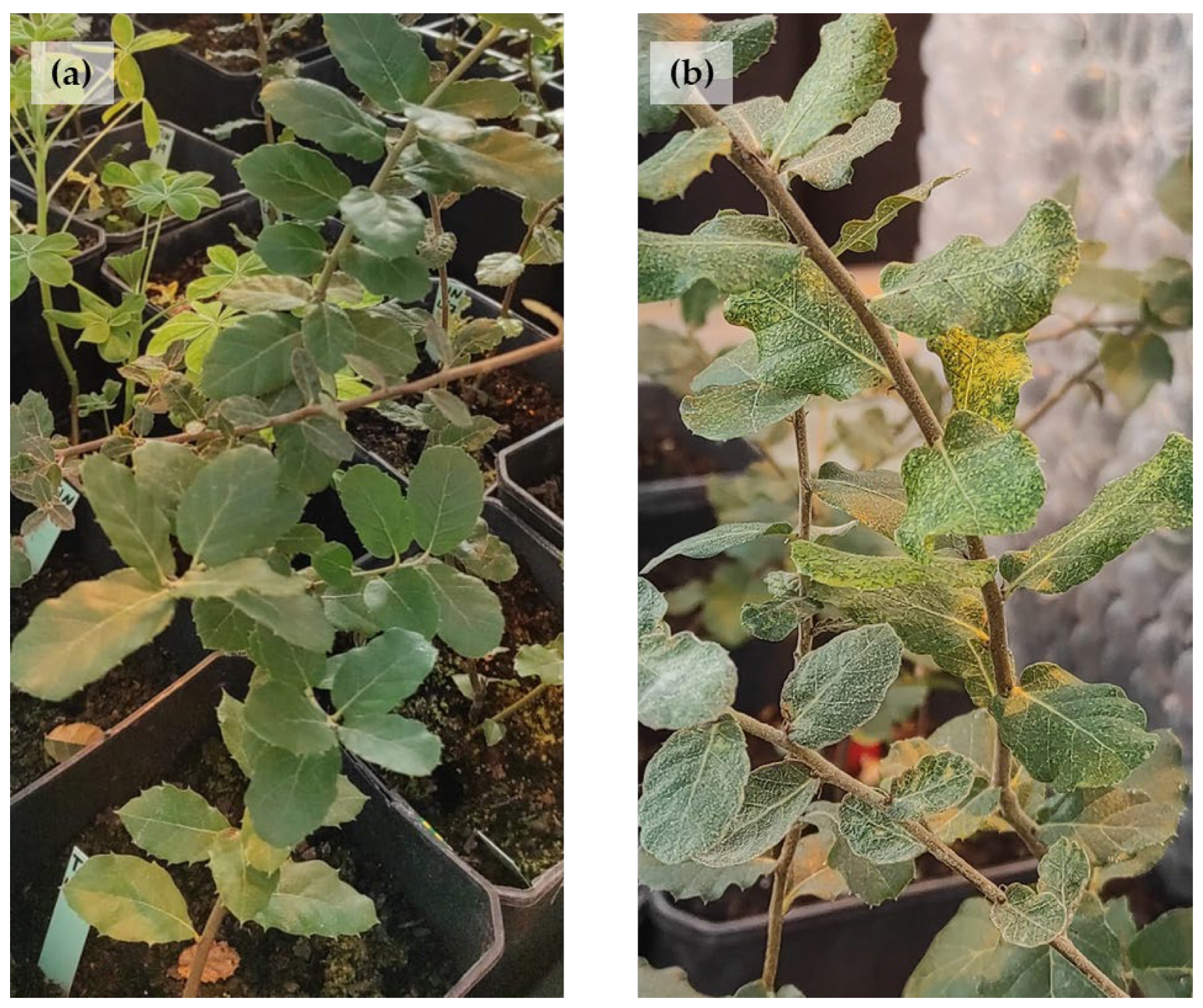
Figure 1. Symptom development 15 days after initiation of the experiment. (a) Q. suber L.seedling of V1P treatment (inoculated with P. cinnamomi Rands and irrigated with VESTA). (b) Q. suber L. seedling of positive control treatment (inoculated with P. cinnamomi and irrigated with water).
Forests 17 00435 g001
Figure 2. Quantitative assessment of P. cinnamomi Rands inoculum concentration in the substrate. (a) Amplification curves for each treatment and controls. Dark blue lines represent the standards, while the horizontal bottom line (blue) stands for the control; V1P = VESTA fertigation treatment, inoculated with P. cinnamomi (green line); V1N = VESTA fertigation mock inoculated (blue line); V2P = VESTA irrigation until saturation treatment, inoculated with P. cinnamomi (orange line); V2N = VESTA irrigation until saturation mock inoculated (blue line); PC = positive control (pink line); NC = negative control (blue line). (b) Standard curve with error values used for DNA quantification. RFU = relative fluorescence unit; Cq = quantification cycle.
Forests 17 00435 g002
Figure 3. Results of physiology assessment of Q. suber seedlings at the start and end of the experiment. Grey bars represent the average values of mock-inoculated plants and black bars stand for plants inoculated with P. cinnamomi Rands for each of the treatments with VESTA. The “control” group includes NC (mock-inoculated) and PC (P. cinnamomi-inoculated) groups. “Fertigation” includes the V1 and V1P groups, and “saturation” includes V2 and V2P. (*): Adjusted significance for Tukey’s post hoc analysis p < 0.05. (**): Adjusted significance for Tukey’s post-hoc analysis p < 0.01. Comparisons are shown only between the pair of means corresponding to each time and VESTA treatment. Pairs without an asterisk did not present significant differences between means. Bars located at the top-left side of the graphs represent the minimum average distance for significant differences (p < 0.05) in multiple comparisons (values detailed in Supplementary Material, Table S3).
Forests 17 00435 g003
Table 1. Summary of experimental design and treatment structure. Two experimental blocks (V1 and V2), each with 40 Quercus suber L. seedlings, were established. In both blocks, plants were either inoculated with P. cinnamomi Rands or mock-inoculated, with or without VESTA application. Positive (PC) and negative (NC) controls were included. VESTA was applied via fertigation (V1) or irrigation to saturation (V2).
Experimental BlockDescriptionApplication Form
NCNegative controlSoil mock-inoculation
PCPositive controlSoil inoculation with P. cinnamomi
V1NVESTA in fertigation (V1) without P. cinnamomiSubstrate irrigation in the form of fertigation by applying 100 mL of VESTA every 15 days, substituting the irrigation water
V1PVESTA in fertigation (V1) with P. cinnamomi
V2NVESTA in two applications (V2) without P. cinnamomiSubstrate irrigation until saturation. Two applications, the first one of 500 mL to each pot
48 h after soil flooding for zoospore induction,
and the second one of 500 mL to each pot, 30 days after the beginning of the experiment
V2PVESTA in two applications (V2) with P. cinnamomi
Table 2. Physiological variables measured in the experiment and their units.
AbbreviationPhysiological TraitUnit
ANet CO2 assimilation rateµmol CO2 m−2 s−1
GsStomatal conductancemol H2O m−2 s−1
ETRElectron transport rateµmol electron m−2 s−1
ETranspiration ratemmol H2O m−2 s−1
WUEWater use efficiency (A/E)mol CO2 mol−1 H2O
ΦPSIIPhotosynthetic efficiency of PSIIn.d. *
* n.d.: non-dimensional.
Table 3. Results of DNA quantification of the 30 samples chosen for qPCR assay. Cq = quantification cycle; V1P = VESTA fertigation treatment, inoculated with P. cinnamomi Rands; V1N = VESTA fertigation, mock-inoculated; V2P = VESTA irrigation until saturation treatment, inoculated with P. cinnamomi; V2N = VESTA irrigation until saturation, mock-inoculated; PC = positive control; NC = negative control. (…) = No amplification.
SampleCq MeanCq Std. DevDNA (ng·mL−1)
V1P36.670.25<0.001
V2P36.970.30<0.001
V10
V20
PC33.180.020.011
NC0
Disclaimer/Publisher’s Note: The statements, opinions and data contained in all publications are solely those of the individual author(s) and contributor(s) and not of MDPI and/or the editor(s). MDPI and/or the editor(s) disclaim responsibility for any injury to people or property resulting from any ideas, methods, instructions or products referred to in the content.