Associations Between the Leaf Microbiome and the Health of Irish Ash Trees Affected by Hymenoscyphus fraxineus
 , , , , ,
Abstract
1. Introduction
2. Materials and Methods
2.1. Sampling and Surveys
2.2. Sample Preparation for DNA Extraction
2.3. Library Preparation and PacBio Sequencing
2.4. Taxonomic Assignment
2.5. Statistical Analysis
3. Results
3.1. Survey Results
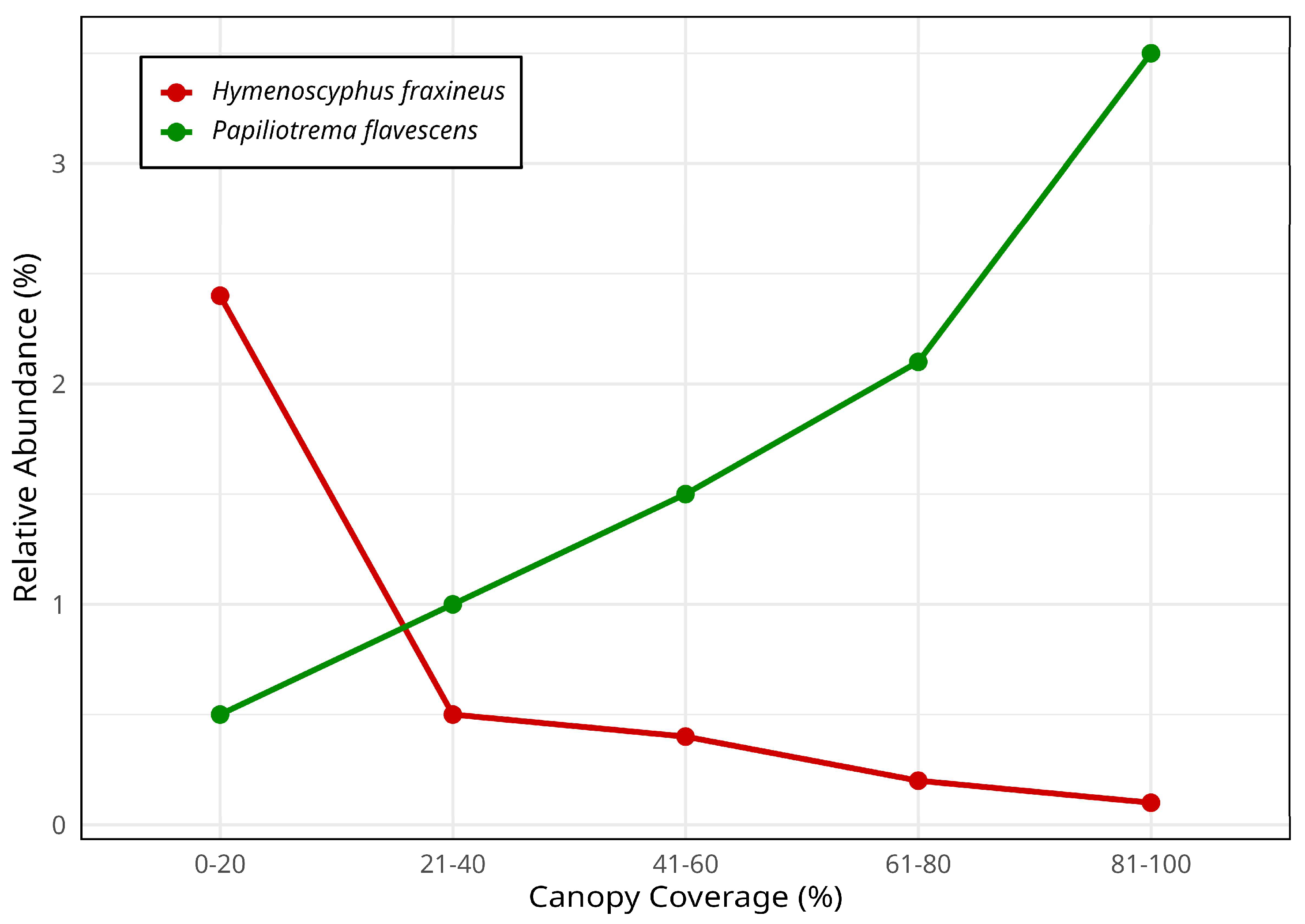
3.2. Microbiome Compared with Percentage Canopy Cover
4. Discussion
5. Conclusions
Supplementary Materials
Author Contributions
Funding
Data Availability Statement
Conflicts of Interest
Abbreviations
| AFBI | Agri-Food and Biosciences Institute |
References
- Przybył, K. Fungi associated with necrotic apical parts of Fraxinus excelsior shoots. For. Pathol. 2002, 32, 387–394. [Google Scholar] [CrossRef]
- Kowalski, T. Chalara fraxinea sp. nov. associated with dieback of ash (Fraxinus excelsior) in Poland. For. Pathol. 2006, 36, 264–270. [Google Scholar] [CrossRef]
- Marçais, B.; Kosawang, C.; Laubray, S.; Kjær, E.; Kirisits, T. Ash dieback. In Forest Microbiology; Elsevier: Amsterdam, The Netherlands, 2022; pp. 215–237. [Google Scholar]
- Carroll, D.; Boa, E. Ash dieback: From Asia to Europe. Plant Pathol. 2024, 73, 741–759. [Google Scholar] [CrossRef]
- Queloz, V.; Grünig, C.R.; Berndt, R.; Kowalski, T.; Sieber, T.N.; Holdenrieder, O. Cryptic speciation in Hymenoscyphus albidus. For. Pathol. 2011, 41, 133–142. [Google Scholar] [CrossRef]
- McCracken, A.; Douglas, G.C.; Ryan, C.; Destefanis, M.; Cooke, L.R. Ash Dieback on the Island of Ireland; Swedish University of Agricultural Sciences: Uppsala, Sweden, 2017. [Google Scholar]
- Baxter, E.; Cooke, L.R.; Spaans, F.; Grant, I.R.; McCracken, A.R. The introduction of Hymenoscyphus fraxineus to Northern Ireland and the subsequent development of ash dieback. For. Pathol. 2023, 53, e12789. [Google Scholar] [CrossRef]
- Soldi, E.; Tiley, A.; O’Hanlon, R.; Murphy, B.R.; Hodkinson, T.R. Ash dieback and other pests and pathogens of Fraxinus on the island of Ireland. In Biology and Environment: Proceedings of the Royal Irish Academy; Royal Irish Academy: Dublin, Ireland, 2022. [Google Scholar]
- Tiley, A.; O’Hanlon, R. Living with the impact of ash dieback–Local mitigation practices against Hymenoscyphus fraxineus on the Island of Ireland. Biol. Environ. Proc. R. Ir. Acad. 2022, 122B, 67–84. [Google Scholar] [CrossRef]
- Cross, J. Ireland’s native woodlands in a European context. In Ireland’s Native Woodlands; National Parks and Wildlife Service: Dublin, Ireland, 2005; pp. 77–90. [Google Scholar]
- Short, I.; Hawe, J. Ash dieback in Ireland—A review of European management options and case studies in remedial silviculture. Agric. Food Dev. Auth. 2018, 75, 44–72. [Google Scholar]
- Mitchell, R.; Beaton, J.; Bellamy, P.; Broome, A.; Chetcuti, J.; Eaton, S.; Ellis, C.; Gimona, A.; Harmer, R.; Hester, A.; et al. Ash dieback in the UK: A review of the ecological and conservation implications and potential management options. Biol. Conserv. 2014, 175, 95–109. [Google Scholar] [CrossRef]
- Timmermann, V.; Børja, I.; Hietala, A.M.; Kirisits, T.; Solheim, H. Ash dieback: Pathogen spread and diurnal patterns of ascospore dispersal, with special emphasis on Norway. EPPO Bull. 2011, 41, 14–20. [Google Scholar] [CrossRef]
- Cleary, M.; Daniel, G.; Stenlid, J. Light and scanning electron microscopy studies of the early infection stages of Hymenoscyphus pseudoalbidus on Fraxinus excelsior. Plant Pathol. 2013, 62, 1294–1301. [Google Scholar] [CrossRef]
- Haňáčková, Z.; Koukol, O.; Čmoková, A.; Zahradník, D.; Havrdová, L. Direct evidence of Hymenoscyphus fraxineus infection pathway through the petiole-shoot junction. For. Pathol. 2017, 47, e12370. [Google Scholar] [CrossRef]
- Mansfield, J.; Brown, I.; Papp-Rupar, M. Life at the edge–the cytology and physiology of the biotroph to necrotroph transition in Hymenoscyphus fraxineus during lesion formation in ash. Plant Pathol. 2019, 68, 908–920. [Google Scholar] [CrossRef]
- Kirisits, T. Ascocarp formation of Hymenoscyphus fraxineus on several-year-old pseudosclerotial leaf rachises of Fraxinus excelsior. For. Pathol. 2015, 45, 254–257. [Google Scholar] [CrossRef]
- Gross, A.; Zaffarano, P.; Duo, A.; Grünig, C. Reproductive mode and life cycle of the ash dieback pathogen Hymenoscyphus pseudoalbidus. Fungal Genet. Biol. 2012, 49, 977–986. [Google Scholar] [CrossRef]
- Coker, T.L.R.; Rozsypálek, J.; Edwards, A.; Harwood, T.P.; Butfoy, L.; Buggs, R.J.A. Estimating mortality rates of European ash (Fraxinus excelsior) under the ash dieback (Hymenoscyphus fraxineus) epidemic. Plants People Planet 2019, 1, 48–58. [Google Scholar] [CrossRef]
- Seaton, F.M.; Robinson, D.A.; Wood, C.M.; Benskin, C.M.H.; Rowe, R.L.; Hornigold, K.; Kirby, K.J.; Nichols, C.; Smart, S.M. Forest topsoil organic carbon declines under ash dieback. Glob. Change Biol. 2025, 31, e70430. [Google Scholar] [CrossRef]
- Quirion, B.R.; Domke, G.M.; Walters, B.F.; Lovett, G.M.; Fargione, J.E.; Greenwood, L.; Serbesoff-King, K.; Randall, J.M.; Fei, S. Insect and disease disturbances correlate with reduced carbon sequestration in forests of the contiguous United States. Front. For. Glob. Change 2021, 4, 716582. [Google Scholar] [CrossRef]
- Harper, A.L.; McKinney, L.V.; Nielsen, L.R.; Havlickova, L.; Li, Y.; Trick, M.; Fraser, F.; Wang, L.; Fellgett, A.; Sollars, E.S.A.; et al. Molecular markers for tolerance of European ash (Fraxinus excelsior) to dieback disease identified using Associative Transcriptomics. Sci. Rep. 2016, 6, 19335. [Google Scholar] [CrossRef]
- Meger, J.; Ulaszewski, B.; Pałucka, M.; Kozioł, C.; Burczyk, J. Genomic prediction of resistance to Hymenoscyphus fraxineus in common ash (Fraxinus excelsior L.) populations. Evol. Appl. 2024, 17, e13694. [Google Scholar] [CrossRef]
- Ortega, S.F.; A Bedford, J.; James, S.R.; Newling, K.; Ashton, P.D.; Boshier, D.H.; Clark, J.; E Hartley, S.; Harper, A.L. Fraxinus excelsior updated long-read genome reveals the importance of MADS-box genes in tolerance mechanisms against ash dieback. G3: Genes Genomes Genet. 2025, 15, jkaf053. [Google Scholar] [CrossRef]
- Stener, L.-G. Genetic evaluation of damage caused by ash dieback with emphasis on selection stability over time. For. Ecol. Manag. 2018, 409, 584–592. [Google Scholar] [CrossRef]
- Langer, G.J.; Fuchs, S.; Osewold, J.; Peters, S.; Schrewe, F.; Ridley, M.; Kätzel, R.; Bubner, B.; Grüner, J. FraxForFuture—Research on European ash dieback in Germany. J. Plant Dis. Prot. 2022, 129, 1285–1295. [Google Scholar] [CrossRef]
- Becker, R.; Ulrich, K.; Behrendt, U.; Kube, M.; Ulrich, A. Analyzing ash leaf-colonizing fungal communities for their biological control of Hymenoscyphus fraxineus. Front. Microbiol. 2020, 11, 590944. [Google Scholar] [CrossRef]
- Kosawang, C.; Amby, D.B.; Bussaban, B.; McKinney, L.V.; Xu, J.; Kjær, E.D.; Collinge, D.B.; Nielsen, L.R. Fungal communities associated with species of Fraxinus tolerant to ash dieback, and their potential for biological control. Fungal Biol. 2018, 122, 110–120. [Google Scholar] [CrossRef]
- Ulrich, K.; Becker, R.; Behrendt, U.; Kube, M.; Schneck, V.; Ulrich, A. Physiological and genomic characterisation of Luteimonas fraxinea sp. nov., a bacterial species associated with trees tolerant to ash dieback. Syst. Appl. Microbiol. 2022, 45, 126333. [Google Scholar] [CrossRef]
- Bilański, P.; Kowalski, T. Fungal endophytes in Fraxinus excelsior petioles and their in vitro antagonistic potential against the ash dieback pathogen Hymenoscyphus fraxineus. Microbiol. Res. 2022, 257, 126961. [Google Scholar] [CrossRef] [PubMed]
- Chaudhry, V.; Runge, P.; Sengupta, P.; Doehlemann, G.; E Parker, J.; Kemen, E. Shaping the leaf microbiota: Plant–microbe–microbe interactions. J. Exp. Bot. 2021, 72, 36–56. [Google Scholar] [CrossRef]
- Song, C.; Zhu, F.; Carrión, V.J.; Cordovez, V. Beyond plant microbiome composition: Exploiting microbial functions and plant traits via integrated approaches. Front. Bioeng. Biotechnol. 2020, 8, 896. [Google Scholar] [CrossRef] [PubMed]
- Halecker, S.; Wennrich, J.-P.; Rodrigo, S.; Andrée, N.; Rabsch, L.; Baschien, C.; Steinert, M.; Stadler, M.; Surup, F.; Schulz, B. Fungal endophytes for biocontrol of ash dieback: The antagonistic potential of Hypoxylon rubiginosum. Fungal Ecol. 2020, 45, 100918. [Google Scholar] [CrossRef]
- Nawrot-Chorabik, K.; Marcol-Rumak, N.; Latowski, D. Investigation of the biocontrol potential of two ash endophytes against Hymenoscyphus fraxineus using in vitro plant–fungus dual cultures. Forests 2021, 12, 1750. [Google Scholar] [CrossRef]
- Thomas, P.A. Biological flora of the British Isles: Fraxinus excelsior. J. Ecol. 2016, 104, 1158–1209. [Google Scholar] [CrossRef]
- Metheringham, C.L.; Plumb, W.J.; Flynn, W.R.M.; Stocks, J.J.; Kelly, L.J.; Gorriz, M.N.; Grieve, S.W.D.; Moat, J.; Lines, E.R.; Buggs, R.J.A.; et al. Rapid polygenic adaptation in a wild population of ash trees under a novel fungal epidemic. Science 2025, 388, 1422–1425. [Google Scholar] [CrossRef]
- Enderle, R.; Stenlid, J.; Vasaitis, R. An overview of ash (Fraxinus spp.) and the ash dieback disease in Europe. CABI Rev. 2019, 14, 1–12. [Google Scholar] [CrossRef]
- Raykova, A.; Jackson, J.; Harper, A.L.; Poore, A.; Antwis, R.; Mastin, A. Determining Management Strategies to Control Ash Dieback Disease Through the Study of Molecular and Environmental Interactions. Forests 2025, 16, 1033. [Google Scholar] [CrossRef]
- Bruyant, P.; Moënne-Loccoz, Y.; Almario, J. Root-associated Helotiales fungi: Overlooked players in plant nutrition. Soil Biol. Biochem. 2024, 191, 109363. [Google Scholar] [CrossRef]
- Liu, S.; Xie, J.; Luan, W.; Liu, C.; Chen, X.; Chen, D. Papiliotrema flavescens, a plant growth-promoting fungus, alters root system architecture and induces systemic resistance through its volatile organic compounds in Arabidopsis. Plant Physiol. Biochem. 2024, 208, 108474. [Google Scholar] [CrossRef] [PubMed]
- Schertler, E.; Queloz, V.; Monteleone, F.; Eisenring, M.; Heinzelmann, R. Resistance and tolerance mechanisms of common ash (Fraxinus excelsior) against the ash dieback pathogen Hymenoscyphus fraxineus: Latest advances and knowledge gaps. For. Int. J. For. Res. 2025, cpaf038. [Google Scholar] [CrossRef]



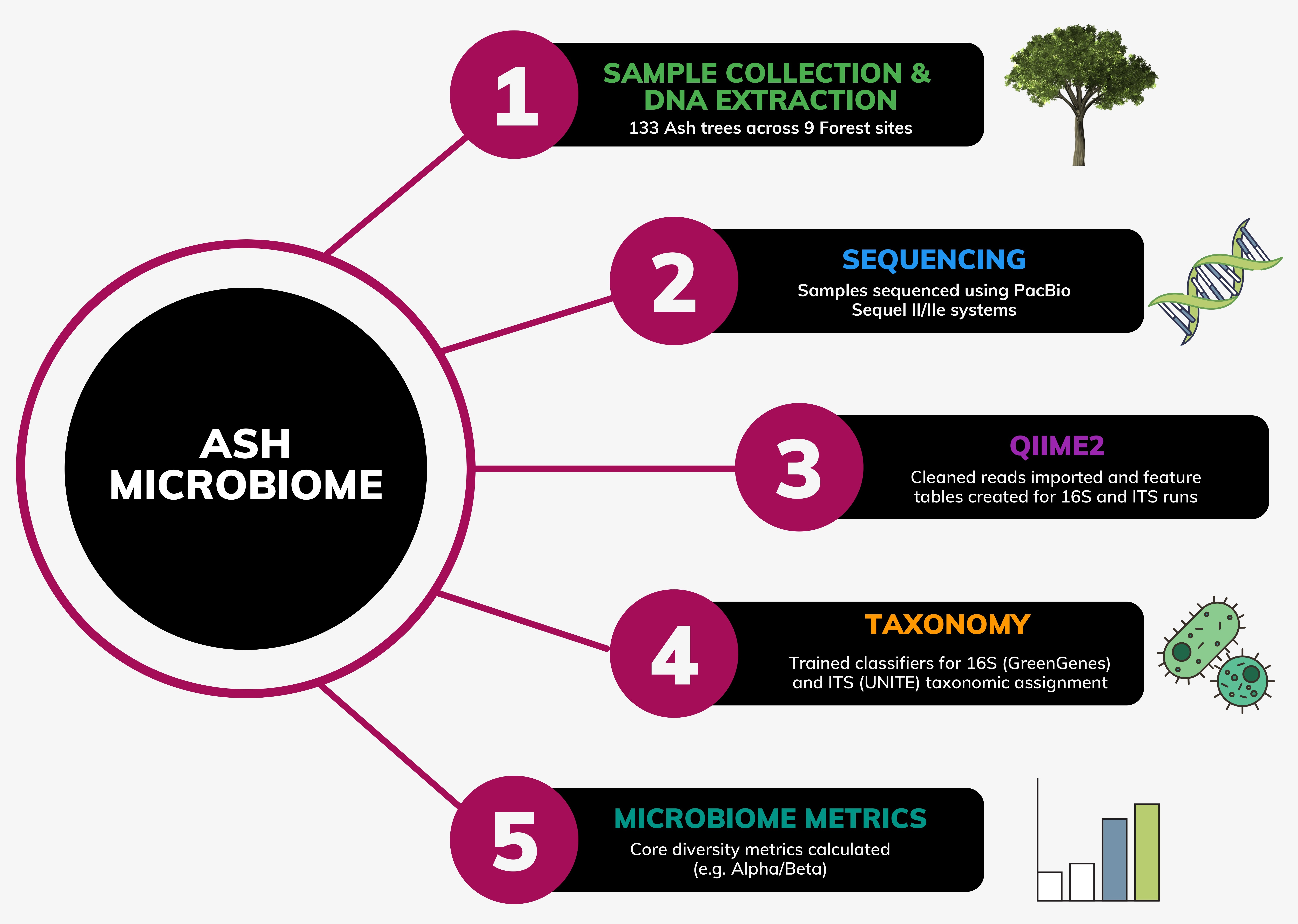
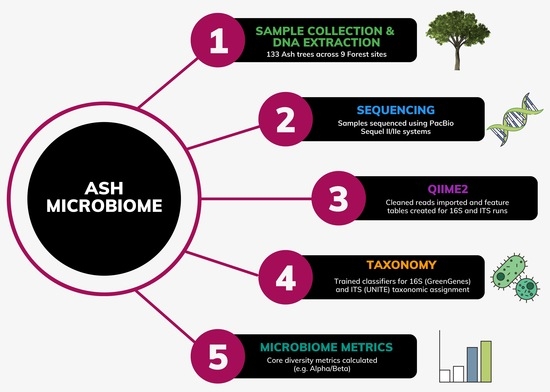
| Step | Purpose | Tools/Databases | Version | Output |
|---|---|---|---|---|
| Taxonomic Assignment | Assign taxonomy to ASVs for bacteria using Greengenes2. and fungi using UNITE. | QIIME2 GreenGenes2 UNITE | Amplicon.2025.4 (q2) 2024.09 (GG2) v10.0 Dynamic seqs and taxa—All Eukaryotes—19/02/25 (UNITE) | Taxonomy tables (genus/species level) |
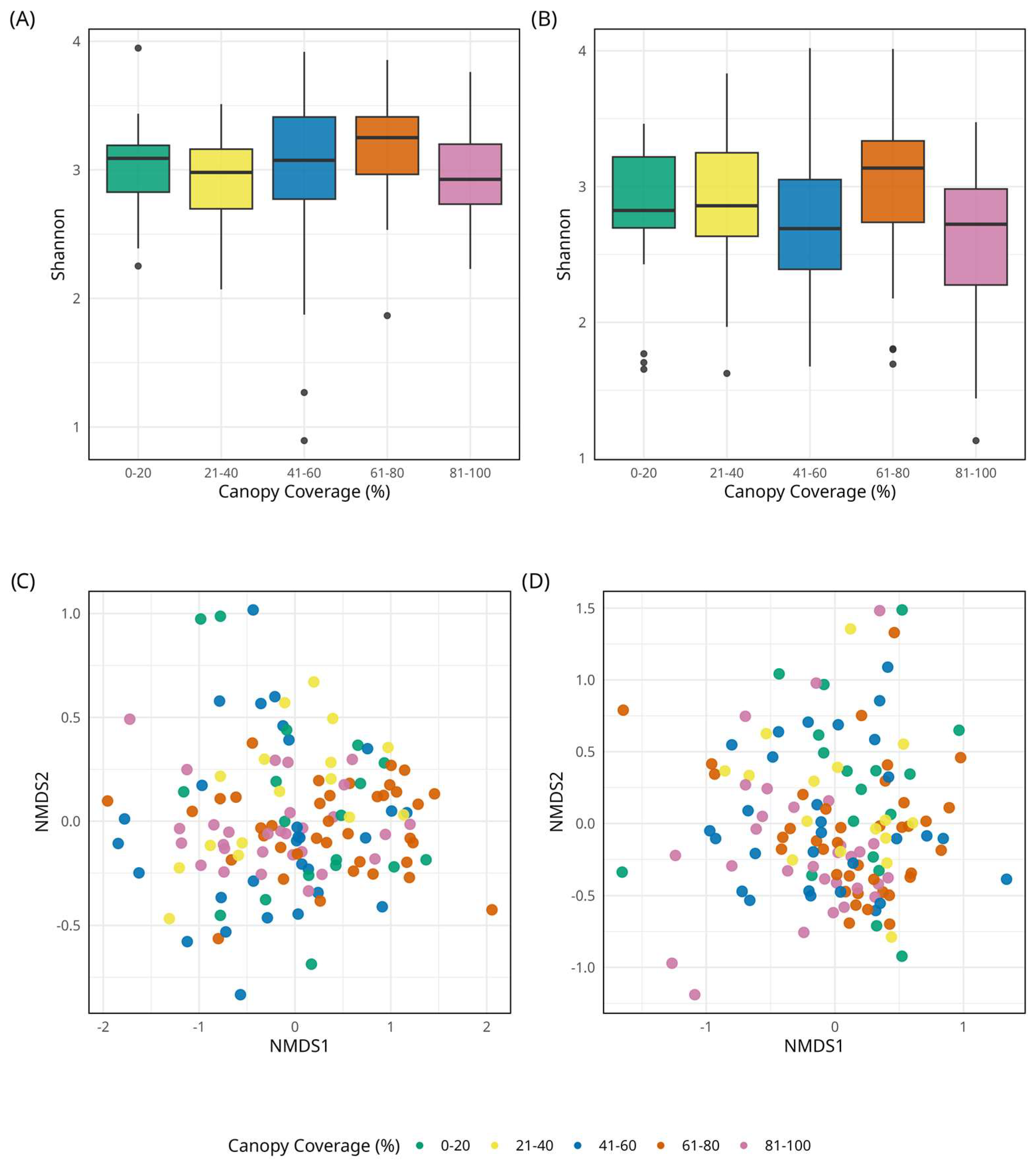
| Diversity Analysis | Assess microbial diversity within and between samples and community structure. | R R Studio R packages: phyloseq, vegan) | R (4.5.2) R Studio (2025.09.2) phyloseq (v.1.44.0) vegan (v2.6.4) | Diversity indices (Shannon, Bray–Curtis). |
| Statistical Testing | Determine significance of observed patterns. | R functions: Stats FSA | Stats (v4.3.1) FSA (v0.10.1) | p-values, ANOVA, Kruskal–Wallis, Dunns, Bray–Curtis, PERMANOVA (type III) |
| Differential Abundance Analysis | Assess if any species were significantly differentially abundant. | R package: ANCOM-BC | ANCOM-BC (v2.12.0) | DA analysis |
| Visualisation | Generated ordination plots (PCoA). | R packages: readxl tidyverse ggnewscale scales ggplot2 cowplot patchwork | readxl (1.4.5) tidyverse (2.0.0) ggnewscale (0.5.2) scales (1.4.0) ggplot2 (v3.5.1) cowplot (v1.1.3) patchwork (v1.2.0) | Figure 2. Figure 3. Figure 4. |
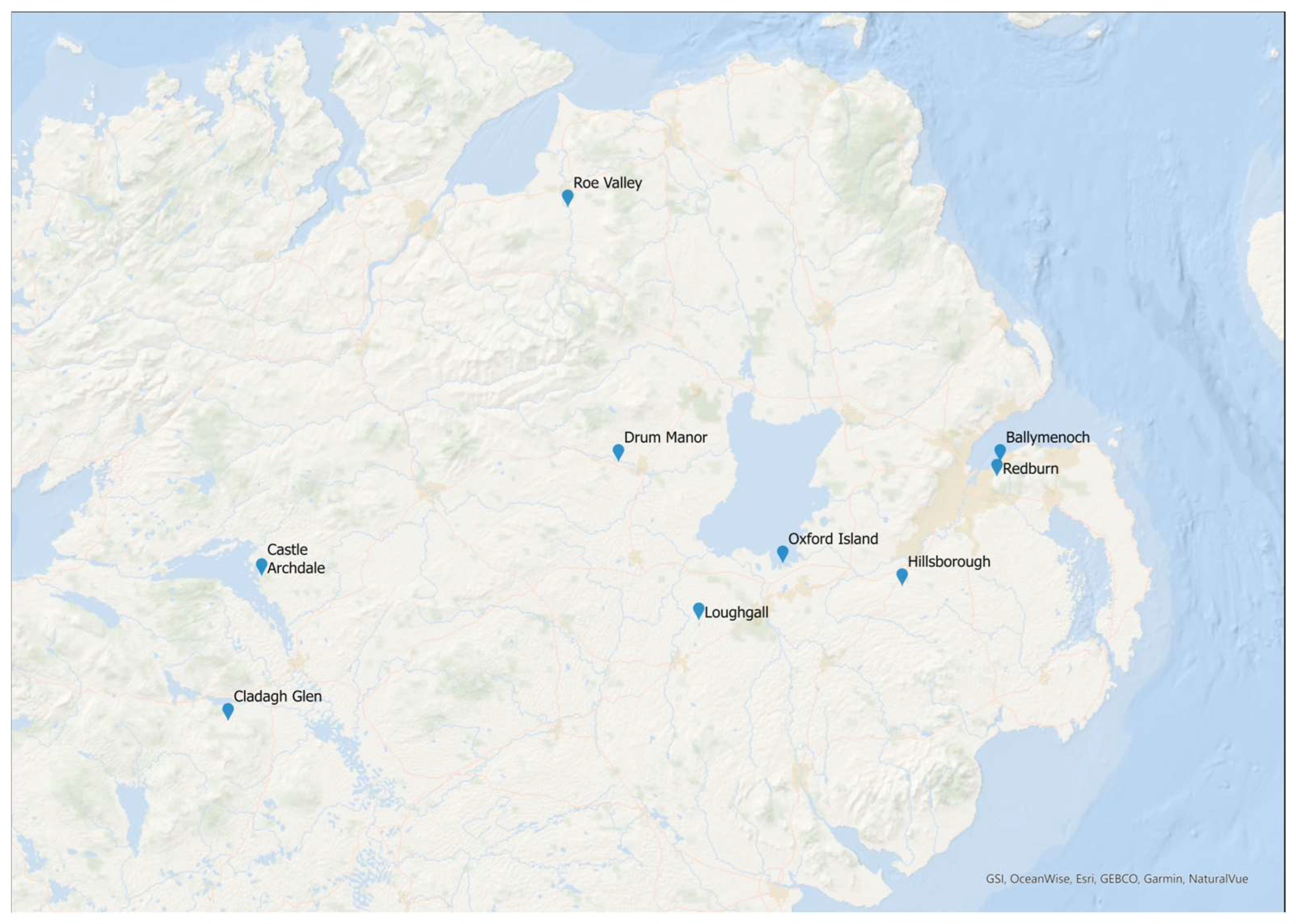
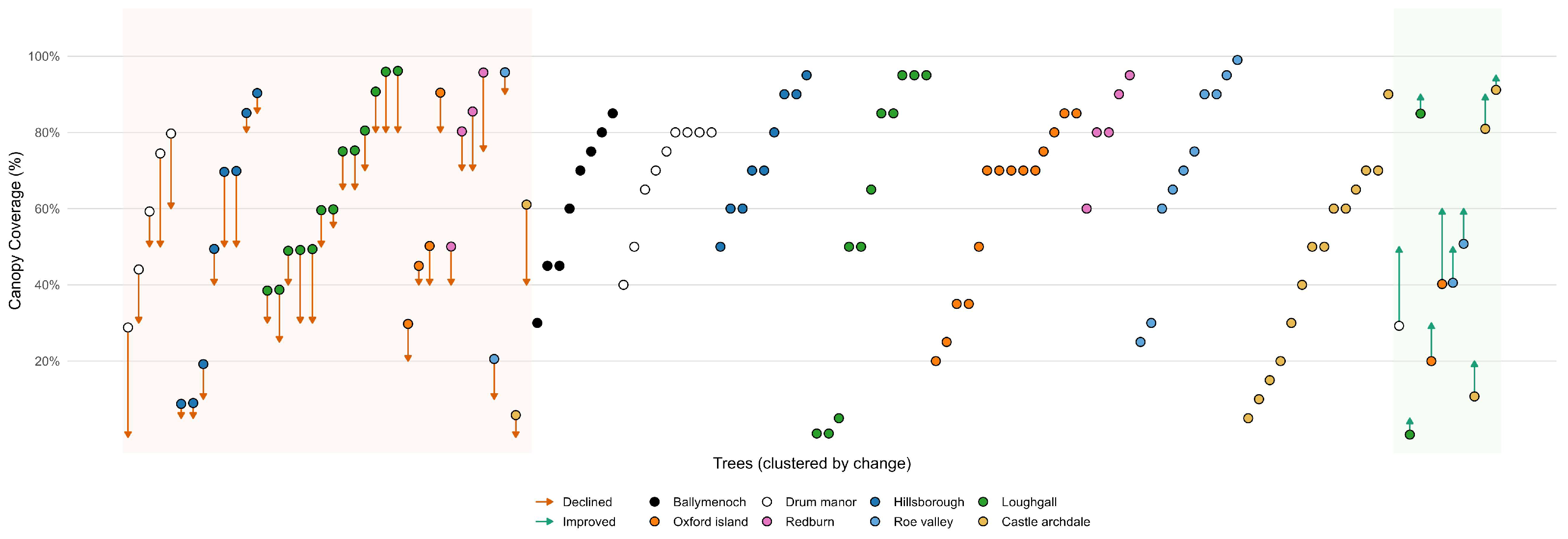
| Forest | 1%–20% | 21%–40% | 41%–60% | 61%–80% | 81%–100% | Total Trees |
|---|---|---|---|---|---|---|
| Ballymenoch | 0 | 1 | 3 | 3 | 1 | 8 |
| Castle Archdale | 6 | 2 | 5 | 4 | 2 | 19 |
| Cladagh Glen | 0 | 0 | 2 | 1 | 0 | 3 |
| Drum Manor | 1 | 3 | 3 | 9 | 0 | 16 |
| Hillsborough | 3 | 0 | 4 | 5 | 5 | 17 |
| Loughgall | 4 | 2 | 7 | 4 | 9 | 26 |
| Oxford Island | 2 | 5 | 3 | 7 | 3 | 20 |
| Redburn | 0 | 0 | 2 | 3 | 4 | 9 |
| Roe Valley | 2 | 3 | 2 | 3 | 5 | 15 |
| Total Trees | 18 | 16 | 31 | 39 | 29 | 133 |
Disclaimer/Publisher’s Note: The statements, opinions and data contained in all publications are solely those of the individual author(s) and contributor(s) and not of MDPI and/or the editor(s). MDPI and/or the editor(s) disclaim responsibility for any injury to people or property resulting from any ideas, methods, instructions or products referred to in the content. |
© 2026 by the authors. Licensee MDPI, Basel, Switzerland. This article is an open access article distributed under the terms and conditions of the Creative Commons Attribution (CC BY) license.
Share and Cite
Stevenson, M.A.; Warnock, N.; McLaughlin, K.E.; Dalzell, J.; Swan, R.; Fleming, T.; Trudgett, J.; Murchie, A.K.; Reid, A.; Hamilton, D.; et al. Associations Between the Leaf Microbiome and the Health of Irish Ash Trees Affected by Hymenoscyphus fraxineus. Forests 2026, 17, 389. https://doi.org/10.3390/f17030389
Stevenson MA, Warnock N, McLaughlin KE, Dalzell J, Swan R, Fleming T, Trudgett J, Murchie AK, Reid A, Hamilton D, et al. Associations Between the Leaf Microbiome and the Health of Irish Ash Trees Affected by Hymenoscyphus fraxineus. Forests. 2026; 17(3):389. https://doi.org/10.3390/f17030389
Chicago/Turabian StyleStevenson, Michael Andrew, Neil Warnock, Kirsty Elizabeth McLaughlin, Johnathan Dalzell, Rhonda Swan, Thomas Fleming, James Trudgett, Archie Kelso Murchie, Allison Reid, Deacem Hamilton, and et al. 2026. "Associations Between the Leaf Microbiome and the Health of Irish Ash Trees Affected by Hymenoscyphus fraxineus" Forests 17, no. 3: 389. https://doi.org/10.3390/f17030389
APA StyleStevenson, M. A., Warnock, N., McLaughlin, K. E., Dalzell, J., Swan, R., Fleming, T., Trudgett, J., Murchie, A. K., Reid, A., Hamilton, D., & Carmichael, E. (2026). Associations Between the Leaf Microbiome and the Health of Irish Ash Trees Affected by Hymenoscyphus fraxineus. Forests, 17(3), 389. https://doi.org/10.3390/f17030389