Article

How Forests Influence Farmer Access to Healthy Diets: The Roles of Cost and Environmental Quality


1
Department of Agricultural and Forestry Economics and Management, School of Economics and Management, Jiangxi Agricultural University, 888 LuShanZhong Avenue, Xinjian District, Nanchang 330044, China
2
Rural Revitalization Strategy Research Institute, Jiangxi Agricultural University, 1101 ZhiMinDa Avenue, Xinjian District, Nanchang 330033, China
*
Author to whom correspondence should be addressed.
Forests 2026, 17(3), 362; https://doi.org/10.3390/f17030362
Submission received: 29 January 2026 / Revised: 7 March 2026 / Accepted: 9 March 2026 / Published: 13 March 2026
(This article belongs to the Special Issue Forestry Economy Sustainability and Ecosystem Governance)

Abstract

Forests are important food granaries. The accessibility of a healthy diet is the key factor in food and health equity. However, there is a lack of research focusing on its influence on locals at different levels of development. China’s population comprises various groups of farmers, allowing for the comparison of influence pathways across different economic levels of farmers. This research explores the topic with an empirical study conducted in Jiangxi Province, China, using data from 1939 valid responses collected across 216 villages. The analysis was performed using a mixed-effects ordered logistic model and a mediation effect model. The results of the baseline and mediation effect analyses reveal that there are four influence pathways. First, farmers’ forest resource endowments play a significant role in improving farmers’ perception of healthy diet accessibility (direct access type). Second, farmers’ forest resource endowments increase the accessibility of healthy diets by reducing the perceived costs of healthy diets (cost-relieving type). Third, farmers’ forest resource endowments increase the accessibility of a healthy diet by enhancing the perceived quality of the natural environment (quality scarcity type). Fourth, farmers’ forest resource endowments increase the perceived environmental quality, decrease the perceived costs of healthy diets, and affect the perception of healthy diets’ accessibility (cost-reducing type). The results of heterogeneity analysis based on the independent variables (health-related information, age, education level, disposable income, household size, communication and transportation convenience) reveal that for disadvantaged groups, the effect type tends to be the “direct access type” and “cost-relieving type”, and for advantaged groups, the effect type tends to be the “quality scarcity type”. Through empirical analysis, this study explains how forest resource endowments of different farmer groups influence their access to healthy diets, which lays a foundation for better understanding the association and formulating relevant policies. Decision makers should recognize the distinct influence of forest resource endowments on different farmer groups and develop policies related to forest resource management and healthy diets for farmers.

1. Introduction

A healthy diet offers the advantages of preventing disease and promoting overall health [1]. Preventing diseases should start with healthier diet habits, which means balanced nutrient intake and reducing consumption of unhealthy foods and substances (for example, processed foods with excessive calories, excessive food additives, or pesticide residues). In other words, a healthier diet starts with both provisioning and personal habits. An accessible healthy diet means that it is convenient for people to obtain safe and nutritious foods [2,3,4]. Compared with personal dietary habits, the accessibility of a healthy diet plays a more structural role in shaping equity in healthy eating and therefore deserves particular policy attention [3,4,5].
Additionally, the perceived accessibility of a healthy diet reflects people’s propensity to eat such a diet [6]. Numerous studies have investigated the primary factors that influence the accessibility of a healthy diet. For example, Drewnowski & Darmon (2005) found that economic income and food prices are the primary factors influencing the accessibility of healthy diets [7]. McKay (2006) found that having a higher level of education is advantageous for healthy eating [8]. Gil et al. (2022) and Wardle et al. (2004) found that women generally pay more attention to healthy eating than men [9,10]; Nishinakagawa et al. (2023) proposed that different age groups have their own food habits [11]. Glanz et al. (1998) found that individuals with greater access to information have more opportunities to pursue a healthy diet [12]. Transportation is another key factor affecting the accessibility of a healthy diet [13,14].
In other studies, Cummins & Macintyre (2006) [15] examined obesity and the food environment, proposing that the food environment surrounding residential areas, including supermarkets and restaurants, influences access to healthy and junk foods. Farmers with forest resource endowments typically reside in areas with limited transportation and in undeveloped regions. Conditions may differ in certain areas, such as those with significant tourism development. Natural resources play a vital role in ensuring food security, particularly for farmers and rural communities. This is mainly because their incomes tend to be lower than those of urban residents, and they often have limited access to supermarkets. Researchers interested in healthy diets typically focus on city dwellers but rarely examine the impact of natural resource endowments on farmers’ access to healthy diets in rural areas of China.
A forest is a vital ecosystem for human survival and development, and particularly benefits local residents [16]. The provisioning services offered by the forest ecosystem include timber and non-timber products such as various foods, medicines, and materials [16,17,18]. Forest foods are foods obtained from a forest [19]. Forest food resources include vegetables, fruits, meat products, grains, oil-producing plants, beverages, medicinal plants, bee products, spices, and feed (Appendix A Table A1). The regulating services offered by the forest include soil fertilization and erosion control. These help regulate and improve soil conditions in and around the forest, which is fundamental for cultivating high-quality agricultural products. Fu, Yang, and Li (2022) noted that forest foods are usually organic foods [17,18,19,20,21] due to the higher quality of the natural environment in forests. This makes it convenient for farmers with forest endowments to directly obtain natural forest foods (without cultivation) or obtain organic agricultural products from cultivation. Forest resources may impact the accessibility of healthy diets by enhancing the cultivation environment and reducing the market price of high-quality agricultural products.
Additionally, concerns about agricultural pollution may deter people from having more choices for safe diets [22]. This may also be a way in which forest resource endowments positively affect people’s perception of healthy diets. If forest resources do not, however, have a positive effect on healthy diet accessibility, there could be adverse effects on farmers’ healthy diets. For example, Yunnan Province in China is famous for its abundant forest foods, especially mushrooms. People in Yunnan like to eat mushrooms, but may be at greater risk of being poisoned. Additionally, wild animals can be a source of disease, making it hazardous to consume their meat. In addition, farmers’ reliance on forest foods may disappear in rural areas due to forest conservation, industrialized production of agricultural foods, and multiple channels of food buying.
In Africa, forest resources significantly contribute to increased food security [23]. In Southeast Asia, forest resources influence food accessibility by providing the environment for food production [24]. Prateek & Punia (2025) studied the association between forest dependency and food security in India’s poor areas [25]. Rasolofoson (2018) analyzed the Demographic and Health Survey data for children from 27 developing countries, revealing the importance of forests on diet diversity, and suggested that forest conservation and management should be part of nutrition interventions [26]. Summarizing the results, forests have a significant influence on healthy diets in developing countries, and the strength and nature of this influence vary according to social and economic backgrounds. Summarizing the data and methods, studies tend to use nutrition data that make it difficult to conduct mediation and complete heterogeneity analyses and discover the influence pathways. In summary, the concept of healthy diets focuses on the basic demands for energy and nutrition. There is a lack of empirical studies identifying the mechanisms linking forest resource endowments to healthy diet accessibility.
China has diverse forest food resources. According to the National Forestry and Grassland Administration (2024a) in China, forest food production exceeded 200 million tons in 2023 [27]. In 2022, the Chinese government announced that all of China’s people had been lifted out of poverty [28]. This means that Chinese people demand a higher quality of eating or healthy eating, rather than “eating enough”. Li (2007) summarized the residents’ consumption and nutritional structure into four stages—“the poverty stage,” “the survival transition stage,” “the structural adjustment stage,” and “the nutritious and healthy stage”—and suggested that residents’ food consumption demands may differ across regions [29]. Since 2022, a series of theoretical articles discussing the “forest granary” have been published [30,31,32]. However, the related empirical analysis mainly focuses on the association between forest resource endowments and farmers’ livelihoods (income) [33,34] or basic food access [35]. There is a lack of empirical research discussing how forests influence the accessibility of healthy diets in China, especially in terms of healthy diet welfare, which extends beyond basic livelihood. Therefore, studying how forest resource endowments influence the accessibility of a healthy diet in the context of China can not only fill the gap in related research in China but also draw more comprehensive and meaningful conclusions for other countries, as Chinese farmers have a diverse range of economic income levels and various characteristics. The forest coverage in Jiangxi is high enough to ensure that a high percentage of surveyed households have forest resource endowments. In addition, Jiangxi’s GDP is in the middle of China’s GDP range, making it more likely to include wealthier and poorer families. Thus, using data from Jiangxi in this research is representative.
Given this background, this paper focuses on farmers in Jiangxi Province, using data from “ShuangBaiShuangQian”, collected by Jiangxi Agricultural University in July–August 2022. “ShuangBaiShuangQian” is a set of survey data from rural areas in Jiangxi Province, encompassing approximately 200 villages (referred to as “ShuangBai” in Chinese) and around 2000 farmers (referred to as “ShuangQian” in Chinese). It was initiated by the Rural Revitalization Research Institute of Jiangxi Agricultural University and is shared with the School of Economics and Management at Jiangxi Agricultural University. The dependent variable in this study is ordinal, and the data exhibit village-level clustering. Therefore, a mixed ordered logit model is estimated (Section 3.3.3) to assess the impact of farmers’ forest resource endowments on the accessibility of a healthy diet (Section 4.1). The study investigates the underlying transmission mechanisms. Mediation analysis allows the total effect to be decomposed into direct and indirect components. Mediation effect models are used to explore the mediating roles of perceived costs of healthy diets, perceived quality of the natural environment, and perceived agricultural pollution (Section 4.3). The study also examines the differences in the effect mechanism across various groups (Section 4.3). This research offers policymakers new insights into the role of forest resources in enhancing farmers’ access to healthy diets. It also provides scientific evidence for the sustainable management and utilization of forest resources, thereby improving the dietary welfare of farmers. Ultimately, this research seeks to enhance our understanding of how forest resources can contribute to improved dietary welfare in rural areas. This research can be applied to enhance forest utilization and welfare, while informing policy-making.

2. Definitions and Theoretical Framework

2.1. Related Definitions

2.1.1. Healthy Diets and Accessibility of Healthy Diets

A healthy diet offers advantages in preventing disease, especially non-communicable diseases (NCDs), and in helping people maintain their health [1,36]. This research defines the characteristics of a healthy diet as follows. First, a healthy diet is based on meeting the basic energy and essential nutrient needs. Second, a healthy diet should include a variety of foods that provide essential nutrients. Third, a healthy diet should be cooked using food that is naturally sourced from a good ecological environment.
The perception of accessibility to a healthy diet is a subjective judgment of convenience based on the objective food environment and the farmer’s current situation with respect to the ability to obtain a healthy diet. In contrast to studies that measure the accessibility of healthy diets using indicators such as distance from supermarkets, food prices, economic income, and local supply of healthy foods [13], this study uses a definition that emphasizes the farmers’ perceived social welfare resulting from the distribution of healthy dietary resources.

2.1.2. Forest Resource Endowments and Forest Foods

In this study, a farmer is defined as having forestland resources if they possess forest resource endowments. According to the Forestry Law (Forest Law of the People’s Republic of China) and the Management Measures for Natural Forest Protection Projects [37], forest lands maintain the function of the forest ecosystem.

2.2. Theoretical Framework and Core Research Hypotheses

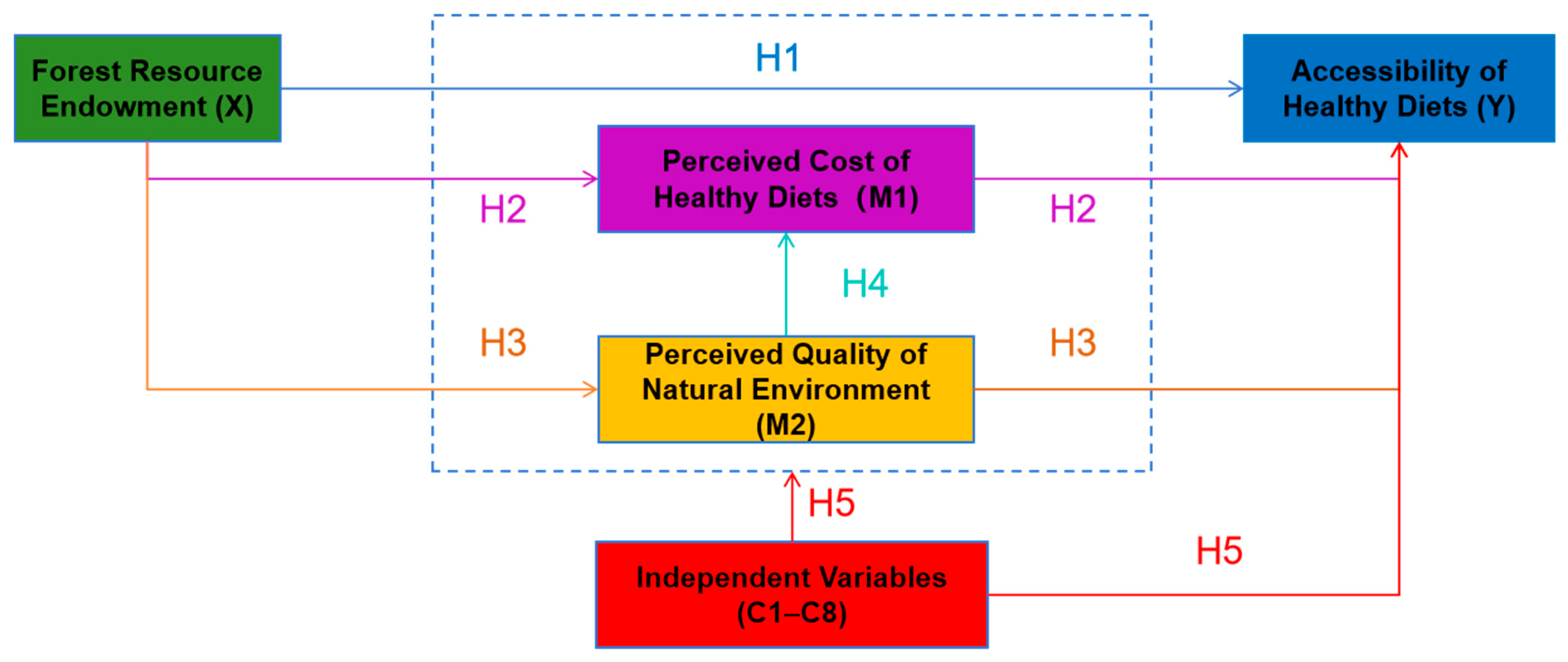
The natural environment is a form of a capital asset, or natural capital [38]. A forest resource is a type of natural capital. Natural capital is the source of ecosystem services, which support human welfare. Costanza (1997) indicates that “Ecosystem services consist of flows of materials, energy, and information from natural capital stocks which combine with manufactured and human capital services to produce human welfare [18].” MA (2005) presented a figure showing “linkages between ecosystem services and human well-being” to describe the strength of linkages between ecosystem services and components of human well-being [17]. The figure shows that the provisioning service (including food, fresh water, wood and fiber, fuel) and regulating service highly influence basic materials (including adequate livelihoods, sufficient nutritious food, shelter, and access to goods) [17]. Ickowitz et al. (2022) proposed that the role of trees and forests in healthy diets and sustainable food systems includes provisioning nutrient-rich foods, fuel, and income (crucial sources of cooking energy), as well as ecosystem services for agriculture and stability and resilience of the food system [39]. Based on the theories presented above, combined with the factor of cost that influences healthy diet accessibility [40], the influence pathways between farmers’ forest resource endowments and their perception of healthy diet accessibility are shown in Figure 1. Figure 1 illustrates the conceptual framework of the theoretical hypotheses.
China has 2.31 million ha of forests and more than 8000 species of woody plants, containing abundant food resources [37]. Data published in 2023 indicate that per capita forest food production has reached around 130 kg, which is among the highest in the world [37]. In poverty-stricken areas, the provisioning services provided by forests are crucial for the health and welfare of farmers [16,41,42,43], and they help increase the variety of farmers’ food choices [16]. Additionally, forest foods are commonly used in traditional Chinese medicine due to their unique medicinal properties [44]. In addition, Ickowitz (2022) also pointed out that forests provide fuel for cooking [39]. These tangible provisioning services, by enhancing self-provisioning capacity and stabilizing food availability, allow farmers to perceive that healthy foods are more accessible and reliable, directly influencing their perception of diet availability.
H1. 
Farmers’ forest resource endowments increase healthy diet accessibility. (Pathway 1: Forest resource endowment → Perception of healthy diet accessibility.)
Healthy diets cost more than unhealthy diets [40,45,46,47,48]. As such, people’s socioeconomic status is a primary factor influencing the accessibility of a healthy diet [49]. However, in some cases, socioeconomic status is not the key factor [50] when the social and natural resource endowments of individuals and regional areas are considered.
Places with abundant forest resources have lower costs associated with obtaining healthy diets. Forests provide forest foods to local markets at lower prices due to their origin-based advantage. Mugido & Shackleton (2015) identify transport costs, stock price, profit margin, time required to collect or produce the product, and market price as the main factors influencing the price of NTFPs [51]. Local markets can reduce product costs by lowering transport costs, stock prices, and other expenses. Farmers around the forest can obtain forest foods at lower prices. Taking bamboo shoots, a local food ingredient favored by people in Jiangxi, as an example, the lowest prices are found in the production areas, followed by wholesale prices in nearby production areas, with the highest wholesale prices at markets in surrounding sales regions [52].
H2. 
Farmers’ forest resource endowments increase healthy diet accessibility by reducing the perceived costs of healthy diets. (Pathway 2: Forest resource endowment → Perception of healthy diet costs → Perception of healthy diet accessibility.)
Agricultural pollution and environmental changes affect water and food quality [53,54,55]. Consumers’ consumption of high-quality foods is affected by agricultural pollution in food production [22]. Organic farming is an effective method for enhancing soil fertility and producing high-quality food [20,21]. A clean water source is a crucial factor in ensuring the quality of agricultural products. Forests enhance soil fertility, mitigate soil erosion, and purify water through their regulatory function [17,18]. Thus, agroforestry has transformative potential, providing an opportunity for increasing the sustainability of organic farming [56]. Rosati, Borek & Canali (2020) defined agroforestry as an agricultural approach based on the diversification of agroecosystem production components (woody perennials, such as trees or shrubs, plus crops and/or livestock) and on the intensification of the agroecological relationships between these components [56]. This agricultural approach is good for producing healthier foods. In addition to providing provisioning, regulation, and maintenance services, the forest also offers cultural services, thereby attracting tourists. The development of tourism can create an environment conducive to the production and sale of high-quality, locally sourced forest products. Thus, farmers with forestland are able to produce healthier foods.
In addition, farmers with a forest resource endowment may obtain forest food or traditional Chinese medicine that are not traded in most markets [57]. Furthermore, forest ecosystems purify water [17,18], which in turn helps surrounding farmers access healthier water [58].
H3. 
Farmers’ forest resource endowments increase the accessibility of a healthy diet by enhancing the perceived quality of the natural environment. (Pathway 3: Forest resource endowment → Perception of environmental quality → Perception of healthy diet accessibility.)
According to H2 and H3, as well as the fact that forests can improve the quality of the natural environment, the safety risk and cost of food for farmers with a forest resource endowment are reduced, allowing them to choose high-quality forest food, thereby improving the accessibility of a healthy diet.
H4. 
Forest resource endowment increases the perceived environmental quality, decreases the perceived cost, and ultimately affects the accessibility of healthy diets. (Pathway 4: Forest resource endowment → Perception of environmental quality → Perception of healthy diet costs → Perception of healthy diet accessibility.)
Velardo (2015) conceptualized food, nutrition, and health literacy, indicating that food literacy relates to knowledge, abilities, beliefs, and the social environment [59]. There is an overlap between nutrition literacy and food literacy, particularly in the selection of nutritious foods. Nutrition literacy is a component of health literacy that is closely tied to food. The ability to access healthy diet information reflects the intersection of food, nutrition, and health literacy and relies on the effective use of information. This varies based on an individual’s knowledge, which is influenced by their educational level.
Many studies have focused on the relationship between the effect of food or nutrition literacy on healthy diet habits or healthy eating. They have found that people with food or nutrition literacy tend to consume healthier foods and maintain better eating habits [59,60,61,62]. Zoellner (2009) investigated the various channels used to obtain information on healthy diets to support healthy eating [63]. They found that nutrition literacy directly affects people’s level of trust in the information. This means that in a complex food environment, individuals with higher nutrition literacy can more easily achieve a healthy diet. This research assumes that forests provide various healthy foods that improve food access. This decreases the importance of a farmer’s ability to access healthy diet information, as they already have healthy food available and accessible. For farmers without abundant forest resources, access to information on healthy diets may significantly impact their ability to adopt healthy eating habits.
Gender Equity (2013) indicates that women frequently face disadvantages compared to men in terms of access to and control over forest resources [64]. However, women often possess highly specialized knowledge of forests, including species diversity, management, and multi-purpose uses [64]. Moreover, women’s knowledge tends to be more closely linked to household food consumption and health [64]. Many studies have found that women generally pay more attention to healthy eating, while men tend to choose high-oil-based and high-sugar foods and rely more on dining out [9,10]. Given this, this research posits that the accessibility of healthy food in response to increased forest endowments may differ based on farmer gender.
The impact of forest resource endowments on farmers’ access to a healthy diet varies by age. Farmers in different age groups differ in their access to healthy diets and preferred foods, as well as in how they develop dietary habits [11]. In terms of food access, young farmers prefer to use the internet, while older farmers prefer the local traditional market [65,66]. In terms of preferred foods, younger people are more likely to enjoy higher-calorie foods than older adults [11]. The conventional knowledge mastered by the elderly may also be a factor affecting their healthy diets.
The level of education is another factor that affects the accessibility of a healthy diet [8]. Powell et al. (2015) found that increasing education about nutrition and the environment may promote forest foods as part of a popular healthy diet system [67]. However, official education includes content related to nutrition and the environment (for example, the subject of biology) that may lead to different impacts on how forest endowments affect the accessibility of a healthy diet based on educational level.
Household income level may impact the accessibility of a healthy diet. Having a higher household income gives the ability to purchase more nutritious food [68,69]. However, some people with higher incomes may demand a greater variety of food and higher-quality foods to satisfy their higher standards, regardless of the cost. In other words, forest foods may not satisfy their needs, so the effect of forest endowments on healthy diet accessibility may not be significant.
Assuming a fixed total household income, household size affects the average income of a person. This means that a bigger household is expected to decrease healthy diet accessibility. However, for farmers with forest endowments, household size may increase the effect that forest foods have on healthy diet accessibility. A larger household may provide more labor to access forest foods; however, the income equivalent from forest foods has not been quantified.
Internet shopping is increasingly popular in China, with products ranging from various processed to fresh foods [70]. The convenience of internet shopping is expected to decrease farmers’ reliance on forest foods. However, it is also possible that after purchasing a large amount of processed food [71], farmers value forest foods more than before. Farmers with forest endowments may consider their food environment to be both scarce and convenient.
Good transportation conditions help increase access to health [13,14]. This may decrease farmers’ reliance on forest resources and reduce the impact. Better transportation, however, is also advantageous for developing agroforestry and for increasing the effect of farmers’ forest endowments on healthy diet accessibility.
H5. 
Forest resource endowments influence farmers’ access to healthy diets differently depending on observed individual heterogeneity or conditions.

3. Materials and Methods

3.1. Study Area

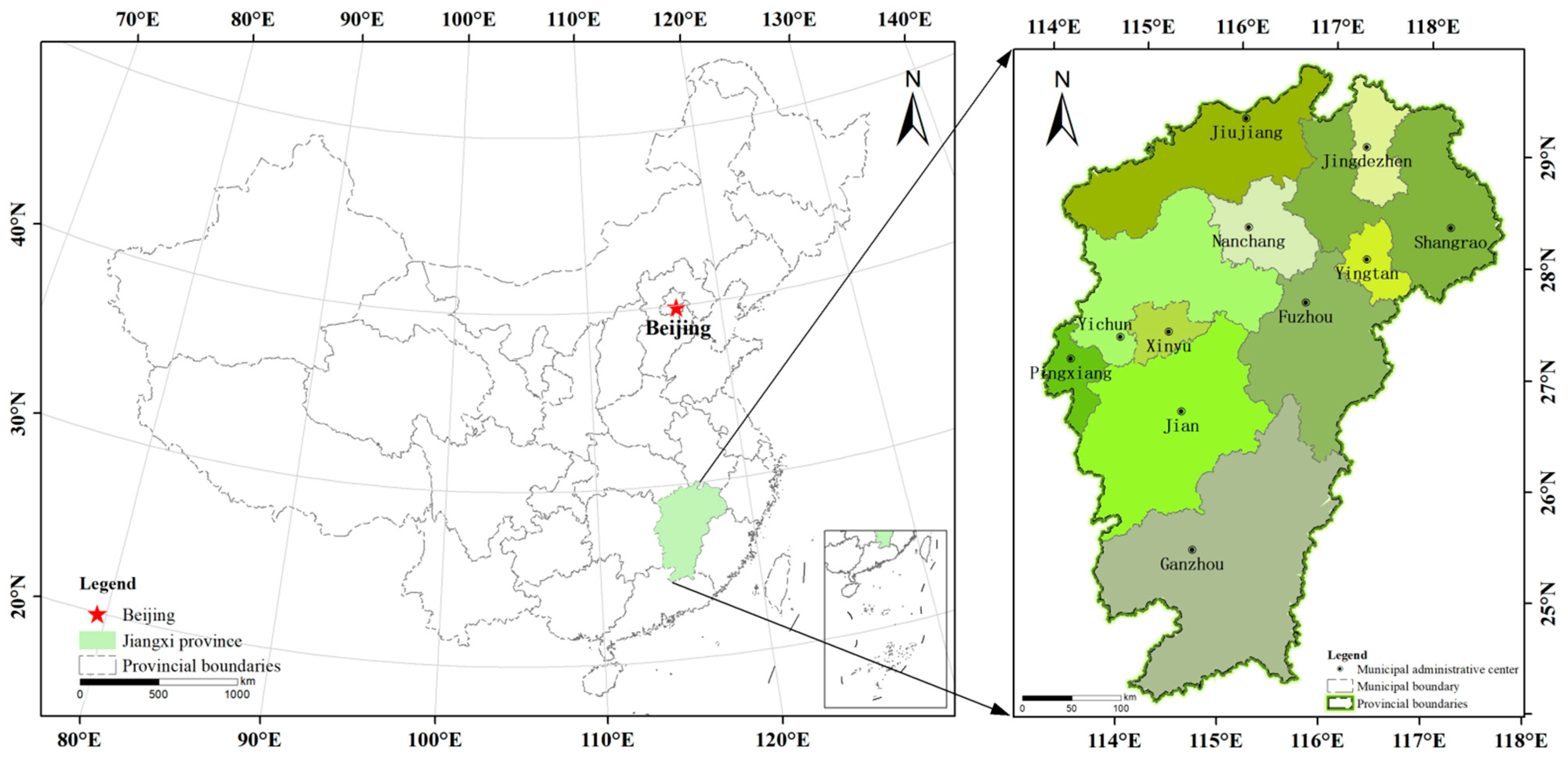
Jiangxi Province is in southern China, near the Yangtze River, and has 11 prefecture-level cities (Figure 2). The forest coverage rate in Jiangxi Province is 63.35% [72], ranking second in the country. Farmers with personal forestlands make up 54.04% of the total population (calculated from the “ShuangBaiShuangQian” data). In 2022, the local government released guidelines on further development of non-timber production and eco-tourism [73]. Given the research topic, Jiangxi Province is a representative and suitable study area.

3.2. Data Sources

This study uses the “ShuangBaiShuangQian” dataset from the Rural Revitalization Strategy Research Institute of Jiangxi Agricultural University. The dataset is from a field survey conducted in Jiangxi Province between June and July 2022 by teachers and trained students at the School of Economics and Management, Jiangxi Agricultural University. It covers 11 prefecture-level cities, 24 sample counties, 72 towns, and 216 villages. The total sample size is 2160 households.
The original research team selected sample counties using stratified random sampling, dividing them into four levels based on local gross domestic product (GDP) data from 2018. Sample towns were chosen randomly after the towns in sample counties were categorized into three economic tiers based on nighttime light data. Finally, within each town chosen, the researchers randomly selected three sample villages. In each village, the researchers randomly selected 10 households for a questionnaire survey. The questionnaire covered various aspects related to agriculture, rural areas, and farmers, including production, living conditions, and personal details.
This study utilizes data from the original research questionnaire, which encompasses healthy diets, forest resource conditions, farmers’ personal characteristics, household features, and village collective information. After cleaning the data and addressing contradictory and missing information, 1939 valid samples were retained, resulting in an effective sample rate of 89.8%.

3.3. Modeling

3.3.1. Variable Selection and Definition

(1)
Dependent Variable ( Y i ).
This study defines the dependent variable as farmers’ judgments about how convenient it is to obtain healthy diets based on their own environment and economic situation. This study uses a five-point Likert scale to measure the dependent variable “healthy diet accessibility.”
(2)
Core Independent Variable ( X i ).
Based on the research hypotheses in Section 2.2, the core independent variable is farmers’ forest resource endowments. In this study, whether a farmer has forestland resources or not (a binary variable) is used to represent the abundance of their forest resource endowments.
(3)
Proxy Variable ( Z i ).
This study characterizes farmers’ forest resource endowments based on whether the village collective owns forest land. Using village collective forest resource endowments as a proxy variable retains the basic characteristics of these endowments as the core independent variable, while eliminating the impact of farmers’ forest resource endowments as an asset and source of income when improving healthy diet accessibility for farmers. “Village collective’s forest resource endowments” is a binary variable.
(4)
Mediating Variables ( M j i ).
Based on the research hypotheses in Section 2.2, two mediating variables were tested to assess their effects: perceived costs of healthy diets ( M 1 i ) and perceived quality of the natural environment ( M 2 i ). These are discussed further below.
Perceived Costs of Healthy Diets ( M 1 i ): This study defines the perceived costs of healthy diets using farmers’ judgments about the cost of obtaining healthy diets, considering their environmental and economic situations. It is measured using the response to the survey question “Does eating a healthier diet cost you too much money?” The concept of healthy diets encompasses high-quality foods that are difficult to measure by marketing price because the marketing price of foods depends on the quality and the production place. Thus, farmers’ perception of the costs of healthy diets can better reflect the price–quality trade-off.
Perceived Quality of the Natural Environment ( M 2 i ): The natural environment of a village includes arable land and forest land. The quality of the natural environment is an integrated evaluation of the condition of air, water, soil, and ecosystems. The perceived quality of the natural environment refers to the quality of the village’s natural environment, as perceived by the farmers. It is measured using farmers’ responses to the survey question “How do you think the natural environment of your village is?” It is more convenient to obtain perception data than quantified data.
(5)
Independent Variables ( C i ).
Independent variables include eight variables across three levels: individual, household, and village. Individual-level variables include information on a healthy diet, gender, age, and educational level. Household-level variables include household disposable income and household size. Village-level variables include transportation and communication infrastructure. Because only one sample is from a peasant household, the family-level information of all samples is randomly obtained.
Access to Healthy Diet Information ( C 1 i ): Access in this context indicates the ability to obtain healthy diet information in different ways. Responses to the following survey question are used to measure it: “Do you have the ability to access information related to healthy diets from various sources?” This study uses a five-level ordinal scale to measure this variable.

3.3.2. Variable Specification and Descriptive Statistics

The sample size of this study is sufficient (more than 385 samples). The mixed ordered logit model does not require the dependent variable, independent variable, or error term to obey a normal distribution. Additionally, exceptions and missing values were removed during the data cleaning process. This enables practical statistical analysis (Table 1). The average value of “healthy diet accessibility” is close to 3, indicating a relatively balanced distribution of evaluations among respondents. The proportion of farmers owning forest land is 58%, while the proportion of village collectives owning forest land is 84%. This suggests that village collectives play a significant role in forest resource management, which is consistent with the prevailing land management situation in China. The sample encompasses farmers with diverse individual characteristics, thereby supporting the universality of the research results. One unbalanced variable is gender, with a larger proportion of males in the rural area sample (81%).

3.3.3. Model Construction

Mixed-effects ordered logit regression models are commonly used when the dependent variable is an ordinal discrete variable and the independent variables are affected by groups. Both are true in this case. This study employed a mixed-effects ordered logit model to conduct the baseline analysis. Given the data collection approach, 10 questionnaires were gathered from each sample village to assess whether the communication and transportation independent variables showed the same trends as the group of villages. This approach highlights the suitability of the mixed-effects ordered logit regression model.
Farmers’ access to a healthy diet is the dependent variable, and forest resource endowments are the core independent variable in the regression analyses. The constructed baseline regression model (mixed-effects ordered logit) is as follows:
l o g i t P Y i j k = θ 1 k ( β 1 · X i j + β 2 · C i j + u 0 j )
Here:
Y i : Healthy diet accessibility for farmers;
X i : Forest resource endowments of farmers;
C i : The vector of independent variables (including access to healthy diet information, gender, age groups, educational level, household disposable income, household size, village broadband ratio (communications), transportation conditions);
θ k : The cut-off points that segment the unobserved latent propensity into discrete, ordered outcomes;
j : Village;
u j ~ N ( 0 ,   σ 2 ) : The random effect of j village.
The mechanism analysis uses farmers’ perceived costs of healthy diets and perceived quality of the village’s natural environment as mediating variables. A mediation effect model tests the effectiveness of each variable. The constructed model is as follows [74]:
Step 1:
l o g i t ( P ( M 1 i j k ) ) = θ 2 k ( a 1 X i j + a 2 M 2 i j + a 3 C i j + u 1 j )
or
l o g i t ( P ( M 2 i j k ) ) = θ 2 k ( b 1 X i j + b 2 C i j + u 2 j )
Step 2:
l o g i t P Y i j k = θ 3 k ( γ 1 X i j + γ 2 M 1 i j + γ 3 M 2 i j + γ 5 C i j + u 3 j )
Here:
M n i : The n -th mediating variable.
To address potential endogenous and ignored variable bias, the instrumental variable method, propensity score matching method, and core variable substitution method were employed for robustness analysis. For heterogeneity analysis, farmers are divided into two categories according to the control variables. For each group, the mixed-effects ordered logistic regression model was estimated according to model (4). The next step was determined according to the significance of mediating variables in the results of each group. If the M1 intermediate variable is significant, it is used as the dependent variable, and the regression model is estimated using Equation (2). If the M2 intermediate variable is significant, or both M1 and M2 intermediate variables are significant, two regression models are estimated according to models (2) and (3) to illustrate the pathway in which farmers’ forest resource endowment affects the intermediate variable.
All analyses were conducted using Stata/MP 18 (StataCorp LLC, College Station, TX, USA) statistical software. The “meogit” command was used to analyze the mixed-effects ordered logit model. In the mediation and heterogeneity analyses, the “bootstrap, reps (1000)” command was used to enhance the robustness of the results. The “eoprobit” and “melogit” commands were used to conduct instrumental variable analysis. Propensity score matching used the “psmatch2” command and employed kernel matching.

4. Results

4.1. Baseline Regression

Table 2 presents the results of mixed-effects ordered logit regression analyses examining the impact of farmers’ forest resource endowments on the accessibility of a healthy diet. The results indicate that the use of a mixed ordered logit model and a five-point scale is justified (Wald χ2 = 53.02, p < 0.01), although the estimate for Cut-Off3 is not significantly different from zero. A significant positive association remains after controlling for other factors, including access to healthy diet information, gender, age, educational level, and household income. This means that, regardless of other conditions, the positive effect of forest resource endowments on healthy diet accessibility remains robust: having forest resources helps farmers improve their access to healthy diets. The coefficient of the core independent variable from model (1) is 0.225, and the odds ratio is 1.252. This indicates that farmers with forest resource endowments perceive having 1.252 times more access to healthy diets. According to model 1, the average marginal effect of farmers’ forest resource endowment on the probability of reporting a higher level of healthy diet accessibility ( Y = 4 or Y = 5) is 0.0521 (p = 0.020, 95% CI: 0.81–9.60 percentage points). This indicates that, keeping other factors unchanged, having forest resource endowments ( X = 1) will increase the predicted probability of reporting “relatively convenient” or “very convenient” access to healthy diets ( Y = 4 or Y = 5) by about 5.21 percentage points.
Several control variables significantly impact the accessibility of a healthy diet, including access to healthy diet information, age group, household income, communication availability, transportation convenience, and village differences. Access to healthy diet information has a significant adverse effect, where increases in this variable reduce perceived accessibility to a healthy diet. This may be because acquiring more information about healthy diets makes people more aware of the limitations in their available options. Compared with younger farmers under 40 years old, elderly farmers have significantly lower access to a healthy diet.
Farmer household income also significantly affects the accessibility of a healthy diet. Compared with farmers with a household income of less than 30,000 RMB, those with a household income between 30,000 and 50,000 RMB experience increased accessibility to a healthy diet. Farmers with a household income of 50,000–120,000 RMB experience a decreased positive effect on healthy diet accessibility compared to farmers with a household income of 30,000–50,000 RMB. Farmers with a household income above 120,000 RMB experience a more pronounced positive effect compared with those with a household income between 50,000 and 120,000 RMB. However, the results are non-significant when household income ranges from 50,000 to 80,000 RMB and from 80,000 to 120,000 RMB.
The farmer’s convenience of transportation also has a significant positive impact on the accessibility of a healthy diet. This suggests that farmers residing in areas with more convenient transportation have greater opportunities to access healthy diets. The results of the mixed-effects model show differences in healthy diet accessibility between different villages, indicating significant variability.

4.2. Robustness Test

4.2.1. Instrumental Variable Method

Table 3 shows the results of the instrumental variable method using the extended ordered probit model. The cluster-robust standard errors at the village level are used to control intra-village correlation. The results show that farmers’ forest resource endowment has a positive and significant effect on healthy diet accessibility, with an estimated coefficient of 0.377 (p < 0.05). In the first-stage equation, the coefficient of the instrumental variable is 0.499 (p < 0.01), indicating a strong correlation between village collective forest resource endowment and farmers’ forest resource endowment. The result satisfies the relevance condition. The estimated correlation between the error terms is −0.124 (p = 0.120), suggesting that endogeneity may not be severe in this sample. Nevertheless, the results are consistent with the baseline regression estimates and support the results’ robustness.

4.2.2. Propensity Score Matching Method

Table 4 shows the results of the propensity score matching (PSM) method (kernel matching). The t-value of ATT (average treatment effect on the treated) is 2.94 (greater than 1.96), indicating a statistically significant effect after kernel matching. Kernel matching reduces bias by balancing observable covariates between groups.
Appendix A Table A2 shows the balance test results after propensity score matching. It indicates that propensity matching is effective, and the bias caused by covariates has decreased significantly. Appendix A Table A3 shows the results of the weighted regression analysis based on the matched data. The coefficient of forest resource endowment is significant and positive. The results of the propensity score matching method support the stability of the baseline regression result.

4.2.3. Replacing the Core Independent Variable

Table 5 shows the robustness test results when replacing the core independent variable with “village collective’s forest resource endowments.” The results indicate that the replaced core independent variable continues to have a significant positive impact on healthy diet accessibility, verifying the validity of the original model.

4.3. Mechanism Test and Heterogeneity Analysis

4.3.1. Mediation Effect Analysis

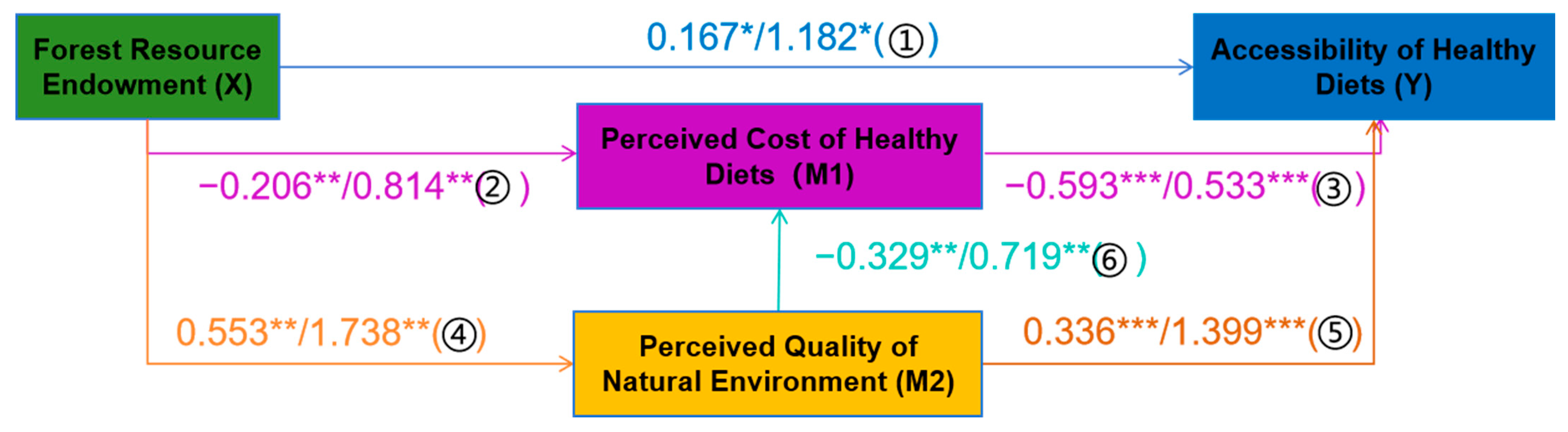
Figure 3 shows the results of the mediation effect analysis. The mediation analysis indicates that forest resource endowments are associated with greater accessibility of healthy diets via higher perceived environmental quality and lower perceived costs.
Farmers’ forest resource endowments are associated with higher accessibility of healthy diets through lower perceived costs of healthy foods. The cost of a healthy diet is typically higher than that of an unhealthy diet [17,40,48]. This point can influence individuals’ perceptions and choices regarding healthy diets, potentially leading to social health inequalities. However, when farmers have forest resource endowments, their perceived costs of a healthy diet are lower. It is possible that farmers can utilize the provisioning or regulating functions of forest resources to obtain healthy diets at a low cost through activities such as cultivation or buying food from local markets.
Farmers’ forest resource endowments are associated with greater accessibility of healthy diets via higher perceived quality of the natural environment. Farmers often assess the healthiness of food based on the quality of the natural environment in which it is produced, which aligns with findings from other studies [21]. The ecosystem services provided by forest resources contribute to an overall improvement in the perceived quality of the natural environment by farmers [17,18], leading them to judge that food obtained from forest resources is healthier.

4.3.2. Heterogeneity Analysis Based on Independent Variables

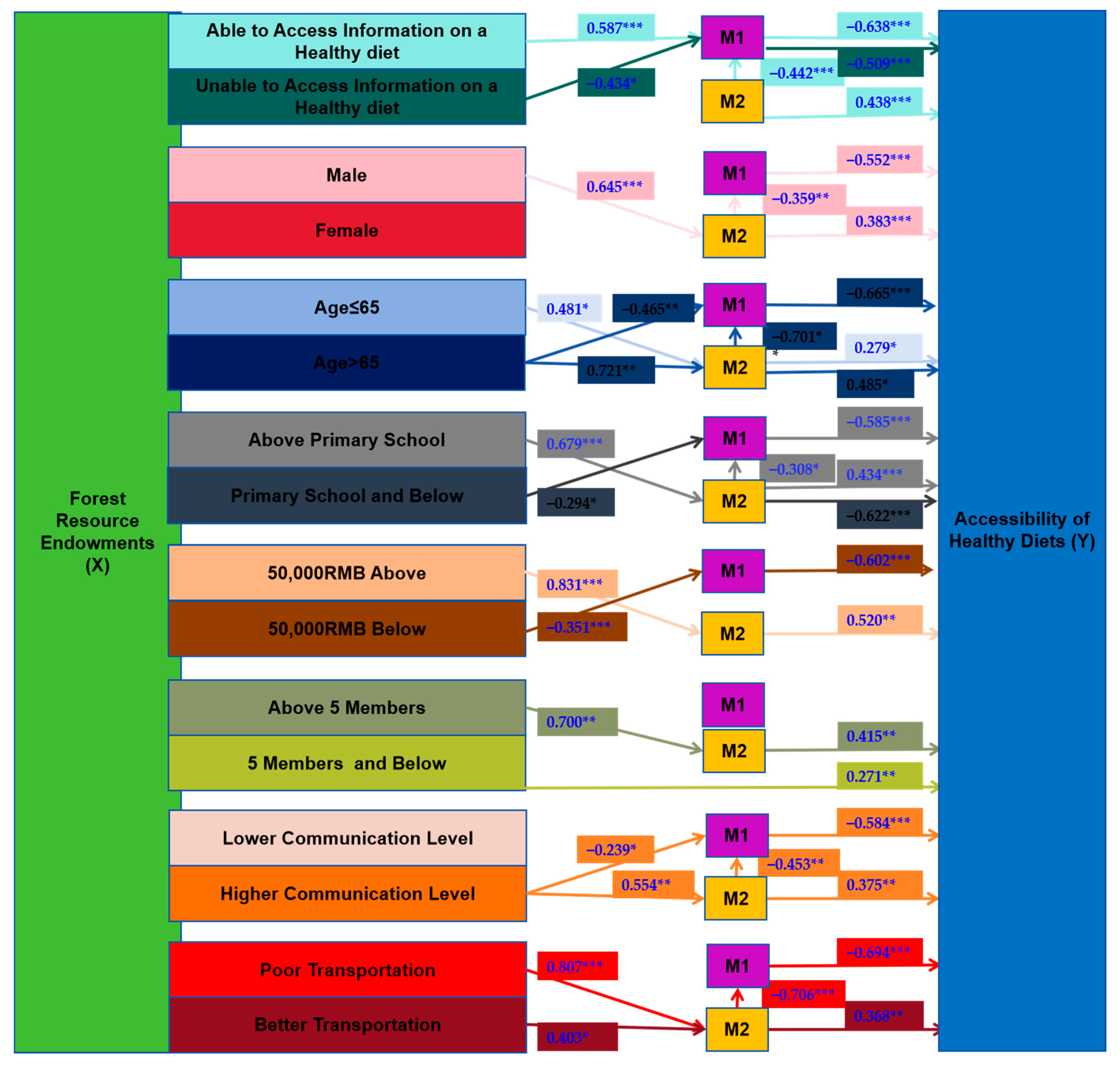
To investigate the differences in the effect pathways associated with various control variables, the farmer sample is divided into two groups based on the mean value of each control variable. The results are then compared. Figure 4 present the results of the mediation effect analysis, which incorporates all types of heterogeneity. For all of the heterogeneity analyses, after grouping the samples by the control variables, a mixed ordered logistic model is applied for each group. Next, using the significant mediating variables identified from the results as dependent variables and farmers’ forest resource endowments as the independent variable, the proper logistic models (mixed-effects ordered logistic/mixed-effects logistic) are developed and analyzed. Figure 4 and Appendix A Table A5, Table A6, Table A7, Table A8, Table A9, Table A10, Table A11 and Table A12 show the results of the heterogeneity analysis based on the independent variables.
(1)
According to Figure 4 and Appendix A Table A5, the impact of farmers’ forest resource endowment varies by their ability to obtain information on a healthy diet. This result is consistent with the results from Zoellner et al. (2009) [63] and Giskes et al. (2011) [61]. For farmers with limited access to information on healthy diets, their endowments can influence the accessibility of healthy diets by reducing the perceived costs of adopting them. For farmers who can better access this information, their endowments positively impact the accessibility of healthy diets by enhancing the perceived quality of the natural environment. This means that farmers who can access healthy diet information are more likely to be concerned about their food sources. However, forest food is generally recognized as organic and healthier. Farmers who are unable to access information can obtain forest foods at a lower cost, thereby improving the quality of their diet.
(2)
The mediating effect analysis based on farmers’ gender shows that for male farmers, their forest resource endowment is significantly associated with the accessibility of a healthy diet through the perception of natural environment quality. Perceived natural environment quality is negatively correlated with farmers’ perceived cost of a nutritious diet, and the perceived cost of a healthy diet is negatively correlated with farmers’ perceived accessibility of a healthy diet. Male farmers generally predominate in agricultural production and understand the advantages of forest environments on cultivation [64]. Therefore, the perceived quality of the natural environment by male farmers is significantly correlated with their endowment of forest resources. Among female farmers, there is no significant statistical correlation between forest resource endowment and perception of healthy diet accessibility. This may be due to the small sample size.
(3)
Farmers’ forest resource endowment affects the perception of healthy diet accessibility in different age groups through various pathways. This result is consistent with findings related to age heterogeneity [75,76]. For farmers aged 65 and below, their forest endowments influence the accessibility of healthy diets through their perception of the natural environment. For farmers aged 65 and above, their endowments are associated with increased accessibility, which reduces the perceived costs of healthy diets and improves the perceived quality of the natural environment. In addition, farmers’ perception of the quality of the natural environment has a significant negative impact on the perceived cost of a healthy diet. Then it has a significant positive effect on the accessibility of a healthy diet. Comparing the pathways by age groups suggests that, among older farmers, the reduction in perceived costs associated with forest endowments is the main mechanism.
(4)
The influence of endowments on accessibility differs by farmers’ educational level. For farmers with primary school education or above, the forest resource endowment significantly affects the accessibility of a healthy diet, as it influences the perceived cost of a healthy diet and the quality of the natural environment. And perceived natural environment quality is significantly correlated with perceived healthy diet cost. For farmers with primary school education or less, the forest resource endowment is associated with the perception of healthy diet accessibility, as influenced by the perceived cost of a healthy diet. Therefore, more educated farmers pay more attention to a healthy diet in a high-quality natural environment and regard the forest as a place of this quality. This result is consistent with the result from Powell (2015) [67]. Farmers with lower education are concerned about the cost of a healthy diet, while the cost of food provided by forests is lower. This result is similar to the heterogeneity results seen when evaluating the impact of access to healthy diet information.
(5)
The influence of endowments on accessibility also differs by farmers’ household income level. This finding is consistent with those of Blaylock et al. (1999) [69] and French et al. (2019) [68]. For farmers with a household income of 50,000 RMB or above per year, their forest resource endowments are associated with the accessibility of a healthy diet through the perceived quality of a better natural environment. For farmers with a household income below 50,000 RMB per year, their forest resource endowments are significantly associated with the accessibility of a healthy diet, as perceived through the cost of nutritious diets. This means that farmers with higher incomes may regard forest food as a fundamental element of a high-quality diet, but they will not rely on forest food with a lower price as low-income people do.
(6)
The influence of endowments on accessibility differs by the number of family members. For large families, the pathway associated with the perceived quality of the natural environment is significant. For smaller families, there is a significant correlation between the farmers’ forest resource endowments and the perception of healthy diet accessibility. They also have a significant association with the perception of healthy diet accessibility, as reflected in the perceived costs of healthy diets. One possible reason is that large families have a greater opportunity to cultivate their own food, and they view forests as a suitable environment for agricultural purposes.
(7)
The influence of endowments on accessibility differs by the village’s communication (broadband) conditions. In villages with better communication, farmers’ forest resource endowments have a significant association with the perception of accessibility, as reflected in the perceived costs of healthy diets and the perceived quality of the natural environment. This may be due to a better circulation of information about foods, primarily through internet shopping. In villages with limited communication, the correlation between forest resource endowments and access to a healthy diet is not statistically significant at the 10% level (p = 0.126). This may indicate that strong communication is a crucial advantage for forest resource endowments to improve the accessibility of a healthy diet [26].
(8)
The effect of endowments on accessibility varies by the level of transportation convenience in the villages. In places with poor transportation conditions, farmers’ forest resource endowments significantly improve farmers’ perceptions of natural environmental quality, substantially reduce the perceived cost of a healthy diet, and ultimately significantly improve the perception of healthy diet accessibility. These farmers are very dependent on their forest resource endowment. When transportation is convenient, the impact of forest resource endowment is significant only through farmers’ perception of natural environmental quality. Because farmers with good transportation have more diverse food sources [10,11], forests are no longer a significant factor in reducing the perceived costs of healthy diets. On the contrary, the main contribution of forests is to provide a higher-quality environment and support farmers’ access to higher-quality food.

5. Conclusions and Discussion

5.1. Conclusions

This article focuses on farmers in Jiangxi Province, China, using valid responses from 1939 people across 216 villages to systematically analyze the impact of farmers’ forest resource endowments on the accessibility of a healthy diet. The research methodology includes a baseline regression analysis using a mixed-effects ordered logistic model. The robustness of the baseline model was assessed using the instrumental variable (IV) method, propensity score matching (PSM), and replacement of the core independent variables. A mediation effect model was applied to conduct a mechanism analysis and heterogeneity analysis.
The results indicate that the forest resource endowments of farmers have a significant and stable positive impact on the accessibility of a healthy diet. This conclusion is consistent with findings from Jamnadass et al. (2015) [42], Ahenkan and Boon (2011) [43], and Rowland et al. (2017) [41]; forest resources play a crucial role in providing food nutrients to humans, and forest foods can enhance the quality of diets.
The result of the mechanism analysis shows that farmers’ forest resource endowments improve healthy diet accessibility through three categories of pathways. First, farmers’ forest resource endowments directly increase their perceived accessibility to a healthy diet (Pathway 1). Second, forest resource endowments increase the accessibility of healthy diets by reducing farmers’ perceived costs of healthy diets. This includes two pathways: “Forest resource endowments → perceived healthy diet costs → perceived healthy diet accessibility” (Pathway 2) and “Forest resource endowments → perceived natural environmental quality → perceived healthy diet costs → perceived healthy diet accessibility” (Pathway 4). Third, forest resource endowments increase healthy diet accessibility by improving farmers’ perceived natural environmental quality (“Forest resource endowments → perceived natural environmental quality → perceived healthy diet accessibility” (Pathway 3)). Based on the observed pathways, these can be interpreted as reflecting three conceptual types of resource acquisition: the “direct acquisition” type (Path 1), where forest resource endowments are used to meet basic energy and nutritional demands or obtain forest foods for free; the “cost mitigation” type (Path 2), where the benefits of forest resource endowments for healthy diets are reflected through lower costs; and the “quality scarcity” type (Path 3), where dietary quality is improved by obtaining high-quality or scarce forest foods.
The results of the heterogeneity analysis indicate that the impact of forest resource endowments on healthy diet accessibility varies across different pathways by independent variables (accessibility to healthy diet information, age, education level, disposable income, household size, and transportation convenience). The influence types differ between disadvantaged and advantaged farmer groups. For advantaged farmers, who have better access to information on healthy diets, are younger than 65 years old, and have education above primary school, higher annual disposable income (above 50,000 RMB), better internet connectivity, and convenient transportation, farmers’ forest resource endowments influence their access to a healthy diet through the perception of natural environmental quality (Pathway 3). It is the “quality scarcity” type. For disadvantaged farmers in groups with an annual disposable income below 50,000 RMB or poor transportation conditions, forest resource endowments influence the perceived costs of healthy diets (Pathways 2 and 4), which is the “cost mitigation” type. For disadvantaged farmers in groups with education below primary school and fewer than five household members, the effect is direct (Pathway 1); it is the “direct acquisition” type. For farmers older than 65 and those with better internet connectivity, the effect types are “cost mitigation” and “quality scarcity”. However, farmers without broadband did not show a significant impact in all ways, indicating that insufficient information connectivity may weaken the effect of forest resource endowment on the accessibility of a healthy diet.

5.2. Policy Recommendations

Jiangxi is a typical province with high forest coverage and a high share of private forest resources. According to the People’s Government of Jiangxi Province (2025), the permanent resident population of Jiangxi Province is 45,020.1 thousand [77]. In this study, 58% of farmers have forest resource endowments. Based on this proportion, there are about 26,111.6 thousand residents in Jiangxi with forest resource endowments. With the strong implementation of forest conservation policies, Jiangxi Province still promotes under-story forest-based economics. The results of baseline regression show that the average marginal effect of forest resource endowment is 5.2 percentage points. Thus, it is necessary to develop under-story forest-based economies, especially in areas with abundant forest resource endowments and scarce food resources. For protected areas, compared with strict protection, promoting sustainable use and safeguarding the rights of farmers with forest resource endowments is crucial, considering the potential impacts on farmers’ healthy diets.
Based on the analysis results of the impact pathways, even after basic food security is achieved [28], the contribution of forest resources to a healthy diet cannot be ignored. For farmers whose food security is threatened by food shortages or malnutrition, the link between forest resource endowment and a healthy diet is more direct. On the other hand, for farmers who can essentially meet their basic survival needs, forest resource endowments contribute more by providing better, more cost-effective food, diversifying food types, and meeting nutritional needs. For farmers seeking a higher quality of life, forest resource endowments contribute to the availability of a healthy diet by providing food from a higher-quality natural environment and unique products that can be uniquely supplied by forests. In other words, the link between forest resource endowment and access to a healthy diet varies according to farmers’ needs for a healthy diet and quality of life. In African case studies on forests and healthy diets or health [23], the basic food provisioning function of forests is emphasized. In the Southeast Asian case [24], the focus is on the cultivation function of diversified forest food production. In the context of China’s economic and social development environment in this study, it can be seen that there are different influence pathways between forest resource endowments and the accessibility of healthy diets. In these studies, it is evident that under different demand backgrounds, the type of path connecting forest resource endowment and a healthy diet gradually evolves with the provincial demand of the people. Therefore, in China and other regions of the world, it is necessary to consider the impact of the path of forest resource endowment on the accessibility of a healthy diet and formulate appropriate development strategies. For example, if people only want to obtain high-quality forest food from the forest, they need to pay more attention to the function of improving the quality of the natural environment of the forest.
Based on the results of the heterogeneity analysis, the impact of forest resource endowment on the accessibility of a healthy diet is more basic and direct for disadvantaged groups. However, in environmental compensation, the government did not consider the benefits and losses brought about by farmers’ improved access to healthy diets through forest resources. It also did not consider the different effects of forest resources on the accessibility of a healthy diet for different groups of farmers. In China, following the unsustainable use of forest resources, forest protection is achieved by expanding designated areas and strictly implementing protection policies [30]. However, while protecting these areas, the food supply function of forests is often weakened to improve their environmental quality function. Additionally, farmers’ ecological compensation for the loss of forest use rights is relatively low and uniform. Therefore, it is necessary to consider the availability of a healthy diet and the differences between various groups of farmers in forest resource utilization and protection policies. Considering the effect differences in forest resource endowments helps policymakers to design more equitable and effective interventions that both promote forest conservation and improve farmers’ access to healthy diets across diverse socioeconomic contexts. In addition, improving broadband facilities and transportation can enhance the impact of forest resources on the accessibility of healthy diets for farmers.

5.3. Study Limitations and Prospects

This study still has the following limitations. First, the farmers’ perception data was used for analysis, which is not entirely objective. Future research can incorporate objective data, such as market prices (although difficult to obtain), environmental monitoring or remote sensing indicators, and actual dietary records, to facilitate more objective analysis. Second, indicators can be further diversified to enrich the survey results and enhance their stability. For example, future work can measure forest resource endowment in terms of area, quality, and types; include the perceived prices or costs of vegetables, fruits, meats, and foods of different quality; and use indicators of healthy diet accessibility (or perceived accessibility), including multiple dimensions, such as availability, affordability, and utilization. Third, the data used in this study is cross-sectional and does not reflect dynamic changes based on time factors. Future research can utilize panel data or quasi-experimental designs to investigate the causal effects of forest resource changes (driven by forest management policies, ecological restoration projects, and natural disasters) on the accessibility of healthy diets. Fourth, this study sample is limited to Jiangxi Province. Although Jiangxi is representative in terms of economic level and forestry development, the results may differ between provinces in China or regions worldwide. In future research, the field can be broadened to the entirety of China or the international context. Fifth, all results are based on comparisons between farmers. There is no evaluation of the differences between farmers and urban residents. In future research, the scope of research objects can be expanded to include urban residents as well [78]. This can help the government further formulate relevant policies and improve welfare.

Author Contributions

Conceptualization, L.L. and H.P.; methodology, L.L. and W.L.; software, L.L.; validation, L.L. and W.L.; formal analysis, L.L.; investigation, L.L.; resources, L.L.; data curation, L.L.; writing—original draft preparation, L.L. and H.P.; writing—review and editing, L.L. and W.L.; visualization, L.L.; supervision, W.L.; project administration, W.L. and L.L.; funding acquisition, W.L. All authors have read and agreed to the published version of the manuscript.

Funding

This research was funded by the National Natural Science Foundation of China (Grant Nos. 72263017, 72573074), Jiangxi Province Social Science Planning Office (Grant No. 20GL40), and Jiangxi Provincial Department of Education (Grant No. JC20205).

Data Availability Statement

Data available on request.

Acknowledgments

The authors gratefully acknowledge the Rural Revitalization Strategy Research Institute of Jiangxi Agricultural University, Jiangxi Province, for supplying the pertinent data necessary for this research. ChatGPT 5 (OpenAI, San Francisco, CA, USA) was used to assist with English language editing. The authors reviewed and edited the content and take full responsibility for the final manuscript.

Conflicts of Interest

The authors declare no conflicts of interest.

Appendix A

Table A1. Forest-derived food and resources in China.
CategoryEnglish Name (Latin Name)Notes
VegetablesWild vegetables, Mushrooms, Wood earApprox. 700 species
FruitsBlueberry (Vaccinium spp.), Litchi (Litchi chinensis), Pomelo (Citrus maxima)Annual yield: 190 million tons
NutsWalnut (Juglans regia), Hazel (Corylus heterophylla), Pine nut (Pinus koraiensis)Annual yield: 14 million tons
Meat ProductsLivestock, Fish, Eggs, MilkAnimal-derived foods
GrainsChestnut (Castanea mollissima), Jujube (Ziziphus jujuba), Persimmon (Diospyros kaki)500+ forest grain types
Oil PlantsCamellia (Camellia oleifera), Olive (Olea europaea), Walnut oil (Juglans regia), Palm oil (Elaeis guineensis)8000+ woody oil-producing plants
BeveragesMineral water, Tea, Juice, Birch sap (Betula platyphylla)Approx. 100 forest beverage resources
Medicinal PlantsEucommia bark (Eucommia ulmoides), Ginseng (Panax ginseng), Ganoderma (Ganoderma lucidum)500+ medicinal plants
Bee ProductsHoney, Pollen, Propolis, Royal jelly (Apis mellifera, Apis spp.)9857 nectar plant species
SpicesSichuan pepper (Zanthoxylum bungeanum), Black pepper (Piper nigrum), Star anise (Illicium verum)400+ natural spices; 900+ additive plants
Feed (Woody)Mulberry (Morus alba), Caragana (Caragana korshinskii), Hedysarum (Hedysarum scoparium), Lespedeza (Lespedeza bicolor)1000+ woody forage species
Source: Fu et al. (2022) [19].
Table A2. Balance test results.
VariableMatchedExperimental GroupControl GroupBias Before Matching (%)Reduction in Bias After Matching (%)Post-Matching
t-Test
tt > p
Access to Healthy Diet InformationUnmatched3.3863.3443.4 0.750.453
Matched3.3863.3651.749.40.410.680
GenderUnmatched0.8160.8023.5 0.760.445
Matched0.8160.825−2.529.9−0.600.551
Age Group
40–64 yearsUnmatched0.6430.56915.3 3.320.001
Matched0.6430.6440.099.90.000.996
Over 65 yearsUnmatched0.2820.308−5.9 −1.280.201
Matched0.2820.285−0.788.2−0.170.868
Educational Level
Primary SchoolUnmatched0.3100.321−2.3 −0.490.622
Matched0.3100.313−0.671.6−0.150.878
Junior High SchoolUnmatched0.4060.3648.6 1.870.061
Matched0.4060.4050.199.20.020.987
High SchoolUnmatched0.1680.1650.9 0.190.852
Matched0.1680.172−1.0−16.4−0.240.814
College and AboveUnmatched0.0780.093−5.5 −1.210.225
Matched0.0780.0731.867.80.450.654
Household Income
30,000–50,000 RMBUnmatched0.1980.214−4.0 −0.880.379
Matched0.1980.1970.197.60.020.982
50,000–80,000 RMBUnmatched0.1990.214−3.8 −0.830.406
Matched0.1990.202−0.977.3−0.210.836
80,000–120,000 RMBUnmatched0.0930.093−0.1 −0.020.980
Matched0.0930.0920.4−236.80.090.927
Above 120,000 RMBUnmatched0.1560.168−3.2 −0.690.488
Matched0.1560.158−0.582.7−0.130.895
Household SizeUnmatched5.1195.305−6.3 −1.400.162
Matched5.1195.131−0.493.5−0.100.918
CommunicationUnmatched0.7370.7254.8 1.040.299
Matched0.7370.7360.393.30.080.939
Transportation
Transportation ConvenienceUnmatched13.93411.30434.9 7.520.000
Matched13.93413.6933.290.80.700.484
Table A3. Weighted regression analysis after propensity score matching.
VariableAccessibility of Healthy Diets
Farmers’ Forest Resource Endowment0.254 ***
(0.081)
Control Variablecontrol
LR χ 2999.91 ***
Pseudo R20.1433
Weighted Sample Size2244
*** p < 0.01; values in parentheses represent standard errors.
Table A4. Mediation effect analysis results on the impact of farmers’ forest resource endowments on healthy diet accessibility.
Variable Perceived Accessibility of Healthy Diets ( Y i ) M 1 i M 2 i Y i
(Mixed
Effect Ordered Logit)
Coefficient ValueOdds
Ratio
Coefficient ValueOdds
Ratio
Coefficient ValueOdds
Ratio
Coefficient ValueOdds
Ratio
Farmers’ Forest Resource Endowments ( X i )0.225 **
(0.103)
1.252 **−0.206 **
(0.101)
0.814 **0.553 ***
(0.155)
1.738 ***0.167 *
(0.098)
1.182 *
Perceived Costs of Healthy Diets ( M 1 i ) −0.593 ***
(0.056)
0.553 ***
Perceived Quality of the Natural Environment ( M 2 i ) −0.329 **
(0.133)
0.719 ** 0.336 ***
(0.123)
1.399 ***
Independent Variable ( C i )controlcontrolcontrolcontrol
Wald χ 2 47.68 ***37.01 ***33.04 ***178.53 ***
Sample Size1939193919391939
*** p < 0.01, ** p < 0.05, * p < 0.1; bootstrapped standard errors (1000 replications) are reported in parentheses. Y i represents the dependent variable, M 1 i represents the mediation variable for the perception of healthy diet cost, and M 2 i represents the mediation variable for the perception of natural environment quality.
Table A5. Heterogeneity analysis of the effect of farmers’ forest resource endowments on healthy diet accessibility based on the ability to access information on a healthy diet.
VariableAble to Access Information on a Healthy Diet (C1 > 2)Unable to Access Information on a Healthy Diet (C1 < 3)
M 1 i M 2 i Y i M 1 i Y i
Farmers’ Forest Resource Endowment ( X i )0.897
(0.119)
1.799 ***
(0.179)
1.170
(0.117)
0.648 *
(0.231)
1.327
(0.240)
Perceived Costs of Healthy Diets ( M 1 i ) 0.528 ***
(0.063)
0.601 ***
(0.121)
Perceived Quality of the Natural Environment ( M 2 i )0.643 ***
(0.167)
1.549 ***
(0.136)
0.922
(0.324)
0.990
(0.289)
Independent Variable ( C i ) controlcontrolcontrolcontrol
Wald χ 2 21.6324.48 *166.00 ***22.5432.13 ***
Sample Size1409530
*** p < 0.01, * p < 0.1; values represent the odds ratios; bootstrapped standard errors (1000 replications) are reported in parentheses. Y i represents the dependent variable, M 1 i represents the mediation variable for the perception of healthy diet cost, and M 2 i represents the mediation variable for the perception of natural environment quality.
Table A6. Heterogeneity analysis of the effect of farmers’ forest resource endowments on healthy diet accessibility by gender.
VariableMaleFemale
M 1 i M 2 i Y i M 1 i Y i
Farmers’ Forest Resource Endowments ( X i )0.857
(0.113)
1.905 ***
(0.174)
1.128
(0.109)
0.680
(0.272)
1.477
(0.195)
Perceived Costs of Healthy Diets ( M 1 i ) 0.576 ***
(0.066)
0.824
(0.363)
0.468 ***
(0.129)
Perceived Quality of the Natural Environment ( M 2 i )0.699 **
(0.154)
1.466 ***
(0.139)
1.112
(0.303)
Independent Variable ( C i )controlcontrolcontrolcontrolcontrol
Wald χ 2 33.67 ***34.39 ***110.04 ***12.3052.82 ***
Sample Size1570369
*** p < 0.01, ** p < 0.05; values represent the odds ratios; bootstrapped standard errors (1000 replications) are reported in parentheses. Y i represents the dependent variable, M 1 i represents the mediation variable for the perception of healthy diet cost, and M 2 i represents the mediation variable for the perception of natural environment quality.
Table A7. Heterogeneity analysis of the effect of farmers’ forest resource endowments on healthy diet accessibility by age groups.
VariableAge ≤ 65Age > 65
M 1 i M 2 i Perceived Accessibility of Healthy Diets Y i M 1 i M 2 i Y i
Farmers’ Forest Resource Endowments ( X i )0.903
(0.116)
1.617 *
(0.204)
1.140
(0.115)
0.628 **
(0.202)
2.057 **
(0.311)
1.212
(0.188)
Perceived Costs of Healthy Diets ( M 1 i ) 0.566 ***
(0.066)
0.514 ***
(0.116)
Perceived Quality of the Natural Environment ( M 2 i )0.870
(0.175)
1.322 *
(0.147)
0.496 **
(0.284)
1.625 *
(0.293)
Independent Variable ( C i )controlcontrolcontrolcontrolcontrolcontrol
Wald χ 2 16.7119.68116.58 ***24.46 *16.0960.25 ***
Sample Size1371 568
*** p < 0.01, ** p < 0.05, * p < 0.1; values represent the odds ratios; bootstrapped standard errors (1000 replications) are reported in parentheses. Y i represents the dependent variable, M 1 i represents the mediation variable for the perception of healthy diet cost, and M 2 i represents the mediation variable for the perception of natural environment quality.
Table A8. Heterogeneity analysis of the effect of farmers’ forest resource endowments on healthy diet accessibility by education level.
VariableAbove Primary School (C4 > 2)Primary School and Below (C4 < 3)
M 1 i M 2 i Y i M 1 i Y i
Farmers’ Forest Resource Endowments ( X i )0.851
(0.131)
1.972 ***
(0.241)
1.135
(0.122)
0.745 *
(0.156)
1.306
(0.176)
Perceived Costs of Healthy Diets ( M 1 i ) 0.557 ***
(0.068)
0.537 ***
(0.100)
Perceived Quality of the Natural Environment ( M 2 i )0.735 *
(0.174)
1.543 ***
(0.156)
0.723
(0.250)
1.178
(0.218)
Independent Variable ( C i )controlcontrolcontrolcontrolcontrol
Wald χ 2 16.2525.62 **122.86 ***13.5451.29 ***
Sample Size1239700
*** p < 0.01, ** p < 0.05, * p < 0.1; values represent the odds ratios; bootstrapped standard errors (1000 replications) are reported in parentheses. Y i represents the dependent variable, M 1 i represents the mediation variable for the perception of healthy diet cost, and M 2 i represents the mediation variable for the perception of natural environment quality.
Table A9. Heterogeneity analysis of the effect of farmers’ forest resource endowments on healthy diet accessibility by income level.
Variable50,000 RMB Above
(C5 > 2)
50,000 RMB Below
(C5 < 3)
M 1 i M 2 i Y i M 1 i M 2 i Y i
Farmers’ Forest Resource Endowments ( X i )0.951
(0.153)
2.295 ***
(0.244)
1.130
(0.177)
0.704 ***
(0.134)
1.456
(0.236)
1.194
(0.142)
Perceived Costs of Healthy Diets ( M 1 i ) 0.545 ***
(0.084)
0.548 ***
(0.080)
Perceived Quality of the Natural Environment ( M 2 i )1.145
(0.229)
1.683 **
(0.231)
0.552 ***
(0.200)
1.303
(0.172)
Independent Variable ( C i )controlcontrolcontrolcontrolcontrolcontrol
Wald χ 2 16.0818.95 *83.25 ***34.22 ***14.7471.37 ***
Sample Size890 1049
*** p < 0.01, ** p < 0.05, * p < 0.1; values represent the odds ratios; bootstrapped standard errors (1000 replications) are reported in parentheses. Y i represents the dependent variable, M 1 i represents the mediation variable for the perception of healthy diet cost, and M 2 i represents the mediation variable for the perception of natural environment quality.
Table A10. Heterogeneity analysis of the effect of farmers’ forest resource endowments on healthy diet accessibility based on family size.
VariableAbove 5 Members (C6 > 5)5 Members and Below (C6 < 6)
M 1 i M 2 i Y i M 1 i M 2 i Y i
Farmers’ Forest Resource Endowments ( X i )0.797
(0.165)
2.014 **
(0.276)
1.065
(0.168)
0.847
(0.137)
1.554 *
(0.241)
1.312 **
(0.134)
Perceived Costs of Healthy Diets ( M 1 i ) 0.581 ***
(0.084)
0.516 ***
(0.077)
Perceived Quality of the Natural Environment ( M 2 i )0.726
(0.213)
1.515 **
(0.197)
0.727
(0.198)
1.252
(0.177)
Independent Variable ( C i )controlcontrolcontrolcontrolcontrolcontrol
Wald χ 2 17.7416.7676.30 ***29.04 **21.33115.14 ***
Sample Size823 1116
*** p < 0.01, ** p < 0.05, * p < 0.1; values represent the odds ratios; bootstrapped standard errors (1000 replications) are reported in parentheses. Y i represents the dependent variable, M 1 i represents the mediation variable for the perception of healthy diet cost, and M 2 i represents the mediation variable for the perception of natural environment quality.
Table A11. Heterogeneity analysis of the effect of farmers’ forest resource endowments on healthy diet accessibility based on village communication level.
VariableLower Communication Level (C7 < 0.73) Higher Communication Level (C7 > 0.73)
M 1 i M 2 i Y i M 1 i M 2 i Y i
Farmers’ Forest Resource Endowments ( X i )0.862
(0.148)
1.814 **
(0.256)
1.286
(0.164)
0.788 *
(0.143)
1.740 **
(0.228)
1.148
(0.125)
Perceived Costs of Healthy Diets ( M 1 i ) 0.541 ***
(0.096)
0.558 ***
(0.067)
Perceived Quality of the Natural Environment ( M 2 i )0.848
(0.193)
1.325
(0.203)
0.636 **
(0.191)
1.455 **
(0.164)
Independent Variable ( C i )controlcontrolcontrolcontrolcontrolcontrol
Wald χ 2 26.68 **24.24 ***68.81 ***22.2014.45112.84 ***
Sample Size811 1128
*** p < 0.01, ** p < 0.05, * p < 0.1; values represent the odds ratios; bootstrapped standard errors (1000 replications) are reported in parentheses. Y i represents the dependent variable, M 1 i represents the mediation variable for the perception of healthy diet cost, and M 2 i represents the mediation variable for the perception of natural environment quality.
Table A12. Heterogeneity analysis of the effect of farmers’ forest resource endowments on healthy diet accessibility based on the convenience of transportation.
VariablePoor Transportation (C8 > 12.83)Better Transportation (C8 < 12.83)
M 1 i M 2 i Y i M 1 i M 2 i Y i
Farmers’ Forest Resource Endowments ( X i )0.766
(0.164)
2.241 ***
(0.237)
1.244
(0.140)
0.843
(0.134)
1.496 *
(0.236)
1.131
(0.144)
Perceived Costs of Healthy Diets ( M 1 i ) 0.499 ***
(0.088)
0.594 ***
(0.069)
Perceived Quality of the Natural Environment ( M 2 i )0.494 ***
(0.207)
1.269
(0.210)
0.905
(0.187)
1.445 **
(0.155)
Independent Variable ( C i )controlcontrolcontrolcontrolcontrolcontrol
Wald χ 2 33.89 ***26.10 **85.17 ***32.59 **16.17106.26 ***
Sample Size782 1157
*** p < 0.01, ** p < 0.05, * p < 0.1; values represent the odds ratios; bootstrapped standard errors (1000 replications) are reported in parentheses. Y i represents the dependent variable, M 1 i represents the mediation variable for the perception of healthy diet cost, and M 2 i represents the mediation variable for the perception of natural environment quality.
Table A13. The content of the questionnaire used in this paper.
Village-Level Questionnaire
1. Your Location:Province ___; City___; County___; Town (Township) ___; Administrative Village___; Village Group    .
7. Distance from the nearest courier/express delivery point to the Village Committee: ___ km
10. Distance from your village group to: Township center: ___ km; County seat: ___ km; Nearest expressway entrance: ___ km.
12. Number of households in your village group with broadband access: ___ households.
13. Total number of households in your village: ___ households
22. Total area of forest land in your village: ___ mu

Household Questionnaire
A. Individual (Respondent) Information
A101. Gender: ① Male ② Female
A102. Age: ___ years
A103. Educational Attainment: ① Never attended school ② Primary school ③ Junior high school ④ Senior high school/Technical secondary school ⑤ Three-year college/Junior college degree or above
A104. Marital Status: ① Single ② Married ③ Widowed ④ Divorced ⑤ Other
A2. Household Population (Based on Co-residence)
A201. Total household population: ___ persons
C. Ecological Livability
C116. How would you evaluate the natural environment of your village? ① Very poor ② Poor ③ Average ④ Good ⑤ Very good
C201. How much forest land does your household own? ___ mu
F. Household Prosperity
F101. What was your household’s disposable income in 2022? (Note: Per capita disposable income of rural residents in Jiangxi Province in 2022 was 19,936 CNY) ① Less than 30,000 CNY ② 30,000–50,000 CNY ③ 50,000–80,000 CNY ④ 80,000–120,000 CNY ⑤ More than 120,000 CNY
F403. I am able to obtain information about healthy diets from various sources: ① Strongly disagree ② Disagree ③ Neutral ④ Agree ⑤ Strongly agree
F406. Eating a healthier diet costs too much money: ① Strongly disagree ② Disagree ③ Neutral ④ Agree ⑤ Strongly agree
F407. Obtaining a healthy diet is inconvenient for me: ① Strongly disagree ② Disagree ③ Neutral ④ Agree ⑤ Strongly agree

References

  1. Neufeld, L.M.; Hendriks, S.; Hugas, M. Healthy diet: A definition for the United Nations Food Systems Summit 2021. In Science and Innovations for Food Systems Transformation; von Braun, J., Afsana, K., Fresco, L.O., Hassan, M.H.A., Eds.; Springer Nature: Cham, Switzerland, 2023; pp. 21–30. [Google Scholar]
  2. Houghtaling, B.; Greene, M.; Parab, K.V.; Singleton, C.R. Improving fruit and vegetable accessibility, purchasing, and consumption to advance nutrition security and health equity in the United States. Int. J. Environ. Res. Public Health 2022, 19, 11220. [Google Scholar] [CrossRef] [PubMed]
  3. Diehl, J.A.; Heard, D.; Lockhart, S.; Main, D.S. Access in the food environment: A health equity approach reveals unequal opportunity. J. Plan. Educ. Res. 2020, 40, 69–81. [Google Scholar] [CrossRef]
  4. Friel, S.; Baker, P.I. Equity, food security and health equity in the Asia Pacific region. Asia Pac. J. Clin. Nutr. 2009, 18, 620–632. Available online: https://search.informit.org/doi/epdf/10.3316/informit.712680552487788 (accessed on 6 March 2026). [PubMed]
  5. Friel, S.; Pescud, M.; Malbon, E.; Lee, A.; Carter, R.; Greenfield, J.; Cobcroft, M.; Potter, J.; Rychetnik, L.; Meertens, B. Using systems science to understand the determinants of inequities in healthy eating. PLoS ONE 2017, 12, e0188872. [Google Scholar] [CrossRef]
  6. Inglis, V.; Ball, K.; Crawford, D. Socioeconomic variations in women’s diets: What is the role of perceptions of the local food environment? J. Epidemiol. Community Health 2008, 62, 191–197. [Google Scholar] [CrossRef]
  7. Drewnowski, A.; Darmon, N. Food choices and diet costs: An economic analysis. J. Nutr. 2005, 135, 900–904. [Google Scholar] [CrossRef]
  8. McKay, D.L.; Houser, R.F.; Blumberg, J.B.; Goldberg, J.P. Nutrition information sources vary with education level in a population of older adults. J. Am. Diet. Assoc. 2006, 106, 1108–1111. [Google Scholar] [CrossRef]
  9. Gil, M.; Rudy, M.; Stanisławczyk, R.; Duma-Kocan, P.; Żurek, J. Gender differences in eating habits of Polish young adults aged 20–26. Int. J. Environ. Res. Public Health 2022, 19, 15280. [Google Scholar] [CrossRef]
  10. Wardle, J.; Haase, A.M.; Steptoe, A.; Nillapun, M.; Jonwutiwes, K.; Bellisie, F. Gender differences in food choice: The contribution of health beliefs and dieting. Ann. Behav. Med. 2004, 27, 107–116. [Google Scholar] [CrossRef]
  11. Nishinakagawa, M.; Sakurai, R.; Nemoto, Y.; Matsunaga, H.; Takebayashi, T.; Fujiwara, Y. Influence of education and subjective financial status on dietary habits among young, middle-aged, and older adults in Japan: A cross-sectional study. BMC Public Health 2023, 23, 1230. [Google Scholar] [CrossRef]
  12. Glanz, K.; Basil, M.; Maibach, E.; Goldberg, J.; Snyder, D. Why Americans eat what they do: Taste, nutrition, cost, convenience, and weight control concerns as influences on food consumption. J. Am. Diet. Assoc. 1998, 98, 1118–1126. [Google Scholar] [CrossRef] [PubMed]
  13. Burns, C.M.; Inglis, A.D. Measuring food access in Melbourne: Access to healthy and fast foods by car, bus and foot in an urban municipality in Melbourne. Health Place 2007, 13, 877–885. [Google Scholar] [CrossRef] [PubMed]
  14. Losada-Rojas, L.L.; Ke, Y.; Pyrialakou, V.D.; Gkritza, K. Access to healthy food in urban and rural areas: An empirical analysis. J. Transp. Health 2021, 23, 101245. [Google Scholar] [CrossRef]
  15. Cummins, S.; Macintyre, S. Food environments and obesity—Neighbourhood or nation? Int. J. Epidemiol. 2006, 35, 100–104. [Google Scholar] [CrossRef]
  16. FAO; UNEP. The State of the World’s Forests 2020: Forests, Biodiversity and People; FAO: Rome, Italy, 2020; pp. 57–79. [Google Scholar]
  17. Reid, W.V.; Mooney, H.A.; Cropper, A.; Capistrano, D.; Carpenter, S.R.; Chopra, K.; Dasgupta, P.; Dietz, T.; Duraiappah, A.K.; Hassan, R.; et al. Millennium Ecosystem Assessment. Ecosystems and Human Well-Being: Synthesis; Island Press: Washington, DC, USA, 2005; pp. 6–32. [Google Scholar]
  18. Costanza, R.; d’Arge, R.; De Groot, R.; Farber, S.; Grasso, M.; Hannon, B.; Limburg, K.; Naeem, S.; O’neill, R.V.; Paruelo, J. The value of the world’s ecosystem services and natural capital. Nature 1997, 387, 253–260. [Google Scholar] [CrossRef]
  19. Fu, H.; Yang, P.; Li, X. Review on the development of forest food industry in China. Hunan For. Sci. Technol. 2022, 49, 115–120. (In Chinese) [Google Scholar]
  20. Gomiero, T. Food quality assessment in organic vs. conventional agricultural produce: Findings and issues. Appl. Soil. Ecol. 2018, 123, 714–728. [Google Scholar] [CrossRef]
  21. Reeve, J.R.; Hoagland, L.A.; Villalba, J.J.; Carr, P.M.; Atucha, A.; Cambardella, C.; Davis, D.R.; Delate, K. Organic farming, soil health, and food quality: Considering possible links. Adv. Agron. 2016, 137, 319–367. [Google Scholar] [CrossRef]
  22. Tong, Q.; Anders, S.; Zhang, J.; Zhang, L. The roles of pollution concerns and environmental knowledge in making green food choices: Evidence from Chinese consumers. Food Res. Int. 2020, 130, 108881. [Google Scholar] [CrossRef]
  23. Amadu, F.O.; Miller, D.C. Food security effects of forest sector participation in rural Liberia. Food Secur. 2024, 16, 1099–1124. [Google Scholar] [CrossRef]
  24. Pampolina, N.M.; Tadiosa, E.R.; Ata, J.P.; Soriano, J.K.R.; Parlucha, J.A.; Tabao, N.S.C.; Rahayu, S. Biodiversity of Forest Fungi and Potential Applications Toward a Sustainable Ecosystem in Southeast Asia Region; Springer: Singapore, 2025. [Google Scholar]
  25. Prateek, G.; Punia, S. Forest dependency and food security: Diverse livelihoods in India’s tribal heartland. For. Policy Econ. 2025, 177, 103527. [Google Scholar] [CrossRef]
  26. Rasolofoson, R.A.; Hanauer, M.M.; Pappinen, A.; Fisher, B.; Ricketts, T.H. Impacts of forests on children’s diet in rural areas across 27 developing countries. Sci. Adv. 2018, 4, eaat2853. [Google Scholar] [CrossRef] [PubMed]
  27. National Forestry and Grassland Administration. China’s Annual Output of Forest-Sourced Foods Exceeds 200 Million Metric Tons. Available online: https://www.forestry.gov.cn/c/www/zhzs/557419.jhtml (accessed on 3 June 2025). (In Chinese)
  28. Central People’s Government. President Xi Jinping Solemnly Announced China’s Complete Victory in the Battle Against Poverty. Available online: https://www.gov.cn/xinwen/2021-02/25/content_5588768.htm (accessed on 3 June 2025). (In Chinese)
  29. Li, Z. Change of Chinese Inhabitant’s Food Consumption and Nutrition Development in the Last 50 Years. Resour. Sci. 2007, 29, 27–35. (In Chinese) [Google Scholar]
  30. Wang, C.; Xie, M. Governance of nature reserves with national parks as the main body: History, challenges, and systemic optimization. Rural Econ. China 2023, 139–162. (In Chinese) [Google Scholar] [CrossRef]
  31. Hong, Y.; Ye, C.; Yang, M.; Zheng, J.; Huang, Y. The logic and paths of forests as ‘four repositories’ to promote common prosperity. Issues For. Econ. 2023, 43, 240–249. (In Chinese) [Google Scholar] [CrossRef]
  32. Zhang, K.; Gao, G. Inner Mongolia is fully advancing the construction of the ‘four repositories’ for forests. Inn. Mong. For. 2022, 16–19. (In Chinese) [Google Scholar]
  33. Gui, J.; Luo, Y.Z.; Tong, H.X. Research on the livelihood vulnerability and sustainable livelihoods of farmers in closed con-servation areas. Land Nat. Resour. Res. 2024, 57–62. (In Chinese) [Google Scholar] [CrossRef]
  34. Mu, B.N.; Fu, J.X.; Chen, K. Nature reserves and farmers’ livelihood choices: Based on risk perception perspective. For. Econ. 2024, 45, 5–27. (In Chinese) [Google Scholar] [CrossRef]
  35. Duan, W.; Zhao, Z.; Liu, M.J.; Wen, Y.L. Research on the dependence of farmers on natural resources around protected areas. Agric. Technol. Econ. 2024, 93–102. (In Chinese) [Google Scholar] [CrossRef]
  36. WHO. Healthy Diet. Available online: https://www.who.int/news-room/fact-sheets/detail/healthy-diet (accessed on 3 June 2025).
  37. National Forestry and Grassland Administration. Available online: https://www.forestry.gov.cn/c/www/gkgfxwj/300304.jhtml (accessed on 6 March 2026). (In Chinese)
  38. Barbier, E.B. The concept of natural capital. Oxf. Rev. Econ. Policy 2019, 35, 14–36. [Google Scholar] [CrossRef]
  39. Ickowitz, A.; McMullin, S.; Rosenstock, T.; Dawson, I.; Rowland, D.; Powell, B.; Nasi, R. Transforming food systems with trees and forests. Lancet Planet. Health 2022, 6, e632–e639. [Google Scholar] [CrossRef] [PubMed]
  40. Lee, A.; Mhurchu, C.N.; Sacks, G.; Swinburn, B.; Snowdon, W.; Vandevijvere, S.; Hawkes, C.; L’Abbé, M.; Rayner, M.; Sanders, D.; et al. Monitoring the price and affordability of foods and diets globally. Obes. Rev. 2013, 14, 82–95. [Google Scholar] [CrossRef] [PubMed]
  41. Rowland, D.; Ickowitz, A.; Powell, B.; Nasi, R.; Sunderland, T. Forest foods and healthy diets: Quantifying the contributions. Environ. Conserv. 2017, 44, 102–114. [Google Scholar] [CrossRef]
  42. Jamnadass, R.; McMullin, S.; Dawson, M.I.I.K.; Powell, B.; Termote, C.; Lckowitz, A.; Kehlenbeck, K.; Vinceti, B.; van Vliet, N.; Keding, G.; et al. Understanding the Roles of Forests and Tree-based Systems in Food Provision. In Forests and Food: Addressing Hunger and Nutrition Across Sustainable Landscapes; Bhaskar, V., Wildburger, C., Mansourian, S., Eds.; Open Book Publishers: Cambridge, UK, 2015; pp. 29–72. [Google Scholar]
  43. Ahenkan, A.; Boon, E. Improving nutrition and health through non-timber forest products in Ghana. J. Health Popul. Nutr. 2011, 29, 141–148. [Google Scholar] [CrossRef]
  44. Hou, Y.; Jiang, J.G. Origin and concept of medicine food homology and its application in modern functional foods. Food Func. 2013, 4, 1727–1741. [Google Scholar] [CrossRef]
  45. Morris, M.A.; Hulme, C.; Clarke, G.P.; Edwards, K.L.; Cade, J.E. What is the cost of a healthy diet? Using diet data from the UK Women’s Cohort Study. J. Epidemiol. Community Health 2014, 68, 1043–1049. [Google Scholar] [CrossRef]
  46. Rehm, C.D.; Monsivais, P.; Drewnowski, A. The quality and monetary value of diets consumed by adults in the United States. Am. J. Clin. Nutr. 2011, 94, 1333–1339. [Google Scholar] [CrossRef]
  47. Wolfson, J.A.; Ramsing, R.; Richardson, C.R.; Palmer, A. Barriers to healthy food access: Associations with household income and cooking behavior. Prev. Med. Rep. 2019, 13, 298–305. [Google Scholar] [CrossRef]
  48. Darmon, N.; Drewnowski, A. Contribution of food prices and diet cost to socioeconomic disparities in diet quality and health: A systematic review and analysis. Nutr. Rev. 2015, 73, 643–660. [Google Scholar] [CrossRef]
  49. Rydén, P.J.; Hagfors, L. Diet cost, diet quality and socio-economic position: How are they related and what contributes to differences in diet costs? Public Health Nutr. 2011, 14, 1680–1692. [Google Scholar] [CrossRef]
  50. Mackenbach, J.D.; Nelissen, K.G.; Dijkstra, S.C.; Poelman, M.P.; Daams, J.G.; Leijssen, J.B.; Nicolaou, M. A systematic review on socioeconomic differences in the association between the food environment and dietary behaviors. Nutrients 2019, 11, 2215. [Google Scholar] [CrossRef] [PubMed]
  51. Mugido, W.; Shackleton, C.M. Price determination of non-timber forest products in different areas of South Africa. Ecol. Econ. 2018, 146, 597–606. [Google Scholar] [CrossRef]
  52. Yimutian. Price Trends of Yingtan Leizhu Bamboo Shoots in Jiangxi. Available online: https://www.ymt.com/hangqing/chandi_detail-8349-20125-248#market_trend_price (accessed on 3 June 2025). (In Chinese)
  53. Hossain, M.E.; Shahrukh, S.; Hossain, S.A. Chemical fertilizers and pesticides: Impacts on soil degradation, groundwater, and human health in Bangladesh. In Environmental Degradation: Challenges and Strategies for Mitigation; Singh, V.P., Yadav, S., Yadav, K.K., Yadava, R.N., Eds.; Springer: Cham, Switzerland, 2022; pp. 63–92. [Google Scholar]
  54. Lu, Y.; Song, S.; Wang, R.; Liu, Z.; Meng, J.; Sweetman, A.J.; Jenkins, A.; Ferrier, R.C.; Li, H.; Luo, W. Impacts of soil and water pollution on food safety and health risks in China. Environ. Int. 2015, 77, 5–15. [Google Scholar] [CrossRef] [PubMed]
  55. Scheelbeek, P.F.; Bird, F.A.; Tuomisto, H.L.; Green, R.; Harris, F.B.; Joy, E.J.; Chalabi, Z.; Allen, E.; Haines, A.; Dangour, A.D. Effect of environmental changes on vegetable and legume yields and nutritional quality. Proc. Natl. Acad. Sci. USA 2018, 115, 6804–6809. [Google Scholar] [CrossRef]
  56. Rosati, A.; Borek, R.; Canali, S. Agroforestry and organic agriculture. Agrofor. Syst. 2020, 95, 805–821. [Google Scholar] [CrossRef]
  57. Lovrić, M.; Da Re, R.; Vidale, E.; Prokofieva, I.; Wong, J.; Pettenella, D.; Verkerk, P.J.; Mavsar, R. Non-wood forest products in Europe–A quantitative overview. For. Policy Econ. 2020, 116, 102175. [Google Scholar] [CrossRef]
  58. Abildtrup, J.; Garcia, S.; Stenger, A. The effect of forest land use on the cost of drinking water supply: A spatial econometric analysis. Ecol. Econ. 2013, 92, 126–136. [Google Scholar] [CrossRef]
  59. Velardo, S. The nuances of health literacy, nutrition literacy, and food literacy. J. Nutr. Educ. Behav. 2015, 47, 385–389.E1. [Google Scholar] [CrossRef]
  60. Nutbeam, D. Health literacy as a public health goal: A challenge for contemporary health education and communication strategies into the 21st century. Health Promot. Int. 2000, 15, 259–267. [Google Scholar] [CrossRef]
  61. Giskes, K.; van Lenthe, F.; Avendano-Pabon, M.; Brug, J. A systematic review of environmental factors and obesogenic dietary intakes among adults: Are we getting closer to understanding obesogenic environments? Obes. Rev. 2011, 12, e95–e106. [Google Scholar] [CrossRef]
  62. Buja, A.; Grotto, G.; Montecchio, L.; De Battisti, E.; Sperotto, M.; Bertoncello, C.; Cocchio, S.; Baldovin, T.; Baldo, V. Association between health literacy and dietary intake of sugar, fat and salt: A systematic review. Public Health Nutr. 2021, 24, 2085–2097. [Google Scholar] [CrossRef] [PubMed]
  63. Zoellner, J.; Connell, C.; Bounds, W.; Crook, L.; Yadrick, K. Nutrition literacy status and preferred nutrition communication channels among adults in the Lower Mississippi Delta. Prev. Chronic Dis. 2009, 6, A128. [Google Scholar] [PubMed]
  64. Food and Agriculture Organization of the United Nations (FAO). Forests, Food Security and Gender: Linkages, Disparities and Priorities for Action. 2013. Available online: https://www.fao.org/4/mg488e/mg488e.pdf (accessed on 6 March 2026).
  65. Wan, Y.; Nakayama, M.; Sutcliffe, N. The impact of age and shopping experiences on the classification of search, experience, and credence goods in online shopping. Inf. Syst. E-Bus. Manag. 2012, 10, 135–148. [Google Scholar] [CrossRef]
  66. Vaughan, L.A.; Benyshek, D.C.; Martin, J.F. Food acquisition habits, nutrient intakes, and anthropometric data of Havasupai adults. J. Am. Diet. Assoc. 1997, 97, 1275–1282. [Google Scholar] [CrossRef]
  67. Powell, B.; Thilsted, S.H.; Ickowitz, A.; Termote, C.; Sunderland, T.; Herforth, A. Improving diets with wild and cultivated biodiversity from across the landscape. Food Secur. 2015, 7, 535–554. [Google Scholar] [CrossRef]
  68. French, S.A.; Tangney, C.C.; Crane, M.M.; Wang, Y.; Appelhans, B.M. Nutrition quality of food purchases varies by household income: The SHoPPER study. BMC Public Health 2019, 19, 231. [Google Scholar] [CrossRef]
  69. Blaylock, J.; Smallwood, D.; Kassel, K.; Variyam, J.; Aldrich, L. Economics, food choices, and nutrition. Food Policy 1999, 24, 269–286. [Google Scholar] [CrossRef]
  70. Ma, B.; Jin, X. Does internet use connect us to a healthy diet? Evidence from rural China. Nutrients 2022, 14, 2630. [Google Scholar] [CrossRef]
  71. Pitts, S.B.J.; Ng, S.W.; Blitstein, J.L.; Gustafson, A.; Niculescu, M. Online grocery shopping: Promise and pitfalls for healthier food and beverage purchases. Public Health Nutr. 2018, 21, 3360–3376. [Google Scholar] [CrossRef]
  72. National Forestry and Grassland Administration. Available online: https://www.forestry.gov.cn/c/www/xwyd/528492.jhtml (accessed on 6 March 2026). (In Chinese)
  73. Jiangxi Provincial Department of Forestry. Jiangxi Provincial Forestry Bureau’s Letter in Reply to Proposal No. 0023 of the Second Session of the 13th Jiangxi Provincial Committee of the Chinese People’s Political Consultative Conference. 2024. Available online: https://ly.jiangxi.gov.cn/jxslyj/col/col13344/content/content_1864577160775434240.html (accessed on 3 June 2025). (In Chinese)
  74. Iacobucci, D. Mediation analysis and categorical variables: The final frontier. J. Consum. Psychol. 2012, 22, 582–594. [Google Scholar] [CrossRef]
  75. de Andrade, S.C.; Previdelli, A.N.; Cesar, C.L.G.; Marchioni, D.M.L.; Fisberg, R.M. Trends in diet quality among adolescents, adults and older adults: A population-based study. Prev. Med. Rep. 2016, 4, 391–396. [Google Scholar] [CrossRef]
  76. Drewnowski, A.; Renderson, S.A.; Driscoll, A.; Rolls, B.J. The Dietary Variety Score: Assessing diet quality in healthy young and older adults. J. Am. Diet. Assoc. 1997, 97, 266–271. [Google Scholar] [CrossRef]
  77. People’s Government of Jiangxi Province. The Province’s Permanent Resident Population is Generally Stable in 2024. 2025. Available online: https://www.jiangxi.gov.cn/jxsrmzf/sjfb/pc/content/content_1893212878942732288.html (accessed on 30 December 2025). (In Chinese)
  78. Poe, M.R.; McLain, R.J.; Emery, M.; Hurley, P.T. Urban forest justice and the rights to wild foods, medicines, and materials in the city. Hum. Ecol. 2013, 41, 409–422. [Google Scholar] [CrossRef]
Figure 1. Theoretical framework. (The blue dashed line box indicates the range of influence of the independent variable.).
Forests 17 00362 g001
Figure 2. Location and cities of Jiangxi Province, China.
Forests 17 00362 g002
Figure 3. Results of mediation effect analysis on the influence of farmers’ forest resource endowments on healthy diet accessibility (*** p < 0.01, ** p < 0.05, * p < 0.1; the value on the left is the coefficient value from the analysis, and the value after the slash is the odds ratio; Results ①, ③ and ⑤ are obtained from Model (4); Results ② and ⑥ are obtained from Model (2); Result ④ is obtained from Model (3)).
Forests 17 00362 g003
Figure 4. Heterogeneity analysis of the influence of farmers’ forest resource endowments on healthy diet accessibility based on independent variables. (*** p < 0.01, ** p < 0.05, * p < 0.1; the values presented in the figure are the coefficient values from the mediation effect analysis. The coefficients displayed in the figure are limited to those that are statistically significant and contribute to the effective paths.).
Forests 17 00362 g004
Table 1. Variable assignment and statistics.
Category TypeVariable NameVariable DescriptionVariable AssignmentMeanStandard Deviation
Dependent VariablePerceived Accessibility of Healthy Diets ( Y i )Degree of healthy diet accessibility 1 = Very Inconvenient,
2 = Somewhat Inconvenient, 3 = Neutral,
4 = Somewhat Convenient,
5 = Very Convenient
3.091.25
Core Independent VariableFarmers’ Forest Resource Endowments ( X i )Whether farmers have forest land resources1 = With Forest Land;
0 = Without Forest Land
0.580.49
Proxy VariableVillage Collective’s Forest Resource Endowment ( Z i )Whether the village collective possesses forest land1 = With Forest Land;
0 = Without Forest Land
0.840.37
Mediating VariablesPerceived Costs of Healthy Diets ( M 1 i )Farmers’ perception of the cost of obtaining healthy diets1 = Very Low,
2 = Somewhat Low,
3 = Neutral, 4 = Somewhat High, 5 = Very High
3.091.23
Perceived Quality of the Natural Environment ( M 2 i )Farmers’ perception of the quality of the natural environment in the village1 = Very Low,
2 = Somewhat Low,
3 = Neutral, 4 = Somewhat High, 5 = Very High
0.850.35
Independent VariableAccess to Healthy Diet Information ( C 1 i )Ability to obtain healthy diet information from various channels1 = None at All,
2 = Not Very Capable,
3 = Neutral,
4 = Somewhat Capable,
5 = Fully Capable
3.371.22
Gender ( C 2 i )Gender1 = Male; 0 = Female0.810.39
Age Group ( C 3 i )
Age Group≥17 years, ≤40 years1 = 17–40 years; 0 = Others0.090.29
Age Group>40, ≤65 years1 = 40–64 years; 0 = Others0.610.49
Age Group>65 years1 = Over 65 years; 0 = Others0.290.46
Educational Level ( C 4 i )Educational Level1 = No Schooling;
2 = Primary School;
3 = Junior High School;
4 = High School (Technical);
5 = College and Above
2.931.00
Household Income ( C 5 i )Household Disposable Income1 = Below 30,000 RMB;
2 = 30,000–50,000 RMB;
3 = 50,000–80,000 RMB;
4 = 80,000–120,000 RMB;
5 = Above 120,000 RMB
2.541.44
Household Size ( C 6 i )Number of People in the HouseholdNumber5.202.90
Communication ( C 7 i )Ratio of People in the Village Having BroadbandPercentage0.730.26
Transportation ( C 8 i )Transportation Convenience 1Numeric12.837.71
Nearest Distance to Courier PointDistance (km)1.942.78
Nearest Distance to TownshipDistance (km)4.755.45
Nearest Distance to County SeatDistance (km)29.1521.76
Nearest Distance to ExpresswayDistance (km)14.6213.06
Sample Size: 1939 (except for the sample size of the distance to the nearest courier point, which is 1812). 1 Transportation Convenience: Calculated as the average of the normalized data (values ranging from 0 to 100) of the distances to the courier point, township, county seat, and nearest expressway. When calculating transportation convenience, if the distance to the courier point is missing, the average of the distances to the township, county seat, and nearest expressway is used.
Table 2. The impact of farmers’ forest resource endowments on healthy diet accessibility.
Variable and RegressionModel 1Model 2
Coefficient ValueOdds
Ratio
Coefficient ValueOdds
Ratio
Farmers’ Forest Resource Endowments0.225 **1.252 **0.219 **1.245 **
(−0.097) (−0.096)
Access to Healthy Diet Information−0.124 ***0.884 ***−0.119 **0.887 **
(−0.047) (0.046)
Gender−0.1370.872−0.1390.870
(0.109) (0.109)
Age Group
40–64 years−0.308 *0.734 *−0.312 *0.732 *
(0.179) (0.177)
Over 65 years−0.434 **0.648 **−0.439 **0.644 **
(0.192) (0.189)
Education Level
Primary School−0.1090.896−0.1270.881
(0.187) (0.187)
Junior High School0.0431.0440.0261.026
(0.206) (0.206)
High School0.1541.1670.1331.142
(0.217) (0.216)
College and above0.1981.2190.1701.185
(0.251) (0.250)
Household Income
30,000–50,000 RMB0.342 ***1.408 ***0.346 ***1.414 ***
(0.120) (0.119)
50,000–80,000 RMB0.0381.0390.0411.042
(0.125) (0.125)
80,000–120,000 RMB0.1111.1170.1081.114
(0.161) (0.160)
Above 120,000 RMB0.297 **1.346 **0.295 **1.343 **
(0.144) (0.142)
Household Size0.1671.0170.0171.017
(0.019) (0.019)
Communication0.2931.3410.3051.357
(0.185) (0.186)
Transportation
Transportation Convenience0.0121.012
(0.008)
Distance to Expressway 0.008 *1.008 *
(0.005)
Village0.168 ***1.183 ***0.161 ***1.175 ***
(0.057) (0.056)
Cut-Off1−2.185 ***0.112 ***−2.224 ***0.108 ***
(0.350) (0.334)
Cut-Off2−0.712 **0.491 **−0.751 **0.472 **
(0.344) (0.327)
Cut-Off30.1801.1970.1401.150
(0.341) (0.326)
Cut-Off41.854 ***6.386 ***1.813 ***6.129 ***
(0.348) (0.334)
Wald χ 253.02 *** 53.30 ***
*** p < 0.01, ** p < 0.05, * p < 0.1; values in parentheses represent standard errors.
Table 3. Extended ordered probit estimates of healthy diet accessibility with instrumental variable.
VariableAnalysis Without Separating Steps
Farmers’ forest resource endowment0.377 **
(0.161)
Village collective’s forest resource endowment0.499 ***
(0.038)
Independent variablecontrolled
Wald χ256.84 ***
Var (e. X )0.211
(0.007)
Corr (e. X , e. Y )−0.124
(0.080)
*** p < 0.01, ** p < 0.05; values represent coefficients; values in parentheses represent standard errors.
Table 4. Robustness test results of the propensity score matching method (kernel matching).
Experimental GroupControl GroupDifferenceStandard Errort
Unmatched3.1602.9890.1710.0573.00
ATT3.1602.9820.1780.0612.94
Table 5. Regression results after replacing the core independent variable with the village collective’s forest resource endowment.
VariablesCoefficient ValueOdds Ratio
Village collective’s
forest resource endowment
0.302 **
(0.147)
1.353 **
Independent variablecontrolcontrol
Wald/Wald χ 2 58.04 ***
*** p < 0.01, ** p < 0.05; values represent coefficients; values in parentheses represent standard errors.
Disclaimer/Publisher’s Note: The statements, opinions and data contained in all publications are solely those of the individual author(s) and contributor(s) and not of MDPI and/or the editor(s). MDPI and/or the editor(s) disclaim responsibility for any injury to people or property resulting from any ideas, methods, instructions or products referred to in the content.