Article

The Effect of Phyllostachys edulis Expansion into Subtropical Machilus thunbergii Forests on Soil Microbial Community Diversity


1
Jiangxi Provincial Key Laboratory of Improved Variety Breeding and Efficient Utilization of Native Tree Species, Jiangxi Agricultural University, Nanchang 330045, China
2
Administration of Yangjifeng National Nature Reserve, Guixi 335400, China
3
Administration of Jiuling Mountain National Nature Reserve, Yichun 330600, China
4
Key Laboratory of National Forestry and Grassland Administration on Forest Ecosystem Protection and Restoration of Poyang Lake Watershed, Nanchang 330045, China
*
Authors to whom correspondence should be addressed.
Forests 2026, 17(2), 247; https://doi.org/10.3390/f17020247
Submission received: 21 January 2026 / Revised: 8 February 2026 / Accepted: 11 February 2026 / Published: 13 February 2026
(This article belongs to the Special Issue Soil Nutrient Cycling and Microbial Dynamics in Forests: 2nd Edition)

Abstract

Phyllostachys edulis (P. edulis) expansion threatens the structure and function of subtropical forests. Yet, how it impacts soil microbial diversity and network topology has not been fully explored. Herein, a typical transect of P. edulis expansion into Machilus thunbergii (M. thunbergii) forests was selected. Soil samples (0–10 cm) were collected along the transect from three typical vegetation types: P. edulis forest (BF), mixed P. edulis and M. thunbergii forest (BBLF), and M. thunbergii forest (BLF). Subsequently, soil physicochemical properties and microbial diversity were analyzed to elucidate the mechanisms by which P. edulis encroachment affects soil microbial diversity and its network topological characteristics. Results showed that P. edulis expansion increased soil pH and total phosphorus (TP), yet decreased soil water content (SWC), total carbon (TC), and total nitrogen (TN). Additionally, P. edulis expansion enhanced the Shannon and Simpson diversity indices of soil bacteria, while fungal diversity showed a V-shaped pattern, with the lowest in BBLF. Moreover, microbial community composition shifted significantly, with the relative abundances of Proteobacteria, Actinobacteria, Chloroflexi, Basidiomycota, and Mortierellomycota increasing, whereas those of Acidobacteria, Firmicutes, Verrucomicrobia, and Ascomycota were decreasing. Network analysis revealed that P. edulis expansion shifted bacterial networks from cooperative-dominated interactions to a balance of competition and cooperation, while fungal networks formed core-taxa-dominated structures. Overall, our findings clarify that P. edulis expansion reshapes soil nutrient conditions to regulate microbial diversity, composition, and interaction networks, providing critical insights into the belowground ecological effects of P. edulis invasion into subtropical forests.

1. Introduction

In terrestrial ecosystems, soil microorganisms mediate the decomposition of plant residues and the cycling processes of soil elements (e.g., carbon, nitrogen, and phosphorus) by synthesizing and secreting a variety of extracellular enzymes [1,2,3]. Consequently, they exert an indispensable regulatory role in orchestrating the turnover of substances and flux of energy across ecosystems [4,5]. In forests, soil microorganisms can form symbionts with plant roots through their functional specificity to facilitate plant nutrient uptake, thereby driving the structural and functional stability of forest ecosystems [6,7]. In turn, plant diversity shapes and regulates the formation, structural stability, and functional differentiation of soil microbial diversity via the input of diverse litter types and root exudates [4,8,9]. Therefore, soil microbial diversity is intimately coupled with plant diversity and exhibits rapid responses to its variations.
Vegetation succession is the core driver of forest structural and functional evolution [10]. It not only drives aboveground plant species turnover and niche migration, but more importantly, continuously regulates soil microbial diversity and functional structure through dynamic changes in litter input, root exudates, and nutrient cycling [10,11]. For example, in temperate mixed coniferous–broadleaved forests, increased arbor layer species richness enhances bacterial and fungal richness as high-richness plant communities produce diverse litters (lignin-rich coniferous, cellulose/soluble carbon-rich broadleaved) and root exudates (e.g., phenols, organic acids), providing more niches for microorganisms with distinct nutritional demands [12,13]. In subtropical evergreen broadleaved forests, evergreen tree litter with higher C:N ratio decomposes slowly, promoting enrichment of microorganisms and functional genes for recalcitrant organic matter degradation [14,15]. In contrast, deciduous tree litter with a relatively lower C:N ratio decomposes rapidly, favoring nitrogen-cycling microbial proliferation and higher abundances of nitrogen fixation/ammonia oxidation genes [16]. Additionally, plant community structure mediates the topological reconstruction of microbial networks, as transitions from complex heterogeneity to structural homogeneity diminish the heterogeneity of litter and root exudates, reducing the number of nodes in microbial networks, modifying the composition of core nodes, and markedly compromising network stability [17,18]. While soil microbial diversity and ecological network complexity are fundamental to ecosystem stability, their dynamics and functional responses during vegetation succession remain insufficiently explored.
Phyllostachys edulis (P. edulis) is a clonal bamboo species which belongs to the genus Phyllostachys [19]. It is an indigenous bamboo species in China, and characterized by the largest coverage and highest economic value [20,21]. Due to its highly developed rhizome system, P. edulis has been continuously expanding into adjacent forests and driving vegetation succession [3,14]. Earlier studies have revealed that P. edulis encroachment reduced plant biodiversity and decreased soil nitrogen availability, which in turn may exert an impact on soil microbial diversity [4,22,23]. For example, via a meta-analysis, Wu et al. (2024) demonstrated that P. edulis expansion significantly increased soil fungal diversity by elevating soil pH [19]. Lin et al. (2025) found that P. edulis expansion into evergreen broadleaved forest caused soil microbial dominance from bacteria to fungi due to reduced litter quality and quantity [4]. In contrast, Fang et al. (2024) found that P. edulis invasion into Quercus forests significantly enhanced both fungal and bacterial richness and diversity [24]. Accordingly, although few studies have been conducted on the effects of P. edulis encroachment on soil microbial community and diversity, their results exhibit vegetation type-induced, context-dependent change, and more studies are needed to elucidate the driving mechanisms underlying its impacts on soil microbial diversity and associated network topology.
Machilus thunbergii (M. thunbergii) is an key constructive and zonal climax tree species in mid-subtropical evergreen broadleaved forests [25]. In recent decades, P. edulis has continuously encroached into M. thunbergii forests, driving community renewal and succession. Although few investigations have addressed the impacts of P. edulis encroachment on the soil microbial community structure in M. thunbergii forests, how it impacts soil microbial diversity and network topology remains unclear. Here, we selected a typical P. edulis expansion transect into M. thunbergii forests, collected soil samples from three representative vegetation types along the transect, and combined high-throughput sequencing technology to investigate the effects of P. edulis expansion on soil microbial diversity and network topology. We proposed two hypotheses: (1) P. edulis expansion reduces soil nutrient availability, thereby increasing bacterial diversity and network complexity and forming a more cooperative bacterial community structure [5,14,21]; (2) P. edulis expansion increases soil pH and enhances fungal diversity, concomitantly simplifying the soil fungal co-occurrence network into a structure dominated by a limited number of core taxa [4,19]. This study provides a scientific basis for systematically evaluating the impacts of P. edulis expansion on the function and stability of forest ecosystems.

2. Materials and Methods

2.1. Study Site and Experimental Design

The field sampling of this study was carried out in Jiangxi Yangjifeng National Nature Reserve, Guixi City, Jiangxi Province, China (27°51′01″−27°59′03″ N, 117°14′33″−117°24′27″ E). This region features a mid-subtropical humid monsoon climate, with hot and rainy summers and mild, humid winters. The annual mean temperature ranges from 14.4 °C to 18.5 °C, and the annual mean precipitation varies from 1870 mm to 2191 mm. The dominant soil types in the study area are mountain red soil, yellow-brown soil, and yellow soil. The expansion transects of P. edulis into M. thunbergii forests comprise three typical vegetation types: P. edulis forests (BFs), mixed forests of P. edulis and M. thunbergii (BBLFs), and M. thunbergii forests (BLFs). Understory plants in BFs and BBLFs are primarily composed of Itea omeiensis C. K. Schneid, Chimonanthus nitens Oliv, Rhododendron ovatum, and Ilex elmerrilliana S. Y. Hu. In contrast, the shrub layer of the BLF is predominantly dominated by Eurya loquaiana Dunn, Symplocos sumuntia, and Engelhardia roxburghiana Wall. Furthermore, in BBLFs, the number of P. edulis individuals is approximately 3.2 times that of M. thunbergii.
In July 2024, a total of 12 permanent quadrats (20 m × 20 m) were established across the three distinct vegetation types along the P. edulis expansion transects, with four replicates per vegetation type. All quadrats were deployed on flat topography with homogeneous vegetation distribution, and the spacing between adjacent permanent quadrats was maintained at over 30 m to avoid spatial autocorrelation.

2.2. Soil Sampling and Determination

In each sampling plot, soil samples were collected via the five-point “plum-blossom” method (evenly distributed points). Following surface litter removal, fresh 0–10 cm soil was collected with a soil auger (with an inner diameter of 5 cm), then thoroughly mixed and conveyed to the lab. After clearing of visible coarse debris, soil samples were screened with a 2 mm sieve and homogenized. Consequently, we split individual composite samples into two subsamples, one for microbial diversity and the other air-dried for soil property determination.
Soil water content (SWC) was measured via the oven-drying approach. Soil pH was measured using a pH meter (soil-to-water ratio of 1:2.5). Soil total nitrogen (TN) and total phosphorus (TP) contents were analyzed by concentrated H2SO4 digestion, while soil total carbon (TC) content was determined via a Analytik Jena Multi N/C 2100 Analyzer (Jena, Germany) [26]. Soil available phosphorus (AP) was determined by extracting the fresh soil with ammonium fluoride–hydrochloric acid solution and quantified using molybdenum antimony blue colorimetry [27]. Soil NH4+-N and NO3-N were simultaneously extracted with 2 M KCl solution and assayed by a continuous flow analyzer (AA3, Bran + Luebbe, Norderstedt, Germany) [1].
Soil microbial diversity was determined using high-throughput sequencing technology. Specifically, genomic DNA was extracted from soil samples using the MagBeads FastDNA Soil Kit (Cat. No. 116564384; MP Biomedicals, Irvine, CA, USA). DNA fragment size was checked by 0.8% agarose gel electrophoresis, and concentration was quantified via a Nanodrop spectrophotometer (Thermo Fisher Scientific, Wilmington, DE, USA). The bacterial 16S rRNA gene V3–V4 region and fungal ITS1 region were amplified with primers 338F/806R and ITS5/ITS2, respectively. The 25 μL PCR system comprised 0.25 μL Q5 DNA polymerase, 5 μL 5 × reaction buffer, 5 μL 5 × high GC buffer, 2 μL dNTPs (10 mM), 2 μL template DNA, 1 μL each primer, and 8.75 μL ddH2O. Amplification conditions consisted of initial denaturation at 98 °C for 5 min, followed by 25 cycles for bacteria (98 °C for 30 s, 52 °C for 30 s, 72 °C for 45 s) and 30 cycles for fungi (98 °C for 30 s, 55 °C for 45 s, 72 °C for 45 s), with a final extension at 72 °C for 5 min and storage at 12 °C. Purified PCR products were quantified with the Quant-iT PicoGreen Kit (Invitrogen, Carlsbad, CA, USA) using a BioTek FLx800 (BioTek Instruments, Winooski, VT, USA), mixed in equimolar amounts, and sequenced on the Illumina NovaSeq PE250 platform after library construction with the Illumina TruSeq Nano DNA LT Kit (Illumina, San Diego, CA, USA). Sequences were denoised, chimera-filtered via QIIME version 1.9.1, and clustered into OTUs at 97% similarity. Low-abundance OTUs (<0.001% of total sequences) were removed, and the OTU table was rarefied to ensure inter-sample comparability. All analyses were performed by Shanghai Personalbio Technology Co., Ltd. (Shanghai, China).

2.3. Statistical Analyses

All data were processed in R version 4.5.1, with results expressed as mean ± standard error. The OTU abundance table was used to calculate Alpha diversity. For Beta diversity, Bray–Curtis distance matrices were calculated using the “vegan” package. To statistically evaluate the significant differences in microbial community structures among forest types, Permutational Multivariate Analysis of Variance (PERMANOVA) was performed using the adonis2 function with 999 permutations. Microbial community structure and succession across forest types were visualized with “ggplot2”. Spearman correlation-based community association networks were constructed, retaining edges with |r| > 0.7 and p < 0.05. Selected genera and edge weights were generated using the “igraph” and “Hmisc” packages in R, with network models built and visualized in Gephi version 0.10.1 (positive/negative edges labeled to distinguish synergistic/antagonistic interactions). Core nodes were identified to determine key species shaping network structure, and network parameters were analyzed to evaluate complexity, stability, and interaction strength. The “linkET” package was used for Mantel tests to reveal correlations between major microbial taxa and soil physicochemical factors, while redundancy analyses (RDA, “vegan” package) explored relationships between soil environmental factors and key genera. Differences in soil physicochemical properties among forest types were analyzed using one-way ANOVA in SPSS 27.0 followed by an LSD post hoc test (p < 0.05) after confirming the homogeneity of variances.

3. Results

3.1. Effect of P. edulis Encroachment on Soil Properties

The BF had significantly lower SWC, TC, TN and NO3-N compared with the BBLF and/or BLF, indicating P. edulis expansion led to significant reductions in SWC, TC, TN and NO3-N by approximately 9.8%, 29.9%, 15.8% and 36.1%, respectively. In contrast, the BF had significantly higher soil pH, TP, NH4+-N and AP relative to the BBLF and/or BLF, showing P. edulis encroachment elevated soil pH by 0.34 units and increased soil TP, NH4+-N and AP by 29.2%, 12.3% and 25.5%, respectively. Furthermore, soil C/N, C/P, and N/P ratios were significantly lower in the BF than in the BBLF and/or BLF (Table 1).

3.2. Effect of P. edulis Encroachment on Soil Microbial Community Diversity

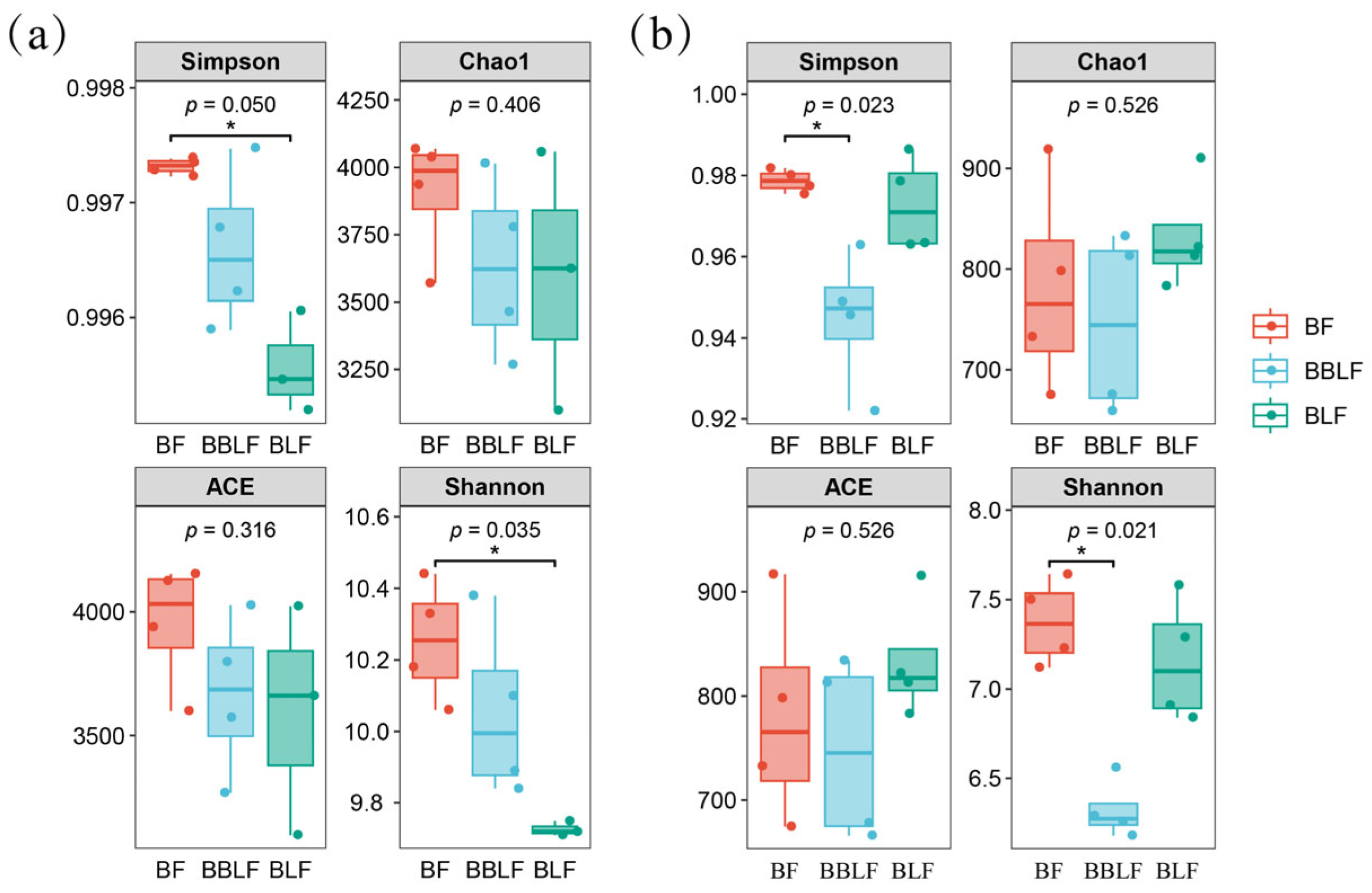
For the bacterial community, both the Simpson and Shannon diversity indices showed an increasing trend along the P. edulis expansion gradient, with the maximum values observed in BF and significantly lower ones in BLF (Simpson: p = 0.050; Shannon: p = 0.035) (Figure 1a). In contrast, the fungal community exhibited a distinct V-shaped diversity pattern along the expansion gradient, with significantly lower Simpson and Shannon indices in BBLF compared to BF (Simpson: p = 0.023; Shannon: p = 0.021). With respect to species richness (quantified by Chao 1 and ACE indices), no statistically significant variations were observed across forests for either bacterial (Chao1: p = 0.406; ACE: p = 0.316) or fungal communities (Chao1: p = 0.526; ACE: p = 0.526).

3.3. Effects of P. edulis Expansion on Soil Microbial Composition

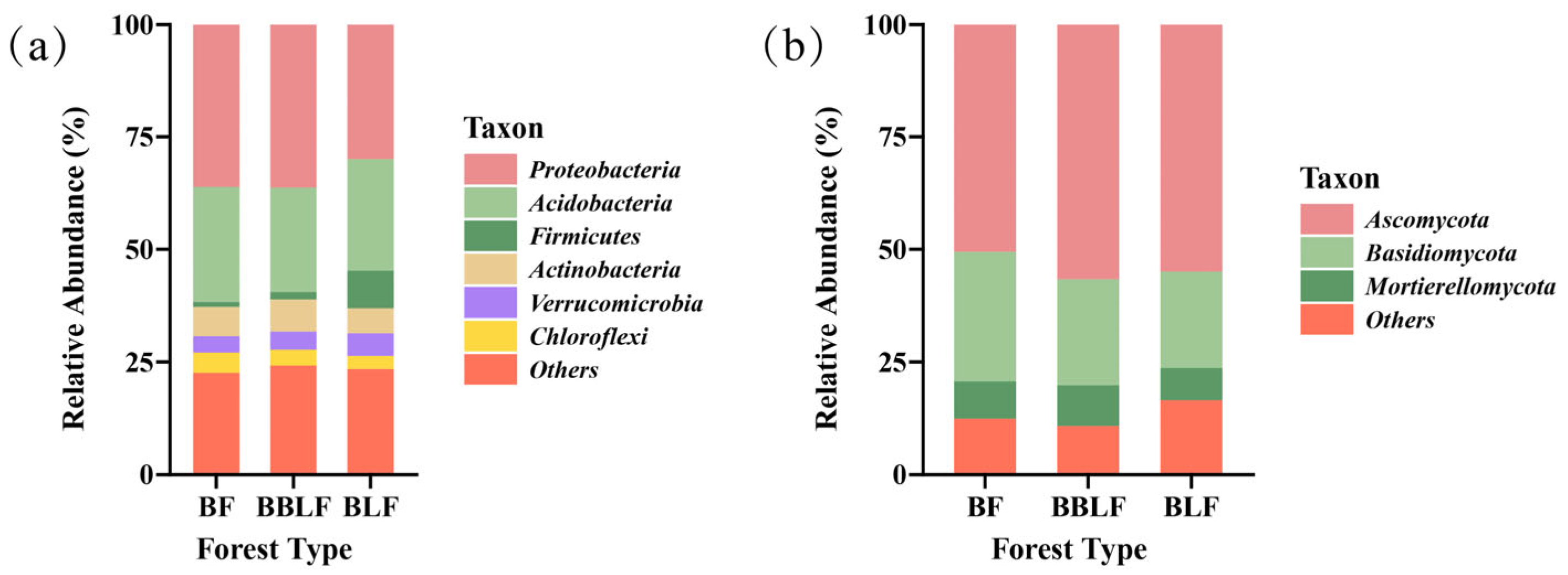
Soil bacterial communities were primarily dominated by Proteobacteria (34.8%–42.5%) and Acidobacteria (27.2%–29.0%) (Figure 2a), while fungal communities were overwhelmingly dominated by Ascomycota (53.0%–58.9%) and Basidiomycota (22.4%–30.1%) across all forest types at the phylum-level taxonomic rank (Figure 2b). P. edulis encroachment significantly increased the relative abundances of Proteobacteria, Actinobacteria, Chloroflexi, Basidiomycota, and Mortierellomycota, while reducing those of Acidobacteria, Firmicutes, Verrucomicrobia, and Ascomycota (Figure 2 and Figure 3).
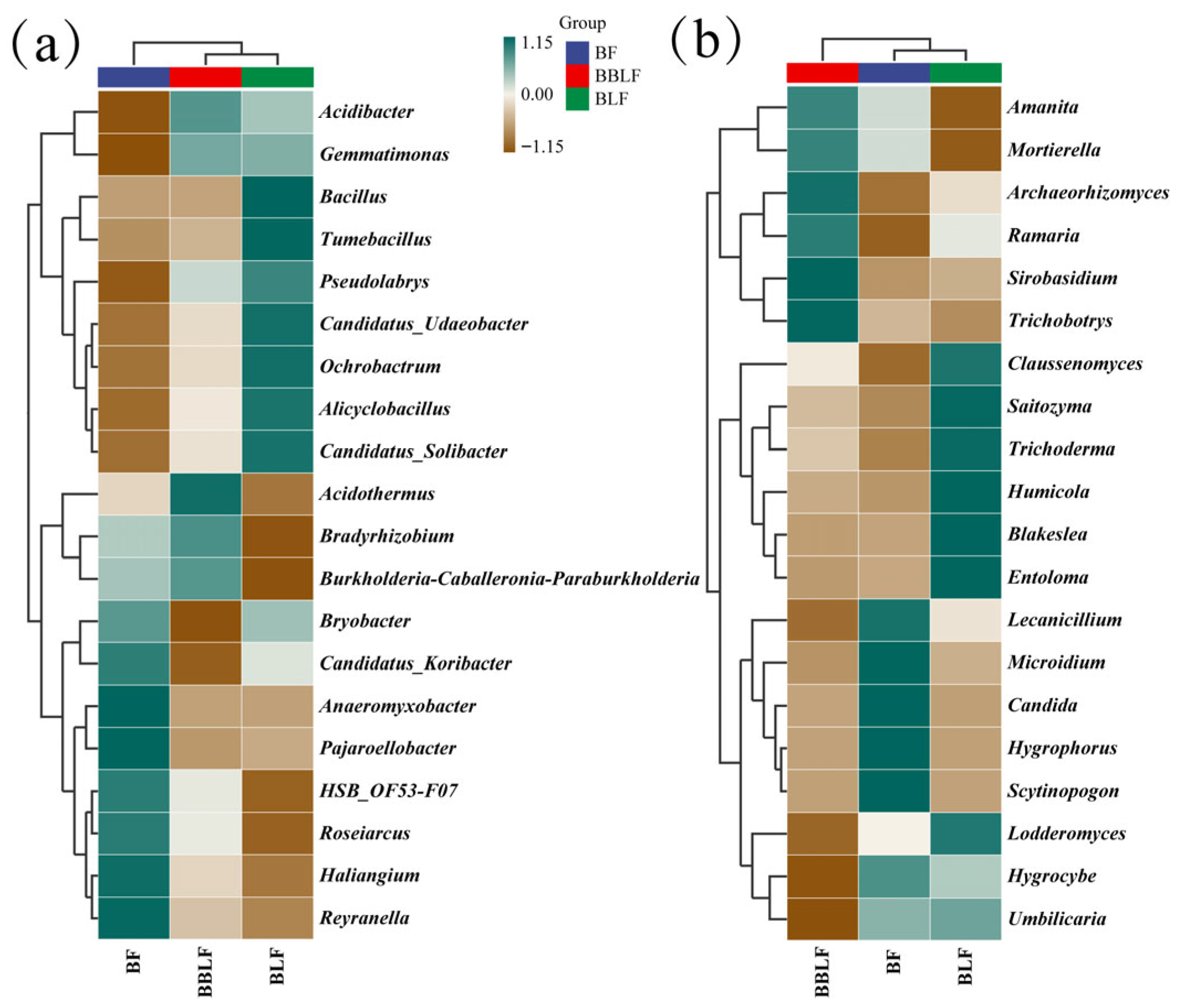
At the genus-level taxonomic rank, the relative abundance of Acidothermus in the bacterial communities of the BF was significantly higher than that in the BLF and BBLF (Figure 3a). In contrast, the relative abundances of Bacillus, Acidibacter, Candidatus Solibacter, and Candidatus Udaeobacter were significantly lower in the BF compared with the latter two forest types (Figure 3a). For fungal communities, the relative abundances of Candida and Mortierella were significantly elevated in the BF relative to the BLF and BBLF, whereas the relative abundance of Archaeorhizomyces was significantly depleted in the BF compared with the BLF (Figure 3b).

3.4. Effects of P. edulis Expansion on β-Diversity of Soil Microbial Communities

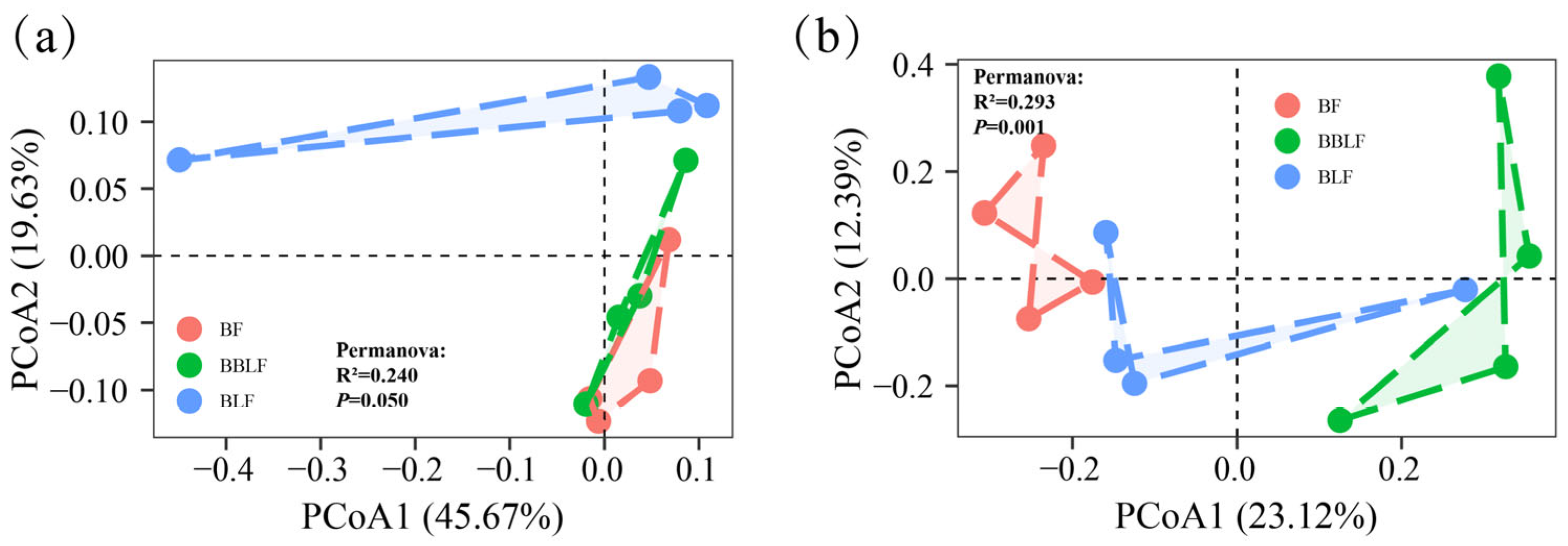
Principal coordinates analysis (PCoA) revealed a pronounced divergence in the Beta diversity of soil microbial communities caused by P. edulis encroachment. For bacterial communities, a distinct compositional separation was observed between the BF and BLF, with PCoA1 and PCoA2 collectively accounting for 65.30% of the overall variability (R2 = 0.240, p = 0.050; Figure 4a). For fungal communities, compositional segregation along the PCoA1 (23.12%) and PCoA2 (12.39%) axes reflected significant dissimilarities in community composition among the BF, BBLF, and BLF (R2 = 0.293, p = 0.001; Figure 4b).
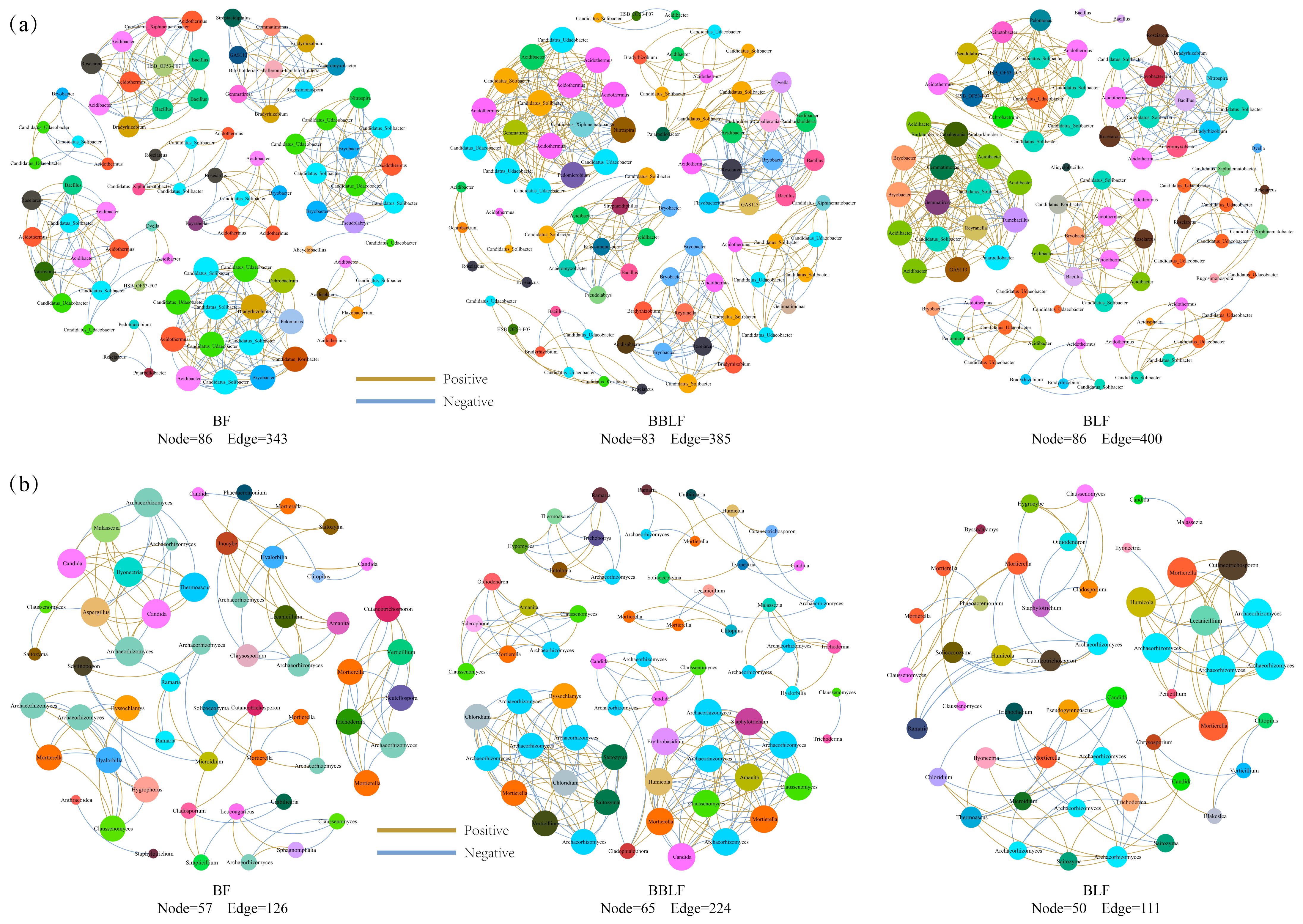
Co-occurrence network analysis showed that P. edulis expansion altered the interaction patterns and topological structures of soil microbial networks (Table 2 and Figure 5). In the bacterial networks of the BF, positive and negative correlations were nearly balanced, accounting for 50.44% and 49.56% of total associations, respectively. The topological complexity decreased with P. edulis expansion, as evidenced by reductions in average degree (from 9.302 in the BLF to 7.977 in BF) and edge numbers (from 400 to 343). In contrast, bacterial networks in the BLF and BBLF were dominated by positive correlations, with respective proportions of 78% and 66.75% (Figure 5a). Moreover, fungal networks exhibited an inherently sparse topological structure. Notably, relative to the BLF, P. edulis expansion significantly enhanced the centrality of Candida and Archaeorhizomyces by 17.00% and 7.22%, respectively, while reducing the network prominence of Mortierella by 12.25% in the BF (Figure 5b).

3.5. Relationships Between Soil Properties and Microbial Community Structure

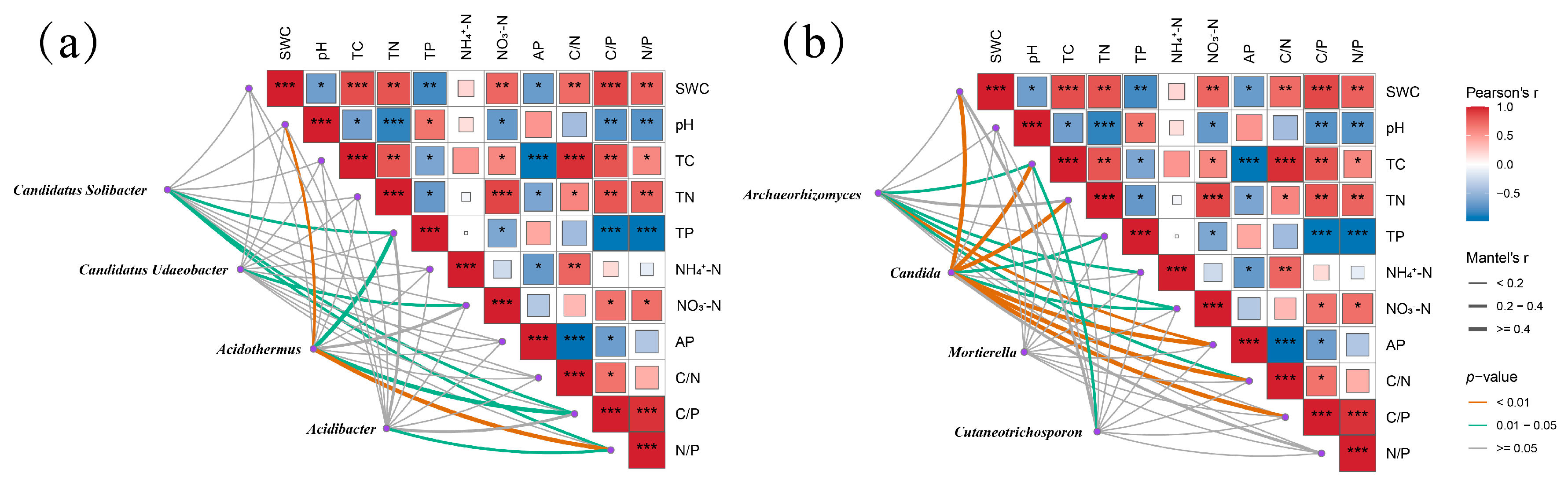
A Mantel test indicated significant correlations among dominant microbial taxa and edaphic properties. For the bacterial community (Figure 6a), the dominant taxa Candidatus Solibacter and Acidothermus exhibited highly significant correlations with soil TP, C/P, and N/P. Similarly, the genus Acidibacter displayed a strongly significant association with the N/P ratio. In the fungal community (Figure 6b), the genus Candida demonstrated the broadest environmental responsiveness, showing highly significant correlations with nearly all measured edaphic factors, with the exception of soil pH, NH4+-N, and N/P ratio. Furthermore, the genus Cutaneotrichosporon was strongly influenced by TC, whereas the genus Archaeorhizomyces exhibited robust linkages with multiple key factors, including TC, NH4+-N, NO3-N, AP, and C/N.
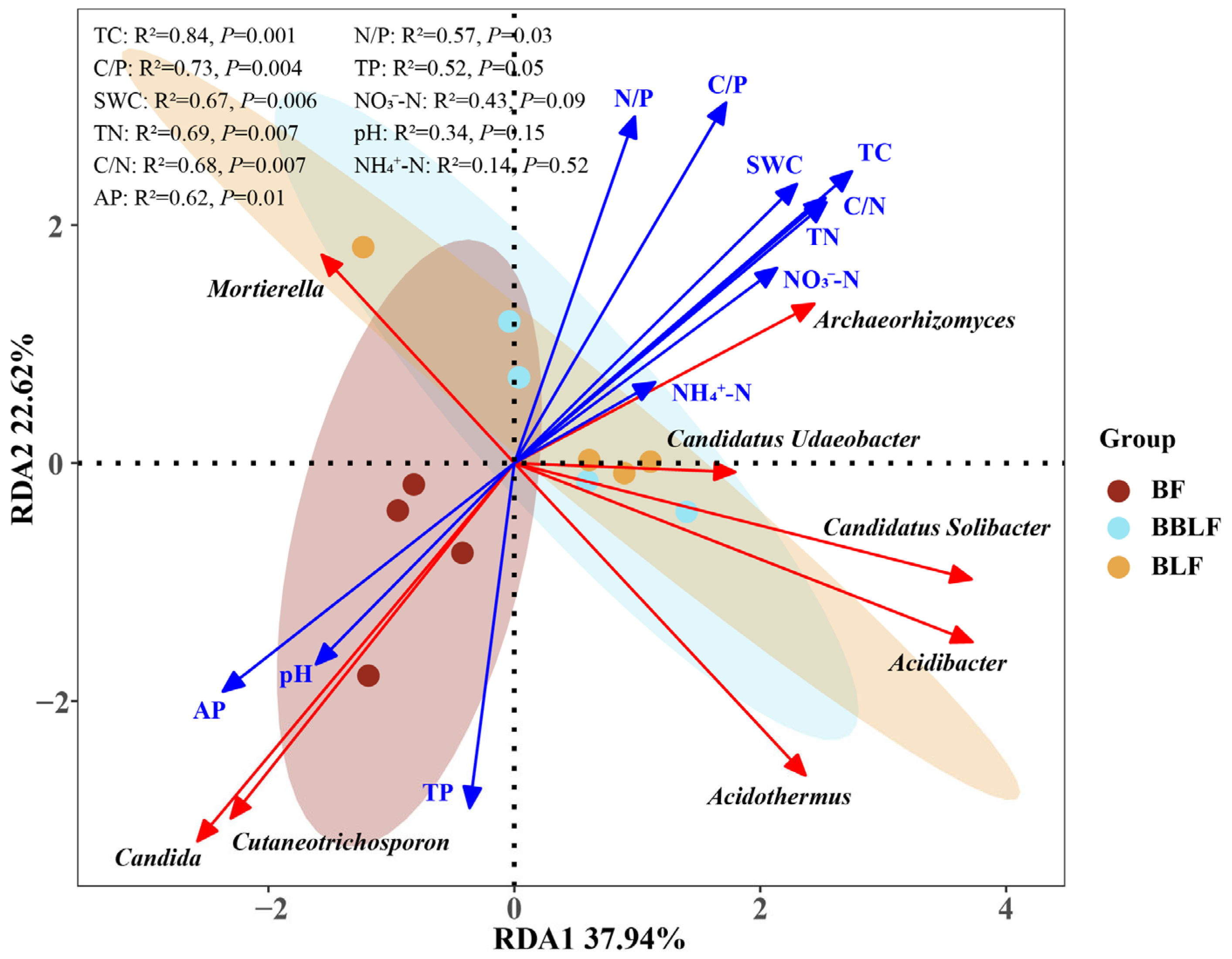
Redundancy analysis was further applied to quantitatively disentangle the contributions of soil environmental variables to the variations in soil microbial community structures (Figure 7). RDA1 and RDA2 accounted for 37.94% and 22.62% of the total variation, respectively. Among these factors, TC emerged as the most significant predictor of community composition (R2 = 0.84, p = 0.001), followed closely by C/P (R2 = 0.73, p = 0.004) and TN (R2 = 0.69, p = 0.007), whereas pH, NH4+-N and NO3-N had no significant effect. Specifically, TC, TN and C/P were negatively correlated with Candida and Cutaneotrichosporon, but positively associated with Archaeorhizomyces; TP and AP were negatively related to Archaeorhizomyces but positively linked to Candida; and SWC, C/N and N/P showed negative associations with Candida.

4. Discussion

4.1. Effects of P. edulis Expansion on Soil Bacterial Diversity and Network Topology

Our initial hypothesis stated that P. edulis expansion would increase the diversity and network topological complexity of soil bacterial communities. However, this expectation was only partially validated by the empirical data. Specifically, soil bacterial Simpson and Shannon diversity indices increased with P. edulis expansion gradient, indicating that the encroachment of P. edulis favored the enrichment of bacterial taxa adaptable to the modified soil micro-habitat in the BF. In forest ecosystems, soil properties are well-recognized as the primary abiotic regulators of bacterial community assembly [28,29,30,31]. In our study, the significant reductions in SWC, TC, TN and NO3-N in the BF relative to the BBLF and BLF indicate a depletion of labile C and N substrates, which is consistent with the high nutrient uptake efficiency of P. edulis and the accelerated decomposition of soil organic matter under P. dulis expansion [4]. Conversely, the elevated soil pH, TP, NH4+-N, and AP suggest that P. edulis encroachment modifies soil nutrient cycling processes, favoring the accumulation of P-related nutrients and altering the inorganic N pool structure [32,33]. These edaphic changes create a selective pressure that reshapes the composition and diversity of soil bacterial communities. The α-diversity indices exhibited an increasing trend along the P. edulis expansion gradient, and this pattern contradicts the conventional assumption that nutrient depletion would suppress bacterial diversity [17,34]. Considering that a slight increase in pH could promote the proliferation of acid-intolerant bacterial taxa [27], the elevated soil pH in BFs could represent a main driver of the enhancement of α-diversity. Moreover, the increased TP and AP content in BFs may provide sufficient P sources to support the growth of P-dependent bacterial groups [33,35,36], thereby enhancing overall community diversity. Notably, species richness (Chao1 and ACE) were comparable across the three forest types, indicating that P. edulis expansion mainly affects the evenness of bacterial communities rather than the total number of species [37,38]. This may be attributed to the competitive exclusion of some oligotrophic taxa and the enrichment of copiotrophic taxa, leading to a more balanced species abundance distribution in BFs [17,39,40].
Considering the phylum level, the dominance of Proteobacteria and Acidobacteria in all forest types is consistent with the characteristics of subtropical forest soil bacterial communities [41,42], as these two phyla are widely distributed in acidic, organic-rich soils and play crucial roles in soil C and N cycling [41,43]. P. edulis expansion favored Proteobacteria, Actinobacteria, and Chloroflexi, while reducing Acidobacteria abundance (Figure 2a). This shift in phylum-level composition reflects the adaptive replacement of bacterial functional groups. Given that Acidobacteria are typically oligotrophic taxa that dominate in nutrient-poor, acidic environments [44,45], the decline in their abundance in BFs may be due to the increased soil pH and decreased C/N ratio (Table 1), which are unfavorable for their growth in our study. In contrast, Proteobacteria and Actinobacteria are mostly copiotrophic groups that are highly responsive to the availability of labile organic substrates [44,46]. In our study, although TC and TN contents decreased in the BF, the elevated NH4+-N and AP levels may provide sufficient energy and nutrient sources for these taxa, promoting their proliferation. This speculation is also supported by the positive correlation between NH4+-N and Acidibacte (Figure 7), the dominant genus of the phylum Actinobacteria. Moreover, the increase in Chloroflexi abundance may be related to their tolerance to the micro-environmental changes caused by P. edulis expansion, as this phylum includes taxa with diverse metabolic capabilities, such as photosynthesis and chemoautotrophy [47].
Our study showed that P. edulis expansion altered soil bacterial network properties, shifting soil bacterial inter-specific interactions from cooperative to competitive (Figure 5a and Table 2). Specifically, in the BLF and BBLF, bacterial networks were dominated by positive correlations (78% and 66.75%, respectively), indicating that bacterial taxa rely on synergistic interactions to cope with the relatively stable but nutrient-limited soil environment in natural forests [17]. For example, the co-metabolism of complex organic matter by multiple taxa requires collaborative enzyme secretion, which leads to positive inter-specific relationships [48,49]. In contrast, the bacterial network in the BF exhibited a balanced ratio of positive (50.44%) and negative (49.56%) correlations, which was coupled with fewer edges and weaker topological complexity (Figure 5a), suggesting that competitive interactions become more prominent in the P. edulis-dominated soil environment. This may be due to the limited availability of labile C substrates in BFs (Table 1) as bacterial taxa compete fiercely for these resources, leading to an increase in negative correlations [44,45,46]. The balanced correlation pattern in our study implies that the bacterial community in BFs has a more stable network structure, as the coexistence of positive and negative interactions can buffer the impact of environmental disturbances and prevent the over-proliferation of a single taxon [17].

4.2. Effects of P. edulis Expansion on Soil Fungal Diversity and Network Topology

Unlike the gradual increase in bacterial α-diversity along the P. edulis expansion gradient, fungal Simpson and Shannon indices exhibited a distinct V-shaped pattern, with the lowest values detected in the BBLF (Figure 1b), which is inconsistent with our second hypothesis. This pattern suggests that during the initial stage of P. edulis expansion, selective pressure is exerted on soil fungi communities [5]. In BBLFs, the coexistence of two distinct species likely triggers intense competition between plant roots and soil fungi for labile C substrates, while their root exudates or litter inputs may exert antagonistic effects on fungal growth [5,39]. These combined stressors suppress dominant fungal taxa proliferation and reduce community evenness, and thus result in the minimum fungal diversity observed in the BBLF (Figure 1b).
Furthermore, Ascomycota and Basidiomycota were the dominate fungal taxa across all forest types, a pattern aligns with subtropical forest soil fungal community traits, owing to their key role as decomposers of lignocellulose and recalcitrant organic matte [39,42]. In this study, P. edulis expansion increased the relative abundances of Basidiomycota and Mortierellomycota but reduced Ascomycota (Figure 2b), suggesting adaptive functional group replacement caused by P. edulis encroachment [18]. Generally, oligotrophic Ascomycota favor a high-organic-matter, acidic habitat, and thus the elevated soil pH and reduced TC are likely the primary factor driving its decline in BFs. In addition, copiotrophic Basidiomycota and Mortierellomycota usually respond strongly to labile substrates and inorganic P [45,46]. Therefore, the significantly higher TP and NH4+-N in BFs may be a potential factor contributing to those promoted proliferations, and this assumption is supported by the positive correlation between TP and Mortierella (Figure 6b), the dominant genus of the phylum Mortierellomycota. Moreover, the increase in Basidiomycota abundance may be related to their tolerance to the micro-environmental changes caused by P. edulis expansion, as this phylum includes taxa with diverse metabolic capabilities, such as lignin decomposition and symbiotic nutrient exchange [42,50]. At the genus level, the relative abundances of Candida and Mortierella were significantly higher in the BF than in the BLF and BBLF, whereas Archaeorhizomyces showed the opposite trend (Figure 3b). Candida is a typical copiotrophic genus that thrives in nutrient-rich habitats [51,52], and its enrichment in the BF may be associated with the increased AP and TP availability, supported by the positive relationship between Candida and AP and TP (Figure 7). Mortierella can secrete a suite of extracellular enzymes to decompose complex organic matter and promote nutrient cycling [53], which matches the functional requirements of BF soil for nutrient transformation under low C/N conditions. In contrast, Archaeorhizomyces is a common root-associated fungal genus that forms symbiotic relationships with a broad range of tree species [54]. Its decline in BFs may result from the replacement of M. thunbergii by P. edulis, leading to the loss of host-specific symbiotic niches.
Our study demonstrated that P. edulis expansion altered the topological properties of soil fungal co-occurrence networks, shifting fungal inter-specific interactions toward a more core-taxa-dominated structure (Figure 5 and Table 2), which partially validated our hypothesis. Fungal networks across all forest types exhibited an inherently sparse topology, consistent with the characteristics of fungal communities in natural forest ecosystems [42,55,56]. In the BLF and BBLF, fungal networks were dominated by weak, non-specific correlations (Figure 5b). This indicates that fungal taxa rely on loose symbiotic or commensal interactions to adapt to the relatively stable yet host-diverse soil environments of natural and mixed forests, a pattern linked to flexible inter-specific associations required for decomposing diverse plant litter [56]. In contrast, the fungal network in the BF showed a more clustered structure, with the centrality of Candida and Archaeorhizomyces significantly enhanced by 17.00% and 7.22%, respectively (Figure 5b). This highlights the critical role of core taxa in maintaining network stability in P. edulis-dominated soils, likely driven by simplified litter input and nutrient composition in BFs (Table 1). Fungal taxa tend to form tight associations with core decomposers to efficiently utilize available resources, increasing network modularity [55,56,57]. The clustered correlation pattern implies the BF fungal community has a more specialized network structure, where core taxa dominance streamlines nutrient cycling and improves organic matter decomposition efficiency in the modified habitat [56,57].

5. Conclusions

In conclusion, this study investigated the impact of P. edulis expansion into M. thunbergii forests on soil physicochemical properties and microbial community dynamics. Our objective was to elucidate how soil bacterial and fungal communities—specifically their diversity, composition, and co-occurrence patterns—respond to the environmental stress imposed by P. edulis encroachment. Key findings reveal a divergent response strategy between bacteria and fungi. P. edulis expansion into M. thunbergii forests which alters soil properties, thereby reshaping the diversity, community composition, and co-occurrence network topology of soil bacteria and fungi. Network analyses confirm that elevated soil pH simplifies fungal networks into core-taxa-dominated structures. Bacterial communities exhibit adaptive shifts toward competitive interactions, while fungi show a V-shaped α-diversity pattern, with taxonomic and functional restructuring in P. edulis-dominated habitats. However, this study relied on amplicon sequencing and space-for-time substitution, which limits our direct observation of functional gene expression and long-term temporal dynamics. Future investigations should integrate multi-omics (metagenomics, metatranscriptomics) and enzyme assays, which are critical for pinpointing metabolic pathways and distinguishing pathogenic from beneficial taxa. Ultimately, combining these mechanistic insights with long-term monitoring will validate the link between microbial network stability and ecosystem function, offering a robust framework for managing subtropical forests affected by P. edulis encroachment.

Author Contributions

S.W. developed the research concept and formulated the experimental design; L.H., X.C., K.T., W.L. and Q.Y. performed field sampling and laboratory assays; L.H. performed statistical analyses; S.W. and L.H. composed the original manuscript draft; S.W. and R.L. revised and completed the final paper. All authors have read and agreed to the published version of the manuscript.

Funding

This work was supported by the National Natural Science Foundation of China (42467030, 32060267), Jiangxi Province Natural Science Foundation for Distinguished Young Scholars (20242BAB23065), and Science and Technology Program of Jiangxi Provincial Department of Education (GJJ210413).

Data Availability Statement

Available from the corresponding author on request.

Conflicts of Interest

The authors declare no conflicts of interest. Shanghai Personalbio Technology Co., Ltd. only provided technical services for microbial diversity analysis in this study, and there no financial or non-financial interest associations between the authors and the company.

References

  1. Xiao, Y.; Xu, J.; Zhou, B.; Li, K.; Liu, J.; Zhang, L.; Wan, S. Contrasting Effect of Thinning and Understory Removal on Soil Microbial Communities in a Subtropical Moso Bamboo Plantation. Forests 2022, 13, 1574. [Google Scholar] [CrossRef]
  2. Hu, J.; Du, M.; Chen, J.; Tie, L.; Zhou, S.; Buckeridge, K.M.; Cornelissen, J.H.C.; Huang, C.; Kuzyakov, Y. Microbial Necromass under Global Change and Implications for Soil Organic Matter. Glob. Change Biol. 2023, 29, 3503–3515. [Google Scholar] [CrossRef] [PubMed]
  3. Xu, Q.-F.; Liang, C.-F.; Chen, J.-H.; Li, Y.-C.; Qin, H.; Fuhrmann, J.J. Rapid Bamboo Invasion (Expansion) and Its Effects on Biodiversity and Soil Processes. Glob. Ecol. Conserv. 2020, 21, e00787. [Google Scholar] [CrossRef]
  4. Lin, R.; Long, W.J.; Kong, F.Q.; Zhu, J.J.; Wang, M.M.; Liu, J.; Li, R.; Wan, S.Z. Contrasting Effects of Moso Bamboo Expansion into Broad-Leaved and Coniferous Forests on Soil Microbial Communities. Forests 2025, 16, 1188. [Google Scholar] [CrossRef]
  5. Fang, H.; Liu, Y.; Bai, J.; Li, A.; Deng, W.; Bai, T.; Liu, X.; Lai, M.; Feng, Y.; Zhang, J.; et al. Impact of Moso Bamboo (Phyllostachys edulis) Expansion into Japanese Cedar Plantations on Soil Fungal and Bacterial Community Compositions. Forests 2022, 13, 1190. [Google Scholar] [CrossRef]
  6. Sokol, N.W.; Slessarev, E.; Marschmann, G.L.; Nicolas, A.; Blazewicz, S.J.; Brodie, E.L.; Firestone, M.K.; Foley, M.M.; Hestrin, R.; Hungate, B.A.; et al. Life and Death in the Soil Microbiome: How Ecological Processes Influence Biogeochemistry. Nat. Rev. Microbiol. 2022, 20, 415–430. [Google Scholar] [CrossRef]
  7. van der Heijden, M.G.A.; Bardgett, R.D.; van Straalen, N.M. The Unseen Majority: Soil Microbes as Drivers of Plant Diversity and Productivity in Terrestrial Ecosystems. Ecol. Lett. 2008, 11, 296–310. [Google Scholar] [CrossRef]
  8. Nan, J.; Chao, L.; Ma, X.; Xu, D.; Mo, L.; Zhang, X.; Zhao, X.; Bao, Y. Microbial Diversity in the Rhizosphere Soils of Three Stipa Species from the Eastern Inner Mongolian Grasslands. Glob. Ecol. Conserv. 2020, 22, e00992. [Google Scholar] [CrossRef]
  9. Zhang, C.; Ndungu, C.N.; Feng, L.; Huang, J.; Ba, S.; Liu, W.; Cai, M. Plant Diversity Is More Important than Soil Microbial Diversity in Explaining Soil Multifunctionality in Qinghai-Tibetan Plateau Wetlands. J. Environ. Manag. 2024, 365, 121509. [Google Scholar] [CrossRef]
  10. Rao, S.; Miao, X.-Y.; Fan, S.-Y.; Zhao, Y.-H.; Xu, C.; Li, S.-P. Seven-Decade Forest Succession Reveals How Species Colonization and Extinction Drive Long-Term Community Structure Dynamics. J. Plant Ecol. 2023, 16, rtad008. [Google Scholar] [CrossRef]
  11. Sun, Y.; Zhang, S.; Liang, Y.; Yu, X.; Pan, F. Plants Drive Microbial Biomass and Composition but Not Diversity to Promote Ecosystem Multifunctionality in Karst Vegetation Restoration. Microorganisms 2025, 13, 590. [Google Scholar] [CrossRef] [PubMed]
  12. Birch, J.D.; Lutz, J.A.; Struckman, S.; Miesel, J.R.; Karst, J. Large-Diameter Trees and Deadwood Correspond with Belowground Ectomycorrhizal Fungal Richness. Ecol. Process. 2023, 12, 3. [Google Scholar] [CrossRef]
  13. Adiningrat, D.P.; Siegenthaler, A.; Schlund, M.; Wang, T.; Skidmore, A.K.; Rousseau, M.; Heurich, M. Effect of Forest Structural Attributes on Soil Microbial Diversity in Mixed Temperate Forests. Plant Soil 2025, 517, 867–885. [Google Scholar] [CrossRef] [PubMed]
  14. Song, Q.N.; Ouyang, M.; Yang, Q.P.; Lu, H.; Yang, G.Y.; Chen, F.S.; Shi, J.M. Degradation of Litter Quality and Decline of Soil Nitrogen Mineralization after Moso Bamboo (Phyllostachys pubscens) Expansion to Neighboring Broadleaved Forest in Subtropical China. Plant Soil 2016, 404, 113–124. [Google Scholar] [CrossRef]
  15. Sun, Z.; Zhao, X.; Tian, P.; Wang, Q. Different Litter Traits Control Divergent Responses of Litter Mass Loss and Nutrient Release to Nitrogen Deposition during Early and Late Decomposition Periods. For. Ecol. Manag. 2025, 594, 122980. [Google Scholar] [CrossRef]
  16. Pei, G.; Liu, J.; Peng, B.; Gao, D.; Wang, C.; Dai, W.; Jiang, P.; Bai, E. Nitrogen, Lignin, C/N as Important Regulators of Gross Nitrogen Release and Immobilization during Litter Decomposition in a Temperate Forest Ecosystem. For. Ecol. Manag. 2019, 440, 61–69. [Google Scholar] [CrossRef]
  17. Kang, H.; Xue, Y.; Cui, Y.; Moorhead, D.L.; Lambers, H.; Wang, D. Nutrient Limitation Mediates Soil Microbial Community Structure and Stability in Forest Restoration. Sci. Total Environ. 2024, 935, 173266. [Google Scholar] [CrossRef]
  18. Gong, X.; Feng, Y.; Dang, K.; Jiang, Y.; Qi, H.; Feng, B. Linkages of Microbial Community Structure and Root Exudates: Evidence from Microbial Nitrogen Limitation in Soils of Crop Families. Sci. Total Environ. 2023, 881, 163536. [Google Scholar] [CrossRef]
  19. Wu, Y.X.; Guo, J.H.; Tang, Z.Y.; Wang, T.X.; Li, W.T.; Wang, X.R.; Cui, H.X.; Hu, X.Y.; Qi, L.H. Moso Bamboo (Phyllostachys edulis) Expansion Enhances Soil pH and Alters Soil Nutrients and Microbial Communities. Sci. Total Environ. 2024, 912, 169346. [Google Scholar] [CrossRef]
  20. Ouyang, M.; Tian, D.; Pan, J.; Chen, G.; Su, H.; Yan, Z.; Yang, Q.; Ji, C.; Tang, Z.; Fang, J. Moso Bamboo (Phyllostachys edulis) Invasion Increases Forest Soil pH in Subtropical China. CATENA 2022, 215, 106339. [Google Scholar] [CrossRef]
  21. Bai, S.B.; Conant, R.T.; Zhou, G.M.; Wang, Y.X.; Wang, N.; Li, Y.H.; Zhang, K.Q. Effects of Moso Bamboo Encroachment into Native, Broad-Leaved Forests on Soil Carbon and Nitrogen Pools. Sci. Rep. 2016, 6, 31480. [Google Scholar] [CrossRef] [PubMed]
  22. Larpkern, P.; Moe, S.R.; Totland, Ø. Bamboo Dominance Reduces Tree Regeneration in a Disturbed Tropical Forest. Oecologia 2011, 165, 161–168. [Google Scholar] [CrossRef] [PubMed]
  23. Pan, J.; Liu, Y.; Niu, J.; Fang, H.; Feng, Y.; Bai, T.; Zhang, M.; Deng, W.; Siemann, E.; Zhang, L. Moso Bamboo Expansion Reduced Soil N2O Emissions While Accelerated Fine Root Litter Decomposition: Contrasting Non-Additive Effects. Plant Soil 2024, 501, 7–21. [Google Scholar] [CrossRef]
  24. Fang, L.; Hu, H.; Chen, J.; Gong, Y.; Zhu, Z. Mechanism of the Effects of Phyllostachys edulis Invasion on the Soil Microbial Community in Quercus Acutissima Forests. Forests 2024, 15, 1170. [Google Scholar] [CrossRef]
  25. Ren, Q.; Wu, D.; Wu, C.; Wang, Z.; Jiao, J.; Jiang, B.; Zhu, J.; Huang, Y.; Li, T.; Yuan, W. Modeling the Potential Distribution of Machilus Thunbergii under the Climate Change Patterns in China. Open J. For. 2020, 10, 217–231. [Google Scholar] [CrossRef]
  26. Qiu, L.J.; Zhang, Y.; Mao, R.; Chen, F.S.; Liu, J.; Yang, G.Y.; Wan, S.Z. Understory Removal Accelerates Nucleic Phosphorus Release but Retards Residual Phosphorus Release in Decomposing Litter of Phyllostachys edulis in Subtropical China. Land Degrad. Dev. 2021, 32, 2695–2703. [Google Scholar] [CrossRef]
  27. Wan, S.Z.; Fu, S.L.; Zhang, C.L.; Liu, J.; Zhang, Y.; Mao, R. Effects of Understory Removal and Litter Addition on Leaf and Twig Decomposition in a Subtropical Chinese Fir Plantation. Land Degrad. Dev. 2021, 32, 5004–5011. [Google Scholar] [CrossRef]
  28. Xue, L.; Ren, H.; Li, S.; Leng, X.; Yao, X. Soil Bacterial Community Structure and Co-Occurrence Pattern during Vegetation Restoration in Karst Rocky Desertification Area. Front. Microbiol. 2017, 8, 201–209. [Google Scholar] [CrossRef]
  29. Yang, B.; Feng, W.; Zhou, W.; He, K.; Yang, Z. Association between Soil Physicochemical Properties and Bacterial Community Structure in Diverse Forest Ecosystems. Microorganisms 2024, 12, 728. [Google Scholar] [CrossRef]
  30. Landesman, W.J.; Nelson, D.M.; Fitzpatrick, M.C. Soil Properties and Tree Species Drive SS-Diversity of Soil Bacterial Communities. Soil Biol. Biochem. 2014, 76, 201–209. [Google Scholar] [CrossRef]
  31. Sawada, K.; Inagaki, Y.; Sugihara, S.; Funakawa, S.; Ritz, K.; Toyota, K. Impacts of Conversion from Natural Forest to Cedar Plantation on the Structure and Diversity of Root-Associated and Soil Microbial Communities. Appl. Soil Ecol. 2021, 167, 104027. [Google Scholar] [CrossRef]
  32. Wan, S.; Liu, Z.; Chen, Y.; Zhao, J.; Ying, Q.; Liu, J. Effects of Lime Application and Understory Removal on Soil Microbial Communities in Subtropical Eucalyptus L’hér. Plantations. Forests 2019, 10, 338. [Google Scholar] [CrossRef]
  33. Yang, D.; Shi, F.; Fang, X.; Zhang, R.; Shi, J.; Zhang, Y. Effect of the Moso Bamboo Pyllostachys Edulis (Carrière) J.Houz. on Soil Phosphorus Bioavailability in a Broadleaf Forest (Jiangxi Province, China). Forests 2024, 15, 328. [Google Scholar] [CrossRef]
  34. Dai, T.; Wen, D.; Bates, C.T.; Wu, L.; Guo, X.; Liu, S.; Su, Y.; Lei, J.; Zhou, J.; Yang, Y. Nutrient Supply Controls the Linkage between Species Abundance and Ecological Interactions in Marine Bacterial Communities. Nat. Commun. 2022, 13, 175. [Google Scholar] [CrossRef]
  35. Qin, H.; Niu, L.M.; Wu, Q.F.; Chen, J.H.; Li, Y.C.; Liang, C.F.; Xu, Q.F.; Fuhrmann, J.J.; Shen, Y. Bamboo Forest Expansion Increases Soil Organic Carbon through Its Effect on Soil Arbuscular Mycorrhizal Fungal Community and Abundance. Plant Soil 2017, 420, 407–421. [Google Scholar] [CrossRef]
  36. Ding, W.; Cong, W.-F.; Lambers, H. Plant Phosphorus-Acquisition and -Use Strategies Affect Soil Carbon Cycling. Trends Ecol. Evol. 2021, 36, 899–906. [Google Scholar] [CrossRef]
  37. Xu, Q.-F.; Jiang, P.-K.; Wu, J.-S.; Zhou, G.-M.; Shen, R.-F.; Fuhrmann, J.J. Bamboo Invasion of Native Broadleaf Forest Modified Soil Microbial Communities and Diversity. Biol. Invasions 2015, 17, 433–444. [Google Scholar] [CrossRef]
  38. Ma, X.-R.; Zheng, X.-L.; Zheng, C.-Y.; Hu, Y.-T.; Qin, H.; Chen, J.-H.; Xu, Q.-F.; Liang, C.-F. Effects of Moso Bamboo (Phyllostachys edulis) Expansion on Soil Microbial Community in Evergreen Broad-Leaved Forest. Ying Yong Sheng Tai Xue Bao 2022, 33, 1091–1098. [Google Scholar] [CrossRef]
  39. Liu, C.; Zheng, C.; Wang, L.; Zhang, J.; Wang, Q.; Shao, S.; Qin, H.; Xu, Q.; Liang, C.; Chen, J. Moso Bamboo Invasion Changes the Assembly Process and Interactive Relationship of Soil Microbial Communities in a Subtropical Broadleaf Forest. For. Ecol. Manag. 2023, 536, 120901. [Google Scholar] [CrossRef]
  40. Lin, Q.; Li, L.; Adams, J.M.; Heděnec, P.; Tu, B.; Li, C.; Li, T.; Li, X. Nutrient Resource Availability Mediates Niche Differentiation and Temporal Co-Occurrence of Soil Bacterial Communities. Appl. Soil Ecol. 2021, 163, 103965. [Google Scholar] [CrossRef]
  41. Chen, J.; Wu, Q.; Li, S.; Ge, J.; Liang, C.; Qin, H.; Xu, Q.; Fuhrmann, J.J. Diversity and Function of Soil Bacterial Communities in Response to Long-Term Intensive Management in a Subtropical Bamboo Forest. Geoderma 2019, 354, 113894. [Google Scholar] [CrossRef]
  42. Meng, C.; Lei, C.; Li, X.; Sheng, H.; Wu, G.; Liu, J.; Zhou, S.-Y.-D. Soil Organic Carbon Decline under Bamboo Invasion: The Role of Microbial Carbon Cycling. J. Environ. Manag. 2025, 395, 127999. [Google Scholar] [CrossRef] [PubMed]
  43. Lan, J.; Wang, S.; Wang, J.; Qi, X.; Long, Q.; Huang, M. The Shift of Soil Bacterial Community after Afforestation Influence Soil Organic Carbon and Aggregate Stability in Karst Region. Front. Microbiol. 2022, 13, 901126. [Google Scholar] [CrossRef] [PubMed]
  44. Yuan, N.; Fang, F.; Tang, X.; Lv, S.; Wang, T.; Chen, X.; Sun, T.; Xia, Y.; Zhou, Y.; Zhou, G.; et al. Degradation-Driven Vegetation-Soil-Microbe Interactions Alter Microbial Carbon Use Efficiency in Moso Bamboo Forests. Sci. Total Environ. 2024, 951, 175435. [Google Scholar] [CrossRef]
  45. Li, P.; Fu, W.; Bai, Y.; Zhou, D.; Sun, S.; Guo, Q.; Zhang, J.; Miao, Y.; Lai, H. Fungal Communities Dominate Accumulation of Microbial Necromass Carbon after 11-Year Revegetation in a Semi-Arid Desert Mining Area. J. Environ. Manag. 2026, 398, 128429. [Google Scholar] [CrossRef]
  46. Bonner, M.T.L.; Shoo, L.P.; Brackin, R.; Schmidt, S. Relationship between Microbial Composition and Substrate Use Efficiency in a Tropical Soil. Geoderma 2018, 315, 96–103. [Google Scholar] [CrossRef]
  47. Narsing Rao, M.P.; Luo, Z.-H.; Dong, Z.-Y.; Li, Q.; Liu, B.-B.; Guo, S.-X.; Nie, G.-X.; Li, W.-J. Metagenomic Analysis Further Extends the Role of Chloroflexi in Fundamental Biogeochemical Cycles. Environ. Res. 2022, 209, 112888. [Google Scholar] [CrossRef]
  48. Wanapaisan, P.; Laothamteep, N.; Vejarano, F.; Chakraborty, J.; Shintani, M.; Muangchinda, C.; Morita, T.; Suzuki-Minakuchi, C.; Inoue, K.; Nojiri, H.; et al. Synergistic Degradation of Pyrene by Five Culturable Bacteria in a Mangrove Sediment-Derived Bacterial Consortium. J. Hazard. Mater. 2018, 342, 561–570. [Google Scholar] [CrossRef]
  49. Zhang, T.; Zhang, H. Microbial Consortia Are Needed to Degrade Soil Pollutants. Microorganisms 2022, 10, 261. [Google Scholar] [CrossRef]
  50. Manici, L.M.; Caputo, F.; De Sabata, D.; Fornasier, F. The Enzyme Patterns of Ascomycota and Basidiomycota Fungi Reveal Their Different Functions in Soil. Appl. Soil Ecol. 2024, 196, 105323. [Google Scholar] [CrossRef]
  51. Koch, A.L. Oligotrophs versus Copiotrophs. BioEssays 2001, 23, 657–661. [Google Scholar] [CrossRef]
  52. Xue, S.-J.; Liu, J.; Zhao, F.-Y.; Zhang, X.-T.; Zhu, Z.-Q.; Zhang, J.-Y. Spatio-Temporal Distribution and Biotechnological Potential of Culturable Yeasts in the Intertidal Sediments and Seawater of Aoshan Bay, China. Appl. Environ. Microbiol. 2024, 90, e01570-24. [Google Scholar] [CrossRef]
  53. Li, F.; Zhang, S.; Wang, Y.; Li, Y.; Li, P.; Chen, L.; Jie, X.; Hu, D.; Feng, B.; Yue, K.; et al. Rare Fungus, Mortierella capitata, Promotes Crop Growth by Stimulating Primary Metabolisms Related Genes and Reshaping Rhizosphere Bacterial Community. Soil Biol. Biochem. 2020, 151, 108017. [Google Scholar] [CrossRef]
  54. Rosling, A.; Cox, F.; Cruz-Martinez, K.; Ihrmark, K.; Grelet, G.-A.; Lindahl, B.D.; Menkis, A.; James, T.Y. Archaeorhizomycetes: Unearthing an Ancient Class of Ubiquitous Soil Fungi. Science 2011, 333, 876–879. [Google Scholar] [CrossRef]
  55. Yang, T.; Tedersoo, L.; Liu, X.; Gao, G.-F.; Dong, K.; Adams, J.M.; Chu, H. Fungi Stabilize Multi-Kingdom Community in a High Elevation Timberline Ecosystem. iMeta 2022, 1, e49. [Google Scholar] [CrossRef]
  56. Shen, C.; Wang, J.; Jing, Z.; Qiao, N.-H.; Xiong, C.; Ge, Y. Plant Diversity Enhances Soil Fungal Network Stability Indirectly through the Increase of Soil Carbon and Fungal Keystone Taxa Richness. Sci. Total Environ. 2022, 818, 151737. [Google Scholar] [CrossRef]
  57. Zhao, Y.; Cai, J.; Zhang, P.; Qin, W.; Lou, Y.; Liu, Z.; Hu, B. Core Fungal Species Strengthen Microbial Cooperation in a Food-Waste Composting Process. Environ. Sci. Ecotechnol. 2022, 12, 100190. [Google Scholar] [CrossRef] [PubMed]
Figure 1. Effect of P. edulis encroachment into M. thunbergii on soil microbial α-diversity. (a) Bacterial α-diversity indices. (b) Fungal α-diversity indices. BFs: P. edulis forests; BBLFs: mixed forests of P. edulis and M. thunbergii; BLFs: M. thunbergii forests. The “*” indicates a statistically significant difference (p ≤ 0.05).
Forests 17 00247 g001
Figure 2. Soil microbial composition at the phylum-level taxonomic rank across forest types. (a) Relative abundance of bacterial phyla; (b) relative abundance of fungal phyla. BF: P. edulis forests; BBLFs: mixed forests of P. edulis and M. thunbergii; BLFs: M. thunbergii forests.
Forests 17 00247 g002
Figure 3. Heatmaps of soil microbial composition at the genus level across forest types. (a) Bacterial genera; (b) fungal genera. BFs: P. edulis forests; BBLFs: mixed forests of P. edulis and M. thunbergii; BLFs: M. thunbergii forests.
Forests 17 00247 g003
Figure 4. PCoA ordination illustrating shifts in soil microbial community β-diversity with P. edulis expansion. (a) Bacterial community; (b) fungal community. BFs: P. edulis forests; BBLFs: mixed forests of P. edulis and M. thunbergii; BLFs: M. thunbergii forests.
Forests 17 00247 g004
Figure 5. Co-occurrence network analysis of soil bacterial (a) and fungal (b) assemblages across forest types. The colors of the nodes represent different dominant genera. BFs: P. edulis forests; BBLFs: mixed forests of P. edulis and M. thunbergii; BLFs: M. thunbergii forests.
Forests 17 00247 g005
Figure 6. Mantel test of dominant soil microbial genera and physicochemical properties under P. edulis expansion. (a) Dominant bacterial genera; (b) dominant fungal genera. The heatmap composed of colored squares on the right displays the Pearson correlation correlations among different soil physico-chemical properties. Asterisks denote statistical significance levels: * p < 0.05, ** p < 0.01, and *** p < 0.001.
Forests 17 00247 g006
Figure 7. RDA illustrating linkages between soil dominant microbial genera and physicochemical properties. The colored ellipses represent 95% confidence intervals.
Forests 17 00247 g007
Table 1. Effect of P. edulis encroachment into M. thunbergii on soil properties.
Soil PropertiesBFBBLFBLFFp-Value
SWC (%)43.60 ± 0.62 b47.65 ± 0.10 a48.35 ± 0.99 a14.3130.002
pH4.98 ± 0.04 a4.82 ± 0.04 b4.64 ± 0.04 c16.701<0.001
TC (g·kg−1)47.93 ± 0.42 c73.21 ± 0.99 a68.34 ± 0.37 b416.453<0.001
TN (g·kg−1)3.08 ± 0.03 c3.42 ± 0.02 b3.66 ± 0.05 a78.293<0.001
TP (g·kg−1)0.65 ± 0.04 a0.54 ± 0.02 ab0.46 ± 0.04 b6.4370.018
NH4+-N (mg·kg−1)10.80 ± 0.28 b17.68 ± 0.49 a9.57 ± 0.15 c166.307<0.001
NO3-N (mg·kg−1)3.06 ± 0.12 c3.68 ± 0.22 b4.79 ± 0.23 a20.137<0.001
AP (mg·kg−1)2.00 ± 0.06 a1.09 ± 0.05 c1.49 ± 0.02 b109.772<0.001
C/N15.57 ± 0.12 c21.45 ± 0.21 a18.69 ± 0.05 b396.569<0.001
C/P75.11 ± 5.14 c136.77 ± 5.7 b152.31 ± 13.15 a15.9530.001
N/P4.82 ± 0.20 c6.38 ± 0.26 b8.15 ± 0.78 a8.9350.007
Note: BFs, P. edulis forests; BBLFs, mixed forests of P. edulis and M. thunbergii; BLFs, M. thunbergii forests. C/N, the ratio of TC and TN; C/P, the ratio of soil TC and TP; N/P, the ratio of TN and TP. Different lowercase letters in the same row indicate significant differences among different forest types (p < 0.05, n = 4).
Table 2. Topological properties of soil microbial co-occurrence networks under P. edulis encroachment.
CommunityForest TypeNodesEdgesPositive Correlations (%)Negative Correlations (%)Average DegreeModularityDensity
Bacterial networksBF8634350.4449.567.9770.8430.094
BBLF8338566.7533.259.2770.7910.113
BLF8640078.0022.009.3020.8080.109
Fungal networksBF5712657.1442.864.4210.8640.079
BBLF6522452.6847.326.8920.7700.108
BLF5011157.6642.344.4400.8280.091
Note: BFs, P. edulis forests; BBLFs, mixed forests of P. edulis and M. thunbergii; BLFs, M. thunbergii forests.
Disclaimer/Publisher’s Note: The statements, opinions and data contained in all publications are solely those of the individual author(s) and contributor(s) and not of MDPI and/or the editor(s). MDPI and/or the editor(s) disclaim responsibility for any injury to people or property resulting from any ideas, methods, instructions or products referred to in the content.