


Abstract
Habitat degradation and fragmentation pose severe threats to biodiversity in protected areas, including the Giant Panda National Park (GPNP). Effective restoration strategies are urgently needed to enhance habitat connectivity and support the recovery of giant panda (Ailuropoda melanoleuca David, 1869) populations. This study aimed to evaluate the impact of targeted artificial restoration measures on plant diversity and community structure in four typical degraded habitats within the Niba Mountain Corridor of the GPNP. Over a three-year monitoring period, vegetation surveys and infrared camera trapping were conducted across pure plantations and secondary forests, with/without bamboo, using suitable habitats as controls. The results showed that: (1) Artificial restoration significantly increased shrub layer species richness and Shannon–Wiener index in most degraded habitats, approaching control levels after two years, while herb layer diversity initially increased then declined due to shrub competition. (2) Sorensen’s similarity between degraded and suitable habitats increased over time, rising from 0.08–0.42 to 0.46–0.67 for the shrub layer and from 0.09–0.22 to 0.30–0.40 for the herb layer. (3) Key species showing high variability during restoration included Litsea pungens Hemsl., Actinidia spp., Salix spp., Rubus spp., Hydrangea macrophylla (Thunb.) Ser, Carex spp., and Elatostema involucratum Franch. et Savat. (4) Bamboo regeneration was enhanced with peak live shoots in 2024. (5) Increased activity of medium-to-large mammals, notably the tufted deer (Elaphodus cephalophus Milne-Edwards, 1872), may indicate initial stages of functional recovery for resources in the restored habitats. The results confirmed that differentiated artificial restoration can effectively promote species diversity recovery and habitat convergence, providing a scientific basis for optimizing GPNP corridor management and improving population connectivity for giant pandas.
1. Introduction
From 1992 to 2020, a pivotal period encapsulating the evolution of global ecological protection from consensus-building to systematic implementation, global habitat quality exhibited a net decline of 0.6%, with the extent of habitat degradation escalating by 11% [1,2]. Forest degradation caused by human activities has become a major factor threatening biodiversity and ecosystem functions. Grantham et al. [3,4] pointed out that only about 40% of the remaining forests in the world maintain high ecosystem integrity, and the rest of the forests are generally subject to varying degrees of human disturbance. This trend is significant both inside and outside the reserve, highlighting the urgency of improving forest integrity through targeted restoration measures. Natural restoration is the core principle of ecological restoration, but its application depends on certain background conditions. For ecosystems and bare lands that have suffered serious degradation and have lost their self-sustaining ability, the natural restoration process is often hindered. In this case, the intervention of artificial technology is an effective strategy to restore the structure and function of ecosystems [5]. However, the key controversy of restoration ecology is focusing on the design and effectiveness of such interventions, especially whether it should focus on the rapid reconstruction of specific structural goals or the restoration area, or promote the natural succession process and pay attention to the internal ecological function [3,6]. Although many natural reserves in China have implemented artificial habitat restoration projects, the follow-up systematic monitoring is generally insufficient, which leads to the lack of quantitative assessment of artificial restoration on regional species diversity, community structure changes, and other aspects, and restricts the optimization of restoration strategies. This study aims to fill this critical gap by providing a rigorous, multi-year evaluation of tailored artificial restoration measures in a flagship conservation landscape.
The giant panda (Ailuropoda melanoleuca David, 1869) is a flagship species and an umbrella species for global biodiversity protection. Its habitat protection is not only related to the survival of the species, but also plays an important role in maintaining regional biodiversity, ecological balance, and ecosystem stability [7]. However, long-term human disturbance (such as forest harvesting, infrastructure construction) and natural disturbance (such as earthquakes) have led to the fragmentation and degradation of about 30% of the giant panda habitat, and the giant panda population is divided into 33 isolated units [8]. In the Yingjing area of the Giant Panda National Park (GPNP), 28 wild giant pandas were divided into three small, isolated populations: Daxiangling A population, Daxiangling B population, and Qionglai D population. Gene exchange among populations was hindered, and there was still a high risk of local extinction [8]. The Niba mountain corridor is a key ecological channel connecting isolated small populations of giant pandas in the Daxiangling mountains and the Qionglai mountains, and its habitat quality directly affects the connectivity between populations. Suitable habitat for the giant panda is characterized by moderate canopy density in the upper arbor layer and moderate bamboo growth under the forest [5,9]. However, due to the large-scale artificial planting of Abies fabri (Mast.) Craib and Picea asperata Mast. in the history and the lack of scientific management after logging, the corridor area has formed typical degraded habitat types represented by pure plantations, high-density bamboo thickets and miscellaneous shrubs, which are no longer suitable for use by the giant panda. The effect of habitat restoration in the Niba mountain corridor area is directly related to the diffusion of the giant panda population. Therefore, it is urgent to carry out systematic restoration research and formulate scientific habitat restoration strategies to improve the corridor function and promote the connectivity between populations [10].
Factors affecting the habitat quality of the giant panda include canopy density, understory vegetation coverage and species, forest composition, etc. [11]. Research shows that understory vegetation affects the change process and structure of the canopy layer, strengthening understory vegetation restoration and improving the ecological function of understory vegetation in habitats that are conducive to promoting the development of degraded habitats towards a more natural and stable trend [11]. With the development and succession of vegetation, the plant diversity of communities is also changing, which can reflect the composition and development stage of plant community structure [12,13]. At the same time, synchronous monitoring and analysis of animal activities during the restoration process can reflect the ecological function of the habitat, which is crucial for a more comprehensive assessment of the ecological benefits of habitat restoration [14].
In this study, four typical degraded habitats and suitable habitat monitoring quadrats were set up in the Niba mountain corridor area of the GPNP, and different measures were taken for the artificial restoration of the four degraded habitats. At the same time, the species, height, coverage, number of dead bamboo shoots, number of live bamboo shoots, number of dead bamboo shoots and animal activities in the quadrats were monitored, focusing on the analysis of key indicators reflecting ecosystem changes, such as species diversity and plant community structure [15,16], this study was designed to addresses three critical questions within the context of corridor restoration for an umbrella species: (1) How do plant diversity and community structure change following type-specific artificial restoration? (2) Can these interventions drive plant community composition towards a reference (suitable) state? (3) Will the initial changes in vegetation structure translate into the restoration of broader ecological functions, providing food and shelter for wildlife? Theoretically, this study fills the gap of insufficient quantitative evaluation of artificial restoration effects in giant panda habitat restoration research. Verifying the effectiveness of differentiated artificial restoration measures for different degraded habitat types, it provides a direct scientific basis and practical reference for optimizing giant panda corridor restoration strategies.
2. Materials and Methods
2.1. Study Area
In the previous study, the multi-criteria decision analysis method was used to evaluate the restoration priority of damaged habitats in the Yingjing area of the GPNP. The results showed that no matter which of the seven decision-making scenarios was selected in the study, the Niba mountain corridor was the highest priority area for restoration, which was also the core activity area of giant pandas in the Yingjing area, and it was recommended to be the priority area for habitat restoration [17]. The field survey area is the giant panda habitat in the Niba mountain corridor area of the Yingjing district of the GPNP, which is 1724–2445 m above sea level and has a subtropical alpine climate. The vegetation types are coniferous and broad-leaved mixed forests with Acer L., Aesculus wilsonii Rehd, Abies fabri, Corylus ferox Wall., Picea asperata, Quercus glauca Thunb., Salix wallichiana Anderss., and Schima sinensis (Hemsl. & E. H. Wilson) Airy Shaw as the main tree species, and the undergrowth bamboo is mainly Qiongzhuea multigemmia Hsueh et Yi [18].
2.2. Sample Plot Setting and Monitoring Indicators
A systematic sampling method was employed for field monitoring. Within the Niba Mountain corridor area, we selected five habitat types for comparison: four types of degraded habitats, including pure plantation (with bamboo), pure plantation (without bamboo), secondary forest (with high-density bamboo), and secondary forest (without bamboo), along with a suitable habitat serving as a reference control. For each habitat type, permanent monitoring quadrats of 20 m × 20 m were established (the number of quadrats per type is detailed in Table 1). Within each main quadrat, three nested sub-quadrats were positioned at the vertices and center of the diagonal: three 5 m × 5 m quadrats for shrub layer monitoring, three 1 m × 1 m quadrats for herb layer, and three 2 m × 2 m quadrats for bamboo layer. To minimize edge effect, all quadrats were positioned in the middle of the degraded habitat.
Table 1.
Characteristics and restoration measures of different types of habitats.
The monitoring plan lasted for three consecutive years (2023 to 2025). From March to May 2023, a species-level background vegetation survey was conducted on all sample plots. Based on this baseline assessment, specific artificial restoration measures were implemented in four degraded habitat types (Table 1), while suitable habitat plots were used as controls without disturbance. In May 2024 and May 2025, follow-up monitoring was conducted on the degraded habitat plots after restoration according to the same baseline survey protocol. Monitoring indicators include species (recorded as operational taxonomic units, see below), height, coverage, number of dead bamboo, live shoots, and dead shoots. In this study, plant diversity was assessed based on operational taxonomic units, which represent the finest identifiable level (species, genus, or family) in the field. Taxa within the same genus or family were considered ecologically similar and treated as functional groups for assessing community-level diversity dynamics [19,20,21]. They are considered effective ‘functional groups’ for assessing the overall diversity dynamics of a community. Starting from May 2023, six infrared cameras (Shenzhen Yi’an Guard Technology Co., Ltd., Shenzhen, China) were deployed within the research area to monitor animal activities. The parameters of the infrared camera were set to “photo + video” mode, with a triggering sequence of three consecutive photos followed by a 15 s video. Field identification of vascular plant species was conducted using taxonomic references such as “Flora of China”. The identification of animal species is mainly based on the morphological features captured in infrared camera photos and videos. At the same time, based on behavioral characteristics and habitat preferences, using classification reference books such as the “Chinese Mammal Catalog” to determine.
2.3. Data Analysis
2.3.1. Plant Diversity
To assess changes in plant diversity, we calculated three common indices for both shrub and herb layers within each quadrat: Species richness (S), Shannon–Wiener index (H′), and Simpson’s index (D). The equation is as follows [22]:
where n is the number of all identified species in the quadrat; pi is the relative coverage of species i.
An independent samples t-test was used to analyze the difference in plant diversity index between degraded habitat and suitable habitat (reference) for each year. A two-way repeated measures analysis of variance (ANOVA) was used to analyze the temporal dynamics and differences among degraded habitat types.
2.3.2. Animal Species Diversity
The activity of medium and large mammals was quantified using the relative abundance index (RAI). The equation is as follows:
where Ni is the total number of independent valid photos of species i in all infrared camera points. Multiple photos of the same animal taken by the same camera within 30 min are only considered as independent valid data of the species; D is the sum of working days of all infrared camera sites per month.
RAI = (Ni/D) × 100
2.3.3. Plant Community Structure
Changes in community composition over time were visualized using Principal Coordinates Analysis (PCoA) based on species relative coverage matrices. To identify species that exhibited the most pronounced changes during restoration, we calculated the standard deviation of each species’ relative richness across the three monitoring years within each habitat group. The five species with the highest standard deviation for each group were designated as key fluctuating species. For bamboo regeneration data (counts of dead bamboo, live shoots, and dead shoots), a two-way repeated measures ANOVA was used to test for the effects of year, habitat group, and their interaction. Similarity in species composition between degraded habitats and the suitable habitat was assessed for shrub and herb layers separately using the Sorensen index (SI). The closer the value is to 1, the higher the similarity is. The equation is as follows:
where c is the number of species shared by two groups; a is the number of species unique to group a; and B is the number of species unique to group b.
SI = (2 × c)/(a + b)
PCoA analysis was performed using the vegan package of R (4.5.1), while the remaining data analysis was performed using IBM SPSS Statistics 26 and Origin 2024b. Before analysis, the normal distribution and variance homogeneity test were performed for each data.
3. Results
3.1. Changes in Plant Diversity
During the three-year monitoring period, we recorded shrubs from 46 genera and 37 families, and herbs from 39 genera and 27 families across all habitat samples, endemic species in Table A1.
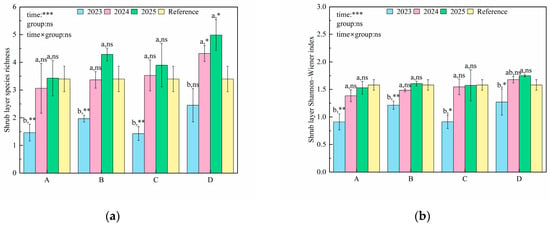
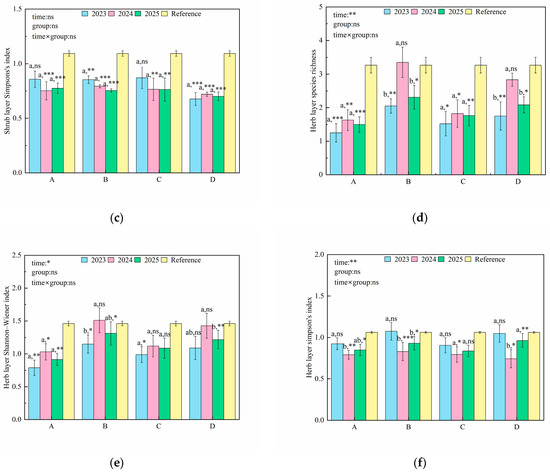
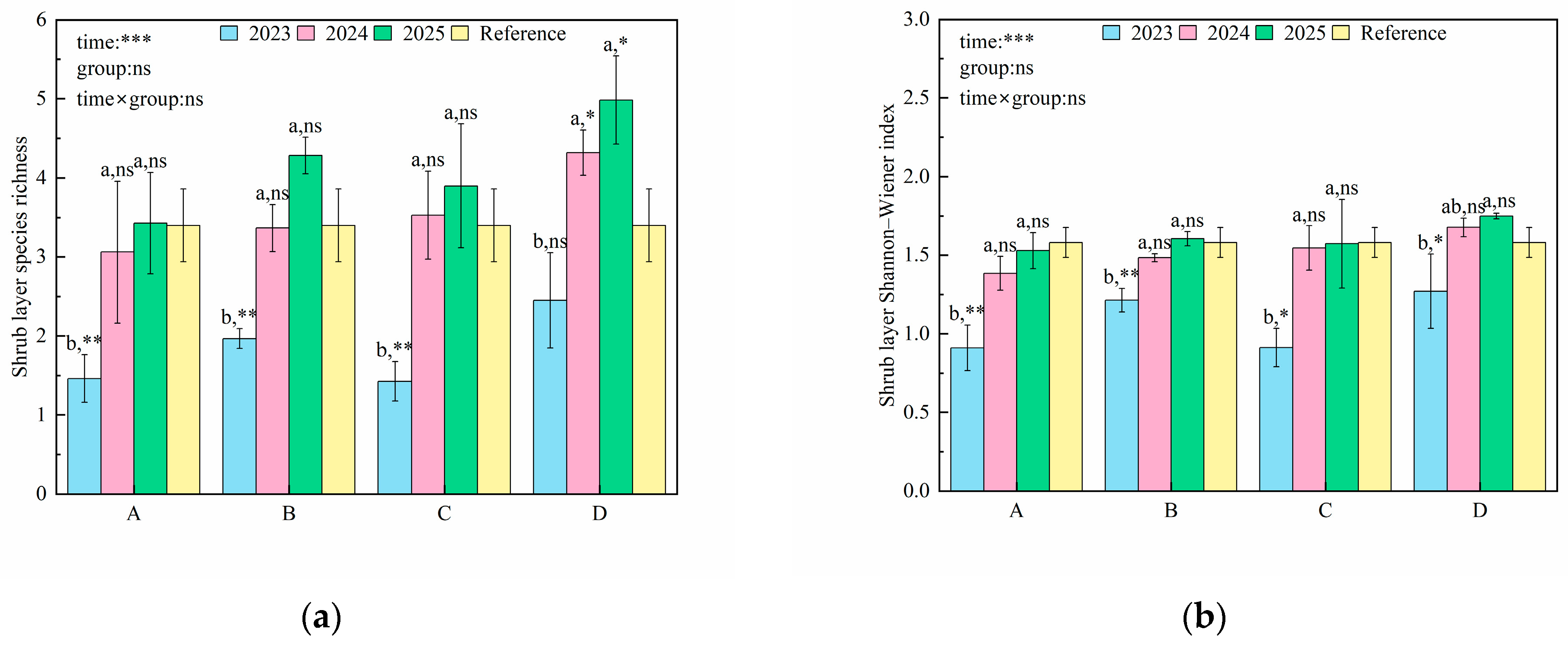
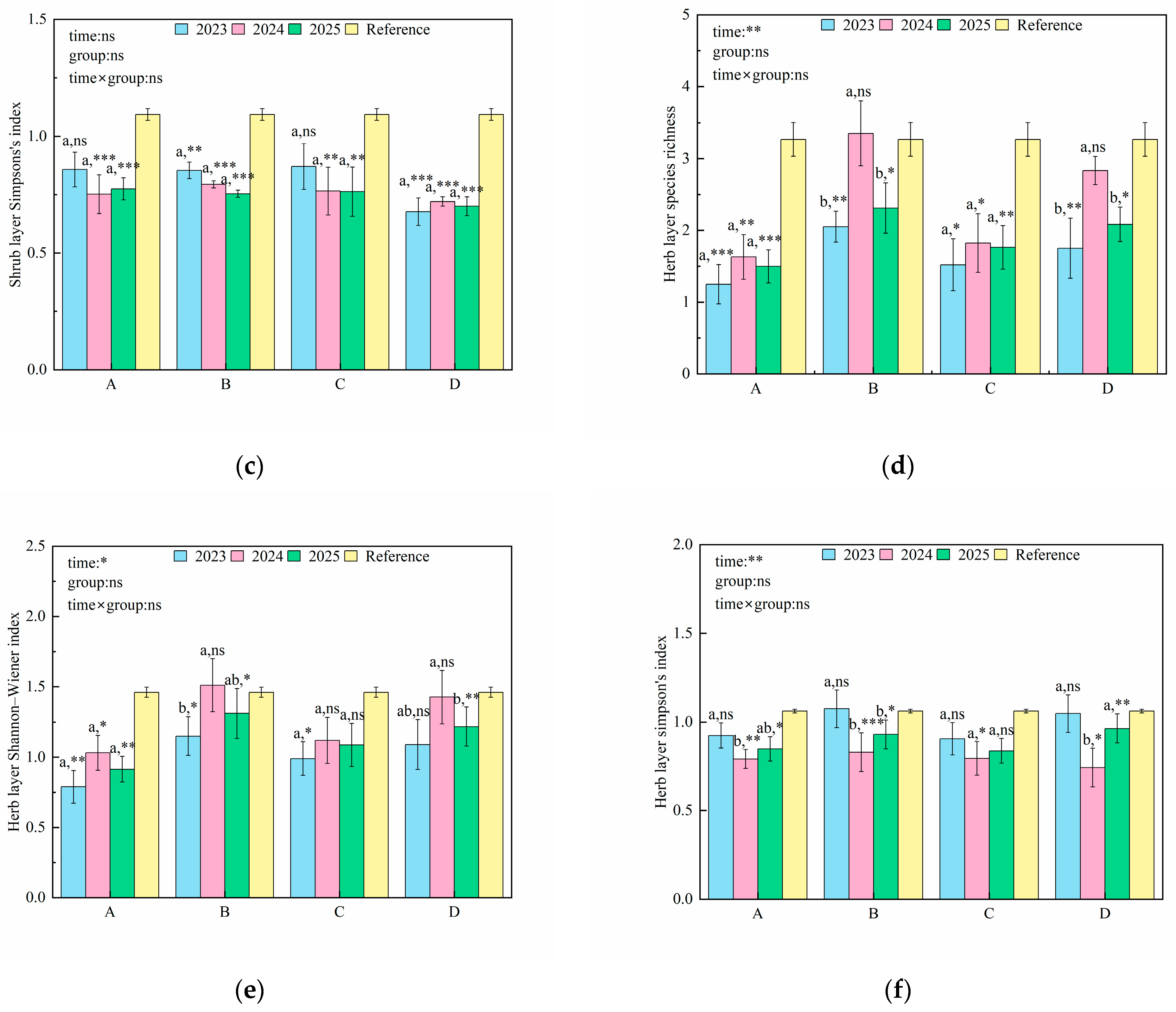
Time (year) factor had a significant impact on the species richness (p < 0.001) and Shannon–Wiener index (p < 0.001) of shrub layer (Figure 1a,b) and herb layer (p < 0.01, p < 0.05) in each group of degraded habitats (Figure 1d,e), but not on the Simpson’s index (Figure 1c,f). This highlights the context-dependent and less predictable nature of herbaceous community recovery following intervention. For shrubs, both species richness and Shannon–Wiener index increased significantly from 2023 to 2024 and remained high in 2025, with no significant difference between the latter two years (Figure 1a,b). In contrast, herb species richness and Shannon–Wiener index showed an initial increase in 2024, followed by a decline in 2025, a trend that was significant only in groups B and D (Figure 1d,e). Herb Simpson’s index exhibited a declining trend opposite to that of the other two biodiversity indices (Figure 1f).
Figure 1.
Changes in biodiversity index in different degraded habitats before and after restoration. (a–c): changes in species richness, Shannon–Wiener index, and Simpson’s index of the shrub layer respectively; (d–f): changes in species richness, Shannon–Wiener index, and Simpson’s index of the herb layer respectively. 2023 represents the background survey data before recovery, and 2024–2025 represents the data after recovery. A–D represent degraded habitat types, namely pure plantation (with bamboo), pure plantation (without bamboo), secondary forests (with high-density bamboo), secondary forests (without bamboo). Reference represents suitable habitats. Different small letters representing the same degradation type habitat in different years had significant differences (p < 0.05), the same below. “∗” indicates that there is a significant difference between the same degraded type habitat and the reference habitat in each year (p < 0.05), and “ns” indicates that there is no significant difference. “∗∗” and “∗∗∗” in the upper left corner of each chart represent that time or group factors have a significant impact (p < 0.01, p < 0.001) on the index.
Compared to the reference habitat, shrub layer diversity in groups A, B, and C differed significantly in 2023 but converged to a non-significant level by 2024–2025. This demonstrates successful convergence of shrub layer communities toward reference conditions within two years for most habitat types; conversely, group D showed the opposite trend: no initial difference in 2023 but significant divergence in later years (Figure 1a,b); Notably, Simpson’s index for shrub layer remained significantly different from the reference in all groups during 2024–2025, implying that despite convergence in richness, species dominance structures remained distinct. (Figure 1c). The difference in the herbs’ biodiversity index between degraded habitats and reference sites in each group varies with the factor group and time, and there is no consistent change rule (Figure 1d–f).
3.2. Changes in Plant Community Structure
3.2.1. Changes in Sorensen Index of Shrub and Herb Layer
As shown in Table 2, the Sorensen index of the shrub layer in degraded habitats of each group showed an upward trend over time. From 2023–2025, the index from group A to D has increased from 0.19 to 0.42 to 0.46 to 0.67. By 2025, all groups except B attained an index > 0.65. A similar increasing trend was observed for herb layer similarity (Table 3). From 2023–2025, the index from group A to D has increased from 0.09–0.22 to 0.30–0.40. This indicates a high degree of compositional convergence with the reference habitat.
Table 2.
Sorensen index changes in shrubs in different degraded habitats.
Table 3.
Sorensen index changes in herb in different degraded habitats.
3.2.2. Changes in Community Composition of Shrub and Herb Layer
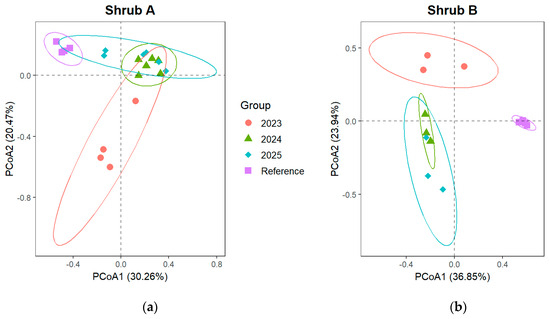
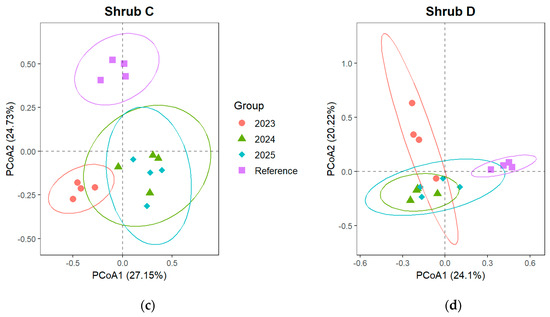
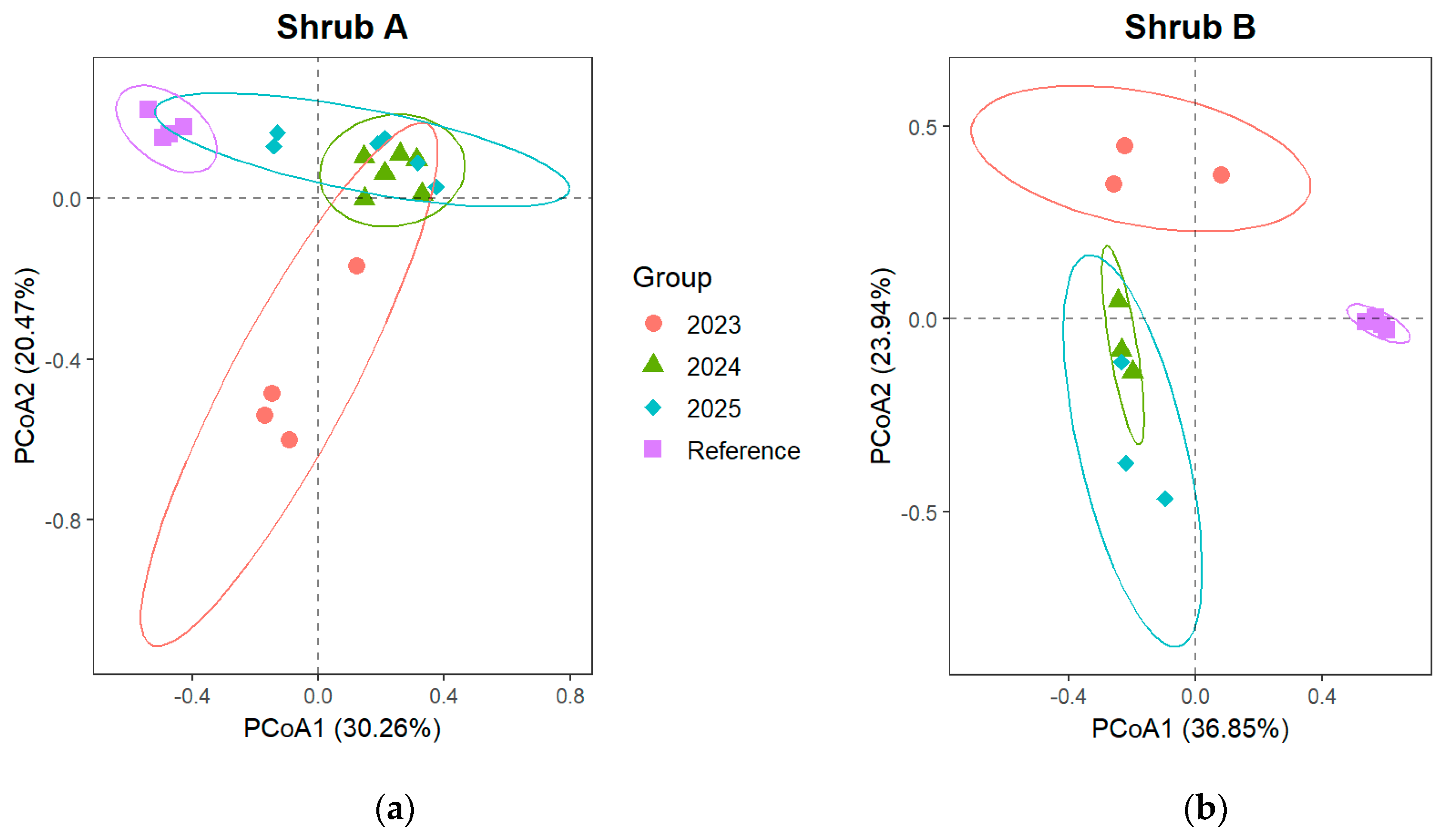
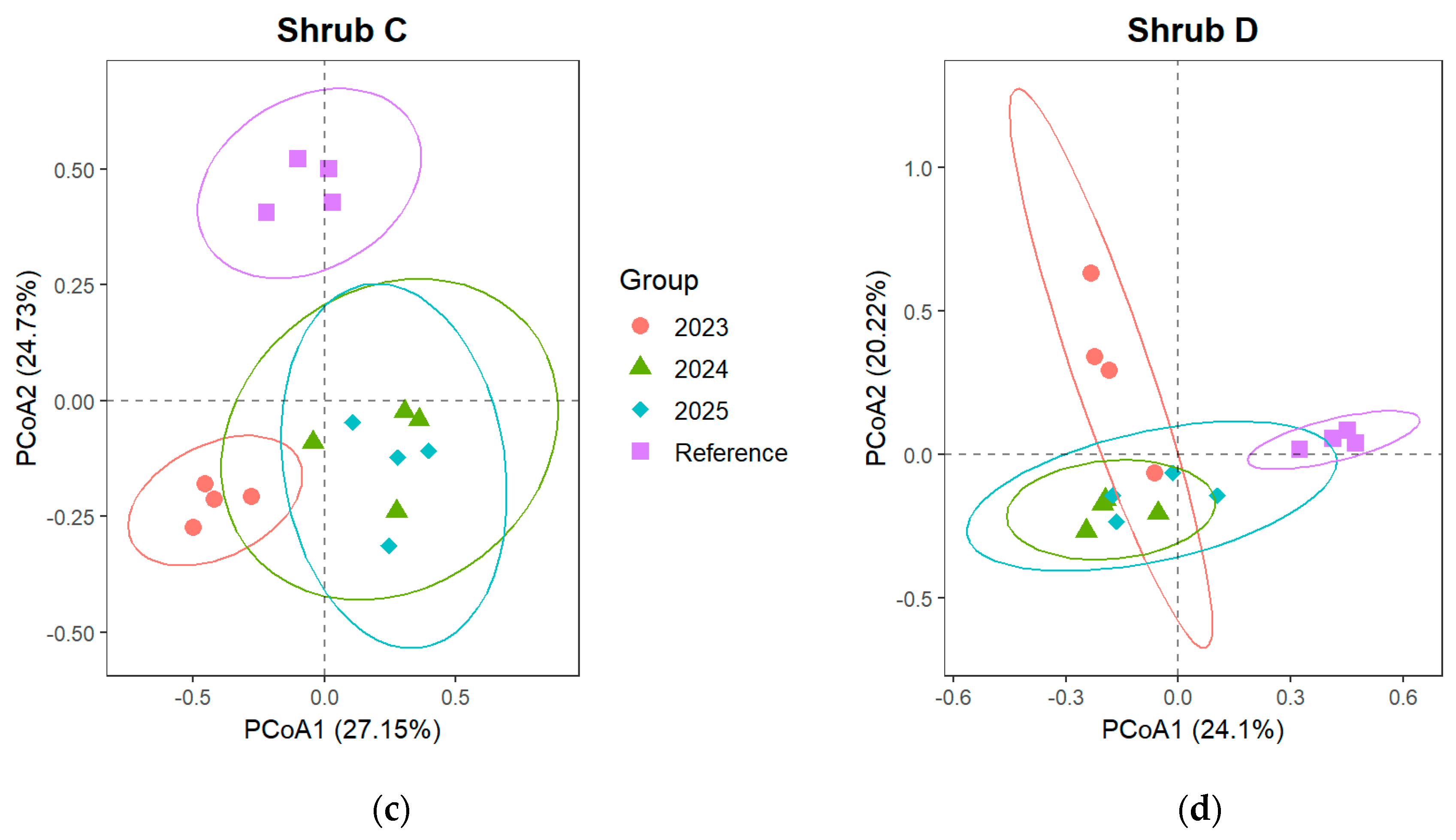
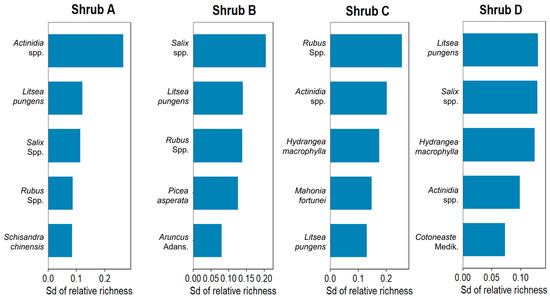
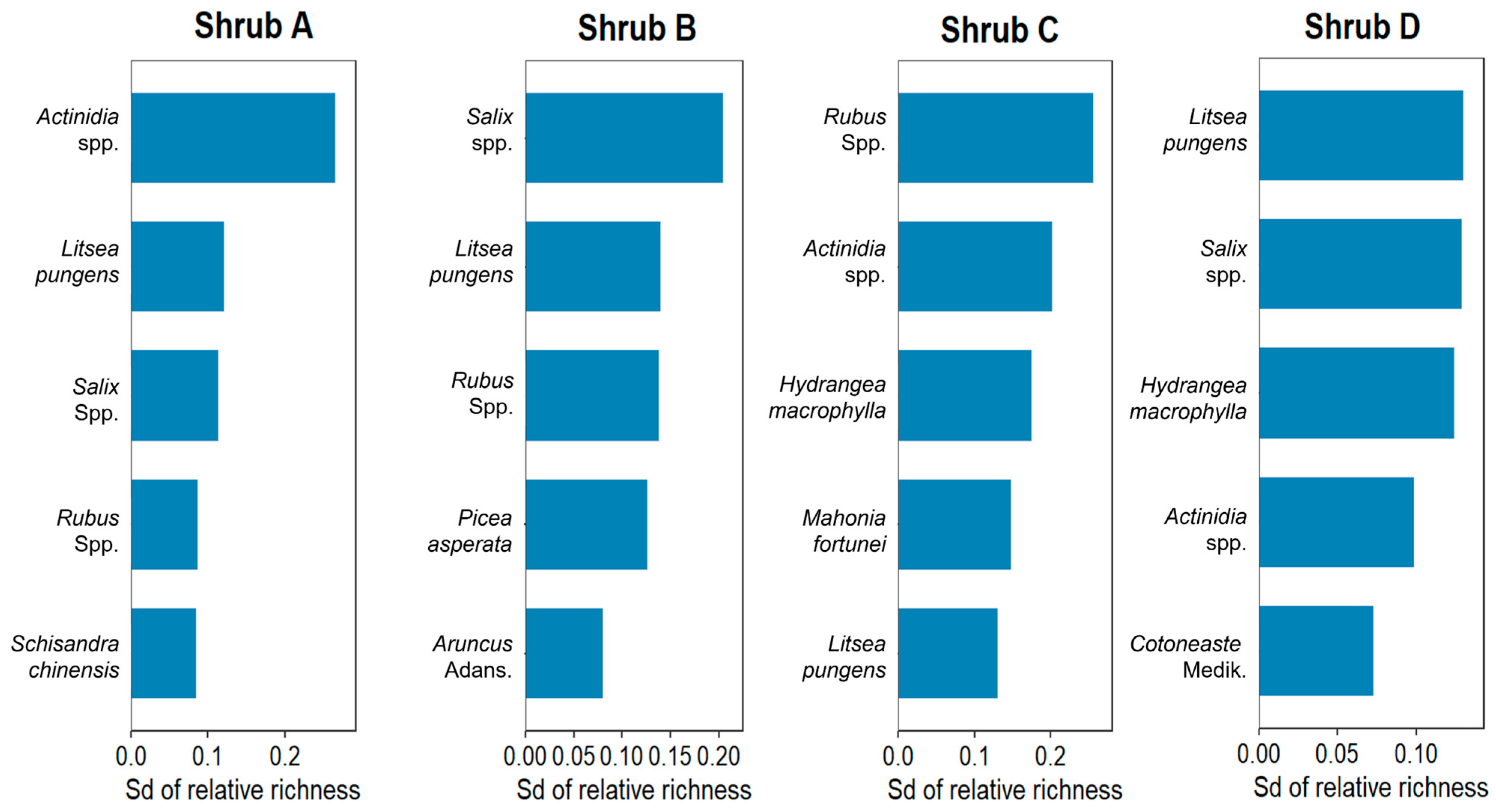
The PCoA analysis of the composition changes in shrub layer communities showed that the composition of shrub communities in degraded habitats in each group differed in time, and also differed from the composition of shrub layer communities in reference habitat (Figure 2a–d). The first two principal coordinates respectively explained 50.73%, 60.79%, 51.88% and 44.32% of the total variation of shrub community composition, which mainly reflected the difference of shrub composition between the degraded habitat and the reference habitat in 2023 (Figure 2a–d). The standard deviation of shrub relative richness showed that the top five shrubs with high volatility before and after restoration in group A were Actinidia spp., Litsea pungens Hemsl., Salix spp., Rubus spp., and Schisandra chinensis (Turcz.) Baill., respectively. In group B, they were Salix spp., Litsea pungens, Rubus spp., Picea asperata, and Aruncus Adams. respectively. In group C, they were Rubus spp., Actinidia spp., Hydrangea macrophylla (Thunb.) Ser, Mahonia fortune (Lindl.) Fedde, and Litsea pungens, respectively. In group D, they were Litsea pungens, Salix spp., Hydrangea macrophylla, Actinidia spp., and Cotoneaster Medik. (Figure 3).
Figure 2.
PCoA analysis of shrub layer in different degraded habitats. (a–d): PCoA analysis of shrub layer in group A–D, respectively.
Figure 3.
Standard deviation of relative richness of shrub layer in different types of degraded habitats.
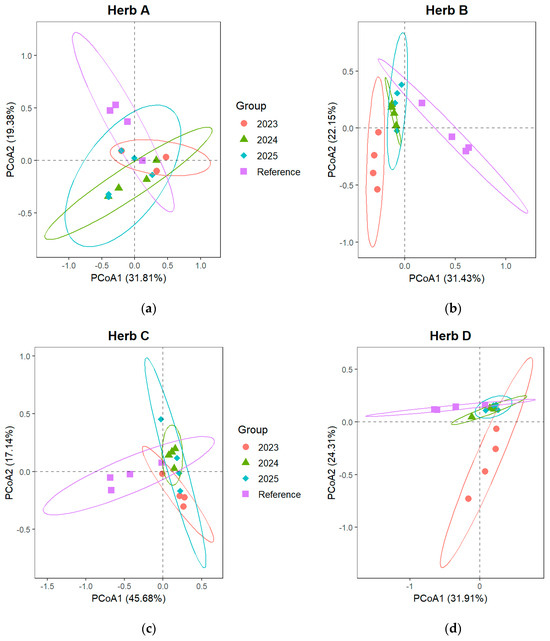
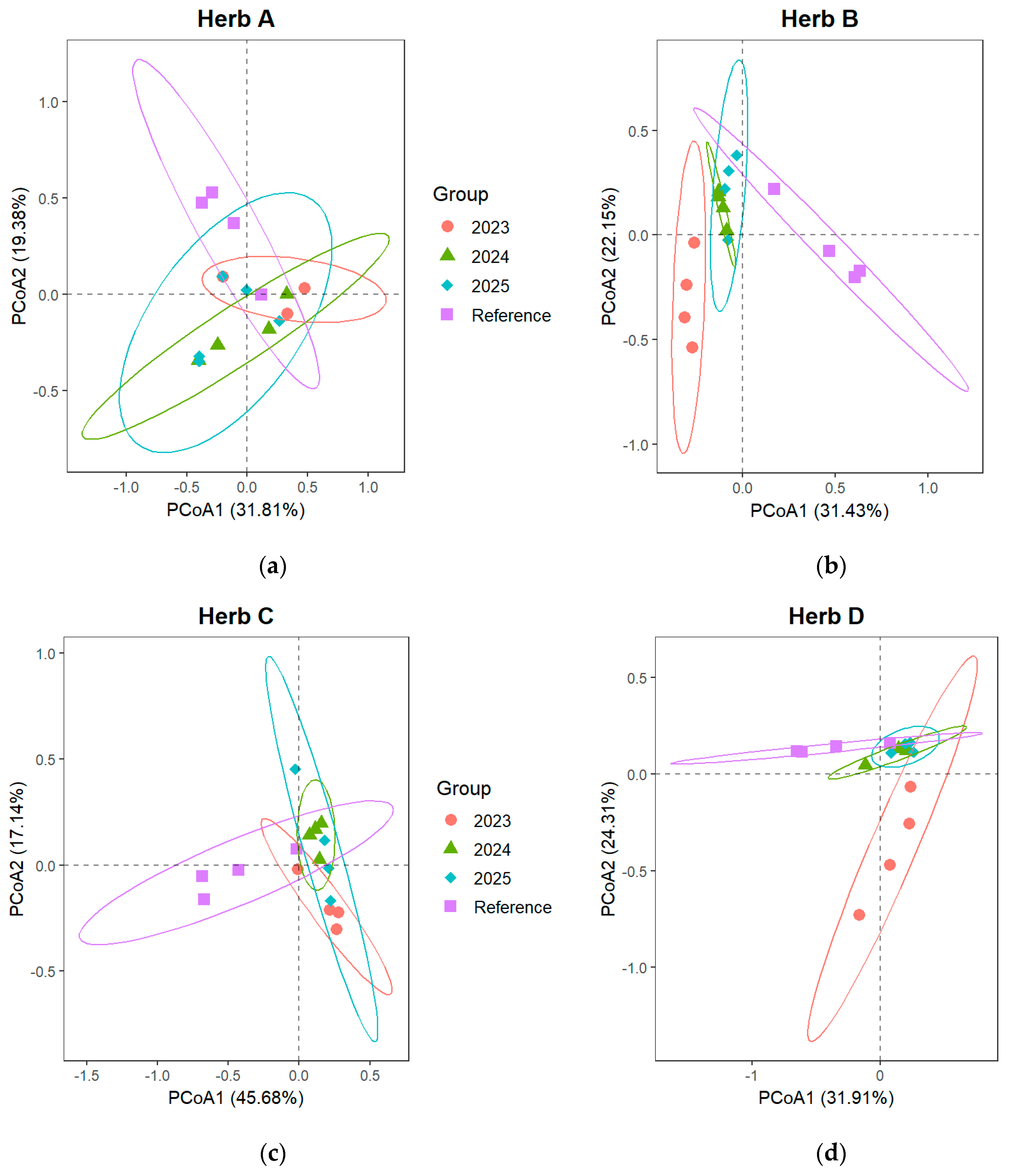
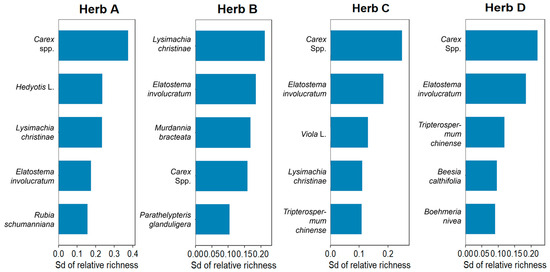
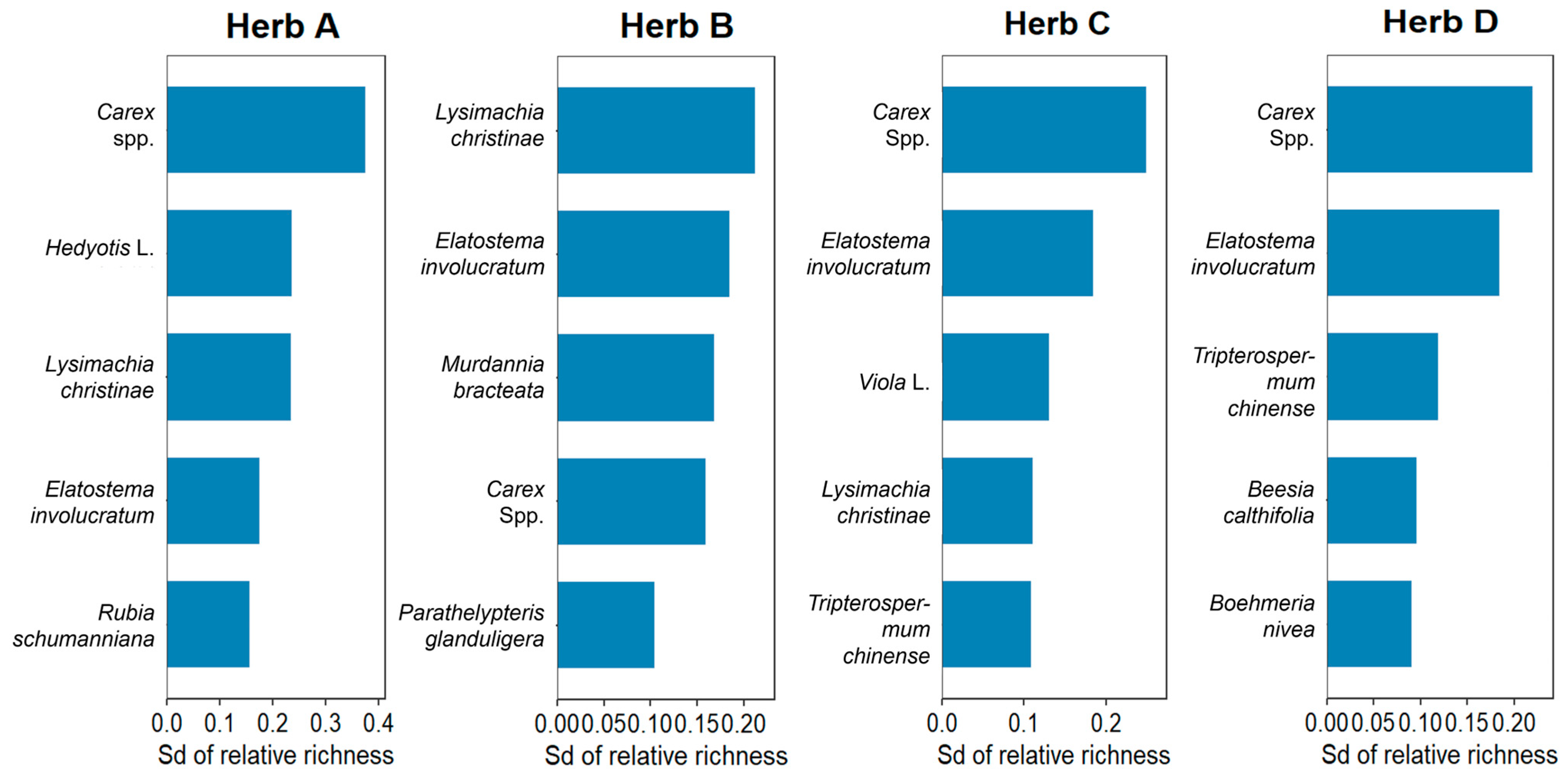
The PCoA analysis of the changes in the composition of herb layer communities showed that there was no significant difference in degraded habitats in each group over time (Figure 4a–d). The first two principal coordinates respectively explained 53.58% and 56.22% of the differences, respectively (Figure 4b,d). The results of the relative richness standard deviation of herbs showed that the top five herbs with high volatility before and after restoration in group A were Carex spp., Hedyotis L., Lysimachia christinae Hance, and Elatostema involucratum Franch. et Savat. and Rubia schumanniana E. Pritz., respectively. In group B, they were Lysimachia christinae, Elatostema involucratum, Murdania bracteate (C. B. Clarke) J. K. Morton ex D. Y. Hong, Carex spp., and Parathelypteris glandulifera (Kunze) Ching, respectively. In group C, they were Carex spp., Elatostema involucratum, Viola L., Lysimachia christinae Hance, and Tripterospermum chinense (Migo) Harry Sm., respectively. In group D, they were Carex spp., Elatostema involucratum, Tripterospermum chinense, Beesia calthifolia (Maxim.) Ulbr., and Boehmeria nivea (L.) Gaudich., respectively (Figure 5).
Figure 4.
PCoA analysis of herb layer in different degraded habitats. (a–d): PCoA analysis of herb layer in group A–D, respectively.
Figure 5.
Standard deviation of relative richness of herb layer in different types of degraded habitats.
3.2.3. Changes in Bamboo Regeneration
As shown in Table 4, bamboo regeneration index responded significantly to time, and the number of live shoots were further influenced by both group and the time *group interaction. This underscores that bamboo recovery was sensitive to both restoration treatments and interannual variation. The number of live bamboo shoots peaked significantly in 2024 before declining in 2025, indicating a transient surge in regenerative vigor following canopy opening and thinning. Notably, group B exhibited significantly higher live shoot numbers in 2024–2025 than other groups, providing direct evidence that increased light transmission and bamboo tending effectively stimulated recovery in high-canopy-density plantations.
Table 4.
Bamboo regeneration in different degraded habitats.
3.3. Changes in Animal Relative Abundance Index
From May 2023 to December 2023, the working days of six infrared cameras in the quadrat totaled 425 days, of which 32 valid photos were statistically analyzed (Table 5). Four species of mammals were photographed during the three-year monitoring period: masked palm civet (Paguma larvata (C. E. H. Smith, 1827)), Asiatic black bear (Ursus thibetanus G. Cuvier, 1823), tufted deer (Elaphodus cephalophus Milne-Edwards, 1872), and wild boar (Sus scrofa Linnaeus, 1758), threatened species in Table A1. The tufted deer was the only species recorded in every month, and its relative abundance index increased markedly, initially 1.14 to 22.22, peaking in November (Table 6). Its persistent and increasing presence suggests the restored area is developing into a regular foraging or shelter habitat for this species.
Table 5.
Infrared camera working days and total number of valid photos.
Table 6.
Number of effective photos and relative abundance index of four mammals.
4. Discussion
4.1. Effects of Artificial Restoration on Species Diversity
Our results demonstrate that targeted artificial restoration measures can effectively drive the positive changes in species diversity of shrub and herb layers in the degraded habitat of the giant panda. The diversity of the shrub layer (richness and Shannon index) significantly increased and stabilized within two years after recovery. Moreover, except for Group D (bamboo-free secondary forest), the differences between the other groups and the reference habitat rapidly disappeared. This rapid convergence phenomenon indicates that measures based on canopy structure adjustment (such as light transmission and thinning) can quickly release resources, promote the settlement and growth of shrubs, which is in line with the expectations of the “Intermediate disturbance hypothesis” and provides empirical evidence for the rapid initiation of the restoration process of severely degraded ecosystems [23,24]. In group D, the difference between shrub layer diversity and suitable habitat increased at the later stage of restoration, which may be due to the fact that excessive clearing of miscellaneous shrubs significantly changed the resource availability and niche of such degraded habitat, destroyed the inherent ecological elasticity, and turned the community succession to an unexpected state, redirected the community succession toward an alternative pathway. This new pathway may favor a set of species different from the reference habitat, possibly due to the creation of novel niche opportunities that exceed the “intermediate disturbance” level, thereby altering the expected trajectory of recovery [25,26]. Similar studies have shown that in degraded land with a certain original structure, excessive soil and vegetation disturbance will give priority to promoting the colonization of pioneer species, thus changing the assembly process of the community, resulting in differences from the target state [3,27,28]. This underscores the importance of tailoring restoration intensity to the initial degradation context, a key consideration for effective restoration practice [6]. In secondary degraded forests with certain original structures, the principle of “less intervention” or “nature-based restoration” (NbS) is sometimes more appropriate than high-intensity artificial intervention [3].
On the contrary, the species richness and Shannon–Wiener index of the herb layer showed a trend of “first increasing and then decreasing”, which revealed the differential response of different life forms of plants to restoration measures. At the initial stage of restoration, increasing light transmission and clearing miscellaneous shrubs temporarily increased the heterogeneity of microhabitat and resource availability, promoted the colonization of pioneer herb species, and led to the emergence of diversity peaks, which was consistent with the results of Mao et al. on the diversity of understory herb plants after thinning [29]. However, with the progress of the restoration process, the rapid growth of the shrubs led to increased competition for light, nutrients, and other resources, which had a stronger competitive exclusion effect on the herbs, resulting in the decline of herb layer diversity [30,31]. This differentiated response model of the shrub layer and herb layer highlights the importance of considering the succession dynamics of different life-type plants when setting restoration goals and evaluation indicators.
The monitoring results of animal diversity provide evidence from consumers for the restoration of degraded habitat species diversity. In 2023, the relative abundance index of Masked palm civet, Asiatic black bear and Tufted deer among the four medium and large mammals monitored by infrared camera showed an increasing trend in time, indicating that the degraded habitat after artificial restoration has initially possessed the ecological service function of providing survival resources for species with different ecological needs [32,33], and is gradually becoming a stable habitat for Tufted deer [34]. The latest research shows that in the restoration of natural habitats, the improvement of vegetation structure can promote the restoration of consumer communities, such as the increase of herbivore activities such as Mainland serow (Capricornis sumatraensis Bechstein, 1799), which further verifies the importance of consumers in maintaining the stability of plant communities and ecological functions, and will further participate in and promote ecological restoration through ecological processes such as seed transmission [35,36].
4.2. Effects of Artificial Restoration on Plant Community Structure
The increase of the Sorensen index over time indicates that artificial restoration leads the vegetation composition of shrub and herb layers in different degraded habitats to a more similar direction, namely “Community convergence”, which is usually an important signal to judge the effectiveness of restoration measures [37,38]. By 2025, the Sorensen index of shrubs has exceeded 0.65 except for group B (pure plantation without bamboo), which means that its species composition and suitable habitat have reached a high degree of similarity. The Sorensen index of herb increased to 0.30–0.40, but was lower than that of the shrub layer. This indicates that the artificial restoration measures can also promote the convergence of species composition in the herb layer to suitable habitats, but the recovery degree of the herb community may lag behind that of the shrub layer. This may be because the shrubs have the characteristics of faster diffusion, easier colonization, wider niche, higher tolerance to microhabitat changes, and higher recovery starting point than the herbs, and can quickly converge to the target community [39].
The results of PCoA confirmed the significant temporal variation of shrub layer community composition in the process of restoration. The obvious separation from the suitable habitat in 2023 and the approach of the year visually show the process of the restoration measures promoting the composition of shrub layer communities in the degraded habitat to close to the suitable habitat. In contrast, the PCoA of the herb showed that the overall time differentiation was not significant, which was inconsistent with the convergence trend of the overall herb community composition revealed by the Sorensen index. On the one hand, this difference may be due to the different sensitivity of the two analysis methods. Sorensen index only considers the presence or absence of species, while PCoA captures the position changes in species in multidimensional space. On the other hand, it may indicate that the herb layer communities in degraded habitats give priority to functional restoration, which is manifested by limited local species replacement and fine-tuning of quantitative characteristics rather than reconstruction [40,41]. This indicates that in the restoration of degraded habitats, measures for the targeted restoration of the shrub layer can be prioritized as the core approach for the functional restoration of habitats.
The high volatility of species such as Litsea pungens, Actinidia spp., Salix spp., Rubus spp., Hydrangea macrophylla, Carex spp., Elatostema involucratum, etc., in the process of restoration may be related to their specific niche needs for light, water, and other resources [42]. This is consistent with the survey results of vegetation succession in the habitat of giant pandas after the earthquake. It was found in Longxi-Hongkou nature reserve that Litsea pungens, Hydrangea macrophylla, Salix spp., Pteridophyta, Carex L., and Elatostema involucratum were the first pioneer species to enter after the earthquake, and Rosaceae plants of Rubus L., such as Rubus setchuenensis Bureau & Franch. gradually became the dominant species [43]. This indicates that the recognition of key indicator species has universal value across regions and can indicate the stages and states of vegetation restoration in similar habitat restoration monitoring [44,45]. The high volatility of taxa such as Actinidia spp., Salix spp., Rubus spp., and Carex spp. During restoration, likely reflects their specific niche requirements for resources like light and water [42]. It is noteworthy that our identification of these key indicative ‘taxa’ included units at the species, genus, and family levels. This approach is grounded in functional ecology and practical field methodology. Congeners and confamilial plants often exhibit conserved functional traits and occupy similar niches, leading to comparable responses to environmental changes such as canopy opening [19,20]. In large-scale and long-term monitoring where species-level identification for all individuals is unfeasible, the use of operational taxonomic units (OTUs—recorded to the finest identifiable level, be it species, genus, or family) is a well-established surrogate for capturing floristic and functional dynamics [21]. This practice aligns with the growing emphasis on functional, rather than purely taxonomic, assessment in restoration ecology [46], and effectively served our goal of evaluating community-level recovery trajectories in the Niba Mountain corridor.
4.3. Effect and Suggestions of Artificial Restoration on Degraded Habitat of Giant Panda
The results of this study provide positive short-term evidence for the artificial restoration of the Niba Mountain Corridor. First, the species diversity of shrub and herb layers has been significantly improved, and their species composition shows a clear trend of convergence to suitable habitats. The growth and colonization of shrubs directly and strongly depend on the change of canopy structure, so the change of the shrub layer can directly reflect the core effect of the restoration measures [47]. Second, the dynamics of bamboo regeneration provide powerful evidence for the effectiveness of giant panda habitat restoration. The significant increase in the number of live bamboo shoots after one year of restoration and the subsequent increase in the number of dead bamboo are signs of healthy regeneration of the bamboo system [48,49]. The number of live bamboo shoots in group B was significantly higher than that in other groups, which directly proved the effectiveness of the measures of increasing light transmission and tending bamboo for the reconstruction of bamboo communities in high canopy density plantations, which was crucial for the restoration of bamboo sources, the staple food of giant pandas in degraded habitats. Third, preliminary, one-year data from infrared cameras recorded activity of medium and large mammals, including the consistent presence of Tufted deer. These early signs indicate that the restored habitats may be starting to regain ecological functions like provisioning of resources, though longer-term monitoring is essential to confirm functional recovery trends.
However, these early results must be viewed with caution. The lag in the recovery of herbaceous plants, the deviation in Group D, and the fact that the animal data are based on only one year of preliminary monitoring all imply that the comprehensive restoration of ecological functions will be a long-term process. The following are experiences and other suggestions that can be learned from this study, based on future recovery practices:
(1) Implement a differentiated artificial restoration strategy. For group A (pure plantation with bamboo), group B (pure plantation without bamboo), and group C (secondary forest with high-density bamboo), the restoration method in this study should be adhered to and strengthened. As for group D (secondary forest without bamboo), attention should be paid to tree replanting rather than large-scale cleaning of miscellaneous shrubs to avoid the instability of community structure at the initial stage of restoration.
(2) Establish a monitoring system with key indicator species as the core. Taking the sensitive species such as Litsea pungens, Salix spp., Rubus spp., Hydrangea macrophylla, Carex spp., and so on as the monitoring focus, the population dynamic model was established to master the fluctuation law, which was used to evaluate the repair status and grasp the intervention opportunity. When establishing such a monitoring system, it is pragmatically and ecologically sound to define ‘key taxa’ as functional taxonomic groups. This approach acknowledges that closely related taxa often share similar ecological functions and responses to restoration interventions. It also enhances the efficiency and consistency of long-term field monitoring across different observers and seasons.
(3) Implement long-term and cross-scale comprehensive ecological monitoring. It is suggested to extend the monitoring cycle and include key functional indicators such as plant functional traits, animal communities, and soil to comprehensively assess the impact of restoration on the ecosystem.
5. Conclusions
This study has demonstrated through three years of empirical monitoring that differential intervention for degradation type diagnosis is a scientific path to improve corridor restoration efficiency and promote the connectivity of giant panda populations. This is in line with the global strategy advocated in the current field of ecological restoration to protect high-integrity forests and restore low-integrity forests, and also provides clear, measurable, and referenceable monitoring and evaluation goals for the restoration of habitats of similar flagship species worldwide [4].
Author Contributions
Conceptualization, Q.S. and B.Y.; investigation, Q.S., D.Z., M.T., P.L., J.L., and Y.J., methodology, M.F., X.S., and B.Y.; software, M.F.; data curation, Q.S. and D.Z.; writing—original draft preparation, Q.S.; writing—review and editing, Q.S., Z.C., X.X., X.S., and B.Y.; funding acquisition, B.Y. All authors have read and agreed to the published version of the manuscript.
Funding
This study was supported by the National Natural Science Foundation of China (32470535) and the Qingshan Public Welfare Special Fund of the China Environmental Protection Foundation.
Data Availability Statement
Data are available from the authors on request.
Acknowledgments
We thank the staff of Yingjing County Management and Protection Station of the GPNP for their support and assistance in the research.
Conflicts of Interest
The authors declare no conflicts of interest.
Appendix A
Table A1.
Threatened and endemic species under monitoring.
References
- Yuan, R.; Zhang, N.; Zhang, Q. The impact of habitat loss and fragmentation on biodiversity in global protected areas. Sci. Total Environ. 2024, 931, 173004. [Google Scholar] [CrossRef] [Scilit] [PubMed]
- Zhao, J.; Yu, L.; Newbold, T.; Chen, X. Trends in habitat quality and habitat degradation in terrestrial protected areas. Conserv. Biol. 2025, 39, e14348. [Google Scholar] [CrossRef] [Scilit]
- Chase, J.M.; Blowes, S.A.; Knight, T.M.; Gerstner, K.; May, F. Ecosystem decay exacerbates biodiversity loss with habitat loss. Nature 2020, 584, 238–243. [Google Scholar] [CrossRef] [Scilit]
- Grantham, H.S.; Duncan, A.; Evans, T.D.; Jones, K.R.; Beyer, H.L.; Schuster, R.; Walston, J.; Ray, J.C.; Robinson, J.G.; Callow, M.; et al. Anthropogenic modification of forests means only 40% of remaining forests have high ecosystem integrity. Nat. Commun. 2020, 11, 5978. [Google Scholar] [CrossRef] [Scilit]
- Yang, B.; Qin, W.; Fu, M.; Xu, Y.; Zhu, L.; Pan, H.; Chen, Z.; Dai, Q.; Yang, Z.; Gu, X.; et al. A conceptual framework for conserving giant panda habitat: Restoration and connectivity. Biol. Rev. Camb. Philos. Soc. 2025, 100, 2299–2311. [Google Scholar] [CrossRef] [Scilit]
- Messier, C.; Jürgen, B.; Sousa-Silva, R.; Auge, H.; Baeten, L.; Barsoum, N.; Bruelheide, H.; Caldwell, B.; Cavender-Bares, J.; Dhiedt, E. For the sake of resilience and multifunctionality, let’s diversify planted forests! Conserv. Lett. 2021, 15, e12829. [Google Scholar] [CrossRef] [Scilit]
- Li, B.V.; Pimm, S.L. China’s endemic vertebrates sheltering under the protective umbrella of the giant panda. Conserv. Biol. 2016, 30, 329–339. [Google Scholar] [CrossRef] [Scilit]
- The Fourth National Giant Panda Survey Report. The Fourth National Giant Panda Survey Report; Science Press: Beijing, China, 2021; p. 269. [Google Scholar]
- Zhang, Z.; Swaisgood, R.R.; Zhang, S.; Nordstrom, L.A.; Wang, H.; Gu, X.; Hu, J.; Wei, F. Old-growth forest is what giant pandas really need. Biol. Lett. 2011, 7, 403–406. [Google Scholar] [CrossRef] [Scilit]
- Hou, N.; Dai, Q.; Ran, J.; Jiao, Y.; Chen, Y.; Zhao, C. A corridor design for the giant panda in the Niba Mountain of China. Chin. J. Appl. Environ. Biol. 2014, 20, 1039–1045. [Google Scholar] [CrossRef] [Scilit]
- Shen, G. Habitat Restoration for Ailuropioda melanoleuce. Ph.D. Thesis, Beijing Forestry University, Beijing, China, 2002. [Google Scholar]
- Qiao, R.; Lv, Y.; Lv, B.; Huang, X.; Liu, Q.; Li, D.; Ma, L. Factors influencing species diversity and comparison of indices of understory vegetation in secondary forests at various development stages in the mountains of northern Hebei, China. Acta Ecol. Sin. 2025, 45, 11155–11170. [Google Scholar] [CrossRef]
- Kong, F.; Chen, X.; Zhang, M.; Liu, Y.; Jiang, S.; Chisholm, R.A.; He, F. Pioneer tree species accumulate higher neighbourhood diversity than late-successional species in a subtropical forest. For. Ecol. Manag. 2023, 531, 120740. [Google Scholar] [CrossRef] [Scilit]
- Lindell, C.A. The value of animal behavior in evaluations of restoration success. Restor. Ecol. 2008, 16, 197–203. [Google Scholar] [CrossRef] [Scilit]
- Ni, Y.; Chen, L.; Dong, Z.; Sun, D.; Li, B.; Wangle, X.; Chen, L. Community structure of macrobenthos and ecological health evaluation in the restoration area of the Yellow River Delta wetland. Biodiversity Sci. 2024, 32, 23303. [Google Scholar] [CrossRef] [Scilit]
- Guo, Y.; Liu, S.; Dong, Y.; Liu, J.; Li, W. An indicator system for effectiveness evaluation of ecological corridor restorationbased on landscape patterns and ecosystem services. Chin. J. Eco-Agric. 2023, 31, 1525–1538. [Google Scholar] [CrossRef]
- He, H.; Jiang, M.; Xie, W.; Huang, Z.; Zhang, Y.; Wu, S.; Zhang, P.; Qi, C.; Luo, C.; Li, J.; et al. The research on restoration priority assessment of damaged giant panda habitats based on multi-criteria decision analysis of AHP-OWA. Acta Theriol. Sin. 2024, 44, 395–410. Available online: https://www.mammal.cn/EN/10.16829/j.slxb.150878 (accessed on 15 November 2025).
- Qin, W.; Liu, J.; Song, X.; Pan, H.; Cheng, Y.; Fu, M.; Zhang, Y.; Zhou, C.; Yang, B. Study on the relationship between tree layer and understory Qiongzhuea multigemmia of forest community in giant panda habitat. Sichuan For. Sci. Technol. 2023, 44, 7–14. [Google Scholar] [CrossRef]
- Cahill, J.F.; Kembel, S.W.; Lamb, E.G.; Keddy, P.A. Does phylogenetic relatedness influence the strength of competition among vascular plants? Perspect. Plant Ecol. Evol. Syst. 2008, 10, 41–50. [Google Scholar] [CrossRef] [Scilit]
- Burns, J.H.; Strauss, S.Y. More closely related species are more ecologically similar in an experimental test. Proc. Natl. Acad. Sci. USA 2011, 108, 5302. [Google Scholar] [CrossRef] [Scilit]
- Gaston, K.J.; Williams, P.H. Mapping the world’s species-the higher taxon approach. Biodivers. Lett. 1993, 1, 2–8. [Google Scholar] [CrossRef] [Scilit]
- Wei, S.-H.; Qiang, S.; Ma, B.; Wei, J.; Chen, J.; Wu, J.; Xie, T.; Shen, X. Influence of long-term rice-duck farming systems on the composition and diversity of weed. J. Plant Ecol. 2006, 30, 9–16. [Google Scholar] [CrossRef] [Scilit]
- Mayor, S.J.; Cahill, J.F., Jr.; He, F.; Sólymos, P.; Boutin, S. Regional boreal biodiversity peaks at intermediate human disturbance. Nat. Commun. 2012, 3, 1142. [Google Scholar] [CrossRef] [Scilit]
- Wang, J.; Tan, Z.; Wang, Y. Effects of moderate disturbance on species diversity of grassland under different illumination conditions. Sichuan For. Sci. Technol. 2019, 40, 51–56. [Google Scholar] [CrossRef]
- Scheffer, M.; Carpenter, S.; Foley, J.A.; Folke, C.; Walker, B. Catastrophic shifts in ecosystems. Nature 2001, 413, 591–596. [Google Scholar] [CrossRef] [Scilit]
- Suding, K.N.; Gross, K.L.; Houseman, G.R. Alternative states and positive feedbacks in restoration ecology. Trends Ecol. Evol. 2004, 19, 46–53. [Google Scholar] [CrossRef] [Scilit]
- Holl, K.D.; Aide, T.M. When and where to actively restore ecosystems? For. Ecol. Manag. 2011, 261, 1558–1563. [Google Scholar] [CrossRef] [Scilit]
- Corbin, J.D.; D’Antonio, C.M. Gone but not forgotten? Invasive plants’ legacies on community and ecosystem properties. Invasive Plant Sci. Manage 2012, 5, 117–124. [Google Scholar] [CrossRef] [Scilit]
- Mao, Z.; Zhu, J.; Liu, Z.; Tan, H.; Cao, B. Effects of thinning on species diversity and composition of understory herbs in a larch plantation. Chin. J. Ecol. 2006, 25, 1201–1207. [Google Scholar]
- Price, J.N.; Morgan, J.W. Woody plant encroachment reduces species richness of herb-rich woodlands in southern Australia. Austral. Ecol. 2008, 33, 278–289. [Google Scholar] [CrossRef] [Scilit]
- Yu, J.; Zhang, X.; Xu, C.; Hao, M.; Choe, C.; He, H. Thinning can increase shrub diversity and decrease herb diversity by regulating light and soil environments. Front. Plant Sci. 2022, 13, 948648. [Google Scholar] [CrossRef] [Scilit]
- Liu, J.; Feng, Y.; Wang, Y.; Pan, C.; Bao, T.; Ren, J.; Zhao, W. Effects of restoration of artificial sand-fixing vegetation on the diversity of reptiles and mammals in the middle reaches of the Heihe River Basin. J. Desert Res. 2024, 44, 167–177. Available online: http://www.desert.ac.cn/CN/lexeme/showArticleByLexeme.do?articleID=6432 (accessed on 15 November 2025).
- Derhé, M.A.; Murphy, H.T.; Preece, N.D.; Lawes, M.J.; Menéndez, R. Recovery of mammal diversity in tropical forests: A functional approach to measuring restoration. Restor. Ecol. 2018, 26, 778–786. [Google Scholar] [CrossRef] [Scilit]
- Li, P.; Zhang, Z.; Yang, H.; Wei, W.; Zhou, H.; Hong, M.; Fu, M.; Song, X.; YU, J. Study on the activity rhythms of ungulates in Daxiangling Nature Reserve based on infrared camera trapping. Sichuan For. Sci. Technol. 2021, 42, 18–23. [Google Scholar] [CrossRef]
- Couvreur, M.; Christiaen, B.; Verheyen, K.; Hermy, M. Large herbivores as mobile links between isolated nature reserves through adhesive seed dispersal. Appl. Veg. Sci. 2004, 7, 229–236. [Google Scholar] [CrossRef]
- Liang, M.; Cappelli, S.L.; Borer, E.T.; Tilman, D.; Seabloom, E.W. Consumers modulate effects of plant diversity on community stability. Ecol. Lett. 2025, 28, e70103. [Google Scholar] [CrossRef] [Scilit]
- Matthews, J.W.; Spyreas, G. Convergence and divergence in plant community trajectories as a framework for monitoring wetland restoration progress. J. Appl. Ecol. 2010, 47, 1128–1136. [Google Scholar] [CrossRef] [Scilit]
- Liu, X.; Zhang, X.; Liu, Y.; Zhang, W.; Sun, T. Effects of vegetation restoration on the species composition and diversity of plantcommunities in the limestone mountains in northern Anhui Province. Pratac. Sci. 2020, 37, 845–852. [Google Scholar] [CrossRef]
- Luong, J.C. Nonperiodic grassland restoration management can promote native woody shrub encroachment. Restor. Ecol. 2022, 30, e13650. [Google Scholar] [CrossRef] [Scilit]
- Tölgyesi, C.; Török, P.; Kun, R.; Csathó, A.I.; Bátori, Z.; Erdős, L.; Vadász, C. Recovery of species richness lags behind functional recovery in restored grasslands. Land Degrad. Dev. 2019, 30, 1083–1094. [Google Scholar] [CrossRef] [Scilit]
- Charton, K.T.; Damschen, E.I. Grassland woody plant management rapidly changes woody vegetation persistence and abiotic habitat conditions but not herbaceous community composition. J. Appl. Ecol. 2024, 61, 2020–2032. [Google Scholar] [CrossRef] [Scilit]
- Kricsfalusy, V.V.; Godfrey, A.; Chakma, K.; Stewart, A.; Danylyk, I.M. Evaluating the diversity, distribution patterns and habitat preferences of Carex species (Cyperaceae) in western Canada using geospatial analysis. Biodivers. Data J. 2025, 13, e144840. [Google Scholar] [CrossRef] [Scilit]
- Zhu, D.; He, D.; Shang, T.; Hu, L.; Xiong, K. A preliminary research on the after-earthquake succession of the vegetation in Longxi-Hongkou national nature reserve. Sichuan For. Sci. Technol. 2015, 36, 95–97. [Google Scholar] [CrossRef]
- Greenberg, C.H.; Woodbridge, M. Successional trajectories differ among post-harvest and mature cove and upland hardwood forests. For. Ecol. Manag. 2025, 596, 123091. [Google Scholar] [CrossRef] [Scilit]
- De Toledo, R.M.; Pivello, V.R.; Vangansbeke, P.; Jakovac, C.; Verheyen, K.; Verdade, L.M.; de Lima, R.A.F. Reassembly dynamics of tropical secondary succession: Evidence from atlantic forests. J. Ecol. 2025, 113, 2106–2119. [Google Scholar] [CrossRef] [Scilit]
- Laughlin, D.C. Applying trait-based models to achieve functional targets for theory-driven ecological restoration. Ecol. Lett. 2014, 17, 771–784. [Google Scholar] [CrossRef] [Scilit]
- Denslow, J.S. Gap partitioning among tropical rainforest trees. Biotropica 1980, 12, 47–55. [Google Scholar] [CrossRef] [Scilit]
- Wu, Y.; He, X.; Liu, X. Analysis on quality situation after intermediate felling of Bashania fargesii, pandas’ staple bamboo in Fuping Nature Reserve in Shangxi. For. Inventory Plan. 2008, 33, 63–70. [Google Scholar]
- He, X.; Zheng, X.; Liu, X.; Cai, X. Study on regeneration and effect of Bashania bamboo forest after strip thinning in Foping Nature Reserve, China. For. Grassl. Resour. Res. 2011, 3, 59–64. [Google Scholar] [CrossRef]

Disclaimer/Publisher’s Note: The statements, opinions and data contained in all publications are solely those of the individual author(s) and contributor(s) and not of MDPI and/or the editor(s). MDPI and/or the editor(s) disclaim responsibility for any injury to people or property resulting from any ideas, methods, instructions or products referred to in the content. |
© 2025 by the authors. Licensee MDPI, Basel, Switzerland. This article is an open access article distributed under the terms and conditions of the Creative Commons Attribution (CC BY) license.