Article

The Impact of Inundation Frequency on the Distribution of Floodplain Vegetation in the Jingjiang Section of the Yangtze River

1
Changjiang Basin Ecology and Environment Monitoring and Scientific Research Center, Changjiang Basin Ecology and Environment Administration, Ministry of Ecology and Environment, Wuhan 430010, China
2
Hubei Provincial Key Laboratory for Basin Ecology Intelligent Monitoring-Prediction and Protection, Wuhan 430010, China
3
International Center for Bamboo and Rattan, Beijing 100102, China
*
Author to whom correspondence should be addressed.
Forests 2026, 17(1), 133; https://doi.org/10.3390/f17010133
Submission received: 10 December 2025 / Revised: 15 January 2026 / Accepted: 16 January 2026 / Published: 19 January 2026

Abstract

Floodplain vegetation is an essential part of riverine wetland ecosystems. Hydrological fluctuations significantly influence its survival and distribution. This study examines the floodplain vegetation of the Jingjiang section of the Yangtze River. This study uses annual mean NDVI data over six time periods from 2000 to 2023 to represent the changes in floodplain vegetation. The driving factors include inundation frequency, annual mean temperature, annual mean precipitation, elevation, and slope gradient. To analyze the data, this study employs multiple analytical methods, including threshold segmentation, pixel-by-pixel linear regression (using the least squares method), Geodetector, and Pearson’s correlation analysis. This study clarifies the spatiotemporal evolution of the NDVI and the distribution of vegetation in these floodplain. It also quantitatively assesses the influence of multiple drivers and reveals the areas and extent of vegetation distribution affected by different inundation frequencies. The findings indicate: (1) Over six time periods from 2000 to 2023, NDVI values and the area covered by vegetation in the Jingjiang section of the Yangtze River floodplain exhibited fluctuating growth trends. The area covered by vegetation increased by 66.94 km2 in 2023 compared with that in 2000. (2) NDVI values were influenced by multiple interacting drivers, with inundation frequency being the dominant factor affecting vegetation change in the Jingjiang section (q-value: 0.79–0.86), followed by slope (q-value: 0.46–0.56). Interactions between different drivers amplify their impact on the annual average NDVI value. (3) Areas with inundation frequencies of 20%–40% exhibit positive spatial correlation with NDVI values. The maximum area of positive correlation is 112.51 km2, which is predominantly distributed across the central and marginal bars of the Jingjiang section. Within this range, inundation frequency has the strongest positive effect on vegetation growth.

1. Introduction

Riverine floodplains act as natural transition zones between aquatic and terrestrial environments. They perform vital ecological functions, such as regulating the climate, maintaining a balanced hydrological cycle, safeguarding biodiversity and protecting human health. Their development and evolution are directly influenced by variations in river hydrology [1,2,3]. In recent decades, these wetlands have attracted significant attention from hydrologists, ecologists, and environmental scientists due to their distinctive floodplain characteristics [4,5]. The vegetation of these wetlands plays a vital role within ecosystems acting as a sensitive indicator of environmental impacts from climate change and human activities, and it also regulates regional and even global energy balances and biogeochemical cycles [6]. Vegetation in these wetlands interacts with river processes, influencing flow patterns, sediment transport, and river morphology. Conversely, the hydrological, hydraulic, and geomorphological characteristics of rivers provide water, sediments, nutrients, and seeds for riparian vegetation [7].
Hydrological conditions are crucial factors influencing vegetation growth on floodplains and serve as the core driver shaping the vegetation patterns in these areas [8,9]. Alterations in hydrological conditions can not only directly impact the spatial distribution and growth processes of wetland plants, but also indirectly influence the species composition and community structure of wetland vegetation. They do this by modifying the physical and chemical properties of wetland water and soil [10,11]. Among these hydrological conditions, inundation frequency is widely regarded as the most significant one affecting wetland vegetation ecosystems. It reflects the duration and frequency of water submersion [12]. With the intensifying impacts of human activities—particularly the construction of hydraulic engineering structures such as dams and sluice gates—river hydrological processes have been altered. This alteration has consequently changed the inundation frequency of riverine floodplain, thereby affecting the area, structure, and distribution of floodplain vegetation [13,14]. Additionally, factors such as climate (temperature, precipitation) [15,16] and topography (elevation, slope) [17,18] collectively constitute the habitat conditions for vegetation growth, influencing the spatial distribution of floodplain wetland vegetation. Global climate change, including alterations in temperature and precipitation, induces changes in surface runoff, leading to shifts in vegetation structure and function [19]. Frequent flooding and drought disasters, in particular, have far-reaching implications.
Existing research methods for the evolution of floodplain vegetation include the spline method and the spline point method, which are mainly used for small-scale, long-term field fixed-point observations [20,21]. With the advancement of remote sensing technology, various types of satellite and drone imagery have been applied in vegetation studies and plant phenology research, thereby facilitating large-scale investigations into the evolution of wetland vegetation [22,23,24]. NDVI (Normalised difference vegetation index)—extracted from such imagery and serving as a crucial vegetation characteristic—is widely used to characterise plant growth status and spatial distribution, providing vital references for analysing changes in vegetation [25,26]. Existing studies employing these methods have examined the spatial pattern changes in wetland vegetation and their responses to meteorological and hydrological conditions in lakes such as the Yangtze Plain wetlands [27], Poyang Lake [28], and Dongting Lake [29]. However, existing studies primarily focus on establishing relationships between inundation frequency and wetland vegetation characteristics in lake ecosystems. Research on riverine floodplain vegetation—profoundly influenced by complex hydrological and sedimentary conditions, significant hydrological fluctuations, and intense human impacts—remains limited. Moreover, most studies rely on fragmented field surveys with small sample sizes. Consequently, the dominant role of inundation frequency in shaping floodplain vegetation is often described qualitatively, lacking precise spatial quantification (e.g., the locations of changes, which range of inundation frequency is suitable for vegetation growth, etc.) [30]. Furthermore, comprehensive analyses of driving factors primarily focus on the influence of single variables (e.g., water level, precipitation) rather than the integrated consideration or quantitative comparison of multiple drivers, including hydrology, climate, and topography. This not only hinders the identification of dominant drivers but also overlooks research on the interactions between these factors.
Against this backdrop, and in light of the aforementioned limitations, this study focuses on the floodplain in the Jingjiang section of the Yangtze River. Its objectives are to systematically elucidate the spatiotemporal evolution patterns of riverine floodplain vegetation, quantitatively analyse the multiple driving factors influencing these changes and their interactions, and clarify the dominant role of inundation frequency. Using the Google Earth Engine (GEE) platform, we analyzed the spatiotemporal variations in the annual mean NDVI values of the Jingjiang section over six time periods from 2000 to 2023. This study focuses on interannual-scale response patterns rather than intra-annual phenological fluctuations, and the introduction of seasonal indicators would deviate from the core objective of exploring long-term vegetation-hydrology interactions. We selected driving factors including inundation frequency, annual mean temperature, annual mean precipitation, elevation, and slope gradient. We applied analytical methods such as threshold segmentation, pixel-by-pixel linear regression (using the least squares method), Geodetector, and Pearson’s correlation analysis. This approach elucidates the spatiotemporal evolution of NDVI and vegetation distribution in floodplain, quantitatively assesses the combined impacts of multiple drivers, and identifies the influence zones and vegetation distribution areas under different inundation frequencies. This study deepens our understanding of vegetation-hydrology relationships in large river floodplain, providing a scientific basis for the conservation of vegetation communities and ecological restoration in such wetland systems. It also offers a reference for the ecological water level dispatching of major water conservancy projects, including the Three Gorges Dam.

2. Materials and Methods

2.1. Study Area

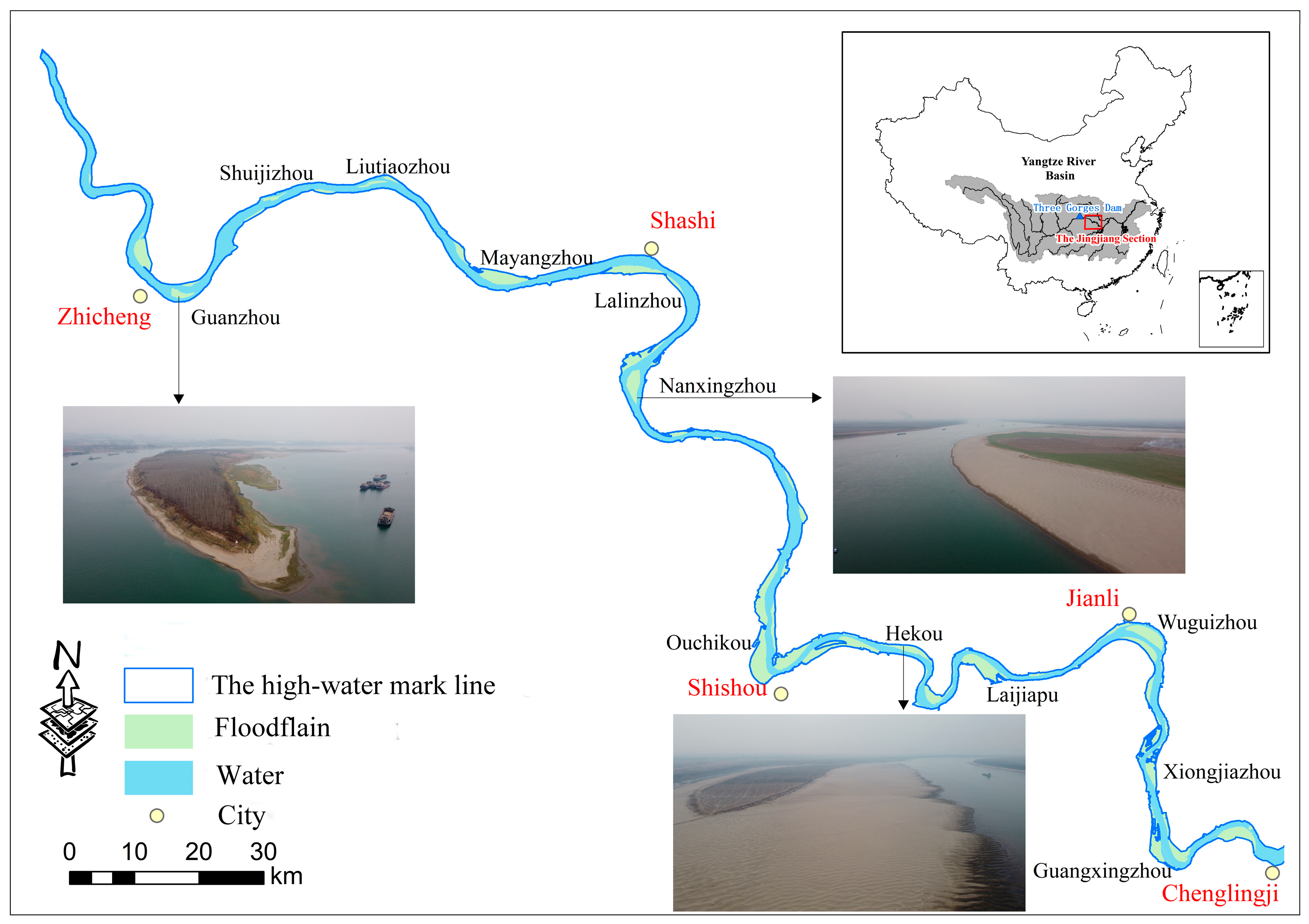
The Jingjiang section is located in the middle reaches of the Yangtze River, extending from Zhicheng (Hubei Province) to Chenglingji (Hunan Province), with a total length of 347.2 km. This section lies within a subtropical monsoon climate zone, characterized by warm-season rainfall and abundant precipitation. Bounded by the confluence of the Ouchikou River, it is divided into the Upper Jingjiang and Lower Jingjiang. The Upper Jingjiang is dominated by a slightly meandering, bifurcated channel pattern, while the Lower Jingjiang features a typical sinuous channel with numerous shoals and floodplains. Ecologically, the section serves as a habitat for endangered species such as the elk and the Yangtze finless porpoise, and it also functions as a critical spawning ground for the “Four Major Carp Species”: grass carp, black carp, silver carp, and bighead carp [31,32]. Globally, it attracts attention due to its key roles in flood control, navigation, and ecological conservation [33]. In recent decades, human activities—including the operation of major water conservancy projects (e.g., the Three Gorges Dam and Gezhouba Dam) and navigation channel improvement projects—coupled with the impacts of global climate change, have significantly altered the hydrological conditions of the Jingjiang section, thereby profoundly affecting the vegetation of its floodplain [34].
The “floodplain” in this paper refers to the areas above the main river channel between the high-water mark lines on both banks of the river, including marginal bars and mid-channel bars within the river course. The high-water mark line was determined through the following steps: first, the daily water level data from 1980 to 2023 (a period of over 40 years) at the Jianli Hydrological Station in the Jingjiang section were compared; second, remote sensing images corresponding to the near-maximum water level (recorded at 36.54 m at the Jianli Station on 26 August 2020) were identified; and finally, the high-water mark line along the boundary of the water body in these images was delineated. The distribution of floodplains in the Jingjiang section is shown in Figure 1.

2.2. Study Data

This study used the GEE platform to calculate the annual mean NDVI values for the Jingjiang section in 2000, 2005, 2010, 2015, 2020, and 2023. Driving factor data primarily included inundation frequency, annual mean temperature, annual mean precipitation, elevation, and slope data for the corresponding years. Inundation frequency was represented by Annual Water Percent (AWP) data, which were sourced from the Global Surface Water Data provided by the European Commission’s Joint Research Centre [35]. Annual mean temperature and precipitation data were obtained from the China National Science and Technology Infrastructure Platform—the National Earth System Science Data Centre. Elevation data were sourced from the Geospatial Data Cloud, while slope data were derived from elevation data. All data and their sources are summarized in Table 1.

2.3. Study Methods

2.3.1. Calculation of Annual Mean NDVI

NDVI is calculated using the following formula:
N D V I = ( N I R R ) / ( N I R + R )
NIR denotes the near-infrared band, where vegetation exhibits strong reflectance characteristics and high reflectivity; R denotes the red band, where vegetation shows strong absorption properties. NDVI is widely used in vegetation studies and plant phenology research, serving as a key indicator of plant growth status and spatial distribution patterns. It has a linear correlation with vegetation density [36]. Advances in Earth observation technologies have enabled remote sensing data to provide significant opportunities for investigating vegetation cover changes at global and regional scales.
This study used GEE to calculate the annual mean NDVI values for the Jingjiang section in 2000, 2005, 2010, 2015, 2020, and 2023. With its substantial computational resources and vast online datasets, GEE has become an essential tool for geographical and spatial research.

2.3.2. Threshold Segmentation Method

Threshold segmentation is one of the most commonly used techniques for land cover type identification via remote sensing. This approach first selects indicators with significant differences between distinct types, then determines thresholds for these indicators—thereby achieving the goal of extracting spatial information for different land features [37]. At larger spatial scales, remote sensing derived vegetation structural features (e.g., NDVI) exhibit pronounced variations across different land cover types [38,39]. In this study, regions of interest (ROIs) were selected from remote sensing images of the Jingjiang section, encompassing water bodies, tidal flats, and areas with varying vegetation coverage. Corresponding to the ranges of annual mean NDVI values, rounded threshold values were assigned as follows: NDVI < 0.2, water bodies and exposed rock/soil areas; 0.2 ≤ NDVI < 0.3, seasonal tidal flats; 0.3 ≤ NDVI < 0.4, low vegetation coverage; 0.4 ≤ NDVI < 0.5, medium vegetation coverage; NDVI ≥ 0.5, high vegetation coverage.

2.3.3. Trend Analysis

To better investigate the temporal trend of annual mean NDVI values in the Jingjiang section from over six time periods from 2000 to 2023, pixel-by-pixel linear regression (using the least squares method) was employed to quantify the temporal variation in NDVI across this section [40]. The formula is as follows:
S = n × i = 1 n i × Q i i = 1 n i × i = 1 n Q i n × i = 1 n i 2 ( i = 1 n i ) 2
where S denotes the slope of the fitted trend, representing the regression coefficient between pixel-location NDVI and the time series (the interannual rate of change); n indicates the sample size (six years of data were used in this study, so n = 6); Qi signifies the annual mean NDVI value for year i. If S > 0, the annual mean NDVI shows an increasing trend over the study period. If S < 0, the annual mean NDVI shows a decreasing trend over the study period. If S = 0, the annual mean NDVI for the pixel remains unchanged.

2.3.4. Geodetector

Geodetector is a new statistical method proposed by Wang Jinfeng et al. [41], mainly used to detect spatial dissimilarity and reveal the influencing factors behind it. The core idea is that when the independent variable significantly influences the dependent variable, there is a certain similarity in their spatial distributions. Based on this theory, the method detects the primary driving factors of spatial dissimilarity. The calculation formula is:
q = 1 n = 1 L M n σ n 2 / M σ 2
In the formula, q represents the explanatory power of the independent variable for the spatial differentiation of the dependent variable; L is the number of classifications or divisions of the independent variable; Mn and M are the sample sizes within the nth division and the entire region; σ n 2 and σ 2 are the variances in the nth division and the entire region. The value range of q is [0, 1]. The larger the value of q, the stronger the explanatory power of the independent variable for the spatial differentiation of the dependent variable, and vice versa. Interaction detection is used to identify the interrelationships among different independent variables and evaluate their combined effects to observe whether the joint action of any pair of independent variables increases or decreases the explanatory power for the spatial differentiation of the dependent variable (as shown in Table 2).
In this study, we used the factor detection and interaction detection of the Geodetector to analyze a total of five factors selected for natural factors (annual water percent, mean annual temperature, mean annual precipitation, elevation and slope). Factor detection was used to determine the degree to which a single driving factor explains the spatial differentiation of NDVI, and interaction detection was employed to determine whether there is any interaction between two driving factors. In this study, the discretization of continuous variables was uniformly implemented through data collection based on a uniform 500 m interval grid.

3. Results

3.1. Spatiotemporal Distribution and Variation Characteristics

3.1.1. Spatiotemporal Distribution Characteristics of Annual Mean NDVI Values on River Floodplains

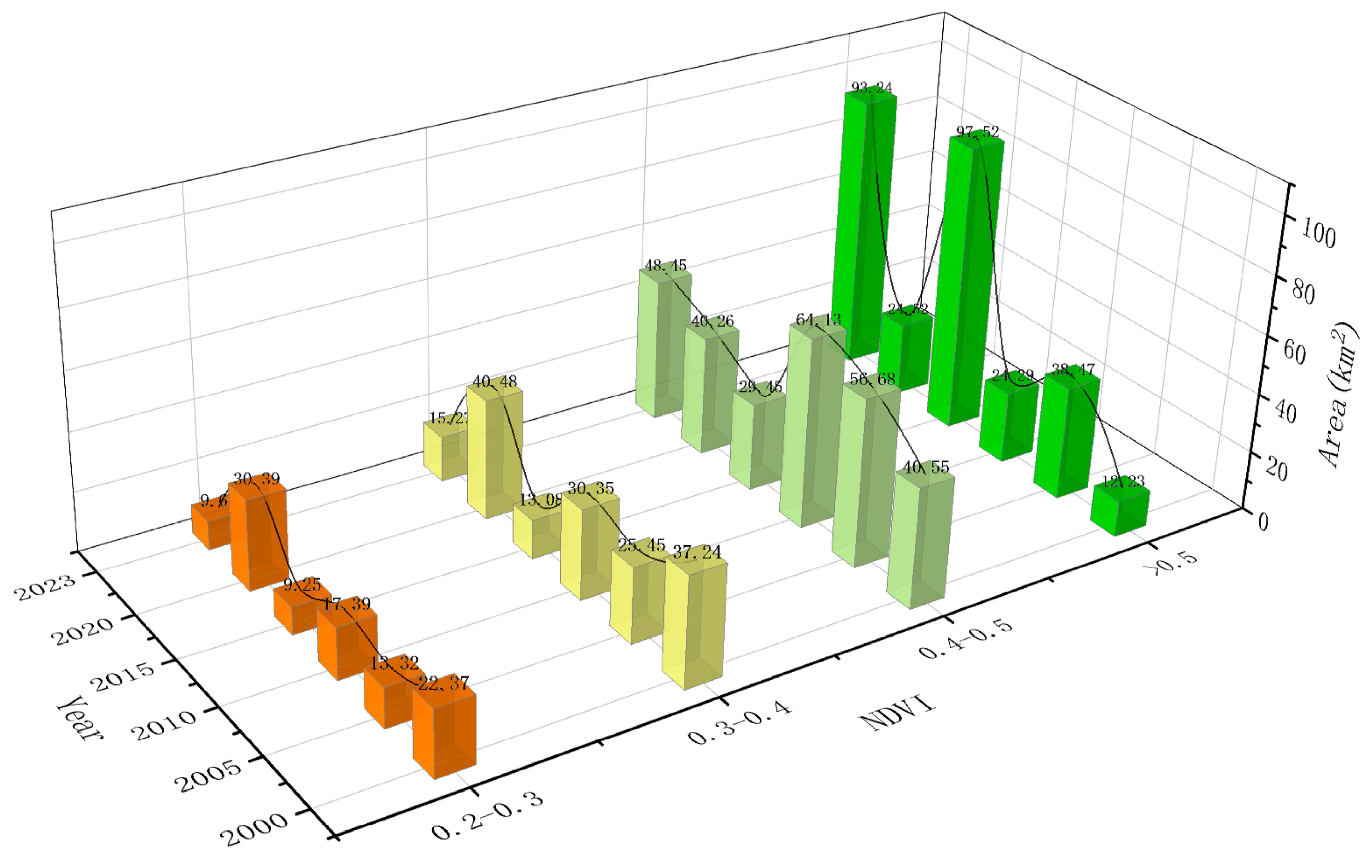
Statistics on the spatial variation in annual mean NDVI values across different sections are presented in Figure 2. Overall, vegetation-covered areas (NDVI > 0.3) on floodplains in the Jingjiang section showed a fluctuating upward trend over six time periods from 2000 to 2023, with notable declines in 2010 and 2020—the latter being more significant. In 2000, medium vegetation coverage area was the largest at 40.55 km2, followed by low vegetation coverage at 37.24 km2, with total vegetation coverage amounting to 90.02 km2. In 2005, medium vegetation coverage area remained the largest at 56.68 km2, followed by high vegetation coverage at 39.47 km2, and total coverage reached 120.6 km2. In 2010, medium vegetation coverage area still ranked first at 64.13 km2, with low vegetation coverage at 30.35 km2 coming next, and total coverage stood at 118.77 km2. In 2015, high vegetation coverage area dominated at 97.52 km2, medium vegetation coverage totaled 29.45 km2, and overall coverage reached 140.05 km2. In 2020, low vegetation coverage area took the lead at 40.48 km2, with medium vegetation coverage at 40.26 km2, and total coverage dropped to 105.26 km2. In 2023, high vegetation coverage area regained the top spot at 93.24 km2, followed by medium vegetation coverage at 48.45 km2, and total coverage reached 156.96 km2. In summary, total vegetation coverage increased by 66.94 km2 between 2000 and 2023, with high vegetation coverage area seeing the most significant growth, rising by 81.01 km2.
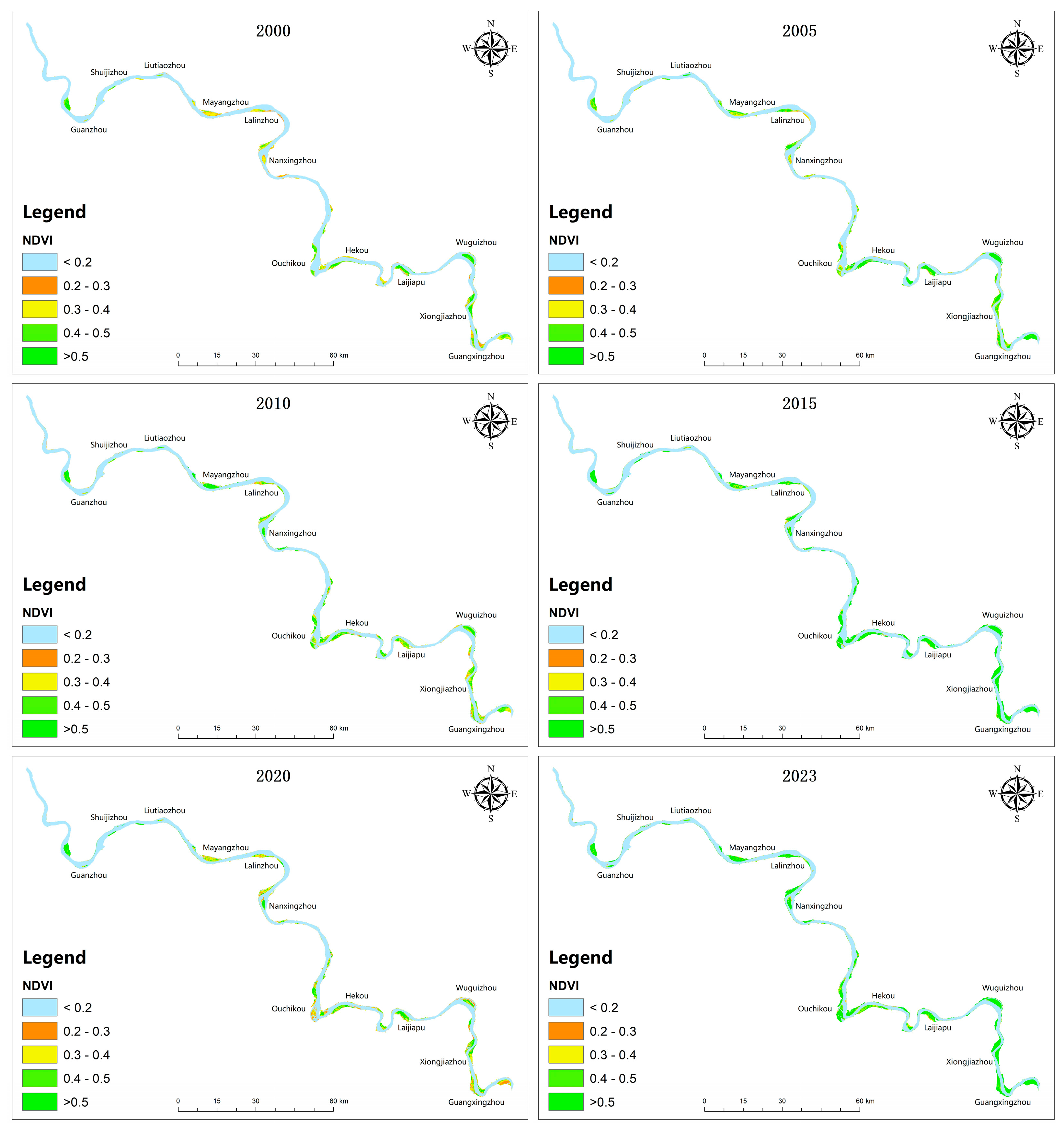
The spatial distribution of the annual mean NDVI is depicted in Figure 3. In 2000, the Upper Jingjiang exhibited generally low NDVI values, except for the upstream floodplain of Guanzhou. Conversely, the Lower Jingjiang displayed higher overall NDVI values, with the highest values recorded at Wuzhizhou and Xiongjiazhou. In 2005, most floodplains in the Upper Jingjiang had high NDVI values, except for Lalinzhou and Nanxingzhou, while the Lower Jingjiang maintained overall high NDVI values, with only minor low-value areas near the Guangxingzhou shoreline. In 2010, the Upper Jingjiang section showed higher NDVI values, except for lower values near Lalinzhou and Ouqikou, whereas the Lower Jingjiang section exhibited a general decrease in NDVI compared to previous years, with low values prevalent across most areas. In 2015, the Jingjiang section as a whole maintained higher NDVI values, with only small low-value patches in Liutiaozhou and Lalinzhou in the upper section. In 2020, the Jingjiang section had generally low NDVI values, except for higher values in Guanzhou and Shuijizhou within the Upper Jingjiang. By 2023, the entire Jingjiang section recorded comparatively high NDVI values.

3.1.2. Spatiotemporal Distribution of NDVI Trends in Riverine Floodplains

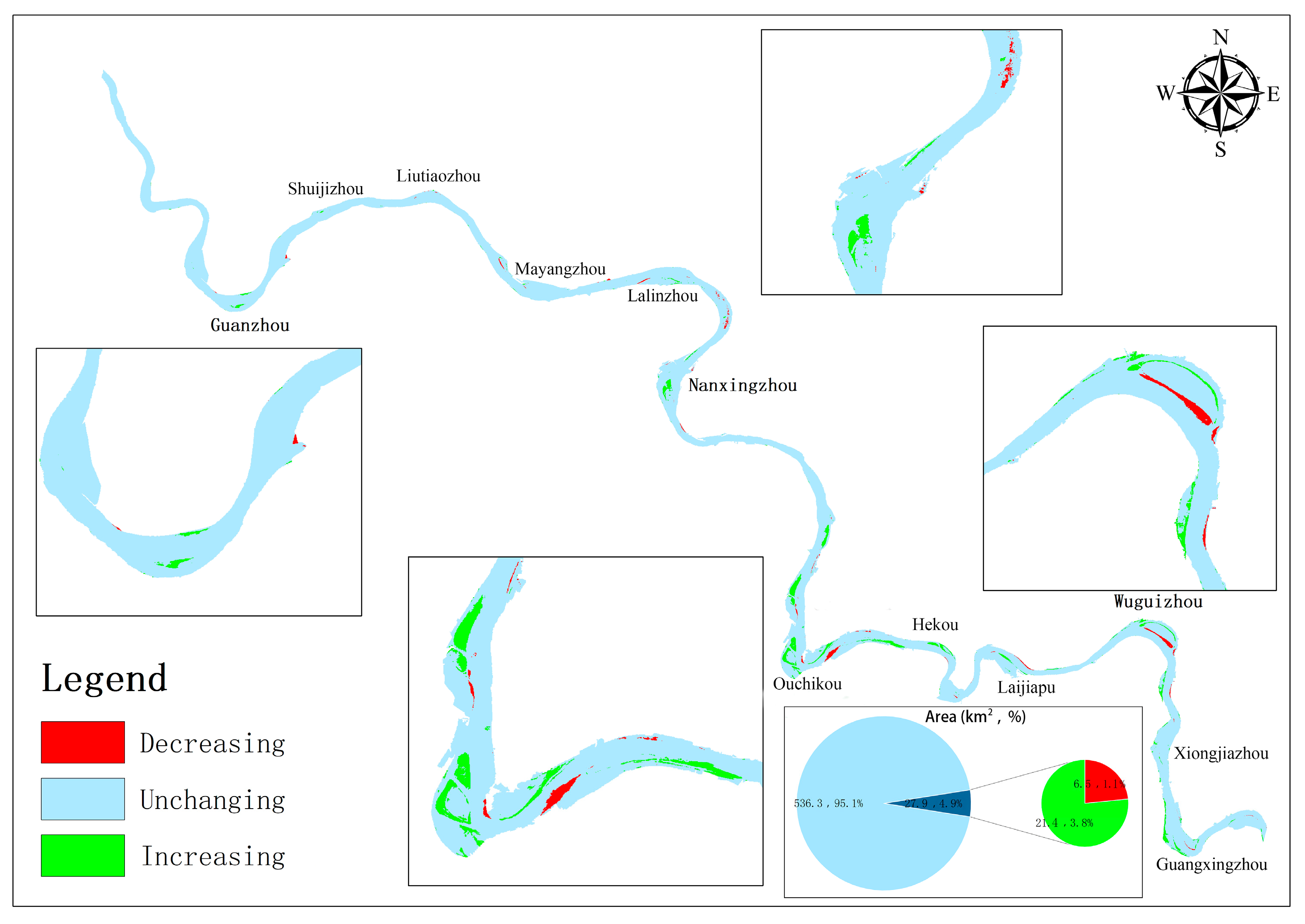
The spatiotemporal variation trend of the annual average value of NDVI in Jingjiang section over six time periods from 2000 to 2023 is shown in Figure 4. Overall, areas with no change covered 536.3 km2, accounting for 95.1% of the total area and primarily consisting of water bodies. Areas with increasing NDVI covered 21.3 km2 (representing 3.8% of the total), while decreasing NDVI covered 6.5 km2 (accounting for 1.2% of the total). The annual mean NDVI of the Jingjiang section showed unchanged with slight increases over six time periods from 2000 to 2023: most areas in the Upper Jingjiang (Guanzhou, Shuijizhou, Nanxingzhou, and Ouchikou) exhibited an increase, while Liutiaozhou, Mayangzhou, and Lalinzhou showed a decrease. Along the Lower Jingjiang, NDVI predominantly increased in Hekou, Xiongjiazhou, and Guangxingzhou, though parts of Laijiapu and Wuguizhou exhibited declining NDVI. Across the entire Jingjiang section, the majority of areas with declining NDVI were located on the side of floodplains closer to the river’s centreline, whereas areas with increasing NDVI were predominantly distributed on the side closer to the riverbank.

3.2. Analysis of Factors Influencing Spatiotemporal Variations in NDVI

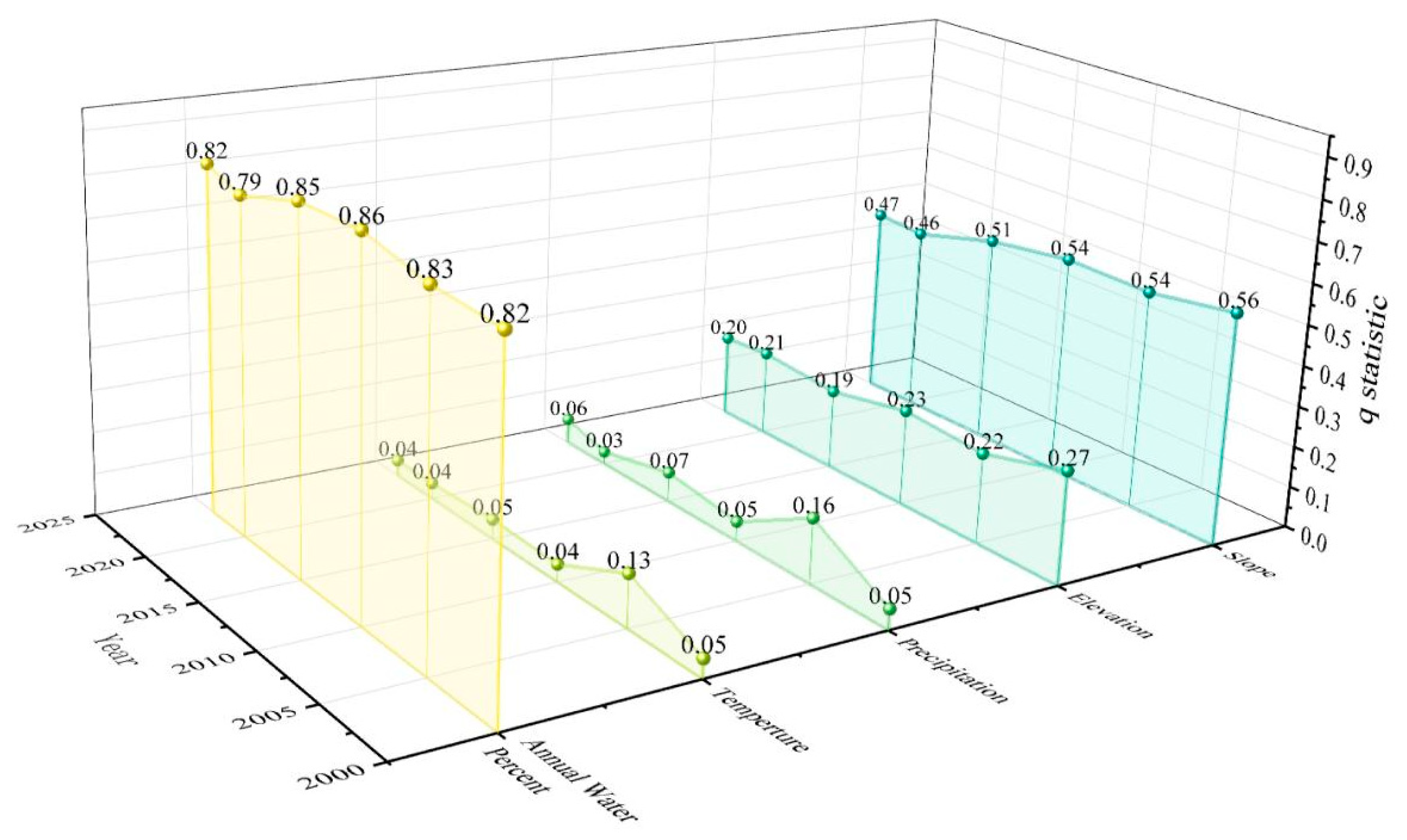
The q-statistic values for the driving force of each factor are presented in Figure 5. The quantitative analysis based on the Geodetector model indicates that all the driving factors passed the significance test at the 0.01 level in different years (p = 0). Among these driving factors, AWP consistently ranked first with q-values ranging from 0.79 to 0.86, indicating the strongest influence. This was followed by slope, with q-values between 0.46 and 0.56, and elevation, which ranked third with q-values from 0.19 to 0.27. In contrast, precipitation (q-values: 0.03–0.16) and temperature (q-values: 0.04–0.13) had minimal influence on the observed outcomes. Consequently, hydrological conditions emerge as the primary driver of vegetation change in the Jingjiang section, followed by slope gradient, whereas elevation plays a comparatively minor role. Precipitation and temperature exhibit minimal correlation with annual mean NDVI variation, with both correlation coefficients below 0.2.
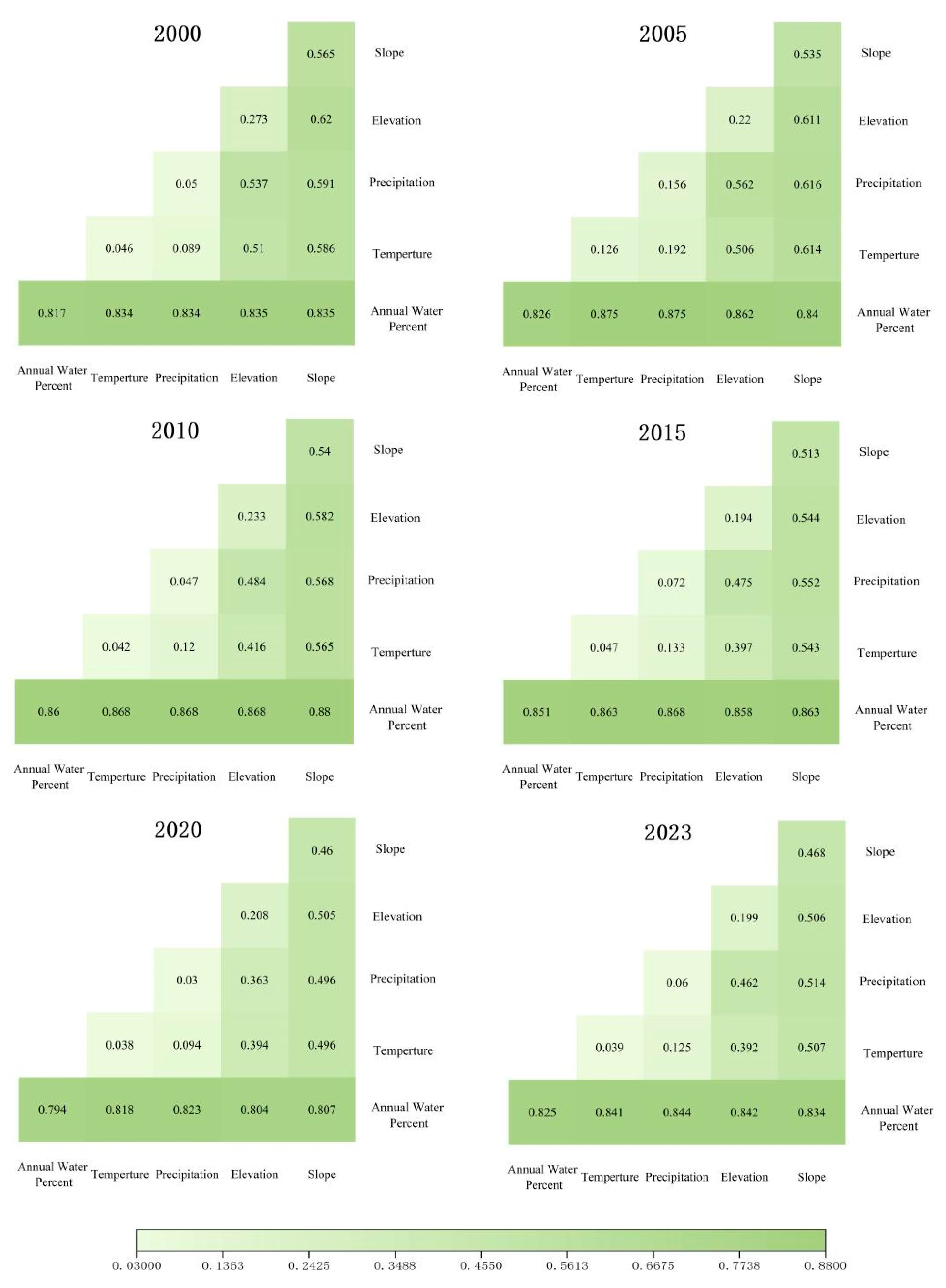
The results of pairwise interactions between driving factors are presented in Figure 6. The figure shows that all pairwise interactions exert a dual-factor amplifying effect on the annual mean NDVI. Among these, the interaction between AWP and other factors exhibits the strongest amplifying effect, consistently maintaining a dominant influence. Temporal evolution analysis reveals the following: In 2000, the combined effects of AWP ∩ slope and AWP ∩ elevation were most pronounced (q-values: 0.835 for both), indicating that the superimposition of hydrological conditions and topography was the dominant factors. In 2005, the interactions between AWP ∩ temperature and AWP ∩ precipitation had the greatest influence (q-values: 0.875 for both), suggesting that the superimposition of hydrological conditions and climate dominated. In 2010, the interaction between inundation frequency × slope exerted the strongest influence (q-value: 0.88), representing the highest interaction effect across all time points. For 2015, 2020, and 2023, the interaction between AWP ∩ precipitation had the greatest influence (q-values: 0.868, 0.823, and 0.844, respectively), indicating that since 2015, the combined effects of hydrological conditions and precipitation have been the dominant factors. The Geodetector results confirm that the NDVI distribution in the Jingjiang section is influenced not only by hydrological variations but also significantly by the combined effects of topography and climate on annual mean NDVI values. These results elucidate the synergistic interplay among multi-scale drivers governing vegetation variability.

3.3. Identification of Key Influence Zones

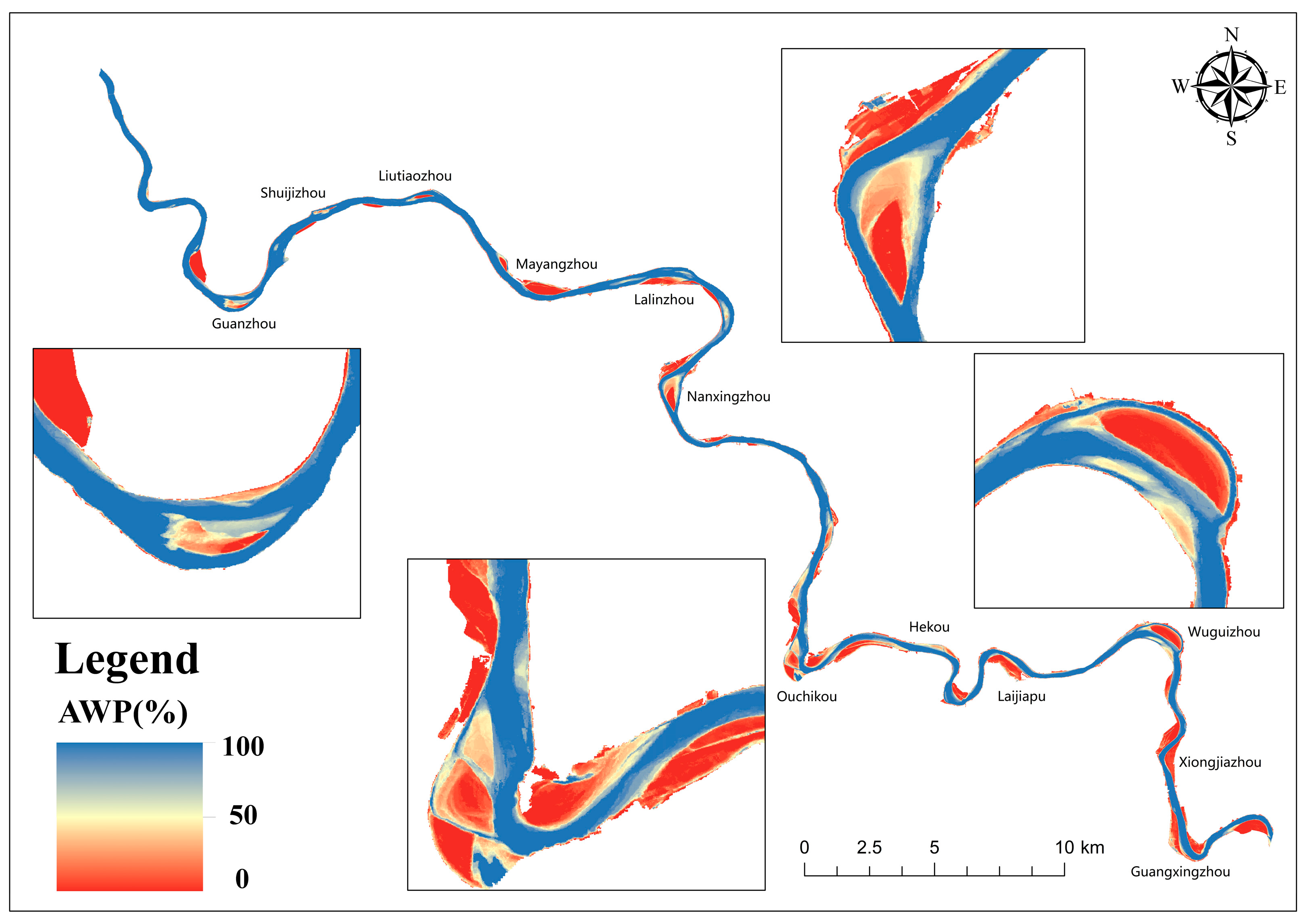
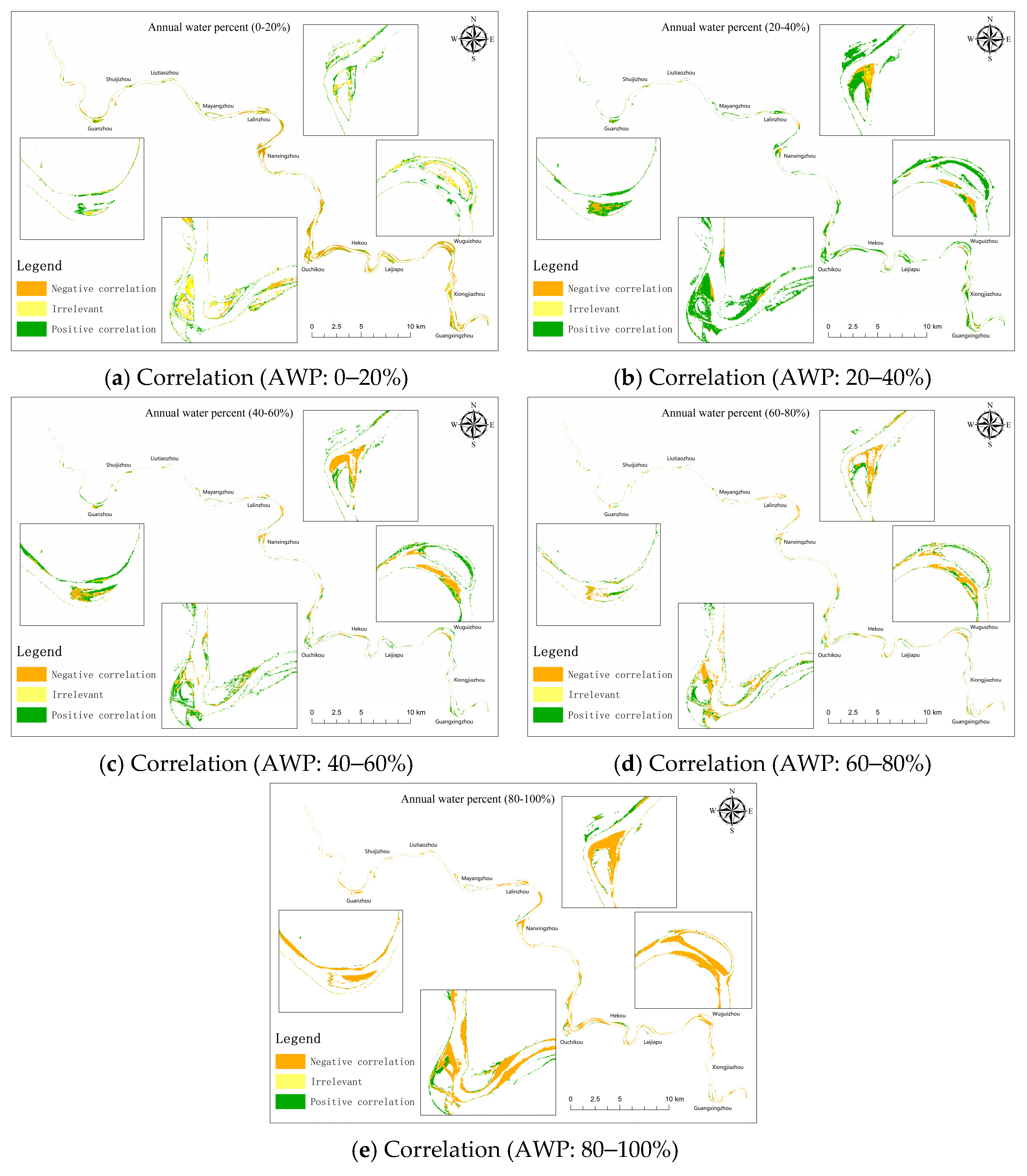
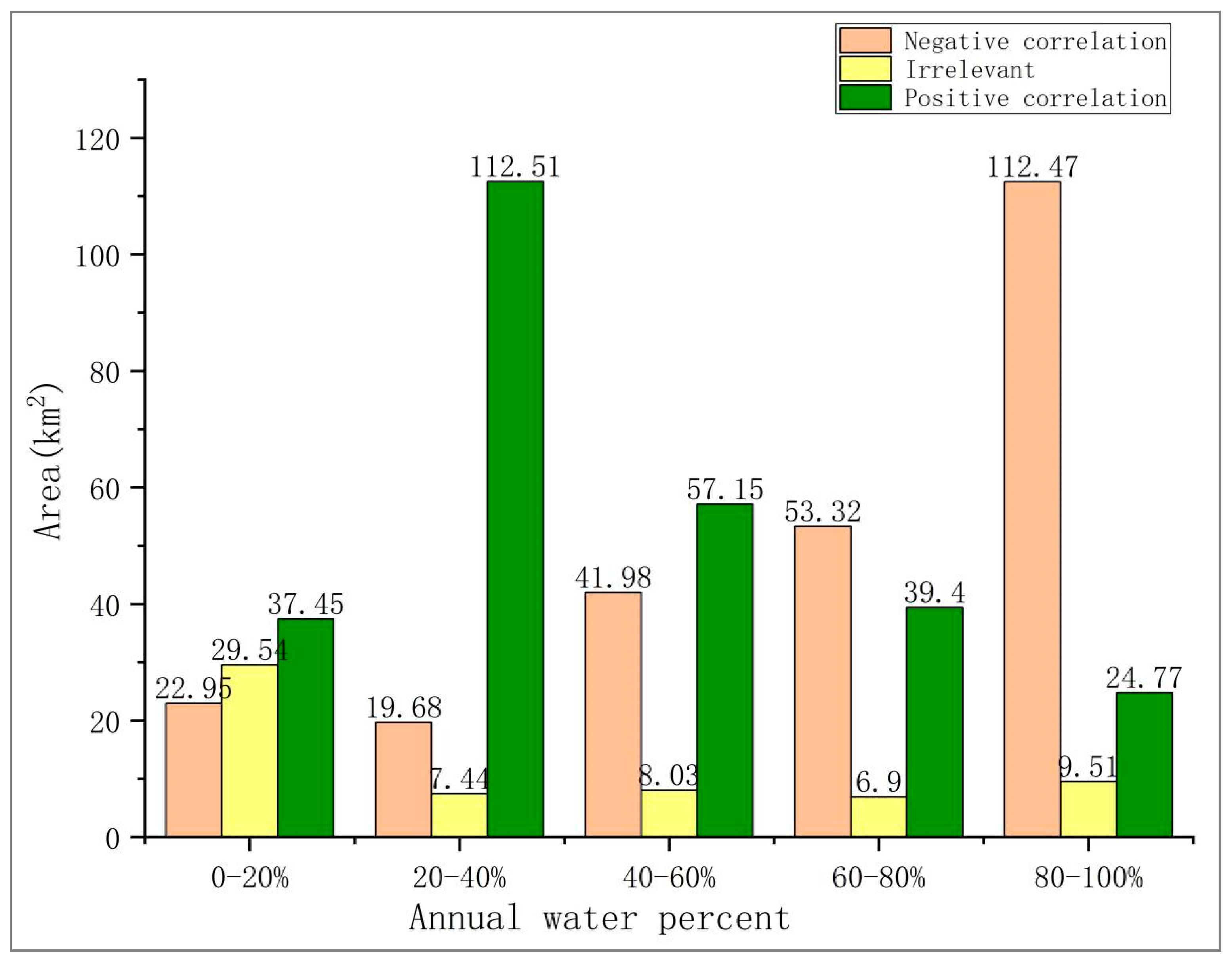
AWP is the dominant factor influencing NDVI in the Jingjiang section. Figure 7 depicts the spatial distribution of multi-year average inundation frequency. Annual AWP levels were categorized, and Pearson’s correlation analysis was conducted between these levels and annual mean NDVI to clarify their spatial distribution (Figure 8a–e). The sizes of correlated areas for different inundation frequency levels were statistically analysed (Figure 9).
The area exhibiting a positive correlation with AWP in the 0%–20% range was 37.45 km2, primarily distributed along the margins of central bars and the outer edges of marginal bars. the area negatively correlated with AWP accounted for 22.95 km2, mainly located in the inland areas of central bars and the nearshore zones of marginal bars. Positive correlations within the 20%–40% AWP class occupied 112.51 km2—more than fivefold the negative area (19.68 km2) and greater than the positive extent recorded in any other class. This area predominantly covered most of the central and marginal bars, indicating a pronounced positive effect of AWP on vegetation growth. The positively correlated area for the 40%–60% AWP range was 57.12 km2, ranking second among all AWP classes. This area was relatively concentrated in the core inland areas of floodplains and the nearshore zones of marginal floodplains. The negatively correlated area (41.98 km2) was distributed along the periphery of core floodplains and the outer margins of marginal floodplains, indicating this AWP class is also relatively suitable for vegetation growth. Within the 60%–80% AWP class, the area exhibiting significant negative correlation (37.45 km2) was almost equal to that exhibiting positive correlation (39.4 km2); this is the first such balance observed in the current dataset, implying that further gains in AWP can suppress vegetation growth. Spatially, positive correlations were primarily concentrated in the inland areas of central floodplains and the higher-elevation coastal zones of marginal floodplains, while negative correlations were observed at the edges of central floodplains and along the outer margins of floodplains. The negatively correlated area was the largest for the 80%–100% AWP range (112.47 km2), covering most of the central and marginal bars. The positively correlated area (24.77 km2) was restricted to the central-bar cores and the elevated proximal margins of the nearshore bars, indicating that, within this AWP class, additional water availability became a limiting factor rather than a stimulus for vegetation growth.

4. Discussion

4.1. Impact of Hydraulic Engineering and Extreme Precipitation Events on Floodplain Vegetation Growth

Over six time periods from 2000 to 2023, the floodplain vegetation-covered area (NDVI > 0.3) in the Jingjiang section showed a fluctuating growth trend, with the total vegetation-covered area increasing by 66.94 km2. High vegetation cover area exhibited the most significant expansion, rising by 81.01 km2. Correspondingly, the annual mean NDVI of riparian vegetation in the Jingjiang section displayed a fluctuating upward trend, with all annual averages post-2005 exceeding the 2000 baseline. This phenomenon likely correlates strongly with the impoundment of the Three Gorges Dam in 2003. The dam’s water storage reduced downstream water levels in the Jingjiang section, lengthened the dry season exposure [42,43], decreased flooding frequency, extended exposure time, enhanced photosynthetic activity, and thus stimulated vegetation growth. Meanwhile, sediment retention by the dam reduced the risk of root damage caused by flow-induced physical forces and siltation/burial, which to some extent favors vegetation growth on floodplains [44]. Extreme precipitation events occurred in the middle and lower reaches of the Yangtze River in 2010 and 2020. Notably, precipitation in June–July 2020 reached 568 mm—the second-highest on record since the start of meteorological observations, surpassed only by the 637 mm recorded in 1954 [45]. The subsequent floods led to excessively high water levels and prolonged inundation in the Jingjiang section, inhibiting floodplain vegetation growth and consequently lowering annual mean NDVI values during these periods. Both the impoundment of the Three Gorges Dam and extreme precipitation events altered growth conditions of floodplain by modifying the hydrological regime of the Jingjiang section. Additionally, the construction of dam changed the habitat, composition, and diversity of riparian vegetation in the downstream area [46]. The distribution of species is shaped by the frequency, duration, and intensity of inundation, among which water stress stands as the most fundamental environmental constraint for wetland plants [47]. Prolonged water stress may lead to the disappearance of many species, thereby altering vegetation composition and structure.

4.2. Impact of Flooding Frequency on Floodplain Vegetation

This study used Geodetector to examine multiple drivers of vegetation changes in the floodplains of Jingjiang section. It quantified the impact of inundation frequency (q-values: 0.79–0.86) and confirmed that altered hydrological conditions are the dominant factor governing floodplain vegetation growth. It is similar to the research conclusions of Benjankar et al. [13], Deng et al. [48] and Johnson et al. [49]. Notably, inundation frequency governs the exposure duration of floodplain wetland substrates, thereby influencing wetland vegetation growth [50]. Prolonged submersion triggers adaptive changes in vegetation functional traits, and the adaptive capacity of a given community determines its survival and distribution range [51]. Consequently, in floodplain wetland zones, wet-dry cycles driven by fluctuations in soil inundation either stimulate or inhibit seed germination, altering the composition of plant species in the local plant pool [52]. River hydrological conditions constitute the most critical habitat factor shaping vegetation distribution and composition. Hydrological processes inherently drive sediment transport and changes in riverbed morphology, influencing multiple life-history stages of vegetation—including propagule dispersal, germination, establishment, and growth—thereby giving rise to shifts in community traits, vegetation-cover types, and the relative abundance of functional groups [53,54]. Ultimately, these processes drive the succession of riparian vegetation communities [55].

4.3. Controlling Optimal Growth Conditions for Barrier Island Vegetation

Vegetation growth is contingent upon adequate light, temperature and soil-moisture availability. As the primary source of soil moisture, the hydrological regime of floodplains acts as the principal determinant of vegetation community development and zonation patterns [56]. Both excessively low and high inundation frequencies inhibit vegetation growth; so, identifying an optimal inundation range is crucial for restoring floodplain vegetation ecosystems [48,57]. This study reveals that an inundation frequency of 20%–40% exerts a notably positive effect on vegetation growth, indicating this range as optimal for vegetation development (thus only represents a statistical association between inundation frequency and vegetation growth status, rather than a definitive physiological or ecological optimum of the study species). Conversely, an inundation frequency of 80%–100% has the most pronounced inhibitory effect on vegetation growth, making it the least suitable range for vegetation. Therefore, by integrating floodplain-habitat restoration with river flood-control safety, a scientifically sound operation policy for the Three Gorges Dam can be formulated. This policy would optimize the inundation duration of floodplains to 70–140 days, thereby effectively restoring floodplain vegetation ecosystems.
In the future, this research can be based on a long foundation, combined with the survey data of fish, dolphins, waterfowls, etc. in the Jingjiang section, to develop a response relationship model linking inundation frequency—habitat conditions—flora and fauna activity states. This model will provide deeper insights into the evolution and patterns of floodplain wetland ecosystems under changing hydrological conditions, offering stronger scientific support for the rational regulation and conservation of these ecosystems. This provides a reference for the analysis of vegetation changes in river floodplains of similar rapidly changing plains rivers.
This study has certain limitations, including a short time series, static AWP versus snapshot NDVI, lack of land-use data, and a purely correlational nature. In the future, this research will be further deepened by adding factor analysis and conducting a more in-depth analysis from an ecological perspective.

5. Conclusions

This study examines the floodplain vegetation of the Jingjiang section of the Yangtze River. Its objectives are to systematically elucidate the spatiotemporal evolution patterns of riverine floodplain vegetation, and quantitatively analyse the multiple driving factors influencing these changes and their interactions. It also quantitatively assesses the influence of multiple drivers and reveals the areas and extent of vegetation distribution affected by different inundation frequencies. The main conclusions are as follows:
(1)
Over six time periods from 2000 to 2023, the vegetation-covered area on floodplains in the Jingjiang section exhibited a fluctuating growth trend, with declines observed in 2010 and 2020. The total vegetation-covered area increased by 66.94 km2, with the greatest expansion occurring in high-vegetation zones (81.01 km2). Over this period, areas with unchanged NDVI values accounted for 95.1% of the Jingjiang section, primarily consisting of water bodies. Areas with increasing NDVI trends constituted 3.8%, while decreasing trends covered 1.2%. Overall, the pattern indicates fundamental stability with localized increases.
(2)
Geodetector analysis identified inundation frequency (AWP) as the dominant factor influencing vegetation change in the Jingjiang section (q-value: 0.79–0.86), followed by slope (q-value: 0.46–0.56). Elevation had a minor influence (q-value < 0.3), while precipitation and temperature exerted negligible effects (q-value < 0.2). Pairwise combinations of these drivers produced a synergistic effect on the annual mean NDVI, indicating that NDVI distribution in the Jingjiang section is shaped not only by hydrological conditions but also by the significant combined effects of topography and climate. This suggests a synergistic mechanism operating across multiple scales.
(3)
The largest positively correlated area (112.51 km2) occurred at 20%–40% inundation frequency (AWP) and was concentrated on central and marginal bars. This inundation frequency (AWP) range conferred the strongest positive effect on vegetation growth. In contrast, the largest negatively correlated area (112.47 km2) occurred at an inundation frequency of 80%–100%, also predominantly covering central and marginal bars. This inundation frequency range imposed the strongest inhibitory effect on vegetation growth.

Author Contributions

Conceptualization, J.K. and C.Y.; formal analysis, J.K.; methodology, J.K., X.H. and Z.Z.; software, J.K., C.Y., J.L. and H.Z.; project administration, C.Y., J.L. and H.Z.; validation, C.Y., J.L., H.Z. and Z.Z.; investigation, J.K.; X.H. and J.L.; resources, C.Y. and Z.Z.; data curation, J.L.; writing—original draft preparation, J.K.; visualization, J.K.; writing—review and editing, J.L., Z.Z., X.H. and C.Y. All authors have read and agreed to the published version of the manuscript.

Funding

This research was funded by the National Natural Science Foundation of China (Grant No.U2240213); the National Key Research and Development Program of China (Grant No.2023YFC3205600, No.2022YFB3903400); and the Henan Province science and technology research project (Grant No.252102321109).

Data Availability Statement

The data supporting this study are available from the following public sources: Inundation frequency was represented by Annual Water Percent (AWP) data, which were sourced from the Global Surface Water Data provided by the European Commission’s Joint Research Centre (https://storage.googleapis.com/earthenginepartners-hansen/waterC2/download.html) (accessed on 10 October 2025). Annual mean temperature and precipitation data were obtained from the National Earth System Science Data Centre (http://www.geodata.cn/) (accessed on 12 October 2025). Elevation data were sourced from the Geospatial Data Cloud (http://www.gscloud.cn/) (accessed on 15 October 2025), while slope data were derived from elevation data. The datasets generated and analysed during the current study are available from the corresponding author upon reasonable request.

Acknowledgments

We sincerely thank Liu Jun for his assistance and guidance during the process of writing this thesis. Meanwhile, we would like to express our sincere gratitude to all the editors and reviewers for their valuable reviews.

Conflicts of Interest

The authors declare no conflicts of interest.

References

  1. Rodriguez-Iturbe, I.; D’Odorico, P.; Laio, F.; Ridolfi, L.; Tamea, S. Challenges in humid land ecohydrology: Interactions of water table and unsaturated zone with climate, soil, and vegetation. Water Resour. Res. 2007, 43, W09301. [Google Scholar] [CrossRef]
  2. Lewin, J.; Ashworth, P.J. Defining large river channel patterns: Alluvial exchange and plurality. Geomorphology 2014, 215, 83–98. [Google Scholar] [CrossRef]
  3. Naito, K.; Parker, G. Can bankfull discharge and bankfull channel characteristics of an alluvial meandering river be cospecified from a flow duration curve? J. Geophys. Res. Earth Surf. 2019, 124, 2381–2401. [Google Scholar] [CrossRef]
  4. Funk, A.; Martínez-López, J.; Borgwardt, F.; Trauner, D.; Bagstad, K.J.; Balbi, S.; Magrach, A.; Villa, F.; Hein, T. Identification of conservation and restoration priority areas in the Danube River based on the multi-functionality of river-floodplain systems. Sci. Total Environ. 2019, 654, 763–777. [Google Scholar] [CrossRef] [PubMed]
  5. Karpack, M.N.; Morrison, R.R.; McManamay, R.A. Quantitative assessment of floodplain functionality using an index of integrity. Ecol. Indic. 2020, 111, 106051. [Google Scholar] [CrossRef]
  6. Ye, X.-C.; Meng, Y.-K.; Xu, L.-G.; Xu, C.-Y. Net primary productivity dynamics and associated hydrological driving factors in the floodplain wetland of China’s largest freshwater lake. Sci. Total Environ. 2019, 659, 302–313. [Google Scholar] [CrossRef]
  7. Camporeale, C.; Perucca, E.; Ridolfi, L.; Gurnell, A.M. Modeling the interactions between river morphodynamics and riparian vegetation. Rev. Geophys. 2013, 28, 379–414. [Google Scholar] [CrossRef]
  8. Robertson, J.; Fletcher, T.; Danger, A.; Szota, C. Identifying critical inundation thresholds to maintain vegetation cover in stormwater treatment wetlands. Ecol. Eng. 2018, 116, 80–86. [Google Scholar] [CrossRef]
  9. Hu, Y.-X.; Huang, J.-L.; Du, Y.; Han, P.-P.; Wang, J.-L.; Huang, W. Monitoring wetland vegetation pattern response to water-level change resulting from the Three Gorges Project in the two largest freshwater lakes of China. Ecol. Eng. 2015, 74, 274–285. [Google Scholar] [CrossRef]
  10. Dai, X.; Wan, R.; Yang, G.; Wang, X.; Xu, L. Responses of wetland vegetation in Poyang Lake, China to water-level fluctuations. Hydrobiologia 2016, 773, 35–47. [Google Scholar] [CrossRef]
  11. Todd, M.J.; Muneepeerakul, R.; Pumo, D.; Azaele, S.; Miralles-Wilhelm, F.; Rinaldo, A.; Rodriguez-Iturbe, I. Hydrological drivers of wetland vegetation community distribution within Everglades National Park, Florida. Adv. Water Resour. 2010, 33, 1279–1289. [Google Scholar] [CrossRef]
  12. Casanova, M.T.; Brock, M.A. How do depth, duration and frequency of flooding influence the establishment of wetland plant communities? J. Plant Ecol. 2000, 147, 237–250. [Google Scholar] [CrossRef]
  13. Benjankar, R.; Jorde, K.; Yager, E.M.; Egger, G.; Goodwin, P.; Glenn, N.F. The impact of river modification and dam operation on floodplain vegetation succession trends in the Kootenai River, USA. Ecol. Eng. 2012, 46, 88–97. [Google Scholar] [CrossRef]
  14. Wen, Z.; Yang, H.; Zhang, C.; Shao, G.; Wu, S. Remotely sensed mid-channel bar dynamics in downstream of the Three Gorges Dam, China. Remote Sens. 2020, 12, 409. [Google Scholar] [CrossRef]
  15. Zhang, B.; Niu, Z.; Zhang, D.; Huo, X. Dynamic changes and driving forces of alpine wetlands on the Qinghai–Tibetan Plateau based on long-term time series satellite data: A case study in the Gansu Maqu wetlands. Remote Sens. 2022, 14, 4147. [Google Scholar] [CrossRef]
  16. Han, X.; Chen, X.; Feng, L. Four decades of winter wetland changes in Poyang Lake based on Landsat observations between 1973 and 2013. Remote Sens. Environ. 2015, 156, 426–437. [Google Scholar] [CrossRef]
  17. Hooke, J.; Yorke, L. Channel bar dynamics on multi-decadal timescales in an active meandering river. Earth Surf. Proc. Landf. 2011, 36, 1910–1928. [Google Scholar] [CrossRef]
  18. Diamond, J.S.; McLaughlin, D.L.; Slesak, R.A.; Stovall, A. Microtopography is a fundamental organizing structure of vegetation and soil chemistry in black ash wetlands. Biogeosciences 2020, 17, 901–915. [Google Scholar] [CrossRef]
  19. Siepielski, A.M.; Morrissey, M.B.; Buoro, M.; Carlson, S.M.; Caruso, C.M.; Clegg, S.M.; Coulson, T.; DiBattista, J.; Gotanda, K.M.; Francis, C.D.; et al. Precipitation drives global variation in natural selection. Science 2017, 355, 959–962. [Google Scholar] [CrossRef]
  20. Boniface, C. Vegetation Succession on Mid-Channel Bars of the Fraser River. Master’s Thesis, Simon Fraser University, Vancouver, BC, Canada, 1985. Available online: https://api.semanticscholar.org/CorpusID:130383418 (accessed on 15 January 2026).
  21. Xu, Q.; Yuan, S.; Shen, M.; Liu, X. Assemblage structure characteristics of hygrophytic plants and their driving factors in sand bars in Yichang-Jianli section of the Yangtze mainstem. Resour. Environ. Yangtze Basin 2020, 29, 928–937. [Google Scholar]
  22. Camporeale, C.; Ridolfi, L. Riparian vegetation distribution induced by river flow variability: A stochastic approach. Water Resour. Res. 2006, 10, 42. [Google Scholar] [CrossRef]
  23. Liang, D.; Lu, J.; Chen, X.; Liu, C.; Lin, J. An investigation of the hydrological influence on the distribution and transition of wetland cover in a complex lake–floodplain system using time-series remote sensing and hydrodynamic simulation. J. Hydrol. 2020, 587, 125038. [Google Scholar] [CrossRef]
  24. Dong, X.; Hu, C. A new method for describing the inundation status of floodplain wetland. Ecol. Indic. 2021, 131, 108144. [Google Scholar] [CrossRef]
  25. Liu, H.; Zheng, L.; Yin, S. Multi-perspective analysis of vegetation cover changes and driving factors of long time series based on climate and terrain data in Hanjiang River Basin, China. Arab. J. Geosci. 2018, 11, 509. [Google Scholar] [CrossRef]
  26. Peng, W.; Kuang, T.; Tao, S. Quantifying influences of natural factors on vegetation NDVI changes based on geographical detector in Sichuan, western China. J. Clean. Prod. 2019, 233, 353–367. [Google Scholar] [CrossRef]
  27. Li, B.; Wan, R.; Yang, G.; Yang, S.; Dong, L.; Cui, J.; Zhang, T. Centennial loss of lake wetlands in the Yangtze Plain, China: Impacts of land use changes accompanied by hydrological connectivity loss. Water Res. 2024, 256, 121578. [Google Scholar] [CrossRef] [PubMed]
  28. Mu, S.; Li, B.; Yao, J.; Yang, G.; Wan, R.; Xu, X. Monitoring the spatio-temporal dynamics of the wetland vegetation in Poyang Lake by Landsat and MODIS observations. Sci. Total Environ. 2020, 725, 138096. [Google Scholar] [CrossRef]
  29. Xie, Y.H.; Yue, T.; Cheng, X.; Feng, L.-C.; Deng, Z. The impact of Three Gorges Dam on the downstream eco-hydrological environment and vegetation distribution of East Dongting Lake. Ecohydrology 2015, 8, 738–746. [Google Scholar] [CrossRef]
  30. Zheng, Y.; Lu, D.; Yang, Z.; Chang, J. Unravelling the Characteristics of Microhabitat Alterations in Floodplain Inundated Areas Based on High-Resolution UAV Imagery and Remote Sensing: A Case Study in Jingjiang, Yangtze River. Drones 2025, 9, 315. [Google Scholar] [CrossRef]
  31. Han, J.; Wang, Y.; Sun, Z. Changes of Water stage in the middle Yangtze River influenced by human activities in the past 70 years. Front. Earth Sci. 2021, 15, 121–132. [Google Scholar] [CrossRef]
  32. Huang, S.; Xia, J.; Wang, G.; Lei, J. The impact of flood regime on river floodplain vegetation coverage: Insights from a 30-year Landsat record. J. Hydrol. 2023, 626, 130355. [Google Scholar] [CrossRef]
  33. Yang, X.; Sun, Z.; Li, Y.; Deng, J.; Xiong, H.; Li, D. Mechanisms of bar adjustments in the Jingjiang Reach of the Yangtze River in response to the operation of the Three Gorges Dam. J. Hydrol. 2023, 616, 128802. [Google Scholar] [CrossRef]
  34. Lou, Y.; Dai, Z.; Lu, X.; Li, D. Anthropogenic pressures induced hydromorphodynamic changes of riverine islands in the Upper Jingjiang reach along the Changjiang (Yangtze) River. Catena 2022, 217, 106488. [Google Scholar] [CrossRef]
  35. Pickens, A.H.; Hansen, M.C.; Hancher, M.; Stehman, S.V.; Tyukavina, A.; Potapov, P.; Marroquin, B.; Sherani, Z. Mapping and sampling to characterize global inland water dynamics from 1999 to 2018 with full Landsat time-series. Remote Sens. Environ. 2020, 243, 111792. [Google Scholar] [CrossRef]
  36. Li, J.; Peng, S.; Li, Z.; Meteorology, F. Detecting and attributing vegetation changes on China’s Loess Plateau. Agric. For. Meteorol. 2017, 247, 260–270. [Google Scholar] [CrossRef]
  37. DeVries, B.; Decuyper, M.; Verbesselt, J.; Zeileis, A.; Herold, M.; Joseph, S. Tracking disturbance-regrowth dynamics in tropical forests using structural change detection and Landsat time series. Remote Sens. Environ. 2015, 169, 320–334. [Google Scholar] [CrossRef]
  38. Running, S.W.; Loveland, T.R.; Pierce, L.L.; Nemani, R.R.; Hunt, E.R., Jr. A remote sensing based vegetation classification logic for global land cover analysis. Remote Sens. Environ. 1995, 51, 39–48. [Google Scholar] [CrossRef]
  39. Nemani, R.; Running, S. Land cover characterization using multitemporal red, near-IR, and thermal-IR data from NOAA/AVHRR. Ecol. Appl. 1997, 7, 79–90. [Google Scholar] [CrossRef]
  40. Piao, S.; Wang, X.; Ciais, P.; Zhu, B.; Wang, T.; Liu, J. Changes in satellite-derived vegetation growth trend in temperate and boreal Eurasia from 1982 to 2006. Glob. Change Biol. 2011, 17, 3228–3239. [Google Scholar] [CrossRef]
  41. Wang, J.; Xu, C. Geodetector: Principle and prospective. Acta Geogr. Sin. 2017, 72, 116–134. [Google Scholar] [CrossRef]
  42. Han, X.; Feng, L.; Hu, C.; Chen, X. Wetland changes of China’s largest freshwater lake and their linkage with the Three Gorges Dam. Remote Sens. Environ. 2018, 204, 799–811. [Google Scholar] [CrossRef]
  43. Liu, H.; Zheng, L.; Jiang, L.; Liao, M. Forty-year water body changes in Poyang Lake and the ecological impacts based on Landsat and HJ-1 A/B observations. J. Hydrol. 2020, 589, 125161. [Google Scholar] [CrossRef]
  44. Zhang, D.; Qi, Q.; Tong, S.; Wang, J.; Zhang, M.; Zhu, G.; Lu, X. Effect of hydrological fluctuation on nutrient stoichiometry and trade-offs of Carex schmidtii. Ecol. Indic. 2021, 120, 106924. [Google Scholar] [CrossRef]
  45. Li, J.; Zhai, P.; Mao, J.; Song, L.; Xiao, Q. Synergistic effect of the 25–60-day tropical and midlatitude intraseasonal oscillations on the persistently severe Yangtze floods. Geophys. Res. Lett. 2021, 48, e2021GL095129. [Google Scholar] [CrossRef]
  46. Sun, R.; Deng, W.Q.; Yuan, X.Z.; Liu, H.; Zhang, Y. Riparian vegetation after dam construction on mountain rivers in China. Ecohydrology 2014, 7, 1187–1195. [Google Scholar] [CrossRef]
  47. Hupp, C.R.; Osterkamp, W. Riparian vegetation and fluvial geomorphic processes. Geomorphology 1996, 14, 277–295. [Google Scholar] [CrossRef]
  48. Deng, F.; Wang, X.; Cai, X.; Li, E.; Jiang, L.; Li, H.; Yan, R. Analysis of the relationship between inundation frequency and wetland vegetation in Dongting Lake using remote sensing data. Ecohydrology 2014, 7, 717–726. [Google Scholar] [CrossRef]
  49. Johnson, S.E.; Amatangelo, K.L.; Townsend, P.A.; Waller, D.M. Large, connected floodplain forests prone to flooding best sustain plant diversity. Ecology 2016, 97, 3019–3030. [Google Scholar] [CrossRef] [PubMed]
  50. Wang, Q.; Du, Y.; Su, Y.; Chen, K. Environmental impact post-assessment of dam and reservoir projects: A review. Procedia Environ. Sci. 2012, 13, 1439–1443. [Google Scholar] [CrossRef]
  51. Egger, G.; Politti, E.; Woo, H.; Cho, K.-H.; Park, M.; Cho, H.; Benjankar, R.; Lee, N.-J.; Lee, H. Dynamic vegetation model as a tool for ecological impact assessments of dam operation. J. Hydro-Environ. Res. 2012, 6, 151–161. [Google Scholar] [CrossRef]
  52. Catford, J.A.; Jansson, R. Drowned, buried and carried away: Effects of plant traits on the distribution of native and alien species in riparian ecosystems. New Phytol. 2014, 204, 19–36. [Google Scholar] [CrossRef] [PubMed]
  53. Barker, L.S.; Felton, G.K.; Russek-Cohen, E.; Assessment. Use of Maryland biological stream survey data to determine effects of agricultural riparian buffers on measures of biological stream health. Environ. Monit. Assess. 2006, 117, 1–19. [Google Scholar] [CrossRef] [PubMed]
  54. Kui, L.; Stella, J.C.; Diehl, R.M.; Wilcox, A.C.; Lightbody, A.; Sklar, L.S. Can environmental flows moderate riparian invasions? The influence of seedling morphology and density on scour losses in experimental floods. Freshw. Biol. 2019, 64, 474–484. [Google Scholar] [CrossRef]
  55. New, T.; Xie, Z. Impacts of large dams on riparian vegetation: Applying global experience to the case of China’s Three Gorges Dam. Biodivers. Conserv. 2008, 17, 3149–3163. [Google Scholar] [CrossRef]
  56. Alldredge, B.; Moore, G. Assessment of riparian vegetation sensitivity to river hydrology downstream of a major Texas dam. River Res. Appl. 2014, 30, 230–244. [Google Scholar] [CrossRef]
  57. Altenfelder, S.; Schmitz, M.; Poschlod, P.; Kollmann, J.; Albrecht, H. Managing plant species diversity under fluctuating wetland conditions: The case of temporarily flooded depressions. Wetl. Ecol. Manag. 2016, 24, 597–608. [Google Scholar] [CrossRef]
Figure 1. Distribution of sand bar wetland in the Jingjiang section.
Forests 17 00133 g001
Figure 2. Chart of NDVI area changes over six time periods from 2000 to 2023.
Forests 17 00133 g002
Figure 3. Spatial distribution map of the average annual NDVI over six time periods from 2000 to 2023.
Forests 17 00133 g003
Figure 4. Trend chart of the annual average value of NDVI over six time periods from 2000 to 2023.
Forests 17 00133 g004
Figure 5. Q statistic values of driving factors in the Jingjiang section.
Forests 17 00133 g005
Figure 6. Interaction detection of driving factors.
Forests 17 00133 g006
Figure 7. Spatial distribution of average AWP.
Forests 17 00133 g007
Figure 8. Correlation analysis of NDVI and AWP.
Forests 17 00133 g008
Figure 9. Area statistical chart of Correlation between NDVI and AWP.
Forests 17 00133 g009
Table 1. Data and sources.
Data NameSpatial Resolution/mData Source
NDVI30Google Earth Engine
AWP30GLAD global surface water dynamics
(https://storage.googleapis.com/earthenginepartners-hansen/waterC2/download.html) (accessed on 10 October 2025)
Elevation30Geospatial Data Cloud
(http://www.gscloud.cn/) (accessed on 12 October 2025)
Slope30
Temperature30National Earth System Science Data Center
(http://www.geodata.cn/) (accessed on 15 October 2025)
Precipitation30
Table 2. Result types of two-factor interactions.
Reason of JudgmentInteractive Display
q(X1X2) < min〔q(X1), q(X2)〕Nonlinearity attenuation
min〔q(X1), q(X2)〕 < q(X1X2) < max〔q(X1), q(X2)〕The single-factor nonlinearity decreases
q(X1X2) > max〔q(X1), q(X2)〕Two-factor enhancement
q(X1X2) = q(X1) + q(X2)Independence
q(X1X2) > q(X1) + q(X2)Nonlinear enhancement
Disclaimer/Publisher’s Note: The statements, opinions and data contained in all publications are solely those of the individual author(s) and contributor(s) and not of MDPI and/or the editor(s). MDPI and/or the editor(s) disclaim responsibility for any injury to people or property resulting from any ideas, methods, instructions or products referred to in the content.