Article

New Poplar Clones from Conventional and Agroforestry Plantations in Northern Italy: Preliminary Results on Peeling Attitude and Properties of Solid Wood and Plywood


1
Dipartimento di Scienze Agrarie, Forestali e Alimentari, University of Torino, 10095 Grugliasco, Italy
2
Consiglio per la Ricerca in Agricoltura e l’Analisi dell’Economia Agraria—Centro di Ricerca Foreste e Legno, 15033 Casale Monferrato, Italy
*
Author to whom correspondence should be addressed.
Forests 2026, 17(1), 130; https://doi.org/10.3390/f17010130
Submission received: 15 December 2025 / Revised: 9 January 2026 / Accepted: 15 January 2026 / Published: 19 January 2026
(This article belongs to the Section Wood Science and Forest Products)

Abstract

Specialized poplar plantations are relevant for wood-based panel production. In recent years, the Italian poplar sector has progressively moved towards more sustainable cultivation systems. Breeding programs developed new clones with fast growth and increased disease resistance. Agroforestry (AF) has emerged as a promising alternative to the conventional plantation (C), and its ecosystem services have been widely documented. This exploratory study compares the main physico-mechanical properties of solid wood from five new poplar clones cultivated in conventional and agroforestry plantation models. The peeling yields and the performances of plywood produced with their veneers are also investigated. Wood was obtained by harvesting seven-year-old trees in two experimental plantations located in the Veneto Region. All the clones were found to have a higher basic density than that of the ‘I-214’, the reference in the sector, and were suitable for veneers production. It was possible to obtain top-quality sheets from trees of both systems, with some differences between clones. However, the overall quality of the veneers depended on the type of clone and on the cultivation system, where conventional plantations provided better results. Higher mechanical performances were found in plywood produced from clones with higher density. The results provide knowledge to optimize agroforestry cultivation of poplar, also as a complementary source of timber supply for the concerned industrial sector.

1. Introduction

Over the past century, Italian poplar cultivation has markedly contributed to the development of the national wood sector [1]. However, a marked decline occurred starting from the 1970s. This was due to concurrent factors: low value of poplar timber on the market, the impact of new pathologies, competition with agricultural crops for food-feed finalities that are more supported by EU policies, and stringent environmental regulations [2]. The total cultivated area dropped, contracting to around the current 50,000 hectares [3]. However, the trend has changed in recent years, and poplar plantation in Italy, both through traditional systems and new cultivation models including agroforestry, is indeed increasing again. Specialized plantations, able to supply over 12 million m3/year of timber, are particularly relevant in the production of wood-based panels such as plywood, veneers, fiberboard, particleboard, and more recently oriented strand board [4]. To foster this trend, the Italian poplar sector has progressively moved towards more sustainable and innovative management models. The official national breeding program has developed a new generation of clones, named MSA (Italian acronym for “Maggiore Sostenibilità Ambientale”, which translates as “greater environmental sustainability”). They are characterized by fast growth, enhanced adaptability, and increased disease resistance, either at a broad-spectrum level or against specific pathogens. MSA clones enable more sustainable wood production for industrial use, as they need less treatment, in particular against fungal diseases and wooly aphid Phloeomyzus passerinii. The integration of MSA clones into national Rural Development Plans and their inclusion in forest certification schemes, such as PEFC and FSC, has further supported their adoption [3]. Nevertheless, plywood industries still rely predominantly on the well-known wood of ‘I-214’ clone, whose wood properties are well established and widely appreciated [5]. In particular, the ‘I-214’ clone is favored for its low density, remarkable light color, and ease workability of its wood, which make it a preferred choice for plywood production [6,7]. However, despite its advantages, the ‘I-214’ clone shows notable sensitivity to pest and diseases and irregularity of stem shape [8].
Also, in some European countries, poplar cultivation is a specialized and sometimes intensive practice, mainly finalized at producing high-quality wood for the plywood industry. Planting and management systems have been refined over the years. For example, the number of trees per hectare and their layout are a compromise between the quantity of raw material produced and the quality of the trunks at harvest time. Pruning techniques have also been refined over the years to balance costs, health and growth, and wood quality [9]. Some poplar clones then require care and treatment against insects and diseases. More generally, poplar trees need high quantities of water [10].
With intensive cultivation, like in northern Italy, poplar occupies the agricultural areas for around ten years, where no other crops can be associated in the meantime. Planning continuous availability of wood for sale, considering a maturation time of about 10 years, requires the availability of large areas to specialized farms. At the same time, the risk of wind crashes or serious damage caused by extreme climatic events or diseases remains only partially covered by the insurances. The introduction of MSA clones has allowed for reduced or, in some cases avoid, pesticide treatments, as well as increased yields, with the same water consumption, compared to previous commonly used clones [3]. This increases the environmental value of poplar plantations and wood [11], which also represents an important carbon sink to mitigate the effects of climate change [12]. In addition, the implementation of innovative cultivation systems, such as polycyclic plantations and agroforestry, represents a further step toward sustainable and multifunctional poplar production. Such systems have indeed contributed to the early signs of the recovery of the national poplar sector [3].
Agroforestry emerged as a promising alternative to conventional plantation system in recent years. The agroforestry system includes different methods and functions [13]. The ‘sylvopastoral’ one combines tree cultivation (for wood, cork, and fruits production) with farming (poultry, pigs, sheep, or other). The ‘tree-lined bands’ system involves the growth of trees along field boundaries. The ‘sylvoarable’ system consists of cultivating trees and agricultural crops together within the same field [14,15], with high rows distance within trees. In this latter case, which is one of the nationally promoted and followed model [16], the use of poplar can result in high income over a relatively short time, thanks to its fast growth and the well-consolidated wood market. The current knowledge and monitoring technologies are contributing to the renewed interest in this model. The introduction of MSA clones can improve it by reducing the need for treatments and the passage of heavy vehicles, and potentially by shortening the length of the cycle, thanks to faster growth [17]. In all cases, the ecosystem services provided by these systems, such as biodiversity conservation, soil enhancement, sometimes landscape value, and carbon sequestration, are widely documented [18,19,20].
Traditional plantations are the main source of timber poplar plywood production. At least in Italy, they constitute the segment of the wood supply chain with the best vertical integration between raw material production and downstream processing. However, consumption by the national poplar plywood industry covers only around 60% of the supply from C-plantations [21]. This leads to the interest in identifying alternative cultivation methods that can bridge this gap, which is currently met by importing large volumes of peeling logs from other European countries. This need also fits into a modern arboriculture perspective, in which AF plantation models appear particularly important for multifunctional management, aimed at providing various ecosystem services, including production. From this perspective, the plywood industry is involved in verifying both the technological features of the new MSA clones and the influence of the cultivation system on the quality of the wood produced. This is especially important in relation to rotary cutting and in finding any final destinations, in addition to the current ones, for the plywood obtained.
While previous research on the above methods has predominantly focused on yield and productivity [20,22,23], less attention has been given to the implications for wood properties and the industrial uses of retractable assortments. The present preliminary study aims to fill this gap by comparing the main physico-mechanical properties of solid wood from five poplar clones cultivated in both conventional (C) and agroforestry (AF) plantations, focusing on the peeling yields and the performances of plywood produced with their veneers. The objective is to verify any differences between a consolidated and a rapidly spreading AF cultivation model. The findings may provide a basis for future research and contribute to the broader understanding of integration of agroforestry practices. Such evidence is particularly relevant for the plywood industry and may contribute to enhancing the resilience, multifunctionality, and competitiveness of the poplar value chain.

2. Materials and Methods

2.1. Site Description and Management

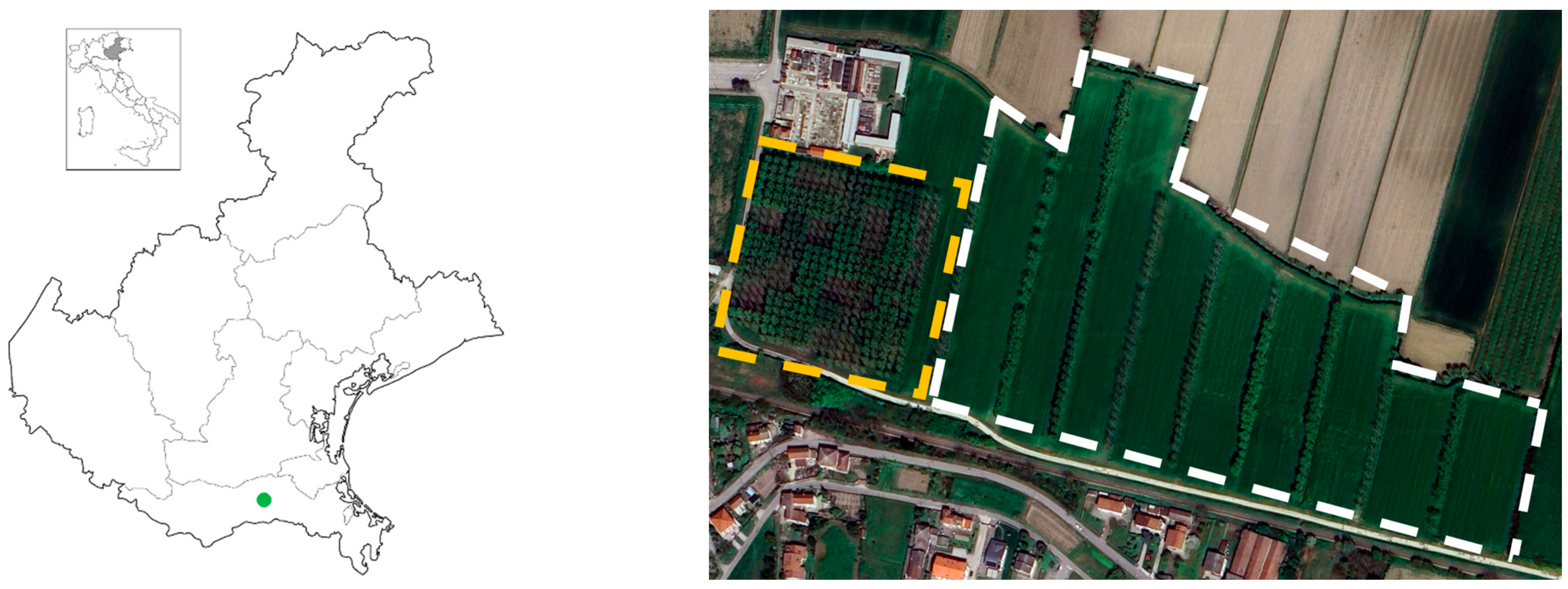
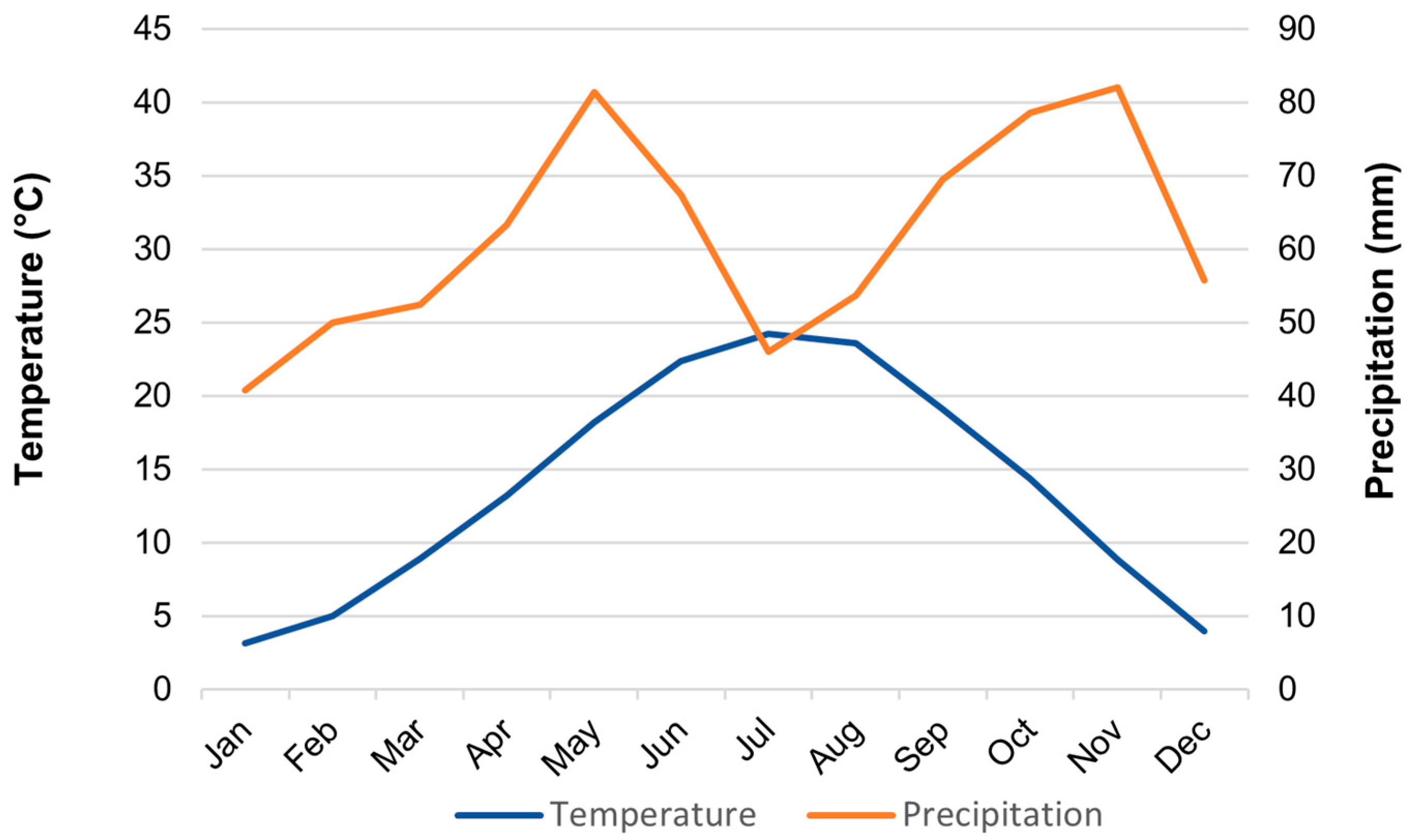
Two-year-old poplar trees were planted in spring 2018 and cultivated in Ceregnano (Veneto Region, Italy) at the SASSE RAMI experimental farm (gps data: 45°03′02.5″ N 11°52′32.3″ E, elevation above 5 m over the sea) managed by Veneto Agricoltura (Figure 1). The soil of the site belongs to the “low calcareous plain” land system, formed by fluvial sediments consisting of low-energy, silty, calcareous overbank deposits. Soil texture varies between silty clay loam and silty loam. The climatic conditions of the site align with the general needs for poplar cultivation, showing only a very limited drought stress period in July (Figure 2).
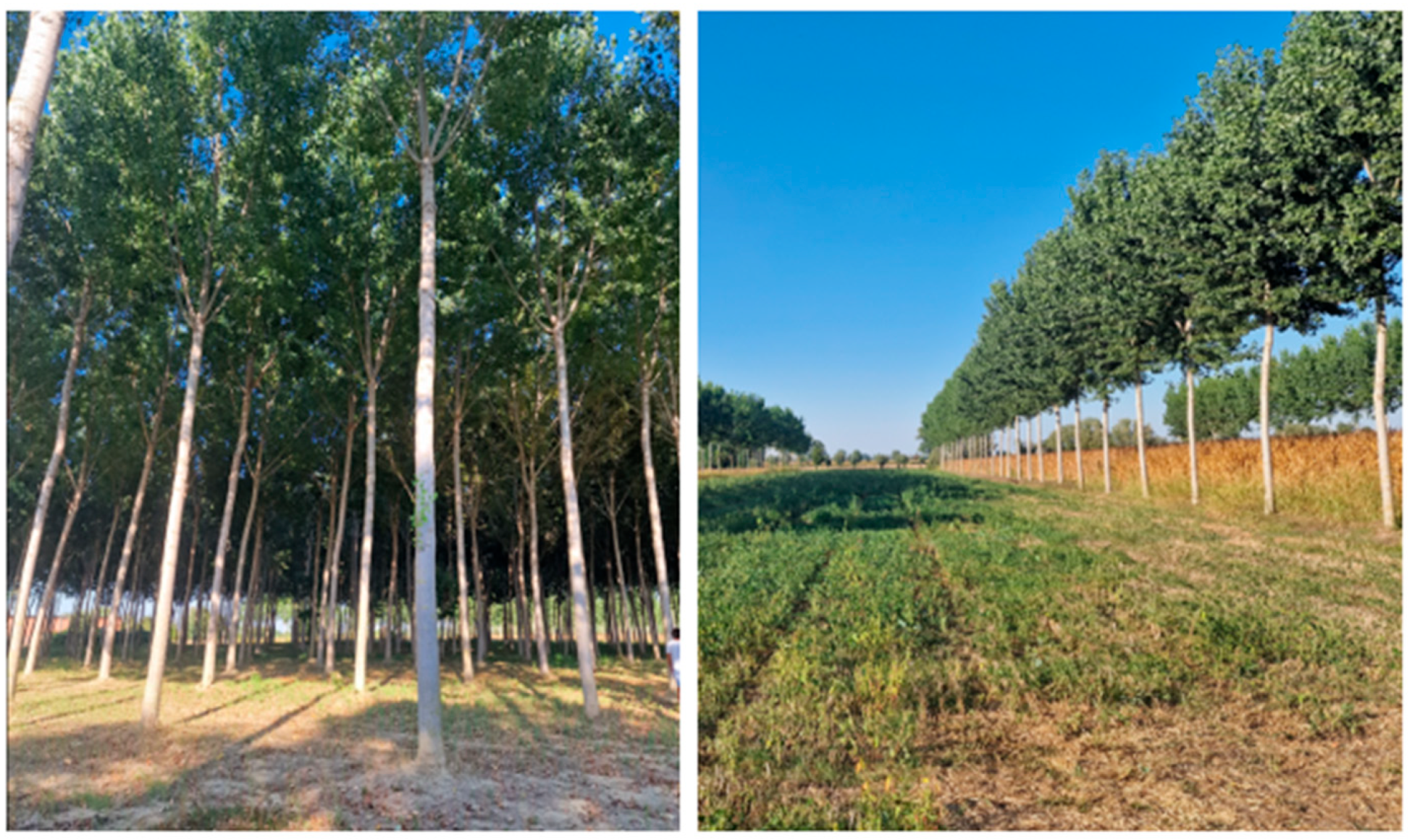
The conventional poplar plantation (C) has a square layout and tree space of 6 × 6 m (about 280 trees/hectare). In the agroforestry (AF) system, poplar trees have a space of 38 m between rows and 6 m between trees (Figure 3). Different poplar clones were introduced in the fields, 15 in C and 13 in the AF system. However, only 5 MSA poplar clones (Table 1) were simultaneously involved in both plantations, each with 3 replications, and were therefore included in the analysis.
Trees and crops were periodically monitored and measured during growth. In the C model, weed controls were carried out with mechanical means, whereas in the AF model, weeds along the poplar rows were chemically controlled during crop cultivation. Pruning was applied up to the fifth year on the trees of both models. No fertilization was used, and only support irrigation was provided during the first years. At the end of the seventh year of growth, in the C model, the average diameter at breast height (DBH) was 28.4 cm, with a range between 26.7 cm (‘Mombello’) and 29.5 cm (‘Moleto’); the average total height was 23 m, with a range between 19.8 m (‘Mombello’) and 27.2 m (‘Tucano’). Due to pruning activities, the average height of insertion of branches was at 9.3 m. In the AF system, the average DBH for the same clones was 32 cm, with a range between 31.7 cm (‘Mombello’) and 36.6 cm (‘Tucano’); the average total height was 18.6 m, with a range between 16.5 m (‘Mombello’) and 21.5 (‘Aleramo’). Pruning has cleaned the trunks up to 6.3 m.
For each MSA clone and plantation system indicated in Table 1, 3 trees were harvested during late spring 2025. Representative trees were selected; however, differences among trees were limited, as expected for clonal material. After falling and crosscutting, the logs were marked to ensure traceability throughout the processing stages. The diameter at the base and at the top of each log was measured in two directions (N-S and E-W) for all the first logs per tree. Logs for plywood production were 2.60 m long.

2.2. Wood Physical Properties

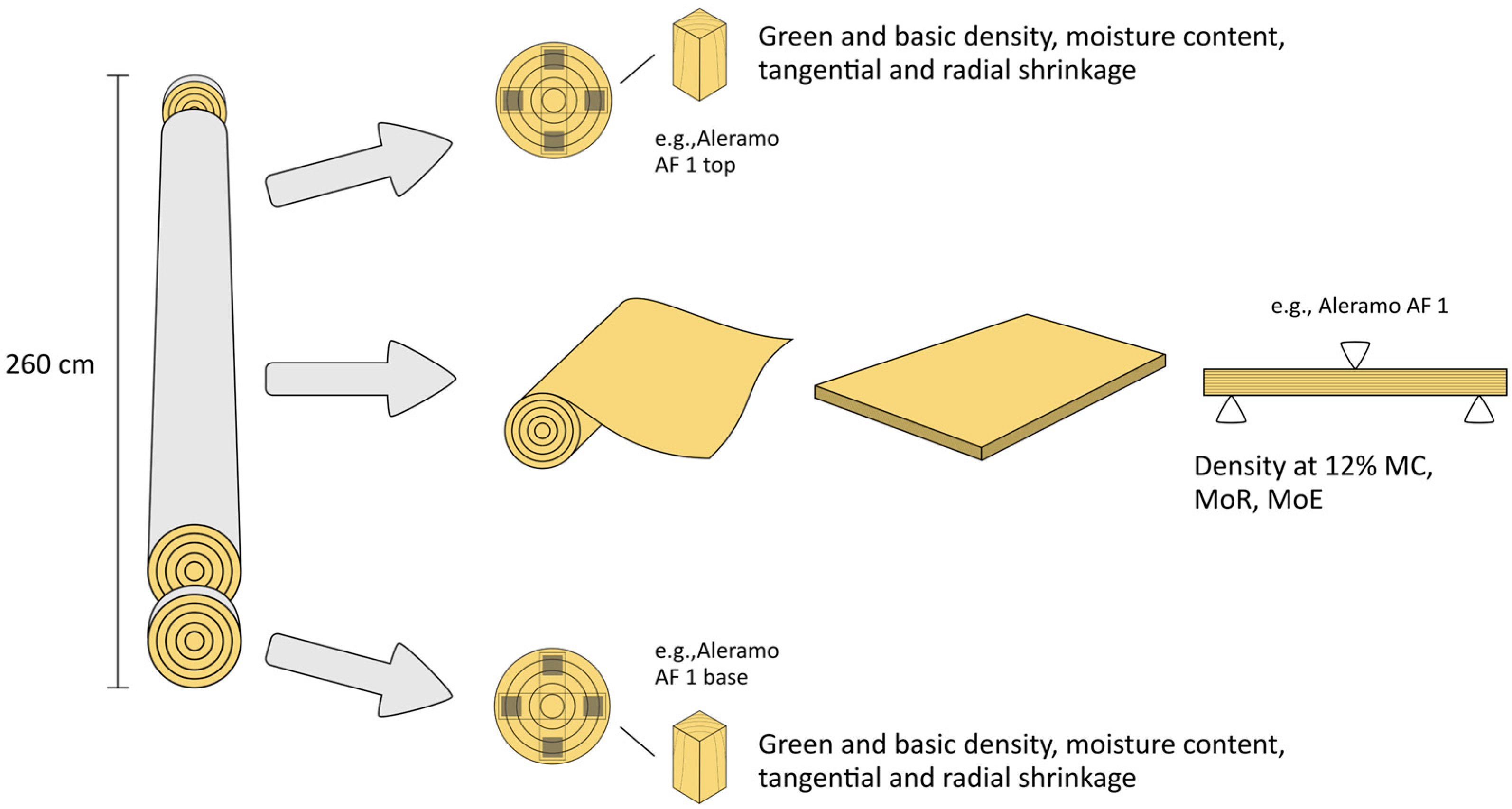
Two cross-sections (wood disks) of about 5 cm of thickness were also collected from each stem for the determination of physical properties: one from the base and one from 2.6 m up the log. Four specimens sized 30 × 30 × 60 mm were cut from each section, excluding the pith and bark (specimens were cut at least 5 cm away from these portions), following the scheme of Figure 4. The tangential and radial dimensions of fresh specimens were measured by a digital caliper with an accuracy of 0.01 mm. The mass was measured with a precision analytical balance with accuracy of 0.0001 g.
The green density (g/cm3) was calculated as the ratio between fresh mass and volume of each specimen. In total, 80 specimens were analyzed (4 specimens × 2 disks × 5 clones × 2 systems). Subsequently, specimens were oven-dried at 103 ± 2 °C until reaching constant mass. Dimensional measurements were then repeated in the dry state in order to quantify shrinkage in both the tangential and radial directions. The moisture content (%) of the wood was calculated as the ratio between the difference from fresh and oven-dry mass. The basic density (ρb) was calculated as the ratio between oven-dry mass and green volume, according to ISO 13061-13 [24].

2.3. Plywood Manufacturing and Physico-Mechanical Testing

The logs were rotary cut in a plywood factory located near the plantations site (C.I.M.A., Limena, Italy). Nominal veneer thickness was set to 1.25 mm, and based on the initial volumes of the logs being processed, the yields in full sheets of wet veneers (clipped at the size of 2.55 × 2.04 m) were calculated. Some fishtails were also obtained, but these portions were not included in the volume of veneers produced. After drying, the veneers were quality-graded according to the manufacturer’s method, based on standard EN 635-2 [25]. First-grade veneers were used for plywood manufacturing to avoid the influence of relevant defects on mechanical testing.
Nine-layer plywood was manufactured from the above veneers. To exclude the influence of wood defects, the plywood was composed using only veneers of the best appearance quality class for all layers of each panel.
Given the exploratory objectives of this work and the limited availability of material (including a unique-thickness veneer) from the comparison plantations, it was decided to choose a single adhesive system, layering configuration, and pressing parameters for the experimental panels. These options were discussed, agreed upon, and shared with the company that performed the rotary cutting. The selection was also based on their experience with the main needs of the current poplar plywood market and the necessity to acquire technical information to evaluate new potential uses for the panel.
A commercially available Urea Formaldehyde (UF) adhesive provided by DyneaTM, Lillestrøm, Norway, was applied at 300 ± 15 g/m2 on both sides. All boards were separately manufactured using one floor hydraulic laboratory equipment by hot-pressing the veneers at 105 °C for 12 min at a pressure of 0.5 MPa. These parameters were defined according to the recommended processing of the current industrial production. The veneers were then hot-pressed at 105 °C for 12 min at a pressure of 0.5 MPa using laboratory equipment. After pressing, the panels were trimmed to obtain perpendicular edges. Two panels sized 600 × 600 mm with a nominal thickness of 12 mm were produced for each clone (‘Aleramo’, ‘Moleto’, ‘Mombello’, ‘Moncalvo’, ‘Tucano’) and cultivation system (C or AF). After pressing, the panels were trimmed at 500 × 500 mm to obtain perpendicular edges.
The panels were left to cool and stabilize for one week. From each type of panel, 24 specimens (8 per test) were randomly cut to assess density, bending strength, and modulus of elasticity. For the bending test, half of the specimens were cut longitudinally (i.e., along the grain direction of the outer layers) and the other half transversally (i.e., with the main axis perpendicular to the grain direction of the outer layers).
Before testing, all specimens were conditioned in a standard climate at 20 °C and 65 ± 5% RH until mass constancy was reached.
Density (ρ) was determined according to EN 323 [26]. For this test, specimens of 50 × 50 × panel thickness (mm3) were weighed and measured. The value was calculated as the ratio of mass to volume. Bending strength (MoR) and apparent modulus of elasticity (MoE) were determined according to EN 310 [27] with a three-point and flatwise bending test configuration. Dimensions of the test pieces were 290(l) × 50(w) × panel thickness (mm3), and the span between support points was 220 mm. Despite the homogeneity in the quality of veneers used (all belonging to the first quality class), 4 specimens were tested with the face up and 4 with the face down, as indicated by the reference standard.
Tests were conducted using a PMA5 Galdabini universal testing machine (Galdabini S.p.A., Cardano al Campo—Italy) equipped with a 50 kN load cell. According to the reference standard, the load was applied at a constant rate of cross-head movement throughout the test and the displacement speed adjusted, so that the maximum load was reached within 60 ± 30 s. Deflection was measured in the middle of the specimens (below the loading head) with an accuracy of 0.1 mm. The plotted values related to the corresponding load were measured to an accuracy of 1%. The modulus of elasticity of each test piece was calculated within the range of elastic deformation, in the straight-line portion of the load–deflection curve between approximately 10 to 40% of the maximum load.
The above conditions are met thanks to the computer control and acquisition system (testXpert V11.02 software, Zwick/Roell GmbH & Co. KG, Ulm, Germany) of the testing machine, which is regularly calibrated and checked to ensure the required accuracy (Class 1 certified), and through which data were gathered.

2.4. Statistical Analysis

Statistical analyses were performed using R software, version 4.5.2. Two-way analysis of variance (ANOVA) was initially considered to evaluate the effects of clone, cultivation system (agroforestry vs. conventional), and their interaction on the physico-mechanical properties of the wood (basic density, green density, moisture content, radial and tangential shrinkages, T/R ratio, MoR, and MoE). Prior to the analyses, the assumptions of normality of residuals and homogeneity of variances were assessed using Shapiro–Wilk and Levene’s tests, respectively. For variables that met these assumptions, a standard two-way ANOVA followed by Tukey’s HSD post hoc test was used. For variables that violated the assumptions of normality or homoscedasticity, a non-parametric approach was adopted using the Aligned Rank Transform (ART) ANOVA. This method was selected for its ability to accurately test main effects and interactions in factorial designs without requiring normal distributions. In these cases, multiple comparisons were performed using the Games–Howell post hoc test, which is robust to unequal variances. Goodness-of-fit and Chi-squared test were used to investigate the effect of plantation systems on quality classes of veneers. Statistical significance was always set at p = 0.05.

3. Results

3.1. Solid Wood

Physical characteristics of the solid wood specimens of the new MSA clones measured for the two cultivation models are summarized in Table 2, which also reports the bibliographic values for clone ‘I-214’. Table 3, instead, reports the F and p values from the statistical analysis for the solid wood properties. The green density of clones has an average of 0.76 g/cm3. The lower value was detected for ’Tucano’ in the C system (0.70 g/cm3), while the higher value for ’Moleto’ in the AF system (0.85 g/cm3). No significant differences in green density were detected between the two cultivation systems, except for the ‘Moleto’ clone, where density was significantly higher (p < 0.05) for AF compared to C.
The values of wood moisture content are varied variably between specimens, with an average of 91% and a major content in the clone ‘Mombello’ C system (104.1%), and the lowest in ‘Moleto’ in the AF system (84.9%). Significant differences (p < 0.05) were found for ‘Aleramo’, ‘Mombello’, and ‘Tucano’, where moisture content in AF was higher than in C. Instead, no significant differences (p < 0.05) were found for ‘Moleto’ and ‘Moncalvo’.
The average basic density was 0.400 g/cm3. The higher value was detected in ’Moleto’ in the AF system (0.464 g/cm3), and the lowest in ‘Tucano’ in the C system (0.351 g/cm3). Significant differences (p < 0.05) were found for ‘Moleto’ and ‘Tucano’, where basic density in AF was higher than in C. Instead, no significant differences (p < 0.05) were found for ‘Aleramo’, ‘Moncalvo’, and ‘Mombello’.
The average value of total tangential shrinkage (%) for all clones is 6.28%. Higher and lower values were detected in ’Tucano’, respectively, in AF (6.95%) and in the C system (5.50%). Significant differences (p < 0.05) were found for ‘Tucano’ only, where tangential shrinkage in AF was higher than in C, whereas no significant differences were detected for the other clones.
The average value of the total radial shrinkage was 3.42%, with a higher value in ‘Moncalvo’ in the C system (4.01%) and a lower value in ‘Aleramo’ in the C system (2.90%).
No significant differences (p < 0.05) were found for all clones.
The ratio between total tangential to radial shrinkage ranged from a minimum of 1.56 (‘Tucano’ C) to a maximum of 2.12 (‘Mombello’ AF). No significant differences (p < 0.05) were found for all clones.

3.2. Rotary Cutting and Plywood

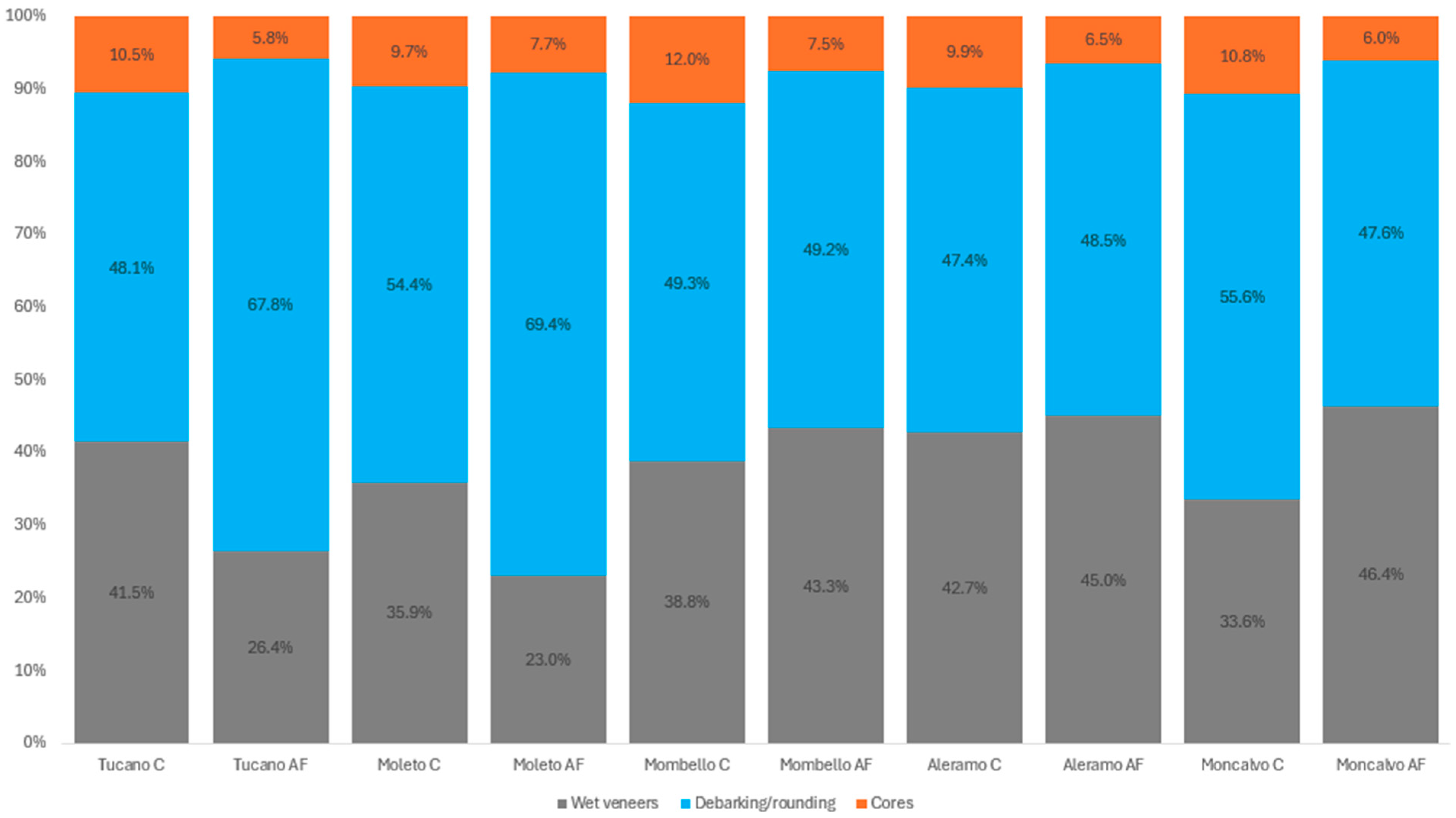
Figure 5 shows the peeling yields for the five clones depicted by the cultivation system. The yields in wet veneers (full size only) range from a minimum of 23% for the ‘Moleto’ clone to a maximum of 46.4% for the ‘Moncalvo’ clone, in both cases from the AF model. The ‘Tucano’ and ‘Moleto’ clones, grown in the agroforestry system, showed lower yields than those recorded in the clonal field, while ‘Mombello’, Aleramo’, and ‘Moncalvo’ presented opposite results.
Generally, the clones of the AF model, except for the ‘Moncalvo’, recorded a higher percentage for the rounding phase of the logs, only partially recoverable in the form of veneers with smaller width than the entire sheets. The percentage incidence of the core (the round billet remaining from the peeling operation), which in all cases had a fixed diameter of approximately 9.5 cm, was always lower in the clones from the AF model.
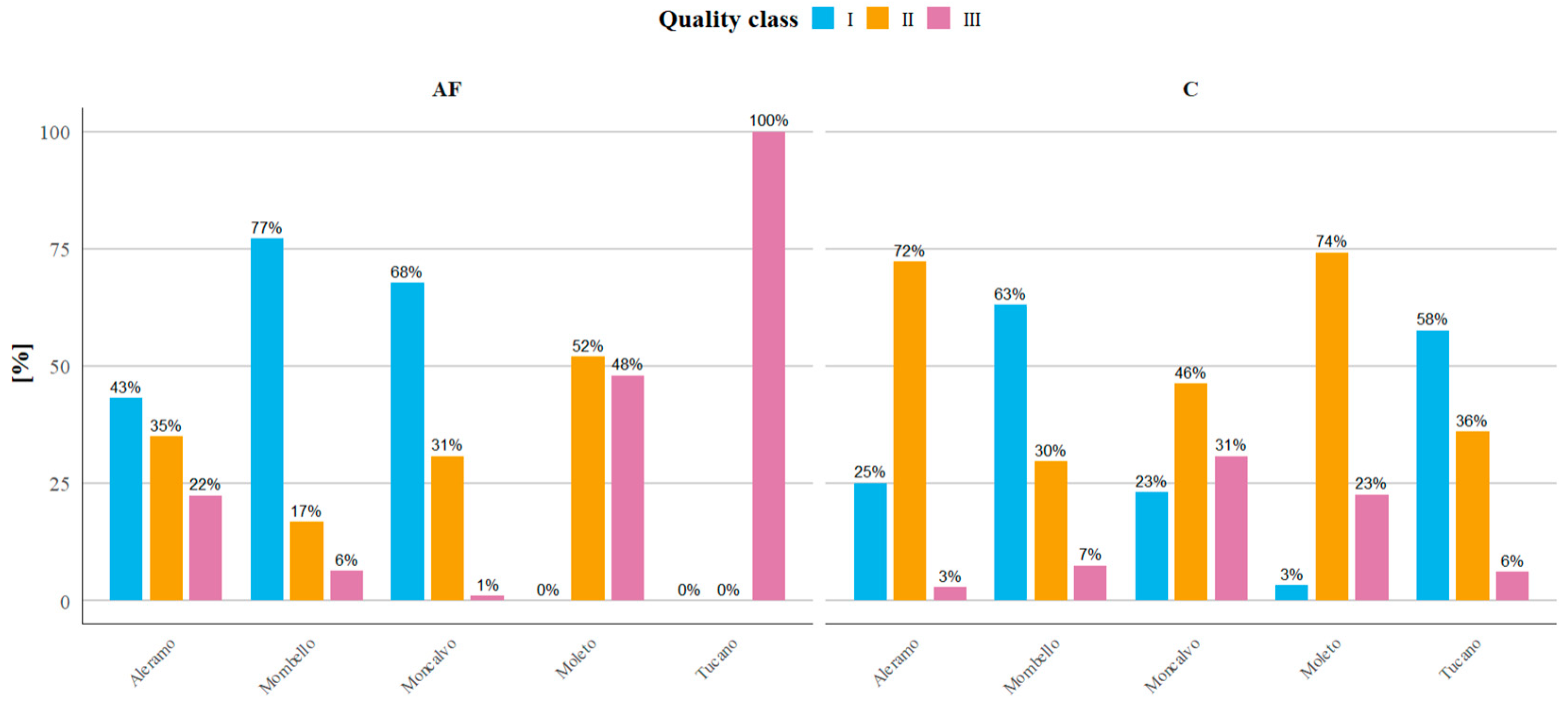
The percentage distribution of veneers across the three quality classes is shown in Figure 6. In the AF system, veneers from the ‘Mombello’ and ‘Moncalvo’ clones are predominantly classified as Class I veneers (77% and 68%, respectively). The ‘Aleramo’ veneers show a wider qualitative distribution, with 43% in Class I, 35% in Class II, and 22% in Class III. Veneers from ‘Moleto’ clone are exclusively classified as Class II (52%) and III (48%), while all ‘Tucano’ veneers fall into Class III (100%). Overall, veneer quality from the AF system exhibited marked variability among clones.
A more even distribution of quality classes was observed for the C system. Class I veneers occurred in all poplar clones and predominated in ‘Mombello’ (63%) and ‘Tucano’ (58%). For the ‘Aleramo’ and ‘Moncalvo’ clones, Class I veneers are lower than the AF system (25% and 23%), while Class II veneers are dominant, reaching 72% and 46%, respectively. Veneers from the ‘Moleto’ clone showed a quality pattern similar to that observed in AF, with Class II being more predominant (74%). Class III veneers remain limited and never dominant, with the highest results in the ‘Moncalvo’ (31%) and ‘Moleto’ (23%) clones, while for all other clones, the value is below 8%.
The statistical analysis showed no significant differences (p = 0.257) between yields in Class I veneers in the AF and C systems. Significant differences were instead found for Class II veneers, significantly higher (p < 0.001) in C, and for Class III veneers, significantly higher (p < 0.001) in AF.
In terms of visual grading, the main defects that determined the attribution in Class III were the appearance of fuzzy grain on the surface and the waviness of the veneers due to tension wood. In that case, many sheets also presented cracks developed from the pressure of the feed rollers during passage through the drying system.
Table 4 shows the differences between clones in terms of the normalized number of Class I veneers in both cultivation systems. The best result was recorded for ‘Mombello’, which had a significantly higher number of Class I veneers (p < 0.05 or p < 0.01) than that of all clones, except for ‘Moncalvo’ (no statistical difference, p > 0.05). ‘Moleto’, instead, had the lowest result, with a significantly lower number of Class I veneers than all the other clones (p < 0.01).
After conditioning and during testing, the plywood specimens showed an average wood moisture content of 9 (±1)%. Table 5 reports the F and p values of the statistical analysis for the plywood properties.
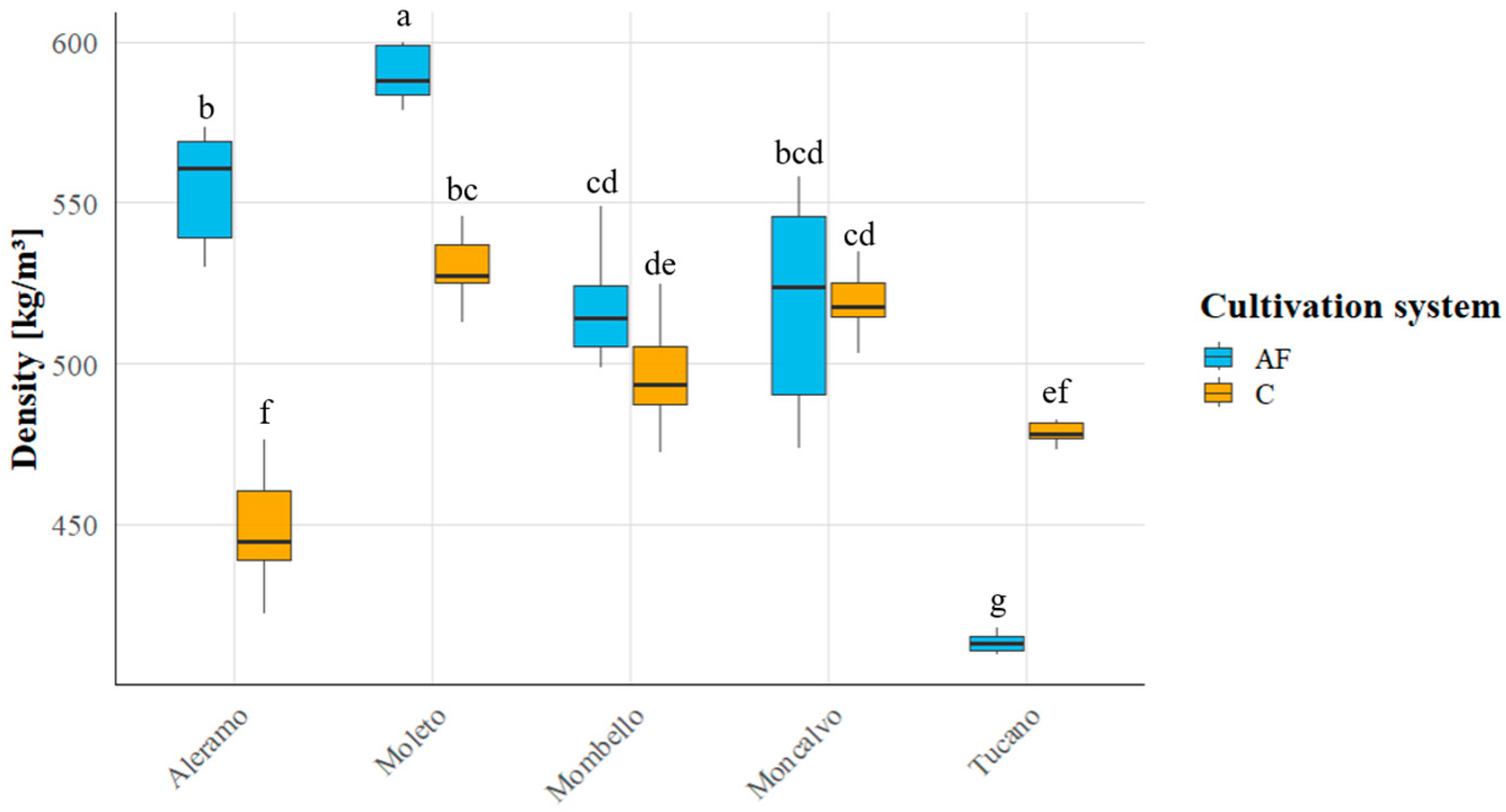
Figure 7 shows the average density values of the plywood produced from the five clones from both cultivation systems. Higher density was found for plywood from the AF system for the ‘Aleramo’ (555 kg/m3 AF vs. 458 kg/m3 C), ‘Moleto’ (590 kg/m3 AF vs. 541 kg/m3 C), and ‘Mombello’ (517 kg/m3 AF vs. 497 kg/m3 C). On the contrary, ‘Tucano’ plywood exhibited higher density in the C system (477 kg/m3 C vs. 413 kg/m3 AF). ‘Moncalvo’ plywood showed similar values in both systems (520 kg/m3 AF vs. 519 kg/m3 C).
Differences between cultivation systems resulted significant for the ‘Aleramo’ (AF higher, p < 0.001), and ‘Moleto’(AF higher, p < 0.002), ‘Tucano’ (C higher, p < 0.001), while no statistical differences were observed for ‘Mombello’ (p = 0.388) and ‘Moncalvo’ plywood (p = 1.000).
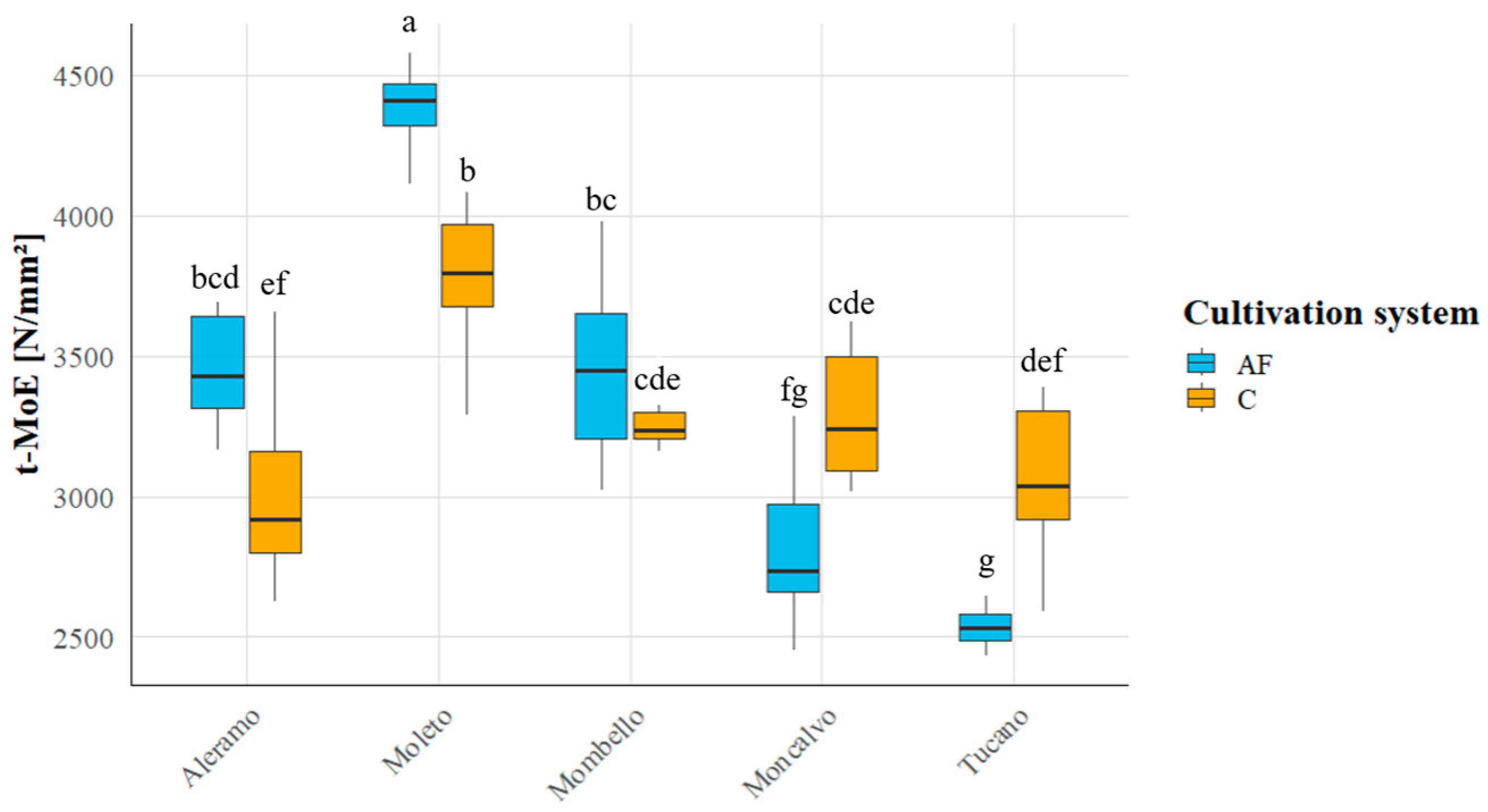
As previously indicated, the bending properties were measured in both directions of plywood, i.e., perpendicular to the grain (for samples defined “transversal”) and parallel to the grain (for samples defined “longitudinal”) of the face veneer. The perpendicular direction of the results is marked by “t” and the parallel by “l”. The transversal MoE (t-MoE) values are shown in Figure 8. The average t-MoE of the ‘Aleramo’ plywood was 3453 N/mm2 for the AF system and 3016 N/mm2 for the C system. For the ‘Moleto’ plywood, the average t-MoE was 4459 N/mm2 for the AF and 3774 N/mm2 for the C system, while for the ‘Mombello’ plywood, it was 3457 N/mm2 and 3314 N/mm2, respectively. The ‘Moncalvo’ plywood showed an average t-MoE of 2798 N/mm2 for the AF and 3286 N/mm2 for the C system. For ‘Tucano’ plywood, the average t-MoE is 2536 N/mm2 in the AF system and 3061 N/mm2 in C.
Statistical analysis confirmed significantly higher t-MoE values in AF for ‘Aleramo’ and ‘Moleto’ plywood (p < 0.001) and significantly higher values in C for the ‘Moncalvo’ and ‘Tucano’ plywood (p < 0.001). No statistical differences were detected for the ‘Mombello’ plywood (p = 0.397).
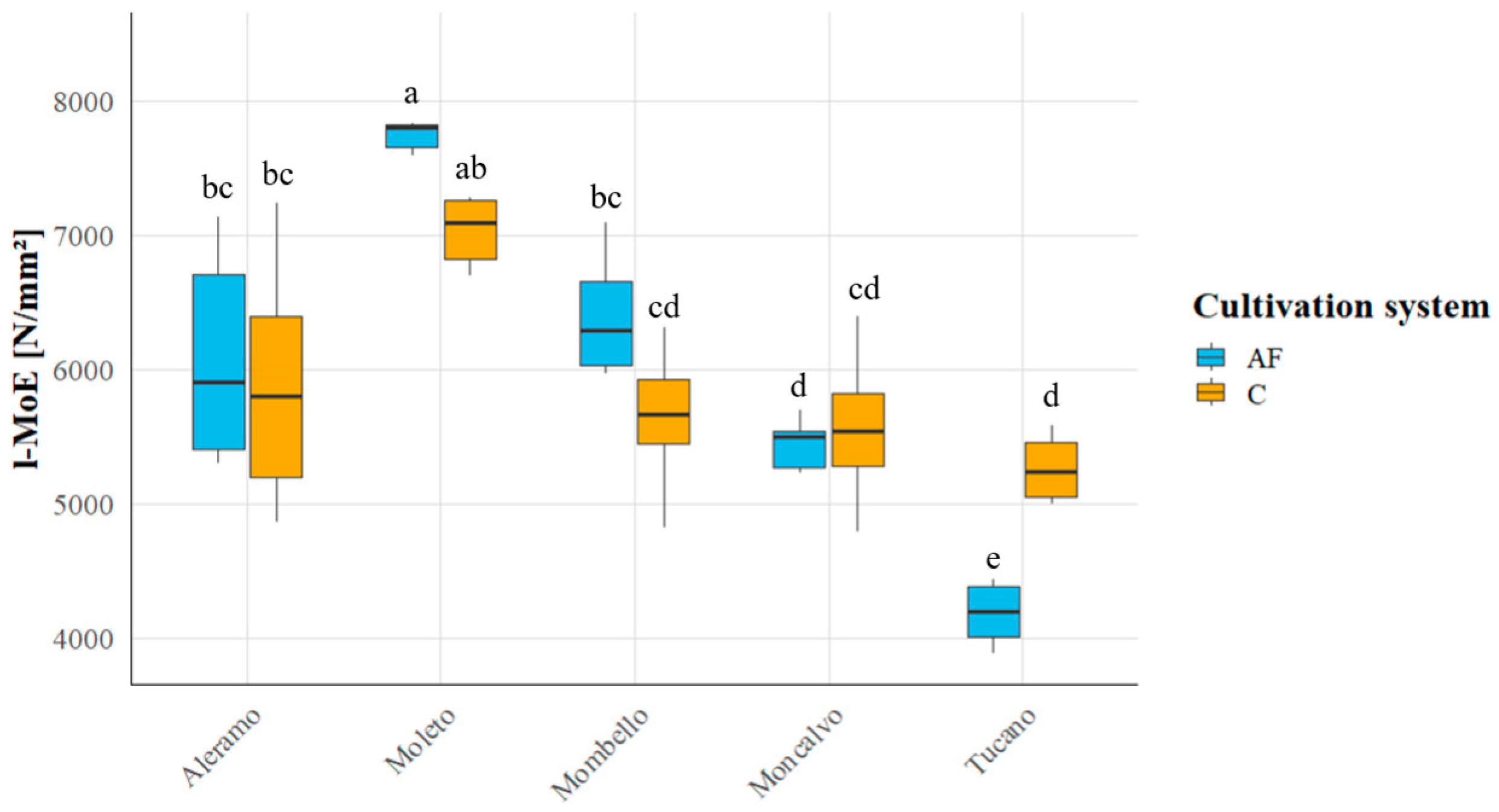
Figure 9 reports the longitudinal MoE (l-MoE) values of plywood (AF and C). The average l-MoE of the ‘Aleramo’ clone was 6078 N/mm2 for the AF system and 5883 N/mm2 for the C system. For ‘Moleto’, the average l-MoE was 7867 N/mm2 for AF and 7414 N/mm2 for the C system, while for the ‘Mombello’ plywood, it was 6392 N/mm2 and 5662 N/mm2, respectively. The ‘Moncalvo’ plywood showed an average l-MoE of 5360 N/mm2 for the AF system and 5546 N/mm2 for the C system. For the ‘Tucano’ plywood, the average l-MoE was 4178 N/mm2 in AF and 5264 N/mm2 in C.
The ‘Tucano’ plywood showed significantly higher values under the C system (p < 0.001). No statistical differences were detected for ‘Aleramo’ (p = 1.000), ‘Moleto’ (p = 0.383), ‘Mombello’ (p = 0.121) and ‘Moncalvo’ (p = 1.000) plywood.
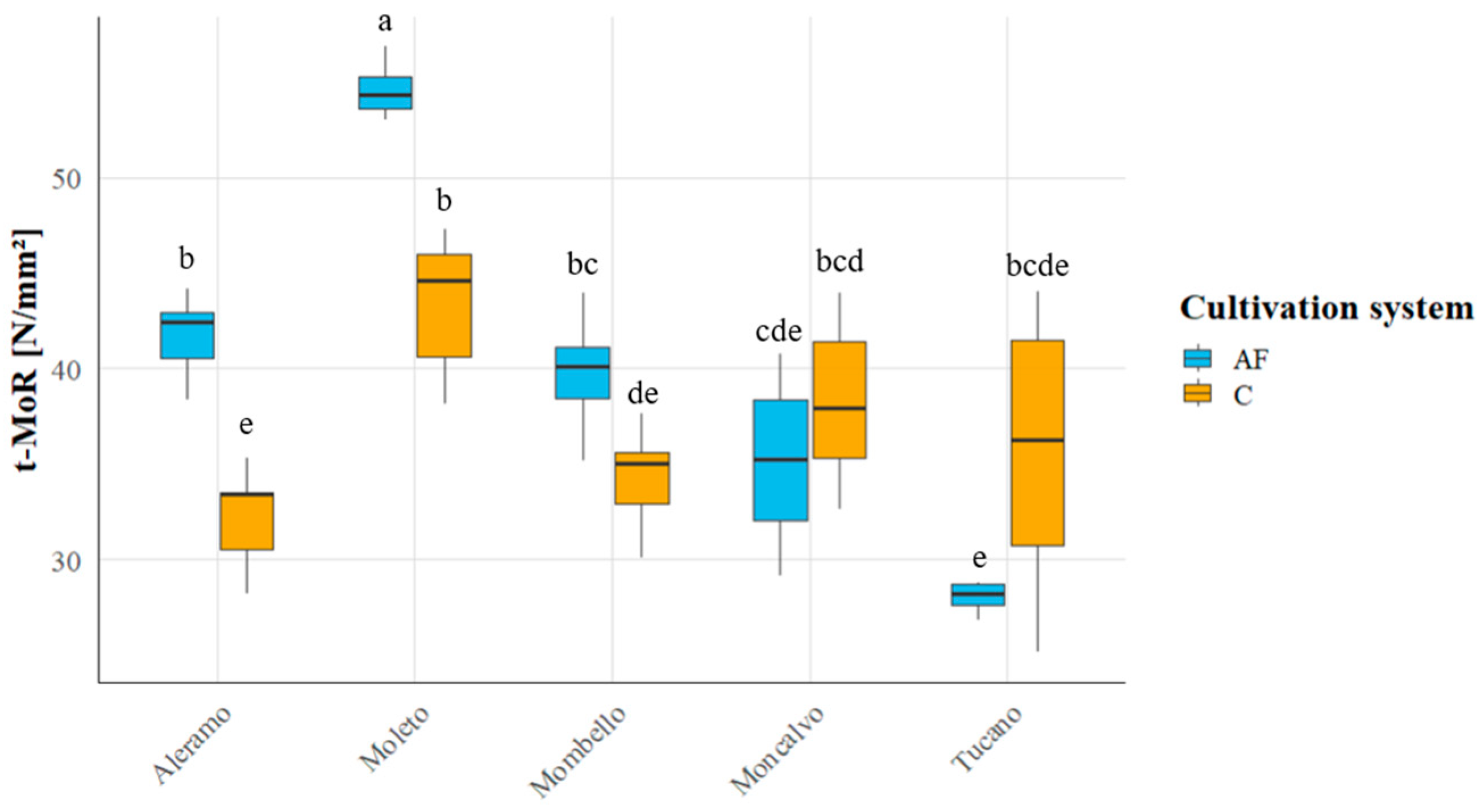
The transversal MoR (t-MoR) values of plywood are shown in Figure 10. The average t-MoR of the ‘Aleramo’ plywood was 42.5 N/mm2 for the AF system and 33.0 N/mm2 for the C system. For the ‘Moleto’ plywood, the average t-MoR was 55.1 N/mm2 for AF and 43.5 N/mm2 for C, while for the ‘Mombello’ plywood, it was 38.7 N/mm2 and 33.2 N/mm2, respectively. The ‘Moncalvo’ plywood showed an average t-MoR of 35.1 N/mm2 for AF and 38.3 N/mm2 for the C system. For the ‘Tucano’ plywood, the average t-MoR was 27.2 N/mm2 in AF and 35.5 N/mm2 in the C system.
The ‘Aleramo’, ‘Moleto’, and ‘Mombello’ plywood showed significantly higher transversal MoR values under the AF system (p < 0.001, p < 0.001, and p = 0.004, respectively). No statistical differences were found for the ‘Moncalvo’ (p = 0.843) and ’Tucano’ (p = 0.290) plywood.
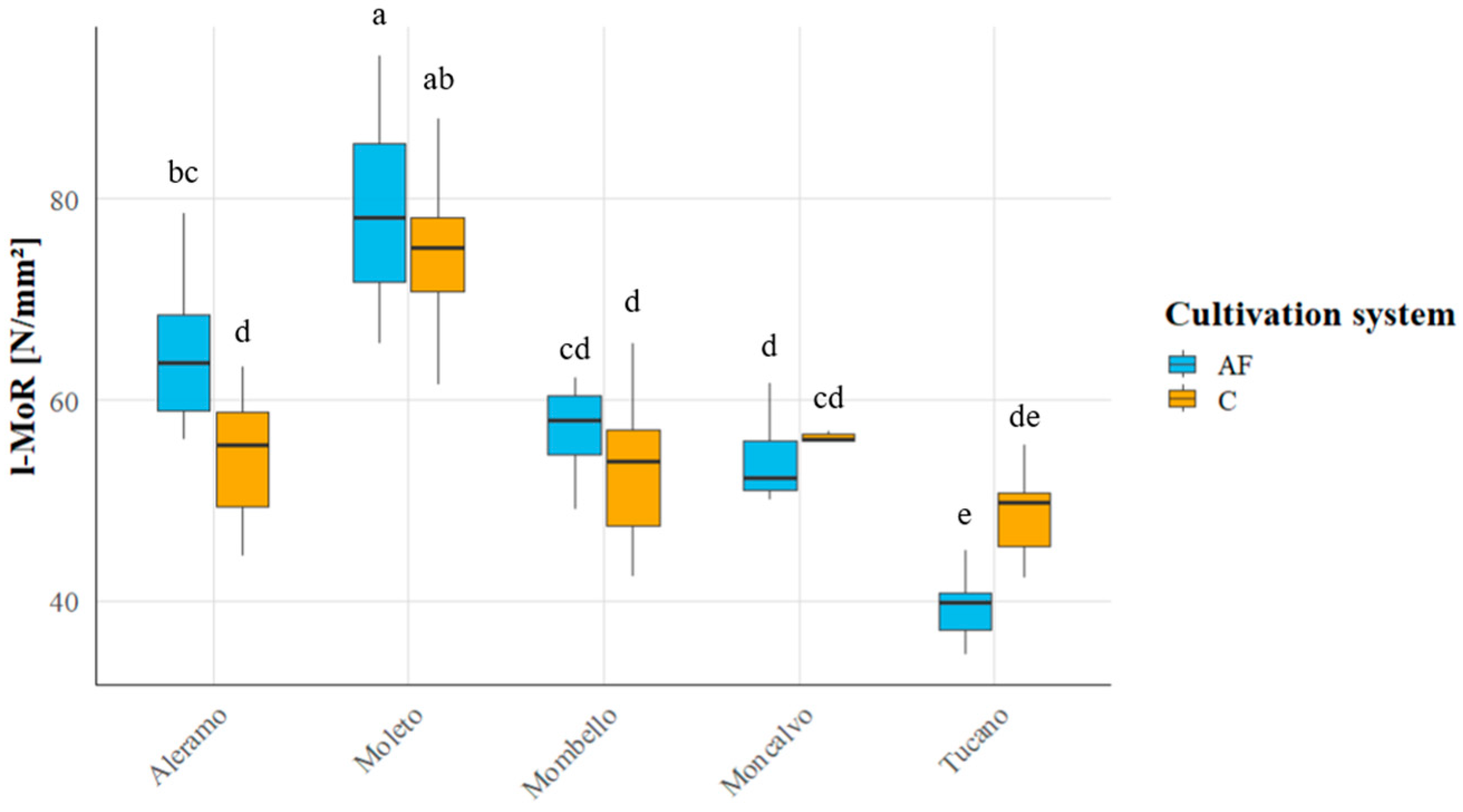
The longitudinal MoR (l-MoR) values of plywood are shown in Figure 11. The average l-MoR of the ‘Aleramo’ plywood was 64.9 N/mm2 for the AF cultivation system and 54.2 N/mm2 for C. For the ‘Moleto’ plywood, the average l-MoR was 79.0 N/mm2 for AF and 74.7 N/mm2 for the C system, while for the ‘Mombello’ plywood, it was 57.1 N/mm2 and 53.3 N/mm2, respectively. The ‘Moncalvo’ plywood showed an average l-MoR of 53.8 N/mm2 for AF and 57.2 N/mm2 for the C system. For the ‘Tucano’ plywood, the average l-MoR was 39.5 N/mm2 in the AF system and 48.6 N/mm2 in C.
The ‘Aleramo’ plywood (p < 0.05) showed significantly higher longitudinal MoR values under the AF system (p < 0.05). The ‘Tucano’ plywood showed significantly higher longitudinal MoR values under the C system (p < 0.001). No statistical differences were detected for the ‘Moleto’(p = 0.338), ‘Mombello’ (p = 0.244), and ‘Moncalvo’ (p = 0.172) plywood.

4. Discussion

The basic density of the MSA clones under investigation was higher than the official values reported in the respective clone data sheets [3]. This can be attributed to the fact that it was calculated using sections taken from the lower portion of the trunks. Basic density is in fact known to be greater at the lower end, decreases at mid-height, and increases again near the top of the poplar tree [29,30]. That basic density stated on the clonal data sheets is calculated as the average value of the entire stem; therefore, it is consistent that it is lower than the values measured in this study. It is also worth noting that the basic density of the MSA clones was always higher than that of the ‘I-214’ clone [31]. Generally, high basal density is not much appreciated by the poplar plywood industry, which requires lightness for its traditional products. However, this characteristic has been associated with additional physical-mechanical properties of wood [32]. Therefore, clones with higher density are potentially interesting for light structural applications and for using wood as an alternative material for bioproducts [33,34].
In this study, an effect of the cultivation system on the basic density of the wood was observed, along with a significant interaction between clone and system (Table 3). For two clones out of five (‘Moleto’ and ‘Tucano’), basic density was higher in AF (AF basic density was higher also for ‘Aleramo’, ‘Mombello’, and ‘Moncalvo’, although no significant differences were found). This can be attributed to the variables in the growth environment (light, space, competition, and water availability). In the AF system, the trees have actually grown less in height and more in diameter, and they have been pruned less, keeping the lower branches.
Shrinkage behavior was less variable between clones. In particular, when considering the tangential to radial shrinkage ratio, differences are actually very limited although significant interactions between clones and systems were found. It is well known that wood shrinkage is affected by several parameters. Density is the most important, as greater shrinkage is associated with higher density; however, data regarding poplar wood characterization of new clones are limited [35,36,37]. In any case, the experimental results are in line with the recent bibliographic data for the MSA clones ‘Aleramo’, ‘Moleto’, ‘Moncalvo’, ‘Mombello’, and ‘Tucano’, which are already indicated as suitable for the production of plywood [38].
Considering the plywood manufacturing process, in general, lower variability was found in the peeling yields obtained by clones cultivated under the C system. Also, a comparison with the bibliographic data [39] and between the two cultivation systems highlights some differences in yields between the clones under investigation and between them and the ‘I-214’ clone. In particular, Castro et al. (2013) [39] reported that the peeling yields (calculated considering the volume of wet sheets only) of 10-year-old ‘I-214’ clone logs from traditional plantation near Mantua, Italy, with DBH between 32 and 43 cm, was 51.5%. All MSA clones investigated in the present study showed peeling yields below this threshold, for both cultivation systems. However, it should be noted that, in this experimentation, the trees were younger (seven years old) and smaller in their average DBH with respect to the above-mentioned reference.
The volume of wood removed, including debarking, during the rounding phase of the rotary cutting ranged from 47.6% to 69.4% for AF, and from 47.4% to 55.6% for C (Figure 5). The higher volume of wood removed from the AF logs can be attributed to greater ovality or irregularity of the transversal section in the tree base, as well as to a certain tapering of the stems. Since the core had a fixed volume, its lower percentage incidence for AF clones is because logs from this cultivation system presented a greater average diameter if compared to the C. The yields found are nevertheless consistent with the bibliographic values of wet veneers obtained from poplar logs with an average diameter between 30 and 40 cm [40].
Regarding the veneer quality, in general, ‘Mombello’ stands out for its yields in Class I in both cultivation systems. The fact that no significant differences in Class I veneers were found from AF and C is a positive indication on the capability of the agroforestation to yield good quality material. On the other hand, veneers of Class II were significantly higher in C, and veneers of Class III were higher in AF. This suggests that the traditional poplar plantation system with regular space among trees can still produce veneers of better quality overall. This is because trees growing in single rows tend to show greater diameters but more pronounced tapering [41,42]. Actually, the results of this study are consistent with this phenomenon.
As is known, the veneer yield from peeling, given the same characteristics of the trunk, is proportional to the diameter of the logs. For this reason, the current trend in Italy is to increase the space available for each tree to obtain greater diameters and more interesting assortments for the industry. Therefore, a wider planting spacing is being used more often also for the C system, for example, 8 × 8 m instead of the classic 6 × 6 m. This is especially valid for the new MSA clones that are particularly valuable in terms of annual growth and wood production. More space availability is also useful to limit the ovality in the cross-section of the trunks, which is a relevant technical aspect because it determines higher rounding losses [43]. Therefore, linear plantations with too tight spacing can result in lateral inclination of the trunks, with the consequent production of tension wood and loss of economic value. Although the presence of tension wood was not analytically measured in this study, the grading performed by experienced operators indicated that it was the main reason for attribution of veneers into Class III of EN 635 [25]. This allows to hypothesize that increasing the distance between trees along rows in AF systems can favor regular and straight growth, reducing the occurrence of this defect.
In general, significant interaction between clones and systems were found for the mechanical behavior of plywood (MoE and MoR). This can be attributed to the fact that the cultivation system significantly affected wood density. The results obtained show that plywood made with the higher-density clones can display interesting mechanical features capable of opening new applications in sectors previously precluded to panels made from the ‘I-214’ clone.

Study Limitations and Future Research

This study presents some limitations that should be considered when interpreting the results. First, only one type of AF model was considered, whereas several configurations exist, especially in terms of spacing between trees. Testing AF systems with different setups can provide further knowledge on the effect this type of arboriculture for plywood production.
Second, the study is explorative in nature. The limited sample size used (three trees per clone) does not enable to fully capture the within-clone variability, which affects the generalizability of the findings. However, these preliminary data still provide valuable insights into the effects of the AF cultivation model examined. Future research should increase the number of trees per clone and explore a broader range of clones to strengthen the statistical reliability of the results obtained.
Also, plywood was produced at the laboratory level, using only one adhesive system with its relative pressing temperature/pressure, and a single-panel lay-up. Further industrial investigations are needed to explore the effects of enlarging the above variables and to assess their influence on panel performance.
Finally, testing was not conducted using the ‘I-214’ clone because it was not cultivated in our AF system. Including characterization of the ‘I-214’ clone grown in the two conditions (comparing C and AF) can provide valuable information to the industry, as this clone is the current reference for plywood production in Italy.

5. Conclusions

The AF configuration at the site included in this study can represent a complementary model to the traditional one for increasing the production of higher-value poplar assortments for the national plywood industry. Thanks to the fast-growing potential of the clones under consideration, with the same rotation, it is possible to achieve larger diameters. However, it would be advisable to introduce some adjustments, especially in terms of spacing between trees along the row, which should be increased compared to the current practice. This would reduce the negative effects of certain wood characteristics that, during the peeling process, lead to greater waste for the rounding phase of the logs.
All the clones examined were found to be suitable for veneer production. In general, they were characterized by a higher basic density than the ‘I-214’ clone, which is the most appreciated in this industrial sector. Processing yields and quality of the veneers depended on the type of clone and on the cultivation system. Some clones can provide good percentage yields of transformation into top-quality veneer (like ‘Mombello’ and ‘Moncalvo’). Others are characterized by higher density (like ‘Aleramo’ and ‘Moleto’). They can therefore be suitable to produce plywood with mechanical properties that are comparable with those of panels used in construction, typically made from other softwoods and hardwoods.
The poplar timber from this AF model and site, even if obtained by trees younger than those usually supplied from traditional rotation, has proven capable of satisfying the dendrometric and wood quality requirements needed for the peeling processing and the production of plywood.
This exploratory work represents a first step toward the evaluation of the actual suitability for veneer and plywood production of the poplar clones examined, particularly those from the agroforestry system. Based on these results, other studies should be conducted by extending the experiment to a greater number of plantation sites and volumes of processed wood. This aims to further investigate the effects of the clones considered here and other ones as well, together with other AF cultivation models on the properties of poplar wood and plywood.

Author Contributions

Conceptualization, P.M.C. and R.Z.; methodology, C.C., S.C., S.B., and F.N.; formal analysis, D.R. and A.B.; data curation, D.R. and A.B.; writing—original draft preparation, C.C., S.B., S.C., and R.Z.; writing—review and editing, S.B., S.C., F.N., P.M.C., and R.Z.; supervision, P.M.C. and R.Z. All authors have read and agreed to the published version of the manuscript.

Funding

This research was funded by Veneto Agricoltura through a collaboration agreement with DISAFA, University of Torino, for the project “Caratterizzazione fisico-meccanica del legno di pioppo, cloni MSA, ottenuto dalle utilizzazioni di un sistema agro-forestale e un campo clonale presso l’Azienda Pilota Dimostrativa “Sasse Rami” in Ceregnano (RO)”, prot. N. 0005366/2025.

Data Availability Statement

Data can be requested to the corresponding author.

Conflicts of Interest

The authors declare no conflicts of interest. The funders had no role in the design of the study; in the collection, analyses, or interpretation of data; in the writing of the manuscript; or in the decision to publish the results.

References

  1. Castro, G.; Zanuttini, R. Poplar cultivation in Italy: History, state of the art, perspectives. In Proceedings of the 23rd Session of the International Poplar Commission, Working Party on Harvesting and utilization of Poplar and Willow Wood Conference. Engineered Wood Product Based on Poplar/Willow Wood, Nanjing, China, 21–24 October 2008; 14p. [Google Scholar]
  2. Pra, A.; Pettenella, D.; Romano, R. Dove va la pioppicoltura padana? Sherwood 2016, 220, 37–41. [Google Scholar]
  3. Corona, P.; Bergante, S.; Castro, G.; Chiarabaglio, P.M.; Coaloa, D.; Facciotto, G.; Gennaro, M.; Giorcelli, A.; Rosso, L.; Vietto, L.; et al. Linee di indirizzo per una pioppicoltura sostenibile. In Rete Rurale Nazionale, Consiglio per la Ricerca in Agricoltura e l’Analisi Dell’economia Agraria; CREA: Roma, Italy, 2018; ISBN 978-88-99595-96-8. [Google Scholar]
  4. FAO. Poplars and Other Fast-Growing Trees—Renewable Resources for Future Green Economies Synthesis of Country Progress Reports. In Proceedings of the 25th Session of the International Poplar Commission and 48th Session of its Executive Committee, Berlin, Germany, 12–16 September 2016. [Google Scholar]
  5. Barrio-Anta, M.; Sixto-Blanco, H.; Viñas, I.C.; Castedo-Dorado, F. Dynamic growth model for I-214 poplar plantations in the northern and central plateaux in Spain. For. Ecol. Manag. 2008, 255, 1167–1178. [Google Scholar] [CrossRef]
  6. Ištok, I.; Sedlar, T.; Šefc, B.; Sinković, T.; Perković, T. Physical properties of wood in poplar clones ‘I-214’ and ‘S1-8’. Drv. Ind. 2016, 67, 163–170. [Google Scholar] [CrossRef]
  7. Gallego, A.; Ripoll, M.A.; Timbolmas, C.; Rescalvo, F.; Suarez, E.; Valverde, I.; Rodrìguez, M.; Navarro, F.B.; Merlo, E. Modulus of elasticity of I-214 young poplar wood from standing trees to sawn timber: Influence of the age and stand density. Eur. J. Wood Prod. 2021, 79, 1225–1239. [Google Scholar] [CrossRef]
  8. Raddi, S.; Anichini, M.; Magnani, F.; Traversi, M.L.; Giovanelli, A. Risposte biometriche e fisiologiche allo stress idrico in due cloni di pioppo “Dvina” e “I214”. In Proceedings of the Congresso Nazionale SISEF Multifunzionalità degli Ecosistemi Forestali Montani: Sfide e Opportunità per la Ricerca e lo Sviluppo Libera Università di Bolzano, Bolzano, Italy, 16–19 September 2013; p. 135. [Google Scholar]
  9. Danilović, M.; Sarić, R.; Cirović, V.; Pudja, V. The impact of pruning on tree development in poplar Populus × canadensis “I-214” plantations. iForest 2022, 15, 33–37. [Google Scholar] [CrossRef]
  10. Xi, B.; Clothier, B.; Coleman, M.; Duan, J.; Hu, W.; Li, D.; Di, N.; Liu, Y.; Fu, J.; Li, J.; et al. Irrigation management in poplar (Populus spp.) plantations: A review. For. Ecol. Manag. 2021, 494, 119330. [Google Scholar] [CrossRef]
  11. Calvano, S.; Negro, F.; Blanc, S.; Bruzzese, S.; Brun, F.; Zanuttini, R. Adding value to wood-based products: A systematic literature review on drivers. Forests 2025, 16, 590. [Google Scholar] [CrossRef]
  12. Cantamessa, S.; Rosso, L.; Giorcelli, A.; Chiarabaglio, P.M. The environmental impact of poplar stand management: A life cycle assessment study of different scenarios. Forests 2022, 13, 464. [Google Scholar] [CrossRef]
  13. McAdam, J.H.; Burgess, P.J.; Graves, A.R.; Rigueiro-Rodríguez, A.; Mosquera-Losada, M.R. Classifications and functions of agroforestry systems in Europe. In Agroforestry in Europe: Current Status and Future Prospects; Rigueiro-Rodróguez, A., McAdam, J., Mosquera-Losada, M.R., Eds.; Springer: Dordrecht, The Netherlands, 2009; Volume 6, pp. 21–41. [Google Scholar]
  14. Ferreiro-Domínguez, N.; Mosquera-Losada, M.R. Agroforestry as sustainable land use. In Proceedings of the 4th European Agroforestry Conference, Nijmegen, The Netherlands, 28–30 May 2018. [Google Scholar]
  15. Zalesny, R.S., Jr.; Barzagli, A.; Caldwell, B.; Minotta, G.; Nervo, G.; Paris, P.; Rogers, E.R.; Salbitano, F. Innovative practices in the sustainable management of fast-growing trees. In Lessons Learned from Poplars and Willows and Other Experiences with Fast-Growing Trees Around the World; Food and Agriculture Organization of the United Nations: Rome, Italy, 2025; p. 192. [Google Scholar] [CrossRef]
  16. Paris, P.; Lauteri, M.; Ciolfi, M.; Chiocchini, F.; Leonardi, L.; Cherubini, M.; Spaccino, L.; Della Valle, C.; Kanzler, M.; Burgess, P. Lessons learnt: Trees for Timber with Arable Crops in Italy. 2017. Available online: https://www.agforward.eu/documents/LessonsLearnt/WP4_I_Poplar_lessons_learnt.pdf (accessed on 26 November 2025).
  17. Piotto, S.; Panozzo, A.; Pasqualotto, G.; Carraro, V.; Barion, G.; Mezzalira, G.; Furlan, L.; Sterup Moore, S.; Vamerali, T. Phenology and radial growth of poplars in wide alley agroforestry systems and the effect on yield of annual intercrops in the first four years of tree age. Agric. Ecosyst. Environ. 2024, 361, 108814. [Google Scholar] [CrossRef]
  18. Santos, P.Z.F.; Crouzeilles, R.; Sansevero, J.B.B. Can agroforestry systems enhance biodiversity and ecosystem service provision in agricultural landscapes? A meta-analysis for the Brazilian Atlantic Forest. For. Ecol. Manag. 2019, 433, 140–145. [Google Scholar] [CrossRef]
  19. Joshi, R.; Sharma, B.; Singh, H.; Dhakal, N.; Ayer, S.; Maraseni, T. Poplar plantation as an agroforestry approach: Economic benefits and its role in carbon sequestration in North India. J. Resour. Ecol. 2024, 15, 880–888. [Google Scholar] [CrossRef]
  20. Nyako, M.C.; Kabelong, L.P.R.B.; Libalah, M.B.; Chimi Djomo, C.; Tagnang, N.M.; Njila, E.N.N.; Babonguen, M.G.M.; Jiagho, R.E.; Guedje, N.; Zapfack, L. Woody biodiversity conservation and provision of ecosystem services in a traditional cocoa agroforest. Agrofor. Syst. 2025, 99, 114. [Google Scholar] [CrossRef]
  21. EPF. Annual Report 2024–2025; European Panel Federation: Brusselles, Belgium, 2025. [Google Scholar]
  22. Scordia, D.; Corinzia, S.A.; Coello, J.; Vilaplana Ventura, R.; Jimenez-De-Santiago, D.E.; Singla Just, B.; Castano-Sanchez, O.; Casas Arcarons, C.; Tchamitchian, M.; Garreau, L.; et al. Are agroforestry systems more productive than monocultures in Mediterranean countries? A meta-analysis. Agron. Sustain. Dev. 2023, 43, 73. [Google Scholar] [CrossRef]
  23. Weger, J.; Vávrová, K.; Janota, L.; Knápek, J. SDEWES 2023: Barriers and possibilities for the development of short-rotation coppice as an agroforestry system for adaptation to climate change in Central European conditions. Energies 2024, 17, 1779. [Google Scholar] [CrossRef]
  24. ISO 13061-13; Physical and Mechanical Properties of Wood-Test Methods for Small Clear Wood Specimens—Part 13: Determination of Radial and Tangential Shrinkage. ISO: Geneva, Switzerland, 2016.
  25. EN 635-2; Plywood—Classification by Surface Appearance—Part 2: Hardwood. CEN-European Committee for Standardization: Brussels, Belgium, 1995.
  26. EN 323; Wood Based Panels—Determination of Density. CEN-European Committee for Standardization: Brussels, Belgium, 1993.
  27. EN 310; Wood Based Panels—Determination of Modulus of Elasticity in Bending and of Bending Strength. CEN-European Committee for Standardization: Brussels, Belgium, 1993.
  28. Facciotto, G.; Castro, G. “Lena” e “Neva”: Due nuovi cloni per la pioppicoltura e l’industria. Sherwood 1997, 28, 17–21. [Google Scholar]
  29. Beaudoin, M.; Hernández Roger, E.; Koubaa, A.; Poliquin, J. Interclonal, intraclonal and within-tree variation in wood density of poplar hybrid clones. Wood Fiber Sci. 1992, 24, 147–153. [Google Scholar]
  30. Petráš, R.; Mecko, J.; Neuschlova, E. Density of basic components of above-ground biomass of poplar clones. Wood Res. 2010, 55, 113–122. [Google Scholar]
  31. Berthelot, A.; Reuling, D.; Robert, G.; Lanvin, J.D.; Legrand, G.; Moreau, J.; Denaud, L.; Paillassa, E. Qualités du Bois des Noveaux Cultivars de Peuplier; FCBA: Champs-sur-Marne, France, 2013. [Google Scholar]
  32. Treacy, M.; Evertsen, J.; Dhubhain, A.N. A Comparison of Mechanical and Physical Wood Properties; COFORD: Dublin, Finland, 2000; p. 40. [Google Scholar]
  33. Sannigrahi, P.; Ragauskas, A.J.; Tuskan, G.A. Poplar as a feedstock for biofuels: A review of compositional characteristics. Biofuels Bioprod. Biorefining 2010, 4, 209–226. [Google Scholar] [CrossRef]
  34. Lin, C.Y.; Geiselman, G.M.; Liu, D.; Magurudeniya, H.D.; Rodriguez, A.; Chen, Y.C.; Pidatala, V.; Unda, F.; Amer, B.; Baaidoo, E.E.K.; et al. Evaluation of engineered low-lignin poplar for conversion into advanced bioproducts. Biotechnol. Biofuels Bioprod. 2022, 15, 145. [Google Scholar] [CrossRef]
  35. Koubaa, A.; Hernandez, R.E.; Beaudoin, M. Shrinkage of fast-growing hybrid poplar clones. For. Prod. J. 1998, 48, 82–87. [Google Scholar]
  36. Karki, T. Variation of wood density and shrinkage in European aspen (Populus tremula L.). Holz. J. 2001, 59, 79–84. [Google Scholar] [CrossRef]
  37. Kord, B.; Kialashaki, A.; Kord, B. The within-tree variation in wood density and shrinkage, and their relationship in Populus euramericana. Turk. J. Agric. For. 2010, 34, 121–126. [Google Scholar] [CrossRef]
  38. Berlin, M.; Nervo, G.; Bergante, S.; Rosso, L.; Vietto, L.; de Oliveira, N.; Sixto, H.; Paillassa, E. Deliverable D4.6 Performance Models for Poplar Clonal FRM and Deployment Guidelines. B4EST Project—Adaptive BREEDING for Productive, Sustainable and Resilient FORESTs Under Climate Change. 2022. Available online: https://b4est.eu/wp-content/uploads/2022/11/D4.6_Performance-models-for-poplar-clonal-FRM-and-deployment-guidelines.pdf (accessed on 26 November 2025).
  39. Castro, G.; Zanuttini, R.; Mori, P. Produttività di sfogliato e diametro dei fusti. Indagini preliminari sui cloni di pioppo “I214” e “NEVA”. Sherwood 2013, 192, 5–9. [Google Scholar]
  40. Giordano, G. Tecnologia del Legno (Volume 1); UTET—Unione Tipografico Editrice Torinese: Torino, Italy, 1981; pp. 1015–1017. [Google Scholar]
  41. Benomar, L.; DesRochers, A.; Larocque, G.R. The effects of spacing on growth, morphology and biomass production and allocation in two hybrid poplar clones growing in the boreal region of Canada. Trees 2012, 26, 939–949. [Google Scholar] [CrossRef]
  42. Zhang, Y.; Tian, Y.; Ding, S.; Lv, Y.; Samjhana, W.; Fang, S. Growth, carbon storage, and optimal rotation in poplar plantations: A case study on clone and planting spacing effects. Forests 2020, 11, 842. [Google Scholar] [CrossRef]
  43. Tun, T.N.; Guo, J.; Fang, S.; Tian, Y. Planting spacing affects canopy structure, biomass production and stem roundness in poplar plantations. Scand. J. For. Res. 2018, 33, 464–474. [Google Scholar] [CrossRef]
Figure 1. Geographic location (left) and satellite image (right) of the experimental poplar plantations. The area in yellow corresponds to the clonal comparison in the conventional system; the area in white represents the agroforestry plantation.
Forests 17 00130 g001
Figure 2. Thermo-pluviometric diagram for the experimental site (Costa Rovigo Weather station, 1994–2024).
Forests 17 00130 g002
Figure 3. Conventional poplar plantation (C) on the left and agroforestry (AF) on the right.
Forests 17 00130 g003
Figure 4. Outline of the sampling method used for each tree.
Forests 17 00130 g004
Figure 5. Peeling yields of the five MSA poplar clones from the two different cultivation systems.
Forests 17 00130 g005
Figure 6. Percentage distribution of veneers in the three quality classes obtained from clones cultivated in the AF (left) and C (right) systems.
Forests 17 00130 g006
Figure 7. Density of plywood produced from the different clones cultivated in the AF and C systems. Different lowercase letters above the bars indicate significant differences between means (p < 0.05).
Forests 17 00130 g007
Figure 8. Transversal MoE (t-MoE) of plywood produced from the different clones cultivated in the AF and C systems. Different lowercase letters above the bars indicate significant differences between means (p < 0.05).
Forests 17 00130 g008
Figure 9. Longitudinal MoE (l-MoE) of plywood produced from the different clones cultivated in the AF and C systems. Different lowercase letters above the bars indicate significant differences between means (p < 0.05).
Forests 17 00130 g009
Figure 10. Transversal MoR (t-MoR) of plywood produced from the different clones cultivated in the AF and C systems. Different lowercase letters above the bars indicate significant differences between means (p < 0.05).
Forests 17 00130 g010
Figure 11. Longitudinal MoR (l-MoR) of plywood produced from the different clones cultivated in the AF and C systems. Different lowercase letters above the bars indicate significant differences between means (p < 0.05).
Forests 17 00130 g011
Table 1. Total trunk and total first-log volumes (with bark; three trees per clone) from conventional (C) and agroforestry (AF) systems.
CloneSpeciesSystemTrees’ Volume (m3)Volume of Logs for Peeling (m3)
TucanoPopulus × canadensisAF2.4850.955
C1.6880.528
MoletoPopulus × canadensisAF1.8060.721
C1.3910.462
MombelloPopulus × canadensisAF1.9860.735
C1.3910.462
AleramoPopulus × canadensisAF2.4200.854
C1.7460.559
MoncalvoPopulus × canadensisAF2.4190.928
C1.5330.513
Table 2. Physical properties of solid wood from the five clones grown in the two cultivation systems: mean values with standard deviation and statistical significance.
CloneModelGreen
Density
(g/cm3)
Moisture
Content
(%)
Basic
Density
(g/cm3)
Tangential Shrinkage
(%)
Radial Shrinkage
(%)
T/R Shrinkage Ratio
AleramoC0.731 ± 0.04 cde99.9 ± 11.3 ab0.367 ± 0.029 de5.87 ± 0.51 b2.90 ± 0.56 c2.09 ± 0.43 a
AF0.728 ± 0.06 de85.1 ± 10.1 c0.391 ± 0.025 bce5.97 ± 0.79 b2.98 ± 0.81 bc2.01 ± 0.64 a
MoletoC0.765 ± 0.05 bcd84.9 ± 7.2 c0.413 ± 0.027 c6.22 ± 0.77 b3.93 ± 1.02 ab1.70 ± 0.48 a
AF0.852 ± 0.03 a82.5 ± 7.1 c0.464 ± 0.015 a6.44 ± 0.61 ab3.01 ± 0.96 bc2.08 ± 0.38 a
MombelloC0.783 ± 0.06 b104.1 ± 12.3 a0.381 ± 0.025 be6.19 ± 0.77 b3.60 ± 0.74 ab1.79 ± 0.35 a
AF0.750 ± 0.05 bcd88.3 ± 10.9 c0.401 ± 0.023 bc6.48 ± 0.70 ab3.37 ± 1.06 abc2.12 ± 0.77 a
MoncalvoC0.770 ± 0.05 bc90.8 ± 11.7 bc0.406 ± 0.026 c6.54 ± 0.63 ab4.01 ± 0.87 a1.75 ± 0.50 a
AF0.773 ± 0.04 bc87.1 ± 9.4 c0.411 ± 0.025 c6.64 ± 0.92 ab3.38 ± 0.94 abc2.06 ± 0.46 a
TucanoC0.702 ± 0.05 e99.0 ± 10.1 ab0.351 ± 0.021 d5.50 ± 1.66 b3.47 ± 0.87 abc1.56 ± 0.66 a
AF0.741 ± 0.04 bcde89.0 ± 10.3 c0.394 ± 0.023 bc6.95 ± 1.19 a3.54 ± 0.85 abc2.06 ± 0.55 a
Different lowercase letters within the same column indicate significant differences between means (p < 0.05). For reference, I-214 grown in C system: green density 0.79 g/cm3, moisture content 109.0%, basic density 0.29 g/cm3, tangential shrinkage 5.4%, radial shrinkage 2.7%, T/R shrinkage ratio 2.0 [28].
Table 3. F and p values from the statistical analysis for solid wood properties.
Green
Density
Moisture
Content
Basic
Density
Tangential
Shrinkage
Radial
Shrinkage
T/R Shrinkage
Ratio
F p F p F p F p F p F p
Clone22.01<0.00112.45<0.00158.29<0.0015.18<0.0014.28<0.010.800.529
System6.400.01253.42<0.00182.32<0.00111.060.0017.69<0.0115.29<0.001
Clone × System9.34<0.0013.69<0.017.12<0.0013.170.0152.660.0341.710.150
Table 4. Statistical differences in normalized number (AF + C) of Class I veneers according to EN 635-2 [25]. Colors refer to rows: green indicates a significant higher number of veneers, gray no significant differences, and red a lower number of veneers. For example, ‘Mombello’ had significantly higher number of Class I veneers than ‘Tucano’.
n. of Normalized Class I VeneersTucanoMoletoMombelloAleramoMoncalvo
Tucano22 p < 0.01p < 0.01p > 0.05p > 0.05
Moleto1p < 0.01 p < 0.01p < 0.01p < 0.01
Mombello55p < 0.01p < 0.01 p < 0.05p > 0.05
Aleramo27p > 0.05p < 0.01p < 0.05 p > 0.05
Moncalvo35p > 0.05p < 0.01p > 0.05p > 0.05
Table 5. F and p values from the statistical analysis for plywood properties.
DensityMoE lMoE tMoR lMoR t
FpFpFpFpFp
Clone51.55<0.00158.51<0.0159.75<0.0157.75<0.0124.65<0.001
System35.86<0.0010.600.4410.380.5411.090.29911.170.001
Clone × System45.10<0.00110.77<0.00118.58<0.015.72<0.0120.10<0.001
Disclaimer/Publisher’s Note: The statements, opinions and data contained in all publications are solely those of the individual author(s) and contributor(s) and not of MDPI and/or the editor(s). MDPI and/or the editor(s) disclaim responsibility for any injury to people or property resulting from any ideas, methods, instructions or products referred to in the content.