Article

Morphophysiological Responses to Drought in Ochroma pyramidale (Cav. ex Lam.) Urb. (Balsa) Seedlings from Contrasting Precipitation Regimes

by
Nilsen Lasso-Rivas
*,
Alberto Calimeño Valencia
,
Lisbeth Ibarbo Carabalí
and
Luis Segura Palacios
Agronomy Program, Universidad del Pacífico, Buenaventura 764501, Colombia
*
Author to whom correspondence should be addressed.
Forests 2026, 17(1), 105; https://doi.org/10.3390/f17010105
Submission received: 16 November 2025 / Revised: 18 December 2025 / Accepted: 5 January 2026 / Published: 13 January 2026

Abstract

Climate change is intensifying drought frequency and severity, posing increasing challenges for tropical forest species whose growth and survival depend on water availability. Ochroma pyramidale (Cav. ex Lam.) Urb. (balsa) is a fast-growing pioneer tree that plays important ecological roles, and it is valued for its lightweight timber, yet little is known about its drought tolerance or intraspecific variation among populations. This study evaluated the morphophysiological responses of O. pyramidale seedlings from three provenances spanning a rainfall gradient (850–6275 mm year−1) under controlled soil moisture levels. The experiment followed a completely randomized factorial design with two factors, provenance (high-, medium-, and low-rainfall origins) and soil moisture (100%, 50%, and 20% field capacity), with six replications per treatment (n = 54 total plants). Drought significantly affected growth, water status, and physiological variables. Seedlings maintained high relative water content and photosynthetic pigment concentration under moderate stress (50% field capacity) but showed marked declines at 20% field capacity. Soluble sugar accumulation increased with drought intensity, suggesting osmotic adjustment, while root proliferation was enhanced under moderate stress (50% FC), evidenced by significantly higher Total Root Length (TRL) and Number of Branch Points (NBP). Provenance effects were weak, with only the number of leaves differing significantly among provenances. These results demonstrate that O. pyramidale tolerates moderate drought through physiological adjustment and root plasticity, supporting its use in reforestation and restoration initiatives in water-limited tropical environments.

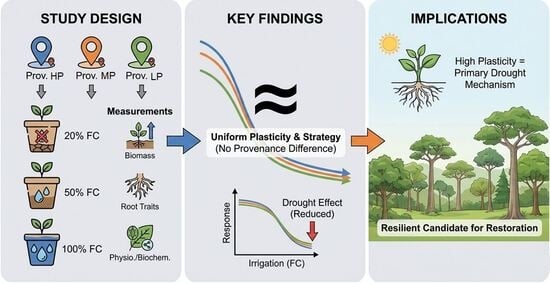
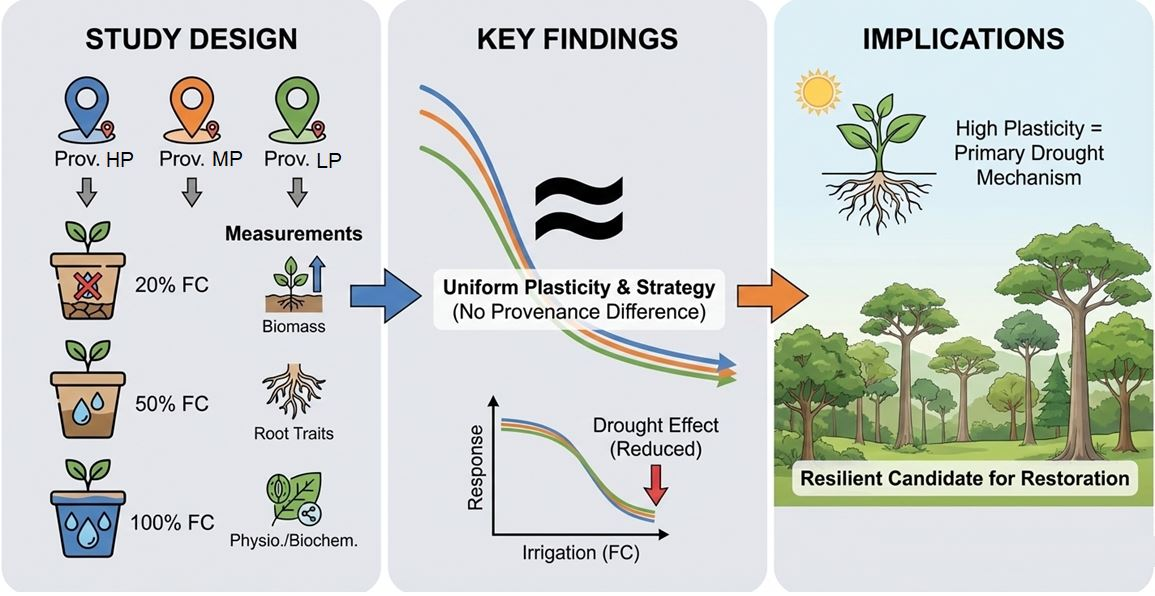
Graphical Abstract

1. Introduction

Climate change is intensifying the frequency and severity of drought events, making water availability a critical factor limiting plant growth, productivity, and survival in tropical ecosystems [1,2]. Drought stress negatively affects plant morphophysiological traits such as height, leaf area, biomass accumulation, and root development, with the magnitude of these effects depending on both the intensity and duration of water limitation [3,4]. Ultimately, these functional traits are tightly linked to plant fitness, as reductions in growth and resource acquisition capacity can constrain survival, competitive ability, and long-term reproductive output. Therefore, understanding how tree species respond to water stress is essential for forest management, ecological restoration, and the sustainable use of natural resources.
Previous studies have demonstrated that tree responses to drought are species-specific and can also vary across provenances, particularly in tropical and subtropical systems where rainfall regimes are highly heterogeneous. For instance, studies on the tropical pioneer Cedrela odorata have shown that populations from drier forests exhibit greater physiological plasticity and higher survival rates under water stress compared to those from moist forests [5]. Similarly, research comparing drought tolerance among five tropical tree species in Panama showed clear species-specific and provenance-level differences in drought resistance traits [6]. Additionally, studies on Neotropical pioneer trees have reported substantial intraspecific variation in drought-related physiological traits—including stomatal regulation, leaf water status, and root system plasticity—reflecting local adaptation or strong phenotypic plasticity across rainfall gradients [7]. Together, these findings highlight the importance of considering both genetic differentiation and phenotypic plasticity when evaluating drought tolerance in tropical tree species. Collectively, these findings highlight the importance of both genetic variation and phenotypic plasticity as key mechanisms enabling adaptation to water-limited environments.
Ochroma pyramidale (Cav. ex Lam.) Urb., commonly known as balsa, is a fast-growing pioneer tree in the Malvaceae family. It is of considerable ecological importance for soil stabilization, erosion control, and reforestation of degraded areas and also holds significant economic value due to its lightweight yet strong wood. These properties make it useful in the production of structural cores, lightweight plywood, and components for the wind energy industry [8,9]. The species contributes to ecosystem functioning by producing abundant leaf litter that enhances soil organic matter and fertility [10]. In Colombia, balsa occurs in lowland humid forests and disturbed sites, including areas degraded by mining activities [11]. Its ecological role and socioeconomic potential make it an important species for sustainable management in the face of climate change. Despite its ecological and economic relevance, no controlled studies have examined the morphophysiological responses of O. pyramidale seedlings to drought or provenance differences in tolerance strategies. Existing research has focused primarily on growth rates, wood mechanics, and successional roles, with limited information on water relations, osmotic adjustment, or root system plasticity [8,12]. Provenance-based evaluations of drought responses in balsa are thus needed to inform restoration strategies and adaptive management under future climate scenarios.
The present study aimed to evaluate the morphophysiological responses of O. pyramidale seedlings from three provenances with contrasting rainfall regimes under controlled drought conditions. Specifically, we tested the hypotheses that (i) drought induces provenance-specific responses driven by genetic differentiation, where seedlings from drier regions exhibit greater innate tolerance—resulting from local adaptation to water-limited environments—compared to those from wetter areas, and (ii) drought-tolerant provenances maintain water balance and protective physiological traits more effectively than drought-sensitive ones. By integrating morphological, physiological, and biochemical indicators, this study provides new insights into the adaptive strategies of balsa and contributes to a broader understanding of tree resilience in the context of increasing drought frequency in tropical ecosystems. Crucially, our results will provide practical criteria for managing seedlings in nurseries, specifically suggesting optimal water regimes for ‘hardening’ and improving the initial establishment success of O. pyramidale in reforestation and restoration projects.

2. Materials and Methods

2.1. Study Site and Plant Materials

The experiment was conducted in the greenhouse of the Experimental plot of the Universidad del Pacífico, located in Buenaventura, Valle del Cauca, Colombia. The local climate is characterized by high relative humidity (56%–97%) and mean maximum and minimum temperatures of 38 °C and 23.8 °C, respectively, during the study period.
Seeds of O. pyramidale were collected from three locations in Valle del Cauca representing contrasting precipitation regimes: high rainfall provenance (HP: Buenaventura), medium rainfall provenance (MP: Cali), and low rainfall provenance (LP: Loboguerrero) (Table 1). For each provenance, seeds were collected from a minimum of 10 randomly selected, healthy mother trees located at least 50 m apart to ensure genetic representativeness. Seeds from all mother trees within each provenance were bulked to form a single mixed seed lot. The seeds were germinated in trays, and seedlings were maintained until the third week after emergence before being transplanted into 10 L plastic pots (one seedling per pot) containing a soil:sand mixture (2:1 v/v).

2.2. Substrate and Field Capacity Determination

The substrate had a loam texture (43% sand, 35% silt, 22% clay), pH 5.58, and 3.05% organic matter. Field capacity (FC) of the substrate was determined gravimetrically by saturating the pots, allowing free drainage for 24 h, and then weighing them to obtain the water content at FC. The FC value obtained was used to calculate irrigation volumes for each treatment.

2.3. Experimental Design and Drought Treatments

A completely randomized factorial design was employed, with two factors: provenance (three levels: HP, MP, LP) and soil moisture (three levels: 100%, 50%, and 20% of field capacity, FC). Each treatment combination was replicated six times, for a total of 54 plants. The experimental unit was a single pot containing one seedling. Pots were repositioned and randomly rotated every three days throughout the experiment to minimize microclimate edge effects within the greenhouse. Following a 90-day establishment period with daily watering at 100% FC, seedlings were subjected to drought treatments for 30 days. At the start of the drought treatments, the average initial height of all seedlings was 13.2 ± 1.4 cm and 6.1 ± 0.23 leaves. Soil moisture was maintained at the target levels (100, 50, or 20% FC) by controlled irrigation. Soil water content was monitored twice daily (09:00 and 17:00 h) using a Field Scout TDR 150 probe (Spectrum Technologies, Aurora, IL, USA), and water was added as needed. The 20% FC treatment was selected to represent severe drought, as preliminary tests indicated visible growth reduction and leaf wilting at this level. Although soil water potential was not directly measured, 20% FC corresponds to severe water limitation for similar substrates in previous studies on tropical tree seedlings.

2.4. Growth and Morphological Measurements

At harvest, plant height, number of leaves, leaf area (was measured with a LI 3100 leaf area meter (LI-COR Inc., Lincoln, NE, USA) were recorded. Each plant was separated into the roots, stems, and leaves. These samples were placed in an oven at 70 °C for 48 h before the dry mass of each seedling component was measured. Before drying, in order to measure different root morphological parameters such as root length, root mean diameter, number of root tips and branch points, whole roots were photographed with a black matte background and root image analysis was performed using RhizoVision Explorer software (v.2.0.3) for the whole-root method [14].

2.5. Physiological and Biochemical Traits

Chlorophyll content was estimated using a SPAD 502 Plus chlorophyll meter (Spectrum Technologies, Aurora, IL, USA). Relative water content (RWC) was calculated as: RWC = [(fresh weight − dry mass)/(turgid weight − dry mass)] × 100. To determine the turgid weight, leaves were collected and immediately hydrated by floating on distilled water for 12 h in a dark environment at t room temperature (22–24 °C). Dry weight was obtained after oven-drying at 70 °C for 48 h. The SLA was measured (Leaf area (cm2)/Leaf dry (g)).
Total soluble sugars (TSS) were determined using the anthrone method [15]. Dry samples of leaves were ground, the powdered material (∼0.10 g) was put into a 10 mL centrifuge tube, and 5 mL of 80% ethanol was added. The mixture was incubated at 80 °C in a water bath shaker for 30 min, and then centrifuged at 4000 rpm for 5 min. The pellets were extracted with 80% ethanol. The supernatant was collected, and the extraction process was repeated twice. For the colorimetric assay, 1 mL of the extract was reacted with 2 mL of 0.2% (w/v) anthrone reagent (prepared in concentrated H2SO4). The mixture was heated in a boiling water bath at 100 °C for 10 min to allow for color development and then rapidly cooled in an ice bath. The absorbance was measured at 620 nm using a spectrophotometer (UNICO SQ-2800, Dayton, NJ, USA). A standard curve was generated using five known concentrations of glucose (0.05 to 0.5 mg/mL) to calculate the final TSS concentration in the samples. Results were expressed as mg of glucose equivalents per gram of dry weight.

2.6. Statistical Analyses

All statistical analyses were conducted using R statistical software (RStudio version 1.0.143). Shapiro–Wilk and Bartlett’s tests were used to test for normality and homogeneity of variances and log-transformed to correct deviation from these assumptions when necessary. Two-way ANOVA was used to test the effects of provenance, drought and their interactions. Individual differences among means were determined by Tukey’s tests. A principal component analysis (PCA) was performed. All data for PCA analysis were standardized to unit variance. The biplot was generated by using the ‘FactoMineR’ (Factor analysis and data processing with R) package (version 2.12). Throughout the text, p-values were standardized as: p < 0.05 (significant), p < 0.01 (highly significant), p < 0.001 (very highly significant). A supplementary table with PCA loadings has been added as Table S1.

2.7. Ethics Statement

Seed collection was performed from naturally occurring populations with the consent of local landowners. The study adhered to institutional guidelines of the Universidad del Pacífico for the use of plant material in research and complied with Colombian environmental regulations regarding the use of non-endangered plant species. No protected or endangered populations were disturbed during this study.

3. Results

3.1. Overall Morphophysiological Responses to Drought Treatments

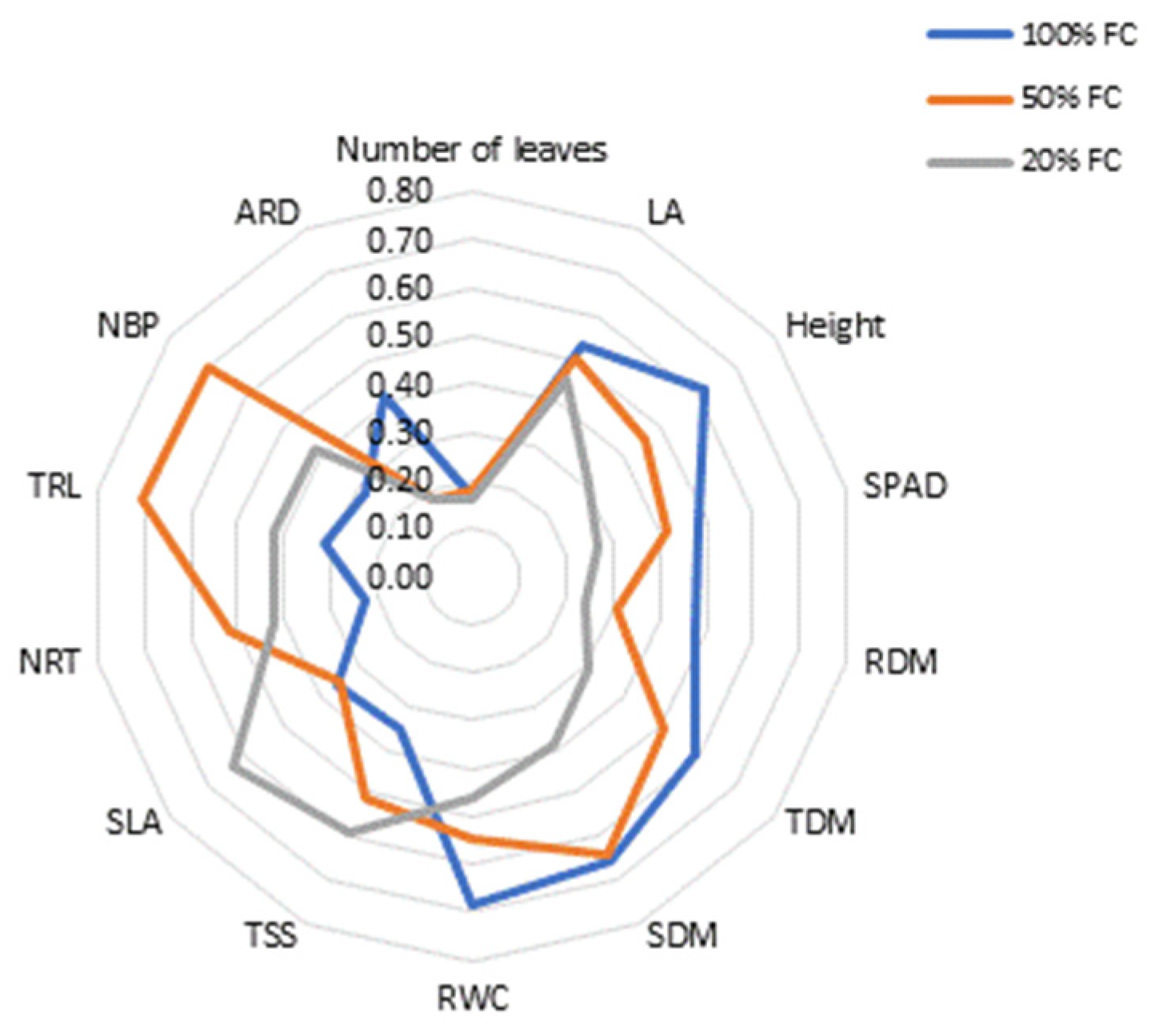
The radar chart summarizes the morpho-physiological responses of O. pyramidale across irrigation treatments (Figure 1). Plants grown at 100% FC had the highest values for most traits, including height (0.62), leaf area (0.53), root dry weight (0.48), and SPAD (0.48). Plants at 50% FC showed intermediate values across these traits. The lowest values for height (0.31), SPAD (0.27), and root dry weight (0.24) occurred under 20% FC. Leaf number was slightly higher at 50% FC (0.18) than at 100% FC (0.17).

3.2. Principal Component Analysis of Trait Associations

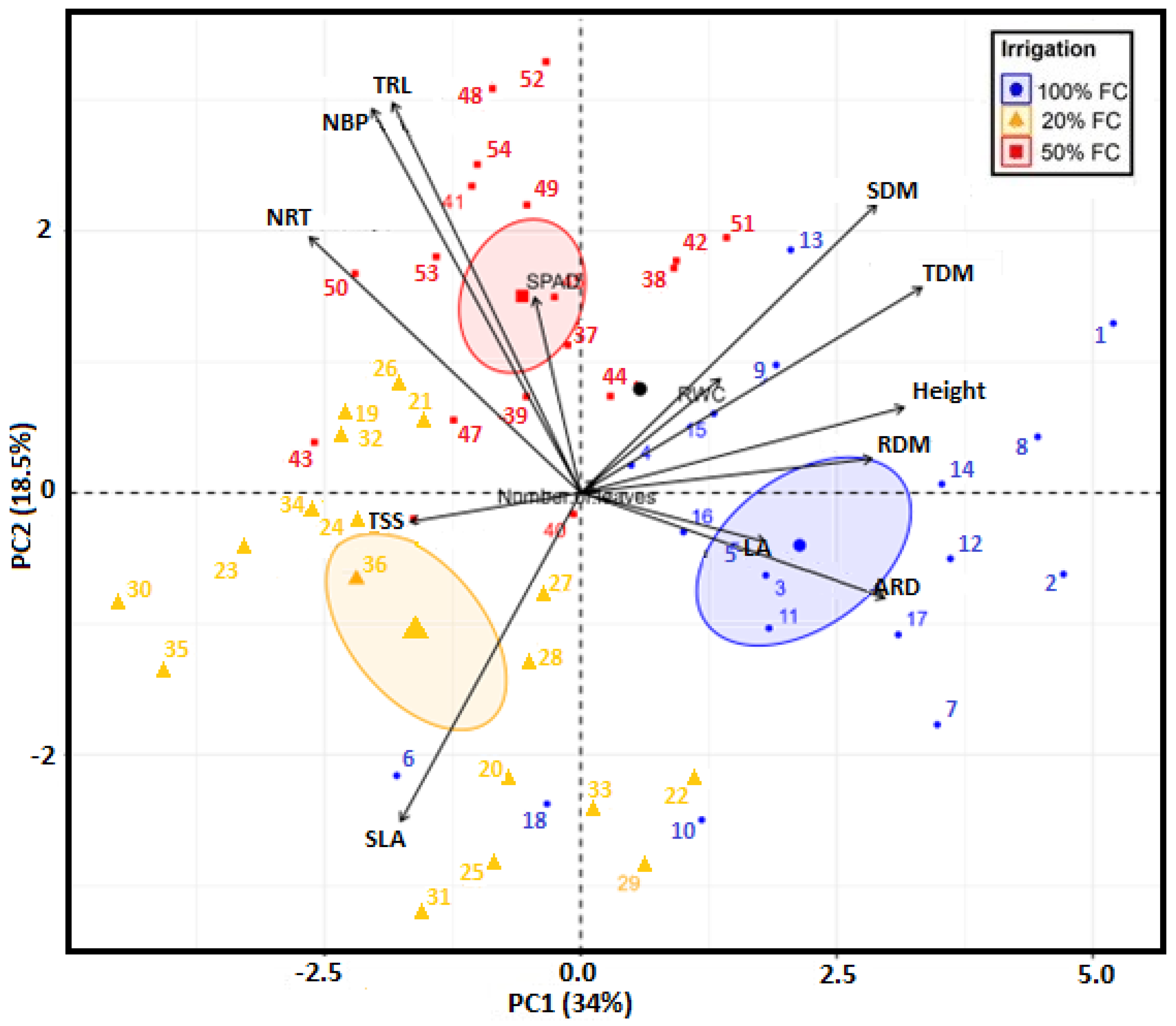
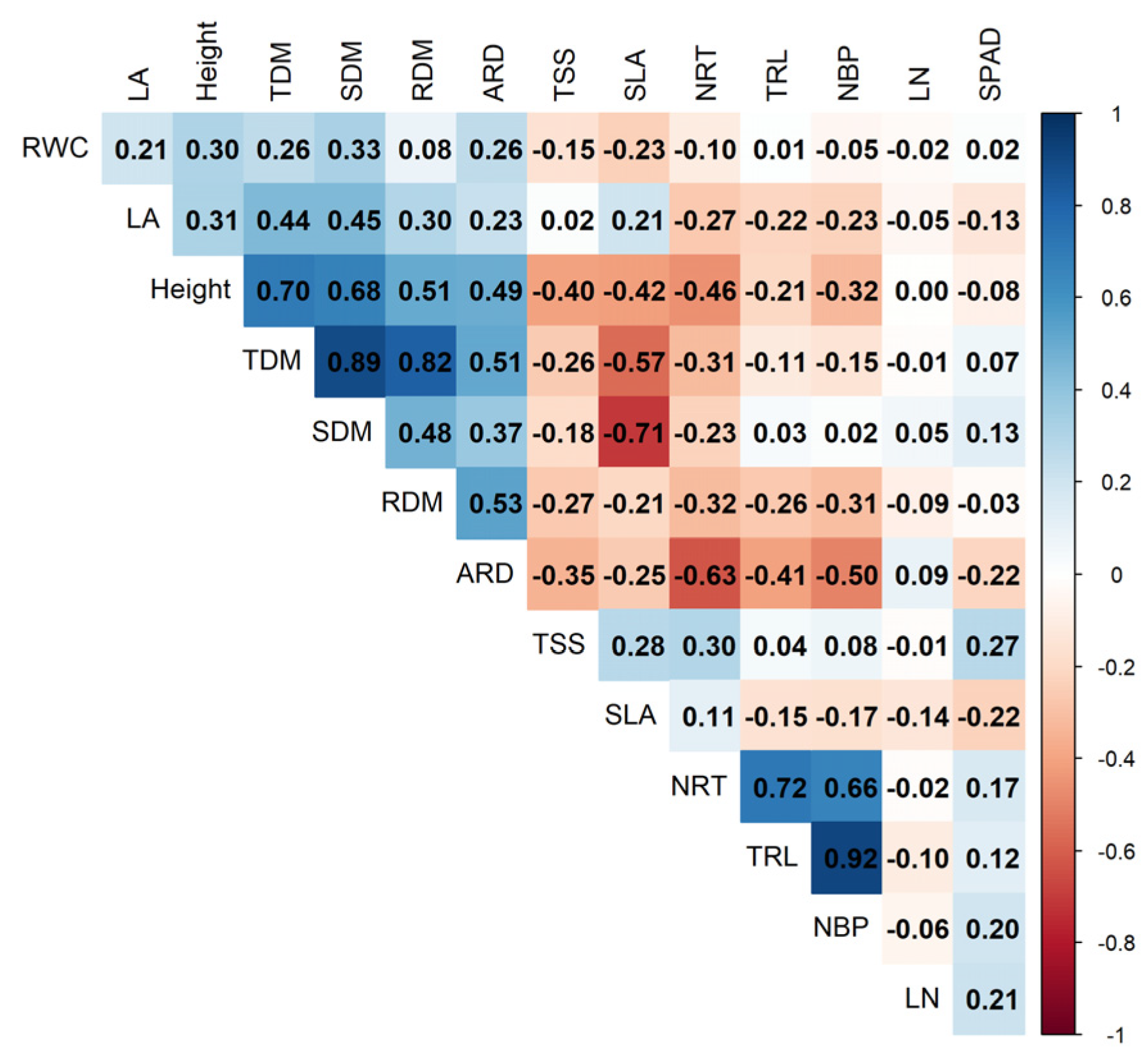
The PCA provided a synthesis of the morpho-physiological and biochemical variables. The first two principal components (PC1 and PC2) explained 52.5% of the total variability, with Dim1 accounting for 34.0% and Dim2 for 18.5% (Figure 2). PC1 was positively associated with biomass-related traits (TDM, SDM, RDM) and LA (positive loadings 0.21–0.39), and negatively associated with TSS (negative loading −0.19). PC2 primarily distinguished the irrigation treatments. Plants grown at 100% FC (control) clustered toward the right side of the biplot, corresponding to higher biomass and leaf area. Plants at 20% FC (severe drought) were positioned toward the lower-left quadrant, associated with higher TSS. Provenances showed overlapping distributions in the ordination space with no distinct clustering. PCA loadings are provided in Supplementary Table S1. The PCA biplot was supported by a Pearson correlation matrix (Figure 3), which revealed strong positive associations among growth-related variables.

3.3. Effects of Provenance and Irrigation on Growth Traits

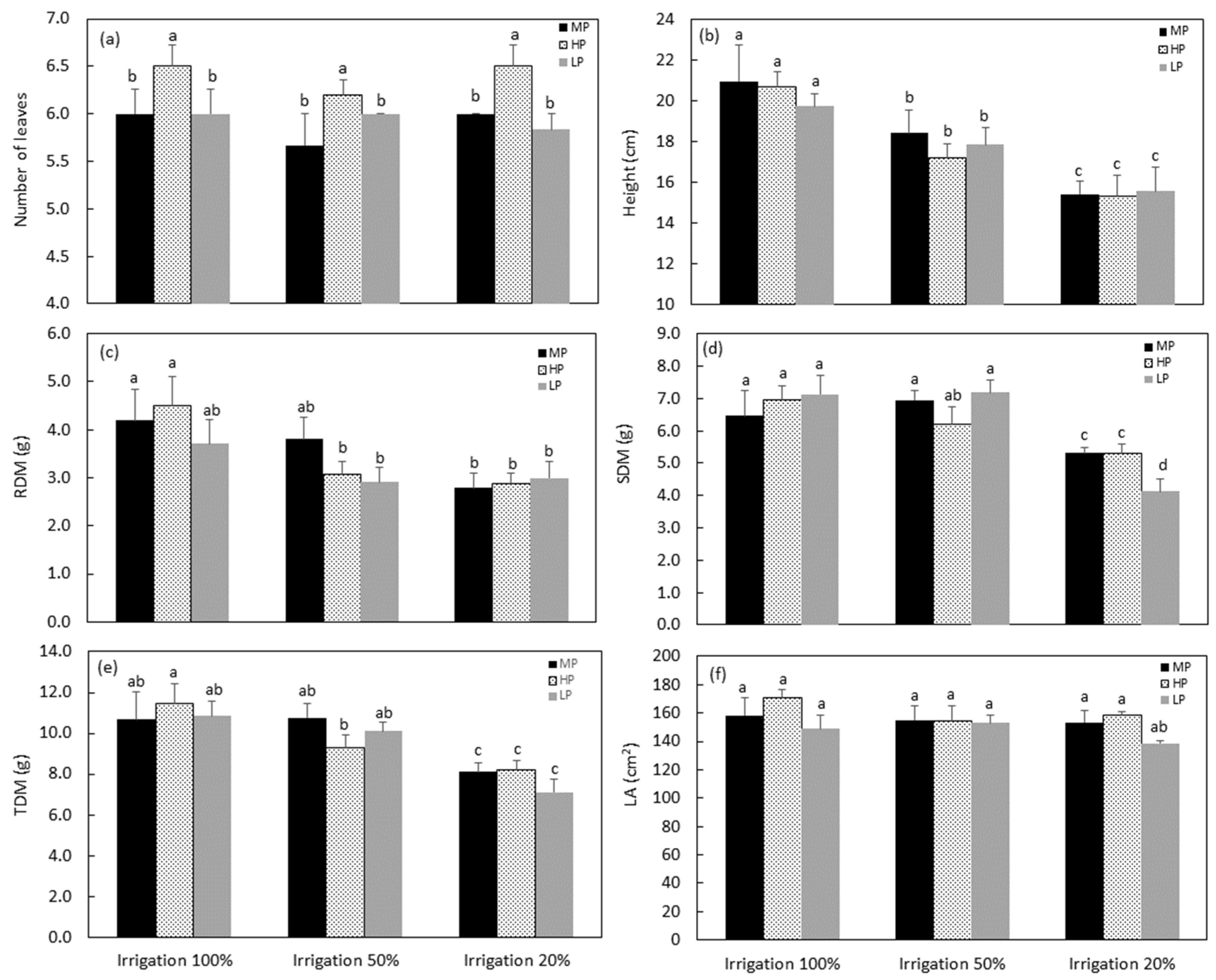
While initial analyses suggested a provenance effect on leaf number, this effect became non-significant after applying the Bonferroni correction for multiple comparisons (Table 2). Irrigation had significant effects on most growth variables, including height, RDM, SDM, and TDM, but not on leaf number or leaf area. Mean separation showed that seedlings from the high-precipitation provenance had the highest number of leaves (6.4), while seedlings from the medium- and low-precipitation provenances had similar values (5.9 and 5.8, respectively) (Figure 4a). Plants irrigated at 100% FC were tallest, followed by those at 50% FC, and the smallest plants occurred at 20% FC with an average of 15.43 cm. For RDM, SDM, and TDM, plants under 20% FC had significantly lower values than those in the 100% and 50% FC treatments, which did not differ significantly (Figure 4c–e). Although irrigation treatments did not significantly affect leaf area, mean values declined under 20% FC (Figure 4f).

3.4. SLA and Chlorophyll Content Under Drought

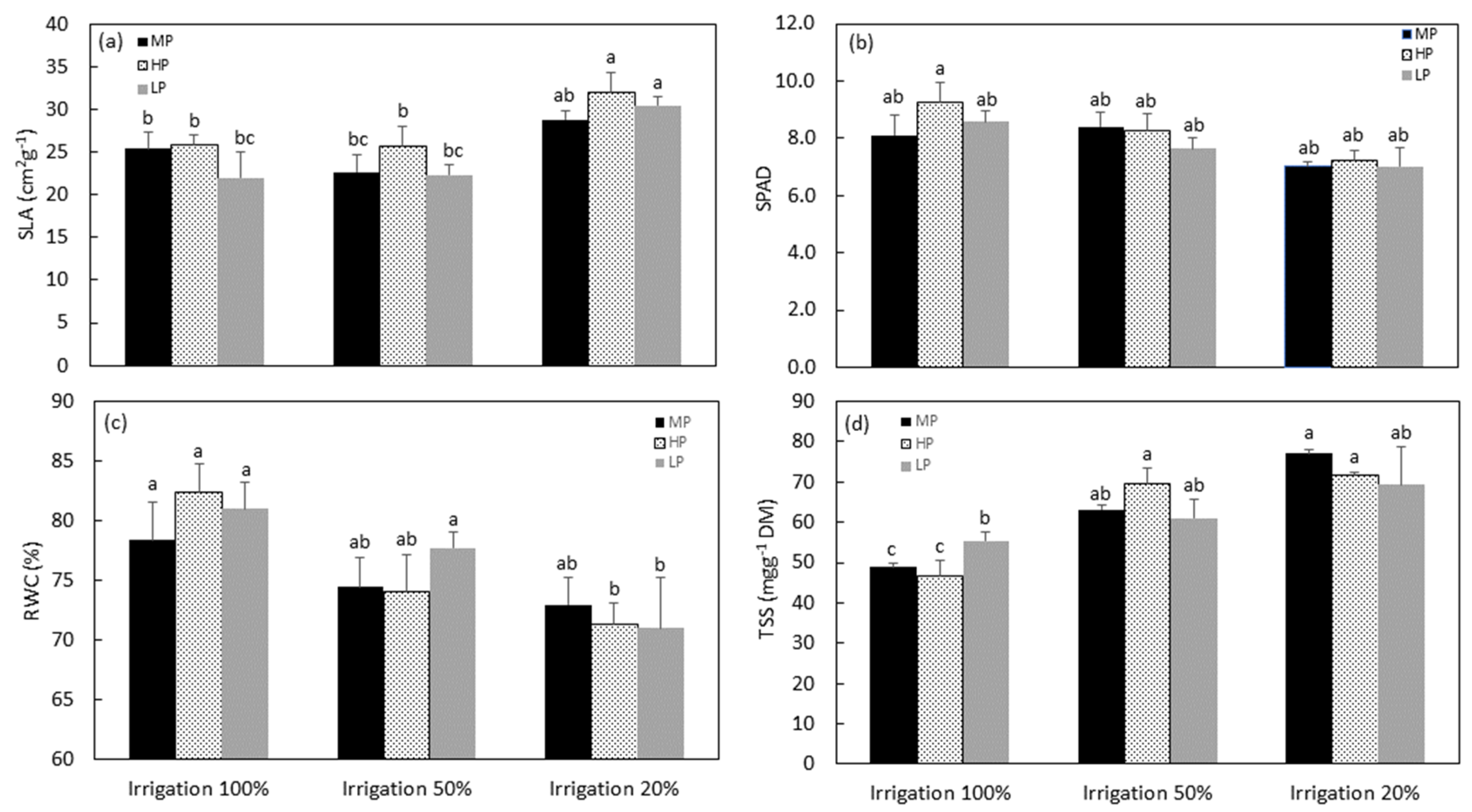
The results of the Tukey test for SLA show that the 20% FC treatment resulted in the highest values with an average of 40.99 cm2/g, there was no difference between the 100% FC treatments with an average of 31.20 cm2/g and 50% FC with an average of 31.00 cm2/g (Figure 5a). SPAD values followed a decreasing pattern with decreasing soil moisture (Figure 5b), with the lowest values at 20% FC (7.46), followed by 50% FC (8.11) and 100% FC (8.49); however, the effect of drought on the SPAD index was non-significant under the adjusted alpha. Differences between irrigation levels correspond to decreases of approximately 5% (50% FC) and 12% (20% FC) relative to the 100% FC treatment.

3.5. RWC and TSS Accumulation

RWC decreased significantly under severe drought (Figure 5c). The RWC at 20% FC was the lowest (71.7%), which was 11% and 5% lower than the 100% FC and 50% FC treatments, respectively. In contrast, TSS concentrations were lowest at 100% FC and highest at 50% and 20% FC, which did not differ significantly from each other (Figure 5d). Mean TSS values at 50% and 20% FC were approximately 28.4%–44.4% higher than at 100% FC.

3.6. Root Morphology and Architectural Adjustments

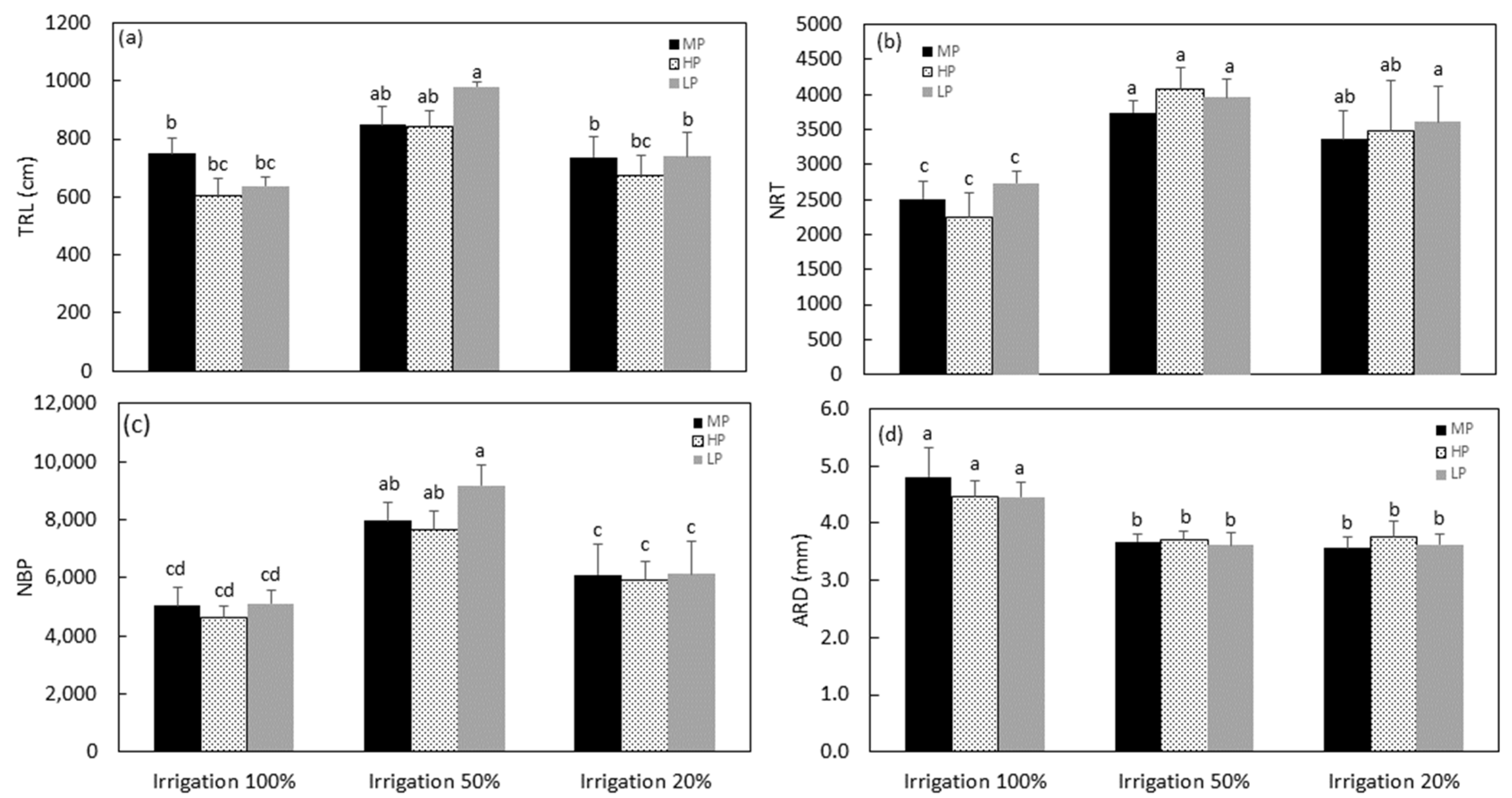
Drought significantly affected root architecture (Figure 6). The highest TRL was found in plants at 50% FC treatment; there were no significant differences between the TRL in the 50% FC and 20% FC treatments (Figure 6a). A similar pattern was observed for the NBP, where roots from the 50% FC treatment had higher values than roots from the 100% FC and 20% FC treatments (Figure 6c). The number of root tips was lowest at 100% FC, while 50% and 20% FC did not differ significantly (Figure 6b). Conversely, the largest ARD was found in plants in the 100% FC treatment, followed by plants in the 50% FC and 20% FC treatments (Figure 6d).

4. Discussion

4.1. Provenance Effects and Phenotypic Plasticity

Provenance had no effects on seedling performance. The lack of a significant provenance effect likely reflects the relatively narrow regional rainfall gradient (850–6276 mm annual precipitation over ~150 km in Valle del Cauca, Colombia). Although these provenances experience contrasting mean annual precipitation, they remain within the humid tropical climate domain, which may constrain the degree of genetic differentiation in drought-related traits. These findings suggest that phenotypic plasticity rather than fixed genetic differentiation dominated early-stage responses. Phenotypic plasticity—the ability of a genotype to express different phenotypes across environments—is a key mechanism enabling plants to tolerate heterogeneous and changing conditions [16,17,18,19]. Several studies had shown that plasticity can mask or buffers genetic differences among populations in short-term common-garden experiments because a single genotype can express a wide range of phenotypes depending on the environment [20,21,22].

4.2. Relative Water Content, Total Soluble Sugars, and Chlorophyll: Integrated Implications

Relative water content is a widely used integrative indicator of plant water status, as it reflects the degree of tissue hydration relative to full turgidity [23,24]. In this study, O. pyramidale seedlings maintained high RWC values under well-watered (100% FC) and moderate drought (50% FC) conditions, but values declined sharply under severe drought (20% FC). This pattern indicates that seedlings can buffer moderate water deficits through physiological adjustments; however, when soil water availability falls below a critical threshold, tissue dehydration becomes unavoidable. The maintenance of high RWC values at 50% FC can be attributed to osmotic adjustment processes, whereby cells accumulate compatible solutes such as soluble sugars to retain water and sustain turgor pressure [25]. The results showed that TSS increased significantly under both moderate and severe drought, the accumulation of TSS aligns with evidence that sugars act as osmolytes, stabilizing membranes and proteins and maintaining enzyme activity during dehydration [26,27,28]. Thus, soluble sugar accumulation in O. pyramidale appears to be an adaptive mechanism supporting RWC maintenance under moderate drought stress. However, at 20% FC, despite increased sugar concentrations, RWC declined significantly, suggesting that osmotic adjustment alone was insufficient to offset the extreme water deficit. Under such conditions, carbohydrate accumulation may reflect not only osmotic adjustment but also reduced utilization due to impaired growth and photosynthesis [3,29]. While a downward trend in SPAD values was observed at 20% FC, the lack of statistical significance after alpha adjustment indicates that O. pyramidale may prioritize the maintenance of chlorophyll levels even as other physiological markers, such as RWC, show marked impairment.
SLA, an indicator of leaf thickness and the amount of leaf area produced per unit of biomass, is one of the key morphological traits that responds to drought stress. Although a reduction in SLA is commonly reported under water limitation, some studies have shown increases in SLA under water limitation [30]. Plants may either thicken leaves to improve water storage or produce thinner leaves to enhance CO2 diffusion and maintain metabolic activity under stress [31]. Higher SLA can also facilitate faster post-drought recovery [32]. The increase in SLA observed here likely reflects an early-stage plastic response in which leaves become thinner and less costly before more extreme drought responses are triggered.
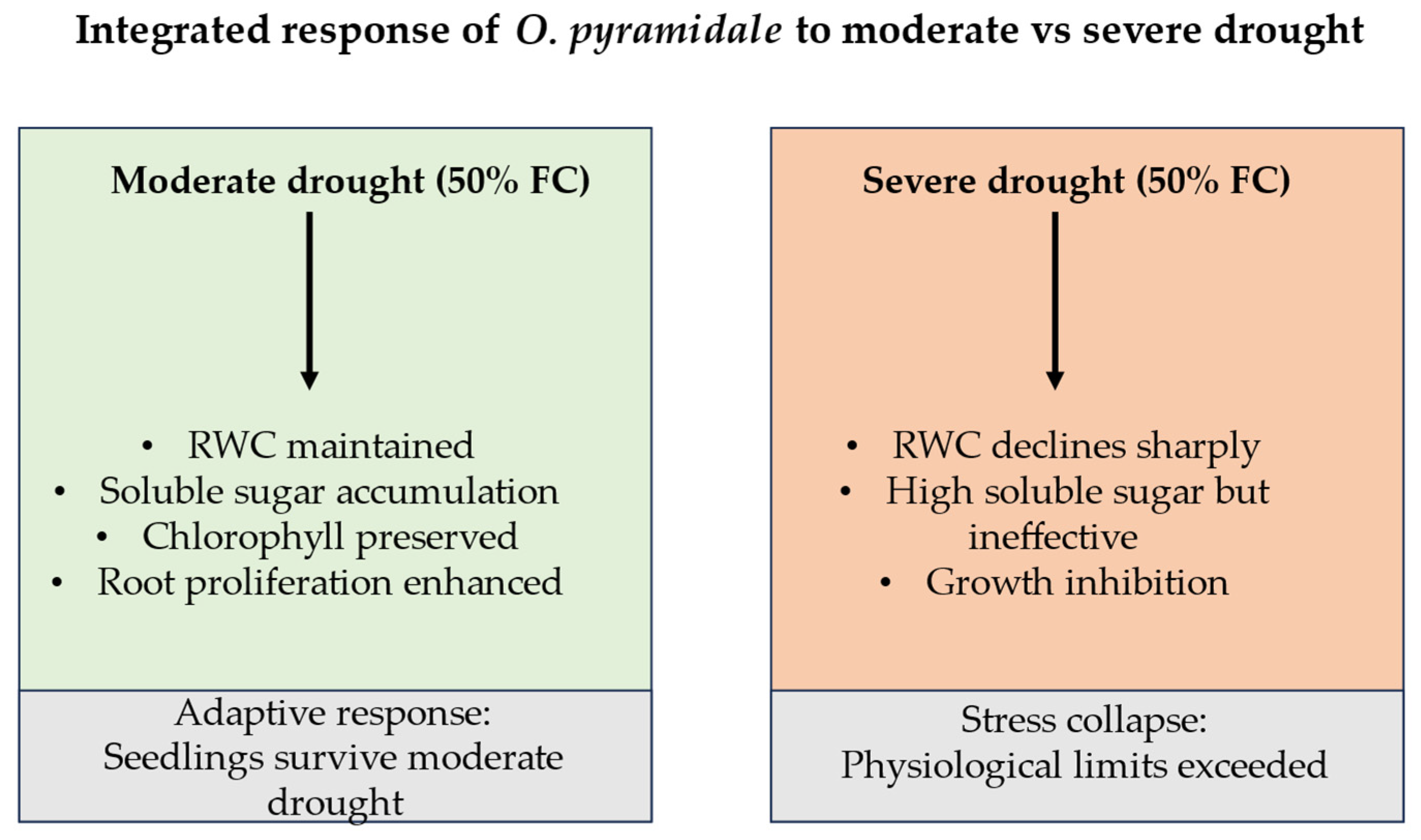
The cross-talk among these traits highlights a coordinated drought response: under moderate stress, seedlings maintain RWC by accumulating soluble sugars and preserving chlorophyll, thereby sustaining photosynthetic activity. Under severe stress, however, chlorophyll degradation reduces photosynthesis, carbohydrate accumulation reflects metabolic disruption rather than active adjustment, and RWC declines, leading to growth inhibition. These coordinated responses are summarized in Figure 7, which illustrates how O. pyramidale seedlings maintain water balance and functional metabolism under moderate drought, but experience marked physiological impairment when soil moisture falls below a critical threshold.

4.3. Root System Adjustments and Ecological Implications

One of the most notable patterns observed was the differential response of root traits to soil moisture availability. At 50% FC, seedlings developed longer roots and a greater number of branching points than those grown under either 100% or 20% FC. This stimulation of root proliferation under moderate drought indicates that O. pyramidale seedlings actively adjust their root system architecture to enhance soil exploration when water becomes limiting, it is known that increased root length and branching under moderate drought stress represent classic plastic responses that enhance the plant’s ability to forage for scarce soil moisture [33,34]. By expanding the root system’s exploration volume, the plant maximizes water uptake in drier soils, a mechanism reported in multiple species [35]. Such plastic responses are consistent with drought avoidance strategies documented in other tropical and temperate trees [36,37]. However, this plasticity comes with potential trade-offs. The substantial investment in TRL and NBP at 50% FC required diverting carbon resources that could otherwise be allocated to aboveground growth. This is supported by the fact that height and TDM, while higher than the 20% FC group, was still lower than the 100% FC. This suggests a cost of root plasticity: the plant prioritizes survival and future water access (via root growth) over immediate biomass accumulation (shoot growth), a strategic shift that minimizes hydraulic failure at the expense of productivity. In contrast, seedlings at 20% FC exhibited marked reductions in root elongation and branching, as well as smaller mean root diameters, reflecting the inhibitory effect of severe water stress on root development. This likely results from carbon limitation, as drought reduces photosynthetic activity and chlorophyll content, restricting assimilate availability for root growth [38,39]. Thus, while moderate drought stimulated adaptive adjustments, severe stress impaired root system development, suggesting a threshold beyond which physiological and metabolic constraints prevent further plasticity. The fact that the lowest number of root tips was recorded at 100% FC, support the idea that mild stress may actually promote finer root proliferation and optimize soil resource exploration [40,41,42].
Ecologically, the combined ability of O. pyramidale to sustain hydration and photosynthetic function under moderate drought, along with its root system plasticity, supports its success as a pioneer in disturbed and moisture-variable environments. These traits enable rapid establishment in degraded sites where soil water availability fluctuates between drought and waterlogging. From a management perspective, maintaining seedlings at approximately 50% field capacity in nurseries may optimize drought resilience by promoting osmotic adjustment and root proliferation, while avoiding the detrimental effects associated with severe water stress.
Together, these results emphasize the importance of understanding species-specific thresholds of water stress for both ecological forecasting and restoration planning. The capacity of O. pyramidale to adjust root architecture and maintain physiological function under moderate stress suggests that this species can play a valuable role in ecosystem recovery under variable climatic conditions, provided that extreme droughts remain infrequent or short in duration.

4.4. Implications for Nursery Management and Restoration

From an applied perspective, the results indicate that moderate water restriction during the nursery phase may enhance root system development without substantially reducing shoot biomass. Irrigation at approximately 50% FC promoted finer and more highly branched root systems, traits commonly associated with improved post-transplant establishment and water foraging capacity. These findings suggest that controlled deficit irrigation could be used as a hardening strategy in nurseries producing balsa seedlings for reforestation or restoration programs in seasonally dry environments.
While this study provides valuable insights into the early establishment phase of O. pyramidale, further research is needed to determine if these morphophysiological responses persist in mature tress under field conditions.

5. Conclusions

This study demonstrates that O. pyramidale seedlings exhibit strong morphophysiological plasticity in response to drought, characterized by osmotic adjustment, maintenance of relative water content, and adaptive root system remodeling under moderate water limitation (50% FC). However, severe drought (20% FC) leads to marked growth restriction and physiological impairment, indicating a critical tolerance threshold. Within the regional precipitation gradient studied here, provenance effects were limited, highlighting phenotypic plasticity as the dominant short-term response mechanism over fixed genetic differentiation at early seedling stages. These findings support nursery preconditioning at moderate drought (~50% FC) to enhance root proliferation and osmotic adjustment, improving seedling establishment success. For restoration planning, balsa shows promise in regions with moderate droughts but requires supplemental irrigation or site selection avoiding prolonged severe water deficits. Future studies should explore the genetic basis of this phenotypic plasticity to better understand the adaptative potential of the species across its full distribution range.

Supplementary Materials

The following supporting information can be downloaded at: https://www.mdpi.com/article/10.3390/f17010105/s1, Table S1. Loadings of morpho-physiological variables on the first two principal components (PC1 and PC2) obtained from the principal component analysis of Ochroma pyramidale seedlings subjected to different irrigation treatments.

Author Contributions

Conceptualization, N.L.-R.; methodology, N.L.-R.; software, L.I.C. and L.S.P.; formal analysis, N.L.-R.; investigation, A.C.V., L.I.C. and L.S.P.; data curation, A.C.V.; writing—original draft preparation, A.C.V., L.I.C. and L.S.P.; writing—review and editing, N.L.-R.; visualization, N.L.-R.; project administration, N.L.-R. All authors have read and agreed to the published version of the manuscript.

Funding

This research received no external funding.

Data Availability Statement

The raw data supporting the conclusions of this article will be made available by the authors on request.

Acknowledgments

The authors would like to express their sincere gratitude to the Universidad del Pacífico for providing institutional support throughout the development of this research. Special thanks are extended to the Integrated Laboratory of the University of the Pacific and its coordinator, Segundo Javier Celis, for their continuous assistance and technical support during the laboratory procedures. Their contributions were essential to the successful completion of this study.

Conflicts of Interest

The authors declare no conflicts of interest.

Abbreviations

The following abbreviations are used in this manuscript:
AMPannually mean precipitation
AMTannually mean Temperature
ARD Average root diameter
DAS Days after sowing
FCField capacity
HPHigh rainfall provenance
LA Leaf area
LPLow rainfall provenance
MPMedium rainfall provenance
NBP Number of branch points
NRTNumber of root tips
RDM Root dry mass
RWCRelative water content
SDM Shoot dry mass
SLASpecific leaf area
SPAD Chlorophyll concentration
TDM Total dry mass
TRL Total root length
TSS Total soluble sugars

References

  1. Dai, A. Increasing drought under global warming in observations and models. Nat. Clim. Change 2013, 3, 52–58. [Google Scholar] [CrossRef]
  2. Intergovernmental Panel on Climate Change (IPCC). Climate Change 2021: The Physical Science Basis. Contribution of Working Group I to the Sixth Assessment Report of the Intergovernmental Panel on Climate Change; Masson-Delmotte, V., Zhai, P., Pirani, A., Connors, S.L., Péan, C., Berger, S., Zhou, B., Eds.; Cambridge University Press: Cambridge, UK, 2021; Available online: https://www.ipcc.ch/report/ar6/wg1/ (accessed on 23 April 2025).
  3. Chaves, M.M.; Flexas, J.; Pinheiro, C. Photosynthesis under drought and salt stress: Regulation mechanisms from whole plant to cell. Ann. Bot. 2009, 103, 551–560. [Google Scholar] [CrossRef]
  4. Anjum, S.A.; Xie, X.Y.; Wang, L.C.; Saleem, M.F.; Man, C.; Lei, W. Morphological, physiological and biochemical responses of plants to drought stress. Afr. J. Agric. Res. 2011, 6, 2026–2032. [Google Scholar] [CrossRef]
  5. Galindo Segura, L.A.; Finegan, B.; Delgado-Rodríguez, D.; Mesén Sequeira, F. Intraspecific variation of functional traits in Cedrela odorata L. in the Nicoya Peninsula, Costa Rica. Rev. Mex. Cienc. For. 2020, 11, 57–86. [Google Scholar] [CrossRef]
  6. Tyree, M.T.; Engelbrecht, B.M.; Vargas, G.; Kursar, T.A. Desiccation tolerance of five tropical seedlings in Panama. Relationship to a field assessment of drought performance. Plant Physiol. 2003, 132, 1439–1447. [Google Scholar] [CrossRef]
  7. Engelbrecht, B.M.J.; Comita, L.S.; Condit, R.; Kursar, T.A.; Tyree, M.T.; Turner, B.L.; Hubbell, S.P. Drought sensitivity shapes species distribution patterns in tropical forests. Nature 2007, 447, 80–82. [Google Scholar] [CrossRef]
  8. Borrega Sabate, M.; Gibson, L.J. Mechanics of balsa (Ochroma pyramidale) wood. Mech. Mater. 2015, 84, 75–90. [Google Scholar] [CrossRef]
  9. Levy-Tacher, S.I.; Morón-Ríos, A. Differences in growth and survival of two varieties of Ochroma pyramidale in rustic plantations in southern Mexico. Trees For. People 2024, 17, 100652. [Google Scholar] [CrossRef]
  10. Vleut, I.; Levy-Tacher, S.I.; de Boer, W.F.; Galindo-González, J.; Ramírez-Marcial, N. Can a fast-growing early-successional tree (Ochroma pyramidale, Malvaceae) accelerate forest succession? J. Trop. Ecol. 2013, 29, 173–180. [Google Scholar] [CrossRef]
  11. Serna-Mosquera, Y.B.; Torres-Torres, J.J.; Asprilla-Palacios, Y.Y. Durabilidad natural de la madera de Ochroma pyramidale Urb. en el municipio de Atrato, Colombia. Entramado 2020, 16, 192–202. [Google Scholar] [CrossRef]
  12. Seabra, C.; Osiecka, A.; Andersen, P.; Tucci, C.; Pereira, B.; Minogue, P. Influence of phosphorus limitations on the growth, nutrient partitioning and physiology of balsa (Ochroma pyramidale) seedlings. J. Trop. For. Sci. 2017, 29, 530–540. [Google Scholar] [CrossRef]
  13. IDEAM (Instituto de Hidrología, Meteorología y Estudios Ambientales). DHIME—Sistema de Información Hidrológica y Meteorológica de Colombia: Base de Datos de Estaciones Meteorológicas y Series Históricas Bogotá, Colombia. Available online: http://dhime.ideam.gov.co/atencionciudadano/ (accessed on 2 March 2024).
  14. Seethepalli, A.; Dhakal, K.; Griffiths, M.; Guo, H.; Freschet, G.T.; York, L.M. RhizoVision Explorer: Open-source software for root image analysis and measurement standardization. AoB Plants 2021, 13, plab056. [Google Scholar] [CrossRef]
  15. Seifter, S.; Dayton, S.; Novic, B.; Muntwyler, E. The estimation of glycogen with the anthrone reagent. Arch. Biochem. 1950, 25, 191–200. [Google Scholar] [PubMed]
  16. Sultan, S.E. Phenotypic plasticity in plants: A case study in ecological development. Evol. Dev. 2003, 5, 25–33. [Google Scholar] [CrossRef]
  17. Nicotra, A.B.; Atkin, O.K.; Bonser, S.P.; Davidson, A.M.; Finnegan, E.J.; Mathesius, U.; van Kleunen, M. Plant phenotypic plasticity in a changing climate. Trends Plant Sci. 2010, 15, 684–692. [Google Scholar] [CrossRef] [PubMed]
  18. Bonamour, S.; Chevin, L.M.; Charmantier, A.; Teplitsky, C. Phenotypic plasticity in response to climate change: The importance of cue variation. Philos. Trans. R. Soc. B 2019, 374, 20180178. [Google Scholar] [CrossRef] [PubMed]
  19. Martínez-Sancho, E.; Rellstab, C.; Fonti, P.; Garzón, M.B.; Bigler, C.; Miranda, J.C.; Vitasse, Y. Genetic and plastic effects on trait variability in two major tree species: Insights from common garden experiments across Europe. For. Ecol. Manag. 2025, 597, 123126. [Google Scholar] [CrossRef]
  20. de Villemereuil, P.; Gaggiotti, O.E.; Mouterde, M.; Till-Bottraud, I. Common garden experiments in the genomic era: New perspectives and opportunities. Heredity 2016, 116, 249–254. [Google Scholar] [CrossRef]
  21. Villellas, J.; Morris, W.F.; García, M.B. Variation in stochastic demography between and within central and peripheral regions in a widespread short-lived herb. Ecology 2012, 93, 1793–1804. [Google Scholar] [CrossRef]
  22. Bachofen, C.; Perret-Gentil, A.; Wohlgemuth, T.; Vollenweider, P.; Moser, B. Phenotypic plasticity versus ecotypic differentiation under recurrent summer drought in two drought-tolerant pine species. J. Ecol. 2021, 109, 3861–3876. [Google Scholar] [CrossRef]
  23. Blum, A. Plant Breeding for Water-Limited Environments; Springer: New York, NY, USA, 2011. [Google Scholar] [CrossRef]
  24. Flexas, J.; Medrano, H. Drought inhibition of photosynthesis in C3 plants: Stomatal and non-stomatal limitations revisited. Ann. Bot. 2002, 89, 183–189. [Google Scholar] [CrossRef]
  25. Mundree, S.G.; Baker, B.; Mowla, S.; Peters, S.; Marais, S.; Vander Willigen, C.; Thomson, J.A. Physiological and molecular insights into drought tolerance. Afr. J. Biotechnol. 2002, 1, 28–38. [Google Scholar] [CrossRef]
  26. Chen, H.; Jiang, J.G. Osmotic adjustment and plant adaptation to environmental changes related to drought and salinity. Environ. Rev. 2010, 18, 309–319. [Google Scholar] [CrossRef]
  27. Pamuru, R.R.; Puli, C.O.R.; Pandita, D.; Wani, S.H. Sugar alcohols and osmotic stress adaptation in plants. In Compatible Solutes Engineering for Crop Plants Facing Climate Change; Springer: Cham, Switzerland, 2021; pp. 189–203. [Google Scholar]
  28. Magaña-Ugarte, R.; Cruz, J.L.; Aguirre, J.F. Assessing the role of selected osmolytes in drought tolerance of Mediterranean high-mountain plants. Front. Ecol. Evol. 2021, 9, 576122. [Google Scholar] [CrossRef]
  29. Seleiman, M.F.; Al-Suhaibani, N.; Ali, N.; Akmal, M.; Alotaibi, M.; Refay, Y.; Battaglia, M.L. Drought stress impacts on plants and different approaches to alleviate its adverse effects. Plants 2021, 10, 259. [Google Scholar] [CrossRef]
  30. Triantaphylidès, C.; Havaux, M. Singlet oxygen in plants: Production, detoxification and signaling. Trends Plant Sci. 2009, 14, 219–228. [Google Scholar] [CrossRef] [PubMed]
  31. Yavas, I.; Jamal, M.A.; Ul Din, K.; Ali, S.; Hussain, S.; Farooq, M. Drought-induced changes in leaf morphology and anatomy: Overview, implications and perspectives. Pol. J. Environ. Stud. 2024, 33, 1517–1530. [Google Scholar] [CrossRef]
  32. Künzi, Y.; Zeiter, M.; Fischer, M.; Stampfli, A. Rooting depth and specific leaf area modify the impact of experimental drought duration on temperate grassland species. J. Ecol. 2025, 113, 445–458. [Google Scholar] [CrossRef]
  33. Kalra, A.; Goel, S.; Elias, A.A. Understanding role of roots in plant response to drought: Way forward to climate-resilient crops. Plant Genome 2024, 17, e20395. [Google Scholar] [CrossRef]
  34. Karlova, R.; Boer, D.; Hayes, S.; Testerink, C. Root plasticity under abiotic stress. Plant Physiol. 2021, 187, 1057–1070. [Google Scholar] [CrossRef]
  35. Lynch, J.P. Steep, cheap and deep: An ideotype to optimize water and N acquisition by maize root systems. Ann. Bot. 2013, 112, 347–357. [Google Scholar] [CrossRef]
  36. Brunner, I.; Herzog, C.; Dawes, M.A.; Arend, M.; Sperisen, C. How tree roots respond to drought. Front. Plant Sci. 2015, 6, 547. [Google Scholar] [CrossRef]
  37. Santiago, L.S.; Bonal, D.; De Guzman, M.E.; Ávila-Lovera, E. Drought survival strategies of tropical trees. In Tropical Tree Physiology: Adaptations and Responses in a Changing Environment; Springer: Cham, Switzerland, 2016; pp. 243–258. [Google Scholar]
  38. Hasibeder, R.; Fuchslueger, L.; Richter, A.; Bahn, M. Summer drought alters carbon allocation to roots and root respiration in mountain grassland. New Phytol. 2015, 205, 1117–1127. [Google Scholar] [CrossRef]
  39. Oberhuber, W.; Gruber, A.; Lethaus, G.; Winkler, A.; Wieser, G. Stem girdling indicates prioritized carbon allocation to the root system at the expense of radial stem growth in Norway spruce under drought conditions. Environ. Exp. Bot. 2017, 138, 109–118. [Google Scholar] [CrossRef]
  40. Zang, U.; Goisser, M.; Häberle, K.H.; Matyssek, R.; Matzner, E.; Borken, W. Effects of drought stress on photosynthesis, rhizosphere respiration, and fine-root characteristics of beech saplings: A rhizotron field study. J. Plant Nutr. Soil Sci. 2014, 177, 168–177. [Google Scholar] [CrossRef]
  41. Comas, L.H.; Becker, S.R.; Cruz, V.M.V.; Byrne, P.F.; Dierig, D.A. Root traits contributing to plant productivity under drought. Front. Plant Sci. 2013, 4, 442. [Google Scholar] [CrossRef] [PubMed]
  42. Fuchs, S.; Hertel, D.; Schuldt, B.; Leuschner, C. Effects of summer drought on the fine root system of five broadleaf tree species along a precipitation gradient. Forests 2020, 11, 289. [Google Scholar] [CrossRef]
Figure 1. Radar chart of standardized mean values of morphophysiological traits in O. pyramidale seedlings under three irrigation regimes (100%, 50%, and 20% field capacity). Each axis represents proportional response relative to the control (100% FC).
Forests 17 00105 g001
Figure 2. Principal component analysis (PCA) biplot illustrating relationships among morphophysiological variables of O. pyramidale seedlings subjected to three irrigation treatments and provenances. The first two principal components explain the majority of total variance. Arrows indicate variable loadings, highlighting how drought-related traits (RWC, SPAD, root traits) drive treatment separation. Numbers in the plot represent individual observations (replicates) for each treatment combination. Ellipses represent 95% confidence intervals for each provenance.
Forests 17 00105 g002
Figure 3. Pearson correlation matrix of 14 morphophysiological traits measured in O. pyramidale seedlings across different irrigation regimes and provenances. The color scale represents the strength and direction of the correlation coefficient (r); colors closer to blue indicate strong positive correlations, while colors closer to red indicate strong negative correlations.. Note the strong positive correlation cluster between biomass components (TDM, SDM, RDM), indicating a balanced allocation strategy during seedling establishment.
Forests 17 00105 g003
Figure 4. Effect of drought on (a) number of leaves, (b) height, (c) RDM, (d) SDM, (e) TDM, and (f) LA (±SE) of O. pyramidale seedlings from three provenances. Bars with different letters indicate statistically significant differences among treatments (ANOVA, Tukey’s HSD, Padj < 0.0035 after Bonferroni correction).
Forests 17 00105 g004
Figure 5. Effects of irrigation on (a) SLA, (b) SPAD, (c) RWC, and (d) TSS (±SE) of O. pyramidale seedlings from three provenances. Bars with different letters indicate statistically significant differences among treatments (ANOVA, Tukey’s HSD, Padj < 0.0035 after Bonferroni correction).
Forests 17 00105 g005
Figure 6. Root morphological traits of O. pyramidale seedlings under three irrigation regimes. Traits include (a) total root length (TRL), (b) number of root tips (NRT), (c) number of branching points (NBP), and (d) average root diameter (ARD). Data are presented as means ± SE. Letters denote significant differences among treatments according to Tukey’s HSD, Padj < 0.0035 after Bonferroni correction.
Forests 17 00105 g006
Figure 7. Integrated morphophysiological responses of O. pyramidale seedlings to moderate (50% FC) and severe (20% FC) drought. The responses under moderate drought highlight the role of osmotic adjustment and root plasticity in drought avoidance, as well as the vulnerability of seedlings under prolonged or extreme water deficits.
Forests 17 00105 g007
Table 1. Provenance origin and climatic characteristics of O. pyramidale populations used in the drought experiment. Geographic coordinates and climatic data were obtained from [13]. AMP = annual mean precipitation (mm); AMT = annual mean temperature (°C). Provenances represent a rainfall gradient: Loboguerrero (low), Cali (medium), and Buenaventura (high).
ProvenanceOrigin RegionLatitude and LongitudePrecipitationAMP (mm)AMT (°C)
LPLoboguerrero3°46′47″ N 76°39′52″ WLow850.126
MPCali3°28′08″ N 76°30′36″ WMiddle1482.824
HPBuenaventura3°50′51″ N 76°57′17″ WHigh6275.625
Table 2. Summary of two-way ANOVA results for the effects of provenance, irrigation regime, and their interaction on morphophysiological variables of O. pyramidale seedlings. LA, plant height, RDM, SDM, TDM, SLA, SPAD, TSS, RWC, NRT, TRL, NBP, and ARD. Significance levels (Bonferroni adjusted): * p < 0.0035; ** p < 0.0007; *** p < 0.00007.
ProvenanceIrrigationProvenance: Irrigation
ParameterFPr (>F)FPr (>F)FPr (>F)
Number of leaves5.320.00840.810.45100.460.7679
LA2.390.10.950.42.040.74
Height0.270.7618.231.6 × 10−6 ***0.490.92
RDM0.660.526.760.0027 *0.770.548
SDM0.060.93816.354.1 × 10−6 ***2.440.061
TDM0.310.7314.171.7 × 10−5 ***0.780.54
SLA1.740.1911.87.6 × 10−5 **0.820.52
SPAD0.910.417.440.0160.60.665
TSS0.10.90312.863.8 × 10−5 ***2.250.079
RWC0.070.9357.110.0021 *0.770.551
NRT0.360.713.492.6 × 10−5 ***0.260.9
TRL3.120.05418.411.4 × 10−6 ***1.680.172
NBP1.160.3222.91.4 × 10−7 ***0.430.79
ARD0.210.8115.278.7 × 10−6 ***0.380.82
Disclaimer/Publisher’s Note: The statements, opinions and data contained in all publications are solely those of the individual author(s) and contributor(s) and not of MDPI and/or the editor(s). MDPI and/or the editor(s) disclaim responsibility for any injury to people or property resulting from any ideas, methods, instructions or products referred to in the content.