Review

Visualization of Post-Fire Remote Sensing Using CiteSpace: A Bibliometric Analysis

College of Geography and Ocean Sciences, Yanbian University, Hunchun 133300, China
*
Author to whom correspondence should be addressed.
Forests 2025, 16(4), 592; https://doi.org/10.3390/f16040592
Submission received: 17 January 2025 / Revised: 10 March 2025 / Accepted: 26 March 2025 / Published: 28 March 2025

Abstract

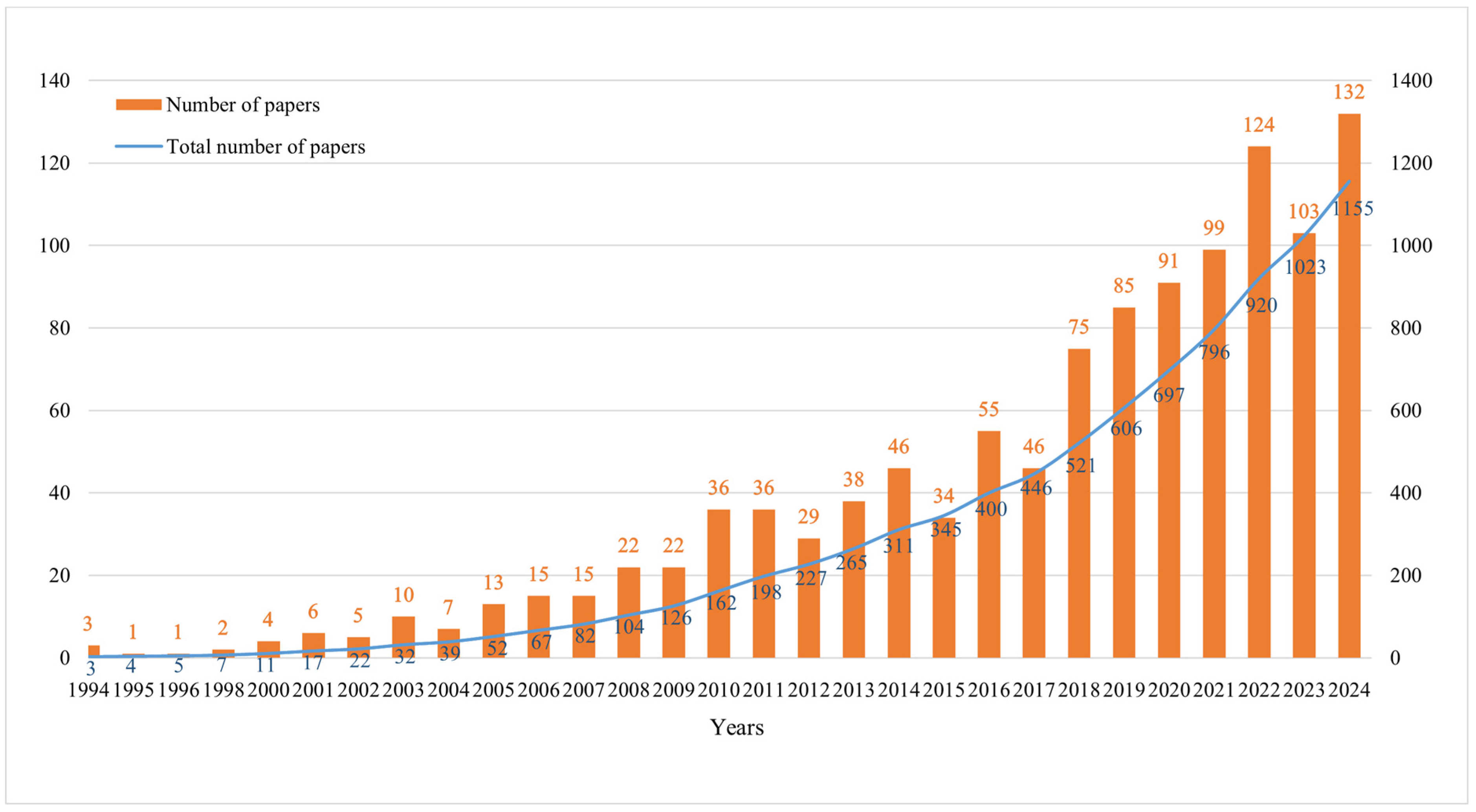
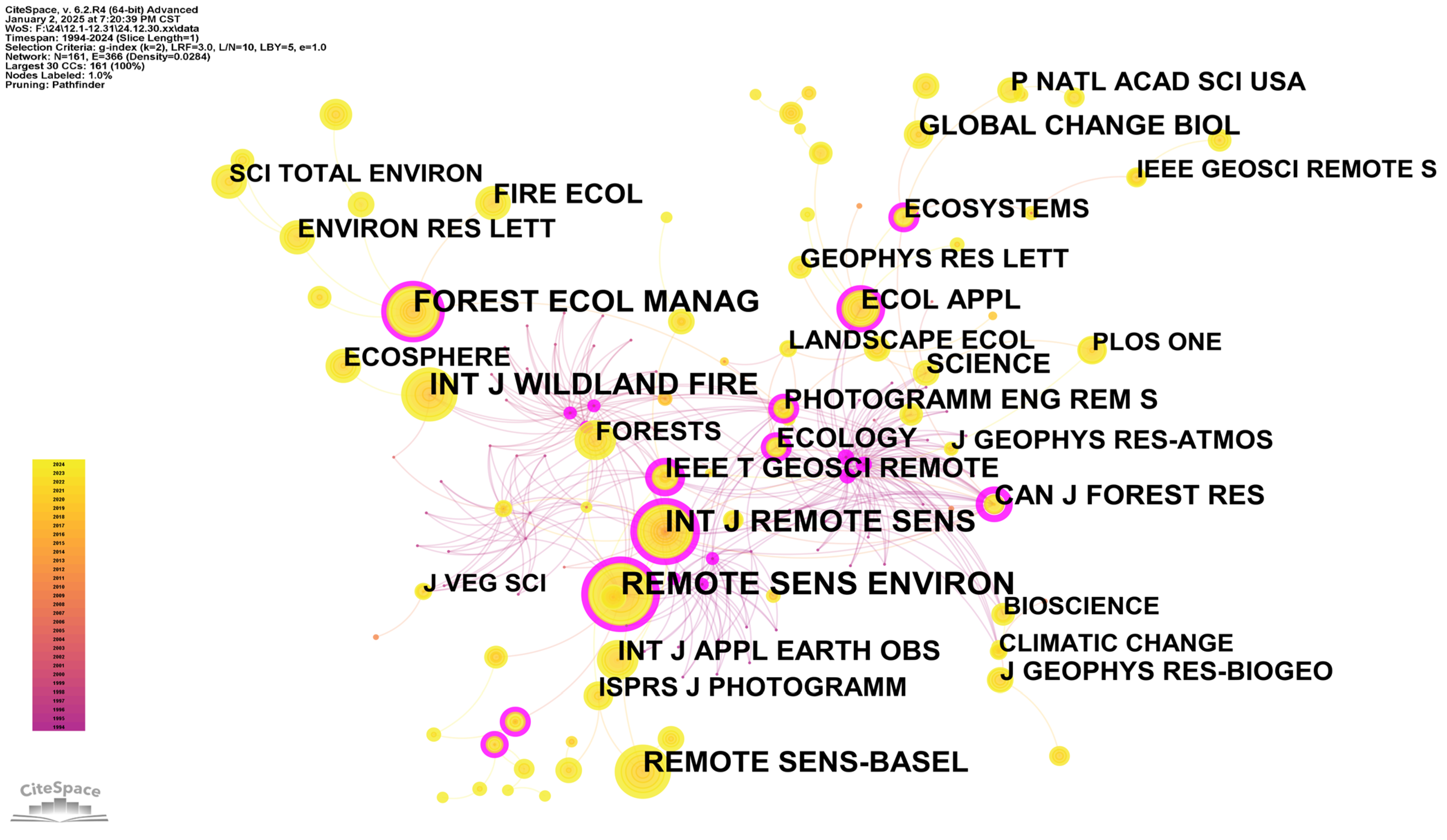
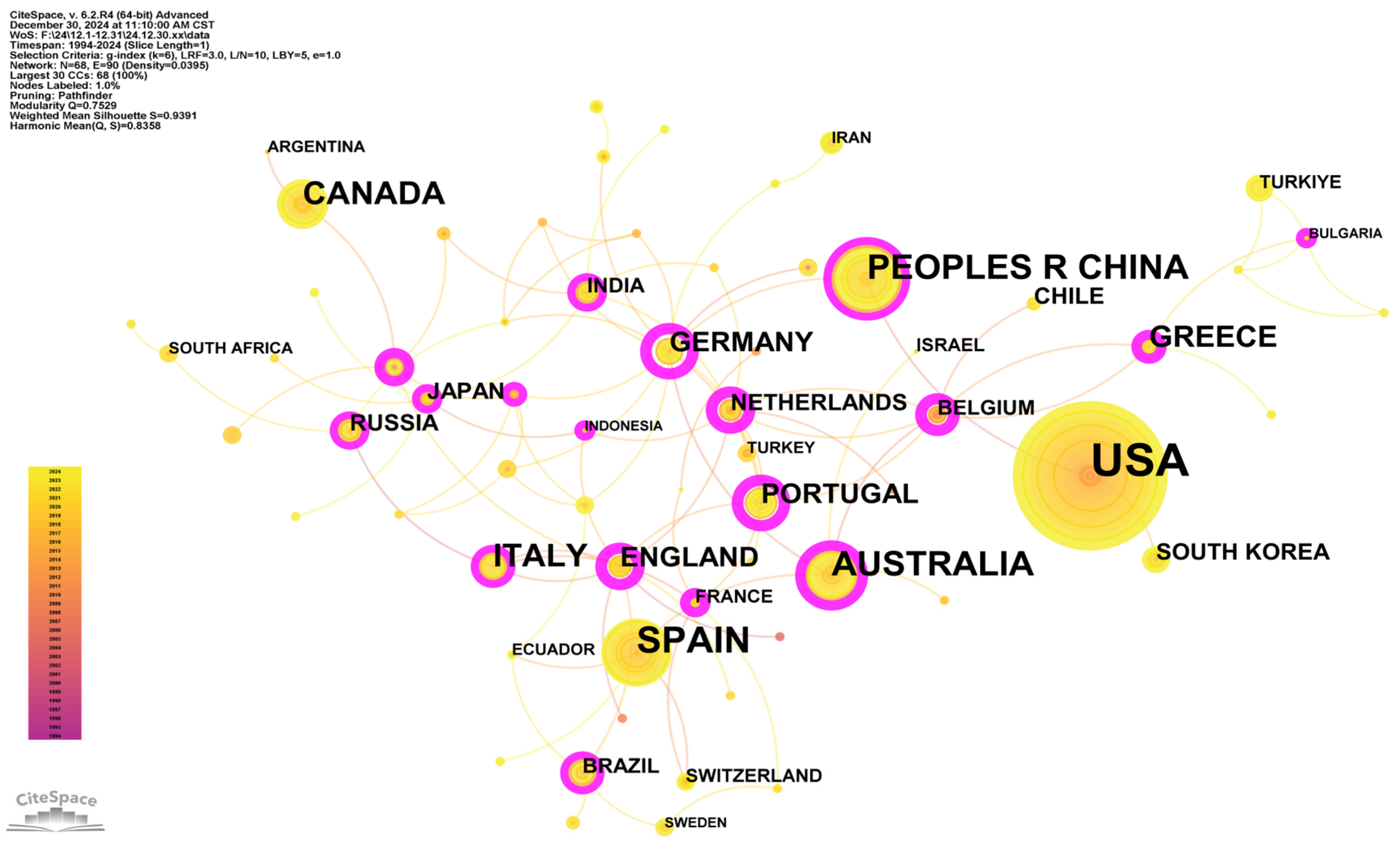
At present, remote sensing serves as a key approach to track ecological recovery after fires. However, systematic and quantitative research on the research progress of post-fire remote sensing remains insufficient. This study presents the first global bibliometric analysis of post-fire remote sensing research (1994–2024), analyzing 1155 Web of Science publications and using CiteSpace to reveal critical trends and gaps. The key findings include the following: As multi-sensor remote sensing and big data technologies evolve, the research focus is increasingly pivoting toward interdisciplinary, multi-scale, and intelligent methodologies. Since 2020, AI-driven technologies such as machine learning have become research hotspots and continue to grow. In the future, more extensive time-series monitoring, holistic evaluations under compound disturbances, and enhanced fire management strategies will be required to addressing the global climate change challenge and sustainability. The USA, Canada, China, and multiple European nations work jointly on fire ecology research and technology development, but Africa, as a high wildfire-incidence area, currently lacks appropriate local research. Remote sensing of the environment and remote sensing and forests maintain a pivotal role in scholarly impact and information exchange. This work redefines post-fire remote sensing as a nexus of ecological urgency and social justice, demanding inclusive innovation to address climate-driven post-fire recovery regimes.
Keywords: post-fire; remote sensing; wildfire; machine learning; vegetation regrowth; bibliometrics; CiteSpace post-fire; remote sensing; wildfire; machine learning; vegetation regrowth; bibliometrics; CiteSpace