

Soil Responses to Winch-Assisted Thinning Harvester Traffic on Steep Slopes in South Korea

 , , and
Abstract
1. Introduction
2. Materials and Methods
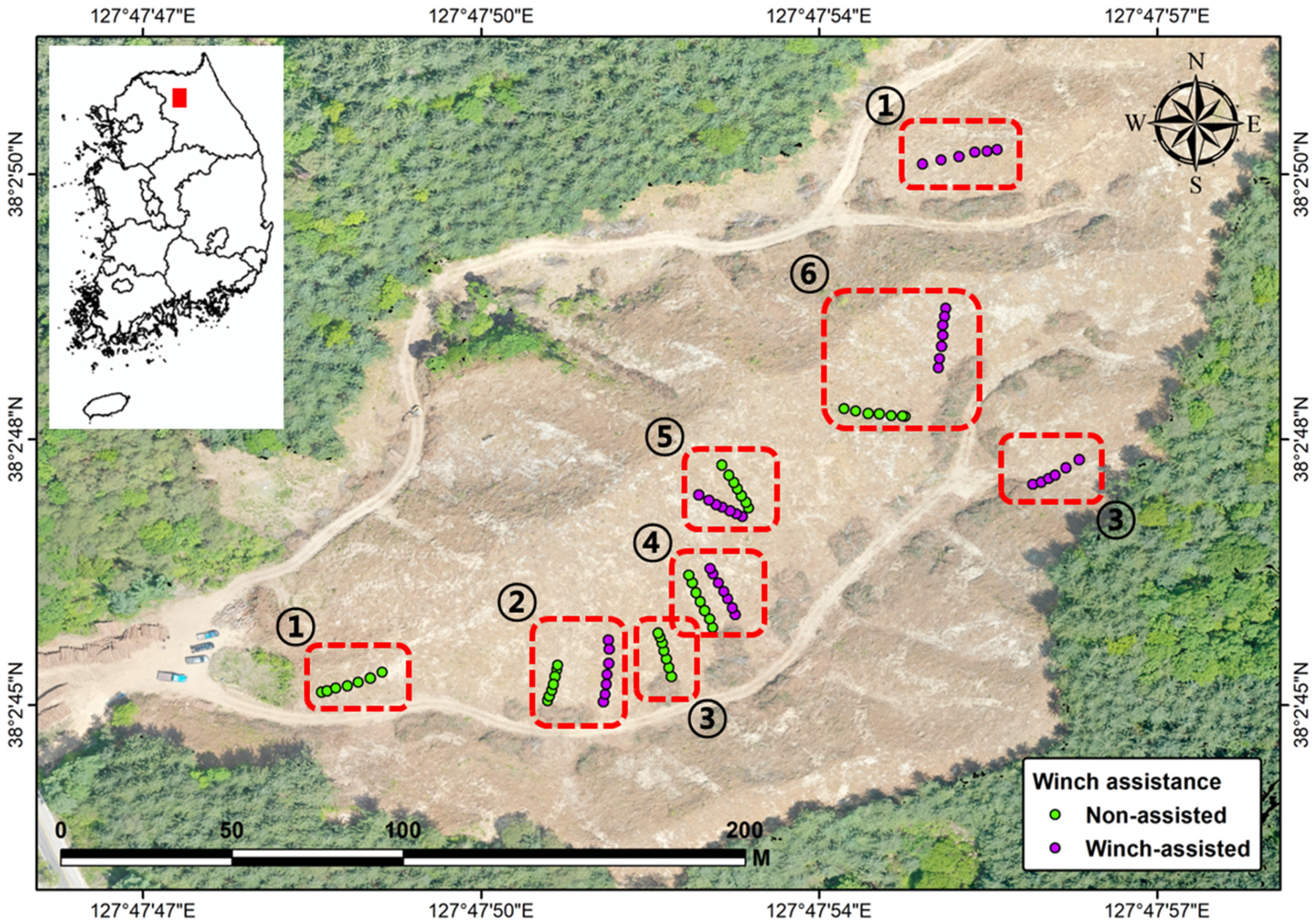
2.1. Study Area
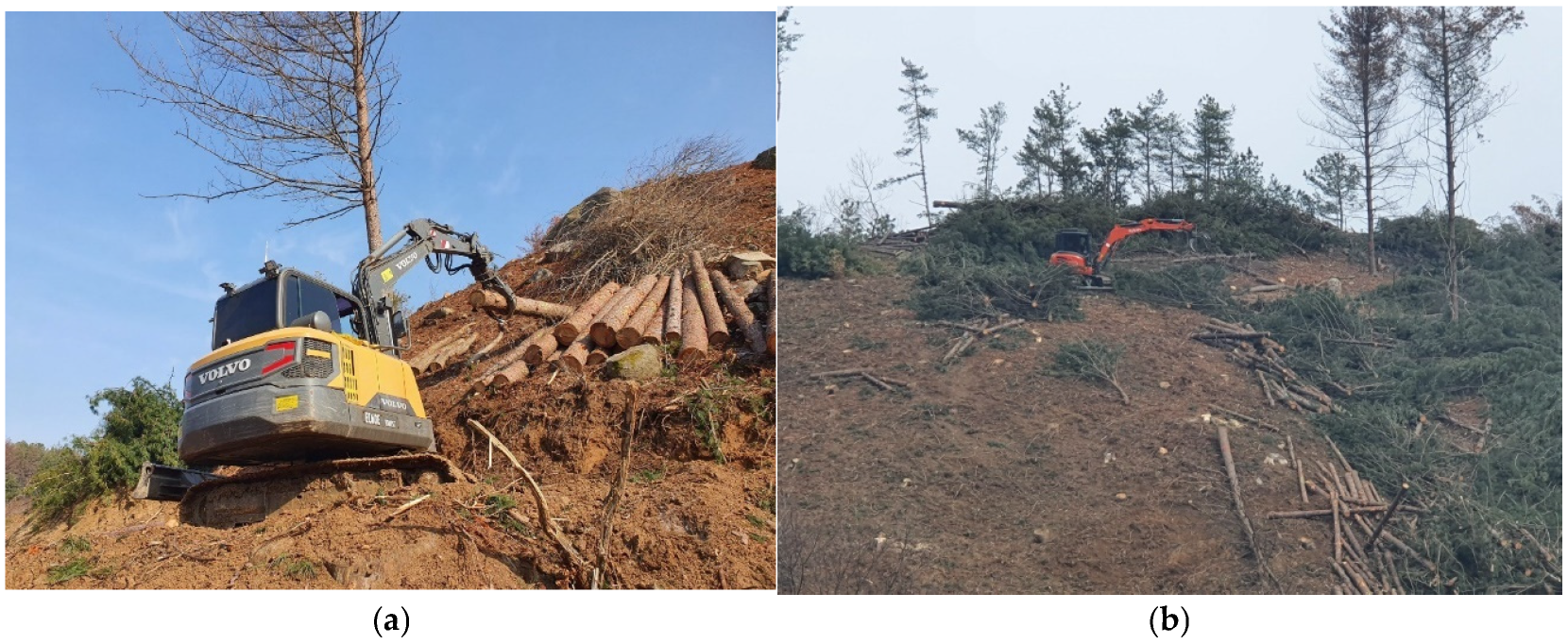
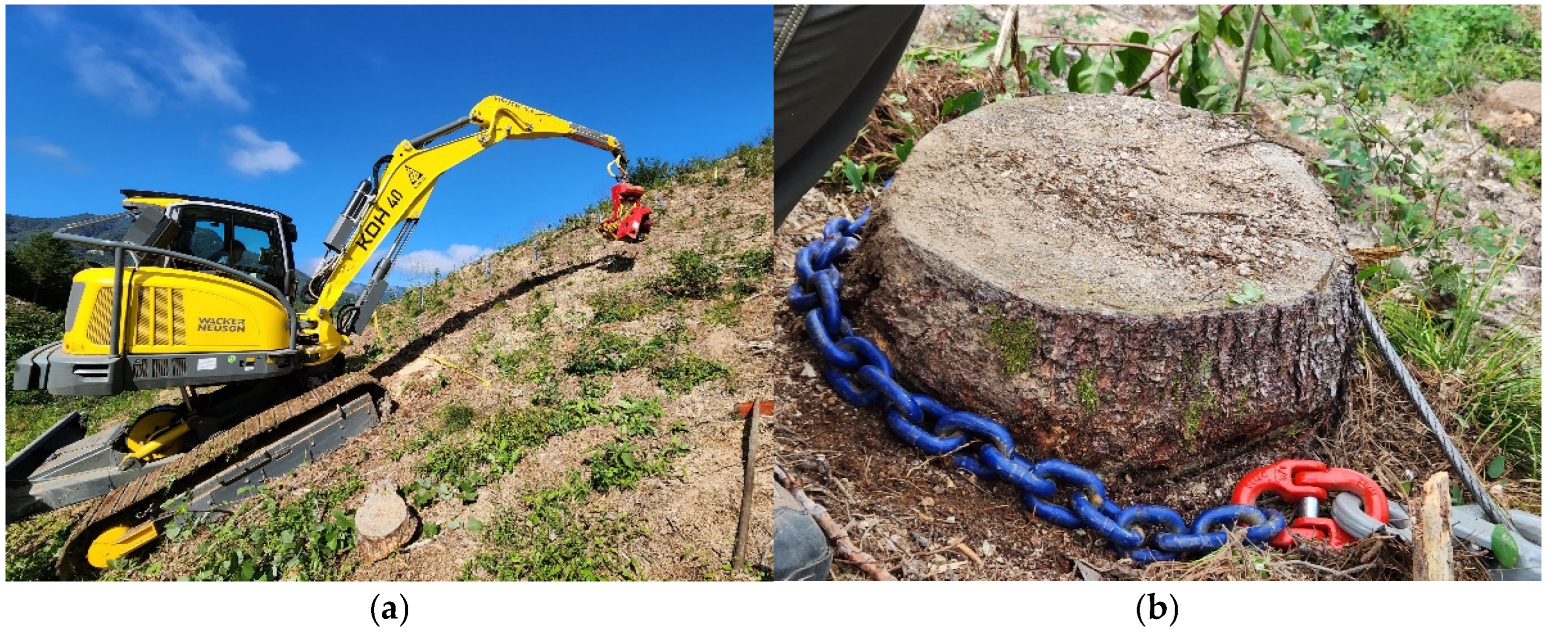
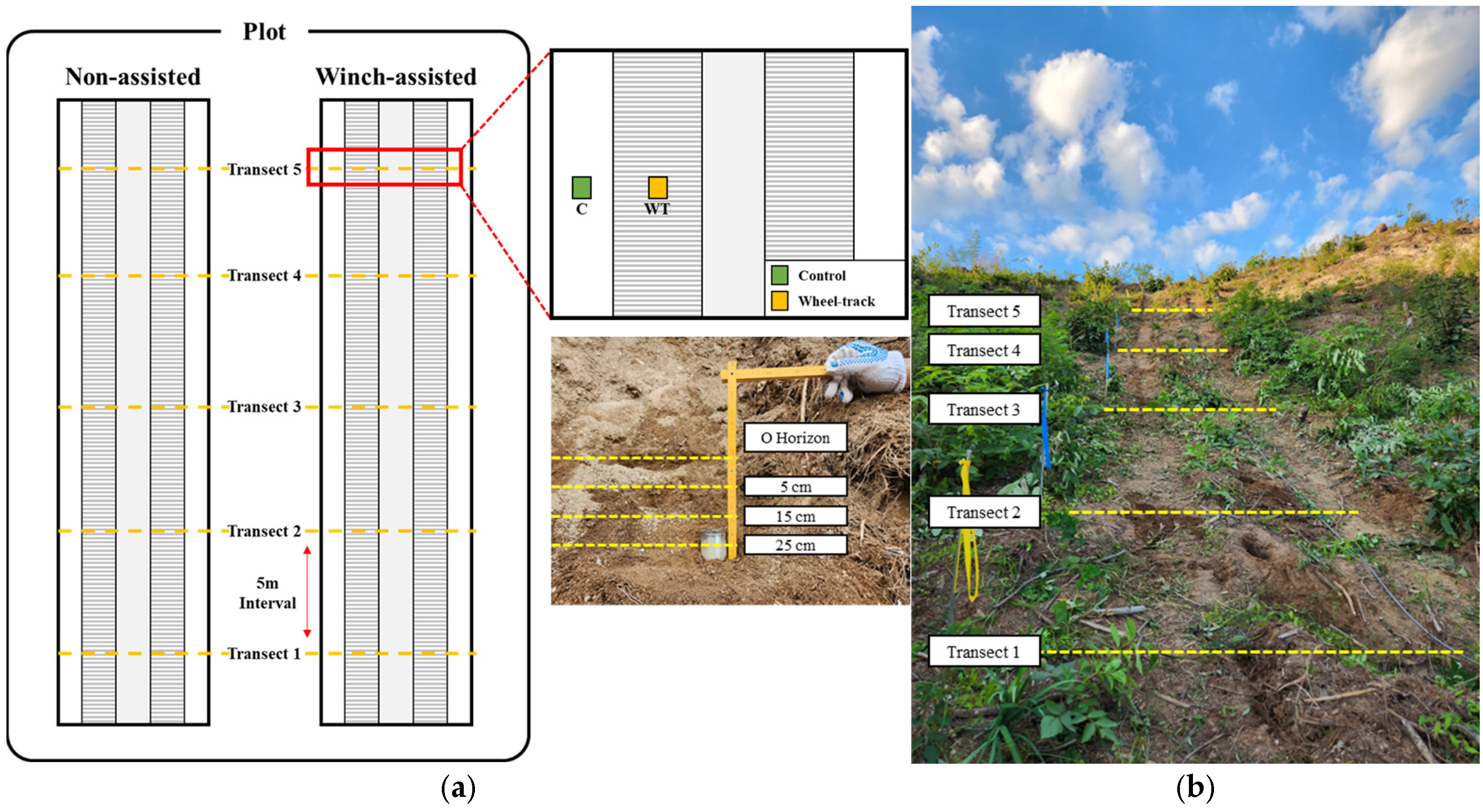
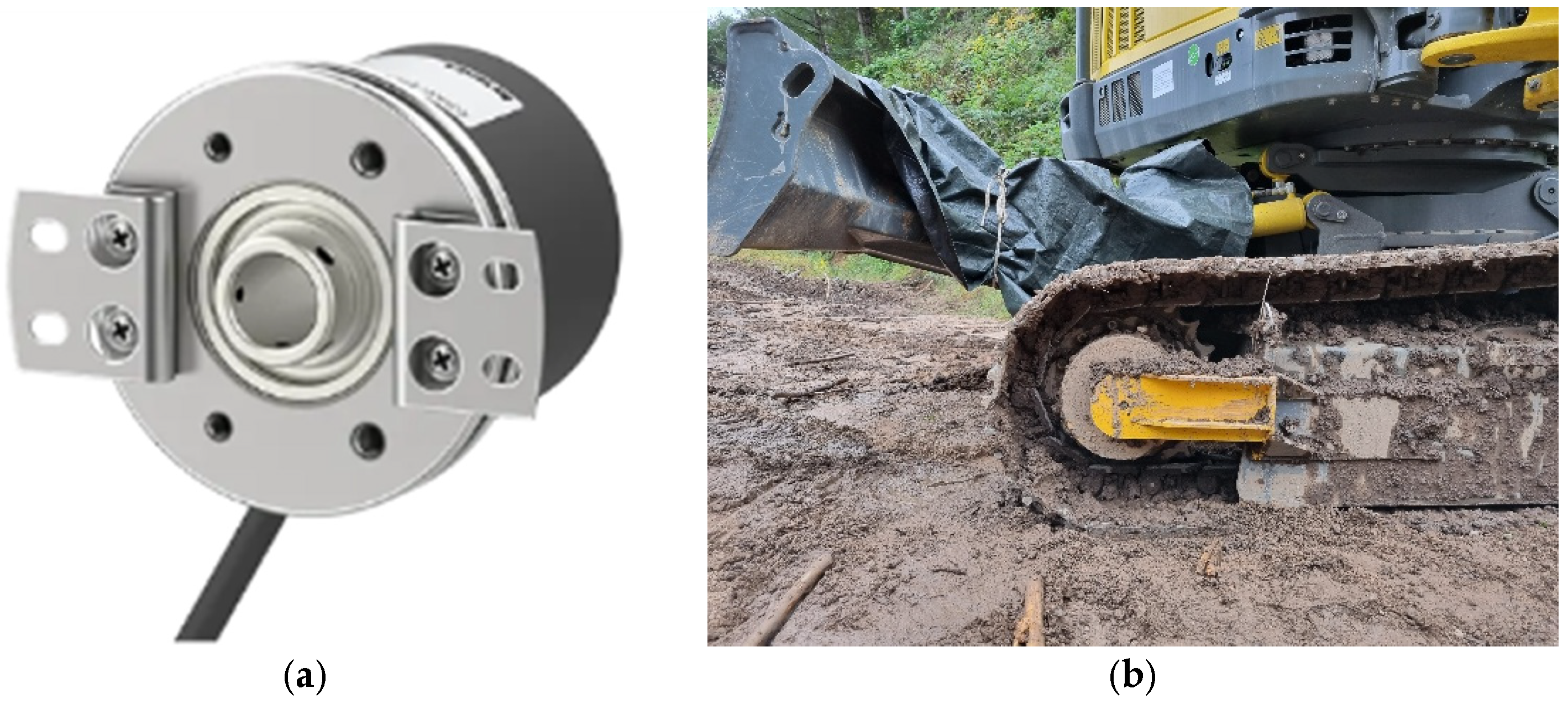
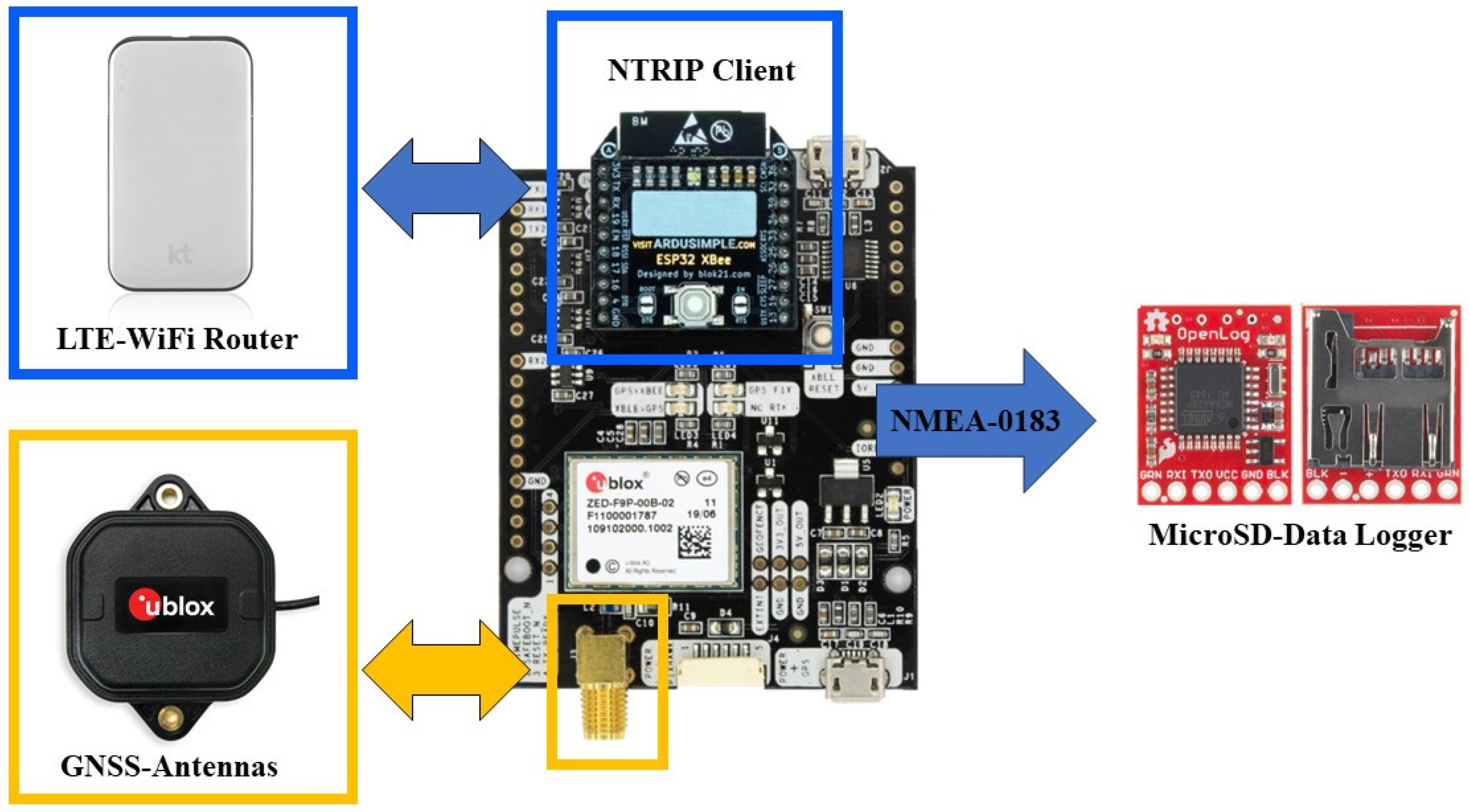
2.2. Experimental Design and Equipment
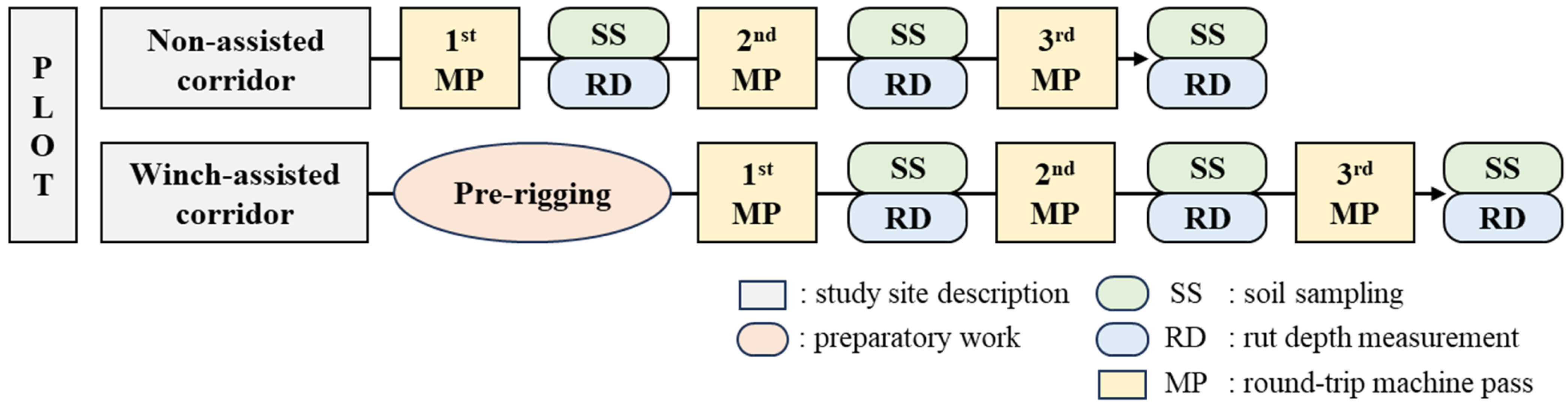
2.3. Data Collection
2.4. Statistical Analysis
3. Results
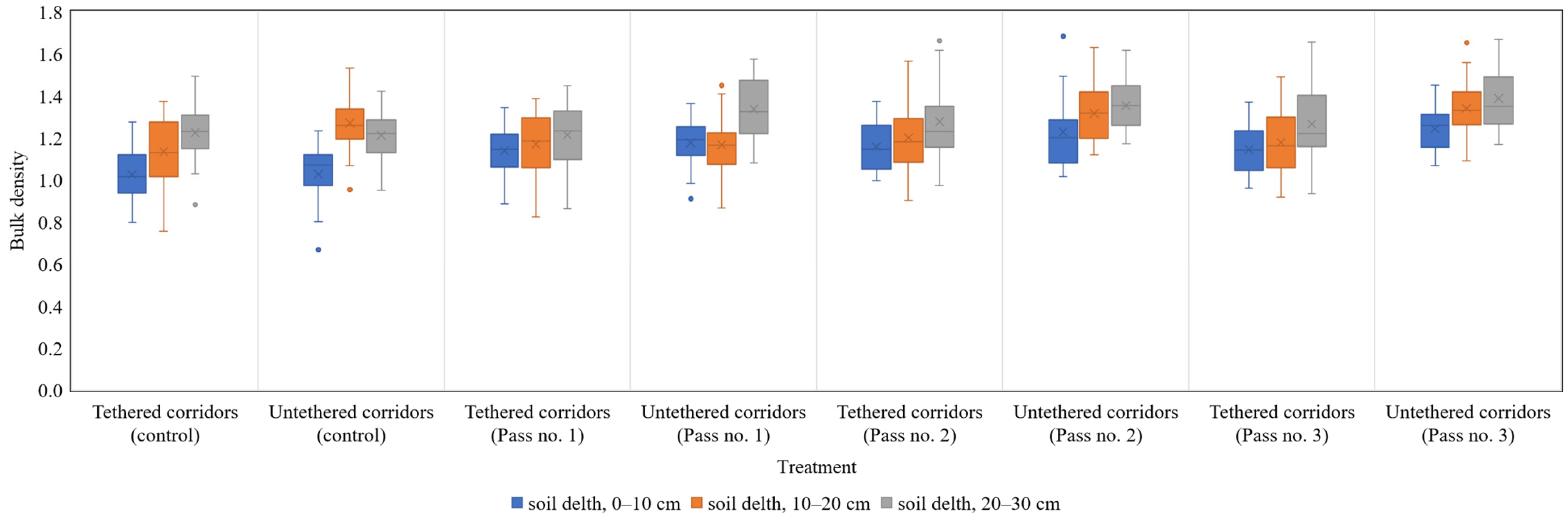
3.1. Soil Characteristics of Machine Operating Corridors After Clear-Cut
3.2. Soil Disturbance
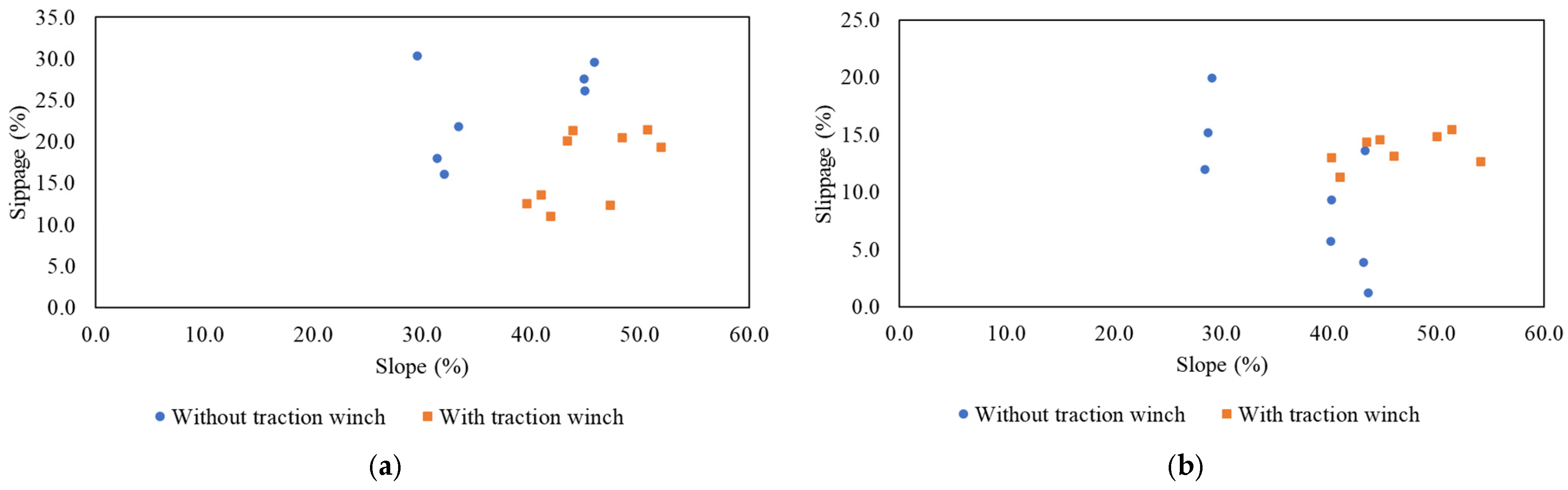
3.3. Crawler Slippage
4. Discussion
5. Conclusions
- (1)
- Tethered operations reduce the spatial extent of machine-induced compaction, particularly in the surface layer;
- (2)
- Crawler slip during both uphill and downhill travel was significantly lower under winch assistance;
- (3)
- Rut occurrence was less frequent in the winch-assisted corridors, although rut depth did not differ significantly between treatments.
Author Contributions
Funding
Data Availability Statement
Conflicts of Interest
References
- Korea Forest Service. Available online: https://www.forest.go.kr/kfsweb/kfs/idx/Index.do (accessed on 16 March 2025).
- Korean Statistical Information Service. Available online: https://kosis.kr/index/index.do (accessed on 16 March 2025).
- Visser, R.; Stampfer, K. Expanding ground-based harvesting onto steep terrain: A review. Croat. J. For. Eng. 2015, 36, 321–331. [Google Scholar]
- Garren, A.M.; Bolding, M.C.; Aust, W.M.; Moura, A.C.; Barrett, S.M. Soil disturbance effects from tethered forwarding on steep slopes in Brazilian Eucalyptus plantations. Forests 2019, 10, 721. [Google Scholar] [CrossRef] [Scilit]
- Latterini, F.; Horodecki, P.; Dyderski, M.K.; Scarfone, A.; Venanzi, R.; Picchio, R.; Proto, A.R.; Jagodziński, A.M. Mediterranean beech forests: Thinning and ground-based skidding are found to alter microarthropod biodiversity with no effect on litter decomposition rate. For. Ecol. Manag. 2024, 569, 122160. [Google Scholar] [CrossRef] [Scilit]
- Visser, R.; Harrill, H. Cable yarding in North America and New Zealand: A review of developments and practices. Croat. J. For. Eng. 2017, 38, 209–217. [Google Scholar]
- Sforza, F.; Starke, M.; Dietsch, P.; Thür, P.; Lingua, E.; Ziesak, M. Maximizing the economic benefit for cable yarding timber harvesting operations by spatially optimizing tree selection. Eur. J. For. Res. 2024, 144, 831–850. [Google Scholar] [CrossRef] [Scilit]
- Lee, E.; Choi, Y.; Cho, M.; Cho, K.; Oh, J.; Han, S.; Im, S. A literature review on cable extraction practices of South Korea: 1990–2020. Forests 2021, 12, 908. [Google Scholar] [CrossRef] [Scilit]
- Seol, A.R.; Han, H.; Jung, Y.K.; Chung, H.J.; Chung, J.S. Analyzing the comparative economic efficiency of short-wood wood grab logging and whole-tree cable logging operations. J. Korean Soc. For. Sci. 2016, 105, 231–237. [Google Scholar]
- Lee, E.; Li, Q.; Eu, S.; Han, S.K.; Im, S. Assessing the impacts of log extraction by typical small shovel logging system on soil physical and hydrological properties in the Republic of Korea. Heliyon 2020, 6, e03544. [Google Scholar] [CrossRef] [Scilit] [PubMed] [PubMed Central]
- Choi, Y.-S.; Cho, M.-J.; Mun, H.-S.; OH, J.-H. Productivity and cost of mechanized felling and processing operations performed with an excavator-based stroke harvester by tree species. J. Korean Soc. For. Sci. 2020, 11, 567–582. [Google Scholar]
- Raymond, K. Innovative Harvesting Solutions: A Step Change Harvesting Research Programme. N. Z. J. For. 2010, 55, 4–9. [Google Scholar]
- Strandgard, M.; Alam, M.; Mitchell, R. Impact of Slope on Productivity of a Self-levelling Processor. Croat. J. For. Eng. 2014, 35, 193–200. [Google Scholar]
- Amishev, D.; Evanson, T.; Raymond, K. Felling and Bunching on Steep Terrain—A Review of the Literature Harvesting; Technical Note HTN01-07; Future Forests Research Limited: Rotorua, New Zealand, 2009; p. 10. [Google Scholar]
- Visser, R. Tension Monitoring of a Cable Assisted Machine; Harvesting Technical Note HTN05-11; Future Forests Research Limited: Rotorua, New Zealand, 2013; 5p. [Google Scholar]
- Heinimann, H.R. Ground-based harvesting technologies for steep slopes. In Proceedings of the International Mountain Logging and 10th Pacific Northwest Skyline Symposium, Corvallis, OR, USA, 28 March–1 April 1999; Sessions, J., Chung, W., Eds.; pp. 1–19. [Google Scholar]
- Sessions, J.; Leshchinsky, B.; Chung, W.; Boston, K.; Wimer, J. Theoretical stability and traction of steep slope tethered feller-bunchers. For. Sci. 2017, 63, 192–200. [Google Scholar] [CrossRef] [Scilit]
- Schönauer, M.; Holzfeind, T.; Hoffmann, S.; Holzleitner, F.; Hinte, B.; Jaeger, D. Effect of a traction-assist winch on wheel slippage and machine induced soil disturbance in flat terrain. Int. J. For. Eng. 2021, 32, 1–11. [Google Scholar] [CrossRef] [Scilit]
- Chung, W.; Morrissette, B.; Green, P.; Garrelts, B.; Leshchinsky, B.; Belart, F.; Sessions, J.; Wimer, J.; Garland, J. Effects of pre-bunching trees with a tethered feller-Buncher on cable logging productivity and costs: A case study in Southern Oregon. For. Sci. 2022, 68, 325–333. [Google Scholar] [CrossRef] [Scilit]
- Holzfeind, T.; Visser, R.; Chung, W.; Holzleitner, F.; Erber, G. Development and Benefits of Winch-Assist Harvesting. Curr. For. Rep. 2020, 6, 201–209. [Google Scholar] [CrossRef] [Scilit]
- Green, P.Q.; Chung, W.; Leshchinsky, B.; Belart, F.; Sessions, J.; Fitzgerald, S.A.; Wimer, J.A.; Cushing, T.; Garland, J.J. Insight into the productivity, cost and soil impacts of cable-assisted harvester-forwarder thinning in Western Oregon. For. Sci. 2020, 66, 82–96. [Google Scholar] [CrossRef] [Scilit]
- Visser, R.M.; Spinelli, R. Benefits and Limitations of Winch-Assist Technology for Skidding Operations. Forests 2023, 14, 296. [Google Scholar] [CrossRef] [Scilit]
- ASTM D2216-19; Standard Test Methods for Laboratory Determination of Water (Moisture) Content of Soil and Rock by Mass. ASTM International: West Conshohocken, PA, USA, 2019; p. 7.
- Hemmat, A.; Yaghoubi-Taskoh, M.; Masoumi, A.; Mosaddeghi, M.R. Relationships between rut depth and soil mechanical properties in a calcareous soil with unstable structure. Biosyst. Eng. 2014, 118, 147–155. [Google Scholar] [CrossRef] [Scilit]
- Allman, M.; Dudáková, Z.; Duchan, M.; Jankovský, M.; Juško, V. Impact of winch-assisted logging machinery on soil disturbance in the mountainous forests of Western Carpathians. Front. For. Glob. Change 2024, 7, 1464140. [Google Scholar] [CrossRef] [Scilit]
- Han, H.S.; Page-Dumroese, D.; Han, S.K.; Tirocke, J. Effects of slash, machine passes, and soil moisture on penetration resistance in a cut-to-length harvesting. Int. J. For. Eng. 2006, 17, 11–24. [Google Scholar] [CrossRef] [Scilit]
- Allman, M.; Dudáková, Z.; Jankovský, M.; Vlčková, M.; Juško, V.; Tomčík, D. Soil compaction after increasing the number of wheeled tractors passes on forest soils in West Carpathians. Forests 2022, 13, 109. [Google Scholar] [CrossRef] [Scilit]
- Horn, R.; Vossbrink, J.; Peth, S.; Becker, S. Impact of modern forest vehicles on soil physical properties. For. Ecol. Manag. 2007, 248, 56–63. [Google Scholar] [CrossRef] [Scilit]
- Grünberg, J.; Holzleitner, F.; Behringer, M.; Gollob, C.; Kanzian, C.; Katzensteiner, K.; Kühmaier, M. Impacts of a fully mechanized timber harvesting system on soil physical properties after a pronounced dry period. Soil Tillage Res. 2025, 251, 106551. [Google Scholar] [CrossRef] [Scilit]
- Poltorak, B.J.; Labelle, E.R.; Jaeger, D. Soil displacement during ground-based mechanized forest operations using mixed-wood brush mats. Soil Tillage Res. 2018, 179, 96–104. [Google Scholar] [CrossRef] [Scilit]
- Rollerson, T.P. Influence of wide-tire skidder operations on soils. J. For. Eng. 1990, 2, 23–30. [Google Scholar] [CrossRef] [Scilit]



| Depth | Tethered Corridors | Untethered Corridors | p-Value | |
|---|---|---|---|---|
| Bulk density | (cm) | (g·cm−3) | (g·cm−3) | |
| 0–10 | 1.04 ± 0.15 | 1.03 ± 0.16 | >0.05 | |
| 10–20 | 1.15 ± 0.14 | 1.17 ± 0.13 | >0.05 | |
| 20–30 | 1.22 ± 0.12 | 1.21 ± 0.11 | >0.05 | |
| Moisture | (cm) | (%) | (%) | |
| 0–10 | 17.1 ± 6.9 | 17.8 ± 7.3 | >0.05 | |
| 10–20 | 15.7 ± 2.9 | 15.9 ± 1.9 | 0.021 | |
| 20–30 | 15.1 ± 2.8 | 15.8 ± 2.5 | >0.05 |
| Non-Assisted Corridor | Winch-Assisted Corridor | p-Value | |
|---|---|---|---|
| Machine passes 1 | 6.36 ± 2.72 cm | 6.79 ± 2.39 cm | 0.668 |
| Machine passes 2 | 8.53 ± 3.64 cm | 9.15 ± 1.93 cm | 0.631 |
| Machine passes 3 | 9.99 ± 3.20 cm | 10.98 ± 2.22 cm | 0.421 |
Disclaimer/Publisher’s Note: The statements, opinions and data contained in all publications are solely those of the individual author(s) and contributor(s) and not of MDPI and/or the editor(s). MDPI and/or the editor(s) disclaim responsibility for any injury to people or property resulting from any ideas, methods, instructions or products referred to in the content. |
© 2025 by the authors. Licensee MDPI, Basel, Switzerland. This article is an open access article distributed under the terms and conditions of the Creative Commons Attribution (CC BY) license (https://creativecommons.org/licenses/by/4.0/).
Share and Cite
Lee, E.; Cho, H.-M.; Mun, H.-S.; Lee, H.-S.; Oh, J.-H.; Han, S.-K. Soil Responses to Winch-Assisted Thinning Harvester Traffic on Steep Slopes in South Korea. Forests 2025, 16, 1829. https://doi.org/10.3390/f16121829
Lee E, Cho H-M, Mun H-S, Lee H-S, Oh J-H, Han S-K. Soil Responses to Winch-Assisted Thinning Harvester Traffic on Steep Slopes in South Korea. Forests. 2025; 16(12):1829. https://doi.org/10.3390/f16121829
Chicago/Turabian StyleLee, Eunjai, Hyun-Min Cho, Ho-Seong Mun, Hyeon-Seung Lee, Jae-Heun Oh, and Sang-Kyun Han. 2025. "Soil Responses to Winch-Assisted Thinning Harvester Traffic on Steep Slopes in South Korea" Forests 16, no. 12: 1829. https://doi.org/10.3390/f16121829
APA StyleLee, E., Cho, H.-M., Mun, H.-S., Lee, H.-S., Oh, J.-H., & Han, S.-K. (2025). Soil Responses to Winch-Assisted Thinning Harvester Traffic on Steep Slopes in South Korea. Forests, 16(12), 1829. https://doi.org/10.3390/f16121829