1. Introduction
Against the backdrop of accelerated global urbanization, the development of metropolitan areas generally faces the contradiction between ecological space compression and the growth of recreational demand. The traditional resource-consuming development path is difficult to sustain, and it is necessary to explore new ecological priority models [
1,
2]. From a global perspective and theoretical origins, the green heart concept as a key regional spatial structure provides an important framework for coordinating these conflicting demands through its philosophy and practices. This concept can be traced back to the 1960s Randstad region in the Netherlands, where major cities including Amsterdam, Rotterdam, and The Hague formed a circular metropolitan arrangement that surrounded and protected a central open agricultural and natural space termed the Green Heart. This configuration established the classic regional spatial structure of polycentric circular cities and a central green heart [
3], aimed at rigidly protecting core ecological space, preventing urban sprawl, optimizing regional spatial patterns, and ensuring ecological security. Subsequently, the connotation of the green heart gradually expanded from mere ecological isolation and conservation to a composite functional carrier integrating ecological barriers, biodiversity conservation, recreational services, landscape enhancement, and cultural heritage protection [
4]. In urban planning, it functions as ecological infrastructure and a green isolation barrier, undertaking the core mission of optimizing spatial patterns and ensuring ecological security [
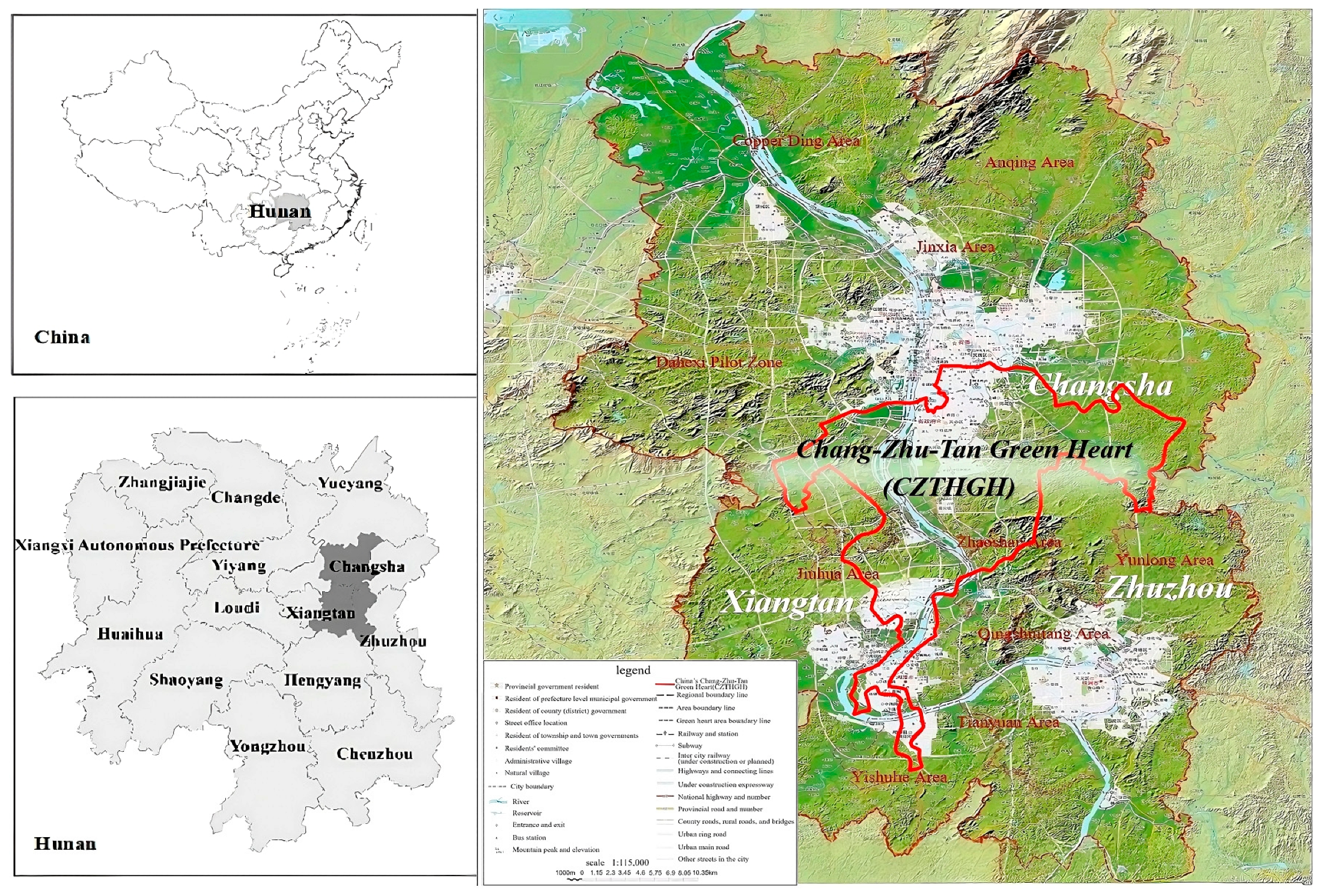
5]. In recreational planning, the green heart area, by virtue of its large-scale and near-natural characteristics, is regarded as a strategic resource for providing high-quality and inclusive recreational services. It represents a key area for meeting residents’ escalating ecological, cultural, and health needs. The Chang-Zhu-Tan Green Heart (CZTHGH), spanning 522.87 square kilometers and recognized as the world’s largest urban ecological green heart, serves as a flagship demonstration zone for China’s dual carbon goals. With its diverse forest land types and positioning as a world-class ecological green heart, it provides high-quality forest recreation and shared space for residents across the three cities.
In the field of urban spatial network research, Salinaros’ complexity theory provides important ideas for analyzing the relationship between spatial nodes and connections [
6]. Its core lies in revealing the organizational rules and functional logic of spatial systems through the analysis of the association between nodes and edges. This study draws on this approach and considers CZTHGH’s forest recreation points as network nodes, with the actual paths between recreation points as network edges. The aim is to use this analytical framework to more accurately capture the structural characteristics and changing trends of the forest recreation network.
The existing research results on forest recreation networks mainly focus on forest landscape ecological networks and recreation networks. Although a certain accumulation has been formed, there are still certain research biases and gaps. In the field of forest landscape ecological network research, existing achievements mainly focus on high-grade forest resources or ecological conservation functions [
7], determining nodes through patches and studying the boundary relationships between nodes. The node definition mainly includes ecological attributes such as patch area [
8], patch coordinates, patch productivity [
9], or population size [
10], selecting patches with high ecological service functions such as water bodies, forests, and nature reserves as source patches, and constructing an indicator system to evaluate the importance of patches. The edges were measured using geographic connections between patches [
11] and the size of edge effects [
12], and were calculated using methods such as Euclidean distance and least cumulative cost distance (LCP) [
13]. GIS spatial analysis methods, landscape ecological analysis methods, and spatial pattern analysis methods were used to study regional vegetation patterns, landscape ecological patterns, and forest landscape patterns. The overall focus is on analyzing the suitability and conservation value of forest landscapes from an ecological perspective, with a particular emphasis on analyzing network connectivity from the perspective of forest spatial landscape structure. There is less consideration given to the functional relationships of networks, especially the forest recreational functions of daily landscapes and the service value of universal recreational activities.
In terms of recreational network research, on the one hand, related achievements are based on the theory of recreational spatial analysis. Based on the spatial network relationship between recreational nodes, node-associated areas, and recreational corridors, the spatial organization of urban recreational attractions and related service facilities is studied, and the trend of networked recreational planning is analyzed [
14]. The connection between recreational network structure and geography is also analyzed [
15,
16], as well as the recreational space network from the perspective of a tourist area landscape network [
17] and types of recreational visitors [
18]. Research is mostly based on POI data, analyzing spatial form [
19], spatial type [
20], and spatial function [
21]. On the other hand, relying on social networks and tourism flow theory, this study focuses on the recreational structural network [
22], the behavioral patterns of recreational activities and spatial clustering hotspots [
23], and the correlation between recreational behavior and activity space [
24] and other related content. Research has been conducted on the spatial patterns and impacts of tourism flows based on UGC data [
25], as well as the spatial structural characteristics of tourism flows [
26,
27,
28]. These studies often suffer from the problem of fragmented supply–demand analysis, with some results solely analyzing the actual recreational network characteristics of tourists’ demand side, such as flow paths and node selection preferences. The other part only focuses on the distribution characteristics of the recreational supply side, such as the type and density of recreational sites, and rarely combines the two for comparative analysis. It is particularly crucial that existing research generally lacks the construction of forest resource maps based on forest data, comparing and analyzing the spatial distribution of POI recreation points with the correlation mechanism of the actual forest recreation network reflected by UGC behavior trajectory data, and proposing network optimization strategies.
Accordingly, this study collected POI forest recreation node data, forest resource data, and UGC behavioral trajectory data and constructed an analytical framework for the forest recreation network integrating recreation supply, recreation demand, and resource foundation, supported by Recreation Space Theory (RST) and Social Network Theory (SNT). This approach aims to examine changes in the characteristics of the CZTHGH forest recreation network, exploring, on the one hand, the relationship between structural changes in the forest recreation network and ecological resilience, and investigating how such changes enhance the capacity of urban ecological spaces to cope with disturbances. On the other hand, by analyzing the spatial matching relationship between recreational behavior and forest resources, it seeks to deepen the understanding of the coordinated development of human–land interactions in the context of urbanization, thereby providing new empirical evidence and insights for green space planning and sustainable urbanism theory in high-density metropolitan regions.
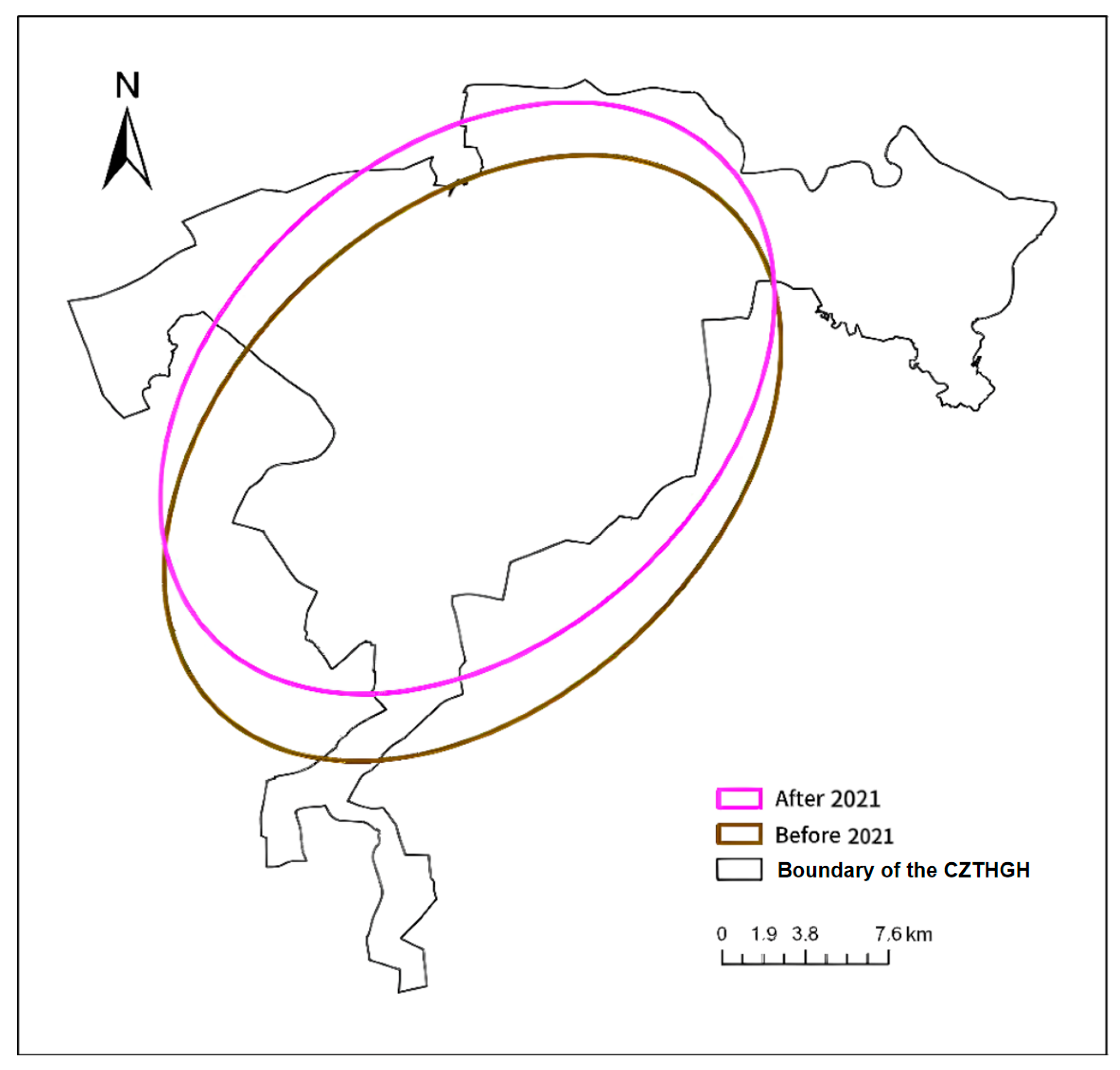
In the analysis, Recreation Space Theory (RST) was applied to understand the spatial distribution characteristics and static attributes of forest recreation resources in CZTHGH. Based on POI data, kernel density analysis was used to examine the spatial clustering patterns of forest recreation nodes, and standard deviation ellipse analysis was employed to determine their directional distribution. Furthermore, the spatial matching relationship between these nodes and forest resources was analyzed to identify spatial advantages and limitations at the supply level of the CZTHGH forest recreation network. Social Network Theory (SNT), meanwhile, focused on the dynamic relational structures formed by tourists’ actual recreational behaviors. By constructing an origin–destination matrix, it quantified the connection strength between forest recreation nodes, analyzed the overall structure of the forest recreation network through overall density and centralization, assessed the functional roles of nodes using degree centrality and betweenness centrality, and examined subgroup structures through cohesive subgroups and core–periphery analysis. This revealed the characteristics of the actual forest recreation network formed by tourist flows at the demand level. The deep integration of these two theories effectively compensates for the limitations of relying on a single theory, achieving a dual analysis from supply network to demand network, and from spatial attributes to structural associations. On this basis, the study compared the characteristics of the forest recreation network before and after specific temporal nodes, identifying network features and optimization pathways across multiple dimensions such as node type, spatial distribution, connection strength, and public preferences. Ultimately, it provides a scientific basis and empirical support for the optimization of recreation networks, the enhancement of ecological services, and the sustainable management of CZTHGH and similar metropolitan ecological spaces.
4. Discussion
This study systematically analyzed POI-based forest attraction data, UGC behavioral trajectory data, and forest resource data from the CZTHGH to characterize the spatial structure of its forest recreation network and elucidate the underlying interaction mechanisms. The findings provide empirical evidence on how the green heart area responded to policy transitions and public health emergencies through resilience adaptations and recreational behavior shifts, while establishing a scientific foundation for developing sustainable recreation planning and management strategies for CZTHGH and similar metropolitan regions.
To better characterize the structural evolution observed in the forest recreation network, this study proposes the innovative concept of a network-trickle pattern. This pattern captures the transition under external shocks or internal policy adjustments from a tourism flow configuration dependent on a few core nodes with high-density, wide-area connectivity to an arrangement relying on multiple local clusters that exhibit lower density but maintain functional complementarity and local synergy. The conceptualization of this pattern is grounded not only in systematic observations of quantitative network features including decreased density, increased subgroup formation, and weakened core–periphery influence but also draws on theoretical foundations from polycentricity and complex adaptive systems (CAS) theory in spatial networks. It describes a self-organizing pathway through which the system forms a distributed, clustered structure to maintain functionality and adaptability under external pressure.
4.1. An Integrated Recreation Supply–Recreation Demand–Forest Resource Analytical Framework
Current research on metropolitan green heart areas has primarily focused on ecological conservation, including forest carbon sink capacity assessments [
39] and biodiversity protection [
29], while largely overlooking recreational functions. Furthermore, existing studies typically examine either forest recreation supply or tourist demand separately, with limited comparative analysis and minimal integration of forest land data. Adopting a network perspective, this study integrates POI-based spatial data (forest attractions), UGC behavioral trajectory data, and forest land data (covering arbor, bamboo, and shrubland types) to establish a comprehensive recreation supply–recreation demand–forest resource analytical framework. This integrated approach enables detailed characterization of the forest recreation network and quantitative analysis of supply shifts under the equal emphasis on protection and development policy direction, particularly around the critical year 2021, characterized by both policy transition and public health emergencies. The framework serves as a practical reference for recreational studies in similar metropolitan ecological spaces.
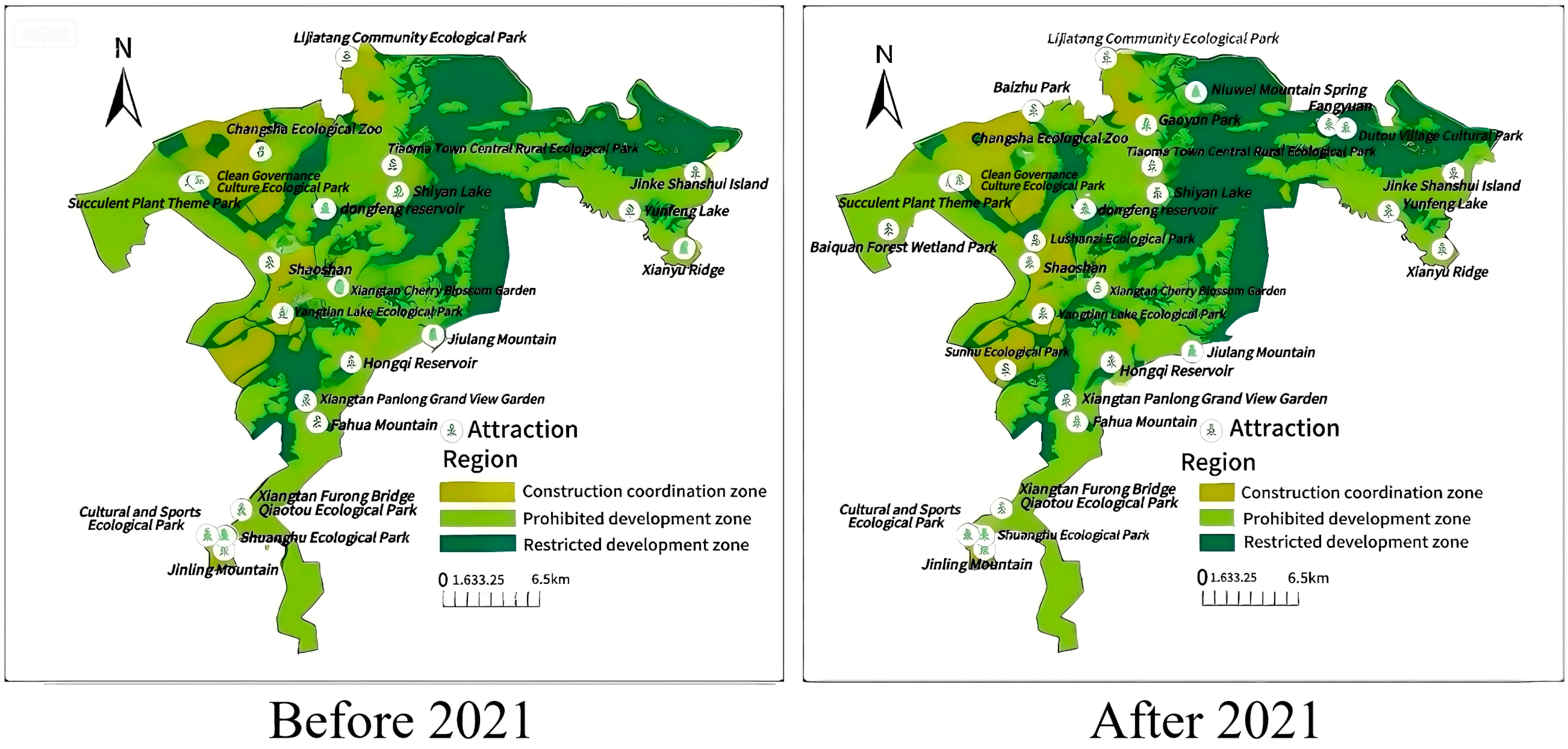
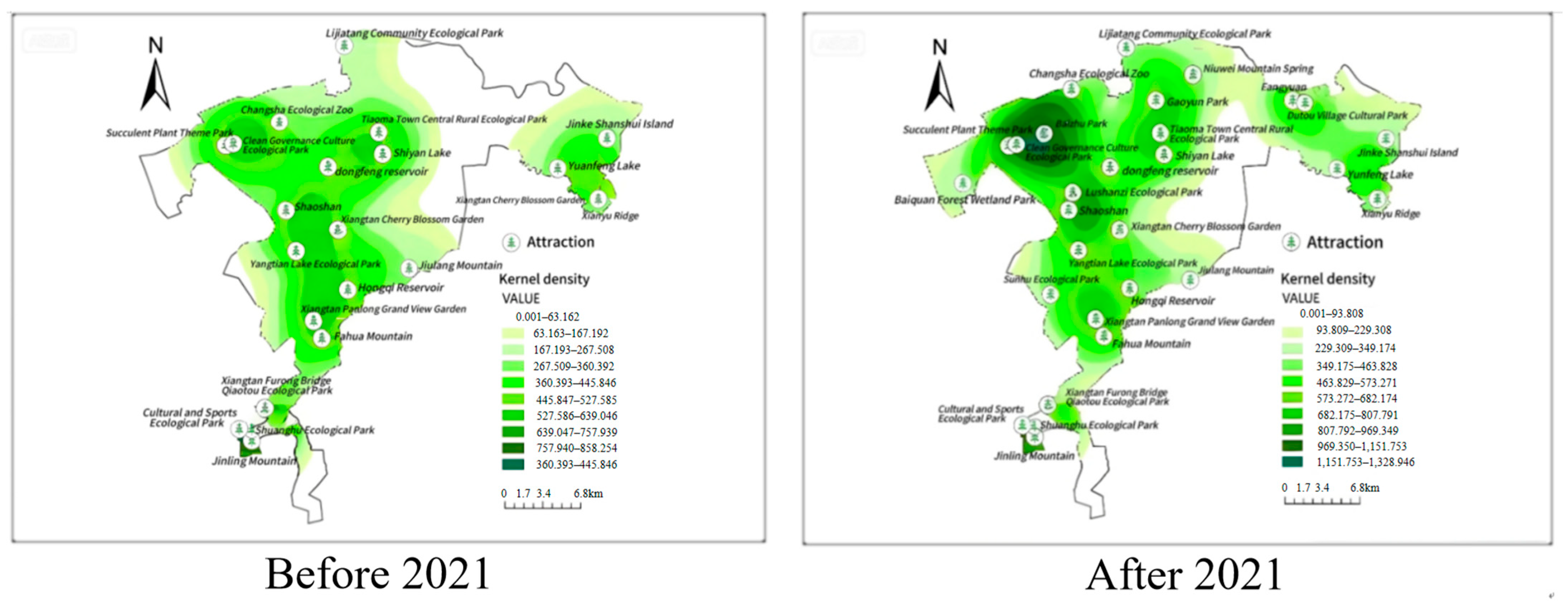
The results reveal two key findings. First, the spatial attributes of forest recreation network nodes demonstrate a transition toward polycentricity and better balance. Following 2021, CZTHGH’s forest recreation supply showed significant optimization and expansion in both node typology and spatial distribution. A pattern featuring dual primary cores with multiple secondary cores emerged with improved distribution uniformity. These changes reflect a policy-driven evolution from singular ecological protection toward dual ecological and social benefits, yielding more diverse recreation node types and more balanced spatial coverage that aligns with international strategies using green networks to enhance ecosystem service multifunctionality. Persistent recreational gaps in the eastern Intercity Green Heart area highlight the efficacy of strict ecological protection policies in limiting human activity within core ecological barriers, while emphasizing the need for careful balancing of conservation and recreational use in planning. These spatial patterns are consistent with studies affirming forests’ substantial contribution to ecosystem multifunctionality and the importance of conserving existing forests, promoting restoration, and increasing tree species richness to maintain multifunctionality in urban green heart areas [
40].
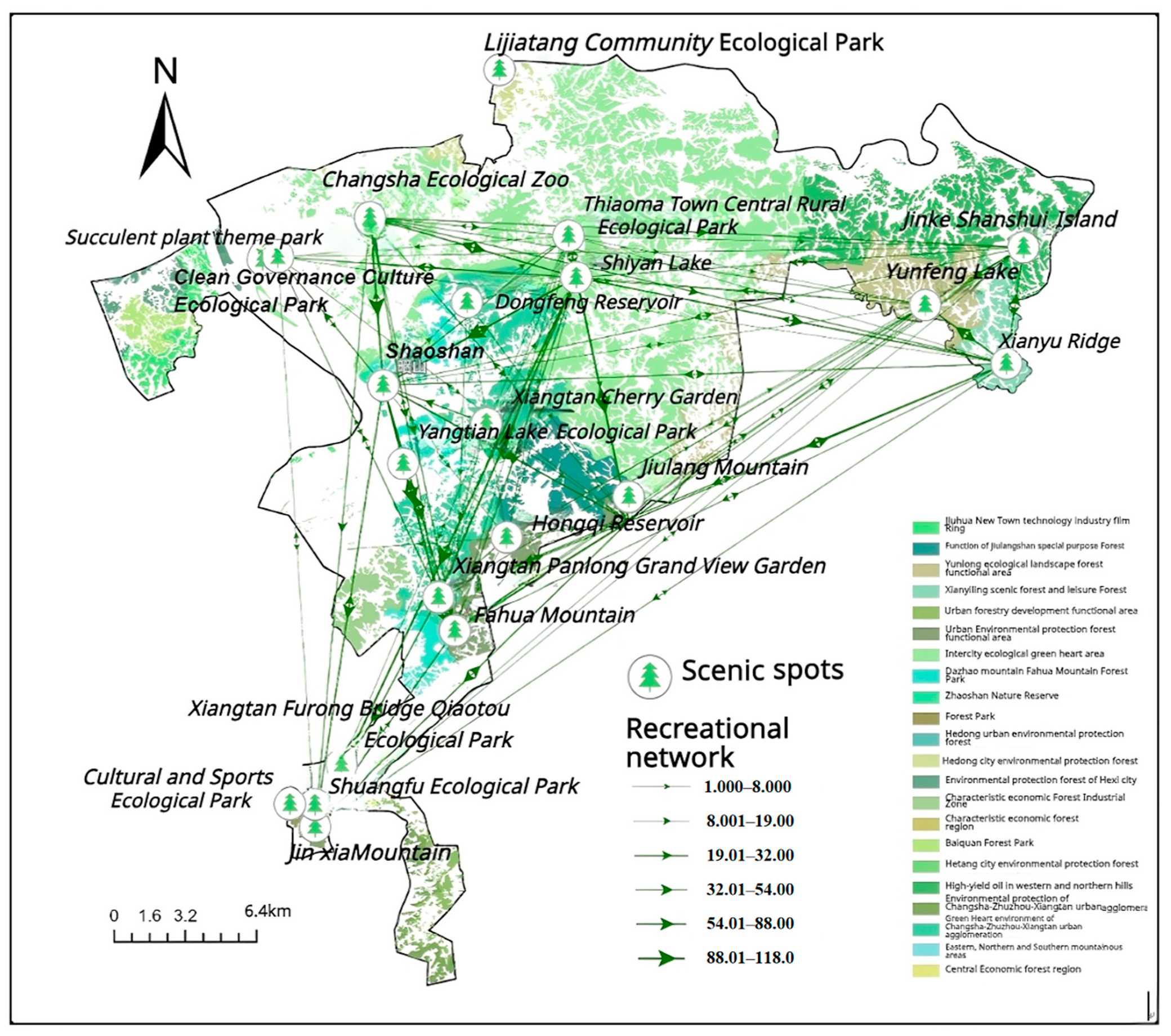
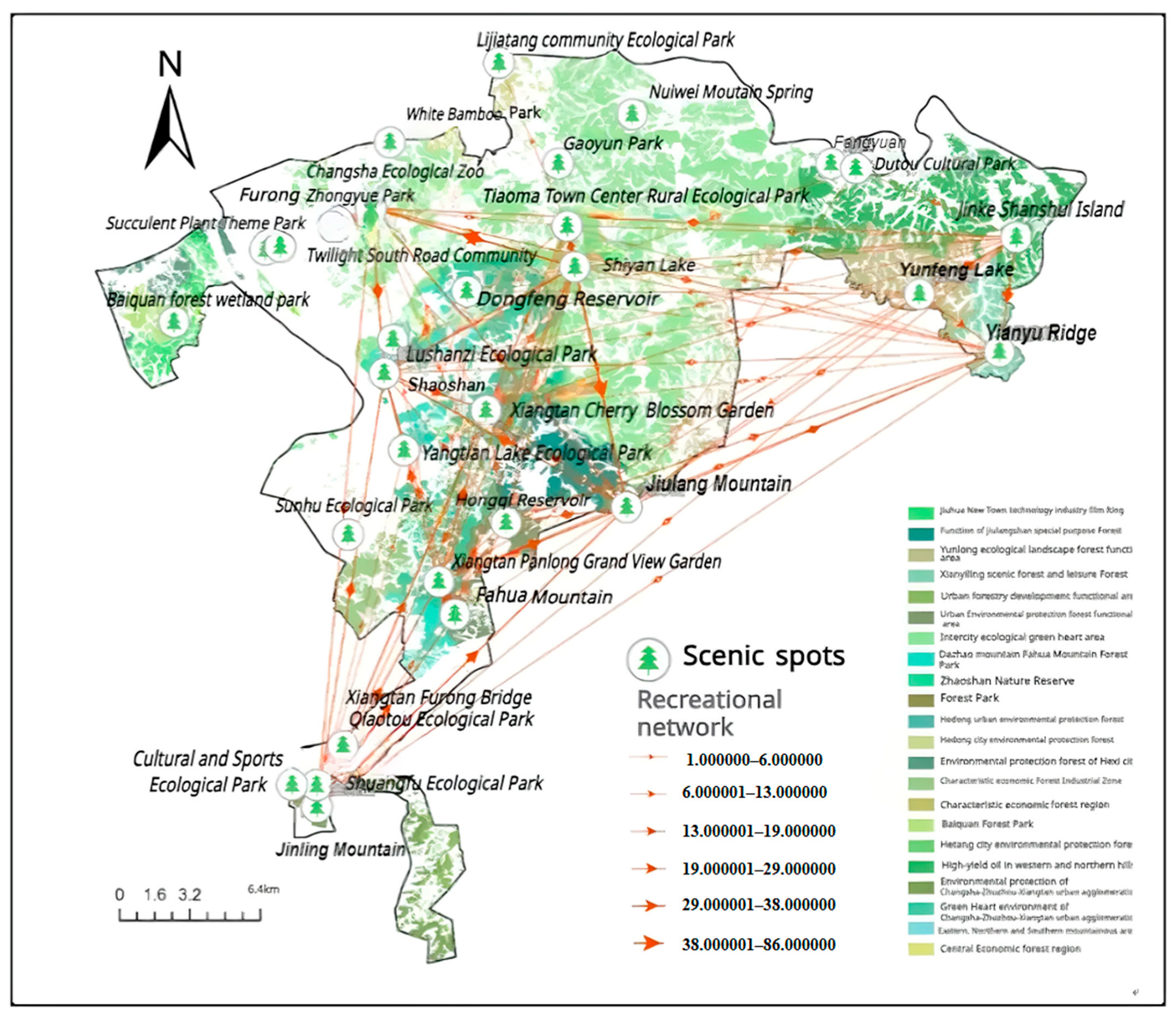
Second, tourist behavior in forest recreation displayed a distinct shift toward clustering, localized movement, and health-oriented preferences. Recreational activities in CZTHGH transitioned from a broadly connected pattern to a multi-center, small-cluster mode driven by geographical proximity. Tourists demonstrated stronger preference for nearby natural spaces to mitigate risks and fulfill health needs, forming multi-center interactive clusters such as Zhaoshan–Shiyan Lake and Jinxia Mountain–Jiulang Mountain. This behavioral adaptation not only reduced potential cross-regional travel risks but also strengthened internal integration of local recreation circuits. Degree centrality analysis revealed significantly enhanced centrality for sites including Jiulang Mountain, Jinxia Mountain, and Shiyan Lake, indicating the growing importance of ecologically rich nodes within the recreation network and confirming the increased attractiveness of nature-based sites after 2021 [
41]. Importantly, the observed fragmentation and localization of forest recreation behavior did not compromise network functionality but enhanced systemic adaptability through the formation of multiple functionally complementary clusters, representing valuable structural resilience during public health emergencies.
The integrated analytical framework and multi-source data fusion approach demonstrate high transferability and broad application potential, offering a methodological template for studying recreation networks in comparable metropolitan ecological contexts. Their general applicability rests on three fundamental strengths: (1) globally accessible data sources, including POI, UGC, and national land survey data or their equivalents; (2) theoretically grounded analytical tools—specifically Recreation Space Theory and Social Network Theory—for spatial structure analysis, which are not case-specific; and (3) the identification of the transition from core-radiation to network-trickle patterns, which provides a shared analytical lens for understanding ecological space adaptation in high-density urban regions under external disturbances.
4.2. Effectiveness of the Integrated POI, UGC, and Forest Land Data Methodology
This study validates the effectiveness of integrating POI data, UGC behavioral data, and baseline forest land data for identifying the spatial structure of the forest recreation network in CZTHGH. The integrated methodology provides new perspectives for evaluating forest recreation development in metropolitan green heart areas and enhances the quantitative analytical framework for forest recreation networks. By combining kernel density estimation and standard deviation ellipse analysis of POI data with Ucinet-based network modeling of UGC trajectory data, including overall density, centrality metrics, core–periphery structure, and cohesive subgroups, we quantified the transition of the forest recreation network from a core radiation pattern before 2021, which relied on limited forest scenic areas like Shiyan Lake, to a local cluster pattern after 2021, exemplified by the Muyun Tiaoma forest recreation subgroup. This analysis clarified functional differences between key hub nodes, such as Shiyan Lake Forest Park, and peripheral nodes like Baijia Flower Town. Furthermore, incorporating forest land data revealed public preferences for specific types of forest recreation areas and particular forest stands. Semantic analysis of UGC data identified focal points of public interest in forest recreation, including natural experience and health and leisure, providing both quantitative and perceptual support for optimizing the forest recreation network structure.
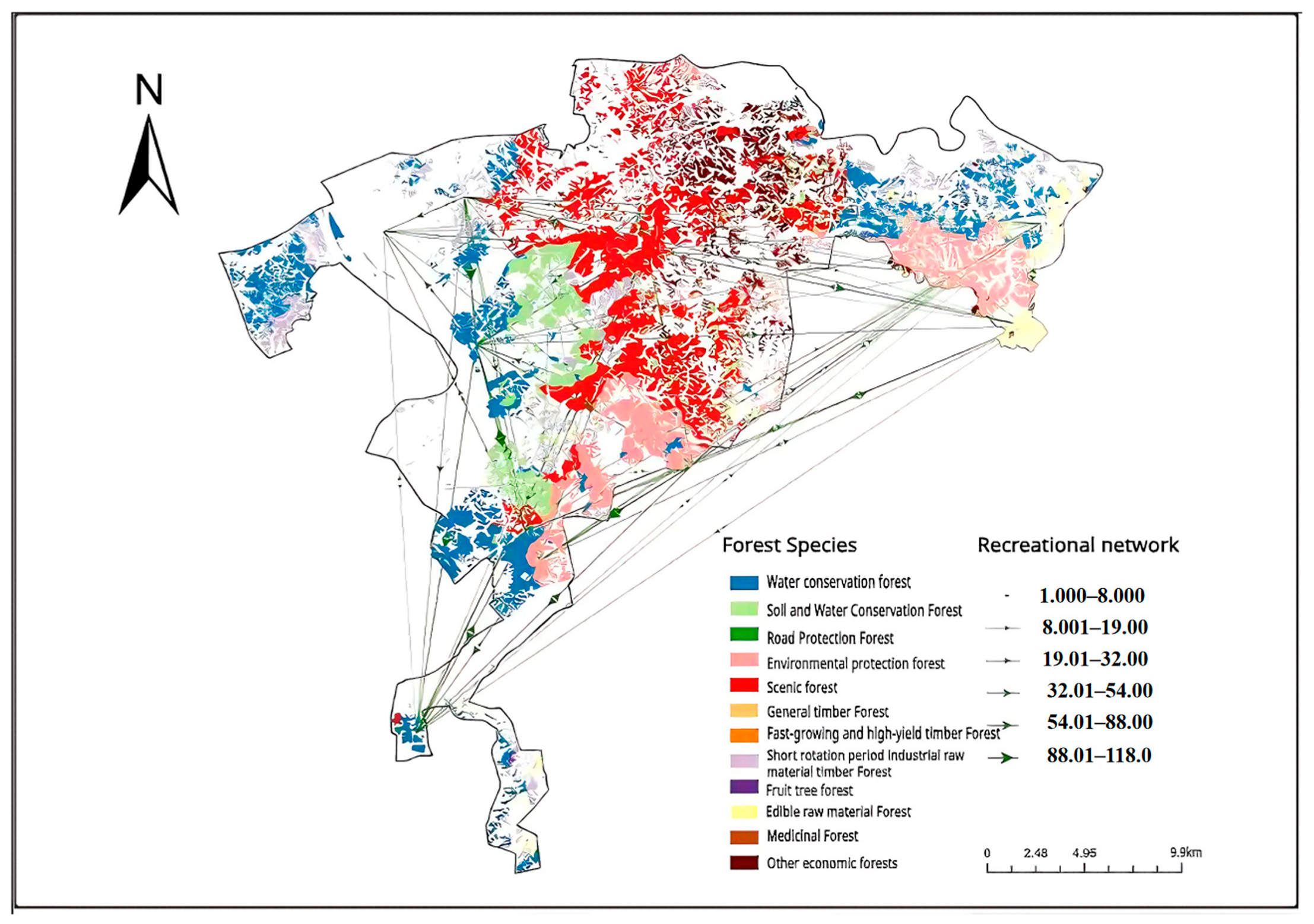
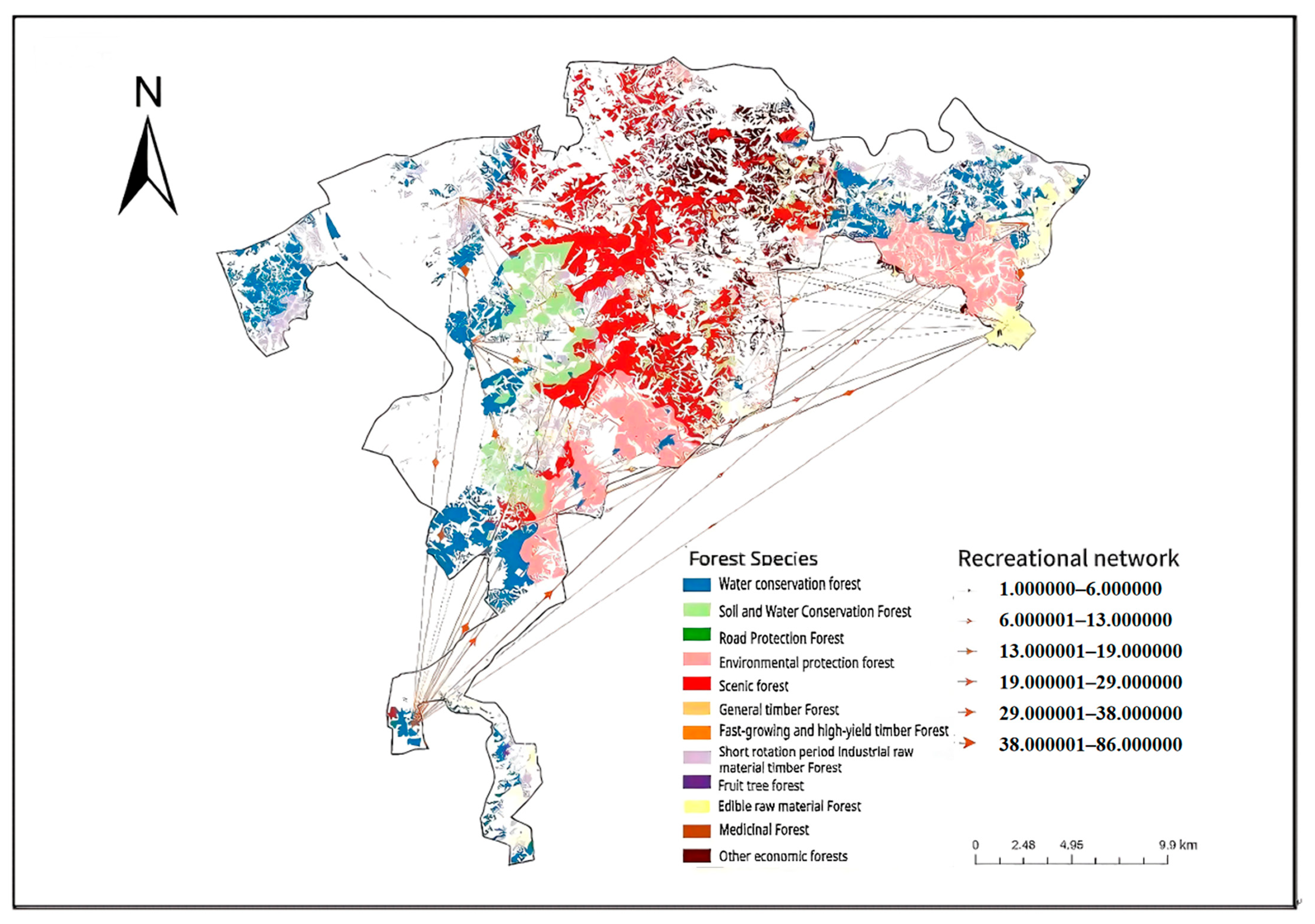
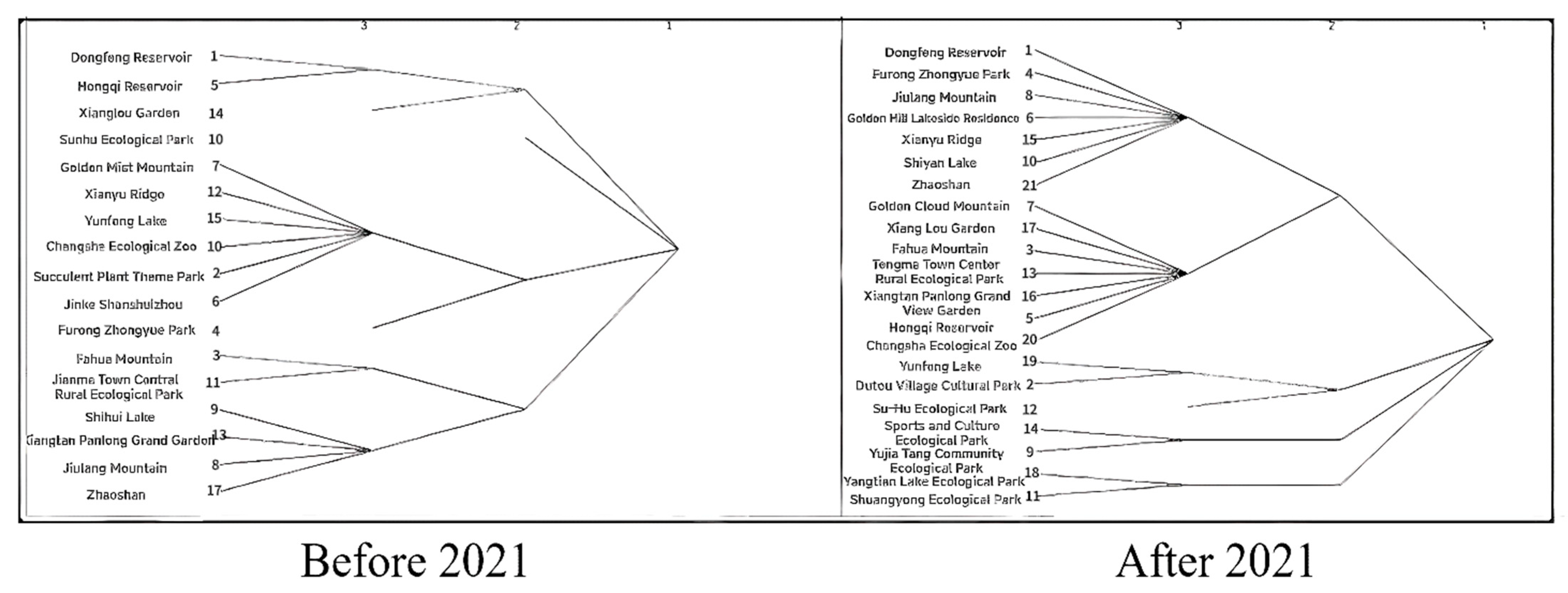
The results demonstrate strong consistency in the spatial structures of the forest recreation network derived from POI and UGC data. According to POI data, between 2021 and 2025, the total number of forest recreation nodes in CZTHGH increased by 33.3%, with particularly notable growth in core nodes. The proportion of experiential formats such as eco-camps and forest wellness bases rose from 5% to 18%, while spatial distribution became more even and ellipse flatness decreased from 0.65 to 0.58. Corresponding UGC data showed that overall network density decreased from 0.6287 to 0.4048, indicating reduced long-distance flows, while the number of cliques increased from 4 to 8, demonstrating enhanced localized clustering. Collectively, these findings reveal a clear transition in the forest recreation network from core radiation to network trickle characteristics.
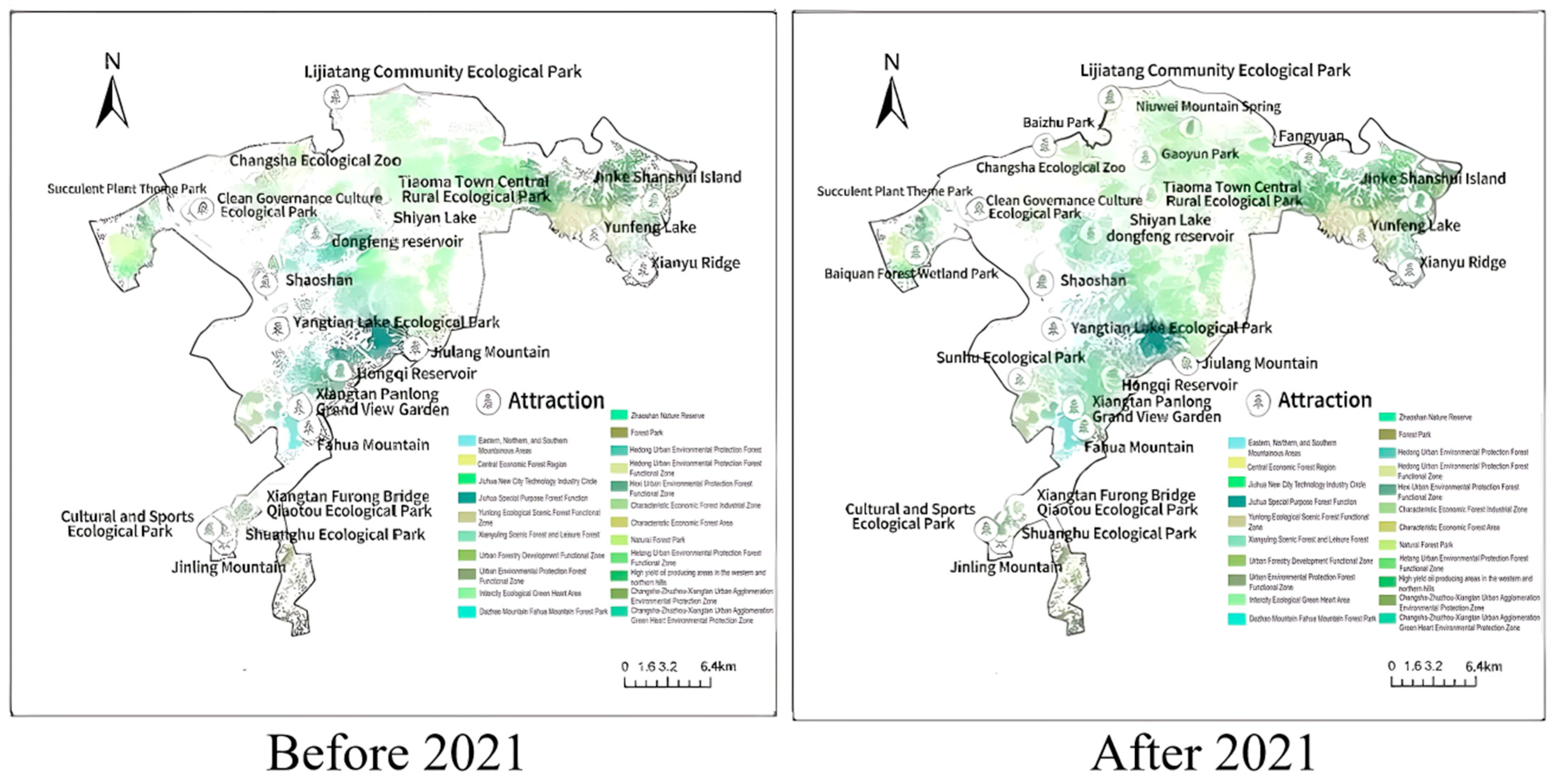
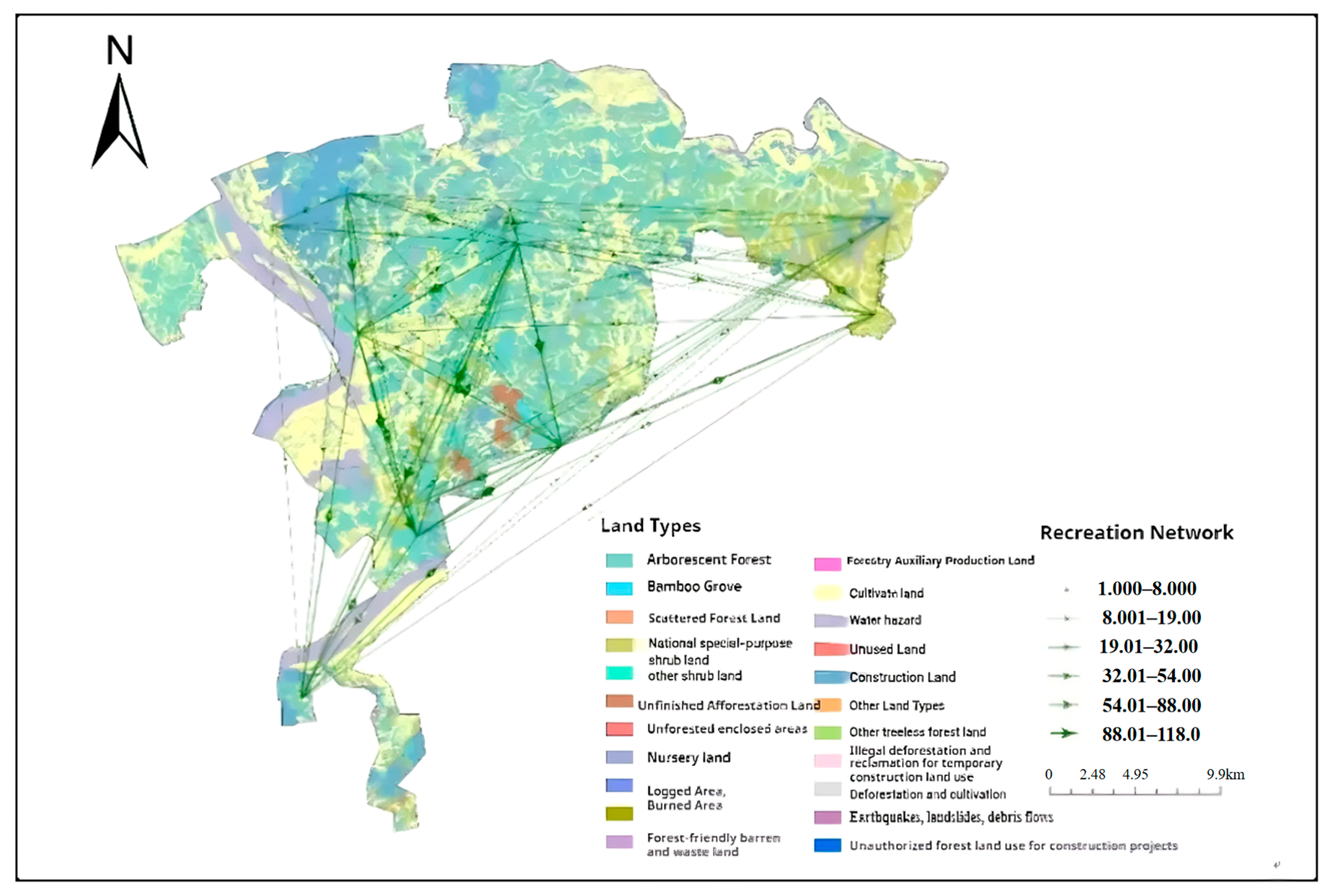
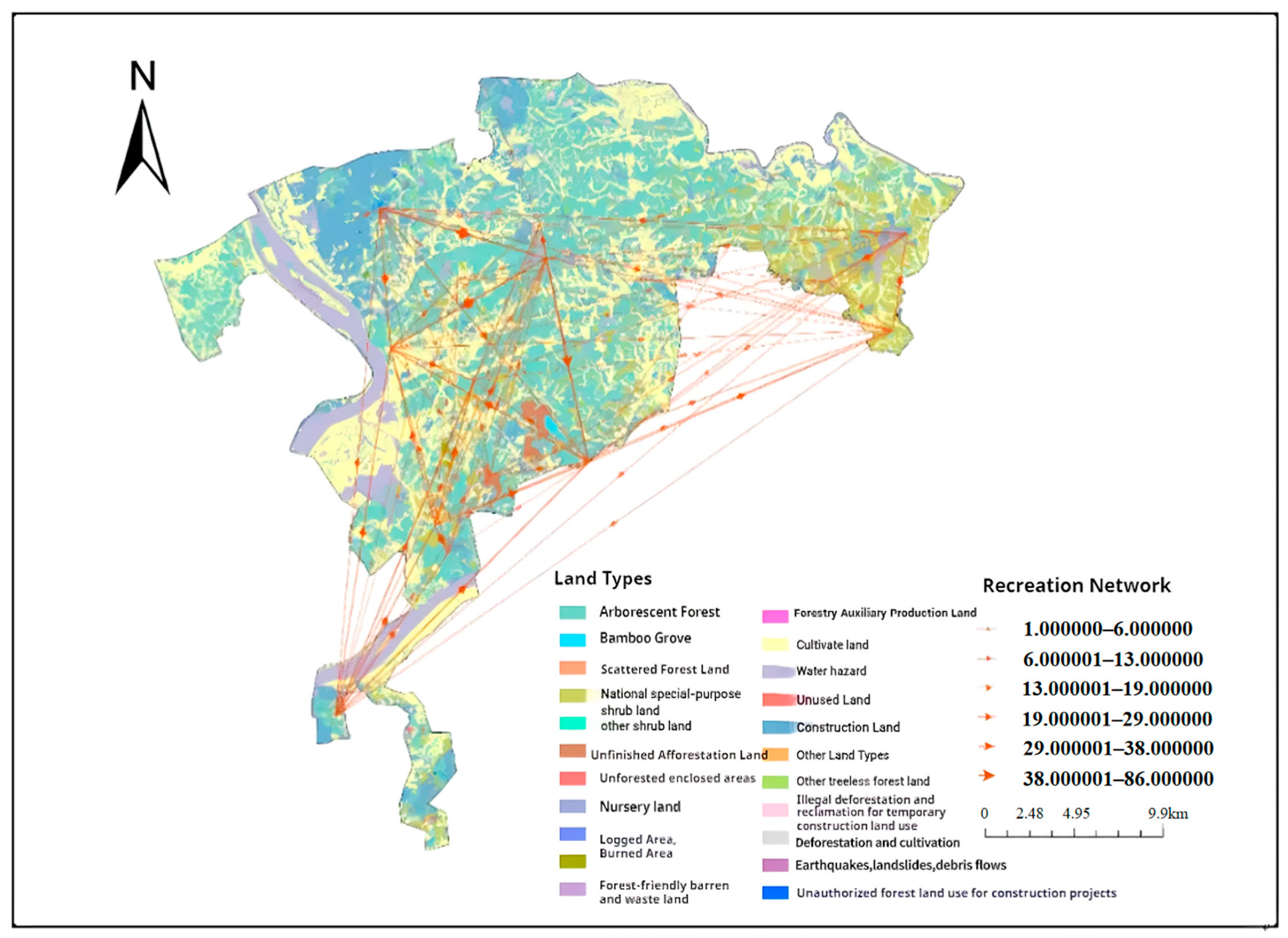
Overlay analysis with forest land data shows close correspondence between forest recreation behavior and the spatial distribution of forest resources. After 2021, tourist activities shifted noticeably from construction and cultivated land to arbor forests, shrublands, and scenic forest areas. Kernel density hotspots expanded further into the densely forested northern and western regions, which contain extensive water conservation forests and landscape forests. The eastern intercity ecological green heart area remained a recreation void due to strict protection policies, reflecting a balance between ecological conservation and recreational use. North American studies have shown that areas with higher forest coverage and tree species diversity tend to attract more tourists seeking natural experiences, while the ecosystem services these areas provide, such as water conservation and climate regulation, positively correlate with recreational experience quality [
42]. Similarly, European research has found that tourist preferences for forest areas closely relate to ecological integrity, particularly in mature stands with complex structure and rich biodiversity [
43]. The CZTHGH case further confirms this relationship: the forested northern and western regions not only have high forest coverage but also maintain good ecological integrity, providing high-quality natural experience environments for visitors. In contrast, although the eastern intercity ecological green heart area possesses high ecological value, strict protection policies limit human activity, resulting in a recreational void. This spatial differentiation reflects an ecological sensitivity-based zoning management strategy, where strict protection is enforced in high-value ecological areas while recreational functions are developed in ecologically suitable areas, thereby achieving synergy between ecological protection and recreational use.
4.3. Sustainable Development Implications of the Core-Radiation to Network-Trickle Transition
Building on the observed transition in the CZTHGH forest recreation network from a core-radiation to a network-trickle pattern, we propose several optimization strategies focusing on structural refinement, connectivity enhancement, and functional diversification to further promote forest recreation value in the region.
The transition from a core-radiation to a network-trickle pattern, as identified in this study, extends beyond empirical description to offer critical insights for sustainable development in metropolitan green heart areas. This structural shift demonstrates significant relevance across three interconnected dimensions: network resilience, ecosystem service maintenance, and social equity.
The network-trickle pattern substantially enhances the adaptive resilience of recreation systems. While the core-radiation pattern operates efficiently, it exhibits pronounced vulnerability—disruptions to core nodes from public safety concerns, policy changes, or environmental issues can trigger systemic failures. In contrast, the multi-center, clustered structure of the network-trickle pattern functions as a distributed, decentralized system. When specific clusters are impacted, other geographically proximate recreation circuits maintain independent operation, preserving basic recreational services for residents. Our findings demonstrate this resilience: although overall network density decreased after 2021, the increased number of cliques and strengthened local connections illustrate successful restructuring under external pressure—a hallmark of resilient systems. This configuration reduces over-reliance on long-distance travel and popular nodes, significantly improving network adaptability and recovery capacity amid future uncertainties.
This spatial reorganization further supports the sustainable supply of ecosystem services. The core-radiation pattern concentrates visitors in limited high-profile nodes, amplifying environmental pressures through trampling, waste accumulation, and wildlife disturbance—potentially degrading core regulatory and supporting services. By distributing visitor flows across multiple functionally complementary clusters, the network-trickle pattern alleviates concentrated pressure on individual ecosystems. This approach aligns with carrying capacity management and recreation opportunity spectrum principles. The observed shift of recreational activities toward arbor forests, shrublands, and other diverse forest types exemplifies this spatial redistribution of recreational pressure. Such decentralized use patterns help maintain ecosystem integrity and health, thereby ensuring long-term sustainability of ecosystem services while achieving superior spatial synergy between conservation and utilization.
Finally, the network-trickle pattern markedly improves social equity and accessibility of recreational resources. Whereas the core-radiation pattern primarily serves tourists with high inter-regional mobility, the network-trickle configuration better accommodates local residents and communities. The proliferation of community parks, rural ecological parks, and similar nodes enables residents to access high-quality forest recreation without extensive travel, dramatically enhancing spatial equity and social accessibility of ecological benefits. This transition transforms ecological well-being from a privilege confined to core scenic spots to a resource permeating broader urban and rural communities through trickle-down effects. These benefits are particularly valuable for mobility-constrained groups including the elderly, children, and low-income residents, fostering co-creation and sharing of ecological civilization.
4.4. Optimization and Management Implications for the Green Heart Forest Recreation Network
Building on the observed transition in the CZTHGH forest recreation network from a core-radiation to a network-trickle pattern, we propose optimization strategies focusing on structural refinement, nodal connectivity enhancement, and functional diversification to further promote forest recreation value in the region.
Moderate regulation of network density and development of a coordinated polycentric layout should be prioritized. The decrease in overall network density from 0.6287 to 0.4048 after 2021 reflects weakened global connectivity and serves as primary quantitative evidence of the emerging network-trickle pattern, indicating reduced long-distance and cross-regional tourist flows. Simultaneously, the increase in cluster numbers from 4 to 8 formed a polycentric structure centered around areas such as Zhaoshan–Shiyan Lake and Jinxia Mountain–Jiulang Mountain. This enhanced local clustering represents the second key piece of evidence for the network-trickle pattern, demonstrating that tourist flows have been reconfigured into multiple geographically proximate and thematically coherent local recreation circuits, shifting from extensive interconnection to localized coordination. This structural transformation reflects an adaptive mechanism through which the recreation system maintains basic functions under external shocks by forming multiple local clusters. Managers should consciously foster functionally complementary recreation clusters, with particular emphasis on enhancing synergy between key areas such as Zhaoshan–Shiyan Lake and Jinxia Mountain–Jiulang Mountain. Reducing overreliance on limited core nodes and strengthening polycentric interaction will improve system stability and adaptability against local disturbances. This optimization direction aligns with the spatial structure of one core, two belts, four areas, and seven clusters outlined in the Master Plan of the Chang-Zhu-Tan Green Heart Central Park. Our findings provide an empirical basis for differentiated functional positioning and coordinated development of the four areas (suburban leisure, forest wellness, floral pastoralism, and eco-education themed zones) and seven clusters (including Muyun, Yuetang-Zhaoshan, and other adjacent park groups). Drawing from experience with major first-phase projects such as the Changsha Olympic Sports Center Park and Horticultural Expo Garden, the Zhaoshan–Shiyan Lake cluster could emphasize sightseeing and eco-cultural functions, while the Jinxia Mountain–Jiulang Mountain cluster could focus on forest wellness and mountain-based activities. Linking tourist routes across clusters can guide visitors to experience differentiated services, generating synergistic effects.
Improving network connectivity represents a core strategy for enhancing forest recreational value. The decline in core–periphery density from 0.433 to 0.202 constitutes the third line of evidence for the network-trickle pattern, indicating reduced capacity of core nodes to drive activity in remote network parts. Network influence now manifests more through trickling within local clusters than radiation across the entire network. Rigid core–periphery structures and insufficient integration of peripheral areas can constrain overall network performance. Priority should be given to planning ecological recreation corridors including forest trails, greenways, and ecological paths that connect core and peripheral zones. Breaking down spatial barriers facilitates exchange of human flows, information, and ecological processes [
44]. These corridors effectively form physical channels for network trickling, helping disperse environmental pressure in core scenic areas while enhancing recreational value of peripheral zones to create a functionally complementary network structure. Particular emphasis should be placed on developing high-quality blue-green corridor systems utilizing the linear ecological spaces of the Xiangjiang Scenic Belt and Liuyang River Scenic Belt. Such systems would strengthen the radiating capacity of the Tiaoma Muyun Zhaoshan Baijia core area and improve spatial coupling among the four major ecological functional zones.
Functional diversification serves as a key pathway for enhancing forest recreation network resilience. The distinct ecological health orientation in tourist preferences after 2021, with recreational activities increasingly migrating to tree forests, shrublands, and scenic forest areas, necessitates that recreation networks deliver diversified ecosystem services including regulatory, cultural, and supporting services rather than relying solely on sightseeing functions [
41]. Managers should adopt the Recreation Opportunity Spectrum framework to develop tailored products such as nature education, forest therapy, and ecological experiences according to specific resource characteristics of different nodes. This approach addresses diverse public health needs while enabling varied ecological service values to form network trickles, thereby strengthening functional resilience against diverse disturbances.
Establishing dynamic monitoring and adaptive management mechanisms is crucial. Resilience management requires systems with learning and adaptive capabilities for timely strategy adjustments in response to environmental changes [
42]. We recommend developing an integrated multi-source data monitoring platform for the recreation network to enable real-time tracking of structural changes, visitor flow distribution, and public preference shifts within the CZTHGH forest recreation network. Such platforms can help identify vulnerable nodes and critical linkages, providing a scientific basis for adaptive planning. Particular attention should be paid to unimpeded network trickling, assessing efficiency of value transfer between core and peripheral areas. Concurrently, emergency plans should be formulated to enable rapid service model adjustments during public emergencies, maintaining essential network functions.
Through these strategies, CZTHGH can evolve from a mere node collection into an integrated, structurally flexible, and highly adaptive resilient recreation network. This upgraded network will not only respond effectively to sudden public incidents such as COVID-19 or policy shifts but also sustain health and vitality under long-term pressures like urbanization and climate change, achieving sustainable balance between ecological conservation and recreational use. The structural transformation patterns and ecological health-oriented behaviors revealed in this study offer critical theoretical insights and empirical references for green space system planning in comparable high-density metropolitan regions worldwide, underscoring CZTHGH’s global relevance as an observational benchmark for ecological spatial resilience in metropolitan contexts.
4.5. Limitations
Several limitations of this study should be acknowledged. First, the POI data were sourced from the Amap Open Platform, whose inclusion logic tends to favor developed and commercialized attractions. This may result in underrepresentation of newly opened, remote, or informal community recreation sites, thereby limiting the comprehensiveness of the recreation supply network and potentially underestimating resource distribution in peripheral areas. To mitigate this, UGC reflecting recreational sites was incorporated to enable cross-verification and supplementation.
Moreover, due to limited access to historical POI data, this comparative analysis primarily relied on a POI-based recreation node database comprising major sites such as national-level scenic areas, provincial-level key rural tourism destinations, wetland parks, and forest parks. Given the shifts in recreational behavior following CZTHGH’s policy transitions and major health-related events, only the year 2021 was selected as the comparison time point. Future studies should incorporate POI data across all tourism categories, not solely forest recreation nodes, to improve the validity of recreation network analysis.
Second, the UGC behavioral data used in this study were mainly collected from mainstream Online Travel Agencies (OTAs) and outdoor platforms, whose users are predominantly active internet participants. As a result, the recreational behaviors of elderly or low-income tourists, who are less likely to use such platforms, may be inadequately represented, introducing sample bias. Furthermore, UGC captures shared behaviors, with users inclined to post experiences from popular or distinctive sites, which could amplify the centrality of well-known nodes while underrepresenting routine or daily recreational activities. Although data cleaning was performed, UGC data are inherently unstructured and prone to noise in semantic recognition and trajectory accuracy, which may affect the precise interpretation of tourist preferences. To reduce these impacts, the UGC data in this study were gathered from major Chinese OTA websites, outdoor travel platforms that publish trajectories, and review sites. Future work should incorporate first-hand, offline tourist tracking data to further minimize potential biases.
Third, with regard to forest recreation network analysis, this study focuses primarily on the structure and current state of the CZTHGH forest recreation network. Subsequent research could investigate influencing factors such as by integrating socioeconomic panel data for more in-depth analysis. Finally, while this study relied mainly on textual data, future work would benefit from incorporating multimedia data (e.g., images and videos) and applying deep learning methods to strengthen the validity of the constructed forest recreation network.