Article

Gypsy Moth Management with LdMNPV Baculovirus in Cork Oak Forest

Dipartimento di Agraria, University of Sassari, 07100 Sassari, Italy
*
Author to whom correspondence should be addressed.
Forests 2021, 12(4), 495; https://doi.org/10.3390/f12040495
Submission received: 22 February 2021 / Revised: 25 March 2021 / Accepted: 13 April 2021 / Published: 16 April 2021
(This article belongs to the Special Issue Forest Pathology and Entomology)

Abstract

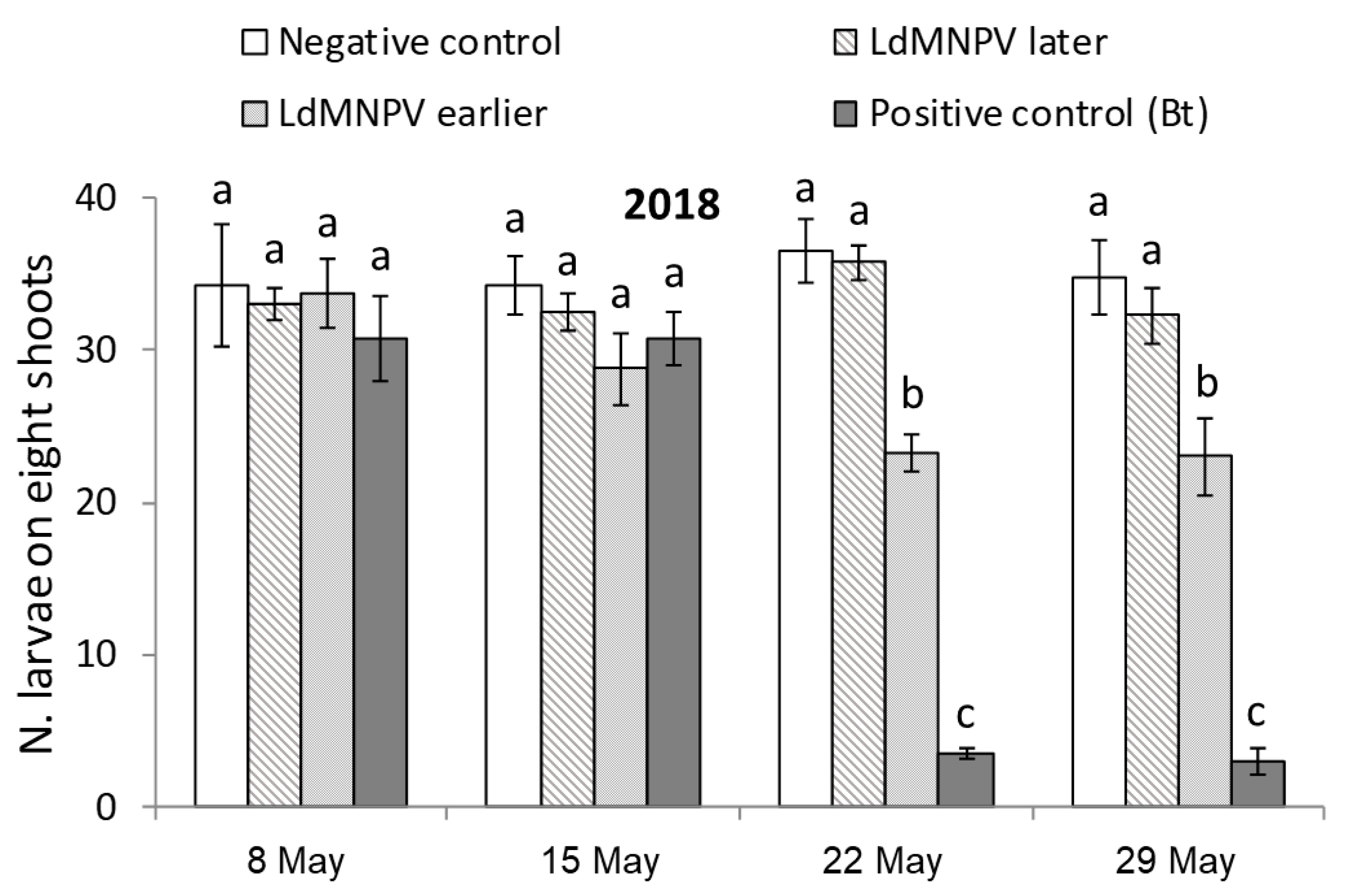
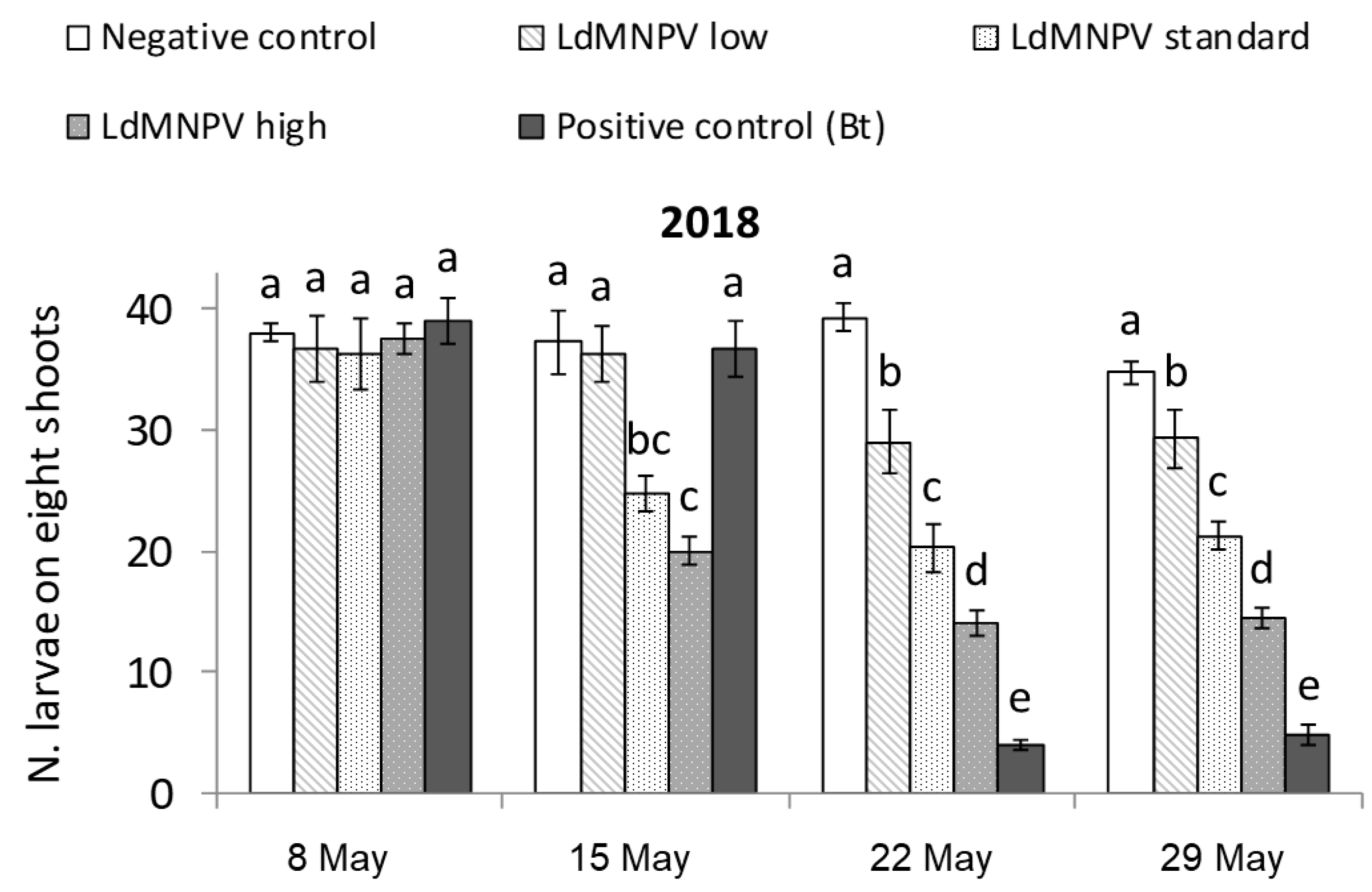
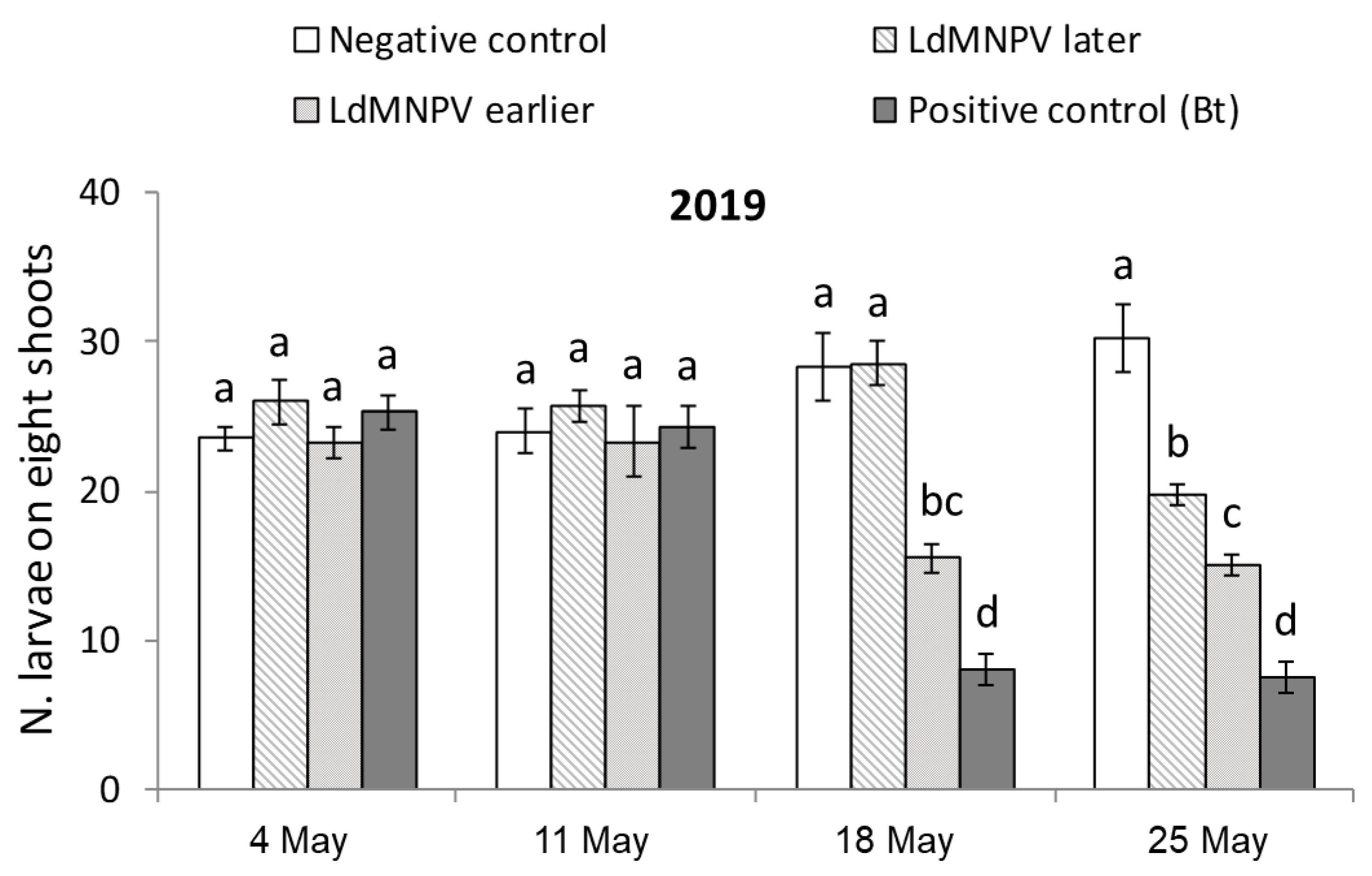
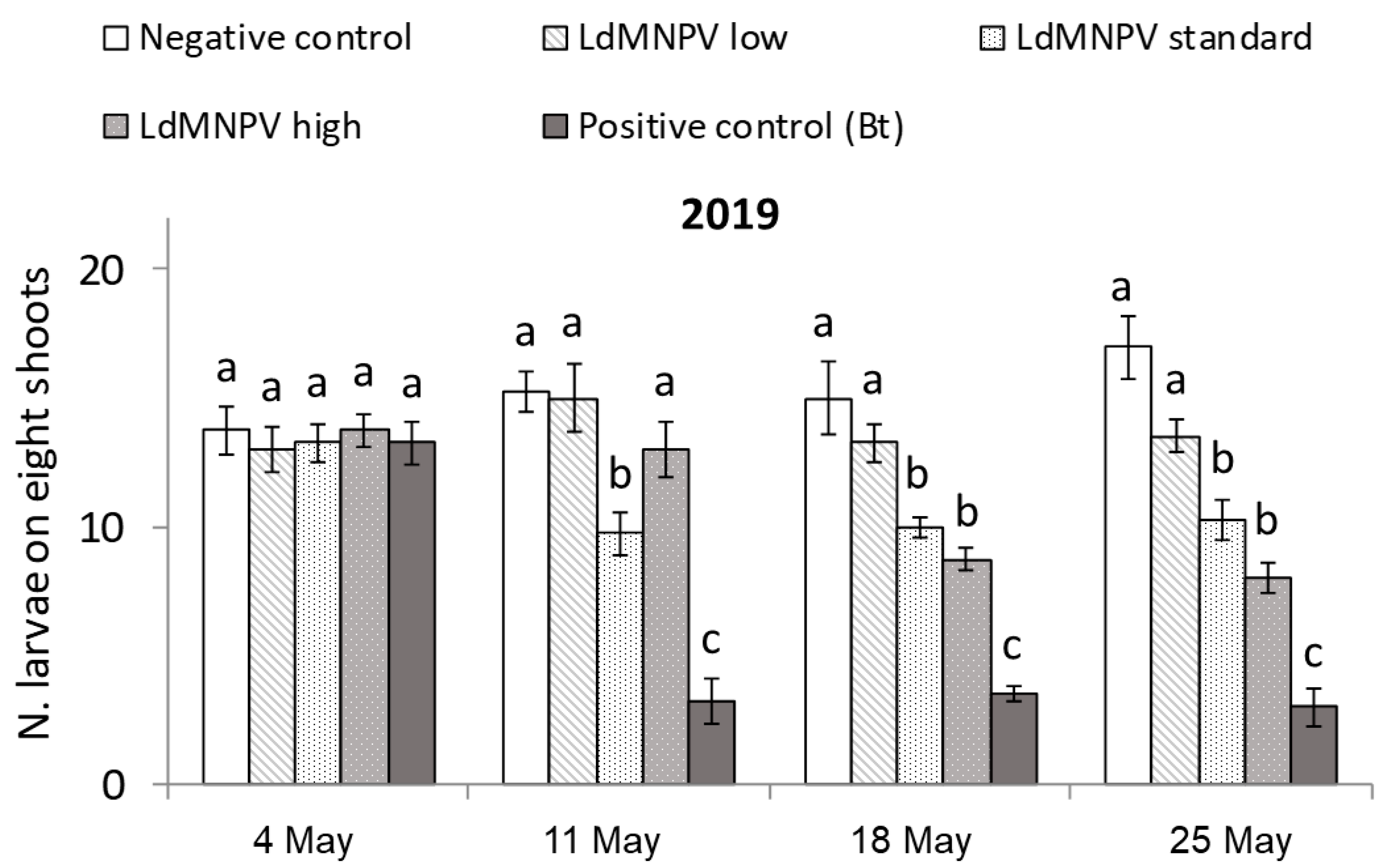
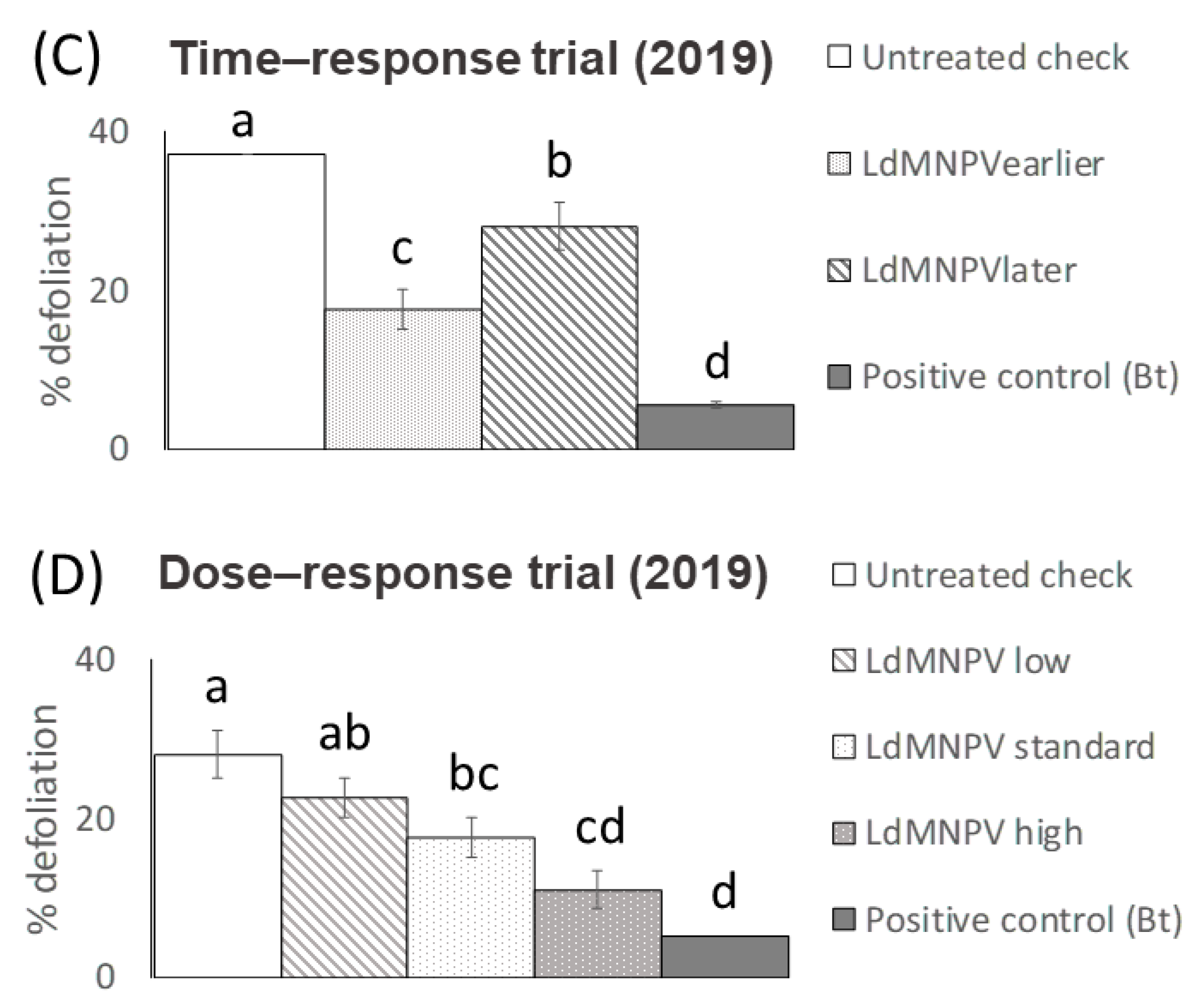
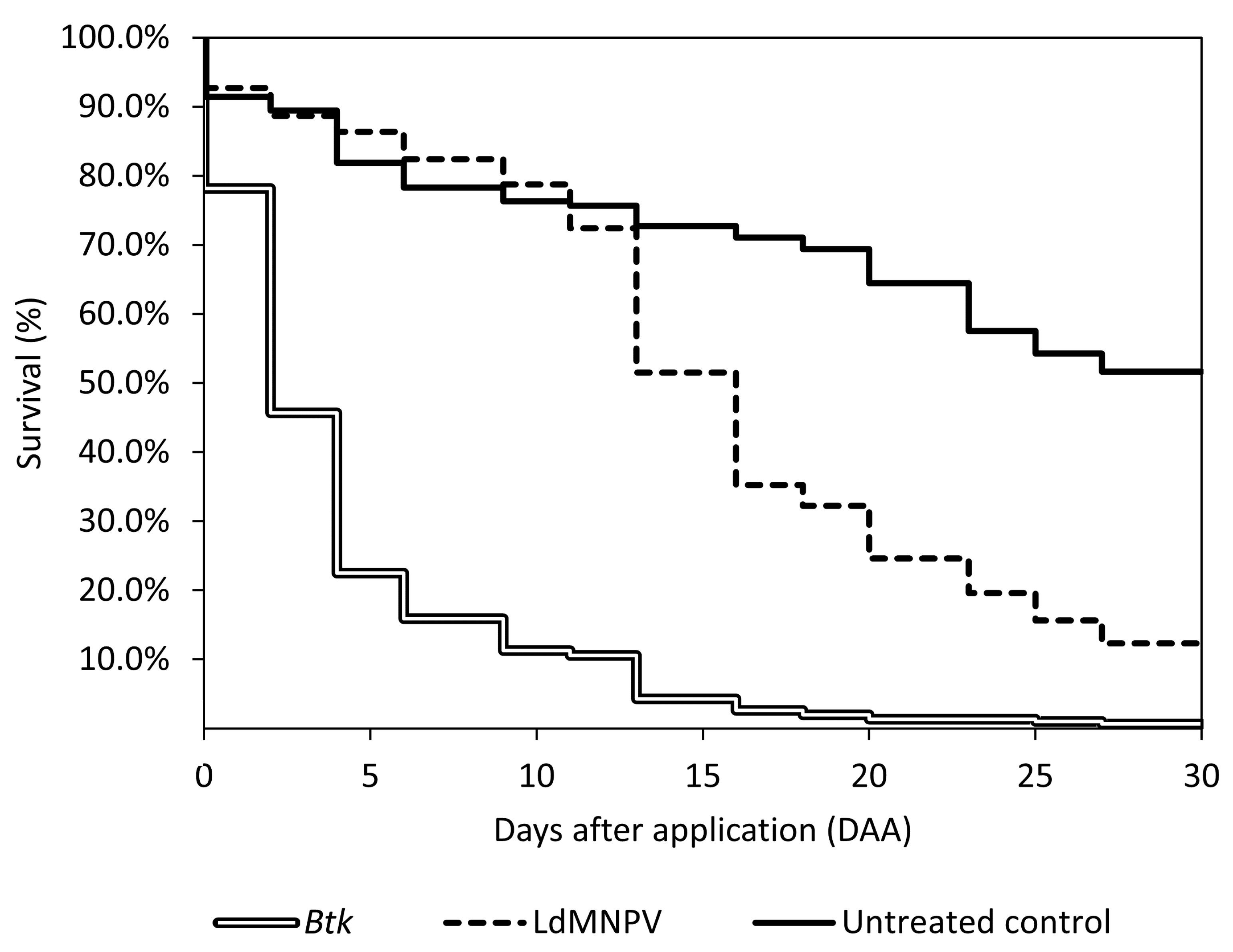
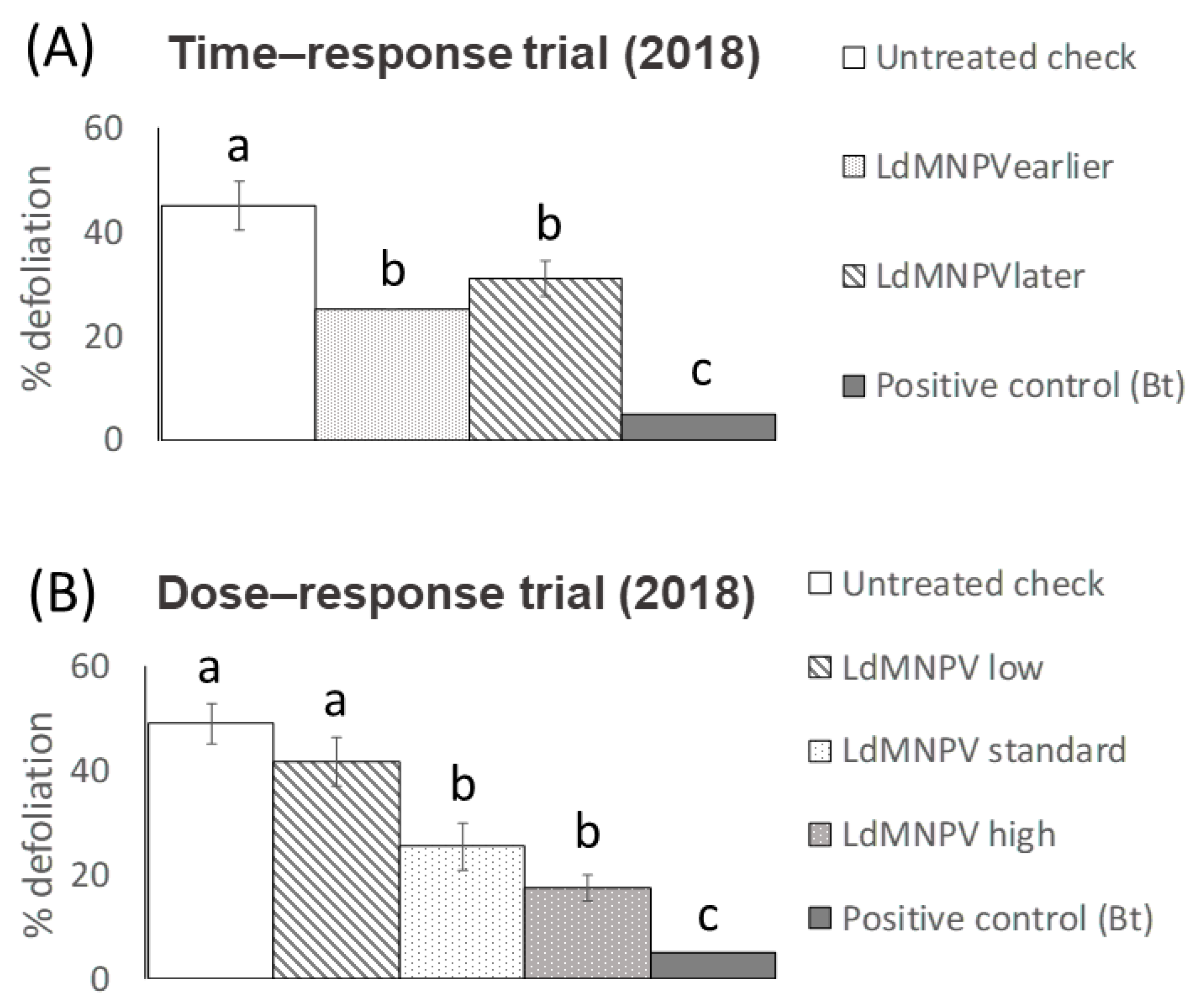
(1) Research Highlights: Applications of a species-specific baculovirus is a promising method to control the gypsy moth and regulate its population dynamics in forest ecosystems. (2) Background and Objectives: Cork oak protection against the Lepidopteran defoliator Lymantria dispar requires an appropriate forest ecosystem management program, involving the application of eco-sustainable microbial products during population outbreaks. The species-specific multicapsid nucleopolyhedrovirus (LdMNPV), agent of natural epizootics in gypsy moth populations, represents an option that was investigated in a multi-year field study, involving viral applications either from the ground or by aerial treatment. (3) Materials and Methods: Efficacy trials against L. dispar populations were conducted in 2018 and 2019 in Sardinia, according to a randomized block design. Each year, two trials were conducted, applying a baculovirus commercial formulation with an atomizer from the ground and assessing the effects of different doses and application timing, respectively. An aerial application trial distributing LdMNPV at ultra-low volumes (2 L/ha) was also conducted in 2019 to assess the virus efficacy at a larger field scale. (4) Results: In both years, a significant increase in larval mortality was detected in plots treated with higher viral occlusion body (OB) doses and with an earlier application targeting younger larvae, in comparison with untreated controls. Due to an observed retrogradation phase of the target pest in 2019, no significant differences in larval density between areas treated from a helicopter and control were detected, but in the few weeks following application, a meaningful vitality decrease in larval samples from treated plots was observed. (5) Conclusions: Based on the results of this study, the use of LdMNPV in forest protection programs against gypsy moth can be worth consideration in multi-year integrated program strategies to modulate population dynamics.
Keywords: biocontrol; bioinsecticide; entomopathogen; microbial; ecosystem biocontrol; bioinsecticide; entomopathogen; microbial; ecosystem