Article

Wood Pastures: A Transitional Habitat between Forests and Pastures for Dung Beetle Assemblages


1
Lendület Ecosystem Services Research Group, Centre for Ecological Research, Institute of Ecology and Botany, 2-4 Alkotmány utca, 2163 Vácrátót, Hungary
2
GINOP Ecosystems Group, Centre for Ecological Reseach, 3 Klebelsberg Kuno utca, 8237 Tihany, Hungary
3
Department of Zoology and Ecology, Szent István University, 1 Páter Károly utca, 2100 Gödöllő, Hungary
4
Centre for Ecological Reseach, Institute of Ecology and Botany, 2-4 Alkotmány utca, 2163 Vácrátót, Hungary
*
Author to whom correspondence should be addressed.
Forests 2021, 12(1), 25; https://doi.org/10.3390/f12010025
Submission received: 24 November 2020 / Revised: 19 December 2020 / Accepted: 22 December 2020 / Published: 28 December 2020
(This article belongs to the Special Issue Spatial Heterogeneity of Forest-Steppes)

Abstract

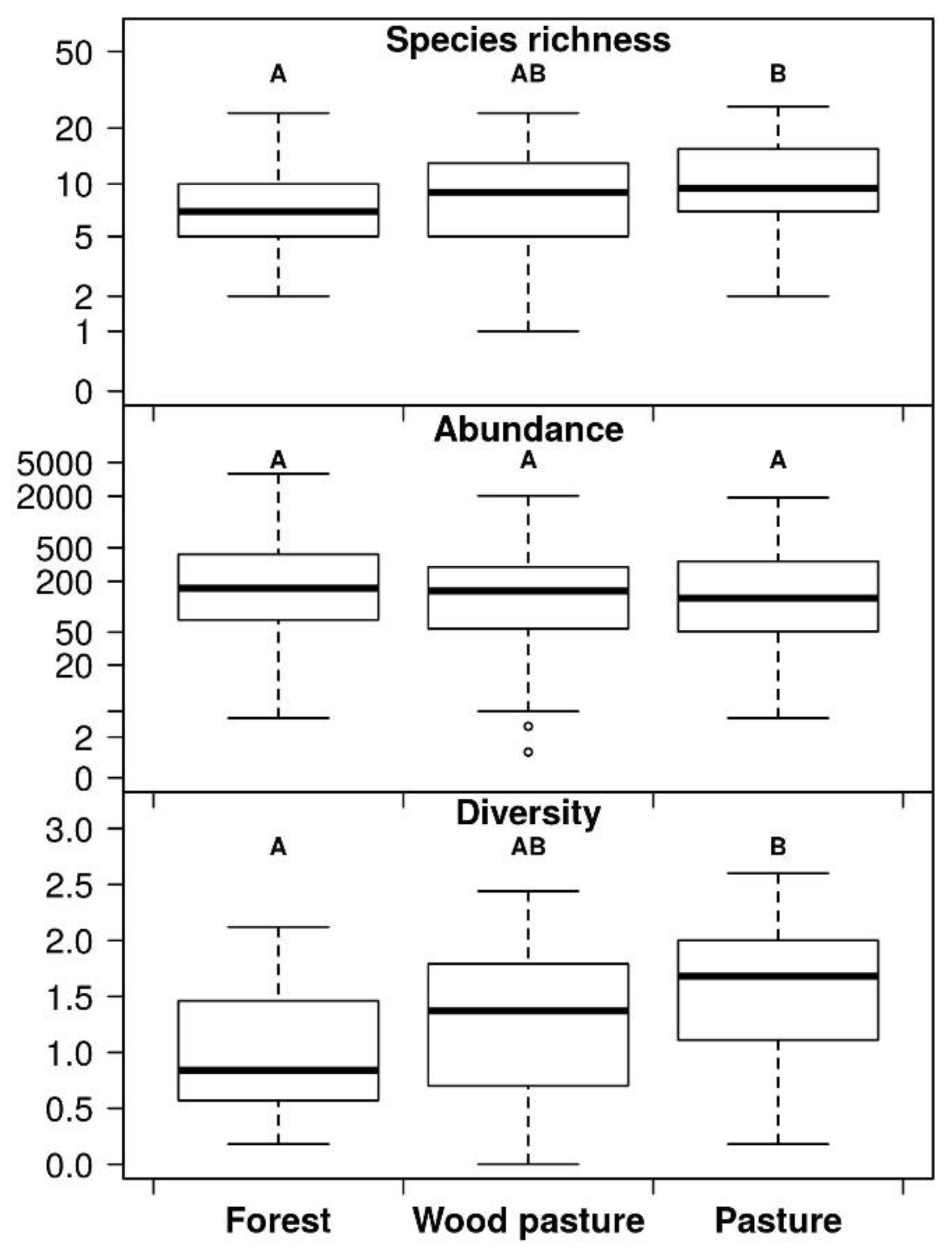
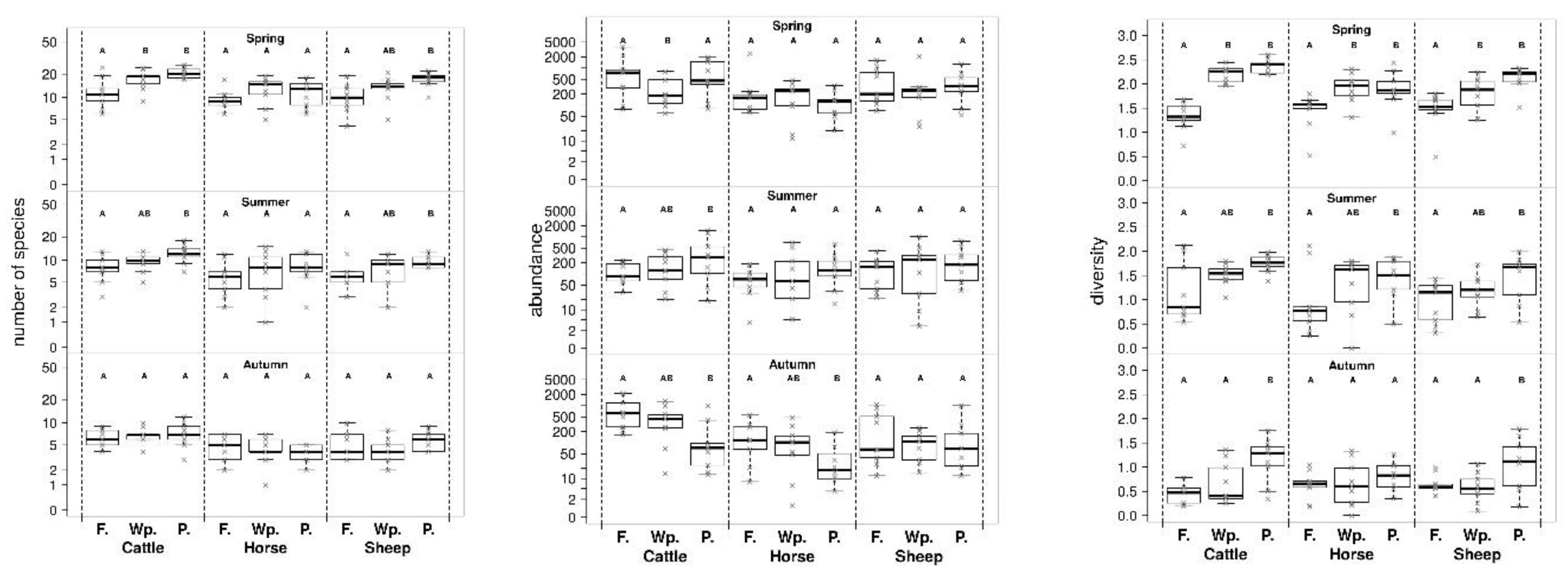
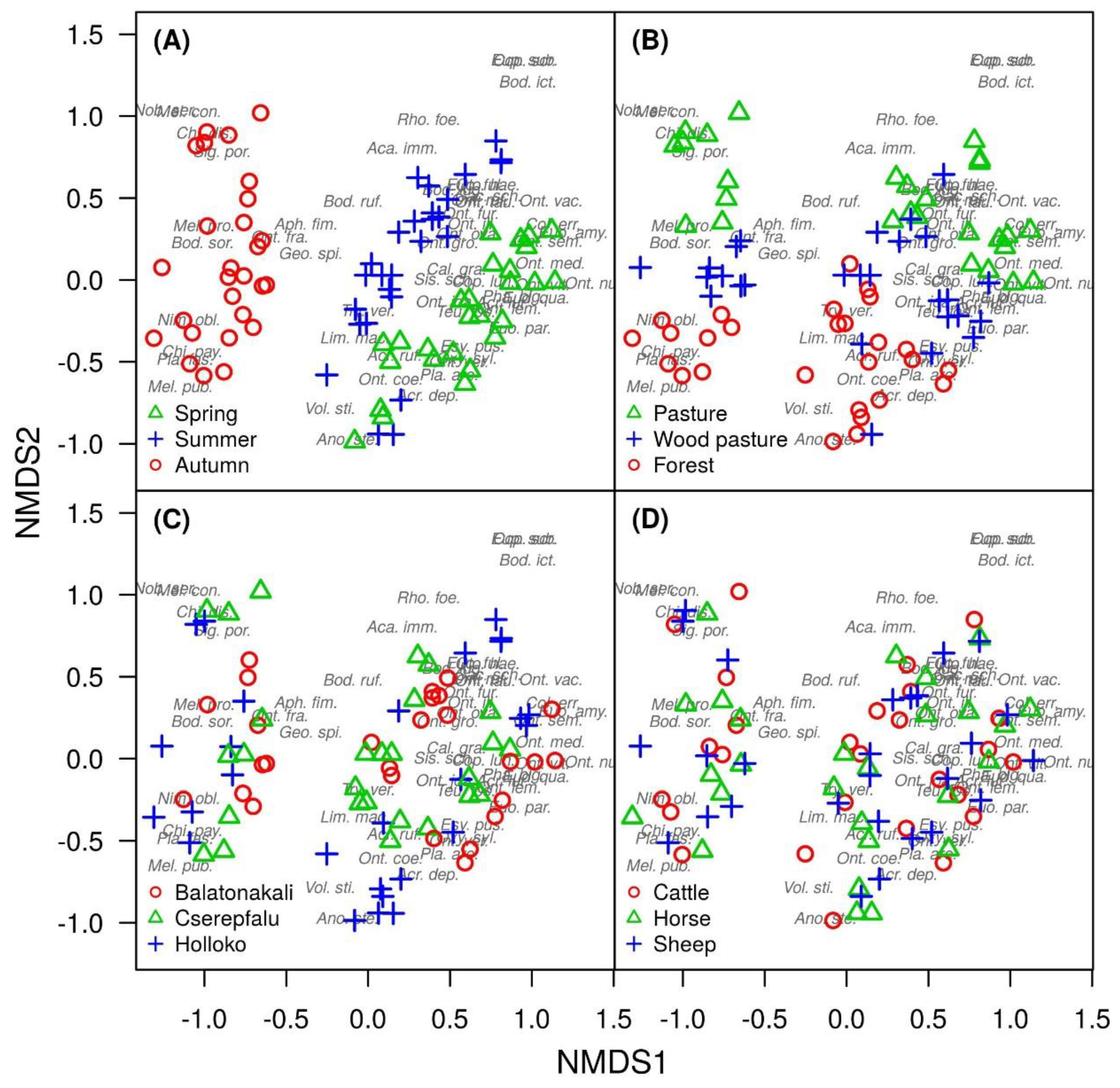
Wood pastures are home to a variety of species, including the dung beetle. Dung beetles are an important functional group in decomposition. Specifically, in terms of livestock manure, they not only contribute to nutrient cycling but are key players in supporting human and animal health. Dung beetles, however, are declining in population, and urgent recommendations are needed to reverse this trend. Recommendations need to be based on solid evidence and specific habitats. Herein, we aimed to investigate the role of an intermediate habitat type between forests and pastures. Wood pastures are key areas for dung beetle conservation. For this reason, we compared dung beetle assemblages among forests, wood pastures, and grasslands. We complemented this with studies on the effects of dung type and season at three Hungarian locations. Pitfall traps baited with cattle, sheep, or horse dung were used in forests, wood pastures, and pasture habitats in spring, summer, and autumn. Dung beetle assemblages of wood pastures showed transient characteristics between forests and pastures regarding their abundance, species richness, Shannon diversity, assemblage composition, and indicator species. We identified a strong effect of season and a weak of dung type. Assemblage composition proved to be the most sensitive measure of differences among habitats. The conservation of dung beetles, and the decomposition services they provide, need continuous livestock grazing to provide fresh dung, as well as the maintenance of wood pastures where dung beetle assemblages typical of forests and pastures can both survive.
Keywords: abundance; community composition; decomposition; Shannon diversity; ecosystem service; Geotrupidae; grassland; indicator species; land use; Scarabaeidae; species richness abundance; community composition; decomposition; Shannon diversity; ecosystem service; Geotrupidae; grassland; indicator species; land use; Scarabaeidae; species richness