3.2. Sound Absorption
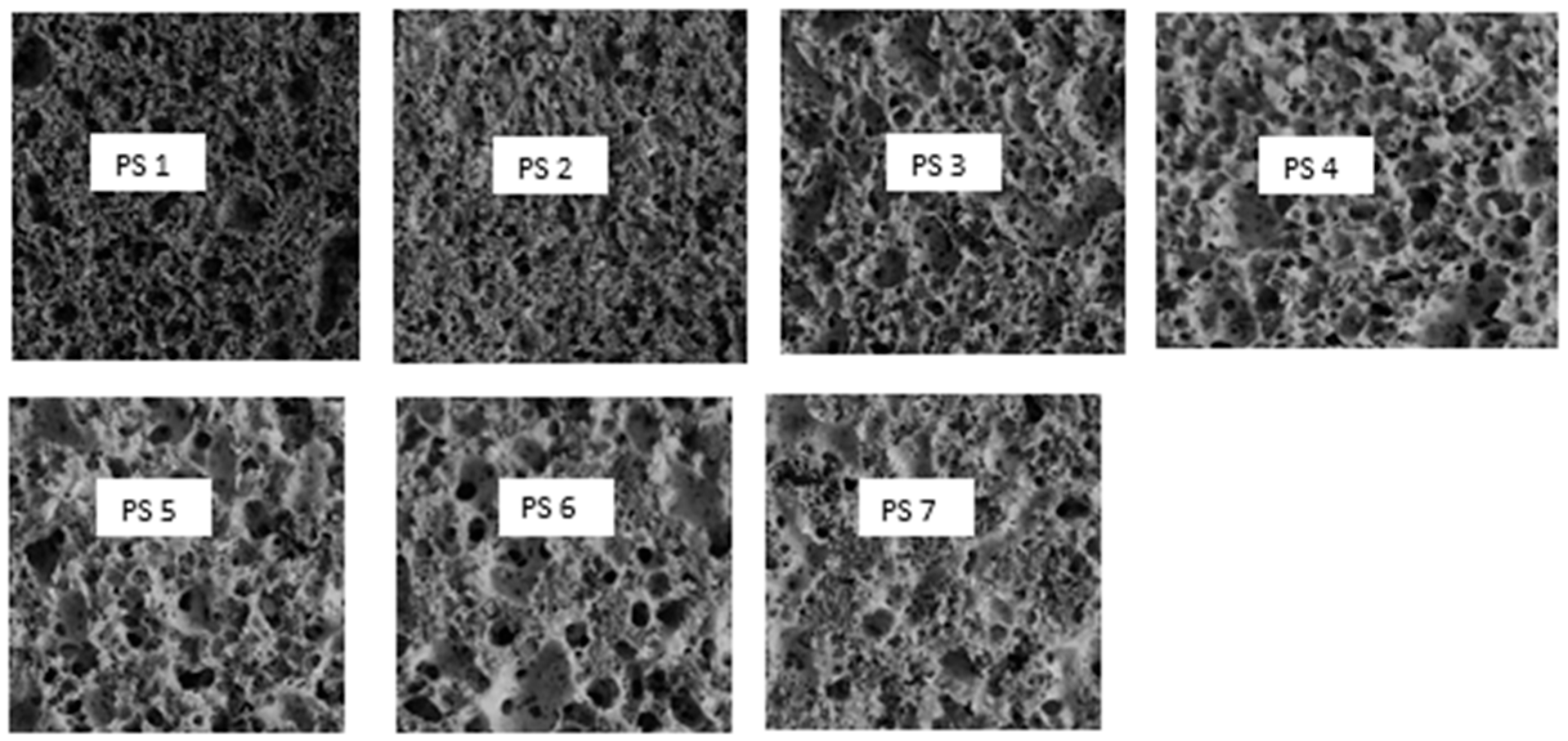
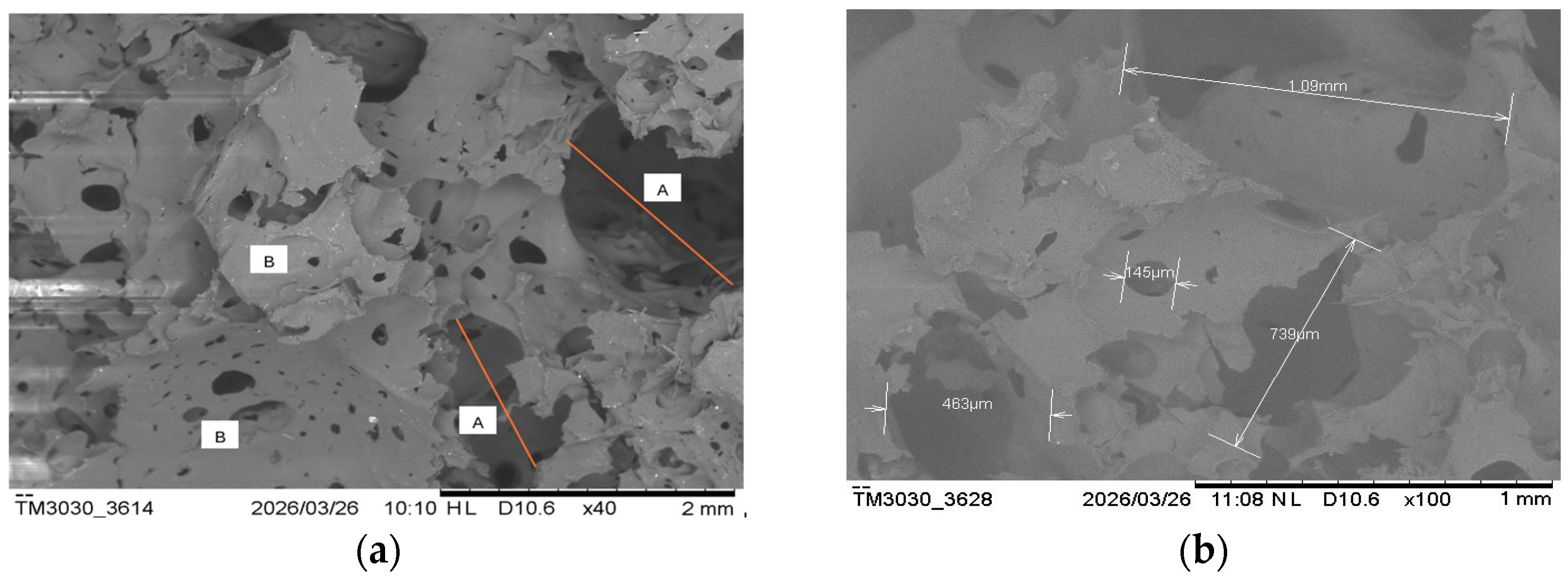
Sound waves typically induce vibrations in cell walls and the air within cavities, with sound energy being emitted by the dampening of these vibrations in the cavity walls and air [
29,
30,
31]. Furthermore, sound absorption performance can be enhanced through sound damping, which can be augmented by increasing the rigidity of cell walls [
29,
32,
33]. Also, interconnectedness, along with the quantity, dimensions, and characteristics of pores, are significant considerations. These factors should be taken into account when examining sound absorption mechanisms in porous materials, as the penetration of acoustic waves into the porous structure governs the dissipation of acoustic energy through visco-thermal interactions [
29,
34]. The reduction in cavity size in an open pore structure often results in heightened airflow resistance and enhanced sound absorption performance [
29,
35,
36]. In addition, the increase in interconnectivity within porous media may create irregular pathways for sound wave transmission. In this context, large porous cells or interconnected cells enhance sound absorption at lower frequencies.
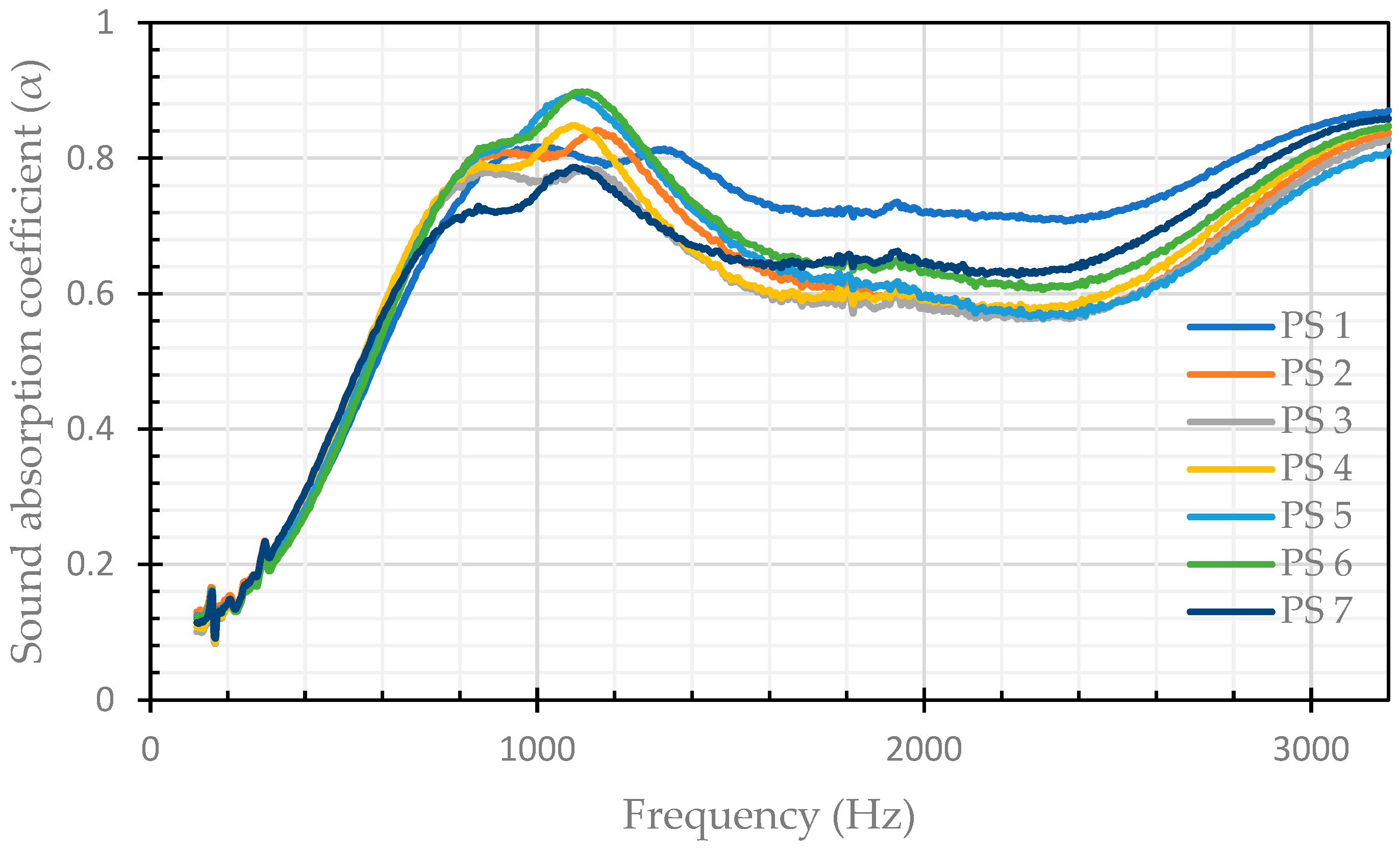
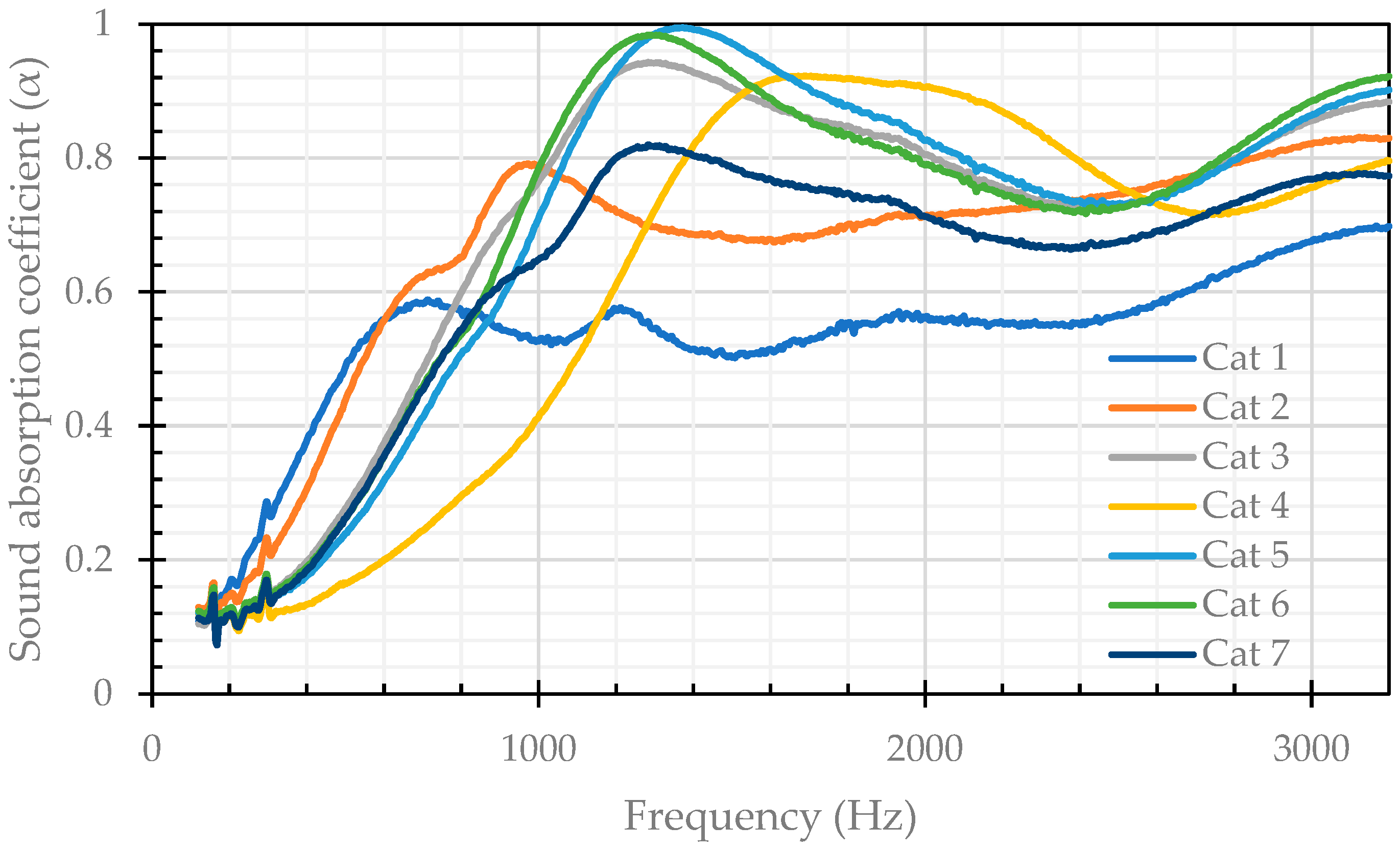
The sound absorption behaviour of the composite samples with particle size variation and those with varying catalyst concentration is presented in
Figure 5 and
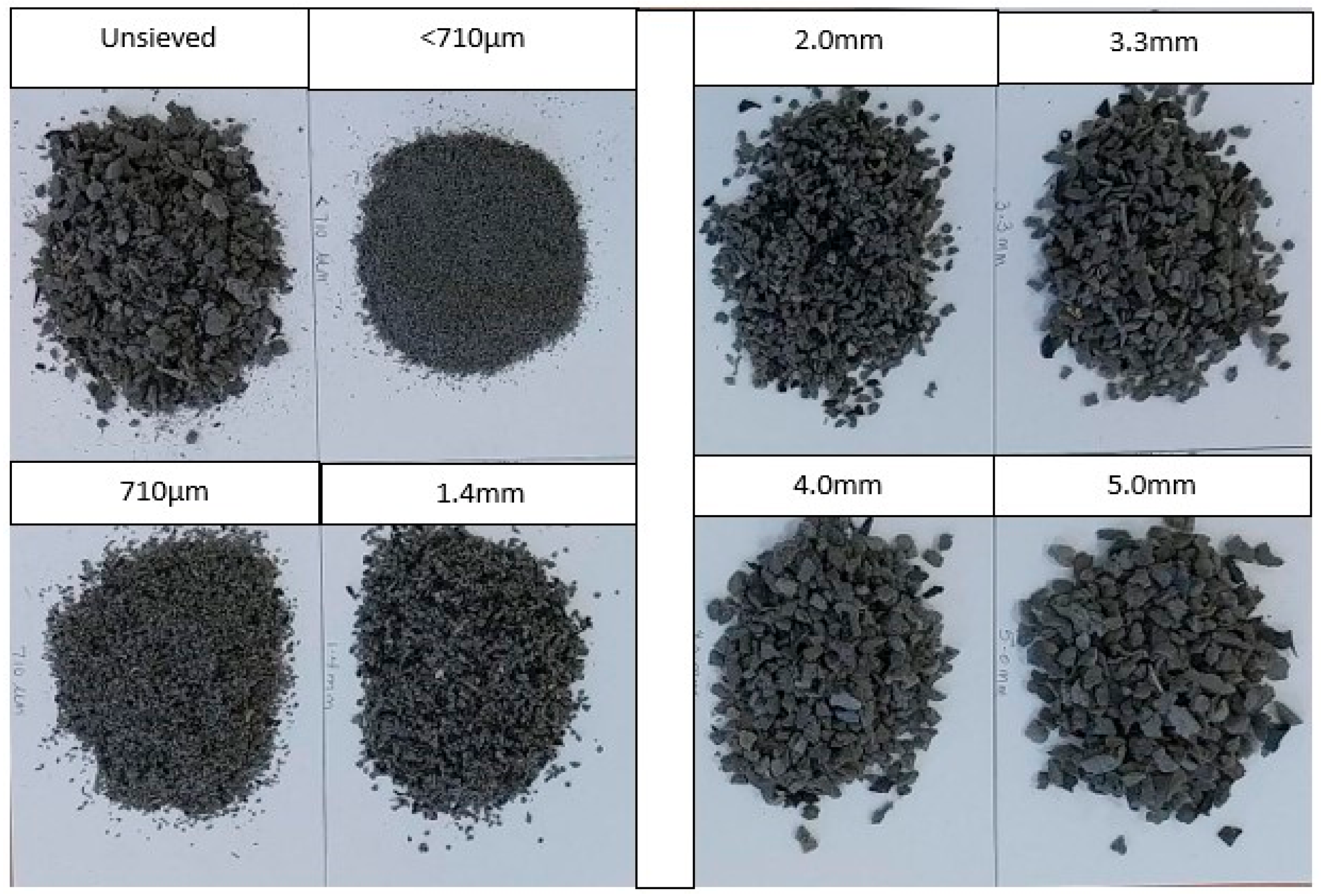
Figure 6. The results indicate that variations in particle size had a relatively limited influence on the acoustic performance of recycled materials. Across the different particle size fractions, the absorption curves followed a similar trend, with peak absorption coefficients of approximately 0.85 observed within the mid-frequency range of 1000–1400 Hz. This suggests that, within the investigated range, particle size distribution does not significantly alter the dominant sound absorption mechanisms, likely due to the preservation of overall pore connectivity and structural characteristics in the composites.
In contrast, catalyst concentration exhibited a pronounced effect on the acoustic performance of the materials. Increasing the catalyst content from 1 wt% to 5 wt% resulted in a progressive improvement in sound absorption, indicating enhanced pore structure development and more effective energy dissipation within the material. Notably, the sample with 5 wt% catalyst (Cat5) demonstrated near-complete absorption of incident sound waves, with absorption coefficients approaching unity within the frequency range of 1200–1800 Hz. This indicates that the system exhibits a well-defined optimum rather than a monotonic trend, which is characteristic of process-driven optimisation problems.
However, further increases in catalyst concentration beyond 5 wt% led to a decline in acoustic performance. This behaviour suggests the existence of an optimal catalyst concentration, beyond which the reaction kinetics become excessively rapid, potentially resulting in non-uniform cell structures, increased pore coalescence, or reduced structural integrity. Such effects can negatively impact airflow resistivity and tortuosity, thereby reducing sound absorption efficiency.
Overall, the results demonstrate that catalyst concentration is a critical parameter in the formulation of the recycled composites, with an optimal value of approximately 5 wt% identified for maximising acoustic performance. Similar trends were reported by A. Khan, 2017, where the sound absorption coefficient of recycled tyre shred residue (TSR) was optimised by varying the binder-to-TSR ratio [
37]. This finding highlights the importance of controlled reaction kinetics in achieving desirable pore structures and provides a clear basis for formulation optimisation in subsequent analysis.
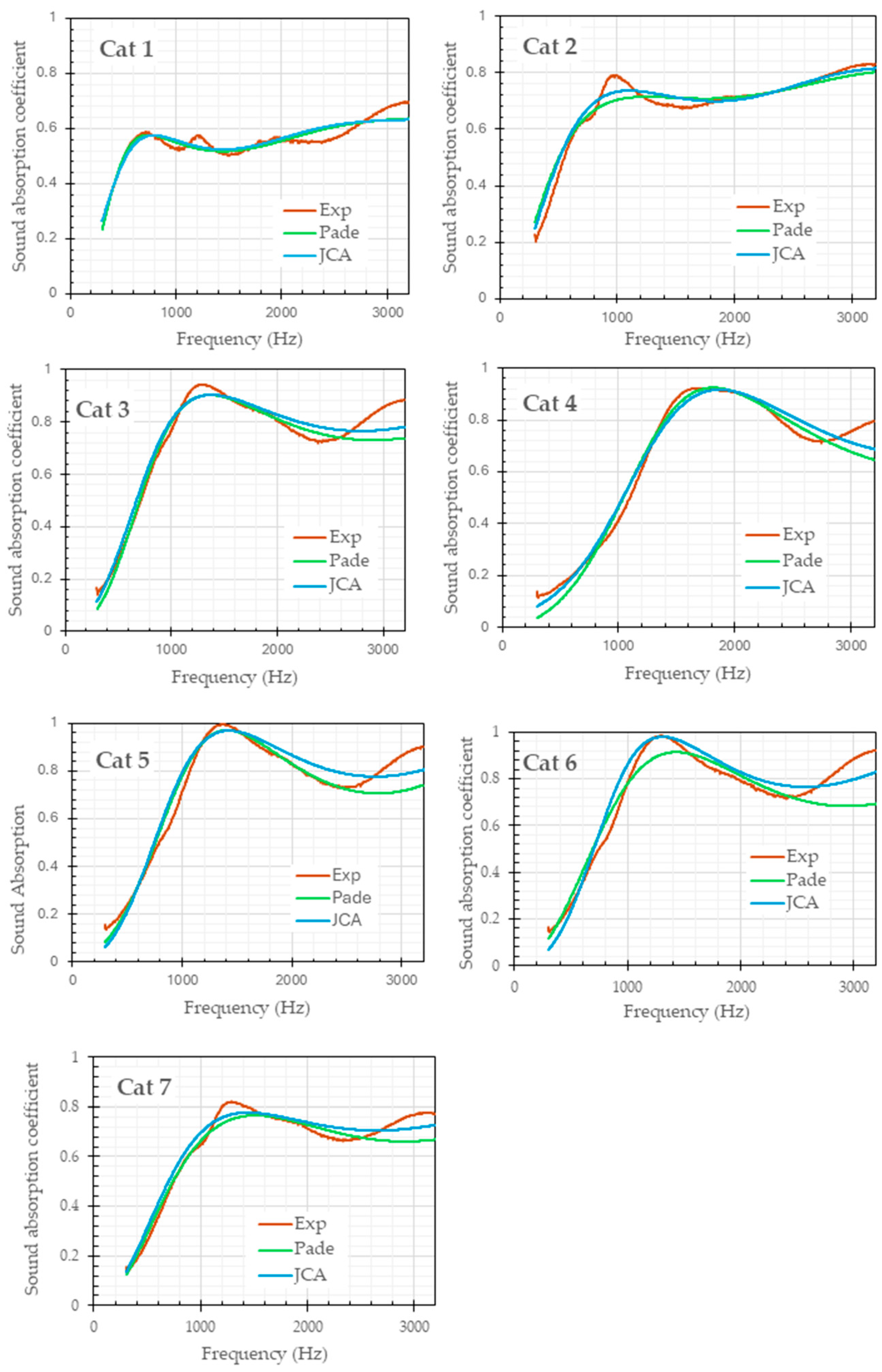
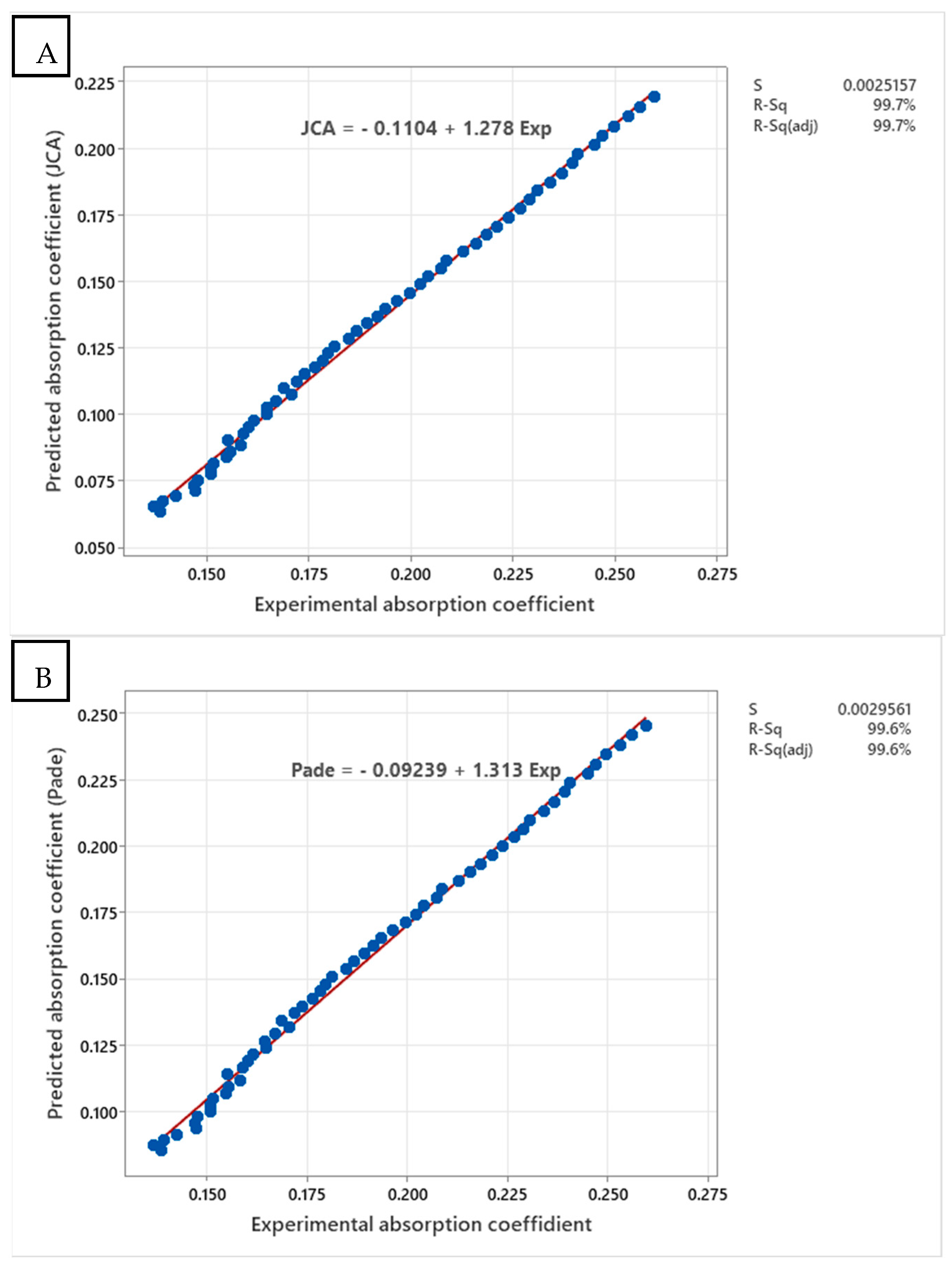
Figure 7 below shows the comparison between experimental and model-predicted sound absorption coefficients for the catalyst-based samples. Both the Padé approximation and JCA model generally show good agreement with the experimental results across the investigated frequency range. The models successfully capture the major absorption peaks and overall acoustic trends observed experimentally.
For lower catalyst concentrations (Cat1–Cat3), slight deviations are observed at higher frequencies, where the models tend to underpredict the experimental absorption behaviour. In contrast, stronger agreement is observed for Cat4–Cat6, particularly around the primary absorption peak region.
Although some discrepancies remain at higher frequencies, the overall results confirm the capability of both modelling approaches to predict the acoustic performance of the developed composites. The Padé approximation generally exhibits slightly lower error values, indicating improved predictive accuracy for several catalyst configurations.
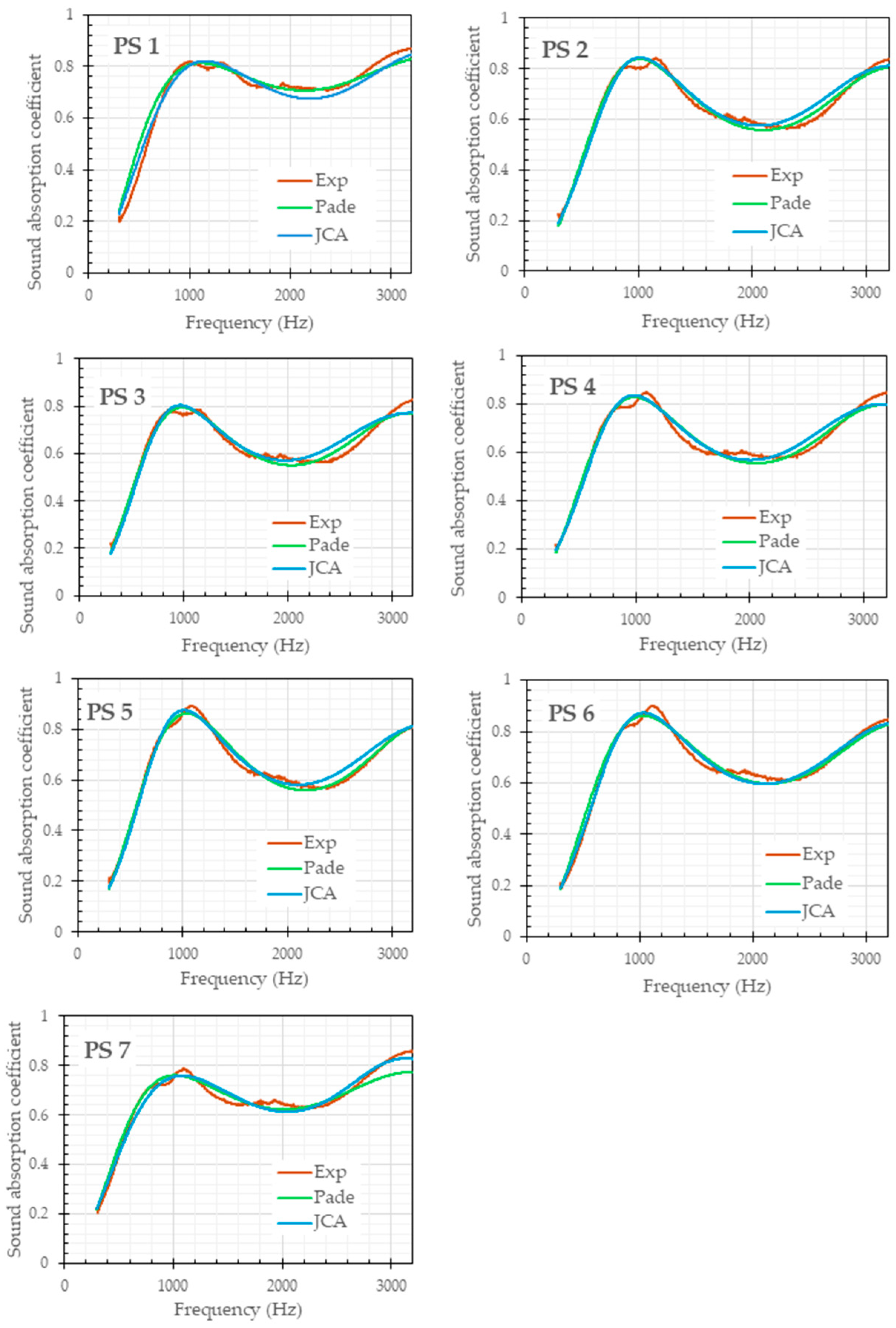
Figure 8 also compares the experimental and model-predicted sound absorption coefficients for the particle size (PS) samples. Both the Padé approximation and JCA model.
These exhibit strong agreement with the experimental data across all particle size variations. The predicted curves closely follow the experimental absorption behaviour, particularly within the low- and mid-frequency regions. Minor deviations are observed at higher frequencies, where the models slightly smooth out some experimental fluctuations. Nevertheless, the overall acoustic trends and resonance behaviour are effectively captured by both models. Compared with the JCA model, the Padé approximation generally provides slightly improved agreement with the experimental data, particularly in terms of reduced deviation around the absorption minima and peak regions.
The close agreement observed across all PS samples supports the robustness and reliability of the modelling framework for predicting the acoustic behaviour of recycled polymeric composites with varying particle sizes.
The predictive capability of the developed acoustic models was evaluated by comparing experimentally measured sound absorption coefficients with those obtained from the Johnson–Champoux–Allard (JCA) model and Padé approximation across the investigated frequency range.
As shown in
Figure 7 and
Figure 8, both models successfully capture the overall trend of the acoustic response, characterised by a gradual increase in absorption at low frequencies, followed by a peak in the mid-frequence range (approximately 1000–1400 Hz), and a subsequent variation at higher frequencies. This behaviour is consistent with typical porous acoustic materials, where sound absorption is governed by viscous and thermal dissipation mechanisms within the pore structure.
The Padé approximation demonstrates close agreement with the experimental data across most of the frequency spectrum, particularly in the low- and mid-frequency regions. Its ability to accurately reproduce the peak absorption behaviour indicates that it effectively captures the dominant acoustic mechanisms while maintaining computational simplicity.
From an optimisation perspective, the Padé approximation offers a significant advantage due to its reduced computational complexity and strong agreement with experimental data. This makes it particularly suitable for iterative optimisation processes, where repeated evaluations of acoustic performance are required. The JCA model, on the other hand, provides valuable physical insight into the relationship between microstructural parameters and acoustic behaviour, supporting the interpretation of experimental trends.
Overall, the combined use of the JCA model and Padé approximation provides a robust framework for both understanding and optimising the acoustic performance of the developed composites. While the JCA model offers a physically informed basis for analysis, the Padé approximation enables efficient prediction, making it a practical tool for formulation optimisation. The table below shows the experimental data and the modelled data for the acoustic parameters.
The parameters presented in
Table 4 and
Table 5 represent both experimentally measured and model-predicted values used in the acoustic modelling framework. Porosity (ϕ), airflow resistivity (σ), and tortuosity (α
∞) were determined experimentally. The JCA and Padé values correspond to model predictions based on the measured input parameters. The results from
Table 4 and
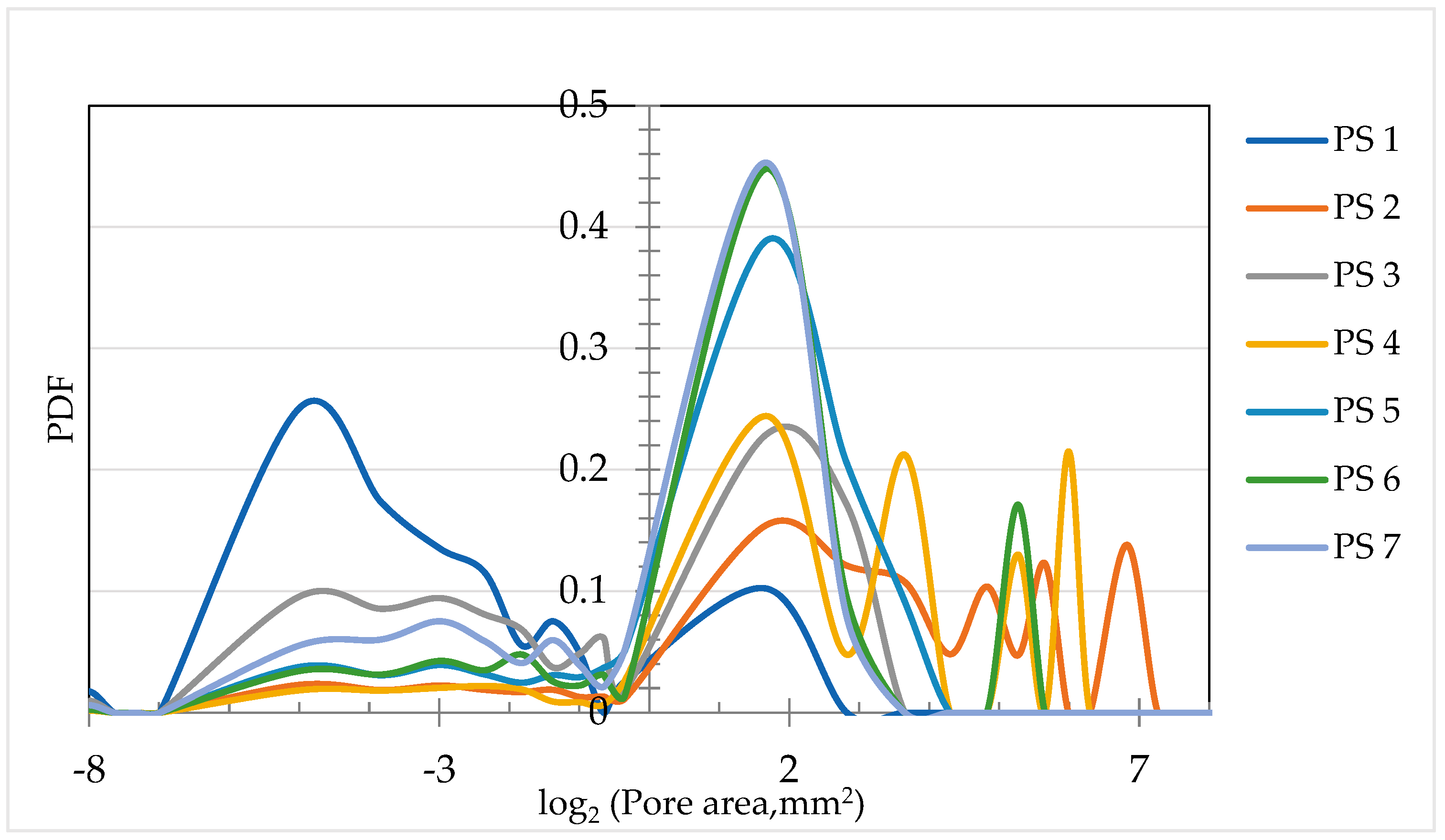
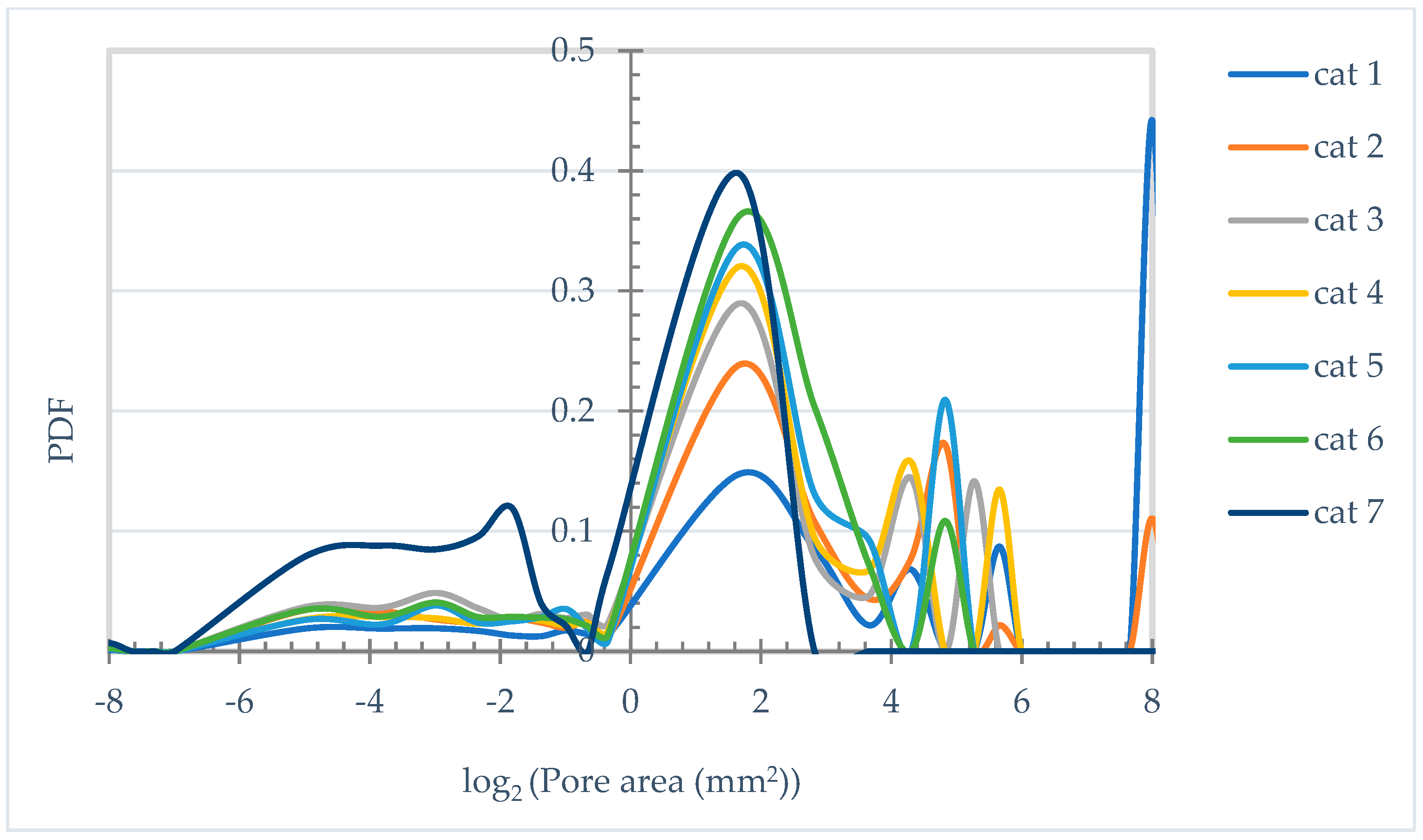
Table 5 show the effect of the formulation on the acoustic and non-acoustic behaviour of the recycled granulates. Increasing the particle size of the formulation tends to reduce the porosity and increase the airflow resistivity. Conversely, increasing the catalyst was observed to increase the porosity and reduce the airflow resistivity up to Cat5 (5 wt%).
To further demonstrate the applicability of the modelling framework in acoustic analysis, the modelling approach considered key physical parameters influencing porous acoustic behaviour, including material thickness, airflow resistivity, porosity, tortuosity, and particle size distribution (PSD)-related structural characteristics. These parameters are closely associated with the microstructural and transport behaviour of porous media and influence the frequency-dependent acoustic response of the developed composites. Experimentally obtained sound absorption data were imported into MATLAB, where the Johnson–Champoux–Allard (JCA) framework and Padé approximation was implemented to analyse and predict the acoustic behaviour over the investigated frequency range. The Padé approximation was employed to express the dynamic density and bulk modulus in a simplified analytical form, thereby improving computational efficiency during the modelling process. The combined experimental and computational approach provides additional insight into the relationship between porous structure and acoustic performance while supporting efficient acoustic analysis of recycled automotive polymeric composites. The model helps to optimise composite formulations by including quantifiable properties mentioned earlier, making it possible to find the best combinations of parameters for sound absorption performance. This shows that the Padé-based framework could be a useful tool for predicting and designing sustainable acoustic materials.
To further evaluate the predictive performance of the modelling approaches, quantitative validation was conducted across all PS and Cat samples using mean absolute error (MAE), root mean square error (RMSE), and coefficient of determination (R
2) as presented in
Table 6 and
Table 7. The results show that both JCA and Padé models exhibit strong predictive capability with consistently high R
2 values ranging from 0.94 to 0.99 across all samples. This confirms that both models effectively capture the overall trend of the experimental data. In terms of prediction accuracy, Padé approximation of PS samples show lower MAE and RMSE with values around 0.02 and 0.02–0.04, respectively. In comparison, the JCA model shows slightly higher error values for these samples, indicating marginally lower predictive accuracy, although the high R
2 values confirm that it still provides a strong representation of the experimental trends.
For the Cat samples, the performance of the two models is more comparable. While the Padé approximation exhibits improved accuracy for certain samples like Cat6, the JCA model performs similarly or slightly better in others as shown in Cat1 and Cat2. This suggests that the relative performance of the models is influenced by formulation parameters such as catalyst concentration.
Overall, the combined use of MAE, RMSE, and R2 provides a robust validation framework, demonstrating that both models are suitable for predicting acoustic performance. However, the Padé approximation offers a slight advantage in predictive accuracy and computational efficiency, particularly for particle size variations, making it a practical tool for optimisation and material design applications.
Although quantitative validation metrics (RMSE, MAE, and R
2) were evaluated for all investigated samples, Cat5 was selected for detailed graphical comparison because it exhibited one of the highest acoustic performances and demonstrated strong agreement between the experimentally measured and model-predicted absorption coefficients. The graphical representation therefore serves as a representative example illustrating the predictive capability of the implemented JCA/Padé-based computational framework, while the broader validation results for all samples are summarised in
Table 6 and
Table 7.
The comparison between model predictions and experimental data observed in this study is consistent with findings reported in the literature for porous materials. Previous studies have shown that models such as the JCA and JCAL generally provide good agreement with measured absorption behaviour, particularly when model parameters are obtained through fitting procedures. However, it has also been noted that such agreement may be influenced by the fitting process itself, which can introduce non-uniqueness in parameter estimation [
22].
In addition, discrepancies between predicted and experimental absorption spectra are often observed at higher frequencies, where models tend to exhibit more pronounced resonance behaviour than measured data. This difference has been attributed to factors such as bandwidth differences between measurements and predictions, as well as additional damping mechanisms not captured by the models. Surface characteristics, including roughness and structural irregularities, may also contribute to enhanced sound absorption in real materials compared to idealised model predictions [
38,
39].
These observations support the trends obtained in the present study, where strong overall agreement is achieved between model predictions and experimental results, with some deviations attributable to modelling assumptions and material heterogeneity.