Article

Adversarial Validation in Image Classification Datasets by Means of Cumulative Spectral Gradient


1
Facultad de Ingeniería, Universidad Militar Nueva Granada, Carrera 11 101-80, Bogotá 110111, Colombia
2
Facultad de Ingeniería, Universidad Panamericana, Augusto Rodin 498, Ciudad de México 03920, Mexico
*
Author to whom correspondence should be addressed.
Algorithms 2024, 17(11), 531; https://doi.org/10.3390/a17110531
Submission received: 11 October 2024 / Revised: 8 November 2024 / Accepted: 14 November 2024 / Published: 19 November 2024
(This article belongs to the Special Issue Machine Learning Algorithms for Image Understanding and Analysis)

Abstract

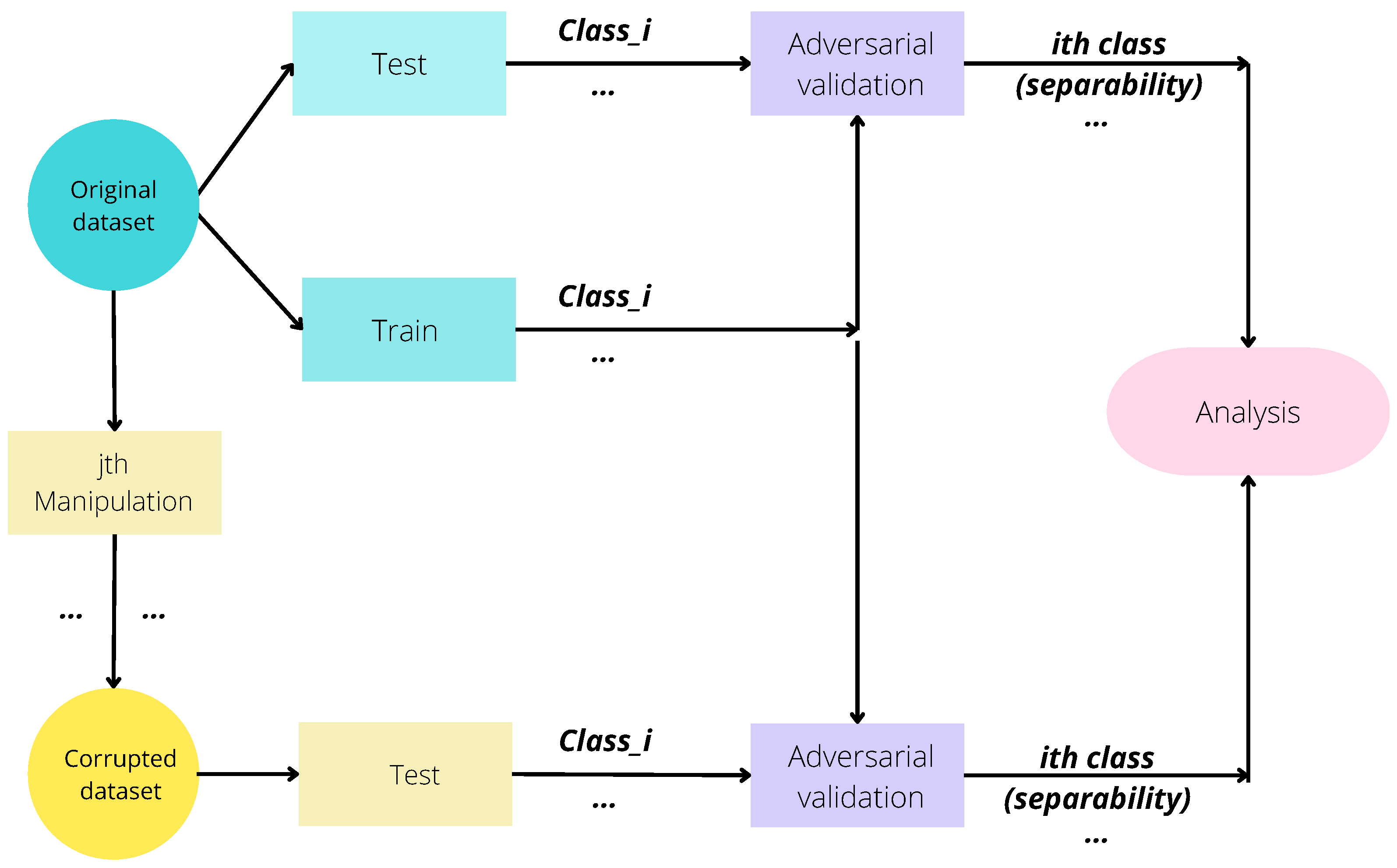
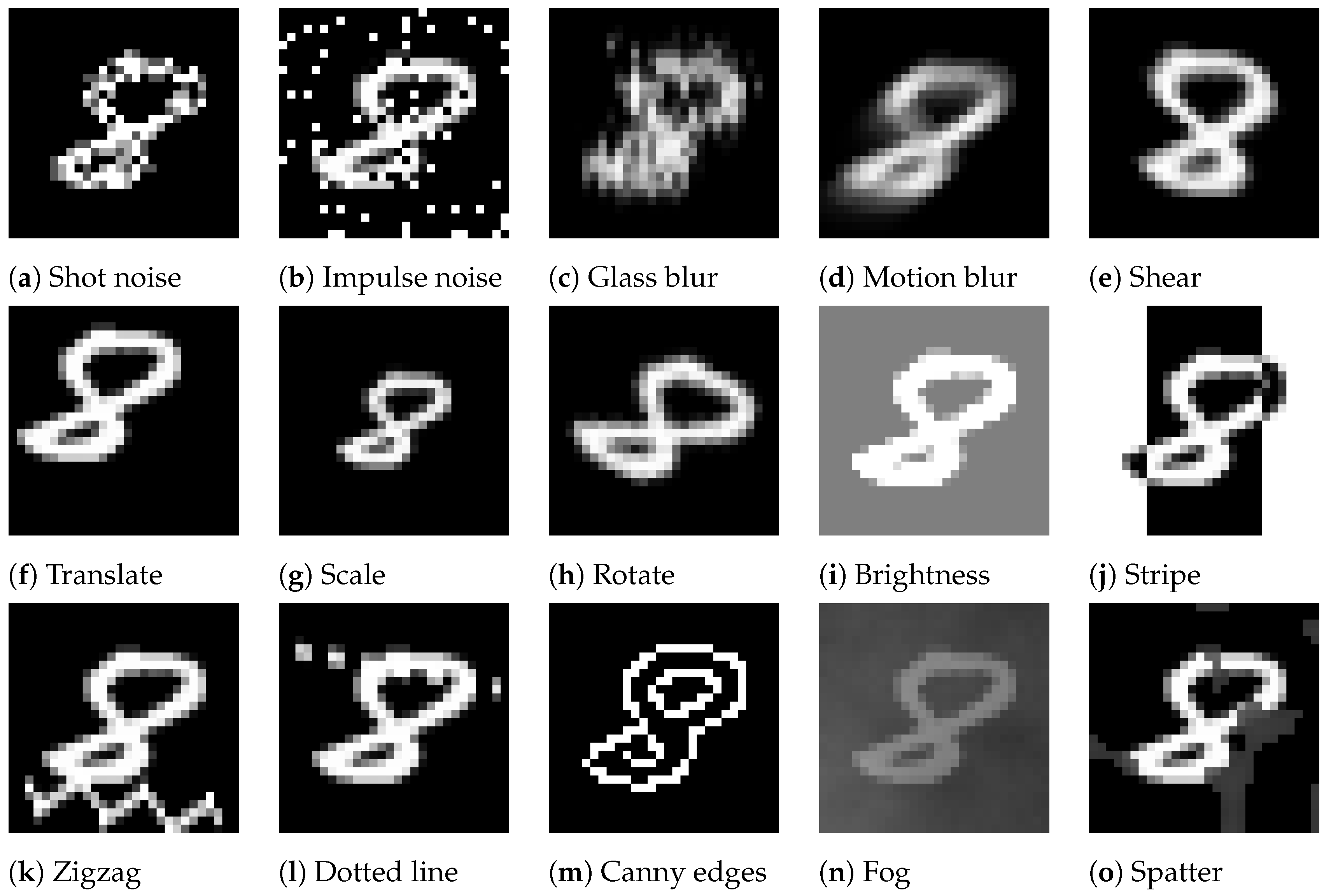
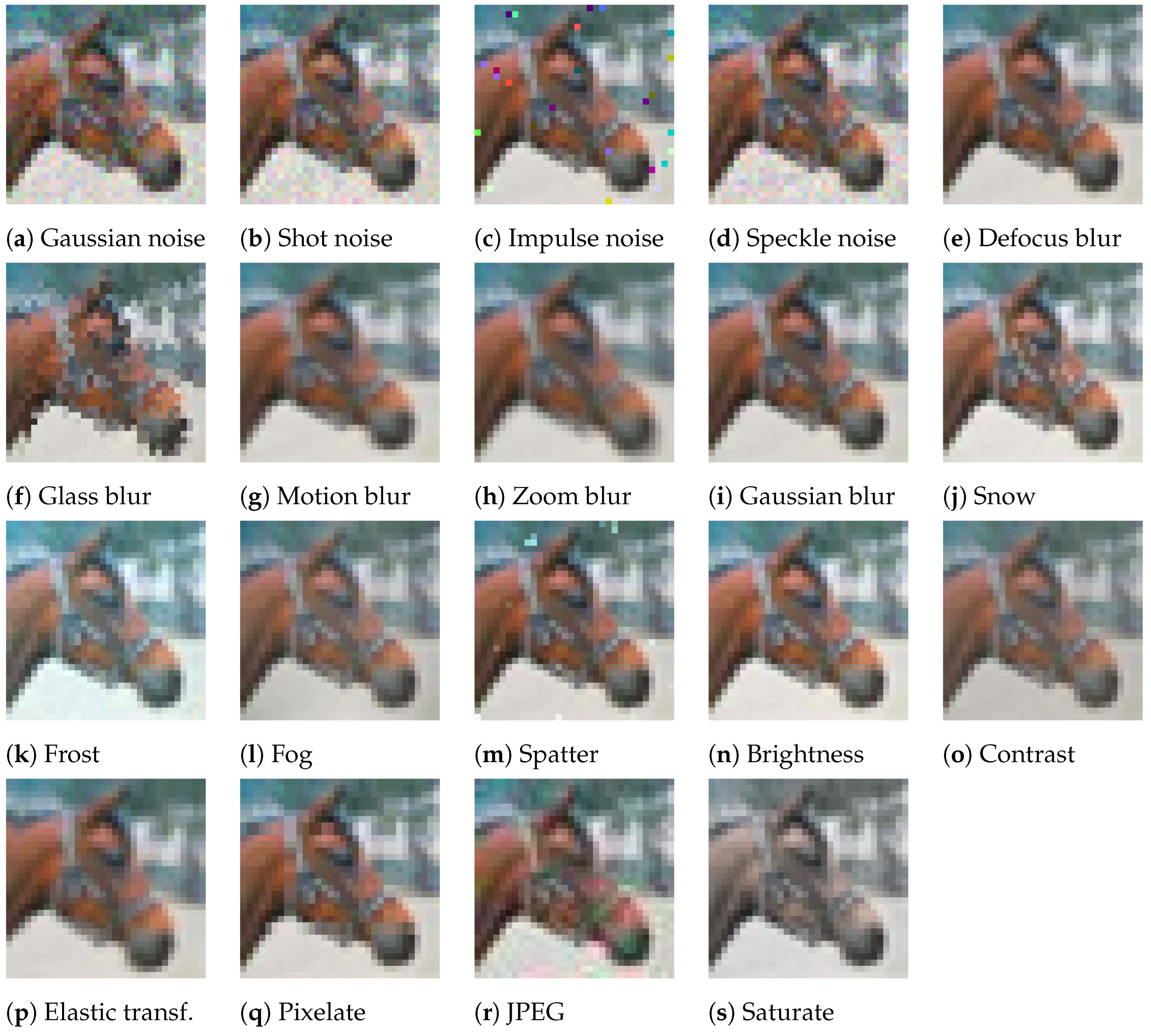
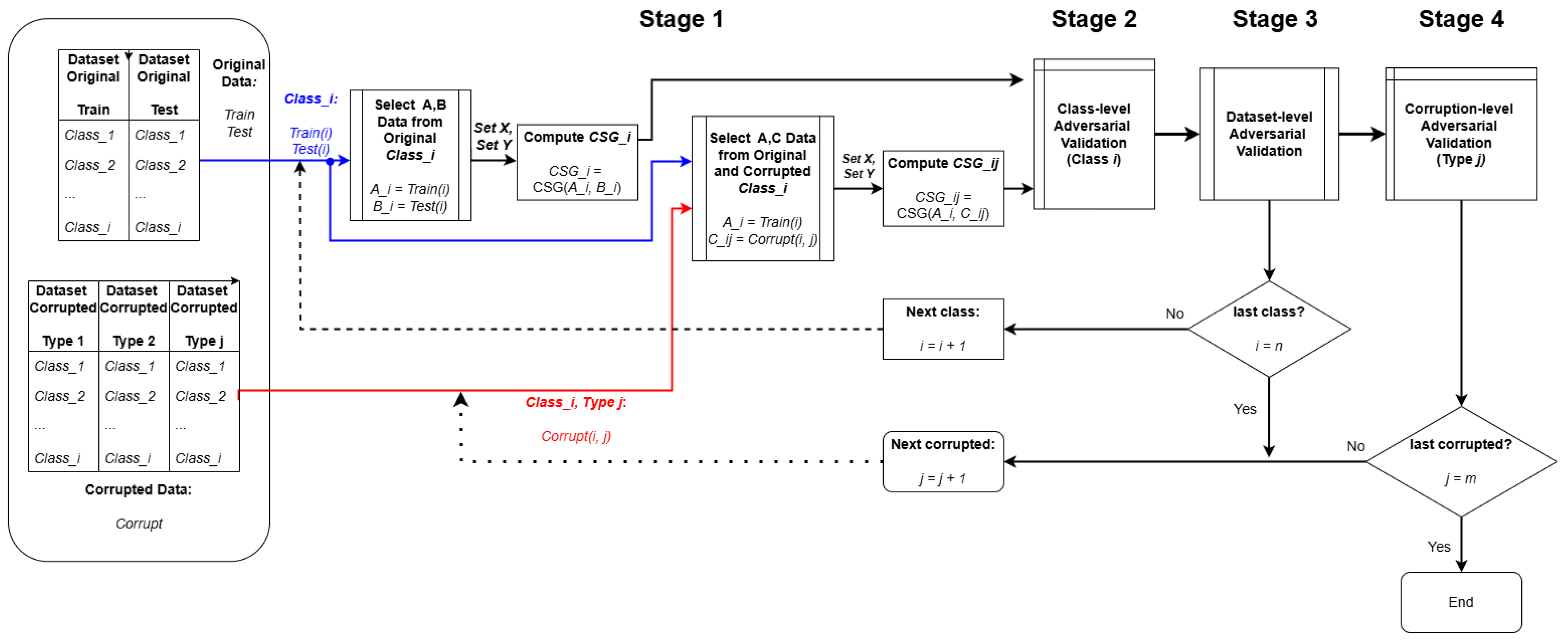
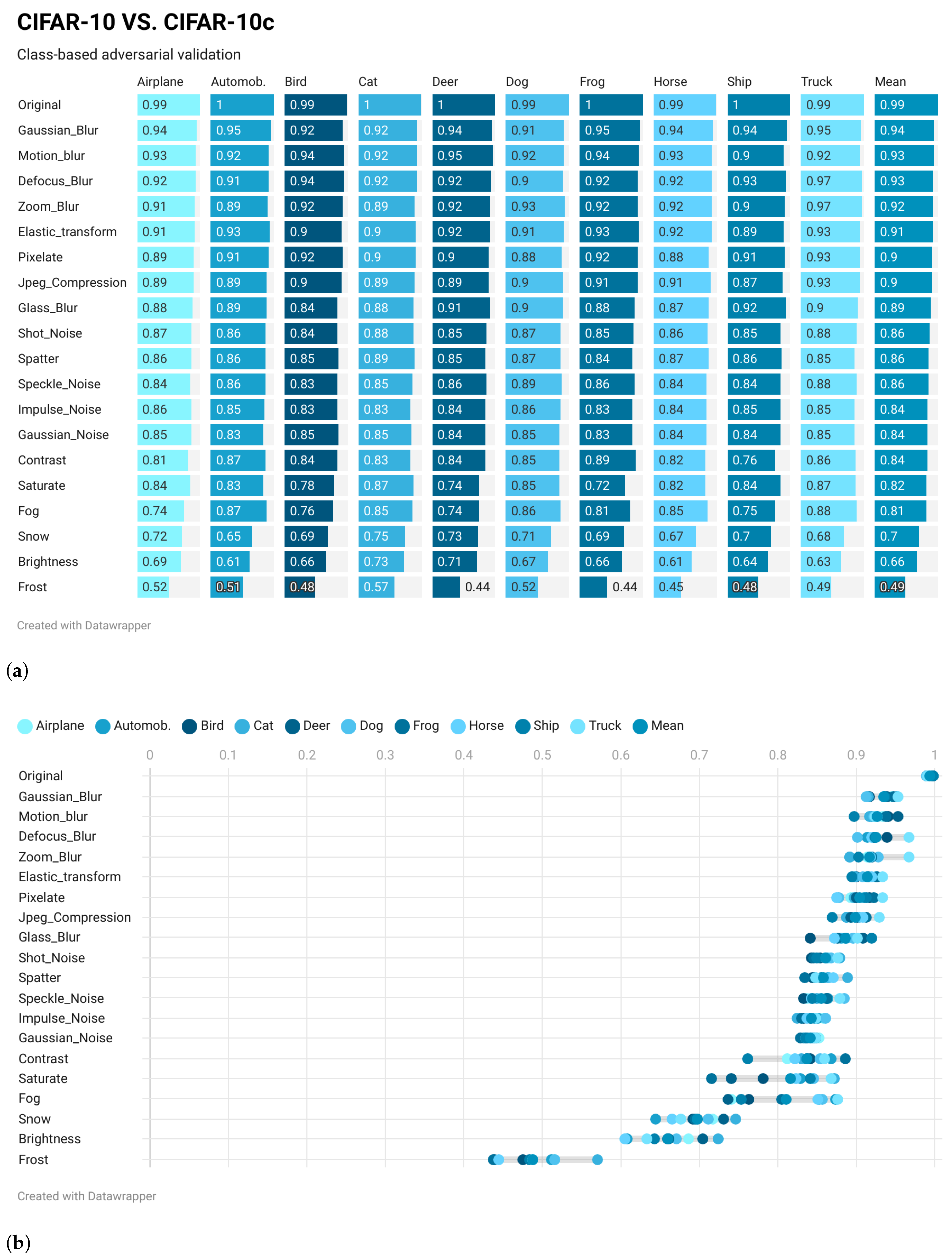
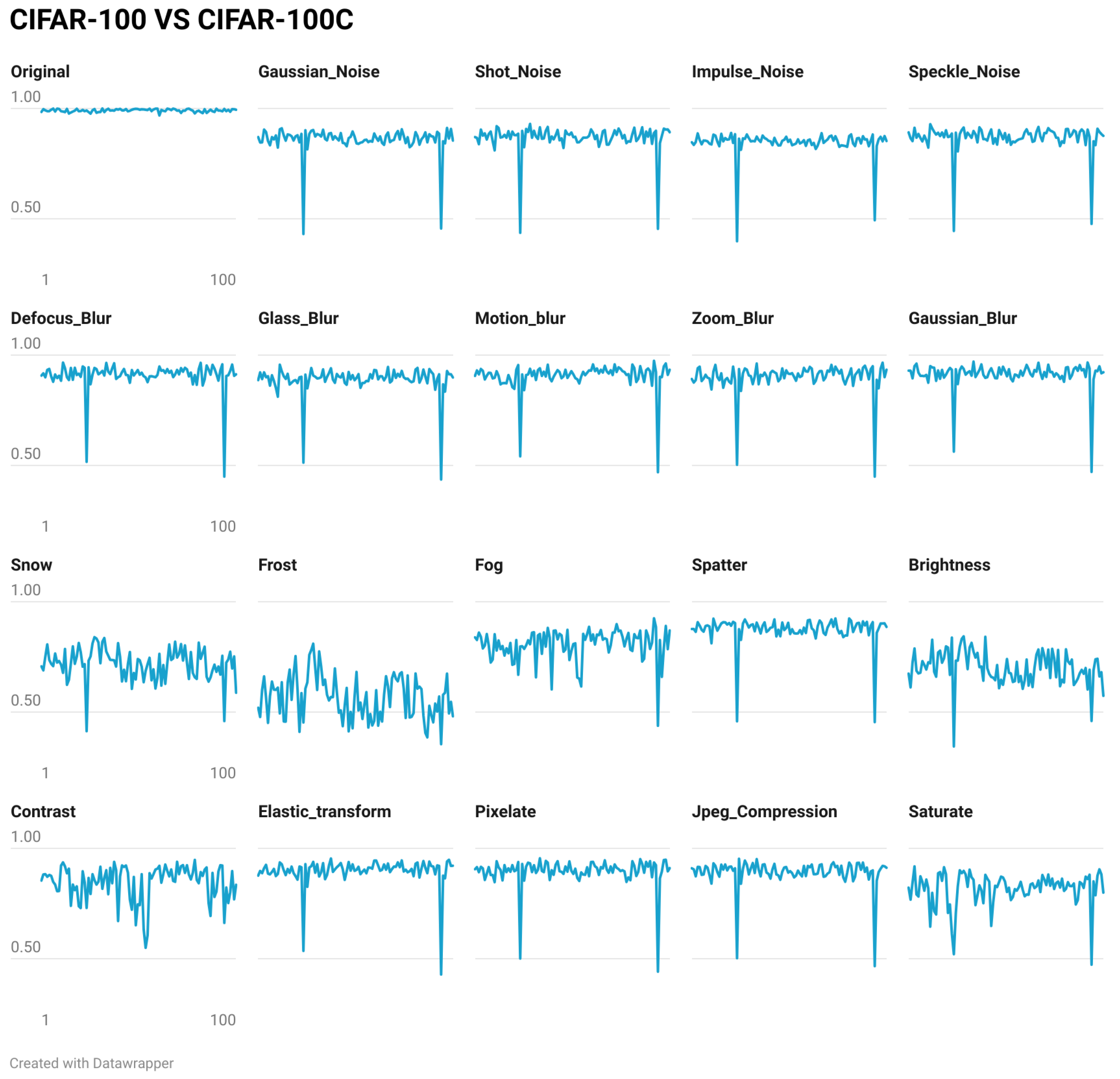
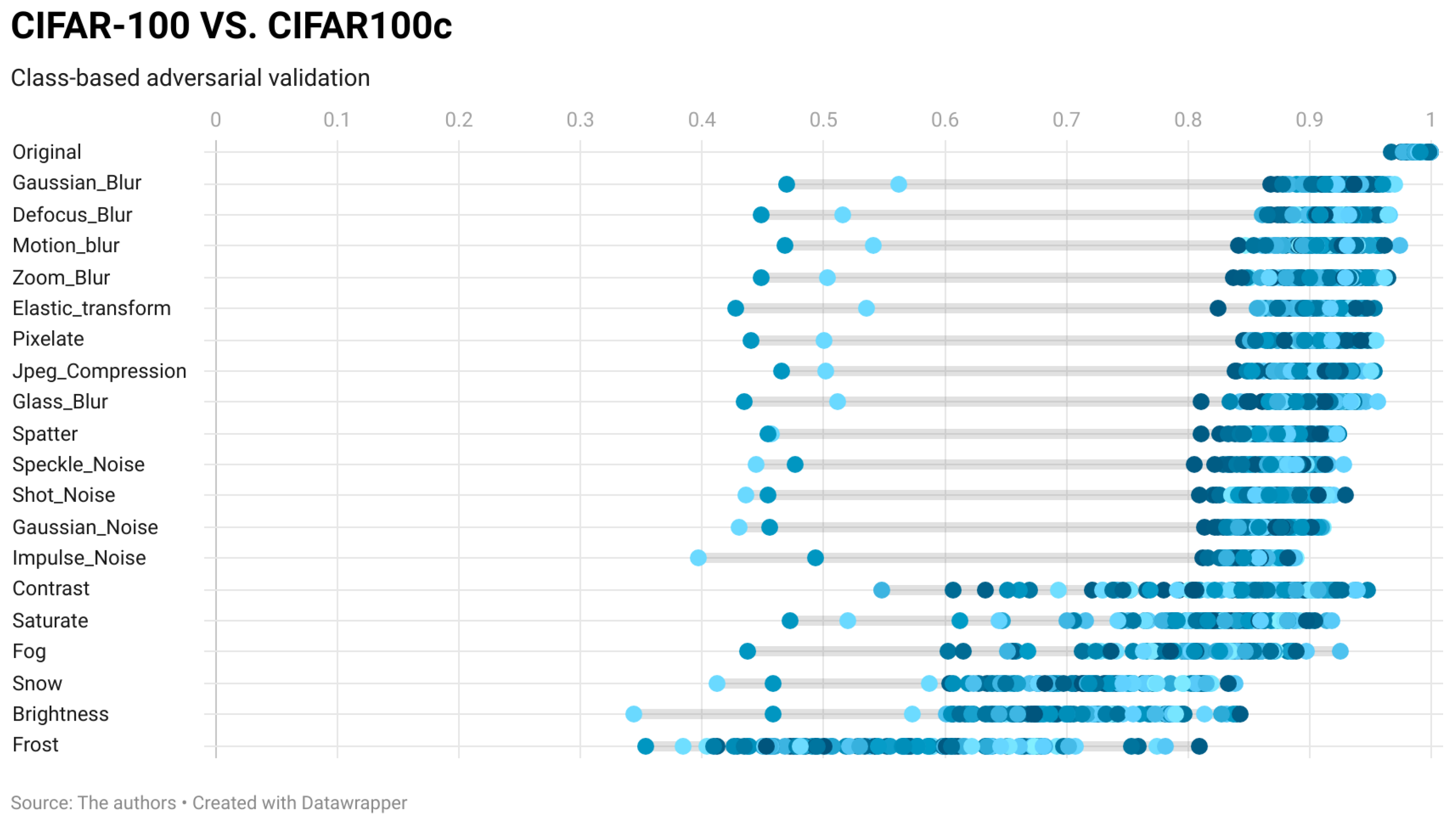
The main objective of a machine learning (ML) system is to obtain a trained model from input data in such a way that it allows predictions to be made on new i.i.d. (Independently and Identically Distributed) data with the lowest possible error. However, how can we assess whether the training and test data have a similar distribution? To answer this question, this paper presents a proposal to determine the degree of distribution shift of two datasets. To this end, a metric for evaluating complexity in datasets is used, which can be applied in multi-class problems, comparing each pair of classes of the two sets. The proposed methodology has been applied to three well-known datasets: MNIST, CIFAR-10 and CIFAR-100, together with corrupted versions of these. Through this methodology, it is possible to evaluate which types of modification have a greater impact on the generalization of the models without the need to train multiple models multiple times, also allowing us to determine which classes are more affected by corruption.
Keywords: distribution shift; out of distribution; generalization; Cumulative Spectral Gradient (CSG) metric; deep learning; adversarial validation; image classification distribution shift; out of distribution; generalization; Cumulative Spectral Gradient (CSG) metric; deep learning; adversarial validation; image classification