Article

The Iterative Exclusion of Compatible Samples Workflow for Multi-SNP Analysis in Complex Diseases


1
Hubei Key Laboratory of Agricultural Bioinformatics, College of Informatics, Huazhong Agricultural University, Wuhan 430070, China
2
School of Information Engineering, Hubei University of Economics, Wuhan 430205, China
3
College of Public Administration, Huazhong Agricultural University, Wuhan 430070, China
*
Authors to whom correspondence should be addressed.
Algorithms 2023, 16(10), 480; https://doi.org/10.3390/a16100480
Submission received: 4 September 2023 / Revised: 28 September 2023 / Accepted: 11 October 2023 / Published: 16 October 2023
(This article belongs to the Section Algorithms for Multidisciplinary Applications)

Abstract

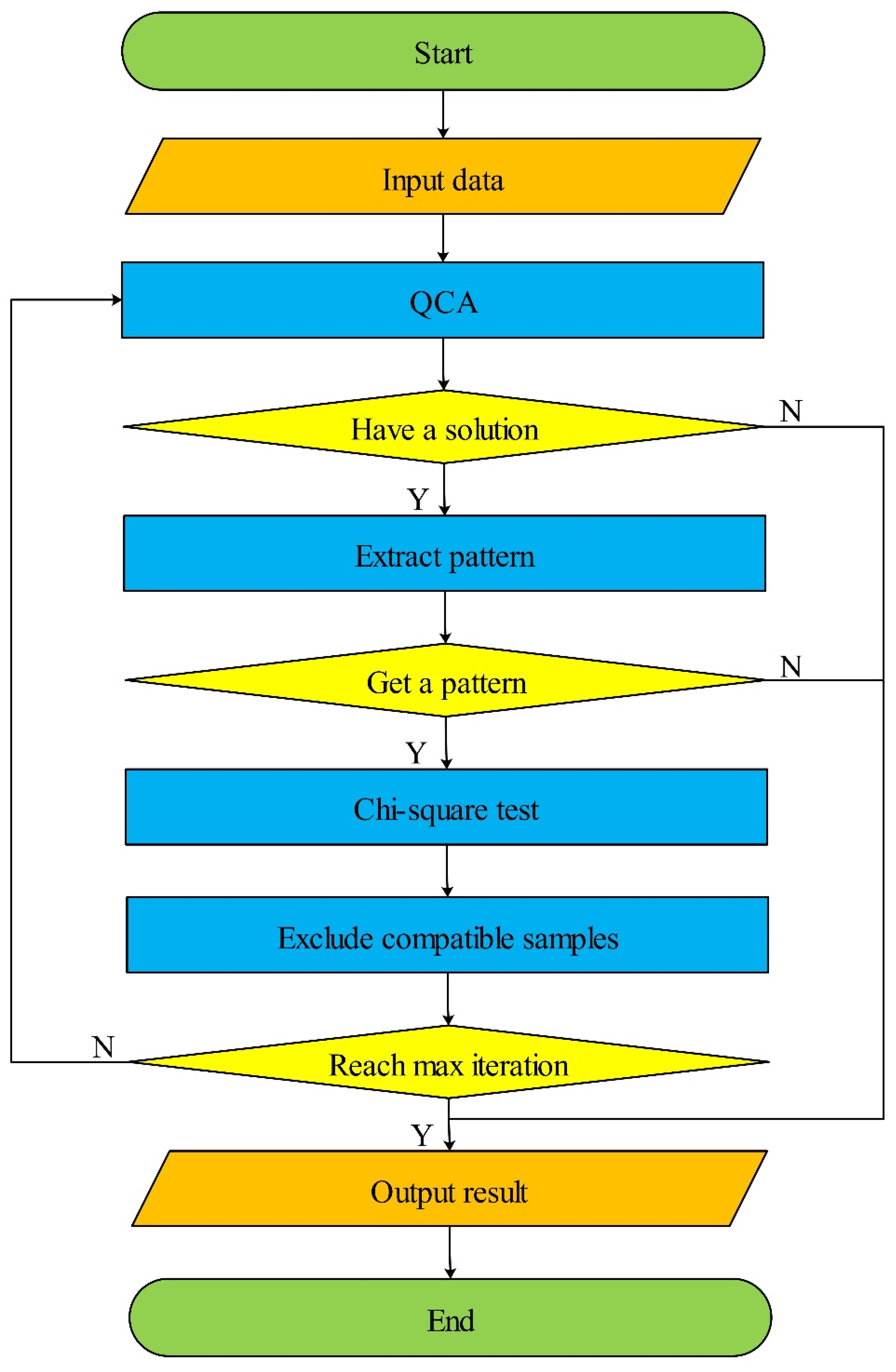
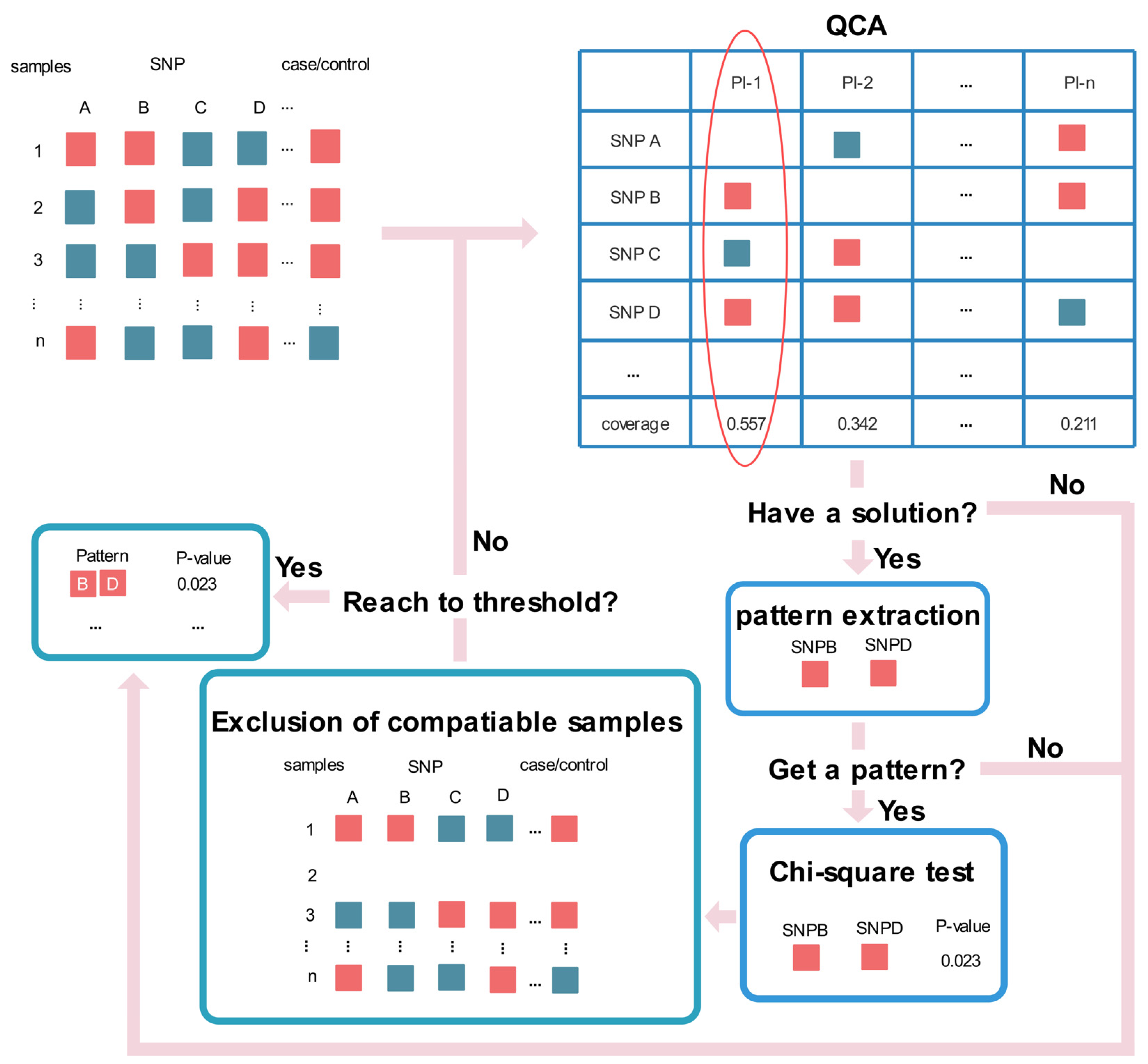
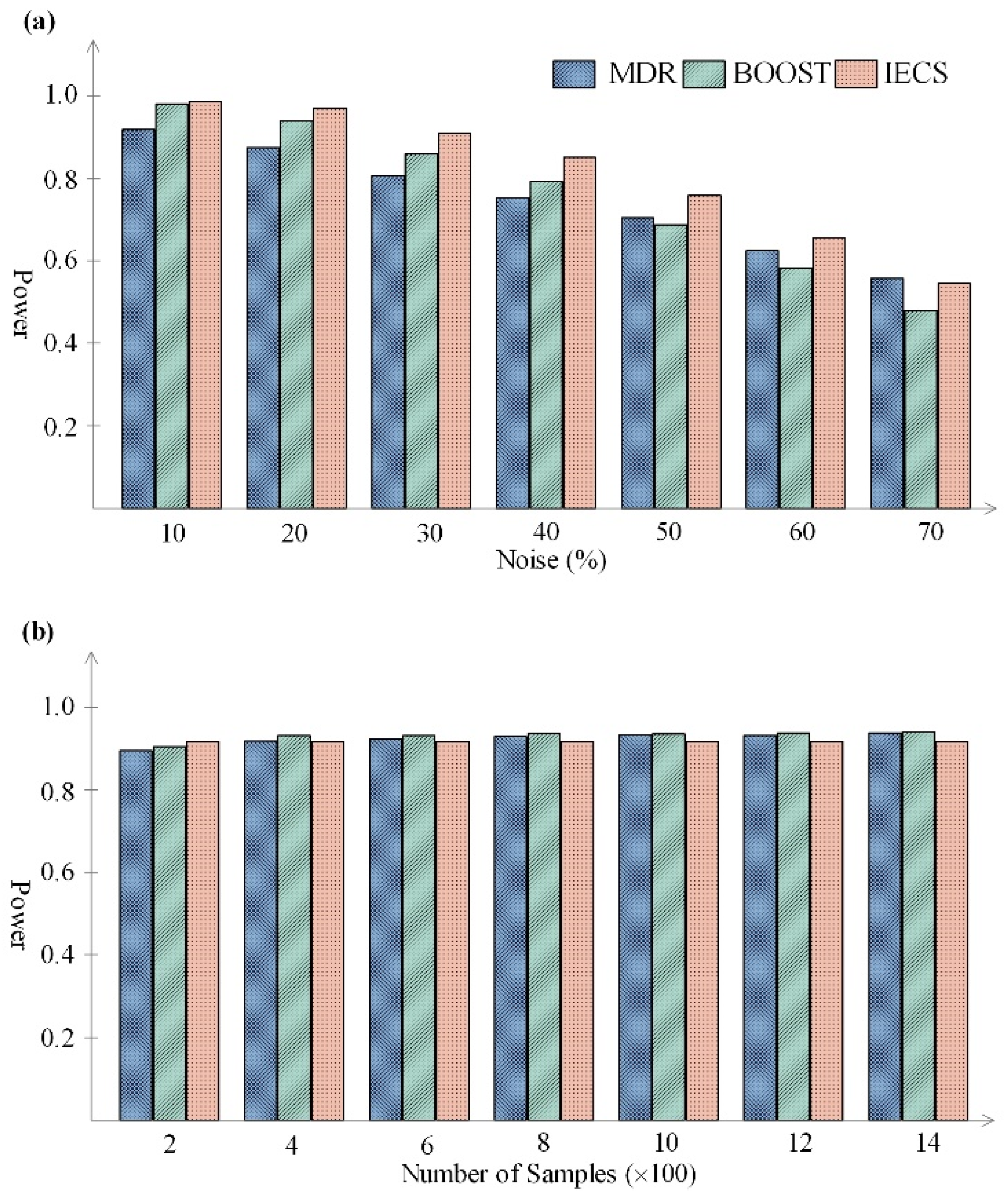
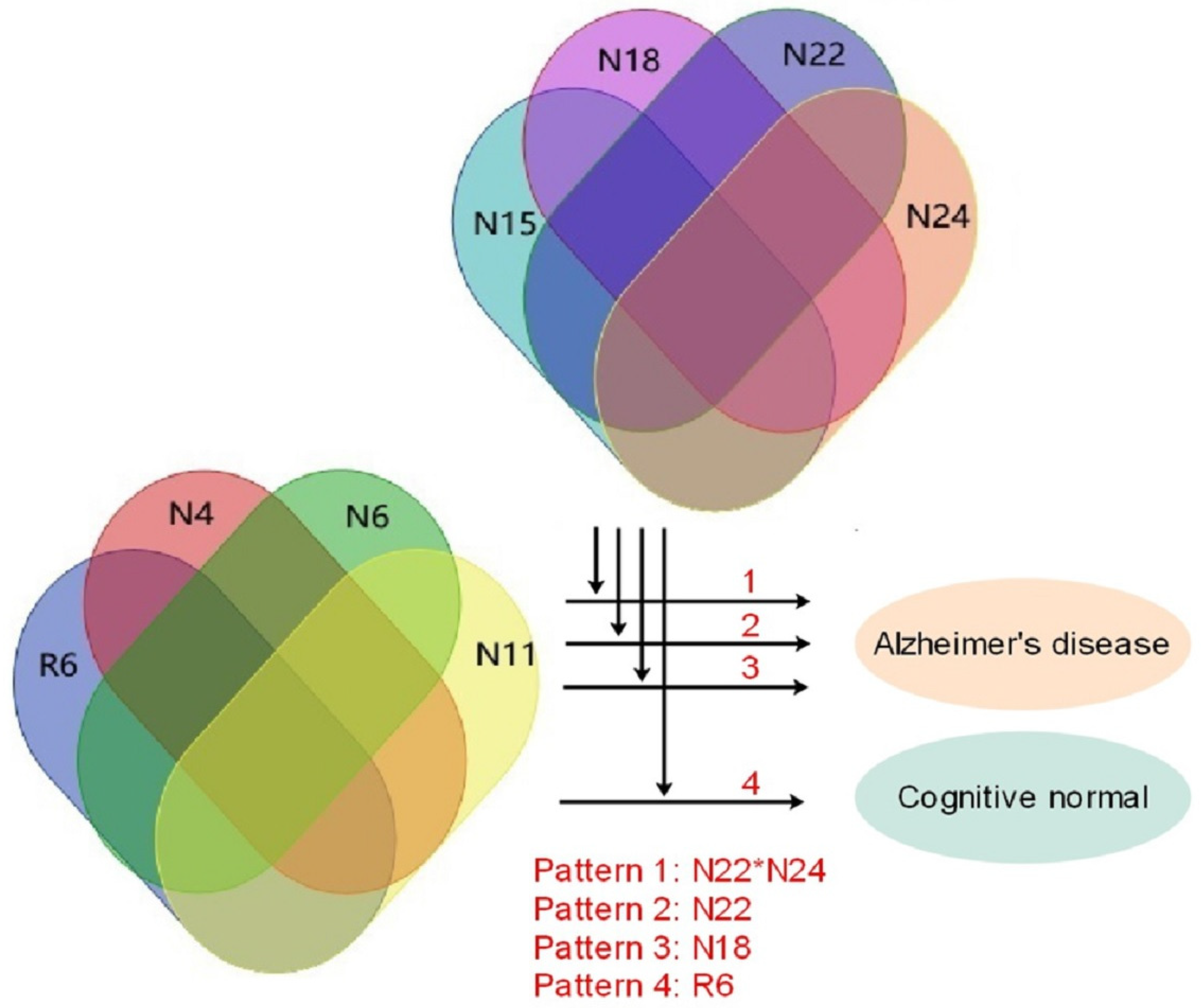
Complex diseases are affected by various factors, and single-nucleotide polymorphisms (SNPs) are the basis for their susceptibility by affecting protein structure and gene expression. Complex diseases often arise from the interactions of multiple SNPs and are investigated using epistasis detection algorithms. Nevertheless, the computational burden associated with the “combination explosion” hinders these algorithms’ ability to detect these interactions. To perform multi-SNP analysis in complex diseases, the iterative exclusion of compatible samples (IECS) workflow is proposed in this work. In the IECS workflow, qualitative comparative analysis (QCA) is firstly employed as the calculation engine to calculate the solution; secondly, the pattern is extracted from the prime implicants with the greatest raw coverage in the solution; then, the pattern is tested with the chi-square test in the source dataset; finally, all compatible samples are excluded from the current dataset. This process is repeated until the QCA calculation has no solution or reaches the iteration threshold. The workflow was applied to analyze simulated datasets and the Alzheimer’s disease dataset, and its performance was compared with that of the BOOST and MDR algorithms. The findings illustrated that IECS exhibits greater power with less computation and can be applied to perform multi-SNP analysis in complex diseases.
Keywords: complex diseases; single-nucleotide polymorphisms; iterative exclusion of compatible samples workflow; qualitative comparative analysis; combination explosion complex diseases; single-nucleotide polymorphisms; iterative exclusion of compatible samples workflow; qualitative comparative analysis; combination explosion