Damage Diagnosis of Reactive Powder Concrete under Fatigue Loading Using 3D Laser Scanning Technology


Abstract
1. Introduction
2. Materials and Methods
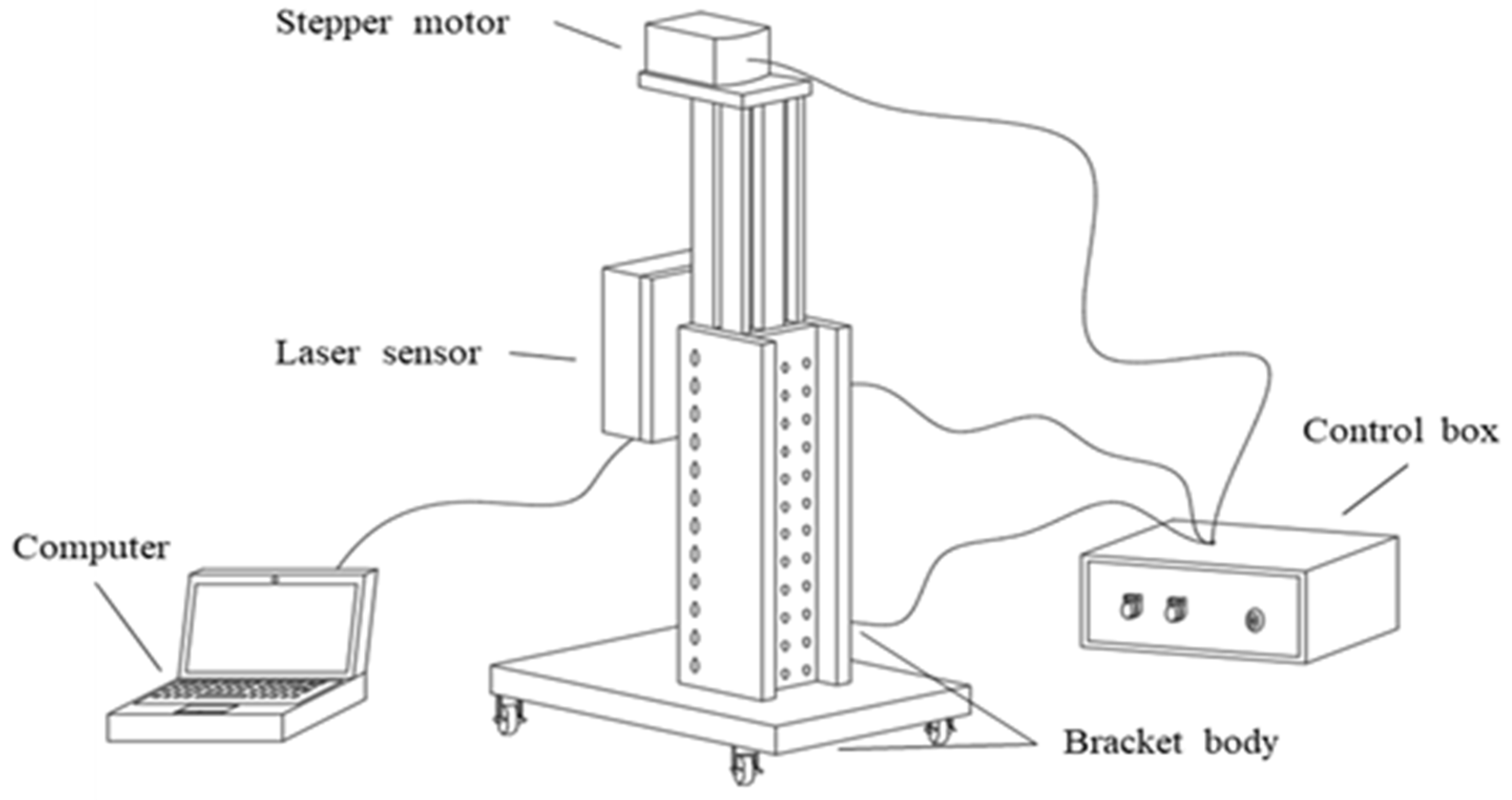
2.1. Design Principle of 3D Laser Scanning System
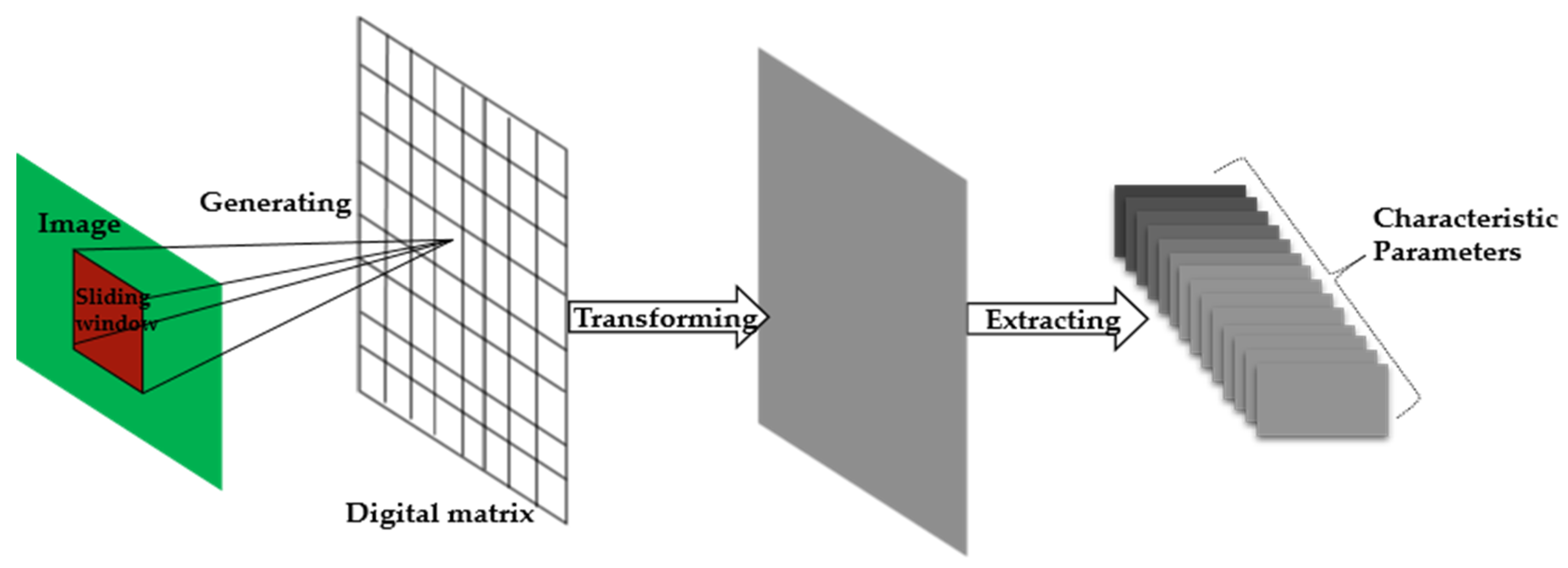
2.2. Principle of GLCM
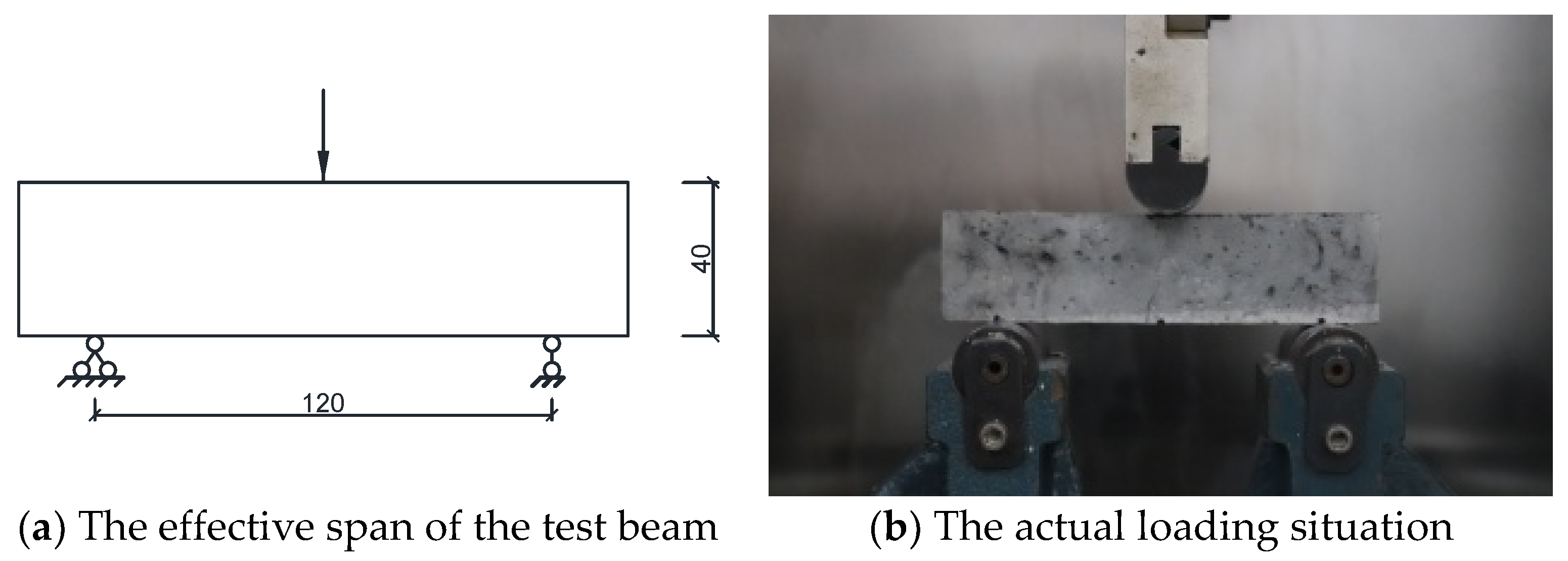
2.3. Bending Fatigue Test
2.3.1. Material
2.3.2. Production of Test Pieces
2.4. Experiment
3. Result and Analysis
3.1. Bending Strength
3.2. Data Collection
3.3. Damage Parameter Acquisition
3.4. Parameter Extraction in 2D Plane
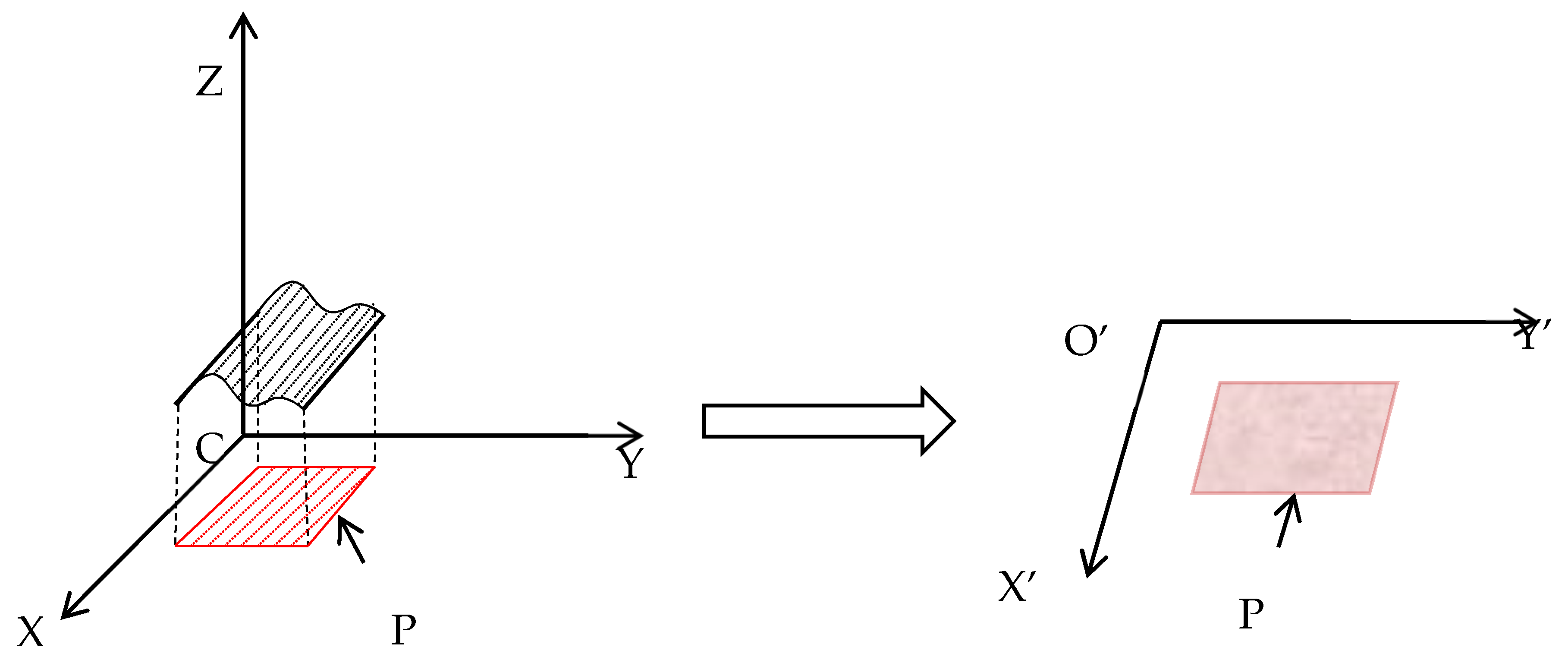
3.5. Parameter Extraction in 3D Space
3.6. Damage Diagnosis
4. Experimental Validation
4.1. Texture Feature Verification
4.2. Data Verification
5. Conclusions
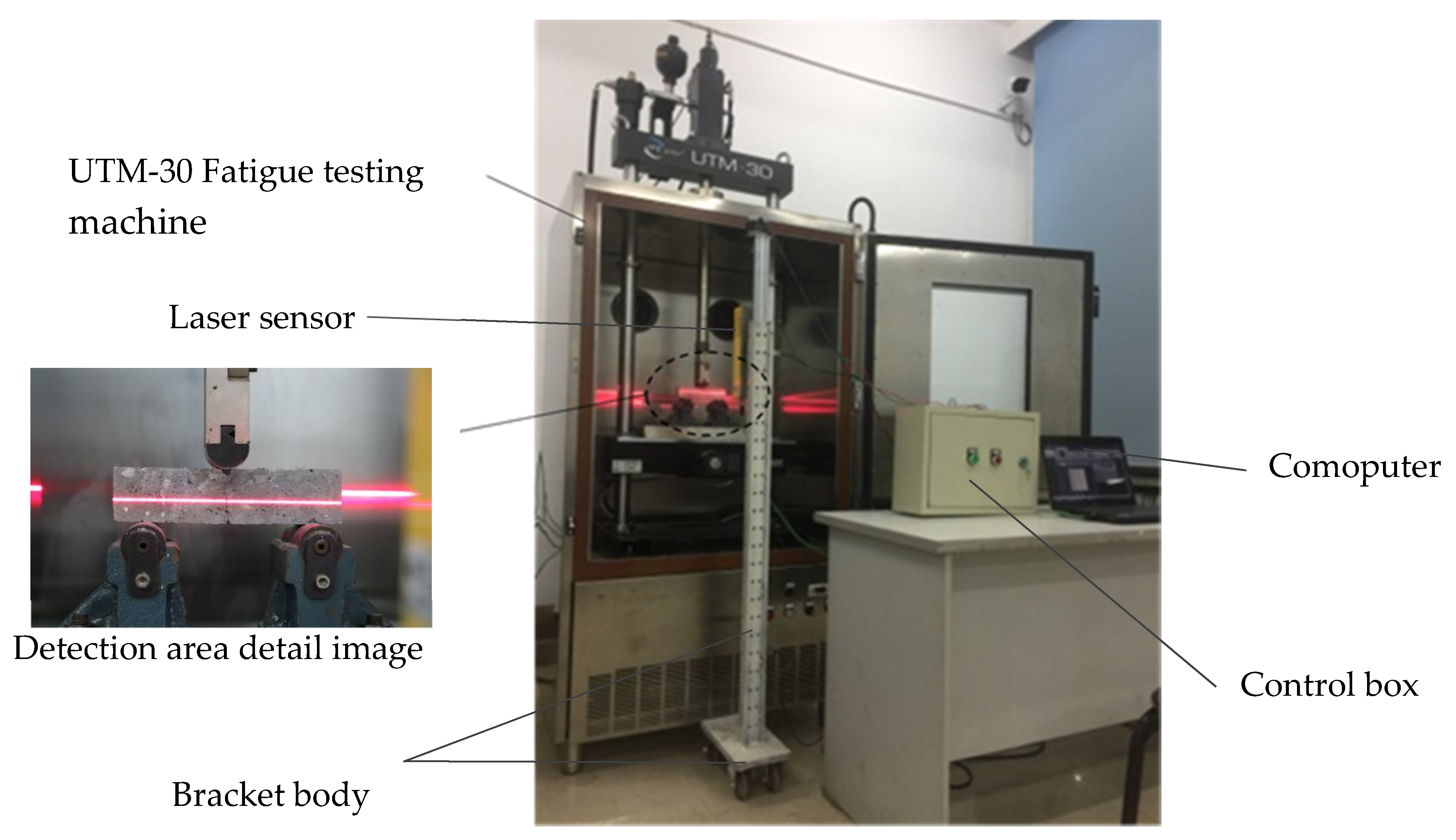
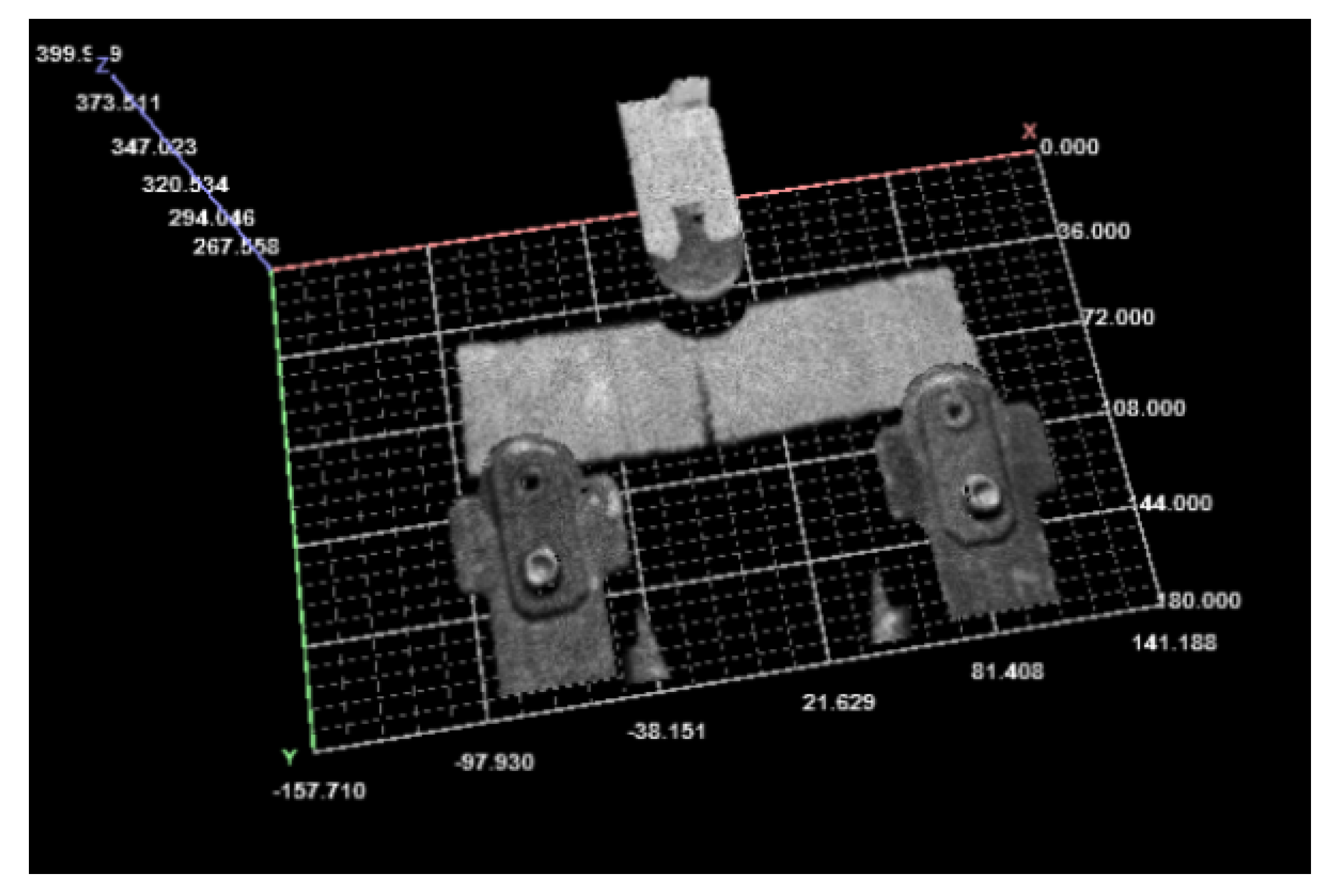
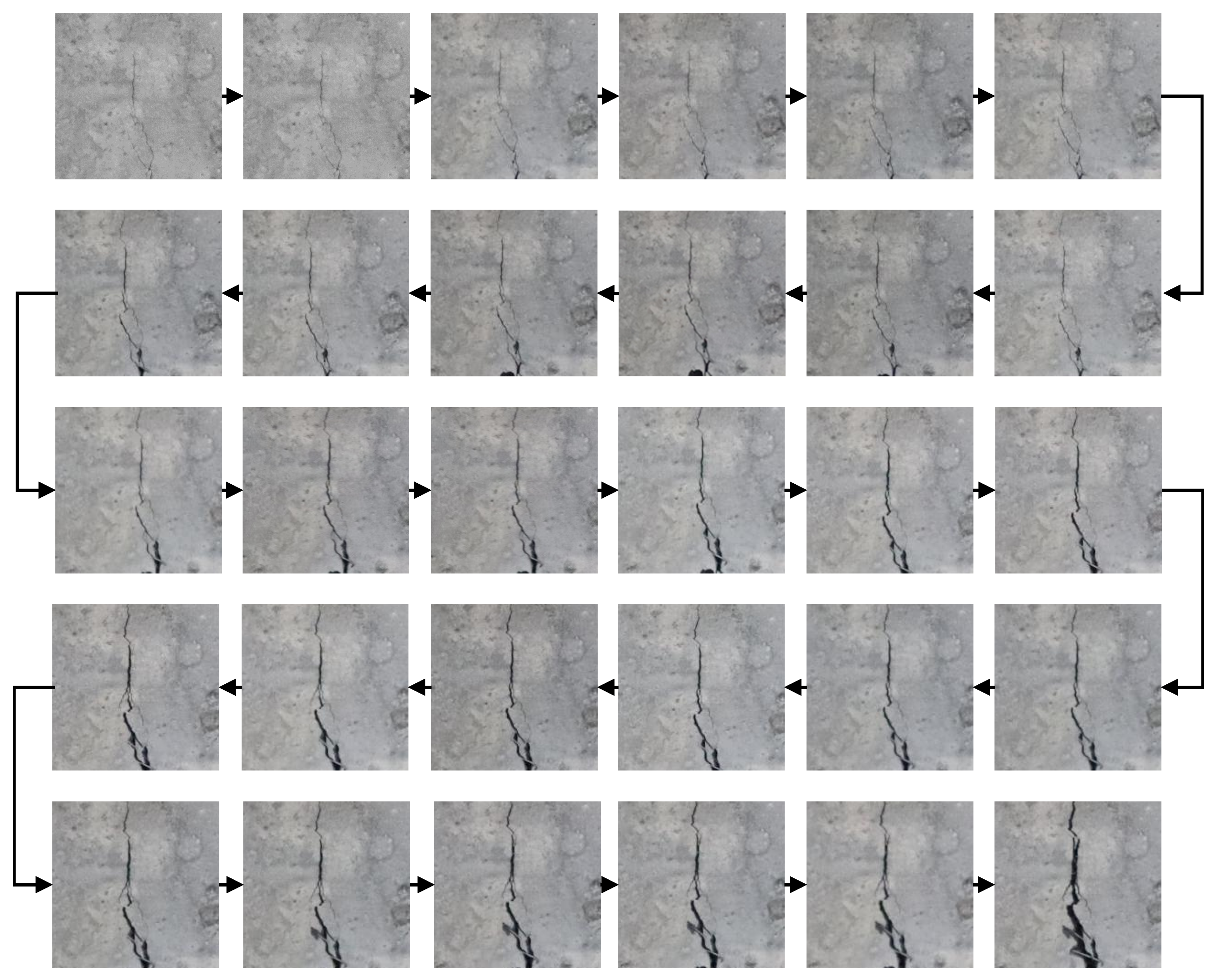
- The production principle and process of the inventive 3D laser scanning system was described. Using the system, the damage process of RPC under fatigue load was studied. In the process, the scanned 3D point cloud data simulates the RPC damage process.
- When the damage degree of the RPC structure is slight, the displacement and deflection of the damage source area are small. However, as the degree of damage continues to develop, the location and elevation information of the damaged area is constantly changing. The nonlinear variation of the damage region is described by the GLCM. And the damage characteristic parameter is extracted.
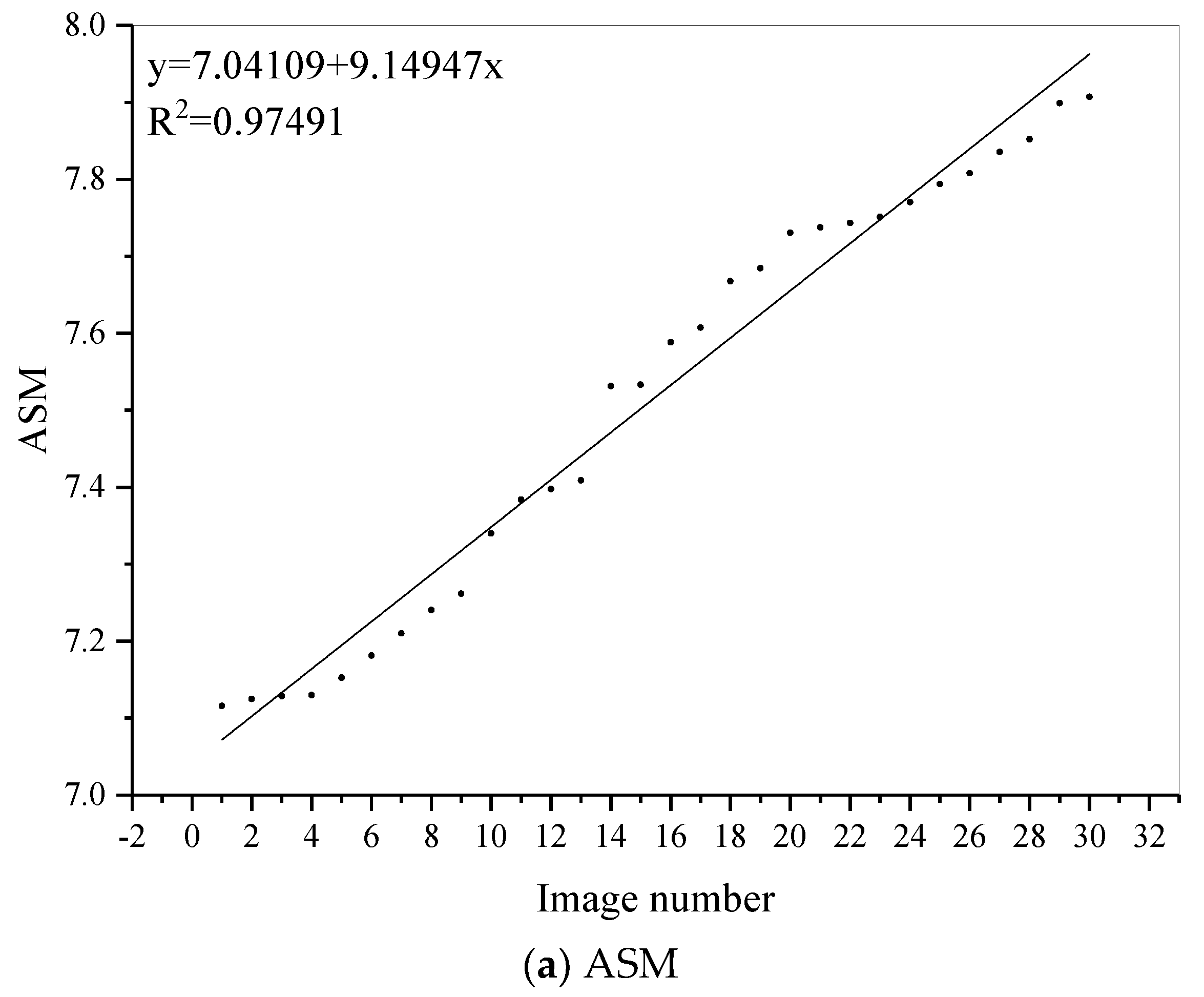
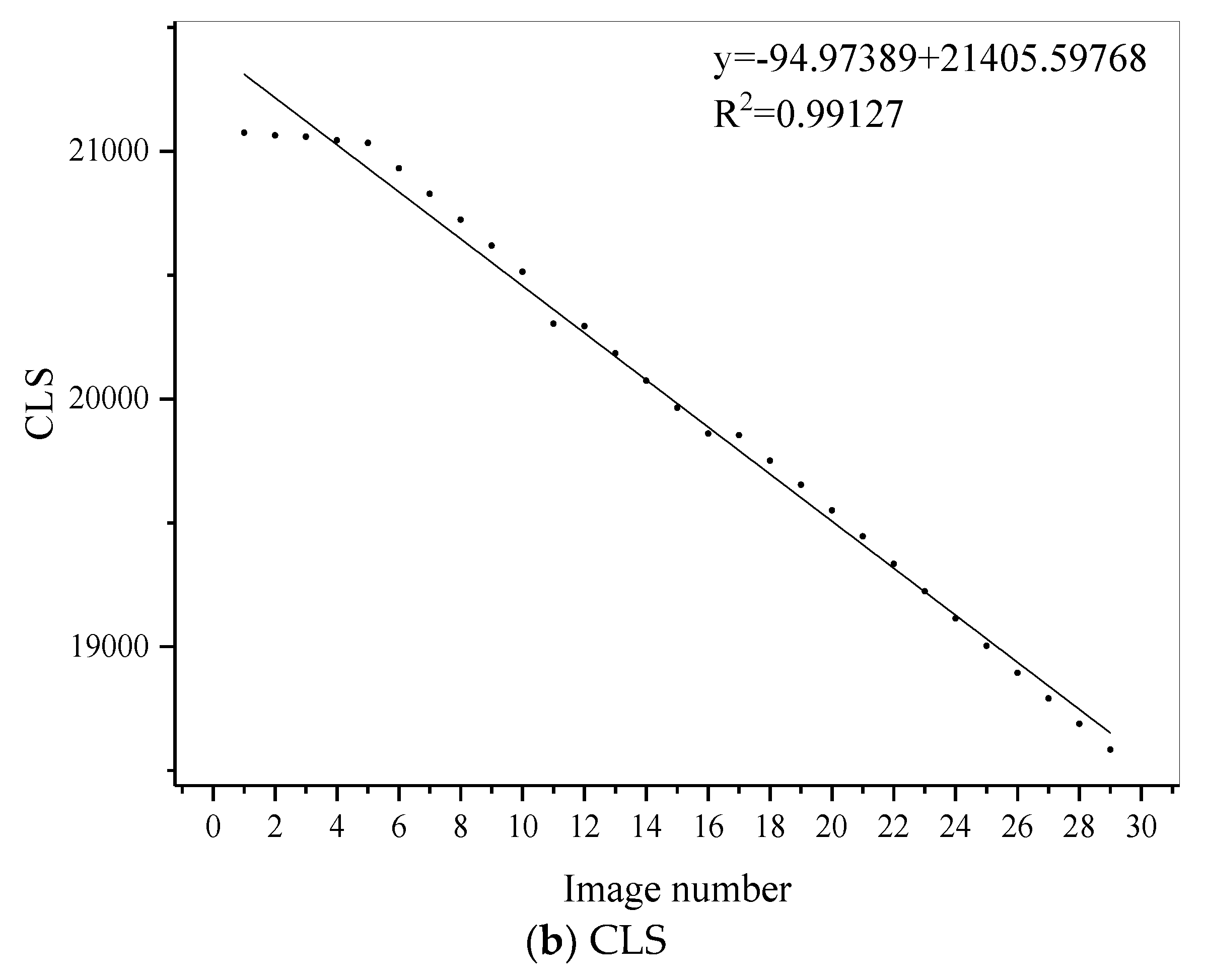
- The sensitive characteristic index is selected based on DFS. The reliability of indicators is verified by the texture characteristics and the random test sample.
- Damage point cloud data acquired from 3D laser scanning technology contains a considerable amount of information to the damage. Damage monitoring method based on 3D laser scanning performs an important role in condition monitoring and life prediction of RPC. In addition, the combination of texture analysis technologies and statistical theory can further demonstrate the advantages of 3D laser scanning technology.
Author Contributions
Funding
Conflicts of Interest
References
- Sikdar, S.; Ostachowicz, W.; Pal, J. Damage-induced Acoustic Emission Source Identification in an Advanced Sandwich Composite Structure. Compos. Struct. 2018, 202, 860–866. [Google Scholar] [CrossRef]
- Shirsendu, S.; Wiesław, O. Nondestructive analysis of core-junction and joint-debond effects in advanced composite structure. Polym. Test. 2019, 73, 31–38. [Google Scholar]
- Sikdar, S. Multi-level nondestructive analysis of joint-debond effects in sandwich composite structure. Polym. Test. 2019, 80, 1–9. [Google Scholar] [CrossRef]
- Han, B.; Wang, Z.; Zeng, S.; Zhou, D.; Yu, X.; Cui, X. Properties and modification mechanisms of nano-zirconia filled reactive powder concrete. Constr. Build. Mater. 2017, 141, 426–434. [Google Scholar] [CrossRef]
- Dong, S.; Han, B.; Ou, J.; Li, Z.; Han, L.; Yu, X. Electrically conductive behaviors and mechanisms of short-cut super-fine stainless wire reinforced reactive powder concrete. Cem. Concr. Compos. 2016, 72, 48–65. [Google Scholar] [CrossRef]
- Mao, X.Q.; Qu, W.; Zhu, P. Mixture optimization of green reactive powder concrete with recycled powder. J. Mater. Civ. Eng. 2019, 31, 04019033. [Google Scholar] [CrossRef]
- Sanchayan, S.; Foster, S.J. High temperature behaviour of hybrid steel–pva fibre reinforced reactive powder concrete. Mater. Struct. 2016, 49, 769–782. [Google Scholar] [CrossRef]
- Flansbjer, M.; Portal, N.W.; Vennetti, D.; Mueller, U. Composite behaviour of textile reinforced reactive powder concrete sandwich façade elements. Int. J. Concr. Struct. Mater. 2018, 12, 1–17. [Google Scholar] [CrossRef]
- Ju, B.Y.; Wang, L.; Liu, H.; Ma, G. Experimental investigation into mechanical properties of polypropylene reactive powder concrete. ACI Mater. J. 2018, 115, 21–32. [Google Scholar] [CrossRef]
- He, M.; Li, N.; Zhu, C.; Chen, Y.; Wu, H. Experimental investigation and damage modeling of salt rock subjected to fatigue loading. Int. J. Rock Mech. Min. Sci. 2018, 114, 17–23. [Google Scholar] [CrossRef]
- Jian, L.; Peng, Z.; Lei, L.; Fei, L.; Miao, X.-T.; Le, C.; Zhou, B.-B.; He, X.-H.; Zhou, C.-Y. Effect of pre-strain on fatigue crack growth behavior for commercial pure titanium at ambient temperature. Int. J. Fatigue 2018, 117, 27–38. [Google Scholar]
- Lin, J.; Huang, P.; Guo, X.; Zheng, X.; Zhao, C. Fatigue performance of rc beams strengthened with cfrp under coupling action of temperatures and vehicle random loads. Fatigue Fract. Eng. Mater. Struct. 2019, 42, 31–44. [Google Scholar] [CrossRef]
- Hanif, M.U.; Ibrahim, Z.; Ghaedi, K.; Hashim, H.; Javanmardi, A. Damage assessment of reinforced concrete structures using a model-based nonlinear approach—A comprehensive review. Constr. Build. Mater. 2018, 192, 846–865. [Google Scholar] [CrossRef]
- Li, X.; Ma, D.; Liu, H.; Tan, W.; Gong, X.; Zhang, C. Assessment of failure criteria and damage evolution methods for composite laminates under low-velocity impact. Compos. Struct. 2019, 207, 727–739. [Google Scholar] [CrossRef]
- Wang, R.Z.; Zhu, S.P.; Wang, J.; Zhang, X.C.; Tu, S.T.; Zhang, C.C. High temperature fatigue and creep-fatigue behaviors in a ni-based superalloy: Damage mechanisms and life assessment. Int. J. Fatigue 2018, 118, 8–21. [Google Scholar] [CrossRef]
- Li, B.; Wang, K.-Y.; Mao, J.-Z.; Guo, Q.-Y. Study on the damage mechanism of pore structure in concrete subjected to freeze-thaw cycles. Civ. Eng. J. 2015, 24, 1–11. [Google Scholar] [CrossRef]
- Wang, Y.-J.; Wen, W.-L.; Wu, C.-Y.; Yu, Z.-T.; Guo, X.-Y.; Zhao, C.-J. Maize Plant Phenotyping: Comparing 3D Laser Scanning, Multi-View Stereo Reconstruction, and 3D Digitizing Estimates. Remote Sens. 2018, 11, 63. [Google Scholar] [CrossRef]
- Chen, D.M.; Xu, Y.F.; Zhu, W.D. Identification of damage in plates using full-field measurement with a continuously scanning laser doppler vibrometer system. J. Sound Vib. 2018, 422, 542–567. [Google Scholar] [CrossRef]
- Valenca, J.; Puente, I.; Júlio, E.; González-Jorge, H.; Arias-Sánchez, P. Assessment of cracks on concrete bridges using image processing supported by laser scanning survey. Constr. Build. Mater. 2017, 146, 668–678. [Google Scholar] [CrossRef]
- Park, B.; Sohn, H.; Liu, P. Accelerated noncontact laser ultrasonic scanning for damage detection using combined binary search and compressed sensing. Mech. Syst. Signal Process. 2017, 92, 315–333. [Google Scholar] [CrossRef]
- Acikgoz, S.; Soga, K.; Woodhams, J. Evaluation of the response of a vaulted masonry structure to differ8ential settlements using point cloud data and limit analyses. Constr. Build. Mater. 2017, 150, 916–931. [Google Scholar] [CrossRef]
- Cheng, B.; Shrestha, S.; Chou, K. Stress and deformation evaluations of scanning strategy effect in selective laser melting. Addit. Manuf. 2018, 1, 240–251. [Google Scholar]
- Fina, F.; Madla, C.M.; Goyanes, A.; Zhang, J.; Gaisford, S. Fabricating 3d printed orally disintegrating printlets using selective laser sintering. Int. J. Pharm. 2018, 541, 101–107. [Google Scholar] [CrossRef] [PubMed]





| Texture Parameter | Calculation Formulas | Damage Characteristics |
|---|---|---|
| ASM | Gray distribution uniformity and texture thickness. | |
| COR | Texture distribution. | |
| CLS | Texture uniformity. | |
| IDM | Local texture changes. | |
| ENT | Content randomness and image texture complexity. | |
| VAR | Texture period size. |
| Soundness | Setting Time /min | Compressive Strength /MPa | Flexural Strength /MPa | |||
|---|---|---|---|---|---|---|
| Initial Setting | Final Setting | 3d | 28d | 3d | 28d | |
| Up to standard | 170 | 238 | 22.3 | 42.9 | 5.7 | 7.7 |
| Water-binder Ratio | Water | Cement | Silica Fume | Fly Ash | Quartz Powder | Quartz Sand | Water Reducer | Steel Fiber |
|---|---|---|---|---|---|---|---|---|
| 0.19 | 171 | 620.7 | 155.2 | 124.1 | 362.7 | 846.3 | 27 | 96 |
| Test Type | Specification/mm | Quantity |
|---|---|---|
| Flexural strength | 40 × 40 × 160 | 12 |
| Fatigue loading | 40 × 40 × 160 | 72 |
| Specimen Type | RPC |
|---|---|
| Bending strength (MPa) | 27.76 |
| Damage Index | Texture Characteristics |
|---|---|
| ASM | Image texture width |
| CLS | Image texture uniformity |
© 2019 by the authors. Licensee MDPI, Basel, Switzerland. This article is an open access article distributed under the terms and conditions of the Creative Commons Attribution (CC BY) license (http://creativecommons.org/licenses/by/4.0/).
Share and Cite
Li, K.; Wang, J.; Qi, D. Damage Diagnosis of Reactive Powder Concrete under Fatigue Loading Using 3D Laser Scanning Technology. Algorithms 2019, 12, 260. https://doi.org/10.3390/a12120260
Li K, Wang J, Qi D. Damage Diagnosis of Reactive Powder Concrete under Fatigue Loading Using 3D Laser Scanning Technology. Algorithms. 2019; 12(12):260. https://doi.org/10.3390/a12120260
Chicago/Turabian StyleLi, Kexin, Jun Wang, and Dawei Qi. 2019. "Damage Diagnosis of Reactive Powder Concrete under Fatigue Loading Using 3D Laser Scanning Technology" Algorithms 12, no. 12: 260. https://doi.org/10.3390/a12120260
APA StyleLi, K., Wang, J., & Qi, D. (2019). Damage Diagnosis of Reactive Powder Concrete under Fatigue Loading Using 3D Laser Scanning Technology. Algorithms, 12(12), 260. https://doi.org/10.3390/a12120260