Structure and Properties of Foam Concrete and Fiber-Reinforced Foam Concrete Produced Using a Complex Nanomodifier Based on Industrial Waste

 ,
,  ,
,  ,
,  , and
, and 
Abstract
1. Introduction
2. Materials and Methods
2.1. Materials
- –
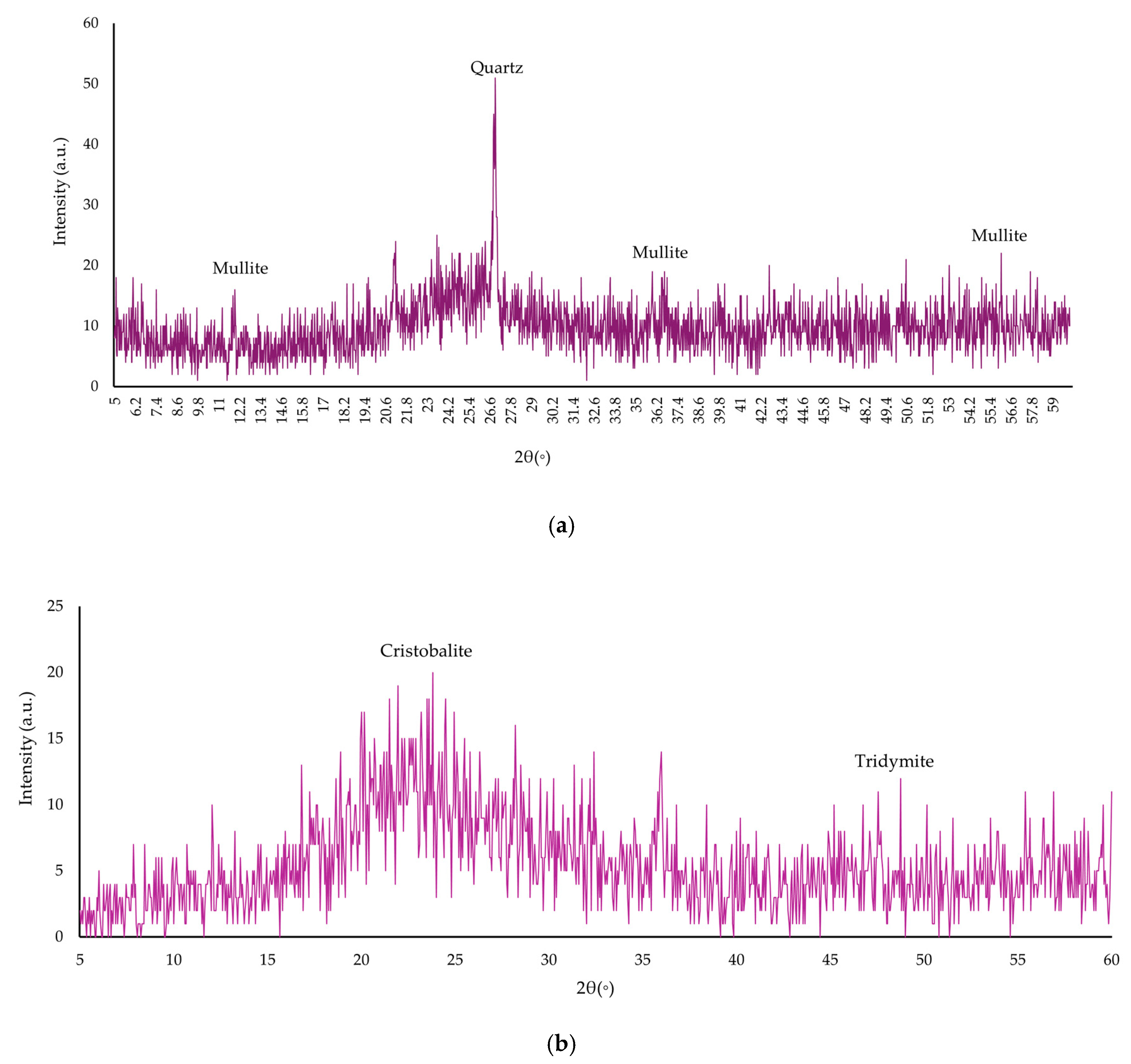
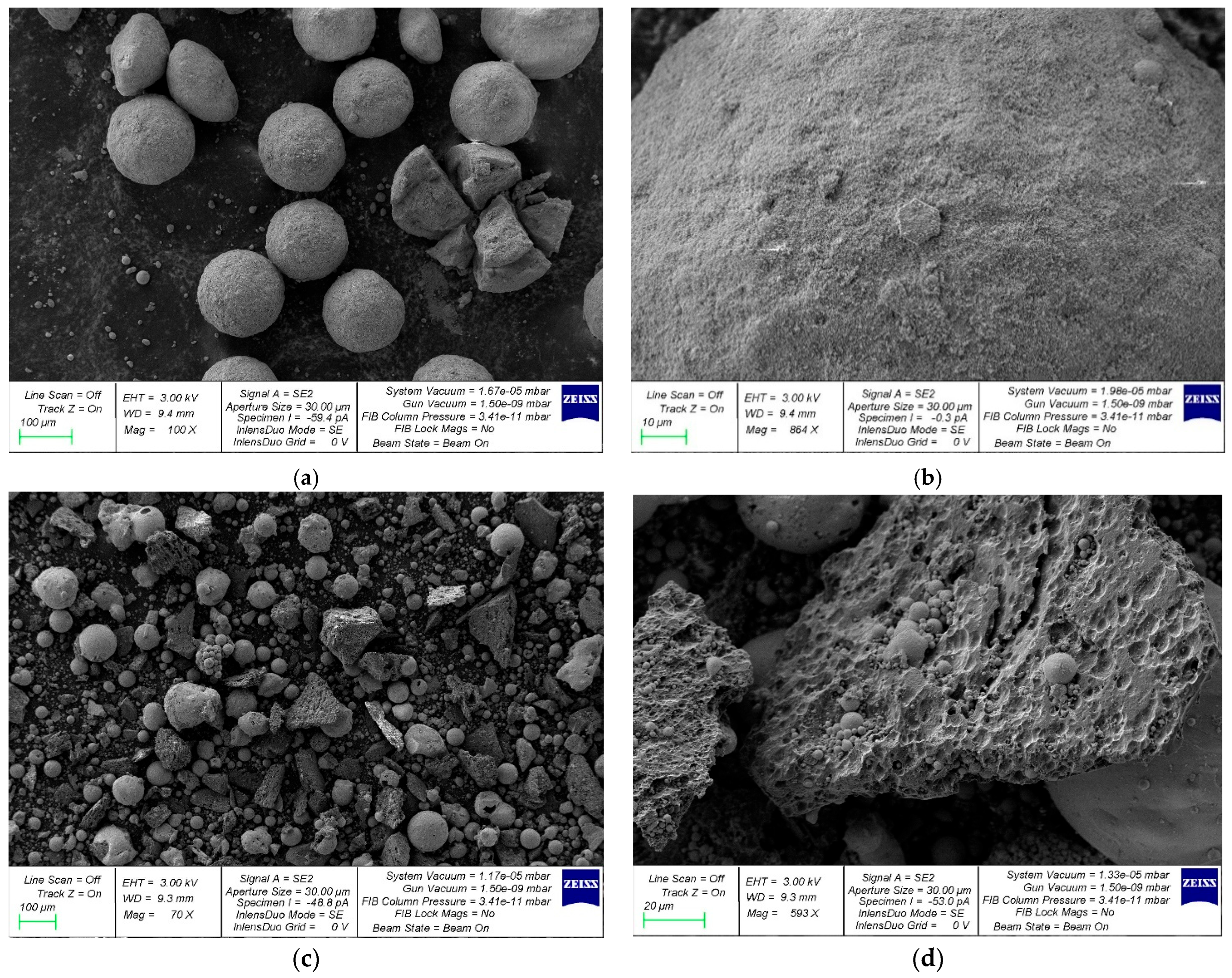
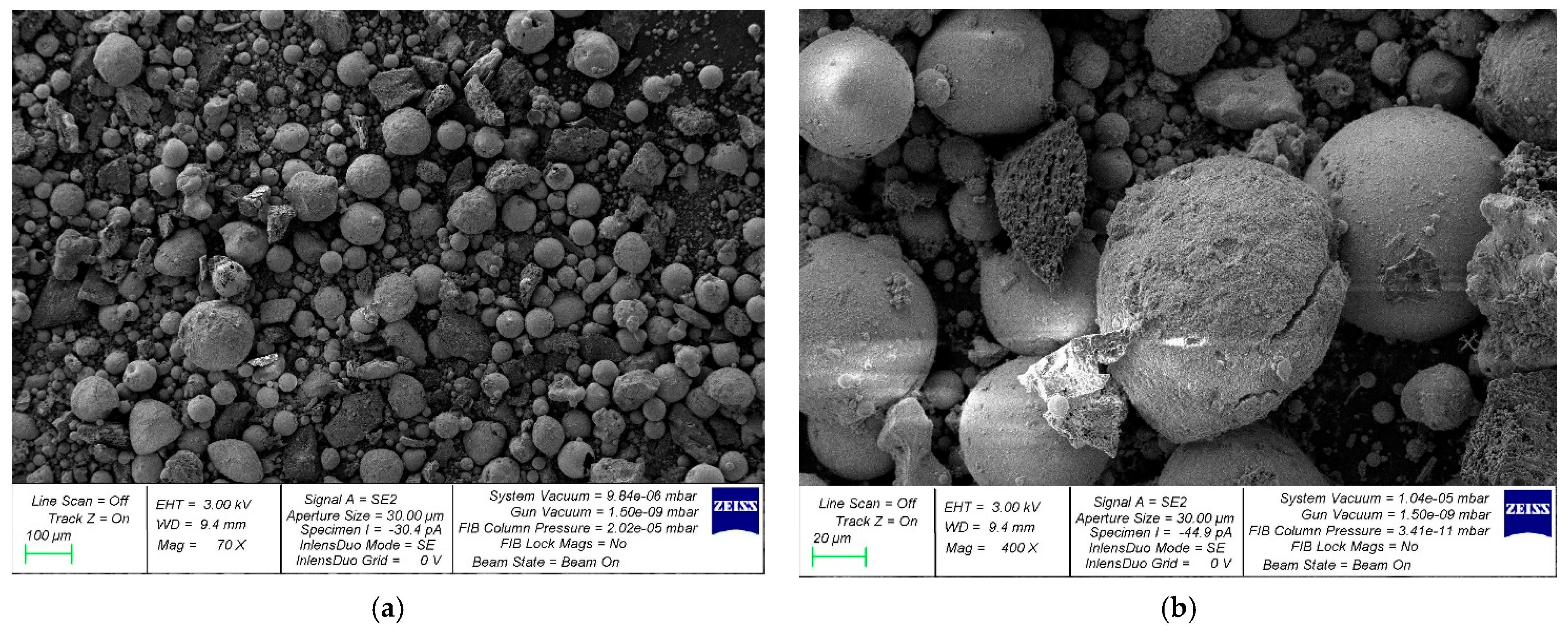
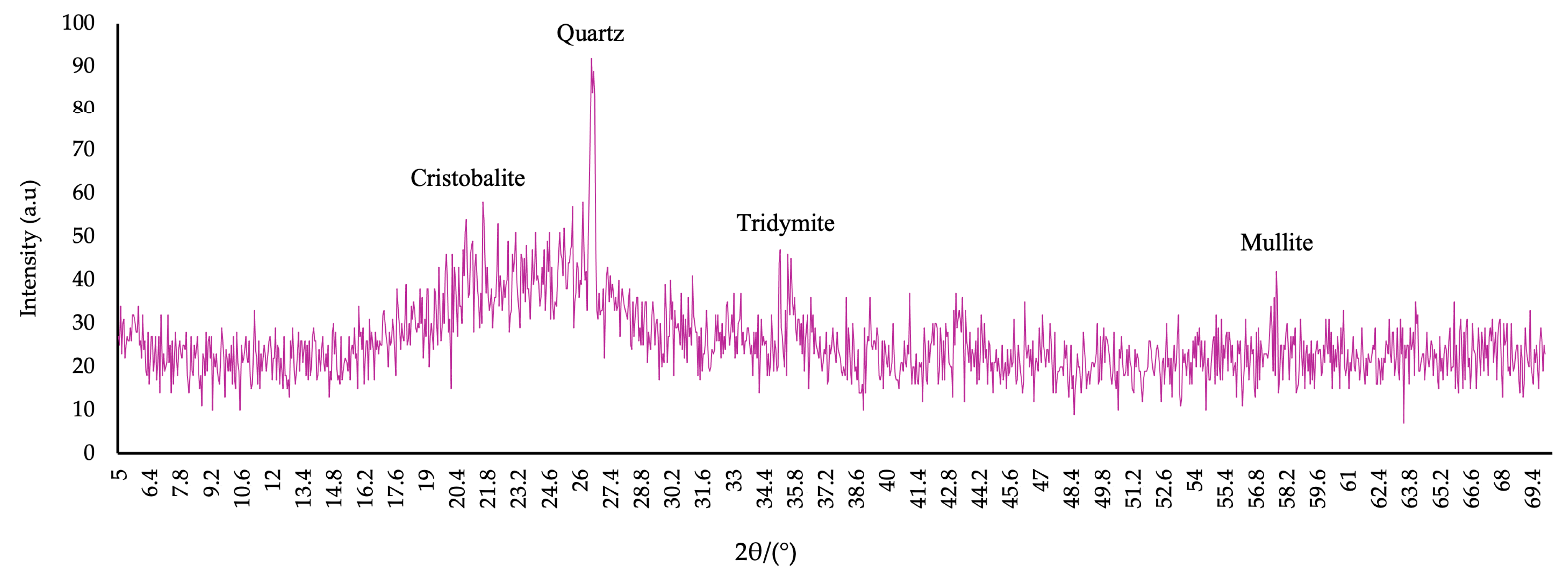
- Studying the morphology of FA, MS, and NA particles, determining their chemical and phase composition using SEM and XRD methods, and determining the physical and mechanical properties of the raw materials;
- –
- Developing a complex nanomodifying additive and evaluating its properties;
- –
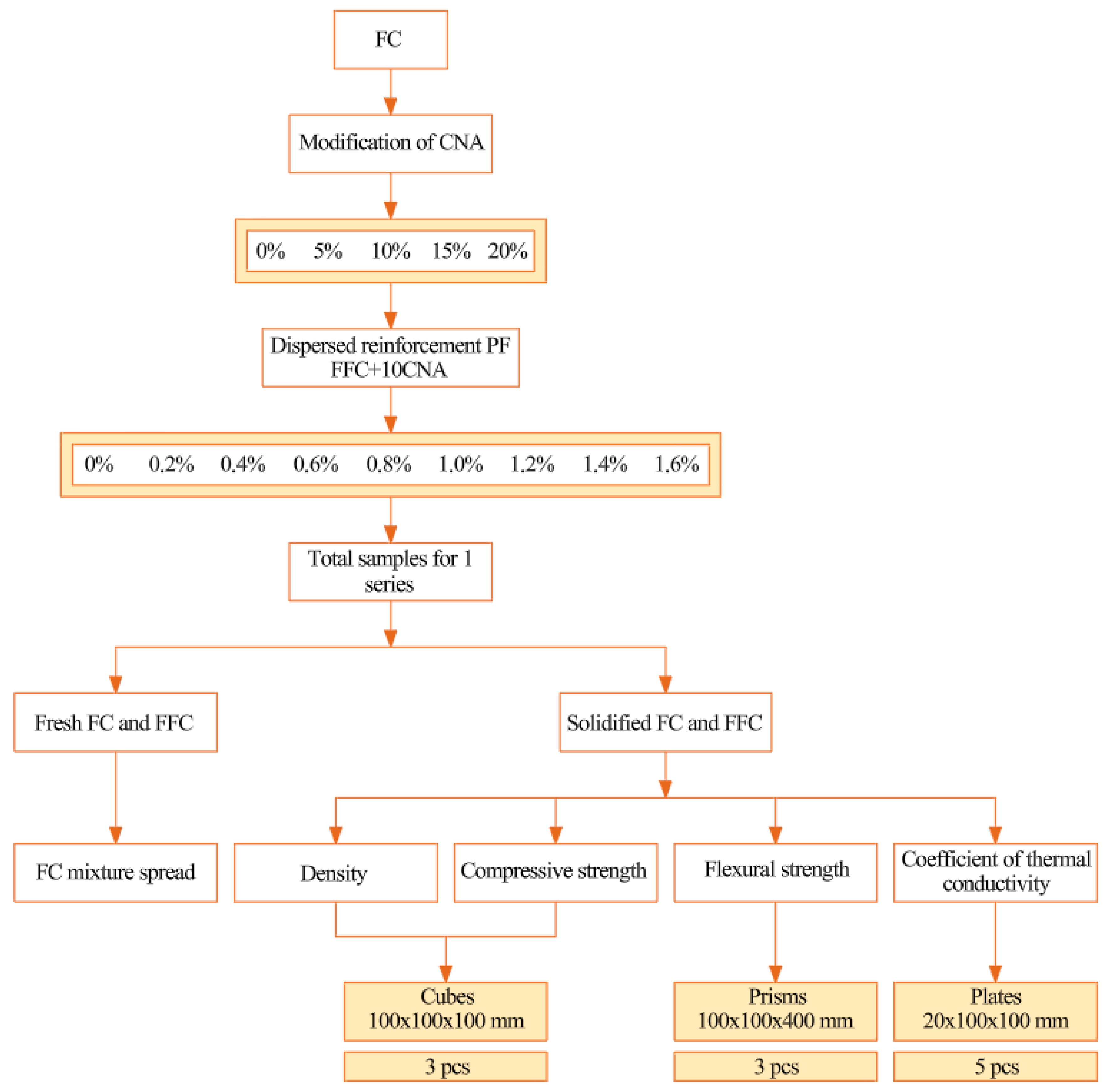
- Producing experimental foam concrete and fiber-reinforced foam concrete samples with varying dosages of the complex nanomodifying additive (CNA) and poly-propylene fiber (PF);
- –
- Determining the workability parameters of foam concrete mixtures and the density, compressive strength, flexural strength, and thermal conductivity coefficients of hardened FC and FFC;
- –
- Studying the structural features of FC and FFC using SEM methods;
- –
- Analysis of experimental results and selection of the most optimal parameters for CNA modification and PF dispersion reinforcement parameters;
- –
- Evaluation of the effectiveness of the developed FC and FFC formulations and comparison of structural quality factors.
- –
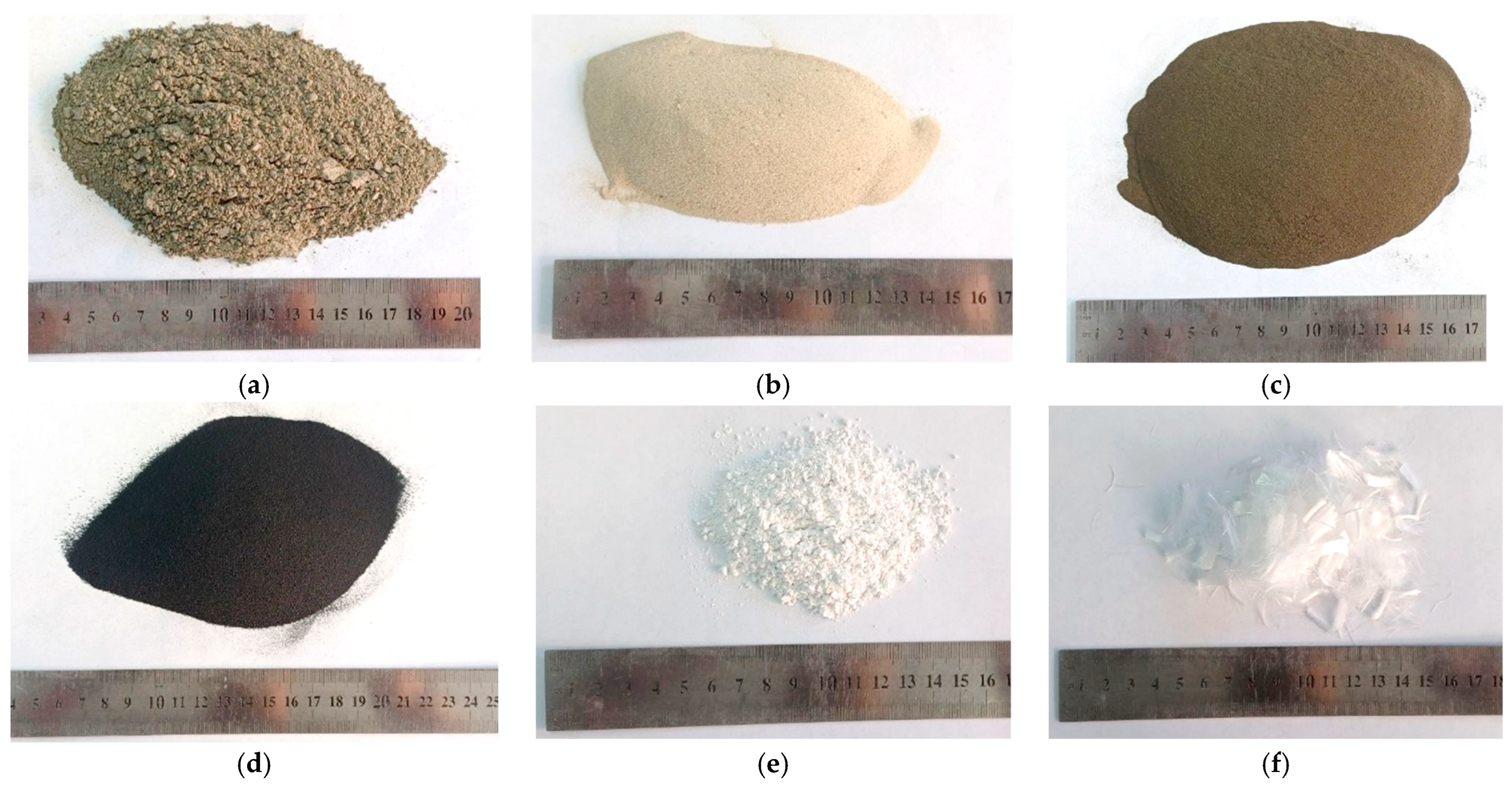
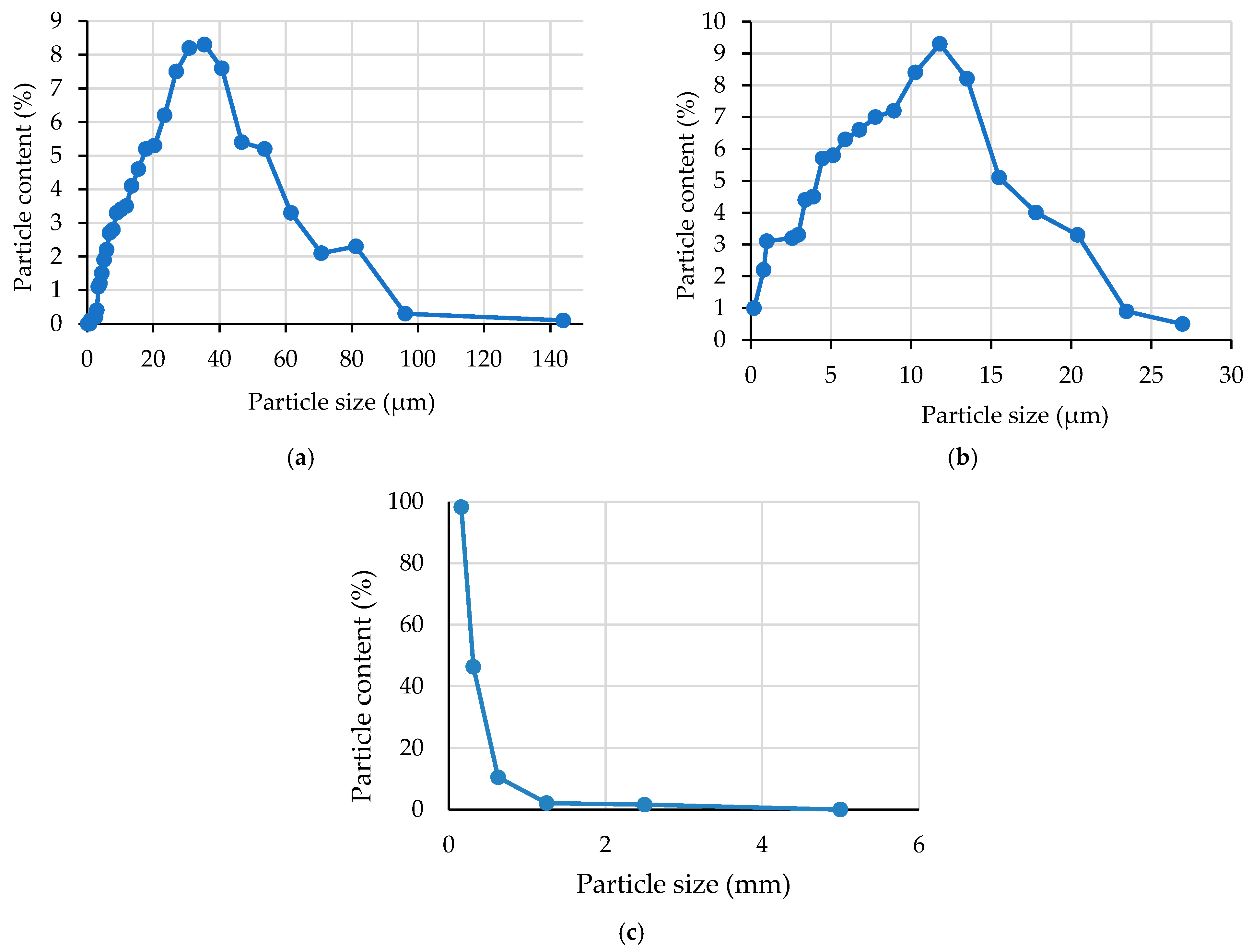
- The majority of FA particles (81.1%) fall in the range of 8 to 62 µm;
- –
- MS particles are up to 27 µm in size and are distributed as follows. A total of 33.2% of the particles are 5 µm or below, and 65.9% are 20 µm or below;
- –
- The fineness modulus of QS is 1.59.
2.2. Methods
3. Results and Discussion
3.1. Results of CNA Property Evaluation
3.2. Results of Evaluating the Properties of CNA-Modified FC
3.3. Results of Evaluating the Properties of FFC with PF Modified with CNA
3.4. Results of SEM Analysis of FC and FFC Structures
- –
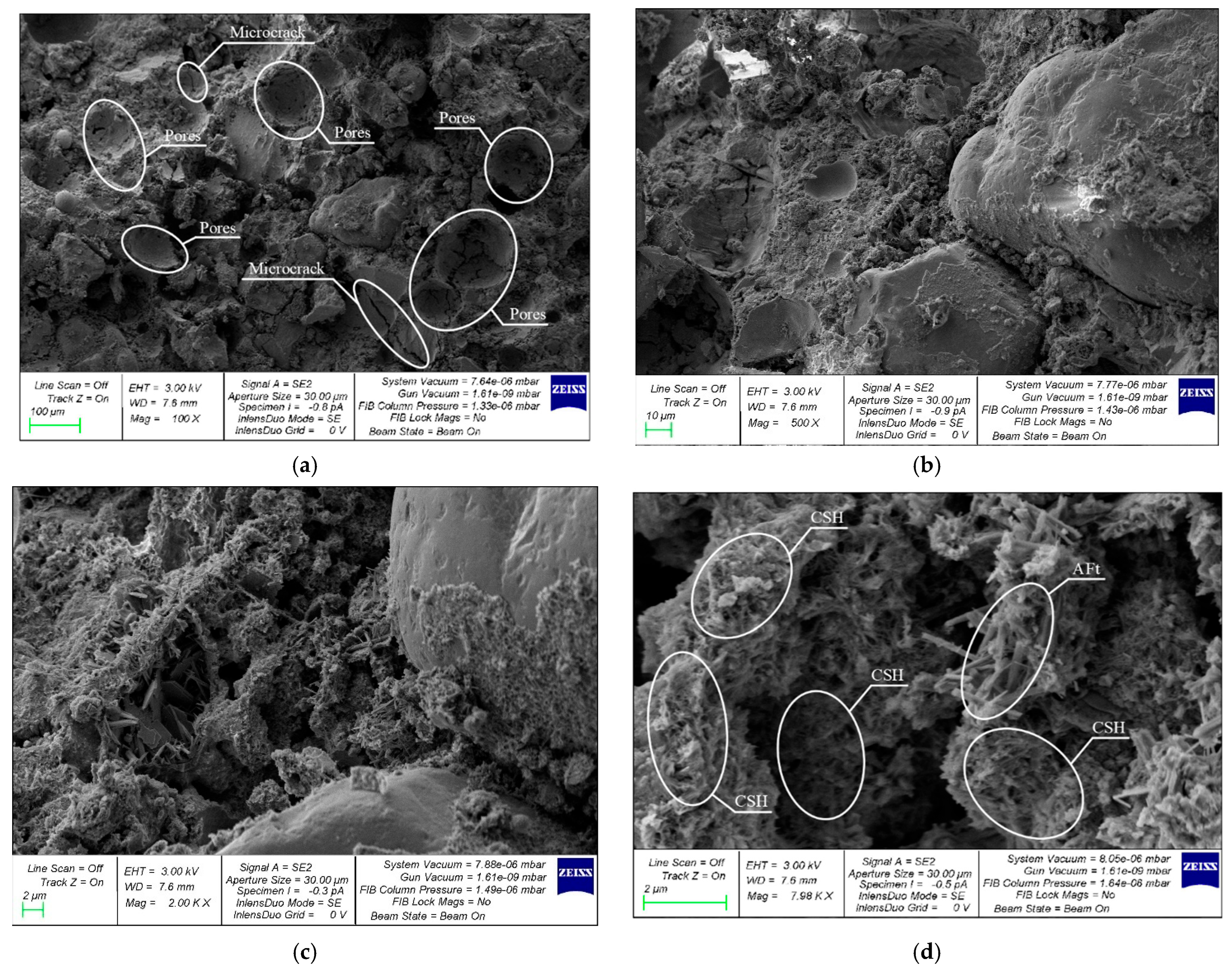
- The main components of CNA are FA and MS, the chemical composition of which is primarily represented by the oxides SiO2, Al2O3, and Fe2O3. These components have high pozzolanic activity and actively interact with Ca(OH)2, resulting in the formation of additional hydrosilicate gels. The presence of additional CSH strengthens the structure of the interpore partitions, thereby increasing the overall strength of foam concrete;
- –
- NA nanoparticles act as a stabilizer, preventing the merging of foam bubbles and promoting the formation of a more uniform cellular structure; the presence of a uniform pore structure and reinforced interpore partitions improves the thermal insulation properties of foam concrete;
- –
- The presence of a powdered plasticizer in the CNA composition compensates for the increased water demand of finely dispersed mineral components and promotes the better distribution of FA, MS, and NA particles within the foam concrete matrix;
- –
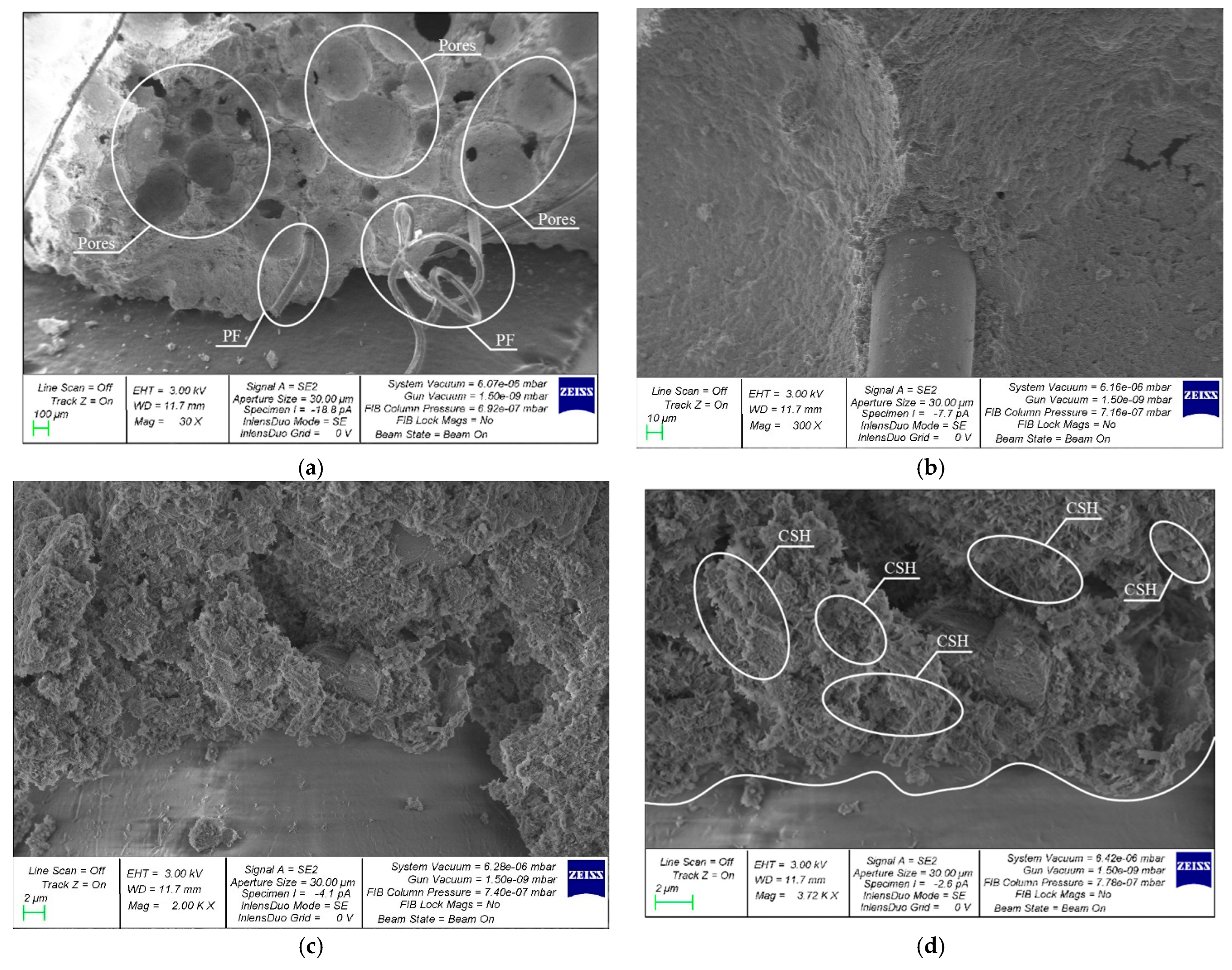
- PF fibers are uniformly distributed throughout the foam concrete matrix, intertwining to create a spatial reinforcing framework; the presence of a stable fiber framework allows for stress redistribution and prevents microcrack formation;
- –
- A complex nanomodifying additive combined with polypropylene fibers influences the failure mode of the composite. Under mechanical loads, including bending, the composite exhibits a viscoplastic failure mode. Under load, the PF fibers are pulled out of the composite, and failure under critical loads is accompanied by fiber rupture at the cement matrix–PF fiber interface. Nanoparticles increase the strength of interpore walls, making them more resistant to destructive loads.
4. Conclusions
- (1)
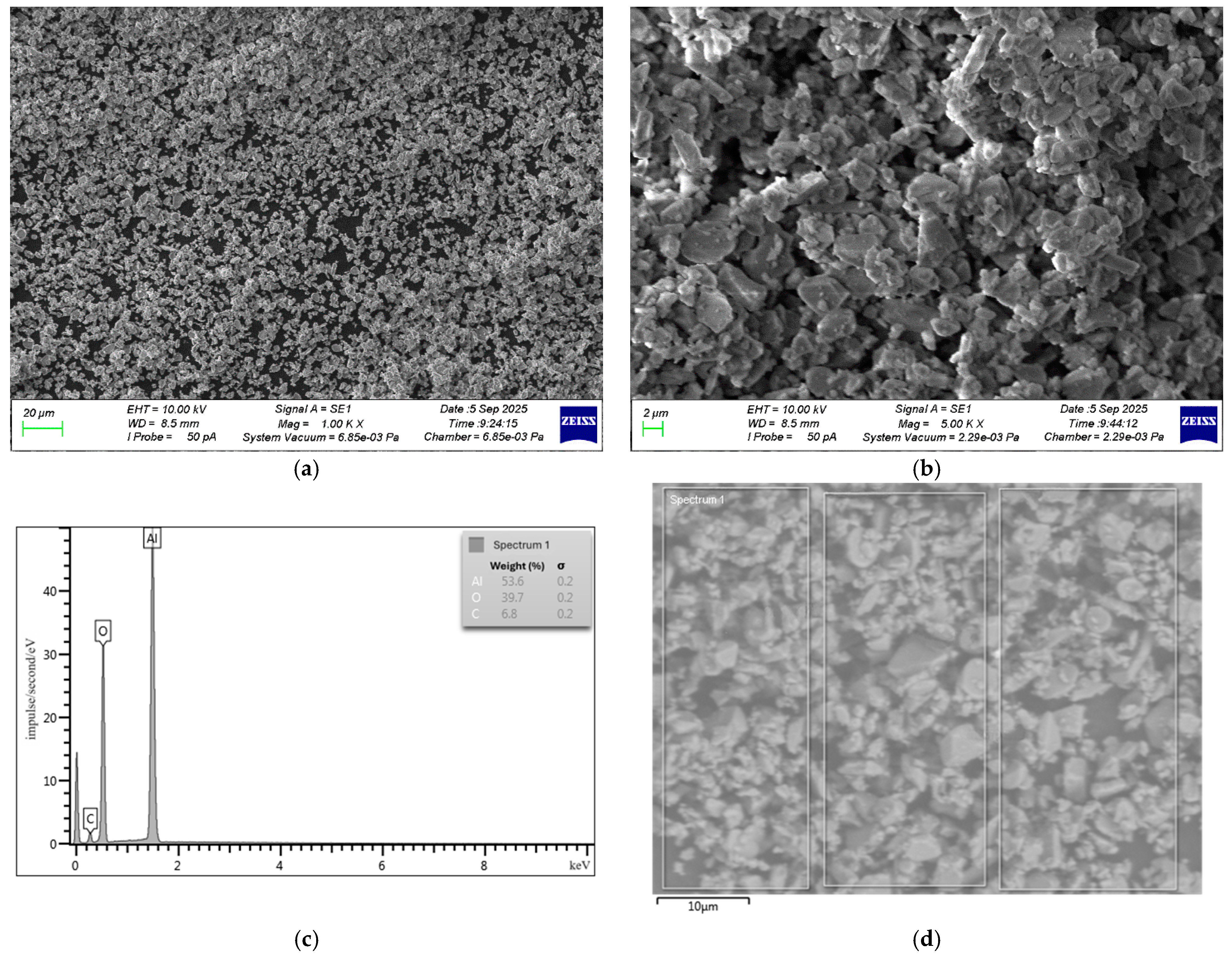
- A complex nanomodifying additive based on industrial waste was developed with the following composition: FA—80%; MS—18%; NA—2%; and C-3 plasticizing additive—0.2%. The X-ray diffraction pattern of CNA shows a predominantly amorphous phase, demonstrating its high activity.
- (2)
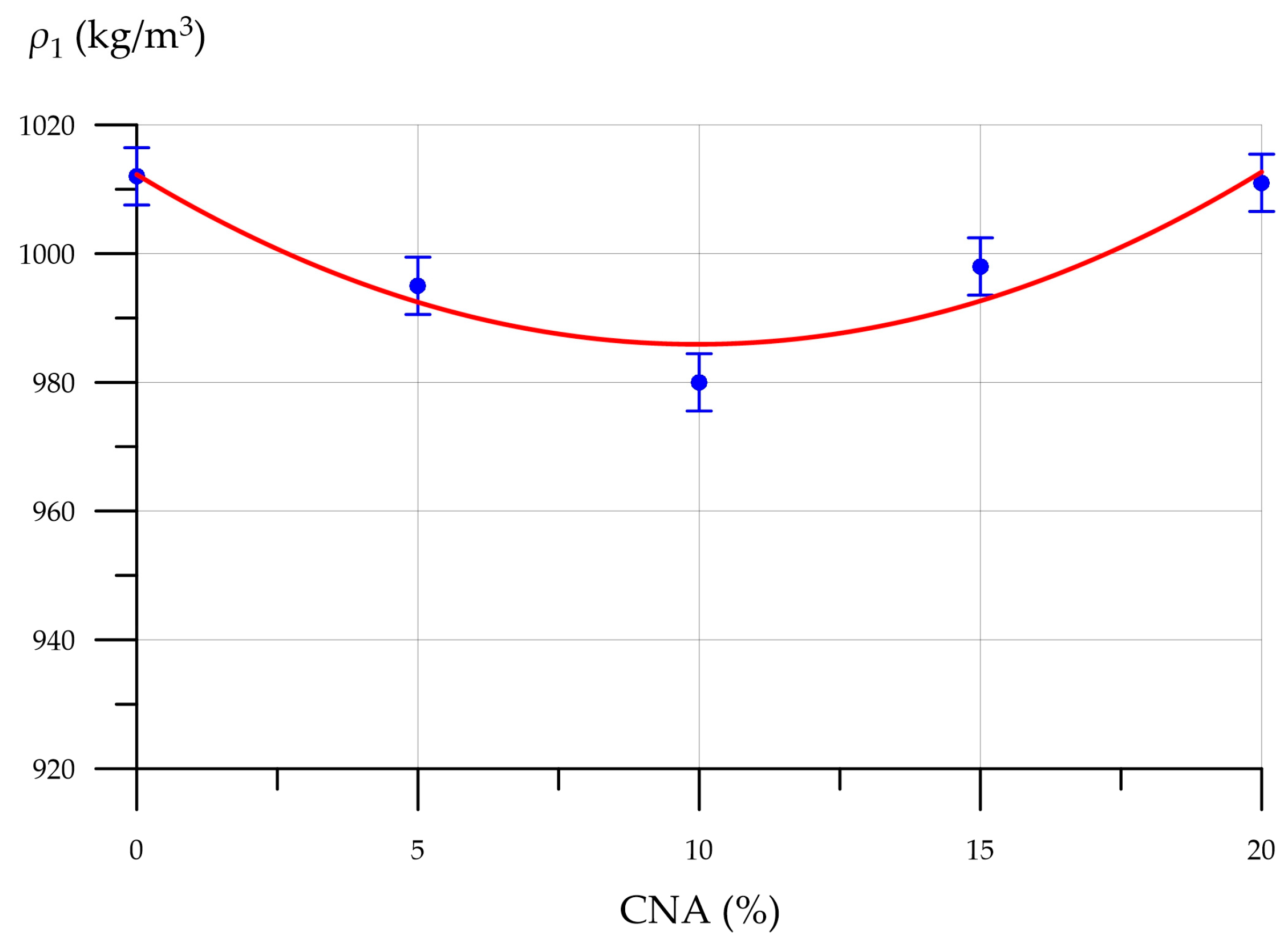
- The inclusion of CNA at levels up to 10% reduces the density of the cellular composites. The lowest density value of 980 kg/m3 was recorded for FC with 10% CNA. The density of FFC varied from 983 kg/m3 to 1008 kg/m3.
- (3)
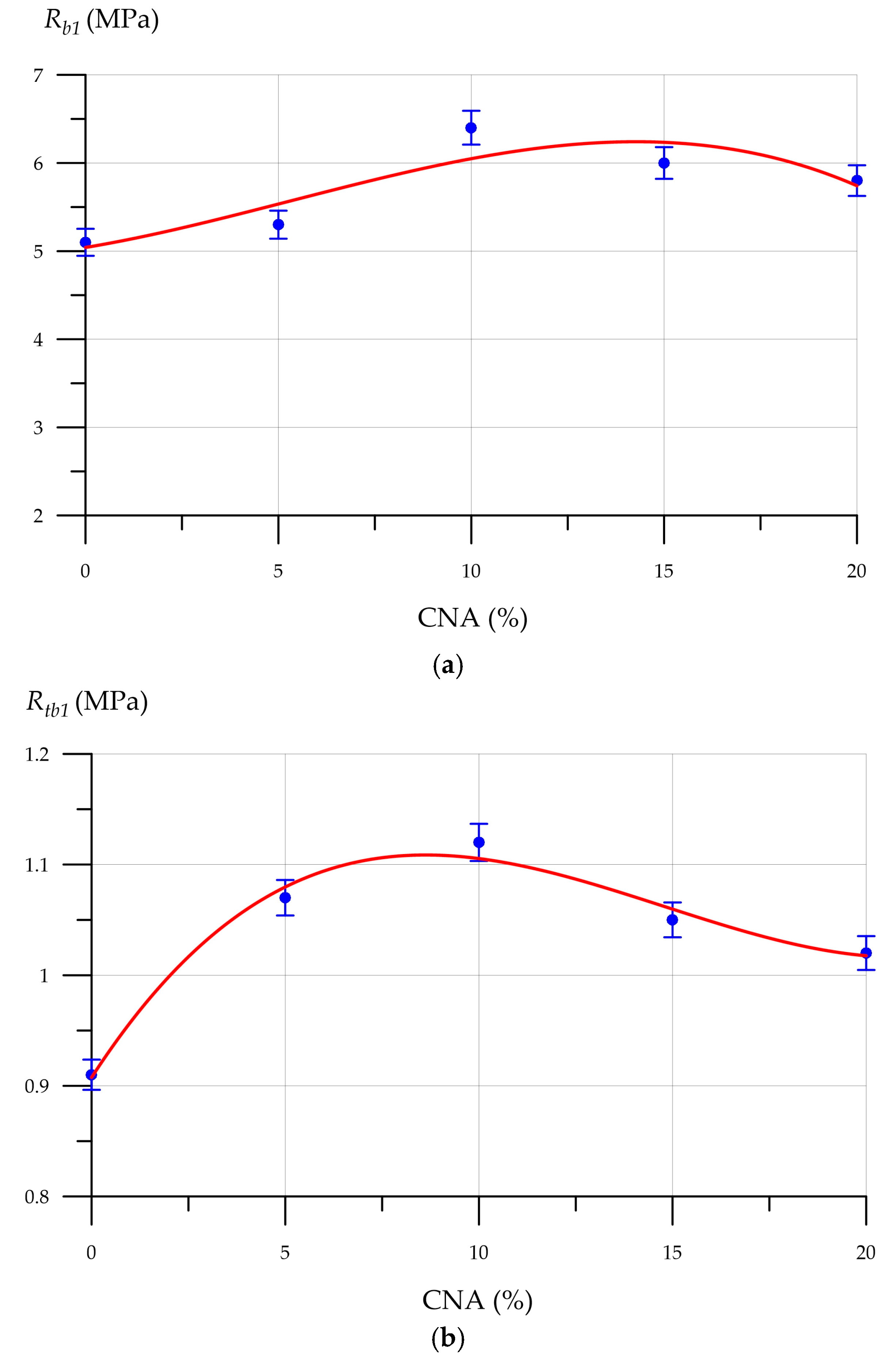
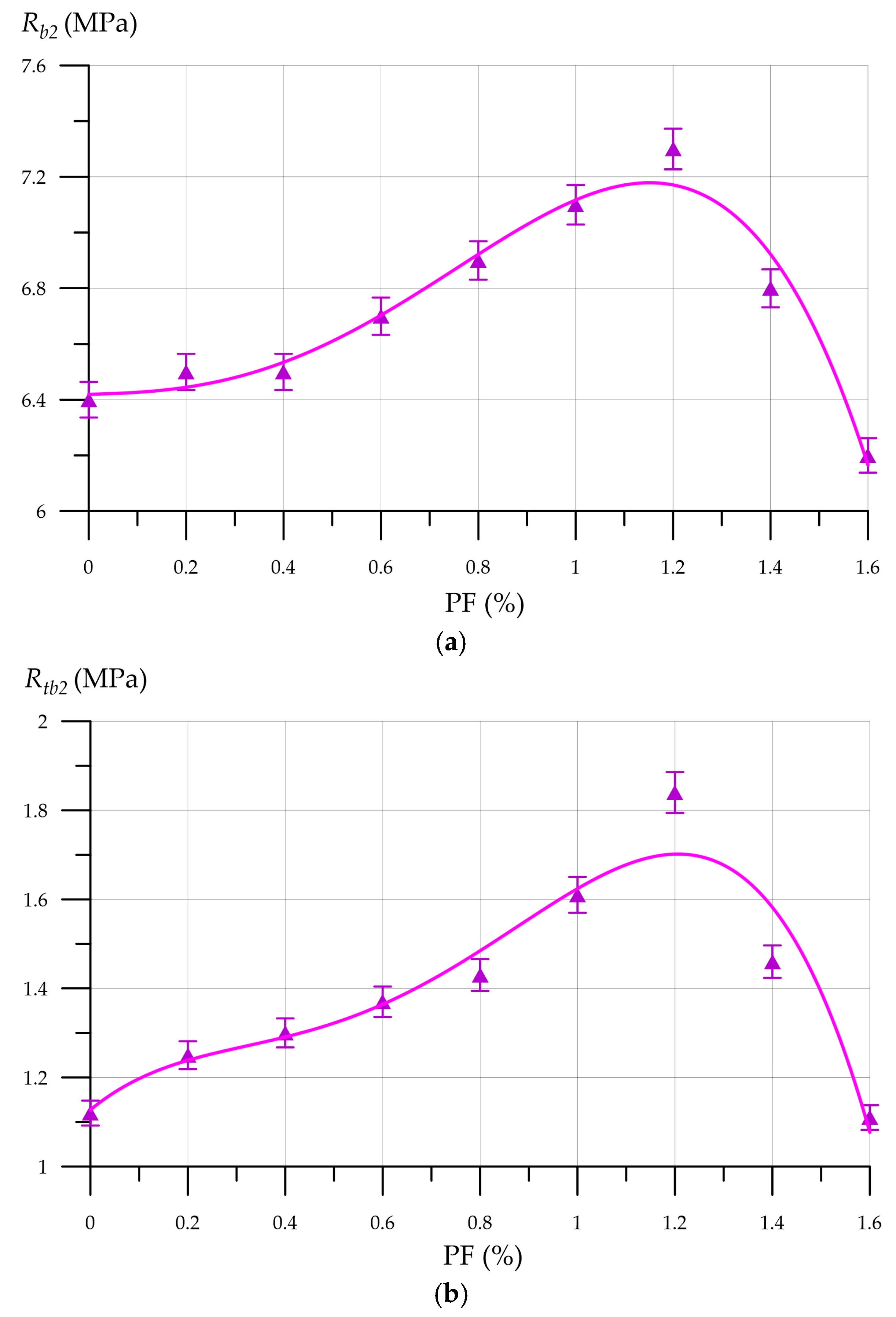
- The inclusion of up to 20% CNA in place of part of the cement has a positive effect on the strength properties of foam concrete. CNA demonstrates the greatest effectiveness at a level of 10%. The increases in compressive and flexural strength were 25.5% and 23.1%, respectively. Dispersed PF reinforcement in combination with CNA enhances the effect and further improves strength properties. The optimal percentage of dispersed PF reinforcement is 1.2% and, together with CNA, provides an increase in compressive strength of up to 43.1% and flexural strength of up to 102.2% compared to control samples.
- (4)
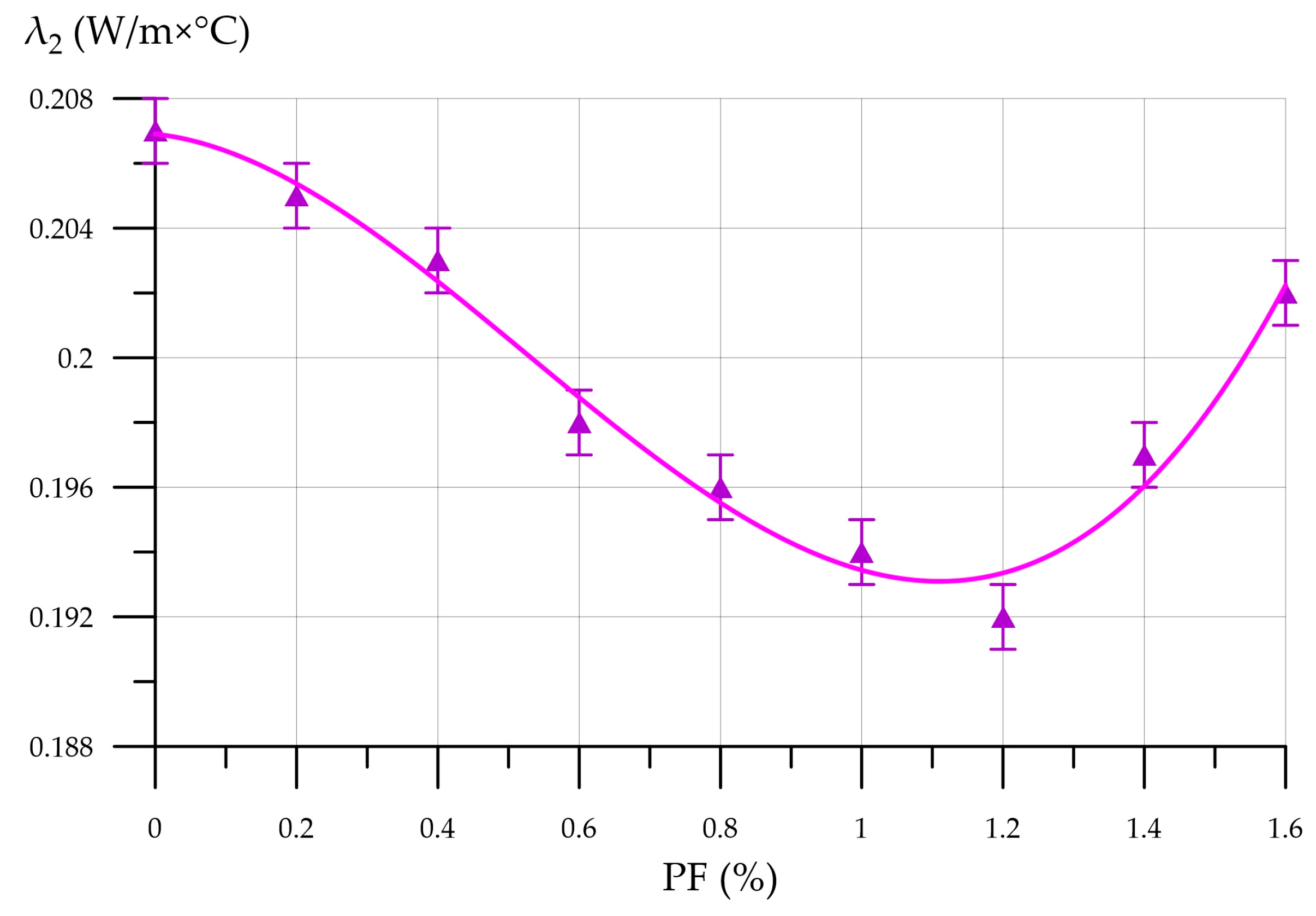
- The thermal insulation properties of FC are improved with the inclusion of CNA. The FC composition with 10% CNA exhibited the lowest thermal conductivity coefficient of 0.202 W/m×°C, which is 9.5% lower than that of the control composition. The addition of PF enhances the effect of CNA modification. For FFC with 1.2% PF, the thermal conductivity coefficient was 0.192 W/m×°C, which is 16.9% lower than the control.
- (5)
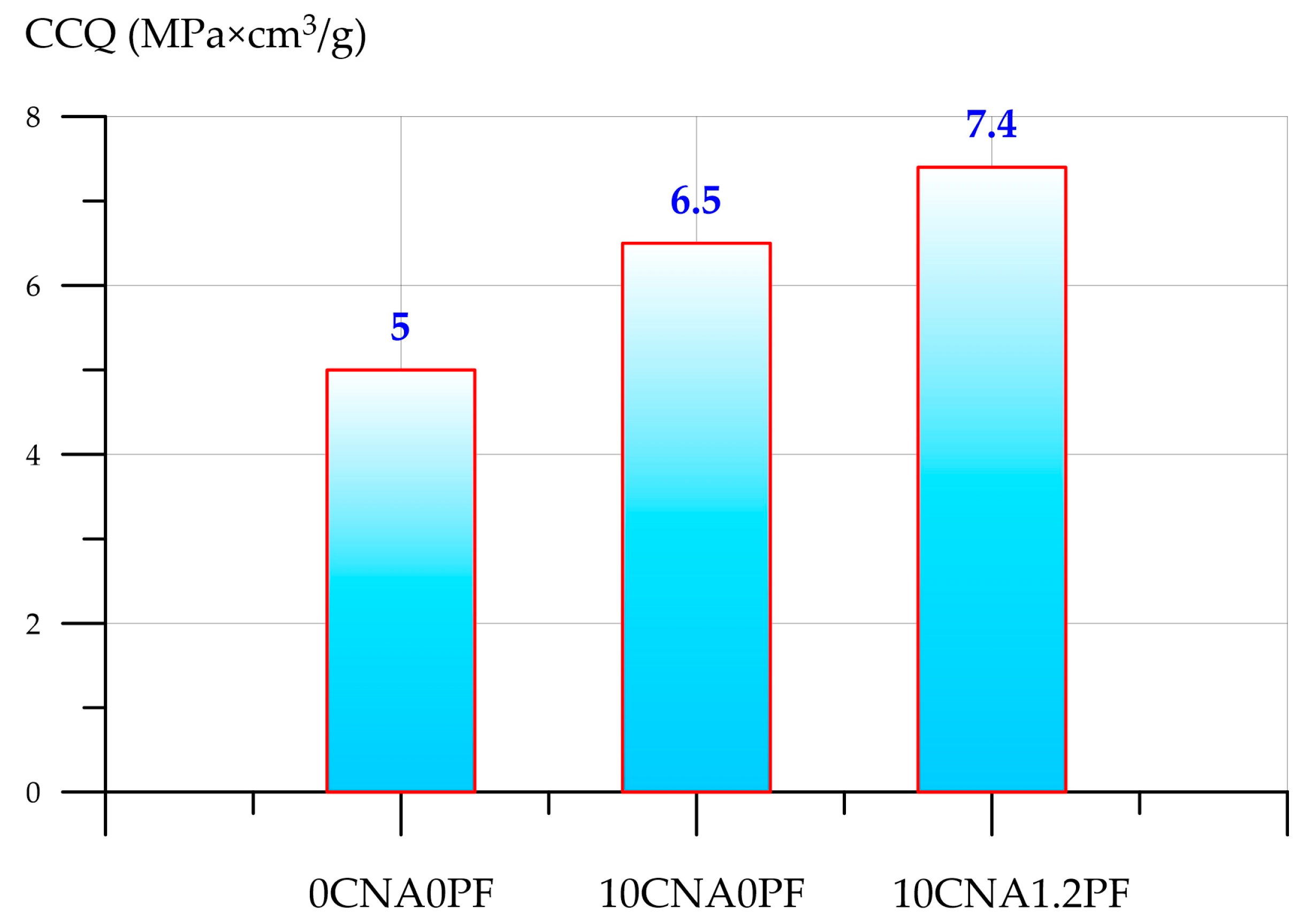
- A microstructural analysis of the foam concrete composite modified with 10% CNA and reinforced with 1.2% PF confirms the effectiveness of the formulation techniques. The cellular structure of the modified composite is uniform. The PF fibers adhere fairly tightly to the cement matrix. Multiple clusters of CSH zones are observed at the phase boundary. The increases in the structural quality factors for the composition with 10% CNA and with 10% CNA + 1.2PF were 30% and 48%, respectively.
- (6)
- The foam concrete composites obtained during the study are classified as structural and thermal insulation materials and can be used in civil and industrial construction.
Author Contributions
Funding
Institutional Review Board Statement
Informed Consent Statement
Data Availability Statement
Acknowledgments
Conflicts of Interest
Abbreviations
| PF | Polypropylene fiber |
| CNA | Complex nanomodifying additive |
| FC | Foam concrete |
| FFC | Fiber-reinforced foam concrete |
| FA | Fly ash |
| CCQ | Structural quality coefficient |
References
- Akter, S.T.; Hawas, A. Current Insight on Eco-Friendly Concrete: A Review. Buildings 2025, 15, 682. [Google Scholar] [CrossRef] [Scilit]
- Essam, A.; Alanazi, N.; Abd Elrahman, M.; Mostafa, S.A.; Khan, M.; Tahwia, A.M. Waste-to-resource design of eco-friendly ultra-high-performance concrete using reprocessed glass powder: Life cycle sustainability assessment and durability prediction. Case Stud. Constr. Mater. 2025, 23, e05617. [Google Scholar] [CrossRef] [Scilit]
- Zhang, K.; Wang, C.; Hu, K.; Rui, Y.; Feng, X.; Huang, T.; Bai, Y.; Han, S. Durability, ecological benefits and carbon emission effects on eco-friendly solid waste concrete containing lithium slag. Case Stud. Constr. Mater. 2026, 24, e05845. [Google Scholar] [CrossRef] [Scilit]
- Nesvetaev, G.V.; Koryanova, Y.I.; Shut, V.V. Autogenous Shrinkage of Concretes from Highly Mobile and Self-Compacting Mixtures. Mod. Trends Constr. Urban Territ. Plan. 2025, 4, 41–53. [Google Scholar] [CrossRef] [Scilit]
- Stel’makh, S.A.; Shcherban’, E.M.; Beskopylny, A.N.; Mailyan, L.R.; Meskhi, B.; Shilov, A.A.; Mailyan, A.L.; Zakieva, N.I.; Chernil’nik, A.; El’shaeva, D. Structural Formation and Properties of Eco-Friendly Foam Concrete Modified with Coal Dust. J. Compos. Sci. 2023, 7, 519. [Google Scholar] [CrossRef] [Scilit]
- Beskopylny, A.N.; Stel’makh, S.A.; Shcherban’, E.M.; Shakhalieva, D.M.; Chernil’nik, A.; Panfilov, I.; Beskopylny, N.; Özkılıç, Y.O. Finite Element Modeling and Experimental Study of Foam Concrete and Polystyrene Concrete. Buildings 2026, 16, 737. [Google Scholar] [CrossRef] [Scilit]
- Chen, Z.; Liu, M.; Zhang, Y.; Jia, S. Prediction of the Time-Dependent Elastic Modulus of Fly-Ash Concrete Under Sustained Loads. Materials 2026, 19, 559. [Google Scholar] [CrossRef] [Scilit]
- Liu, J.; Yu, X.; Wang, S.; Yang, J.; Cai, Q. Study on Early-Age Capillary Pressure and Plastic Shrinkage Properties of High-Volume Fly Ash Concrete. Materials 2025, 18, 1884. [Google Scholar] [CrossRef] [Scilit]
- Beskopylny, A.N.; Stel’makh, S.A.; Shcherban’, E.M.; Saidumov, M.S.; Abumuslimov, A.; Mezhidov, D.; Wang, Z. Eco-Friendly Foam Concrete with Improved Physical and Mechanical Properties, Modified with Fly Ash and Reinforced with Coconut Fibers. Constr. Mater. Prod. 2025, 8, 1. [Google Scholar] [CrossRef] [Scilit]
- Li, Z.; Yuan, H.; Gao, F.; Zhang, H.; Ge, Z.; Wang, K.; Sun, R.; Guan, Y.; Ling, Y.; Jiang, N. A Feasibility Study of Low Cement Content Foamed Concrete Using High Volume of Waste Lime Mud and Fly Ash for Road Embankment. Materials 2022, 15, 86. [Google Scholar] [CrossRef] [Scilit]
- Bat-Erdene, P.-E.; Pareek, S.; Koenders, E.; Mankel, C.; Löher, M.; Xiao, P. Evaluation of the Thermal Performance of Fly Ash Foam Concrete Containing Phase Change Materials (PCMs). Buildings 2023, 13, 2481. [Google Scholar] [CrossRef] [Scilit]
- Wang, D.; Xu, Z.; Yu, Y.; Xu, N.; Li, C.; Tian, X.; Wang, H.; Shi, F.; Xia, K. Influence of Carbonized Garbage Fly Ash on the Performance of Foam Concrete. Coatings 2025, 15, 736. [Google Scholar] [CrossRef] [Scilit]
- Zhang, D.; Ding, S.; Ma, Y.; Yang, Q. Preparation and Properties of Foam Concrete Incorporating Fly Ash. Materials 2022, 15, 6287. [Google Scholar] [CrossRef] [Scilit] [PubMed]
- Liu, P.; Wu, W.; Gong, Y. A Study on the Preparation and Performance Optimization of Alkali-Activated Fly Ash-Based Aerogel-Modified Foam Concrete. Buildings 2026, 16, 206. [Google Scholar] [CrossRef] [Scilit]
- Fang, M.; Wang, D.; Shi, C.; Wang, S.; Li, R.; Cao, F.; Song, Z.; Zhang, C. Macro- and microstructural characteristics and thermal conduction mechanism of fly ash-slag-based lightweight foam concrete in cold regions. Constr. Build. Mater. 2025, 492, 143019. [Google Scholar] [CrossRef] [Scilit]
- Li, W.; An, Q.; Wang, J.; Mou, D. Study on high-temperature resistance of lightweight foamed concrete added with fly ash cenosphere. J. Build. Eng. 2025, 114, 114423. [Google Scholar] [CrossRef] [Scilit]
- Wang, C.; Zhao, J.; Shen, Z.; He, Z.; Ying, X.; Chen, J.; Zhao, X.; Zhan, B. Multiscale study on concrete preparation using Na2CO3 synergistically with silica fume to solidify waste incineration bottom ash fine aggregates. Constr. Build. Mater. 2026, 514, 145557. [Google Scholar] [CrossRef] [Scilit]
- Kang, Y.; Wang, Y.; Li, W.; Xiang, J. Silica fume and sisal fiber enhanced self-healing of microbial concrete through inhibiting healing product dissolution and improving calcium ion utilization. Constr. Build. Mater. 2025, 505, 144717. [Google Scholar] [CrossRef] [Scilit]
- Chowdary, L.; Boddepalli, K.R. Synergistic effects of fly ash based artificial concrete aggregate and silica fume on the multi-scale behaviour and performance of self-compacting concrete. Case Stud. Constr. Mater. 2026, 24, e05828. [Google Scholar] [CrossRef] [Scilit]
- Sharma, A.; Garia, S.; Kale, R.C. Performance of self compacting concrete modified with wollastonite fibre and silica fume. Constr. Build. Mater. 2025, 497, 14393. [Google Scholar] [CrossRef] [Scilit]
- Mizan, M.H.; Shakik, A.; Matsumoto, K. Effectiveness of silica fume on the damage behavior under freeze-thaw cycles of the concrete-PCM interface. J. Build. Eng. 2026, 117, 11480. [Google Scholar] [CrossRef] [Scilit]
- Khan, A.; Ali, A.; Mehboob, S.S.; Tayyab, A.; Khan, D.; Mursaleen, M.; Rezzoug, A.; Ltifi, M. Multi-objective optimization of thermal and mechanical properties of lightweight foam concrete with Binary Blend of fly ash and silica fume. J. Build. Eng. 2026, 120, 115387. [Google Scholar] [CrossRef] [Scilit]
- Raza, A.; Ghazouani, N.; Ouni, M.H.E. Enhancing thermal and mechanical resilience of self-compacting lightweight concrete with silica fume and hybrid basalt fibres. Constr. Build. Mater. 2025, 494, 143485. [Google Scholar] [CrossRef] [Scilit]
- Akbar, D.; Shabbir, F.; Raza, A.; Ben Kahla, N. Synergistic enhancement of recycled aggregate concrete using hybrid natural-synthetic fiber reinforcement and silica fume. Results Eng. 2025, 27, 106291. [Google Scholar] [CrossRef] [Scilit]
- Beskopylny, A.N.; Stel’makh, S.A.; Shcherban’, E.M.; Mailyan, L.R.; Meskhi, B.; Varavka, V.; Beskopylny, N.; El’shaeva, D. A Study on the Cement Gel Formation Process during the Creation of Nanomodified High-Performance Concrete Based on Nanosilica. Gels 2022, 8, 346. [Google Scholar] [CrossRef] [Scilit]
- Beskopylny, A.N.; Stel’makh, S.A.; Shcherban’, E.M.; Varavka, V.; Meskhi, B.; Mailyan, L.R.; Kovtun, M.; Kurlovich, S.; El’shaeva, D.; Chernil’nik, A.; et al. Performance and mechanism of the structure formation and physical-mechanical properties of concrete by modification with nanodiamonds. Constr. Build. Mater. 2024, 452, 138994. [Google Scholar] [CrossRef] [Scilit]
- Li, H.; Zhao, Y.; Zhao, Y.; Zhang, M.; Niu, Y.; Cao, X. Advances in the Mechanism and Application of Nanoparticles in Concrete Property Modification. Inorganics 2025, 13, 305. [Google Scholar] [CrossRef] [Scilit]
- Chu, H.; Wang, Q.; Gao, L.; Jiang, J.; Wang, F. An Approach of Producing Ultra-High-Performance Concrete with High Elastic Modulus by Nano-Al2O3: A Preliminary Study. Materials 2022, 15, 8118. [Google Scholar] [CrossRef] [Scilit]
- Wang, Y.; Qi, Y. Study on Electrodeposition of ZnNi/Al2O3 Composite Coating on 40Mn Steel and its Corrosion Behavior in Simulated Concrete Pore Solution. Int. J. Electrochem. Sci. 2022, 17, 221037. [Google Scholar] [CrossRef] [Scilit]
- Zhang, H.; Wang, Z.; Zhang, T.; Li, Z. Foam Stabilization Process for Nano-Al2O3 and Its Effect on Mechanical Properties of Foamed Concrete. Nanomaterials 2024, 14, 1516. [Google Scholar] [CrossRef] [Scilit]
- Zhou, J.; Shang, H.; Huang, Y.; Fan, L. Experimental investigation on bond properties of nano-Al2O3 and hydroxypropyl methyl cellulose (HPMC) modified coated steel bar embedded in concrete. J. Build. Eng. 2024, 98, 110928. [Google Scholar] [CrossRef] [Scilit]
- Moghaddam, H.H.; Lotfollahi-Yaghin, M.A.; Maleki, A. Comprehensive analysis of mechanical characteristics in self-compacting concrete (SCC) with aluminum oxide (Al2O3) nanoparticles and glass fibers: An experimental and analytical investigation. Case Stud. Constr. Mater. 2025, 22, e04095. [Google Scholar] [CrossRef] [Scilit]
- Verma, S.K.; Daniyal, M.; Goldar, D. Comparative study on the mechanical and durability performance of concrete incorporating nanomaterials. Next Nanotechnol. 2026, 9, 100361. [Google Scholar] [CrossRef] [Scilit]
- Liu, Q.; Zhang, X.; Jiang, Q.; Xia, Y.; Hou, D.; Li, L. Effects of nano-Al2O3, nano-MgO and nano-Fe2O3 on the properties of cement-based 3D printing: A comparative study. J. Build. Eng. 2025, 113322. [Google Scholar] [CrossRef] [Scilit]
- Tian, L.; Liu, T.; Fu, H.; Wang, P.; Taqi, M.; Li, W.; Cui, L.; Wang, Y. Electrochemical extraction of chloride in OPC-CSA composite conductive mortar with nano-Al2O3. J. Build. Eng. 2025, 105, 112432. [Google Scholar] [CrossRef] [Scilit]
- Kim, Y.-T.; Lee, J.-W.; Yang, S.-L. Influence of nano SiO2/Al2O3-TiO2 powder on strength and durability properties of concrete. KSCE J. Civ. Eng. 2026, 30, 100462. [Google Scholar] [CrossRef] [Scilit]
- Zhang, X.; Bing, Y.; Yang, J.; Xu, J.; Wu, Y.; Su, L. Study on the durability of nano-Al2O3 synergistic polypropylene fiber reinforced filler against sulfate erosion. J. Environ. Chem. Eng. 2025, 13, 118201. [Google Scholar] [CrossRef] [Scilit]
- Dalal, S.P.; Motiani, R.; Majmundar, S.; Solanki, V.; Strauss, E.J. Experimental Study on Effect of Replacement of Cement with Alpha Aluminium Oxide (α-Al2O3) Nanoparticles on Strength and Durability Aspects of Concrete. In Proceedings of the 9th International Conference on Civil Engineering ICOCE, Singapore, 22–24 March 2025; Lecture Notes in Civil Engineering; Springer: Berlin/Heidelberg, Germany, 2025; Volume 714, pp. 51–59. [Google Scholar] [CrossRef] [Scilit]
- Klyuev, S.V.; Klyuev, A.V.; Ayubov, N.A.; Fediuk, R.S.; Levkina, E.V. Finite Element Design and Analysis of Sustainable Mono-Reinforced and Hybrid-Reinforced Fibergeopolymers. Adv. Eng. Res. (Rostov-on-Don) 2025, 25, 171–185. [Google Scholar] [CrossRef] [Scilit]
- Antipas, I.R. Effect of Glass Fiber Reinforcement on the Mechanical Properties of Polyester Composites. Adv. Eng. Res (Rostov-on-Don) 2023, 23, 387–397. [Google Scholar] [CrossRef] [Scilit]
- Wang, Y.; Tian, M.; Theogene, S.; Wang, J.; Lv, B.; Zhang, X.; Gong, H.; Zhang, H.; Liu, Y. Strength Characteristics of Polypropylene Fiber-Modified Rubber Foamed Concrete. Buildings 2025, 15, 1663. [Google Scholar] [CrossRef] [Scilit]
- Mydin, M.A.O.; Abdullah, M.M.A.B.; Razak, R.A.; Nawi, M.N.M.; Risdanareni, P.; Puspitasari, P.; Sandu, A.V.; Baltatu, M.S.; Vizureanu, P. Study on Polypropylene Twisted Bundle Fiber Reinforced Lightweight Foamed Concrete. Buildings 2023, 13, 541. [Google Scholar] [CrossRef] [Scilit]
- Rudziewicz, M.; Maroszek, M.; Setlak, K.; Góra, M.; Hebda, M. Optimization of Foams—Polypropylene Fiber-Reinforced Concrete Mixtures Dedicated for 3D Printing. Materials 2024, 17, 4106. [Google Scholar] [CrossRef] [Scilit] [PubMed]
- Chen, L.; Li, P.; Guo, W.; Wang, R.; Zhang, D.; Gao, M.; Peng, C. Experimental Investigation of the Dynamic Mechanical Properties of Polypropylene-Fiber-Reinforced Foamed Concrete at High Temperatures. Polymers 2023, 15, 2544. [Google Scholar] [CrossRef] [Scilit] [PubMed]
- Ma, Z.; Ma, C.; Du, C.; Zhang, S.; Zhang, H.; Zhang, X.; Zhang, X.; Wang, J.; Tian, M.; Wang, Y. Research on dynamic mechanical properties of polypropylene fiber-modified rubber foamed concrete. Constr. Build. Mater. 2023, 404, 133282. [Google Scholar] [CrossRef] [Scilit]
- Liu, P.; Zhang, S.; Cui, S.; Li, C. Experimental study on dynamic mechanical properties and enhancement mechanisms of iron ore tailings foam concrete reinforced with different fiber types. Constr. Build. Mater. 2026, 508, 145149. [Google Scholar] [CrossRef] [Scilit]
- Migunthanna, J.; Ramesh, A.; Navaratnam, S.; Rajeev, P.; Sanjayan, J. Developing eco-friendly foam concrete with waste clay bricks and recycled polypropylene fibre. Next Sustain. 2026, 7, 100263. [Google Scholar] [CrossRef] [Scilit]
- Meskhi, B.; Beskopylny, A.N.; Stel’makh, S.A.; Shcherban’, E.M.; Mailyan, L.R.; Beskopylny, N.; Chernil’nik, A.; El’shaeva, D. Insulation Foam Concrete Nanomodified with Microsilica and Reinforced with Polypropylene Fiber for the Improvement of Characteristics. Polymers 2022, 14, 4401. [Google Scholar] [CrossRef] [Scilit]
- Thangavel, R.; Shukla, S.K.; Madhavan, M.K. Fiber-Reinforced Foam Concrete Using Quarry Micro Fines and Sugarcane Bagasse Ash: A Box–Behnken Design Optimization and Performance Assessment. Sustainability 2026, 18, 1517. [Google Scholar] [CrossRef] [Scilit]
- Gökçe, H.S.; Öksüzer, N.; Kamiloğlu, H.A. The Toughness of Polypropylene Fiber-Reinforced Foam Concrete under Various Uni- and Tri-Axial Compression Loads. KSCE J. Civ. Eng. 2023, 27, 2982–2992. [Google Scholar] [CrossRef] [Scilit]
- Zhang, S.; Li, C.; Liu, P.; Chen, W.; Li, H.-N. Experimental study on dynamic compressive properties of cement-iron ore tailings foam composites with various polypropylene fiber parameters. Sci. China Technol. Sci. 2026, 69, 1320702. [Google Scholar] [CrossRef] [Scilit]
- Beskopylny, A.N.; Shcherban’, E.M.; Stel’makh, S.A.; Mailyan, L.R.; Meskhi, B.; Varavka, V.; Chernil’nik, A.; Pogrebnyak, A. Improved Fly Ash Based Structural Foam Concrete with Polypropylene Fiber. J. Compos. Sci. 2023, 7, 76. [Google Scholar] [CrossRef] [Scilit]
- Jiang, F.; Deng, W.; Wang, Q.; Wang, J.; Mao, Z. Performance Research and Engineering Application of Fiber-Reinforced Lightweight Aggregate Concrete. Materials 2024, 17, 5530. [Google Scholar] [CrossRef] [Scilit] [PubMed]
- Zhang, W.; Li, J.; Kong, X.; Zhao, H. Sustainable application of corn straw ash and waste crumb rubber in concrete. J. Build. Eng. 2025, 113, 114186. [Google Scholar] [CrossRef] [Scilit]
- Aljaboobi, D.Z.; Burakova, I.V.; Burakov, A.E. Effect of Nanostructured Additive Based on Graphene Oxide and Lignosulfonate on Water Absorption and Thermal Conductivity of Non-Autoclavated Aerated Concrete. Tech. Phys. 2024, 69, 2204–2208. [Google Scholar] [CrossRef] [Scilit]
- Naumov, A.E.; Suvorova, M.O.; Bakaeva, N.V.; Danilina, N.V. Environmental safety management of city life cycle through low-carbon principles. Constr. Mater. Prod. 2025, 8. 8. [Google Scholar] [CrossRef] [Scilit]
- Li, M.; Lu, Y.; Liu, Y.; Chu, J.; Zhang, T.; Wang, W. Influence of the Steel Slag Particle Size on the Mechanical Properties and Microstructure of Concrete. Sustainability 2024, 16, 2083. [Google Scholar] [CrossRef] [Scilit]
- Puzatova, A.V.; Dmitrieva, M.A.; Tovpinets, A.O.; Leitsin, V.N. Study of Structural Defects Evolution in Fine-Grained Concrete Using Computed Tomography Methods. Adv. Eng. Res. (Rostov-on-Don) 2024, 24, 227–237. [Google Scholar] [CrossRef] [Scilit]
- GOST 23789-2018; Gypsum Binders. Test Methods. Standartinform: Moscow, Russia, 2018.
- EN 12390-7:2019; Testing Hardened Concrete—Part 7: Density of Hardened Concrete. iTeh Standards: Etobicoke, ON, Canada, 2019. Available online: https://standards.iteh.ai/catalog/standards/cen/811a0cf3-55e3-495a-b06e-5c302d5f2806/en-12390-7-2019 (accessed on 5 March 2026).
- EN 12390-1:2021; Testing Hardened Concrete—Part 1: Shape, Dimensions and Other Requirements of Specimens and Moulds. iTeh Standards: Etobicoke, ON, Canada, 2021. Available online: https://standards.iteh.ai/catalog/standards/cen/d1c9ccee-2e5a-425e-a964-961da95d2f99/en-12390-1-2021 (accessed on 5 March 2026).
- EN 12390-2:2019; Testing Hardened Concrete—Part 2: Making and Curing Specimens for Strength Tests. iTeh Standards: Etobicoke, ON, Canada, 2019. Available online: https://standards.iteh.ai/catalog/standards/cen/ae7e6a86-1cbc-455e-8b2a-8964be9087f9/en-12390-2-2019 (accessed on 5 March 2026).
- EN 12390-3:2019; Testing Hardened Concrete—Part 3: Compressive Strength of Test Specimens. iTeh Standards: Etobicoke, ON, Canada, 2019. Available online: https://standards.iteh.ai/catalog/standards/cen/7eb738ef-44af-436c-ab8e-e6561571302c/en-12390-3-2019 (accessed on 5 March 2026).
- EN 12390-4:2019; Testing Hardened Concrete—Part 4: Compressive Strength—Specification for Testing Machines. iTeh Standards: Etobicoke, ON, Canada, 2019. Available online: https://standards.iteh.ai/catalog/standards/cen/10b1c613-819b-42d7-8f94-480cd37a666a/en-12390-4-2019 (accessed on 5 March 2026).
- EN 12390-5:2019; Testing Hardened Concrete—Part 5: Flexural Strength of Test Specimens. iTeh Standards: Etobicoke, ON, Canada, 2019. Available online: https://standards.iteh.ai/catalog/standards/cen/5653c2c7-55a9-4bcb-8e13-5b1dfb0e3baf/en-12390-5-2019 (accessed on 5 March 2026).
- GOST 7076-99; Building Materials and Products. Method of Determination of Steady-State Thermal Conductivity and Thermal Resistance. Gosstroy of Russia: Moscow, Russia, 1999.
- Liu, Q.; Zeng, J.; Yang, J.; He, X.; Su, Y.; Strnadel, B. Pozzolanic effect of nano-micron nucleation seeds prepared by waste autoclaved aerated concrete during the early stages of cement hydration. Constr. Build. Mater. 2025, 497, 143967. [Google Scholar] [CrossRef] [Scilit]
- Compaore, A.; Toure, J.-Y.N.K.; Klenam, D.E.P.; Merenga, A.S.; Asumadu, T.K.; Obayemi, J.D.; Rahbar, N.; Migwi, C.; Soboyejo, W.O. Foam concrete with mineral additives: From microstructure to mechanical/physical properties, workability and durability. Open Ceram. 2025, 23, 100812. [Google Scholar] [CrossRef] [Scilit]
- Kulikov, B.P.; Tarasov, I.V.; Bezrukikh, A.I.; Konstantinov, I.L.; Voroshilov, D.S. Investigation properties of microsilica to assess the possibility of its use as an additive in concrete production. Constr. Mater. Prod. 2025, 8, 5. [Google Scholar] [CrossRef] [Scilit]
- Malaiškienė, J.; Jakubovskis, R. Influence of Pozzolanic Additives on the Structure and Properties of Ultra-High-Performance Concrete. Materials 2025, 18, 1304. [Google Scholar] [CrossRef] [Scilit] [PubMed]
- Girskas, G.; Kriptavičius, D.; Kizinievič, O.; Malaiškienė, J. Effect of Pozzolanic Additive on Properties and Surface Finish Assessment of Concrete. Buildings 2025, 15, 1617. [Google Scholar] [CrossRef] [Scilit]
- Fan, K.; Wei, J.; Feng, C. Fundamental Properties of Expanded Perlite Aggregated Foamed Concrete with Different Supplementary Cementitious Materials. Materials 2025, 18, 2671. [Google Scholar] [CrossRef] [Scilit] [PubMed]
- Hrabová, K.; Láník, J.; Lehner, P. Study of the Mechanical and Fracture Properties of Lightweight Concrete with Various Combinations of Polypropylene Fibers. Materials 2026, 19, 611. [Google Scholar] [CrossRef] [Scilit]
- Akbulut, Z.F.; Kuzielová, E.; Tawfik, T.A.; Smarzewski, P.; Guler, S. Synergistic Effects of Polypropylene Fibers and Silica Fume on Structural Lightweight Concrete: Analysis of Workability, Thermal Conductivity, and Strength Properties. Materials 2024, 17, 5042. [Google Scholar] [CrossRef] [Scilit]
- Jadooe, A.; Whwah, M.S.; Al-Hussainy, H.A.; Kaishesh, A.J.; Pinto, H.A.S.; Bernardo, L.F.A.; Dulaimi, A. Effects of Silica Fume, Perlite, and Polypropylene Fibers on the Mechanical Properties of Lightweight Polystyrene Concrete Composite. J. Compos. Sci. 2026, 10, 124. [Google Scholar] [CrossRef] [Scilit]
- Xian, G.; Liu, Z.; Wang, Z.; Zhou, X. Study on the Performance and Mechanisms of High-Performance Foamed Concrete. Materials 2022, 15, 7894. [Google Scholar] [CrossRef] [Scilit]
- Ahmed, T.I.; Tobbala, D.E. Rubbered light concrete containing recycled PET fiber compared to macro-polypropylene fiber in terms of SEM, mechanical, thermal conductivity and electrochemical resistance. Constr. Build. Mater. 2024, 415, 135010. [Google Scholar] [CrossRef] [Scilit]
- Bat-Erdene, P.-E.; Pareek, S. Experimental Study on the Development of Fly Ash Foam Concrete Containing Phase Change Materials (PCMs). Materials 2022, 15, 8428. [Google Scholar] [CrossRef] [Scilit]
- Luo, B.; Dong, X.; Li, R.; Su, D.; Qiao, Y.; Meng, L.; Zhang, C. Optimized Mix Proportion and Microstructural Mechanism of Foamed Concrete for Internal Molds in Hollow Concrete Components. Coatings 2025, 15, 976. [Google Scholar] [CrossRef] [Scilit]
- Raghu Rami Reddy, C.; Rao, H.S.; Ghorpade, V.G. Mechanical and Microstructural Behavior of Foamed Concrete with Polypropylene Fibers and Mineral Admixtures. Procedia Struct. Integr. 2025, 70, 223–230. [Google Scholar] [CrossRef] [Scilit]
- Sun, X.; Zhong, J.; Zhang, W.; Li, G.; Cao, H.; Gao, P. Deformation and mechanical properties of foamed concrete under various components and pore structure. J. Build. Eng. 2024, 94, 109920. [Google Scholar] [CrossRef] [Scilit]
- Wen, C.; Li, J.; Sun, X.; Wang, X.; Chen, Z.; Yang, S.; Wang, X.; Wang, W. The role of foam stabilizers, nano-seeds, and additives in modulating microstructure, insulation property, and mechanical strength of CO2 foamed concrete. J. Build. Eng. 2026, 120, 115431. [Google Scholar] [CrossRef] [Scilit]
- Wu, C.; Jierula, A.; Fu, Z.; Chen, Y.; Kuang, Y.; Xia, J. Study on the mechanism of anti sulfate freeze-thaw, dry wet cycle of polypropylene fiber foam concrete. Constr. Build. Mater. 2025, 463, 140144. [Google Scholar] [CrossRef] [Scilit]
- Xu, Y.; Yao, L.; Yu, X. Effect of polypropylene fibers on mechanical and wetting properties of overall superhydrophobic foamed concrete. Constr. Build. Mater. 2024, 448, 138207. [Google Scholar] [CrossRef] [Scilit]
- Wu, S.; Zhang, W.; Zhang, Y.; Wang, C. Arresting properties of polypropylene fiber-reinforced foamed concrete under wet-dry cycles. Constr. Build. Mater. 2024, 427, 136233. [Google Scholar] [CrossRef] [Scilit]
- Li, X.; Sun, G. Optimal freeze-thaw resistance air-entrained concrete with designed nanoparticle stabilised bubble system. Constr. Build. Mater. 2024, 435, 136769. [Google Scholar] [CrossRef] [Scilit]
- Beskopylny, A.N.; Stel’makh, S.A.; Shcherban’, E.M.; Shakhalieva, D.M.; Chernil’nik, A.; Shcherban’, N.; Vyalikov, I.; Budovskiy, A. Mechanical Properties and Microstructure of Environmentally Friendly Foam Concrete with Fly Ash Modified with Micro- and Nano-SiO2. Materials 2026, 19, 814. [Google Scholar] [CrossRef] [Scilit]


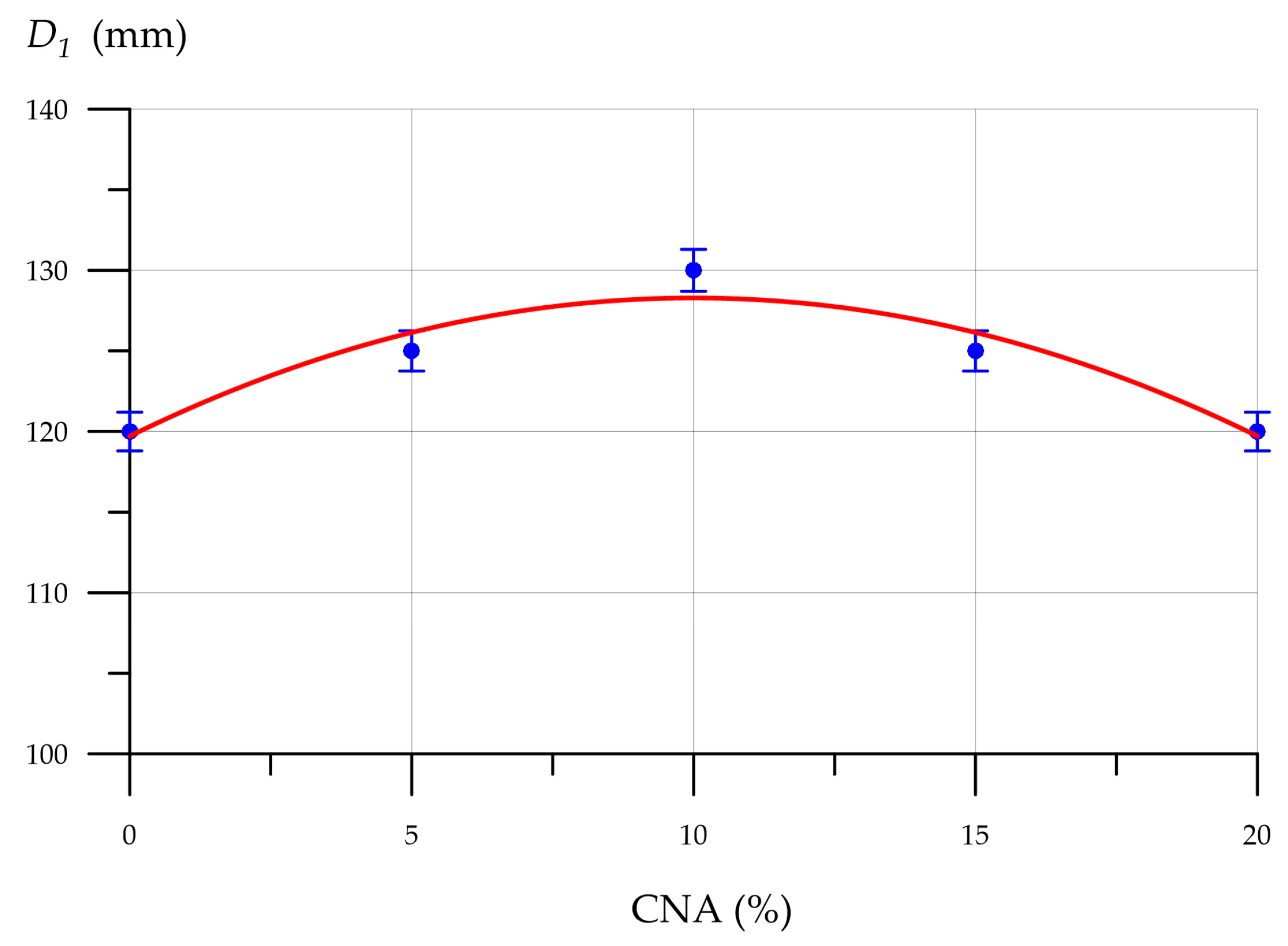


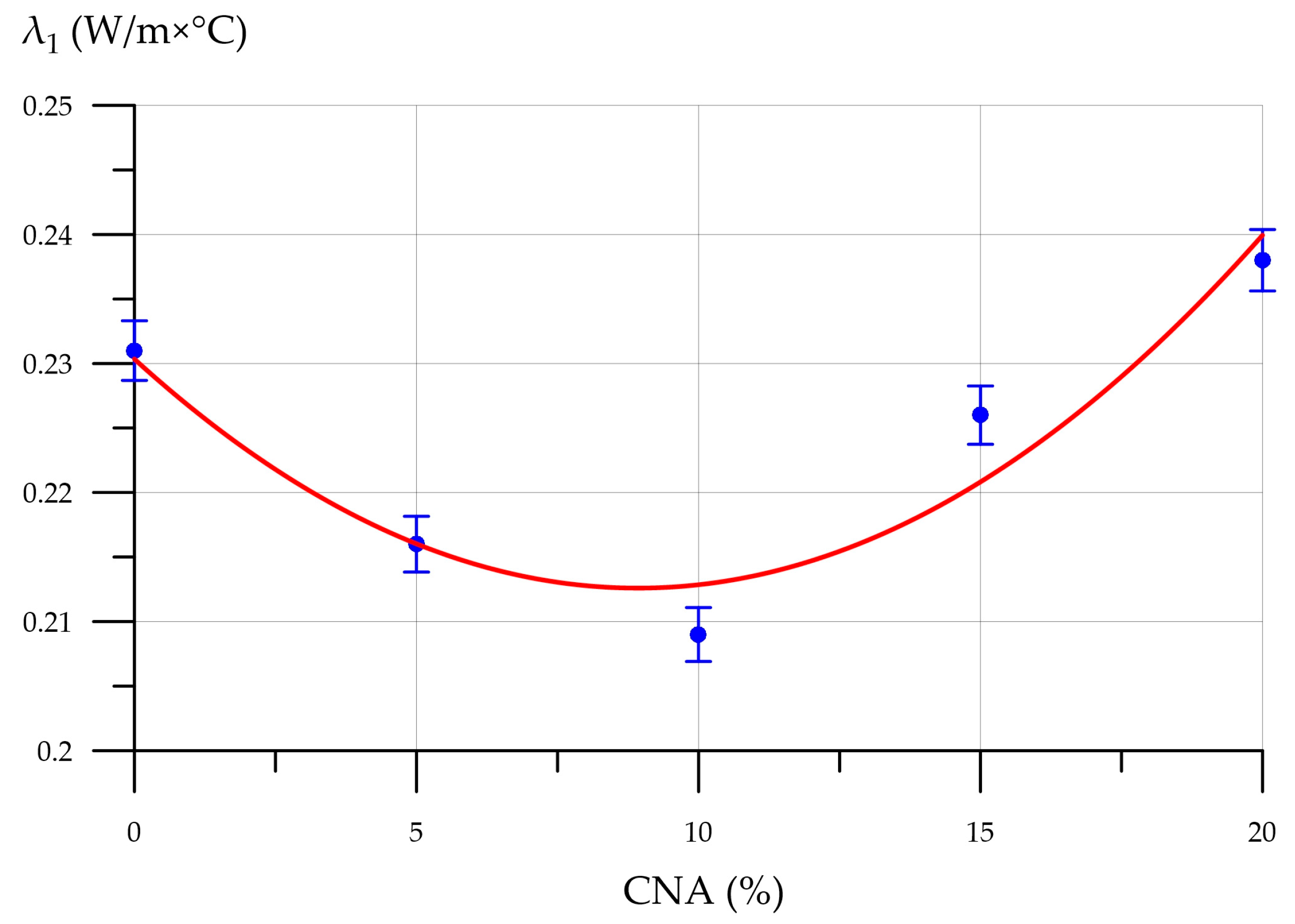
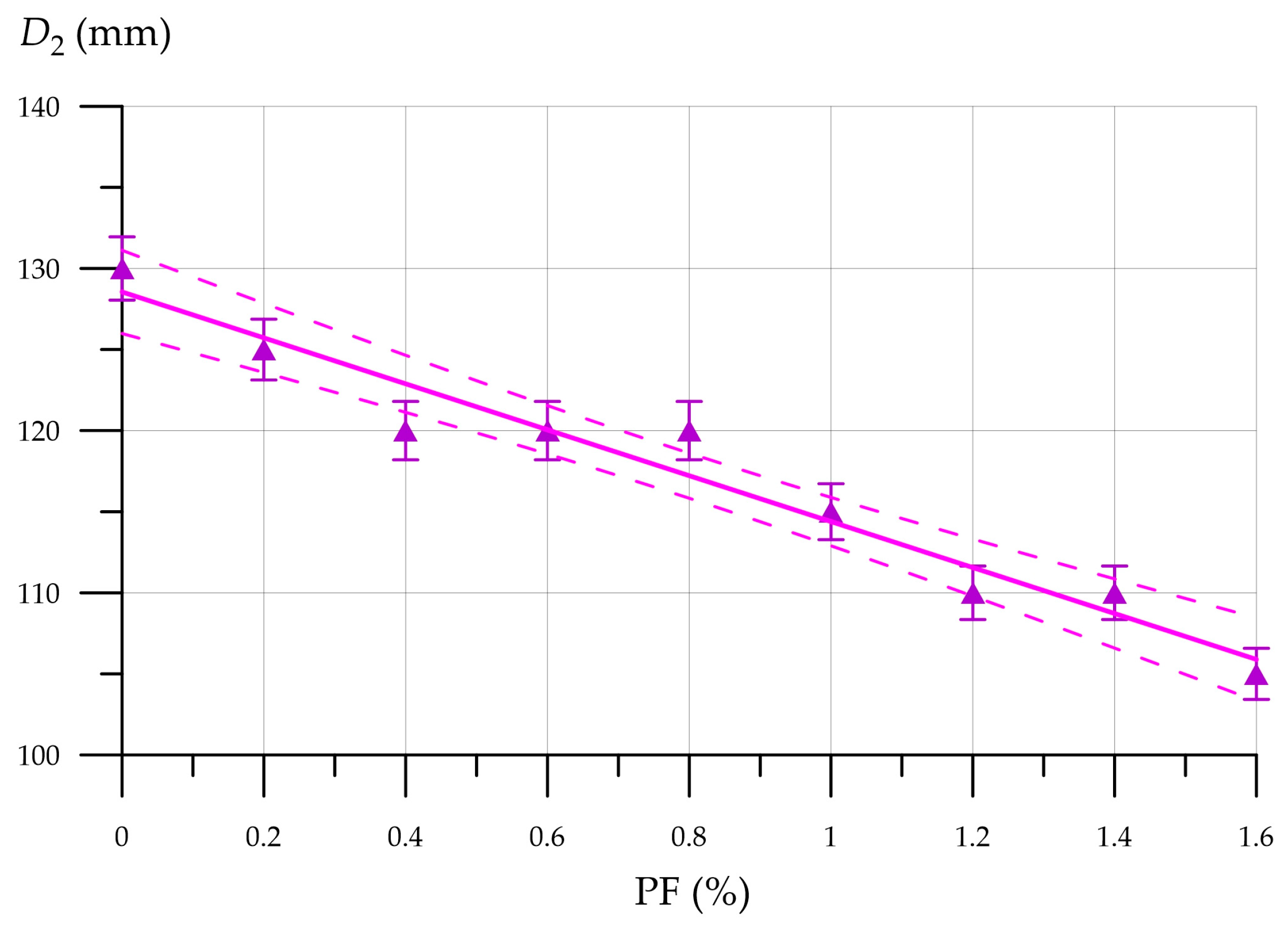
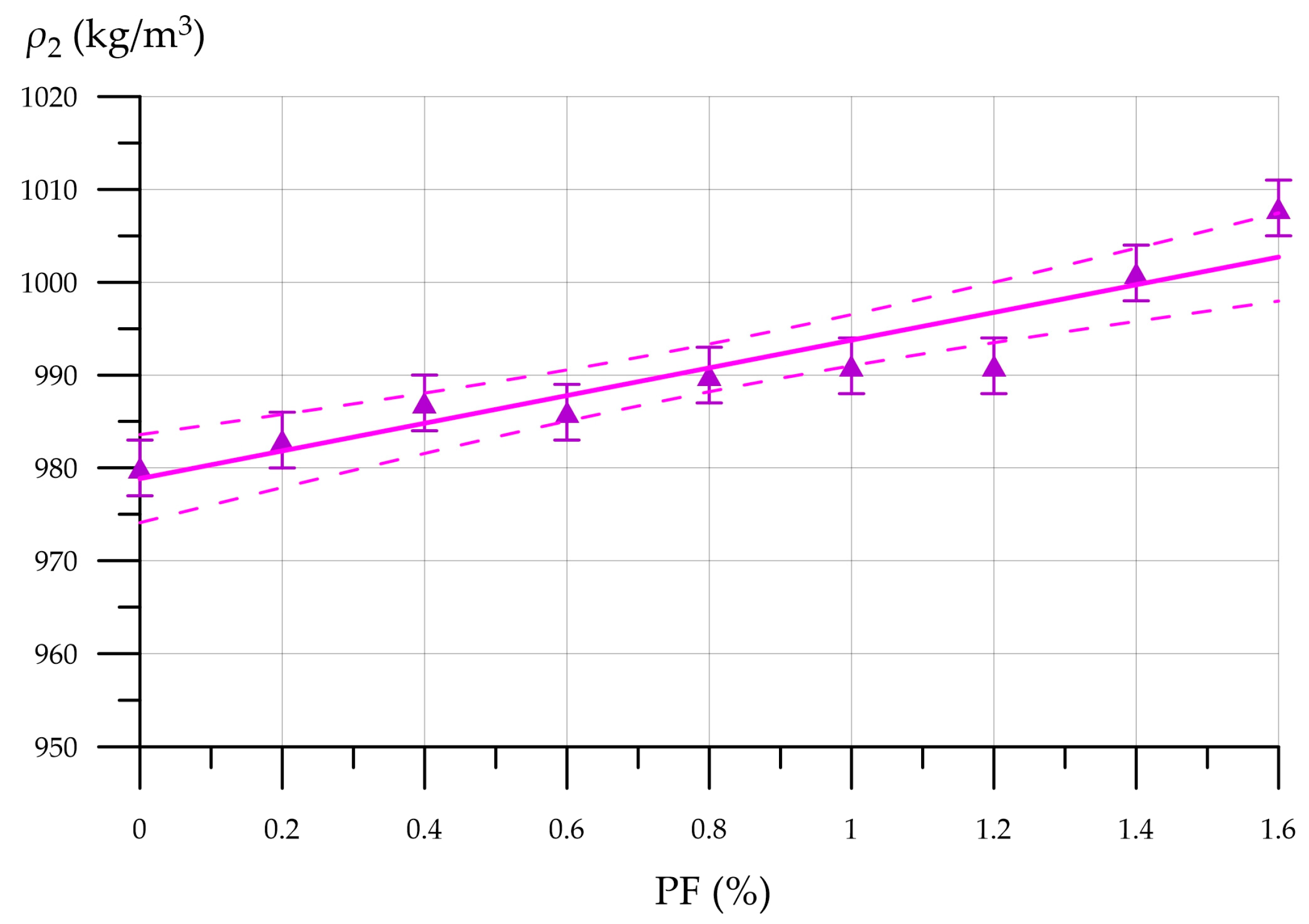



| Indicator Name | Actual Value | ||
|---|---|---|---|
| Specific Surface Area (m2/kg) | 350 | ||
| Normal Density (%) | 29 | ||
| Start of Setting (hours—min) | 3–10 | ||
| End of Setting (hours—min) | 4–40 | ||
| Compressive Strength after 28 Days (MPa) | 52.3 | ||
| Bending Strength after 28 Days (MPa) | 8.1 | ||
| Uniform Volume Change (mm) | 1.1 | ||
| Mineralogical composition | |||
| C3S (%) | C2S | C3A | C4AF |
| 67.5 | 12.9 | 7.1 | 12.5 |
| Indicator Name | Actual Value |
|---|---|
| Bulk density (kg/m3) | 1348 |
| Apparent density (kg/m3) | 2575 |
| The content of dust and clay particles (%) | 0.12 |
| Num. | Mixture Type | PC (kg/m3) | QS (kg/m3) | CNA (kg/m3) | PF (kg/m3) | W (L) | Rospena (kg/m3) |
|---|---|---|---|---|---|---|---|
| 1 | 0CNA0PF | 325.0 | 530 | 0 | 0 | 160 | 9.75 |
| 2 | 5CNA0PF | 308.8 | 530 | 16.2 | 0 | 160 | 9.75 |
| 3 | 10CNA0PF | 29.5 | 530 | 32.5 | 0 | 160 | 9.75 |
| 4 | 15CNA0PF | 276.3 | 530 | 48.7 | 0 | 160 | 9.75 |
| 5 | 20CNA0PF | 260.0 | 530 | 65 | 0 | 160 | 9.75 |
| 6 | 10CNA0.2PF | 292.5 | 530 | 32.5 | 0.65 | 160 | 9.75 |
| 7 | 10CNA0.4PF | 292.5 | 530 | 32.5 | 1.3 | 160 | 9.75 |
| 8 | 10CNA0.6PF | 292.5 | 530 | 32.5 | 1.95 | 160 | 9.75 |
| 9 | 10CNA0.8PF | 292.5 | 530 | 32.5 | 2.6 | 160 | 9.75 |
| 10 | 10CNA1.0PF | 292.5 | 530 | 32.5 | 3.25 | 160 | 9.75 |
| 11 | 10CNA1.2PF | 292.5 | 530 | 32.5 | 3.9 | 160 | 9.75 |
| 12 | 10CNA1.4PF | 292.5 | 530 | 32.5 | 4.55 | 160 | 9.75 |
| 13 | 10CNA1.6PF | 292.5 | 530 | 32.5 | 5.2 | 160 | 9.75 |
| Property Name | Test Parameters | Formula |
|---|---|---|
| Suttard Spread Diameter (D, mm) [59] | “The Suttard viscometer and glass plate (Promkomplekt, Rostov-on-Don, Russia) were first wiped with a damp cloth. The viscometer was then centered on the plate and filled with the mixture, with any excess being trimmed off with a ruler. The viscometer was then raised to a height of 20 cm. The diameter of the spread was measured immediately after lifting the cylinder with a ruler in two perpendicular directions with an error of no more than 5 mm, and the arithmetic mean was calculated” [59]. | The spread diameter of the FC and FFC mixture according to Suttard was calculated using the formula: D1 and D2—spread diameters in two perpendicular directions, mm |
| FC and FFC Density (ρ, kg/m3) [60] | The FC and FFC samples were dried to constant weight, their geometric parameters were measured, and weighed. | The density of FC and FFC was calculated with an accuracy of 1 kg/m3 using the formula: where m is the sample mass (g) and V is the sample volume (cm3). In each series of samples, the density was determined as the arithmetic mean of the test results of three samples. |
| FC and FFC Compressive Strength (Rb, MPa) [61,62,63,64] | Before determining the compressive strength, the FC and FFC samples were dried to constant weight, then placed in the testing machine (ZIM, Armavir, Russia) and forced to collapse at a constant rate of (0.6 ± 0.2) MPa/s. | The compressive strength of FC and FFC was calculated with an accuracy of 0.1 MPa using the formula: where F is the failure load (N); A is the cross-sectional area of the specimen (mm2); α is a coefficient accounting for the specimen dimensions (for specimens with a side length of 100 mm, α = 0.95); and Kw = 0.8 “The compressive strength of a series of specimens was calculated as the arithmetic mean of the two specimens with the highest strength out of three”. |
| FC and FFC Flexural Strength (Rtb, MPa) [65] | Before determining the flexural strength, FC and FFC specimens were dried to constant weight, then mounted in a testing machine (ZIM, Armavir, Russia) and loaded to collapse at a constant rate of (0.05 ± 0.01) MPa/s. | The flexural strength of FC and FFC was calculated with an accuracy of 0.1 MPa using the formula: where F is the failure load (N); a, b, and l are the width and height of the prism cross-section, and the distance between supports (mm); δ = 0.92; and Kw = 0.8. “The flexural strength of a series of samples was calculated as the arithmetic mean of three samples, based on the two with the highest strength”. |
| FC and FFC Thermal Conductivity (λ, W/m×°C) [66] | The thermal conductivity of the experimental FC and FFC specimens, dried to constant weight, was assessed under steady-state thermal conditions. Before testing, the plate edges were ground and their thickness measured. The specimens were then placed in an ITP-MG4 thermal conductivity tester (SKB Stroybribor, Chelyabinsk, Russia) and the measurements were performed. | “The thermal conductivity coefficient of a series of samples was determined as the arithmetic mean of the test results of five samples”. |
| Change of Properties | CNA (%) | ||||
|---|---|---|---|---|---|
| 0 | 5 | 10 | 15 | 20 | |
| ∆D1 (%) | 0 | 4.2 | 8.3 | 4.2 | 0 |
| ∆(%) | 0 | −1.7 | −3.2 | −1.4 | −0.1 |
| ∆Rb1 (%) | 0 | 3.9 | 25.5 | 17.6 | 13.7 |
| ∆Rtb1(%) | 0 | 17.6 | 23.1 | 15.4 | 12.1 |
| ∆λ1 (%) | 0 | −6.5 | −9.5 | −2.2 | 3.0 |
| Ref. Num. | Additive Type | Optimal Dosage | Result Obtained |
|---|---|---|---|
| [78] | FA + quick-hardening cement | Up to 30% | Improved thermal insulation properties of the composite. |
| [79] | FA | Up to 5% | Decreased density and increased compressive strength. |
| [80] | A mixture of mineral additives based on FA, MS, and metakaolin + PF | 10%/0.8 | Improved pore structure and increased strength properties. |
| [81] | An additive based on FA and rubber powder | Up to 10% | Increased compressive and flexural strength. |
| [82] | SiO2/PF | Up to 5%/0.1 | “Strength increased by 16.67% and thermal conductivity decreased by 12.5%”. [82] |
| [47] | PF | 1.5% | Bending strength increased by 84%. |
| [83,84,85] | PF | From 0.6% to 1% | Polypropylene fiber acts as a binder and improves composite integrity. Water absorption is reduced, improving performance properties. |
| [86] | NA | Up to 2% | Foam concrete samples demonstrate increased strength and frost resistance. |
| [30] | NA | 0.18% | Nanoparticles prevent bubble aggregation and improve foam stability. |
Disclaimer/Publisher’s Note: The statements, opinions and data contained in all publications are solely those of the individual author(s) and contributor(s) and not of MDPI and/or the editor(s). MDPI and/or the editor(s) disclaim responsibility for any injury to people or property resulting from any ideas, methods, instructions or products referred to in the content. |
© 2026 by the authors. Licensee MDPI, Basel, Switzerland. This article is an open access article distributed under the terms and conditions of the Creative Commons Attribution (CC BY) license.
Share and Cite
Shakhalieva, D.M.; Shcherban’, E.M.; Stel’makh, S.A.; Mailyan, L.R.; Chernil’nik, A.; Shcherban’, N.; Evtushenko, A.; Beskopylny, A.N. Structure and Properties of Foam Concrete and Fiber-Reinforced Foam Concrete Produced Using a Complex Nanomodifier Based on Industrial Waste. Materials 2026, 19, 1517. https://doi.org/10.3390/ma19081517
Shakhalieva DM, Shcherban’ EM, Stel’makh SA, Mailyan LR, Chernil’nik A, Shcherban’ N, Evtushenko A, Beskopylny AN. Structure and Properties of Foam Concrete and Fiber-Reinforced Foam Concrete Produced Using a Complex Nanomodifier Based on Industrial Waste. Materials. 2026; 19(8):1517. https://doi.org/10.3390/ma19081517
Chicago/Turabian StyleShakhalieva, Diana M., Evgenii M. Shcherban’, Sergey A. Stel’makh, Levon R. Mailyan, Andrei Chernil’nik, Natalya Shcherban’, Alexandr Evtushenko, and Alexey N. Beskopylny. 2026. "Structure and Properties of Foam Concrete and Fiber-Reinforced Foam Concrete Produced Using a Complex Nanomodifier Based on Industrial Waste" Materials 19, no. 8: 1517. https://doi.org/10.3390/ma19081517
APA StyleShakhalieva, D. M., Shcherban’, E. M., Stel’makh, S. A., Mailyan, L. R., Chernil’nik, A., Shcherban’, N., Evtushenko, A., & Beskopylny, A. N. (2026). Structure and Properties of Foam Concrete and Fiber-Reinforced Foam Concrete Produced Using a Complex Nanomodifier Based on Industrial Waste. Materials, 19(8), 1517. https://doi.org/10.3390/ma19081517