Comparative Study on Dynamic Compression Behaviors of Steel Fiber-Reinforced Cementitious Composites and Steel Fiber-Reinforced Concrete at Elevated Temperatures

Highlights
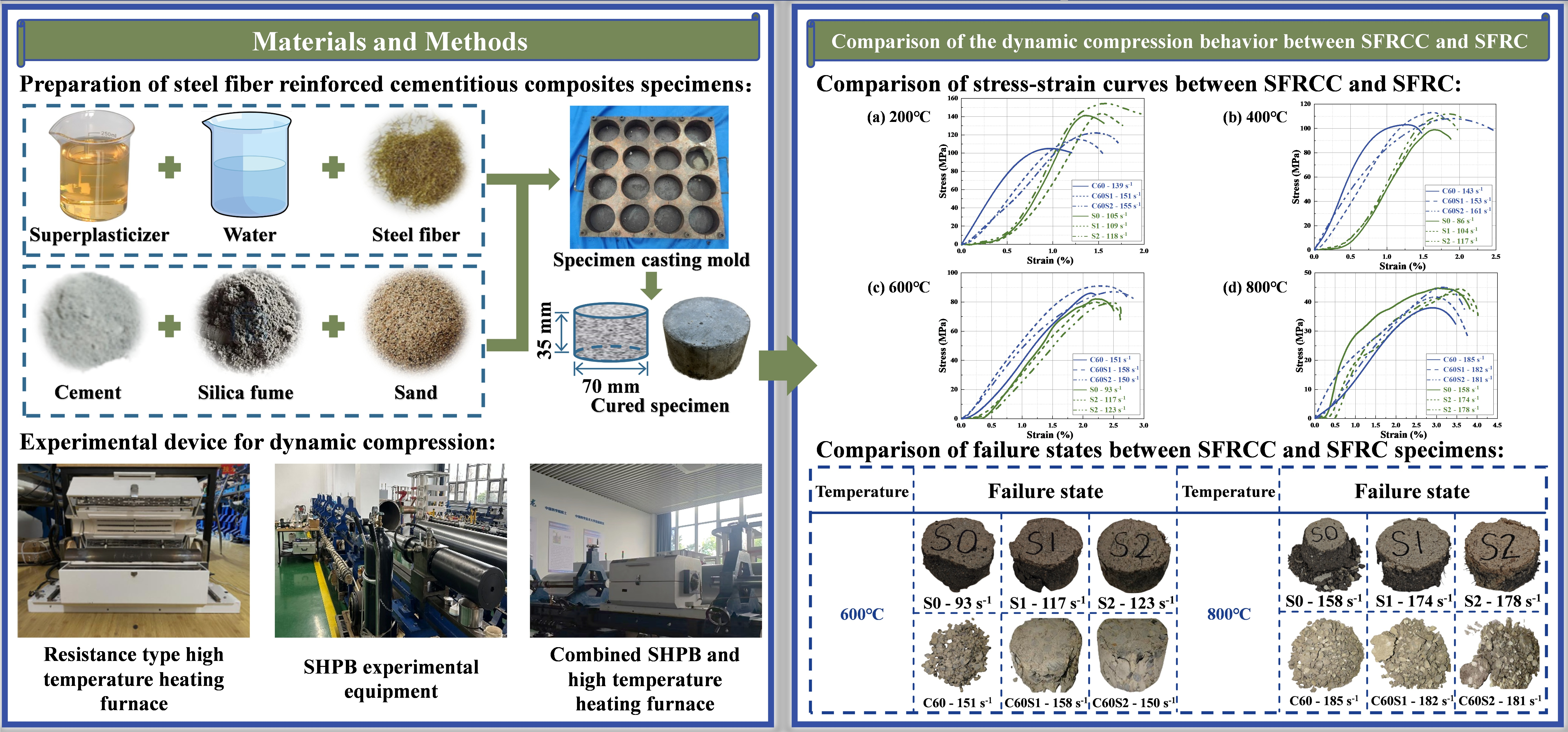
- SFRCC maintains progressive failure and ~40% strength at 800 °C; SFRC deteriorates rapidly post-600 °C.
- SFRCC specimens with a 2% fiber content exhibited stable strain-rate sensitivity and a fiber pull-out-dominated failure mode when subjected to continuously increasing loads at 600 °C.
- SFRCC excels in stress/toughness at 200–400 °C; SFRC outperforms in 600–800 °C due to aggregate stability.
- Supports using SFRCC in structures requiring high-temperature ductility and fire resistance.
- Highlights importance of fiber–matrix interface stability for dynamic performance in fire conditions.
- Guides material selection: SFRCC for low–medium and SFRC for medium–high temperature applications.
Abstract
1. Introduction
2. Materials and Methods
2.1. Specimen Preparation
2.2. Heating Scheme
2.3. Experimental Device for Dynamic Compression
3. Results
3.1. Test Results
3.2. Comparative Analysis of Dynamic Compression Properties
3.2.1. Strain Rate
3.2.2. Dynamic Peak Stress
3.2.3. Dynamic Peak Strain
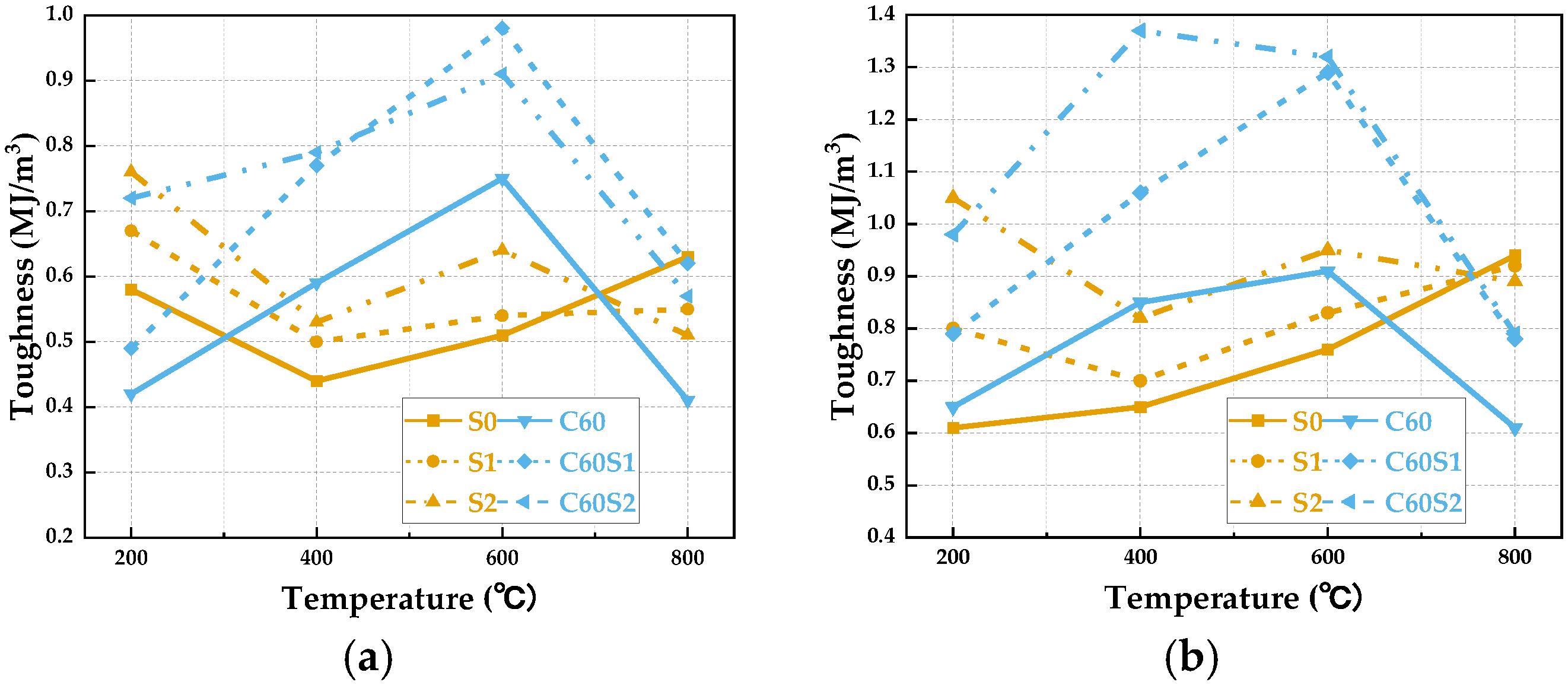
3.2.4. Toughness
4. Conclusions
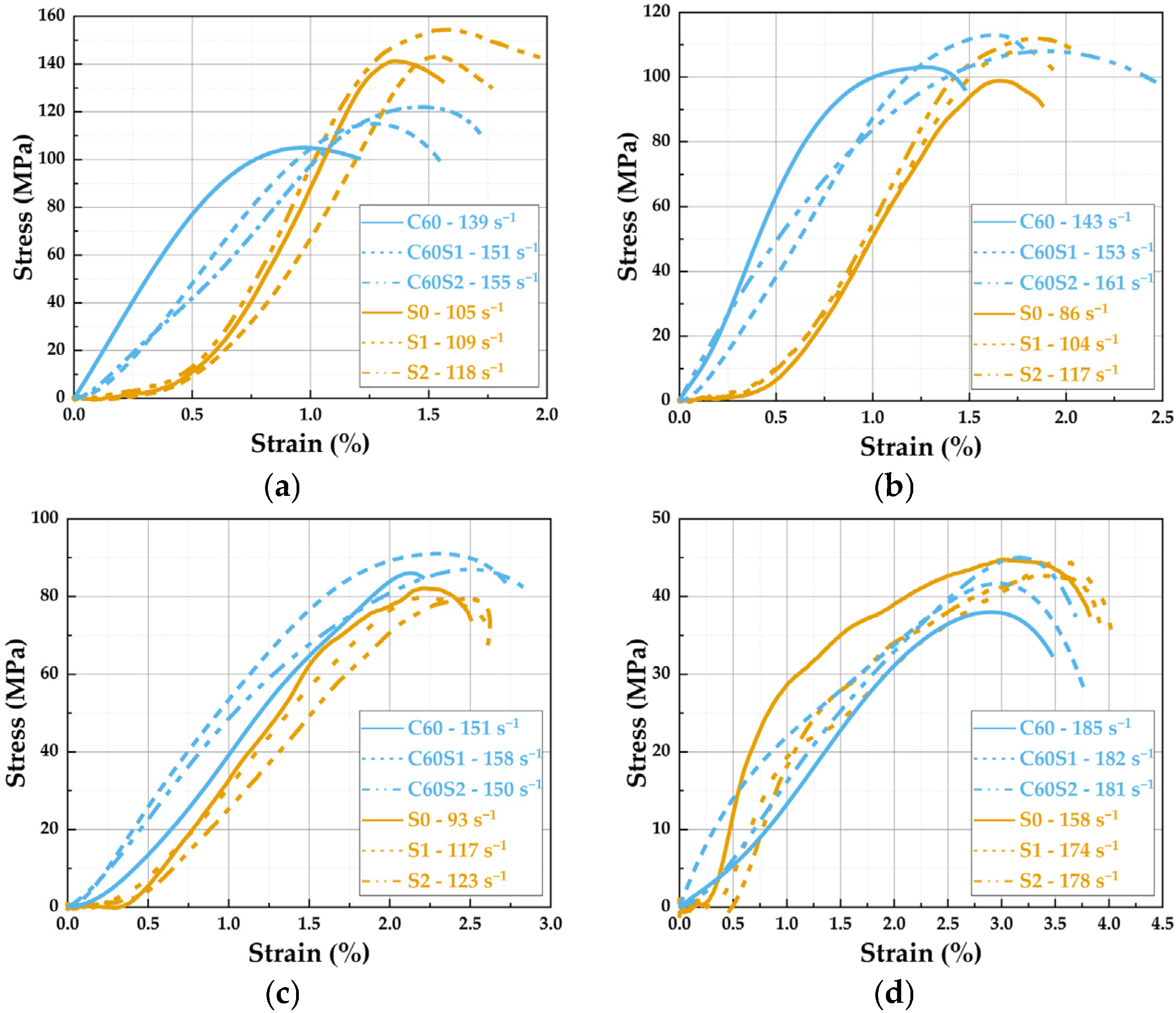
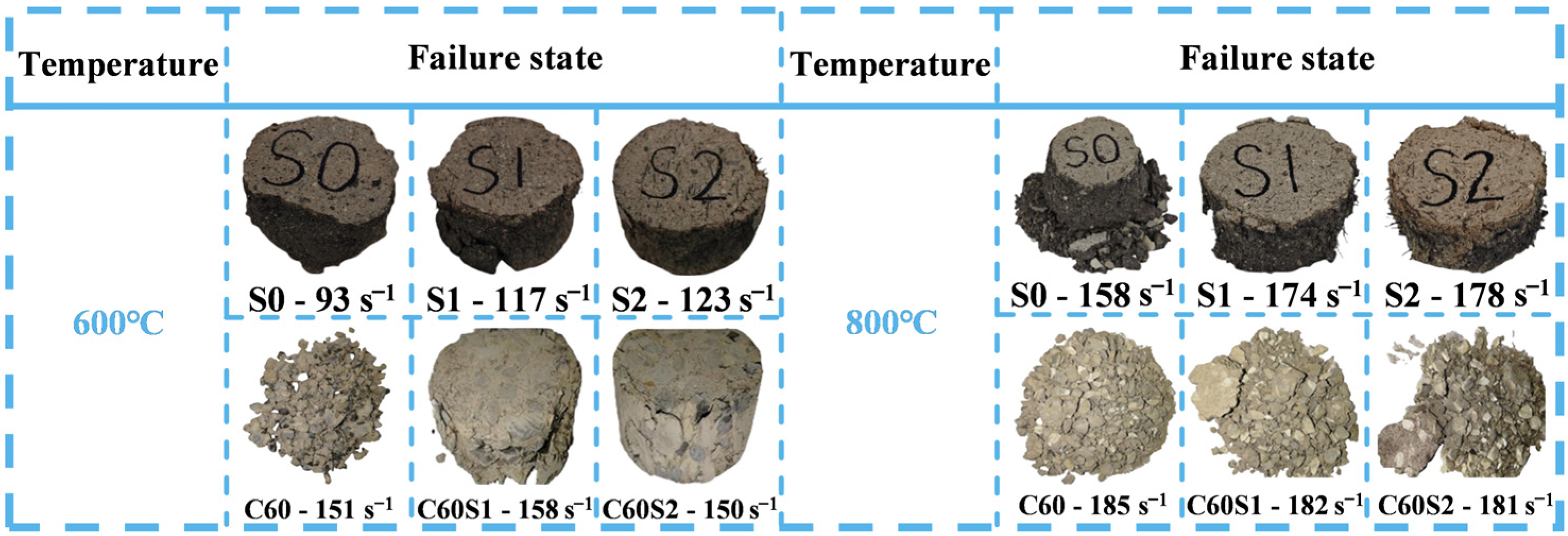
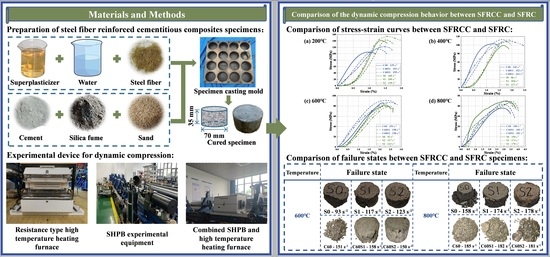
- Under the same steel fiber content, SFRCC demonstrates enhanced overall performance under high-temperature conditions. The fiber–matrix synergy in SFRCC enables the material to maintain a gradual failure mode at 800 °C, retaining approximately 40% of its residual strength. In contrast, SFRC experiences a rapid decline in performance after 600 °C, resulting in a significant increase in its degree of fragmentation.
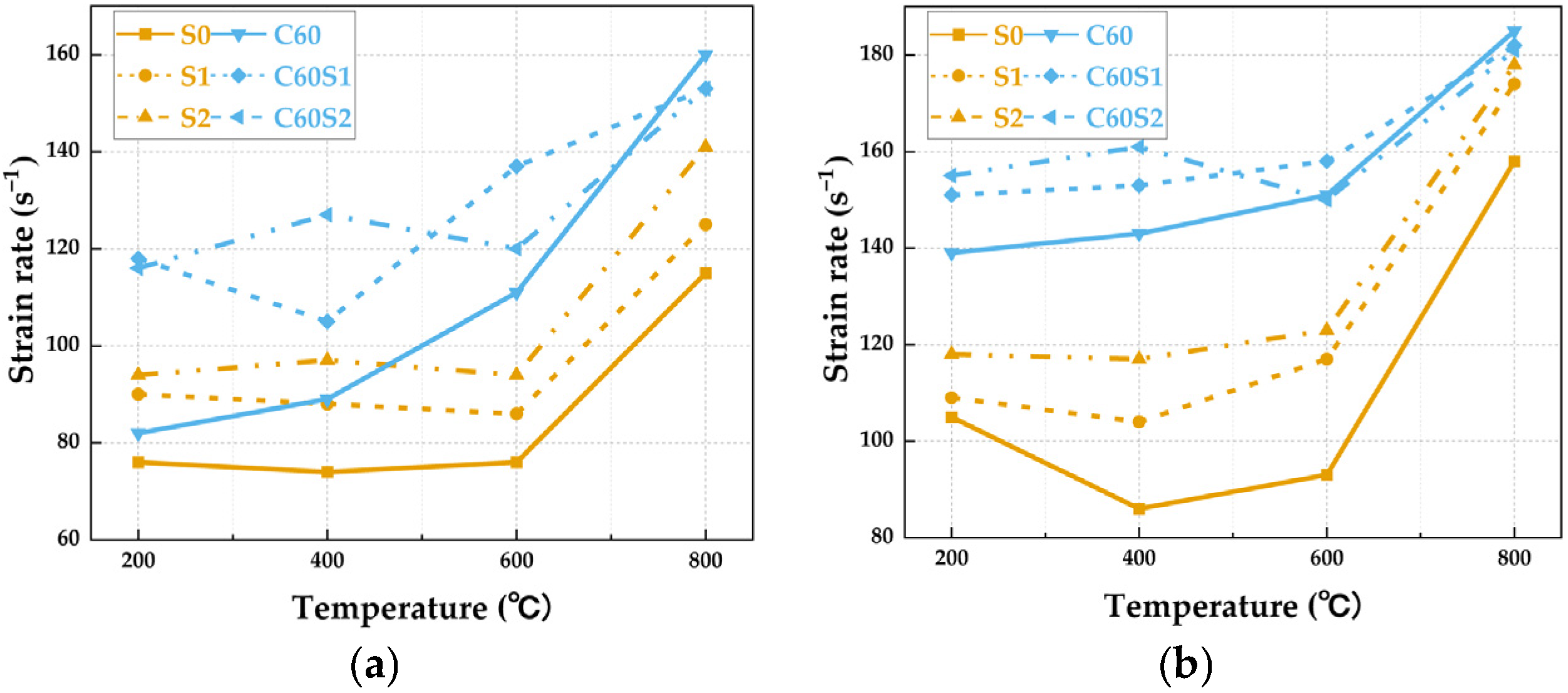
- Under high-temperature conditions, as the loading rate increased from 7 m/s to 8 m/s, the S2 specimens displayed a stable strain rate growth trend and, after 600 °C, maintained a damage mode predominantly characterized by fiber pull-out. In contrast, SFRC materials experienced rapid degradation of the matrix–fiber interface at elevated temperatures, resulting in a larger increase in strain rate, accompanied by performance fluctuations.
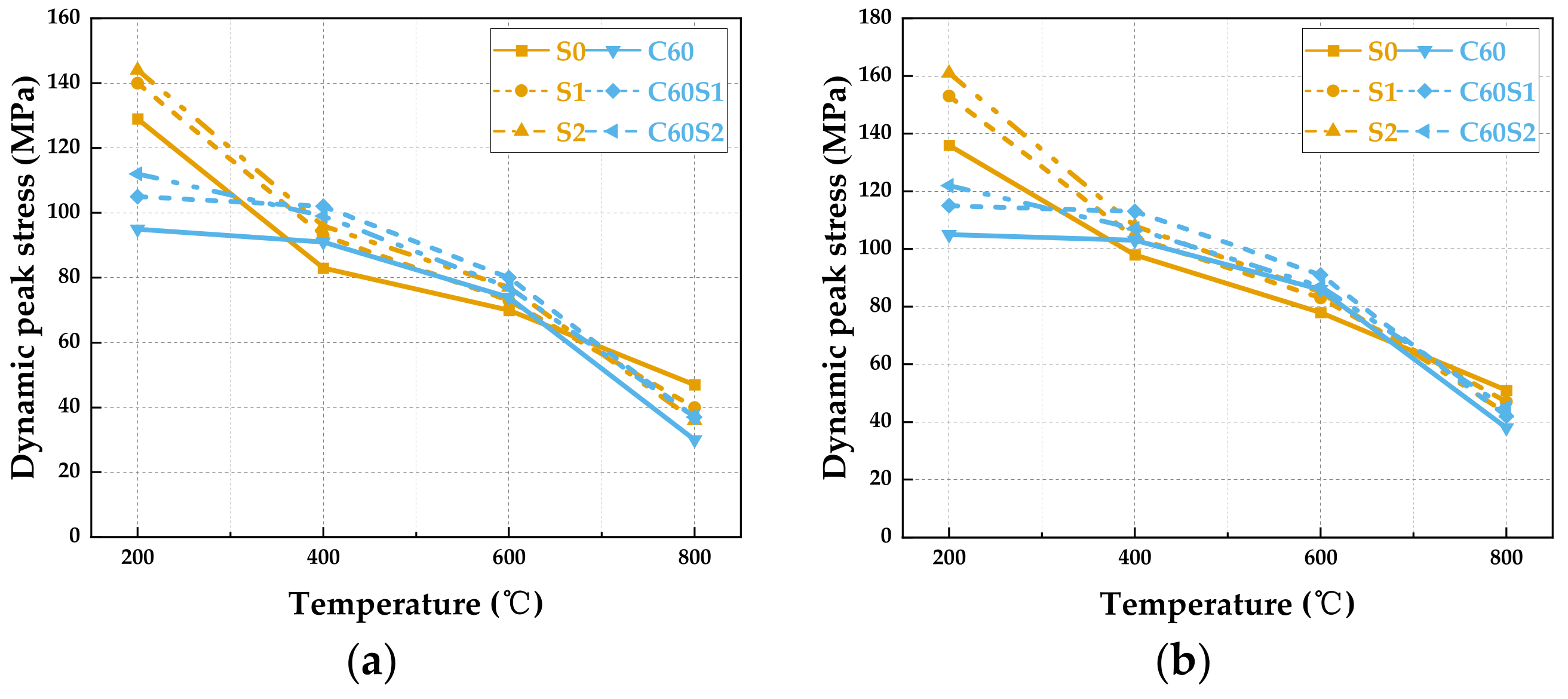
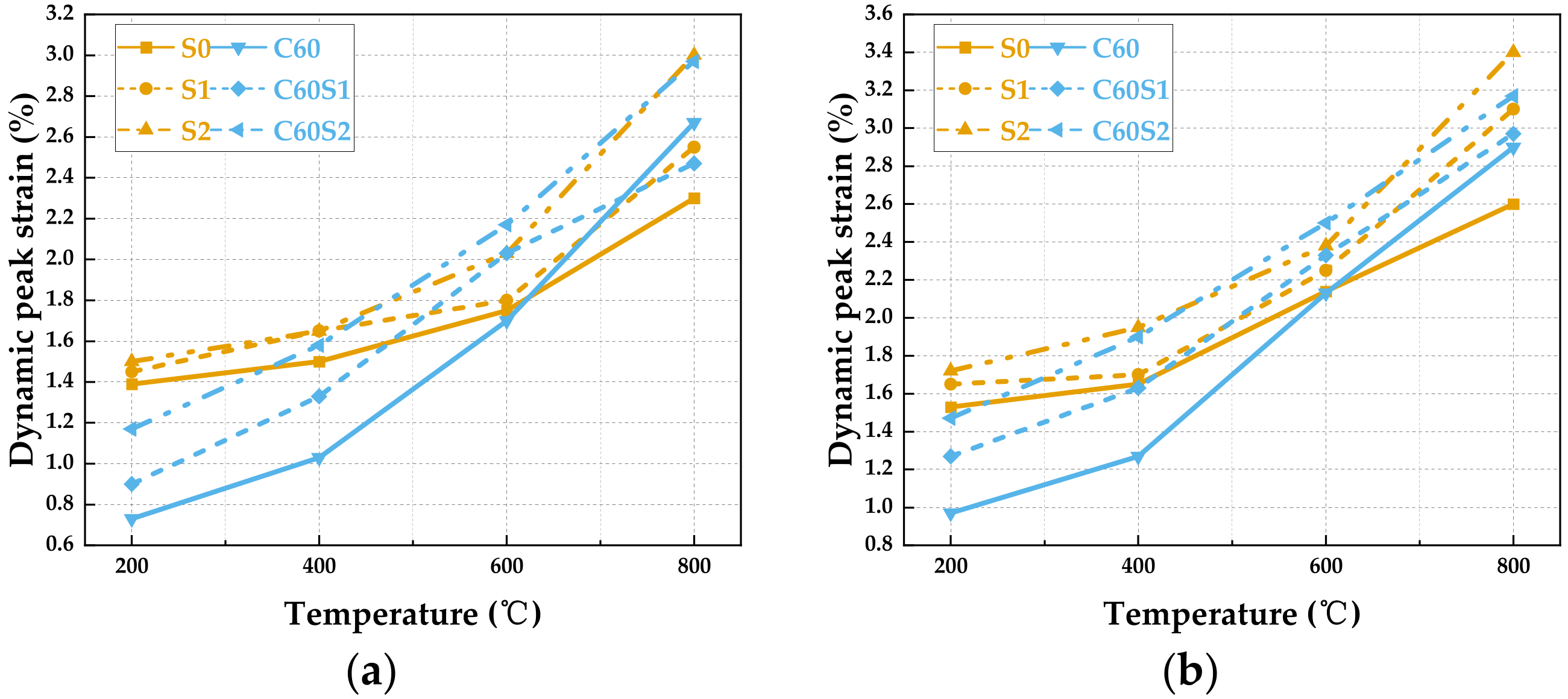
- The dynamic peak stress and toughness of SFRCC are considerably higher than those of SFRC within the low-temperature range of 200 °C to 400 °C. As the temperature increases to the medium–high range of 600 °C to 800 °C, SFRC exhibits excellent performance in terms of dynamic peak stress and toughness, due to the thermal stability advantage of its aggregate–matrix system.
Author Contributions
Funding
Institutional Review Board Statement
Informed Consent Statement
Data Availability Statement
Acknowledgments
Conflicts of Interest
Abbreviations
| SFRCC | Steel fiber-reinforced cementitious composites |
| SHPB | Split Hopkinson pressure bar |
| SFRC | Steel fiber-reinforced concrete |
| ECC | Engineered cementitious composites |
References
- Li, V.C.; Bos, F.P.; Yu, K.Q.; McGee, W.; Ng, T.Y.; Figueiredo, S.C.; Nefs, K.; Mechtcherine, V.; Nerella, V.N.; Pan, J.L.; et al. On the emergence of 3D printable Engineered, Strain Hardening Cementitious Composites (ECC/SHCC). Cem. Concr. Res. 2020, 132, 106038. [Google Scholar] [CrossRef] [Scilit]
- Chen, W.H.; Han, C.H.; Xie, Y.J.; Lin, B.X.; Cui, S.S. Evaluation of compression self-healing performance of a smart cementitious composite SMA-ECC. Constr. Build. Mater. 2023, 409, 133917. [Google Scholar] [CrossRef] [Scilit]
- Zhang, C.C.; Guan, X.C.; Chen, X.; Liu, C.; Li, J.L.; Huo, Y.L. Effect of self-healing behavior and self-healing technologies on the structural characteristics of cracked RC/ECC composite beams. Constr. Build. Mater. 2024, 411, 134575. [Google Scholar] [CrossRef] [Scilit]
- Gao, S.L.; Zhao, X.C.; Qiao, J.L.; Guo, Y.D.; Hu, G.H. Study on the bonding properties of Engineered Cementitious Composites (ECC) and existing concrete exposed to high temperature. Constr. Build. Mater. 2019, 196, 330–344. [Google Scholar] [CrossRef] [Scilit]
- Wang, Z.C.; Li, L.; Wu, J.; Du, X.L.; Wang, H.W.; Du, G. Experimental investigation of static and dynamic compressive behavior of carbon fiber reinforced concrete at elevated temperatures. Eng. Fract. Mech. 2025, 324, 111275. [Google Scholar] [CrossRef] [Scilit]
- Chen, M.; Wang, G.Q.; Zhang, T.; Ma, M.Y.; Tang, S.B.; Zhang, Y. Improving the dynamic splitting properties of engineered cementitious composites using hybrid synthetic polymer and recycled steel fibres. Constr. Build. Mater. 2023, 400, 132567. [Google Scholar] [CrossRef] [Scilit]
- Zhang, Y.K.; Zhu, H.T. Uniaxial tension properties and stress-strain relation of steel fiber reinforced concrete subjected to salt and freeze-thaw cycles. Constr. Build. Mater. 2025, 489, 142396. [Google Scholar] [CrossRef] [Scilit]
- Yin, L.; Li, Y.H.; Chen, P.; Cheng, H.; Gao, L. Axial compression mechanical properties of steel-fiber-reinforced alkali slag concrete columns strengthened using carbon fiber-reinforced polymers at high temperatures. Constr. Build. Mater. 2025, 474, 141164. [Google Scholar] [CrossRef] [Scilit]
- Wang, X.; Jing, H.W.; Deng, R.N.; Meng, B.; Huo, X.L. Study on the correlation between mobility and dispersion of different types of fibers in engineered cementitious composites (ECC). Case Stud. Constr. Mater. 2025, 22, e4272. [Google Scholar] [CrossRef] [Scilit]
- Li, L.; Wang, Z.C.; Wu, J.; Du, X.L.; Wang, H.W.; Liu, W.L. Comparative study on the dynamic mechanical properties of steel fiber reinforced concrete at high temperatures and after high temperature cooling. Constr. Build. Mater. 2022, 346, 128448. [Google Scholar] [CrossRef] [Scilit]
- Chen, Z.Y.; Zhang, M.Y.; Chen, W.Y.; Shi, J.G. Application of steel fiber-reinforced cement-based grouting material in strengthening reinforced concrete beams exhibiting insufficient shear strength in historical buildings. Case Stud. Constr. Mater. 2025, 23, e5089. [Google Scholar] [CrossRef] [Scilit]
- Liu, H.T.; Yang, L.; Li, Z.Z.; Fang, D.; Sun, G.W.; Li, Y.; Gao, D.Y. Bond properties and predictive modeling of steel reinforcement and steel fiber reinforced concrete (SFRC) under chloride ion attack. Constr. Build. Mater. 2025, 489, 142207. [Google Scholar] [CrossRef] [Scilit]
- Liu, D.W.; Yu, J.Q.; Qin, F.J.; Zhang, K.C.; Zhang, Z.G. Mechanical performance of high-strength engineering cementitious composites (ECC) with hybriding PE and steel fibers. Case Stud. Constr. Mater. 2023, 18, e1961. [Google Scholar] [CrossRef] [Scilit]
- Caverzan, A.; Cadoni, E.; di Prisco, M. Dynamic Behavior of HPFRCC at High Strain Rate: The Fiber Role. In High Performance Fiber Reinforced Cement Composites 6; Springer: Dordrecht, The Netherlands, 2012; pp. 339–346. [Google Scholar]
- Ahmed, S.F.U.; Maalej, M.; Paramasivam, P. Flexural responses of hybrid steel–polyethylene fiber reinforced cement composites containing high volume fly ash. Constr. Build. Mater. 2006, 21, 1088–1097. [Google Scholar] [CrossRef] [Scilit]
- Li, L.; Li, Z.P.; Wu, J.; Li, T.J.; Du, X.L. Influence of strain rate and fiber blend mode on the tensile behaviors of steel-polyethylene hybrid fiber reinforced engineered cementitious composites. Constr. Build. Mater. 2024, 438, 137306. [Google Scholar] [CrossRef] [Scilit]
- Gao, S.L.; Hao, D.S.; Wang, Z.W. Interface bonding performance between engineered cementitious composites (ECC)/hybrid fibre ECCs and masonry after high-temperature exposure. Mag. Concr. Res. 2025, 77, 968–998. [Google Scholar] [CrossRef] [Scilit]
- Bhat, P.S.; Chang, V.; Li, M. Effect of elevated temperature on strain-hardening engineered cementitious composites. Constr. Build. Mater. 2014, 69, 370–380. [Google Scholar] [CrossRef] [Scilit]
- Sahmaran, M.; Lachemi, M.; Li, V.C. Assessing Mechanical Properties and Microstructure of Fire-Damaged Engineered Cementitious Composites. ACI Mater. J. 2010, 107, 297–304. [Google Scholar] [CrossRef] [Scilit]
- Babalola, O.E.; Awoyera, P.O.; Le, D.H.; Romero, L.M.B. A review of residual strength properties of normal and high strength concrete exposed to elevated temperatures: Impact of materials modification on behaviour of concrete composite. Constr. Build. Mater. 2021, 296, 123448. [Google Scholar] [CrossRef] [Scilit]
- Wang, Q.; Yao, B.; Lu, R. Behavior Deterioration and Microstructure Change of Polyvinyl Alcohol Fiber-Reinforced Cementitious Composite (PVA-ECC) after Exposure to Elevated Temperatures. Materials 2020, 13, 5539. [Google Scholar] [CrossRef] [Scilit]
- Du, Q.; Wei, J.; Lv, J. Effects of High Temperature on Mechanical Properties of Polyvinyl Alcohol Engineered Cementitious Composites (PVA-ECC). Int. J. Civ. Eng. 2018, 16, 965–972. [Google Scholar] [CrossRef] [Scilit]
- Luo, J.J.; Cai, Z.W.; Yu, K.Q.; Zhu, W.J.; Lu, Z.D. Temperature impact on the micro-structures and mechanical properties of high-strength engineered cementitious composites. Constr. Build. Mater. 2019, 226, 686–698. [Google Scholar] [CrossRef] [Scilit]
- Nuaklong, P.; Thongpasuk, P.; Hamcumpai, K.; Jongvivatsakul, P.; Tangaramvong, S.; Pothisiri, T.; Likitlersuang, S. Effect of granite waste and steel fibers on the mechanical properties of geopolymer concrete before and after fire exposure. J. Mater. Res. Technol. 2025, 37, 1106–1118. [Google Scholar] [CrossRef] [Scilit]
- Chen, M.; Wang, Y.T.; Zhang, T.; Zhang, M.Z. Microstructural evolution and dynamic compressive properties of engineered cementitious composites at elevated temperatures. J. Build. Eng. 2023, 71, 106519. [Google Scholar] [CrossRef] [Scilit]
- Li, L.; Zheng, X.Y.; Wu, J.; Du, X.L.; Luan, Y.H. Comparative study on the dynamic tensile properties of polypropylene and polyethylene fiber reinforced engineered cementitious composites under low to high strain rates. J. Build. Eng. 2024, 82, 108221. [Google Scholar] [CrossRef] [Scilit]
- Li, L.; Zhang, R.B.; Jin, L.; Du, X.L.; Wu, J.; Duan, W.H. Experimental study on dynamic compressive behavior of steel fiber reinforced concrete at elevated temperatures. Constr. Build. Mater. 2019, 210, 673–684. [Google Scholar] [CrossRef] [Scilit]
- Chen, Z.; Chen, S.Z.; Zhao, G.X.; Chen, B.; Shi, C.J. Rheological property regulation for Engineered Cementitious Composites (ECC) to achieve desired mechanical properties. Cem. Concr. Compos. 2025, 164, 106220. [Google Scholar] [CrossRef] [Scilit]
- Wang, Z.C.; Li, L.; Shi, P.X.; Wu, J.; Jia, P.J.; Du, X.L. A full-process thermo-mechanical coupled peridynamic model for concrete fracture behavior after high-temperature cooling. Eng. Fract. Mech. 2026, 331, 111718. [Google Scholar] [CrossRef] [Scilit]
- Zhang, S.W.; Zhang, J.L.; Wang, R.; Yuan, Y. Nano-adhesion behavior and failure mechanisms of polymer cement-based materials at high temperature. Constr. Build. Mater. 2025, 476, 141245. [Google Scholar] [CrossRef] [Scilit]
- Wang, T.J.; Xu, J.Y.; Bai, E.L.; Ren, B.; Lu, S. Coupling effects of axial static pressure ratio and high temperature on dynamic mechanical properties and crushing fractal characteristics of concrete under static-dynamic coupled loads. J. Build. Eng. 2022, 59, 105114. [Google Scholar] [CrossRef] [Scilit]
- Liu, W.; Mu, C.M.; Liu, J.; Cai, T.Y. Study on static and dynamic mechanical properties of steel fiber self-compacting concrete after heating in a high-temperature. J. Build. Eng. 2023, 73, 106790. [Google Scholar] [CrossRef] [Scilit]
- Wang, T.T.; Shang, B. Three-Wave Mutual-Checking Method for Data Processing of SHPB Experiments of Concrete. J. Mech. 2014, 30, 5–10. [Google Scholar] [CrossRef] [Scilit]
- Zhu, J.T.; Li, Z.Y.; Zhang, K.; Feng, H.; Fan, J.J.; Li, K. Enhanced interfacial bonding performance through novel stranded steel fibers in PVA-ECC: Experimental and theoretical analysis. Constr. Build. Mater. 2025, 482, 141711. [Google Scholar] [CrossRef] [Scilit]
- Zhang, X.G.; Li, M.B.; Niu, J.X.; Fan, Y.H.; Liu, J.F. Dynamic mechanical properties of steel-polypropylene hybrid fiber reinforced concrete. Constr. Build. Mater. 2025, 485, 141927. [Google Scholar] [CrossRef] [Scilit]
- Chen, W.G.; Liang, L.; Zhou, B.Y.; Ye, J.H.; Sun, X.J.; Ma, J.X.; Yu, J.T.; Yu, K.Q. A fracture mechanics model for predicting tensile strength and fracture toughness of 3D printed engineered cementitious composites (3DP-ECC). Eng. Fract. Mech. 2025, 316, 110894. [Google Scholar] [CrossRef] [Scilit]
- Ren, G.P.; Guo, Y.C.; Shen, A.Q.; Deng, S.Y.; Wu, H.S.; Pan, H.M. Dynamic mechanical performance of cellulose fiber concrete under compressive impact loading. Constr. Build. Mater. 2025, 493, 143192. [Google Scholar] [CrossRef] [Scilit]
- Liu, W.; Wang, X.C.; Chen, C.X.; Wang, W.; Li, B.D.; Lu, Z.Y.; Gao, B.; Zhang, B.; Feng, J.C.; Ren, A.K.; et al. Cryogenic freezing effects on static/dynamic mechanical behavior of concrete with development of thermo-mechanically coupled constitutive model. Constr. Build. Mater. 2025, 491, 142638. [Google Scholar] [CrossRef] [Scilit]
- Zhang, Z.G.; Abdalla, J.A.; Yu, J.Q.; Chen, Y.C.; Hawileh, R.A.; Mahmoudi, F. Use of polypropylene fibers to mitigate spalling in high strength PE-ECC under elevated temperature. Case Stud. Constr. Mater. 2025, 22, e4381. [Google Scholar] [CrossRef] [Scilit]
- Wu, L.Q.; Zhu, Z.Y.; Wu, T.Q.; Li, R.F.; Yu, Z.P.; Feng, Q.; Xie, D.Y. Study on fracture mechanical properties and mechanism of engineered cementitious composites (ECC) after high temperature. Case Stud. Constr. Mater. 2024, 21, e4049. [Google Scholar] [CrossRef] [Scilit]
- Wei, X.G.; Qin, Z.F.; Wang, S.A.; Ma, S.X.; Shi, M.Q.; Fa, J.Y.; Li, G.H. Experimental study on dynamic impact mechanical properties and fracture resistance mechanism of polypropylene fiber reinforced concrete. J. Build. Eng. 2025, 112, 113654. [Google Scholar] [CrossRef] [Scilit]
- Zhang, R.; Gao, G.H.; Yu, Z.H.; Wang, B.; Zhou, A.; Song, Q.; Bao, J.W. Dynamic mechanical properties of fiber-reinforced lightweight aggregate concrete exposed to high temperature. J. Build. Eng. 2025, 103, 112161. [Google Scholar] [CrossRef] [Scilit]
- Barceló, J.P.; Lenz, E.; Torres, B.; Estevan, L. Mechanical properties of recycled aggregate concrete reinforced with conventional and recycled steel fibers and exposed to high temperatures. Constr. Build. Mater. 2024, 452, 138976. [Google Scholar] [CrossRef] [Scilit]
- Li, L.; Wang, Z.C.; Wu, J.; Du, X.L.; Wang, H.W.; Liu, W.L. Comparative analysis of dynamic mechanical properties of steel fiber reinforced concrete under ambient temperature and after exposure to high temperatures. Case Stud. Constr. Mater. 2024, 20, e2778. [Google Scholar] [CrossRef] [Scilit]
- Gao, S.L.; Hao, D.S.; Zhu, Y.P.; Wang, Z. Compression and Shear Properties of Unreinforced Masonry Structures Reinforced by ECC/HECC subjected to High Temperatures. KSCE J. Civ. Eng. 2022, 27, 751–768. [Google Scholar] [CrossRef] [Scilit]
- Zhuang, J.P.; Ni, P.J.; Xu, R.X.; Wu, M.H. Dynamic properties of steel fiber-reinforced potassium magnesium phosphate cement-based materials after high-temperature treatment. J. Clean. Prod. 2023, 429, 139530. [Google Scholar] [CrossRef] [Scilit]
- Cao, K.; Liu, G.G.; Li, H.; Huang, Z.Y. Mechanical properties and microstructures of Steel-basalt hybrid fibers reinforced Cement-based composites exposed to high temperatures. Constr. Build. Mater. 2022, 341, 127730. [Google Scholar] [CrossRef] [Scilit]
- Yuan, J.; Bai, Q.; Gao, S.; Wang, Y.; Yu, S.H. Uniaxial compressive stress-strain model of Molybdenum tailings concrete after high-temperature exposure. Constr. Build. Mater. 2024, 428, 136343. [Google Scholar] [CrossRef] [Scilit]
- Ding, B.Y.; Xi, X.; Han, J.S.; Pan, J.L.; Sui, X.P.; Cai, J.M. Utilization of AC impedance spectroscopy (ACIS) for non-destructive damage evaluation of engineered cementitious composites (ECC) after exposure to high temperatures. Constr. Build. Mater. 2025, 470, 140646. [Google Scholar] [CrossRef] [Scilit]
- Luo, Z.Q.; Pan, T.H.; Guo, R.X.; Fu, C.S.; Zhang, Z.Q.; Wang, Y.; Wan, F.X. The interfacial bonding performance of engineered cementitious composites (ECC) and existing concrete exposed to high temperature: Effects of exposure temperature, substrate moisture, and curing conditions. Constr. Build. Mater. 2024, 448, 138181. [Google Scholar] [CrossRef] [Scilit]



| Length (mm) | Diameter (mm) | Aspect Ratio | Density (kg/m3) | Elastic Modulus (GPa) | Tensile Strength (MPa) |
|---|---|---|---|---|---|
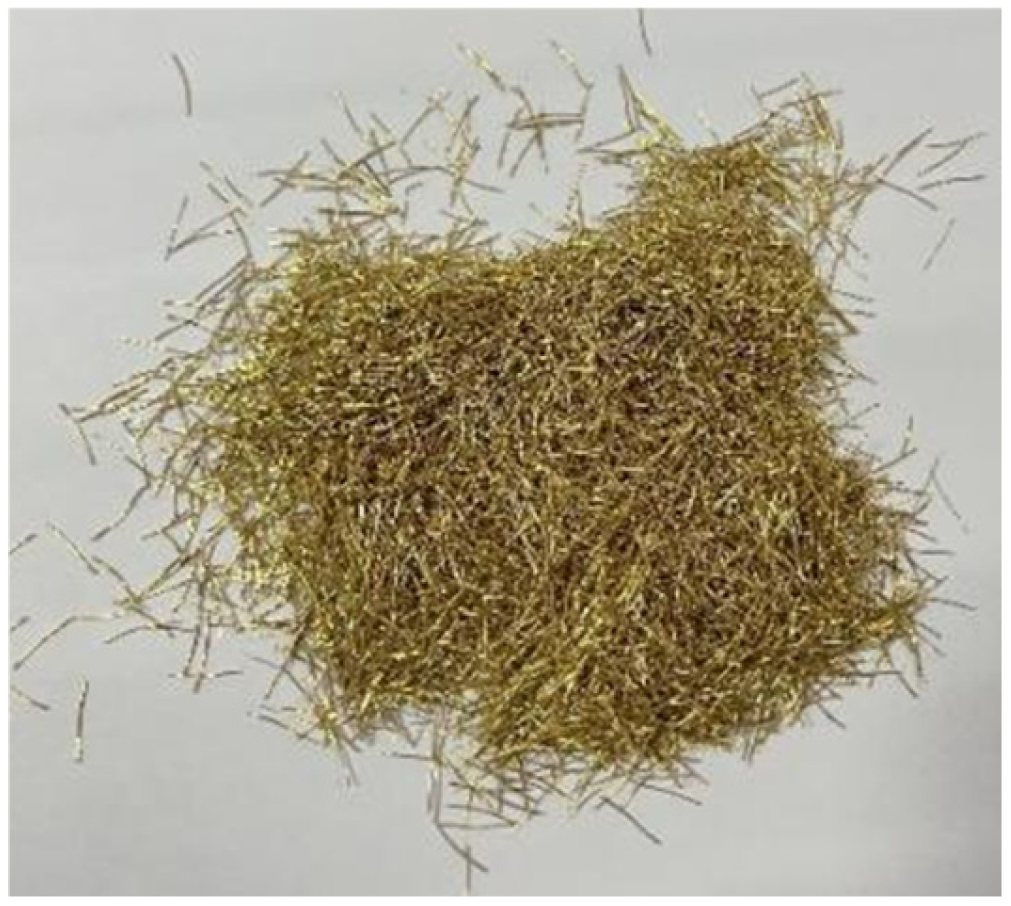
| 12 | 0.2 | 60 | 7800 | 210 | 3000 |
| Specimen Type | Cement | Silica Fume | Water | Sand | Superplasticizer | Steel Fiber |
|---|---|---|---|---|---|---|
| S0 | 1 | 0.11 | 0.37 | 1.8 | 0.008 | 0 |
| S1 | 1 | 0.11 | 0.37 | 1.8 | 0.008 | 1.0 |
| S2 | 1 | 0.11 | 0.37 | 1.8 | 0.008 | 2.0 |
| Specimen Type | Cement | Sand | Stone | Water | Superplasticizer | Steel Fiber |
|---|---|---|---|---|---|---|
| C60 | 600 | 668 | 1002 | 180 | 9.0 | 0 |
| C60S1 | 600 | 668 | 1002 | 180 | 9.0 | 78 |
| C60S2 | 600 | 668 | 1002 | 180 | 9.0 | 176 |
| Number | Temperature | Loading Rate | Strain Rate | Dynamic Peak Stress | Dynamic Peak Strain | Toughness |
|---|---|---|---|---|---|---|
| (°C) | (m/s) | (s−1) | (MPa) | (%) | (MJ/m3) | |
| S0 | 200 | 7 | 76 | 129 | 1.39 | 0.58 |
| 8 | 105 | 136 | 1.53 | 0.61 | ||
| 400 | 7 | 74 | 83 | 1.50 | 0.44 | |
| 8 | 86 | 98 | 1.65 | 0.65 | ||
| 600 | 7 | 76 | 70 | 1.75 | 0.51 | |
| 8 | 93 | 78 | 2.14 | 0.76 | ||
| 800 | 7 | 115 | 47 | 2.30 | 0.63 | |
| 8 | 158 | 51 | 2.60 | 0.94 | ||
| S1 | 200 | 7 | 90 | 140 | 1.45 | 0.67 |
| 8 | 109 | 153 | 1.65 | 0.80 | ||
| 400 | 7 | 88 | 93 | 1.65 | 0.50 | |
| 8 | 104 | 104 | 1.70 | 0.70 | ||
| 600 | 7 | 86 | 73 | 1.80 | 0.54 | |
| 8 | 117 | 83 | 2.25 | 0.83 | ||
| 800 | 7 | 125 | 40 | 2.55 | 0.55 | |
| 8 | 174 | 47 | 3.10 | 0.92 | ||
| S2 | 200 | 7 | 94 | 144 | 1.50 | 0.76 |
| 8 | 118 | 161 | 1.72 | 1.05 | ||
| 400 | 7 | 97 | 96 | 1.65 | 0.53 | |
| 8 | 117 | 108 | 1.95 | 0.82 | ||
| 600 | 7 | 94 | 77 | 2.03 | 0.64 | |
| 8 | 123 | 85 | 2.38 | 0.95 | ||
| 800 | 7 | 141 | 36 | 3.00 | 0.51 | |
| 8 | 178 | 43 | 3.40 | 0.89 |
| Number | Temperature | Loading Rate | Strain Rate | Dynamic Peak Stress | Dynamic Peak Strain | Toughness |
|---|---|---|---|---|---|---|
| (°C) | (m/s) | (s−1) | (MPa) | (%) | (MJ/m3) | |
| C60 | 200 | 7 | 82 | 95 | 0.73 | 0.42 |
| 8 | 139 | 105 | 0.97 | 0.65 | ||
| 400 | 7 | 89 | 91 | 1.03 | 0.59 | |
| 8 | 143 | 103 | 1.27 | 0.85 | ||
| 600 | 7 | 111 | 74 | 1.70 | 0.75 | |
| 8 | 151 | 86 | 2.13 | 0.91 | ||
| 800 | 7 | 160 | 30 | 2.67 | 0.41 | |
| 8 | 185 | 38 | 2.90 | 0.61 | ||
| C60S1 | 200 | 7 | 118 | 105 | 0.90 | 0.49 |
| 8 | 151 | 115 | 1.27 | 0.79 | ||
| 400 | 7 | 105 | 102 | 1.33 | 0.77 | |
| 8 | 153 | 113 | 1.63 | 1.06 | ||
| 600 | 7 | 137 | 80 | 2.03 | 0.98 | |
| 8 | 158 | 91 | 2.33 | 1.29 | ||
| 800 | 7 | 153 | 37 | 2.47 | 0.62 | |
| 8 | 182 | 42 | 2.97 | 0.78 | ||
| C60S2 | 200 | 7 | 116 | 112 | 1.17 | 0.72 |
| 8 | 155 | 122 | 1.47 | 0.98 | ||
| 400 | 7 | 127 | 99 | 1.58 | 0.79 | |
| 8 | 161 | 107 | 1.90 | 1.37 | ||
| 600 | 7 | 120 | 77 | 2.17 | 0.91 | |
| 8 | 150 | 87 | 2.50 | 1.32 | ||
| 800 | 7 | 153 | 37 | 2.97 | 0.57 | |
| 8 | 181 | 45 | 3.17 | 0.79 |
Disclaimer/Publisher’s Note: The statements, opinions and data contained in all publications are solely those of the individual author(s) and contributor(s) and not of MDPI and/or the editor(s). MDPI and/or the editor(s) disclaim responsibility for any injury to people or property resulting from any ideas, methods, instructions or products referred to in the content. |
© 2026 by the authors. Licensee MDPI, Basel, Switzerland. This article is an open access article distributed under the terms and conditions of the Creative Commons Attribution (CC BY) license.
Share and Cite
Li, F.; Wang, Z.; Li, L.; Zhao, B. Comparative Study on Dynamic Compression Behaviors of Steel Fiber-Reinforced Cementitious Composites and Steel Fiber-Reinforced Concrete at Elevated Temperatures. Materials 2026, 19, 238. https://doi.org/10.3390/ma19020238
Li F, Wang Z, Li L, Zhao B. Comparative Study on Dynamic Compression Behaviors of Steel Fiber-Reinforced Cementitious Composites and Steel Fiber-Reinforced Concrete at Elevated Temperatures. Materials. 2026; 19(2):238. https://doi.org/10.3390/ma19020238
Chicago/Turabian StyleLi, Fengzeng, Zichen Wang, Liang Li, and Bo Zhao. 2026. "Comparative Study on Dynamic Compression Behaviors of Steel Fiber-Reinforced Cementitious Composites and Steel Fiber-Reinforced Concrete at Elevated Temperatures" Materials 19, no. 2: 238. https://doi.org/10.3390/ma19020238
APA StyleLi, F., Wang, Z., Li, L., & Zhao, B. (2026). Comparative Study on Dynamic Compression Behaviors of Steel Fiber-Reinforced Cementitious Composites and Steel Fiber-Reinforced Concrete at Elevated Temperatures. Materials, 19(2), 238. https://doi.org/10.3390/ma19020238