Article

UV-Induced Self-Renewing Wear-Resistant Flexible Polymer from a Polyurethane/Thiol–Ene Hybrid System

1
School of Materials Science and Engineering, Chang’an University, Xi’an 710061, China
2
Great Bay Institute for Advanced Study, Great Bay University, Dongguan 200438, China
3
School of Transportation Engineering, Chang’an University, Xi’an 710061, China
4
Yuzhongqing Waterproof Technology Group Co., Ltd., Xi’an 710200, China
*
Authors to whom correspondence should be addressed.
Materials 2026, 19(7), 1366; https://doi.org/10.3390/ma19071366
Submission received: 13 February 2026 / Revised: 16 March 2026 / Accepted: 26 March 2026 / Published: 30 March 2026
(This article belongs to the Section Polymeric Materials)

Abstract

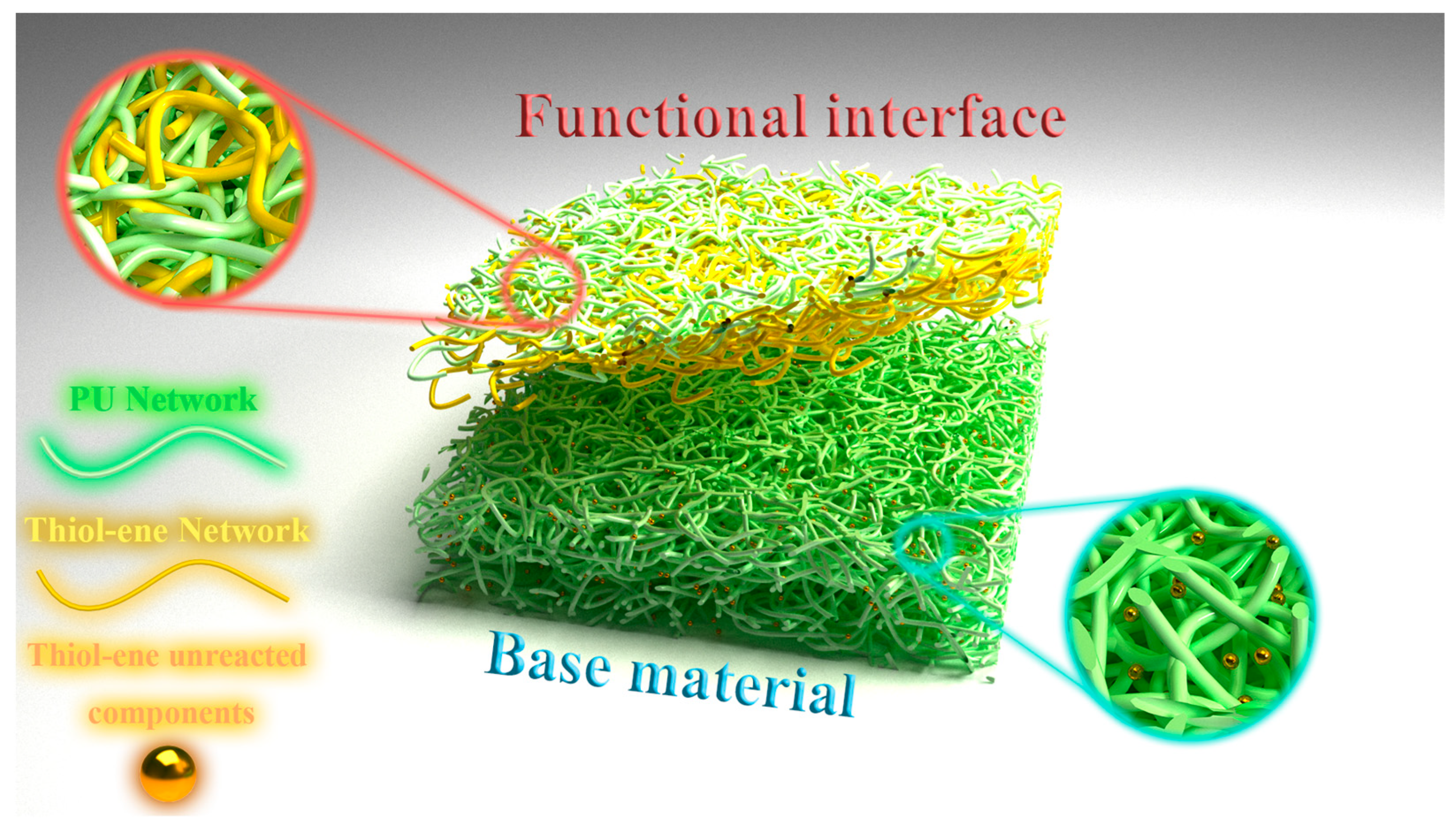
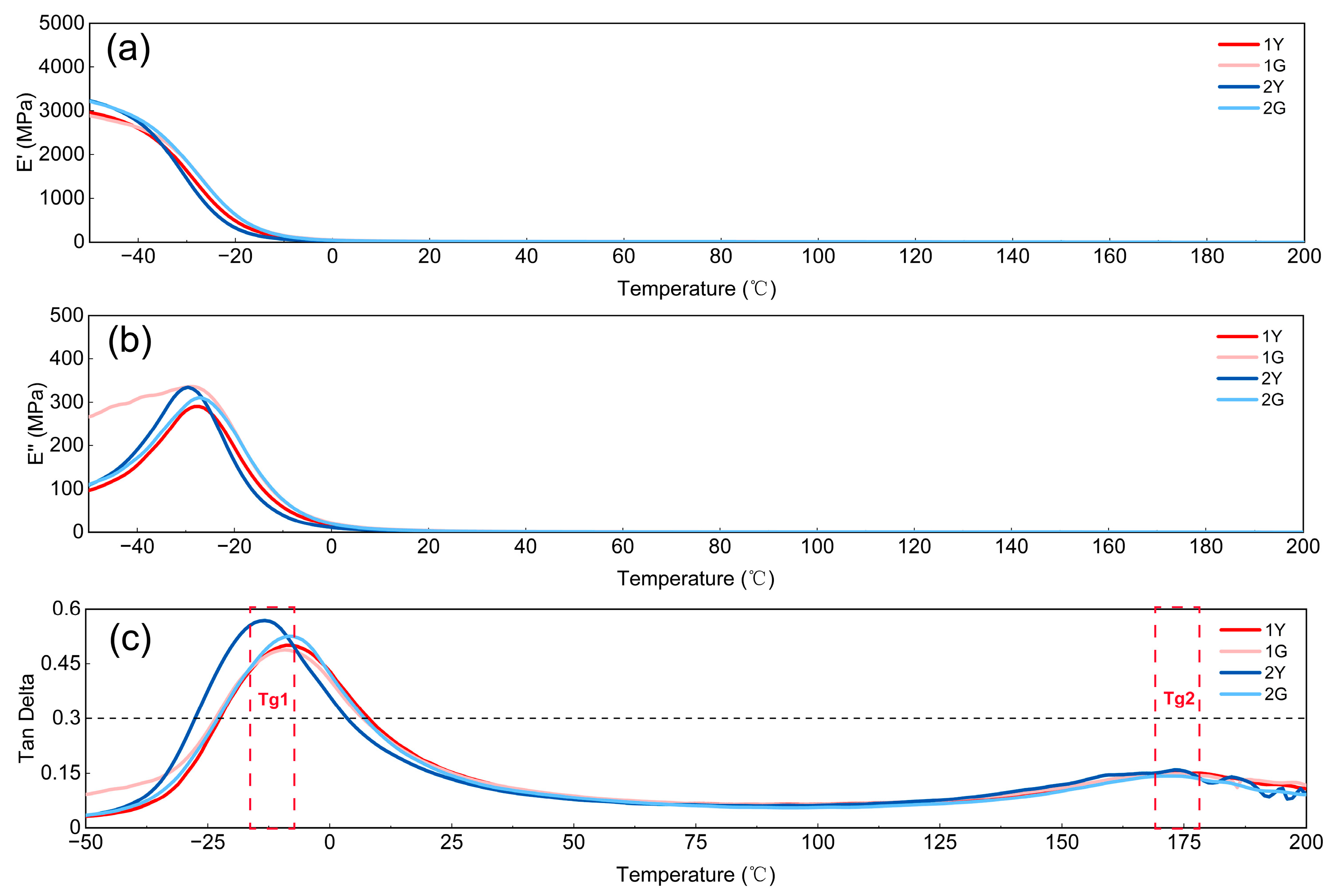
Developing materials that simultaneously exhibit bulk elasticity and a durable, self-renewing surface is a persistent challenge, as traditional fillers often impair flexibility and sacrificial coatings fail under repeated strain. This paper presents an innovative thiol–ene/polyurethane hybrid system, fabricated via a sequential thermal–UV curing process, which decouples the properties of the highly elastic bulk from those of the robust surface layer. The resulting bulk elastomer achieves an outstanding combination of high strength (20.9 MPa) and exceptional extensibility (990% elongation at break). Crucially, the UV-crosslinked surface forms a dense, abrasion-resistant shield that reduces friction-induced mass loss by 81% compared to the bulk material. This surface layer also exhibits a unique self-renewing capability, effectively restoring its protective function over at least three abrasion cycles and reducing mass loss by 57% after the first recovery cycle relative to an unprotected control. Dynamic mechanical analysis validates the distinct dual-network structure, evidenced by two well-separated glass transition temperatures, which underpin the material’s pronounced shape memory effect. This work provides a design paradigm for creating flexible and durable polymer systems with independently tailored bulk and surface properties, offering significant potential for applications in artificial skin and demanding flexible components.
Keywords: thiol–ene chemistry; polyurethane hybrid; dual-network; self-renewing surface; wear-resistant thiol–ene chemistry; polyurethane hybrid; dual-network; self-renewing surface; wear-resistant