Comparison of Surface Morphology and Topography of Additively Manufactured SS 316L Steel After AWJM in Dependence on Layer Orientation

Abstract
1. Introduction
2. Materials and Methods
2.1. Motivation, Methodology, and Methods
2.2. Experimental Procedure and Preparation of Experimental Specimens
3. Results
3.1. Evaluation of Topography and Surface Roughness Parameters
3.2. SEM Analysis of Surface
3.3. EDX Analysis
4. Discussion
5. Conclusions
- -
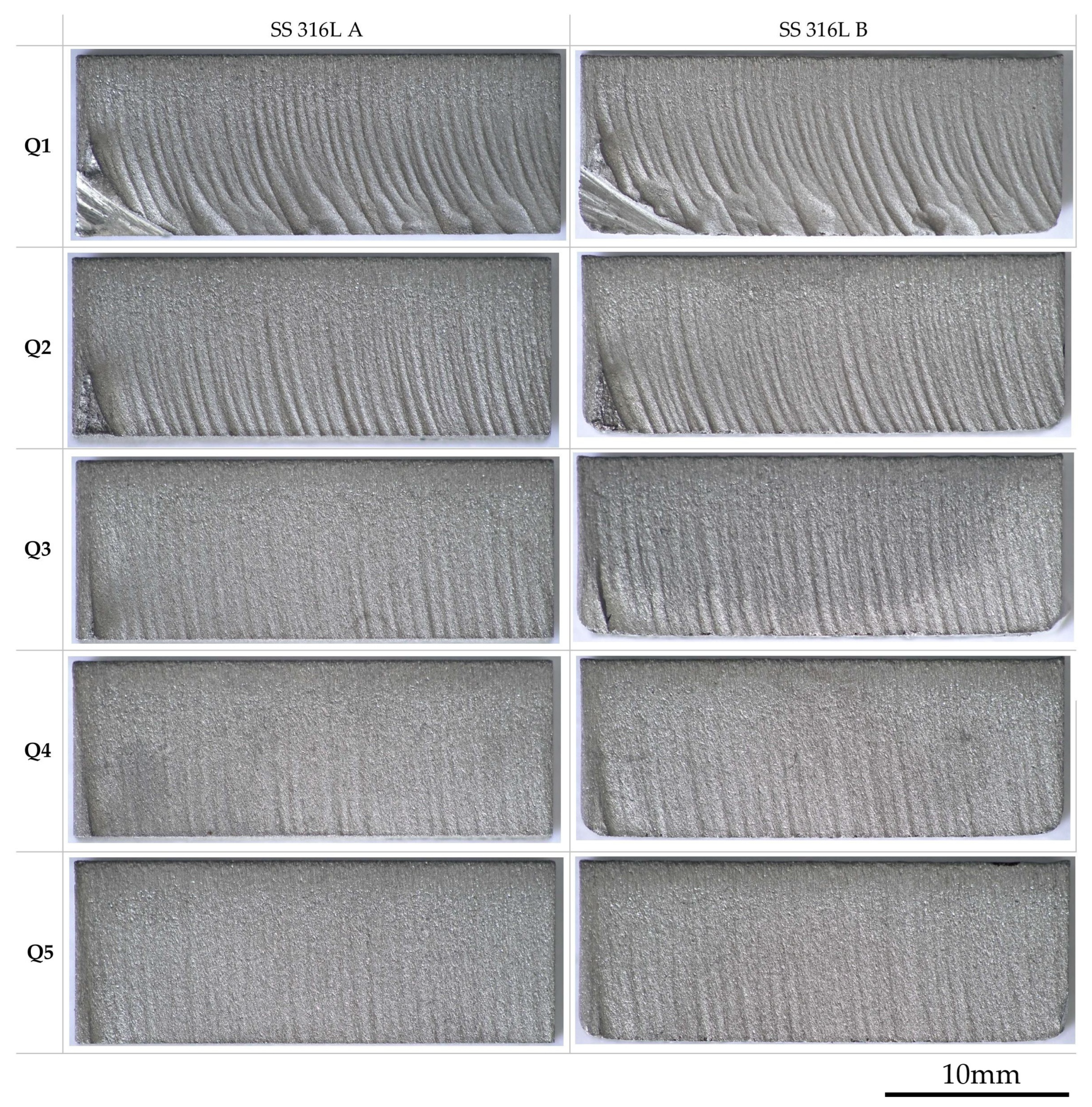
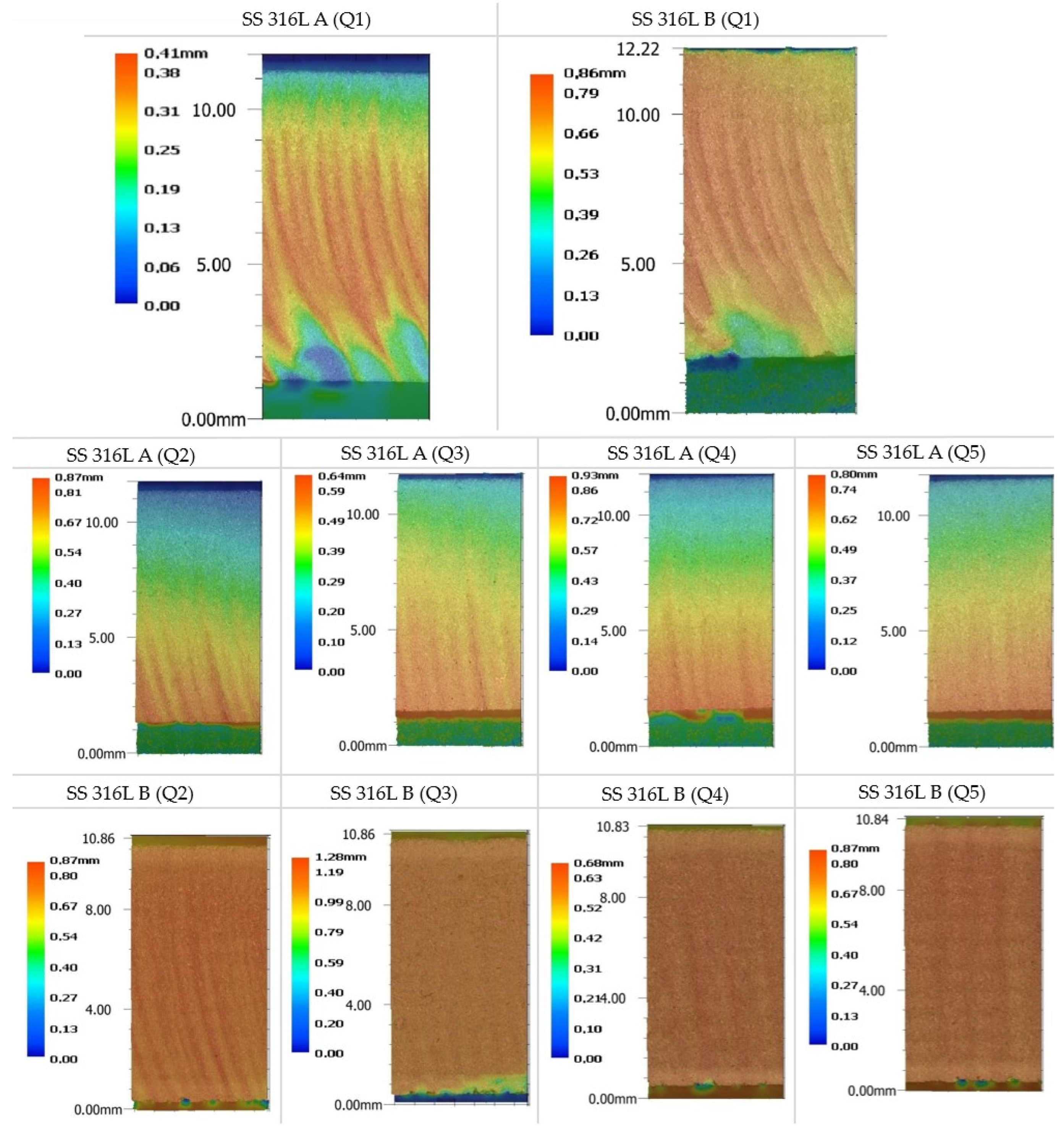
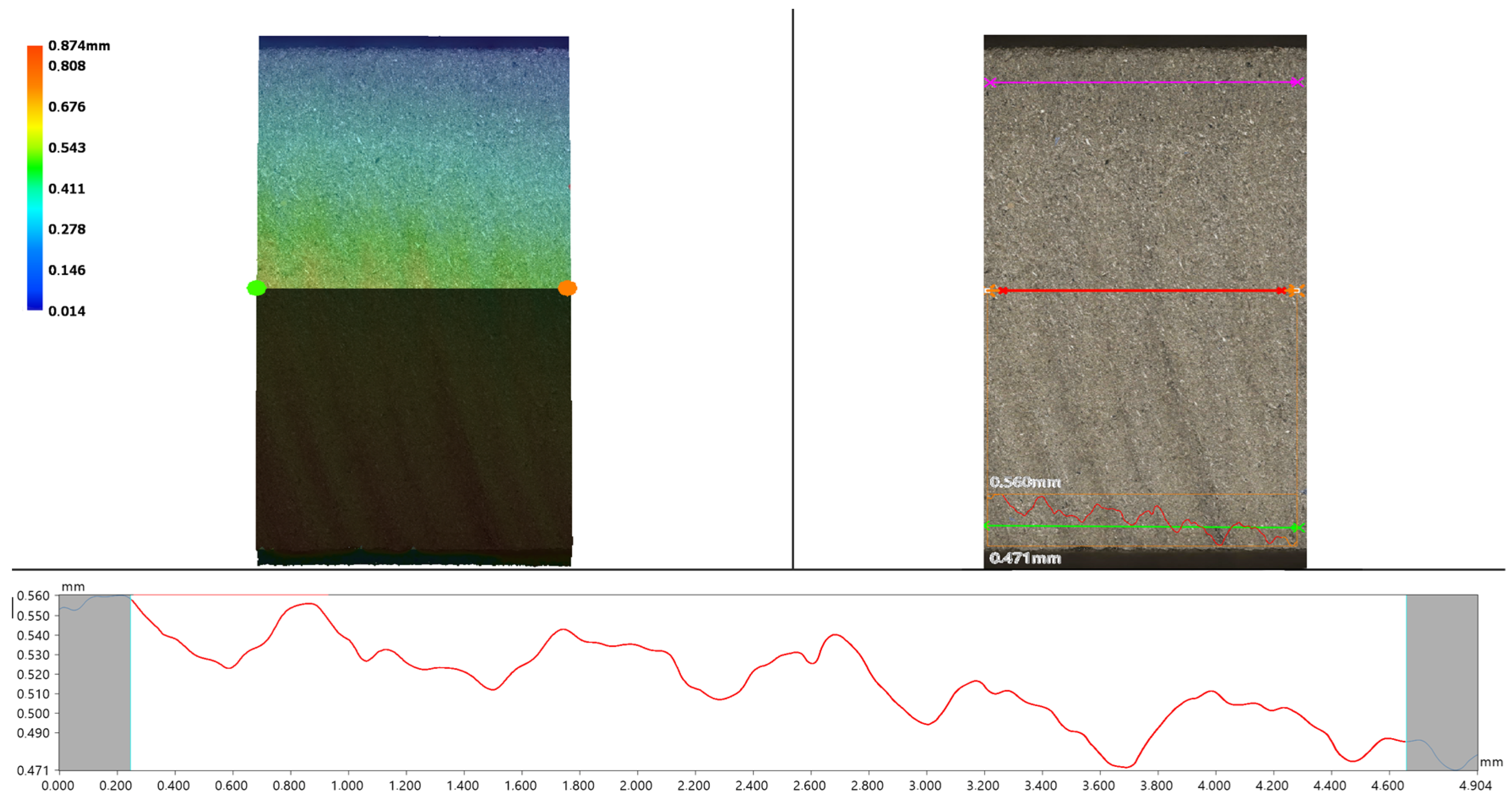
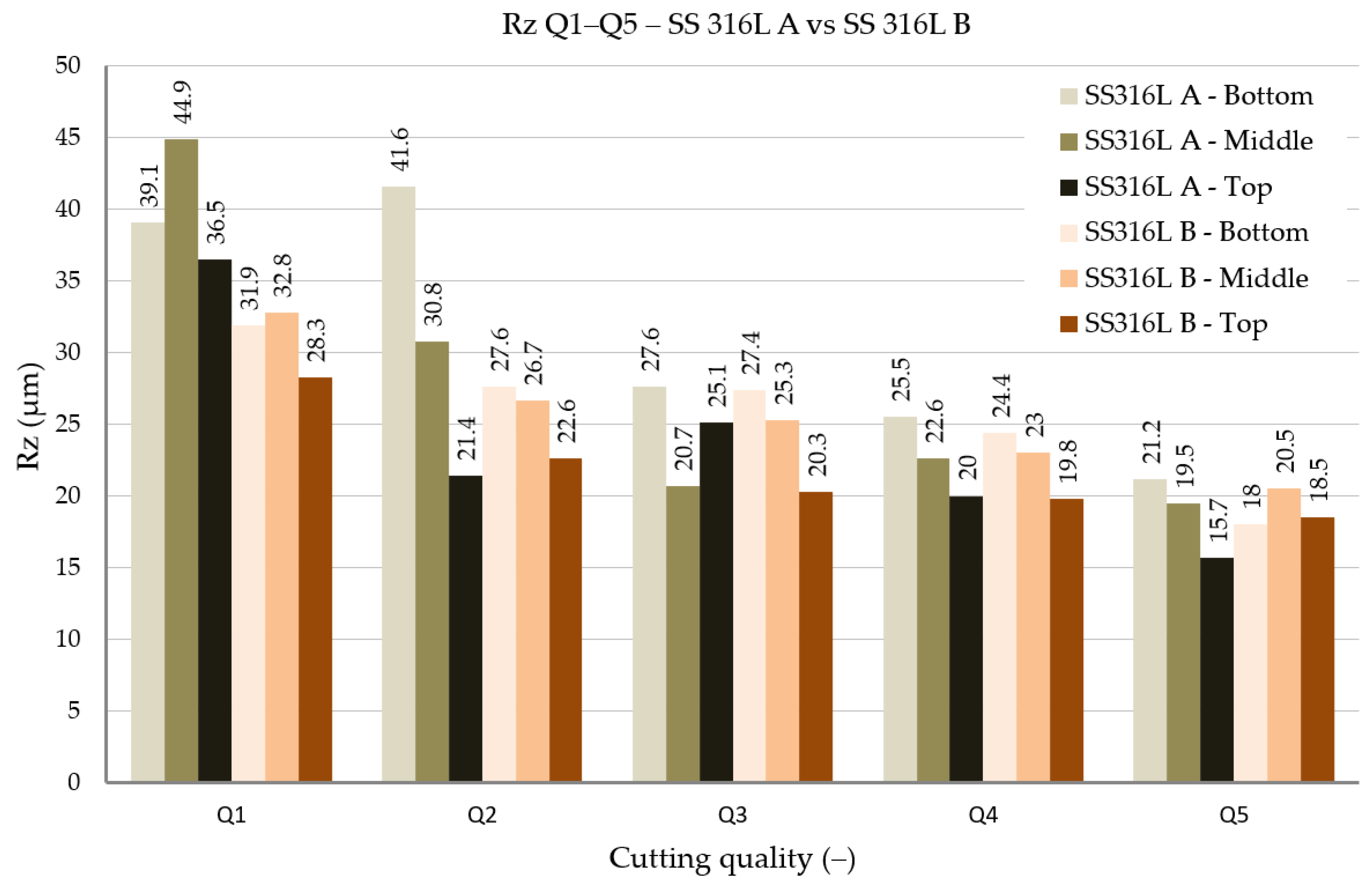
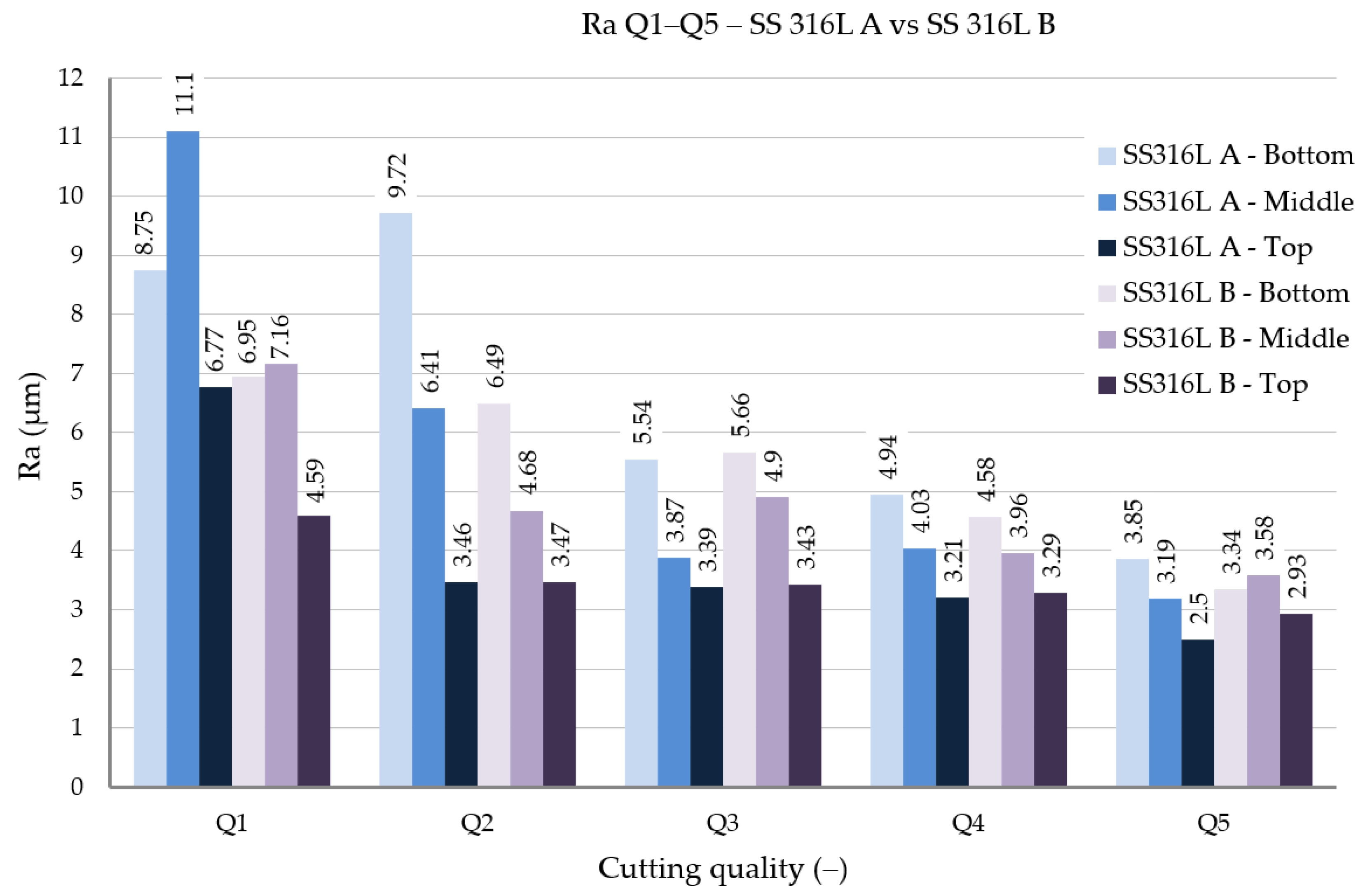
- The set process parameters for the AWJ cut have a direct impact on the surface quality. The main variable parameter was the traverse speed vp depending on the selected quality. The other technologic parameters remained firmly defined (abrasive mass flow ma, stand-off distance SoD, and water pressure p). The lowest roughness values are achieved for quality Q5 (Ra ≈ 2.5–2.9 μm; Rz ≈ 15.7–18.5 μm), while for quality Q1 the values are significantly higher (Ra up to 8.75 μm; Rz up to 44.9 μm).
- -
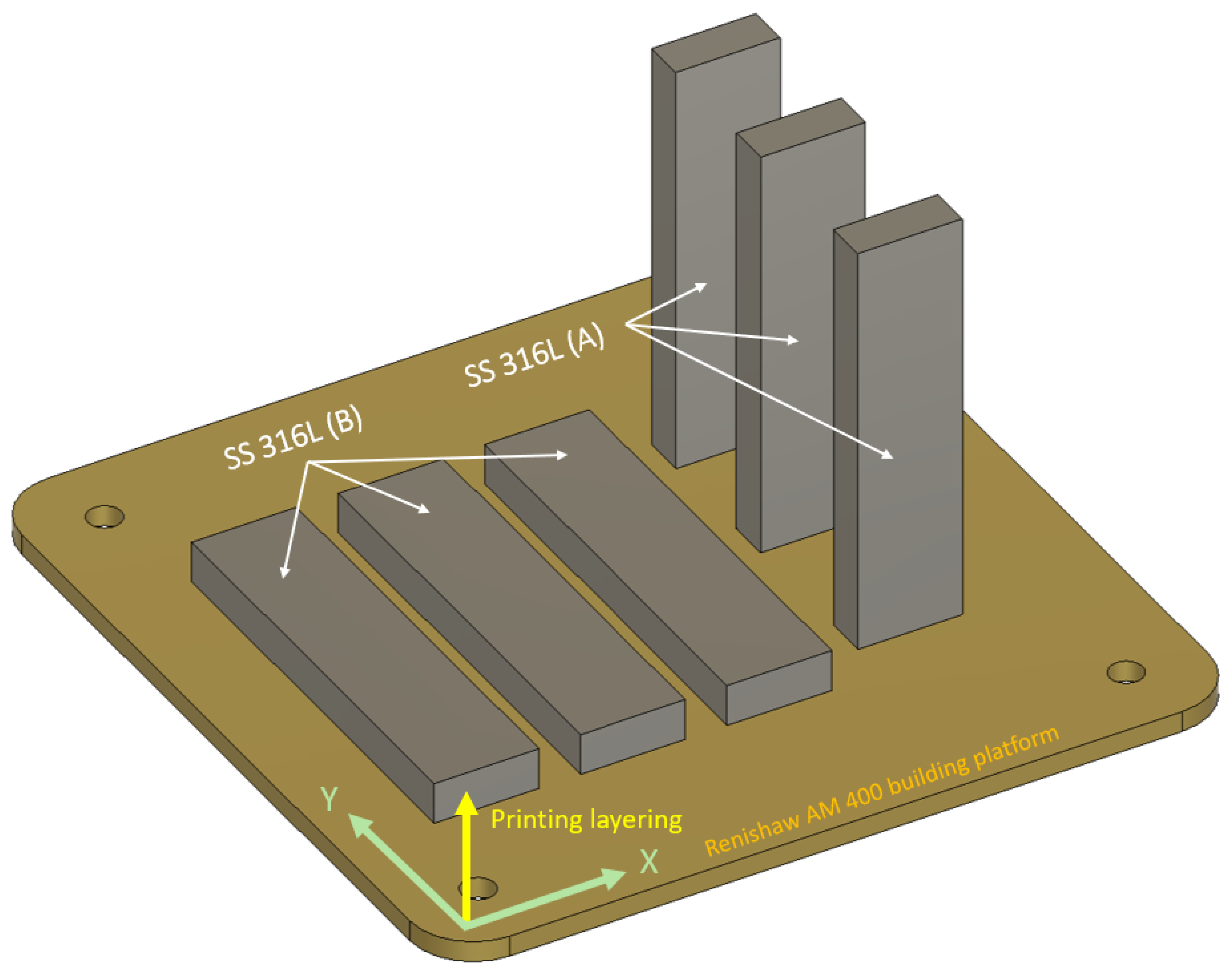
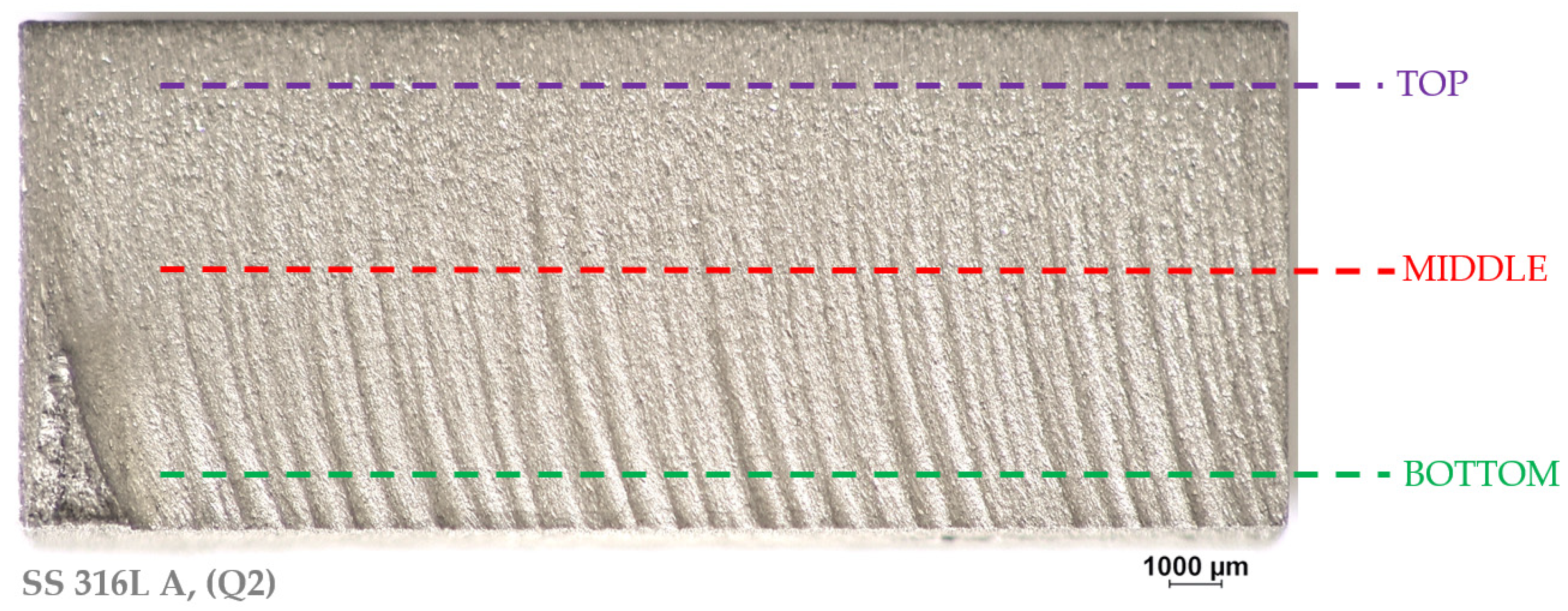
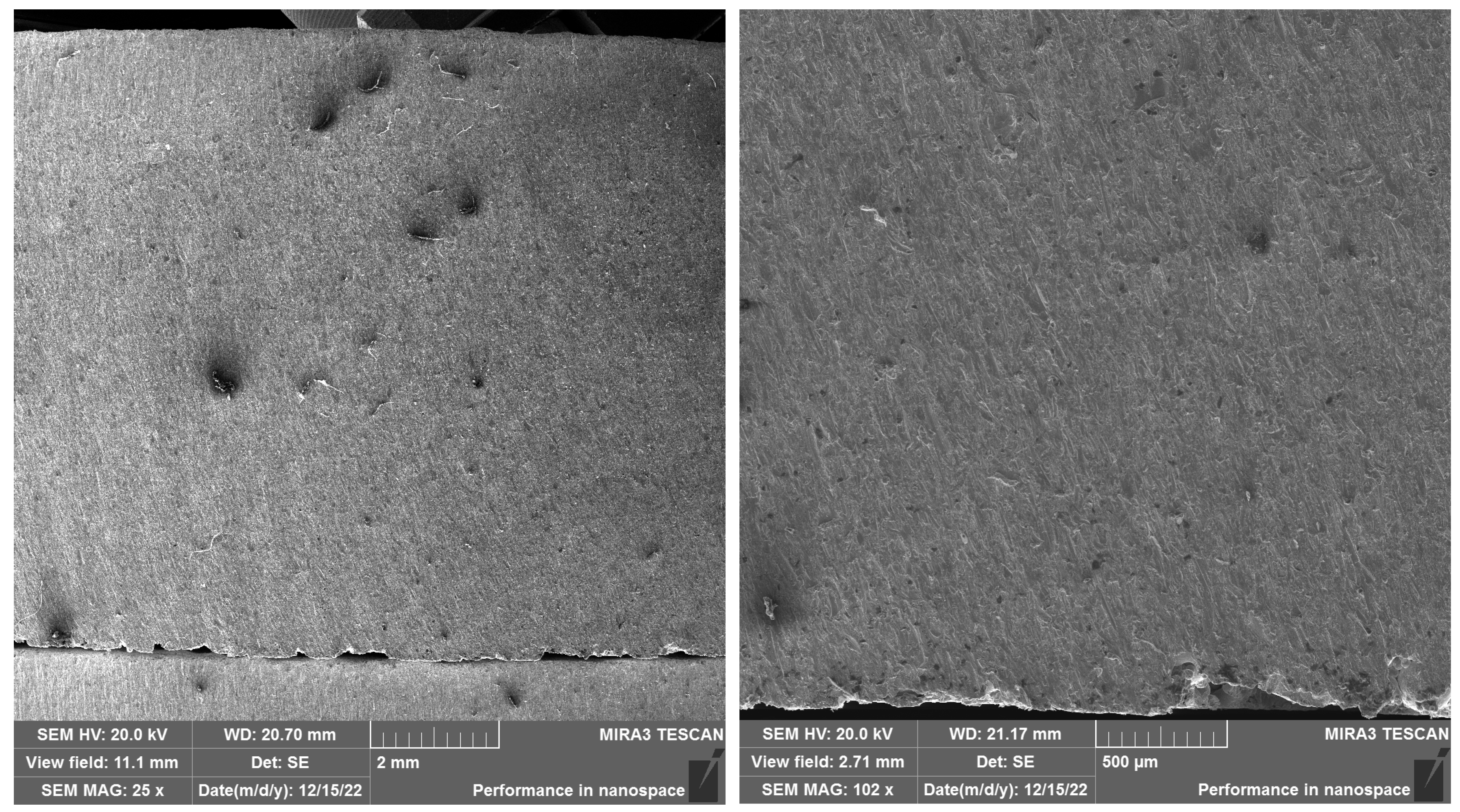
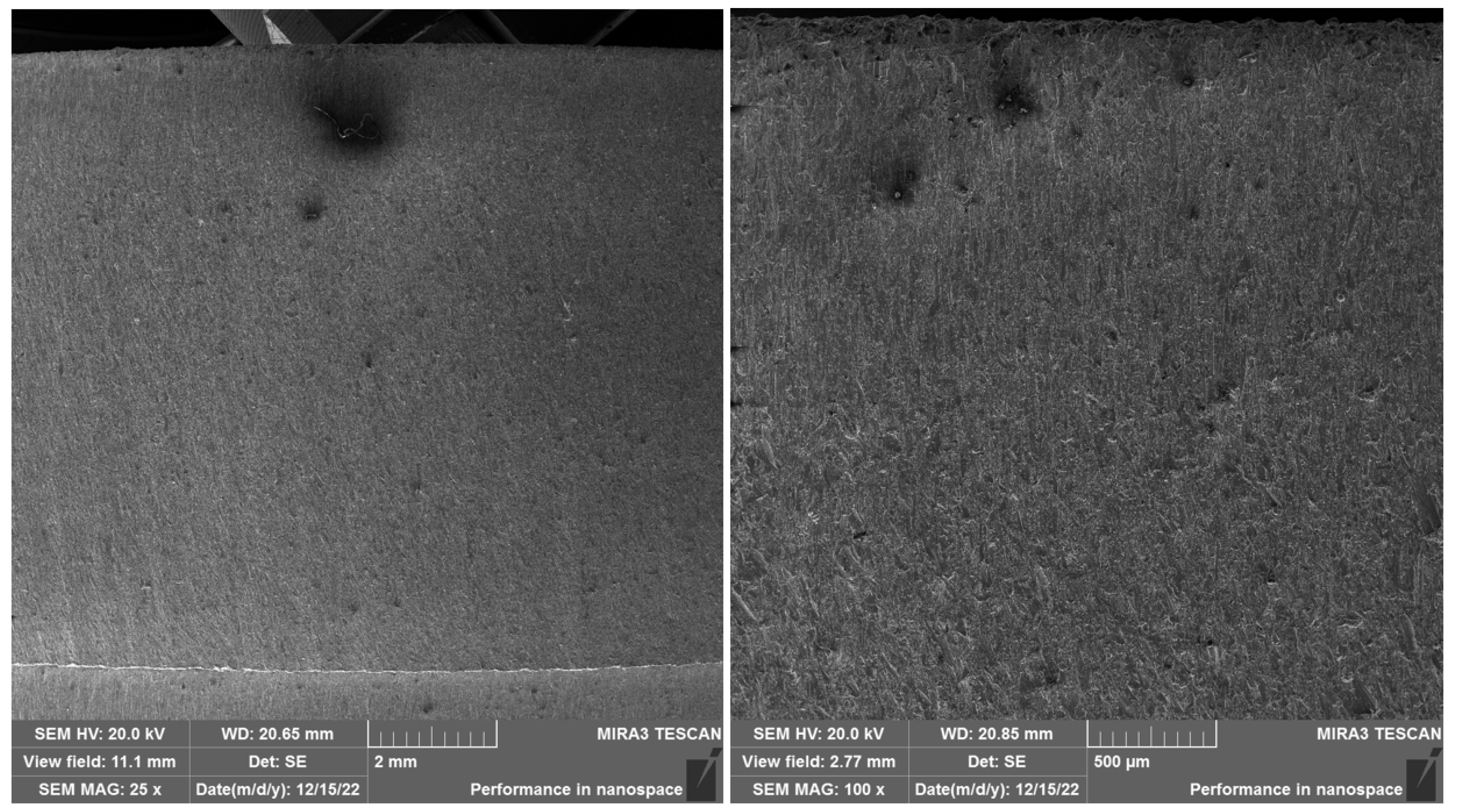
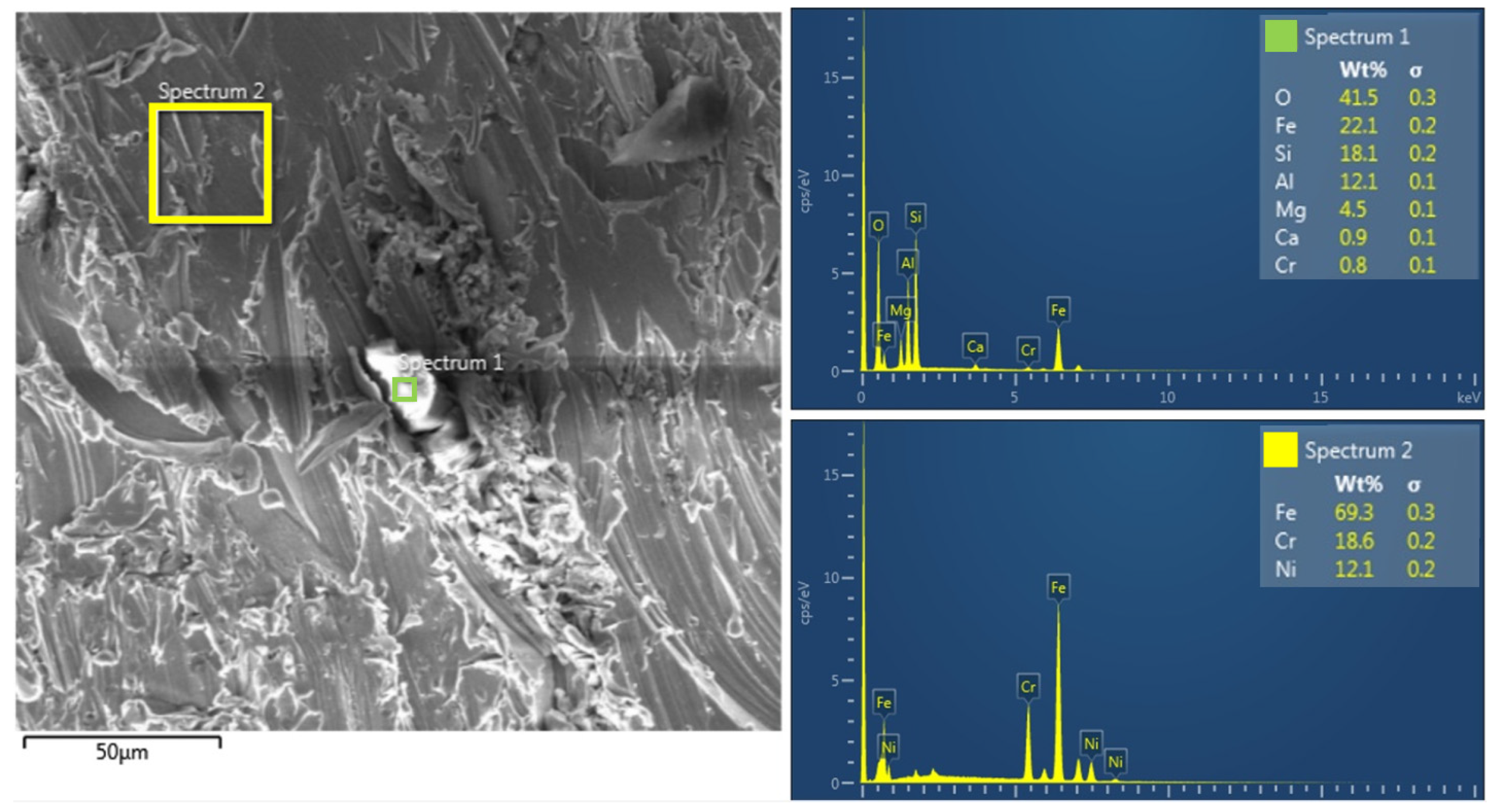
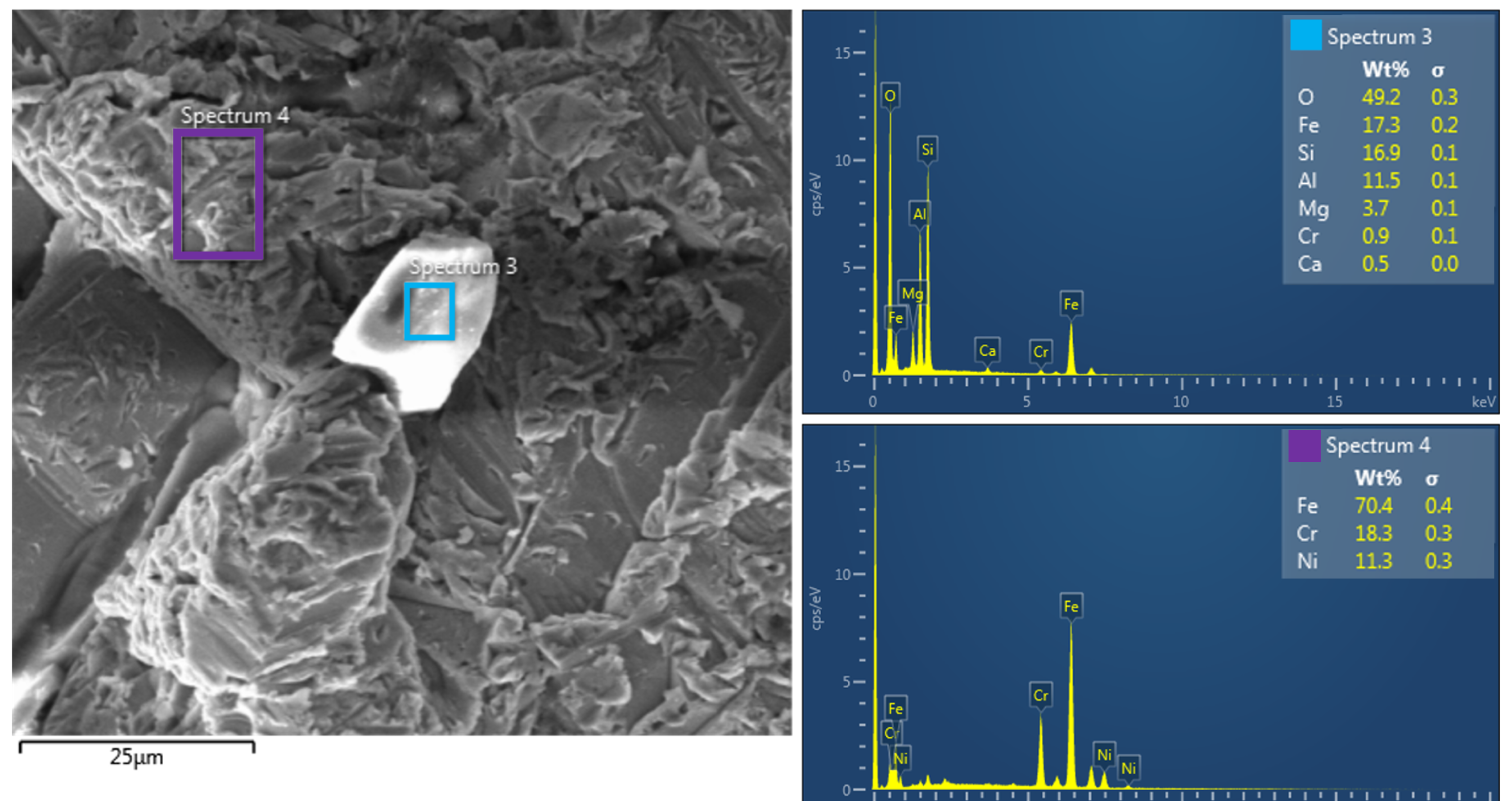
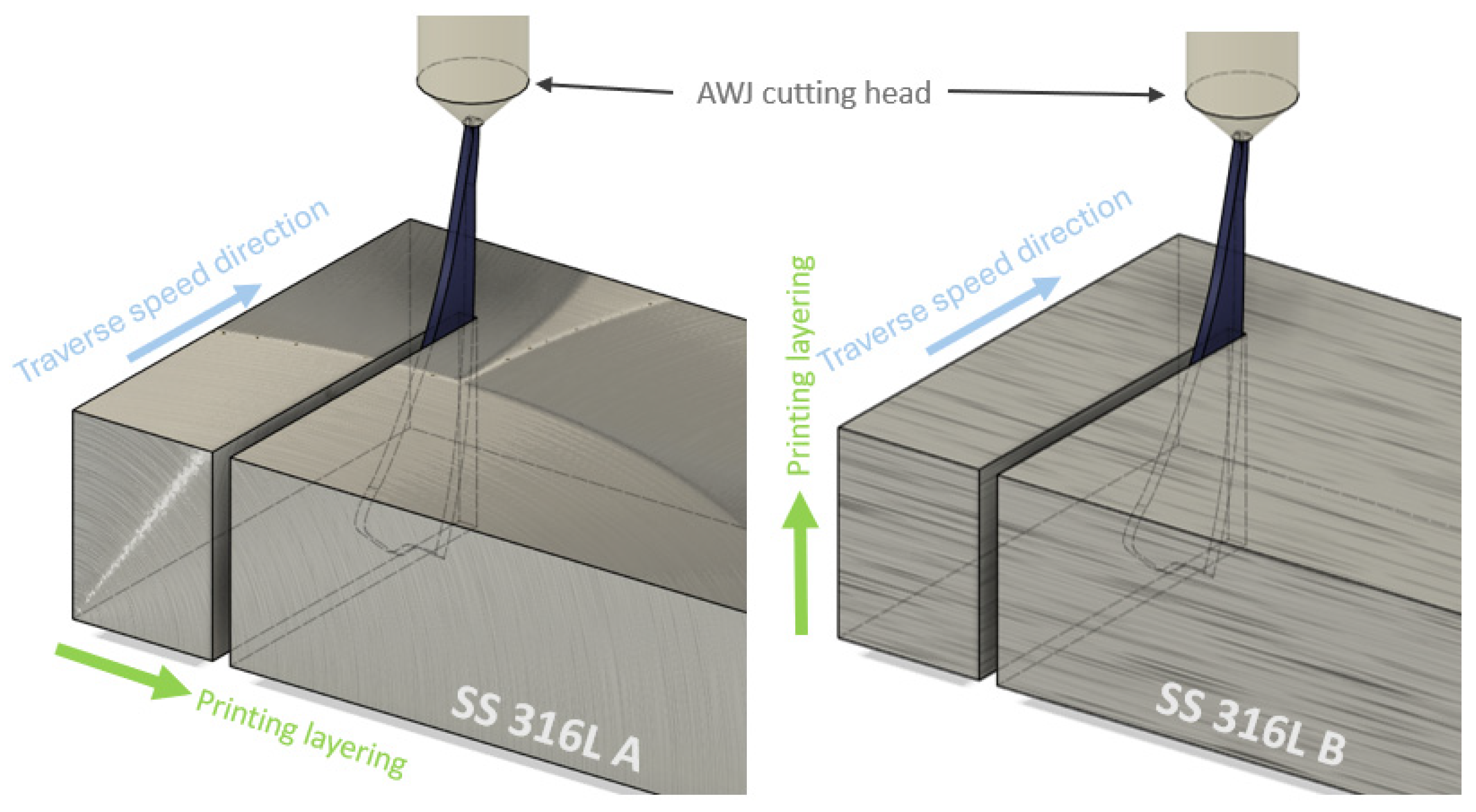
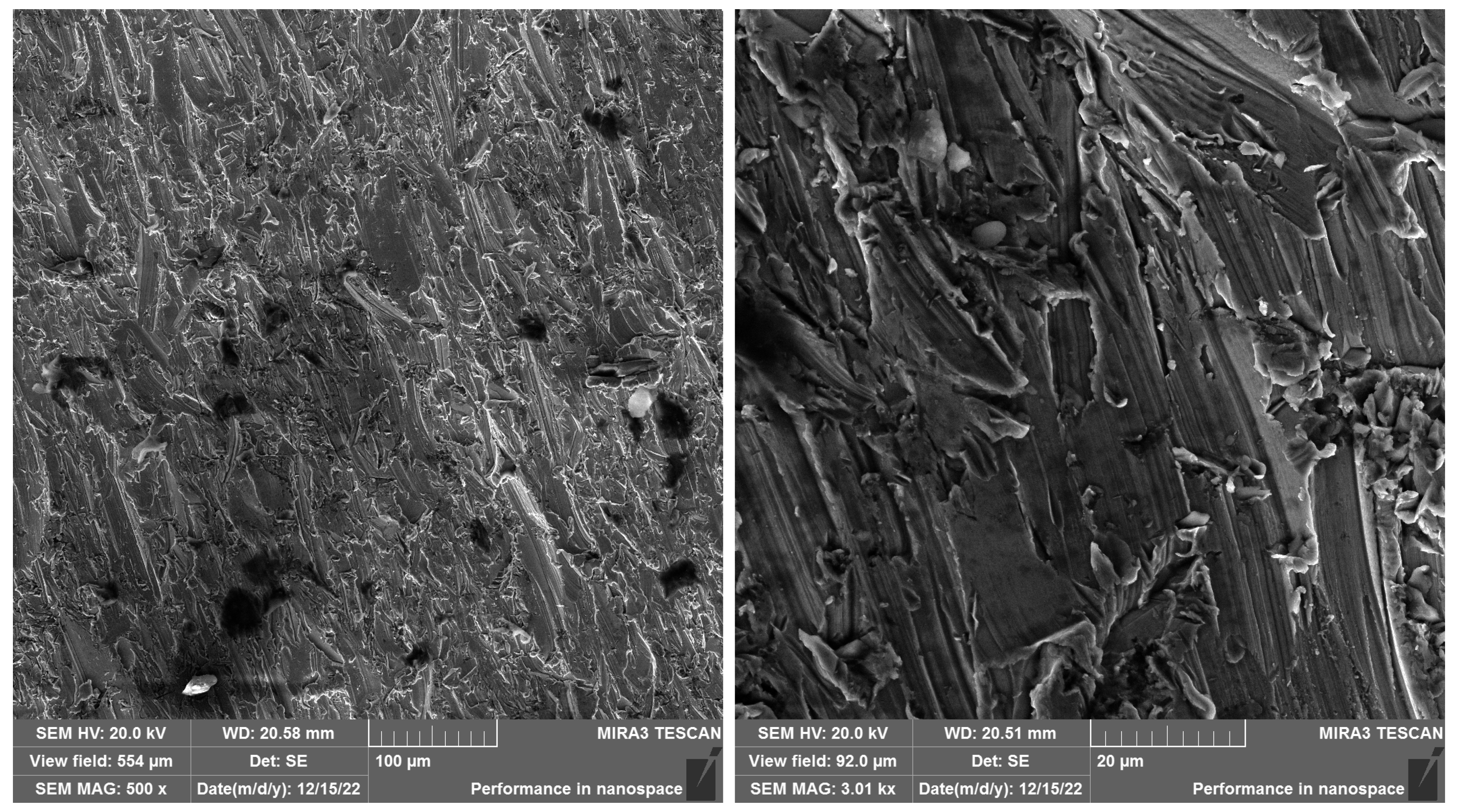
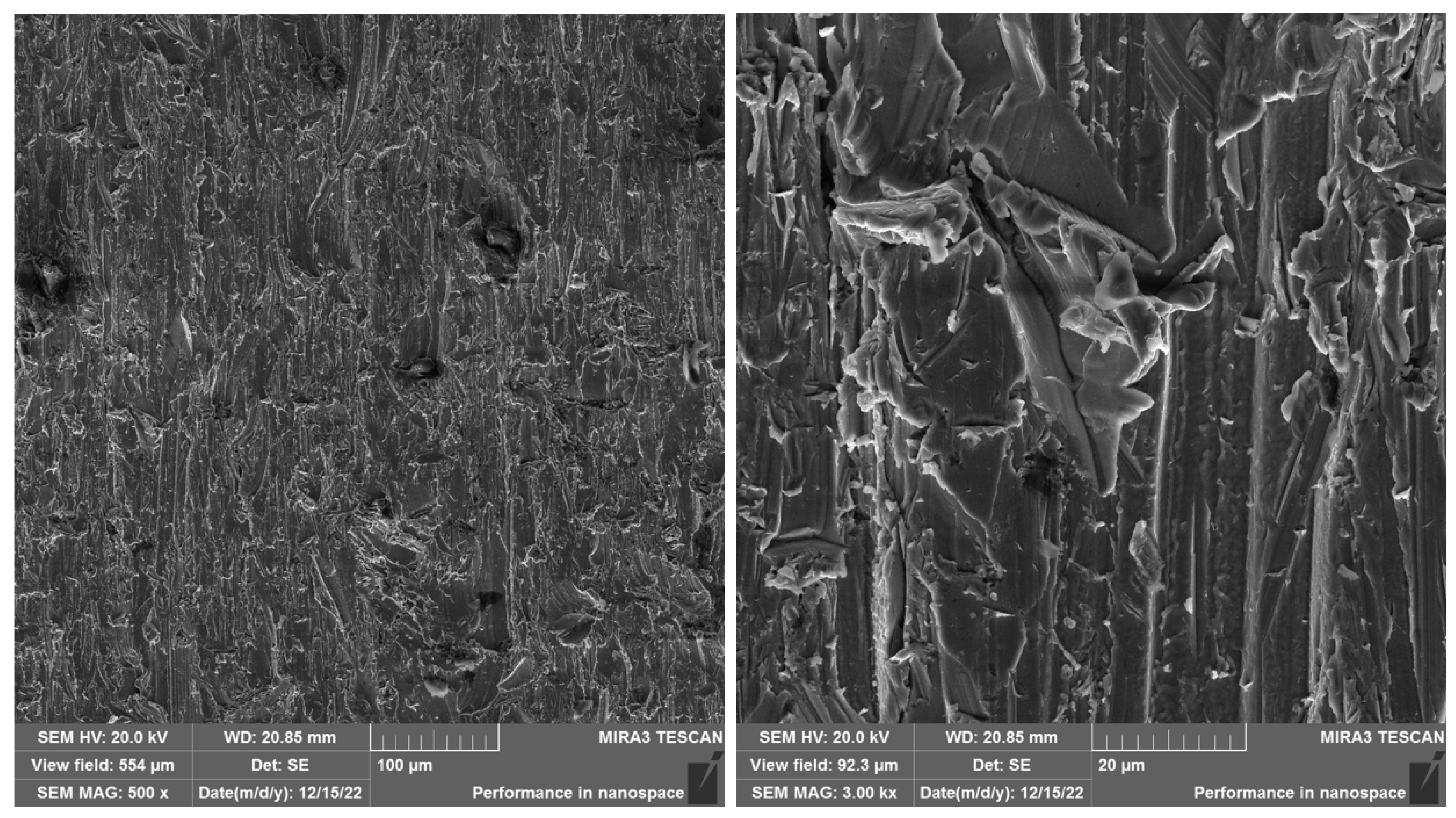
- The orientation of the layering during the preparation of the experimental material by the SLM method affects the resulting surface morphology of the individual cuts. The material designated as SS 316L A (cut in the direction of the layers) shows a more homogeneous topography and lower roughness variability, while the experimental material designated as SS 316L B (cut perpendicular to the layers) is more prone to microcracks and abrasive particle trapping. SEM and EDX analyses confirmed the presence of abrasive fragments, which documents the sensitivity of the material to contamination by the used abrasive.
Author Contributions
Funding
Institutional Review Board Statement
Informed Consent Statement
Data Availability Statement
Conflicts of Interest
References
- Hashish, M. A model for abrasive-waterjet (AWJ) machining. J. Eng. Mater. Technol. 1989, 111, 154–162. [Google Scholar] [CrossRef]
- Natarajan, Y.; Murugesan, P.K.; Mohan, M.; Khan, S.A.L.A. Abrasive Water Jet Machining process: A state of art of review. J. Manuf. Process. 2020, 49, 271–322. [Google Scholar] [CrossRef]
- Kovacevic, R.; Hashish, M.; Mohan, R.; Ramulu, M.; Kim, T.J.; Geskin, E.S. State of the art of research and development in abrasive waterjet machining. J. Manuf. Sci. Eng. 1997, 119, 776–785. [Google Scholar] [CrossRef]
- Jankovic, P.; Igic, T.; Nikodijevic, D. Process parameters effect on material removal mechanism and cut quality of abrasive water jet machining. Theor. Appl. Mech. 2013, 40, 277–291. [Google Scholar] [CrossRef]
- Llanto, J.M.; Vafadar, A.; Aamir, M.; Tolouei-Rad, M. Analysis and optimization of process parameters in abrasive waterjet contour cutting of AISI 304L. Metals 2021, 11, 1362. [Google Scholar] [CrossRef]
- Löschner, P.; Jarosz, K.; Niesłony, P. Investigation of the effect of cutting speed on surface quality in abrasive water jet cutting of 316L stainless steel. Procedia Eng. 2016, 149, 276–282. [Google Scholar] [CrossRef]
- Parthiban, A.; Sathish, S.; Chandrasekaran, M. Optimization of abrasive water jet cutting parameter for AISI 316L stainless steel sheet. J. Appl. Fluid Mech. 2017, 10, 15–22. [Google Scholar] [CrossRef]
- Begic-Hajdarevic, D.; Cekic, A.; Mehmedovic, M.; Djelmic, A. Experimental study on surface roughness in abrasive water jet cutting. Procedia Eng. 2015, 100, 394–399. [Google Scholar] [CrossRef]
- SN 214001:2010; Contact-Free Cutting—Water Jet Cutting-Geometrical Specification and Quality. Swiss Standards-Vereiningung: Zurich, Switzerland, 2013.
- Aziz, U.; McAfee, M.; Manolakis, I.; Timmons, N.; Tormey, D. A Review of Optimization of Additively Manufactured 316/316L Stainless Steel Process Parameters, Post-Processing Strategies, and Defect Mitigation. Materials 2025, 18, 2870. [Google Scholar] [CrossRef] [PubMed]
- Liu, J.; Hou, Y.; Wang, Z.; Wu, Y.; Wang, Y.; Liu, W. Optimization of abrasive water jet polishing parameters for internal channels in additively manufactured high-temperature alloys. Int. J. Adv. Manuf. Technol. 2025, 137, 5267–5278. [Google Scholar] [CrossRef]
- Medibew, T.M.; Zieliński, D.; Agebo, S.W.; Deja, M. Recent Research Progress in the Abrasive Machining and Finishing of Additively Manufactured Metal Parts. Materials 2025, 18, 1249. [Google Scholar] [CrossRef] [PubMed]
- Supriya, S.; Srinivas, S. Machinability Studies on Stainless steel by abrasive water jet -Review. Mater. Today Proc. 2018, 5, 2871–2876. [Google Scholar] [CrossRef]
- Karthik, K.; Sundarsingh, D.S.; Harivignesh, M.; Karthick, R.G.; Praveen, M. Optimization of machining parameters in abrasive water jet cutting of stainless steel 304. Mater. Today Proc. 2021, 46, 1384–1389. [Google Scholar] [CrossRef]
- Badgujar, P.P.; Rathi, M.G. Analysis of surface roughness in abrasive water jet cutting of stainless steel. Int. J. Eng. Res. Technol. 2014, 3, 209–212. [Google Scholar]
- ISO 4287:1997; Geometrical Product Specification (GPS)—Surface Texture: Profile Method-Terms, Definitions and Surface Tex-ture Parameters. International Organization for Standardization: Geneva, Switzerland, 1998.
- Vandžura, R.; Simkulet, V.; Botko, F.; Geľatko, M.; Hatala, M. Influence of AWJ Process Parameters on Erosion Groove Formation in Additively Manufactured Stainless Steel. Materials 2024, 17, 2964. [Google Scholar] [CrossRef] [PubMed]
- Data Sheet: SS 316L-0407 Powder for Additive Manufacturing. Available online: https://www.renishaw.com/resourcecentre/en/details/data-sheet-ss-316l-0407-powder-for-additive-manufacturing--90802 (accessed on 12 February 2026).
- Data Sheet: Stainless Steel 316L (1.4404). Available online: https://www.renishaw.com/resourcecentre/en/details/RenAM-500-series-stainless-steel-316L-14404-material-data-sheet--130335?lang=en (accessed on 12 February 2026).
- Perec, A.; Kawecka, E.; Pude, F. Enhancing High-Alloy Steel Cutting with Abrasive Water Injection Jet (AWIJ) Technology: An Approach Using the Response Surface Methodology (RSM). Materials 2024, 17, 4020. [Google Scholar] [CrossRef] [PubMed]
- Szatkiewicz, T.; Perec, A.; Radomska-Zalas, A.; Banaszek, K.; Balasz, B. Preliminary studies into cutting of a novel two component 3D-printed stainless steel–polymer composite material by abrasive water jet. Materials 2023, 16, 1170. [Google Scholar] [CrossRef] [PubMed]
- Żyłka, Ł.; Płodzień, M.; Mazur, K.; Pytel, M.; de Lacalle, L.N.L. Analysis of the surface geometric structure after abrasive water jet cutting of a X39 Cr13 alloy. Int. J. Adv. Manuf. Technol. 2025, 1–19. [Google Scholar] [CrossRef]
- Basarman, A.-P.; Lobonţiu, M. Aspects regarding the surface roughness on a steel part cutted using AWJ technology. MATEC Web Conf. 2017, 137, 01001. [Google Scholar] [CrossRef][Green Version]









| Element | Fe | Cr | Ni | Mo | Mn | Si | N | O | P | C | S |
|---|---|---|---|---|---|---|---|---|---|---|---|
| Mass (%) | balance | 16–18 | 10–14 | 2–3 | ≤2 | ≤1 | ≤0.10 | ≤0.1 | ≤0.05 | ≤0.03 | ≤0.03 |
| Property | As Built |
|---|---|
| Bulk density | ≥99.8% |
| Ultimate tensile strength (XY) 1 | 693 MPa ± 3.5 MPa |
| Ultimate tensile strength (Z) 2 | 631 MPa ± 3 MPa |
| Yield strength (XY) 1 | 565 MPa ± 3.5 MPa |
| Yield strength (Z) 2 | 495 MPa ± 3 MPa |
| Elongation after fracture (XY) 1 | 53% ± 2% |
| Elongation after fracture (Z) 2 | 47% ± 1% |
| Modulus of elasticity (XY) 1 | 205 GPa ± 12 GPa |
| Modulus of elasticity (Z) 2 | 208 GPa ± 19 GPa |
| Hardness Vickers, (XY) 1 | 199 HV0.5 ± 3 HV0.5 |
| Hardness Vickers, (Z) 2 | 213 HV0.5 ± 5 HV0.5 |
| Surface roughness Ra, (Z) 2 | 11 µm ± 2 µm |
| Surface roughness Rz, (Z) 2 | 77 µm ± 14 µm |
| Quality Q [−] | Pressure p [MPa] | Stand-Off Distance SoD [mm] | Abrasive Mass Flow ma [g·min−1] | Traverse Speed vp [mm·min−1] |
|---|---|---|---|---|
| Q1 | 380 | 4 | 400 | 394.53 |
| Q2 | 380 | 4 | 400 | 261.78 |
| Q3 | 380 | 4 | 400 | 164.22 |
| Q4 | 380 | 4 | 400 | 117.97 |
| Q5 | 380 | 4 | 400 | 91.27 |
Disclaimer/Publisher’s Note: The statements, opinions and data contained in all publications are solely those of the individual author(s) and contributor(s) and not of MDPI and/or the editor(s). MDPI and/or the editor(s) disclaim responsibility for any injury to people or property resulting from any ideas, methods, instructions or products referred to in the content. |
© 2026 by the authors. Licensee MDPI, Basel, Switzerland. This article is an open access article distributed under the terms and conditions of the Creative Commons Attribution (CC BY) license.
Share and Cite
Vandžura, R.; Geľatko, M.; Čornanič, M.; Simkulet, V.; Botko, F. Comparison of Surface Morphology and Topography of Additively Manufactured SS 316L Steel After AWJM in Dependence on Layer Orientation. Materials 2026, 19, 1255. https://doi.org/10.3390/ma19061255
Vandžura R, Geľatko M, Čornanič M, Simkulet V, Botko F. Comparison of Surface Morphology and Topography of Additively Manufactured SS 316L Steel After AWJM in Dependence on Layer Orientation. Materials. 2026; 19(6):1255. https://doi.org/10.3390/ma19061255
Chicago/Turabian StyleVandžura, Radoslav, Matúš Geľatko, Marek Čornanič, Vladimír Simkulet, and František Botko. 2026. "Comparison of Surface Morphology and Topography of Additively Manufactured SS 316L Steel After AWJM in Dependence on Layer Orientation" Materials 19, no. 6: 1255. https://doi.org/10.3390/ma19061255
APA StyleVandžura, R., Geľatko, M., Čornanič, M., Simkulet, V., & Botko, F. (2026). Comparison of Surface Morphology and Topography of Additively Manufactured SS 316L Steel After AWJM in Dependence on Layer Orientation. Materials, 19(6), 1255. https://doi.org/10.3390/ma19061255