Article

Accelerated Aging Effect on Volatile Organic Compound Emissions from Thermally Treated Spruce Wood


by
Tatiana Bubeníková
,
František Kačík
,
Anna Darabošová
and
Iveta Čabalová
*
Department of Chemistry and Chemical Technologies, Faculty of Wood Sciences and Technology, Technical University in Zvolen, T. G. Masaryka 24, 960 53 Zvolen, Slovakia
*
Author to whom correspondence should be addressed.
Materials 2026, 19(6), 1135; https://doi.org/10.3390/ma19061135
Submission received: 20 February 2026 / Revised: 5 March 2026 / Accepted: 12 March 2026 / Published: 14 March 2026

Abstract

Thermal modification is widely applied to improve the durability and dimensional stability of wood; however, it alters the emission profile of volatile organic compounds (VOCs), which may affect indoor air quality. This study evaluated the effect of accelerated aging on VOC emissions from thermally modified Norway spruce (Picea abies) wood. Untreated and thermally treated samples (160, 180, and 210 °C) were subjected to accelerated aging in a xenon test chamber for 600 h. VOC emissions were analyzed using headspace gas chromatography–mass spectrometry (HS-GC-MS), and total VOC emissions (TVOC) were calculated from peak areas. Thermal modification significantly reduced TVOC compared to untreated wood, with samples treated at 210 °C showing up to a 376-fold decrease. Increasing modification temperature reduced the amount and variability of emitted VOCs and altered their chemical composition. Terpenes dominated in untreated wood, particularly α-pinene (51%), whereas thermally treated samples showed lower terpene content and higher proportions of carbonyl compounds such as furfural. Accelerated aging further affected VOC emissions, including a 42% decrease in TVOC for the 160 °C sample and compositional shifts characterized by the disappearance or formation of specific compounds. Thermal modification and subsequent aging substantially modify VOC emission profiles and improve emission stability of thermally treated spruce wood.

1. Introduction

Global climate change requires a comprehensive approach to reducing greenhouse gas emissions and atmospheric carbon dioxide. Wood plays an important role in carbon storage, as plants absorb carbon dioxide during photosynthesis and incorporate it into biomass. Therefore, it is important to maintain carbon bound in wood for as long as possible. Various modification processes are used for this purpose to improve wood properties and extend its service life.
Among commercially used wood modification methods, thermal treatment occupies a significant position. Thermal processing of wood is primarily used to improve its dimensional stability under varying moisture conditions [1]. It represents a well-established commercial technology that enhances the appearance, dimensional stability, and durability of wood. Compared to other modification methods, its advantage is the absence of additional chemicals that could negatively affect the environment or the ecological quality of wood products [2,3,4]. Thermally modified wood is wood in which the composition of the cell wall material and its physical properties are altered by exposure to temperatures ranging from 160 °C to 260 °C [5] under conditions of reduced oxygen availability. The temperature and duration of thermal treatment typically range from 180 to 280 °C and from 15 min to 24 h, depending on the treatment process, wood species, sample dimensions, moisture content, and required mechanical properties, biological resistance, and dimensional stability of the final product [5,6,7]. This technology allows improvement of properties of lower-quality wood, which is subsequently used mainly as biomass for energy production or for packaging materials [8,9,10].
Despite these advantages, attention must be paid to the formation of substances generated during thermal modification that may have negative environmental or health impacts. Volatile organic compounds (VOCs) released from wood during the drying process have been extensively studied, particularly concerning the influence of temperature and moisture [11,12,13,14]. Currently, increasing attention is focused on VOC emissions from thermally modified wood. As these materials are increasingly used in indoor environments, it is necessary to evaluate their safety and impact on indoor air quality. This issue is particularly important because potentially toxic derivatives of polycyclic aromatic hydrocarbons (PAHs) have been identified in soluble extracts of thermally modified maritime pine and poplar wood [7]. VOC emissions from thermally modified wood have therefore raised concerns regarding indoor air quality and environmental impacts. Since people spend more than 80% of their time indoors, indoor air pollution caused by VOC emissions from wood and wood-based materials has been associated with the occurrence of sick building syndrome (SBS) [15,16].
The amount and composition of VOCs emitted from wood and wood-based materials depend on several factors, particularly wood species, treatment technology, and service history of the material. For example, hardwood species such as beech and oak primarily emit higher amounts of acetic and formic acids and lower amounts of terpene compounds, whereas low-density species such as poplar release lower amounts of organic acids but significantly higher amounts of terpenes [17]. VOC composition also differs depending on the type of wood-based composite material. The main components of VOCs emitted from particleboard include terpenes, alkanes, alcohols, aldehydes, esters, and aromatic compounds, while ketones occur in low concentrations. In fiberboards, terpenes, alcohols, and aromatic compounds dominate, whereas alkanes, aldehydes, ketones, and esters are present in lower amounts. In plywood, the major VOC components include terpenes, alcohols, ketones, esters, and alkanes, while aldehydes are present in low concentrations [15,18].
Thermal treatment significantly alters the chemical composition of wood, which is reflected in the profile of emitted VOCs. During thermal treatment of oak wood in an air atmosphere, eight groups of VOCs were identified, namely acids (37.05–42.77%), aldehydes (11.67–18.99%), ketones (11.49–18.94%), phenols (9.6–15.56%), furans (11.54–16.67%), alcohols (3.09–5.2%), sugars (1.53–3.22%), and esters (1.25–2.16%) [19]. In addition to temperature, the presence of inorganic constituents in wood may also influence thermal degradation processes. Wood naturally contains small amounts of mineral elements such as potassium, calcium, magnesium, and sodium, which remain in the ash fraction after thermal decomposition. These inorganic components can significantly affect the pathways of thermochemical reactions by acting as catalysts or inhibitors during biomass degradation. For example, alkali and alkaline earth metals can affect thermal decomposition kinetics and shift degradation reactions to lower temperatures, thereby influencing the distribution of volatile and solid products. Potassium, in turn, promotes the formation of low-molecular-weight compounds and suppresses the formation of levoglucosan during the thermal degradation of lignocellulosic biomass [20]. In addition, sodium and potassium are known catalysts in biomass thermal reactions and may significantly influence the rate of decomposition and the formation of degradation products [21]. More broadly, the presence of alkali and alkaline earth metals in biomass has been shown to influence the yields of char, gases, and volatile compounds during pyrolysis and other thermochemical conversion processes [22]. Surfaces of softwood species emit mainly terpenes, including mono-, di-, and sesquiterpenes, followed by aldehydes such as hexanal and pentanal [23]. In general, softwood species emit higher amounts of VOCs than hardwoods, mainly due to their higher content of volatile terpenes [24].
Thermal treatment processes alter the chemical composition of wood, leading to changes in VOC emission profiles. Accelerated aging may further influence emission characteristics and complicate the understanding of VOC release from thermally modified wood. Understanding changes in VOC emissions before and after aging is essential for assessing the environmental and health implications of thermally modified wood; however, studies addressing this issue remain limited.
This study aimed to evaluate the effect of accelerated aging on VOC emissions from thermally modified Norway spruce wood. The study focused on comparing the amount and composition of VOCs emitted from untreated and thermally modified wood at different modification temperatures, as well as evaluating changes in emission profiles after accelerated aging. It was hypothesized that thermal modification may lead to a significant reduction in total VOC emissions and simultaneously alter their chemical composition. Furthermore, it was assumed that accelerated aging affects both the quantity and spectrum of emitted compounds due to additional degradation and oxidation processes occurring in the wood matrix. It was expected that aging would reduce the amount of VOCs, thereby increasing the comfort of users of thermally modified wood. The results of this study may contribute to a better understanding of the behavior of thermally modified wood during its use in indoor environments.

2. Materials and Methods

2.1. Materials and Heat Treatment

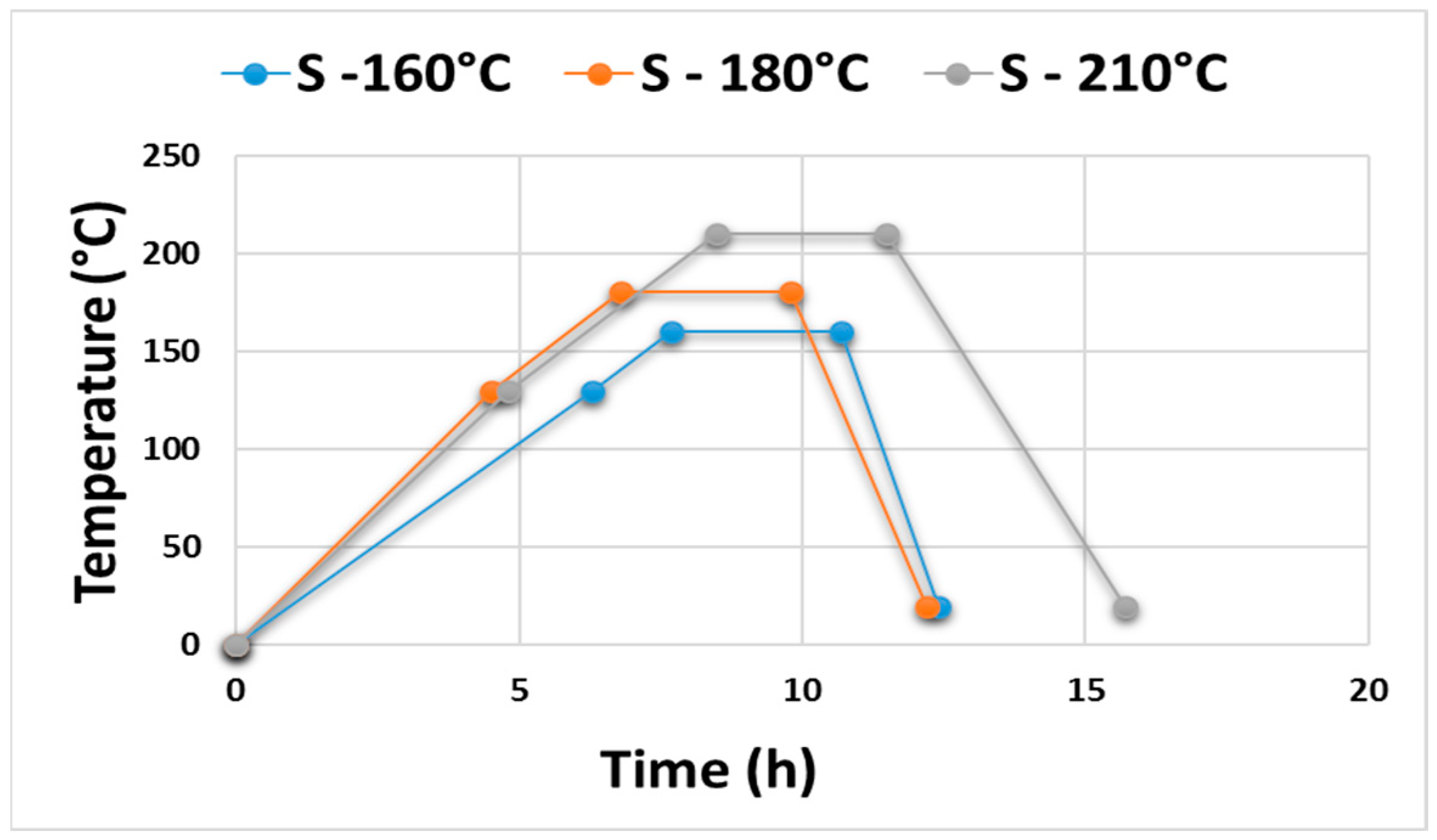
Volatile organic compounds (VOCs) were analyzed in untreated, thermally treated, and accelerated-aged Norway spruce (Picea abies) wood specimens with dimensions of 100 mm × 50 mm × 15 mm (length × width × thickness). The samples were divided into four groups, each containing 10 samples. One group served as a reference and was not subjected to thermal treatment. The remaining three groups were thermally modified using a laboratory thermal chamber S400/03 (LAC Ltd., Rajhrad, Czech Republic) according to the Thermowood process at temperatures of 160, 180, and 210 °C [25,26]. After reaching the desired temperature, the duration of the thermal treatment was three hours. The course of the thermal modification process is presented in Figure 1.

2.2. Accelerated Aging

Accelerated aging of the thermally modified wood samples was carried out in a xenon test chamber Q-SUN Xe-3-HS (Q-Lab Europe, Ltd., Bolton, UK) following the ASTM G155 standard (2005) [27] under wet conditions. Each group contained 5 samples. The total duration of the accelerated aging process was 600 h.
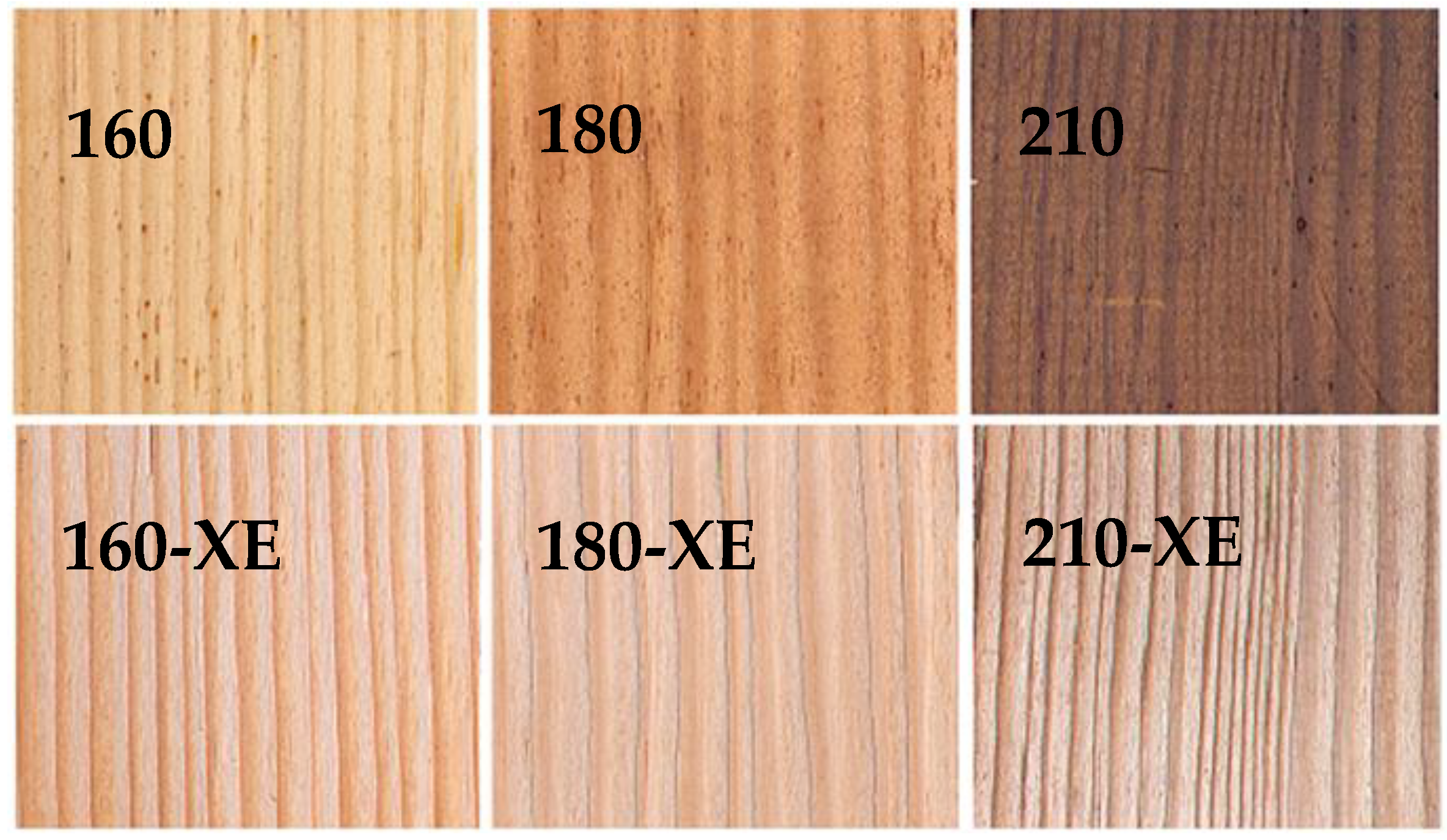
The designation of the test samples is presented in Table 1. Untreated spruce wood samples, serving as references, are labeled as 20. Samples thermally treated in a thermal chamber according to the Thermowood process at 160 °C, 180 °C, and 210 °C are labeled as 160, 180, and 210, respectively (Figure 2). Thermally treated samples subjected to accelerated aging are labeled as 160-XE, 180-XE, and 210-XE. Two replicates were prepared for each sample. This text provides additional clarification to Table 1, which summarizes all sample labels and their corresponding characteristics.

2.3. VOC Analysis

Spruce wood samples were ground into sawdust using a Polymix PX-MFC 90 D (Kinematica, Luzern, Switzerland) wood grinder at a rotational speed of 1200–1500 min−1. The sawdust was thoroughly mixed to ensure homogeneity and representativeness of the samples. Volatile organic compound (VOC) emissions were analyzed using the headspace gas chromatography–mass spectrometry (HS-GC-MS) technique. A 20 mL glass headspace vial was used as the VOC test chamber. Sawdust samples (0.500 ± 0.001 g) were placed into the vial and sealed immediately before analysis with an aluminum crimp cap equipped with a PTFE/silicone septum.
The headspace vial containing the sample was placed into the thermostat of the headspace autosampler. VOC analyses were performed using an Agilent 7890A gas chromatograph (Agilent Tehnologies, Santa Clara, CA, USA) coupled with a 5975C mass selective detector (MSD) (Agilent Tehnologies, Santa Clara, CA, USA) and equipped with an Agilent 7697A headspace autosampler (Agilent Tehnologies, Santa Clara, CA, USA). Two analytical replicates were performed for each sample.
The experimental conditions were as follows: Headspace conditions: carrier gas: helium; carrier gas pressure: 7.5 psi; oven temperature: 90 °C; loop temperature: 100 °C; transfer line temperature: 110 °C; vial equilibration time: 20 min.
GC and MS conditions: injection mode: headspace (180 °C), split ratio 20:1; column: HP-5MS (30 m × 0.250 mm × 0.25 μm); carrier gas: helium (constant flow rate 1.0 mL·min−1); oven temperature program: from 40 °C to 270 °C; transfer line temperature: 280 °C. MS temperatures were set to 230 °C for the ion source and 150 °C for the quadrupole. VOCs were identified by comparing the measured mass spectra with the NIST 20 mass spectral library. Peak areas were integrated using the MSD ChemStation 5.01 software and were used to compare the relative amounts of emitted VOCs. The sum of the areas of all detected peaks was calculated for each sample, and the relative percentage contribution of individual identified compounds was determined based on the total peak area. TVOC values are expressed as the sum of integrated peak areas in arbitrary units (a.u.).

3. Results and Discussion

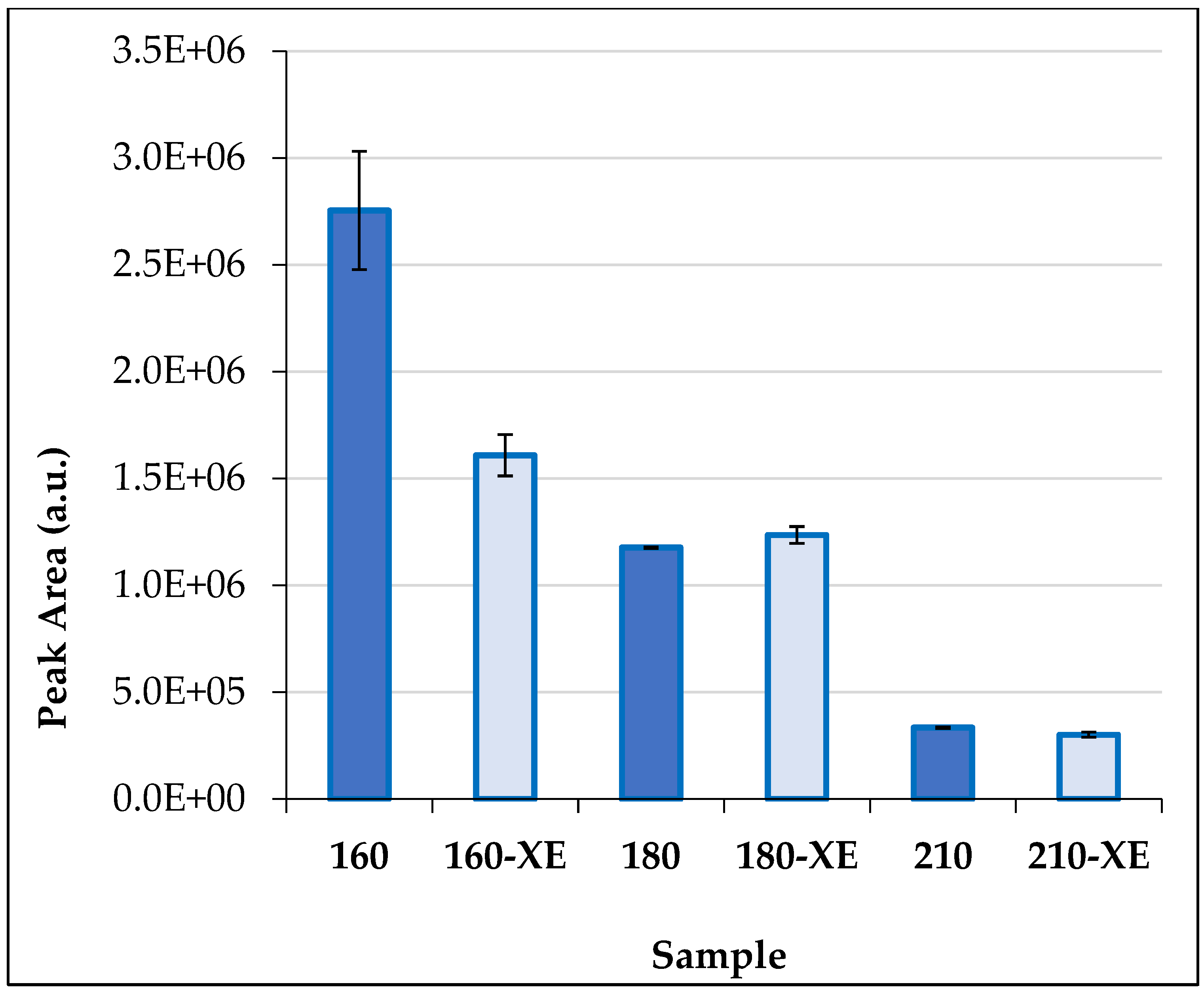
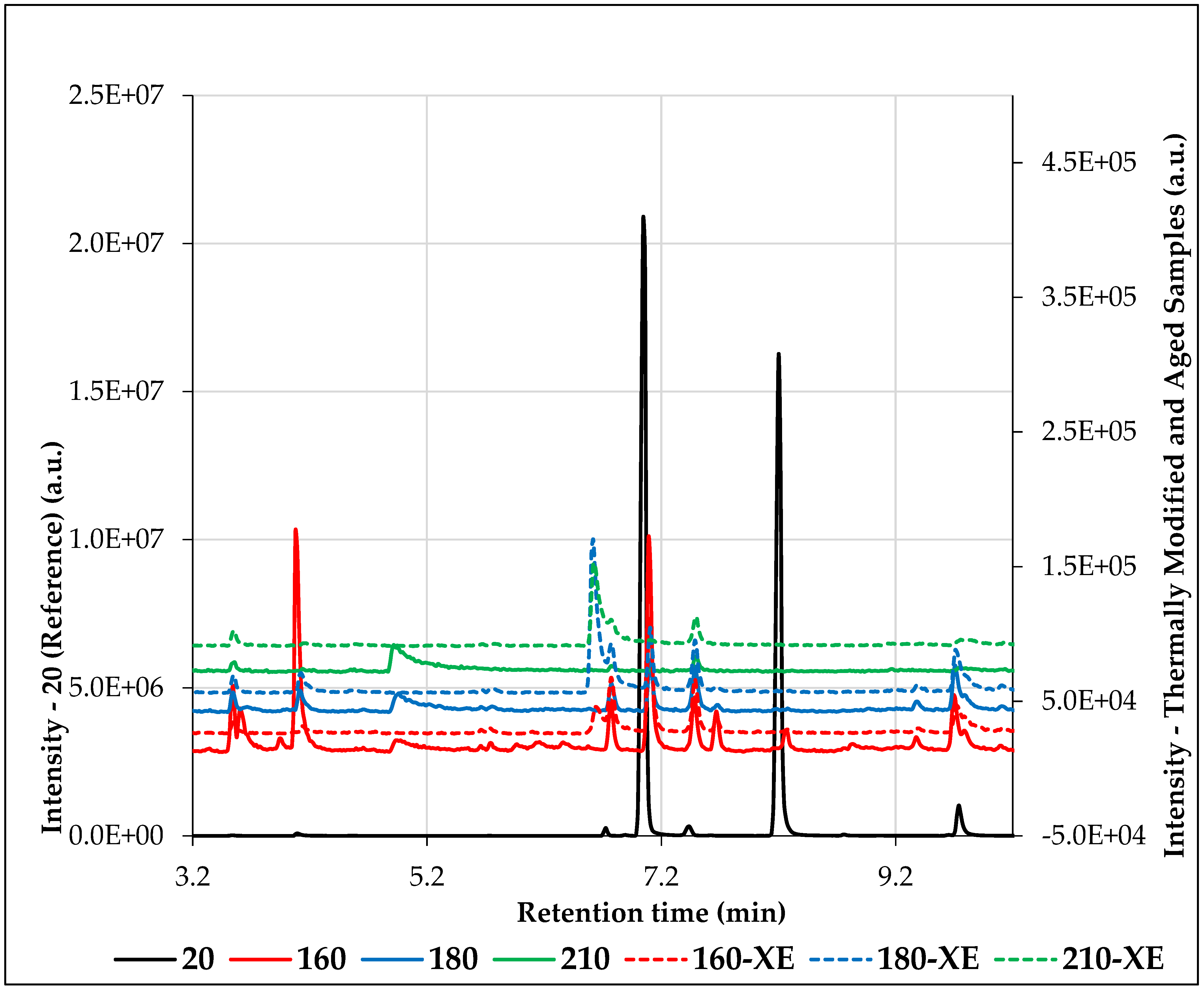
A relatively large amount of volatile organic compounds (VOCs) was released into the air from unmodified spruce wood (reference sample—20). A total of 24 compounds were identified. The total peak area of emitted VOCs (TVOC) was significantly higher compared to all thermally modified samples (Table 2). With increasing thermal treatment temperature of spruce wood, a marked decrease in the amount of emitted VOCs was observed (Figure 3 and Figure 4), as well as a reduction in their variability (Table 2). TVOC released from spruce wood modified at 210 °C were up to 376 times lower compared to unmodified wood (Table 2).
These results are consistent with the work of Manninen et al. [29], who found that total VOC emissions from air-dried Scots pine wood blocks were seven- to nine-fold higher compared to emissions from thermally treated wood. Similarly, Hyttinen et al. [30], in a comparison of VOC emissions from several wood species during a four-week testing period, demonstrated that thermal treatment of spruce and pine wood significantly reduces total VOC emissions while simultaneously altering their chemical composition compared to untreated or naturally air-dried wood.
The dominant group of compounds in the VOC emission profile of the reference sample consisted of terpenes. The most significant volatile organic compound emitted from the reference sample was α-pinene, accounting for up to 51% of the total VOC content (Table 2). β-Pinene (39%) and β-terpinene (3%) were also present in substantial amounts. The monoterpenes α-pinene and β-pinene are considered the most important volatile organic compounds originating from coniferous species [31]. The dominant presence of α-pinene in VOC emissions from spruce wood was also confirmed by Raber et al. [32] in their study of emissions from blue spruce (Picea pungens) and Norway spruce (Picea abies) using the HS-GC-MS method. In addition to α-pinene and β-pinene, other VOCs typical of coniferous species were released from the reference sample, including caryophyllene, β-terpinene, bergamotene, camphene, and other compounds (Table 1).
Several studies indicate that terpenes may have negative effects on human health, particularly in indoor environments. They may cause irritation of the eyes, mucous membranes, and skin, trigger allergic reactions, and exacerbate respiratory problems, including asthma [33,34,35].
VOCs emitted into the atmosphere are chemically highly reactive and participate in various transformation processes, such as photolysis, reactions with hydroxyl (OH) and nitrate (NO3) radicals, reactions with ozone, and reactions with atomic chlorine [36]. A significant fraction of terpenes is oxidized by hydroxyl radicals. Based on the average global concentration of OH radicals, Montenegro et al. [37] estimated the atmospheric lifetime of α-pinene and β-pinene to be 5.8 and 3.8 h, respectively. Reactions of terpenes with ozone may lead to the formation of submicron particles, which significantly affect indoor air quality [38]. In the atmosphere, α-pinene reacts with oxidizing agents to form oxygenated and less volatile oxidation products [39].
VOCs are classified as primary and secondary. Primary VOCs are compounds naturally present in wood, whereas secondary VOCs are formed as a result of oxidative processes involving extractives and the cleavage of unsaturated fatty acids. Monoterpenes belong to primary VOCs, while aliphatic saturated aldehydes, such as hexanal and heptanal, are typical secondary VOCs. The formation of secondary VOCs depends on wood species, moisture content, storage temperature, and oxygen availability [40,41].
In addition to terpenes, hexanal, toluene, and bornyl acetate were identified in the emission profile of the reference sample. Carboxylic acids and aliphatic hydrocarbons were not identified in any of the samples using the applied analytical method.
Terpenes and carbonyl compounds, such as hexanal, furfural, 2-pinen-7-one (only in the sample modified at 160 °C), and toluene, were predominantly released from thermally modified spruce wood samples. In samples modified at 160 °C, the dominant VOCs were hexanal and α-pinene (Table 2). The increased proportion of hexanal at this temperature indicates a more intensive course of oxidative reactions and a higher concentration of free radicals in the system. The higher hexanal content may also result from an increased amount of free fatty acids, likely due to damage to the cellular structures of the wood. At the same time, several VOCs present in the reference sample, such as β-thujene, β-terpinene, β-myrcene, terpinolene, and bergamotene, were no longer identified in the thermally modified samples.
Although α-pinene remained among the dominant VOCs in thermally modified samples, its peak area in sample 160 reached only 0.74% of the α-pinene peak area of the reference sample. Prolonged exposure to high temperatures can significantly reduce terpene emission from wood [42]. The decrease in α-pinene content together with the presence of 2-pinen-7-one indicates ongoing oxidative reactions and thermal degradation of terpenes. Thermal degradation of α-pinene was also described by Punsuvon [43], who observed its partial oxidation and isomerization when heated in the presence of air at temperatures of 90–130 °C. In contrast to α-pinene, the peak area of hexanal in sample 160 increased by 67% compared to the reference sample.
Hexanal was also identified in samples modified at 180 °C; however, it was no longer among the dominant VOCs. Its peak area reached only 22% of the reference value. The dominant compounds at this temperature were p-cymene and furfural. Furfural was not identified in the reference sample, and its proportion increased with increasing thermal treatment temperature.
In samples modified at 210 °C, only three compounds were identified among the VOCs: toluene, furfural, and camphene. Increased furfural emissions may be attributed to hemicellulose degradation [31,44]. Thermal modification of wood is based on degradation and molecular restructuring of the cell wall, particularly of low-molecular-weight hemicelluloses [45]. The increased formation of furfural at elevated temperatures may also be explained by autohydrolysis reactions occurring within the wood structure. During heating in the presence of moisture, acetyl groups released from hemicelluloses generate hydronium ions, which catalyze the hydrolysis of hemicellulosic polymers. The liberated pentoses, particularly xylose, subsequently undergo dehydration to form furfural at elevated temperatures [46,47,48]. Sikora et al. [25] reported that modifying spruce wood at 210 °C led to a decrease in hemicellulose content of up to 10.85%.
Following thermal modification, vanillin, guaiacylacetone, and anethole were identified in pine species [49,50], while dodecane, tetradecane, and hexadecane were identified in Norway spruce [51]. Thus, thermal treatment significantly reduces VOC emissions and alters their composition, as also confirmed by [20].
Most materials exhibit decreasing VOC emission profiles over time [52,53]. The effect of aging on VOC emissions was also confirmed in this study. After accelerated aging (xenotest), differences were observed not only in the quantity but also in the composition of emitted VOCs. In the sample modified at 160 °C, TVOC decreased by 42% after xenotesting. In contrast, sample 180-XE showed a slight increase in TVOC, while in sample 210-XE the difference between TVOC values before and after xenotesting was approximately 10%.
Accelerated aging also affected the chemical composition of VOCs. The main aging factors affecting wood surfaces include ultraviolet radiation, moisture, temperature, and oxygen exposure, which trigger photochemical and oxidative degradation reactions [54,55,56,57]. Such processes lead to irreversible changes in the chemical structure of wood and accelerate surface degradation [58]. These mechanisms provide a plausible explanation for the altered VOC emission profiles detected after xenon-accelerated aging in the present study. After xenotesting, the aldehyde furfural was no longer identified among the emitted compounds. The disappearance of furfural after xenon aging may indicate its further participation in secondary oxidation or condensation reactions under UV exposure. β-Pinene was also not identified among the VOCs emitted from sample 160-XE. In contrast, the dominant compound in sample 180-XE was tricyclene, and in sample 210-XE it was longifolene, which had not been identified in the original sample modified at 210 °C. Tricyclene, a tricyclic monoterpene, naturally occurs in the essential oils of many plant species [59,60,61]. It may also be formed as a secondary product of terpene photooxidation, particularly during the photochemical transformation of monoterpenes such as α-pinene, β-pinene, or δ-3-carene, which are typical of coniferous species, or through acid-catalyzed isomerization of α-pinene [62]. Toluene, an aromatic VOC, is formed during the degradation of lignin and other aromatic components of wood. Aromatic hydrocarbons are known products of lignin degradation, formed through cleavage of aryl-O-R linkages and subsequent deoxygenation reactions of lignin-derived phenolic compounds. Toluene, in particular, has been reported to originate from deoxygenation of methylguaiacol derivatives and dehydroxylation of methylphenols formed during lignin decomposition [63]. Photooxidation and accelerated aging likely contributed to the slight increase in toluene content among the VOCs emitted from samples 180-XE and 210-XE.

4. Conclusions

This study aimed to evaluate the effect of thermal modification and subsequent accelerated aging on volatile organic compound (VOC) emissions from Norway spruce (Picea abies) wood. The research focused on comparing the quantity and chemical composition of VOCs emitted from untreated wood and wood thermally modified at 160 °C, 180 °C, and 210 °C, as well as assessing changes in emission profiles after accelerated aging in a xenon test chamber.
The experimental results confirmed that thermal modification led to a significant reduction in total VOC emissions (TVOC) compared to untreated wood, with emissions progressively decreasing as the treatment temperature increased. The most pronounced effect was observed at 210 °C, where TVOC values were up to 376 times lower than those of the reference sample. Simultaneously, the variability of emitted compounds decreased, and substantial changes in chemical composition were observed. While the emission profile of untreated wood was dominated by terpenes, particularly α-pinene and β-pinene, thermally modified samples exhibited a markedly lower terpene content and a higher proportion of carbonyl compounds, such as furfural.
Accelerated aging further influenced both the quantity and spectrum of emitted VOCs. In some cases, additional reductions in TVOC were recorded, whereas in others, slight variations in emission intensity were observed, accompanied by modifications in chemical composition. The disappearance of certain compounds and the formation of new components after xenotesting confirm that degradation and oxidation processes continue within the wood matrix even after thermal modification.
The results confirmed the proposed hypothesis that thermal modification significantly reduces VOC emissions from spruce wood and improves emission stability, which is particularly relevant for indoor applications regarding indoor air quality. Accelerated aging further modified both the quantity and composition of emitted VOCs, confirming that degradation and oxidation processes continue within the wood matrix even after thermal treatment. Although aging led to additional reductions in total VOC emissions in some cases, it also caused compositional shifts characterized by the disappearance of certain compounds and the formation of new ones. These findings highlight that long-term aging effects should be considered when evaluating the emission behavior of thermally modified wood intended for indoor use.
From a practical perspective, the results indicate that thermal modification can serve as an effective approach to reduce VOC emissions from spruce wood intended for indoor applications. The findings suggest that higher modification temperatures significantly decrease total VOC emissions, which may help optimize thermal treatment parameters during the production of low-emission wood materials. In addition, the obtained emission data may provide useful input for quality control procedures and for supporting environmental product declarations or other emission evaluation frameworks applied to wood-based products.
Future research should focus on the long-term emission behavior of thermally modified wood under real indoor environmental conditions, including the influence of humidity, temperature fluctuations, and natural light exposure. Further studies could also investigate the effect of different thermal treatment durations and regimes on VOC formation and stability. In addition, expanding the research to other wood species would provide a broader understanding of VOC emission mechanisms and support the development of practical guidelines for optimizing thermal treatment parameters to minimize VOC emissions.

Author Contributions

Conceptualization, F.K. and T.B.; methodology, F.K. and T.B.; investigation, T.B., I.Č. and A.D.; resources, F.K.; data curation, T.B., I.Č. and A.D.; writing—original draft preparation, F.K. and T.B.; writing—review and editing, I.Č. and A.D.; visualization, T.B. and A.D.; supervision, F.K.; project administration, I.Č.; funding acquisition, I.Č. All authors have read and agreed to the published version of the manuscript.

Funding

This work was supported by the Slovak Research and Development Agency under the Contract No. APVV-22-0034 and by the Ministry of Education, Research, Development and Youth of the Slovak Republic under Contract no. VEGA 1/0027/24.

Institutional Review Board Statement

Not applicable.

Informed Consent Statement

Not applicable.

Data Availability Statement

The original contributions presented in this study are included in the article. Further inquiries can be directed to the corresponding author.

Conflicts of Interest

The authors declare no conflicts of interest.

Abbreviations

The following abbreviations are used in this manuscript:
VOCsVolatile Organic Compounds
TVOCTotal Volatile Organic Compounds
HS-GC-MSHeadspace-Gas Chromatography–Mass Spectrometry
MSDMass Selective Detector
SBSSick Building Syndrome
PAHPolycyclic Aromatic Hydrocarbons
UVUltraviolet (radiation)
ASTMAmerican Society for Testing and Materials
RTRetention Time
a.u.Arbitrary Units

References

  1. Westin, M.; Simonson, R.; Östman, B. Kraft lignin wood fiberboards—The effect of kraft lignin addition to wood chips or board pulp prior to fiberboard production. Holz Roh Werkst. 2001, 58, 393–400. [Google Scholar] [CrossRef]
  2. Júda, M.; Sydor, M.; Rogoziński, T.; Kučerka, M.; Pędzik, M.; Kminiak, R. Effect of low-thermal treatment on particle size distribution in wood dust after milling. Polymers 2023, 15, 1059. [Google Scholar] [CrossRef] [PubMed]
  3. Navi, P.; Sandberg, D. Thermo-Hydro-Mechanical Wood Processing; EPFL Press: Lausanne, Switzerland, 2012. [Google Scholar]
  4. Sandberg, D.; Haller, P.; Navi, P. Thermo-hydro and thermo-hydro-mechanical wood processing: An opportunity for future environmentally friendly wood products. Wood Mater. Sci. Eng. 2013, 8, 64–88. [Google Scholar] [CrossRef]
  5. Militz, H. Thermal Treatment of Wood—European Processes and Their Background; IRG/WP Document, IRG/WP 02-40241; The International Research Group on Wood Preservation: Cardiff, UK, 2002. [Google Scholar]
  6. Sandermann, W.; Augustin, H. Chemische Untersuchungen über die thermische Zersetzung von Holz—Dritte Mitteilung: Chemische Untersuchung des Zersetzungsablaufs. Holz Roh Werkst. 1964, 22, 377–386. [Google Scholar] [CrossRef]
  7. Kamdem, P.; Pizzi, A.P.; Jermannaud, A. Durability of heat-treated wood. Holz Roh Werkst. 2002, 60, 1–6. [Google Scholar] [CrossRef]
  8. Zelinka, S.L.; Altgen, M.; Emmerich, L.; Guigo, N.; Keplinger, T.; Kymäläinen, M.; Thybring, E.E.; Thygesen, L.G. Review of wood modification and wood functionalization technologies. Forests 2022, 13, 1004. [Google Scholar] [CrossRef]
  9. Romagnoli, M.; Cavalli, D.; Pernarella, R.; Zanuttini, R.; Togni, M. Physical and mechanical characteristics of poor-quality wood after heat treatment. iForest 2015, 8, 884–891. [Google Scholar] [CrossRef]
  10. Sandberg, D.; Kutnar, A.; Mantanis, G. Wood modification technologies—A review. iForest 2017, 10, 895–908. [Google Scholar] [CrossRef]
  11. Milota, M.; Lavery, M. Temperature and humidity effects on emissions of volatile organic compounds from ponderosa pine lumber. Dry. Technol. 2003, 21, 165–174. [Google Scholar] [CrossRef]
  12. Su, W.; Yan, H.; Banerjee, S.; Otwell, L.P.; Hittmeier, M.E. Field-proven strategies for reducing volatile organic carbons from hardwood drying. Environ. Sci. Technol. 1999, 33, 1056–1059. [Google Scholar] [CrossRef]
  13. Su, W.; Boerner, J.R.; Hooda, U.; Yan, H.; Banerjee, S.; Shmulsky, R.; Ingram, L.L.; Conners, T.E. VOC extraction from softwood through low-headspace heating. Holzforschung 1999, 53, 641–647. [Google Scholar] [CrossRef]
  14. Milota, M. Emissions from wood drying—The science and the issues. For. Prod. J. 2000, 50, 10–20. [Google Scholar]
  15. Ge, M.; Zheng, Y.; Zhu, Y.; Ge, J.; Zhang, Q. Effects of air exchange rate on VOC and odor emissions from PVC-veneered plywood used in indoor built environments. Coatings 2023, 13, 1608. [Google Scholar] [CrossRef]
  16. Adamová, T.; Hradecký, J.; Pánek, M. Volatile organic compounds (VOCs) from wood and wood-based panels: Methods for evaluation, potential health risks and mitigation. Polymers 2020, 12, 2289. [Google Scholar] [CrossRef] [PubMed]
  17. He, Z.; Zhang, Y.; Wei, W. Formaldehyde and VOC emissions at different manufacturing stages of wood-based panels. Build. Environ. 2012, 47, 197–204. [Google Scholar] [CrossRef]
  18. Yang, Y.; Zhang, Z.; Zhang, L.; Song, F.; Ren, Y.; Zhang, X.; Zhang, J.; Liew, R.K.; Foong, S.Y.; Chong, W.W.F.; et al. Recent advances in the control of volatile organic compound emissions from indoor wood-based panels: A comprehensive review. Sci. Total Environ. 2023, 884, 163741. [Google Scholar] [CrossRef]
  19. Xu, J.; Zhang, Y.; Shen, Y.; Li, C.; Wang, Y.; Ma, Z.; Sun, W. New perspective on wood thermal modification: Relevance between evolution of chemical structure and physical–mechanical properties and online analysis of VOC release. Polymers 2019, 11, 1145. [Google Scholar] [CrossRef]
  20. Eom, I.Y.; Kim, K.H.; Kim, J.Y.; Lee, S.M.; Yeo, H.M.; Choi, I.G.; Choi, J.W. Effect of essential inorganic metals on primary thermal degradation of lignocellulosic biomass. Bioresour. Technol. 2012, 104, 687–694. [Google Scholar] [CrossRef] [PubMed]
  21. Saddawi, A.; Jones, J.M.; Williams, A.; Wojtowicz, M.A. Influence of alkali metals on the kinetics of the thermal decomposition of biomass. Fuel Process. Technol. 2012, 104, 189–197. [Google Scholar] [CrossRef]
  22. Wang, W.; Lemaire, R.; Bensakhria, A.; Luart, D. Review on the catalytic effects of alkali and alkaline earth metals (AAEMs) including sodium, potassium, calcium and magnesium on the pyrolysis of lignocellulosic biomass and on the co-pyrolysis of coal with biomass. J. Anal. Appl. Pyrolysis 2022, 163, 105479. [Google Scholar] [CrossRef]
  23. Bakke, I.; Nyrud, A.; Kallenborn, R.; Aarsbog, L. Emission of volatile organic compounds from wood materials and impact on indoor air quality. In Proceedings of the World Conference on Timber Engineering, Oslo, Norway, 19–22 June 2023; p. 1049. [Google Scholar]
  24. Pohleven, J.; Burnard, M.D.; Kutnar, A. Volatile organic compounds emitted from untreated and thermally modified wood—A review. Wood Fiber Sci. 2019, 51, 231–254. [Google Scholar] [CrossRef]
  25. Sikora, A.; Kačík, F.; Gaff, M.; Vondrová, V.; Bubenikova, T.; Kubovský, I. Impact of thermal modification on color and chemical changes of spruce and oak wood. J. Wood Sci. 2018, 64, 406–416. [Google Scholar] [CrossRef]
  26. Finnish ThermoWood Association. ThermoWood Handbook; Finnish ThermoWood Association: Helsinki, Finland, 2003. [Google Scholar]
  27. ASTM G155-05; Standard Practice for Operating Xenon Arc Light Apparatus for UV Exposure of Nonmetallic Materials. ASTM International: West Conshohocken, PA, USA, 2005.
  28. Kačík, F.; Kúdela, J.; Výbohová, E.; Jurczyková, T.; Čabalová, I.; Adamčík, L.; Kmeťová, E.; Kačíková, D. Impact of thermal treatment and accelerated aging on chemical composition, morphology and properties of spruce wood. Forests 2025, 16, 180. [Google Scholar] [CrossRef]
  29. Manninen, A.-M.; Pasanen, P.; Holopainen, J.K. Comparing VOC emissions between air-dried and heat-treated Scots pine wood. Atmos. Environ. 2002, 36, 1763–1768. [Google Scholar] [CrossRef]
  30. Hyttinen, M.; Masalin-Weijo, M.; Kalliokoski, P.; Pasanen, P. Comparison of VOC emissions between air-dried and heat-treated Norway spruce (Picea abies), Scots pine (Pinus sylvestris) and European aspen (Populus tremula) wood. Atmos. Environ. 2010, 44, 5028–5033. [Google Scholar] [CrossRef]
  31. Sivrikaya, H.; Tesařová, D.; Jerabkova, E.; Can, A. Color change and emission of volatile organic compounds from Scots pine exposed to heat and vacuum-heat treatment. J. Build. Eng. 2019, 25, 100918. [Google Scholar] [CrossRef]
  32. Raber, A.G.; Peachey-Stoner, R.J.; Cessna, S.G.; Siderhurst, M.S. Headspace GC-MS analysis of differences in intra- and interspecific terpene profiles of Picea pungens and Picea abies. Phytochemistry 2021, 181, 112541. [Google Scholar] [CrossRef] [PubMed]
  33. Demers, P.A.; Teschke, K.; Kennedy, S.M. What to do about softwood? A review of respiratory effects and recommendations regarding exposure limits. Am. J. Ind. Med. 1997, 31, 385–398. [Google Scholar] [CrossRef]
  34. Kasanen, J.P.; Pasanen, A.L.; Pasanen, P.; Liesivuori, J.; Kosma, V.M.; Alarie, Y. Evaluation of sensory irritation of delta3-carene and turpentine and acceptable levels of monoterpenes in occupational and indoor environments. J. Toxicol. Environ. Health A 1999, 57, 89–114. [Google Scholar] [CrossRef]
  35. Hedenstierna, G.; Alexandersson, R.; Wimander, K.; Rosén, G. Exposure to terpenes: Effects on pulmonary function. Int. Arch. Occup. Environ. Health 1983, 51, 191–198. [Google Scholar] [CrossRef]
  36. Atkinson, R.; Arey, J. Atmospheric degradation of volatile organic compounds. Chem. Rev. 2003, 103, 4605–4638. [Google Scholar] [CrossRef]
  37. Montenegro, A.; Ishibashi, J.S.A.; Lam, P.; Li, Z. Kinetics study of reactions of α-pinene and β-pinene with hydroxyl radicals. J. Phys. Chem. A 2012, 116, 12096–12103. [Google Scholar] [CrossRef]
  38. Weschler, C.J.; Shields, H.C. Indoor ozone/terpene reactions as a source of indoor particles. Atmos. Environ. 1999, 33, 2301–2312. [Google Scholar] [CrossRef]
  39. Mofikoya, A.O.; Yli-Pirilä, P.; Kivimäenpää, M.; Blande, J.D.; Virtanen, A.; Holopainen, J.K. Deposition of α-pinene oxidation products on plant surfaces affects plant VOC emissions. Environ. Pollut. 2020, 263, 114437. [Google Scholar] [CrossRef]
  40. Back, E.L.; Allen, L.H. Pitch Control, Wood Resin and Deresination; TAPPI Press: Atlanta, GA, USA, 2000. [Google Scholar]
  41. Gabriel, M.; Paczkowski, S.; Nicke, S.; Schütz, S.; Behn, C.; Kraft, R.; Roffael, E. Effect of some treatments on emission of volatile organic compounds (VOC) from chips used in pellets making processes. Int. Wood Prod. J. 2015, 6, 60–68. [Google Scholar] [CrossRef]
  42. Gonçalves, F.D.; Carvalho, L.H.; Rodrigues, J.A.; Ramos, R.M. Wood-based panels and volatile organic compounds (VOCs): An overview on production, emission sources and analysis. Molecules 2025, 30, 3195. [Google Scholar] [CrossRef]
  43. Punsuvon, V. Identification of Volatile Materials Emitted During Drying of Southern Pine Lumber. Ph.D. Thesis, Mississippi State University, Mississippi State, MS, USA, 1994. [Google Scholar]
  44. Peters, J.; Fischer, K.; Fischer, S. Characterization of emissions from thermally modified wood and their reduction by chemical treatment. BioResources 2008, 3, 491–502. [Google Scholar] [CrossRef]
  45. Elrhayam, Y.; El Bachiri, A. Study of the effect of heat temperature on the chemical changes and hygroscopicity of eucalyptus wood by FTIR and prediction of mechanical properties by the MLR regression method. Spectrochim. Acta A Mol. Biomol. Spectrosc. 2024, 321, 124576. [Google Scholar] [CrossRef] [PubMed]
  46. Conner, A.H.; Lorenz, L.F. Kinetic modeling of hardwood prehydrolysis. Part III. Water and dilute acetic acid prehydrolysis of southern red oak. Wood Fiber Sci. 1986, 18, 248–263. [Google Scholar]
  47. Garrote, G.; Domínguez, H.; Parajó, J.C. Generation of xylose solutions from Eucalyptus globulus wood by autohydrolysis–posthydrolysis processes: Posthydrolysis kinetics. Bioresour. Technol. 2001, 79, 155–164. [Google Scholar] [CrossRef] [PubMed]
  48. Garrote, G.; Kabel, M.A.; Schols, H.A.; Falqué, E.; Domínguez, H.; Parajó, J.C. Effects of Eucalyptus globulus wood autohydrolysis conditions on reaction products. J. Agric. Food Chem. 2007, 55, 9006–9013. [Google Scholar] [CrossRef] [PubMed]
  49. Elaieb, M.T.; Candelier, K.; Petrissans, A.; Dumarçay, S.; Gérardin, P.; Pétrissans, M. Heat treatment of Tunisian softwood species: Effects on durability, chemical modifications and mechanical properties. Maderas Cienc. Tecnol. 2015, 17, 699–710. [Google Scholar] [CrossRef]
  50. Wang, C.; Wang, Z.; Qin, Y.; Yin, X.; Huang, A. Released volatile organic compounds in southern yellow pine before and after heat treatment. Int. J. Environ. Res. Public Health 2018, 15, 2579. [Google Scholar] [CrossRef] [PubMed]
  51. Trojanová, K.; Veľková, V.; Kačík, F. Volatile organic compounds arising from wood polymers during thermal loading of spruce wood. Polymers 2025, 17, 875. [Google Scholar] [CrossRef]
  52. Plaisance, H.; Vignau-Laulhere, J.; Mocho, P.; Sauvat, N.; Raulin, K.; Desauziers, V. Volatile organic compound concentrations during construction of newly built timber-frame houses: Source identification and emission kinetics. Environ. Sci. Process. Impacts 2017, 19, 696–710. [Google Scholar] [CrossRef]
  53. Weigl, M.; Fürhapper, C.; Niedermayer, S.; Habla, E.; Nohava, M.; Nagl, S.; Polleres, S. VOC emissions from building materials: Results from laboratory and model room trials. Int. Wood Prod. J. 2014, 5, 136–138. [Google Scholar] [CrossRef]
  54. Liu, X.Y.; Timar, M.C.; Varodi, A.M. A comparative study on the artificial UV and natural ageing of beeswax and Chinese wax and influence of wax finishing on the ageing of Chinese ash (Fraxinus mandshurica) wood surfaces. J. Photochem. Photobiol. B 2019, 201, 111607. [Google Scholar] [CrossRef]
  55. Pandey, K.K. Study of the effect of photo-irradiation on the surface chemistry of wood. Polym. Degrad. Stab. 2005, 90, 9–20. [Google Scholar] [CrossRef]
  56. Temiz, A.; Yildiz, U.C.; Aydin, I.; Eikenes, M.; Alfredsen, G.; Çolakoglu, G. Surface roughness and color characteristics of preservative-treated wood after accelerated weathering. Appl. Surf. Sci. 2005, 250, 35–42. [Google Scholar] [CrossRef]
  57. Todaro, L.; D’Auria, M.; Langerame, F.; Salvi, A.M.; Scopa, A. Surface characterization of untreated and hydro-thermally pre-treated Turkey oak woods after UV-C irradiation. Surf. Interface Anal. 2015, 47, 206–215. [Google Scholar] [CrossRef]
  58. Lesar, B.; Pavlič, M.; Petrič, M.; Škapin, A.S.; Humar, M. Wax treatment of wood slows photodegradation. Polym. Degrad. Stab. 2011, 96, 1271–1278. [Google Scholar] [CrossRef]
  59. Smaili, T.; Bendif, H.; Zedam, A.; Flamini, G.; Maggi, F. New chemotype with high tricyclene content from essential oil of Salvia aegyptiaca growing in Algerian pre-Sahara. Nat. Prod. Res. 2022, 36, 5364–5369. [Google Scholar] [CrossRef] [PubMed]
  60. The, S.N.; Le Tuan, A.; Thu, T.D.T.; Dinh, L.N.; Thi, T.T. Essential oils of Polyalthia suberosa leaf and twig and their cytotoxic and antimicrobial activities. Chem. Biodivers. 2021, 18, e2100020. [Google Scholar] [CrossRef]
  61. Jena, S.; Ray, A.; Sahoo, A.; Champati, B.; Padhiari, B.; Dash, B.; Nayak, S.; Panda, P. Chemical composition and antioxidant activities of essential oil from leaf and stem of Elettaria cardamomum from Eastern India. J. Essent. Oil Bear. Plants 2021, 24, 538–546. [Google Scholar] [CrossRef]
  62. Beşün, N.; Özkan, F.; Gündüz, G. Alpha-pinene isomerization on acid-treated clays. Appl. Catal. A 2002, 224, 285–297. [Google Scholar] [CrossRef]
  63. Zhao, J.; Xiuwen, W.; Hu, J.; Liu, Q.; Shen, D.; Xiao, R. Thermal degradation of softwood and hardwood lignin by TG-FTIR and Py-GC/MS. Polym. Degrad. Stab. 2014, 108, 133–138. [Google Scholar] [CrossRef]
Figure 1. Temperature–time profile of the thermal modification process of Norway spruce wood according to Sikora et al. [25], including heating, modification, and cooling phases.
Materials 19 01135 g001
Figure 2. Visual appearance of thermally modified Norway spruce (Picea abies) wood samples at 160, 180, and 210 °C and thermally modified Norway spruce (Picea abies) wood samples at 160, 180, and 210 °C after accelerated aging (160-XE, 180-XE, 210-XE). Adapted from [28].
Materials 19 01135 g002
Figure 3. Total volatile organic compound emissions (TVOC) from thermally modified (160, 180, 210 °C) and accelerated-aged (160-XE, 180-XE, 210-XE) Norway spruce wood samples were determined by HS-GC-MS (mean ± standard deviation).
Materials 19 01135 g003
Figure 4. Representative HS-GC-MS chromatograms of VOC emissions from untreated (20), thermally modified (160, 180, 210 °C), and accelerated-aged (160-XE, 180-XE, 210-XE) Norway spruce wood samples.
Materials 19 01135 g004
Table 1. Sample information.
DesignationSample Characteristics
20Reference—untreated spruce wood
160Thermally treated in a thermal chamber at 160 °C
180Thermally treated in a thermal chamber at 180 °C
210Thermally treated in a thermal chamber at 210 °C
160-XEThermally treated samples at 160 °C subjected to accelerated aging
180-XEThermally treated samples at 180 °C subjected to accelerated aging
210-XEThermally treated samples at 210 °C subjected to accelerated aging
Table 2. Retention times and relative percentage contribution of individual identified volatile organic compounds (VOC) (determined based on the total peak area) released from untreated and thermally modified spruce wood samples.
RT (min)VOC20
(%)
160
(%)
180
(%)
210
(%)
160-XE
(%)
180-XE
(%)
210-XE (%)
3.55Toluene0.044.563.857.472.113.7913.02
4.09Hexanal0.2620.316.33-1.996.88-
4.95Furfural-3.3512.8465.9---
6.73Tricyclene0.463.955.41-12.3817.37-
6.89β-Thujene0.07------
7.05α-Pinene51.1117.3110.71-21.4214.33-
7.44Camphene0.965.1110.2312.0310.8612.8226.06
8.2β-Pinene39.322.5-----
8.77β-Myrcene0.12------
9.65p-Cymene0.055.7816.97-11.3316.13-
9.74β-Terpinene3.02------
11.54Terpinolene0.06------
15.022-Pinen-7-one-4.8--8.36--
17.11Acetic acid, bornyl ester0.21------
18.75α-Longipinene0.08------
20.12Longifolene0.714.453.12-4.092.6937.85
20.3α-Cedrene0.19------
20.5Caryophyllene0.54------
20.91α-Bergamotene0.59------
21.35Humulene0.06------
21.92Germacrene D0.05------
22.12Curcumene0.25------
22.5α-Muurolene0.07------
22.82γ-Muurolene0.26------
23.04δ-Cadinene0.36------
TVOC (a.u.) 125,971,8412,754,3371,176,745334,3601,608,7501,235,620300,651
Identified Compounds (%) 98.8472.169.4685.472.5374.0176.94
Disclaimer/Publisher’s Note: The statements, opinions and data contained in all publications are solely those of the individual author(s) and contributor(s) and not of MDPI and/or the editor(s). MDPI and/or the editor(s) disclaim responsibility for any injury to people or property resulting from any ideas, methods, instructions or products referred to in the content.