3.1. The Ground-State Structures of On (n = 2–25) Clusters
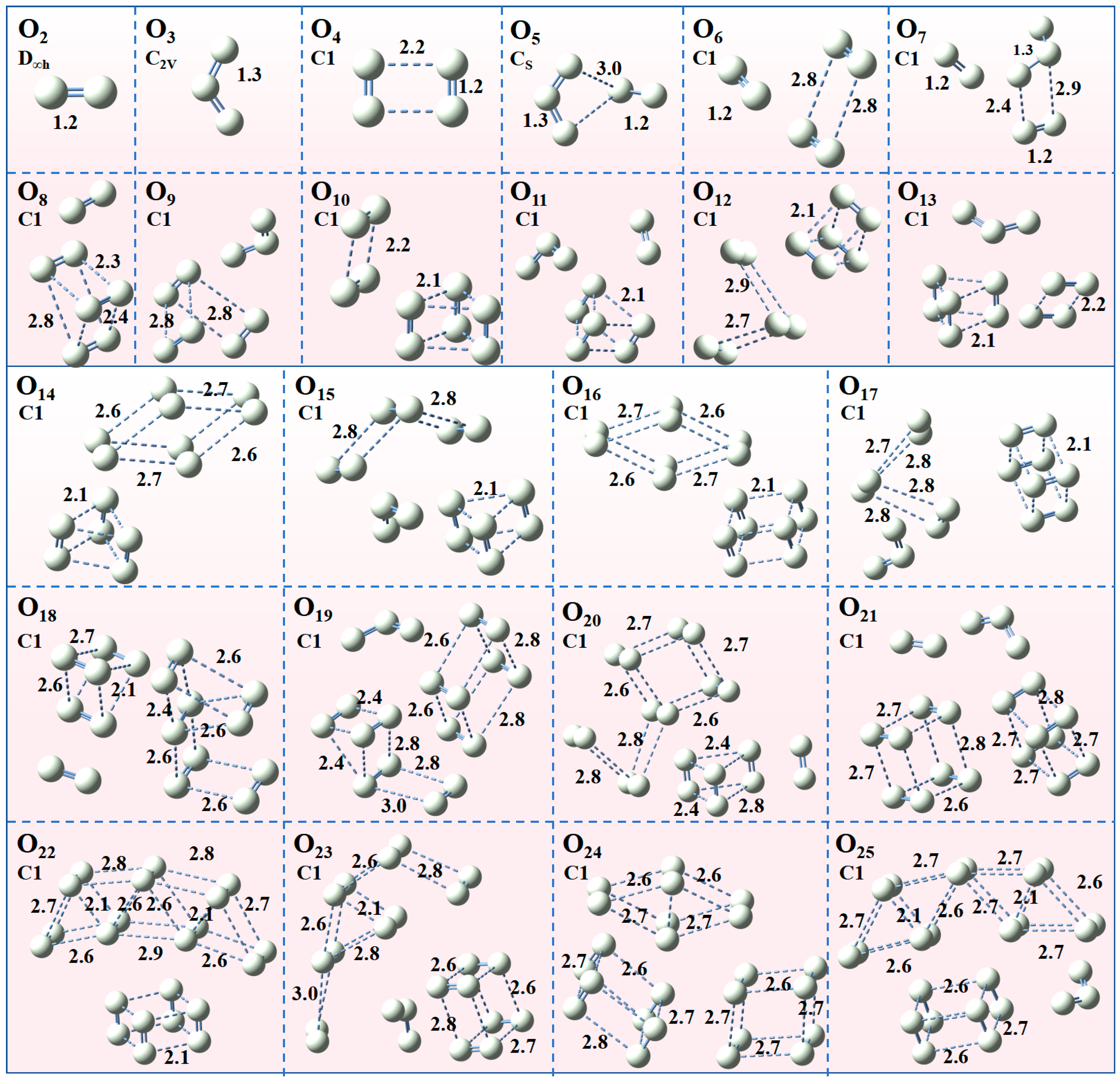
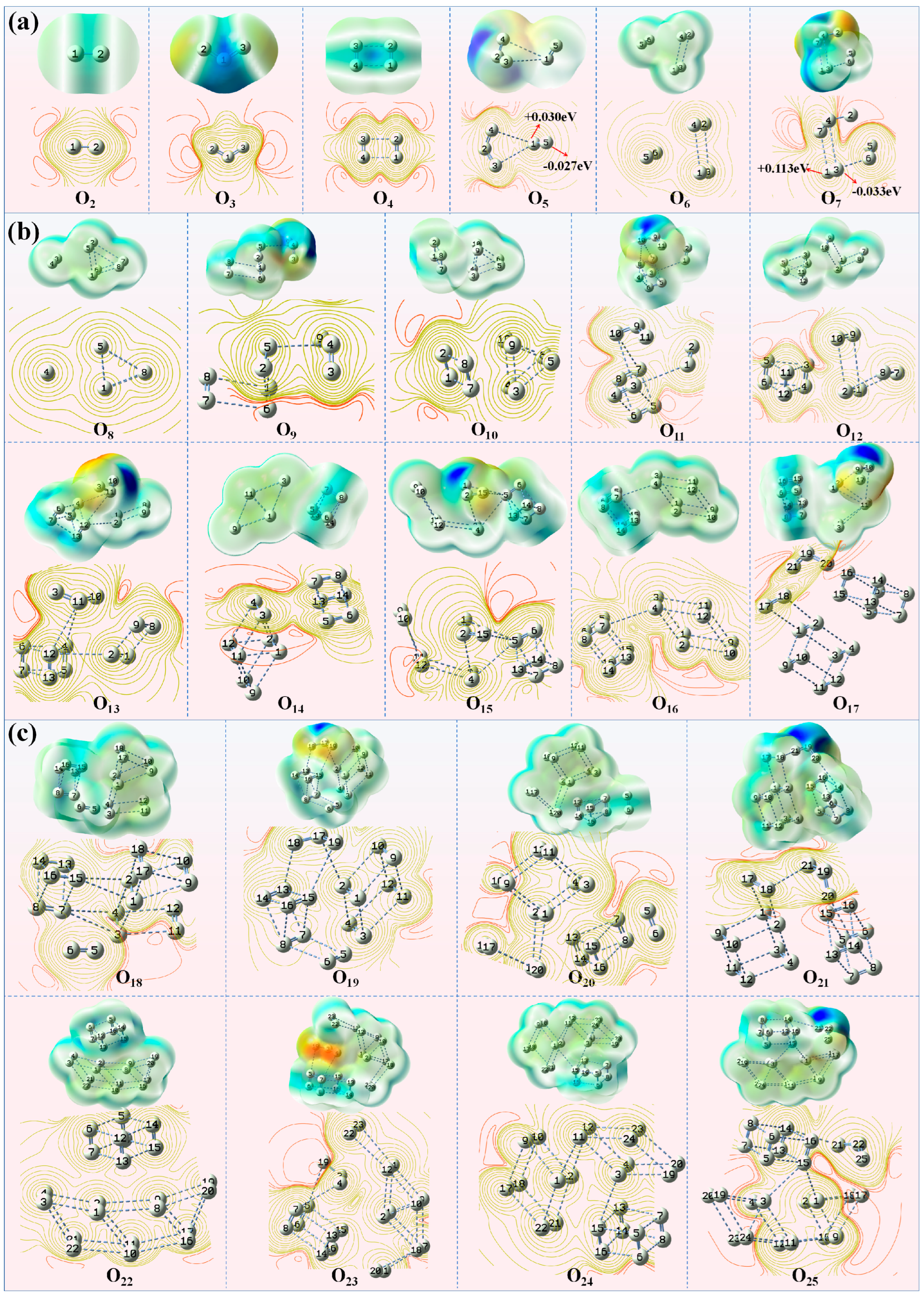
Figure 1 illustrates the ground-state structures of O
n (
n = 2–25) clusters, revealing their structural evolution patterns based on the assembly of fundamental subunits. Analytical results demonstrate that all clusters with even numbers are constituted by n/2 O
2 subunits, whereas clusters with odd numbers comprise a single O
3 subunit in conjunction with several O
2 subunits. In smaller clusters (
n = 2–5), the structures preserve a degree of symmetry. Conversely, for clusters with
n ≥ 6, the symmetry is diminished, resulting in all clusters belonging to the C1 point group. The O-O bond lengths in small clusters (O
2, O
3), measuring 1.21 Å and 1.30 Å respectively, characterize their stable covalent bonding characteristics. For
n ≥ 4, the cluster structures transform into aggregates of O
2 and O
3 subunits through weak interactions. Specifically, O
4 and O
5 are constituted by (O
2)
2 and O
2·O
3 respectively. The inter-subunit distances increase from 2.2 Å to 3.04 Å, indicating a reduction in interaction strength. For larger clusters with
n > 5, their structures are formed through the cooperative assembly of various smaller subunits (e.g., O
2, O
3, O
4, O
6, O
8). The O
6 cluster consists of three O
2 subunits, with a distance of 2.8 Å between two O
2 subunits (equivalent to an O
4 subunit), slightly longer than the corresponding bond length within an independent O
4 cluster. Analysis of the dihedral angles presented in
Table S1 of Supplement S2 reveals that in isolated O
4 clusters, the characteristic dihedral angle approaches 180°, indicating a nearly ideal planar quadrilateral configuration with negligible torsional strain. However, when O
4 is embedded as a subunit in the O
6 cluster, its dihedral angle becomes 174.4°, showing a 5.6° distortion compared to the isolated O
4 cluster. Other critical dihedral angles within the O
6 cluster exhibit distortions approaching 10°, suggesting that the cluster exists in a relatively unstable high-energy state. The O
8 cluster is formed by the combination of O
2 and O
6 subunits, with a dihedral angle of 177.0° at the junction, indicating slight distortion. The configuration of the O
6 subunit exhibits notable differences compared to that of an isolated O
6 cluster. Specifically, in the isolated cluster, the O
2 subunits are positioned at greater intervals, whereas within the O
6 subunit, the separation between each pair of O
2 subunits is constrained to approximately 2.3–2.4 Å, accompanied by internal dihedral angles nearing 180°. The findings suggest that within the restricted environment of the O
8 cluster, the O
6 subunit displays intensified O-O interactions, resulting in markedly greater stability relative to the isolated O
6 cluster. Furthermore, in larger clusters ranging from O
10 to O
15, the presence of similarly robustly bound O
6 subunits is consistently evident. As the cluster size increases beyond
n = 15, discernible cube-like or rhombus-like O
8 subunits begin to emerge. In O
16 and O
17 clusters, the O
2 subunit spacing within the O
8 subunits shortens to 2.1 Å, with critical internal dihedral angles highly approaching 180° (≥179.6°). This strongly suggests that both cube-like and rhombus-like O
8 subunits can form highly stable configurations with minimal torsional strain in large clusters. However, upon reaching a size of
n ≥ 19, the O
2-O
2 bond lengths within the O
8 subunits predominantly elongate to a range of 2.6–2.8 Å, suggesting a decline in structural stability with the further increase in cluster size.
Notably, a newly emerging O14 subunit was observed in larger clusters such as O22 and O25. The O22 cluster consists of O14 and O8 subunits, while the O25 cluster further incorporates an O3 subunit, forming an O14-O8-O3 combination. The O-O distance within the O14 subunit of the O25 cluster increases relative to that in O22, which indicates that the incorporation of an O3 unit reduces the structural compactness of adjacent even-atom subunits. Similarly, in the O23 cluster (comprising O12-O8-O3), the O-O bond on the O3-adjacent side of the O12 subunit elongates to 3.0 Å, significantly longer than typical values. This pronounced elongation suggests a region of marked instability that may function as an active site for cluster dissociation.
The structural analysis identifies distinct patterns in interatomic distances within the cluster. Specifically, the oxygen-oxygen bonds within O
2 or O
3 molecules exhibit short covalent bond lengths of approximately 1.2 to 1.3 Å, as shown by the solid line in
Figure 1. The distances between O
2 molecules within the subunit vary from 2.1 to 3.04 Å as indicated by the dashed line in
Figure 1, which are smaller than the combined van der Waals radii (3.04 Å). In contrast, the distances between subunits are observed to be greater than 3.04 Å (unlabeled in the figure for clarity). This clearly reflects the synergistic interaction between strong covalent bonds within subunits and weaker electrostatic or van der Waals forces between subunits. Furthermore, the emergence and distribution of characteristic subunit structures within oxygen clusters exhibit pronounced size dependence: O
4 subunits predominantly exist in small clusters with
n < 10; O
6 subunits are common in medium-sized clusters with
n = 8–20, while O
8 subunits consistently remain stable within large clusters with
n ≥ 14. When O
6 or O
8 subunits are embedded within larger clusters as structural units, their stability significantly surpasses that of their independent cluster states. In contrast, other subunits unable to form such stable O
6 or O
8 configurations generally exhibit structural relaxation features such as increased bond lengths and distorted dihedral angles. The variation in structural stability observed at the subunit level constitutes a fundamental structural factor underlying the pronounced disparities in the overall stability of oxygen clusters of varying sizes.
3.2. Energetic Stability in the Clusters
The thermodynamic stability of atomic or molecular clusters can be quantitatively assessed through parameters such as the average binding energy (Eb) and the second-order differential energy (Δ2E). Furthermore, their electronic structural stability is closely related to the HOMO-LUMO gap (ΔEH-L) and the dipole moment.
For oxygen atom clusters, the average binding energy and second-order differential energy can be calculated using the following equations [
40,
41]:
where E(O): Energy of a single oxygen atom; E(O
n): Total energy of a cluster composed of
n oxygen atoms;
n: Number of atoms in the cluster; E(O
n+1) and E(O
n−1) are the energies of the adjacent clusters, respectively.
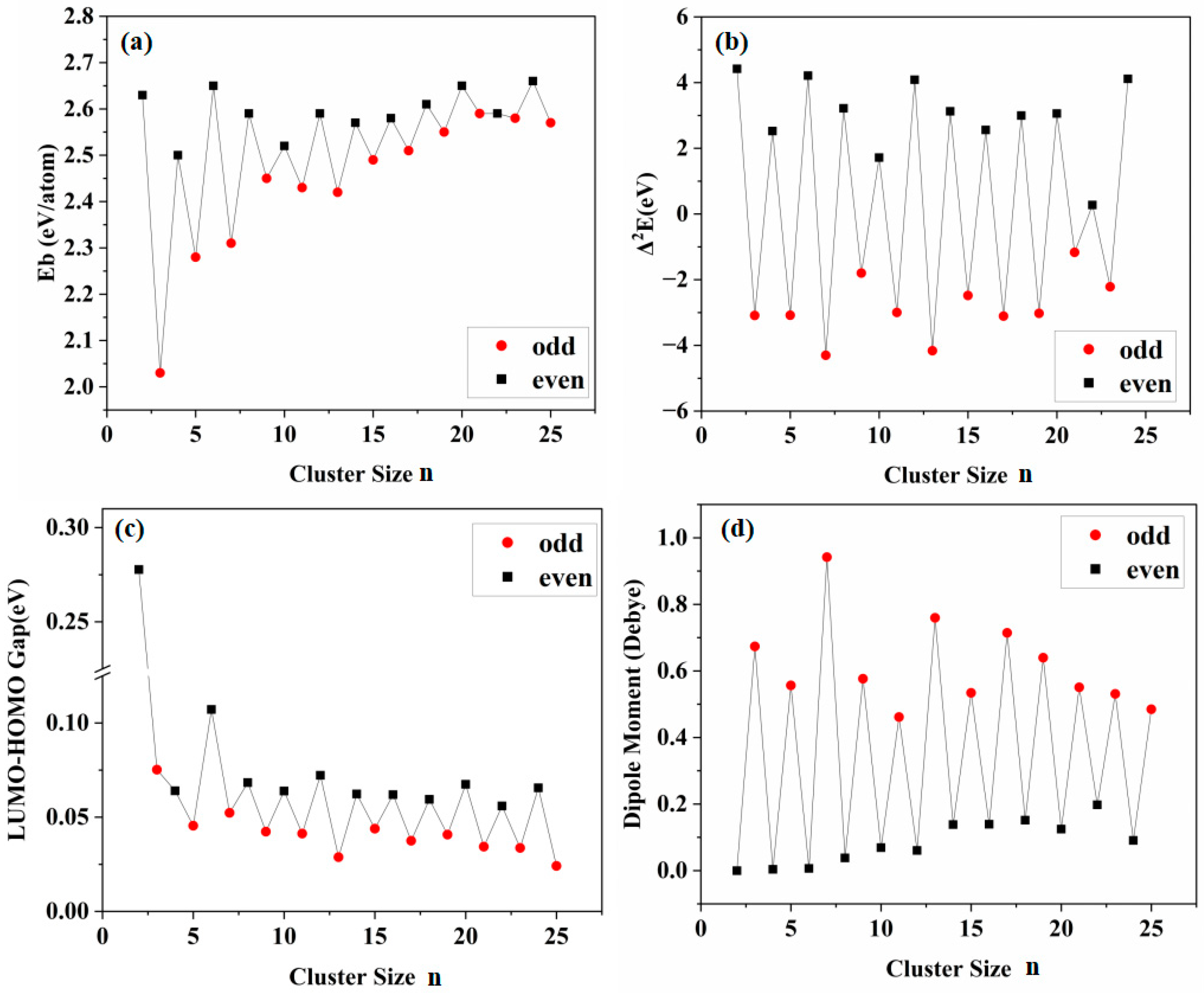
Figure 2a shows the variation in the average binding energy (E
b) of O
n (
n = 2–25) clusters with increasing cluster size. The analysis reveals a pronounced odd–even oscillation in the binding energy E
b with respect to cluster size: The binding energy (E
b) values of clusters with even numbers of atoms are typically greater than those of their neighboring odd-atom clusters, suggesting that even-atom clusters exhibit increased thermodynamic stability. Further analysis reveals size-dependent variations in the binding energies of clusters with odd and even numbers of atoms. The binding energies of clusters with even numbers of atoms display minor fluctuations within a limited range, with variations not exceeding 0.15 eV per atom, indicating that their stability is largely independent of cluster size. Conversely, the binding energies of clusters containing an odd number of atoms demonstrate a marked positive correlation with size. This trend is especially evident in the size range of
n = 3 to 9, where binding energies increase rapidly, subsequently followed by a more gradual reduction in the rate of growth. The maximum energy difference reaches 0.56 eV/atom, demonstrating that larger odd-atom clusters possess significantly enhanced thermodynamic stability compared to their smaller counterparts. This phenomenon not only confirms the inherent size dependence of odd-atom clusters but also validates the results from ground-state structural analysis: high-stability subunits such as O
6 and O
8 provide crucial structural frameworks for larger clusters (
n > 8), which fundamentally contribute to their overall stability enhancement. Additionally, the binding energy of O
3 represents the lowest value among all clusters and is significantly lower than that of O
2. This computational result aligns remarkably well with established experimental observations: ozone (O
3) spontaneously undergoes disproportionation to form oxygen (O
2) under ambient conditions, whereas the conversion of O
2 to ozone requires external energy input (e.g., through electrical discharge), thereby energetically confirming the thermodynamic instability of O
3.
As shown in
Figure 2b, the second-order energy difference (Δ
2E) serves as a crucial indicator for characterizing size-dependent cluster stability: when Δ
2E > 0, it indicates that the cluster of that particular size exhibits higher stability compared to its neighboring sizes, whereas Δ
2E < 0 suggests lower stability. The analysis demonstrates that Δ
2E exhibits significant odd–even oscillatory behavior with respect to cluster size
n: all even-atom clusters display positive Δ
2E values, while odd-atom clusters consistently show negative Δ
2E values. This pattern clearly demonstrates that even-atom oxygen clusters possess superior thermodynamic stability compared to their odd-atom counterparts.
The HOMO-LUMO energy gap serves as a key parameter characterizing the stability of a system’s electronic structure and its chemical inertness. As shown in
Figure 2c, O
2 exhibits the largest energy gap, indicating the highest kinetic stability and chemical inertness. This aligns with oxygen’s most stable natural existence as a diatomic molecule. The evolution of the energy gap with cluster size exhibits highly correlated even–odd oscillations with thermodynamic parameters (E
b, Δ
2E): the energy gap of even-atom clusters show a systematic positive shift, averaging approximately 0.025 eV higher than odd-atom clusters. This further confirms, at the electronic structure level, that even-sized clusters possess higher chemical stability. Conversely, odd-atom clusters not only exhibit lower HOMO-LUMO gaps but also show a decreasing trend with increasing size (especially beyond
n > 19), indicating that larger odd clusters possess less stable electronic structures and higher chemical reactivity.
Dipole moment results, as a key indicator of charge distribution symmetry, further corroborate the parity difference in cluster stability: all even clusters (especially O2, O4, O6, O8) exhibit dipole moments approaching zero, confirming their symmetric charge distribution—the very electronic foundation of even clusters’ high stability. Conversely, the significantly increased dipole moments of odd-atom clusters indicate asymmetric charge distribution and deviation from the positive and negative charge centers. At the electronic structure level, this is intrinsically linked to their lower thermodynamic stability.
Based on a comprehensive analysis of binding energy, second-order difference energy, HOMO-LUMO gap, and dipole moment, both O6 and O8 are identified as highly stable fundamental structural units. This conclusion is highly consistent with the distribution pattern observed in oxygen clusters: when n ≥ 10 and n ≥ 14, the structurally highly stable O6 and O8 subunits begin to exert their dominance, emerging as the defining features of the large-sized clusters. Furthermore, the overall stability of the On clusters does not vary monotonically with cluster size but is primarily governed by the parity (even/odd nature) of the number of oxygen atoms, demonstrating significant oscillatory behavior. Even-atom oxygen clusters exhibit superior thermodynamic stability and chemical inerticity from both thermodynamic and electronic structure perspectives. In contrast, while the thermodynamic stability of odd-atom clusters increases with size, their chemically activity, which is governed by electronic structure, decreases. This pattern indicates that as the size increases, the influences of geometric structure and electronic structure on the stability of odd-atom clusters engage in a competitive trade-off relationship, leading to a fundamental shift in the underlying stability mechanism.
3.3. Electrostatic Potential and Orbital Analysis
Based on the aforementioned analysis of binding energy, second-order difference energy, HOMO-LUMO gap, and dipole moment, it is collectively demonstrated that the stability of On clusters is closely related to their electronic structure and charge distribution. To intuitively reveal the underlying microscopic mechanisms, the Electrostatic Potential (ESP) and Frontier Molecular Orbitals (FMO) of the oxygen clusters will be subjected to visual analysis and discussion.
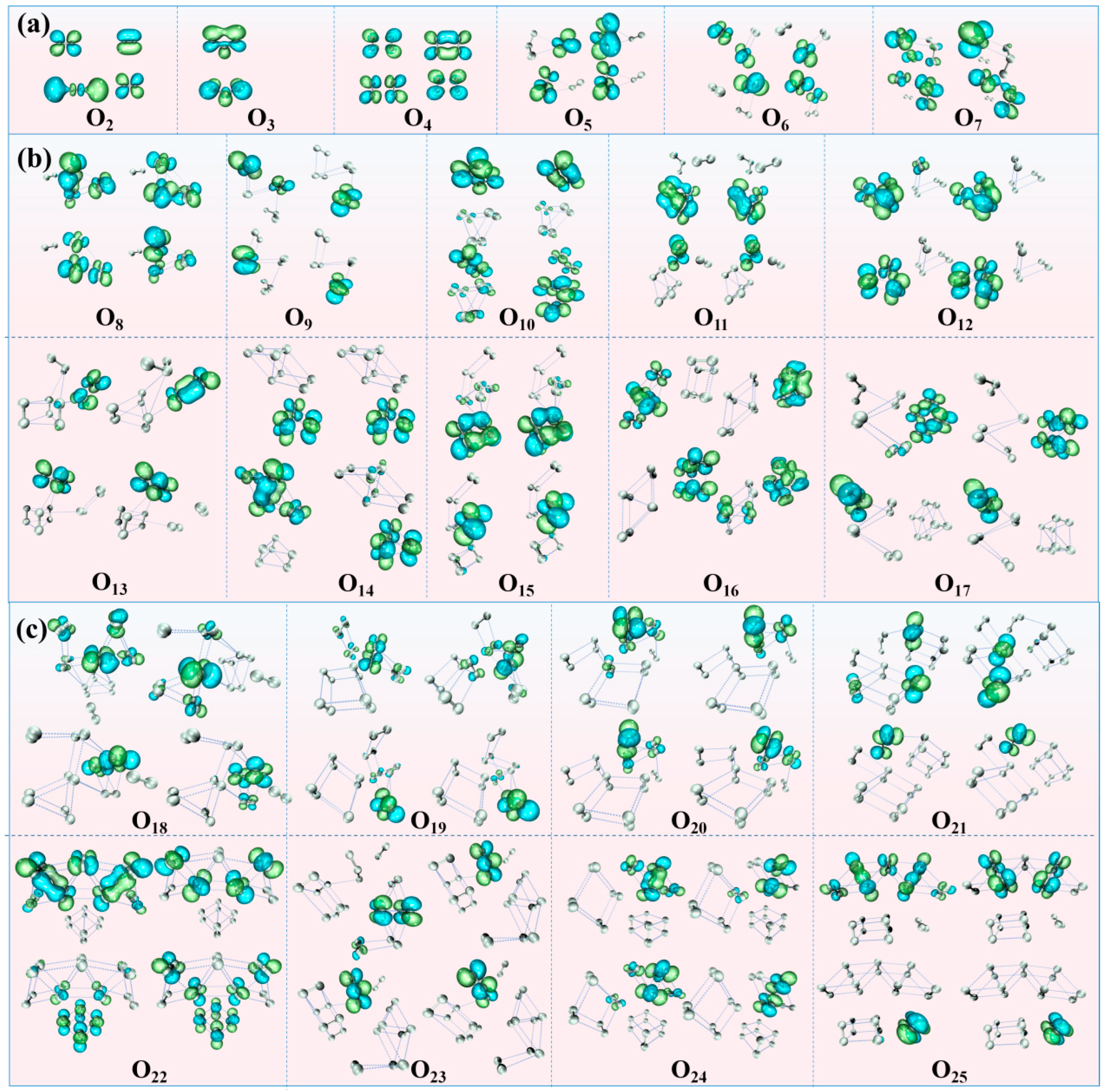
Figure 3a and
Figure 4a illustrate the electrostatic potential distribution and frontier orbital diagrams for the smallest clusters in the series (
n = 2–7). From an orbital perspective, the dense and continuous electron cloud bridges spanning oxygen atoms in O
2 and O
3 molecules indicate significant electron conjugation effects. The β-HOMO electron cloud of O
4 spans four oxygen atoms, demonstrating effective electron cloud overlap and charge transfer between two O
2 subunits. However, both α-LUMO and β-LUMO are localized within a single O
2 subunit, indicating that while O
4 exhibits electron delocalization and conjugation characteristics, its overall conjugation effect is weaker than that of O
2 and O
3. In the O
6 cluster, the HOMO and LUMO are located on different O
2 subunits without overlap, exhibiting certain chemical inertness. Analysis of the ESP diagrams of even-atom oxygen clusters reveals that both O
2 and O
4 display highly symmetric and uniform global electrostatic potential distributions, with no significant localized potential extrema on the surface. In the ground-state structure of the O
6 cluster, O
2 and O
4 subunits are combined through weak electrostatic interactions at distances of 3.3–3.4 Å, maintaining a uniform electrostatic potential characteristic without distinct positive or negative charge centers. These electronic structural features, combined with the aforementioned thermodynamic stability analysis, corroborate the higher intrinsic stability of small even-atom clusters.
In contrast to even-atom clusters, odd-atom clusters exhibit significant positive and negative charge centers (orange-red regions represent negative charge, deep blue represents positive charge), with both centers located within the O
3 subunit region. The V-shaped configuration of the O
3 molecule exhibits a degree of symmetry, characterized by a positively charged central oxygen atom and negatively charged terminal oxygen atoms. The negative charge center lies along the line connecting the terminal oxygen atoms, while the positive and negative charge centers do not coincide, resulting in a large permanent dipole. This constitutes key electronic structural evidence for the odd–even oscillation effect in cluster dipole moments (as shown in
Figure 2d dipole moment trend). The diagram of frontier molecular orbitals reveals that the HOMO and LUMO of O
3 are degenerate, indicating its dual functionality as both a nucleophilic and electrophilic site, which accounts for its high reactivity. Coupled with its separated positive and negative charge centers and dipole, O
3 exerts significant electronic polarization and induction effects on other oxygen atoms in odd-atom oxygen clusters. The frontier molecular orbitals diagram of O
5 shows that the O
3 subunit remains the electrophilic and nucleophilic center of the entire cluster. Due to the inductive effect of O
3, strong electrostatic interactions occur between O
3 and O
2 subunits, resulting in uneven charge distribution on O
2 (+0.030, −0.027) which is indicated by the red arrows in
Figure 3a for O
5. Similarly, O
7 also displays distinct positive and negative charge centers, with the induction effect of O
3 causing more uneven charges distribution on the O
2 subunit (+0.113, −0.033) shown by arrows in
Figure 3a for O
7. The frontier molecular orbitals diagram demonstrates that the O
3 subunit polarizes the O
2 subunit, inducing degeneracy in its HOMO and LUMO and thereby reducing the energy gap, which significantly enhances the local reactivity. Thermodynamically, this active site facilitates cluster growth by incorporating new oxygen atoms, serving as an effective relaxation pathway to reduce the overall system energy and achieve stability.
Figure 3b and
Figure 4b depict the electrostatic potential distributions and frontier orbitals for the intermediate-sized clusters (
n = 8–17). Overall, the pattern of even–odd distribution differences aligns with that of small clusters (
n = 2–7): even-atom clusters exhibit uniform electrostatic potential distributions, while odd-atom clusters still feature distinct positive and negative charge centers (deep blue and orange-red) located in the O
3 subunits. Electrostatic potential interactions exist between all subunits, with particularly pronounced effects between O
3 and other subunits. This further confirms the presence of weak interactions within the clusters, enabling oxygen atoms to form larger cluster structures.
Analysis of the frontier orbital distributions reveals partial overlap of the electron clouds on the O6 and O8 subunits in both odd and even clusters. This observation suggests a certain extent of electron delocalization within these subunits, implying that the O6 and O8 units inherently exhibit stability. Consequently, this intrinsic stability contributes to the enhanced overall stability of the larger cluster. In cluster O9, both the β-HOMO and LUMO are localized on the O3 subunit. A consistent localization pattern is observed for the α/β-LUMO in clusters O11, O13, O15, and O17. This persistent occupation of low-energy, unoccupied orbital space designates the O3 subunit as a strong electron acceptor with pronounced electron-withdrawing character. Consequently, it exerts a strong inductive effect on the electrons of neighboring O atoms, consistent with the electrostatic potential results showing significant electrostatic interactions between O3 and other subunits. For instance, cluster O17 comprises three subunits: O3, O6, and O8. O8 exhibits pronounced internal conjugation effects and is less influenced by O3. Conversely, O6, being closer to O3, experiences stronger induced dipole effects. Consequently, the bond distances between oxygen atoms of 1 and 3 (O1-O3) and atoms of 2 and 4 (O2-O4) within the O6 subunit elongate, reducing its stability.
Figure 3c and
Figure 4c display the electrostatic potential distribution and frontier orbital diagrams for the largest clusters (
n = 18–25). As oxygen clusters grow in size, both the dimensions and number of their constituent subunits increase. While weak electrostatic interactions remain the dominant inter-subunit force, the internal bonding within odd-atom clusters becomes weakened due to reduced electron overlap. This leads to the formation of loosely bound internal configurations, such as O
6 + O
2, O
8 + O
2, and O
8 + O
2 + O
2. The large odd cluster O
19 is composed of two O
8 subunits and one O
3 subunit. Notably, one O
8 subunit is not a cuboid-like dense structure but instead forms an O
6 + O
2 structure. The HOMO and LUMO orbitals are localized precisely on this loose O
6 + O
2 structure and the O
3 subunit, indicating that the induced effect from O
3 reduces the local stability of the O
8 subunit, thereby increasing the atomic activity within that subunit. The electrostatic potential analysis of O
19 reveals that the O
3 subunit, owing to its pronounced electron-withdrawing capacity, engages in substantial electrostatic interactions with the adjacent O13 atom. This interaction consequently attenuates the O-O bonds within the O
8 subunit, thereby enhancing its reactivity. The O
25 cluster consists of O
14, O
8, and O
3 subunits. The LUMO orbitals are localized on the O
3 subunit and the oxygen atoms in the O
14 subunit adjacent to O
3, while the HOMO orbitals are localized on the O
14 subunit. The O
14 subunit forms a network-like structure, with local electron delocalization occurring among the central oxygen atoms. This causes the edge oxygen atoms near O
3, specifically O17 and O18, to be more susceptible to induction by the external O
3 subunit. Therefore, the two oxygen atoms near O
3 exhibit relatively higher activity and are prone to chemical reactions. Electrostatic potential analysis also shows that the O
3 subunit in the O
25 cluster, due to its strong electron-withdrawing ability, has significant electrostatic interaction with the nearby O18 atom.
A comprehensive analysis of the electrostatic potential distribution and frontier orbitals indicates that even-atom clusters exhibit stronger stability due to symmetrical structure and electron distribution. In contrast, odd-atom oxygen clusters experience internal electron density redistribution caused by the strong induction effect of the O3 subunit. When the cluster is small, the induction effect of O3 strongly polarizes the smaller subunits, making small clusters more inclined to capture external O2 molecules through electrostatic interactions, thus promoting cluster growth. As the cluster size increases, the size and number of internal subunits also increase, dispersing the induction effect of a single O3 subunit across multiple larger subunits. This leads to a reduction in the overall polarization strength on any single subunit. This “dilution” of the effect localizes the induction, thereby weakening a specific chemical bond and making dissociation (such as the dissociation of an oxygen radical) a more favorable reaction pathway than growth.
3.4. Molecular Dynamics Simulation of a Pure Oxygen System
Comprehensive analysis of the previous results indicates that the stability of oxygen clusters exhibits a pronounced odd–even oscillation trend as the number of oxygen atoms increases. The stability of odd-atom clusters is more closely related to their geometric and electronic structures, with the stability of larger odd-atom clusters diminishing. To further elucidate the growth kinetics mechanism of large-sized oxygen clusters, molecular dynamics simulations of a pure oxygen system were conducted at high temperature (1573 K) under different pressure conditions (3 atm and 6 atm). In our analysis, a cluster is counted if connectivity persists for ≥2 ps.
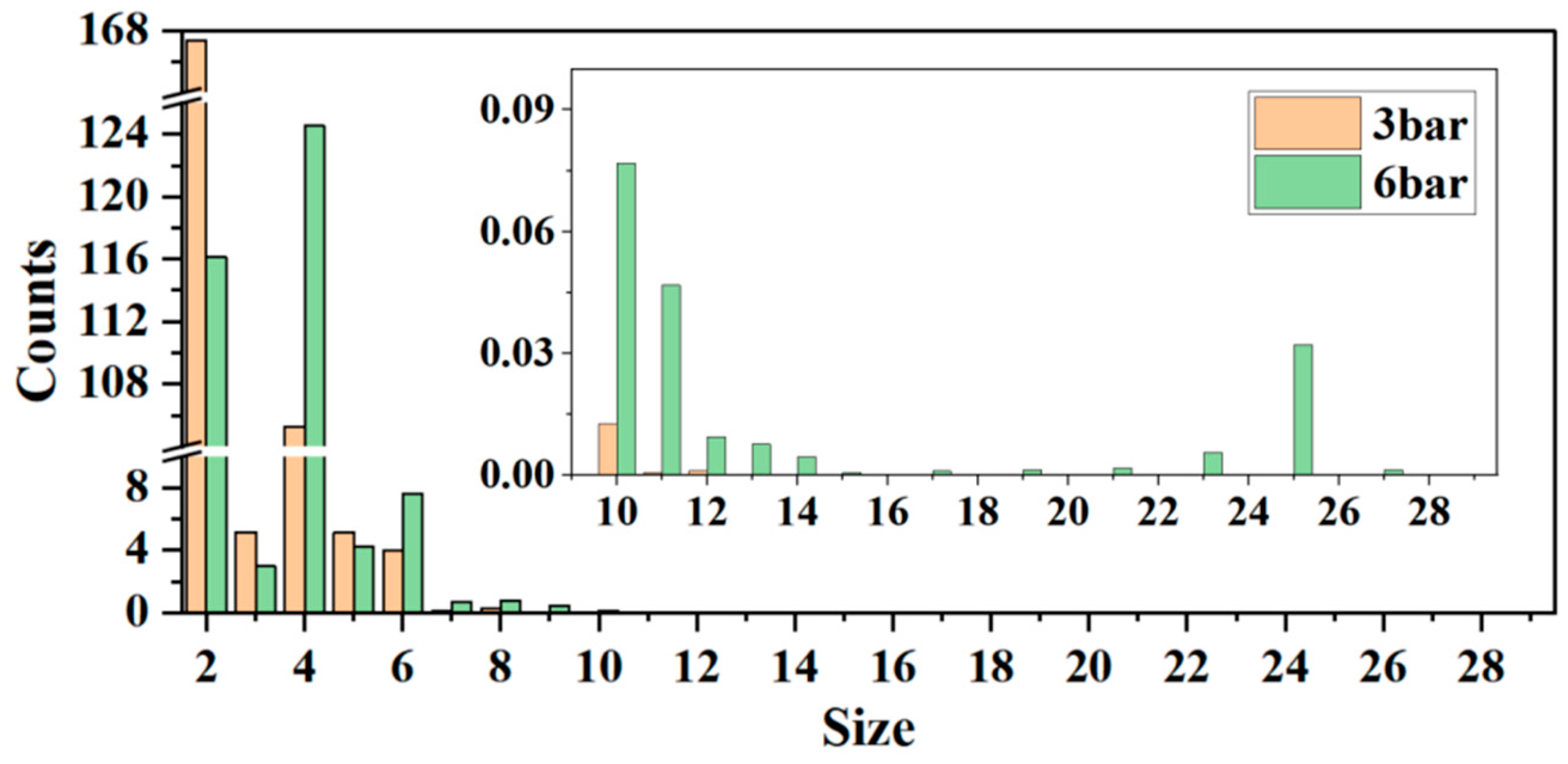
Figure 5 compares the oxygen cluster population results at different sizes simulated under varying pressures in a pure oxygen system, revealing a clear trend: As the pressure increases from 3 atm to 6 atm, the maximum cluster size observed during the simulation period expands from O
13 to O
31. Concurrently, the population of clusters in the O
4 and O
6–O
14 size ranges increases, while the number of O
2 clusters decreases relatively. This change reveals the promotional effect of increased pressure on cluster nucleation and growth kinetics: Higher pressure increases the number density of O
2 monomers and the effective collision frequency between molecules, significantly accelerating a series of elementary reaction rates—from initial nucleation (e.g., O
2 + O
2 → O
4) to subsequent monomer-addition growth (e.g., O
n + O
2 → O
n+2). This leads to a reduction in O
2 monomer numbers and an increase in large cluster numbers within the same time.
At pressures of 3 atm and 6 atm, the populations of O2 and O4 clusters are significantly greater than those of other sizes, indicating their superior kinetic stability. The average numbers of O3, O5, and O6 clusters are comparatively lower, each remaining under 10. Conversely, clusters larger than O10 exhibit a sharp decline, with average numbers below 0.1 during the simulation period, suggesting strong suppression of growth for large clusters. Within the interval spanning O2 to O6, even-atom oxygen clusters (O2, O4, O6) generally exhibited higher populations than adjacent odd-atom clusters (O3, O5), indicating thermodynamic and kinetic advantages for even clusters. This finding strongly aligns with the pronounced “odd–even oscillation” effect observed in stability analysis. However, this effect gradually diminishes with increasing cluster size, diverging from earlier structural analysis and thermodynamic calculations. This suggests that over larger size ranges, kinetic factors exert a significant influence and predominantly govern the behavior of cluster distribution, as the formation of larger clusters necessitates surmounting greater free energy barriers. The formation of large clusters relies on greater energy and more complex structural rearrangements, the likelihood of which diminishes substantially as cluster size increases. Therefore, from a kinetic standpoint, the formation of large clusters is markedly disfavored.
Analysis of the size distribution of clusters under 6 atm revealed a non-monotonic variation within the O10–O28 range: the population gradually decreased in the O10–O15 range, consistent with conventional nucleation kinetics; however, within the O15–O25 range, the population rebounded, reaching a local maximum at O25 before declining rapidly. This anomalous distribution is closely related to the structural evolution and stability of the clusters. Clusters comprising between 10 and 15 oxygen atoms predominantly include less stable O4 subunits. In contrast, as the cluster size expands to the range of 15 to 25 oxygen atoms, the clusters are mainly constituted by more stable subunits, specifically O6 and O8. Furthermore, the inductive effect of O3 is distributed among multiple subunits, which enhances the stability of the clusters. Consequently, the incidence of large clusters observed in the molecular dynamics simulations increases. The rapid decline after the O25 peak suggests a structural transition (e.g., release of radicals), reflecting a strong correlation between the stability of the constituent subunits and the structural evolution of the clusters.
To elucidate the microscopic mechanisms underlying these size distribution characteristics, this study further focuses on the kinetic evolution pathways from small clusters to larger ones. Under 6 atm, the system not only forms larger clusters (e.g., O31) but also exhibits structural transformation events triggered by the dissociation of large clusters, providing richer kinetic information for analyzing cluster formation and stability. Consequently, the following analysis will predominantly utilize the simulation trajectories obtained at 6 atm to perform a comprehensive investigation of the microscopic evolution mechanisms.
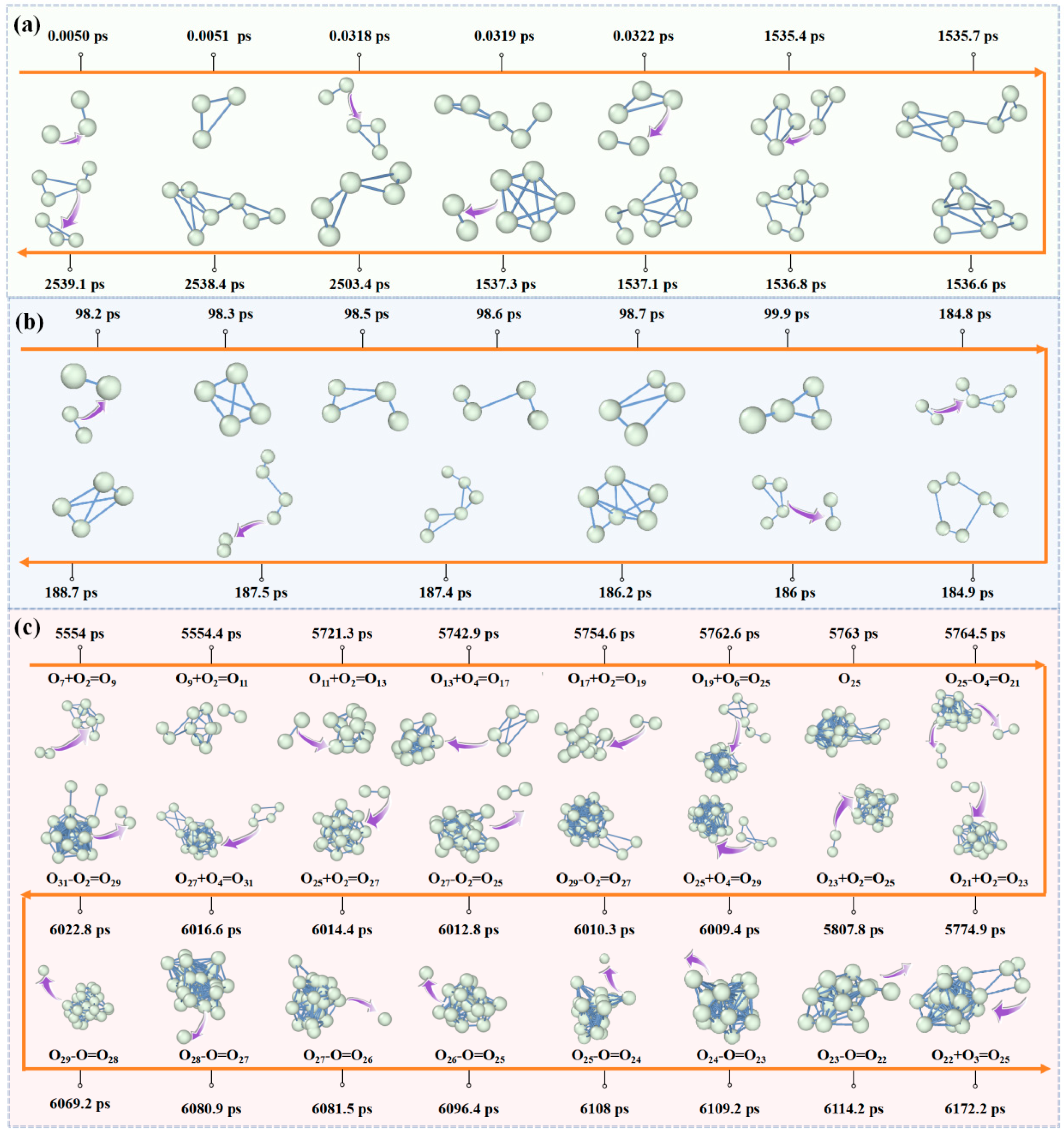
Figure 6a illustrates the evolutionary process, demonstrating that in a pure oxygen system, the formation of O
3 initiates from the combination reaction between O
2 molecules and initially introduced oxygen radicals (O∙). The generated O
3 tends to further interact with O
2 molecules during subsequent motion, forming chain-like O
5 clusters. However, due to their low stability, these chain-like O
5 clusters often rapidly dissociate, regenerating O
2 and O
3, thereby facilitating oxygen atom exchange. Kinetic simulation trajectories indicate that O
3 can also directly combine with O
4 to form O
7 clusters, whose structures exhibit dynamic structural characteristics. At 1536.8 ps in the kinetic simulation, a cyclic O
5 structure is observed to combine with O
2; as vibrations continue, their interaction gradually weakens, and they dissociate at 1537.3 ps, regenerating cyclic O
5 and O
2. Compared to chain-like O
5, cyclic O
5 exhibits higher kinetic stability due to electron delocalization effects, resulting in a longer residence time in the system (approximately 2 ns). After 2503.4 ps in the kinetic simulation, the cyclic O
5 undergoes ring-opening transformation, forming a chain-like configuration and combining with O
2 to generate O
7, which subsequently rapidly dissociates into O
4 and O
3.
During the evolution of oxygen clusters (
Figure 6b), O
4 not only engages in reversible combination-dissociation behavior with O
3 but also interacts with O
2. The O
2-O
4-O
6 evolutionary pathway reveals a collision-driven reversible reaction mechanism. Initially, two O
2 molecules combine through collision to form an O
4 cluster. This O
4 cluster can further collide with free O
2 molecules in the system, generating O
6 clusters via the reversible reaction O
4 + O
2 ⇌ O
6. However, O
6 clusters are metastable with extremely short lifetimes, rapidly dissociating into O
2 and O
4. Through continuous reversible combination and dissociation with O
2 molecules, O
4 clusters not only achieve dynamic equilibrium between O
4 and O
6 but also promote oxygen atom exchange among different clusters, providing microscopic pathways for oxygen atom migration.
Molecular dynamics trajectory analysis of larger oxygen cluster evolutionary pathways (
Figure 6c) indicates that their growth mechanism primarily relies on reversible adsorption and dissociation with smaller subunits (e.g., O
2, O
4, O
6). The initial O
9 cluster gradually increases in size through continuous reactions with such subunits. During the time interval from 5762.6 to 5764.5 ps, O
19 is observed to combine with O
6 to generate O
25, which rapidly dissociates, releasing two O
2 molecules and forming an O
21 cluster. This phenomenon suggests that, compared to larger subunits (e.g., O
6), the combination of smaller subunits (e.g., O
2) with clusters is kinetically more favorable.
As the size continues to increase, the cluster structure begins to undergo significant changes. At 6016.6 ps, O27 combines with O4 to form O31, which dissociates after 6.2 ps, releasing one O2 to become O29. At this point, the large odd-atom cluster O29 initiates O-O bond dissociation, releasing oxygen radicals and diminishing to O22 within 45 ps (at 6114.2 ps). The detection of radical release from the sizable odd-atom cluster O29 provides corroborative evidence supporting previous theoretical analyses: Structural analysis identifies relaxation features within the large cluster—including expanded interatomic distances both within and between subunits, as well as altered dihedral angles—providing a structural basis for its instability. The decrease in the HOMO-LUMO gap and the increased local atomic activity within large subunits (e.g., O8, O14), as revealed by electronic structure analysis, are the electronic structural origins of the enhanced reactivity. The release of free radicals is a necessary outcome of the kinetic instability caused by the aforementioned structural relaxation and increased local atomic activity. At 6172.2 ps, the cluster subsequently re-enters a phase of aggregated growth with small subunits such as O2. This entire process reveals a dynamic growth pattern for oxygen clusters: their size does not increase in a strictly monotonic manner; rather, it undergoes dynamic modulation through reversible interactions among subunits and internal induced dipole effect, which initiate bond cleavage and the release of oxygen radicals, thereby promoting atomic exchange. This “growth-dissociation” dynamic cycle demonstrates that oxygen cluster evolution is jointly governed by thermodynamic stability and kinetic activity: elevated kinetic activity enables atomic exchange and structural rearrangement, while thermodynamic stability ultimately guides the system toward forming more structurally stable cluster morphologies, establishing a dynamic equilibrium between these two processes.
3.5. MD Simulation of the Titanium Tetrachloride-Oxygen System
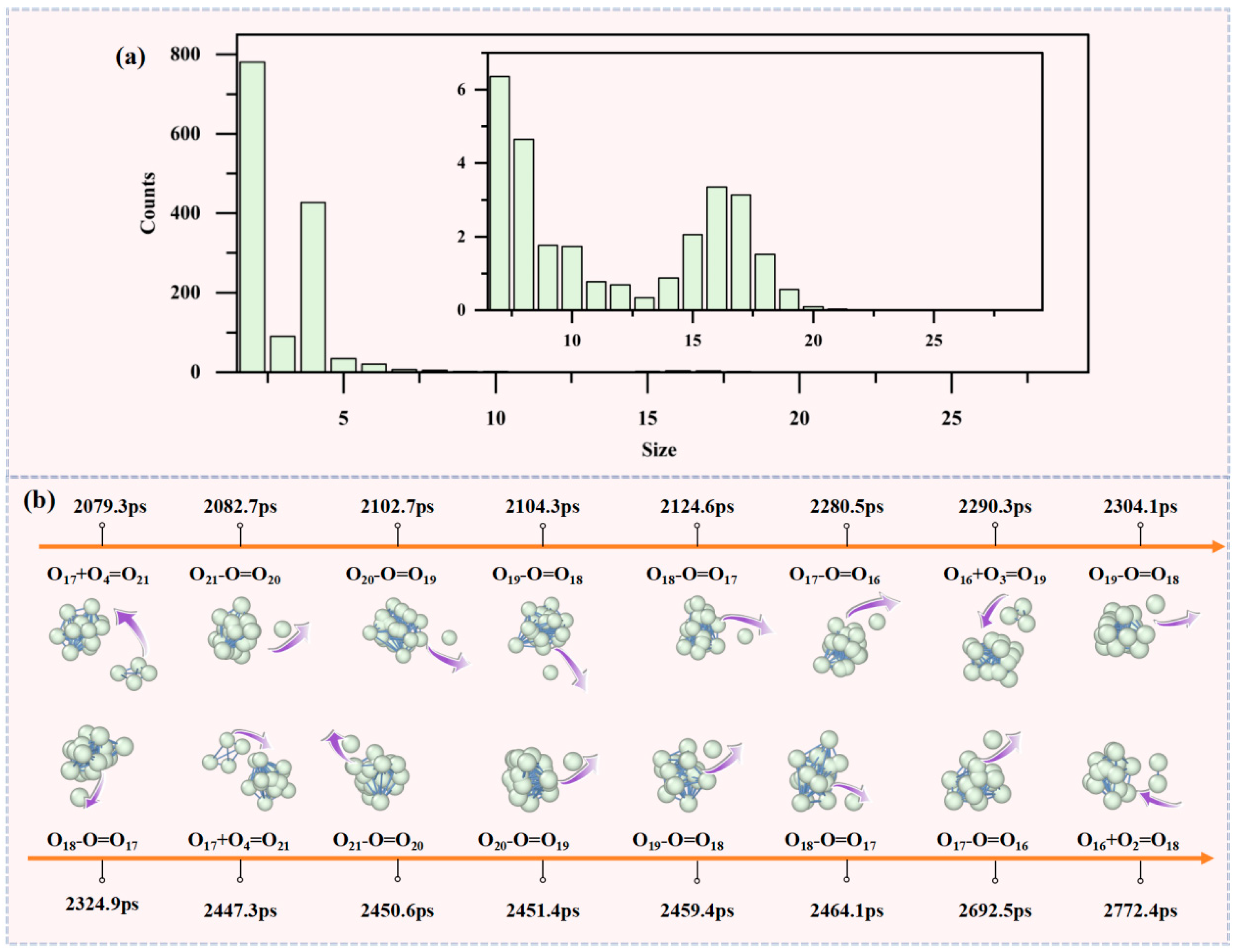
To investigate the formation of oxygen clusters and radical release mechanisms under realistic combustion conditions, molecular dynamics simulations were further conducted in the titanium tetrachloride oxidation system (temperature: 1573 K, pressure: 6 atm).
Figure 7a indicates the variation in the number of oxygen clusters with cluster size, demonstrating that O
2 and O
4 are the most abundant species, consistent with results from pure oxygen systems. This indicates that O
2 and O
4 possess optimal kinetic stability in both oxygen and oxygen-rich oxidation environments. As the cluster size
n increases further, the population of large clusters rapidly decreases; however, after
n > 13, the population rises again, forming a peak in the O
15–O
17 range, with O
16 exhibiting the highest population and greatest stability. When
n > 16, the number of clusters decreases again. Although the maximum cluster size extends to O
28, clusters in the O
22–O
28 range are very scarce. Larger clusters quickly enter metastable states and rapidly release free radicals. This evolutionary pattern is basically consistent with that in pure oxygen environments. The stability of oxygen clusters does not change monotonically with size but shows a clear nonlinear relationship. Stable O
6 and O
8 subunits also serve as characteristic structural units, enhancing the stability of large clusters larger than O
13. This further confirms that O
6 and O
8 subunits play a key stabilizing role in large clusters under complex reaction conditions.
Similar to the pure oxygen system,
Figure 7b shows the process of molecular dynamics simulations of the titanium tetrachloride oxidation system at 6 atm, revealing that oxygen clusters continue to grow through the dynamic association and dissociation of smaller O
n (
n = 2–6) clusters with existing clusters. Upon reaching O
21, the oxygen clusters commence a rapid and continuous liberation of free radicals. As the clusters reduce to O
16, they subsequently merge with smaller clusters, including O
2 and O
4, to facilitate further growth, entering a cycle of releasing free radicals (O∙) and merging with O
n clusters. As demonstrated in
Section 3.3, high pressure (6 atm) in the pure oxygen system drives rapid cluster growth up to O
29 before any radical release occurs. However, in the TiCl
4 oxidation system at the same pressure, radical release occurs at a smaller cluster size of O
21, indicating that TiCl
4 addition has a dual effect on oxygen cluster evolution. Firstly, the steric hindrance effect of TiCl
4 molecules in physical space impedes effective contact and collision between oxygen molecules (O
2) and existing oxygen clusters, thereby suppressing the formation of large clusters and shifting the maximum cluster size distribution towards smaller dimensions. More significantly, the chemical catalysis and energy supply role of TiCl
4 profoundly participates in the oxidation reaction, releasing substantial energy during the process. This high-density energy is preferentially absorbed by adjacent, unstable oxygen clusters, particularly those containing strongly inductive O
3 subunits in odd-atom clusters, significantly accelerating the desorption rate of free radicals (O·). This suggests that TiCl
4 may alter the pathway of free radical formation, shifting the system from a physical transformation pathway dependent on large clusters to a chemical pathway reliant on rapid free radical generation from smaller clusters, thereby enhancing the overall reactivity of the system. This observation underscores the critical role of kinetic factors in influencing free radical release.
In both the pure oxygen system and the high-temperature TiCl4 oxidation system, the evolution pathways of oxygen clusters and the process of radical release exhibit a high degree of consistency. This finding indicates that oxygen radicals are primarily generated through the intrinsic cluster evolution mechanism of oxygen molecules themselves, rather than necessitating direct participation of TiCl4 molecules. The role of TiCl4 appears to be more inclined towards modulating the thermodynamic equilibrium and kinetic rates of oxygen cluster formation, rather than constructing an entirely new reaction pathway. This oxygen cluster evolution mechanism, serving as a universal channel for radical generation, not only deepens the understanding of the titanium tetrachloride oxidation system but also provides a novel microscopic perspective and theoretical model for interpreting a broader range of catalytic oxidation and combustion phenomena.




 and
and