Activation Efficiency and Restoration Effects of SBS Network-Repairing Regenerators on Aged Asphalt



Highlights
- Regenerants containing epoxy groups can effectively restore the fractured polymer chains of SBS following thermal-oxidative aging.
- The high and low-temperature performance of the recycled asphalt has been improved following the restoration of the fractured SBS polymer chains during aging.
- This regenerant is capable of restoring the viscoelastic properties of aged asphalt.
- Compared with commercially available regenerants, this regenerant exhibits a superior penetration effect.
- The recoverable aging of the SBS network structure indicates that the reclaimed asphalt pavement (RAP) from SBS-modified asphalt pavements can be reused in the original pavement or in high-performance layers requiring SBS-modified asphalt, without necessitating downgraded application.
- Improved permeability enables a greater quantity of regenerant to penetrate into aged SBS-modified asphalt during actual construction, thereby facilitating more extensive restoration of the degraded SBS modifier and significantly enhancing the performance of the recycled asphalt.
Abstract
1. Introduction
2. Materials and Methods
2.1. Materials
2.1.1. Preparation of the Aged SBS-Modified Asphalt Samples
2.1.2. Regenerants
2.1.3. Preparation of the Recycled SBS-Modified Asphalt Samples
2.2. Measurement and Characterization
2.2.1. Basic Physical Properties Test
2.2.2. Temperature Sweep Test
2.2.3. Frequency Sweep Test
2.2.4. MSCR Test
2.2.5. BBR Test
2.2.6. FTIR Test
2.2.7. GPC Test
2.2.8. Fluorescence Microscope Test
2.2.9. Permeability Evaluation Test
3. Results and Discussion
3.1. Study on Regeneration Mechanism of Reactive Regenerant
3.1.1. Fluorescence Images
3.1.2. FTIR
3.1.3. GPC Analysis
3.2. Basic Properties
3.3. High Temperature Rheological Properties
3.3.1. Complex Modulus and Phase Angle
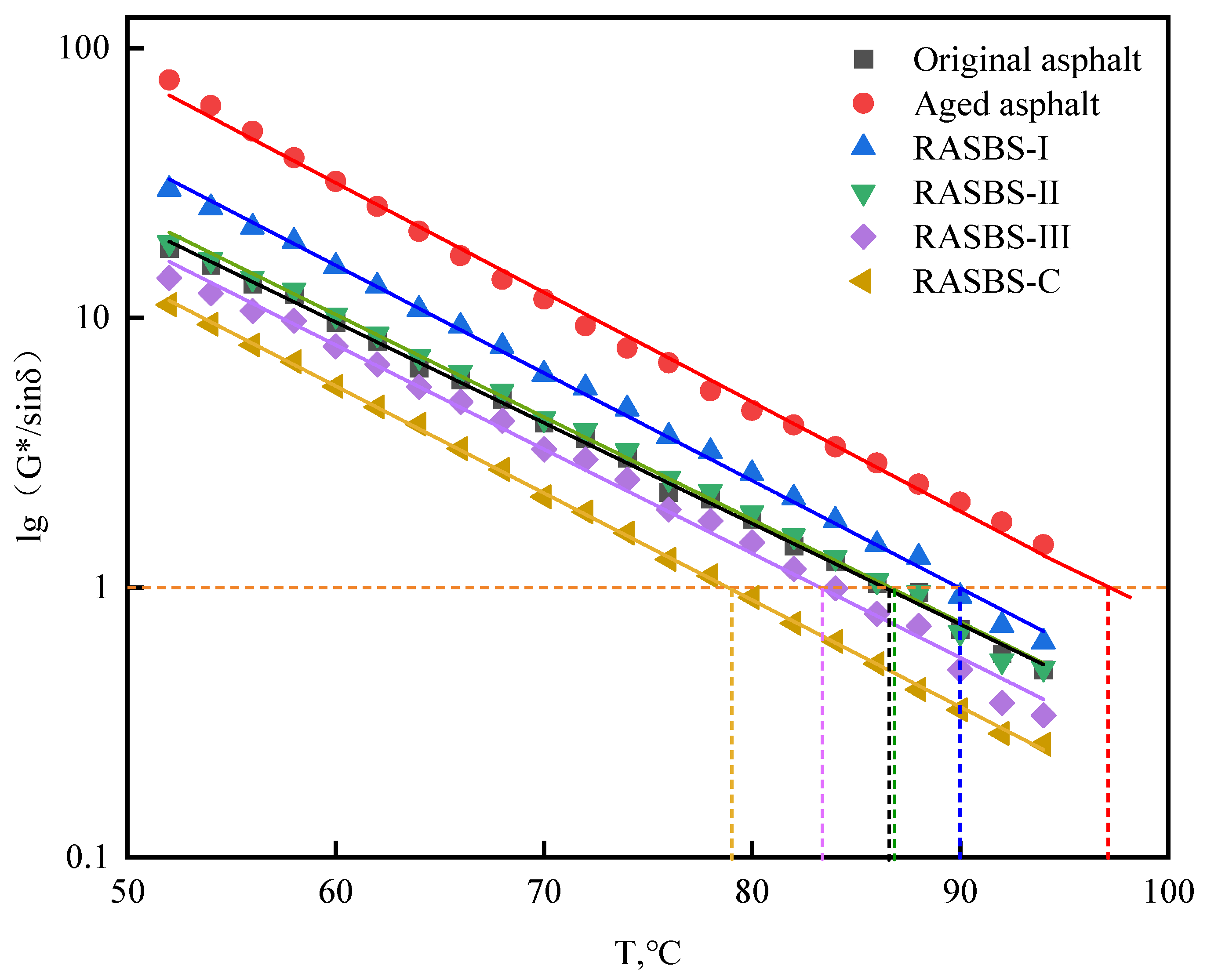
3.3.2. Fail Temperature
3.4. Low Temperature Creep Characteristics
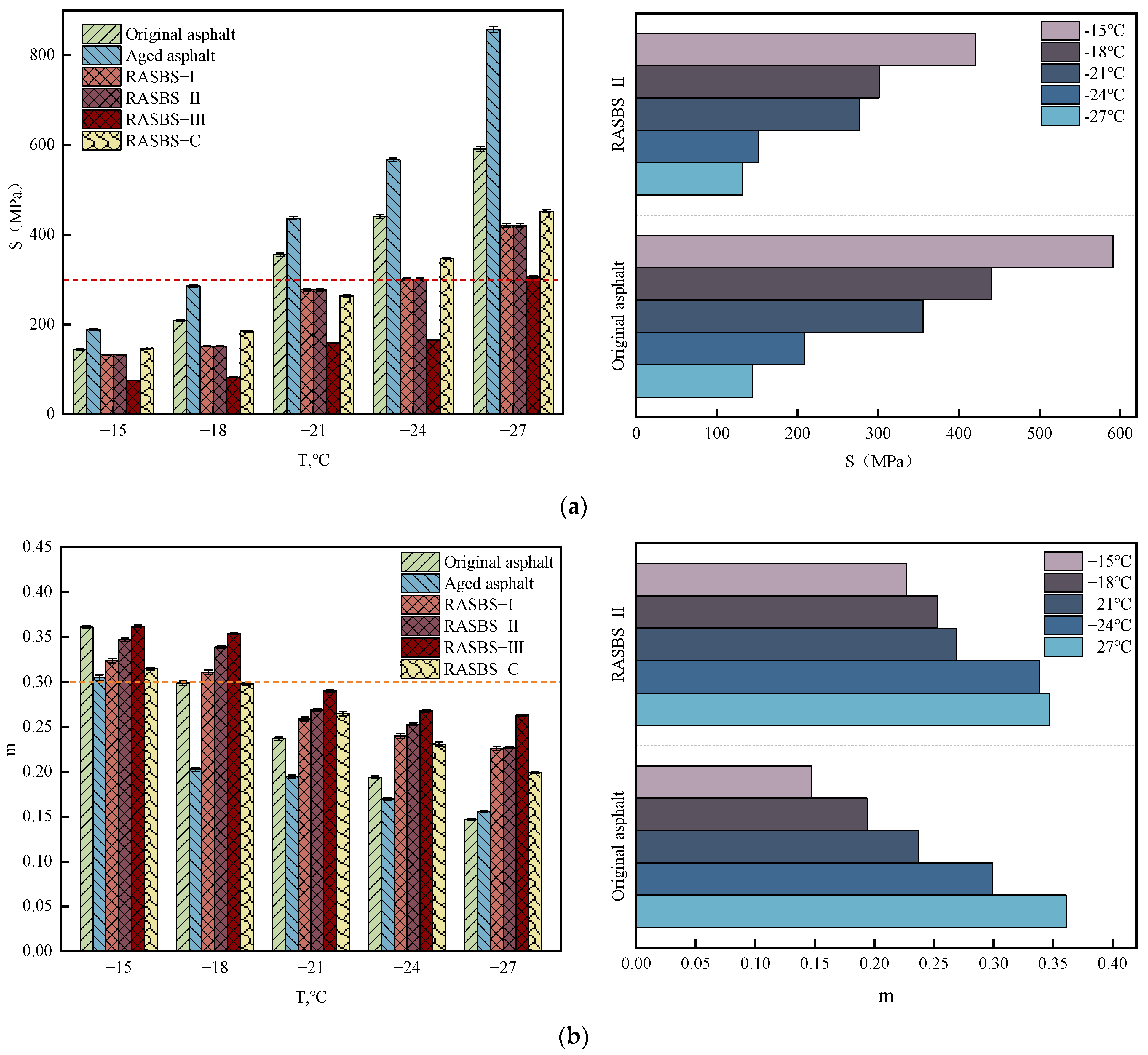
3.4.1. Creep Stiffness and Rate of Change
3.4.2. Low-Temperature Stiffness Modulus Master Curve
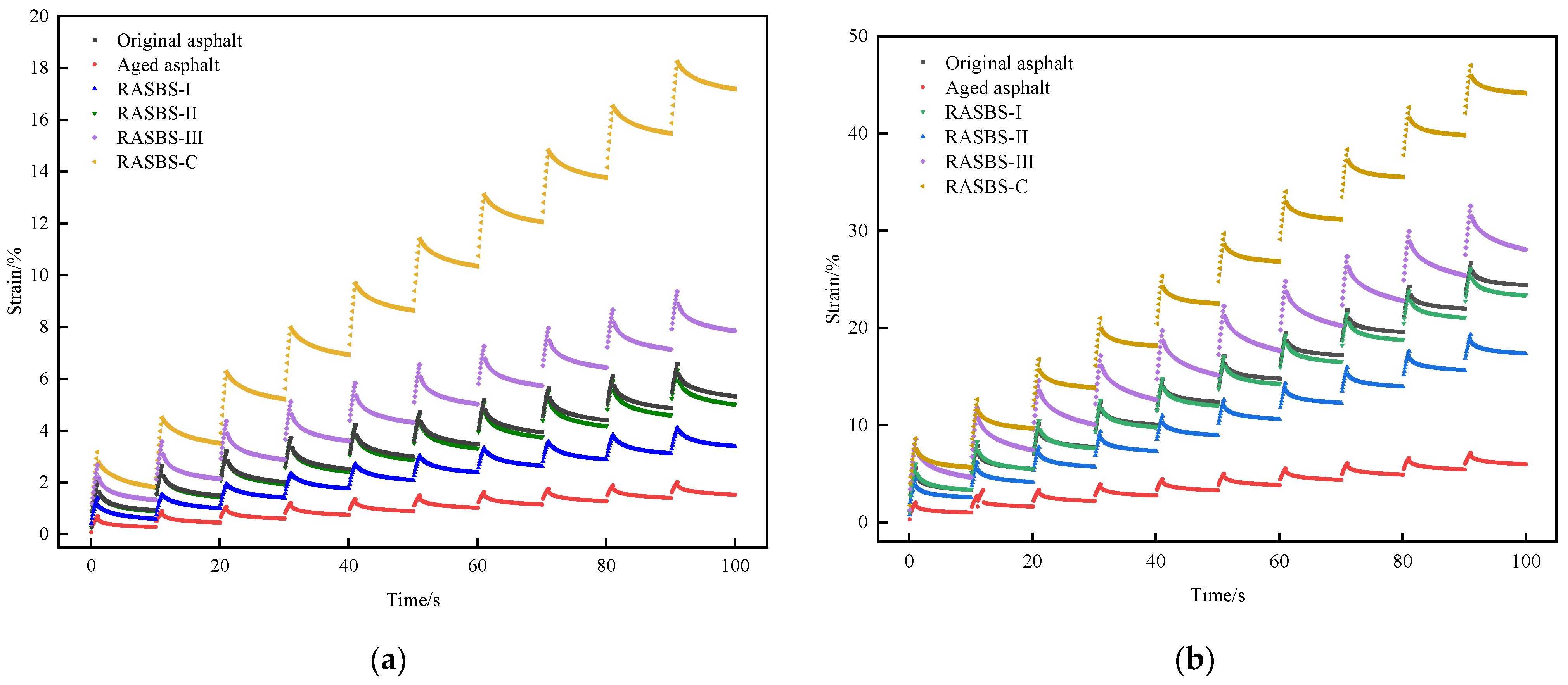
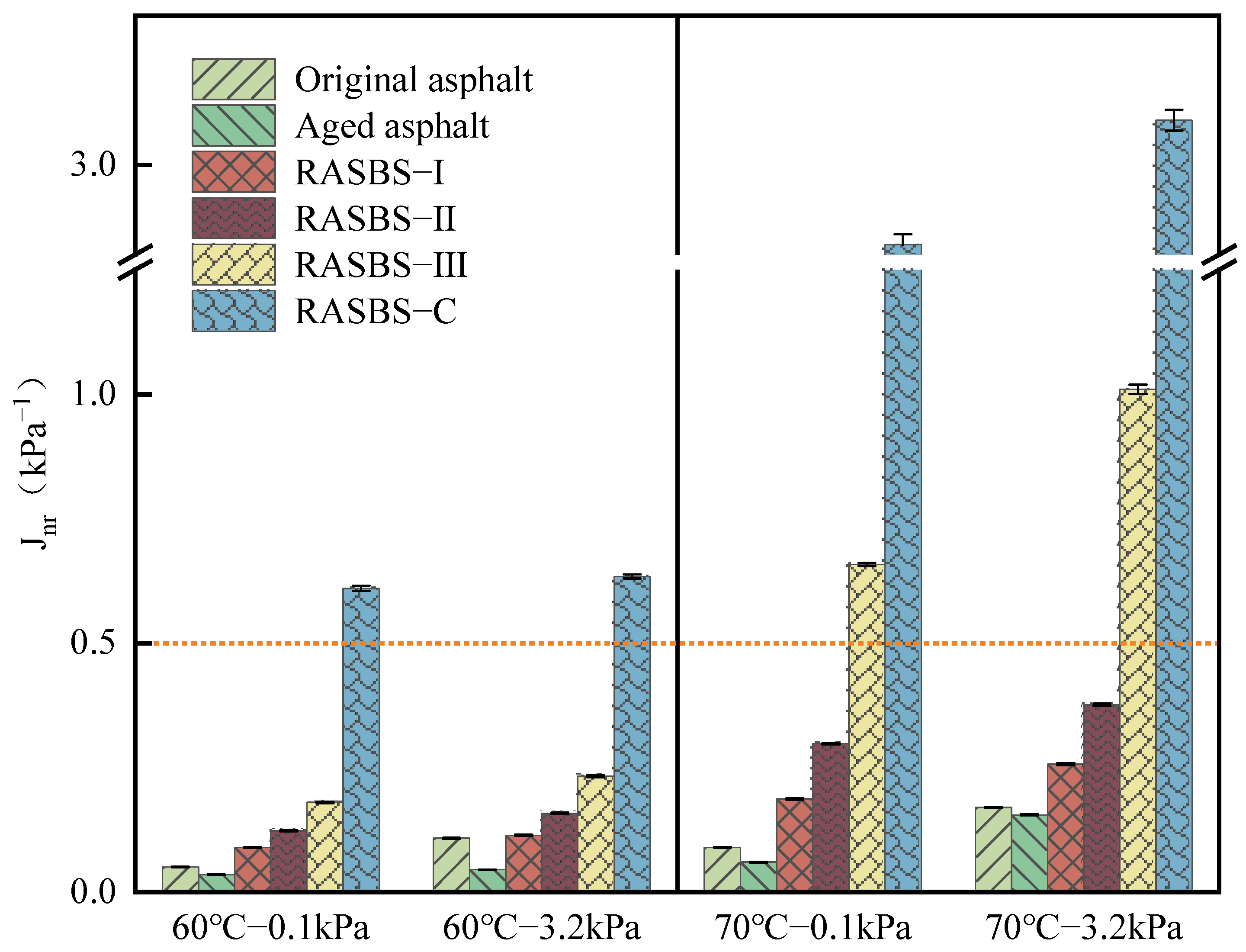
3.5. Repeated Creep and Recovery Property
3.6. Analysis of Master Curve Based on 2S2P1D Model
3.7. Permeability Evaluation
4. Conclusions
- (1)
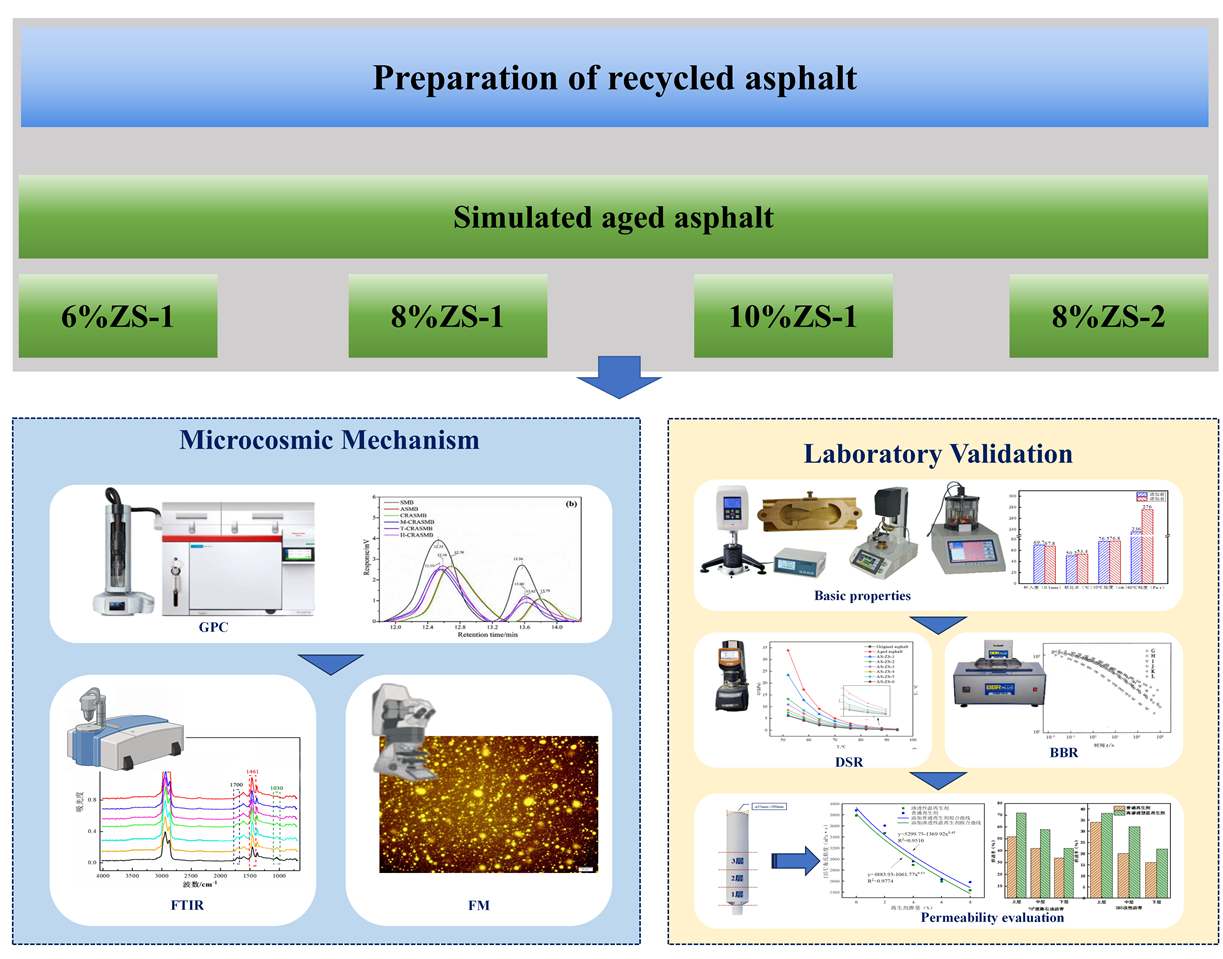
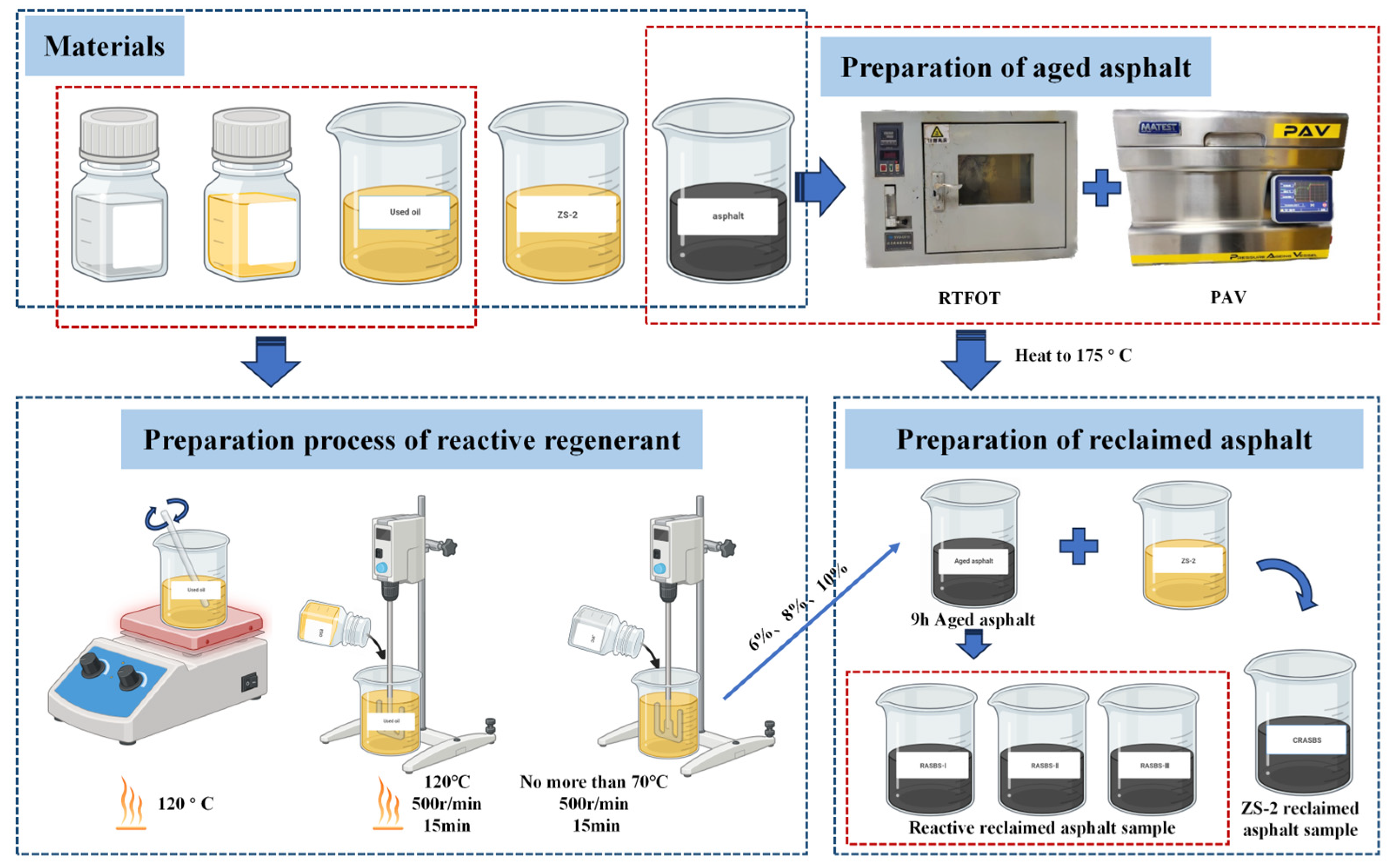
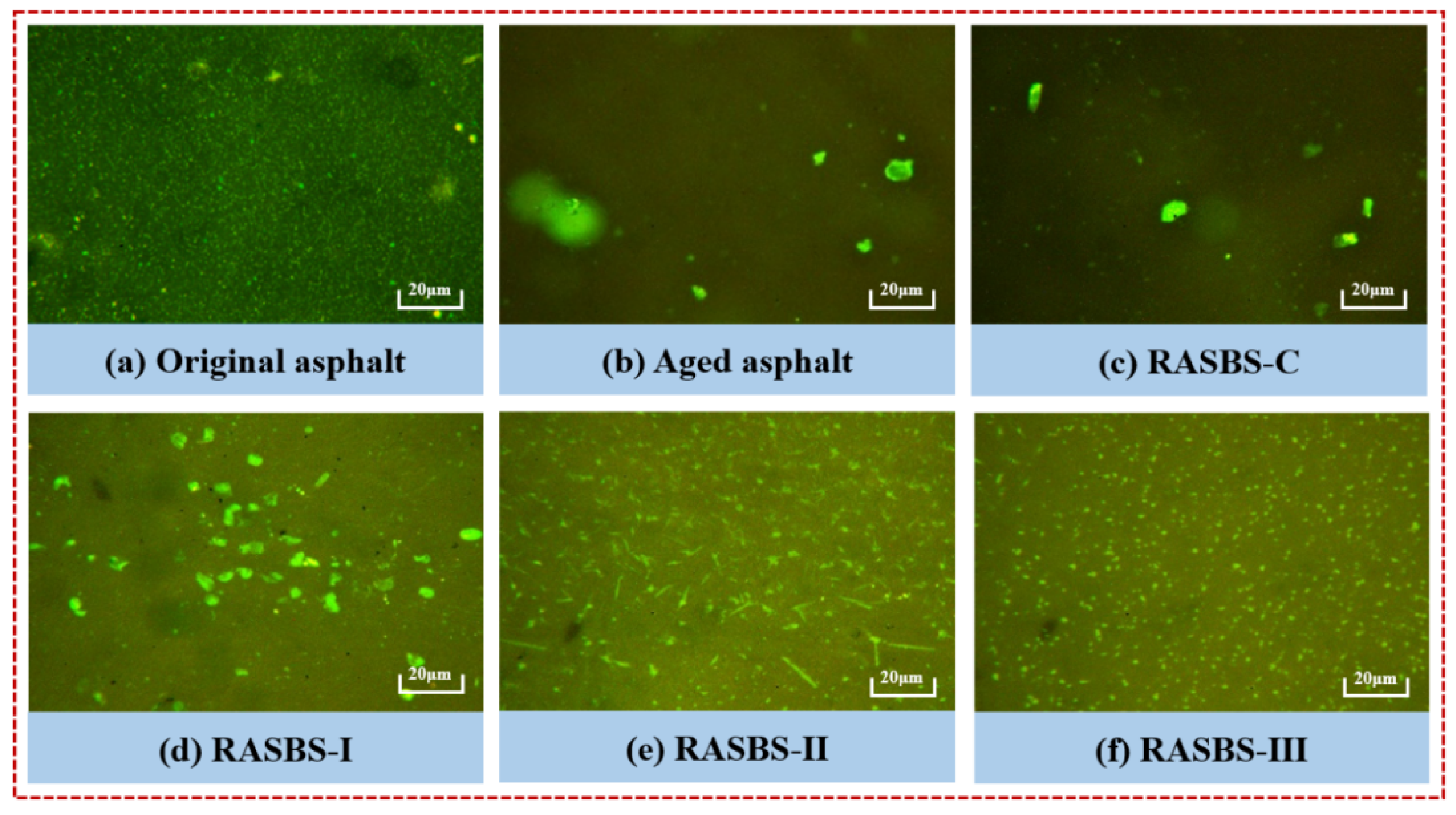
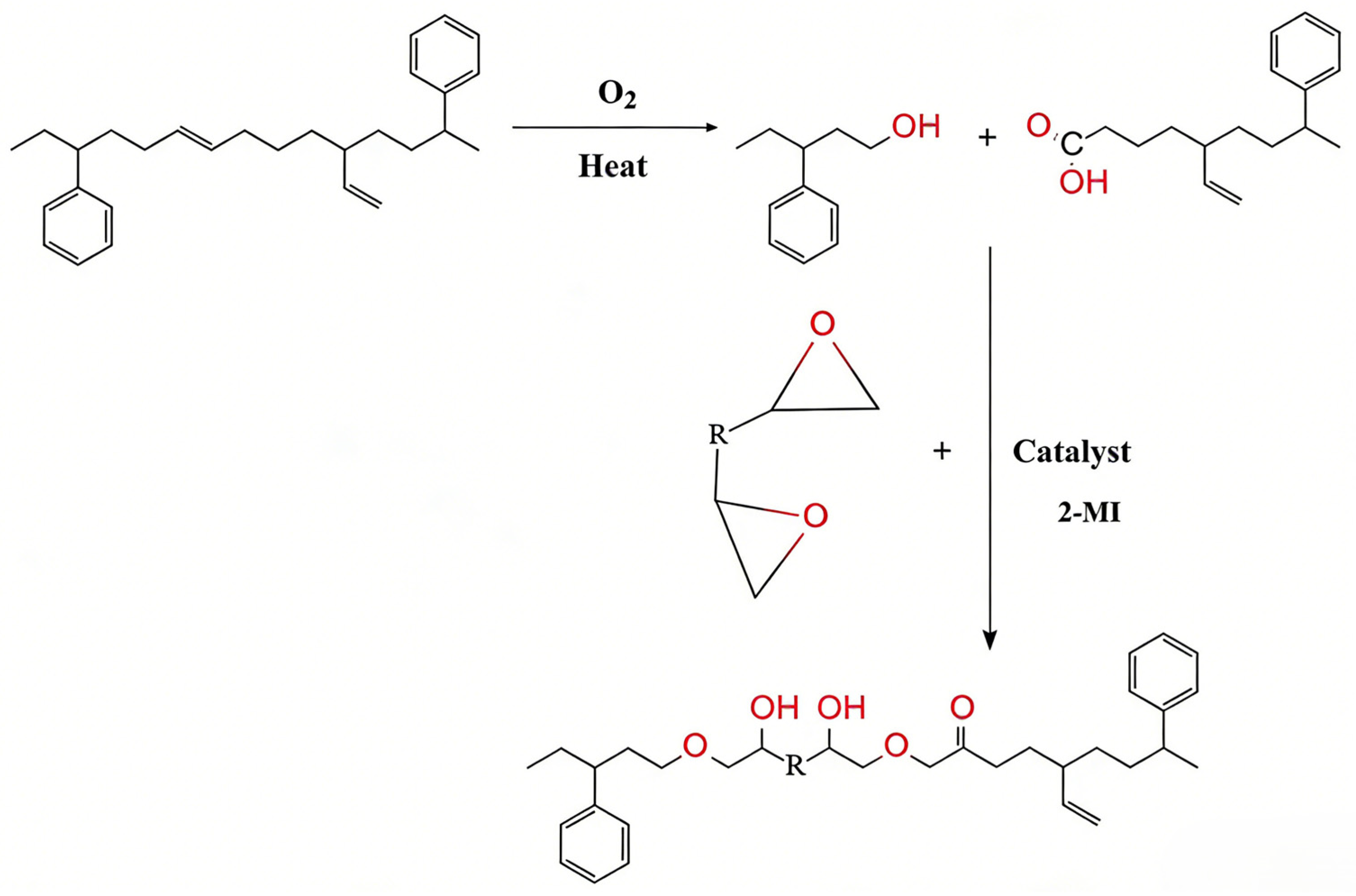
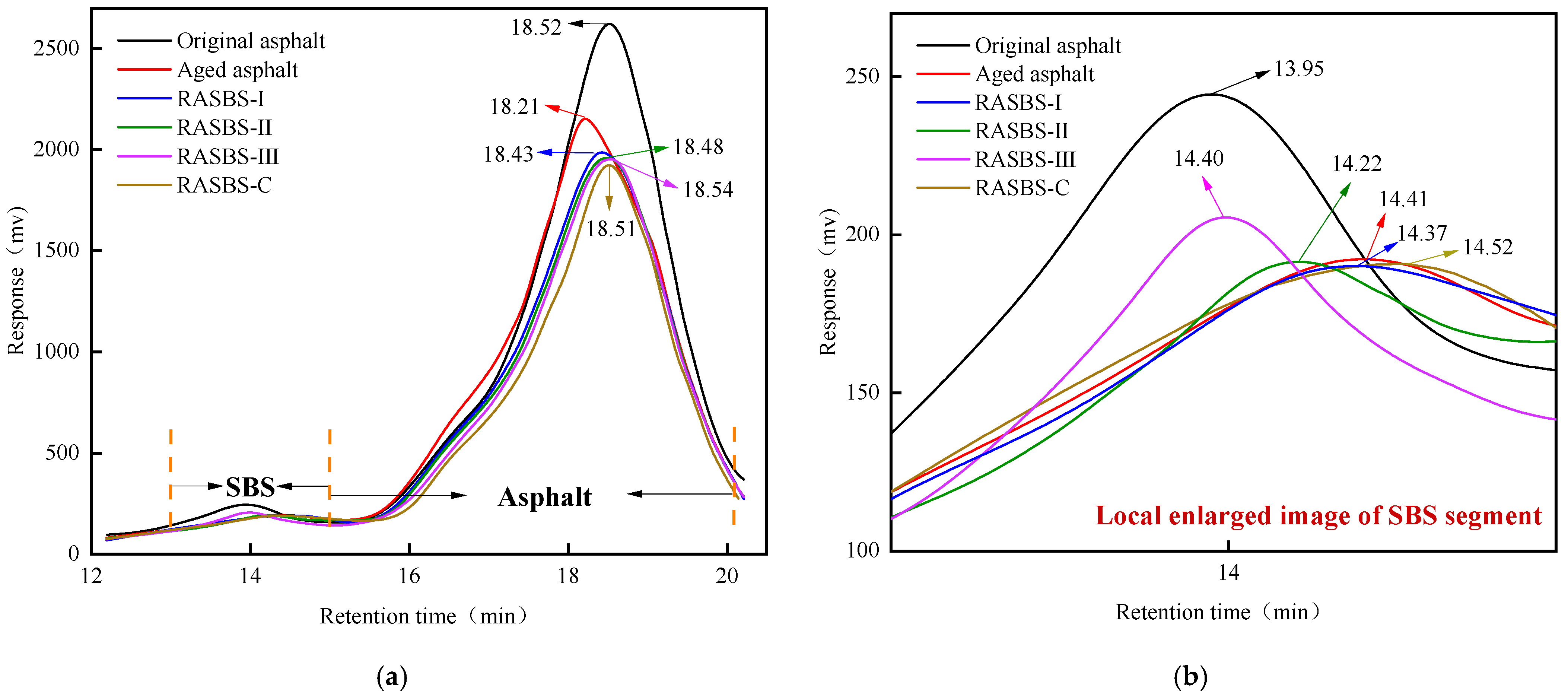
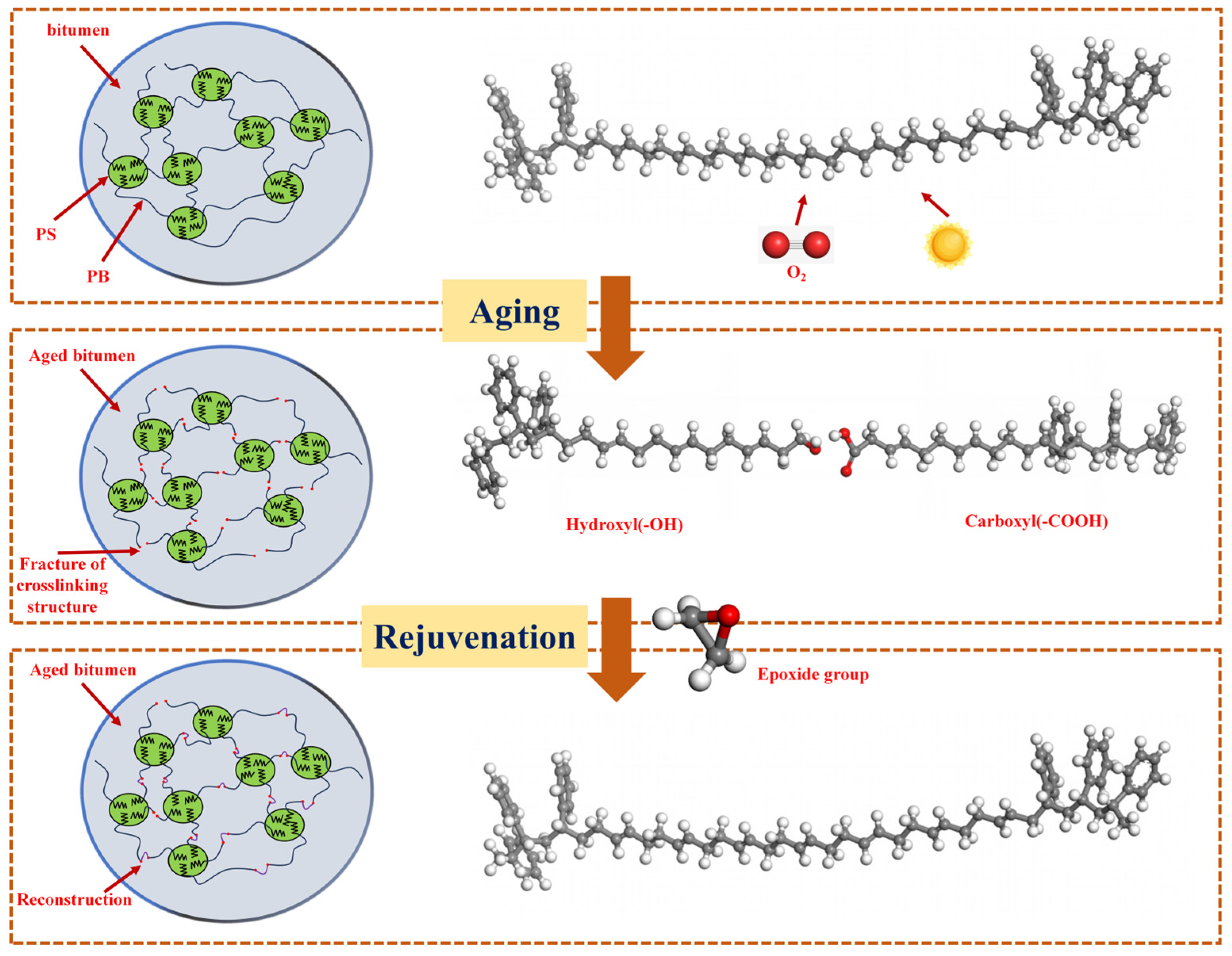
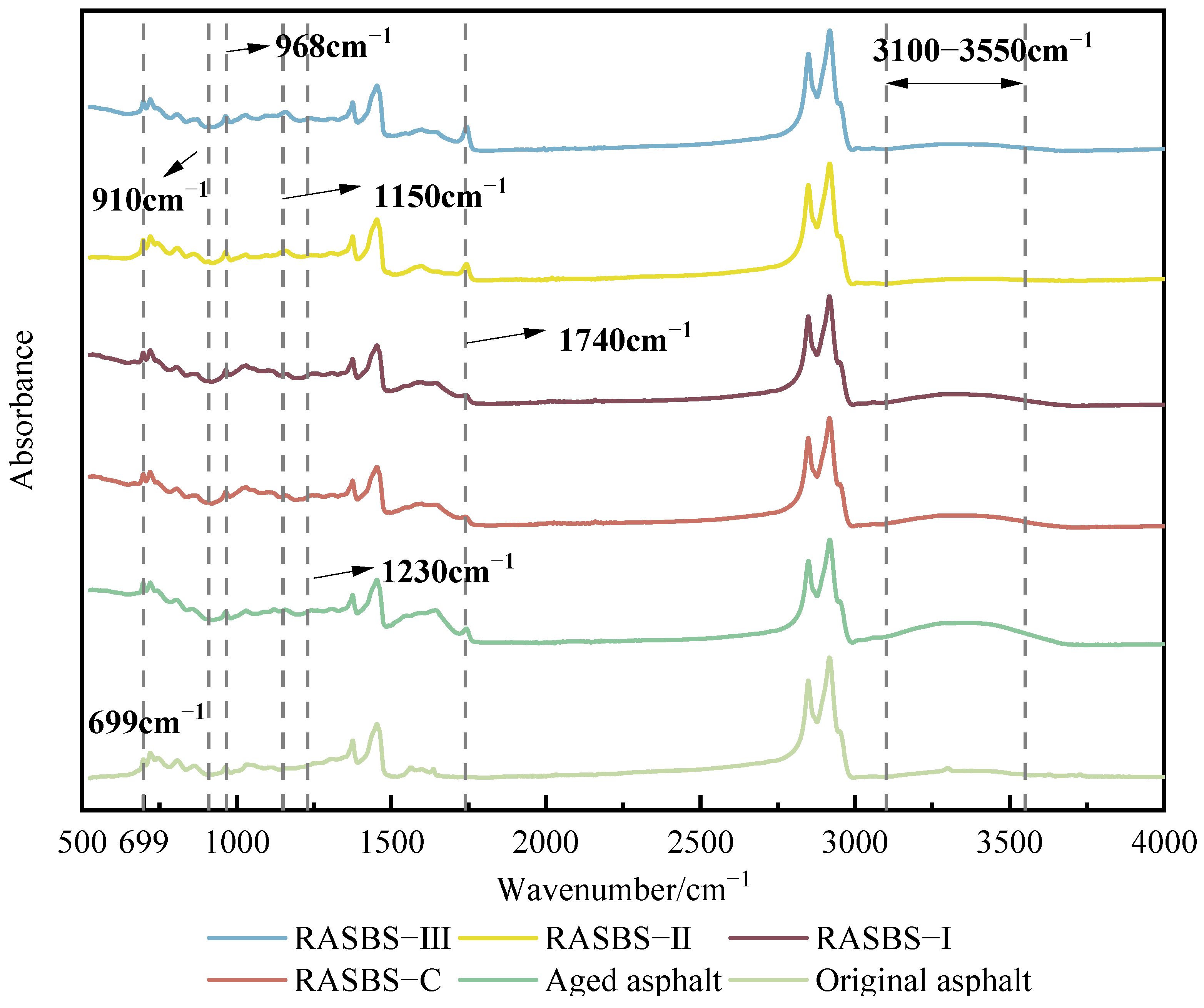
- The analysis of FTIR, GPC, and FM indicates that the aging effect leads to an increase in asphalt molecular weight, but the degradation of the SBS modifier results in a decrease in the molecular weight of the SBS modifier segments. The epoxy groups in the reactive regenerant react with the active terminal groups in the degraded SBS segments, forming ester and ether bonds. This process acts as a new bridge to restructure the molecular weight distribution and spatial network structure of the degraded SBS modifier, restoring the molecular structure of the aged SBS-modified asphalt.
- (2)
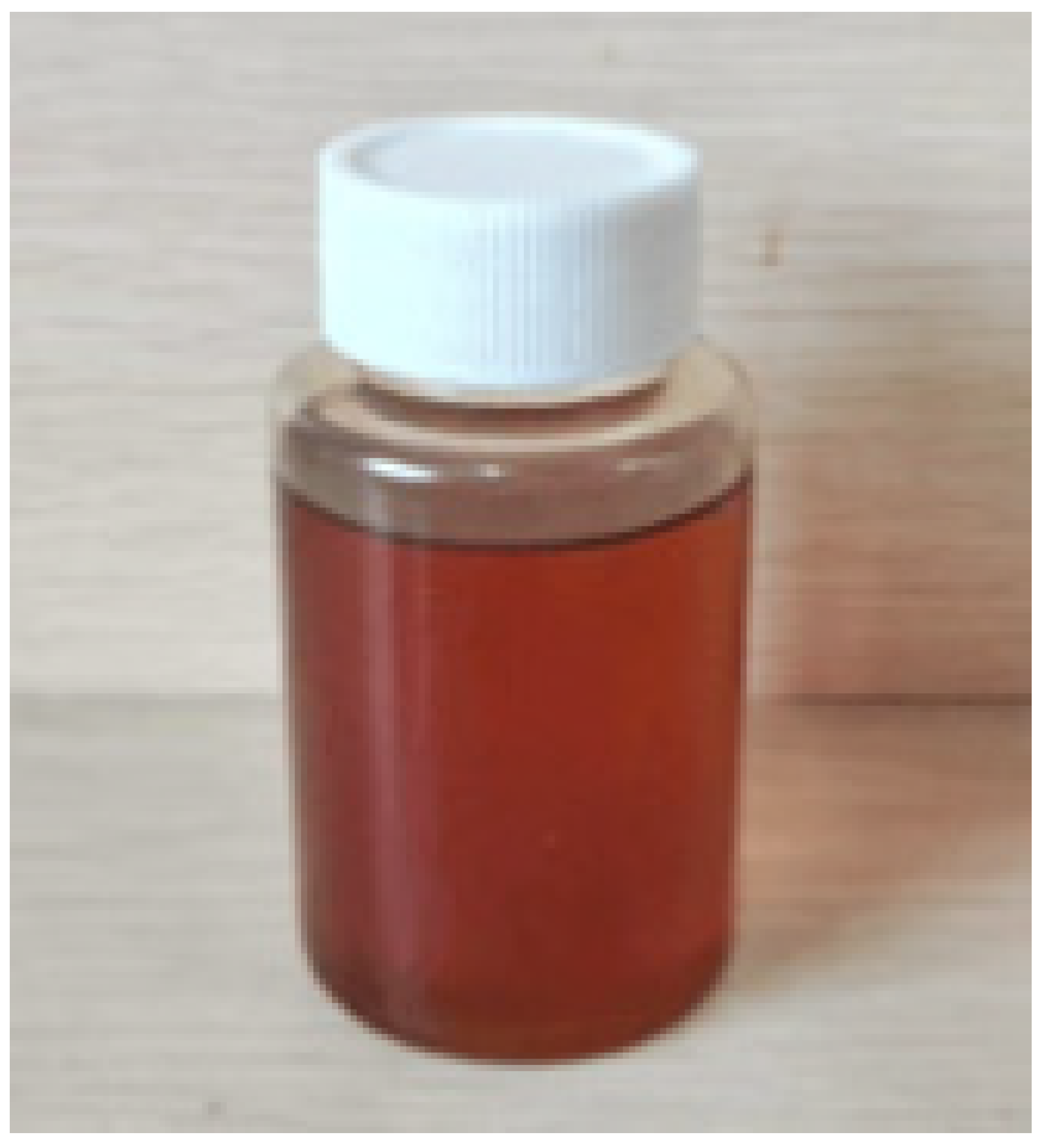
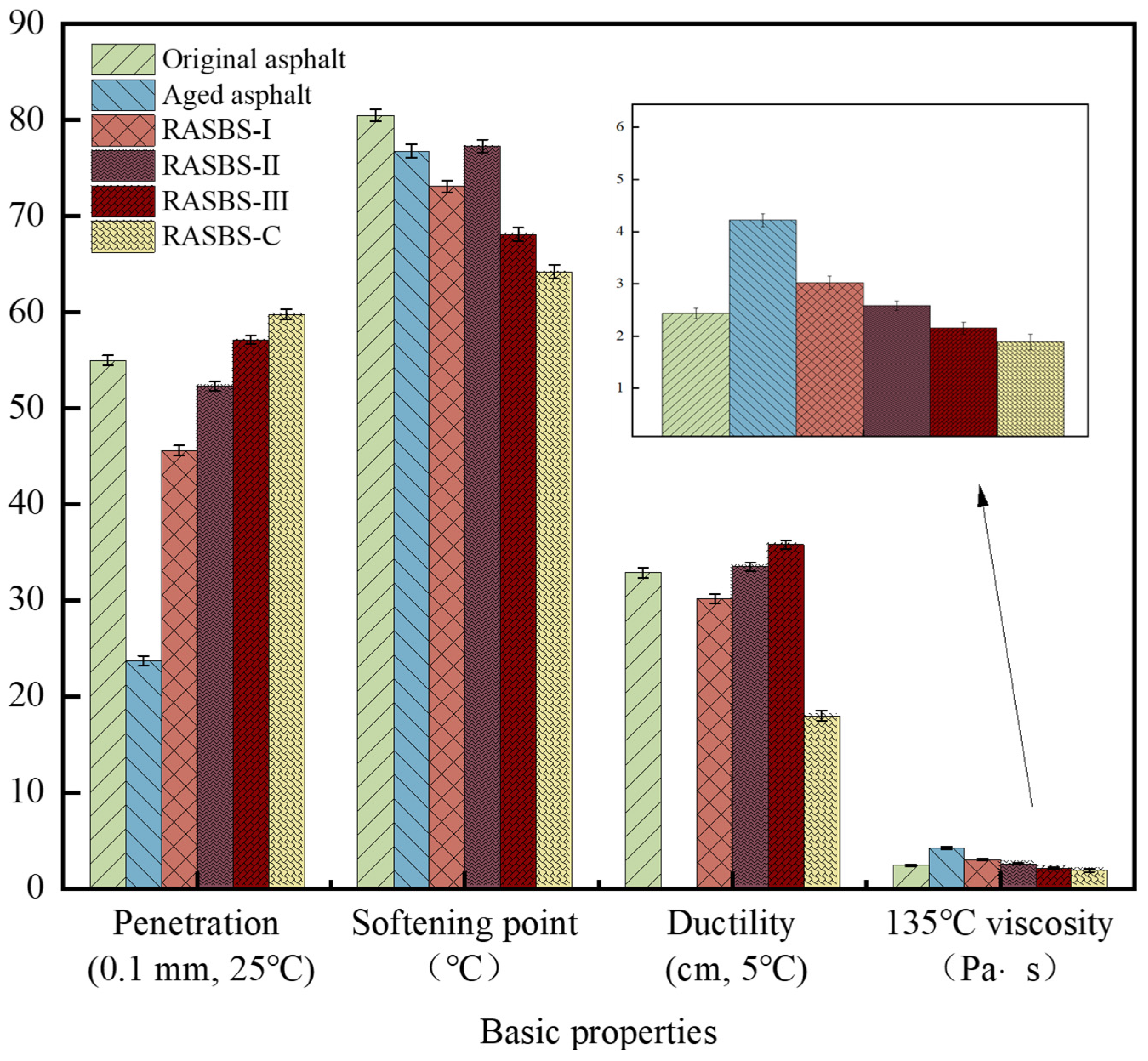
- The physical performance indicators indicate that compared to ZS-2, ZS-1 can evenly enhance various physical properties of aged SBS-modified asphalt. Moreover, with the increase in the dosage of ZS-1, the regeneration effect becomes more pronounced. Due to the higher dosage of the regenerant, the weakening effect of the light-component oil on the penetration, softening point, and viscosity of the asphalt samples becomes more pronounced. Therefore, among the three dosage levels evaluated in this study, the 8% concentration of the recycled agent demonstrated relatively superior performance.
- (3)
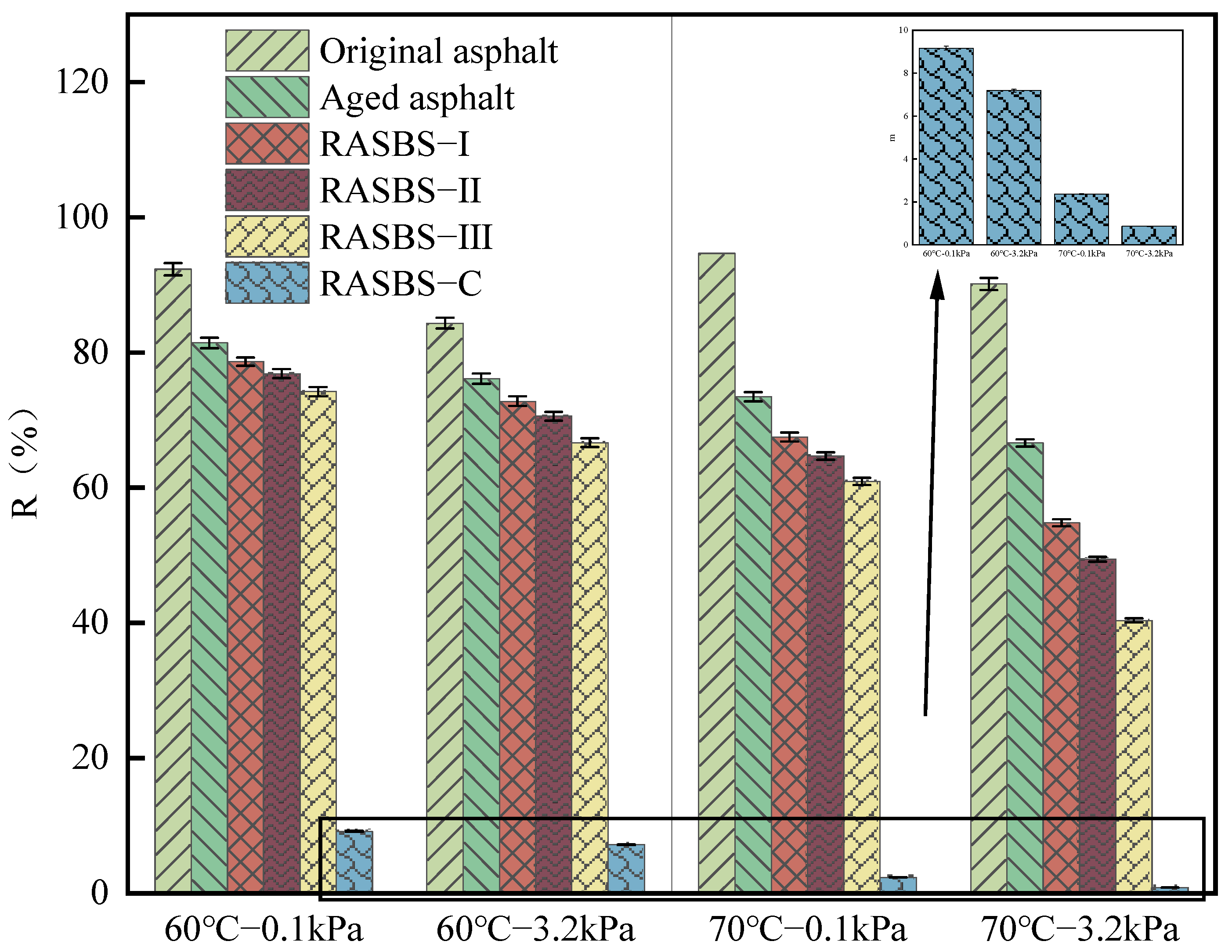
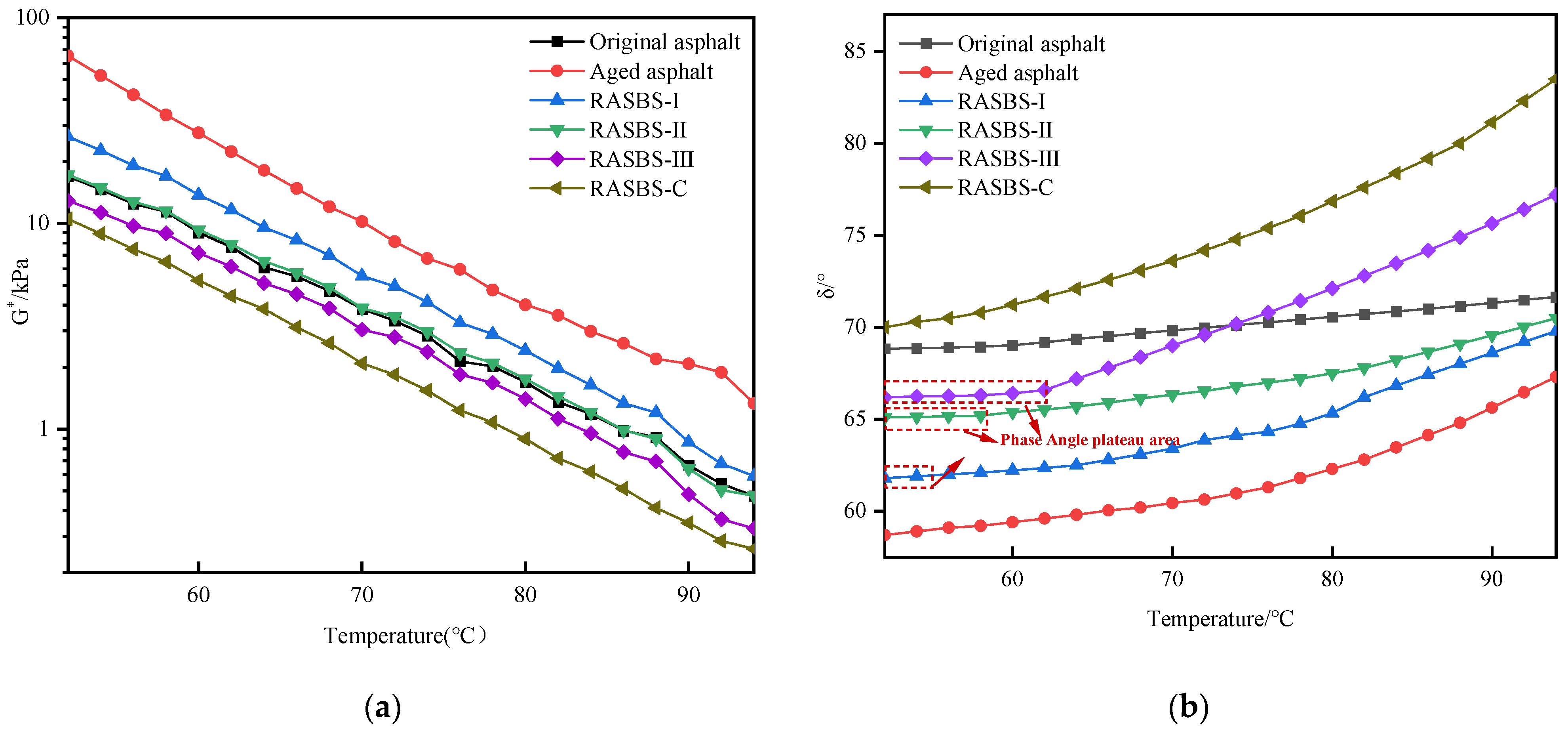
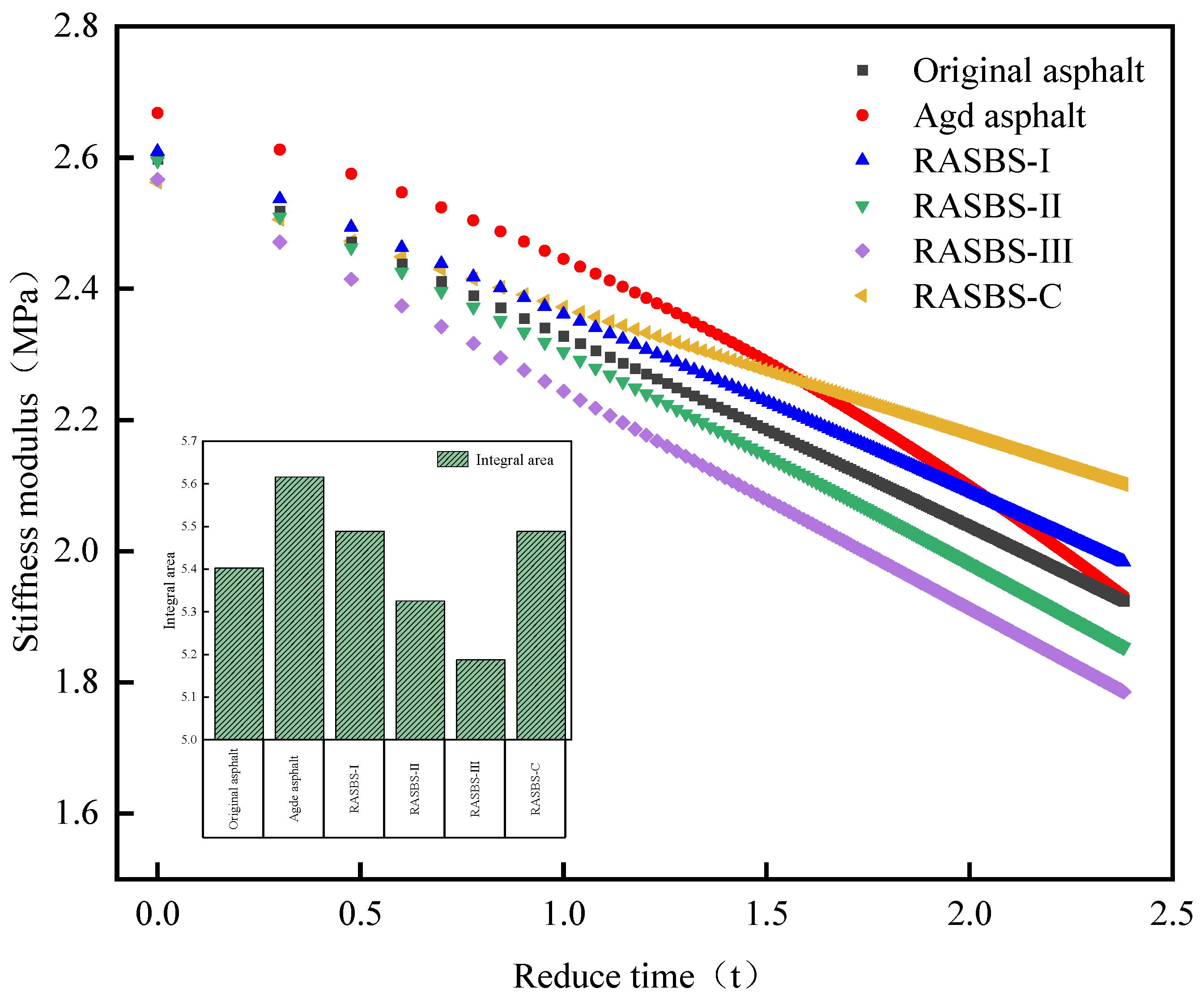
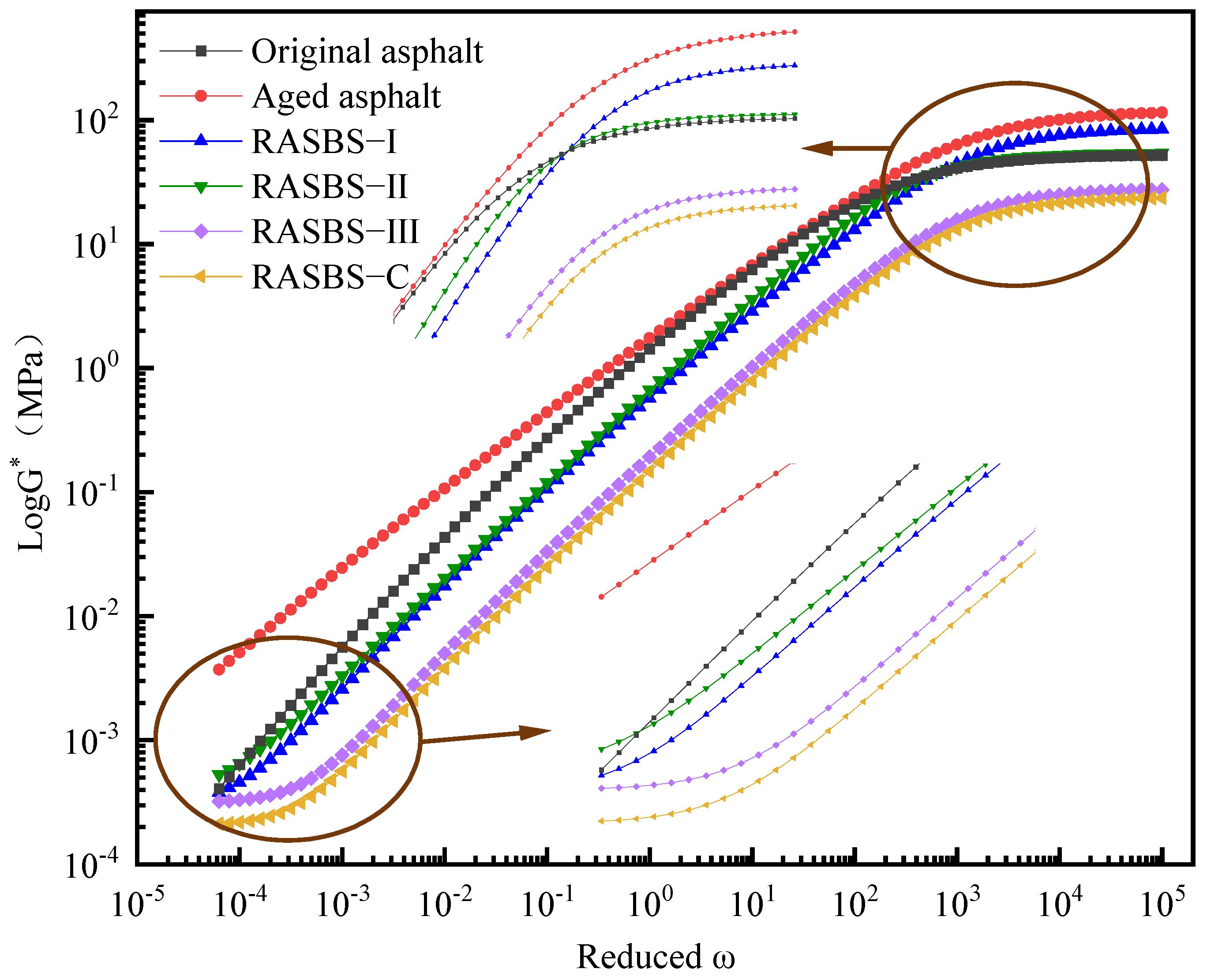
- Rheological experiments indicate that ZS-1 can effectively restore the high-temperature, low-temperature rheological properties and creep recovery ability of aged SBS-modified asphalt. The reactive regenerant can reconstruct the spatial network structure of SBS-modified asphalt, acting as reinforcement in the asphalt, thereby enhancing the low-temperature cracking resistance and high-temperature deformation resistance of the recycled asphalt binder.
- (4)
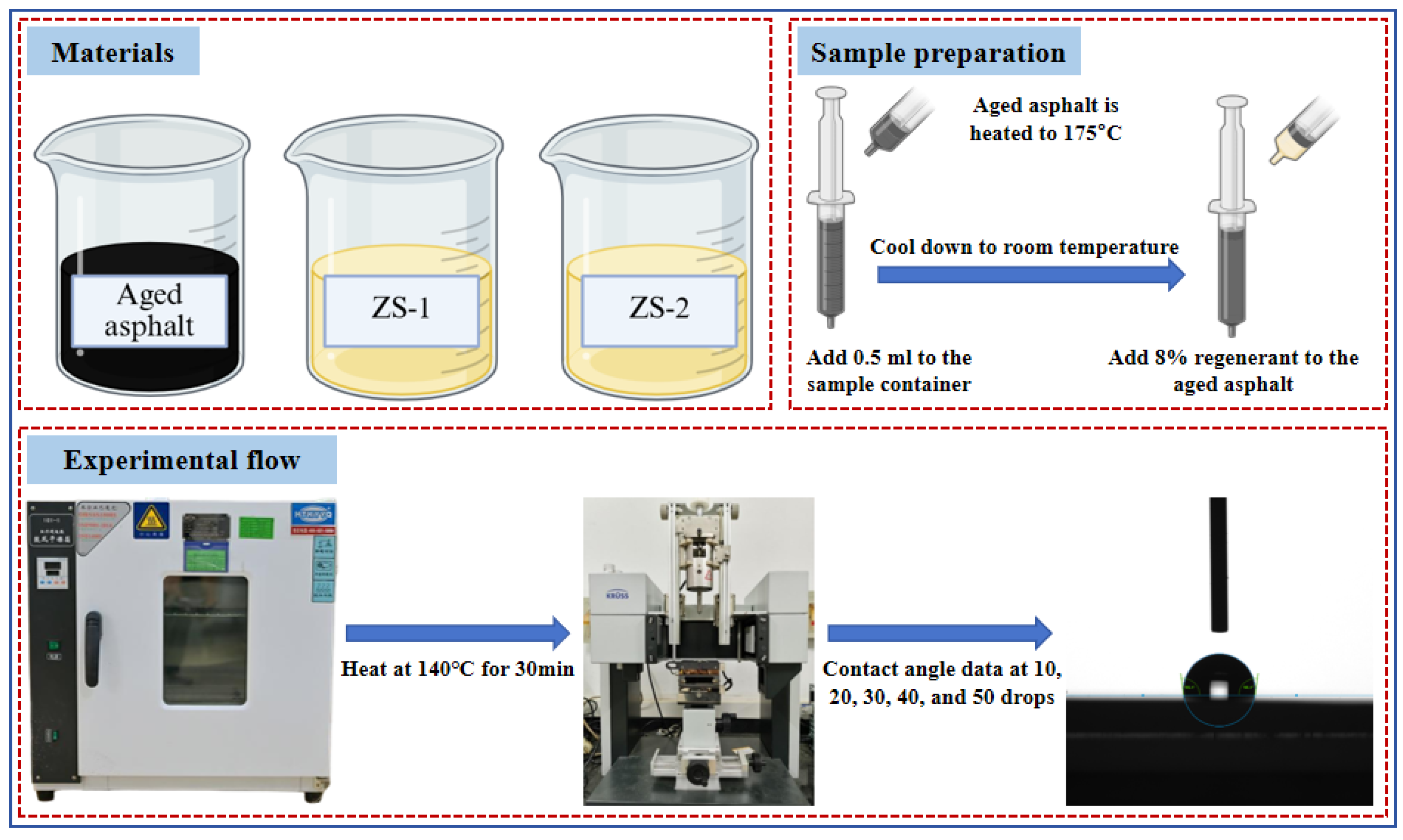
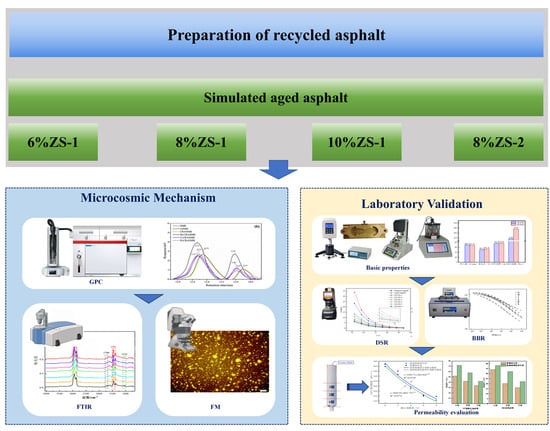
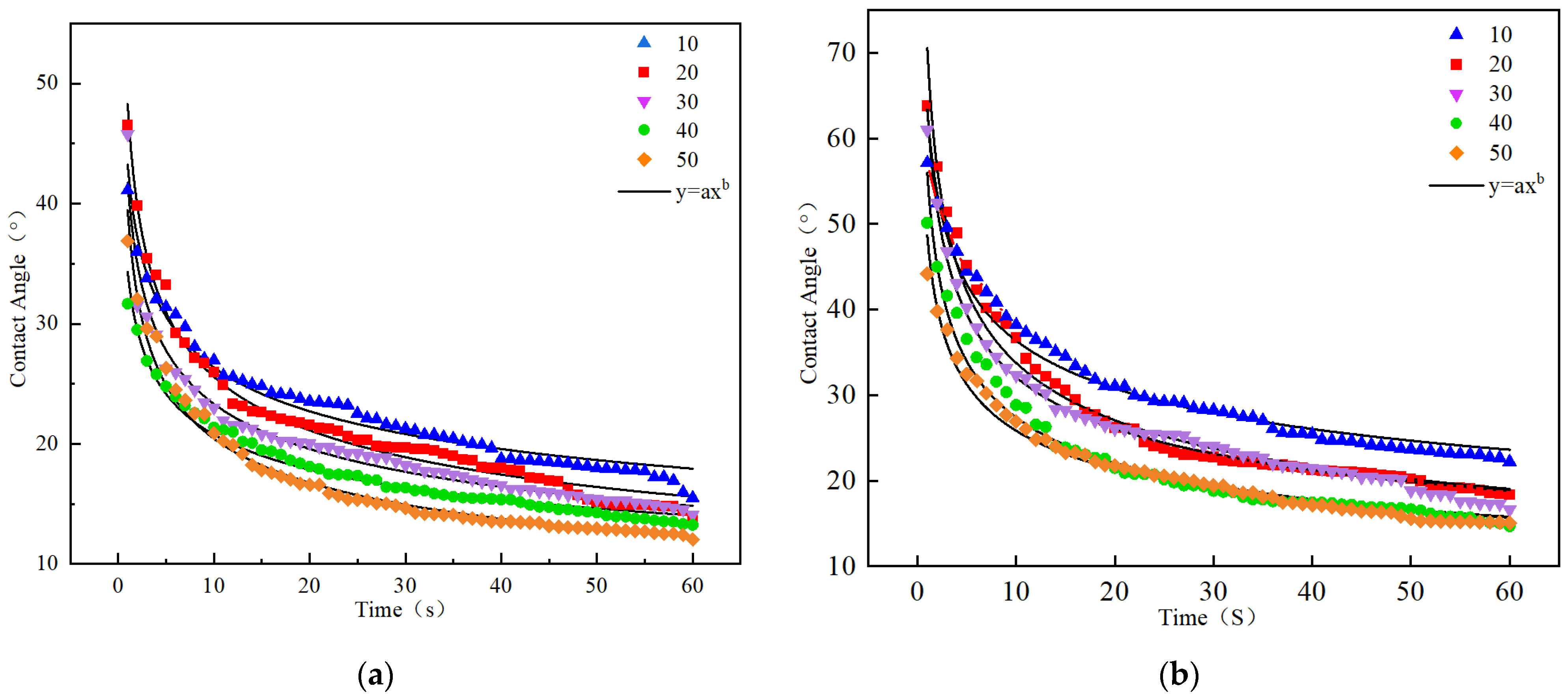
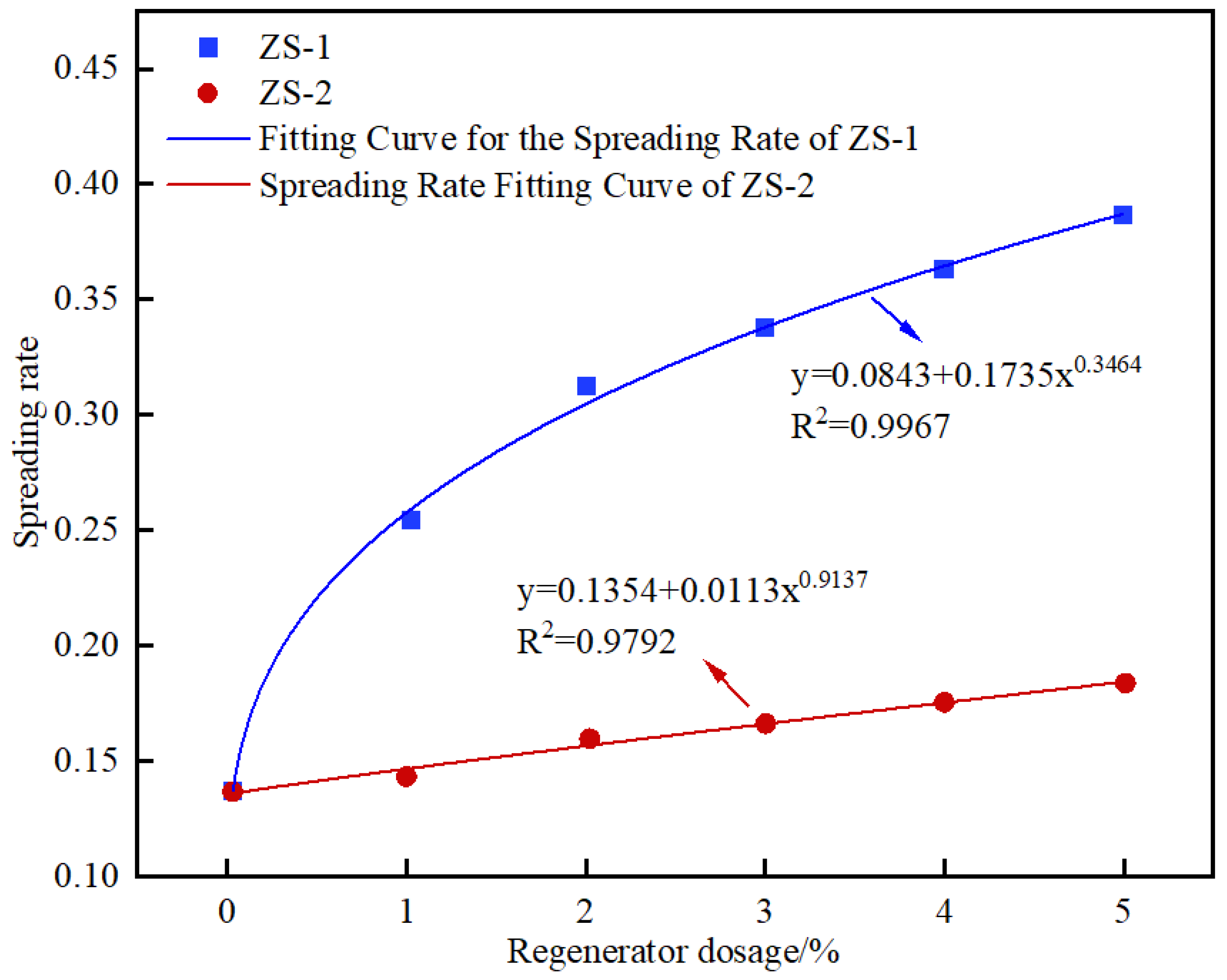
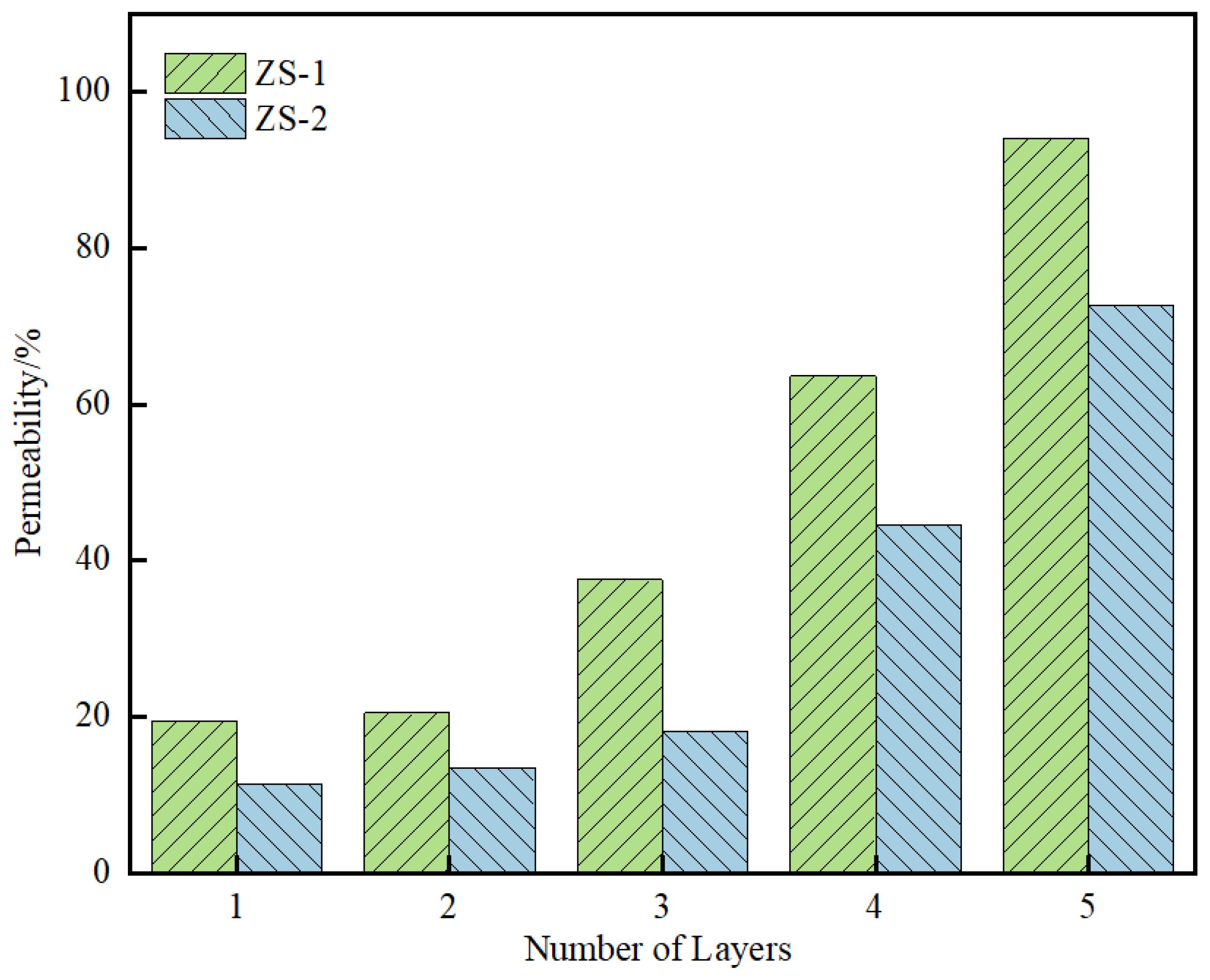
- The permeability evaluation results indicated that, compared to the ZS-2 regenerant, the ZS-1 regenerant contained a permeability-promoting modifier, enabling superior diffusion performance in aged SBS-modified asphalt. Specifically, the permeability rates of the first layer were 11.44% and 19.45% for ZS-2 and ZS-1, respectively. Therefore, the reactive regenerant with enhanced permeability should be selected as the regenerating agent for aged SBS-modified asphalt to promote the reaction between epoxy groups and active end groups resulting from aging-induced bond scission.
- (5)
- Compared with conventional component-mixed regenerants, the SBS cross-linked network self-healing regenerant effectively restores the original SBS polymer network architecture and comprehensively recovers the rheological, mechanical, and aging resistance properties of reclaimed asphalt—without compromising its high-temperature stability. This advancement facilitates the incorporation of SBS-modified reclaimed asphalt pavement (RAP) into surface and intermediate pavement layers, thereby enabling high-value, performance-driven utilization of asphalt-based solid waste.
Author Contributions
Funding
Data Availability Statement
Conflicts of Interest
References
- Li, N.; Cheng, Z.N.; Tang, W.; Fan, X.Y.; Yi, Z. Uniformity and mechanical performance of recycled asphalt mixtures with high RAP content based on refined decomposition: A comparative study with conventional separation. Mater. Struct. 2025, 58, 276. [Google Scholar] [CrossRef] [Scilit]
- Wu, S.H.; Oyelere, A.; Karim, S.M.I. Evaluating the Performance of Cold Mix Asphalt Utilizing 100% Reclaimed Asphalt Pavement and Biobased Rejuvenator. J. Mater. Civ. Eng. 2025, 37, 04025436. [Google Scholar] [CrossRef] [Scilit]
- Li, N.; Zhan, H.; Li, H.Z.; Yu, X.; Tang, W.; Wang, Z.Y.; Zhang, Y. Investigation of Recycled Asphalt Pavement Materials Treated by Refined Crushing and Screening Process: Comparison with Conventional Methods. J. Mater. Civ. Eng. 2024, 36, 04023579. [Google Scholar] [CrossRef] [Scilit]
- Song, Y.; Lu, Z.H.; Feng, J.L.; Wu, S.P.; Wan, P.; Gong, X.; Xu, H.Q.; Xie, J. Investigation on the performance, environmental and economic benefits of coarse-grained recycled asphalt mixture with high RAP content. Constr. Build. Mater. 2026, 510, 145211. [Google Scholar] [CrossRef] [Scilit]
- Fang, Y.; Zhang, Z.; Yang, J.; Li, X. Comprehensive review on the application of bio-rejuvenator in the regeneration of waste asphalt materials. Constr. Build. Mater. 2021, 295, 123631. [Google Scholar] [CrossRef] [Scilit]
- Zhang, D.; Chen, M.; Wu, S.; Liu, J.; Amirkhanian, S. Analysis of the Relationships between Waste Cooking Oil Qualities and Rejuvenated Asphalt Properties. Materials 2017, 10, 508. [Google Scholar] [CrossRef] [Scilit]
- Liu, S.; Shukla, A.; Nandra, T. Technological, environmental and economic aspects of Asphalt recycling for road construction. Renew. Sustain. Energy Rev. 2017, 75, 879–893. [Google Scholar] [CrossRef] [Scilit]
- Baghaee Moghaddam, T.; Baaj, H. The use of rejuvenating agents in production of recycled hot mix asphalt: A systematic review. Constr. Build. Mater. 2016, 114, 805–816. [Google Scholar] [CrossRef] [Scilit]
- Balaguera, A.; Carvajal, G.I.; Albertí, J.; Fullana-i-Palmer, P. Life cycle assessment of road construction alternative materials: A literature review. Resour. Conserv. Recycl. 2018, 132, 37–48. [Google Scholar] [CrossRef] [Scilit]
- Kaseer, F.; Martin, A.E.; Arámbula-Mercado, E. Use of recycling agents in asphalt mixtures with high recycled materials contents in the United States: A literature review. Constr. Build. Mater. 2019, 211, 974–987. [Google Scholar] [CrossRef] [Scilit]
- Cortizo, M.S.; Larsen, D.O.; Bianchetto, H.; Alessandrini, J.L. Effect of the thermal degradation of SBS copolymers during the ageing of modified asphalts. Polym. Degrad. Stab. 2004, 86, 275–282. [Google Scholar] [CrossRef] [Scilit]
- Sugano, M.; Kajita, J.; Ochiai, M.; Takagi, N.; Iwai, S.; Hirano, K. Mechanisms for chemical reactivity of two kinds of polymer modified asphalts during thermal degradation. Chem. Eng. J. 2011, 176-177, 231–236. [Google Scholar] [CrossRef] [Scilit]
- Cai, X.; Zhang, J.; Xu, G.; Gong, M.; Chen, X.; Yang, J. Internal aging indexes to characterize the aging behavior of two bio-rejuvenated asphalts. J. Clean. Prod. 2019, 220, 1231–1238. [Google Scholar] [CrossRef] [Scilit]
- Podolsky, J.H.; Saw, B.; Elkashef, M.; Williams, R.C.; Cochran, E.W. Rheology and mix performance of rejuvenated high RAP field produced hot mix asphalt with a soybean derived rejuvenator. Road Mater. Pavement Des. 2021, 22, 1894–1907. [Google Scholar] [CrossRef] [Scilit]
- Lyne, Å.L.; Taylor, N.; Jaeverberg, N.; Edin, H.; Birgisson, B. Low frequency dielectric spectroscopy of bitumen binders as an indicator of adhesion potential to quartz aggregates using Portland cement. Mater. Struct. 2015, 49, 1327–1336. [Google Scholar] [CrossRef] [Scilit]
- Chen, M.; Leng, B.; Wu, S.; Sang, Y. Physical, chemical and rheological properties of waste edible vegetable oil rejuvenated asphalt binders. Constr. Build. Mater. 2014, 66, 286–298. [Google Scholar] [CrossRef] [Scilit]
- Bai, M. Investigation of low-temperature properties of recycling of aged SBS modified asphalt binder. Constr. Build. Mater. 2017, 150, 766–773. [Google Scholar] [CrossRef] [Scilit]
- Wang, J.; Zeng, W.; Qin, Y.; Huang, S.; Xu, J. Laboratory Evaluation of Rejuvenating Agent on Reclaimed SBS Modified Asphalt Pavement. Appl. Sci. 2017, 7, 743. [Google Scholar] [CrossRef] [Scilit]
- Dong, F.; Zhao, W.; Zhang, Y.; Wei, J.; Fan, W.; Yu, Y.; Wang, Z. Influence of SBS and asphalt on SBS dispersion and the performance of modified asphalt. Constr. Build. Mater. 2014, 62, 1–7. [Google Scholar] [CrossRef] [Scilit]
- Xu, X.; Sreeram, A.; Leng, Z.; Yu, J.; Li, R.; Peng, C. Challenges and opportunities in the high-quality rejuvenation of unmodified and SBS modified asphalt mixtures: State of the art. J. Clean. Prod. 2022, 378, 134634. [Google Scholar] [CrossRef] [Scilit]
- Wang, F.; Zhang, L.; Zhang, X.; Li, H.; Wu, S. Aging mechanism and rejuvenating possibility of SBS copolymers in asphalt binders. Polymers 2020, 12, 92. [Google Scholar] [CrossRef] [Scilit]
- Xiang, K.; Wang, X.; Huang, G.; Zheng, J.; Huang, J.; Li, G. Thermal ageing behavior of styrene–butadiene random copolymer: A study on the ageing mechanism and relaxation properties. Polym. Degrad. Stab. 2012, 97, 1704–1715. [Google Scholar] [CrossRef] [Scilit]
- Xu, X.; Yu, J.; Xue, L.; Zhang, C.; Zha, Y.; Gu, Y. Investigation of molecular structure and thermal properties of thermo-oxidative aged SBS in blends and their relations. Materials 2017, 10, 768. [Google Scholar] [CrossRef] [Scilit]
- Shi, K.; Ma, F.; Liu, J.; Song, R.-m.; Fu, Z.; Dai, J.-S.; Li, C.; Wen, Y.-l. Development of a new rejuvenator for aged SBS modified asphalt binder. J. Clean. Prod. 2022, 380, 134986. [Google Scholar] [CrossRef] [Scilit]
- Xu, X.; Yu, J.; Xue, L.; Zhang, C.; He, B.; Wu, M. Structure and performance evaluation on aged SBS modified bitumen with bi- or tri-epoxy reactive rejuvenating system. Constr. Build. Mater. 2017, 151, 479–486. [Google Scholar] [CrossRef] [Scilit]
- Wei, C.; Zhang, H.; Duan, H. Effect of catalytic-reactive rejuvenator on structure and properties of aged SBS modified asphalt binders. Constr. Build. Mater. 2020, 246, 118531. [Google Scholar] [CrossRef] [Scilit]
- ASTM Standard D1754; Standard Test Method for Effect of Heat and Air on Asphaltic Materials (Thin-Film Oven Test). American Society for Testing and Materials: West Conshohocken, PA, USA, 2020.
- ASTM Standard D6521; Standard Practice for Accelerated Aging of Asphalt Binder Using a Pressurized Aging Vessel (PAV). American Society for Testing and Materials: West Conshohocken, PA, USA, 2008.
- ASTM Standard D36; Standard Test Method for Softening Point of Bitumen (Ring-And-Ball Apparatus). American Society for Testing and Materials: West Conshohocken, PA, USA, 2006.
- ASTM Standard D5; Standard Test Method for Penetration of Bituminous Materials. American Society for Testing and Materials: West Conshohocken, PA, USA, 2013.
- ASTM Standard D113; Standard Test Method for Ductility of Asphalt Materials. American Society for Testing and Materials: West Conshohocken, PA, USA, 2017.
- ASTM Standard D4402; Standard Test Method for Viscosity Determination of Asphalt at Elevated Temperatures Using a Rotational iscometer. American Society for Testing and Materials: West Conshohocken, PA, USA, 2006.
- ASTM Standard D7175-23; Standard Test Method for Determining the Rheological Properties of Asphalt Binder Using a Dynamic Shear Rheometer. American Society for Testing and Materials: West Conshohocken, PA, USA, 2023.
- ASTM Standard D7405-15; Standard Test Method for Multiple Stress Creep and Recovery (MSCR) of Asphalt Binder Using a Dynamic Shear Rheometer. American Society for Testing and Materials: West Conshohocken, PA, USA, 2015.
- ASTM Standard D6648-01; Standard Test Method for Determining the Flexural Creep Stiffness of Asphalt Binder Using the Bending Beam Rheometer (BBR). American Society for Testing and Materials: West Conshohocken, PA, USA, 2001.
- Wang, P.; Dong, Z.-J.; Tan, Y.-Q.; Liu, Z.-Y. Effect of multi-walled carbon nanotubes on the performance of styrene–butadiene–styrene copolymer modified asphalt. Mater. Struct. 2016, 50, 17. [Google Scholar] [CrossRef] [Scilit]









| Items | Result | Specification Value | |
|---|---|---|---|
| Penetration/(0.1 mm, 25 °C) | 72 | 60–80 | |
| Ductility/(cm, 5 °C) | 47.6 | ≥100 | |
| Softening point/°C | 126 | ≥46 | |
| Flash point/°C | 324 | ≥260 | |
| Solubility/% | 99.8 | ≥99.5 | |
| TFOT (163 °C, 5 h) | Mass loss/% | 0.163 | ±0.8 |
| Penetration ratio/% | 64.1 | ≥61 | |
| Ductility/(cm, 15 °C) | 38.5 | ≥15 | |
| Items | Result | Specification Value | |
|---|---|---|---|
| Penetration/(0.1 mm, 25 °C) | 55 | 40–70 | |
| Ductility/(cm, 5 °C) | 32.9 | ≥25 | |
| Softening point/°C | 80.5 | ≥70 | |
| 60 °C dynamic viscosity/Pa⋅s | 33,265 | ≥20,000 | |
| 135 °C viscosity/Pa⋅s | 2.43 | ≤3 | |
| Elastic recovery/% | 98.1 | ≥80 | |
| Segregation/°C | 0.8 | ≤2.5 | |
| TFOT (163 °C, 5 h) | Mass loss/% | 0.04 | ±0.5 |
| Penetration ratio/% | 85.7 | ≥65 | |
| Ductility/(cm, 5 °C) | 24.9 | ≥15 | |
| Solubility/% | 99.4 | ≥99 | |
| Flash point/°C | 315 | ≥245 | |
| Items | Result | Test Methods (ASTM) |
|---|---|---|
| Penetration/(0.1 mm, 25 °C) | 23.7 | D5, 2013 |
| Ductility/(cm, 5 °C) | - | D113, 2017 |
| Softening point/°C | 76.8 | D36, 2009 |
| 135 °C viscosity/Pa⋅s | 4.22 | D4402, 2023 |
| Items | Result | Specification Value | ||
|---|---|---|---|---|
| ZS-1 | ZS-2 | |||
| 60 °C viscosity/(cSt, 60 °C) | 135 | 172 | 50–175 | |
| Saturates content/% | 19 | 15 | ≤30 | |
| Aromatic content/% | 46 | 37 | Measured | |
| TFOT (163 °C, 5 h) | Mass variation/% | −1.99 | −1.65 | ±4 |
| Aromatic content | 1.4 | 1.6 | <3 | |
| Flash point/°C | 235 | 238 | >220 | |
| Types of Asphalt | Parameter a | Parameter b | Correlation Index R2 | Failure Temperature/°C | |
|---|---|---|---|---|---|
| Original asphalt | 0.0373 | 3.2246 | 0.9982 | 86.45 | |
| Aged asphalt | 0.0406 | 3.9352 | 0.9963 | 96.93 | |
| RASBS-I | 0.0399 | 3.5884 | 0.9975 | 89.93 | |
| RASBS-II | 0.0380 | 3.2932 | 0.9972 | 86.66 | |
| RASBS-III | 0.0386 | 3.2169 | 0.9939 | 83.34 | |
| RASBS-C | 0.0396 | 3.1253 | 0.9995 | 78.92 |
| Temperature /°C | Types of Regenerant | Sample Position /Droplet | y = a·xb | ||
|---|---|---|---|---|---|
| a | b | R2 | |||
| 140 | High-permeability warm-mix regenerant | 10 | 95.923 | −0.251 | 0.987 |
| 20 | 92.171 | −0.255 | 0.991 | ||
| 30 | 90.420 | −0.302 | 0.984 | ||
| 40 | 80.974 | −0.345 | 0.988 | ||
| 50 | 71.549 | −0.378 | 0.992 | ||
| Conventional regenerant | 10 | 104.021 | −0.137 | 0.999 | |
| 20 | 104.712 | −0.139 | 0.998 | ||
| 30 | 106.024 | −0.143 | 0.995 | ||
| 40 | 111.374 | −0.159 | 0.998 | ||
| 50 | 128.752 | −0.171 | 0.998 | ||
| Test Samples | Penetrated Regenerant Dosage /% | Permeability /% | |||
|---|---|---|---|---|---|
| ZS-1 | ZS-2 | ZS-1 | ZS-2 | ||
| Aged SBS-modified asphalt | Aged asphalt | 0 | 0 | 0 | 0 |
| Layer 1 | 0.97 | 0.57 | 19.45 | 11.44 | |
| Layer 2 | 1.03 | 0.68 | 20.51 | 13.50 | |
| Layer 3 | 1.88 | 0.91 | 37.54 | 18.18 | |
| Layer 4 | 3.18 | 2.23 | 63.65 | 44.58 | |
| Layer 5 | 4.70 | 3.64 | 94.03 | 72.76 | |
Disclaimer/Publisher’s Note: The statements, opinions and data contained in all publications are solely those of the individual author(s) and contributor(s) and not of MDPI and/or the editor(s). MDPI and/or the editor(s) disclaim responsibility for any injury to people or property resulting from any ideas, methods, instructions or products referred to in the content. |
© 2026 by the authors. Licensee MDPI, Basel, Switzerland. This article is an open access article distributed under the terms and conditions of the Creative Commons Attribution (CC BY) license.
Share and Cite
Jiang, M.; Yu, X.; Li, N.; Huang, J.; Cheng, Z. Activation Efficiency and Restoration Effects of SBS Network-Repairing Regenerators on Aged Asphalt. Materials 2026, 19, 888. https://doi.org/10.3390/ma19050888
Jiang M, Yu X, Li N, Huang J, Cheng Z. Activation Efficiency and Restoration Effects of SBS Network-Repairing Regenerators on Aged Asphalt. Materials. 2026; 19(5):888. https://doi.org/10.3390/ma19050888
Chicago/Turabian StyleJiang, Mengmeng, Xin Yu, Ning Li, Jiandong Huang, and Zhinan Cheng. 2026. "Activation Efficiency and Restoration Effects of SBS Network-Repairing Regenerators on Aged Asphalt" Materials 19, no. 5: 888. https://doi.org/10.3390/ma19050888
APA StyleJiang, M., Yu, X., Li, N., Huang, J., & Cheng, Z. (2026). Activation Efficiency and Restoration Effects of SBS Network-Repairing Regenerators on Aged Asphalt. Materials, 19(5), 888. https://doi.org/10.3390/ma19050888