Concrete Incorporating a Spent CO2 Absorbent: Comprehensive Assessment of Microstructure, Strength, and Durability
Abstract
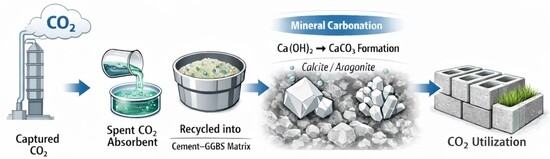
Share and Cite
Yang, S.-L.; Lee, J.-W. Concrete Incorporating a Spent CO2 Absorbent: Comprehensive Assessment of Microstructure, Strength, and Durability. Materials 2026, 19, 577. https://doi.org/10.3390/ma19030577
Yang S-L, Lee J-W. Concrete Incorporating a Spent CO2 Absorbent: Comprehensive Assessment of Microstructure, Strength, and Durability. Materials. 2026; 19(3):577. https://doi.org/10.3390/ma19030577
Chicago/Turabian StyleYang, Sung-Lin, and Jong-Won Lee. 2026. "Concrete Incorporating a Spent CO2 Absorbent: Comprehensive Assessment of Microstructure, Strength, and Durability" Materials 19, no. 3: 577. https://doi.org/10.3390/ma19030577
APA StyleYang, S.-L., & Lee, J.-W. (2026). Concrete Incorporating a Spent CO2 Absorbent: Comprehensive Assessment of Microstructure, Strength, and Durability. Materials, 19(3), 577. https://doi.org/10.3390/ma19030577