Prediction of Chloride Penetration Depth in Concrete Using a Combined Ensemble–Neural Network Architecture: Facing Data Saturation


Highlights
- The combination of architectures can lead to rapid data saturation.
- Simple architectures can actually be more effective with limited data.
- The hybrid model established a high precision, but not meaningfully in this study.
- The simple architecture provided efficient and compact results rather than the hybrid model.
- The method for improving accuracy, even with limited datasets, should be studied.
Abstract
1. Introduction
2. Methodology
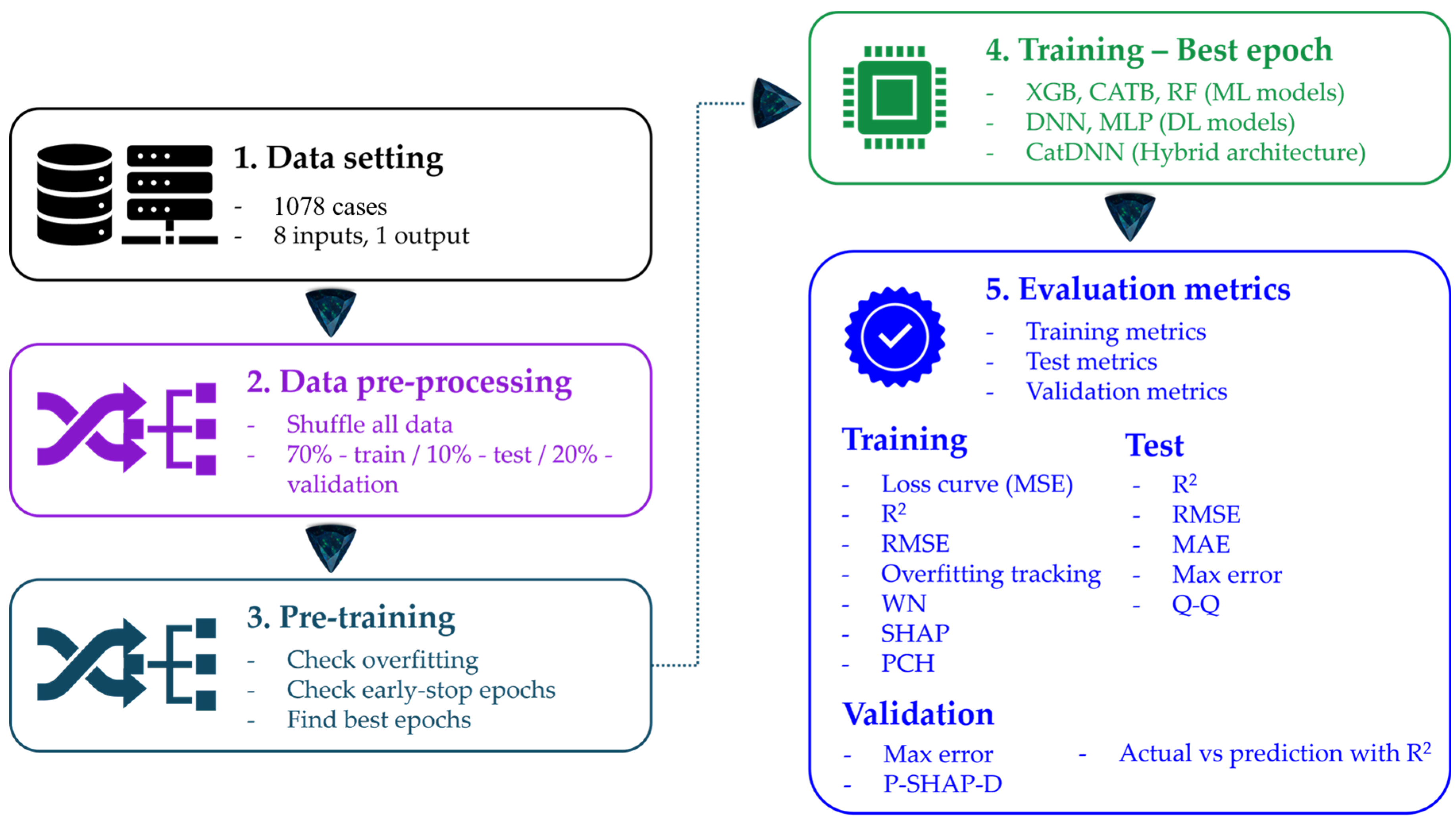
2.1. Research Process
2.2. Models
2.2.1. XGB
2.2.2. CATB
2.2.3. RF
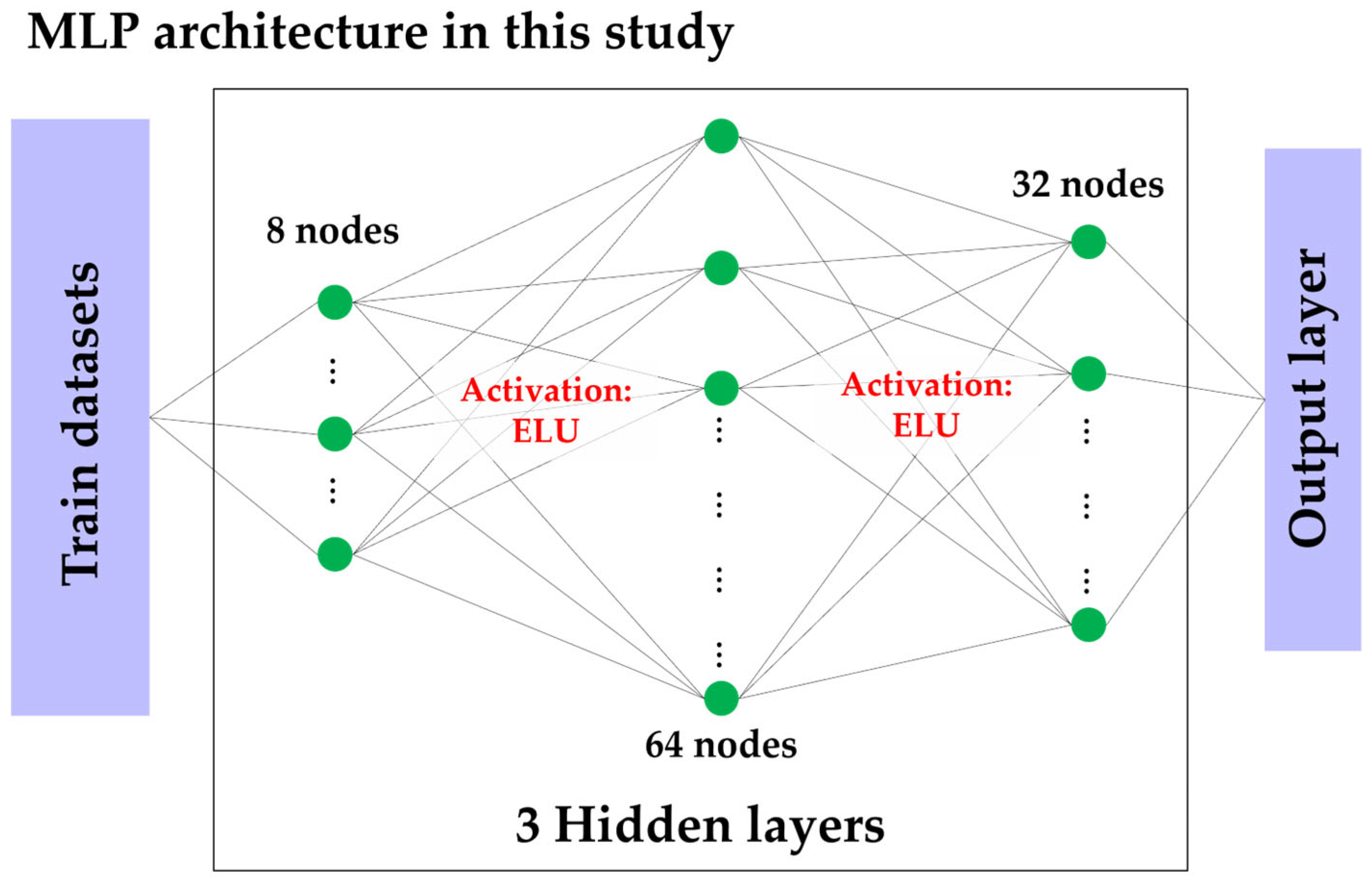
2.2.4. MLP
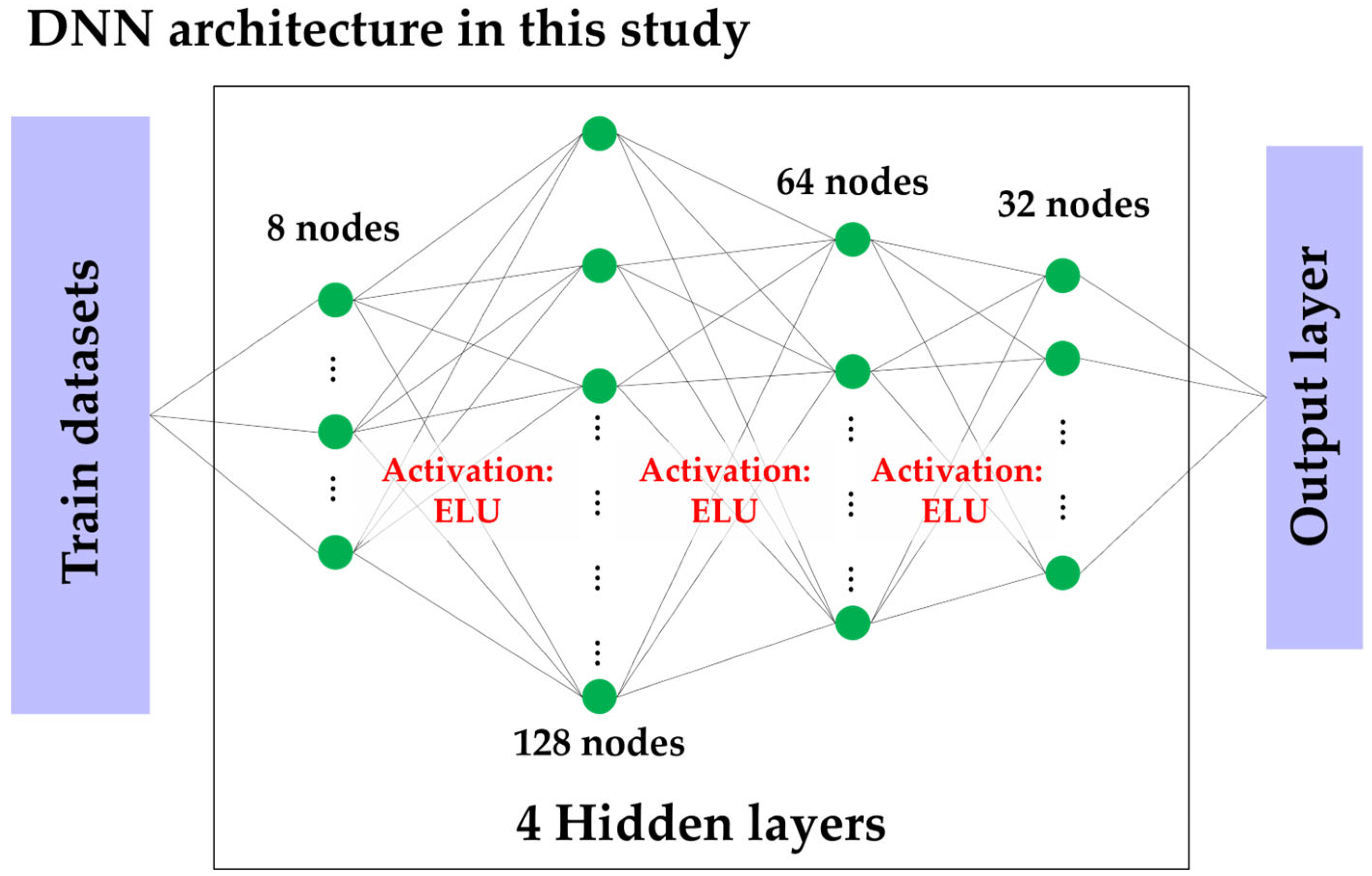
2.2.5. DNN
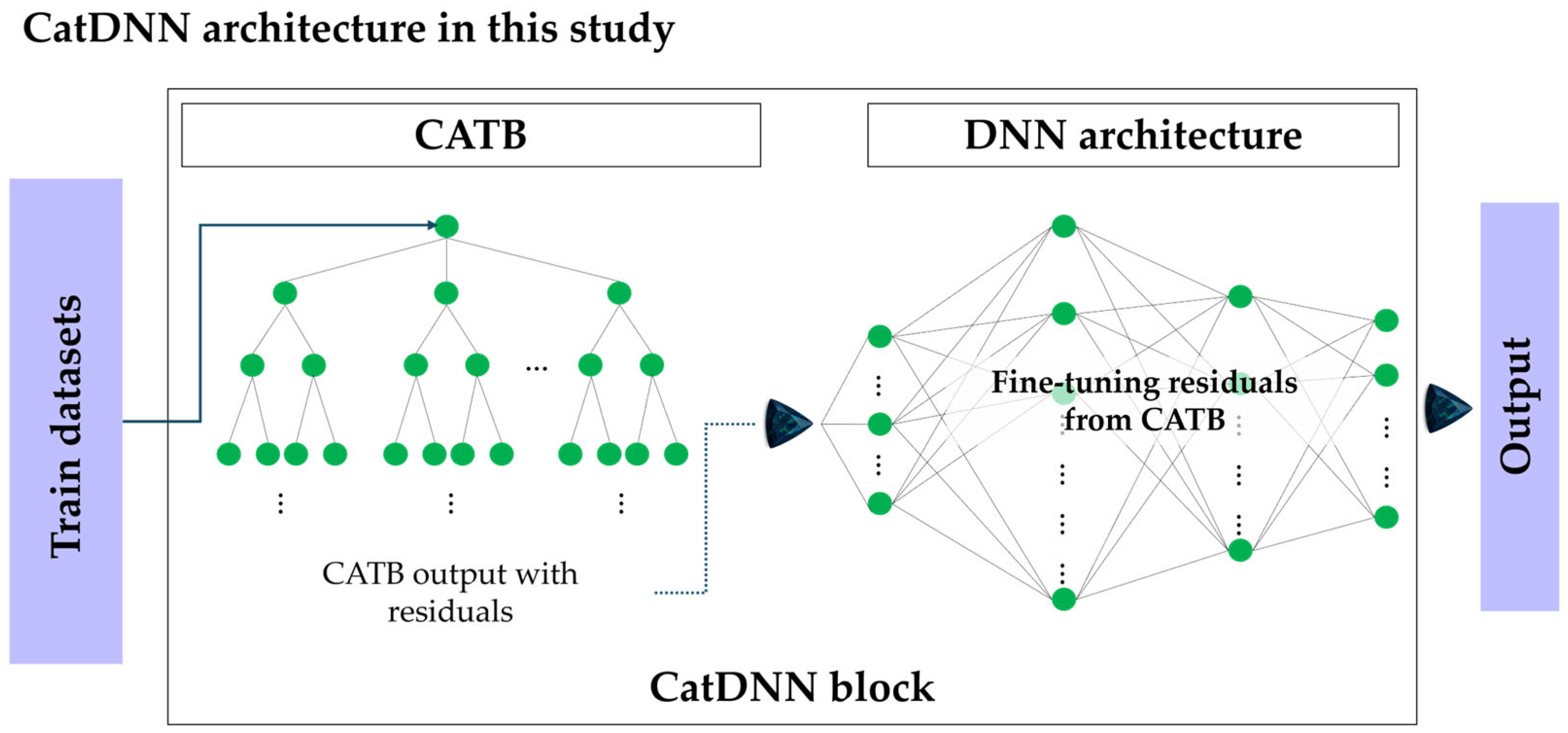
2.2.6. CatDNN
2.3. Data Collection
2.4. Model Evaluation Metrics
2.4.1. MSE Loss
2.4.2. R2
2.4.3. ES
2.4.4. Overfitting Monitoring
2.4.5. Parameter Correlation
2.4.6. Test Performance Evaluation
2.4.7. Validation Performance Evaluation
3. Results and Discussion
3.1. Pre-Training Results
Loss and ES Points
3.2. Main Training Results
3.3. Test Results
3.4. Validation Results
4. Conclusions
- (1)
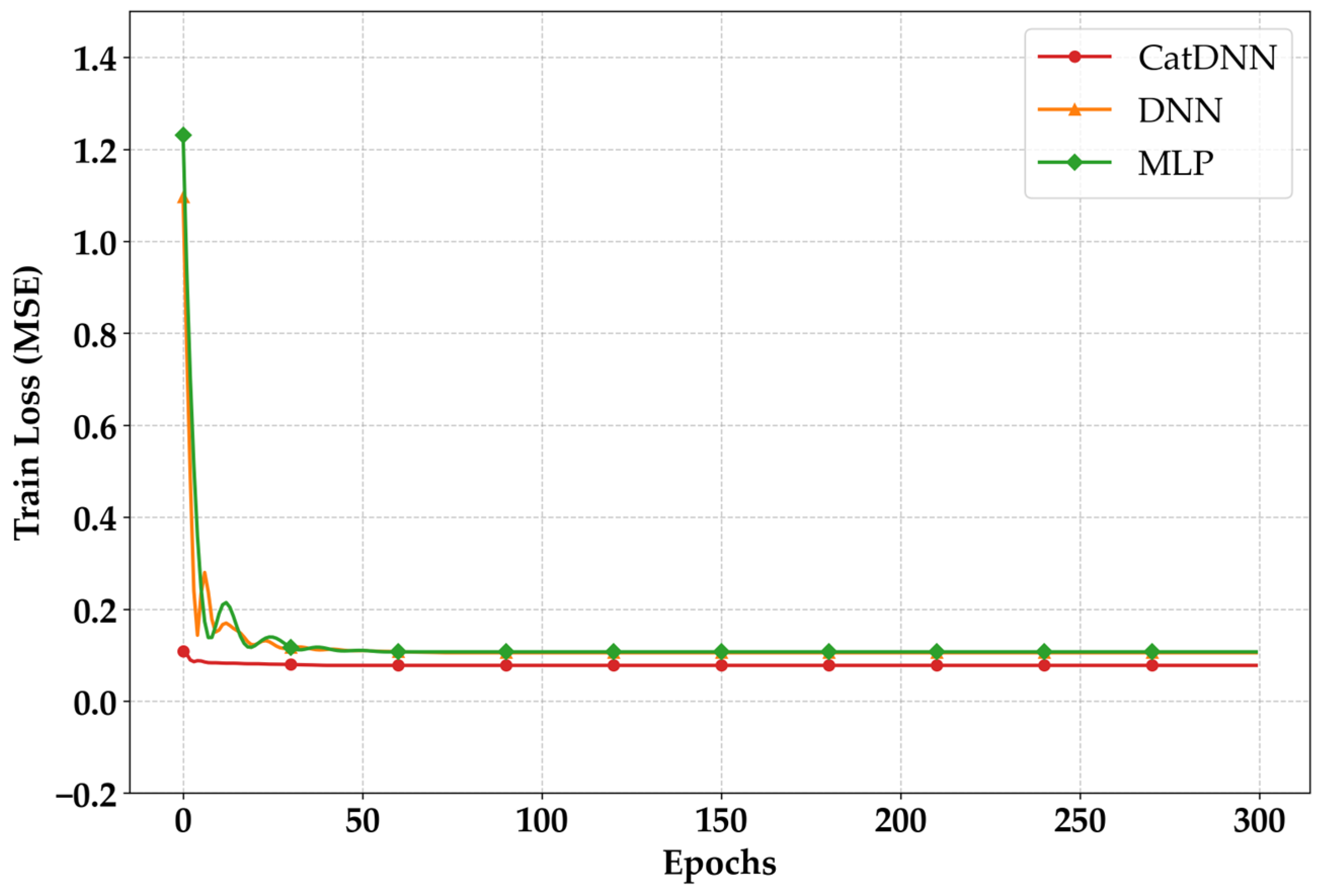
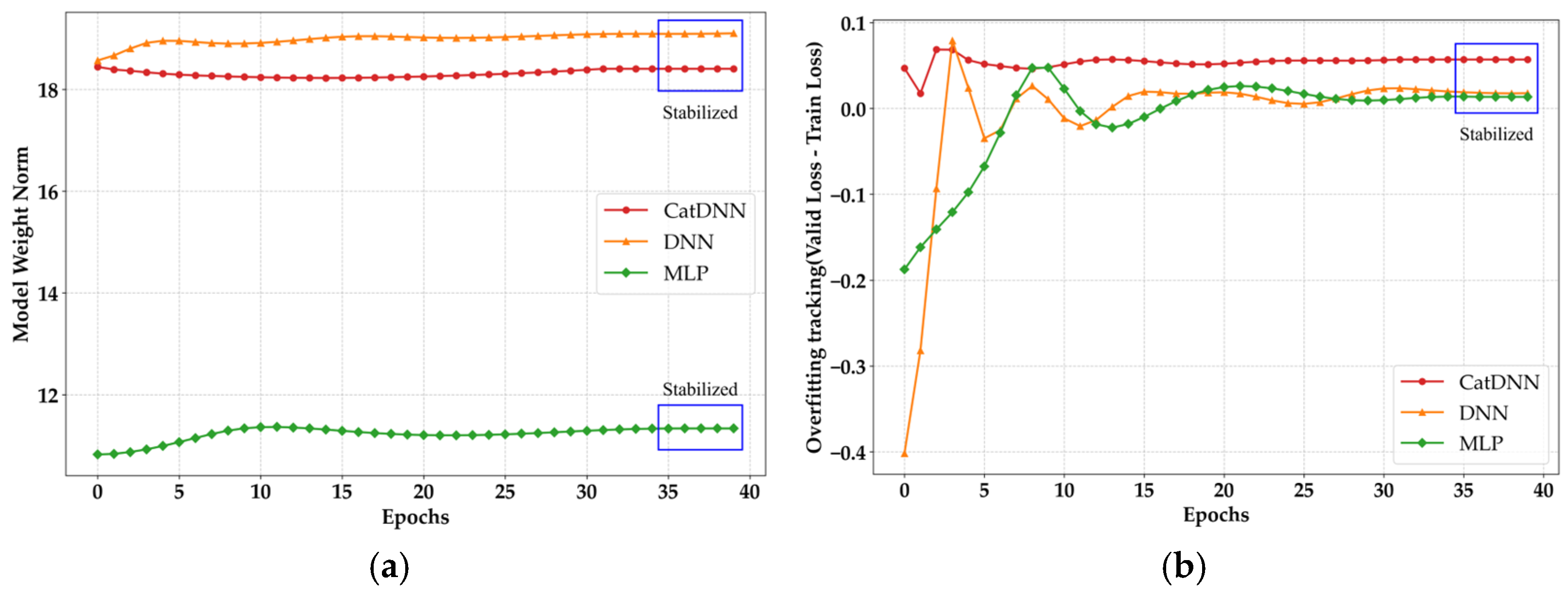
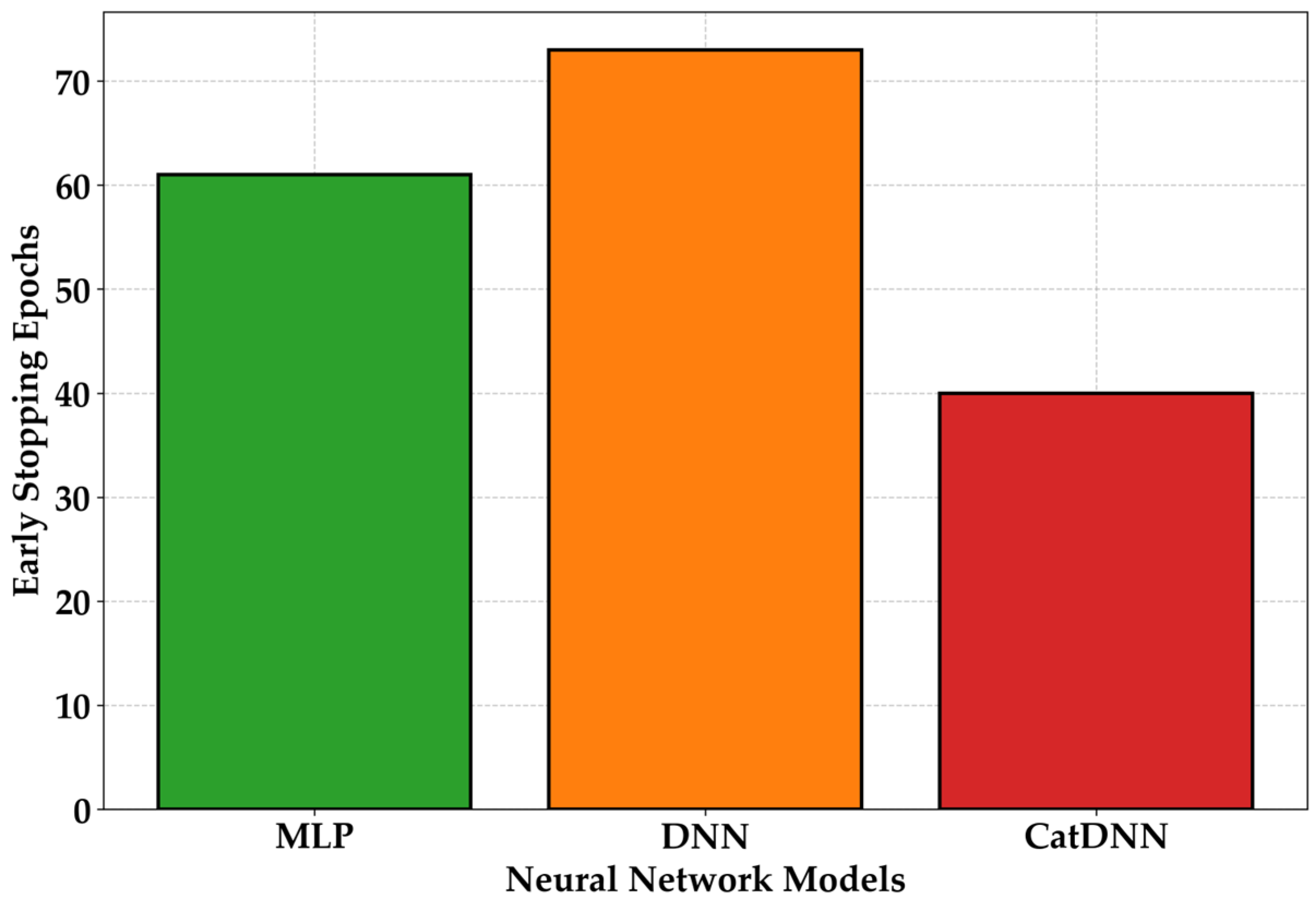
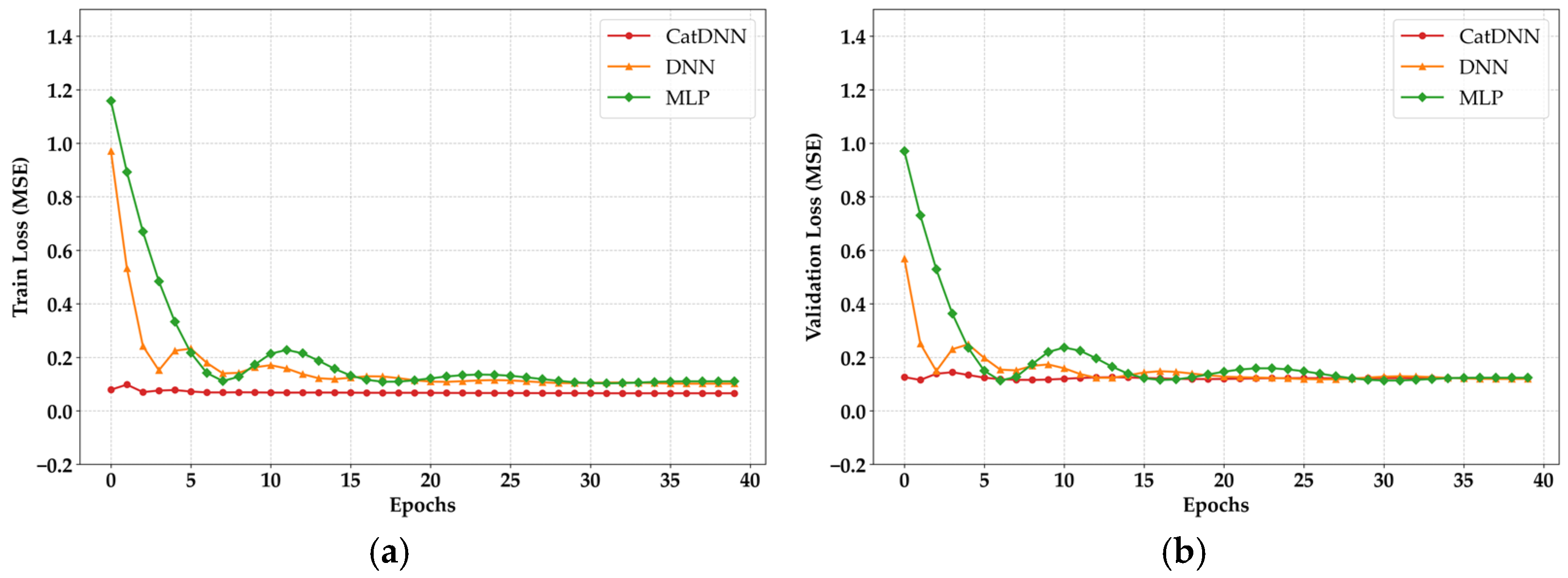
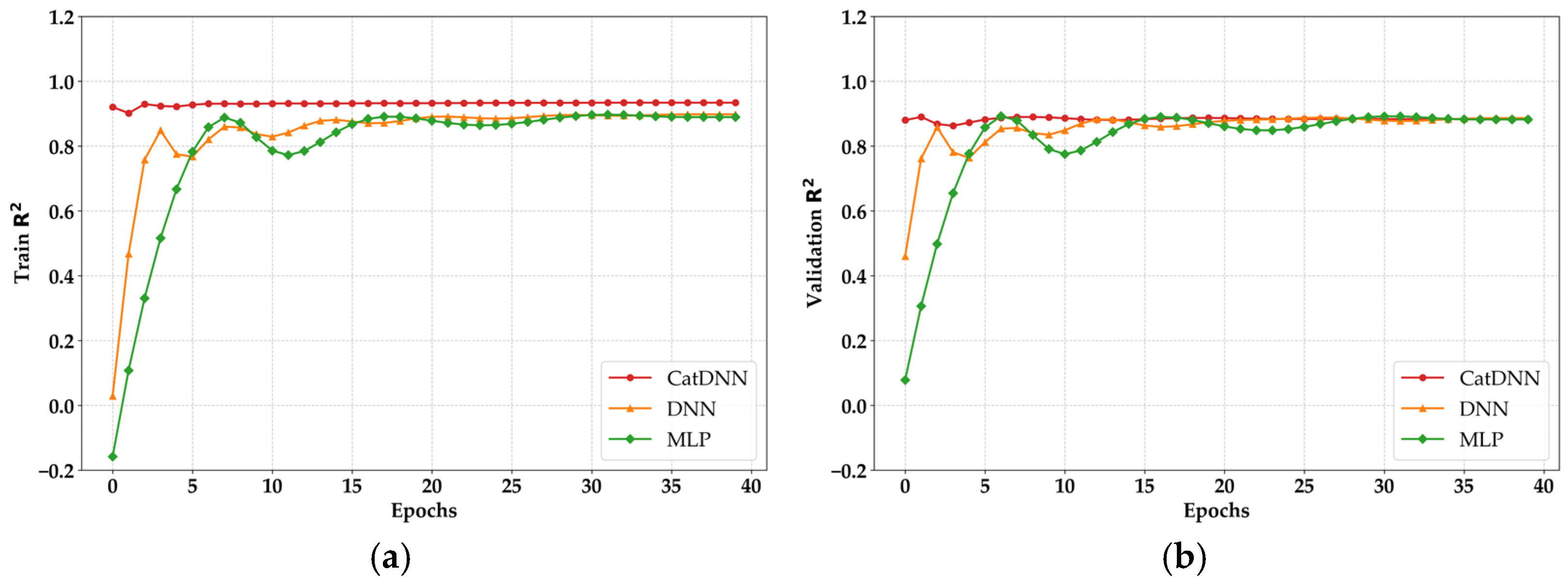
- The CatDNN model exhibited the earliest stabilization during training, reaching its best epoch at approximately 40. However, OT and WN monitoring revealed a flat tendency near this point, indicating the onset of data saturation under limited data conditions. Simpler models such as CATB and DNN maintained stable learning behavior without abnormal weight growth.
- (2)
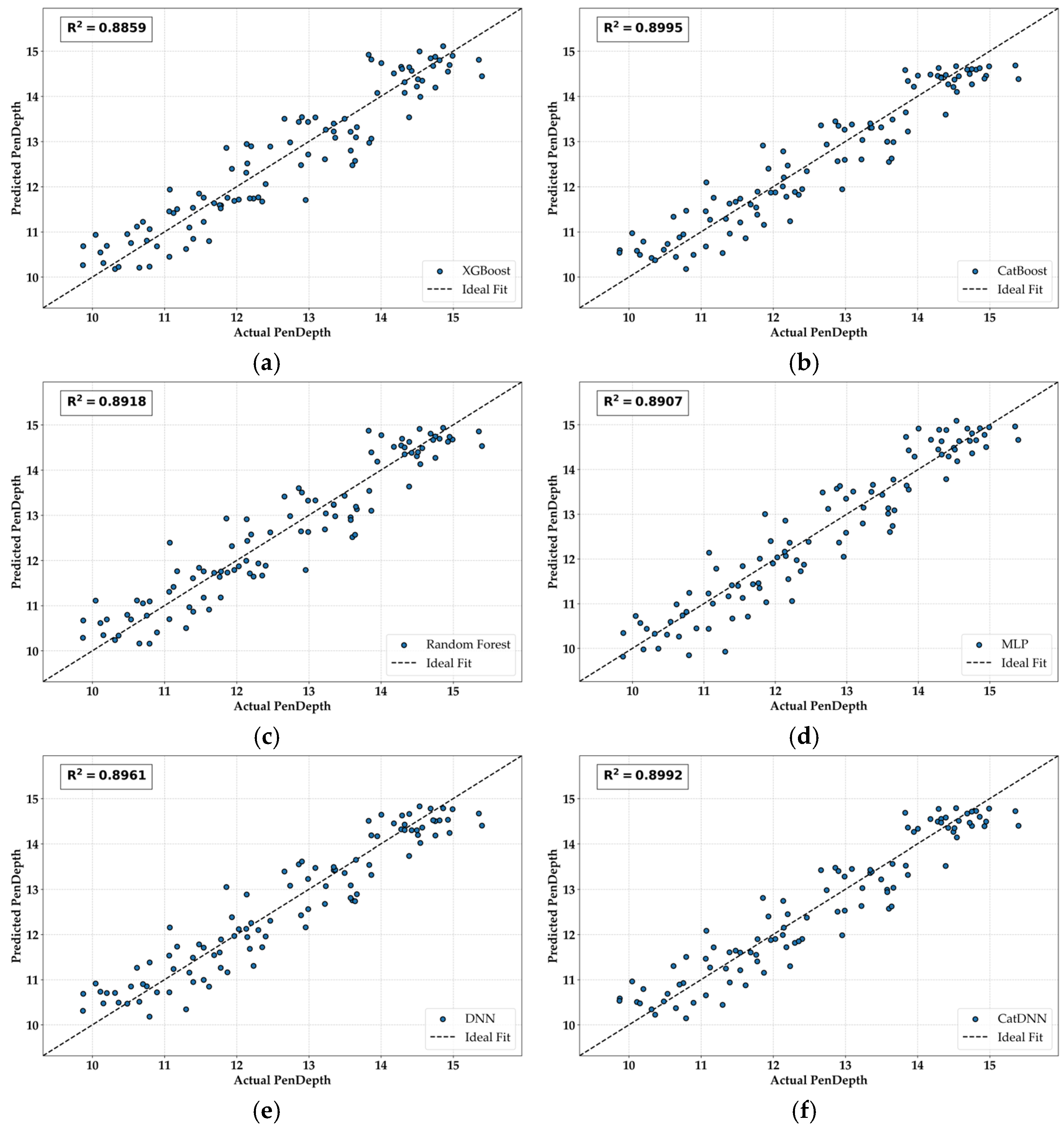
- Test performance showed only marginal differences among all the models, with R2 = 0.8908~0.9129, RMSE = 0.4544~0.5088, and MAE = 0.3571~0.4037. Although CatDNN achieved the lowest maximum error (1.21) due to its residual learning mechanism, its R2 (0.9123) was slightly lower than that of DNN (0.9129), demonstrating that increased architectural complexity did not yield meaningful performance improvement.
- (3)
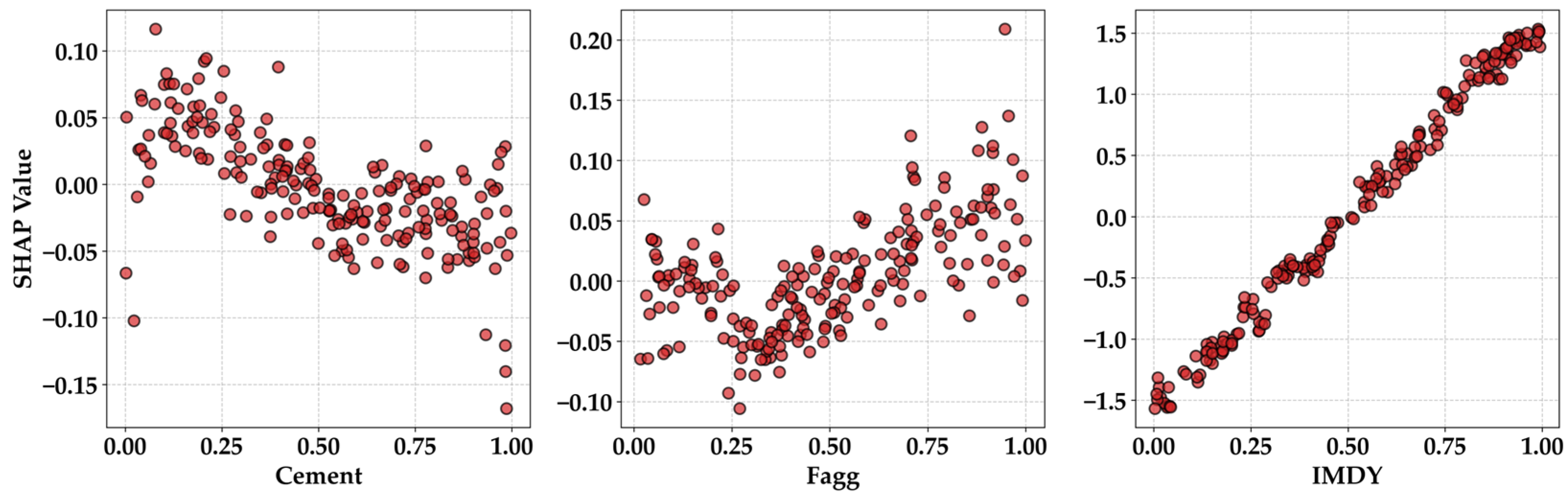
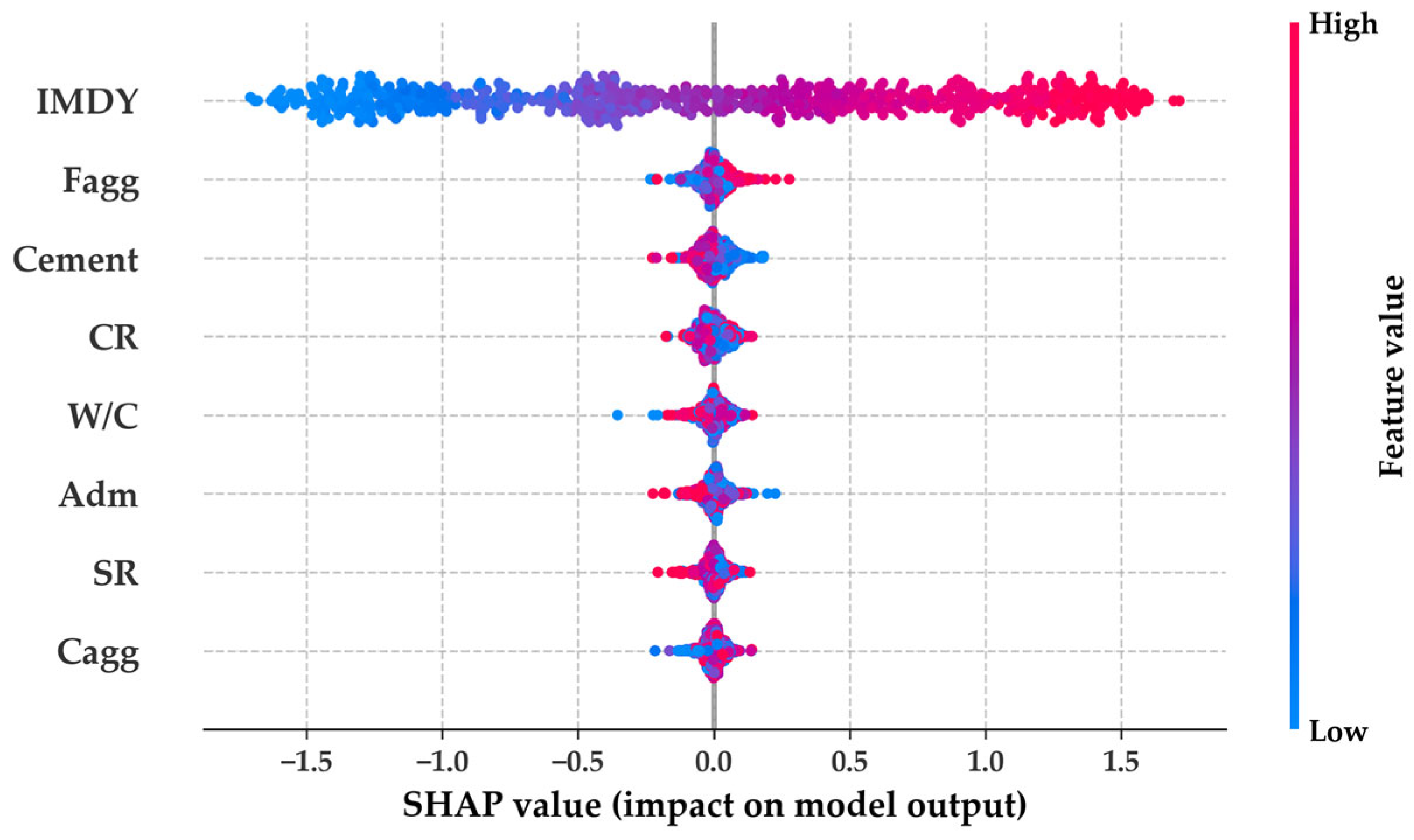
- The validation results further confirmed this trend, with all the models achieving R2 higher than 0.88 and CATB outperforming CatDNN in some cases. P-SHAP-D analysis verified that the models learned physically consistent tendencies for the key parameters, particularly cement content, fine aggregate ratio, and immersion days.
- (4)
- Overall, the findings demonstrate that when only limited datasets are available, simpler and well-fitted models can be more efficient and reliable than complex hybrid architectures. Future research should explore strategies to mitigate data saturation and enhance predictive accuracy under constrained data environments.
Author Contributions
Funding
Institutional Review Board Statement
Informed Consent Statement
Data Availability Statement
Conflicts of Interest
Appendix A

| Authors | Literature Title | Link |
|---|---|---|
| Al Mamun et al. | Experimental Investigation of Chloride Ion Penetration and Reinforcement Corrosion in Reinforced Concrete Member | https://doi.org/10.6106/JCEPM.2017.3.30.026 |
| Al Menhosh et al. | Sustainable high-performance concrete using metakaolin additive and polymer admixture: mechanical properties, durability and microstructure | https://tinyurl.com/dueya6du |
| Al-Ameeri et al. | Influence of carbonation on the resistance of concrete structures to chloride penetration and corrosion | https://doi.org/10.1051/matecconf/201928908001 |
| Al-Ameeri et al. | Combined impact of carbonation and crack width on the Chloride Penetration and Corrosion Resistance of Concrete Structures | https://doi.org/10.1016/j.cemconcomp.2020.103819 |
| Ali et al. | Improving the performance of recycled aggregate concrete using nylon waste fibers | https://doi.org/10.1016/j.cscm.2022.e01468 |
| Ali et al. | Effect of sulfate activation of fly ash on mechanical and durability properties of recycled aggregate concrete | https://doi.org/10.1016/j.conbuildmat.2021.122329 |
| Almeida et al. | Sugarcane bagasse ash sand (SBAS): Brazilian agroindustrial by-product for use in mortar | https://doi.org/10.1016/j.conbuildmat.2015.02.039 |
| Almeida et al. | Use of sugarcane bagasse ash sand (SBAS) as corrosion retardant for reinforced Portland slag cement concrete | https://doi.org/10.1016/j.conbuildmat.2019.07.217 |
| Althoey et al. | Sulfate activation of wheat straw ash to enhance the properties of high-performance concrete with recycled aggregates and waste tire steel fibers | https://doi.org/10.1371/journal.pone.0311838 |
| Anssari et al. | The Influence of Calcined Alumina Additives on the Mechanical Properties and Chloride-Induced Corrosion of Blended Concrete | https://doi.org/10.56294/sctconf2024814 |
| Bao et al. | Influence of the incorporation of recycled coarse aggregate on water absorption and chloride penetration into concrete | https://doi.org/10.1016/j.conbuildmat.2019.117845 |
| Basu et al. | Permeation characteristics of self-compacting concrete containing sandstone slurry | https://doi.org/10.1016/j.matpr.2020.02.326 |
| Beltrán et al. | Effect of cement addition on the properties of recycled concrete to reach control concretes strengths | https://doi.org/10.1016/j.jclepro.2014.05.053 |
| Binici et al. | Effect of crushed ceramic and basaltic pumice as fine aggregates on concrete mortars properties | https://doi.org/10.1016/j.conbuildmat.2006.06.002 |
| Binici et al. | Hydro-abrasive erosion of concrete incorporating ground blast-furnace slag and ground basaltic pumice | https://doi.org/10.1016/j.conbuildmat.2008.03.003 |
| Caronge et al. | Feasibility study on the use of processed waste tea ash as cement replacement for sustainable concrete production | https://doi.org/10.1016/j.jobe.2022.104458 |
| Chang et al. | The application of waste marble as coarse aggregate in concrete production | https://doi.org/10.24191/srj2018.15.1.75-83 |
| Chao et al. | Effects of silica fume and steel fiber on chloride ion penetration and corrosion behavior of cement-based composites | https://doi.org/10.1007/s11595-013-0679-4 |
| Charime et al. | Mechanical, durability and microstructure properties of eco-friendly sand concrete incorporating cane ash | https://doi.org/10.1016/j.jobe.2024.108801 |
| Cheewaket et al. | Initial corrosion presented by chloride threshold penetration of concrete up to 10 year-results under marine site | https://doi.org/10.1016/j.conbuildmat.2012.07.061 |
| Chen et al. | Effect of hydrophobic nanoparticle size on corrosion resistance of superhydrophobic mortar | https://doi.org/10.1016/j.conbuildmat.2025.140282 |
| Chen et al. | Use of nano-silica sol in concrete: Performance and influence mechanisms | https://doi.org/10.1016/j.conbuildmat.2023.134582 |
| Chiang et al. | Relation between the diffusion characteristic of concrete from salt ponding test and accelerated chloride migration test | https://doi.org/10.1016/j.matchemphys.2007.05.041 |
| Chiker et al. | Sodium sulfate and alternative combined sulfate/chloride action on ordinary and self-consolidating PLC-based concretes | https://doi.org/10.1016/j.conbuildmat.2015.12.123 |
| Chindaprasirt et al. | Influence of fly ash fineness on the chloride penetration of concrete | https://doi.org/10.1016/j.conbuildmat.2005.08.010 |
| Chindaprasirt et al. | Mechanical properties, chloride resistance and microstructure of Portland fly ash cement concrete containing high volume bagasse ash | https://doi.org/10.1016/j.jobe.2020.101415 |
| Chindaprasirt et al. | Effect of carbon dioxide on chloride penetration and chloride ion diffusion coefficient of blended Portland cement mortar | https://doi.org/10.1016/j.conbuildmat.2007.06.002 |
| Chindaprasirt et al. | Resistance to chloride penetration of blended Portland cement mortar containing palm oil fuel ash, rice husk ash and fly ash | https://doi.org/10.1016/j.conbuildmat.2006.12.001 |
| Ching et al. | Sustainable production of concrete with treated alum sludge | https://doi.org/10.1016/j.conbuildmat.2021.122703 |
| Choudhary et al. | Permeation, corrosion, and drying shrinkage assessment of self-compacting high strength concrete comprising waste marble slurry and fly ash, with silica fume | https://doi.org/10.1016/j.istruc.2021.05.008 |
| Ding et al. | Experimental study and simulation calculation of the chloride resistance of concrete under multiple factors | https://doi.org/10.3390/app11125322 |
| Du et al. | A targeted approach of employing nano-materials in high-volume fly ash concrete | https://doi.org/10.1016/j.cemconcomp.2019.103390 |
| Elfmarkova et al. | Determination of the chloride diffusion coefficient in blended cement mortars | https://doi.org/10.1016/j.cemconres.2015.06.014 |
| El-Hassan et al. | Enhancing the chloride ion penetration resistance of concrete using metal–organic frameworks | https://doi.org/10.1016/j.cscm.2024.e03463 |
| Farooq et al. | Influence of nylon fibers recycled from the scrap brushes on the properties of concrete: valorization of plastic waste in concrete | https://doi.org/10.1016/j.cscm.2022.e01089 |
| Fjendbo et al. | Correlating the development of chloride profiles and microstructural changes in marine concrete up to ten years | https://doi.org/10.1016/j.cemconcomp.2022.104590 |
| Fu et al. | Chloride profile characterization by electron probe microanalysis, powder extraction and AgNO3 colorimetric: A comparative study | https://doi.org/10.1016/j.conbuildmat.2022.127892 |
| Gautam et al. | Robustness of self-compacting concrete incorporating bone china ceramic waste powder along with granite cutting waste for sustainable development | https://doi.org/10.1016/j.jclepro.2022.132969 |
| Ghazy et al. | Resistance of concrete to different exposures with chloride-based salts | https://doi.org/10.1016/j.cemconres.2017.09.001 |
| Güneyisi et al. | Comparative study on strength, sorptivity, and chloride ingress characteristics of air-cured and water-cured concretes modified with metakaolin | https://doi.org/10.1617/s11527-007-9258-5 |
| Güneyisi et al. | Effect of initial curing on chloride ingress and corrosion resistance characteristics of concretes made with plain and blended cements | https://doi.org/10.1016/j.buildenv.2006.07.008 |
| Han et al. | Electrochemical characterization of chloride ion transport in rubber concrete | https://doi.org/10.1016/j.jobe.2023.106658 |
| Hashim et al. | Enhancing the sustainability, mechanical and durability properties of recycled aggregate concrete using calcium-rich waste glass powder as a supplementary cementitious material | https://doi.org/10.1016/j.scp.2025.101985 |
| Higashiyama et al. | Efficiency of ground granulated blast-furnace slag replacement in ceramic waste aggregate mortar | https://doi.org/10.1016/j.cemconcomp.2013.12.014 |
| Higashiyama et al. | Chloride ion penetration into mortar containing ceramic waste aggregate | https://doi.org/10.1016/j.conbuildmat.2012.01.018 |
| Higashiyama et al. | Compressive strength and resistance to chloride penetration of mortars using ceramic waste as fine aggregate | https://doi.org/10.1016/j.conbuildmat.2011.05.008 |
| Higashiyama et al. | A visual investigation on chloride ingress into ceramic waste aggregate mortars having different water to cement ratios | https://doi.org/10.1016/j.conbuildmat.2012.11.078 |
| Hong et al. | Mix proportion design based on particle compact packing theory and research on the resistance of metakaolin to chloride salt erosion in UHPC cementitious system | https://doi.org/10.1016/j.conbuildmat.2024.137982 |
| Horsakulthai et al. | Investigation on the corrosion resistance of bagasse-rice husk-wood ash blended cement concrete by impressed voltage | https://doi.org/10.1016/j.conbuildmat.2010.06.057 |
| Hou et al. | Study of corrosion resistance of superhydrophobic hydrotalcite cement mortar in chlorine salt environment | https://doi.org/10.1016/j.conbuildmat.2024.137124 |
| Hu et al. | Chloride migration in cement mortars with ultra-low water to binder ratio | https://doi.org/10.1016/j.cemconcomp.2021.103974 |
| Huang et al. | Using RCPT determine the migration coefficient to assess the durability of concrete | https://doi.org/10.1016/j.conbuildmat.2018.02.109 |
| Huang et al. | Using the chloride penetration depth obtained from RCPT to assess the permeability of concrete | https://doi.org/10.6119/JMST.202004_28(2).0005 |
| Huang et al. | Determination of the chloride migration coefficient for interfacial transition zone in cement-based material with fly ash replacement | https://doi.org/10.1016/j.cemconcomp.2022.104558 |
| Huynh et al. | Evaluation of the cementing efficiency factor of low-calcium fly ash for the chloride-penetration resistance of concretes: A simple approach | https://doi.org/10.1016/j.conbuildmat.2020.121858 |
| Jaafar et al. | Chloride resistance behavior on nano-metaclayed ultra-high-performance concrete | https://doi.org/10.1051/matecconf/201710301023 |
| Jain et al. | Effect of granite industry waste addition on durability properties of fly ash blended self-compacting concrete | https://doi.org/10.1016/j.conbuildmat.2022.127727 |
| Jain et al. | Electrical impedance analysis based quantification of microstructural changes in concretes due to non-steady state chloride migration | https://doi.org/10.1016/j.matchemphys.2011.04.057 |
| Jang et al. | Resistance of coal bottom ash mortar against the coupled deterioration of carbonation and chloride penetration | https://doi.org/10.1016/j.matdes.2015.12.074 |
| Jeon et al. | Effects of nano-silica and reactive magnesia on the microstructure and durability performance of underwater concrete | https://doi.org/10.1016/j.powtec.2021.11.020 |
| Kandasamy et al. | The effect of permeable formwork on durability and corrosion performance of concrete | https://doi.org/10.1016/j.cscm.2021.e00838 |
| Kim et al. | Evaluation of durability of concrete substituted heavyweight waste glass as fine aggregate | https://doi.org/10.1016/j.conbuildmat.2018.06.221 |
| Kumar et al. | Evaluation of mechanical and carbonation properties of self-compacting treated recycled coarse aggregates with two-stage mixing approaches | https://doi.org/10.1016/j.clwas.2022.100060 |
| Liu et al. | Predicting the chloride diffusion in concrete incorporating fly ash by a multi-scale model | https://doi.org/10.1016/j.jclepro.2021.129767 |
| Liu et al. | Understanding the effect of curing age on the chloride resistance of fly ash blended concrete by rapid chloride migration test | https://doi.org/10.1016/j.matchemphys.2017.05.011 |
| Liu et al. | Experimental investigation on mechanical and piezoresistive properties of cementitious materials containing graphene and graphene oxide nanoplatelets | https://doi.org/10.1016/j.conbuildmat.2016.10.024 |
| Ma et al. | Improved chloride transport resistance of cement mortar using quartz sands modified with MgAl-LDH | https://doi.org/10.1016/j.jobe.2023.107557 |
| Maes et al. | Resistance of concrete and mortar against combined attack of chloride and sodium sulphate | https://doi.org/10.1016/j.cemconcomp.2014.06.013 |
| Mala et al. | Effect of relative levels of mineral admixtures on corrosion resistance of cracked ternary cement blend concrete | https://doi.org/10.1080/21650373.2013.847810 |
| Ming et al. | Improved chloride binding capacity and corrosion protection of cement-based materials by incorporating alumina nano particles | https://doi.org/10.1016/j.cemconcomp.2022.104898 |
| Mittri et al. | Utilization of heat-treated ornamental stone processing waste as an addition to concretes to improve compressive strength and reduce chloride ion penetration | https://doi.org/10.1016/j.conbuildmat.2018.08.129 |
| Moradllo et al. | Using micro X-ray fluorescence to image chloride profiles in concrete | https://doi.org/10.1016/j.cemconres.2016.11.014 |
| Muduli et al. | Performance assessment of concrete incorporating recycled coarse aggregates and metakaolin: A systematic approach | https://doi.org/10.1016/j.conbuildmat.2019.117223 |
| Nasiru et al. | Properties of cement mortar containing recycled glass and rice husk ash | https://doi.org/10.1016/j.conbuildmat.2021.123900 |
| Oni et al. | The effect of cassava starch on the durability characteristics of concrete | https://doi.org/10.2174/1874149502014010289 |
| Pablo-Calderón et al. | Exploring the detection of Cl− penetration in portland cement mortars via surface electrical resistivity | https://doi.org/10.3390/ma16227123 |
| Park et al. | Evaluation of concrete durability performance with sodium silicate impregnants | https://doi.org/10.1155/2014/945297 |
| Peng et al. | Enhancing the corrosion resistance of recycled aggregate concrete by incorporating waste glass powder | https://doi.org/10.1016/j.cemconcomp.2022.104909 |
| Qiao et al. | Chloride diffusion and wicking in concrete exposed to NaCl and MgCl2 solutions | https://doi.org/10.1061/(ASCE)MT.1943-5533.0002192 |
| Rahbar et al. | High-strength concrete containing RHA and nano-CaCO3 | https://doi.org/10.1049/mnl.2019.0281 |
| Rasid et al. | Ground palm oil fuel ash and calcined eggshell powder as SiO2-CaO based accelerator in green concrete | https://doi.org/10.1016/j.jobe.2022.105617 |
| Rattanachu et al. | Performance of recycled aggregate concrete with rice husk ash as cement binder | https://doi.org/10.1016/j.cemconcomp.2020.103533 |
| Rerkpiboon et al. | Strength, chloride resistance, and expansion of concretes containing ground bagasse ash | https://doi.org/10.1016/j.conbuildmat.2015.10.140 |
| Said et al. | Properties of concrete incorporating nano-silica | https://doi.org/10.1016/j.conbuildmat.2012.06.044 |
| Saleh et al. | Durability assessment of industrial by-product and marine resource-based ultra-high-performance concrete | https://doi.org/10.1016/j.matpr.2023.07.270 |
| Samimi et al. | Influence of pumice and zeolite on compressive strength, transport properties and resistance to chloride penetration of high strength self-compacting concretes | https://doi.org/10.1016/j.conbuildmat.2017.06.071 |
| Shaikh et al. | Sustainability assessment of recycled aggregates concrete mixes containing industrial by-products | https://doi.org/10.1016/j.mtsust.2019.100013 |
| Shin et al. | Mix design of concrete for prestressed concrete sleepers using blast furnace slag and steel fibers | https://doi.org/10.1016/j.cemconcomp.2016.08.007 |
| Siddique et al. | Sustainable utilization of ceramic waste in concrete: Exposure to adverse conditions | https://doi.org/10.1016/j.jclepro.2018.10.231 |
| Simčič et al. | Chloride ion penetration into fly ash modified concrete during wetting-drying cycles | https://doi.org/10.1016/j.conbuildmat.2015.04.033 |
| Somna et al. | Effect of ground fly ash and ground bagasse ash on the durability of recycled aggregate concrete | https://doi.org/10.1016/j.cemconcomp.2012.03.003 |
| Somna et al. | Effect of ground bagasse ash on mechanical and durability properties of recycled aggregate concrete | https://doi.org/10.1016/j.matdes.2011.11.065 |
| Sørensen et al. | Chloride penetration into concrete-Comparison of results from field exposure tests and laboratory tests | https://doi.org/10.13140/RG.2.1.4088.2960 |
| Söylev et al. | The investigation of the validity of a single k-value for fly ash in the range of W/C ratio critical for the standards | https://doi.org/10.1016/j.conbuildmat.2020.118284 |
| Spiesz et al. | The apparent and effective chloride migration coefficients obtained in migration tests | https://doi.org/10.1016/j.cemconres.2013.02.005 |
| Sujjavanich et al. | Synergistic effect of metakaolin and fly ash on properties of concrete | https://doi.org/10.1016/j.conbuildmat.2017.08.072 |
| Thomas et al. | Recycling of waste tire rubber as aggregate in concrete: durability-related performance | https://doi.org/10.1016/j.jclepro.2015.08.046 |
| Wang et al. | Study on the effect of plant extracts as low carbon green admixtures on the performance of cement mortar | https://doi.org/10.1016/j.cscm.2023.e02080 |
| Wang et al. | Performances of concrete with binder and/or aggregates replacement by all-solid waste materials | https://doi.org/10.1016/j.jclepro.2024.141929 |
| Wu et al. | The effect of nano-scale calcium stearate emulsion on the integral waterproof performance and chloride resistance of cement mortar | https://doi.org/10.1016/j.conbuildmat.2021.125903 |
| Yang et al. | A rapid method to determine the chloride profile in cement-based materials by using electrical field | https://doi.org/10.1080/02533839.2011.591547 |
| Yazıcı et al. | The effect of silica fume and high-volume Class C fly ash on mechanical properties, chloride penetration and freeze–thaw resistance of self-compacting concrete | https://doi.org/10.1016/j.conbuildmat.2007.01.002 |
| Yoon et al. | Quantitative relationship between chloride penetration depth and hydraulic conductivity of concrete under hydrostatic pressure | https://doi.org/10.1061/(ASCE)MT.1943-5533.0004198 |
| Younis et al. | Durability and mechanical characteristics of sustainable self-curing concrete utilizing crushed ceramic and brick wastes | https://doi.org/10.1016/j.cscm.2022.e01251 |
| Zhang et al. | Experimental study on chloride penetration of the new-to-old concrete interface | https://doi.org/10.1016/j.conbuildmat.2024.135585 |
| Zheng et al. | Concrete pore structure and performance changes due to the electrical chloride penetration and extraction | https://doi.org/10.1080/21650373.2015.1087891 |
| Zheng et al. | Innovative and environmentally friendly MICP surface curing: Enhancing mechanical and durability properties of concrete | https://doi.org/10.1016/j.jclepro.2024.143962 |
| Parameters | Maximum | Minimum |
|---|---|---|
| W/C | 1.500 | 0.156 |
| Cement | 0.526 | 0.04499 |
| Cagg | 0.576 | 0 |
| Fagg | 0.700 | 0 |
| Adm | 0.0189 | 0 |
| SR | 0.312 | 0 |
| CR | 0.255 | 0 |
| IMDY | 3650 | 0.125 |
| CPD | 89 | 0.5799 |
References
- Truong, Q.C.; Nguyen, Q.T.; Soueidy, C.P.; Bastidas-Arteaga, E. Maintenance Modeling and Cost Assessment for Repaired Reinforced Concrete Structures Exposed to Chloride Attack in Coastal Areas in Vietnam. IOP Conf. Ser. Mater. Sci. Eng. 2023, 1289, 012024. [Google Scholar] [CrossRef] [Scilit]
- Ali, M.; Shams, M.A.; Bheel, N.; Almaliki, A.H.; Mahmoud, A.S.; Dodo, Y.A.; Benjeddou, O. A Review on Chloride Induced Corrosion in Reinforced Concrete Structures: Lab and in Situ Investigation. RSC Adv. 2024, 14, 37252–37271. [Google Scholar] [CrossRef] [Scilit] [PubMed]
- Farnam, Y.; Dick, S.; Wiese, A.; Davis, J.; Bentz, D.; Weiss, J. The Influence of Calcium Chloride Deicing Salt on Phase Changes and Damage Development in Cementitious Materials. Cem. Concr. Compos. 2015, 64, 1–15. [Google Scholar] [CrossRef] [Scilit]
- Jones, C.; Ramanathan, S.; Suraneni, P.; Hale, W.M. Mitigating Calcium Oxychloride Formation in Cementitious Paste Using Alternative Supplementary Cementitious Materials. Constr. Build. Mater. 2023, 377, 130756. [Google Scholar] [CrossRef] [Scilit]
- Behera, P.K.; Misra, S.; Mondal, K. Corrosion of Strained Plain Rebar in Chloride-Contaminated Mortar and Novel Approach to Estimate the Corrosion Amount from Rust Characterization. J. Mater. Civ. Eng. 2021, 33, 04021283. [Google Scholar] [CrossRef] [Scilit]
- Ma, J.; Yang, Q.; Wang, X.; Peng, X.; Qin, F. Review of Prediction Models for Chloride Ion Concentration in Concrete Structures. Buildings 2025, 15, 149. [Google Scholar] [CrossRef] [Scilit]
- Park, J.-C.; Jung, H.-J. Finite Element Method-Based Numerical Study Utilizing Experimental Data on Chloride Solution Transport in Concrete under Hydraulic Pressure. Constr. Build. Mater. 2024, 418, 135270. [Google Scholar] [CrossRef] [Scilit]
- Chalee, W.; Jaiyong, A.; Cheewaket, T.; Jaturapitakkul, C. An Empirical Model to Predict Chloride Penetrations in Concrete Containing Palm Oil Fuel Ash Based on 10-Year Exposure Under Marine Environment. Int. J. Concr. Struct. Mater. 2023, 17, 53. [Google Scholar] [CrossRef] [Scilit]
- Kim, T.-K.; Choi, S.-J.; Choi, J.-H.; Kim, J.-H.J. Prediction of Chloride Penetration Depth Rate and Diffusion Coefficient Rate of Concrete from Curing Condition Variations Due to Climate Change Effect. Int. J. Concr. Struct. Mater. 2019, 13, 15. [Google Scholar] [CrossRef] [Scilit]
- Taffese, W.Z.; Espinosa-Leal, L. Prediction of Chloride Resistance Level of Concrete Using Machine Learning for Durability and Service Life Assessment of Building Structures. J. Build. Eng. 2022, 60, 105146. [Google Scholar] [CrossRef] [Scilit]
- Taffese, W.Z.; Espinosa-Leal, L. A Machine Learning Method for Predicting the Chloride Migration Coefficient of Concrete. Constr. Build. Mater. 2022, 348, 128566. [Google Scholar] [CrossRef] [Scilit]
- Li, Y.; Xiao, H.; Liu, J. Robust Machine Learning Framework for Predicting Chloride Ion Diffusion in Concrete under Load and Freeze-Thaw Conditions. Case Stud. Constr. Mater. 2025, 23, e05249. [Google Scholar] [CrossRef] [Scilit]
- Hosseinzadeh, M.; Mousavi, S.S.; Hosseinzadeh, A.; Dehestani, M. An Efficient Machine Learning Approach for Predicting Concrete Chloride Resistance Using a Comprehensive Dataset. Sci. Rep. 2023, 13, 15024. [Google Scholar] [CrossRef] [Scilit]
- Ullah, I.; Alabduljabbar, H.; Javed, M.F.; Alaskar, A.; Khan, W.U.; Ahmad, F. Estimating the Surface Chloride Concentration of Marine Concrete Utilizing Advanced Hybrid Machine Learning Models. Sci. Rep. 2025, 15, 40442. [Google Scholar] [CrossRef] [Scilit]
- Wu, L.; Wang, W.; Jiang, C. Deep Learning-Based Prediction for Time-Dependent Chloride Penetration in Concrete Exposed to Coastal Environment. Heliyon 2023, 9, e16869. [Google Scholar] [CrossRef] [Scilit]
- Li, L.; Su, L.; Guo, B.; Cai, R.; Wang, X.; Zhang, T. Prediction and Prevention of Concrete Chloride Penetration: Machine Learning and MICP Techniques. Front. Mater. 2024, 11, 1445547. [Google Scholar] [CrossRef] [Scilit]
- Liu, Q.; Iqbal, M.F.; Yang, J.; Lu, X.; Zhang, P.; Rauf, M. Prediction of Chloride Diffusivity in Concrete Using Artificial Neural Network: Modelling and Performance Evaluation. Constr. Build. Mater. 2021, 268, 121082. [Google Scholar] [CrossRef] [Scilit]
- Wu, L.; Xia, Y.; Shi, F.; Ni, X. Prediction of Chloride Penetration in Concrete and Durability Assessment Using Bayesian Optimized Long Short-Term Memory Networks. Eng. Lett. 2025, 33, 1797–1805. [Google Scholar]
- Abdellatief, M.; Abd-Elmaboud, M.E.; Mortagi, M.; Saqr, A.M. A Convolutional Neural Network-Based Deep Learning Approach for Predicting Surface Chloride Concentration of Concrete in Marine Tidal Zones. Sci. Rep. 2025, 15, 27611. [Google Scholar] [CrossRef] [Scilit]
- Degefa, A.B.; Mesfin, W.M.; Kim, H.-K.; Park, S. Machine Learning-Driven Prediction of Chloride Resistance and Service Life Estimation in Blended Cement Concrete. J. Build. Eng. 2026, 121, 115568. [Google Scholar] [CrossRef] [Scilit]
- Khatti, J.; Mashaly, A.A. Prediction of Rapid Chloride Penetration Resistance of Metakaolin-Based High Strength Concrete: Critical Comparison between Natural and Evolutionary Algorithm–Optimized Artificial Neural Networks. J. Struct. Des. Constr. Pract. 2025, 30, 04025090. [Google Scholar] [CrossRef] [Scilit]
- Woo, B.-H.; Choi, D.-H.; Park, C.-H.; Kim, J.-S.; Ryou, J.-S.; Yoo, K.-S. Gaussian Process-Based Data Augmentable Deep Bayesian Neural Network: Application to Estimate the Stress Transfer Length in Pretensioned Concrete Beams. Eng. Struct. 2026, 348, 121809. [Google Scholar] [CrossRef] [Scilit]
- Woo, B.-H.; Kim, Y.-J.; Kang, I.-H.; Lee, K.-H. Bayesian LSTM-Based Missing Data Estimation and Flexural Strength Assessment for Determination of Novel Smart Mobility Pavement Materials: Mg(OH)2 Added Plastic Composites. Materials 2025, 18, 4334. [Google Scholar] [CrossRef] [Scilit]
- Prokhorenkova, L.; Gusev, G.; Vorobev, A.; Dorogush, A.V.; Gulin, A. CatBoost: Unbiased Boosting with Categorical Features. arXiv 2019. [Google Scholar] [CrossRef] [Scilit]
- Chen, T.; Guestrin, C. XGBoost: A Scalable Tree Boosting System. In Proceedings of the 22nd ACM SIGKDD International Conference on Knowledge Discovery and Data Mining; ACM: New York, NY, USA, 2016; pp. 785–794. [Google Scholar]
- Breiman, L. Random Forests. Mach. Learn. 2001, 45, 5–32. [Google Scholar] [CrossRef] [Scilit]
- Serra, T.; Kumar, A.; Ramalingam, S. Lossless Compression of Deep Neural Networks. arXiv 2020. [Google Scholar] [CrossRef] [Scilit]
- Zhang, Y.; Ren, W.; Lei, J.; Sun, L.; Mi, Y.; Chen, Y. Predicting the Compressive Strength of High-Performance Concrete via the DR-CatBoost Model. Case Stud. Constr. Mater. 2024, 21, e03990. [Google Scholar] [CrossRef] [Scilit]
- Woo, B.H.; Ryou, J.S.; Kim, J.Y.; Lee, B.; Gi Kim, H.; Kim, J.S. Freeze-Thaw Durability Estimation for Concrete through the Gaussian Process Regression with Kernel Convolution. Constr. Build. Mater. 2023, 400, 132825. [Google Scholar] [CrossRef] [Scilit]
- Woo, B.H.; Jeon, I.K.; Kim, S.S.; Lee, J.B.; Ryou, J.-S. An Experimental and Statistical Study on Rebar Corrosion Considering the Temperature Effect Using Gaussian Process Regression. Appl. Sci. 2020, 10, 5937. [Google Scholar] [CrossRef] [Scilit]
- Li, M.; Zhang, Z.; Lei, L.; Wang, X.; Guo, X. Agricultural Greenhouses Detection in High-Resolution Satellite Images Based on Convolutional Neural Networks: Comparison of Faster R-CNN, YOLO v3 and SSD. Sensors 2020, 20, 4938. [Google Scholar] [CrossRef] [Scilit]
- Lai, H.; Chen, L.; Liu, W.; Yan, Z.; Ye, S. STC-YOLO: Small Object Detection Network for Traffic Signs in Complex Environments. Sensors 2023, 23, 5307. [Google Scholar] [CrossRef] [Scilit]
- Seo, E.-A.; Lee, H. Influence of Curing Time on Chloride Penetration and Binding Capacity in Concrete Exposed to Chloride Solutions. J. Build. Eng. 2025, 106, 112461. [Google Scholar] [CrossRef] [Scilit]
- Dashti, P.; Moodi, F.; Ramezanianpour, A.A.; Banar, R. Finite Element Analysis of Chloride Ion Penetration and Service Life Prediction in Concrete with Supplementary Cementitious Materials. Sci. Rep. 2025, 15, 30023. [Google Scholar] [CrossRef] [Scilit]
- Pablo-Calderón, M.A.; de Jesús Cano-Barrita, P.F.; León-Martínez, F.M. Exploring the Detection of Cl− Penetration in Portland Cement Mortars via Surface Electrical Resistivity. Materials 2023, 16, 7123. [Google Scholar] [CrossRef] [Scilit]
- Xiang, Y.; Li, Y.; Xu, Z.; Deng, J.; Cui, H.; Sun, G. Highly Efficient Resistance to Chloride Ion Penetration and Enhanced Compressive Strength in Cement Coupled with Cationic Polymer Grafted Nano-Silica. Constr. Build. Mater. 2025, 478, 141420. [Google Scholar] [CrossRef] [Scilit]
- Park, K.T.; Kim, H.G.; Kim, J.S.; Woo, B.H. Improving the Thermoelectric Performance of Cement Composites by Substituting Fine Aggregate with Silicon Carbide. Constr. Build. Mater. 2024, 416, 135068. [Google Scholar] [CrossRef] [Scilit]
- Woo, B.H.; Jeon, I.K.; Yoo, D.H.; Kim, S.S.; Lee, J.B.; Kim, H.G. Utilization of Municipal Solid Waste Incineration Bottom Ash as Fine Aggregate of Cement Mortars. Sustainability 2021, 13, 8832. [Google Scholar] [CrossRef] [Scilit]
- Bae, J.-H.; Woo, B.H.; Kim, H.G.; Ryou, J.-S. Enhancing the Thermal Properties of Cement Composites Through Substitution of the Fine Aggregate Using Metallic Material. Int. J. Pavement Eng. 2022, 24, 2144311. [Google Scholar] [CrossRef] [Scilit]
- Selman, S.M.; Abbas, Z.K. The Use of Lightweight Aggregate in Concrete: A Review. J. Eng. 2022, 28, 1–13. [Google Scholar] [CrossRef] [Scilit]





| Models | R2 | RMSE | MAE | Max Error |
|---|---|---|---|---|
| XGB | 0.8933 | 0.5029 | 0.4037 | 1.29 |
| CATB | 0.8973 | 0.4933 | 0.3964 | 1.28 |
| RF | 0.8908 | 0.5088 | 0.3879 | 1.37 |
| MLP | 0.9079 | 0.4672 | 0.3669 | 1.28 |
| DNN | 0.9129 | 0.4544 | 0.3571 | 1.35 |
| CatDNN | 0.9123 | 0.4561 | 0.3626 | 1.21 |
Disclaimer/Publisher’s Note: The statements, opinions and data contained in all publications are solely those of the individual author(s) and contributor(s) and not of MDPI and/or the editor(s). MDPI and/or the editor(s) disclaim responsibility for any injury to people or property resulting from any ideas, methods, instructions or products referred to in the content. |
© 2026 by the authors. Licensee MDPI, Basel, Switzerland. This article is an open access article distributed under the terms and conditions of the Creative Commons Attribution (CC BY) license.
Share and Cite
Jang, C.; Kim, S.-H.; Jo, Y.-W.; Kim, H.-G. Prediction of Chloride Penetration Depth in Concrete Using a Combined Ensemble–Neural Network Architecture: Facing Data Saturation. Materials 2026, 19, 2118. https://doi.org/10.3390/ma19102118
Jang C, Kim S-H, Jo Y-W, Kim H-G. Prediction of Chloride Penetration Depth in Concrete Using a Combined Ensemble–Neural Network Architecture: Facing Data Saturation. Materials. 2026; 19(10):2118. https://doi.org/10.3390/ma19102118
Chicago/Turabian StyleJang, Changhwan, So-Hee Kim, Yeong-Wi Jo, and Hong-Gi Kim. 2026. "Prediction of Chloride Penetration Depth in Concrete Using a Combined Ensemble–Neural Network Architecture: Facing Data Saturation" Materials 19, no. 10: 2118. https://doi.org/10.3390/ma19102118
APA StyleJang, C., Kim, S.-H., Jo, Y.-W., & Kim, H.-G. (2026). Prediction of Chloride Penetration Depth in Concrete Using a Combined Ensemble–Neural Network Architecture: Facing Data Saturation. Materials, 19(10), 2118. https://doi.org/10.3390/ma19102118