A Review of Pavement Damping Characteristics for Mitigating Tire-Pavement Noise: Material Composition and Underlying Mechanisms


Abstract
1. Introduction
2. Methodology
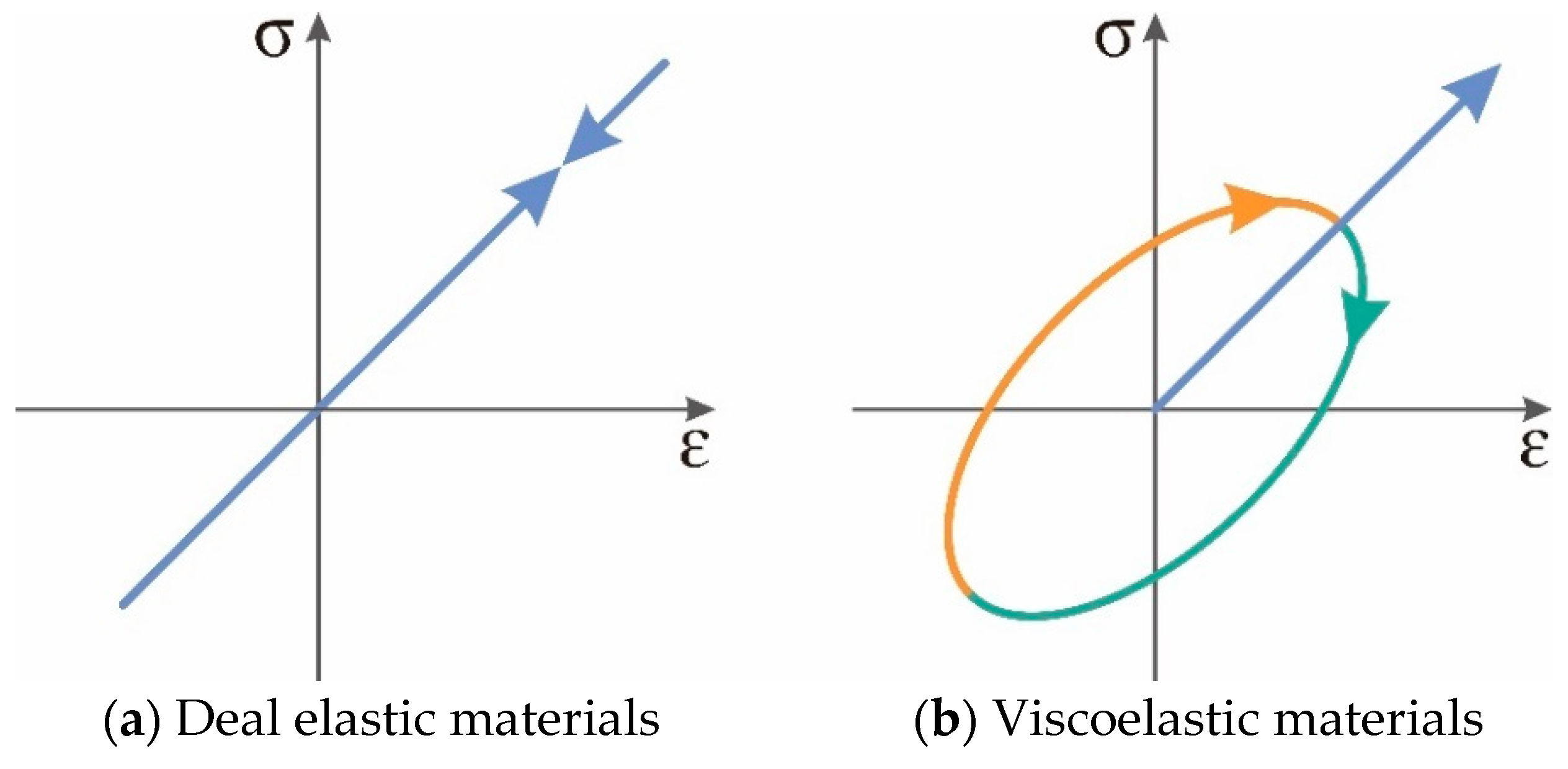
3. Damping Behaviors of Materials
4. Evaluation on Damping Properties of Pavement Materials
4.1. Damping Properties of Asphalt Binders
4.2. Damping Properties of Asphalt Mixtures
5. Factors Affecting Damping Properties of Pavement Materials
5.1. Polymer Modifiers
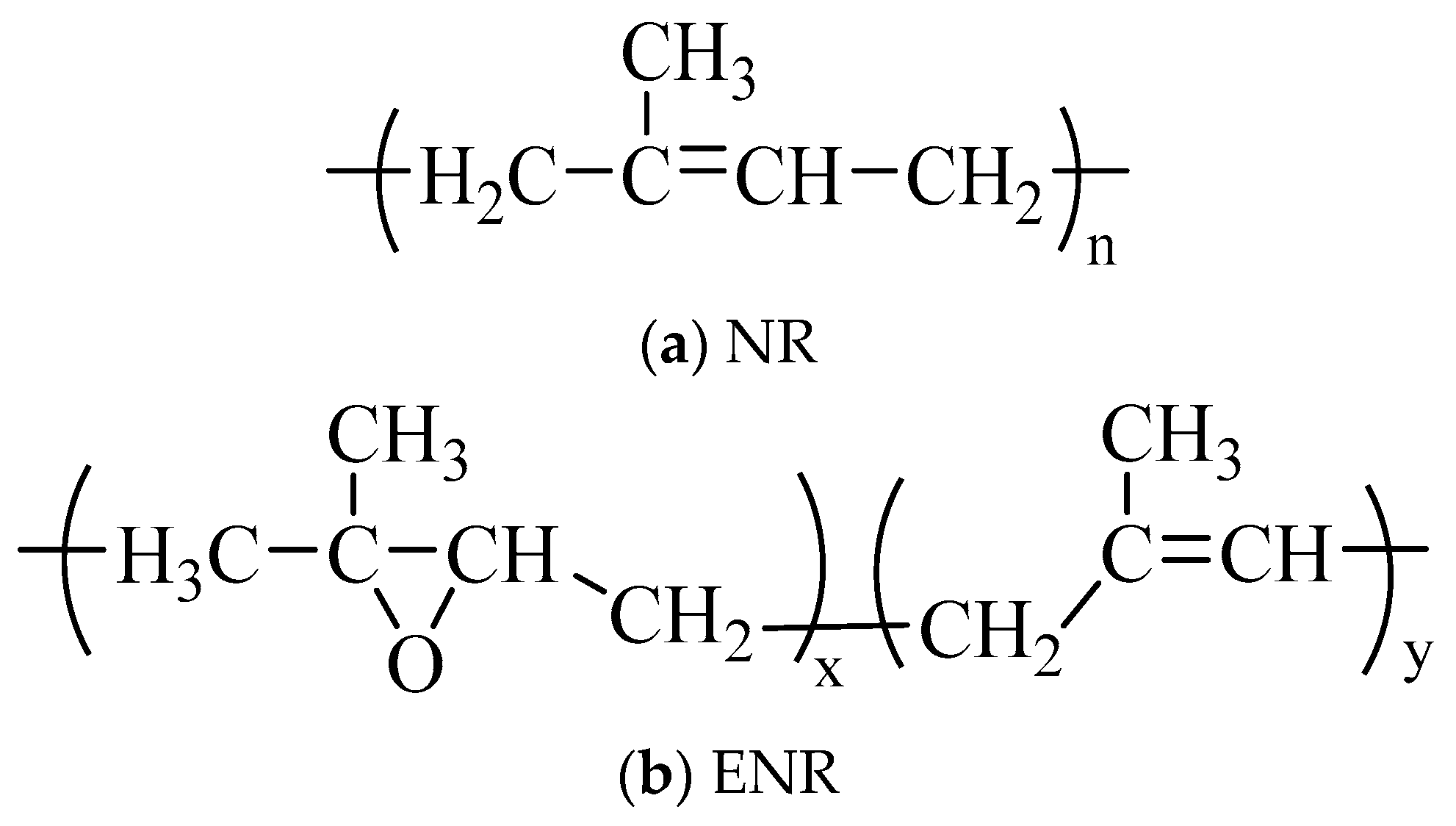
5.1.1. Rubber
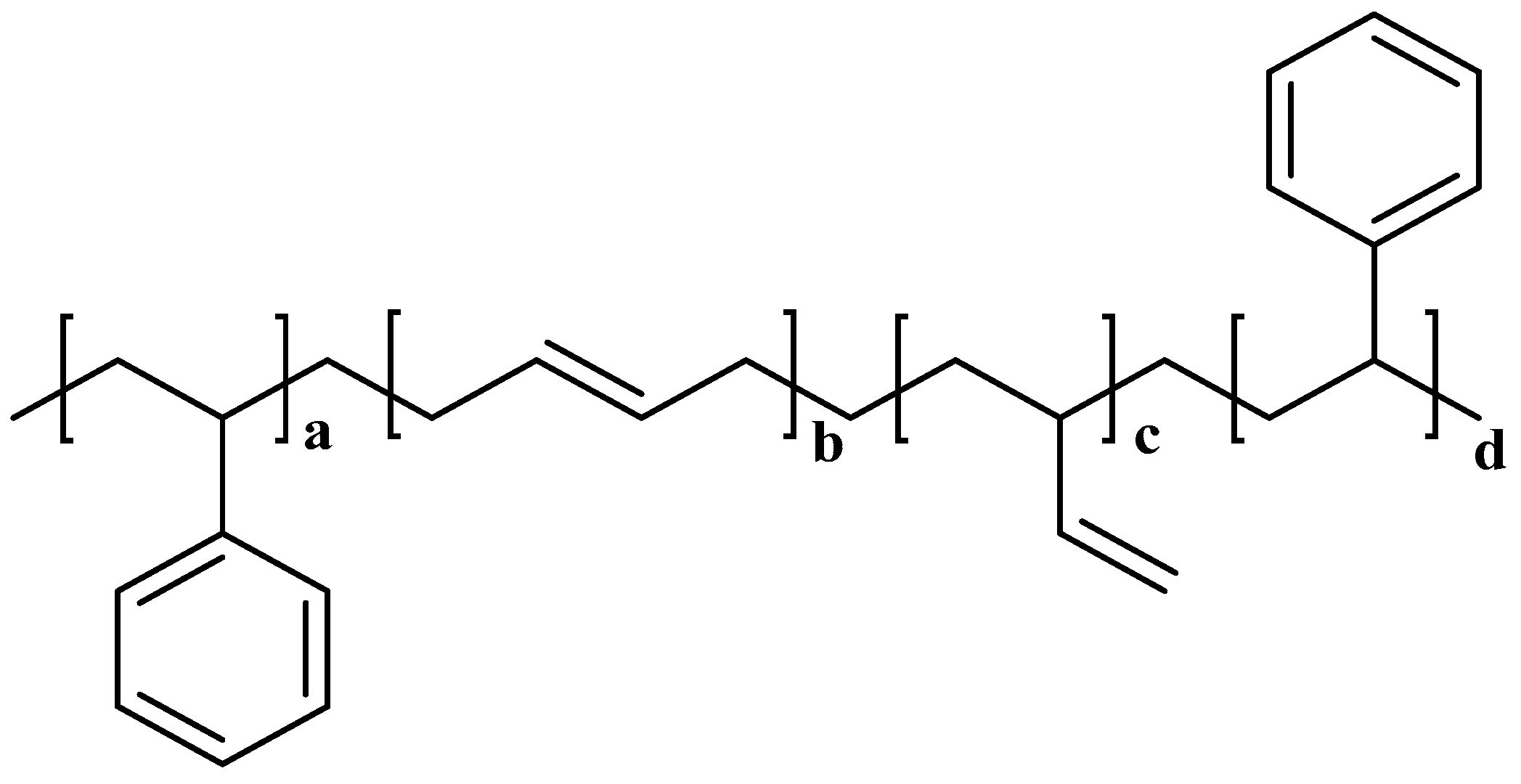
5.1.2. Molecular Damping Mechanisms of SBS
5.2. Temperature
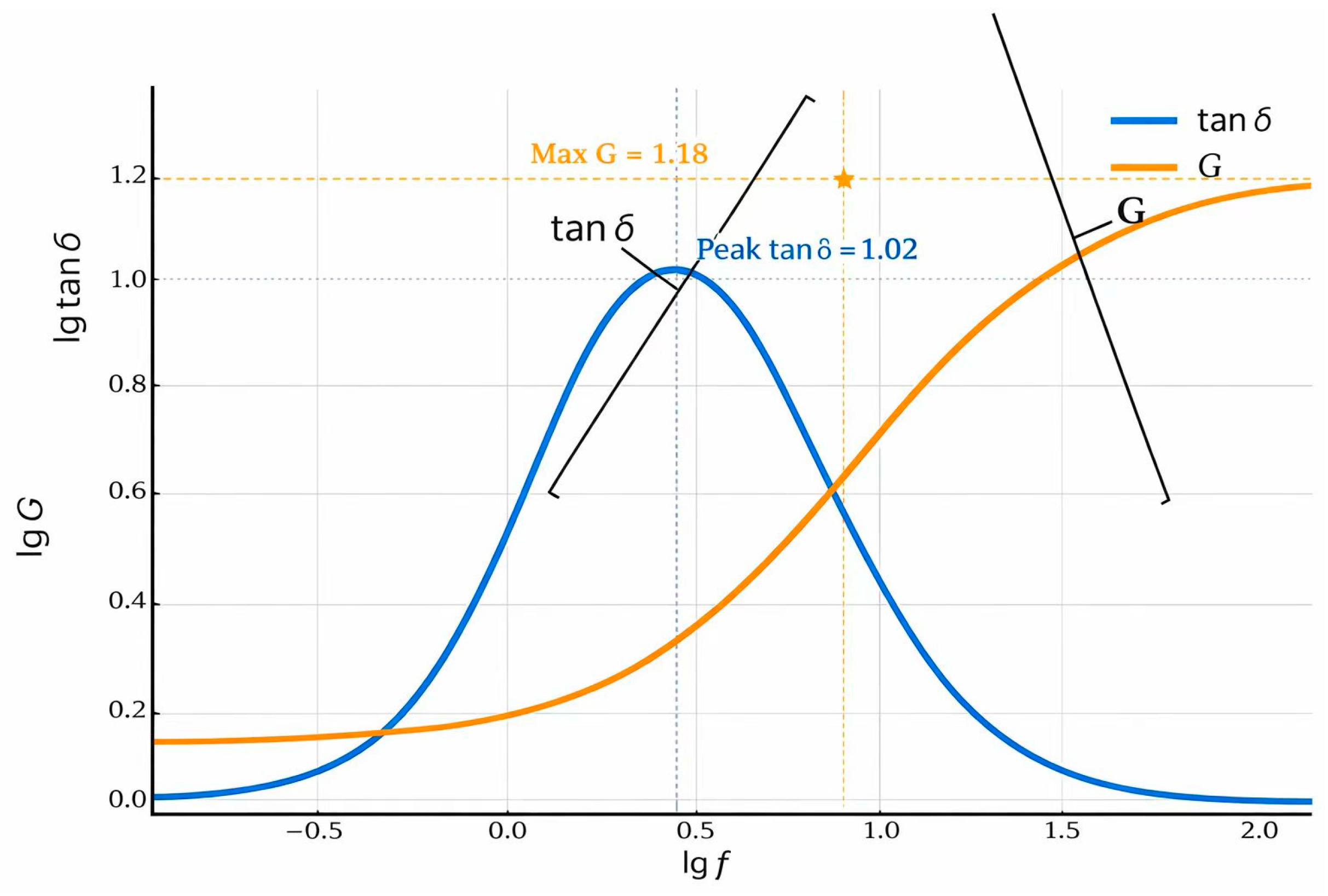
5.3. Frequency
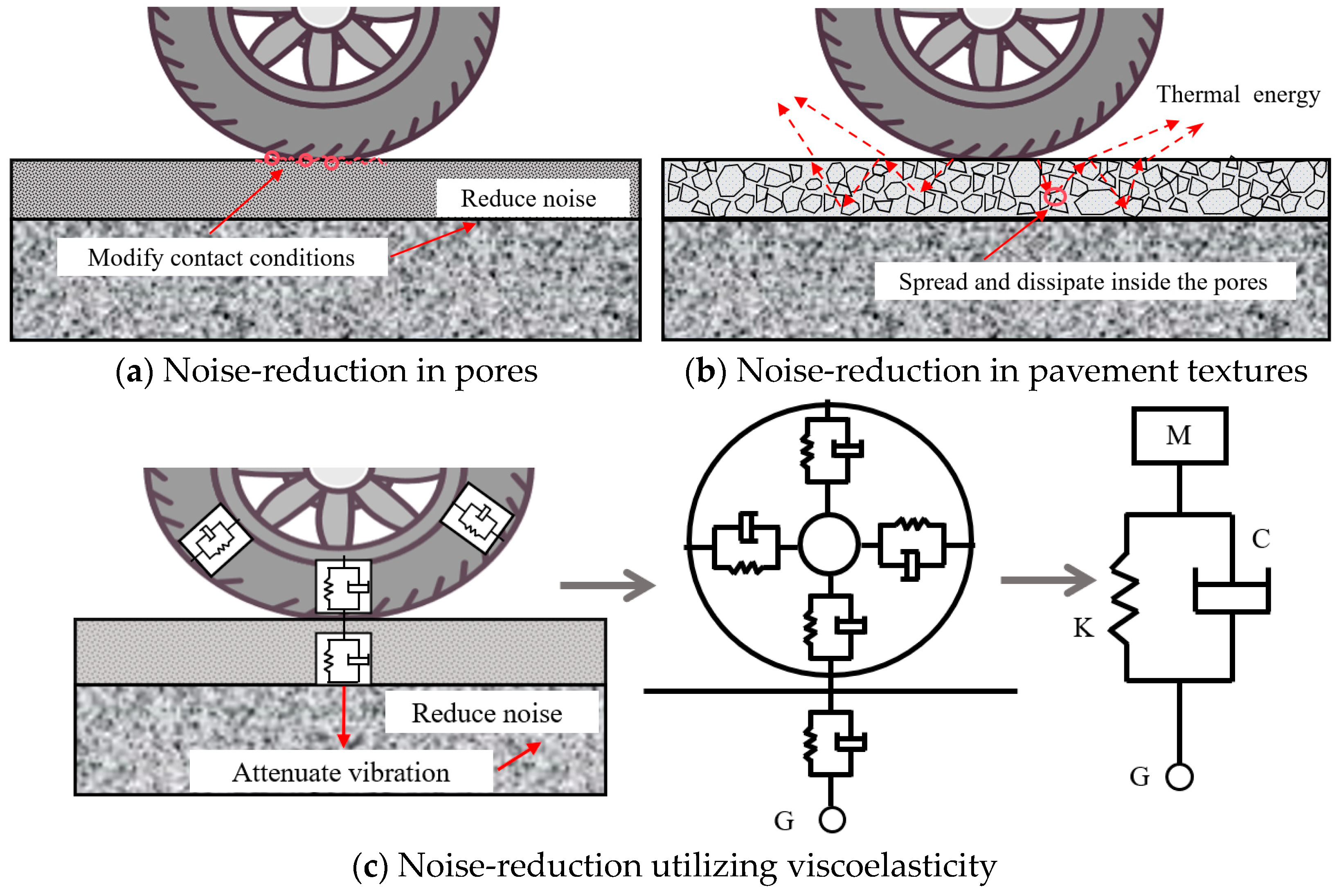
5.4. Comparative Analysis of Noise Mitigation Strategies: Mechanistic Damping vs. Structural Control
6. Modern Computational Frameworks for Damping and Acoustic Performance
7. Conclusions
- The development of standardized, field-validated test methods to reliably correlate laboratory-measured damping properties with in-service acoustic performance.
- The integration of advanced material models into numerical simulations of the complete tire-pavement system to improve predictive accuracy.
- A deeper investigation into the evolution of surface texture and its acoustic implications throughout the pavement lifecycle.
- The exploration of next-generation material systems—such as tailored nanocomposites, bio-based modifiers, and self-healing polymers—designed to synergistically enhance viscoelastic damping, structural resilience, and environmental sustainability.
Author Contributions
Funding
Data Availability Statement
Conflicts of Interest
References
- Environmental Health Impacts. Available online: https://www.eea.europa.eu/en/topics/in-depth/environmental-health-impacts (accessed on 8 July 2025).
- Öhrström, E.; Skånberg, A.; Svensson, H.; Gidlöf-Gunnarsson, A. Effects of road traffic noise and the benefit of access to quietness. J. Sound Vib. 2006, 295, 40–59. [Google Scholar] [CrossRef]
- Griefahn, B.; Marks, A.; Robens, S. Noise emitted from road, rail and air traffic and their effects on sleep. J. Sound Vib. 2006, 295, 129–140. [Google Scholar] [CrossRef]
- Skånberg, A.; Öhrström, E. Sleep Disturbances from Road Traffic Noise: A Comparison Between Laboratory and Field Settings. J. Sound Vib. 2006, 290, 3–16. [Google Scholar] [CrossRef]
- Assessment of Highway Pavements for Tire/Road Noise Generation. Available online: https://scholar.cnki.net/zn/Detail/index/GARJ0010_2/SJST8D5528F05D5FCE6A6FEEA58917E9E91D (accessed on 21 July 2025).
- Kim, B.S.; Kim, G.J.; Lee, T.K. The identification of sound generating mechanisms of tyres. Appl. Acoust. 2007, 68, 114–133. [Google Scholar] [CrossRef]
- Bürger, L.; Naets, F. High fidelity nonlinear finite element tire modeling for dynamic analysis: Total Lagrangian formulation in rolling contact. J. Sound Vib. 2024, 571, 118098. [Google Scholar] [CrossRef]
- Lopez, I.; Blom, R.E.A.; Roozen, N.B.; Nijmeijer, H. Modelling vibrations on deformed rolling tyres—A modal approach. J. Sound Vib. 2007, 307, 481–494. [Google Scholar] [CrossRef]
- Diaz, C.G.; Kindt, P.; Middelberg, J.; Vercammen, S.; Thiry, C.; Close, R.; Leyssens, J. Dynamic behaviour of a rolling tyre: Experimental and numerical analyses. J. Sound Vib. 2016, 364, 147–164. [Google Scholar] [CrossRef]
- O’Boy, D.J.; Dowling, A.P. Tyre/road interaction noise—A 3D viscoelastic multilayer model of a tyre belt. J. Sound Vib. 2009, 322, 829–850. [Google Scholar] [CrossRef]
- Kowalski, K.J.; Bańkowski, W.; Król, J.; Andersen, B.H.; Komkova, A.; Barrasa, R.C. Practical Application of Sustainable Road Structure: Mechanical and Environmental Approach. Appl. Sci. 2022, 12, 11914. [Google Scholar] [CrossRef]
- Bergiers, A.; Duerinckx, B. Eight years of thin noise reducing asphalt layer monitoring in an urban environment. Inter-Noise Noise-Con Congr. Conf. Proc. 2024, 270, 4401–4409. [Google Scholar] [CrossRef]
- Sandberg, U. Noise-reducing double-layer porous pavement with steel slag as aggregate in the top layer. Inter-Noise Noise-Con Congr. Conf. Proc. 2024, 270, 8981–8992. [Google Scholar] [CrossRef]
- Hajek, J.J.; Blaney, C.T.; Hein, D.K. Framework for Environmental Assessment of Tire–Pavement Noise. Transp. Res. Rec. 2008, 2058, 140–146. [Google Scholar] [CrossRef]
- Azizi, Y. Generation mechanisms of tire/road noise. In Automotive Tire Noise and Vibrations; Elsevier: Amsterdam, The Netherlands, 2020; pp. 91–114. [Google Scholar] [CrossRef]
- Ganji, M.R.; Golroo, A.; Sheikhzadeh, H.; Ghelmani, A.; Arbabpour Bidgoli, M. Dense-graded asphalt pavement macrotexture measurement using tire/road noise monitoring. Autom. Constr. 2019, 106, 102887. [Google Scholar] [CrossRef]
- Ongel, A. Pavement characteristics affecting the frequency content of tire/pavement noise. Noise Control. Eng. J. 2010, 58, 563–571. [Google Scholar] [CrossRef]
- Lou, K.; Xiao, P.F.; Kang, A.; Wu, Z.; Dong, X. Effects of asphalt pavement characteristics on traffic noise reduction in different frequencies. Transp. Res. Part Transp. Environ. 2022, 106, 103259. [Google Scholar] [CrossRef]
- Biligiri, K.P.; Way, G.B. Noise-damping characteristics of different pavement surface wearing courses. Road Mater. Pavement Des. 2014, 15, 925–941. [Google Scholar] [CrossRef]
- Li, Q.; Qiao, F.; Yu, L. Impacts of pavement types on in-vehicle noise and human health. J. Air Waste Manag. Assoc. 2016, 66, 87–96. [Google Scholar] [CrossRef] [PubMed]
- Li, T. Literature review of tire-pavement interaction noise and reduction approaches. J. Vibroeng. 2018, 20, 2424–2452. [Google Scholar] [CrossRef]
- Teti, L.; De León, G.; Del Pizzo, L.G.; Moro, A.; Bianco, F.; Fredianelli, L.; Licitra, G. Modelling the acoustic performance of newly laid low-noise pavements. Constr. Build. Mater. 2020, 247, 118509. [Google Scholar] [CrossRef]
- Tonin, R. Quiet Road Pavements: Design and Measurement—State of the Art. Acoust. Aust. 2016, 44, 235–247. [Google Scholar] [CrossRef]
- Li, T. Influencing Parameters on Tire–Pavement Interaction Noise: Review, Experiments and Design Considerations. Designs 2018, 2, 38. [Google Scholar] [CrossRef]
- Liang, X.Y. Research and Optimization of Pavement Surface Texture with Low Noise Function. Ph.D. Thesis, South China University of Technology, Guangzhou, China, 2021. [Google Scholar] [CrossRef]
- Del Pizzo, L.G.; Teti, L.; Moro, A.; Bianco, F.; Fredianelli, L.; Licitra, G. Influence of texture on tyre road noise spectra in rubberized pavements. Appl. Acoust. 2020, 159, 107080. [Google Scholar] [CrossRef]
- Li, T. Influence of tread pattern on tire/road noise. In Automotive Tire Noise and Vibrations; Elsevier: Amsterdam, The Netherlands, 2020; pp. 27–41. [Google Scholar] [CrossRef]
- Kim, H.K.; Lee, H.K. Acoustic absorption modeling of porous concrete considering the gradation and shape of aggregates and void ratio. J. Sound Vib. 2010, 329, 866–879. [Google Scholar] [CrossRef]
- Ling, S.; Yu, F.; Sun, D.; Sun, G.; Xu, L. A comprehensive review of tire-pavement noise: Generation mechanism, measurement methods, and quiet asphalt pavement. J. Clean. Prod. 2021, 287, 125056. [Google Scholar] [CrossRef]
- Tao, H.; Chen, C.; Jiang, P.; Huang, S. Review of Cement Concrete Pavement of Noise Reduction Method. MATEC Web Conf. 2017, 100, 03029. [Google Scholar] [CrossRef]
- Li, H.; Luo, X.; Ma, F.; Zhang, Y. Micromechanics modeling of viscoelastic asphalt-filler composite system with and without fatigue cracks. Mater. Des. 2021, 209, 109983. [Google Scholar] [CrossRef]
- He, L.; Li, S.; Li, W.; Gu, Y.; Yang, K.; Dong, L.; Sang, Q. Performance evaluation of waterborne epoxy emulsified asphalt micro-surfacing with microwave-activated waste rubber powder. Constr. Build. Mater. 2024, 413, 134810. [Google Scholar] [CrossRef]
- Abiodun, P.; Darko, C.; Owolabi, O.; Olude, A. Exploring Progress and Future Trends in Reducing Traffic Noise: A Scoping Review on the Influence of Pavement Characteristics. Inter-Noise Noise-Con Congr. Conf. Proc. 2024, 269, 1383–1388. [Google Scholar] [CrossRef]
- Aspuru, I.; Sanz, R.P.; Vázquez, M.E.A.; Barral, M.; Ruiz-García, A.; Saiz-Rodríguez, L. Design of a new low-noise pavement. Inter-Noise Noise-Con Congr. Conf. Proc. 2024, 270, 8796–8805. [Google Scholar] [CrossRef]
- Chen, N.; Wang, H.; Liu, Q.; Norambuena-Contreras, J.; Wu, S. The Production of Porous Asphalt Mixtures with Damping Noise Reduction and Self-Healing Properties through the Addition of Rubber Granules and Steel Wool Fibers. Polymers 2024, 16, 2408. [Google Scholar] [CrossRef]
- Wu, H.; Shen, A.; Cui, H.; Dai, X.; Li, Y.; Wang, J. Effect of Crumb Rubber Particles on Antisliding and Noise-Reduction Performance of Asphalt Pavement. J. Mater. Civ. Eng. 2023, 35, 04023118. [Google Scholar] [CrossRef]
- Wang, Y.; Wang, X.; Zhang, L. Pavement and Noise Reduction Performance of Open-Graded Asphalt Friction Course Improved by Waste Tire Crumb Rubber. Adv. Civ. Eng. 2021, 2021, 9937293. [Google Scholar] [CrossRef]
- Xu, L.; Ni, H.; Tian, Y.; Chen, Z.; Jin, H. Multi-scale analysis of damping characteristics of dry mixed rubberized porous asphalt mixtures for tire-pavement noise reduction. J. Clean. Prod. 2023, 425, 138969. [Google Scholar] [CrossRef]
- Apaza, F.R.A.; Vázquez, V.F.; Paje, S.E.; Gulisano, F.; Gagliardi, V.; Rodríguez, L.S.; Medina, J.G. Towards Sustainable Road Pavements: Sound Absorption in Rubber-Modified Asphalt Mixtures. Infrastructures 2024, 9, 65. [Google Scholar] [CrossRef]
- Hrapović, K. Optimized road noise asphalt pavements—The types of noise-reducing road surfaces. J. Road Traffic Eng. 2024, 70, 27–35. [Google Scholar] [CrossRef]
- Franesqui, M.A.; Yepes, J.; Valencia-Díaz, S. Sustainable Pavement Construction in Sensitive Environments: Low-Energy Asphalt with Local Waste Materials and Geomaterials. Buildings 2024, 14, 530. [Google Scholar] [CrossRef]
- Poulikakos, L.D.; Kakar, M.R.; Piao, Z. Urban mining for low-noise urban roads towards more sustainability in the urban environment. Road Mater. Pavement Des. 2023, 24, 309–320. [Google Scholar] [CrossRef]
- Poulikakos, L.D.; Athari, S.; Mikhailenko, P.; Kakar, M.R.; Bueno, M.; Piao, Z.; Pieren, R.; Heutschi, K. Effect of waste materials on acoustical properties of semi-dense asphalt mixtures. Transp. Res. Part Transp. Environ. 2022, 102, 103154. [Google Scholar] [CrossRef]
- HU, A.; KOU, W.; CHANG, C. Study of Noise-Reducing Performance of OGFC Pavement. J. Highw. Transp. Res. Dev. 2010, 2, 24–27. [Google Scholar] [CrossRef]
- Geng, L.; Wang, X.; Ren, R.; Chen, F.; Yang, X. Performance evaluation of dense mixtures with stabilised rubber modified asphalt. Road Mater. Pavement Des. 2014, 15, 953–965. [Google Scholar] [CrossRef]
- Poulikakos, L.D.; Schlatter, F.; Huber, L.; Mikhailenko, P.; Arraigada, M.; Griffa, M.; Angst, C.; Bühlmann, E. Multi-scale mechanical and acoustic characterization of low noise pavements. Environ. Sci. Pollut. Res. 2024, 31, 61073–61095. [Google Scholar] [CrossRef]
- Miera-Dominguez, H.; Gonzalez-Lastra, P.; Indacoechea-Vega, I.; van Loon, R.; Blokland, G.V.; Licitra, G.; Moro, A.; Castro-Fresno, D.; Kanka, S. Design and validation of a new asphalt mixture to reduce road traffic noise pollution in urban areas. Case Stud. Constr. Mater. 2024, 20, e03107. [Google Scholar] [CrossRef]
- Tekampe, S.; Oeser, M. Assessing the Durability and Acoustic Performance of a Novel Two-Layer Pavement System. Sustainability 2023, 15, 16475. [Google Scholar] [CrossRef]
- Castro-Fresno, D.; Miera-Dominguez, H.; Lastra-González, P.; Indacoechea-Vega, I.; van Loon, R.; Blokland, G. van Two-Layer Porous Asphalt: Main Properties to Decrease the Noise Emissions. Transp. Res. Rec. 2023, 2678, 178–187. [Google Scholar] [CrossRef]
- Liu, M.; Huang, X.; Xue, G. Effects of double layer porous asphalt pavement of urban streets on noise reduction. Int. J. Sustain. Built Environ. 2016, 5, 183–196. [Google Scholar] [CrossRef]
- Bozkurt, T.S.; Karakaş, A. Investigation of Asphalt Pavement to Improve Environmental Noise and Water Sustainability. Sustainability 2022, 14, 14901. [Google Scholar] [CrossRef]
- Li, W.; Han, S.; Huang, Q. Performance of Noise Reduction and Skid Resistance of Durable Granular Ultra-Thin Layer Asphalt Pavement. Materials 2020, 13, 4260. [Google Scholar] [CrossRef]
- Liu, B.; Cao, K.; Zhou, J.; Li, A.; Sun, M. Laboratory investigation on influence of mixture parameters on noise reduction characteristics of porous asphalt concrete. Int. J. Pavement Eng. 2022, 24, 2092619. [Google Scholar] [CrossRef]
- Bühlmann, E.T.; Schlatter, F. Recommendations for the successful design of urban low-noise asphalts—Findings from the statistics of over 200 mixtures. Inter-Noise Noise-Con Congr. Conf. Proc. 2023, 265, 5843–5853. [Google Scholar] [CrossRef]
- Chhay, L.; Kim, Y.K.; Sok, T.; Nam, J.-H.; Lee, S. Effects of Pavement Texture Characteristics on Tire–Pavement Noise from Dense-Graded Asphalt Concrete Pavement. J. Transp. Eng. Part B Pavements 2022, 148, 04022049. [Google Scholar] [CrossRef]
- Gardziejczyk, W.; Jaskuła, P.; Ejsmont, J.; Motylewicz, M.; Stienss, M.; Mioduszewski, P.; Gierasimiuk, P.; Zawadzki, M. Investigation of Acoustic Properties of Poroelastic Asphalt Mixtures in Laboratory and Field Conditions. Materials 2021, 14, 2649. [Google Scholar] [CrossRef] [PubMed]
- Stirb, A.; Marc, P.; Forton, A. Aspects concerning the physical-mechanical characteristics of low-noise asphalt mixture. Romanian J. Transp. Infrastruct. 2022, 11, 1–13. [Google Scholar] [CrossRef]
- Sun, J.; Zhang, H.; Wu, G.; Liu, Z.; Feng, Y.; Jia, M. Micro-structural analysis of noise reduction mechanism of porous asphalt mixture based on FEM. Multidiscip. Model. Mater. Struct. 2021, 17, 1154–1167. [Google Scholar] [CrossRef]
- Liu, Y. Acoustic Models for Dense- and Open-Graded Asphalt Pavement. Appl. Mech. Mater. 2014, 587–589, 996–1001. [Google Scholar] [CrossRef]
- Kanka, S.; Monticelli, A.L.; Moro, A.; Fidecaro, F.; Licitra, G. Low noise pavement characterization through TCN analysis. Inter-Noise Noise-Con Congr. Conf. Proc. 2024, 270, 5750–5756. [Google Scholar] [CrossRef]
- Sha, A.; Liu, Z.; Jiang, W.; Qi, L.; Hu, L.; Jiao, W.; Barbieri, D.M. Advances and Development Trends in Eco-Friendly Pavements. J. Renew. Energy Green Technol. 2021, 1, 1–42. [Google Scholar] [CrossRef]
- Piao, Z.; Waldner, U.; Heutschi, K.; Poulikakos, L.D.; Hellweg, S. Modified life cycle assessment for Low-Noise urban roads including acoustics and monetarization. Transp. Res. Part Transp. Environ. 2022, 112, 103475. [Google Scholar] [CrossRef]
- Praticò, F.G.; Giunta, M.; Mistretta, M.; Gulotta, T.M. Energy and Environmental Life Cycle Assessment of sustainable pavement materials and technologies for urban roads. Sustainability 2020, 12, 704. [Google Scholar] [CrossRef]
- Sajid, Z.W.; Hussain, A.; Khan, M.U.A.; Alqahtani, F.K.; Ullah, F. Technical, Economic, and Environmental Sustainability Assessment of Reclaimed Asphalt and Waste Polyethylene Terephthalate Pavements. Sustainability 2024, 16, 4911. [Google Scholar] [CrossRef]
- Wu, H.; Wang, G.; Li, M.; Zhao, Y.; Li, J.; Han, D.; Li, P. Investigation of Medium-Term Performance of Porous Asphalt and Its Impacts on Tire/Pavement Noise. Buildings 2023, 14, 64. [Google Scholar] [CrossRef]
- Yang, B.; Leng, Z.; Yuan, M.; Hung, W. Durability of the noise-reduction performance of the PMSMA and CRSMA pavements—A case study in Hong Kong. Inter-Noise Noise-Con Congr. Conf. Proc. 2023, 268, 5420–5426. [Google Scholar] [CrossRef]
- Sirin, O.; Ohiduzzaman, O.; Kassem, E.; Hassan, W. Acoustic Performance Evaluation of Dense-Graded Asphalt Pavements in Qatar. Adv. Civ. Eng. 2021, 2021, 5520432. [Google Scholar] [CrossRef]
- Miljković, M.; Radenberg, M. Thin noise-reducing asphalt pavements for urban areas in Germany. Int. J. Pavement Eng. 2012, 13, 569–578. [Google Scholar] [CrossRef]
- de Barros, A.G.; Kampen, J.K.; Vuye, C. The impact of thin asphalt layers as a road traffic noise intervention in an urban environment. Sustainability 2021, 13, 12561. [Google Scholar] [CrossRef]
- Ren, W.; Yuan, M. Experimental Analysis of Noise Characteristics on Different Types of Pavements inside and outside Highway Tunnels. Coatings 2024, 14, 1213. [Google Scholar] [CrossRef]
- Ascari, E.; Cerchiai, M.; Fredianelli, L.; Melluso, D.; Licitra, G. Methods to estimate efficiency of Low Noise Pavement for specific vehicle categories. Inter-Noise Noise-Con Congr. Conf. Proc. 2024, 270, 4010–4016. [Google Scholar] [CrossRef]
- Vaitkus, A.; Šernas, O.; Vorobjovas, V.; Gražulytė, J. Selection of Constituent Materials for Asphalt Mixtures of Noise-Reducing Asphalt Pavements. Balt. J. Road Bridge Eng. 2019, 14, 178–207. [Google Scholar] [CrossRef]
- Cuciniello, G.; Inzerillo, G.; Corazziari, L.; Ciampini, A.; Degni, R.; Torresi, M.; Leandri, P. Development of a predictive rolling noise model based on pavement texture and mix volumetrics applicable to porous mixes used in motorway corridors. Road Mater. Pavement Des. 2023, 25, 1285–1297. [Google Scholar] [CrossRef]
- Rao, M.D. Recent applications of viscoelastic damping for noise control in automobiles and commercial airplanes. J. Sound Vib. 2003, 262, 457–474. [Google Scholar] [CrossRef]
- Zhou, X.Q.; Yu, D.Y.; Shao, X.Y.; Zhang, S.Q.; Wang, S. Research and applications of viscoelastic vibration damping materials: A review. Compos. Struct. 2016, 136, 460–480. [Google Scholar] [CrossRef]
- Wang, W.F.; Lin, X.Z.; Ma, Y.L. Viscoelastic Vibration Damping Materials for Application in a Temperature Range above 150 °C. KEM 2017, 730, 569–573. [Google Scholar] [CrossRef]
- Tamaogi, T.; Yuji, S.; Wu, Z. A study for evaluation method of viscoelastic materials under dynamic loading. Procedia Eng. 2011, 10, 2411–2416. [Google Scholar] [CrossRef]
- Zhao, R.; Jing, F.; Wang, R.; Cai, J.; Zhang, J.; Wang, Q.; Xie, H. Influence of oligomer content on viscosity and dynamic mechanical properties of epoxy asphalt binders. Constr. Build. Mater. 2022, 338, 127524. [Google Scholar] [CrossRef]
- Pillot, C.; Wilson, G.L. Comparative measurements on viscoelastic materials used for vibration damping. J. Acoust. Soc. Am. 1983, 74, S91. [Google Scholar] [CrossRef]
- Treviso, A.; Van Genechten, B.; Mundo, D.; Tournour, M. Damping in composite materials: Properties and models. Compos. Part B Eng. 2015, 78, 144–152. [Google Scholar] [CrossRef]
- Ilg, P. Viscoelastic behavior of rubbery materials (C. M. Roland). Appl. Rheol. 2012, 22, 295. [Google Scholar] [CrossRef]
- Jaradat, M.; Soliman, E.; Taha, M.R. 3D-printed bio-inspired mechanically interlocked viscoelastic dampers for energy dissipation. Mater. Des. 2023, 228, 111826. [Google Scholar] [CrossRef]
- Yu, F.; Lu, A.; Lu, J.; Wang, Z.; Zhang, Q.; Geng, C.; Li, Z. Effect of phenyl content, sample thickness and compression on damping performances of silicone rubber: A study by dynamic mechanical analysis and impact damping test. Polym. Test. 2019, 80, 106101. [Google Scholar] [CrossRef]
- Karnaukhov, V.G.; Senchenkov, I.K. Generalized models of the thermomechanical behavior of viscoelastic materials with allowance for the interaction of mechanical and thermal fields (review). Int. Appl. Mech. 2000, 36, 40–63. [Google Scholar] [CrossRef]
- Christov, I.C.; Christov, C.I. Stress retardation versus stress relaxation in linear viscoelasticity. Mech. Res. Commun. 2016, 72, 59–63. [Google Scholar] [CrossRef]
- Biligiri, K.P.; Kaloush, K.; Uzan, J. Evaluation of asphalt mixtures’ viscoelastic properties using phase angle relationships. Int. J. Pavement Eng. 2010, 11, 143–152. [Google Scholar] [CrossRef]
- Mackiewicz, P.; Szydło, A. Viscoelastic Parameters of Asphalt Mixtures Identified in Static and Dynamic Tests. Materials 2019, 12, 2084. [Google Scholar] [CrossRef] [PubMed]
- Gröhlich, M.; Böswald, M.; Wallaschek, J. Viscoelastic damping design—A novel approach for shape optimization of Constrained Layer Damping treatments at different ambient temperatures. J. Sound Vib. 2023, 555, 117703. [Google Scholar] [CrossRef]
- Arafa, M.; Baz, A. Dynamics of active piezoelectric damping composites. Compos. Part B Eng. 2000, 31, 255–264. [Google Scholar] [CrossRef]
- Wang, X.; Zhang, C.; Rui, S.; Wu, C.; Zhang, W.; Ma, F. Multi-scale material/structure integrated elastic metamaterial for broadband vibration absorbing. Mater. Des. 2024, 238, 112705. [Google Scholar] [CrossRef]
- Pellecchia, D.; Vaiana, N.; Spizzuoco, M.; Serino, G.; Rosati, L. Axial hysteretic behaviour of wire rope isolators: Experiments and modelling. Mater. Des. 2023, 225, 111436. [Google Scholar] [CrossRef]
- Li, L.; Yang, F.; Jin, Y.; Li, P.; Zhang, S.; Xue, K.; Lu, G.; Fan, H. Multifunctional hybrid plate lattice structure with high energy absorption and excellent sound absorption. Mater. Des. 2024, 241, 112946. [Google Scholar] [CrossRef]
- Xu, L.; Ni, H.; Zhang, Y.; Sun, D.; Zheng, Y.; Hu, M. Porous asphalt mixture use asphalt rubber binders: Preparation and noise reduction evaluation. J. Clean. Prod. 2022, 376, 134119. [Google Scholar] [CrossRef]
- Jiang, Z.; Easa, S.M.; Hu, C.; Zheng, X. Understanding damping performance and mechanism of crumb rubber and styrene-butadiene-styrene compound modified asphalts. Constr. Build. Mater. 2019, 206, 151–159. [Google Scholar] [CrossRef]
- Huang, J.; Li, X.; Zhang, J.; Sun, Y.; Ren, J. Determining the Rayleigh damping parameters of flexible pavements for finite element modeling. J. Vib. Control 2021, 28, 3181–3194. [Google Scholar] [CrossRef]
- Gong, J.; Liu, Y.; Wang, Q.; Xi, Z.; Cai, J.; Ding, G.; Xie, H. Performance evaluation of warm mix asphalt additive modified epoxy asphalt rubbers. Constr. Build. Mater. 2019, 204, 288–295. [Google Scholar] [CrossRef]
- Huang, J.; Zhang, J.; Ren, J.; Chen, H. Anti-rutting performance of the damping asphalt mixtures (DAMs) made with a high content of asphalt rubber (AR). Constr. Build. Mater. 2021, 271, 121878. [Google Scholar] [CrossRef]
- Zhang, X.N. Viscoelastic Mechanics Principles and Applications of Asphalt and Asphalt Mixtures; China Communications Press: Beijing, China, 2006. [Google Scholar]
- Jiang, X.X.; Yuan, H.W. Damping Mechanisms of Material Under Dynamic Loads. Highway 2003, 100–103. [Google Scholar]
- Sun, P.C. Study on Damping and Noise Reduction Performance of Rubber Asphalt by Temperature and Rubber Powder Content. Master’s Thesis, Inner Mongolia Agricultural University, Hohhot, China, 2023. [Google Scholar] [CrossRef]
- Jing, Y.P. Concerning structural research of asphalt substance state. J. Chongqing Jiaotong Univ. 2005, 24, 21–24. [Google Scholar]
- Jiang, Z.; Hu, C.; Easa, S.; Zheng, X.; El Halim, A.O.A. Identifying optimal polymer type of modified asphalt based on damping characteristics. Constr. Build. Mater. 2018, 173, 308–316. [Google Scholar] [CrossRef]
- Qu, W.T. Research on Damping Characteristics and Mechanism of Polymer Modified Asphalt. Ph.D. Thesis, Fuzhou University, Fuzhou, China, 2021. [Google Scholar] [CrossRef]
- Zhang, T. Study on Rheological Properties of Low Damping Modified Asphalt. Ph.D. Thesis, Shandong Jianzhu University, Jinan, China, 2019. [Google Scholar]
- Li, C.; Gong, J.; Zhao, R.; Xi, Z.; Wang, Q.; Xie, H. Laboratory performance of recycled polyethylene modified epoxy asphalt binders. Int. J. Pavement Eng. 2023, 24, 2101055. [Google Scholar] [CrossRef]
- Kang, Y.; Song, M.; Pu, L.; Liu, T. Rheological behaviors of epoxy asphalt binder in comparison of base asphalt binder and SBS modified asphalt binder. Constr. Build. Mater. 2015, 76, 343–350. [Google Scholar] [CrossRef]
- Yi, X.; Chen, H.; Wong, Y.D.; Yang, J.; Huang, W. The property evaluation of recycled asphalt binder composed of an epoxy resin polymer and aged asphalt binder. Constr. Build. Mater. 2023, 408, 133777. [Google Scholar] [CrossRef]
- Sun, Y.; Gong, J.; Liu, Y.; Jiang, Y.; Xi, Z.; Cai, J.; Xie, H. Viscous, damping, and mechanical properties of epoxy asphalt adhesives containing different penetration-grade asphalts. J. Appl. Polym. Sci. 2019, 136, 47027. [Google Scholar] [CrossRef]
- Yin, H.; Jin, H.; Wang, C.; Sun, Y.; Yuan, Z.; Xie, H.; Wang, Z.; Cheng, R. Thermal, damping, and mechanical properties of thermosetting epoxy-modified asphalts. J. Therm. Anal. Calorim. 2024, 115, 1073–1080. [Google Scholar] [CrossRef]
- Chen, X.; Chen, Y.; Ma, T.; Gu, L.; Shi, S. Study on the performances of epoxy asphalt binders influenced by the dosage of epoxy resin and its application to steel bridge deck pavement. Constr. Build. Mater. 2024, 432, 136683. [Google Scholar] [CrossRef]
- Liu, Y.; Xi, Z.; Cai, J.; Xie, H. Laboratory investigation of the properties of epoxy asphalt rubber (EAR). Mater. Struct. 2017, 50, 219. [Google Scholar] [CrossRef]
- Zhang, F.; Yao, P.; Guo, X.; Zhang, L.; Huang, K. Study on the Performance of Epoxy Asphalt with Different Matrix Asphalt Contents. J. Mater. Civ. Eng. 2023, 35, 04023339. [Google Scholar] [CrossRef]
- Zhang, F.; Huang, W.; Zhang, L.; Liu, X.; Muhammad, Y. Preparation and properties evaluation of shape memory epoxy asphalt composites with high toughness and damping. J. Appl. Polym. Sci. 2022, 139, e53117. [Google Scholar] [CrossRef]
- Li, J.F.; He, Z.Y.; Kong, L. Evaluation of acoustic performance of porous asphalt mixtures. J. Southwest. Jiaotong Univ. 2022, 57, 207–214. [Google Scholar]
- Sotil, A.; Kaloush, K.; Biligiri, K.P.; Golden, J. Dynamic Complex Modulus (E*) Test as Potential Indicator for Asphalt Mixture Tire-Road Noise Characteristics. In Proceedings of the Transportation Research Board 85th Annual Meeting, Washington, DC, USA, 22–26 January 2006; Available online: https://api.semanticscholar.org/CorpusID:135900118 (accessed on 6 January 2026).
- Huang, Y.F. Study on Damping Characteristics of Asphalt Mixture and CA Mortar. Build. Mater. World 2023, 44, 56–60. [Google Scholar]
- Hong, Y. Research on Viscoelastic Principal Modeling and Damping Characteristics of Asphalt Mixtures. Ph.D. Thesis, Southeast University, Nanjing, China, 2016. [Google Scholar]
- Li, H.J. Research on Noise Reduction Performance of Rubber Particle-Skewers Dense Asphalt Mixture. Ph.D. Thesis, Inner Mongolia Agricultural University, Hohhot, China, 2010. [Google Scholar]
- Biligiri, K.P. Effect of pavement materials’ damping properties on tyre/road noise characteristics. Constr. Build. Mater. 2013, 49, 223–232. [Google Scholar] [CrossRef]
- Yang, B. Tire-Road Noise Evaluation Method and Noise Prediction Model for SMA Rubber. Ph.D. Thesis, Harbin Institute of Technology, Harbin, China, 2020. [Google Scholar] [CrossRef]
- Xu, L.; Zhang, Y.; Zhang, Z.; Ni, H.; Hu, M.; Sun, D. Optimization design of rubberized porous asphalt mixture based on noise reduction and pavement performance. Constr. Build. Mater. 2023, 389, 131551. [Google Scholar] [CrossRef]
- Zeng, M.; Huang, S.-C. Characterizing the Asphalt-Aggregate Mixtures Using Rheological Properties of Asphalt Binders. J. Test. Eval. 2006, 34, 471–476. [Google Scholar] [CrossRef]
- Zhang, J.P.; Huang, X.M.; Wang, X.L. Analysis of Asphalt Pavement Rut Based on Elastic-viscoplastic Theory. J. Highw. Transp. Res. Dev. 2007, 3, 20–24. [Google Scholar] [CrossRef]
- Fan, J.H.; Zhang, K.; Wu, J.Y.; Jiang, L.X. Preparation and characterization of pitch viscoelasticity damping materials. Insul. Mater. 2004, 5, 13–16. [Google Scholar] [CrossRef]
- Hu, Y.; Zhang, J.; Long, J. Influence of rubber’s viscoelasticity and damping on vertical dynamic stiffness of air spring. Sci. Rep. 2023, 13, 9886. [Google Scholar] [CrossRef] [PubMed]
- Huang, G.S.; Wu, J.R.; Deng, J. Research Progress on Damping Rubber Materials. Polym. Bull. 2014, 27, 49–56. [Google Scholar] [CrossRef]
- Fan, R.; Meng, G.; Yang, J.; He, C. Experimental study of the effect of viscoelastic damping materials on noise and vibration reduction within railway vehicles. J. Sound Vib. 2009, 319, 58–76. [Google Scholar] [CrossRef]
- Duan, K.; Wang, C.; Liu, J.; Song, L.; Chen, Q.; Chen, Y. Research progress and performance evaluation of crumb-rubber-modified asphalts and their mixtures. Constr. Build. Mater. 2022, 361, 129687. [Google Scholar] [CrossRef]
- Liu, S.; Cao, W.; Fang, J.; Shang, S. Variance analysis and performance evaluation of different crumb rubber modified (CRM) asphalt. Constr. Build. Mater. 2009, 23, 2701–2708. [Google Scholar] [CrossRef]
- Li, P.; Ding, Z.; Zou, P.; Sun, A. Analysis of physico-chemical properties for crumb rubber in process of asphalt modification. Constr. Build. Mater. 2017, 138, 418–426. [Google Scholar] [CrossRef]
- Brandt, J.; Oehlenschlaeger, K.K.; Schmidt, F.G.; Barner-Kowollik, C.; Lederer, A. State-of-the-Art Analytical Methods for Assessing Dynamic Bonding Soft Matter Materials. Adv. Mater. 2014, 26, 5758. [Google Scholar] [CrossRef]
- Chen, B.; Dai, J.; Song, T.; Guan, Q. Research and Development of High-Performance High-Damping Rubber Materials for High-Damping Rubber Isolation Bearings. Rev. Polym. 2022, 14, 2427. [Google Scholar] [CrossRef]
- Fay, J.J.; Thomas, D.A.; Sperling, L.H. Evaluation of the area under linear loss modulus-temperature curves. J. Appl. Polym. Sci. 1991, 43, 1617–1623. [Google Scholar] [CrossRef]
- Ni, N.; Wen, Y.; He, D.; Yi, X.; Zhao, Z.; Xu, Y. Synchronous improvement of loss factors and storage modulus of structural damping composite with functionalized polyamide nonwoven fabrics. Mater. Des. 2016, 94, 377–383. [Google Scholar] [CrossRef]
- Qin, R.; Huang, R.; Lu, X. Use of gradient laminating to prepare NR/ENR composites with excellent damping performance. Mater. Des. 2018, 149, 43–50. [Google Scholar] [CrossRef]
- Mou, X.J.; Li, Q.; Gao, B.; Hao, F.L.; Du, Q.Z.; Cai, Y.H.; Liu, Z.X.; Ren, X.B. Study on High Damping Properties of NR /BIR Blend. Spec. Purp. Rubber Prod. 2021, 42, 22–25. [Google Scholar] [CrossRef]
- Rostamiyan, Y.; Fereidoon, A.; Ghalebahman, A.G.; Mashhadzadeh, A.H.; Salmankhani, A. Experimental study and optimization of damping properties of epoxy-based nanocomposite: Effect of using nanosilica and high-impact polystyrene by mixture design approach. Mater. Des. 2015, 65, 1236–1244. [Google Scholar] [CrossRef]
- Rostamiyan, Y.; Mashhadzadeh, A.H.; SalmanKhani, A. Optimization of mechanical properties of epoxy-based hybrid nanocomposite: Effect of using nano silica and high-impact polystyrene by mixture design approach. Mater. Des. 2014, 56, 1068–1077. [Google Scholar] [CrossRef]
- Deng, L.H.; Yin, D.X.; Xiang, W.K.; Sun, Q.; Ding, X.D.; Zhao, X.Y. Co-vulcanization of eucommia ulmoides gum-styrene butadiene rubber composite system and its dynamic and static mechanical properties. Acta Mater. Compos. Sin. 2022, 39, 5892–5900. [Google Scholar] [CrossRef]
- Zhang, Z.; Wang, P.; Wu, J. Study of the mechanical damping behavior of SBR-modified cement pastes by dynamic mechanical analyzer. J. Therm. Anal. Calorim. 2013, 114, 1135–1141. [Google Scholar] [CrossRef]
- Mansilla, M.A.; Marzocca, A.J.; Macchi, C.; Somoza, A. Influence of vulcanization temperature on the cure kinetics and on the microstructural properties in natural rubber/styrene-butadiene rubber blends prepared by solution mixing. Eur. Polym. J. 2015, 69, 50–61. [Google Scholar] [CrossRef]
- George, S.C.; Ninan, K.N.; Groeninckx, G.; Thomas, S. Styrene-butadiene rubber/natural rubber blends: Morphology, transport behavior, and dynamic mechanical and mechanical properties. J. Appl. Polym. Sci. 2000, 78, 1280–1303. [Google Scholar] [CrossRef]
- Varkey, J.T.; Augustine, S.; Groeninckx, G.; Bhagawan, S.S.; Rao, S.S.; Thomas, S. Morphology and mechanical and viscoelastic properties of natural rubber and styrene butadiene rubber latex blends. J. Polym. Sci. Part B Polym. Phys. 2000, 38, 2189–2211. [Google Scholar] [CrossRef]
- Zeng, X.; Li, G.; Zhu, J.; Sain, M.; Jian, R. NBR/CR-Based High-Damping Rubber Composites Containing Multiscale Structures for Tailoring Sound Insulation. Macromol. Mater. Eng. 2023, 308, 202200464. [Google Scholar] [CrossRef]
- Cao, R.; Deng, L.; Feng, Z.; Zhao, X.; Li, X.; Zhang, L. Preparation of natural bio-based Eucommia ulmoides gum/styrene-butadiene rubber composites and the evaluation of their damping and sound absorption properties. Polymer 2021, 213, 123292. [Google Scholar] [CrossRef]
- Liu, S.; Shan, L.; Qi, C.; Zhang, W.; Li, G.; Wang, B.; Wei, W. Effect of SBS structure on viscosity of SBS-modified asphalt based on molecular dynamics: Insights from shearing phase morphology, adsorption and swelling mechanisms. J. Mol. Liq. 2024, 393, 123567. [Google Scholar] [CrossRef]
- Hu, K.; Yu, C.; Yang, Q.; Chen, Y.; Chen, G.; Ma, R. Multi–scale enhancement mechanisms of graphene oxide on styrene–butadiene–styrene modified asphalt: An exploration from molecular dynamics simulations. Mater. Des. 2021, 208, 109901. [Google Scholar] [CrossRef]
- Masson, J.-F.; Collins, P.; Robertson, G.; Woods, J.R.; Margeson, J. Thermodynamics, Phase Diagrams, and Stability of Bitumen-Polymer Blends. Energy Fuels 2003, 17, 714–724. [Google Scholar] [CrossRef]
- Chen, M.; Geng, J.; Xia, C.; He, L.; Liu, Z. A review of phase structure of SBS modified asphalt: Affecting factors, analytical methods, phase models and improvements. Constr. Build. Mater. 2021, 294, 123610. [Google Scholar] [CrossRef]
- Schaur, A.; Unterberger, S.; Lackner, R. Impact of molecular structure of SBS on thermomechanical properties of polymer modified bitumen. Eur. Polym. J. 2017, 96, 256–265. [Google Scholar] [CrossRef]
- Airey, G. Rheological properties of styrene butadiene styrene polymer modified road bitumens? Fuel 2003, 82, 1709–1719. [Google Scholar] [CrossRef]
- Polacco, G.; Filippi, S.; Merusi, F.; Stastna, G. A review of the fundamentals of polymer-modified asphalts: Asphalt/polymer interactions and principles of compatibility. Adv. Colloid Interface Sci. 2015, 224, 72–112. [Google Scholar] [CrossRef]
- Lucena, M.D.C.C.; Soares, S.D.A.; Soares, J.B. Characterization and thermal behavior of polymer-modified asphalt. Mat. Res. 2004, 7, 529–534. [Google Scholar] [CrossRef]
- Zhu, J.; Balieu, R.; Lu, X.; Kringos, N. Microstructure evaluation of polymer-modified bitumen by image analysis using two-dimensional fast Fourier transform. Mater. Des. 2018, 137, 164–175. [Google Scholar] [CrossRef]
- Jing, Y.P. The Research of Mechanism on the Asphalt Structure and High Polymer Modified Asphalt; Chang’an University: Xi’an, China, 2006. [Google Scholar]
- Sun, K.H. The Research of Asphalt Based Noise Reduction Composite Materials; Zhejiang Sci-Tech University: Hangzhou, China, 2016. [Google Scholar]
- Guo, M.L. Dynamic Mechanical Thermal Analysis of Polymers and Composite Materials; Chemical Industry Press: Beijing, China, 2002. [Google Scholar]
- Fan, H.J.; Wang, J.; Zhang, H. Applications of Dynamic Mechanical Thermal Analysis in Polymers and Composite Materials. Chem. Adhes. 2017, 39, 132–134. [Google Scholar]
- Melo, J.D.D.; Radford, D.W. Time and temperature dependence of the viscoelastic properties of CFRP by dynamic mechanical analysis. Compos. Struct. 2005, 70, 240–253. [Google Scholar] [CrossRef]
- Chang, G.J. Viscoelastic Damping Materials; National Defense Industry Press: Washington, DC, USA, 2012. [Google Scholar]
- Sefrani, Y.; Berthelot, J.-M. Temperature effect on the damping properties of unidirectional glass fibre composites. Compos. Part B Eng. 2006, 37, 346–355. [Google Scholar] [CrossRef]
- Wu, R.; Qiu, X.; Zhang, T.; Fu, K.; Yang, X. Atomistic Molecular Insight into the Time Dependence of Polymer Glass Transition. J. Phys. Chem. B 2015, 119, 9959–9969. [Google Scholar] [CrossRef]
- Zhu, L.; Zhao, S.; Zhang, C.; Cheng, X.; Hao, J.; Shao, X.; Zhou, C. Effects of chain structure on damping property and local dynamics of phenyl silicone rubber: Insights from experiment and molecular simulation. Polym. Test. 2021, 93, 106885. [Google Scholar] [CrossRef]
- Wu, R.; Kong, B.; Yang, X. Conformational transition characterization of glass transition behavior of polymers. Polymer 2009, 50, 3396–3402. [Google Scholar] [CrossRef]
- Tian, Y.; Fei, Y.; Huang, Y.; Lu, X. A universal rate-dependent damping model for arbitrary damping-frequency distribution. Eng. Struct. 2022, 255, 113894. [Google Scholar] [CrossRef]
- Huang, Y.; Sturt, R.; Willford, M. A damping model for nonlinear dynamic analysis providing uniform damping over a frequency range. Comput. Struct. 2019, 212, 101–109. [Google Scholar] [CrossRef]
- Pritz, T. Five-parameter fractional derivative model for polymeric damping materials. J. Sound Vib. 2003, 265, 935–952. [Google Scholar] [CrossRef]
- Zhang, J.; Yao, D.; Shen, M.; Sheng, X.; Li, J.; Guo, S. Temperature- and frequency-dependent vibroacoustic response of aluminium extrusions damped with viscoelastic materials. Compos. Struct. 2021, 272, 114148. [Google Scholar] [CrossRef]
- Zhang, Z.; Zeng, X.; Ding, W. The influence of heat treatment on damping response of AZ91D magnesium alloy. Mater. Sci. Eng. A 2005, 392, 150–155. [Google Scholar] [CrossRef]
- Song, W.X. Study on Epoxidation Modification of Natural Rubber and Its Application; Beijing University of Chemical Technology: Beijing, China, 2022. [Google Scholar] [CrossRef]
- Zeng, F.; Chen, F.; Eghbal, S. Vibroacoustic analysis of asphalt pavement responses to moving loads and attached mass-spring-damper systems. Soil Dyn. Earthq. Eng. 2024, 185, 108887. [Google Scholar] [CrossRef]
- Rostamkhani, M.; Kamboozia, N.; Ameri, M. Dynamic response and sound radiation of cracked asphalt pavements under moving loads and variable thermal profiles. Int. J. Pavement Eng. 2024, 25, 2383963. [Google Scholar] [CrossRef]
- Wang, W.; Wang, L. Review on Design, Characterization, and Prediction of Performance for Asphalt Materials and Asphalt Pavement Using Multi-Scale Numerical Simulation. Materials 2024, 17, 778. [Google Scholar] [CrossRef]
- Li, K.; Liu, Q.; Tian, Y.; Du, C.; Xu, Z. The Consequences of Dimension Reduction for Open Graded Friction Course (OGFC) Asphalt Mixtures: Morphological Characteristics and Finite Element Model (FEM) Simulation. Buildings 2024, 14, 545. [Google Scholar] [CrossRef]
- Zhang, K.; Min, Z.; Hao, X.; Henning, T.; Huang, W. Enhancing understanding of asphalt mixture dynamic modulus prediction through interpretable machine learning method. Adv. Eng. Inform. 2025, 65, 103111. [Google Scholar] [CrossRef]
- Guan, Y.; Zhang, B.; Li, Z.; Zhang, D. Enhanced flow number prediction of asphalt mixtures using stacking ensemble-based machine learning model and grey relational analysis. Constr. Build. Mater. 2025, 463, 140001. [Google Scholar] [CrossRef]
- Wang, J.; Zhang, R.; Wang, R.; Bahia, H.; Huang, W.; Wang, D.; Cai, W. Prediction of the fundamental viscoelasticity of asphalt mixtures using ML algorithms. Constr. Build. Mater. 2024, 442, 137573. [Google Scholar] [CrossRef]
- Qiu, P.; Lu, J.; Ma, J.; Hou, X.; Wang, T.; Li, J. Bayesian-optimized ensemble learning for predicting stiffness modulus of asphalt mixtures: A data-driven approach with model interpretation. Mater. Lett. 2024, 382, 137893. [Google Scholar] [CrossRef]
- Xue, B.; Que, Y.; Pei, J.; Ma, X.; Wang, D.; Yuan, Y.; Zhang, H. A state-of-the-art review of discrete element method for asphalt mixtures: Model generation methods, contact constitutive models and application directions. Constr. Build. Mater. 2024, 414, 134842. [Google Scholar] [CrossRef]
- Ai, X.; Yi, J.; Pei, Z.; Zhou, W.; Feng, D. Advances in Discrete Element Modeling of Asphalt Mixture: A Literature Review. Arch. Comput. Methods Eng. 2024, 31, 4003–4029. [Google Scholar] [CrossRef]
- Zhang, J.; Huang, L. Machine-Learning-Driven Stochastic Modeling Method for 3D Asphalt Mixture Reconstruction from 2D Images. Materials 2025, 18, 3787. [Google Scholar] [CrossRef]






| References | Material Composition | Layer Thickness | Surface Texture | Environmental Impact | Performance |
|---|---|---|---|---|---|
| [33,34,35,36,37,38,39,40,41,42,43,44,45] | Rubberized asphalt mixtures (especially crumb rubber) are highly effective for noise reduction, improved durability, and mechanical performance. | Optimized for specific mixture types (OGFC, dense mixtures) to balance noise absorption, durability, and structural integrity. | Texture, porosity, and sound absorption are critically linked to noise reduction and are intentionally designed through material selection and gradation. | Significant benefits from recycling waste tires, reducing emissions, and enhancing sustainability through extended service life. | Proven effective for urban traffic noise mitigation, with performance validated through laboratory and field tests under various conditions. |
| [46,47,48,49,50,51,52] | Mixtures (especially porous and two-layer) are designed to balance acoustic integrity (3+ dB noise reduction) with mechanical strength and skid resistance. | Thickness is a critical, optimized parameter for durability, acoustic absorption, and adaptation to urban speeds (~50 km/h). | Texture, porosity, and flow resistivity are tailored for noise mitigation, sound absorption, and skid resistance. | Often implicit through durability and material optimization; explicit benefits include rainwater management and recycling. | Validated for urban conditions (traffic loading, noise reduction) through lab, in situ, and full-scale road tests. |
| [53,54,55,56,57,58,59,60] | Void ratio, aggregate size, and mixture gradation are key factors for sound absorption and noise reduction. | Thickness is positively correlated with noise reduction and is optimized for pore resonance and medium void content. | Texture parameters (gradation, voids, depth, wavelength) critically define the noise absorption spectrum and generation mechanisms. | Largely unaddressed or only indirectly considered through material optimization and selection. | Primarily laboratory studies on acoustic properties, with some urban design recommendations and field evaluations. |
| [11,61,62,63,64] | Modified, recycled, and eco-friendly materials (RAP, PET, BIO-additives, warm mix) enhance noise reduction, durability, and mechanical performance. | Optimized or considered for durability, life cycle performance, and environmental benefits. | Contributes to noise reduction, permeability, and acoustic performance; effects are often implicit in overall analyses. | Comprehensive assessment shows benefits via recycled materials, reduced emissions, heat absorption, and exhaust decomposition. | Sustainable and applicable in urban settings with features for diverse climates, including anti-icing and long-term performance. |
| [12,13,65,66,67,68] | A range of materials (thin asphalt, porous asphalt, steel slag, crumb rubber SMA) provides effective initial noise reduction, with durability varying from 3–8+ years. Dense-graded mixes are less effective. | Thickness is typically optimized for a balance of noise reduction and mechanical durability, with thin layers being a common strategy. | Surface texture (macrotexture, clogging, degradation) is critically linked to noise evolution and performance deterioration over time. | Generally, not a primary focus, except for one case where recycling steel slag was noted to reduce environmental footprint. | Long-term performance (3–8+ years) is monitored under real-world urban and motorway conditions, showing variable durability and noise retention influenced by traffic and climate. |
| [69,70,71,72,73] | Aggregate, binder, and porosity are critical for acoustic performance, durability, and climate-specific suitability. | Thickness is optimized for noise reduction (urban/tunnels) and mechanical balance, often using predictive models. | Texture and void content are primary factors controlling noise generation, attenuation, and driver perception. | Largely implicit, considered through material sustainability and suitability for specific environments like cold climates. | Effective noise reduction is validated in diverse settings: urban streets, tunnels, motorways, and cold regions. |
| Reference | Material/Modification | Methodology | Key Results |
|---|---|---|---|
| [93] | Rubberized porous asphalt | Dynamic modulus, vibration-damping, CT imaging | Rubber content up to 3% improves damping and energy dissipation |
| [94] | SBS-modified bitumen | Loss factor spectra, molecular analysis | Wide damping temperature range, improved by crosslinker/plasticizer |
| [95] | Rubberized asphalt mixtures | Mix design, mechanical/damping tests | Higher damping than traditional mixes, good rut resistance |
| [96] | Epoxy asphalt rubber with WMA additive | Viscosity, glass transition, damping, morphology | Sasobit improves damping and workability, optimal at low concentrations |
| [97] | Damping asphalt mixtures (DAMs) | Mechanical, rutting, image analysis | High damping and rutting resistance as interlayer |
| Zones | State of Molecular Motion | Damping Properties |
|---|---|---|
| Glassy zone | The molecular chain fails to overcome the gravitational force between the molecular chains and convert the mechanical energy into thermal energy. | Asphalt binders exhibit almost no damping properties. |
| Glass transition zone | The strain lags behind the stress. The neighboring macromolecular chain and the various groups on the molecular chain move to produce internal friction, converting the mechanical energy to the greatest extent into the thermal energy. | Asphalt binders exhibit the best damping properties. |
| High-elastic zone | The molecular chain segment changes from the coiled coil state to the stretched state, having a great deformation but quickly recovers, failing to absorb enough mechanical energy. | The damping properties of asphalt binders are not the best. |
| Viscous-flow zone | The molecules offer almost no dynamic properties and the deformation failed to be restored. | Asphalt binders exhibit no damping properties. |
| Conditions | State of Molecular Motion | Damping Properties |
|---|---|---|
| High frequency | The frequency of external action is much greater than the inverse relaxation time of the chain segment motions. The molecular chain motions simply fail to keep up with the external forces, showing less internal friction. | Asphalt binders exhibit little damping properties. |
| Vitrification transition zone | The motions of the chain segments are in a semi-hysteresis state that fails to keep up with stress, also exhibiting a certain backwardness. The molecular chain motions reach the maximum. | Asphalt binders exhibit the best damping properties. |
| Low frequency | The chain segment motions completely keep up with the change in stress and the internal friction of the molecular chain segment is small. | Asphalt binders exhibit almost no damping properties. |
| Modification Strategy (Scale) | Fundamental Mechanism | Rheological & Functional Property Enhancement | Documented Performance Outcomes |
|---|---|---|---|
| Crumb Rubber (CR) Modification (Binder) | Dispersion of vulcanized rubber particles forming a resilient, cross-linked network that impedes crack propagation and dissipates energy. |
|
|
| SBS Polymer Modification (Binder) | In situ formation of a three-dimensional swollen copolymer network, featuring rigid polystyrene (PS) domains for reinforcement and elastic polybutadiene (PB) domains for energy dissipation. |
|
|
| Epoxy Asphalt Formulation (Binder) | Irreversible covalent cross-linking creates a rigid thermosetting matrix that encapsulates the asphalt phase. |
|
|
| Warm Mix Additives with Modifiers (Binder) | Thermodynamic facilitation of modifier dispersion (CR, SBS), yielding a more homogeneous and continuous composite microstructure. |
|
|
| Porous Friction Course Design (Mixture) | Implementation of a high-void (18–25%), interconnected pore structure that functions as a Helmholtz resonator and wave trap. |
|
|
| Engineered Surface Texture (Mixture) | Strategic design of surface macrotexture to mitigate the generation mechanisms of tire-pavement interaction noise (TPIN). |
|
|
| Feature | Mechanistic Damping (Binder-Level) | Structural Noise Control (Texture/Porosity) |
|---|---|---|
| Governing Principle | Material viscoelasticity; energy dissipation via internal friction. | Surface geometry; noise source reduction and acoustic absorption. |
| Primary Mechanism | Converts vibrational energy into heat at the tire-pavement interface. | Reduces air-pumping and impact; traps and attenuates sound waves in pores. |
| Targeted Noise | Low-frequency, structure-borne vibration noise. | Medium- to high-frequency aerodynamic and impact noise. |
| Performance Driver | Binder chemistry, polymer modifiers, temperature, loading frequency. | Surface macrotexture, porosity, pore size, and connectivity. |
| Key Advantage | Bulk material property; less susceptible to surface clogging or wear; integrated into pavement structure. | High initial noise reduction; effective for a broad frequency range. |
| Primary Limitation | Trade-off between damping efficacy and mechanical stiffness (rutting resistance). | Performance degradation over time due to clogging, polishing, and raveling. |
| Durability | High. Performance is tied to the material’s bulk aging, not surface wear. | Variable to Low. Highly dependent on traffic, environment, and maintenance; prone to fouling. |
| Optimal Application | Fundamental strategy for all noise-sensitive pavements; essential for durable, long-term noise reduction. | High-priority areas where immediate, significant noise reduction is critical; less critical for long-term performance. |
Disclaimer/Publisher’s Note: The statements, opinions and data contained in all publications are solely those of the individual author(s) and contributor(s) and not of MDPI and/or the editor(s). MDPI and/or the editor(s) disclaim responsibility for any injury to people or property resulting from any ideas, methods, instructions or products referred to in the content. |
© 2026 by the authors. Licensee MDPI, Basel, Switzerland. This article is an open access article distributed under the terms and conditions of the Creative Commons Attribution (CC BY) license.
Share and Cite
Liu, M.; Duan, W.; Dong, R.; Al-Ammari, M. A Review of Pavement Damping Characteristics for Mitigating Tire-Pavement Noise: Material Composition and Underlying Mechanisms. Materials 2026, 19, 476. https://doi.org/10.3390/ma19030476
Liu M, Duan W, Dong R, Al-Ammari M. A Review of Pavement Damping Characteristics for Mitigating Tire-Pavement Noise: Material Composition and Underlying Mechanisms. Materials. 2026; 19(3):476. https://doi.org/10.3390/ma19030476
Chicago/Turabian StyleLiu, Maoyi, Wei Duan, Ruikun Dong, and Mutahar Al-Ammari. 2026. "A Review of Pavement Damping Characteristics for Mitigating Tire-Pavement Noise: Material Composition and Underlying Mechanisms" Materials 19, no. 3: 476. https://doi.org/10.3390/ma19030476
APA StyleLiu, M., Duan, W., Dong, R., & Al-Ammari, M. (2026). A Review of Pavement Damping Characteristics for Mitigating Tire-Pavement Noise: Material Composition and Underlying Mechanisms. Materials, 19(3), 476. https://doi.org/10.3390/ma19030476