Article

CBR-Based Skeleton Optimization for the Volumetric Design of Porous Asphalt Mixtures

1
School of Civil Engineering & Transportation, South China University of Technology, Guangzhou 510630, China
2
Guangzhou Xiaoning Road Engineering & Technology Research Office Co., Ltd., Guangzhou 510630, China
3
Guangdong Guanyue Road and Bridge Co., Ltd., Guangzhou 511400, China
4
School of Civil and Transportation Engineering, Guangzhou University, Guangzhou 510006, China
5
School of Civil and Transportation Engineering, Foshan University, Foshan 528225, China
*
Author to whom correspondence should be addressed.
Materials 2026, 19(18), 3984; https://doi.org/10.3390/ma19183984 (registering DOI)
Submission received: 7 August 2026 / Revised: 14 September 2026 / Accepted: 16 September 2026 / Published: 19 September 2026
(This article belongs to the Special Issue Material Characterization, Design and Modeling of Asphalt Pavements)

Abstract

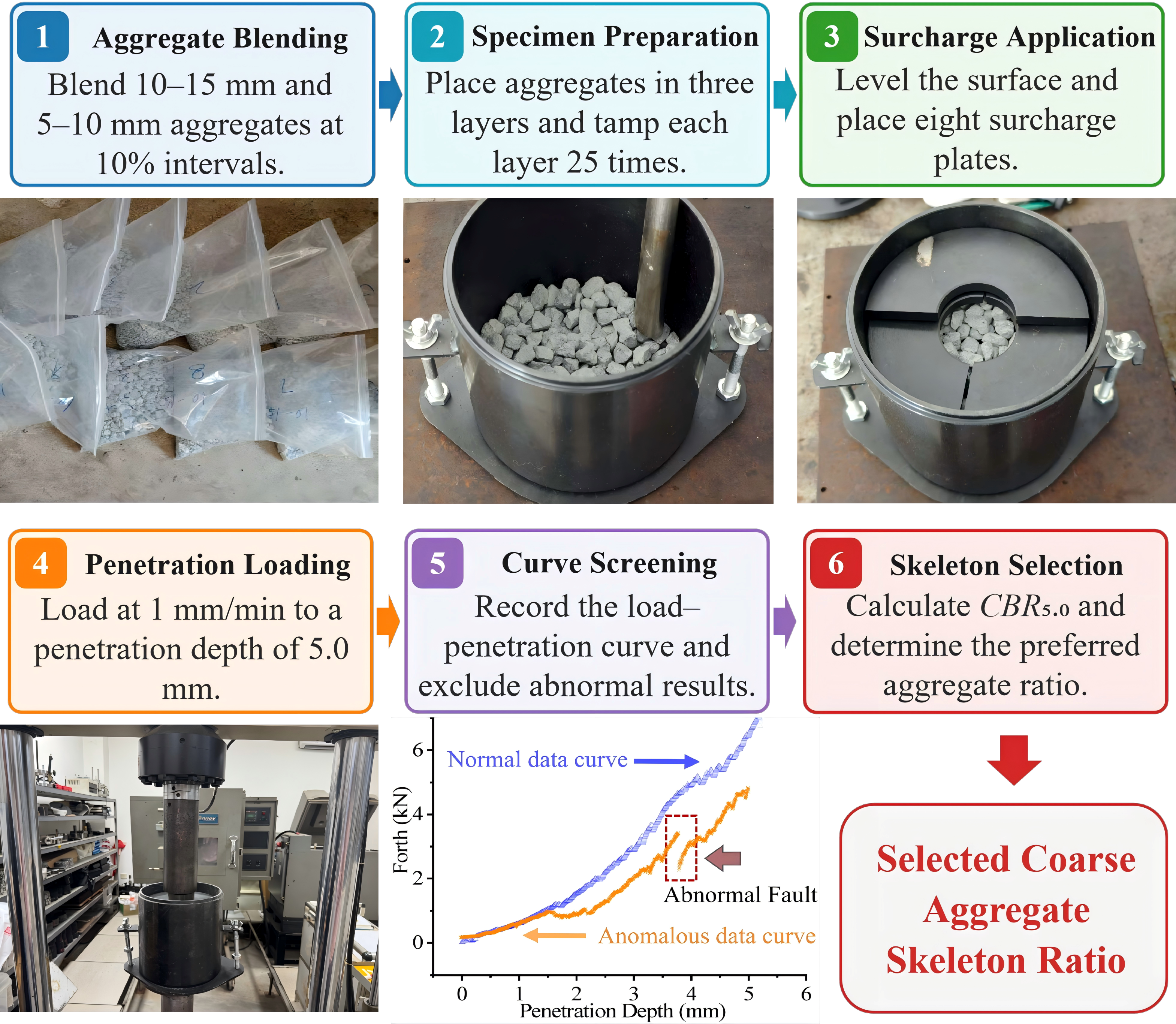
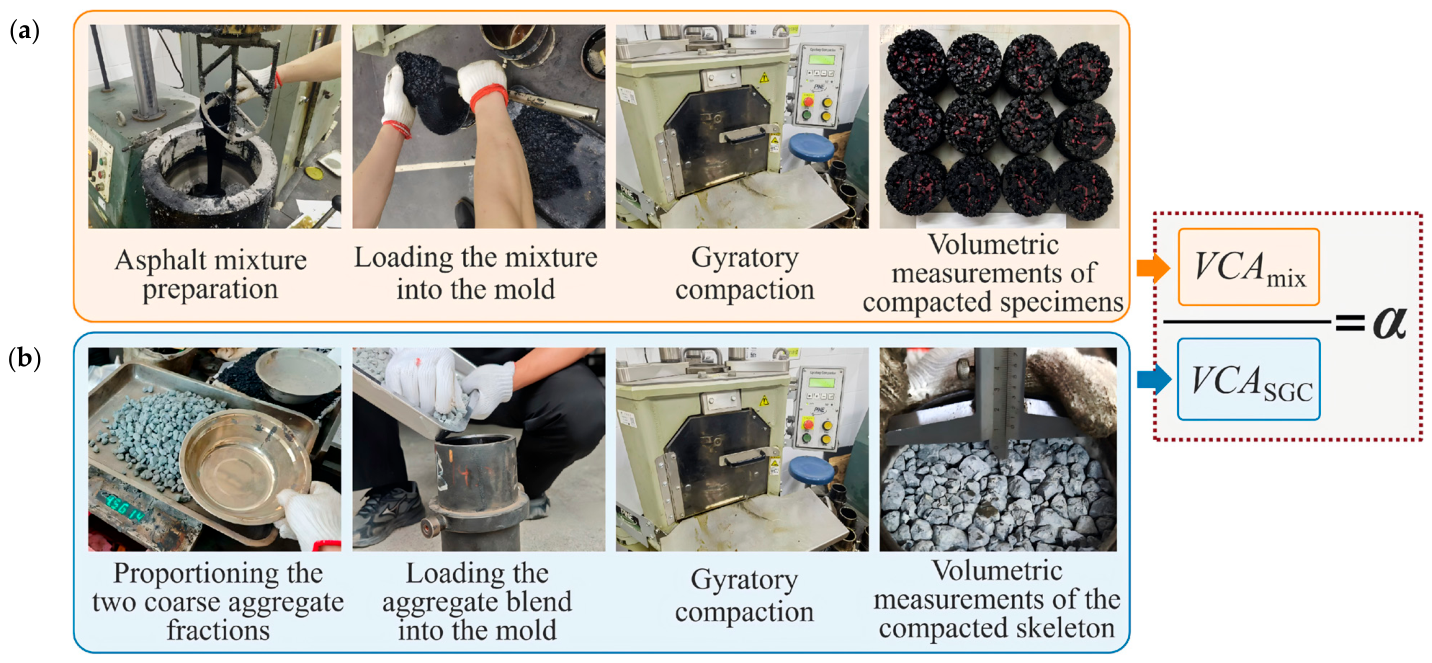
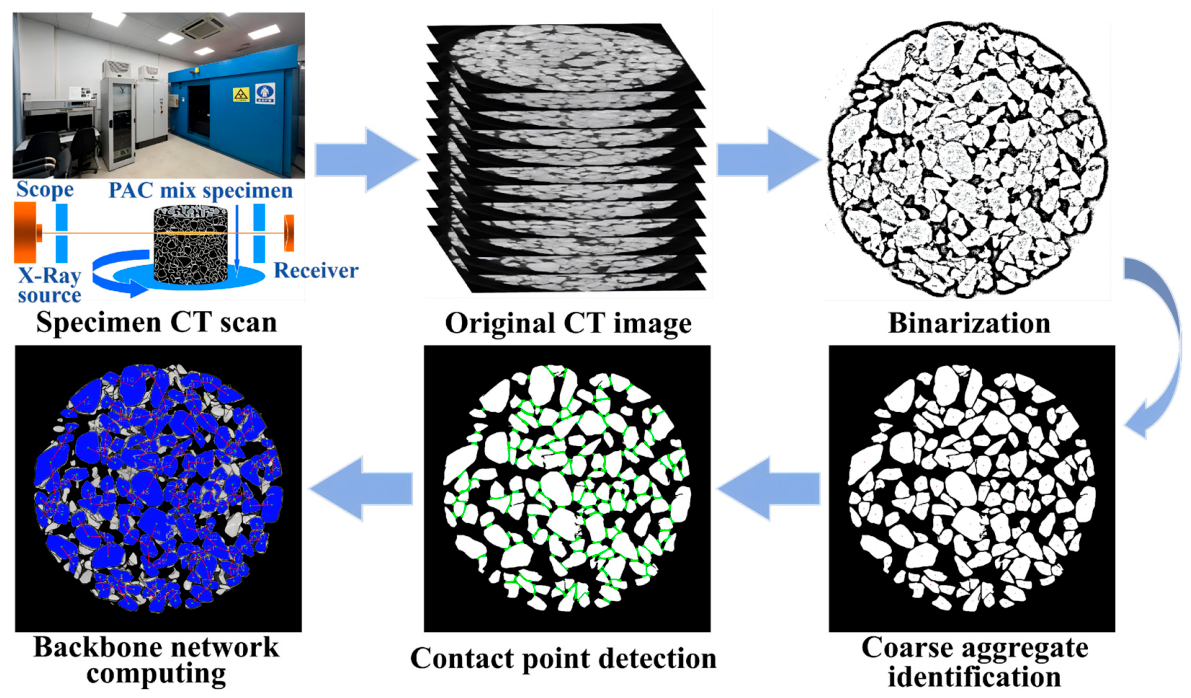
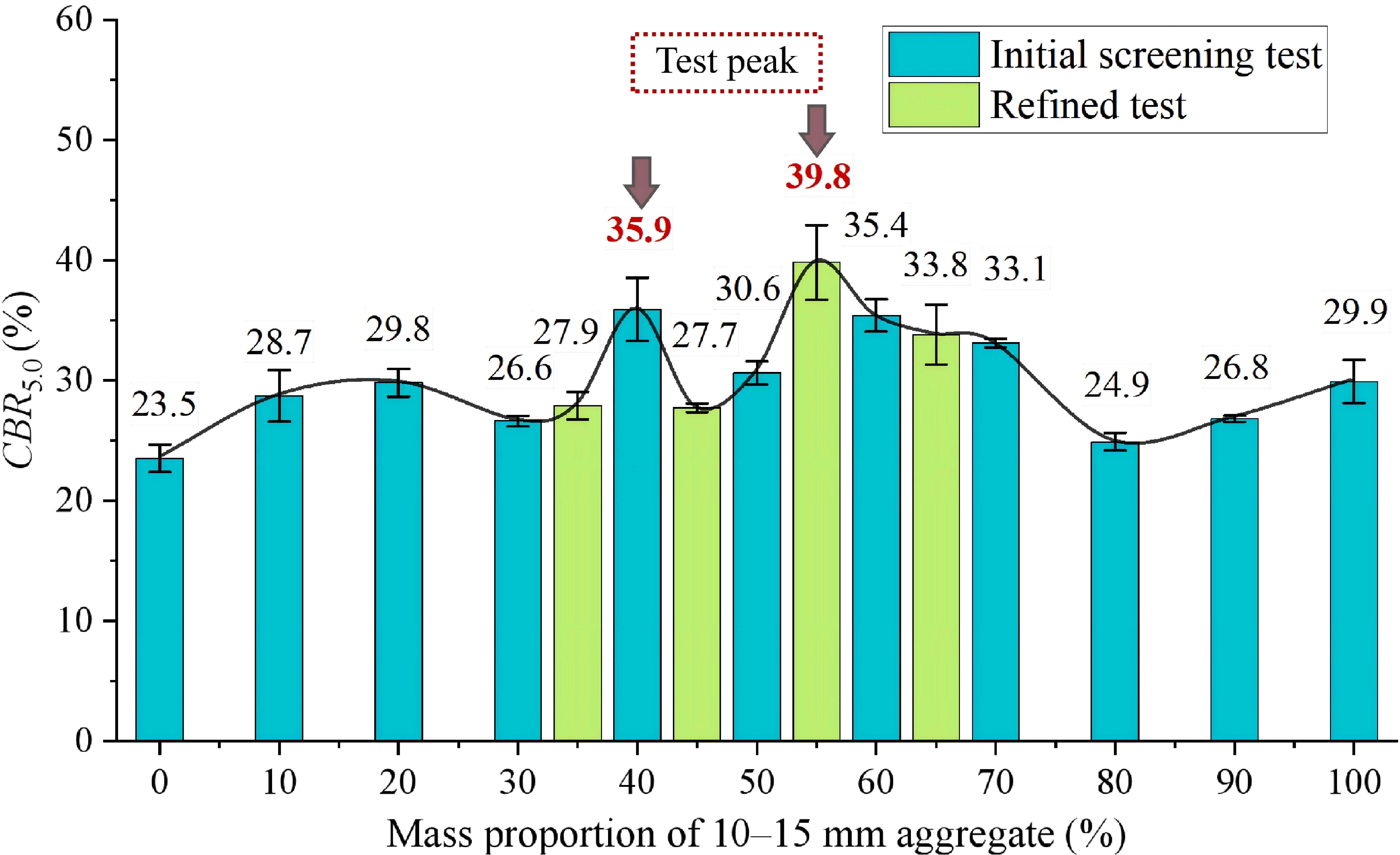
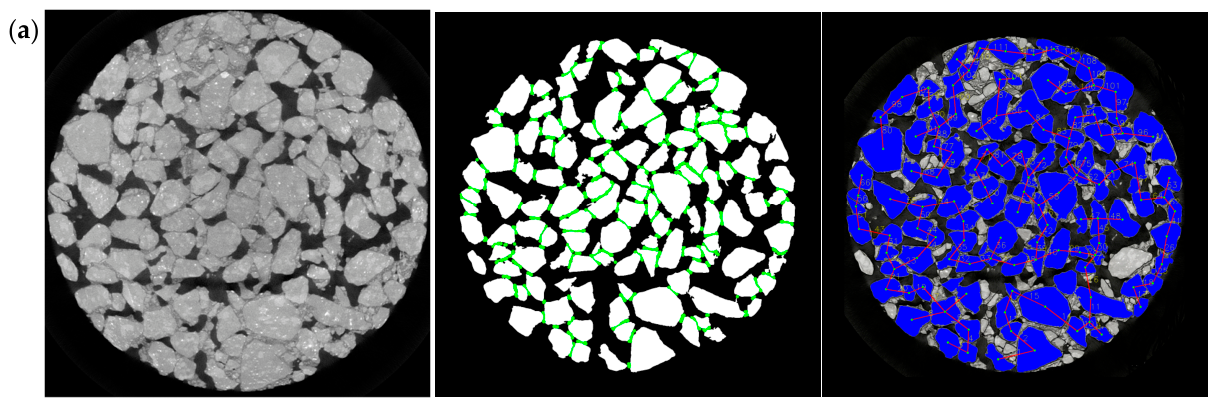
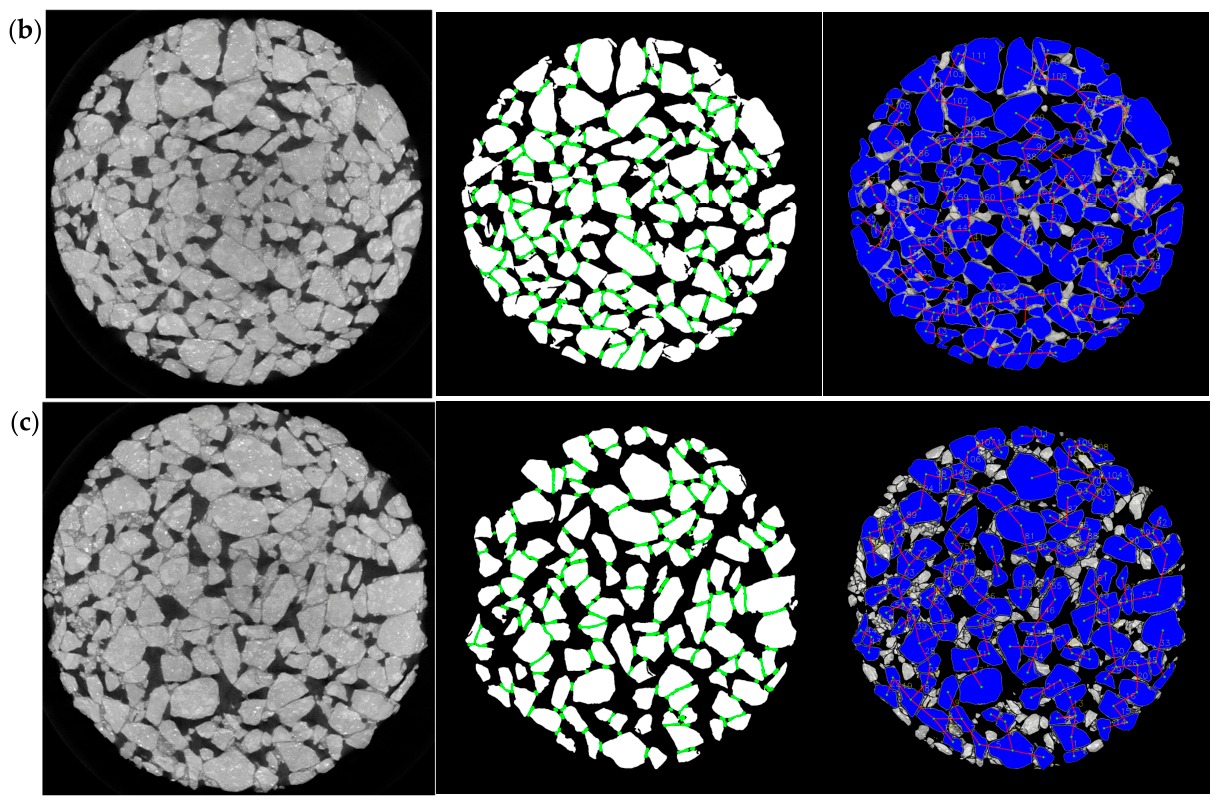
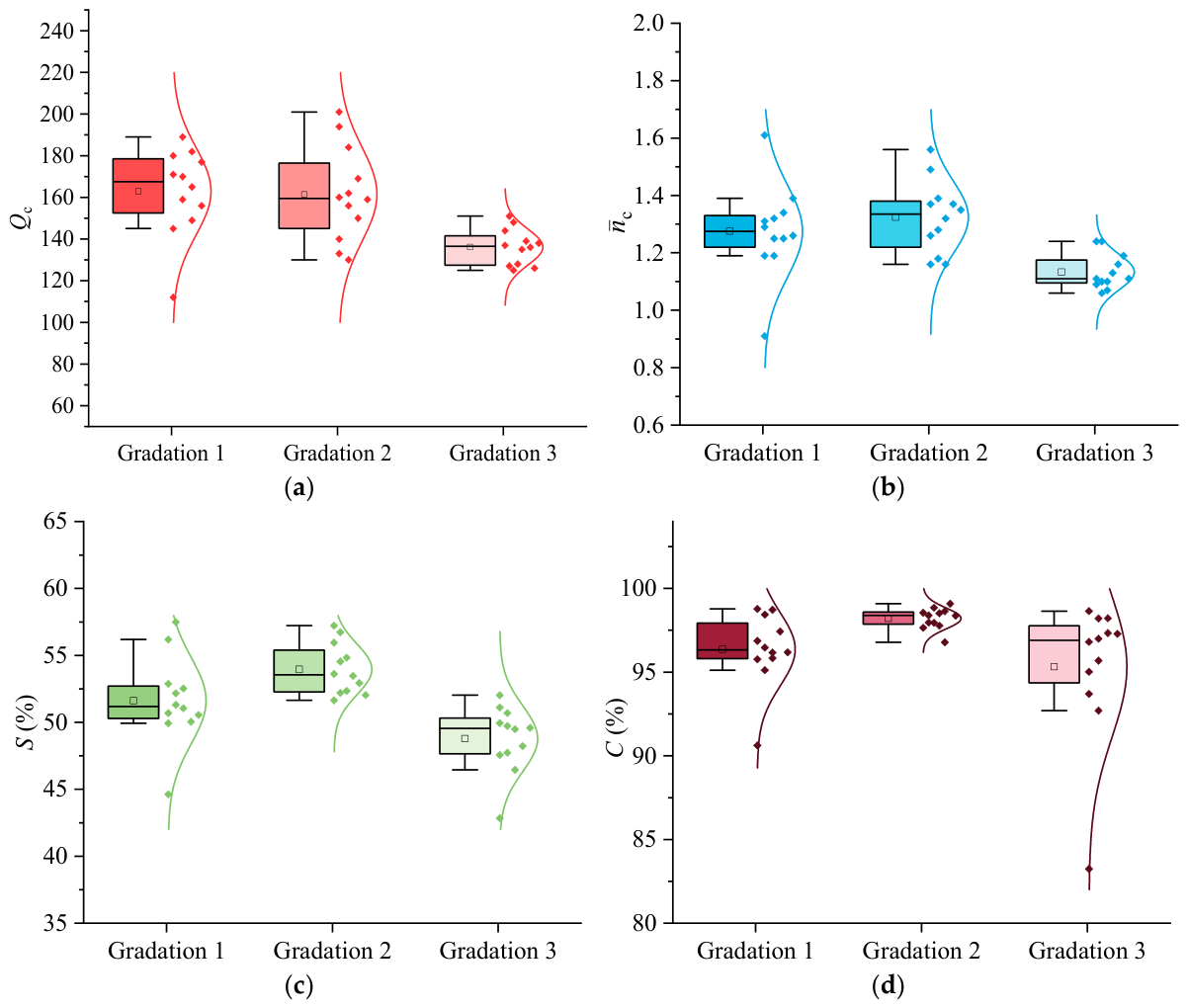
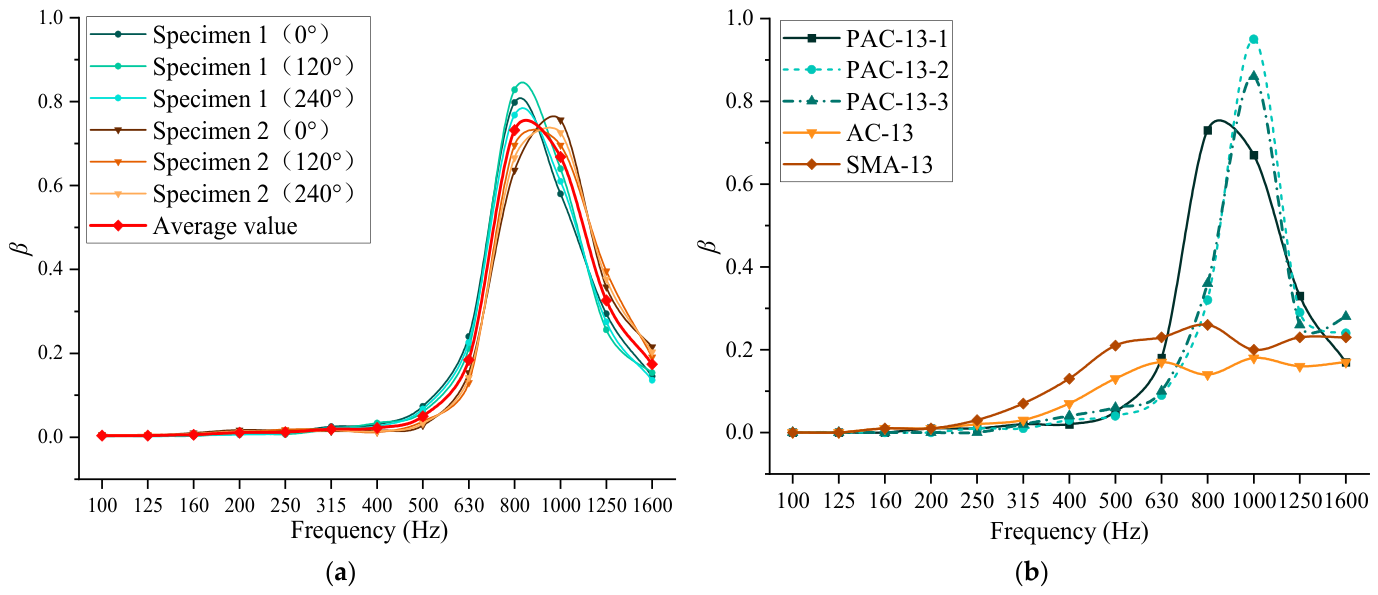
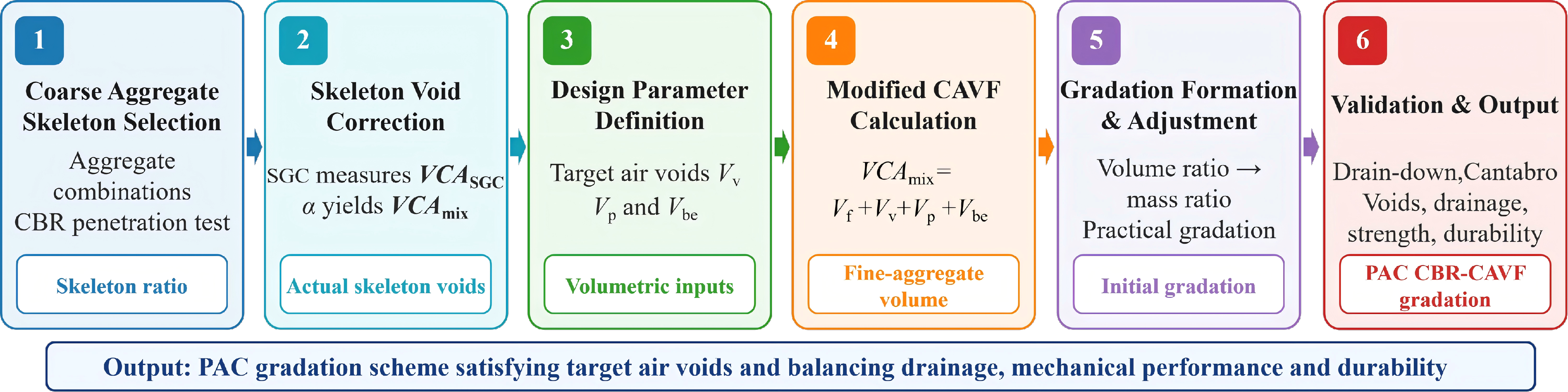
Porous asphalt concrete (PAC) relies on coarse- aggregate interlocking, but existing design methods lack quantitative skeleton evaluation and may introduce volumetric conversion errors. This study proposes a method combining California Bearing Ratio (CBR)-based mechanical skeleton optimization with coarse aggregate void-filling (CAVF) volumetric design, termed the CBR-CAVF method. An improved CBR test with continuous load displacement recording identified 40:60 and 55:45 blends of 10–15 mm and 5–10 mm aggregates as optimal, with CBR5.0 values of 35.9% and 39.8%. Voids in coarse aggregate were measured by Superpave gyratory compaction, and the coarse aggregate void-filling equation was corrected using a skeleton interference coefficient (α = 1.120) and effective binder volume to calculate gradations at a target air void content of 21.0%. Measured air voids differed from the target by no more than 0.4 percentage points. Rankings of Marshall stability, dynamic stability and the computed tomography (CT)-derived mean coordination number, skeleton ratio and aggregate contact ratio were consistent with the ranking of CBR5.0. Gradation 2 increased Marshall stability and dynamic stability by 43.8% and 18.3% over the empirical control, suiting heavy-load sections, while Gradation 1 achieved the highest permeability (7920 mL/min) and average normal-incidence sound absorption coefficient (0.356 over 500–1600 Hz), indicating potential benefits for drainage- and noise reduction-oriented applications.
Keywords: porous asphalt concrete; California Bearing Ratio; coarse aggregate void filling; aggregate skeleton; gyratory compaction; volumetric design; sound absorption porous asphalt concrete; California Bearing Ratio; coarse aggregate void filling; aggregate skeleton; gyratory compaction; volumetric design; sound absorption