Study on the Low-Damage Mechanism of Green ZrO2 Ceramics Under Ultrasonic Elliptical Vibration-Assisted Cutting


Abstract
1. Introduction
2. Experimental Method
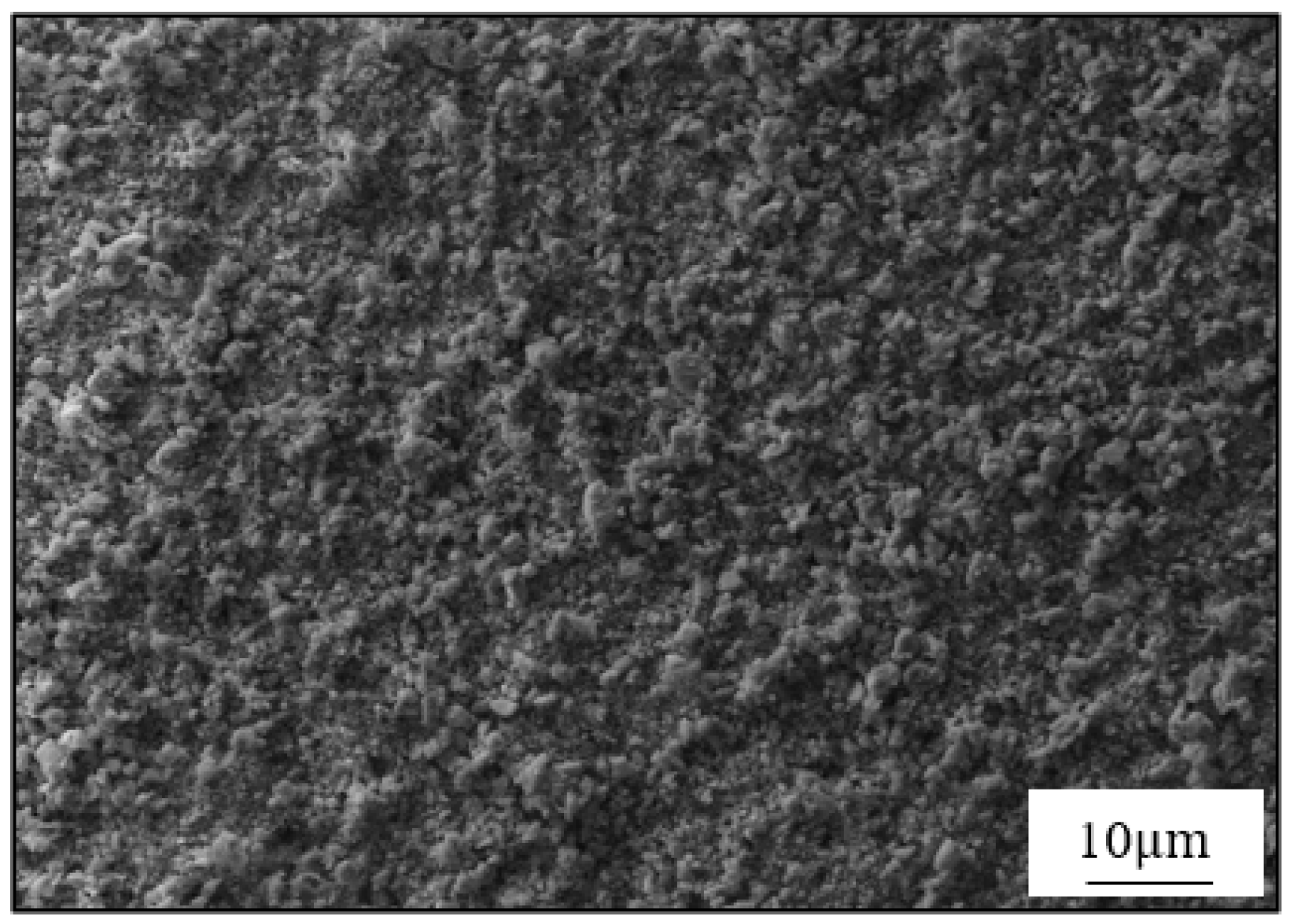
2.1. Preparation of Green ZrO2 Ceramics
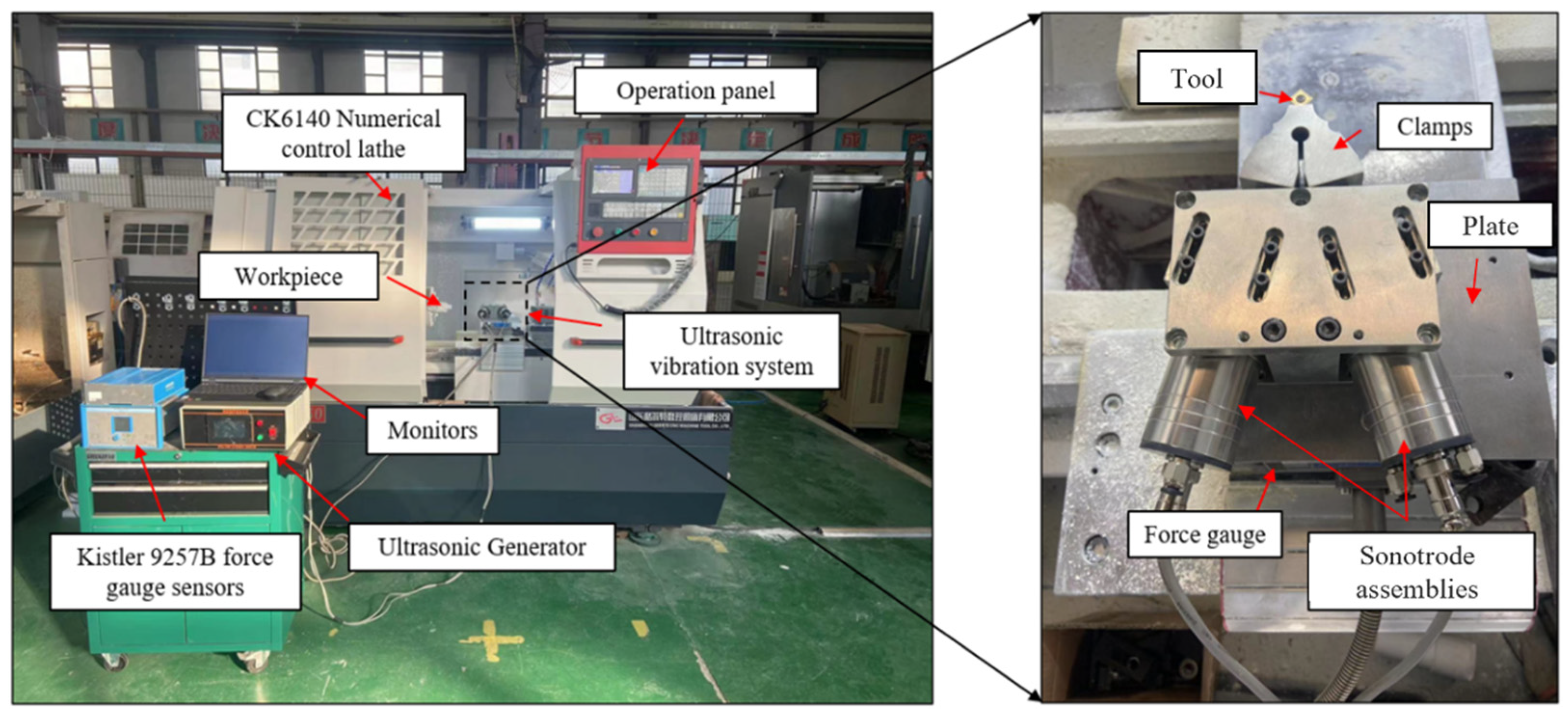
2.2. Ultrasonic Elliptical Vibration-Assisted Cutting of Green ZrO2 Ceramics
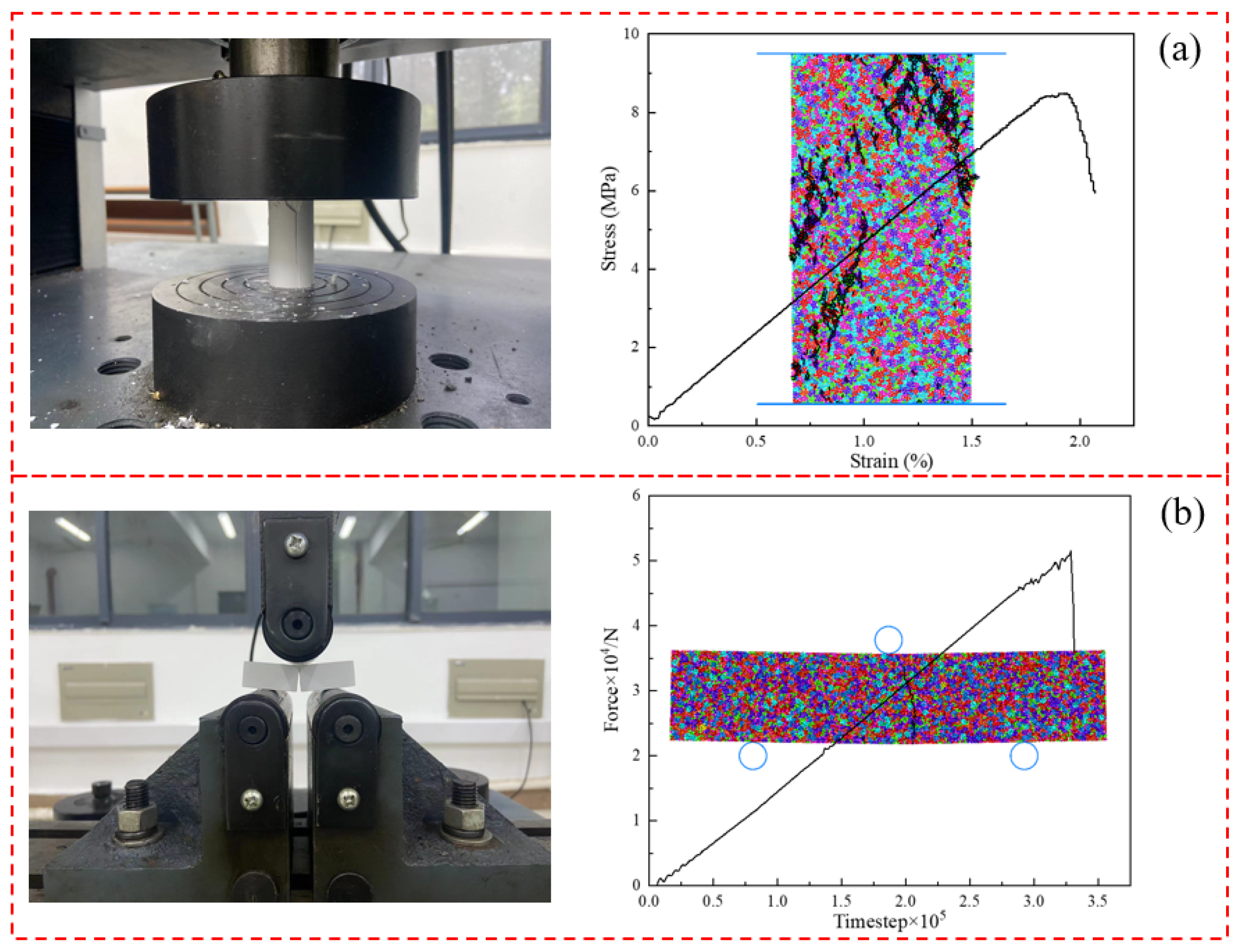
2.3. Ultrasonic Elliptical Vibration-Assisted Cutting of Green ZrO2 Ceramics by Discrete Element Method
3. Result
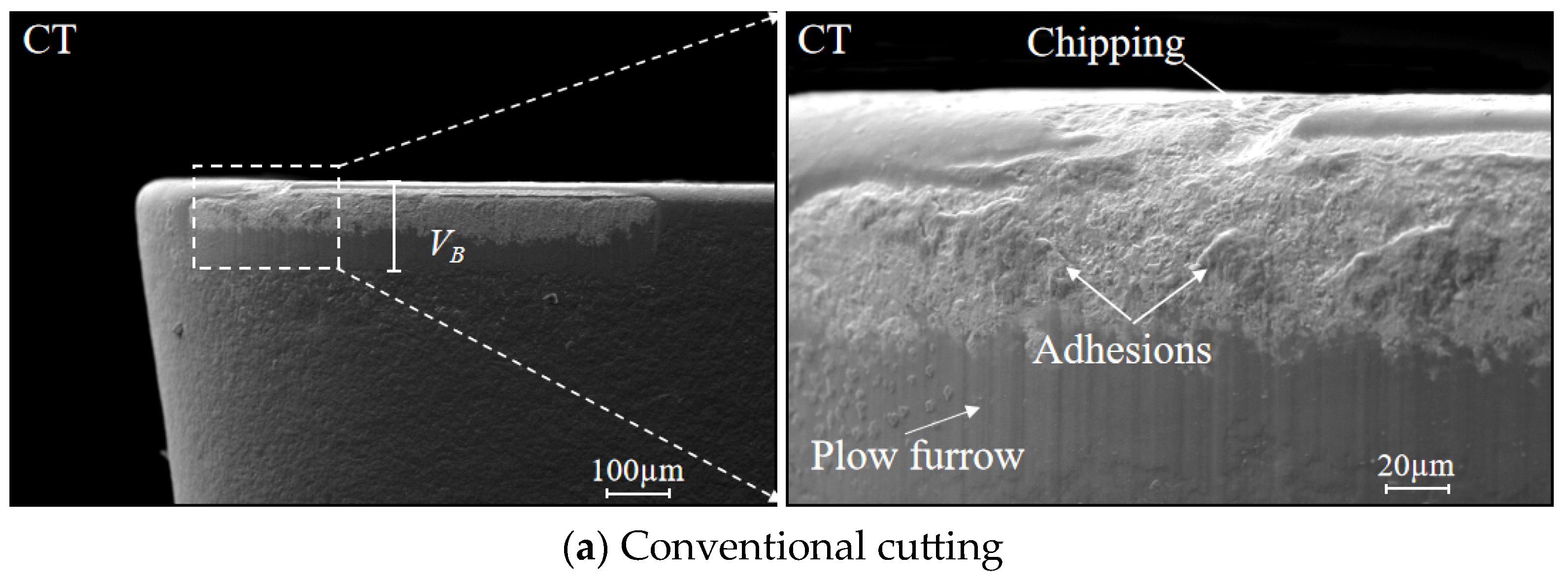
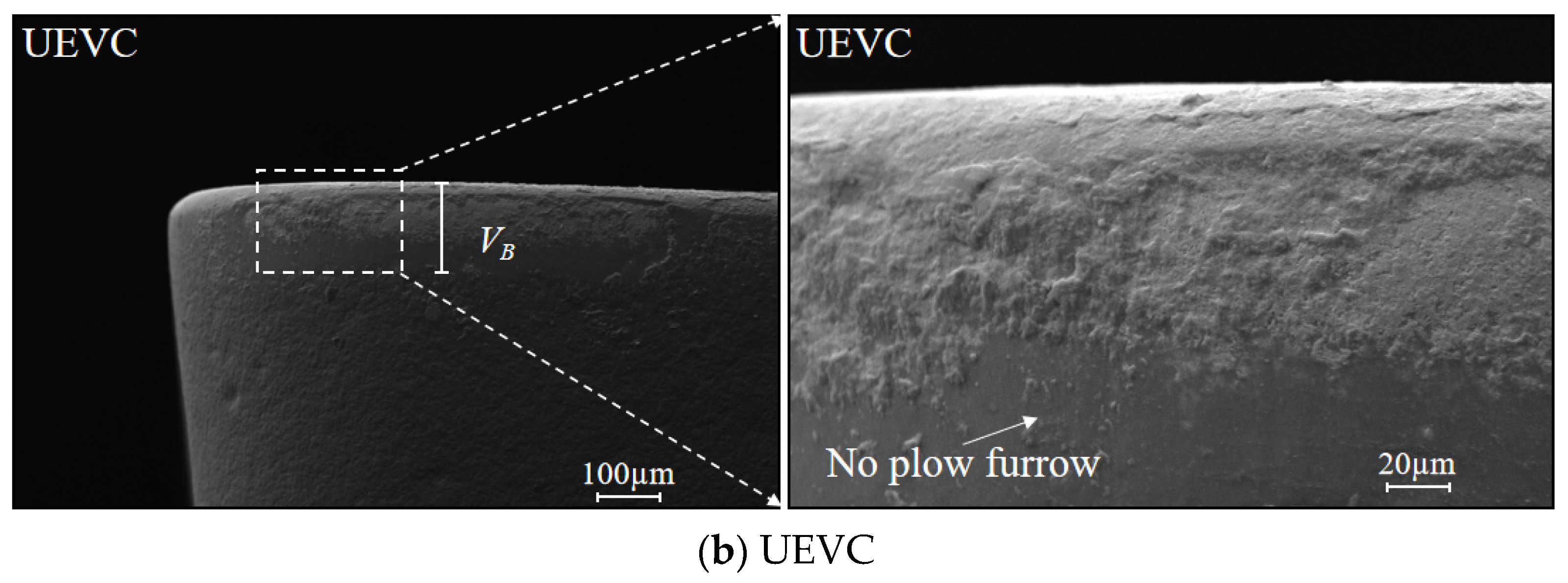
3.1. Tool Wear
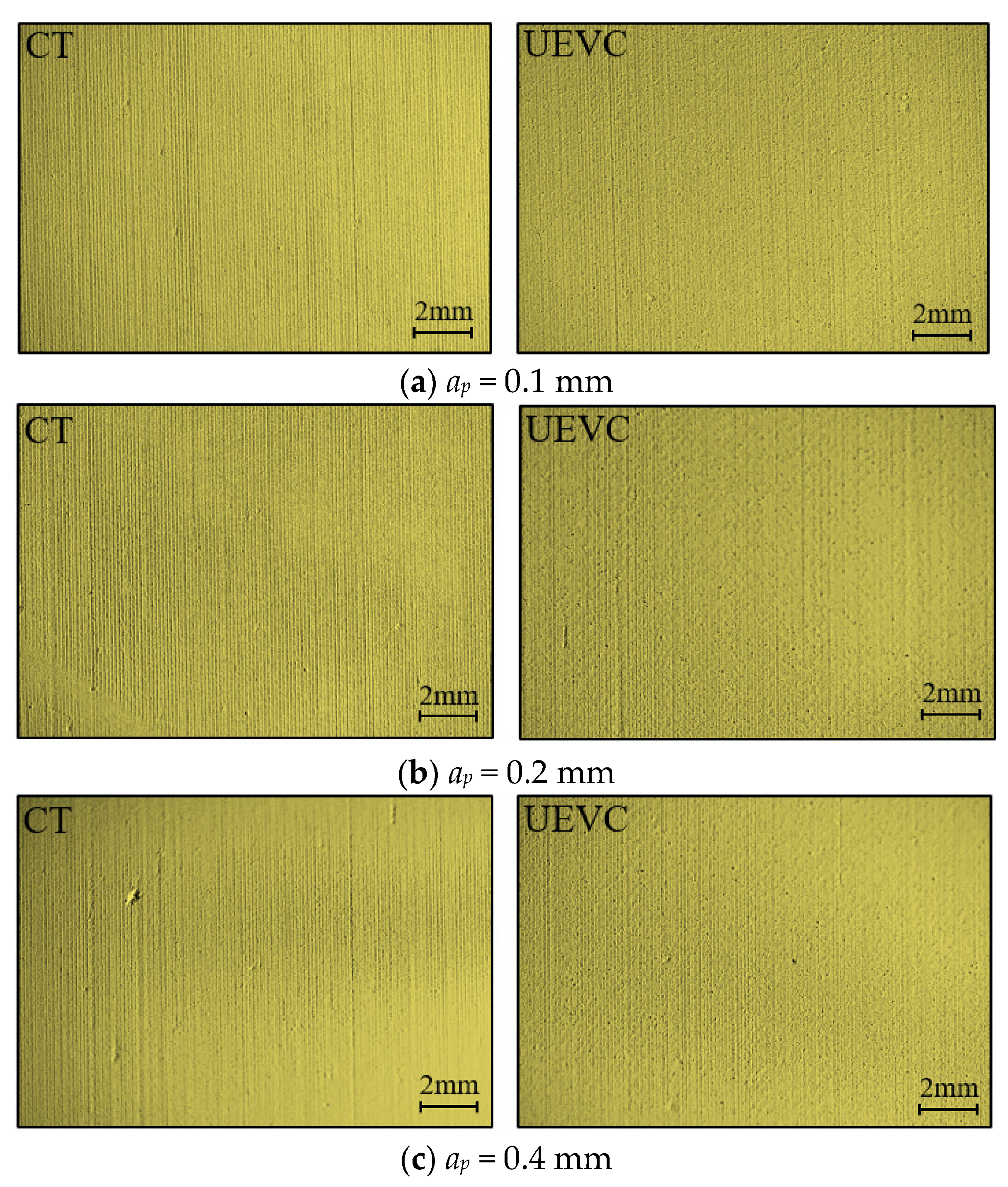
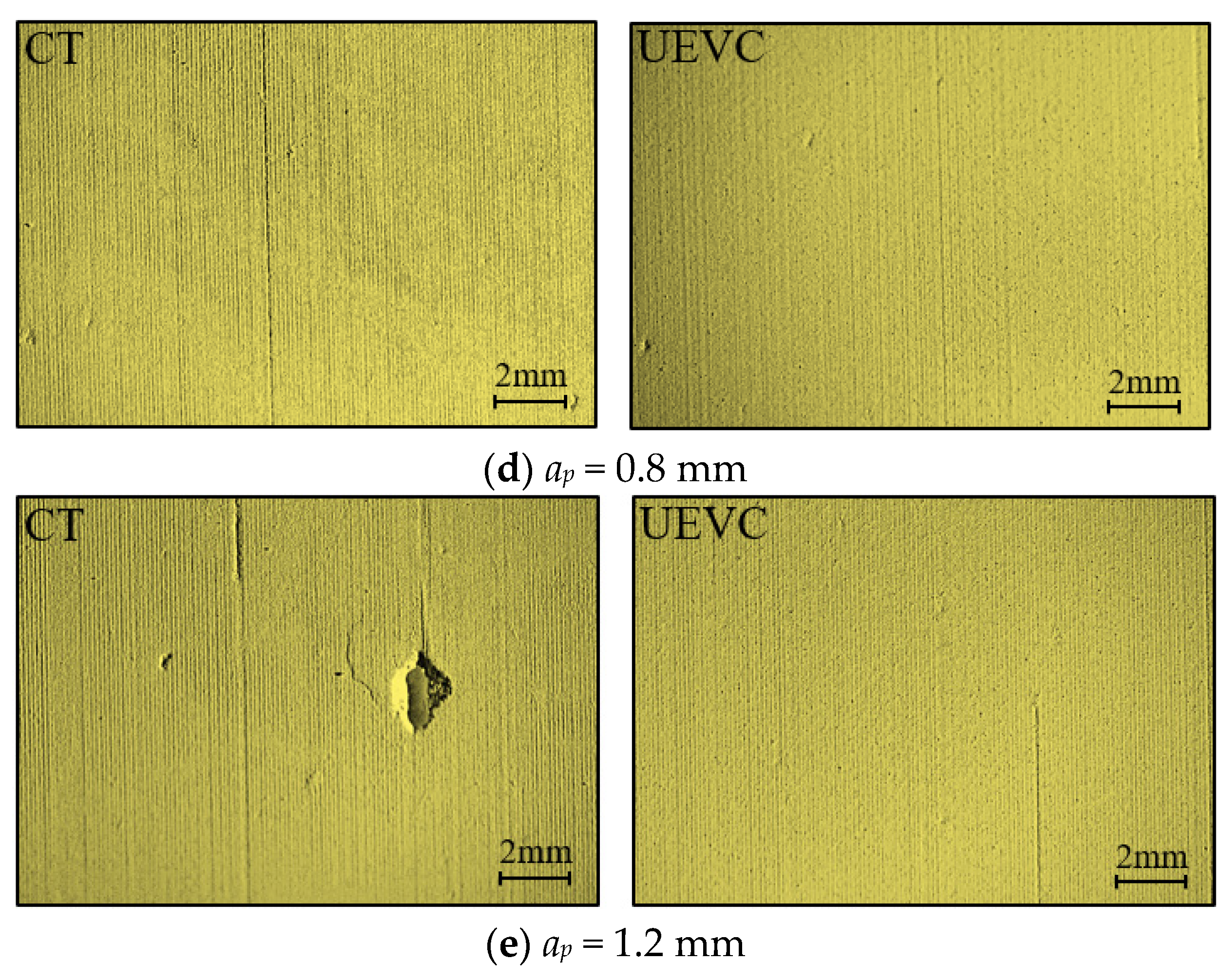
3.2. Surface Morphology
3.2.1. Effect of Depth of Cut on the Surface Morphology of Green ZrO2 Ceramics
3.2.2. Effect of Cutting Speed on the Surface Morphology of Green ZrO2 Ceramics
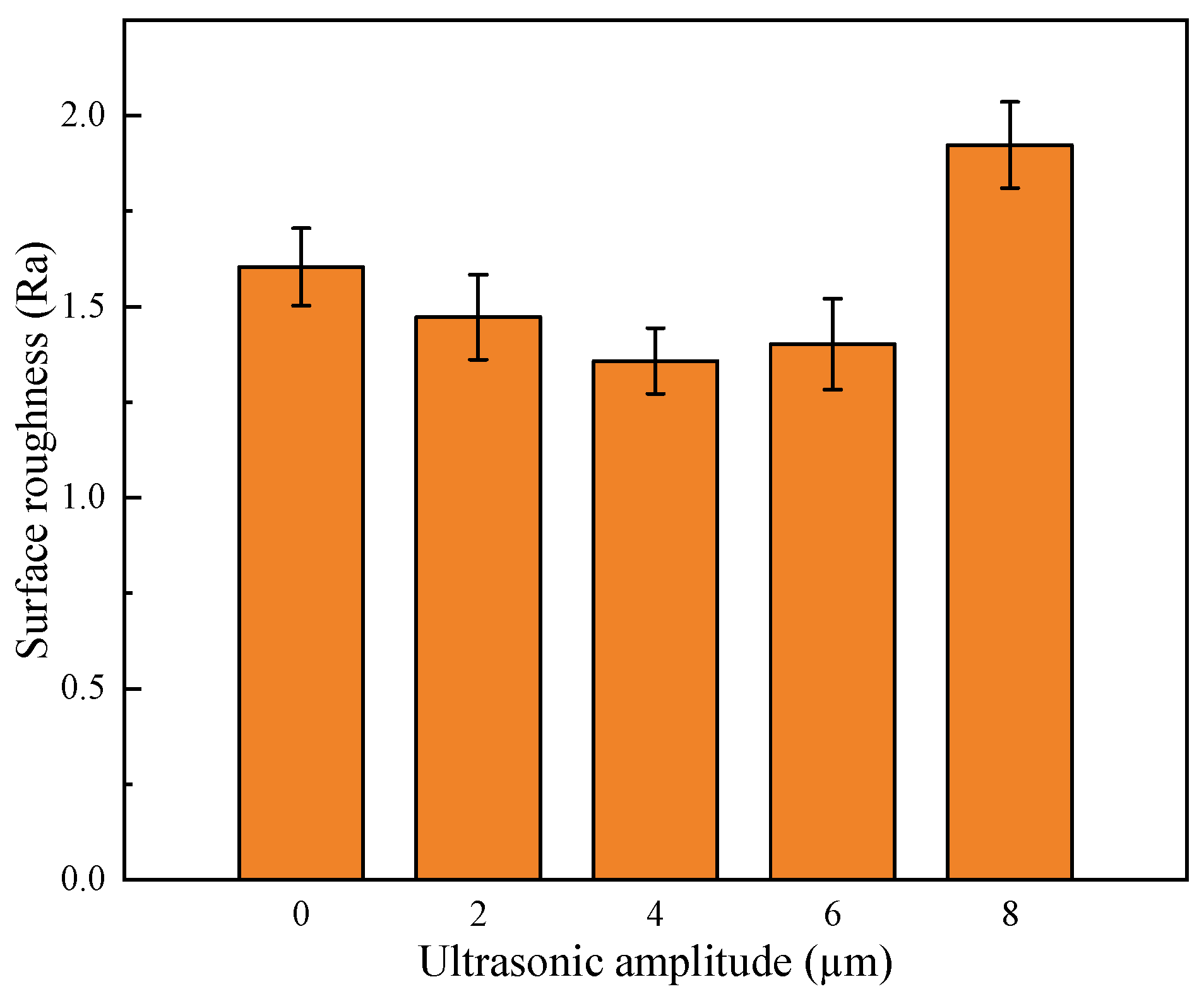
3.2.3. Effect of Amplitude on the Surface Morphology of Green ZrO2 Ceramics
3.3. Cutting Force
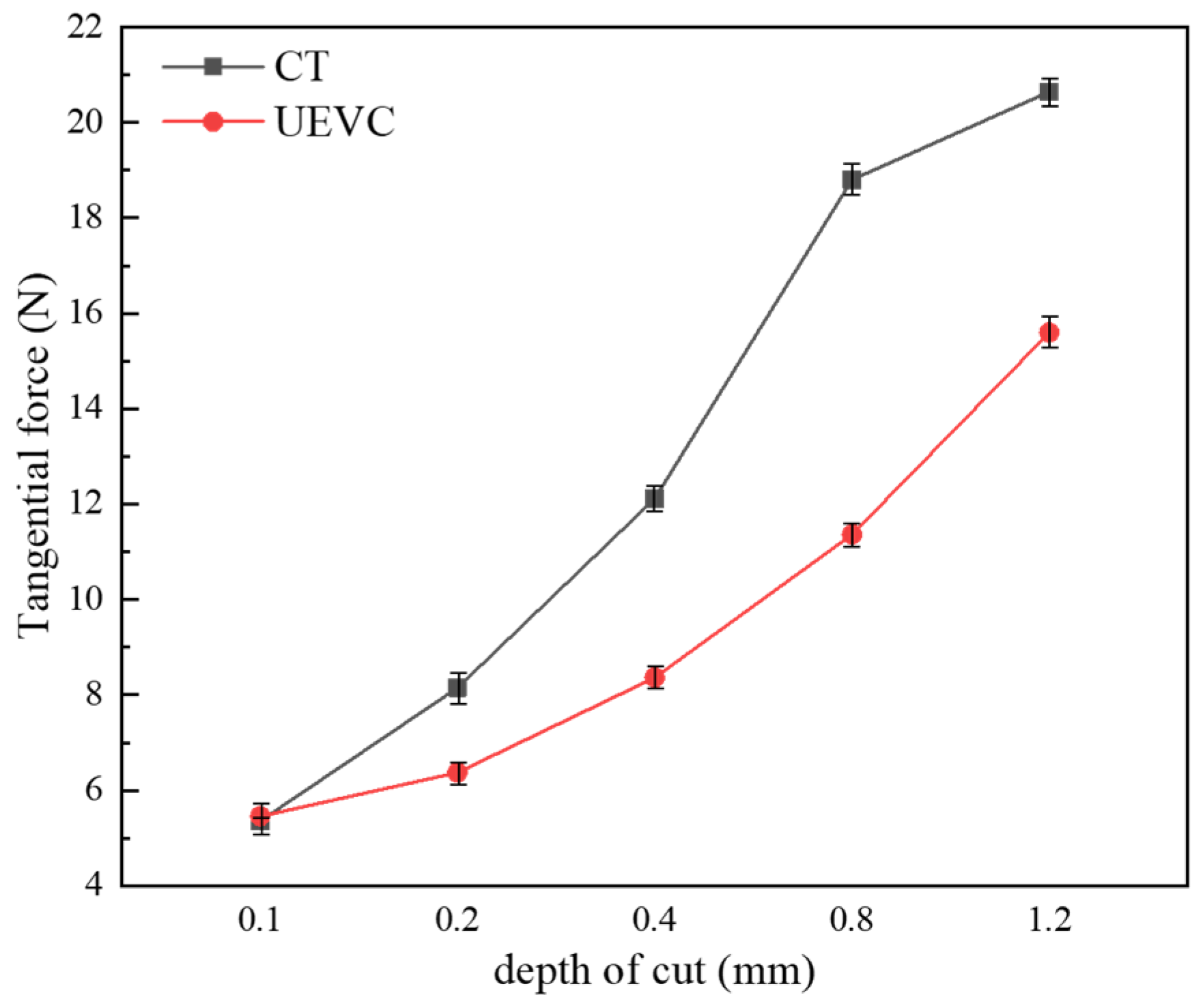
3.3.1. Effect of Depth of Cut on Tangential Forces
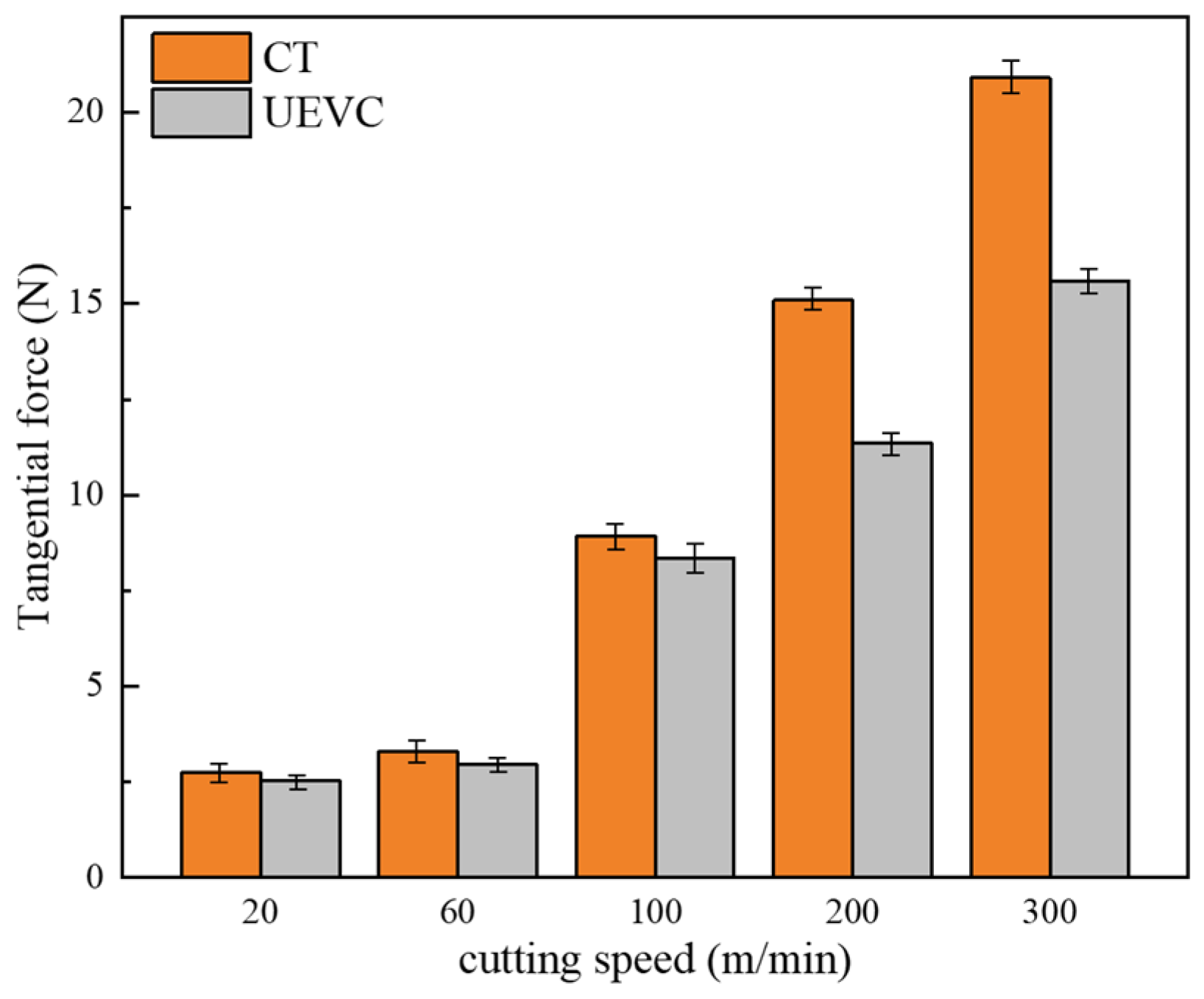
3.3.2. Effect of Cutting Speed on Tangential Forces
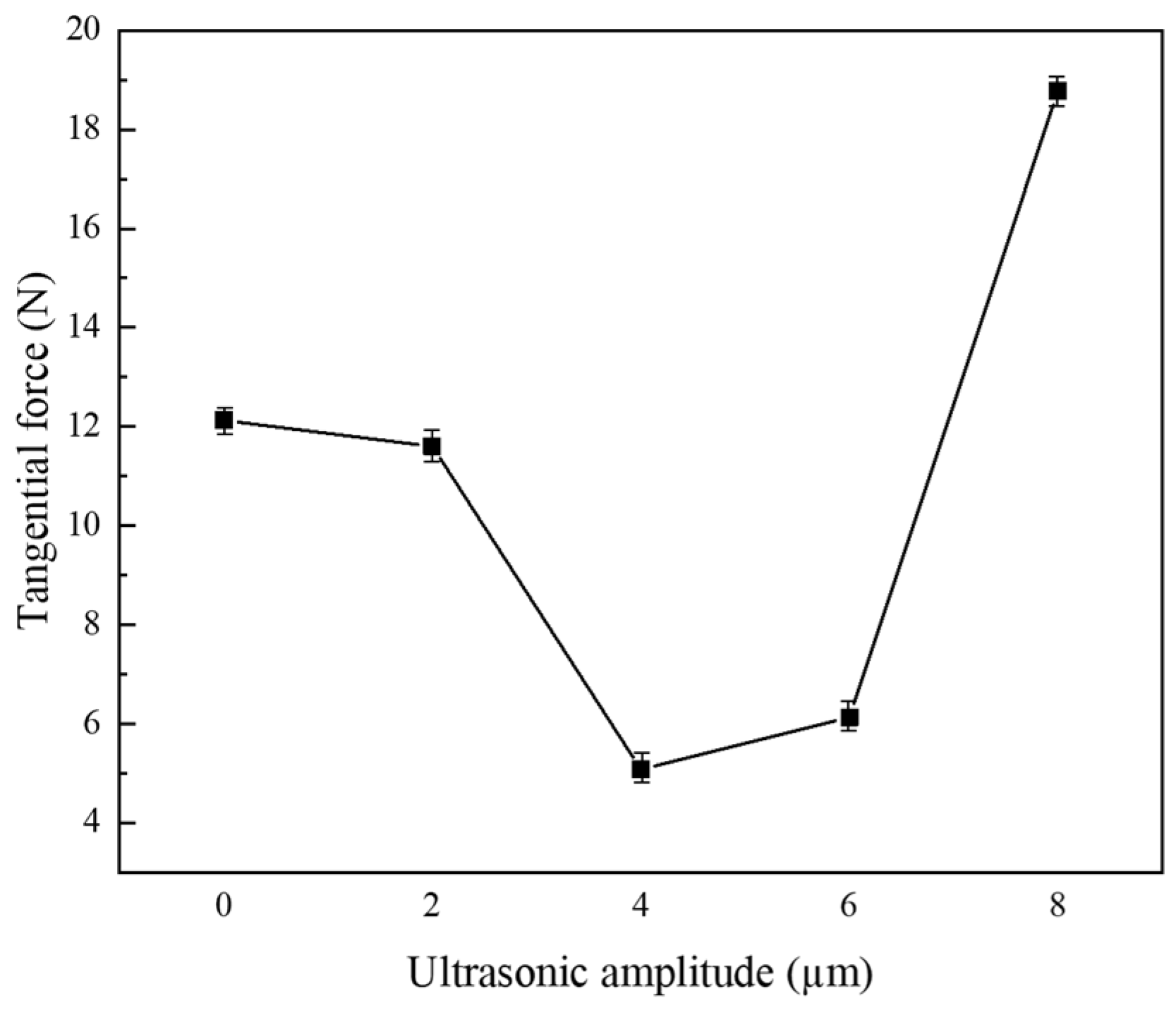
3.3.3. Effect of Amplitude on Tangential Forces
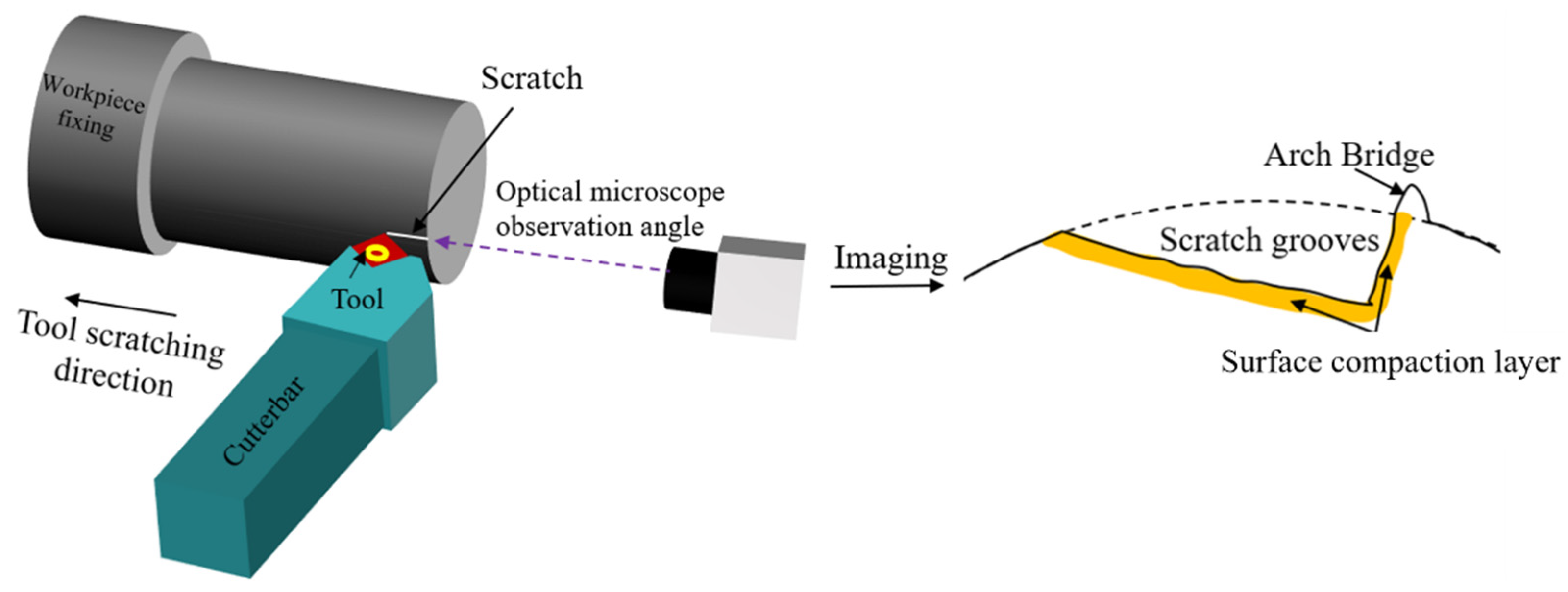
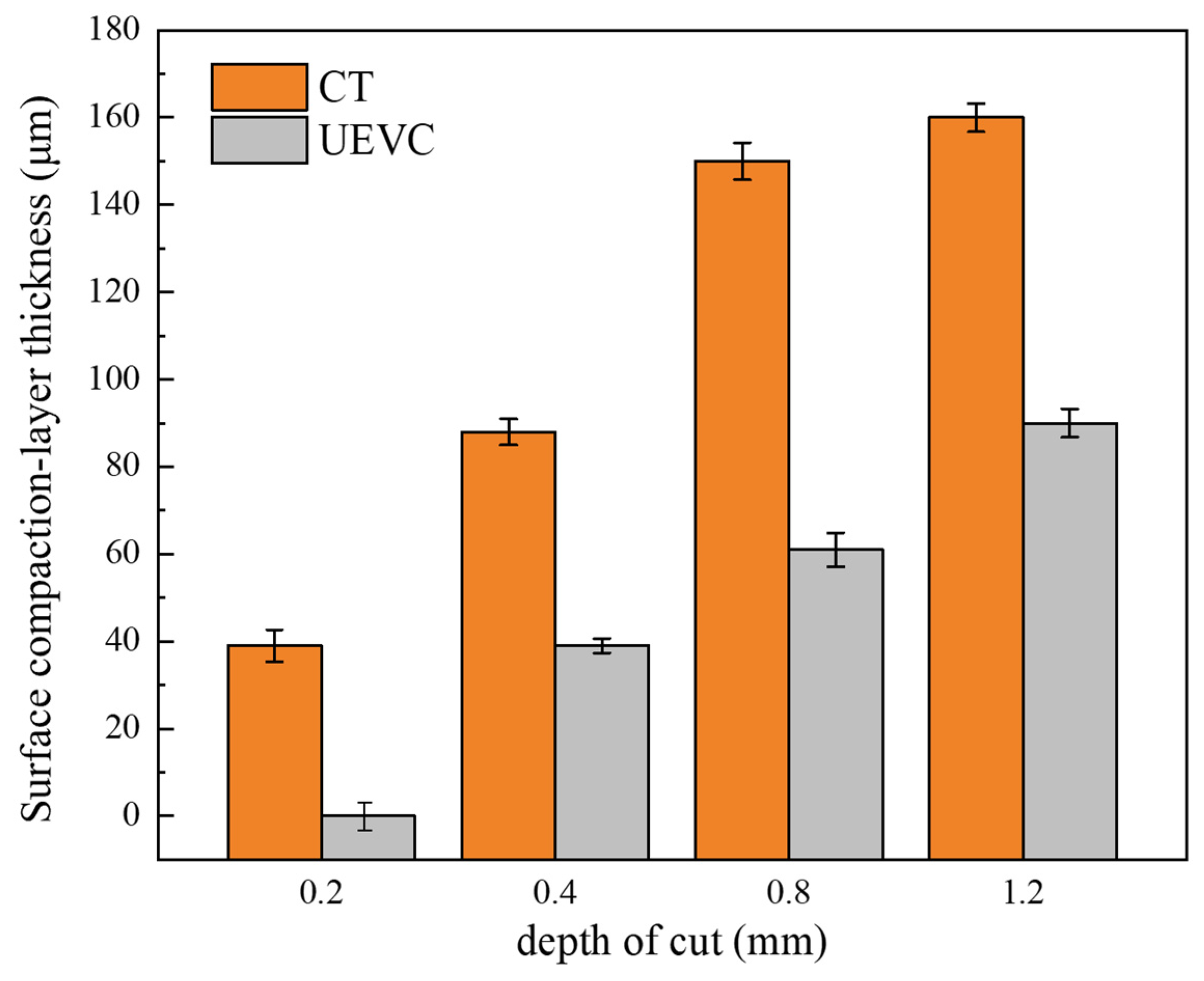
3.4. Surface Compaction Layer
4. Discussion
4.1. Transformation of Material Removal Mode
4.2. Improvement of Surface Quality and Tool Wear by UEVC
4.3. Low-Damage Mechanism of UEVC for Green ZrO2 Ceramics
5. Conclusions
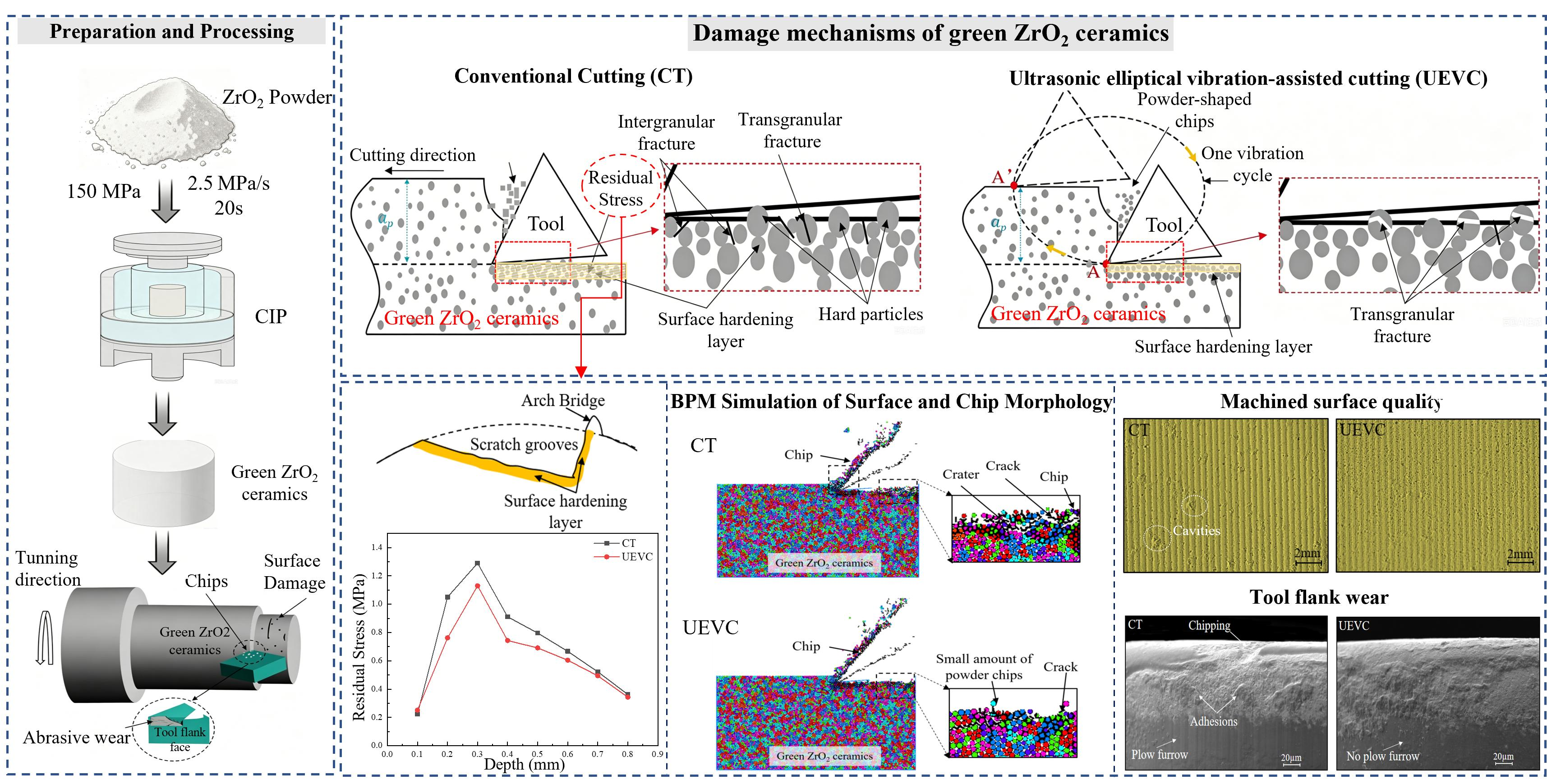
- Compared with CT, UEVC reduces cutting forces and improves machined surface quality. It also suppresses the compaction layer and reduces tool wear.
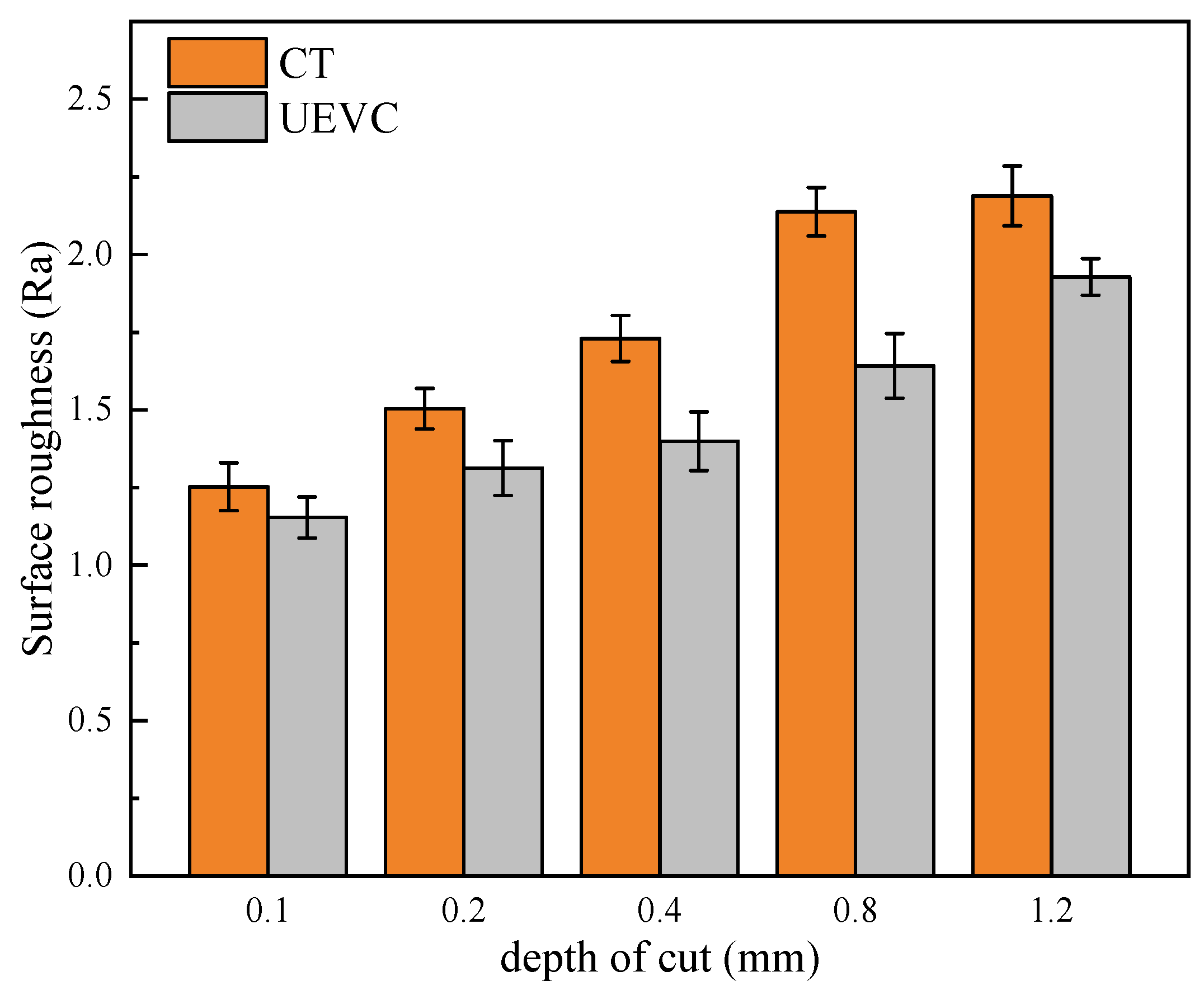
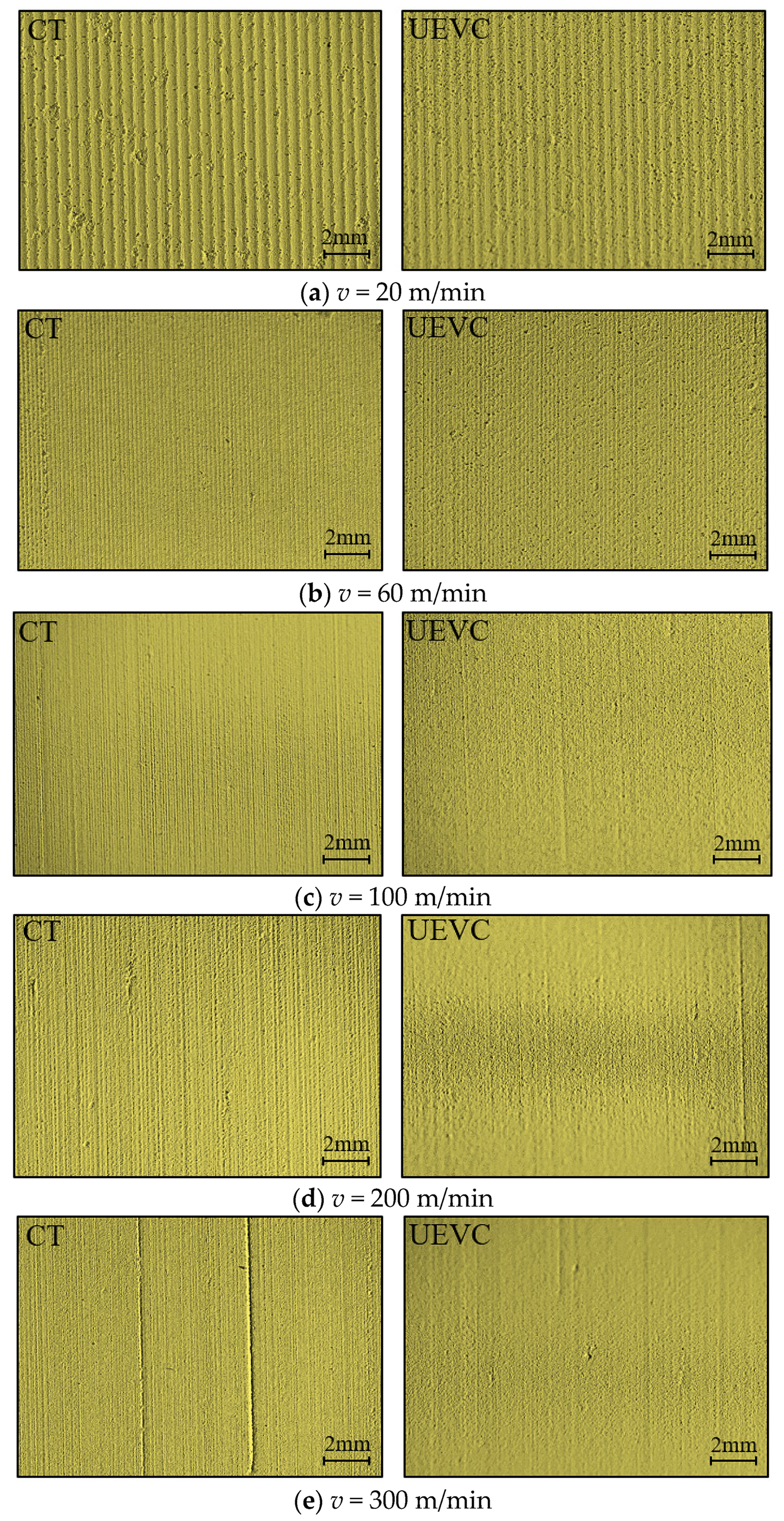
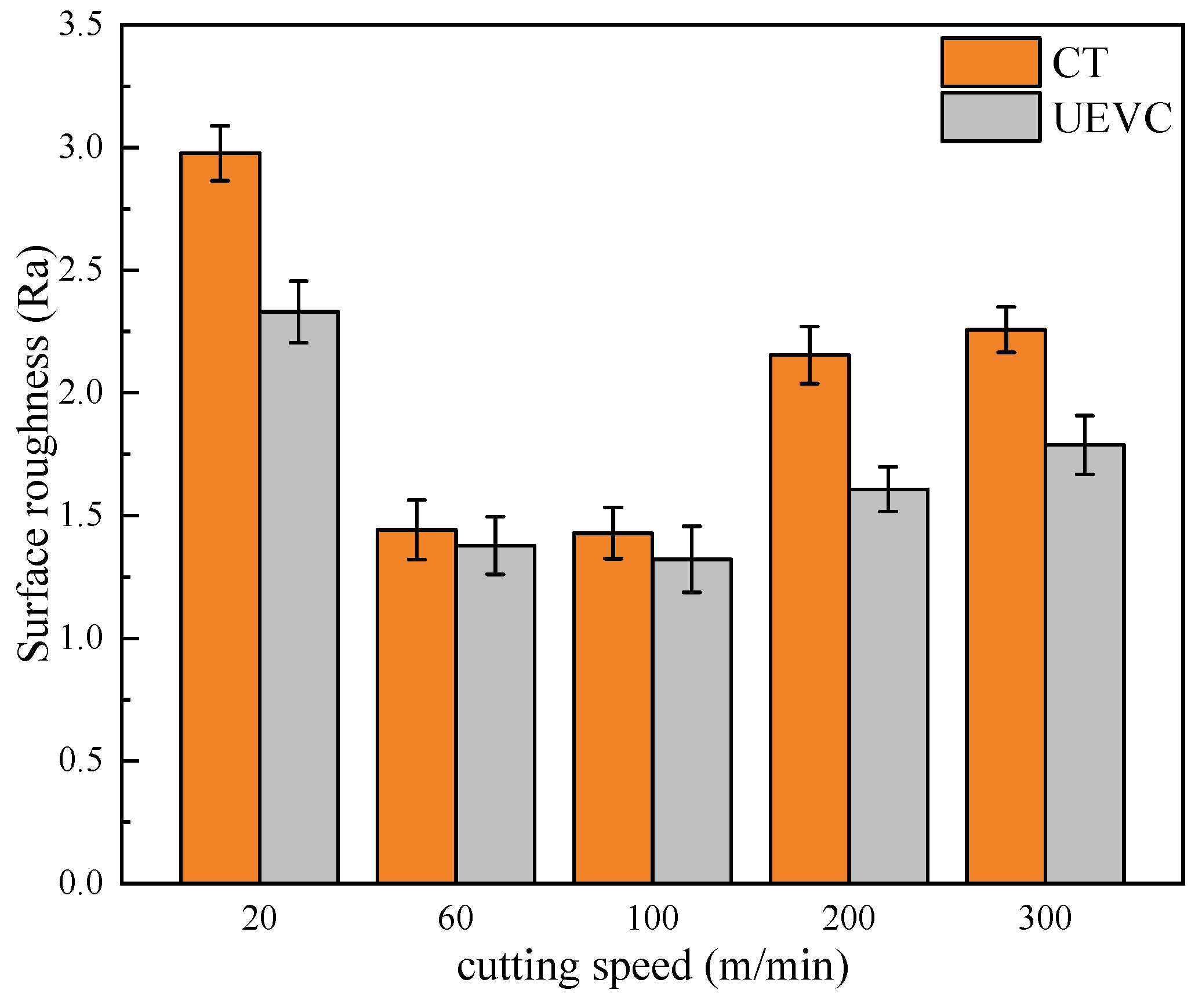
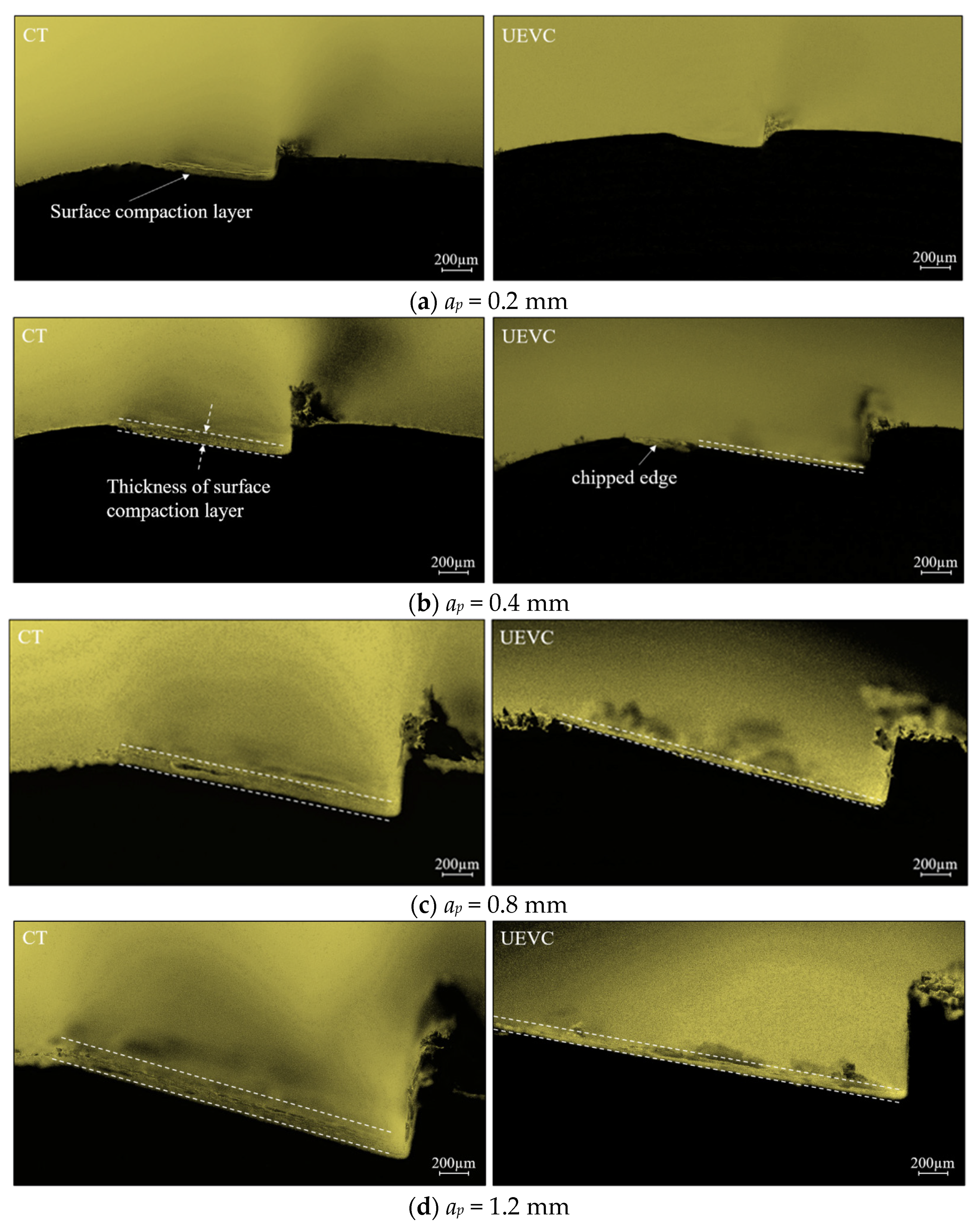
- Under certain cutting parameters, UEVC reduces surface roughness by up to 23.2%, the compaction layer thickness by 59.33%, the tangential cutting force by 58.14%, and the average flank wear by 11.5%.
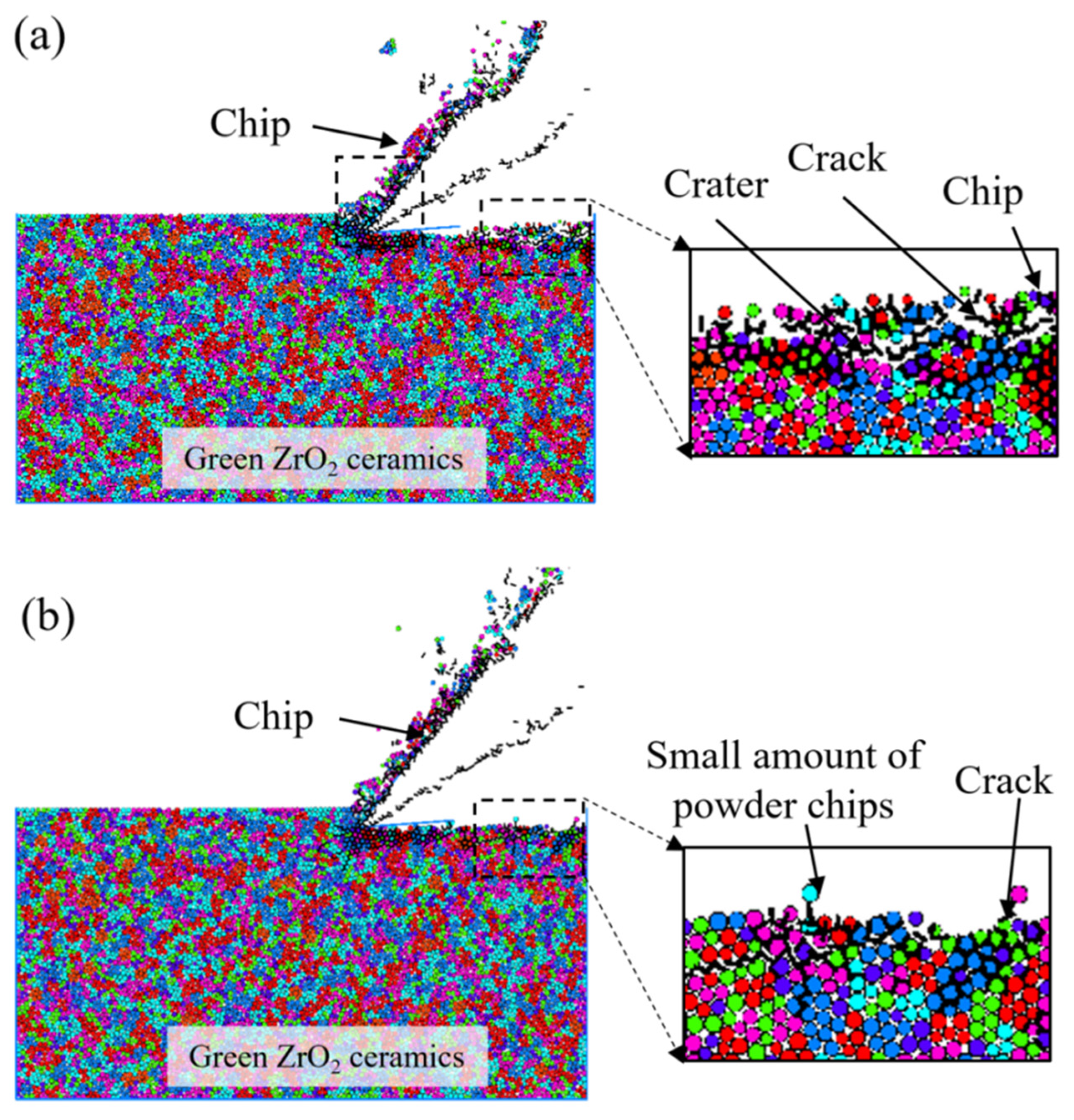
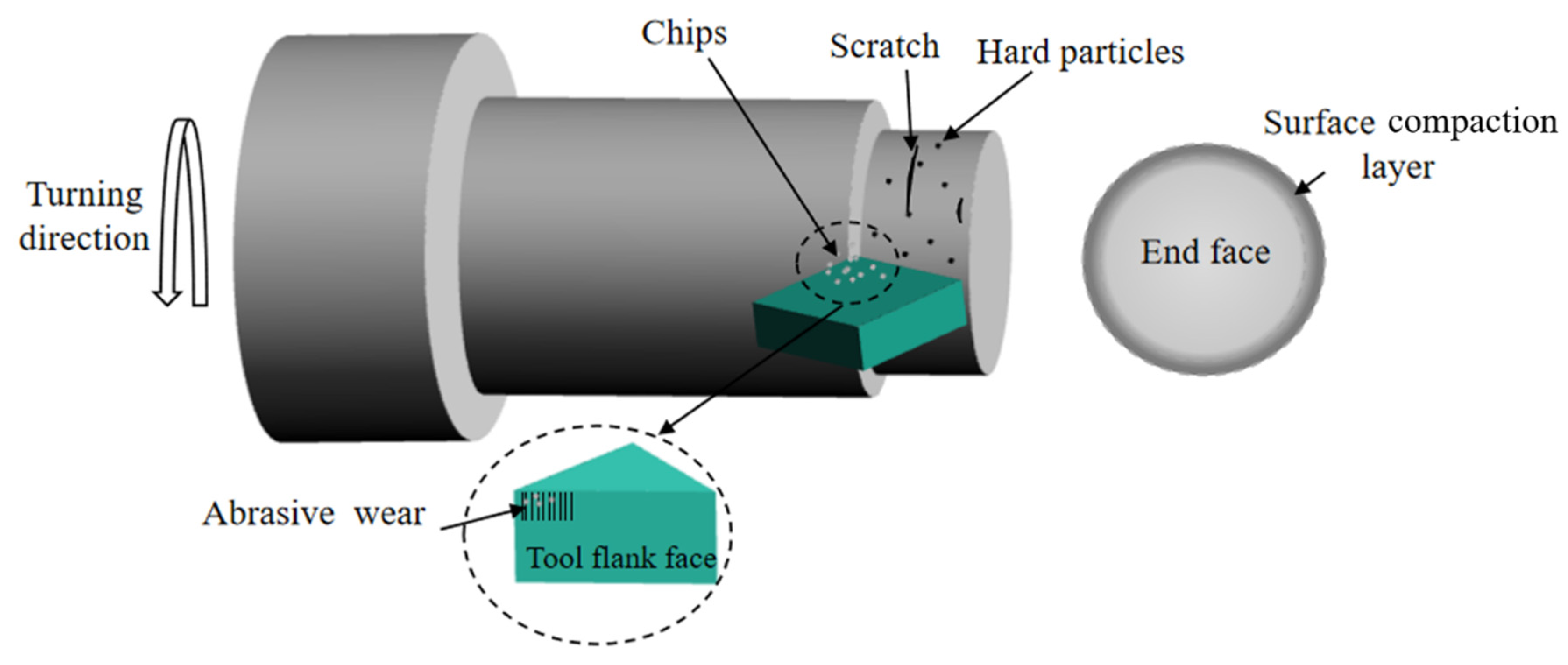
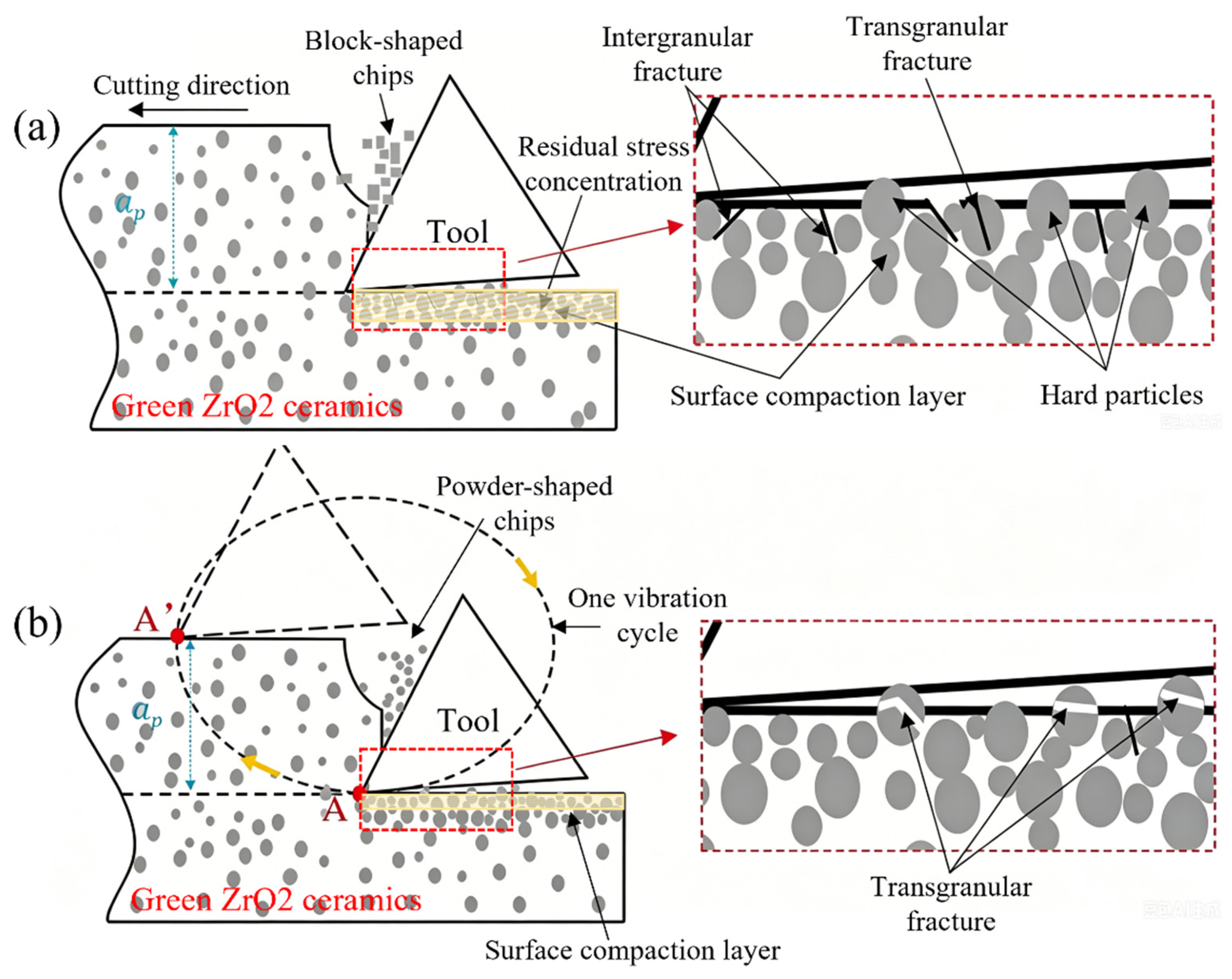
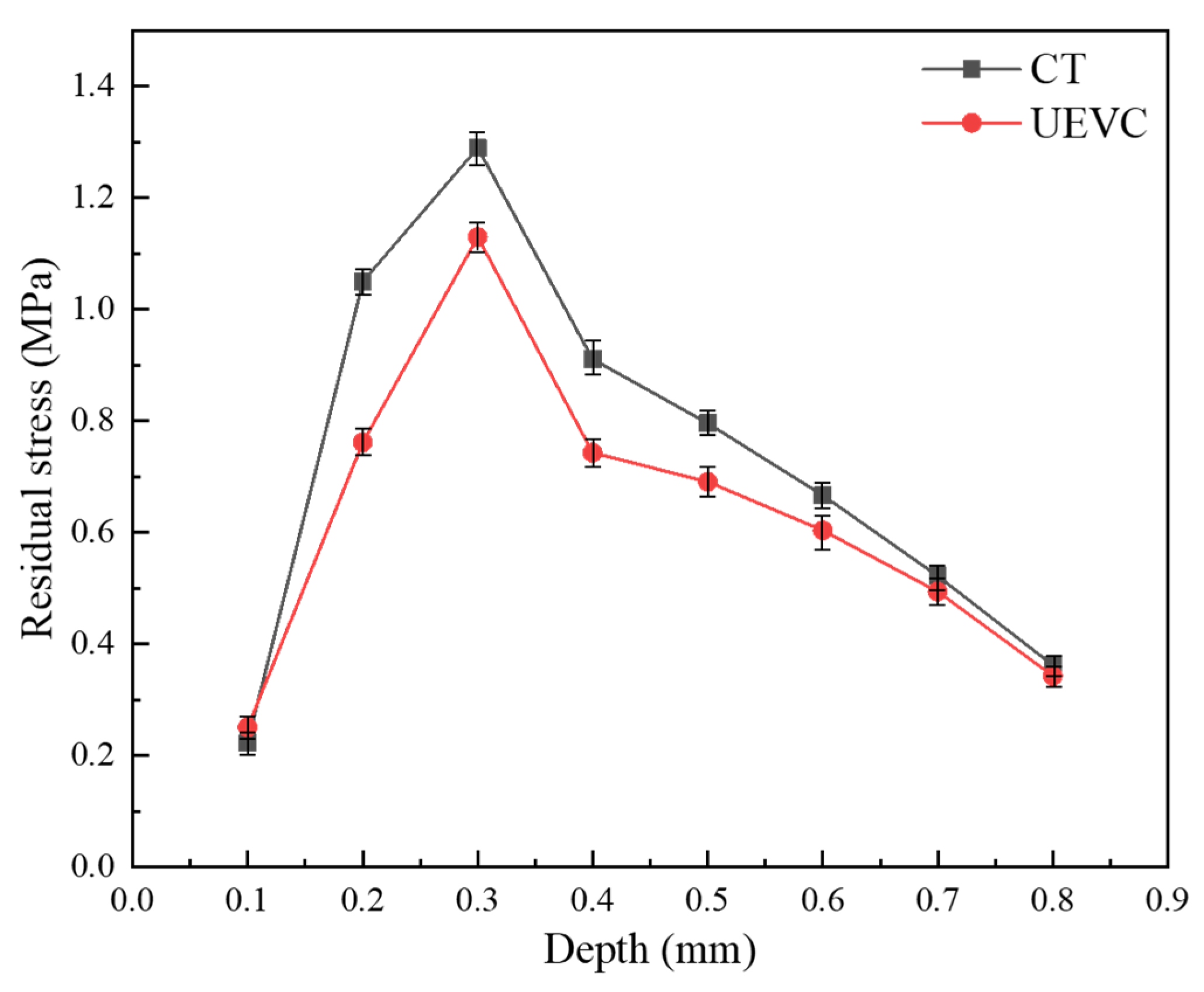
- The low-damage mechanisms of UEVC for green ZrO2 ceramics can be attributed to the following factors. UEVC generates powder-shaped chips rather than the block-shaped chips produced by CT, thereby facilitating chip evacuation and reducing secondary damage from chip scratching. The lower cutting force under UEVC is accompanied by less abrasion by hard particles and fewer craters on the machined surface. Moreover, UEVC reduces the thickness of the machining-induced compaction layer. The PFC2D simulations predict lower subsurface residual stress magnitudes under UEVC than under CT.
Author Contributions
Funding
Data Availability Statement
Conflicts of Interest
References
- Wu, M.; Chen, K.; Xu, L.; Qi, J.; Luo, Y.; Zhang, D. Swing-torsion composite friction behavior of CoCrMo/UHMWPE contact interface of artificial knee joint prosthesis implantation materials. Mater. Res. Express 2019, 6, 055402. [Google Scholar] [CrossRef] [Scilit]
- Koh, Y.-G.; Park, K.-M.; Lee, J.-A.; Nam, J.-H.; Lee, H.-Y.; Kang, K.-T. Total knee arthroplasty application of polyetheretherketone and carbon-fiber-reinforced polyetheretherketone: A review. Mater. Sci. Eng. C 2019, 100, 70–81. [Google Scholar] [CrossRef] [Scilit]
- Oonishi, H.; Ueno, M.; Kim, S.C.; Oonishi, H.; Iwamoto, M.; Kyomoto, M. Ceramic Versus Cobalt-Chrome Femoral Components; Wear of Polyethylene Insert in Total Knee Prosthesis. J. Arthroplast. 2009, 24, 374–382. [Google Scholar] [CrossRef] [Scilit]
- Xiang, S.; Zhao, Y.; Li, Z.; Feng, B.; Weng, X. Clinical outcomes of ceramic femoral prosthesis in total knee arthroplasty: A systematic review. J. Orthop. Surg. Res. 2019, 14, 57. [Google Scholar] [CrossRef] [Scilit]
- Huang, H.; Liu, Y.C. Experimental investigations of machining characteristics and removal mechanisms of advanced ceramics in high speed deep grinding. Int. J. Mach. Tools Manuf. 2003, 43, 811–823. [Google Scholar] [CrossRef] [Scilit]
- Chen, Z.; Li, Z.; Li, J.; Liu, C.; Lao, C.; Fu, Y.; Liu, C.; Li, Y.; Wang, P.; He, Y. 3D printing of ceramics: A review. J. Eur. Ceram. Soc. 2019, 39, 661–687. [Google Scholar] [CrossRef] [Scilit]
- Johansson, E.; Lidstrom, O.; Johansson, J.; Lyckfeldt, O.; Adolfsson, E. Influence of Resin Composition on the Defect Formation in Alumina Manufactured by Stereolithography. Materials 2017, 10, 138. [Google Scholar] [CrossRef] [Scilit]
- Xing, Y.Q.; Luo, C.; Wan, Y.Z.; Huang, P.; Wu, Z.; Zhang, K. Formation of bionic surface textures composed by micro-channels using nanosecond laser on Si3N4-based ceramics. Ceram. Int. 2021, 47, 12768–12779. [Google Scholar] [CrossRef] [Scilit]
- Liu, Y.Y.; Deng, J.X.; Wu, F.F.; Duan, R.; Zhang, X.; Hou, Y. Wear resistance of carbide tools with textured flank-face in dry cutting of green alumina ceramics. Wear 2017, 372–373, 91–103. [Google Scholar] [CrossRef] [Scilit]
- Mohanty, S.; Rameshbabu, A.P.; Mandal, S.; Su, B.; Dhara, S. Critical issues in near net shape forming via green machining of ceramics: A case study of alumina dental crown. J. Asian Ceram. Soc. 2013, 1, 274–281. [Google Scholar] [CrossRef] [Scilit]
- Xin, X.S.; Lü, Z.; Huang, X.Q.; Sha, X.; Zhang, Y.; Chen, K.; Ai, N.; Zhu, R.; Su, W. Solid oxide fuel cells with dense yttria-stabilized zirconia electrolyte membranes fabricated by a dry pressing process. J. Power Sources 2006, 160, 1221–1224. [Google Scholar] [CrossRef] [Scilit]
- Gal, C.W.; Song, G.W.; Baek, W.H.; Kim, H.K.; Lee, D.K.; Lim, K.W.; Park, S.J. Fabrication of pressureless sintered Si3N4 ceramic balls by powder injection molding. Ceram. Int. 2019, 45, 6418–6424. [Google Scholar] [CrossRef] [Scilit]
- Liu, Y.Y.; Deng, J.X.; Wang, W.; Duan, R.; Xing, Y. Characterization of green Al2O3 ceramics surface machined by tools with textures on flank-face in dry turning. Int. J. Appl. Ceram. Technol. 2019, 16, 1159–1172. [Google Scholar] [CrossRef] [Scilit]
- Liu, J.; Camfield, R. Machinability experimental study of sintered alumina (Al2O3) ceramics material by chemical vapor deposition diamond coating milling tools. Proc. Inst. Mech. Eng. Part B J. Eng. Manuf. 2015, 229, 1535–1546. [Google Scholar] [CrossRef] [Scilit]
- Dadhich, P.; Srivas, P.K.; Mohanty, S.; Dhara, S. Microfabrication of green ceramics: Contact vs. non-contact machining. J. Eur. Ceram. Soc. 2015, 35, 3909–3916. [Google Scholar] [CrossRef] [Scilit]
- Onler, R.; Korkmaz, E.; Kate, K.; Chinn, R.E.; Atre, S.V.; Ozdoganlar, O.B. Green micromachining of ceramics using tungsten carbide micro-endmills. J. Mater. Process. Technol. 2019, 267, 268–279. [Google Scholar] [CrossRef] [Scilit]
- Sanchez, L.E.A.; Bukvic, G.; Fiocchi, A.A.; Fortulan, S.A. Allowance removal from green pieces as a method for improvement surface quality of advanced ceramics. J. Clean. Prod. 2018, 186, 10–21. [Google Scholar] [CrossRef] [Scilit]
- Gu, G.Q.; Wu, S.J.; Wang, D.Z.; Zhou, S.; Zhu, L.; An, Q.; Guo, H.; Li, C. A review of the research on the variation of tool’s motion trajectory and its influence on the formation mechanism of surface quality in ultrasonic vibration machining. J. Manuf. Processes 2023, 107, 294–319. [Google Scholar] [CrossRef] [Scilit]
- Zhang, K.; Yin, Z.; Dai, C.W.; Miao, Q.; Zhang, P.; Cao, Z. Material removal mechanism of SiC ceramics by elliptic ultrasonic vibration-assisted grinding (EUVAG) using single grain. Ceram. Int. 2023, 49, 10041–10055. [Google Scholar] [CrossRef] [Scilit]
- Liang, Z.Q.; Wang, X.B.; Wu, Y.B.; Xie, L.; Liu, Z.; Zhao, W. An investigation on wear mechanism of resin-bonded diamond wheel in Elliptical Ultrasonic Assisted Grinding (EUAG) of monocrystal sapphire. J. Mater. Process. Technol. 2012, 212, 868–876. [Google Scholar] [CrossRef] [Scilit]
- Liu, C.; Wang, W.; Xiong, Y.; Huang, B.; Li, L. Experimental investigation on tool wear in ultrasonic vibration-assisted turning of SiCf/SiC ceramic matrix composite. Int. J. Adv. Manuf. Technol. 2023, 125, 3081–3101. [Google Scholar] [CrossRef] [Scilit]
- Júnior, M.G.; França, T.V.; Fortulan, C.A.; da Silva, R.H.L.; Foschini, C.R. Green ceramic machining benefits through ultrasonic-assisted turning: An experimental investigation. Int. J. Adv. Manuf. Technol. 2022, 118, 3091–3104. [Google Scholar] [CrossRef] [Scilit]
- Zhu, Q.; Liu, Y.; Xu, Z.; Sun, D.; Wang, C. Study on the surface damage of green ZrO2 ceramics in dry cutting based on discrete element method. Int. J. Appl. Ceram. Technol. 2023, 20, 3104–3115. [Google Scholar] [CrossRef] [Scilit]
- Chen, H.; Gao, Y.; Wang, Y.; Xu, H.; Jiang, N.; Liu, Y. Pre-sintered Csf/Al2O3 Ceramics Toughening Mechanisms and Cutting Performance Enhancement by Ultrasonic Elliptical Vibration-Assisted Cutting Strengthening. Ceram. Int. 2026, in press. [Google Scholar] [CrossRef] [Scilit]





| Oxides | ZrO2 | Fe2O3 | SiO2 | TiO2 | Al2O3 | Na2O | CaO |
|---|---|---|---|---|---|---|---|
| wt% | 99.9 | ≤0.003 | ≤0.03 | ≤0.002 | ≤0.002 | ≤0.001 | ≤0.002 |
| Tool Geometry Characteristics | Characteristic Values |
|---|---|
| Tool thickness(mm) | 3.97 |
| Cutting-edge length (mm) | 9 |
| Rake angle (°) | −5 |
| Clearance angle (°) | 7 |
| Included angle (°) | 90 |
| Nose radius (mm) | 0.4 |
| Cutting-edge preparation | Edge-honed |
| Parameter | Numerical Value |
|---|---|
| Operating voltage (V) | 220 |
| Operating power (W) | 1000 |
| Vibration frequency (kHz) | 37.5 |
| Maximum amplitude (µm) | 10 |
| No. | Cutting Depth (mm) | Cutting Speed (m/min) | Amplitude (µm) | Cutting Method |
|---|---|---|---|---|
| 1 | 0.1 | 60 | 0/4 | CT/UEVC |
| 2 | 0.2 | 60 | 0/4 | CT/UEVC |
| 3 | 0.4 | 60 | 0/4 | CT/UEVC |
| 4 | 0.8 | 60 | 0/4 | CT/UEVC |
| 5 | 1.2 | 60 | 0/4 | CT/UEVC |
| 6 | 0.4 | 100 | 0/4 | CT/UEVC |
| 7 | 0.4 | 200 | 0/4 | CT/UEVC |
| 8 | 0.4 | 300 | 0/4 | CT/UEVC |
| 9 | 0.4 | 60 | 2 | UEVC |
| 10 | 0.4 | 60 | 4 | UEVC |
| 11 | 0.4 | 60 | 6 | UEVC |
| 12 | 0.4 | 60 | 8 | UEVC |
| Parameter | Intra-Cluster Contacts | Inter-Cluster Contacts |
|---|---|---|
| Linear normal-to-shear stiffness ratio | 1.0 | 0.6 |
| Parallel-bond normal-to-shear stiffness ratio | 2.0 | 1.2 |
| Parallel-bond friction angle (°) | 0.5 | 0.3 |
| Contact friction coefficient | 0.6 | 0.36 |
| Normal critical damping ratio | 0.4 | 0.24 |
| Parallel-bond effective modulus (MPa) | 130 | 78 |
| Parallel-bond tensile strength (MPa) | 2.0 | 1.2 |
| Parallel-bond cohesion (MPa) | 1.9 | 1.14 |
| No. | Depth of Cut (mm) | Amplitude (µm) | Cutting Method | Scratching Speed (m/min) |
|---|---|---|---|---|
| 1 | 0.2 | 0/4 | CT/UEVC | 100 |
| 2 | 0.4 | 0/4 | CT/UEVC | 100 |
| 3 | 0.8 | 0/4 | CT/UEVC | 100 |
| 4 | 1.2 | 0/4 | CT/UEVC | 100 |
Disclaimer/Publisher’s Note: The statements, opinions and data contained in all publications are solely those of the individual author(s) and contributor(s) and not of MDPI and/or the editor(s). MDPI and/or the editor(s) disclaim responsibility for any injury to people or property resulting from any ideas, methods, instructions or products referred to in the content. |
© 2026 by the authors. Licensee MDPI, Basel, Switzerland. This article is an open access article distributed under the terms and conditions of the Creative Commons Attribution (CC BY) license.
Share and Cite
Chen, H.; Jia, F.; Zhu, Q.; Liu, Y.; Wang, C. Study on the Low-Damage Mechanism of Green ZrO2 Ceramics Under Ultrasonic Elliptical Vibration-Assisted Cutting. Materials 2026, 19, 3624. https://doi.org/10.3390/ma19173624
Chen H, Jia F, Zhu Q, Liu Y, Wang C. Study on the Low-Damage Mechanism of Green ZrO2 Ceramics Under Ultrasonic Elliptical Vibration-Assisted Cutting. Materials. 2026; 19(17):3624. https://doi.org/10.3390/ma19173624
Chicago/Turabian StyleChen, Helin, Fanshuo Jia, Qi Zhu, Yayun Liu, and Chuanyang Wang. 2026. "Study on the Low-Damage Mechanism of Green ZrO2 Ceramics Under Ultrasonic Elliptical Vibration-Assisted Cutting" Materials 19, no. 17: 3624. https://doi.org/10.3390/ma19173624
APA StyleChen, H., Jia, F., Zhu, Q., Liu, Y., & Wang, C. (2026). Study on the Low-Damage Mechanism of Green ZrO2 Ceramics Under Ultrasonic Elliptical Vibration-Assisted Cutting. Materials, 19(17), 3624. https://doi.org/10.3390/ma19173624