Mechanical, Durability and Microstructural Performance of OPC–GGBFS–FGD Gypsum Ternary Concrete: Identification of an Operational Sulfate Activation Threshold

 , , , , and
Abstract
1. Introduction
2. Experimental Program
2.1. Raw Materials and Physicochemical Characterization
2.2. Mixture Proportioning
2.3. Specimen Preparation and Curing
2.4. Testing Methods
2.5. Strength Efficiency Analysis
2.6. Statistical Treatment
3. Results and Discussion
3.1. Fresh Properties of Concrete
3.2. Compressive Strength Development
3.3. Failure Characteristics and Fracture Surface Analysis
3.4. Strength Efficiency Index
3.5. Tensile and Flexural Strength
3.6. Durability Performance
3.6.1. Rapid Chloride Penetration Test
3.6.2. Water Absorption
3.7. Microstructural Analysis
4. Conclusions
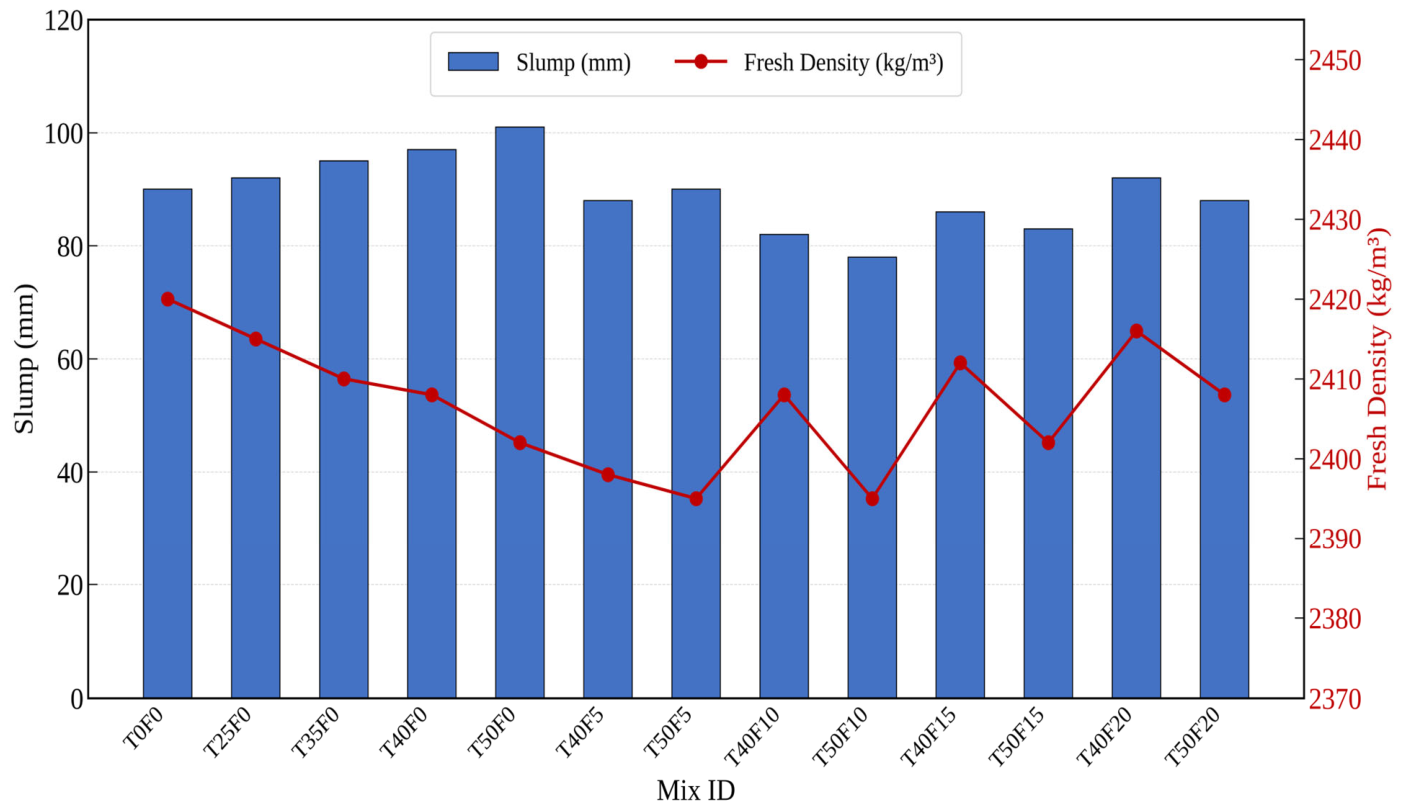
- Untreated, as-received FGD gypsum from NTPC Singrauli is compatible with structural concrete production without requiring pre-treatment. All thirteen mixtures maintained slump values within 78–101 mm and fresh density within 2395–2420 kg/m3, confirming that workability and unit weight were not materially affected relative to the OPC control.
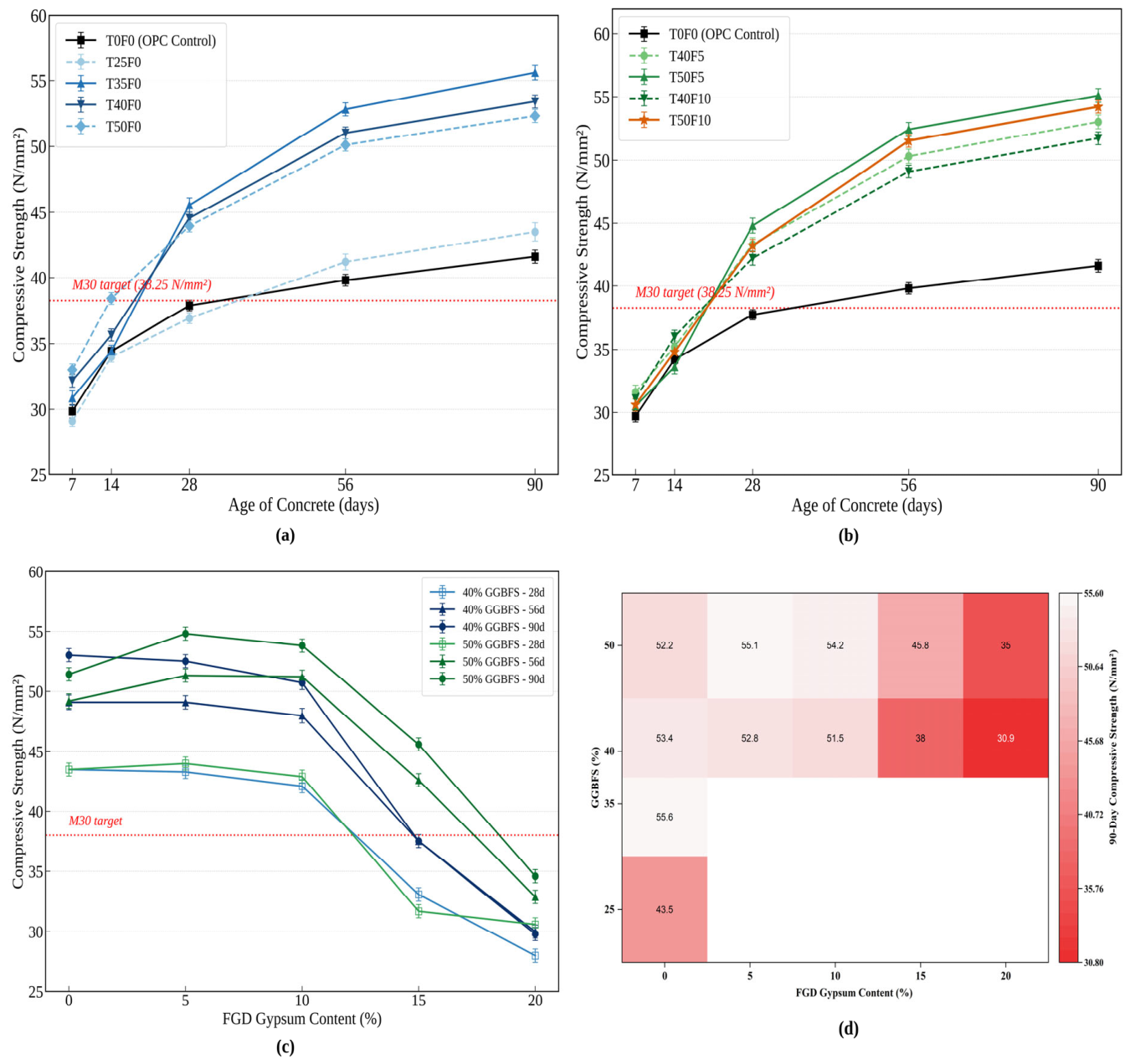
- Binary GGBFS replacement at 25–50% consistently improved long-term compressive strength beyond 14 days, driven by progressive C–S–H gel development from latent slag hydration. T35F0 attained the highest 90-day compressive strength of 55.6 N/mm2 (+33.7% relative to the OPC control), and all binary mixtures satisfied the M30 target mean strength requirement.
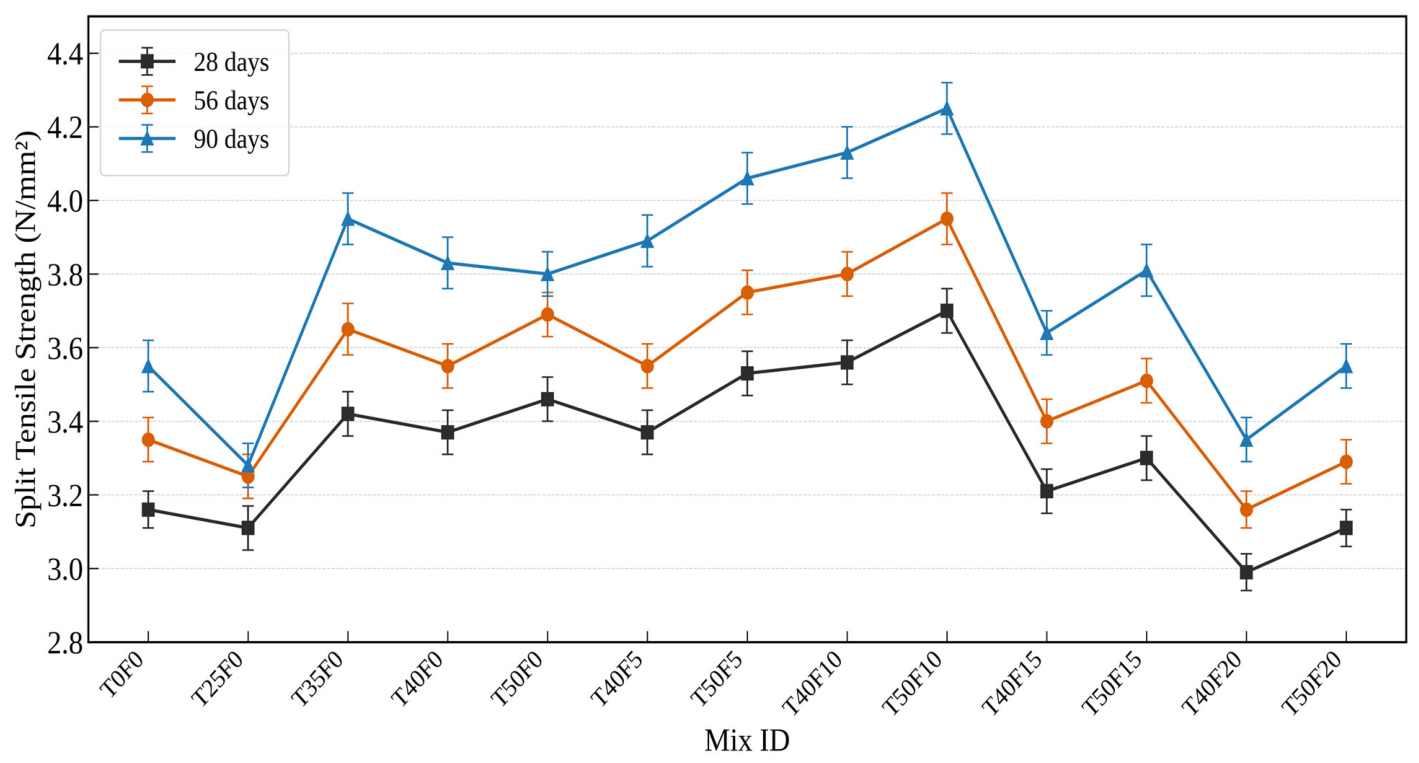
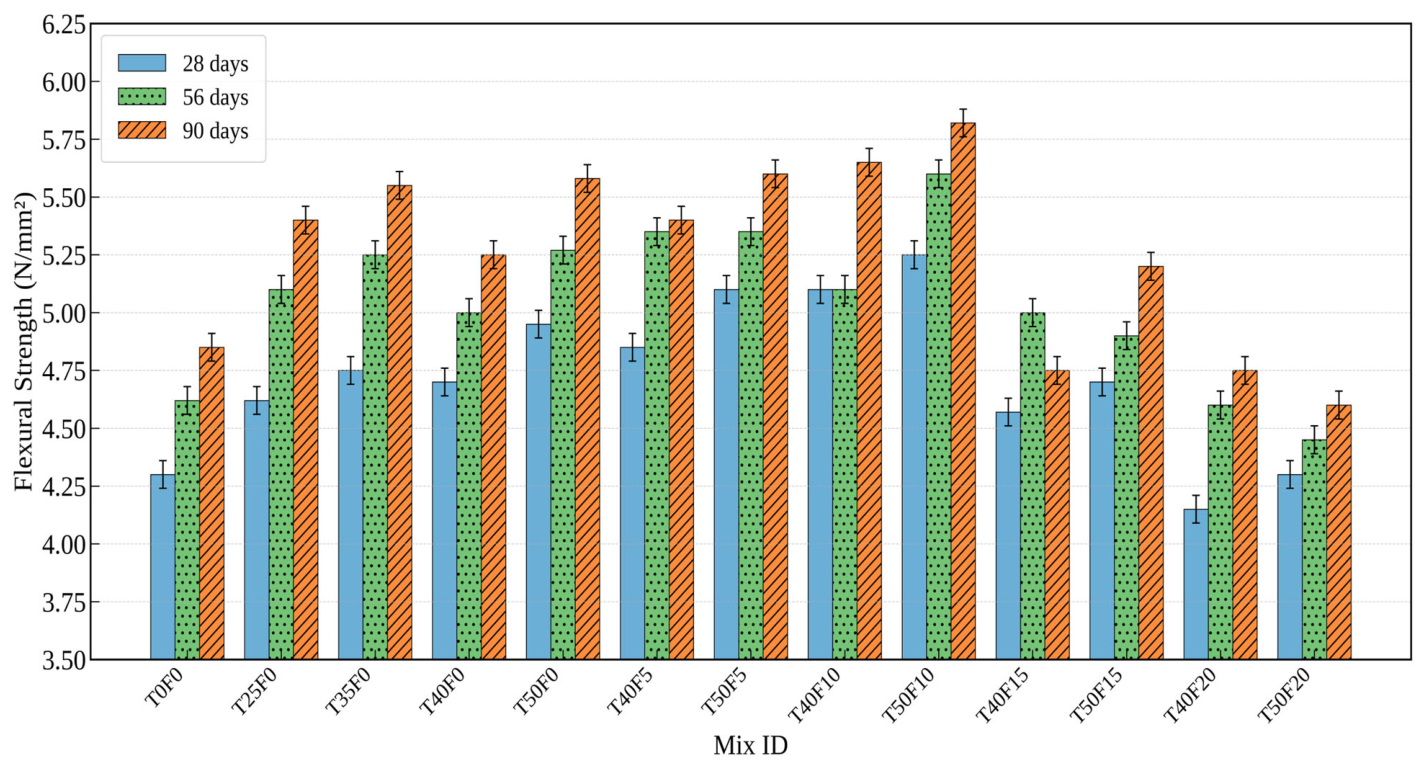
- The incorporation of 5–10% FGD gypsum by total binder mass further enhanced all mechanical and durability performance metrics relative to the binary blends and the OPC control. T50F10 achieved the highest ternary 90-day compressive strength (54.2 N/mm2), split tensile strength (4.25 N/mm2, +19.4%), and flexural strength (5.82 N/mm2, +20.0%), establishing the 5–10% FGD gypsum range as the optimum compositional zone across all test types and curing ages.
- FGD gypsum dosages exceeding 10% of total binder resulted in progressive deterioration across all six performance metrics at all curing ages. T40F20 and T50F20 recorded 90-day compressive strengths of 30.9 and 35.0 N/mm2, respectively, and failed to satisfy the M30 design requirement at 28 days, confirming a critical operational threshold beyond which FGD gypsum incorporation becomes detrimental to structural performance.
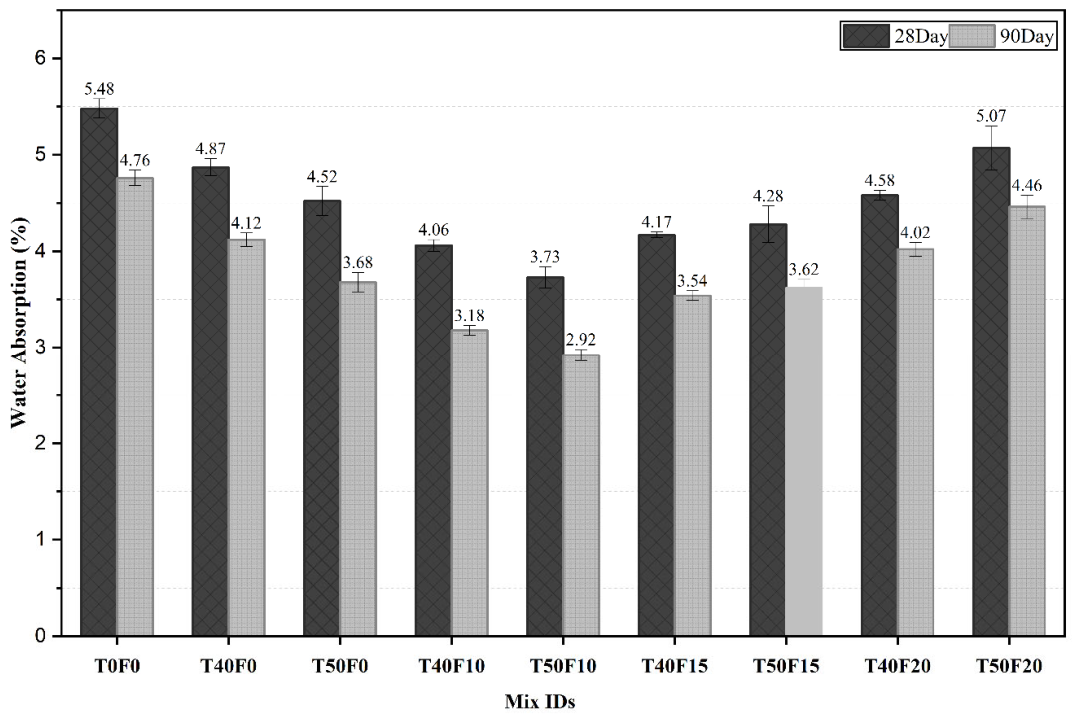
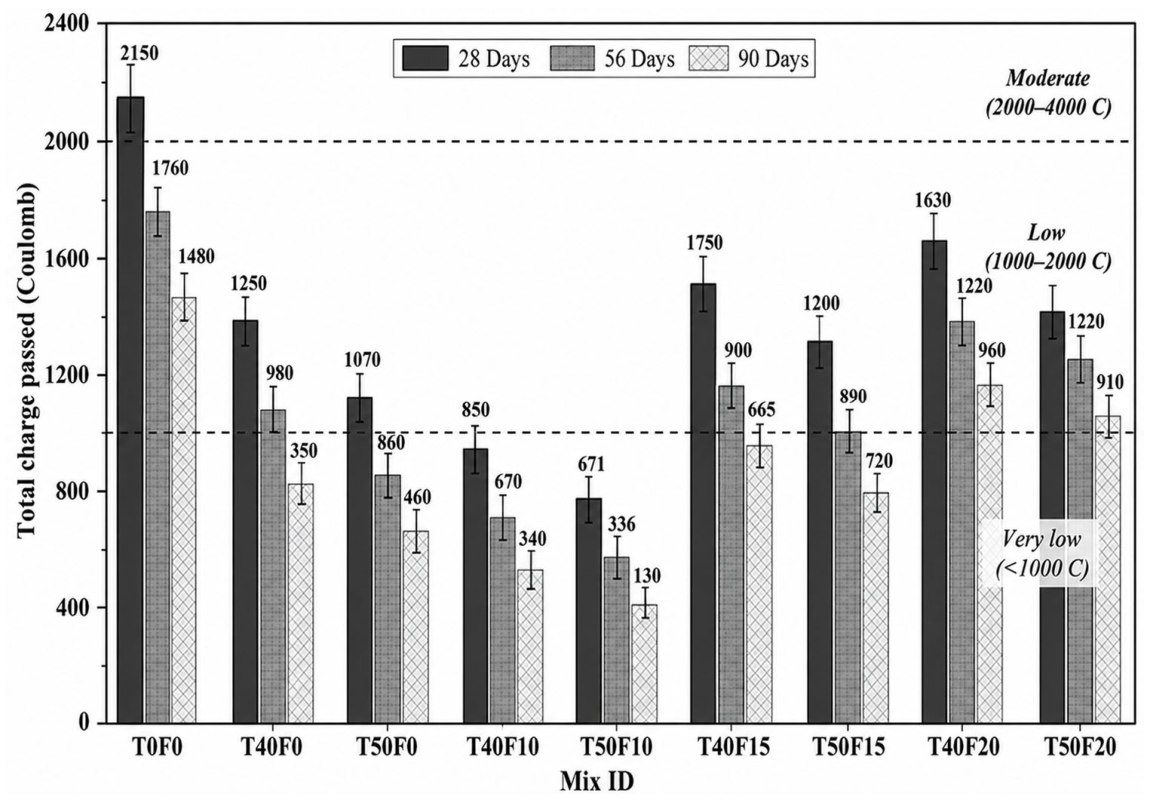
- The optimum composition T50F10 achieved a 90-day RCPT charge-passed value of 410 C (Very Low chloride ion penetrability per ASTM C1202 [32], −71.7% relative to the OPC control) and water absorption of 2.92% (−38.7%), representing the best performance among all evaluated mixtures on the durability indicators tested. The mechanical and durability optima coincided at T50F10 across all thirteen compositions, validating the 10% FGD gypsum threshold as a multi-parameter compositional boundary for both structural performance and transport-related durability criteria.
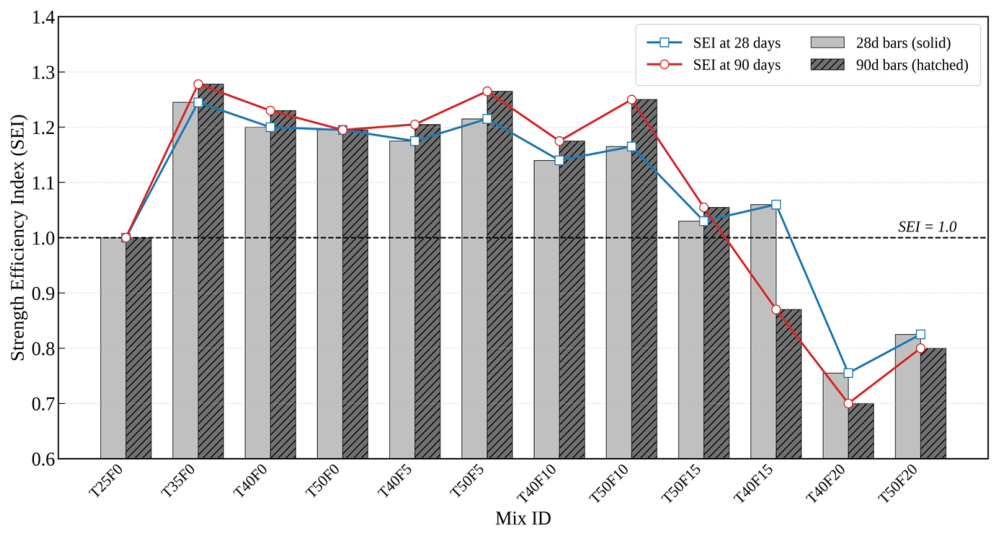
- SEI analysis confirmed superior clinker utilization efficiency in all GGBFS-containing mixtures within the optimum zone, with T35F0 (SEI = 1.278) and T50F10 (SEI = 1.250) recording the highest values at 90 days. T40F20 was the only mixture in which SEI declined between 28 and 90 days (0.755 → 0.710), indicating that excess sulfate supply suppresses long-term slag hydration rather than merely diluting the clinker fraction.
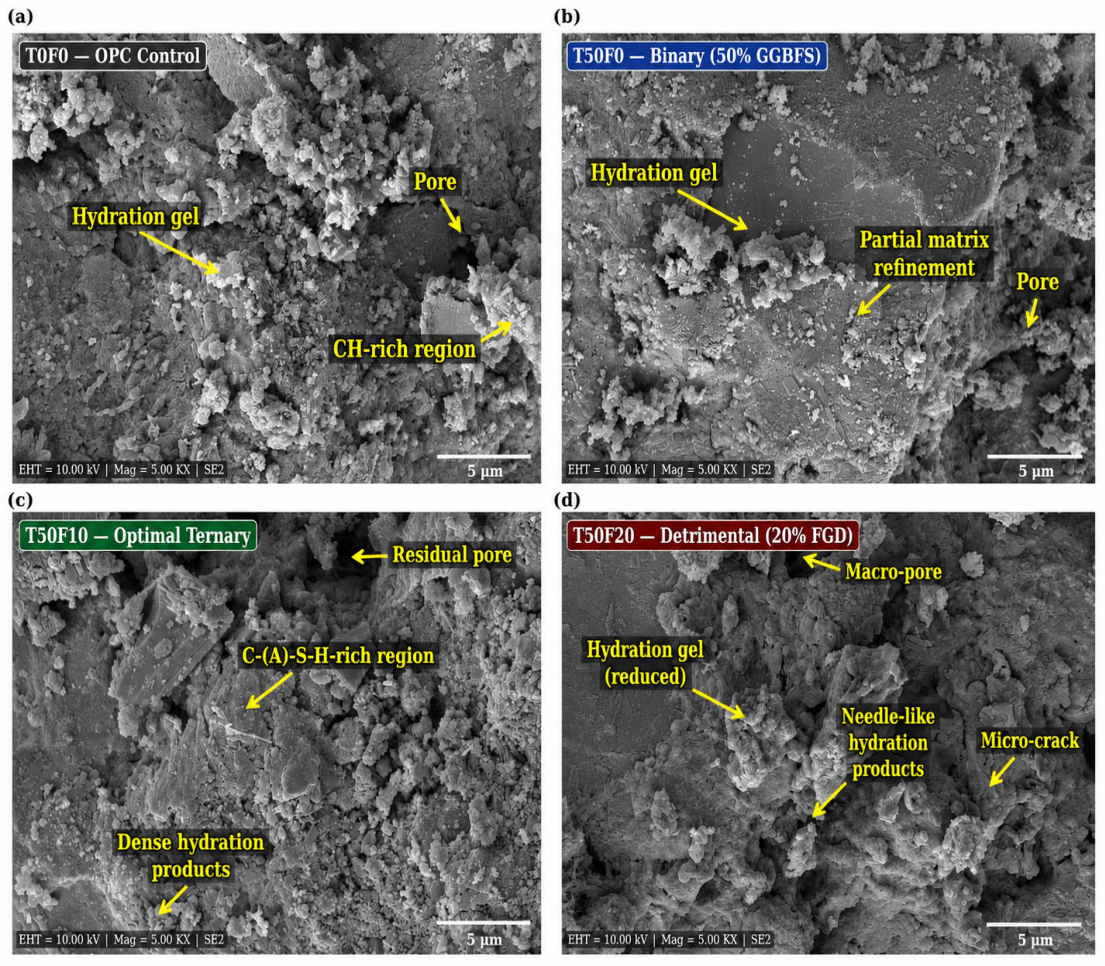
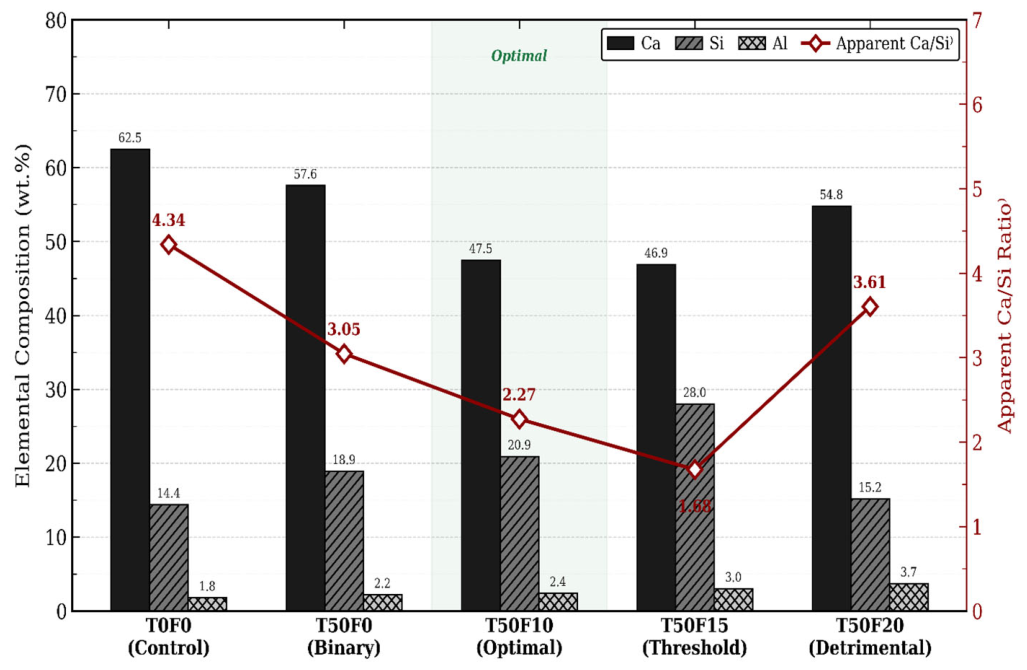
- SEM–EDX microstructural analysis at 90 days revealed a systematic reduction in apparent Ca/Si ratio from 4.34 (T0F0) to 2.27 (T50F10), consistent with increasing C–(A)–S–H gel polymerization under optimum sulfate activation. At T50F15, the highest Si content (28.0 wt.%) confirmed extensive GGBFS dissolution; however, the Ca/Si ratio of 1.68 and the concurrent reduction in mechanical and durability performance indicate that the silicate gel formed under excess sulfate conditions exhibited inferior structural quality. T50F20 exhibited a Ca/Si ratio of 3.61 with the highest Al content (3.7 wt.%) and needle-like hydration products, indicating a transition from sulfate-assisted densification to sulfate-induced hydrate disruption beyond the 10% threshold.
- It should be noted that this threshold was established for a single GGBFS source, a single untreated FGD gypsum source and a fixed water-to-binder ratio of 0.45; the transferability of the 10% threshold to other slag and FGD gypsum sources, mineralogies, impurity profiles, or water-to-binder ratios requires further validation.
- The durability assessment in this study was limited to chloride transport (RCPT) and water absorption; sulfate resistance, freeze–thaw resistance and long-term field performance were outside the present scope and are recommended for future investigation, particularly given the internal sulfate source introduced by FGD gypsum. Multi-objective optimization frameworks such as response surface methodology could also be applied in future work to simultaneously optimize mechanical performance, durability and CO2 reduction within the compositional window identified here.
Author Contributions
Funding
Data Availability Statement
Acknowledgments
Conflicts of Interest
Abbreviations
| FGD | Flue gas desulfurization |
| GGBFS | Ground granulated blast-furnace slag |
| OPC | Ordinary Portland cement |
| SCM | Supplementary cementitious material |
| SEI | Strength efficiency index |
| RCPT | Rapid chloride penetration test |
| ITZ | Interfacial transition zone |
| CoV | Coefficient of variation |
| SD | Standard deviation |
References
- UN Environment; Scrivener, K.L.; John, V.M.; Gartner, E.M. Eco-efficient cements: Potential economically viable solutions for a low-CO2 cement-based materials industry. Cem. Concr. Res. 2018, 114, 2–26. [Google Scholar] [CrossRef]
- Habert, G.; Miller, S.A.; John, V.M.; Provis, J.L.; Favier, A.; Horvath, A.; Scrivener, K.L. Environmental impacts and decarbonization strategies in the cement and concrete industries. Nat. Rev. Earth Environ. 2020, 1, 559–573. [Google Scholar] [CrossRef]
- Shah, I.H.; Miller, S.A.; Jiang, D.; Myers, R.J. Cement substitution with secondary materials can reduce annual global CO2 emissions by up to 1.3 gigatons. Nat. Commun. 2022, 13, 5758. [Google Scholar] [CrossRef] [PubMed]
- Maiti, S.; Jain, N.; Malik, J. A comprehensive review of flue gas desulphurized gypsum: Production, properties, and applications. Constr. Build. Mater. 2023, 393, 131918. [Google Scholar] [CrossRef]
- Jiang, L.; Li, C.; Wang, C.; Xu, N.; Chu, H. Utilization of flue gas desulfurization gypsum as an activation agent for high-volume slag concrete. J. Clean. Prod. 2018, 205, 589–598. [Google Scholar] [CrossRef]
- Juenger, M.C.; Snellings, R.; Bernal, S.A. Supplementary cementitious materials: New sources, characterization, and performance insights. Cem. Concr. Res. 2019, 122, 257–273. [Google Scholar] [CrossRef]
- Pang, M.; Sun, Z.; Huang, H. Compressive strength and durability of FGD gypsum-based mortars blended with ground granulated blast furnace slag. Materials 2020, 13, 3383. [Google Scholar] [CrossRef] [PubMed]
- Zhong, S.; Ni, K.; Li, J. Properties of mortars made by uncalcined FGD gypsum-fly ash-ground granulated blast furnace slag composite binder. Waste Manag. 2012, 32, 1468–1472. [Google Scholar] [CrossRef] [PubMed]
- Li, Y.; Qiao, C.; Ni, W. Green concrete with ground granulated blast-furnace slag activated by desulfurization gypsum and electric arc furnace reducing slag. J. Clean. Prod. 2020, 269, 122212. [Google Scholar] [CrossRef]
- Cheng, S.; Shen, L.; Chen, W.; Zhu, H.; You, P.; Chen, L. Mechanical Properties and Chloride Penetration Resistance of Concrete Combined with Ground Granulate Blast Furnace Slag and Macro Synthetic Fiber. Materials 2024, 17, 4735. [Google Scholar] [CrossRef] [PubMed]
- Gou, M.; Zhao, M.; Zhou, L.; Zhao, J.; Hou, W.; Ma, W.; Hou, Z. Hydration and mechanical properties of FGD gypsum-cement-mineral powder composites. J. Build. Eng. 2023, 69, 106288. [Google Scholar] [CrossRef]
- Wan, Y.; Hui, X.; He, X.; Li, J.; Xue, J.; Feng, D.; Liu, X.; Wang, S. Performance of green binder developed from flue gas desulfurization gypsum incorporating Portland cement and large-volume fly ash. Constr. Build. Mater. 2022, 348, 128679. [Google Scholar] [CrossRef]
- Khatib, J.M.; Mangat, P.S.; Wright, L. Mechanical and physical properties of concrete containing FGD waste. Mag. Concr. Res. 2016, 68, 550–560. [Google Scholar] [CrossRef]
- Liu, S.; Liu, W.; Jiao, F.; Qin, W.; Yang, C. Production and resource utilization of flue gas desulfurized gypsum in China-A review. Environ. Pollut. 2021, 288, 117799. [Google Scholar] [CrossRef] [PubMed]
- Wansom, S.; Chintasongkro, P.; Srijampan, W. Water resistant blended cements containing flue-gas desulfurization gypsum, Portland cement and fly ash for structural applications. Cem. Concr. Compos. 2019, 103, 134–148. [Google Scholar] [CrossRef]
- Wang, J.; Ma, T.; Luan, Y.; Wang, S.; Zhang, Y. Investigation on the effects of desulfurization gypsum on the engineering properties of ternary geopolymers: Improving the utilization of industrial wastes. J. Clean. Prod. 2023, 414, 137638. [Google Scholar] [CrossRef]
- Nicula, L.M.; Manea, D.L.; Simedru, D.; Cadar, O.; Becze, A.; Dragomir, M.L. The Influence of Blast Furnace Slag on Cement Concrete Road by Microstructure Characterization and Assessment of Physical-Mechanical Resistances at 150/480 Days. Materials 2023, 16, 3332. [Google Scholar] [CrossRef] [PubMed]
- Gu, K.; Chen, B. Research on the incorporation of untreated flue gas desulfurization gypsum into magnesium oxysulfate cement. J. Clean. Prod. 2020, 271, 122497. [Google Scholar] [CrossRef]
- Lei, D.Y.; Guo, L.P.; Sun, W.; Liu, J.P.; Miao, C.W. Study on properties of untreated FGD gypsum-based high-strength building materials. Constr. Build. Mater. 2017, 153, 765–773. [Google Scholar] [CrossRef]
- Gao, D.; Zhang, Z.; Meng, Y.; Tang, J.; Yang, L. Effect of flue gas desulfurization gypsum on the properties of calcium sulfoaluminate cement blended with ground granulated blast furnace slag. Materials 2021, 14, 382. [Google Scholar] [CrossRef] [PubMed]
- Guo, X.L.; Shi, H.S.; Liu, H.Y. Effects of a combined admixture of slag powder and thermally treated flue gas desulphurization (FGD) gypsum on the compressive strength and durability of concrete. Mater. Struct. 2009, 42, 263–270. [Google Scholar]
- Li, J.S.; Zhang, W.; Huang, X.; Lang, L.; Poon, C.S.; Xue, Q. MgO-based supersulfated cement with different industrial by-product gypsum: Experiments and molecular dynamics simulation. Sci. Total Environ. 2024, 941, 173756. [Google Scholar] [CrossRef] [PubMed]
- IS 12269:2013; Specification for 53 Grade Ordinary Portland Cement. Bureau of Indian Standards: New Delhi, India, 2013.
- IS 16714:2018; Ground Granulated Blast Furnace Slag for Use in Cement, Mortar and Concrete—Specification. Bureau of Indian Standards: New Delhi, India, 2018.
- IS 383:2016; Specification for Coarse and Fine Aggregates from Natural Sources for Concrete. Bureau of Indian Standards: New Delhi, India, 2016.
- ASTM C494/C494M-19; Standard Specification for Chemical Admixtures for Concrete. ASTM International: West Conshohocken, PA, USA, 2019.
- IS 456:2000; Plain and Reinforced Concrete—Code of Practice. Bureau of Indian Standards: New Delhi, India, 2000.
- IS 10262:2019; Concrete Mix Proportioning—Guidelines (Second Revision). Bureau of Indian Standards: New Delhi, India, 2019.
- IS 516 (Part 1/Sec 1):2021; Hardened Concrete—Methods of Test: Compressive Strength. Bureau of Indian Standards: New Delhi, India, 2021.
- IS 5816:1999; Method of Test for Splitting Tensile Strength of Concrete. Bureau of Indian Standards: New Delhi, India, 1999.
- 516 (Part 8/Sec 1):2020; Hardened Concrete—Methods of Test: Flexural Strength. Bureau of Indian Standards: New Delhi, India, 2020.
- ASTM C1202-22; Standard Test Method for Electrical Indication of Concrete’s Ability to Resist Chloride Ion Penetration. ASTM International: West Conshohocken, PA, USA, 2022.
- ASTM C642-13; Standard Test Method for Density, Absorption, and Voids in Hardened Concrete. ASTM International: West Conshohocken, PA, USA, 2013.
- Luan, Y.; Wang, J.; Ma, T.; Wang, S.; Li, C. Modification mechanism of flue gas desulfurization gypsum on fly ash and ground granulated blast-furnace slag alkali-activated materials: Promoting green cementitious material. Constr. Build. Mater. 2023, 396, 132400. [Google Scholar] [CrossRef]
- Liu, Q.; Yang, C.; Lyu, X.; Chen, P.; You, X.; Li, L.; Wang, J. Evolution of ettringite content and its effects on hydration properties of CaO/fluorgypsum-activated granulated blast furnace slag binders. Adv. Compos. Hybrid. Mater. 2021, 4, 350–359. [Google Scholar] [CrossRef]
- Wang, J.; Ma, Y.; Tai, A.; Shen, X. Insight into the performance of composite binder with high-volume steel slag, blast furnace slag and desulfurization gypsum. J. Sustain. Cem.-Based Mater. 2024, 13, 1348–1361. [Google Scholar] [CrossRef]
- Nicula, L.M.; Manea, D.L.; Simedru, D.; Cadar, O.; Ardelean, I.; Dragomir, M.L. The advantages on using GGBS and ACBFS aggregate to obtain an ecological road concrete. Coatings 2023, 13, 1368. [Google Scholar] [CrossRef]
- Xue, Y.; Liu, X.; Liang, Q.; Zhang, K.; Wang, Y. Synergistic Utilization of Multi-Source Industrial Solid Wastes in Cementitious Materials: A Comprehensive Review. Materials 2026, 19, 1019. [Google Scholar] [CrossRef] [PubMed]
- Etcheverry, J.M.; Yue, Z.; Krishnan, S.; Villagran-Zaccardi, Y.A.; Van den Heede, P.; Dhandapani, Y.; Bernal, S.A.; De Belie, N. Phase evolution of hybrid alkali sulfate-activated ground-granulated blast furnace slag cements. ACS Sustain. Chem. Eng. 2023, 11, 17519–17531. [Google Scholar] [CrossRef] [PubMed]





| Property | OPC | GGBFS | Untreated FGD Gypsum |
|---|---|---|---|
| Physical and particle-size properties | |||
| Specific gravity | 3.09 | 2.70 | 2.04 |
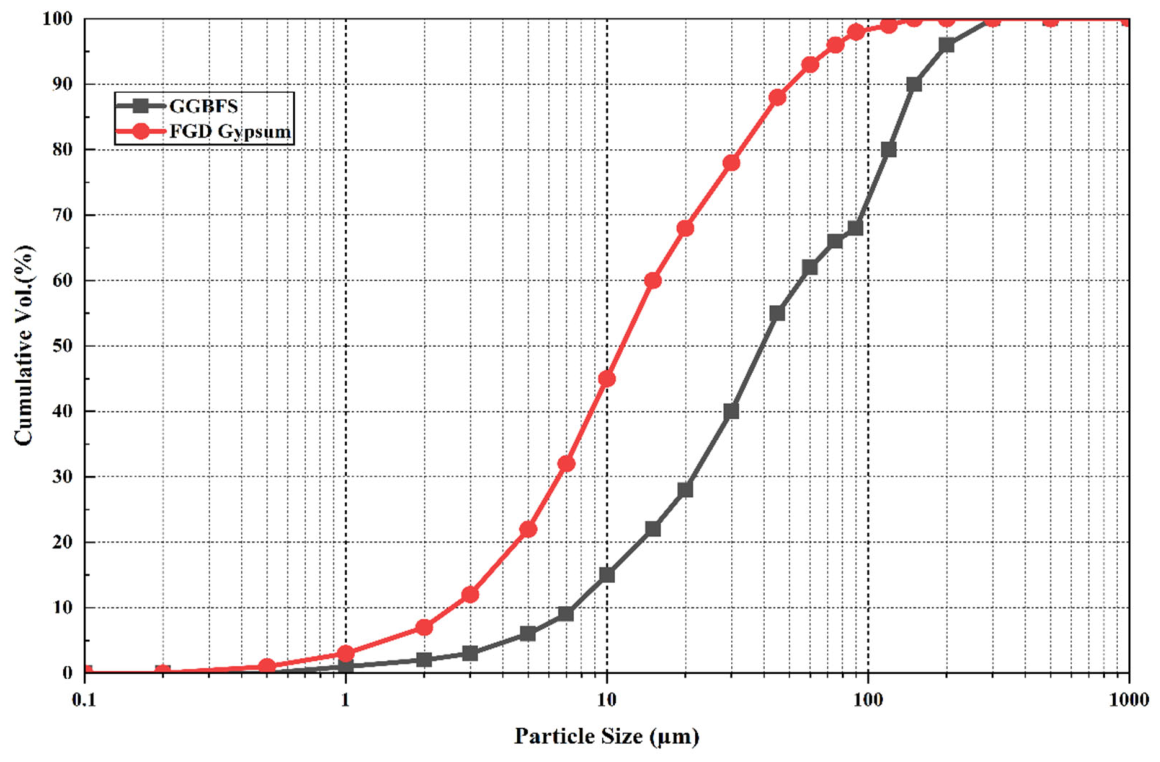
| D10 (µm) | 2.81 | 7.5 | 2.6 |
| D50 (µm) | ~15 1 | 40.0 | 11.7 |
| D90 (µm) | ~45 1 | 150.0 | 51.0 |
| Chemical oxide composition | |||
| SiO2 (%) | 21.30 | 34.85 | 3.12 |
| CaO (%) | 63.72 | 38.46 | 31.85 |
| Al2O3 (%) | 5.48 | 13.24 | 0.84 |
| Fe2O3 (%) | 3.92 | 0.76 | 0.41 |
| MgO (%) | 2.14 | 8.65 | 0.32 |
| SO3 (%) | 2.36 | 1.12 | 43.85 |
| Loss on ignition (%) | 1.96 | 1.42 | 12.74 |
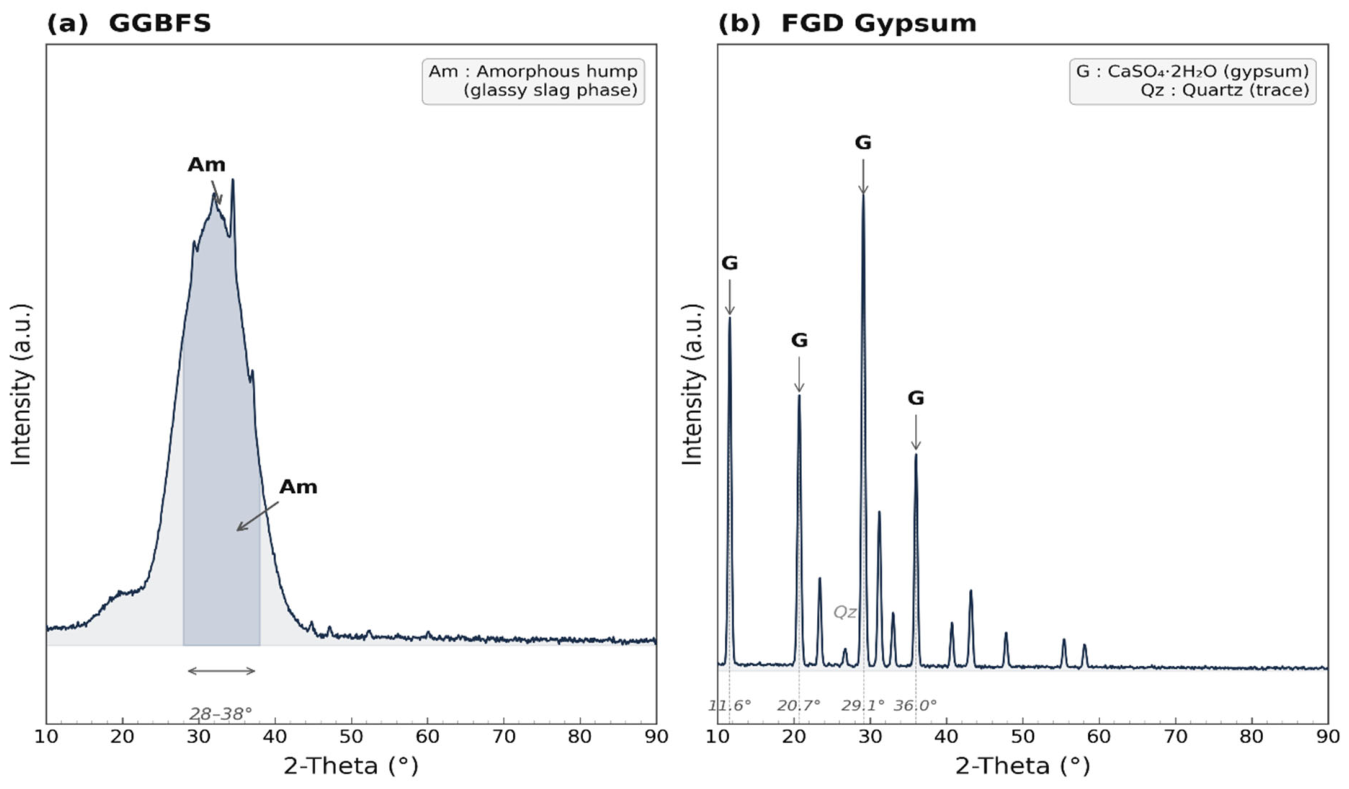
| Dominant phase | C3S/C2S | Amorphous glass | CaSO4·2H2O |
| Aggregate properties | |||
| Property | Fine Aggregate | Coarse Aggregate | |
| Specific gravity | 2.58 | 2.74 | |
| Water absorption (%) | 1.20 | 0.55 | |
| Fineness modulus | 2.75 | ||
| Nominal max. size (mm) | 4.75 | 20 | |
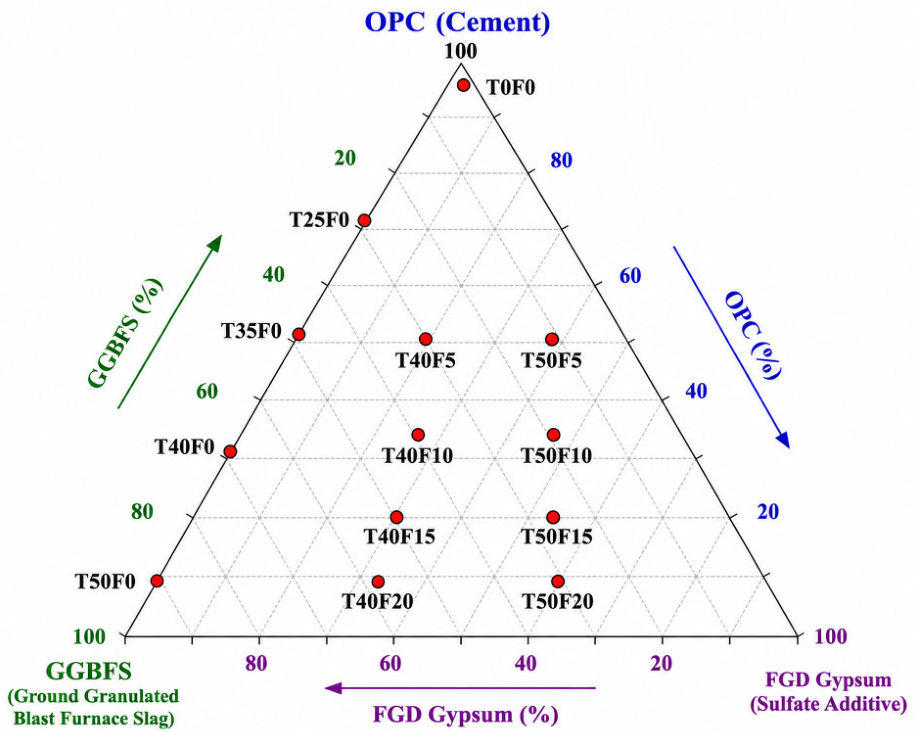
| Mix ID | OPC (kg/m3) | GGBFS (kg/m3) | FGD (kg/m3) | Water (kg/m3) | SP * (kg/m3) | Binder (kg/m3) | OPC/GGBFS/FGD (%) |
|---|---|---|---|---|---|---|---|
| T0F0 | 380 | 0 | 0 | 171 | 1.9 | 380 | 100/0/0 |
| T25F0 | 285 | 95 | 0 | 171 | 1.9 | 380 | 75/25/0 |
| T35F0 | 247 | 133 | 0 | 171 | 1.9 | 380 | 65/35/0 |
| T40F0 | 228 | 152 | 0 | 171 | 1.9 | 380 | 60/40/0 |
| T50F0 | 190 | 190 | 0 | 171 | 1.9 | 380 | 50/50/0 |
| T40F5 | 209 | 152 | 19 | 171 | 1.9 | 380 | 55/40/5 |
| T50F5 | 171 | 190 | 19 | 171 | 1.9 | 380 | 45/50/5 |
| T40F10 | 190 | 152 | 38 | 171 | 1.9 | 380 | 50/40/10 |
| T50F10 | 152 | 190 | 38 | 171 | 1.9 | 380 | 40/50/10 |
| T40F15 | 171 | 152 | 57 | 171 | 1.9 | 380 | 45/40/15 |
| T50F15 | 133 | 190 | 57 | 171 | 1.9 | 380 | 35/50/15 |
| T40F20 | 152 | 152 | 76 | 171 | 1.9 | 380 | 40/40/20 |
| T50F20 | 114 | 190 | 76 | 171 | 1.9 | 380 | 30/50/20 |
| Parameter | Statistical Treatment |
|---|---|
| Number of replicates | 3 specimens per mix per curing age for all mechanical tests (compressive, split tensile, flexural strength) and durability tests (RCPT, water absorption). SEM–EDX: single specimen per representative mixture; EDX spot analysis was not statistically replicated. |
| Reported value | Arithmetic mean ± 1 SD for all replicated tests. Error bars in all figures represent ±1 SD. SEM–EDX values represent single spot analysis measurements; no SD or error bars are reported for microstructural data. |
| Variability indicator | SD and CoV. CoV ranged from 1.33% (T50F10, 90 days) to 2.60% (T40F20, 14 days) across all 65 compressive strength test groups, with a mean CoV of 1.85%, confirming acceptable experimental reproducibility. |
| Confidence level | 95% |
| Outlier treatment | Grubbs’ criterion (α = 0.05). No outliers were detected in any test group. |
| Mix ID | Zone | CS 90 d (N/mm2) | RCPT 90 d (C) [Class] ‡ | WA 90 d (%) | Ca/Si † | Microstructural Interpretation |
|---|---|---|---|---|---|---|
| T0F0 | Control | 41.6 | 1485 (Low) | 4.76 | 4.34 | Portlandite-rich porous matrix; coarse pore network; high permeability relative to blended systems |
| T50F0 | Binary | 52.3 | 649 (Very Low) | 3.68 | 3.05 | Partial matrix refinement; moderate C–S–H gel development from slag hydration; reduced porosity |
| T50F10 | Optimal | 54.2 | 412 (Very Low) | 2.92 | 2.27 | Dense C–(A)–S–H-rich matrix with compact ITZ and refined pore structure |
| T50F15 | Threshold | 45.8 | 781 (Very Low) | 3.62 | 1.68 | Elevated Si content (28.0 wt.%); excess sulfate disrupts hydrate continuity despite continued GGBFS dissolution |
| T50F20 | Detrimental | 35.0 | 1064 (Low) | 4.46 | 3.61 | Discontinuous matrix; macro-voids; micro-cracks; needle-like sulfate-bearing products; Ca-dominant phase assemblage |
Disclaimer/Publisher’s Note: The statements, opinions and data contained in all publications are solely those of the individual author(s) and contributor(s) and not of MDPI and/or the editor(s). MDPI and/or the editor(s) disclaim responsibility for any injury to people or property resulting from any ideas, methods, instructions or products referred to in the content. |
© 2026 by the authors. Licensee MDPI, Basel, Switzerland. This article is an open access article distributed under the terms and conditions of the Creative Commons Attribution (CC BY) license.
Share and Cite
Bhatt, A.; Kumar, S.; Prasad, P.; Sahu, A.; Kumar, P.; Hussein, A.B. Mechanical, Durability and Microstructural Performance of OPC–GGBFS–FGD Gypsum Ternary Concrete: Identification of an Operational Sulfate Activation Threshold. Materials 2026, 19, 2962. https://doi.org/10.3390/ma19142962
Bhatt A, Kumar S, Prasad P, Sahu A, Kumar P, Hussein AB. Mechanical, Durability and Microstructural Performance of OPC–GGBFS–FGD Gypsum Ternary Concrete: Identification of an Operational Sulfate Activation Threshold. Materials. 2026; 19(14):2962. https://doi.org/10.3390/ma19142962
Chicago/Turabian StyleBhatt, Anand, Sanjay Kumar, Prahlad Prasad, Anasuya Sahu, Pramod Kumar, and Ardalan B. Hussein. 2026. "Mechanical, Durability and Microstructural Performance of OPC–GGBFS–FGD Gypsum Ternary Concrete: Identification of an Operational Sulfate Activation Threshold" Materials 19, no. 14: 2962. https://doi.org/10.3390/ma19142962
APA StyleBhatt, A., Kumar, S., Prasad, P., Sahu, A., Kumar, P., & Hussein, A. B. (2026). Mechanical, Durability and Microstructural Performance of OPC–GGBFS–FGD Gypsum Ternary Concrete: Identification of an Operational Sulfate Activation Threshold. Materials, 19(14), 2962. https://doi.org/10.3390/ma19142962