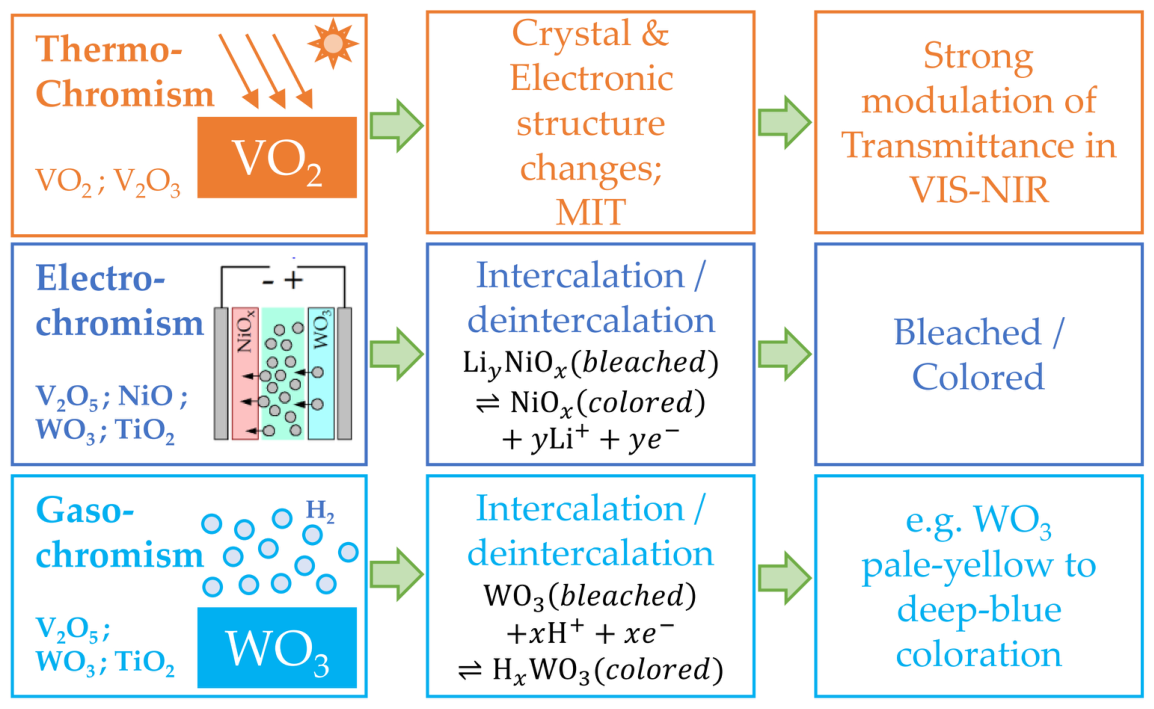
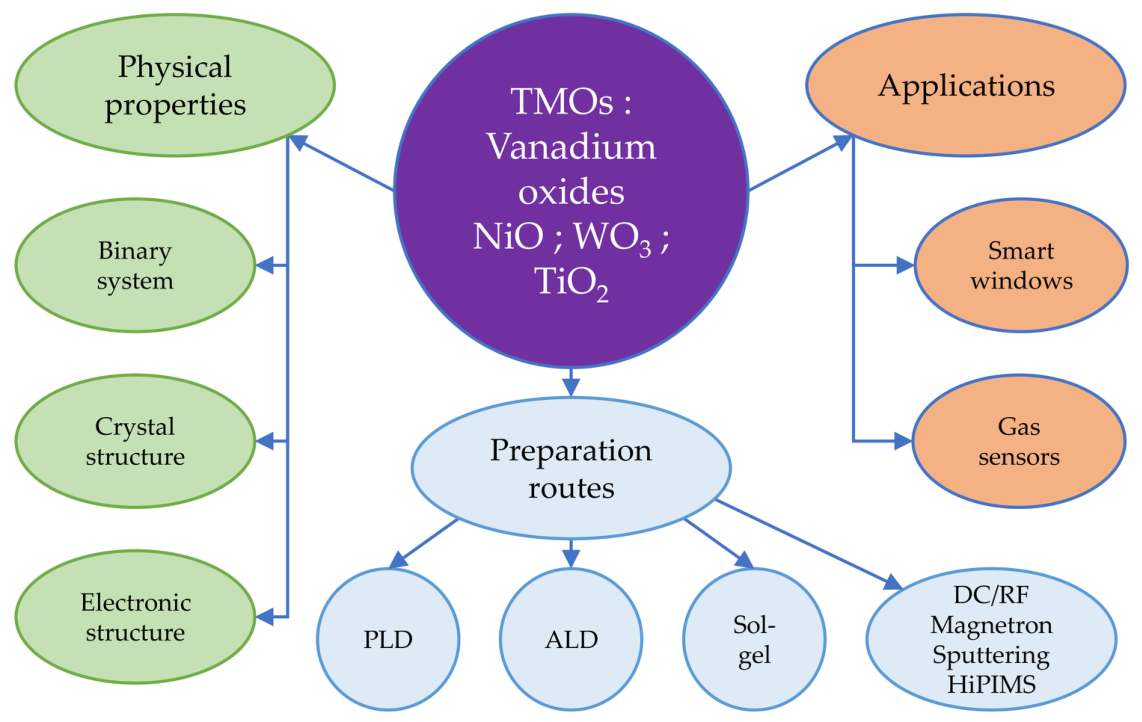
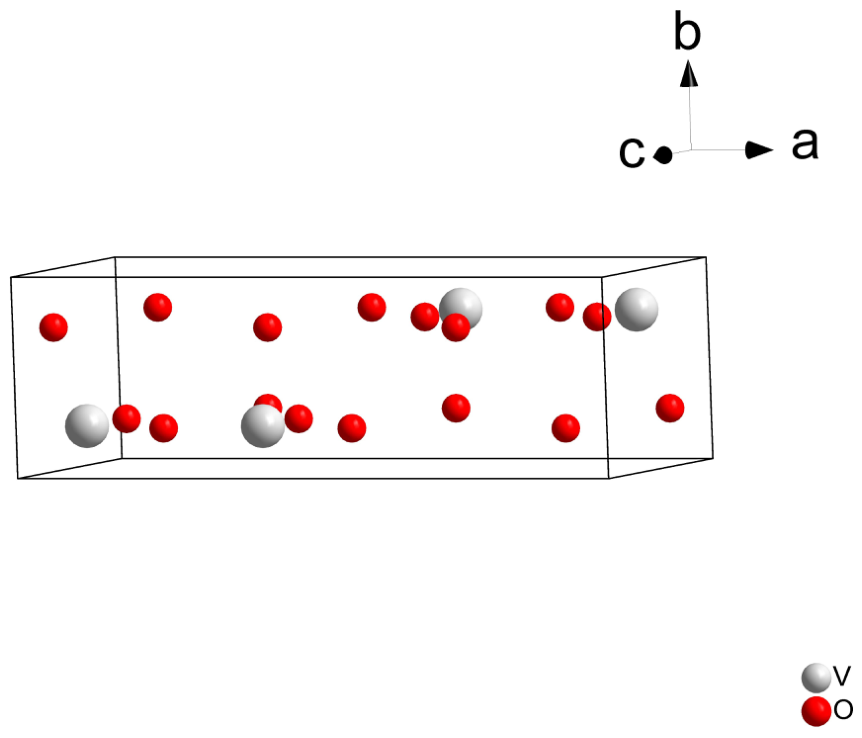
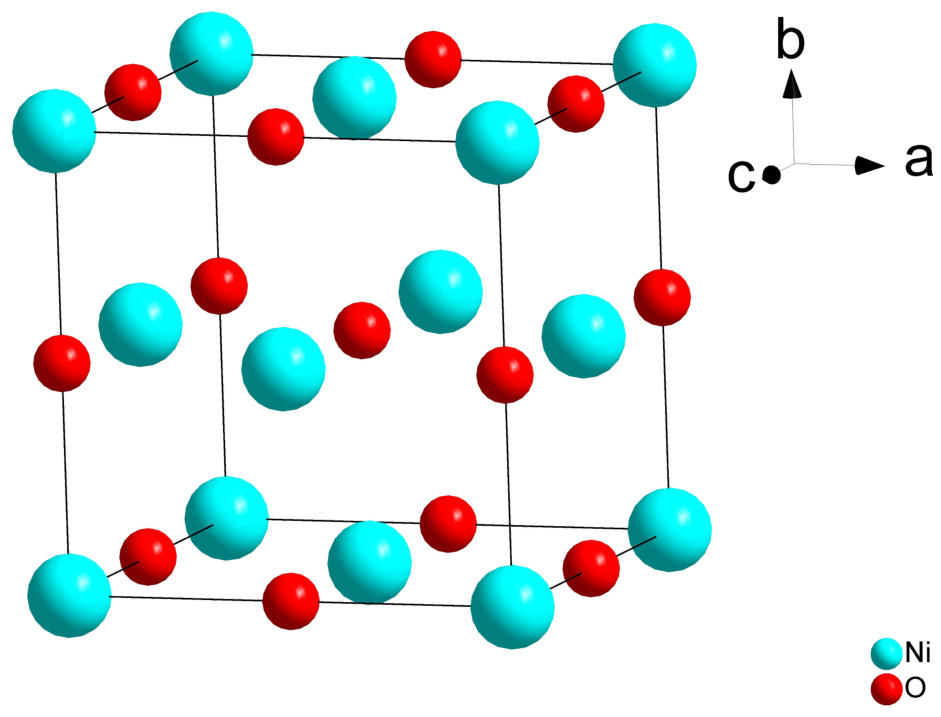
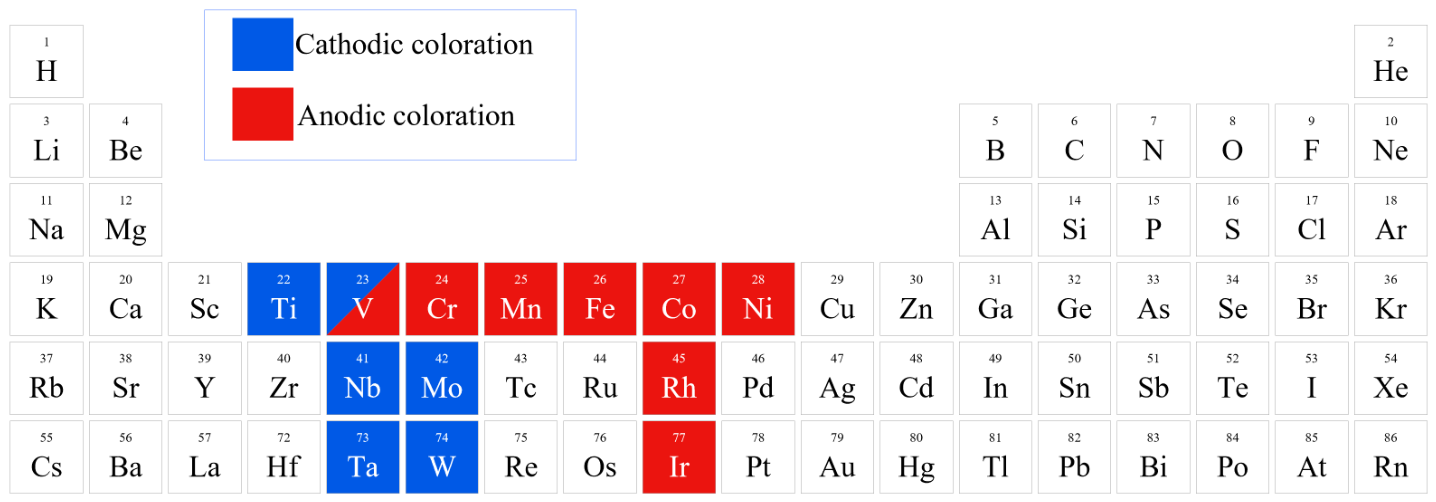
An Overview of Chromic Transition Metal Oxide Thin Films
 , ,
, ,  ,
,  and
and
Abstract
1. Introduction
2. Materials Platform: Structural and Electronic Properties of Selected TMOs
2.1. Vanadium Oxides
2.1.1. V–O Binary Phase Diagram
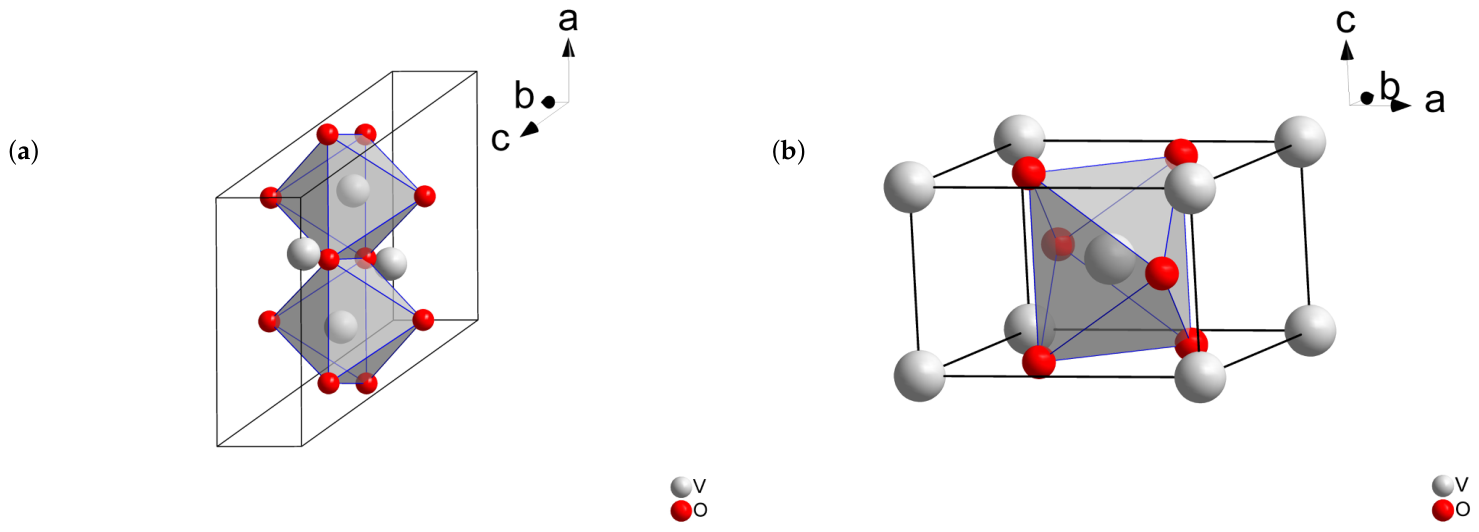
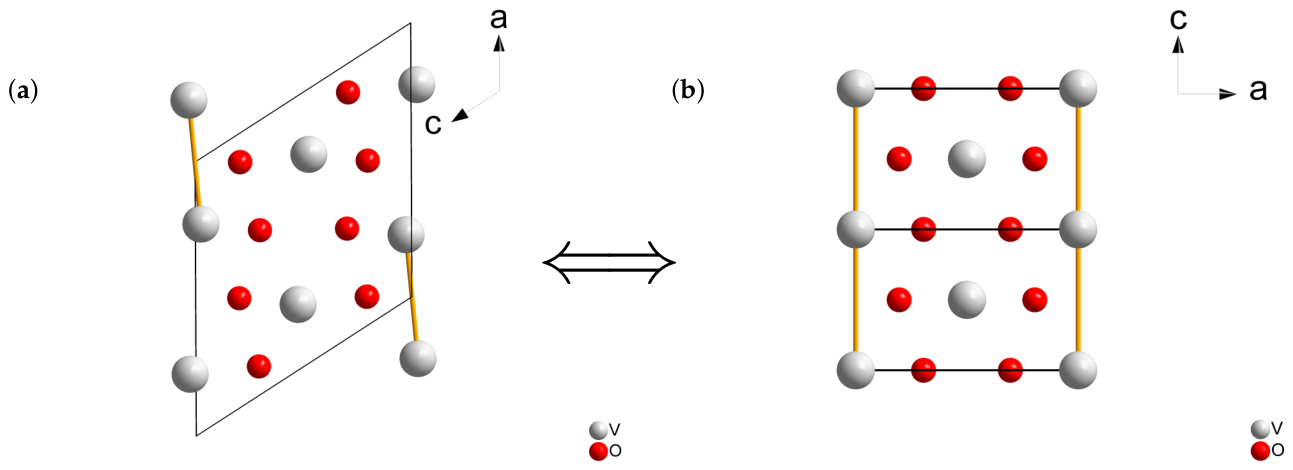
2.1.2. Crystal Structure of Vanadium Dioxide VO2
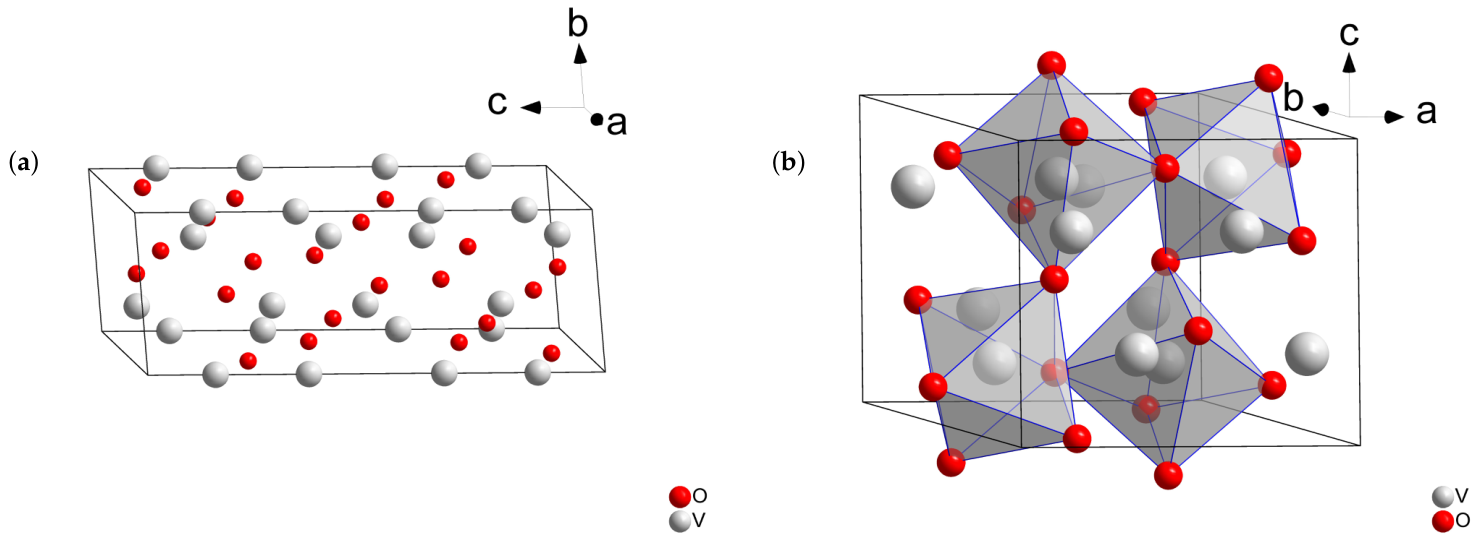
2.1.3. Crystal Structure of Divanadium Trioxide V2O3
2.1.4. Crystal Structure of Divanadium Pentoxide V2O5
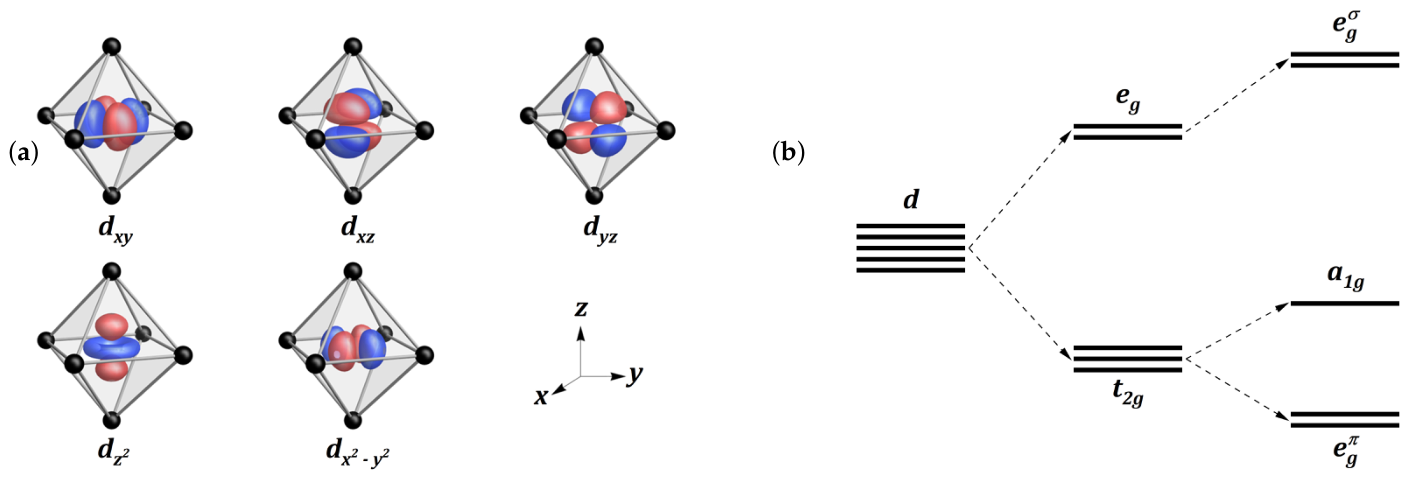
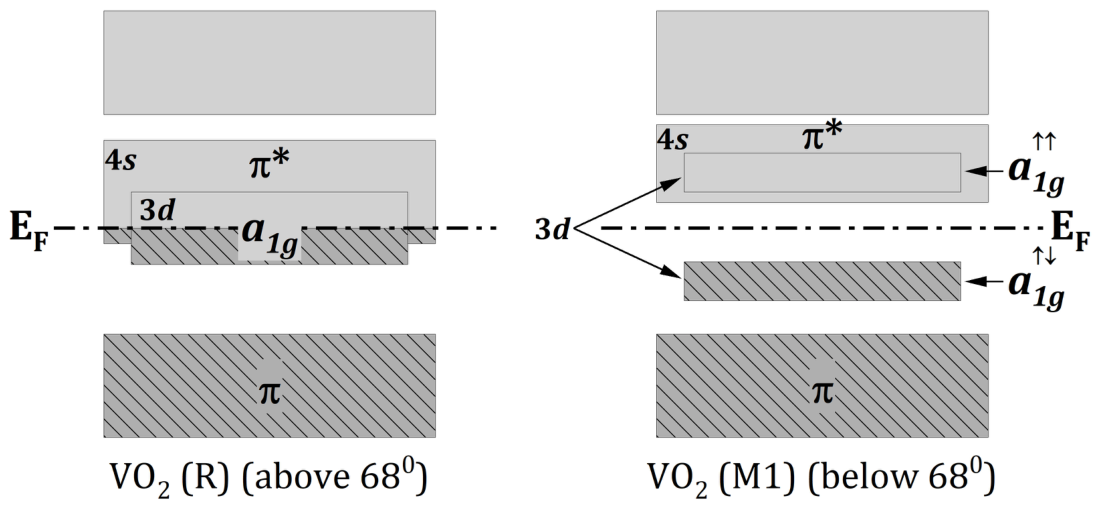
2.1.5. Electronic Structure of Vanadium Dioxide VO2
2.1.6. Electronic Structure of Divanadium Trioxide V2O3
2.1.7. Electronic Structure of Divanadium Pentoxide V2O5
2.2. Nickel Oxide
2.2.1. Ni–O Binary Phase Diagram
2.2.2. Crystal Structure of Nickel Oxide
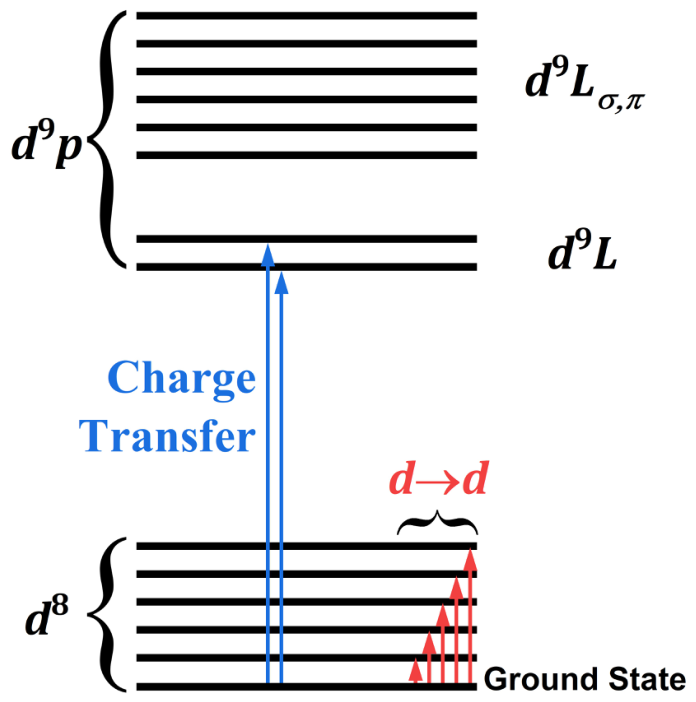
2.2.3. Electronic Structure of Nickel Oxide
2.3. Tungsten Oxides
2.3.1. W–O Binary Phase Diagram
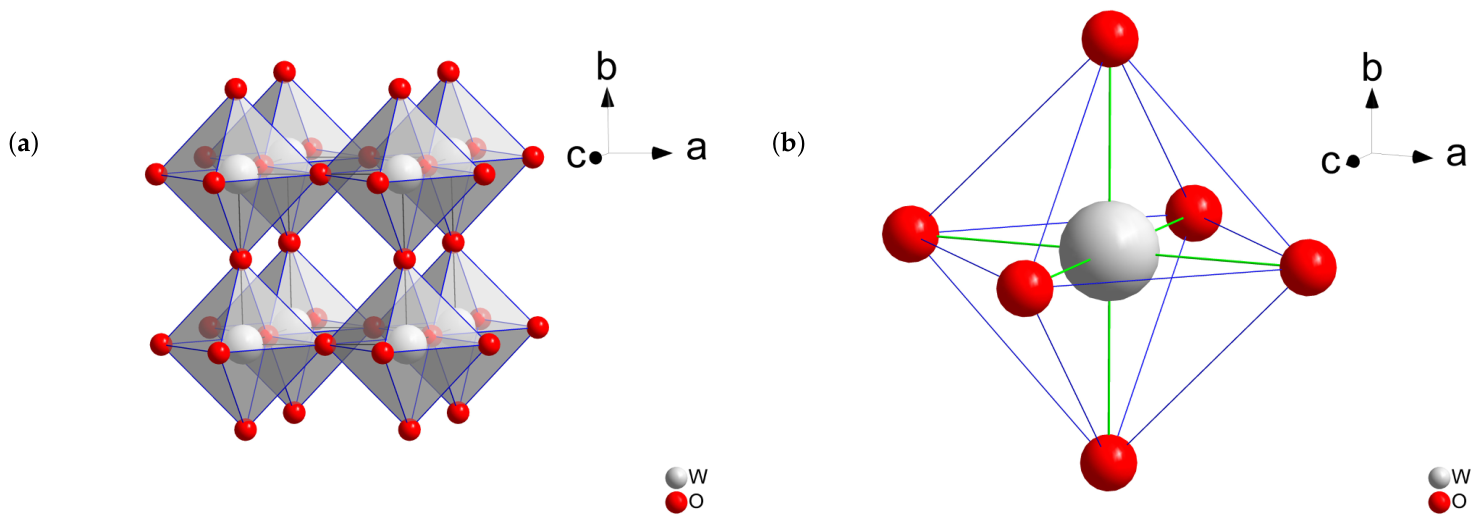
2.3.2. Crystal Structure of Tungsten Oxide WO3
2.3.3. Electronic Structure of Tungsten Oxide WO3
2.4. Titanium Oxides
2.4.1. Ti–O Binary Phase Diagram
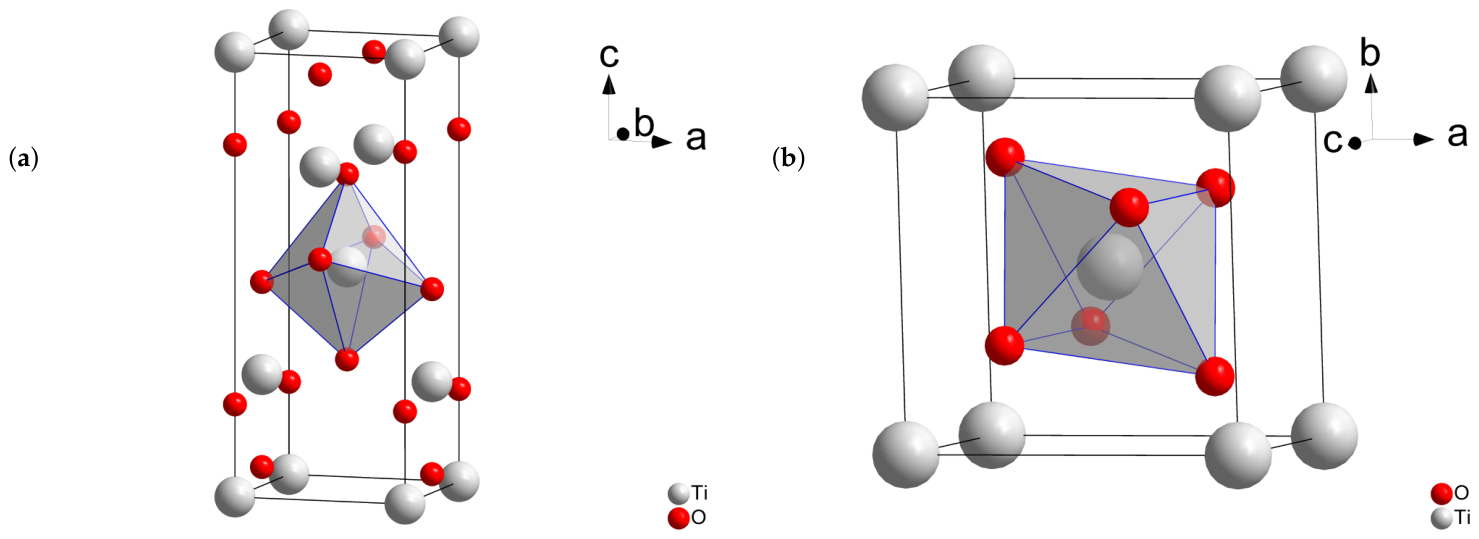
2.4.2. Crystal Structure of Titanium Oxide
2.4.3. Electronic Structure of Titanium Oxide
2.5. Comparative Summary of Selected TMOs
3. Technology of TMO Preparation
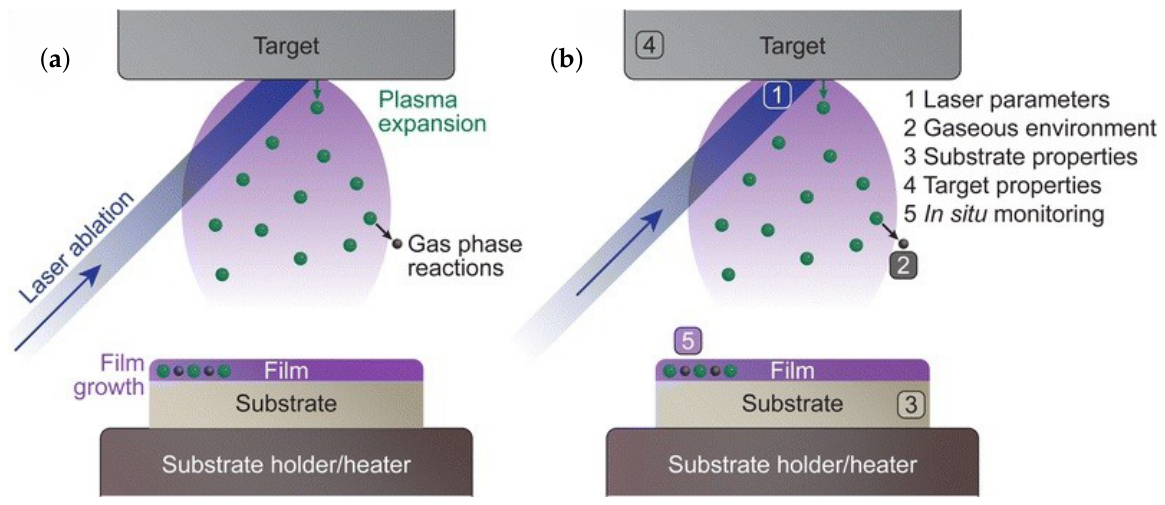
3.1. Pulsed Laser Deposition
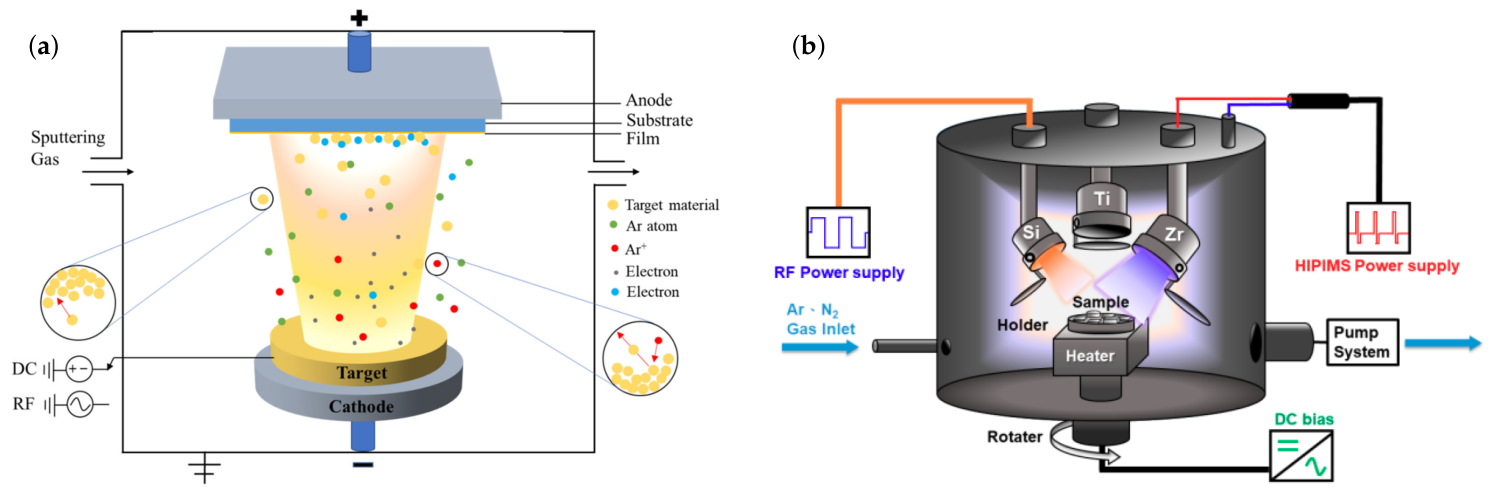
3.2. Magnetron Sputtering
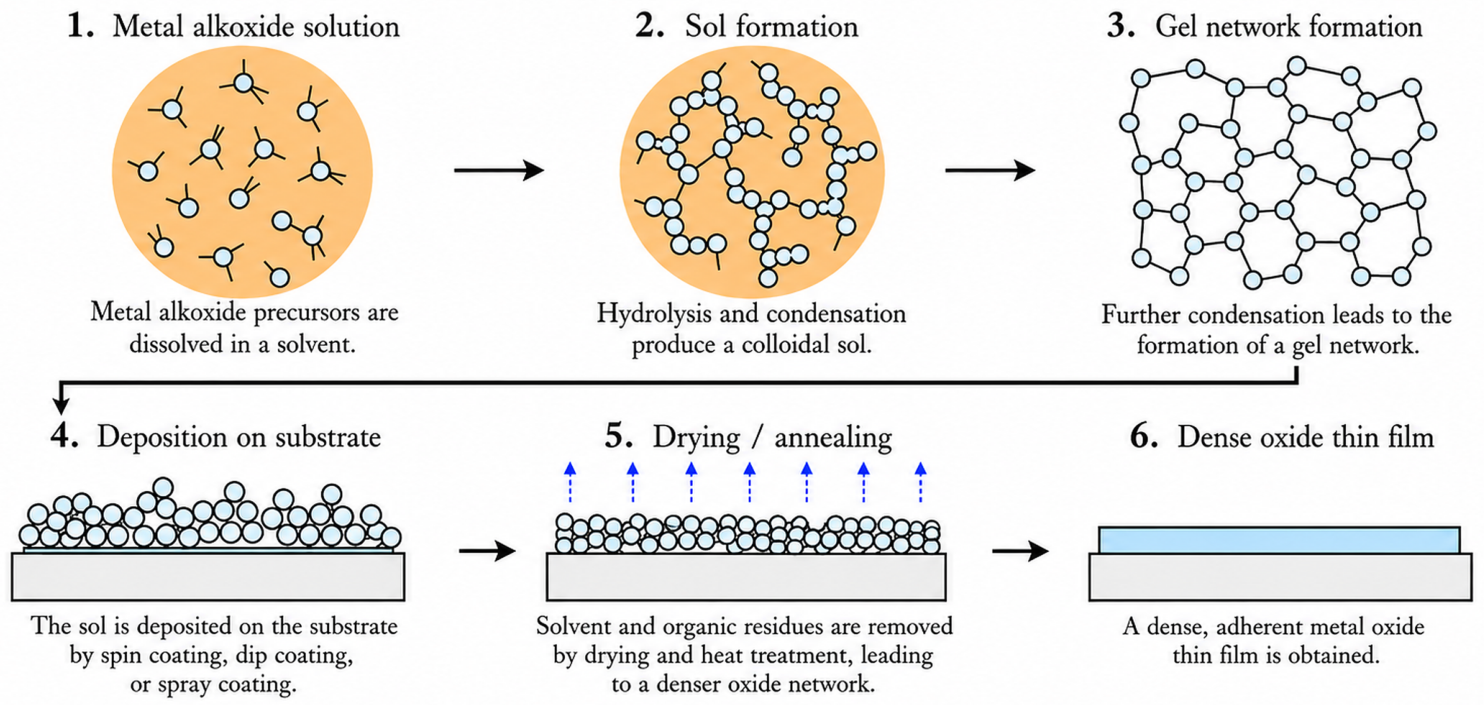
3.3. Sol-Gel and Aerosol Spray Deposition
3.4. Other Deposition Methods
3.5. Comparative Analysis of TMO Thin Film Preparation Technologies
4. Devices and Applications
4.1. Thermochromic VO2-Based Smart Windows
4.2. Electrochromic WO3- and NiO-Based Smart Windows
4.3. Optical Hydrogen Detection Using TMO-Based Gasochromic Sensors
5. Future Perspectives
6. Conclusions
- –
- improving VO2 thermochromic coatings through reducing the transition temperature while preserving high luminous transmittance, strong solar modulation, narrow hysteresis, and environmental stability through doping, strain engineering, multilayer design, protective layers, and nanostructuring;
- –
- enhancing WO3/NiO-based electrochromic oxide devices, namely faster switching, lower operating voltage, higher optical contrast, better color neutrality, and longer cycling lifetime through improved ion transport, electrolyte compatibility, charge balance, and interface stability;
- –
- controlling defects and microstructure such as oxygen vacancies, mixed-valence states, grain boundaries, and porosity to tune optical modulation, ion diffusion, switching kinetics, and degradation;
- –
- expanding gasochromic WO3 and V2O5 devices for hydrogen sensing and optical gas detection through improving sensitivity, selectivity, reversibility, humidity tolerance, and stable low-temperature operation.
Author Contributions
Funding
Data Availability Statement
Conflicts of Interest
Abbreviations
| AACVD | Aerosol-assisted chemical vapor deposition |
| AFI | Antiferromagnetic insulating |
| ALD | Atomic layer deposition |
| AR | Antireflection |
| AZO | Aluminum-doped zinc oxide |
| CE | Coloration efficiency |
| CT | Charge-transfer |
| CVD | Chemical vapor deposition |
| DFT | Density functional theory |
| DGU | Double glazing unit |
| ECW | Electrochromic window |
| HiPIMS | High-power impulse magnetron sputtering |
| HRTEM | High-resolution transmission electron microscopy |
| IGU | Insulating glass unit |
| IR | Infrared |
| ITO | Indium tin oxide |
| LCST | Lower critical solution temperature |
| LPCVD | Low-pressure chemical vapor deposition |
| LPEs | Liquid/liquid-polymer electrolytes |
| MBE | Molecular beam epitaxy |
| MIR | Mid-infrared |
| MIT | Metal–insulator transition |
| MOX | Metal oxide |
| NIR | Near-infrared |
| PC | Propylene carbonate |
| PLD | Pulsed laser deposition |
| RFMS | Radio-frequency magnetron sputtering |
| RH | Relative humidity |
| SEM | Scanning electron microscopy |
| SHGC | Solar heat gain coefficient |
| SLG | Soda-lime glass |
| SPEs | Solid polymer electrolytes |
| SW | Smart window |
| SWs | Smart windows |
| TEM | Transmission electron microscopy |
| TGU | Triple glazing unit |
| TMM | Transfer matrix method |
| TMO | Transition metal oxide |
| TMOs | Transition metal oxides |
| UV | Ultraviolet |
| VIS | Visible |
| YSZ | Yttria-stabilized zirconia |
References
- Yan, D.; Wang, Z.; Zhang, Z. Stimuli-Responsive Crystalline Smart Materials: From Rational Design and Fabrication to Applications. Acc. Chem. Res. 2022, 55, 1047–1058. [Google Scholar] [CrossRef] [PubMed]
- Stuart, M.A.C.; Huck, W.T.S.; Genzer, J.; Müller, M.; Ober, C.; Stamm, M.; Sukhorukov, G.B.; Szleifer, I.; Tsukruk, V.V.; Urban, M.; et al. Emerging Applications of Stimuli-Responsive Polymer Materials. Nat. Mater. 2010, 9, 101–113. [Google Scholar] [CrossRef] [PubMed]
- Imato, K.; Ooyama, Y. Stimuli-Responsive Smart Polymers Based on Functional Dyes. Polym. J. 2024, 56, 1093–1109. [Google Scholar] [CrossRef]
- Wu, S.; Sun, H.; Duan, M.; Mao, H.; Wu, Y.; Zhao, H.; Lin, B. Applications of Thermochromic and Electrochromic Smart Windows: Materials to Buildings. Cell Rep. Phys. Sci. 2023, 4, 101370. [Google Scholar] [CrossRef]
- Cannavale, A.; Ayr, U.; Fiorito, F.; Martellotta, F. Smart Electrochromic Windows to Enhance Building Energy Efficiency and Visual Comfort. Energies 2020, 13, 1449. [Google Scholar] [CrossRef]
- Jiang, C.; He, L.; Xuan, Q.; Liao, Y.; Dai, J.G.; Lei, D. Phase-Change VO2-based Thermochromic Smart Windows. Light Sci. Appl. 2024, 13, 255. [Google Scholar] [CrossRef] [PubMed]
- Shchegolkov, A.V.; Jang, S.H.; Shchegolkov, A.V.; Rodionov, Y.V.; Sukhova, A.O.; Lipkin, M.S. A Brief Overview of Electrochromic Materials and Related Devices: A Nanostructured Materials Perspective. Nanomaterials 2021, 11, 2376. [Google Scholar] [CrossRef] [PubMed]
- Seok, H.; Son, S.; Cho, J.; Choi, S.; Park, K.; Kim, C.; Jeon, N.; Kim, T.; Kim, H.U. Chromism-Integrated Sensors and Devices for Visual Indicators. Sensors 2022, 22, 4288. [Google Scholar] [CrossRef] [PubMed]
- Mustafa, M.N.; Mohd Abdah, M.A.A.; Numan, A.; Moreno-Rangel, A.; Radwan, A.; Khalid, M. Smart Window Technology and Its Potential for Net-Zero Buildings: A Review. Renew. Sustain. Energy Rev. 2023, 181, 113355. [Google Scholar] [CrossRef]
- Fu, H.; Zhang, L.; Dong, Y.; Zhang, C.; Li, W. Recent Advances in Electrochromic Materials and Devices for Camouflage Applications. Mater. Chem. Front. 2023, 7, 2337–2358. [Google Scholar] [CrossRef]
- Zhang, Y.; Ding, Y.; Lan, F.; Zhang, W.; Li, J.; Zhang, R. Recent Advances in Tungsten Oxide-Based Chromogenic Materials: Photochromism, Electrochromism, and Gasochromism. Nanoscale 2024, 16, 21279–21293. [Google Scholar] [CrossRef] [PubMed]
- Rao, C.N.R. Transition Metal Oxides. Annu. Rev. Phys. Chem. 1989, 40, 291–326. [Google Scholar] [CrossRef]
- Ahn, C.; Cavalleri, A.; Georges, A.; Ismail-Beigi, S.; Millis, A.J.; Triscone, J.M. Designing and Controlling the Properties of Transition Metal Oxide Quantum Materials. Nat. Mater. 2021, 20, 1462–1468. [Google Scholar] [CrossRef] [PubMed]
- Yu, X.; Marks, T.J.; Facchetti, A. Metal Oxides for Optoelectronic Applications. Nat. Mater. 2016, 15, 383–396. [Google Scholar] [CrossRef] [PubMed]
- Agnihotri, A.S.; Varghese, A.; M, N. Transition Metal Oxides in Electrochemical and Bio Sensing: A State-of-Art Review. Appl. Surf. Sci. Adv. 2021, 4, 100072. [Google Scholar] [CrossRef]
- Hidayat, R.; Aftab, S.; Khalid, A.; Hegazy, H.H.; Rajpar, A.H.; Rubab, N.; Yewale, M.A. Transition Metal Oxides for Battery Technologies. J. Alloy. Compd. 2025, 1039, 183257. [Google Scholar] [CrossRef]
- Ganduglia-Pirovano, M.V.; Hofmann, A.; Sauer, J. Oxygen Vacancies in Transition Metal and Rare Earth Oxides: Current State of Understanding and Remaining Challenges. Surf. Sci. Rep. 2007, 62, 219–270. [Google Scholar] [CrossRef]
- Nilius, N. Properties of Oxide Thin Films and Their Adsorption Behavior Studied by Scanning Tunneling Microscopy and Conductance Spectroscopy. Surf. Sci. Rep. 2009, 64, 595–659. [Google Scholar] [CrossRef]
- Cao, Z.; Li, S.; Xie, W.; Du, G.; Qiao, Z. Critical Evaluation and Thermodynamic Optimization of the V–O System. Calphad 2015, 51, 241–251. [Google Scholar] [CrossRef]
- Hu, P.; Hu, P.; Vu, T.D.; Li, M.; Wang, S.; Ke, Y.; Zeng, X.; Mai, L.; Long, Y. Vanadium Oxide: Phase Diagrams, Structures, Synthesis, and Applications. Chem. Rev. 2023, 123, 4353–4415. [Google Scholar] [CrossRef] [PubMed]
- Longo, J.M.; Kierkegaard, P.; Ballhausen, C.J.; Ragnarsson, U.; Rasmussen, S.E.; Sunde, E.; Sørensen, N.A. A Refinement of the Structure of VO2. Acta Chem. Scand. 1970, 24, 420–426. [Google Scholar] [CrossRef]
- Marezio, M.; McWhan, D.B.; Remeika, J.P.; Dernier, P.D. Structural Aspects of the Metal-Insulator Transitions in Cr-Doped V O 2. Phys. Rev. B 1972, 5, 2541–2551. [Google Scholar] [CrossRef]
- Park, J.H.; Coy, J.M.; Kasirga, T.S.; Huang, C.; Fei, Z.; Hunter, S.; Cobden, D.H. Measurement of a Solid-State Triple Point at the Metal–Insulator Transition in VO2. Nature 2013, 500, 431–434. [Google Scholar] [CrossRef] [PubMed]
- Eyert, V. The Metal-insulator Transitions of VO2: A Band Theoretical Approach. Ann. Phys. 2002, 514, 650–704. [Google Scholar] [CrossRef]
- Vincent, M.G.; Yvon, K.; Ashkenazi, J. Electron-density studies of metal–metal bonds. I. The deformation density of V2O3 at 295 K. Acta Crystallogr. Sect. A 1980, 36, 814–818. [Google Scholar] [CrossRef]
- Tenailleau, C.; Suard, E.; Rodriguez-Carvajal, J.; Gibaud, A.; Lacorre, P. Effect of Doping and Temperature on the Crystal Structure of (V1-xMox)2O3 above and below the Metal/Insulator Transition. J. Solid State Chem. 2003, 174, 431–440. [Google Scholar] [CrossRef]
- Enjalbert, R.; Galy, J. A Refinement of the Structure of V2O5. Acta Crystallogr. Sect. C 1986, 42, 1467–1469. [Google Scholar] [CrossRef]
- Morin, F.J. Oxides Which Show a Metal-to-Insulator Transition at the Neel Temperature. Phys. Rev. Lett. 1959, 3, 34–36. [Google Scholar] [CrossRef]
- Biermann, S.; Poteryaev, A.; Lichtenstein, A.I.; Georges, A. Dynamical Singlets and Correlation-Assisted Peierls Transition in VO2. Phys. Rev. Lett. 2005, 94, 026404. [Google Scholar] [CrossRef] [PubMed]
- Zylbersztejn, A.; Mott, N.F. Metal-Insulator Transition in Vanadium Dioxide. Phys. Rev. B 1975, 11, 4383–4395. [Google Scholar] [CrossRef]
- Goodenough, J.B. The Two Components of the Crystallographic Transition in VO2. J. Solid State Chem. 1971, 3, 490–500. [Google Scholar] [CrossRef]
- Haverkort, M.W.; Hu, Z.; Tanaka, A.; Reichelt, W.; Streltsov, S.V.; Korotin, M.A.; Anisimov, V.I.; Hsieh, H.H.; Lin, H.J.; Chen, C.T.; et al. Orbital-Assisted Metal-Insulator Transition in VO2. Phys. Rev. Lett. 2005, 95, 196404. [Google Scholar] [CrossRef] [PubMed]
- McWhan, D.B.; Menth, A.; Remeika, J.P.; Brinkman, W.F.; Rice, T.M. Metal-Insulator Transitions in Pure and Doped V2O3. Phys. Rev. B 1973, 7, 1920–1931. [Google Scholar] [CrossRef]
- Castellani, C.; Natoli, C.R.; Ranninger, J. Magnetic Structure of V2O3 in the Insulating Phase. Phys. Rev. B 1978, 18, 4945–4966. [Google Scholar] [CrossRef]
- Park, J.H.; Tjeng, L.H.; Tanaka, A.; Allen, J.W.; Chen, C.T.; Metcalf, P.; Honig, J.M.; de Groot, F.M.F.; Sawatzky, G.A. Spin and Orbital Occupation and Phase Transitions in V2O3. Phys. Rev. B 2000, 61, 11506–11509. [Google Scholar] [CrossRef]
- Rodolakis, F.; Hansmann, P.; Rueff, J.P.; Toschi, A.; Haverkort, M.W.; Sangiovanni, G.; Tanaka, A.; Saha-Dasgupta, T.; Andersen, O.K.; Held, K.; et al. Inequivalent Routes across the Mott Transition in V2O3 Explored by X-Ray Absorption. Phys. Rev. Lett. 2010, 104, 047401. [Google Scholar] [CrossRef] [PubMed]
- Keller, G.; Held, K.; Eyert, V.; Vollhardt, D.; Anisimov, V.I. Electronic Structure of Paramagnetic V2O3: Strongly Correlated Metallic and Mott Insulating Phase. Phys. Rev. B 2004, 70, 205116. [Google Scholar] [CrossRef]
- Poteryaev, A.I.; Tomczak, J.M.; Biermann, S.; Georges, A.; Lichtenstein, A.I.; Rubtsov, A.N.; Saha-Dasgupta, T.; Andersen, O.K. Enhanced Crystal-Field Splitting and Orbital-Selective Coherence Induced by Strong Correlations in V2O3. Phys. Rev. B 2007, 76, 085127. [Google Scholar] [CrossRef]
- Eyert, V.; Höck, K.H. Electronic Structure of V2O5: Role of Octahedral Deformations. Phys. Rev. B 1998, 57, 12727–12737. [Google Scholar] [CrossRef]
- Parker, J.C.; Lam, D.J.; Xu, Y.N.; Ching, W.Y. Optical Properties of Vanadium Pentoxide Determined from Ellipsometry and Band-Structure Calculations. Phys. Rev. B 1990, 42, 5289–5293. [Google Scholar] [CrossRef] [PubMed]
- Bhandari, C.; Lambrecht, W.R.L.; van Schilfgaarde, M. Quasiparticle Self-Consistent GW Calculations of the Electronic Band Structure of Bulk and Monolayer V2O5. Phys. Rev. B 2015, 91, 125116. [Google Scholar] [CrossRef]
- Chakrabarti, A.; Hermann, K.; Druzinic, R.; Witko, M.; Wagner, F.; Petersen, M. Geometric and Electronic Structure of Vanadium Pentoxide: A Density Functional Bulk and Surface Study. Phys. Rev. B 1999, 59, 10583–10590. [Google Scholar] [CrossRef]
- Pergament, A.L.; Stefanovich, G.B.; Kuldin, N.A.; Velichko, A.A. On the Problem of Metal-Insulator Transitions in Vanadium Oxides. Int. Sch. Res. Not. 2013, 2013, 960627. [Google Scholar] [CrossRef]
- Neumann, J.P.; Zhong, T.; Chang, Y.A. The Ni-O (Nickel-Oxygen) System. Bull. Alloy. Phase Diagr. 1984, 5, 141–144. [Google Scholar] [CrossRef]
- Okamoto, H. Ni-O (Nitrogen-Oxygen). J. Phase Equilibria 1997, 18, 404. [Google Scholar] [CrossRef]
- Bujdák, R.; Derzsi, M.; Tokár, K. Identity of Oxygen-Rich Nickel Oxides as Oxosuperoxides and Oxoperoxides and Their Heterostructures. Inorg. Chem. 2025, 64, 15402–15412. [Google Scholar] [CrossRef] [PubMed]
- Salunkhe, P.; A.V, M.A.; Kekuda, D. Structural, Spectroscopic and Electrical Properties of Dc Magnetron Sputtered NiO Thin Films and an Insight into Different Defect States. Appl. Phys. A 2021, 127, 390. [Google Scholar] [CrossRef]
- Martin, K.; McCarthy, G. North Dakota State Univ. Fargo, ND, USA. ICDD Grant-in-Aid, 1991. J. Solid State Chem. 1990, 89, 184. [Google Scholar]
- Zaanen, J.; Sawatzky, G.A.; Allen, J.W. Band Gaps and Electronic Structure of Transition-Metal Compounds. Phys. Rev. Lett. 1985, 55, 418–421. [Google Scholar] [CrossRef] [PubMed]
- Fujimori, A.; Minami, F. Valence-Band Photoemission and Optical Absorption in Nickel Compounds. Phys. Rev. B 1984, 30, 957–971. [Google Scholar] [CrossRef]
- Wriedt, H.A. The O-W (Oxygen-Tungsten) System. Bull. Alloy. Phase Diagr. 1989, 10, 368–384. [Google Scholar] [CrossRef]
- Vogt, T.; Woodward, P.M.; Hunter, B.A. The High-Temperature Phases of WO3. J. Solid State Chem. 1999, 144, 209–215. [Google Scholar] [CrossRef]
- Salje, E.; Viswanathan, K. Physical Properties and Phase Transitions in WO3. Acta Cryst. A 1975, 31, 356–359. [Google Scholar] [CrossRef]
- Salje, E. The Orthorhombic Phase of WO3. Acta Crystallogr. B Struct. Sci. 1977, 33, 574–577. [Google Scholar] [CrossRef]
- Woodward, P.; Sleight, A.; Vogt, T. Structure Refinement of Triclinic Tungsten Trioxide. J. Phys. Chem. Solids 1995, 56, 1305–1315. [Google Scholar] [CrossRef]
- Salje, E.K.H.; Rehmann, S.; Pobell, F.; Morris, D.; Knight, K.S.; Herrmannsdörfer, T.; Dove, M.T. Crystal Structure and Paramagnetic Behaviour Of. J. Phys. Condens. Matter 1997, 9, 6563. [Google Scholar] [CrossRef]
- Gerand, B.; Nowogrocki, G.; Guenot, J.; Figlarz, M. Structural Study of a New Hexagonal Form of Tungsten Trioxide. J. Solid State Chem. 1979, 29, 429–434. [Google Scholar] [CrossRef]
- Ping, Y.; Rocca, D.; Galli, G. Optical Properties of Tungsten Trioxide from First-Principles Calculations. Phys. Rev. B 2013, 87, 165203. [Google Scholar] [CrossRef]
- Wang, F.; Di Valentin, C.; Pacchioni, G. Electronic and Structural Properties of WO3: A Systematic Hybrid DFT Study. J. Phys. Chem. C 2011, 115, 8345–8353. [Google Scholar] [CrossRef]
- Ingham, B.; Hendy, S.C.; Chong, S.V.; Tallon, J.L. Density-Functional Studies of Tungsten Trioxide, Tungsten Bronzes, and Related Systems. Phys. Rev. B 2005, 72, 075109. [Google Scholar] [CrossRef]
- Cancarevic, M.; Zinkevich, M.; Aldinger, F. Thermodynamic Description of the Ti–O System Using the Associate Model for the Liquid Phase. Calphad 2007, 31, 330–342. [Google Scholar] [CrossRef]
- Okamoto, H. O-Ti (Oxygen-Titanium). J. Phase Equilib. Diffus. 2011, 32, 473–474. [Google Scholar] [CrossRef]
- Howard, C.J.; Sabine, T.M.; Dickson, F. Structural and Thermal Parameters for Rutile and Anatase. Acta Crystallogr. Sect. B 1991, 47, 462–468. [Google Scholar] [CrossRef]
- Ballirano, P.; Caminiti, R. Rietveld Refinements on Laboratory Energy Dispersive X-ray Diffraction (EDXD) Data. J. Appl. Crystallogr. 2001, 34, 757–762. [Google Scholar] [CrossRef]
- Ekanayake, S.A.; Mai, H.; Chen, D.; Caruso, R.A. Recent Advances in Synthesis and Application of Magnéli Phase Titanium Oxides for Energy Storage and Environmental Remediation. Chem. Sci. 2025, 16, 2980–3018. [Google Scholar] [CrossRef] [PubMed]
- Eddy, D.R.; Permana, M.D.; Sakti, L.K.; Sheha, G.A.N.; Solihudin; Hidayat, S.; Takei, T.; Kumada, N.; Rahayu, I. Heterophase Polymorph of TiO2 (Anatase, Rutile, Brookite, TiO2 (B)) for Efficient Photocatalyst: Fabrication and Activity. Nanomaterials 2023, 13, 704. [Google Scholar] [CrossRef] [PubMed]
- Mo, S.D.; Ching, W.Y. Electronic and Optical Properties of Three Phases of Titanium Dioxide: Rutile, Anatase, and Brookite. Phys. Rev. B 1995, 51, 13023–13032. [Google Scholar] [CrossRef] [PubMed]
- Diebold, U. The Surface Science of Titanium Dioxide. Surf. Sci. Rep. 2003, 48, 53–229. [Google Scholar] [CrossRef]
- Janotti, A.; Varley, J.B.; Rinke, P.; Umezawa, N.; Kresse, G.; Van de Walle, C.G. Hybrid Functional Studies of the Oxygen Vacancy in TiO2. Phys. Rev. B 2010, 81, 085212. [Google Scholar] [CrossRef]
- Craciun, F.; Lippert, T.; Dinescu, M. Pulsed Laser Deposition: Fundamentals, Applications, and Perspectives. In Handbook of Laser Micro- and Nano-Engineering; Springer: Cham, Switzerland, 2021; pp. 1291–1323. [Google Scholar] [CrossRef]
- Shepelin, N.A.; Tehrani, Z.P.; Ohannessian, N.; Schneider, C.W.; Pergolesi, D.; Lippert, T. A Practical Guide to Pulsed Laser Deposition. Chem. Soc. Rev. 2023, 52, 2294–2321. [Google Scholar] [CrossRef] [PubMed]
- Sambri, A.; Aruta, C.; Di Gennaro, E.; Wang, X.; Scotti di Uccio, U.; Miletto Granozio, F.; Amoruso, S. Effects of Oxygen Background Pressure on the Stoichiometry of a LaGaO3 Laser Ablation Plume Investigated by Time and Spectrally Resolved Two-Dimensional Imaging. J. Appl. Phys. 2016, 119, 125301. [Google Scholar] [CrossRef]
- Yao, X.; Schneider, C.W.; Wokaun, A.; Lippert, T. New Insight into the Gas Phase Reaction Dynamics in Pulsed Laser Deposition of Multi-Elemental Oxides. Materials 2022, 15, 4862. [Google Scholar] [CrossRef] [PubMed]
- Horynova, E.; Holovsky, J.; Landova, L.; Jain, N.; Pakki, A.D.; Kuo, M.H.; Beshajová Pelikánová, I.; Dzurňák, B.; Horák, L.; Pop-Georgievski, O.; et al. Nickel Oxide Hole Transport Layer for Perovskite Solar Cells: Preparation via Pulsed Laser Deposition with Simulation and Experimental Insights. Vacuum 2026, 245, 114812. [Google Scholar] [CrossRef]
- Bhardwaj, D.; Goswami, A.; Umarji, A.M. Synthesis of Phase Pure Vanadium Dioxide (VO2) Thin Film by Reactive Pulsed Laser Deposition. J. Appl. Phys. 2018, 124, 135301. [Google Scholar] [CrossRef]
- Sakai, J.; Zaghrioui, M.; Ta Phuoc, V.; Roger, S.; Autret-Lambert, C.; Okimura, K. Pulsed Laser-Deposited VO2 Thin Filacms on Pt Layers. J. Appl. Phys. 2013, 113, 123503. [Google Scholar] [CrossRef]
- Diallo, A.; Ndiaye, N.M.; Ngom, B.D.; Khamlich, S.; Talla, K.; Ndiaye, S.; Manyala, N.; Nemraoui, O.; Madjoe, R.; Beye, A.C.; et al. Effect of Substrate Temperature on the Structure and the Metal Insulator Transition in Pulsed Laser Deposed V02 Films on Soda Lime Glass. J. Opt. 2015, 44, 36–44. [Google Scholar] [CrossRef]
- Fan, L.; Wu, Y.; Si, C.; Zou, C.; Qi, Z.; Li, L.; Pan, G.; Wu, Z. Oxygen Pressure Dependent VO2 Crystal Film Preparation and the Interfacial Epitaxial Growth Study. Thin Solid Films 2012, 520, 6124–6129. [Google Scholar] [CrossRef]
- Kim, D.H.; Kwok, H.S. Pulsed Laser Deposition of VO2 Thin Films. Appl. Phys. Lett. 1994, 65, 3188–3190. [Google Scholar] [CrossRef]
- Bhardwaj, D.; Singh, D.K.; Krupanidhi, S.B.; Umarji, A.M. Fabrication of Smooth Thin Film of Vanadium Oxides VOx Using Pulsed Laser Deposition. Appl. Phys. A 2020, 126, 157. [Google Scholar] [CrossRef]
- Huang, Z.; Laskowski, K.; Sitaram, S.R.; Herrmann, E.; Jahadun Nobi, S.M.; Ma, K.; Wang, X. High-Quality Polycrystalline Vanadium Dioxide Thin Films Deposited via Pulsed Laser Deposition with High Uniformity and Consistency. J. Mater. Sci. Mater. Electron. 2025, 36, 1850. [Google Scholar] [CrossRef] [PubMed]
- Bouessay, I.; Rougier, A.; Beaudoin, B.; Leriche, J.B. Pulsed Laser-Deposited Nickel Oxide Thin Films as Electrochromic Anodic Materials. Appl. Surf. Sci. 2002, 186, 490–495. [Google Scholar] [CrossRef]
- Mazzi, A.; Orlandi, M.; Bazzanella, N.; Popat, Y.J.; Minati, L.; Speranza, G.; Miotello, A. Pulsed Laser Deposition of Nickel Oxide Films with Improved Optical Properties to Functionalize Solar Light Absorbing Photoanodes and Very Low Overpotential for Water Oxidation Catalysis. Mater. Sci. Semicond. Process. 2019, 97, 29–34. [Google Scholar] [CrossRef]
- Sonavane, A.C.; Inamdar, A.I.; Shinde, P.S.; Deshmukh, H.P.; Patil, R.S.; Patil, P.S. Efficient Electrochromic Nickel Oxide Thin Films by Electrodeposition. J. Alloy. Compd. 2010, 489, 667–673. [Google Scholar] [CrossRef]
- Zou, Y.; Zhang, Y.; Lou, D.; Wang, H.; Gu, L.; Dong, Y.; Dou, K.; Song, X.; Zeng, H. Structural and Optical Properties of WO3 Films Deposited by Pulsed Laser Deposition. J. Alloy. Compd. 2014, 583, 465–470. [Google Scholar] [CrossRef]
- Kalhori, H.; Porter, S.B.; Esmaeily, A.S.; Coey, M.; Ranjbar, M.; Salamati, H. Morphology and Structural Studies of WO3 Films Deposited on SrTiO3 by Pulsed Laser Deposition. Appl. Surf. Sci. 2016, 390, 43–49. [Google Scholar] [CrossRef]
- Kumi-Barimah, E.; Penhale-Jones, R.; Salimian, A.; Upadhyaya, H.; Hasnath, A.; Jose, G. Phase Evolution, Morphological, Optical and Electrical Properties of Femtosecond Pulsed Laser Deposited TiO2 Thin Films. Sci. Rep. 2020, 10, 10144. [Google Scholar] [CrossRef] [PubMed]
- Curcio, M.; De Bonis, A.; Brutti, S.; Santagata, A.; Teghil, R. Pulsed Laser Deposition of Thin Films of TiO2 for Li-ion Batteries. Appl. Surf. Sci. Adv. 2021, 4, 100090. [Google Scholar] [CrossRef]
- Wicklein, S.; Sambri, A.; Amoruso, S.; Wang, X.; Bruzzese, R.; Koehl, A.; Dittmann, R. Pulsed Laser Ablation of Complex Oxides: The Role of Congruent Ablation and Preferential Scattering for the Film Stoichiometry. Appl. Phys. Lett. 2012, 101, 131601. [Google Scholar] [CrossRef]
- Yu, J.; Han, W.; Suleiman, A.A.; Han, S.; Miao, N.; Ling, F.C.C. Recent Advances on Pulsed Laser Deposition of Large-Scale Thin Films. Small Methods 2024, 8, 2301282. [Google Scholar] [CrossRef] [PubMed]
- Ekpe, S.D.; Jimenez, F.J.; Field, D.J.; Davis, M.J.; Dew, S.K. Effect of Magnetic Field Strength on Deposition Rate and Energy Flux in a Dc Magnetron Sputtering System. J. Vac. Sci. Technol. A 2009, 27, 1275–1280. [Google Scholar] [CrossRef]
- Rudolph, M.; Brenning, N.; Hajihoseini, H.; Raadu, M.A.; Minea, T.M.; Anders, A.; Gudmundsson, J.T.; Lundin, D. Influence of the Magnetic Field on the Discharge Physics of a High Power Impulse Magnetron Sputtering Discharge. J. Phys. D Appl. Phys. 2021, 55, 015202. [Google Scholar] [CrossRef]
- Musil, J.; Baroch, P.; Vlček, J.; Nam, K.H.; Han, J.G. Reactive Magnetron Sputtering of Thin Films: Present Status and Trends. Thin Solid Films 2005, 475, 208–218. [Google Scholar] [CrossRef]
- Strijckmans, K.; Schelfhout, R.; Depla, D. Tutorial: Hysteresis during the Reactive Magnetron Sputtering Process. J. Appl. Phys. 2018, 124, 241101. [Google Scholar] [CrossRef]
- Borowski, P.; Myśliwiec, J. Recent Advances in Magnetron Sputtering: From Fundamentals to Industrial Applications. Coatings 2025, 15, 922. [Google Scholar] [CrossRef]
- Berg, S.; Nyberg, T. Fundamental Understanding and Modeling of Reactive Sputtering Processes. Thin Solid Films 2005, 476, 215–230. [Google Scholar] [CrossRef]
- Shahinuzzaman, M.; Afroz, S.; Mohafez, H.; Jamal, M.S.; Khandaker, M.U.; Sulieman, A.; Tamam, N.; Islam, M.A. Roles of Inorganic Oxide Based HTMs towards Highly Efficient and Long-Term Stable PSC—A Review. Nanomaterials 2022, 12, 3003. [Google Scholar] [CrossRef] [PubMed]
- Chang, L.C.; Zheng, Y.Z.; Chen, Y.I. Mechanical Properties of Zr–Si–N Films Fabricated through HiPIMS/RFMS Co-Sputtering. Coatings 2018, 8, 263. [Google Scholar] [CrossRef]
- Kana Kana, J.B.; Ndjaka, J.M.; Vignaud, G.; Gibaud, A.; Maaza, M. Thermally Tunable Optical Constants of Vanadium Dioxide Thin Films Measured by Spectroscopic Ellipsometry. Opt. Commun. 2011, 284, 807–812. [Google Scholar] [CrossRef]
- Luo, Y.Y.; Zhu, L.Q.; Zhang, Y.X.; Pan, S.S.; Xu, S.C.; Liu, M.; Li, G.H. Optimization of Microstructure and Optical Properties of VO2 Thin Film Prepared by Reactive Sputtering. J. Appl. Phys. 2013, 113, 183520. [Google Scholar] [CrossRef]
- Peterseim, T.; Dressel, M.; Dietrich, M.; Polity, A. Optical Properties of VO2 Films at the Phase Transition: Influence of Substrate and Electronic Correlations. J. Appl. Phys. 2016, 120, 075102. [Google Scholar] [CrossRef]
- Zhang, C.; Koughia, C.; Güneş, O.; Luo, J.; Hossain, N.; Li, Y.; Cui, X.; Wen, S.J.; Wong, R.; Yang, Q.; et al. Synthesis, Structure and Optical Properties of High-Quality VO2 Thin Films Grown on Silicon, Quartz and Sapphire Substrates by High Temperature Magnetron Sputtering: Properties through the Transition Temperature. J. Alloy. Compd. 2020, 848, 156323. [Google Scholar] [CrossRef]
- Zhu, M.; Zhang, D.; Jiang, S.; Liu, S.; Qi, H.; Yang, Y. Phase Evolution and Thermochromism of Vanadium Oxide Thin Films Grown at Low Substrate Temperatures during Magnetron Sputtering. Ceram. Int. 2021, 47, 15491–15499. [Google Scholar] [CrossRef]
- Predanocy, M.; Hotový, I.; Čaplovičová, M. Structural, Optical and Electrical Properties of Sputtered NiO Thin Films for Gas Detection. Appl. Surf. Sci. 2017, 395, 208–213. [Google Scholar] [CrossRef]
- Terlemezoglu, M.; Surucu, O.; Isik, M.; Gasanly, N.M.; Parlak, M. Temperature-Dependent Optical Characteristics of Sputtered NiO Thin Films. Appl. Phys. A 2022, 128, 50. [Google Scholar] [CrossRef]
- Johansson, M.B.; Zietz, B.; Niklasson, G.A.; Österlund, L. Optical Properties of Nanocrystalline WO3 and WO3-x Thin Films Prepared by DC Magnetron Sputtering. J. Appl. Phys. 2014, 115, 213510. [Google Scholar] [CrossRef]
- Zhen, Y.; Jelle, B.P.; Gao, T. Electrochromic Properties of WO3 Thin Films: The Role of Film Thickness. Anal. Sci. Adv. 2020, 1, 124–131. [Google Scholar] [CrossRef] [PubMed]
- Kim, H.; Wang, Y.; Denisov, N.; Wu, Z.; Kment, Š.; Schmuki, P. DC Sputter Deposited TiO2 Layers on FTO: Towards a Maximum Photoelectrochemical Response of Photoanodes. J. Mater. Sci. 2022, 57, 12960–12970. [Google Scholar] [CrossRef]
- Heo, C.H.; Lee, S.B.; Boo, J.H. Deposition of TiO2 Thin Films Using RF Magnetron Sputtering Method and Study of Their Surface Characteristics. Thin Solid Films 2005, 475, 183–188. [Google Scholar] [CrossRef]
- Rafieian, D.; Ogieglo, W.; Savenije, T.; Lammertink, R.G.H. Controlled Formation of Anatase and Rutile TiO2 Thin Films by Reactive Magnetron Sputtering. AIP Adv. 2015, 5, 097168. [Google Scholar] [CrossRef]
- Jin, P.; Xu, G.; Tazawa, M.; Yoshimura, K. Design, Formation and Characterization of a Novel Multifunctional Window with VO2 and TiO2 Coatings. Appl. Phys. A 2003, 77, 455–459. [Google Scholar] [CrossRef]
- Landau, M.V. Sol–Gel Process. In Handbook of Heterogeneous Catalysis; John Wiley & Sons, Ltd.: Hoboken, NJ, USA, 2008; Chapter 2.3.4; pp. 119–160. [Google Scholar] [CrossRef]
- Brinker, C.J.; Hurd, A.J.; Schunk, P.R.; Frye, G.C.; Ashley, C.S. Review of Sol-Gel Thin Film Formation. J. Non Cryst. Solids 1992, 147–148, 424–436. [Google Scholar] [CrossRef]
- Langlet, M. Ultrasonic Pulverization of an Aerosol: A Versatile Tool for the Deposition of Sol–Gel Thin Films. In Handbook of Sol-Gel Science and Technology; Springer: Cham, Switzerland, 2017; pp. 1–23. [Google Scholar] [CrossRef]
- Workie, A.B.; Ningsih, H.S.; Shih, S.J. An Comprehensive Review on the Spray Pyrolysis Technique: Historical Context, Operational Factors, Classifications, and Product Applications. J. Anal. Appl. Pyrolysis 2023, 170, 105915. [Google Scholar] [CrossRef]
- Innocenzi, P. Understanding Sol–Gel Transition through a Picture. A Short Tutorial. J. Sol-Gel Sci. Technol. 2020, 94, 544–550. [Google Scholar] [CrossRef]
- Basso, M.; Furlan, C.; Colusso, E.; Sgarbossa, F.; Jasieniak, J.; Martucci, A. Influence of Humidity and Aging on the Optimization of VO2 Sol-Gel Thin Films for Thermochromic Smart Windows. J. Sol-Gel Sci. Technol. 2025, 116, 946–957. [Google Scholar] [CrossRef]
- Zhang, J.; Sun, X.; Wang, T.; Xu, W.; Luo, G.; Wang, Y.; Zhou, C. Vanadium Dioxide Coatings with Enhanced Optical and Thermochromic Performances. Opt. Mater. 2023, 136, 113498. [Google Scholar] [CrossRef]
- Qu, H.; Guo, Y.; Zhang, D.; Sun, B.; Yan, L. Composition Evolution and Electrical Properties of VO2 Thin Films Induced by Annealing Temperature. J. Sol-Gel Sci. Technol. 2022, 104, 138–146. [Google Scholar] [CrossRef]
- Nalage, S.; Chougule, M.; Sen, S.; Joshi, P.; Patil, V. Sol–Gel Synthesis of Nickel Oxide Thin Films and Their Characterization. Thin Solid Films 2012, 520, 4835–4840. [Google Scholar] [CrossRef]
- Mateos, D.; Valdez, B.; Castillo, J.; Nedev, N.; Curiel, M.; Perez, O.; Arias, A.; Tiznado, H. Synthesis of High Purity Nickel Oxide by a Modified Sol-Gel Method. Ceram. Int. 2019, 45, 11403–11407. [Google Scholar] [CrossRef]
- Ozkan Zayim, E.; Turhan, I.; Tepehan, F.; Ozer, N. Sol–Gel Deposited Nickel Oxide Films for Electrochromic Applications. Sol. Energy Mater. Sol. Cells 2008, 92, 164–169. [Google Scholar] [CrossRef]
- Wen-Cheun Au, B.; Chan, K.Y.; Knipp, D. Effect of Film Thickness on Electrochromic Performance of Sol-Gel Deposited Tungsten Oxide (WO3). Opt. Mater. 2019, 94, 387–392. [Google Scholar] [CrossRef]
- Ge, C.; Wang, M.; Hussain, S.; Xu, Z.; Liu, G.; Qiao, G. Electron Transport and Electrochromic Properties of Sol-Gel WO3 Thin Films: Effect of Crystallinity. Thin Solid Films 2018, 653, 119–125. [Google Scholar] [CrossRef]
- Purushothaman, K.; Muralidharan, G.; Vijayakumar, S. Sol-Gel Coated WO3 Thin Films Based Complementary Electrochromic Smart Windows. Mater. Lett. 2021, 296, 129881. [Google Scholar] [CrossRef]
- Khima, N.; Chelouche, A.; Challali, F.; Djouadi, D.; Djermoune, A.; Luce, M.; Cricenti, A.; Becerril, D.; Bellucci, S.; Touam, T. TiO2 Sol–Gel Thin Films: Effect of Acidic and Basic pH on Physical Characteristics. J. Sol-Gel Sci. Technol. 2024, 112, 277–288. [Google Scholar] [CrossRef]
- Sunil, A.; Gopika, M.S.; Jayasudha, S.; Nair, P.B. Multifunctional Applications of TiO2 Thin Films Synthesized by Sol–Gel Dip Coating Technique. J. Sol-Gel Sci. Technol. 2024, 110, 346–362. [Google Scholar] [CrossRef]
- Khan, M.; Bhatti, K.; Qindeel, R.; Althobaiti, H.S.; Alonizan, N. Structural, Electrical and Optical Properties of Multilayer TiO2 Thin Films Deposited by Sol–Gel Spin Coating. Results Phys. 2017, 7, 1437–1439. [Google Scholar] [CrossRef]
- Lee, W.J.; Chang, Y.H. Growth without Postannealing of Monoclinic VO2 Thin Film by Atomic Layer Deposition Using VCl4 as Precursor. Coatings 2018, 8, 431. [Google Scholar] [CrossRef]
- Su, X.; Tu, Z.; Ji, L.; Wu, H.; Xu, H.; Liu, C. Electrochromic Properties of NiO Films Prepared by Atomic Layer Deposition. J. Vac. Sci. Technol. A 2023, 41, 062407. [Google Scholar] [CrossRef]
- Malm, J.; Sajavaara, T.; Karppinen, M. Atomic Layer Deposition of WO3 Thin Films Using W(CO)6 and O3 Precursors. Chem. Vap. Depos. 2012, 18, 245–248. [Google Scholar] [CrossRef]
- Niemelä, J.P.; Marin, G.; Karppinen, M. Titanium Dioxide Thin Films by Atomic Layer Deposition: A Review. Semicond. Sci. Technol. 2017, 32, 093005. [Google Scholar] [CrossRef]
- Guo, B.; Chen, L.; Shi, S.; Ishaq, A.; Wan, D.; Chen, Z.; Zhang, L.; Luo, H.; Gao, Y. Low Temperature Fabrication of Thermochromic VO2 Thin Films by Low-Pressure Chemical Vapor Deposition. RSC Adv. 2017, 7, 10798–10805. [Google Scholar] [CrossRef]
- Piccirillo, C.; Binions, R.; Parkin, I.P. Nb-Doped VO2 Thin Films Prepared by Aerosol-Assisted Chemical Vapour Deposition. Eur. J. Inorg. Chem. 2007, 2007, 4050–4055. [Google Scholar] [CrossRef]
- Ashraf, S.; Blackman, C.S.; Palgrave, R.G.; Parkin, I.P. Aerosol-Assisted Chemical Vapour Deposition of WO3 Thin Films Using Polyoxometallate Precursors and Their Gas Sensing Properties. J. Mater. Chem. 2007, 17, 1063–1070. [Google Scholar] [CrossRef]
- Strekalovskaya, D.A.; Baturova, L.P.; Kondrateva, A.S.; Semencha, A.V.; Andreeva, V.D. Electrochromic Thin-Film Nickel-Oxide Coatings for Systems with Adjustable Light Transmission. Phys. Status Solidi A 2024, 221, 2300825. [Google Scholar] [CrossRef]
- Buch, V.R.; Chawla, A.K.; Rawal, S.K. Review on Electrochromic Property for WO3 Thin Films Using Different Deposition Techniques. Mater. Today Proc. 2016, 3, 1429–1437. [Google Scholar] [CrossRef]
- Fu, Y.; Mo, A. A Review on the Electrochemically Self-organized Titania Nanotube Arrays: Synthesis, Modifications, and Biomedical Applications. Nanoscale Res. Lett. 2018, 13, 187. [Google Scholar] [CrossRef] [PubMed]
- Li, S.; Zhang, G.; Guo, D.; Yu, L.; Zhang, W. Anodization Fabrication of Highly Ordered TiO2 Nanotubes. J. Phys. Chem. C 2009, 113, 12759–12765. [Google Scholar] [CrossRef]
- Paik, H.; Moyer, J.A.; Spila, T.; Tashman, J.W.; Mundy, J.A.; Freeman, E.; Shukla, N.; Lapano, J.M.; Engel-Herbert, R.; Zander, W.; et al. Transport Properties of Ultra-Thin VO2 Films on (001) TiO2 Grown by Reactive Molecular-Beam Epitaxy. Appl. Phys. Lett. 2015, 107, 163101. [Google Scholar] [CrossRef]
- Budde, M.; Remmele, T.; Tschammer, C.; Feldl, J.; Franz, P.; Lähnemann, J.; Cheng, Z.; Hanke, M.; Ramsteiner, M.; Albrecht, M.; et al. Plasma-Assisted Molecular Beam Epitaxy of NiO on GaN(00.1). J. Appl. Phys. 2020, 127, 015306. [Google Scholar] [CrossRef]
- Li, G.; Varga, T.; Yan, P.; Wang, Z.; Wang, C.; Chambers, S.A.; Du, Y. Crystallographic Dependence of Photocatalytic Activity of WO3 Thin Films Prepared by Molecular Beam Epitaxy. Phys. Chem. Chem. Phys. 2015, 17, 15119–15123. [Google Scholar] [CrossRef] [PubMed]
- Yano, M.; Koike, K.; Matsuo, M.; Murayama, T.; Harada, Y.; Inaba, K. Growth and Crystallographic Characterization of Molecular Beam Epitaxial WO3 and MoO3/WO3 Thin Films on Sapphire Substrates. Appl. Surf. Sci. 2016, 381, 32–35. [Google Scholar] [CrossRef]
- Engel-Herbert, R.; Jalan, B.; Cagnon, J.; Stemmer, S. Microstructure of Epitaxial Rutile TiO2 Films Grown by Molecular Beam Epitaxy on R-Plane Al2O3. J. Cryst. Growth 2009, 312, 149–153. [Google Scholar] [CrossRef]
- Baetens, R.; Jelle, B.P.; Gustavsen, A. Properties, Requirements and Possibilities of Smart Windows for Dynamic Daylight and Solar Energy Control in Buildings: A State-of-the-Art Review. Sol. Energy Mater. Sol. Cells 2010, 94, 87–105. [Google Scholar] [CrossRef]
- Van Den Bergh, S.; Hart, R.; Jelle, B.P.; Gustavsen, A. Window Spacers and Edge Seals in Insulating Glass Units: A State-of-the-Art Review and Future Perspectives. Energy Build. 2013, 58, 263–280. [Google Scholar] [CrossRef]
- Jelle, B.P.; Kalnæs, S.E.; Gao, T. Low-Emissivity Materials for Building Applications: A State-of-the-Art Review and Future Research Perspectives. Energy Build. 2015, 96, 329–356. [Google Scholar] [CrossRef]
- Zhang, Z.; Zhang, L.; Zhou, Y.; Cui, Y.; Chen, Z.; Liu, Y.; Li, J.; Long, Y.; Gao, Y. Thermochromic Energy Efficient Windows: Fundamentals, Recent Advances, and Perspectives. Chem. Rev. 2023, 123, 7025–7080. [Google Scholar] [CrossRef] [PubMed]
- Liu, M.; Li, X.; Zhang, W.; Li, L.; Li, L.; Wang, C.; Pei, G.; Zhao, B.; Zou, C. Three-State Thermochromic Smart Window for Building Energy-Saving. Adv. Sci. 2025, 12, 2416688. [Google Scholar] [CrossRef] [PubMed]
- Cui, Y.; Ke, Y.; Liu, C.; Chen, Z.; Wang, N.; Zhang, L.; Zhou, Y.; Wang, S.; Gao, Y.; Long, Y. Thermochromic VO2 for Energy-Efficient Smart Windows. Joule 2018, 2, 1707–1746. [Google Scholar] [CrossRef]
- Romanyuk, A.; Steiner, R.; Marot, L.; Oelhafen, P. Temperature-Induced Metal–Semiconductor Transition in W-doped VO2 Films Studied by Photoelectron Spectroscopy. Sol. Energy Mater. Sol. Cells 2007, 91, 1831–1835. [Google Scholar] [CrossRef]
- Binions, R.; Piccirillo, C.; Parkin, I.P. Tungsten Doped Vanadium Dioxide Thin Films Prepared by Atmospheric Pressure Chemical Vapour Deposition from Vanadyl Acetylacetonate and Tungsten Hexachloride. Surf. Coat. Technol. 2007, 201, 9369–9372. [Google Scholar] [CrossRef]
- Chen, S.; Dai, L.; Liu, J.; Gao, Y.; Liu, X.; Chen, Z.; Zhou, J.; Cao, C.; Han, P.; Luo, H.; et al. The Visible Transmittance and Solar Modulation Ability of VO2 Flexible Foils Simultaneously Improved by Ti Doping: An Optimization and First Principle Study. Phys. Chem. Chem. Phys. 2013, 15, 17537–17543. [Google Scholar] [CrossRef] [PubMed]
- Du, J.; Gao, Y.; Luo, H.; Kang, L.; Zhang, Z.; Chen, Z.; Cao, C. Significant Changes in Phase-Transition Hysteresis for Ti-doped VO2 Films Prepared by Polymer-Assisted Deposition. Sol. Energy Mater. Sol. Cells 2011, 95, 469–475. [Google Scholar] [CrossRef]
- Batista, C.; Ribeiro, R.M.; Teixeira, V. Synthesis and Characterization of VO2-based Thermochromic Thin Films for Energy-Efficient Windows. Nanoscale Res. Lett. 2011, 6, 301. [Google Scholar] [CrossRef] [PubMed]
- Li, S.Y.; Mlyuka, N.R.; Primetzhofer, D.; Hallén, A.; Possnert, G.; Niklasson, G.A.; Granqvist, C.G. Bandgap Widening in Thermochromic Mg-doped VO2 Thin Films: Quantitative Data Based on Optical Absorption. Appl. Phys. Lett. 2013, 103, 161907. [Google Scholar] [CrossRef]
- Mlyuka, N.R.; Niklasson, G.A.; Granqvist, C.G. Mg Doping of Thermochromic VO2 Films Enhances the Optical Transmittance and Decreases the Metal-Insulator Transition Temperature. Appl. Phys. Lett. 2009, 95, 171909. [Google Scholar] [CrossRef]
- Shen, N.; Chen, S.; Chen, Z.; Liu, X.; Cao, C.; Dong, B.; Luo, H.; Liu, J.; Gao, Y. The Synthesis and Performance of Zr-doped and W–Zr-codoped VO2 Nanoparticles and Derived Flexible Foils. J. Mater. Chem. A 2014, 2, 15087–15093. [Google Scholar] [CrossRef]
- Béteille, F.; Livage, J. Optical Switching in VO2 Thin Films. J. Sol-Gel Sci. Technol. 1998, 13, 915–921. [Google Scholar] [CrossRef]
- Lee, M.H.; Kim, M.G.; Song, H.K. Thermochromism of Rapid Thermal Annealed VO2 and Sn-doped VO2 Thin Films. Thin Solid Films 1996, 290–291, 30–33. [Google Scholar] [CrossRef]
- Cao, X.; Wang, N.; Magdassi, S.; Mandler, D.; Long, Y. Europium Doped Vanadium Dioxide Material: Reduced Phase Transition Temperature, Enhanced Luminous Transmittance and Solar Modulation. Sci. Adv. Mater. 2014, 6, 558–561. [Google Scholar] [CrossRef]
- Wang, N.; Liu, S.; Zeng, X.T.; Magdassi, S.; Long, Y. Mg/W-codoped Vanadium Dioxide Thin Films with Enhanced Visible Transmittance and Low Phase Transition Temperature. J. Mater. Chem. C 2015, 3, 6771–6777. [Google Scholar] [CrossRef]
- Jiazhen, Y.; Yue, Z.; Wanxia, H.; Mingjin, T. Effect of Mo-W Co-doping on Semiconductor-Metal Phase Transition Temperature of Vanadium Dioxide Film. Thin Solid Films 2008, 516, 8554–8558. [Google Scholar] [CrossRef]
- Becker, M.; Wollenweber-Bienerth, Y.R.; Hartmann, S.; Polity, A.; Chatterjee, S.; Klar, P.J. Optimization and Validation of the Thermochromic Performance of a Trilayer Coating of TiO2/VO2/TiO2 for Smart Windows. ACS Appl. Electron. Mater. 2025, 7, 7668–7678. [Google Scholar] [CrossRef]
- Kaufman, M.; Vlček, J.; Houška, J.; Farrukh, S.; Haviar, S. Design and Scalable Synthesis of Thermochromic VO2-Based Coatings for Energy-Saving Smart Windows with Exceptional Optical Performance. ACS Appl. Mater. Interfaces 2024, 16, 57268–57276. [Google Scholar] [CrossRef] [PubMed]
- Vlček, J.; Kaufman, M.; Mohammadi Nia, E.; Houška, J.; Jiang, J.; Čerstvý, R.; Haviar, S.; Meletis, E.I. High-Performance Thermochromic Multilayer Coatings of W-Doped VO2 Nanoparticles Dispersed in an SiO2 Matrix Prepared on Glass at a Low Temperature. ACS Appl. Nano Mater. 2026, 9, 3597–3602. [Google Scholar] [CrossRef] [PubMed]
- Liu, H.; Zong, H.; Yan, L.; Zhou, D.; Yin, Y.; Cao, G.; Bian, L.; Kang, C.; Li, M. SnO2/VO2/SnO2 Tri-Layer Thermochromic Films with High Luminous Transmittance, Remarkable Solar Modulation Ability and Excellent Hydrophobicity Grown on Glass Substrates. Infrared Phys. Technol. 2021, 113, 103648. [Google Scholar] [CrossRef]
- Fang, Z.; Tian, S.; Li, B.; Liu, Q.; Liu, B.; Zhao, X.; Sankar, G. VO2/ZnO Bilayer Films with Enhanced Thermochromic Property and Durability for Smart Windows. Appl. Surf. Sci. 2021, 540, 148414. [Google Scholar] [CrossRef]
- Chang, T.; Cao, X.; Li, N.; Long, S.; Gao, X.; Dedon, L.R.; Sun, G.; Luo, H.; Jin, P. Facile and Low-Temperature Fabrication of Thermochromic Cr2O3/VO2 Smart Coatings: Enhanced Solar Modulation Ability, High Luminous Transmittance and UV-Shielding Function. ACS Appl. Mater. Interfaces 2017, 9, 26029–26037. [Google Scholar] [CrossRef] [PubMed]
- Long, S.; Zhou, H.; Bao, S.; Xin, Y.; Cao, X.; Jin, P. Thermochromic Multilayer Films of WO3/VO2/WO3 Sandwich Structure with Enhanced Luminous Transmittance and Durability. RSC Adv. 2016, 6, 106435–106442. [Google Scholar] [CrossRef]
- Zong, H.; Zhou, D.; Yan, L.; Liu, H.; Wu, J.; Hu, Q.; Kang, C.; Li, M. ZrO2/VO2/ZrO2 Sandwich Structure with Improved Optical Properties and Weatherability for Smart Window Application. Appl. Phys. A 2021, 127, 472. [Google Scholar] [CrossRef]
- Becker, M.; Wollenweber-Bienerth, Y.R.; Hauptmann, J.; Celik, E.; Polity, A.; Chatterjee, S.; Klar, P.J. Assessing AlN||VO2||AlN Multilayer Architectures Deposited by Ion-Beam Sputtering for Smart Window Applications. ACS Appl. Electron. Mater. 2024, 6, 6049–6058. [Google Scholar] [CrossRef]
- Li, X.H.; Liu, C.; Feng, S.P.; Fang, N.X. Broadband Light Management with Thermochromic Hydrogel Microparticles for Smart Windows. Joule 2019, 3, 290–302. [Google Scholar] [CrossRef]
- Sun, M.; Sun, H.; Wei, R.; Li, W.; Lai, J.; Tian, Y.; Li, M. Energy-Efficient Smart Window Based on a Thermochromic Hydrogel with Adjustable Critical Response Temperature and High Solar Modulation Ability. Gels 2024, 10, 494. [Google Scholar] [CrossRef] [PubMed]
- Zhang, Y.; Tso, C.Y.; Iñigo, J.S.; Liu, S.; Miyazaki, H.; Chao, C.Y.H.; Yu, K.M. Perovskite Thermochromic Smart Window: Advanced Optical Properties and Low Transition Temperature. Appl. Energy 2019, 254, 113690. [Google Scholar] [CrossRef]
- Wang, H.; Lu, Y.; Wang, J.; Qi, T.; Tian, X.; Yang, C.; Huang, Y.; Wang, M.; Zhang, B.; Qu, Z.; et al. Hydrated Ionic Polymer for Thermochromic Smart Windows in Buildings. Nat. Commun. 2025, 16, 6509. [Google Scholar] [CrossRef] [PubMed]
- Mann, D.; Yeung, C.P.K.; Habets, R.; Zandvoort, R.V.; Leufkens, L.; Hupperetz, J.; Out, D.; Valckenborg, R.; Vroon, Z.; Buskens, P. SunSmart—The First Affordable, Energy Optimized Smart Window. IOP Conf. Ser. Earth Environ. Sci. 2022, 1085, 012060. [Google Scholar] [CrossRef]
- Sentjens, H.; Kragt, A.J.J.; van der Burgt, J.S.; Schenning, A.P.H.J. Advancing Solar Modulation Ability of Near Infrared Thermochromic Cholesteric Liquid Crystal Smart Window Films Using a Waveplate. Adv. Opt. Mater. 2025, 13, 2403508. [Google Scholar] [CrossRef]
- Granqvist, C.G. Handbook of Inorganic Electrochromic Materials; Elsevier: Amsterdam, The Netherlands; New York, NY, USA, 1995. [Google Scholar]
- Au, B.W.C.; Chan, K.Y. Towards an All-Solid-State Electrochromic Device: A Review of Solid-State Electrolytes and the Way Forward. Polymers 2022, 14, 2458. [Google Scholar] [CrossRef] [PubMed]
- Ding, Y.; Wang, M.; Mei, Z.; Diao, X. Different Ion-Based Electrolytes for Electrochromic Devices: A Review. Sol. Energy Mater. Sol. Cells 2022, 248, 112037. [Google Scholar] [CrossRef]
- Guo, J.; Liang, Y.; Zhang, S.; Ma, D.; Yang, T.; Zhang, W.; Li, H.; Cao, S.; Zou, B. Recent Progress in Improving Strategies of Metal Oxide-Based Electrochromic Smart Window. Green Energy Resour. 2023, 1, 100007. [Google Scholar] [CrossRef]
- Zhang, J.; Tu, J.P.; Xia, X.H.; Qiao, Y.; Lu, Y. An All-Solid-State Electrochromic Device Based on NiO/WO3 Complementary Structure and Solid Hybrid Polyelectrolyte. Sol. Energy Mater. Sol. Cells 2009, 93, 1840–1845. [Google Scholar] [CrossRef]
- An, F.H.; Yuan, Y.Z.; Liu, J.Q.; He, M.D.; Zhang, B. Enhanced Electrochromic Properties of WO3/ITO Nanocomposite Smart Windows. RSC Adv. 2023, 13, 13177–13182. [Google Scholar] [CrossRef] [PubMed]
- Morankar, P.J.; Amate, R.U.; Bhosale, M.K.; Jeon, C.W. Harnessing 4f-Orbital Rare-Earth Ion Chemistry in WO3 for next-Generation Electrochromic Windows with Tunable Modulation Kinetics and Enhanced Ion–Optical Dynamics. Nanoscale 2025, 17, 23032–23048. [Google Scholar] [CrossRef] [PubMed]
- Gui, P.; Jin, Z.; Bai, Y.; Lv, Z.; Mo, J.; Chang, S.; Yang, D. The Effect of the TiO2 Interface Layer on the Electrochromic Properties of WO3-based Devices. Mater. Adv. 2023, 4, 3787–3795. [Google Scholar] [CrossRef]
- Lv, Z.; Yang, D.; Mo, J.; Jin, Z.; Chang, S. Construction of TiO2/WO3/TiO2 Double Heterojunction Films for Excellent Electrochromic Performance. Sci. Rep. 2024, 14, 11443. [Google Scholar] [CrossRef] [PubMed]
- Xiao, Y.; Zhang, X.; Yan, D.; Deng, J.; Chen, M.; Zhang, H.; Sun, W.; Zhao, J.; Li, Y. Defect Engineering of W6+-Doped NiO for High-Performance Black Smart Windows. Nano Res. 2024, 17, 3043–3052. [Google Scholar] [CrossRef]
- Lei, P.; Wang, J.; Gao, Y.; Hu, C.; Zhang, S.; Tong, X.; Wang, Z.; Gao, Y.; Cai, G. An Electrochromic Nickel Phosphate Film for Large-Area Smart Window with Ultra-Large Optical Modulation. Nano Micro Lett. 2023, 15, 34. [Google Scholar] [CrossRef] [PubMed]
- Li, R.; Ma, X.; Li, J.; Cao, J.; Gao, H.; Li, T.; Zhang, X.; Wang, L.; Zhang, Q.; Wang, G.; et al. Flexible and High-Performance Electrochromic Devices Enabled by Self-Assembled 2D TiO2/MXene Heterostructures. Nat. Commun. 2021, 12, 1587. [Google Scholar] [CrossRef] [PubMed]
- Eyovge, C.; Deenen, C.S.; Ruiz-Zepeda, F.; Bartling, S.; Smirnov, Y.; Morales-Masis, M.; Susarrey-Arce, A.; Gardeniers, H. Color Tuning of Electrochromic TiO2 Nanofibrous Layers Loaded with Metal and Metal Oxide Nanoparticles for Smart Colored Windows. ACS Appl. Nano Mater. 2021, 4, 8600–8610. [Google Scholar] [CrossRef] [PubMed]
- Tan, M.Y.; Thien, G.S.H.; Tan, K.B.; Murthy, H.C.A.; Chan, K.Y. Investigation of Electrochromic Performances of Multicolor V2O5 Devices Fabricated at Low Processing Temperature. Sci. Rep. 2025, 15, 1184. [Google Scholar] [CrossRef] [PubMed]
- Fu, X.; Li, K.; Zhang, C.; Wang, Q.; Xu, G.; Rogachev, A.A.; Yarmolenko, M.A.; Cao, H.; Zhang, H. Homogeneous and Nanogranular Prussian Blue to Enable Long-Term-Stable Electrochromic Devices. ACS Appl. Mater. Interfaces 2024, 16, 17745–17756. [Google Scholar] [CrossRef] [PubMed]
- Wang, Q.; Cao, S.; Meng, Q.; Wang, K.; Yang, T.; Zhao, J.; Zou, B. Robust and Stable Dual-Band Electrochromic Smart Window with Multicolor Tunability. Mater. Horiz. 2023, 10, 960–966. [Google Scholar] [CrossRef] [PubMed]
- Song, M.; Gong, C.; Liu, X. 3D Printed PEDOT:PSS Flexible Electrochromic Devices for Patterned Displays. J. Polym. Mater. 2025, 42, 111–123. [Google Scholar] [CrossRef]
- Sun, F.; Pal, R.; Eom, S.Y.; Choi, J.W.; Zhang, W.; Jeong, B.; Park, J.S. Fast-Switching Dual-Cathode Electrochromic Smart Windows for Year-Round Building Energy Savings. Nat. Commun. 2025, 16, 9569. [Google Scholar] [CrossRef] [PubMed]
- Liu, H.; Yang, Z.; Wang, L.; Yu, P.; Kang, Z.; Wu, Q.; Kuang, C.; Yu, A. Gasochromic Hydrogen Sensors: Fundamentals, Recent Advances, and Perspectives. Sens. Mater. 2023, 35, 39. [Google Scholar] [CrossRef]
- Gao, C.; Guo, X.; Nie, L.; Wu, X.; Peng, L.; Chen, J. A Review on WO3 Gasochromic Film: Mechanism, Preparation and Properties. Int. J. Hydrogen Energy 2023, 48, 2442–2465. [Google Scholar] [CrossRef]
- Mazur, M.; Kapuścik, P.; Weichbrodt, W.; Domaradzki, J.; Mazur, P.; Kot, M.; Flege, J.I. WO3 Thin-Film Optical Gas Sensors Based on Gasochromic Effect towards Low Hydrogen Concentrations. Materials 2023, 16, 3831. [Google Scholar] [CrossRef] [PubMed]
- Weichbrodt, W.; Gibson, D.; Domaradzki, J.; Serafińczuk, J.; Mazur, M. Improving the Efficiency of Gasochromic Response by Using a Dual Sample System with WO3 Thin Films with Pd and Pt Catalysts. Sci. Rep. 2025, 16, 2114. [Google Scholar] [CrossRef] [PubMed]
- Mirzaei, A.; Kim, J.H.; Kim, H.W.; Kim, S.S. Gasochromic WO3 Nanostructures for the Detection of Hydrogen Gas: An Overview. Appl. Sci. 2019, 9, 1775. [Google Scholar] [CrossRef]
- Ho, Y.K.; Chang, C.C.; Wei, D.H.; Dong, C.L.; Chen, C.L.; Chen, J.L.; Jang, W.L.; Hsu, C.C.; Chan, T.S.; Kumar, K.; et al. Characterization of Gasochromic Vanadium Oxides Films by X-ray Absorption Spectroscopy. Thin Solid Films 2013, 544, 461–465. [Google Scholar] [CrossRef]
- Chen, C.L.; Dong, C.L.; Ho, Y.K.; Chang, C.C.; Wei, D.H.; Chan, T.C.; Chen, J.L.; Jang, W.L.; Hsu, C.C.; Kumar, K.; et al. Electronic and Atomic Structures of Gasochromic V2O5 Films. EPL 2013, 101, 17006. [Google Scholar] [CrossRef]
- Lu, Y.R.; Hsu, H.H.; Chen, J.L.; Chang, H.W.; Chen, C.L.; Chou, W.C.; Dong, C.L. Atomic and Electronic Aspects of the Coloration Mechanism of Gasochromic Pt/Mo-modified V2O5 Smart Films: An in Situ X-ray Spectroscopic Study. Phys. Chem. Chem. Phys. 2016, 18, 5203–5210. [Google Scholar] [CrossRef] [PubMed]
- Strelcov, E.; Lilach, Y.; Kolmakov, A. Gas Sensor Based on Metal-Insulator Transition in VO2 Nanowire Thermistor. Nano Lett. 2009, 9, 2322–2326. [Google Scholar] [CrossRef] [PubMed]
- Chen, Y.; Wang, Z.; Chen, S.; Ren, H.; Wang, L.; Zhang, G.; Lu, Y.; Jiang, J.; Zou, C.; Luo, Y. Non-Catalytic Hydrogenation of VO2 in Acid Solution. Nat. Commun. 2018, 9, 818. [Google Scholar] [CrossRef] [PubMed]
- Chen, J.L.; Chang, C.C.; Ho, Y.K.; Chen, C.L.; Hsu, C.C.; Jang, W.L.; Wei, D.H.; Dong, C.L.; Pao, C.W.; Lee, J.F.; et al. Behind the Color Switching in Gasochromic VO2. Phys. Chem. Chem. Phys. 2015, 17, 3482–3489. [Google Scholar] [CrossRef] [PubMed]
- Kaur, N. Nickel Oxide Nanostructures for Gas Sensing: Recent Advances, Challenges, and Future Perspectives. ACS Sens. 2025, 10, 1641–1674. [Google Scholar] [CrossRef] [PubMed]
- Nunes, D.; Fortunato, E.; Martins, R. Flexible Nanostructured TiO2-based Gas and UV Sensors: A Review. Discov. Mater. 2022, 2, 2. [Google Scholar] [CrossRef]
- Aller Pellitero, M.; del Campo, F.J. Electrochromic Sensors: Innovative Devices Enabled by Spectroelectrochemical Methods. Curr. Opin. Electrochem. 2019, 15, 66–72. [Google Scholar] [CrossRef]
- Choi, H.J.; Kwon, S.H.; Lee, W.S.; Im, K.G.; Kim, T.H.; Noh, B.R.; Park, S.; Oh, S.; Kim, K.K. Ultraviolet Photoactivated Room Temperature NO2 Gas Sensor of ZnO Hemitubes and Nanotubes Covered with TiO2 Nanoparticles. Nanomaterials 2020, 10, 462. [Google Scholar] [CrossRef] [PubMed]
- Bharti, B.; Kumar, S.; Lee, H.N.; Kumar, R. Formation of Oxygen Vacancies and Ti3+ State in TiO2 Thin Film and Enhanced Optical Properties by Air Plasma Treatment. Sci. Rep. 2016, 6, 32355. [Google Scholar] [CrossRef] [PubMed]
- Rahimi, N.; Pax, R.A.; MacA. Gray, E. Mechanism of Hydrogen Modification of Titanium-Dioxide. J. Alloy. Compd. 2020, 815, 152249. [Google Scholar] [CrossRef]
- Yüksek, A.G.; Horoz, S.; Altuntaş, İ.; Demir, İ.; Tüzemen, E.Ş. Predicting Optical Properties of NiO Films Fabricated by RF Magnetron Sputtering: A Machine Learning Approach. Optik 2025, 321, 172155. [Google Scholar] [CrossRef]
- Kaya, D.; Hopoğlu, H.; Çelik, A.; Akyol, M.; Karadag, F.; Şenadım Tüzemen, E.; Ekicibil, A. Optical Properties of NiO Films: Effect of Nitrogen-Doping, Substrate Temperature and Band Gap Estimation Using Machine Learning. Mater. Sci. Eng. B 2024, 307, 117507. [Google Scholar] [CrossRef]
- Faceira, B.; Teule-Gay, L.; Rignanese, G.M.; Rougier, A. Toward the Prediction of Electrochromic Properties of WO3 Films: Combination of Experimental and Machine Learning Approaches. J. Phys. Chem. Lett. 2022, 13, 8111–8115. [Google Scholar] [CrossRef] [PubMed]
- Kong, S.; Li, M.; Xiang, Y.; Wu, Y.; Fan, Z.; Yang, H.; Cai, Q.; Zhang, M.; Zhang, Y.; Ning, H. Machine Learning-Guided Investigation for a High-Performance Electrochromic Device Based on Ammonium Metatungstate-Iron(II) Chloride-Heavy Water Electrochromic Liquid. J. Mater. Chem. C 2023, 11, 12776–12784. [Google Scholar] [CrossRef]
- Lai, H.; Cai, Q.; Li, M.; Kong, S.; Wu, Y.; Yang, H.; Zhang, Y.; Ning, H. Machine Learning-Guided Performance Evaluation of an All-Liquid Electrochromic Device. ACS Appl. Mater. Interfaces 2024, 16, 28798–28807. [Google Scholar] [CrossRef] [PubMed]
- Wu, Y.; Kong, S.; Yao, Q.; Li, M.; Lai, H.; Sun, D.; Cai, Q.; Qiu, Z.; Ning, H.; Zhang, Y. Machine Learning-Guided Cycle Life Prediction for Electrochromic Devices Based on Deuterium and Water Mixing Solvent. Micromachines 2024, 15, 1073. [Google Scholar] [CrossRef] [PubMed]
- Wen, R.T.; Granqvist, C.G.; Niklasson, G.A. Eliminating Degradation and Uncovering Ion-Trapping Dynamics in Electrochromic WO3 Thin Films. Nat. Mater. 2015, 14, 996–1001. [Google Scholar] [CrossRef] [PubMed]
- Wen, R.T.; Malmgren, S.; Granqvist, C.G.; Niklasson, G.A. Degradation Dynamics for Electrochromic WO3 Films under Extended Charge Insertion and Extraction: Unveiling Physicochemical Mechanisms. ACS Appl. Mater. Interfaces 2017, 9, 12872–12877. [Google Scholar] [CrossRef] [PubMed]
- Cai, G.; Wang, J.; Lee, P.S. Next-Generation Multifunctional Electrochromic Devices. Acc. Chem. Res. 2016, 49, 1469–1476. [Google Scholar] [CrossRef] [PubMed]
- Yao, S.; Zhang, Y.; Cai, J.; Hong, Y.; Wang, Y.; Cui, J.; Shu, X.; Liu, J.; Tan, H.H.; Wu, Y. In Situ Grown Hierarchical NiO Nanosheet@nanowire Arrays for High-Performance Electrochromic Energy Storage Applications. Nanoscale Adv. 2022, 4, 4748–4755. [Google Scholar] [CrossRef] [PubMed]
- Tong, Z.; Hao, J.; Zhang, K.; Zhao, J.; Su, B.L.; Li, Y. Improved Electrochromic Performance and Lithium Diffusion Coefficient in Three-Dimensionally Ordered Macroporous V2O5 Films. J. Mater. Chem. C 2014, 2, 3651–3658. [Google Scholar] [CrossRef]
- Strand, M.T.; Barile, C.J.; Hernandez, T.S.; Dayrit, T.E.; Bertoluzzi, L.; Slotcavage, D.J.; McGehee, M.D. Factors That Determine the Length Scale for Uniform Tinting in Dynamic Windows Based on Reversible Metal Electrodeposition. ACS Energy Lett. 2018, 3, 2823–2828. [Google Scholar] [CrossRef]
- Rozman, M.; Lukšič, M. Electrode Materials for Flexible Electrochromics. Int. J. Mol. Sci. 2025, 26, 3260. [Google Scholar] [CrossRef] [PubMed]
- Nuroldayeva, G.; Balanay, M.P. Flexing the Spectrum: Advancements and Prospects of Flexible Electrochromic Materials. Polymers 2023, 15, 2924. [Google Scholar] [CrossRef] [PubMed]









| Atom | Wyckoff | Site Symmetry | x/a | y/b | z/c |
|---|---|---|---|---|---|
| V1 | 4e | 1 | 0.23947 | 0.97894 | 0.02646 |
| O2 | 4e | 1 | 0.10616 | 0.21185 | 0.20859 |
| O3 | 4e | 1 | 0.40051 | 0.70258 | 0.29884 |
| Atom | Wyckoff | Site Symmetry | x/a | y/b | z/c |
|---|---|---|---|---|---|
| V1 | 2a | m.mm | 0 | 0 | 0 |
| O2 | 4f | m.2m | 0.305 | 0.305 | 0 |
| Atom | Wyckoff | x/a | y/b | z/c |
|---|---|---|---|---|
| V1 | 12c | 0 | 0 | 0.34629 |
| O2 | 18e | 0.3118 | 0 | 0.25 |
| Atom | Wyckoff | x/a | y/b | z/c |
|---|---|---|---|---|
| V1 | 8f | 0.3445 | 0.0025 | 0.3001 |
| O1 | 8f | 0.4043 | 0.8493 | 0.6459 |
| O2 | 18e | 0.25 | 0.3166 | 0.5 |
| Atom | Wyckoff | x/a | y/b | z/c |
|---|---|---|---|---|
| V | 4f | 0.10118 | 0.25 | 0.8917 |
| O1 | 4f | 0.1043 | 0.25 | 0.531 |
| O2 | 4f | −0.0689 | 0.25 | 0.003 |
| O3 | 2a | 0.25 | 0.25 | 0.001 |
| Atom | Wyckoff | x/a | y/b | z/c |
|---|---|---|---|---|
| Ni1 | 4a | 0 | 0 | 0 |
| O2 | 4b | 1/2 | 1/2 | 1/2 |
| Atom | Wyckoff | x/a | y/b | z/c |
|---|---|---|---|---|
| W1 | 1a | 0 | 0 | 0 |
| O2 | 3b | 1/2 | 0 | 0 |
| Phase | Structure | Lattice Parameters | Stability Temperature Range |
|---|---|---|---|
| –WO3 [53] | Tetragonal | 1010– | |
| (No. 129) | |||
| –WO3 [54] | Orthorhombic | 600– | |
| (No. 62) | |||
| –WO3 [8] | Monoclinic | 290– | |
| (No. 14) | |||
| –WO3 [55] | Triclinic | 230– | |
| (No. 2) | |||
| –WO3 [56] | Monoclinic | <230 K | |
| (No. 7) | |||
| H-WO3 [57] | Hexagonal | metastable | |
| (No. 191) |
| Atom | Wyckoff | x/a | y/b | z/c |
|---|---|---|---|---|
| Ti1 | 4a | 0 | 0 | 0 |
| O2 | 8eb | 0 | 0 | 0.20806 |
| Atom | Wyckoff | x/a | y/b | z/c |
|---|---|---|---|---|
| Ti1 | 2a | 0 | 0 | 0 |
| O2 | 4f | 0.306 | 0.306 | 0 |
| Properties | Vanadium Oxides | Nickel Oxides | Tungsten Oxides | Titanium Oxides |
|---|---|---|---|---|
| Stoichiometry/ Oxidation state | – VO2; V4+; | – NiO; Ni2+; | – WO3; W6+; | – TiO2; Ti4+; |
| – V2O3; V3+; | – O; | – ; | – ; | |
| – V2O5; V5+; | Ni vacancies; | W5+/W6+ states | oxygen vacancies; | |
| – / | Ni3+ states | Ti3+ states | ||
| ; mixed-valence phases | – ; Ti3+/Ti4+ Magnéli phases | |||
| Crystal Structure/ Main Phases | VO2: monoclinic M1 (, No. 14); | NiO: rock-salt (, No. 225) | -WO3: tetragonal (, No. 129); | TiO2: anatase (, No. 141); |
| VO2: monoclinic M2 (, No. 12); | -WO3: orthorhombic (Pnma, No. 62); | TiO2: rutile (, No. 136) | ||
| VO2: rutile R (, No. 136); | -WO3: monoclinic (, No. 14); | TiO2: brookite (, No. 61) | ||
| V2O3: corundum (, No. 167); | -WO3: triclinic (, No. 2); | |||
| V2O3: monoclinic (, No. 15); | -WO3: monoclinic (, No. 7); | |||
| V2O5: orthorhombic (, No. 59) | H-WO3: hexagonal (, No. 191) | |||
| Electronic Structure | VO2: correlated oxide; V- states split into and ; temperature-driven MIT | CT/correlated insulator; O- states dominate the valence band; | wide-band-gap oxide; O- valence band and W- conduction band; | wide-band-gap oxide; O- valence band and Ti- conduction band; |
| V2O3: strongly correlated oxide; states split into and by trigonal distortion; Mott–Hubbard-type MIT | Ni- states contribute to unoccupied states and multiplet/CT excitations | electron/ion insertion creates W5+/W6+ states | oxygen vacancies and Ti3+ states introduce defect levels | |
| V2O5: insulating CT oxide; O- valence band and V- conduction band; | ||||
| Main Chromic Mechanism | VO2: Peierls-Mott MIT & V2O3: Mott MIT → thermochromism; | deintercalation/hole-polaron formation → anodic electrochromism > Alexandru V.: | intercalation/electron-polaron formation → cathodic electrochromism and gasochromism | photoinduced charge trapping/small-polaron formation → photochromism |
| V2O5: intercalation/deintercalation → electrochromism/gasochromism |
| TMO | Substrate | PLD Parameters | Laser Type and Parameters |
|---|---|---|---|
| Pt(111)/ [75] | Substrate temperature: Distance to substrate: Working pressure Target: | KrF excimer Frequency: Fluence: Deposition time: – | |
| Si/ [76] | Substrate temperature: Distance to substrate: Working pressure Target: V-metal | KrF excimer Frequency: Fluence: Deposition time: | |
| Soda lime glass (SLG) [77] | Substrate temperature: 450– Distance to substrate: Working pressure Target: V-metal | KrF excimer Frequency: Fluence: Deposition time: | |
| c-plane sapphire [78] | Substrate temperature: Distance to substrate: Working pressure – Target: | KrF excimer Frequency: Fluence: – Deposition time: – | |
| Sapphire [79] | Substrate temperature: Working pressure – Target: | ArF excimer Frequency: – Fluence: – Deposition time: – | |
| Si/ [80] | Substrate temperature: Distance to substrate: Working pressure Target: | KrF excimer Frequency: Laser energy: Deposition time: – | |
| Sapphire [81] | Substrate temperature: Distance to substrate: Working pressure Target: Flow | KrF excimer Frequency: – Fluence: – Deposition time: – | |
| : (FTO)-coated glass [82] | Substrate temperature: RT– Distance to substrate: 40– Working pressure – Target: | KrF excimer Frequency: Fluence: – Deposition time: 30– | |
| : (FTO)-coated glass [83] | Substrate temperature: RT– Distance to substrate: Working pressure Target: Ni-metal | KrF excimer Frequency: Fluence: Deposition time: – | |
| ITO-coated glass [84] | Substrate temperature: RT– Working pressure – Target: Flow | KrF excimer Frequency: 5– Laser energy: Deposition time: – | |
| Si(100) [85] | Substrate temperature: 300– Distance to substrate: Working pressure Target: | ArF excimer Frequency: Fluence: Deposition time: | |
| [86] | Substrate temperature: 300– Working pressure – Target: | KrF excimer Frequency: Fluence: – Deposition time: – | |
| ITO-coated glass, Si [87] | Substrate temperature: 25– Distance to substrate: Working pressure Target: (anatase and rutile) | Femtosecond laser Frequency: Fluence: Deposition time: – | |
| Aluminum foil, Si(100) [88] | Substrate temperature: RT Distance to substrate: Without oxygen Target: (anatase) | Nd:glass Frequency: Laser energy: Deposition time: |
| TMO | Magnetron Sputtering Technique | Deposition Parameters | Substrate and Target Parameters | Ambient Conditions |
|---|---|---|---|---|
| RF [99] | Sputtering power: | Substrate: Corning glass Substrate temperature: Target: V | Working pressure: | |
| RF [100] | Sputtering power: | Substrates: Si(100), glass Substrate temperature: Distance to substrate: Target: V | Working pressure: – Flow rate | |
| RF [101] | – | Substrates: /Si, c-plane sapphire Substrate temperature: Target: V | Working pressure: | |
| DC [102] | Sputtering power: 90– | Substrates: /Si, quartz sapphire Substrate temperature: Target: V | Working pressure: Flow rate Flow rate | |
| Magnetron sputtering [103] | Power density on V-target: | Substrate: SLG Substrate temperature: 300– Target: V | Working pressure: Flow rate Flow rate | |
| DC [104] | Sputtering power: | Substrates: Al, KCl, glass Substrate temperature: RT Distance to substrate: Target: Ni | Working pressure: | |
| DC [47] | Sputtering power: 30– | Substrate: glass Substrate temperature: RT Distance to substrate: Target: Ni | Working pressure: | |
| RF [105] | Sputtering power: | Substrate: SLG Substrate temperature: RT Target: NiO | Working pressure: Flow rate | |
| DC [106] | Sputtering power: | Substrate: Substrate temperature: Target: W | Working pressure: – | |
| RF [107] | Sputtering power: | Substrate: ITO-coated glass Substrate temperature: RT Target: | Working pressure: Flow rate | |
| DC [108] | Sputtering power: 0– | Substrate: Ti/FTO Substrate temperature: RT Distance to substrate: Target: Ti | Working pressure: Flow rate Flow rate | |
| RF [109] | Sputtering power: 80– | Substrates: Si(100), glass Substrate temperature: RT– Target: | Working pressure: 4– Flow rate – | |
| RF [110] | Sputtering power: | Substrate: p-Si(100) Substrate temperature: RT Distance to substrate: Target: | Working pressure: Flow rate – | |
| RF [111] | Sputtering power: | Substrate: glass Substrate temperature: RT Target: | Working pressure: Flow rate |
| TMO | Substrate | PLD Parameters | Laser Type and Parameters |
|---|---|---|---|
| Spin coating [117] | Substrate: Si Source of TM: Sol: of in ethanol | Drying at 1. humid : – (11– RH at 22–) 2. dry air: – (14– RH at 21–) 3. ambient air: – (34– RH at ) 4. humid air: – (85– RH at 20–) Annealing at for () under a flux | |
| Spin coating [118] | Substrates: Si, quartz Source of TM: ammonium citrato-oxovanadate (IV) (CA-V(IV)) Sol: CA-V(IV) + ethanol + cetyltrimethylammonium bromide (CTAB) + distilled water, with varying molar ratio of CTAB to V | Annealing at for in Ar atmosphere | |
| Spin coating [119] | Substrate: Source of TM: vanadyl triisopropoxide Sol: of , isopropanol and acetic acid with mass ratio of , respectively | Drying at for Annealing at 370– for in with flow rate | |
| Spin coating [120] | Substrate: glass Source of TM: nanocrystalline NiO powder Sol: nanocrystalline NiO powder + m-cresol | Drying at for | |
| Spin coating [121] | Substrate: – Source of TM: nickel acetate tetrahydrate Sol: of nickel acetate tetrahydrate + of aqueous citric acid solution and of ethylene glycol | Drying at for at atmospheric pressure Annealing at for | |
| Spin & dip coating [122] | Substrates: ITO-coated glass, Corning glass Source of TM: Nickel(II) 2-ethylhexanoate Sol: of Nickel(II) 2-ethylhexanoate + isopropanol | Drying at RT in air for Annealing at for | |
| Spin coating [123] | Substrate: ITO-coated glass Source of TM: tungsten (VI) chloride () powder Sol: of of absolute ethanol of glacial acetic acid of | Drying at for Annealing at | |
| Dip coating [124] | Substrate: glass Source of TM: Sol: of + of | Drying at for Air-annealing at 150– for () | |
| Sol–gel [125] | Substrates: FTO-coated glass, glass Source of TM: tungsten (VI) chloride () powder Sol: of of of 2-methoxyethanol | Drying at RT for in air Air-annealing at for | |
| Dip coating [126] | Substrate: glass Source of TM: titanium tetra-isopropoxide (TTIP) Sol: TTIP, 1-propanol, hydrochloric acid (HCl, ), and monoethanolamine | Drying at for Preheated at for Annealing at for | |
| Dip coating [127] | Substrates: SLG, quartz Source of TM: titanium tetra-isopropoxide (TTIP) Sol: TTIP, isopropanol , glacial acetic acid and methanol | Drying at for Annealing at 350– for | |
| Spin coating [128] | Substrate: glass Source of TM: nanocrystalline powder Sol: of nanocrystalline powder of ethanol of diethylene glycol | Drying at for Annealing at |
| TMO Preparation Technology | Main Advantages | Main Limitations | Device Integration Aspects |
|---|---|---|---|
| Magnetron Sputtering | Scalable to large-area coatings; industry-compatible; good thickness and uniformity control | Requires optimization of oxygen partial pressure, stress, crystallinity, and post-annealing; reactive sputtering may suffer from target poisoning and process hysteresis; phase control can be challenging for multivalent oxides | Highly relevant for SW and multilayer coatings; compatible with glass substrates and industrial coating lines |
| PLD | Good stoichiometry transfer; suitable for complex and multicomponent oxides; precise control of deposition parameters, including oxygen pressure, laser fluence, and substrate temperature | Limited scalability; relatively small deposition area; possible formation of particulates/droplets; relatively high cost and low throughput | Excellent for model films and mechanism studies; less attractive for industrial large-area devices |
| Sol–gel | Low cost; simple equipment; compositional flexibility; potentially scalable to large-area coatings | Cracking, porosity, thickness non-uniformity, organic residues, low oxygen control, and the need for thermal treatment | Useful for low-cost coatings, but device reproducibility and long-term stability require careful control |
| Dopant | Mechanism | |||
|---|---|---|---|---|
| [151,152] | Decrease in – | Increased free electron concentration | ||
| [153,154] | Increase | Smaller ionic radius | ||
| [155] | 22– | – | Decrease in | Increased free electron concentration |
| [156,157] | Decrease in | Increased free hole concentration | ||
| [158] | Decrease in | Larger ionic radius | ||
| [159] | – | – | Increase | Increased free hole concentration |
| [160] | – | – | Increase in | Smaller ionic radius |
| [161] | 52– | – | Decrease in | Larger ionic radius |
| [162] | Decrease | Increased free hole and electron concentrations | ||
| [158] | Decrease | Increased free electron concentration | ||
| [163] | – | – | Decrease | Increased free electron concentration |
| AR Materials | n at = 550 nm | Design and Architecture |
|---|---|---|
| [166] | ∼1.45 | Top AR |
| [164] | – | Top and bottom AR, self-cleaning, photocatalyst |
| [167] | – | Top and bottom AR |
| [168] | – | Top and bottom AR |
| [169] | – | Bottom AR + UV shielding |
| [170] | – | Top and bottom AR |
| [171] | – | Top and bottom AR |
| [172] | – | Top and bottom AR |
| Electrolyte Type | Typical Examples | Common Mobile Ions | Notes for TMO Electrochromic SW |
|---|---|---|---|
| Liquid/liquid-polymer electrolytes (LPEs) [180] | Propylene carbonate (PC), polyethylene glycol (PEG), polyethylene oxide (PEO) with salts such as LiClO4, LiI, LiTFSI, LiPF6 | Mainly Li+ | High ionic conductivity and easy processing, but limited by leakage, evaporation, bubble formation, and sealing/safety issues |
| Gel polymer electrolytes (GPEs)/quasi-solid electrolytes [180,181] | PVDF-HFP-based gels, PEGDA/PEO gels, UV-cured PMMA gels, ion gels | Mainly Li+ | High ionic conductivity, better mechanical stability, and reduced leakage; common in WO3/NiO devices |
| Solid polymer electrolytes (SPEs) [180] | PMMA, gelatin, methyl-cellulose-based electrolytes, bio-based polymer electrolytes | Li+ or H+ | Attractive for all-solid-state SWs because they eliminate leakage and simplify lamination/packaging, although conductivity can be lower than in liquid systems |
| Inorganic solid electrolytes [180,182] | Ta2O5, Li:Ta2O5, LiAlSiO4, phosphate glass, related oxide/ceramic ion conductors | H+, Li+, Na+ depending on composition | Important in all-solid-state SWs because they offer good film integration, durability, and device stability |
| Hybrid organic–inorganic polyelectrolytes [183] | Sol–gel-derived hybrid electrolytes, ORMOLYTE-type materials, siloxane-based hybrid polyelectrolytes | Mainly Li+ | Designed to combine the mechanical robustness of inorganic networks with the processability and flexibility of polymers; reported in NiO/WO3 complementary devices |
| Manufacturer | Product Name | Maximum Size (mm) | Range | Range |
|---|---|---|---|---|
| SageGlass www.sageglass.com (accessed date: 19 May 2026) | SageGlass Clear DGU | |||
| SageGlass Blue DGU | ||||
| View https://view.com/ (accessed date: 19 May 2026) | View Gen 4 DGU–Clear | |||
| View Gen 4 DGU–Clear + SN68 low-e | ||||
| View Gen 4 Laminated DGU–clear/ PVB/clear | ||||
| View Gen 4 TGU–Clear | ||||
| View Gen 4 TGU–Clear + SN68 low-e | ||||
| Vitrum Glass Group https://www.vitrum.ca/ (accessed date: 19 May 2026) | Halio | – | ||
| Halio Black | – | |||
| ConverLight https://converlight.com/ (accessed date: 19 May 2026) | ConverLight Dynamic 75 2G | |||
| ConverLight Dynamic 75 3G | ||||
| ConverLight Dynamic 65 3G | ||||
| ConverLight Dynamic 65 4G |
Disclaimer/Publisher’s Note: The statements, opinions and data contained in all publications are solely those of the individual author(s) and contributor(s) and not of MDPI and/or the editor(s). MDPI and/or the editor(s) disclaim responsibility for any injury to people or property resulting from any ideas, methods, instructions or products referred to in the content. |
© 2026 by the authors. Licensee MDPI, Basel, Switzerland. This article is an open access article distributed under the terms and conditions of the Creative Commons Attribution (CC BY) license.
Share and Cite
Ghilețchii, G.; Varzari, A.; Irimiciuc, Ş.-A.; Lančok, J.; Vatavu, S. An Overview of Chromic Transition Metal Oxide Thin Films. Materials 2026, 19, 2943. https://doi.org/10.3390/ma19142943
Ghilețchii G, Varzari A, Irimiciuc Ş-A, Lančok J, Vatavu S. An Overview of Chromic Transition Metal Oxide Thin Films. Materials. 2026; 19(14):2943. https://doi.org/10.3390/ma19142943
Chicago/Turabian StyleGhilețchii, Gheorghe, Alexandru Varzari, Ştefan-Andrei Irimiciuc, Ján Lančok, and Sergiu Vatavu. 2026. "An Overview of Chromic Transition Metal Oxide Thin Films" Materials 19, no. 14: 2943. https://doi.org/10.3390/ma19142943
APA StyleGhilețchii, G., Varzari, A., Irimiciuc, Ş.-A., Lančok, J., & Vatavu, S. (2026). An Overview of Chromic Transition Metal Oxide Thin Films. Materials, 19(14), 2943. https://doi.org/10.3390/ma19142943