


Fluid–Thermal–Structure Coupled Analysis on the Tempering Characteristics of Glassware During Air Cooling

Abstract
1. Introduction
2. Experimental Method and Numerical Analysis
2.1. Experimental Method
2.2. Fluid–Thermal–Structure Coupling Mechanism
- (1)
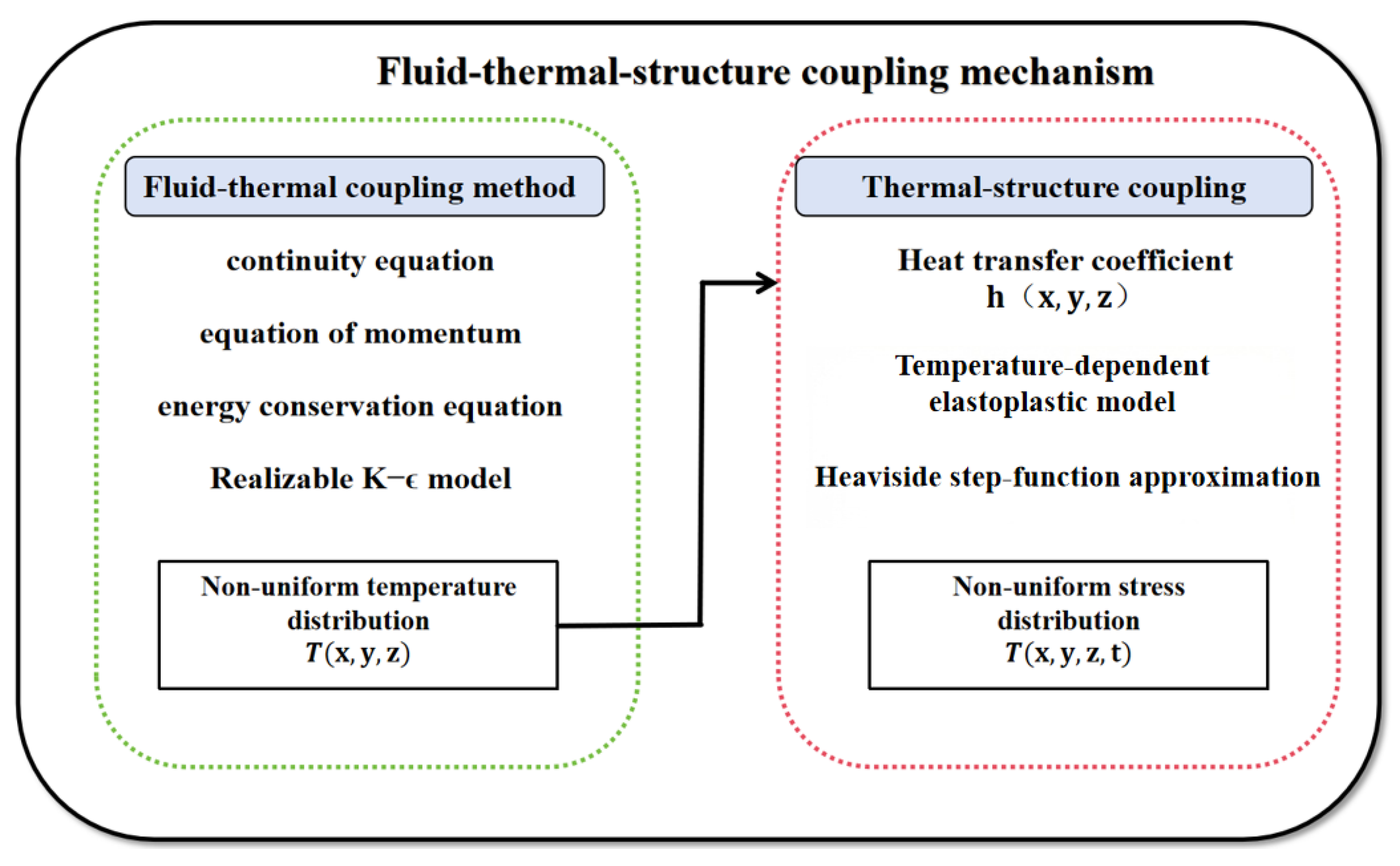
- The thermal deformation of the glass during the rapid air-cooling process is constrained to the micrometer scale. Such minimal geometric variation does not exert detectable reverse interference on the high-speed aerodynamic flow field or the convective heat transfer coefficients.
- (2)
- In the context of violent forced-convection quenching, the internal heat generated by phenomenological approximation of structural relaxation is infinitesimal compared to the massive external heat flux driven by the high-speed air jets. Consequently, the structural-to-thermal feedback loop is physically negligible, allowing for a decoupled simulation without loss of macroscopic predictive accuracy.
2.3. Establishment of Simulation Model
2.3.1. Geometric Modeling
2.3.2. Material Properties and Boundary Conditions
- (1)
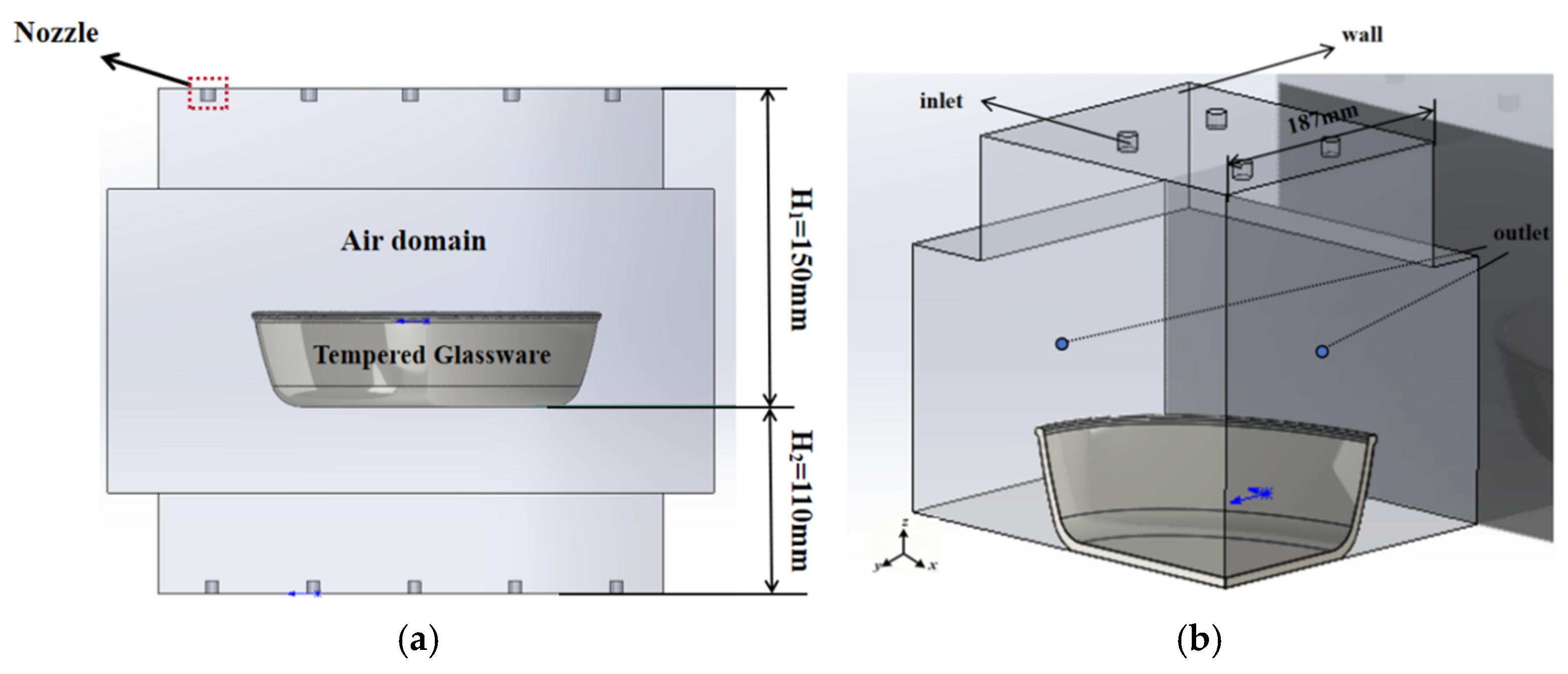
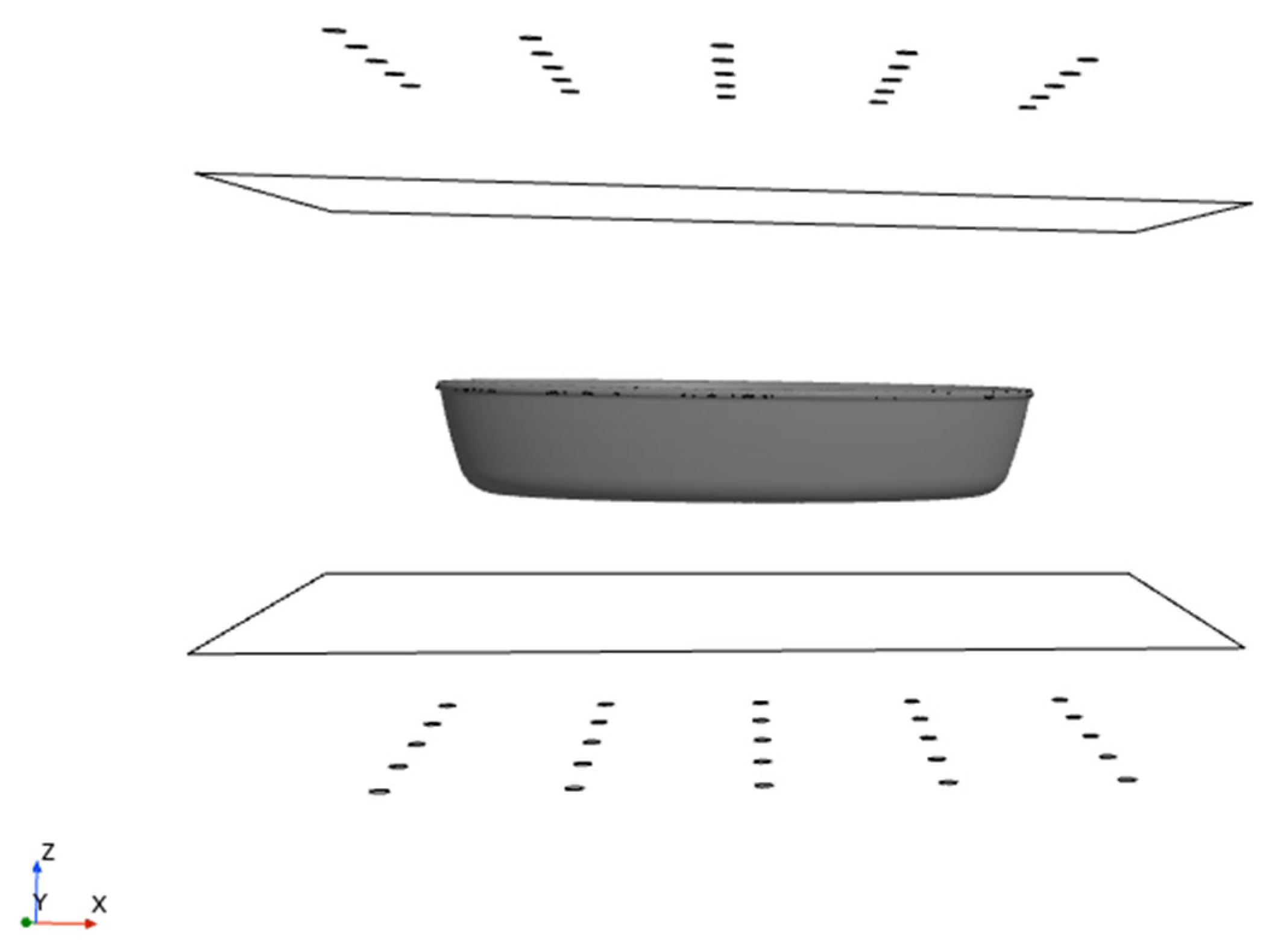
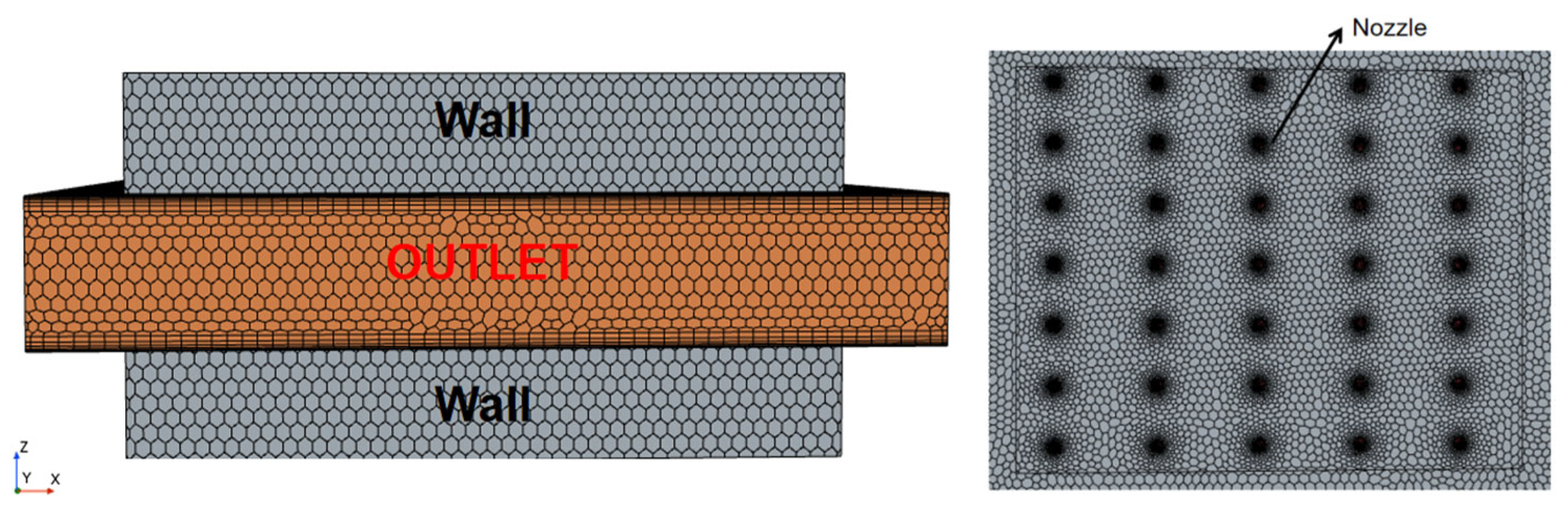
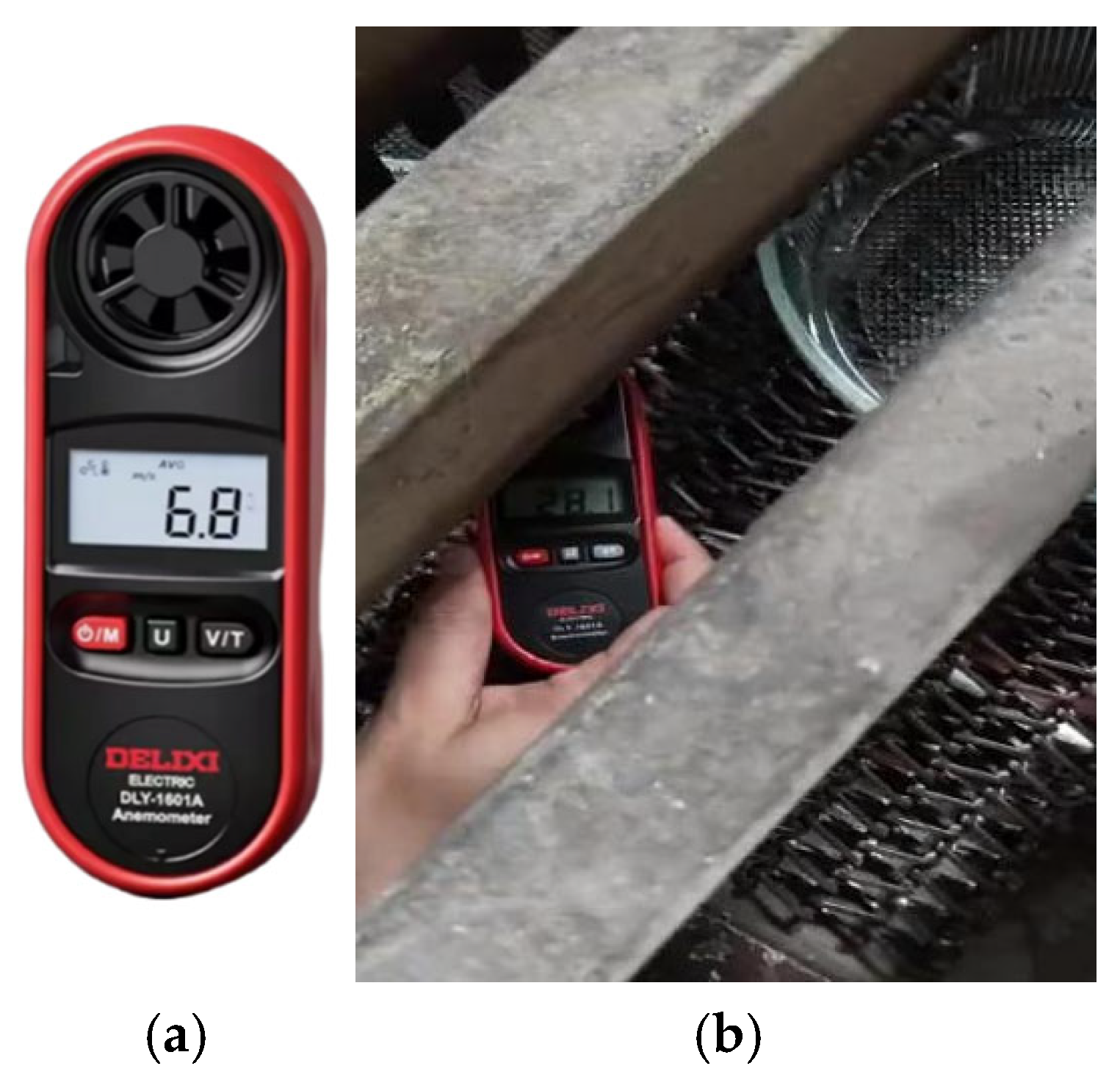
- The nozzle array was designated as the inlet of the fluid domain with an applied velocity of 30 m/s, a temperature of 20 °C, and a turbulence intensity of 5%.
- (2)
- The lateral boundaries of the air domain were defined as pressure outlets, with the pressure set to ambient atmospheric pressure and the temperature set to an ambient 20 °C.
- (3)
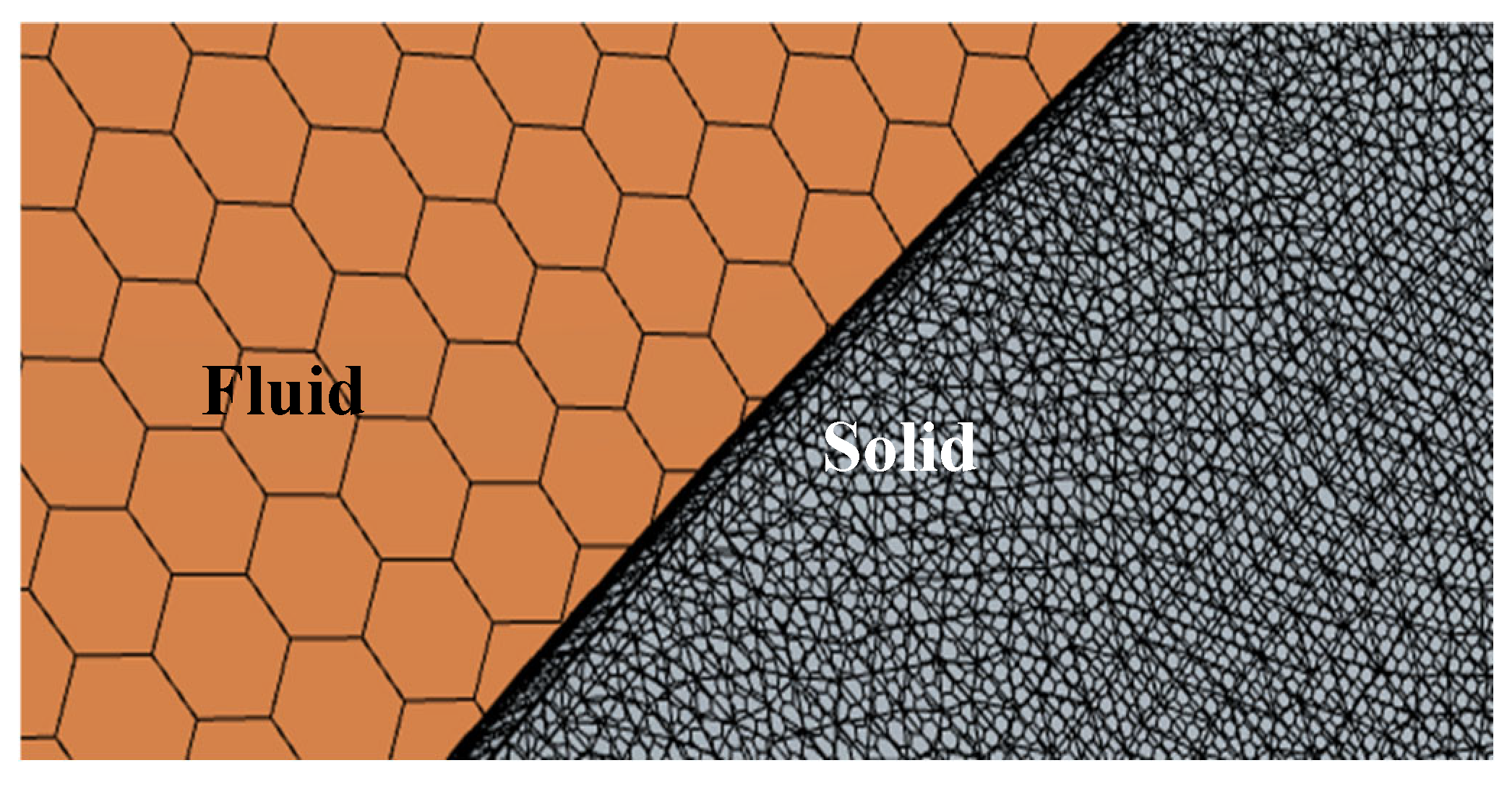
- The glassware was defined as the fluid–solid interface and treated as a no-slip wall, with its initial temperature set to 650 °C.
2.3.3. Stress Analysis and Experimental Verification
3. Results and Discussions
3.1. Flow Field Characteristics
3.2. Heat Transfer Characteristics
3.3. Stress Field Characteristics
3.4. Comprehensive Discussion on Tempering Mechanisms
4. Conclusions
- (1)
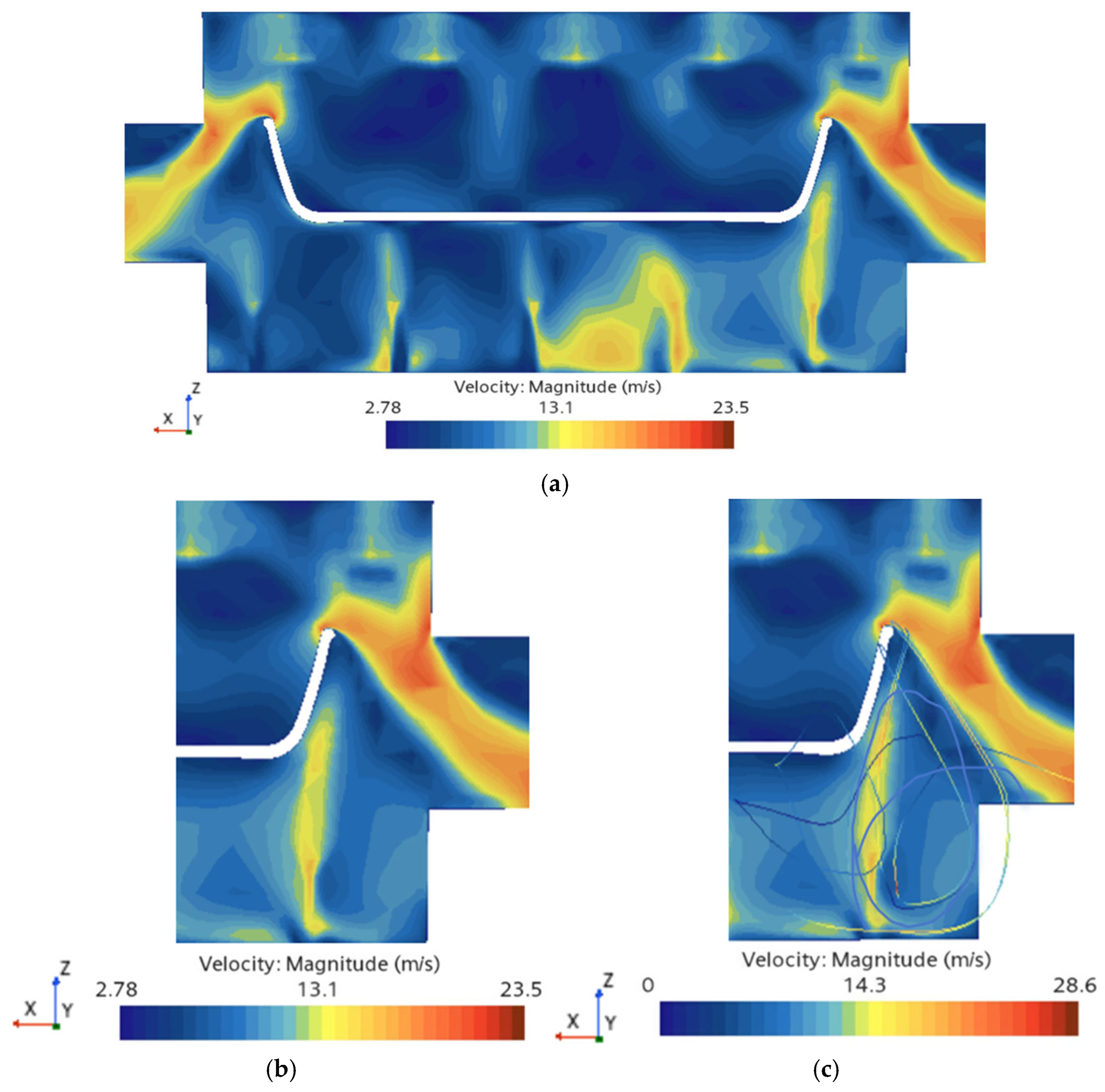
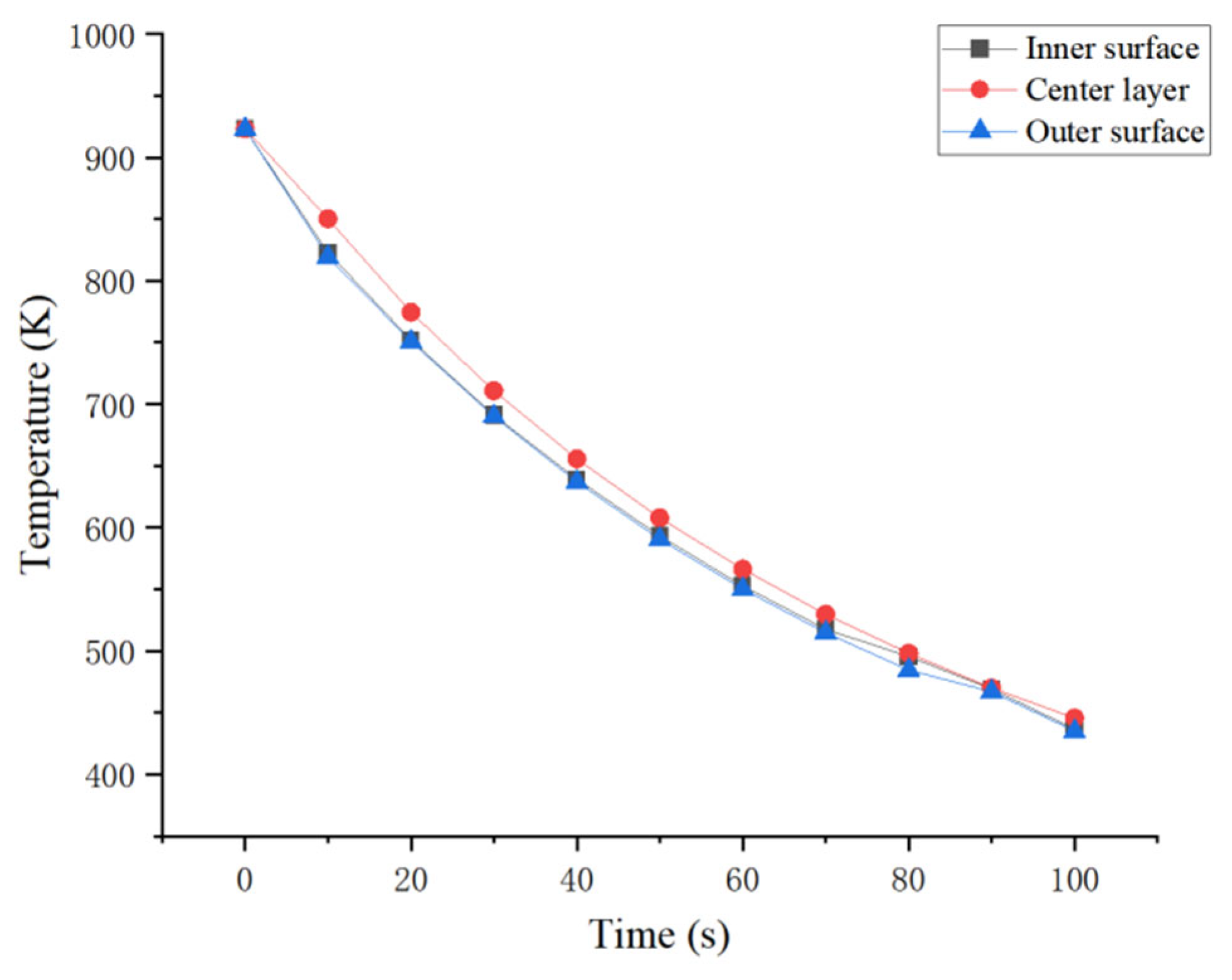
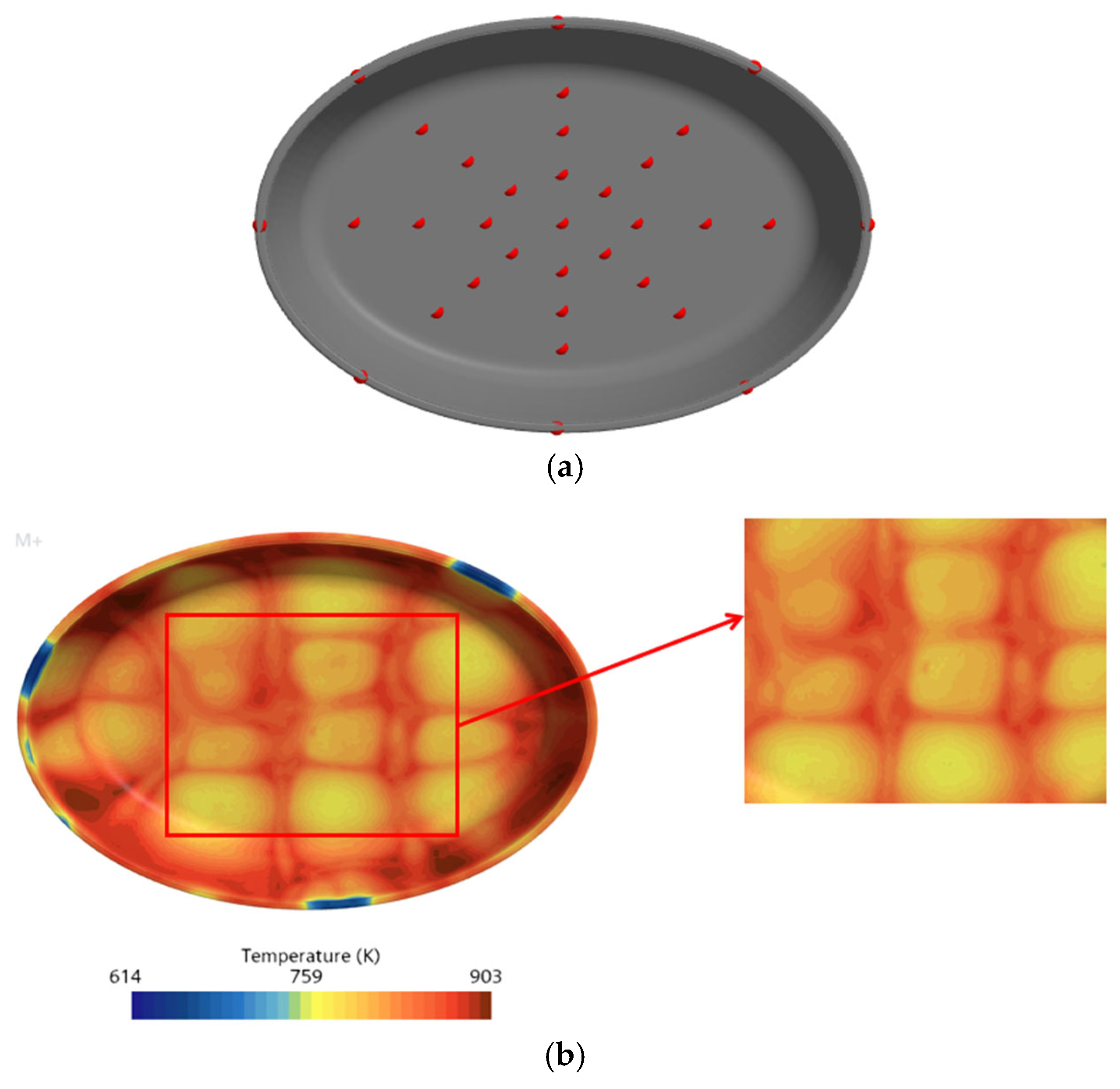
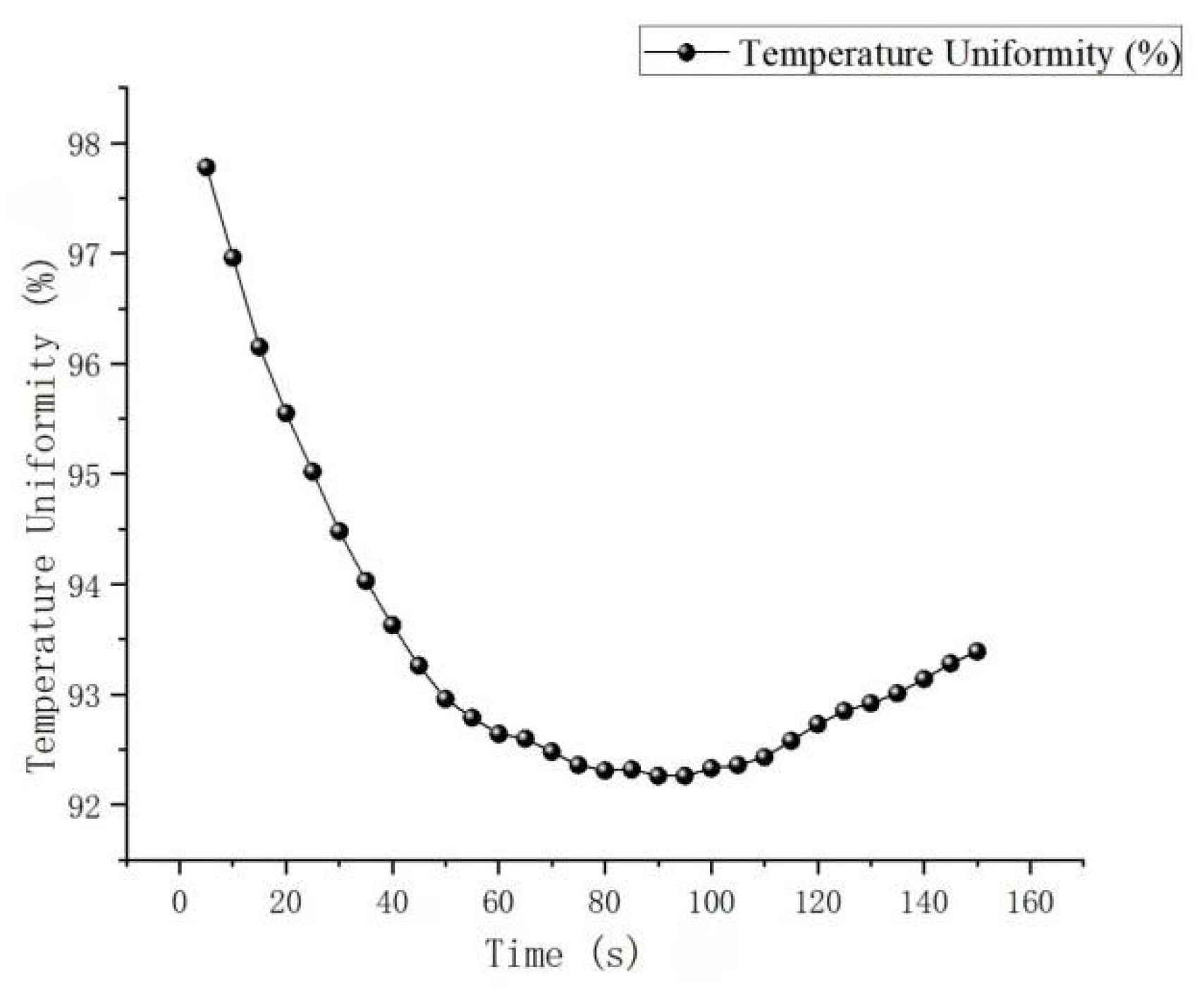
- Aerodynamic Distortion and Thermal Non-uniformity: The 3D geometric curvature of the glassware fundamentally alters the cooling airflow, inducing macroscopic flow separation and localized jet stagnation. These non-uniform aerodynamic boundary conditions trigger an intense transient heat conduction process. Consequently, the temperature uniformity deviates from idealized monotonic convergence, exhibiting a unique nonlinear evolution of “destruction and subsequent reconstruction.”
- (2)
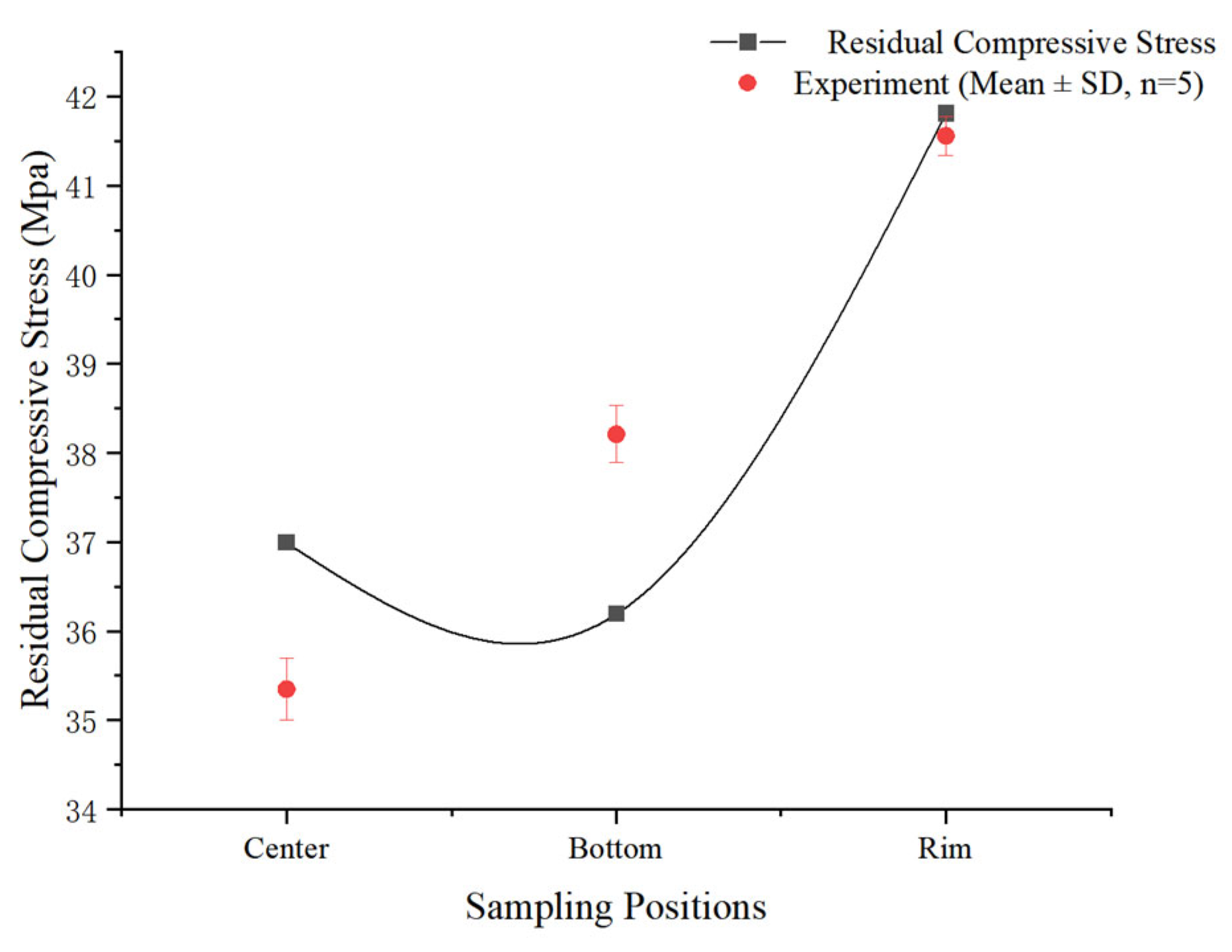
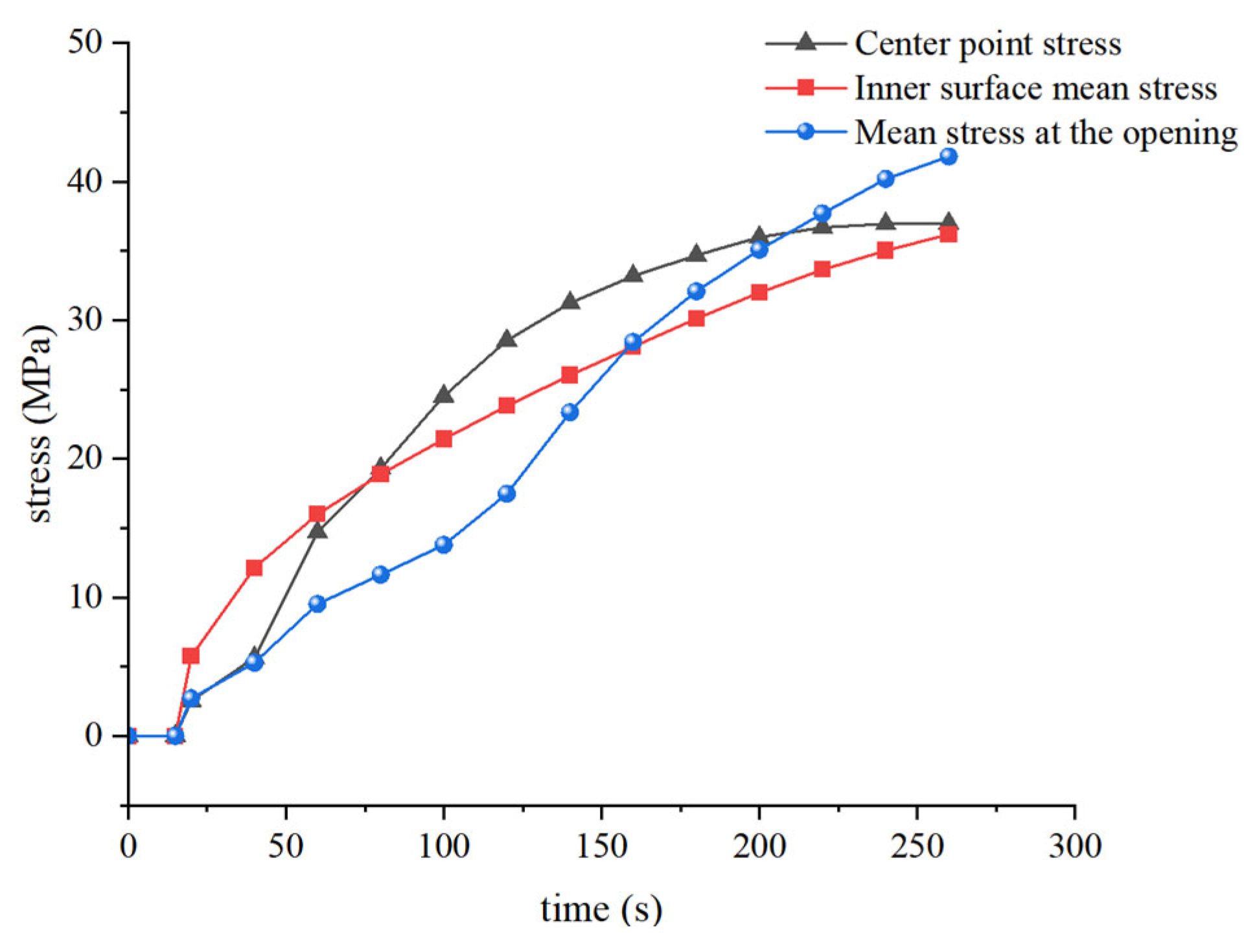
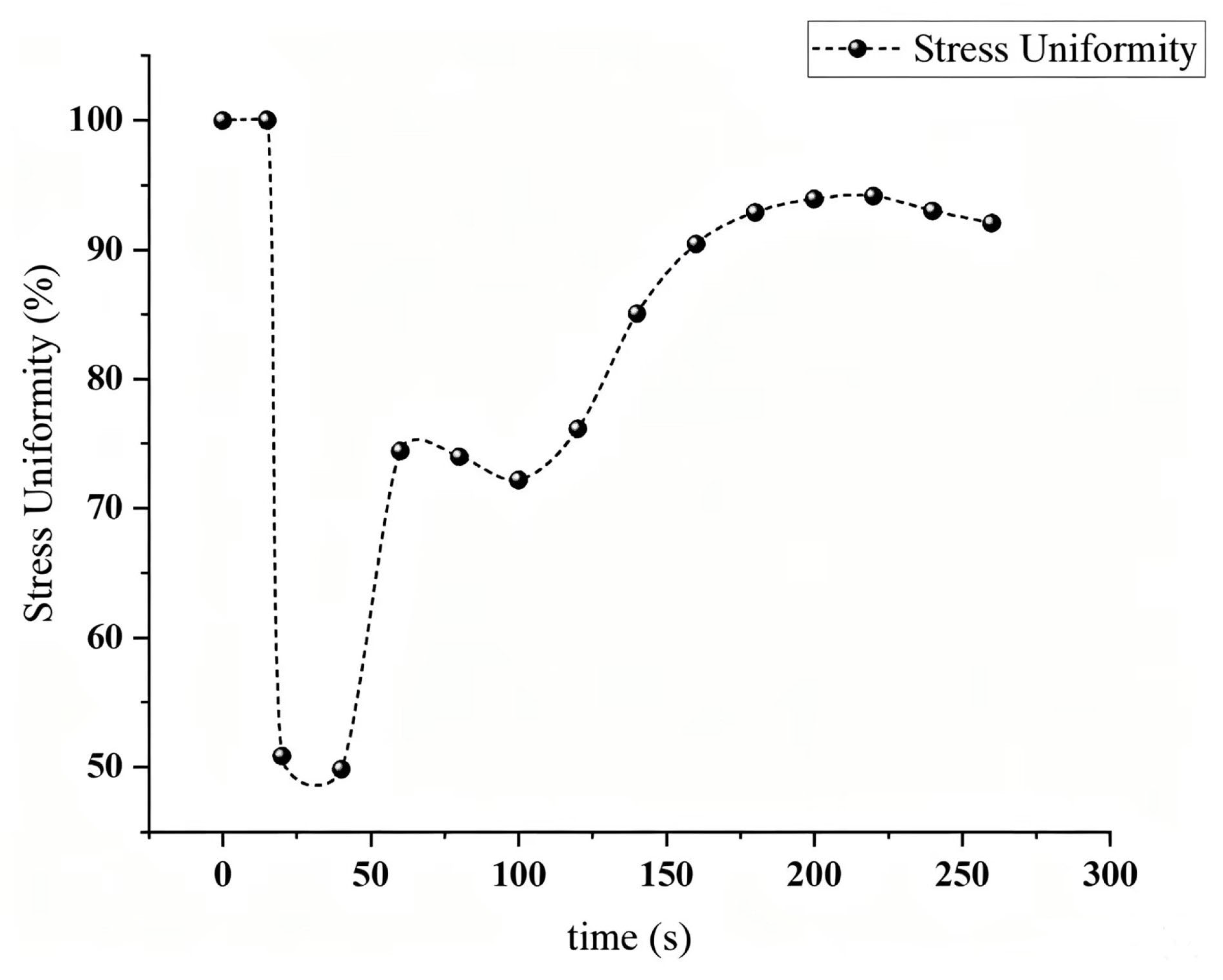
- Stress Evolution and Spatial Distribution: The evolution of residual stress is governed by a complex chain involving temperature-dependent thermophysical transitions, non-uniform thermal gradients, and aerodynamic boundaries. After traversing the glass transition temperature, the stress uniformity experiences a severe initial drop before progressively recovering and stabilizing. Unlike flat plates with localized edge stress concentrations, the curved glassware develops a continuous, broad, spatially increasing trend of residual stress from the center to the rim.
- (3)
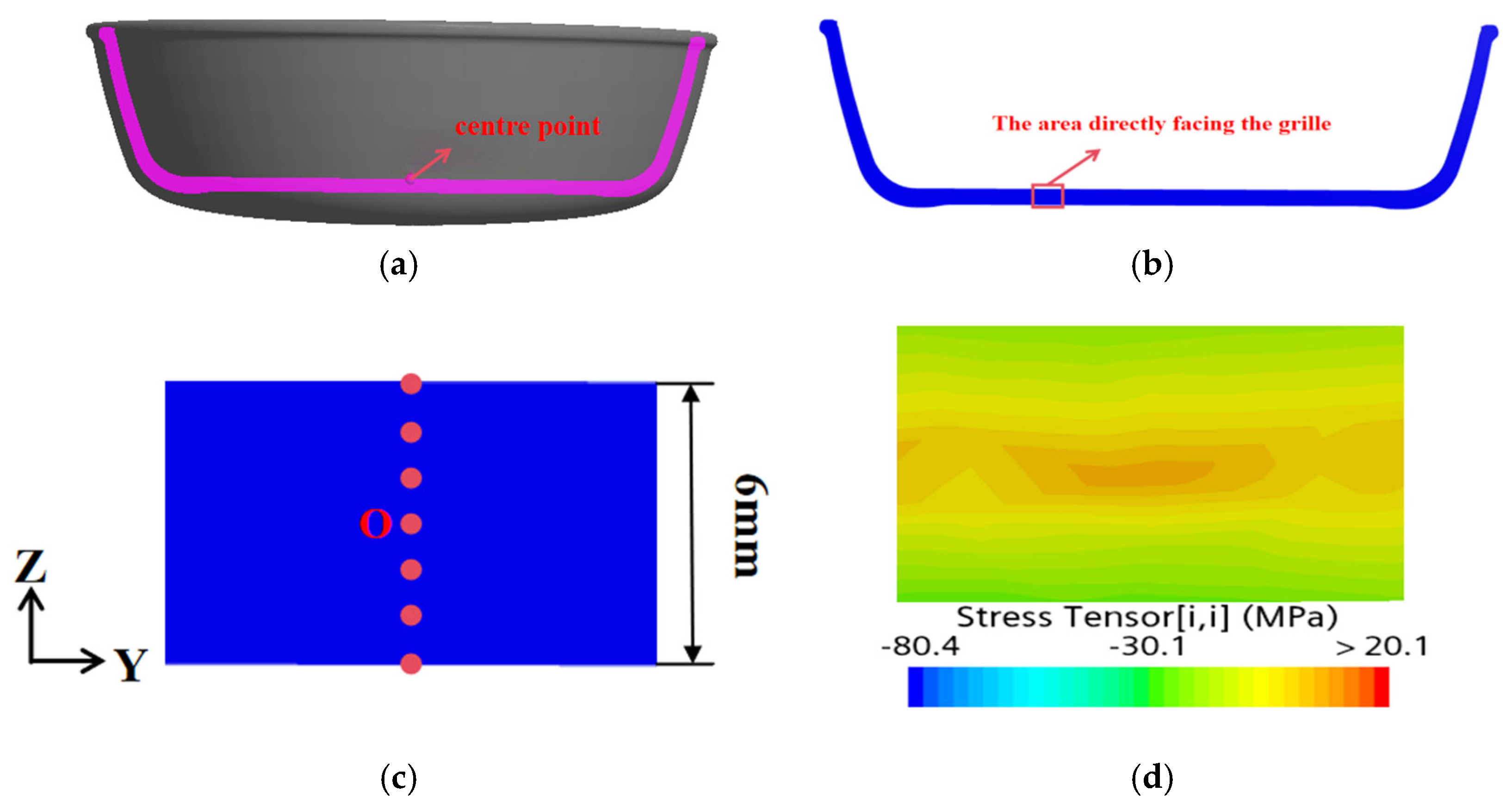
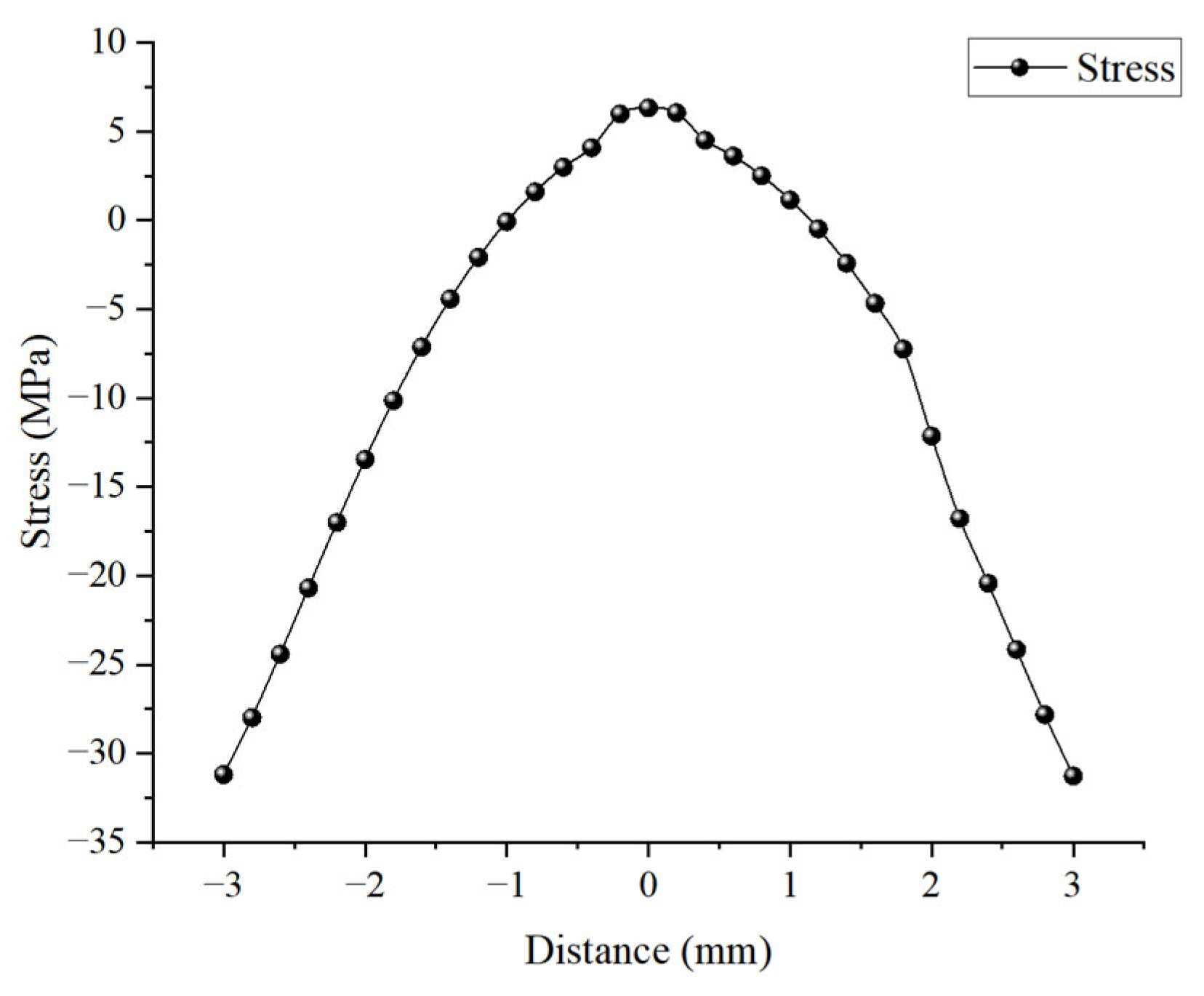
- Through-Thickness Profile and Model Applicability: Macroscopically, the through-thickness residual stress maintains a stable parabolic distribution (surface compression balancing core tension), which conforms to the principles of static equilibrium. The sequential coupling strategy proposed in this work successfully captured these coupling mechanisms with a maximum relative error of less than 6%. While demonstrating high robustness and reasonable validity for rigid glass quenching, this one-way sequential framework possesses inherent applicability boundaries. Future fully two-way coupled approaches must be explored for scenarios involving extreme structural deformations, severe buckling, or material failure, where such structural changes would dynamically alter the aerodynamic boundaries.
Author Contributions
Funding
Data Availability Statement
Acknowledgments
Conflicts of Interest
References
- Gardon, R. Thermal tempering of glass. Glass Sci. Technol. 1980, 5, 145–216. [Google Scholar] [CrossRef]
- Wang, Y.X.; Yang, P.H.; Li, X.Z.; Han, T.; Zu, C.K. Research Progress on Physical Tempered Glass. Mater. Her. 2024, 38, 62–69. [Google Scholar]
- Chen, J. Theoretical Analysis and Experimental Study on the Safety Performance of Tempered Glass. Master’s Thesis, Zhejiang University, Hangzhou, China, 2014. [Google Scholar]
- Aronen, A.; Karvinen, R. Effect of glass temperature before cooling and cooling rate on residual stresses in tempering. Glass Struct. Eng. 2017, 3, 3–15. [Google Scholar] [CrossRef]
- Jiang, K.; Pan, D. Effect of tempering process on elastic modulus of soda-lime-silica-glass. J. Non-Cryst. Solids 2023, 621, 122638. [Google Scholar]
- Wondraczek, L.; Mauro, J.C.; Eckert, J. Towards ultrastrong glasses. Adv. Mater. 2011, 23, 4528–4533. [Google Scholar] [CrossRef]
- Qiao, A.; Shelby, J.E. Thermal expansion and glass transition temperature of borosilicate glasses. J. Non-Cryst. Solids 2003, 331, 85–92. [Google Scholar]
- Zuckerman, N.; Lior, N. Jet impingement heat transfer: Physics, correlations, and numerical modeling. Adv. Heat Transf. 2006, 39, 565–631. [Google Scholar] [CrossRef]
- Nielsen, J.H.; Thiele, K.; Schneider, J.; Meyland, M.J. Compressive zone depth of thermally tempered glass. Constr. Build. Mater. 2021, 310, 125238. [Google Scholar] [CrossRef]
- Nielsen, J.H.; Olesen, J.F.; Poulsen, P.N.; Stang, H. Finite element implementation of a glass tempering model in three dimensions. Comput. Struct. 2010, 88, 153–161. [Google Scholar] [CrossRef]
- Yang, H.; Liu, F.; Duan, R.; Shi, F.; Tian, L. Spray cooling heat transfer during glass tempering process and influencing factors on the quality of tempered glass. Int. J. Therm. Sci. 2022, 175, 107475. [Google Scholar] [CrossRef]
- Iglesias, A.; Martinez-Agirre, M.; Llavori, I.; Esnaola, J.A. Breakage risk analysis during the glass tempering process based on fluid–structure interaction approach. Glass Struct. Eng. 2024, 9, 455–469. [Google Scholar] [CrossRef]
- Tool, A.Q. Relation between inelastic deformability and thermal expansion of glass in its annealing range. J. Am. Ceram. Soc. 1946, 29, 240–253. [Google Scholar] [CrossRef]
- Narayanaswamy, O.S. A model of structural relaxation in glass. J. Am. Ceram. Soc. 1971, 54, 491–498. [Google Scholar] [CrossRef]
- Daudeville, L.; Carré, H. Thermal tempering simulation of glass plates: Inner and edge residual stresses. J. Therm. Stress. 1998, 21, 667–689. [Google Scholar] [CrossRef]
- Wu, Z.H. Pre-Control Model and Simulation for the Tempered Glass Cooling Process. Master’s Thesis, Wuhan University of Science and Technology, Wuhan, China, 2015. [Google Scholar]
- Tong, L.; Liu, S.; Sun, Y.; Gu, J.; Xu, S. Simulation and measurement of ultrathin glass residual stress. Int. J. Appl. Glass Sci. 2023, 14, 279–287. [Google Scholar]
- Iglesias, A. Numerical methodology based on fluid-structure interaction to predict the residual stress distribution in glass tempering considering non-uniform cooling. Comput. Struct. 2022, 264, 106757. [Google Scholar]
- Pourmoghaddam, N.; Schneider, J. Finite-element analysis of the residual stresses in tempered glass plates with holes or cut-outs. Glass Struct. Eng. 2018, 3, 17–37. [Google Scholar] [CrossRef]
- Ali, A.; Shi, G.; Guo, Y. Separation of Flexible Rod-like Particle Mixtures by Intersecting Air Flow. Materials 2026, 19, 908. [Google Scholar] [CrossRef] [PubMed]
- Daudeville, L.; Bernard, F.; Gy, R. Residual stresses near holes in tempered glass plates. Mater. Sci. Forum 2002, 404–407, 43–48. [Google Scholar] [CrossRef]
- Yang, H.; Liu, F.X.; Tian, L. Coupled fluid-thermal-structural analysis during the air cooling for glass tempering. Appl. Therm. Eng. 2024, 240, 122260. [Google Scholar]
- Li, T.; Jin, S.P.; Huang, S.Y. Comparative and Applied Study on Evaluation Indicators for Uniformity of Flow Field Velocity Distribution. Therm. Power Gener. 2013, 42, 60–63. [Google Scholar]
- Shelby, J.E. Introduction to Glass Science and Technology; Royal Society of Chemistry: Cambridge, UK, 2005. [Google Scholar]
- Maxwell, J.C. On the dynamical theory of gases. Philos. Trans. R. Soc. Lond. 1867, 157, 49–88. [Google Scholar] [CrossRef]
- Scherer, G.W. Relaxation in Glass and Composites; Wiley: New York, NY, USA, 1986. [Google Scholar]

| Glass Thermal Parameters | Value |
|---|---|
| Density () | 2550 |
| Thermal conductivity () | |
| Specific heat () |
| Region | Stress (MPa) | Average Stress (MPa) |
|---|---|---|
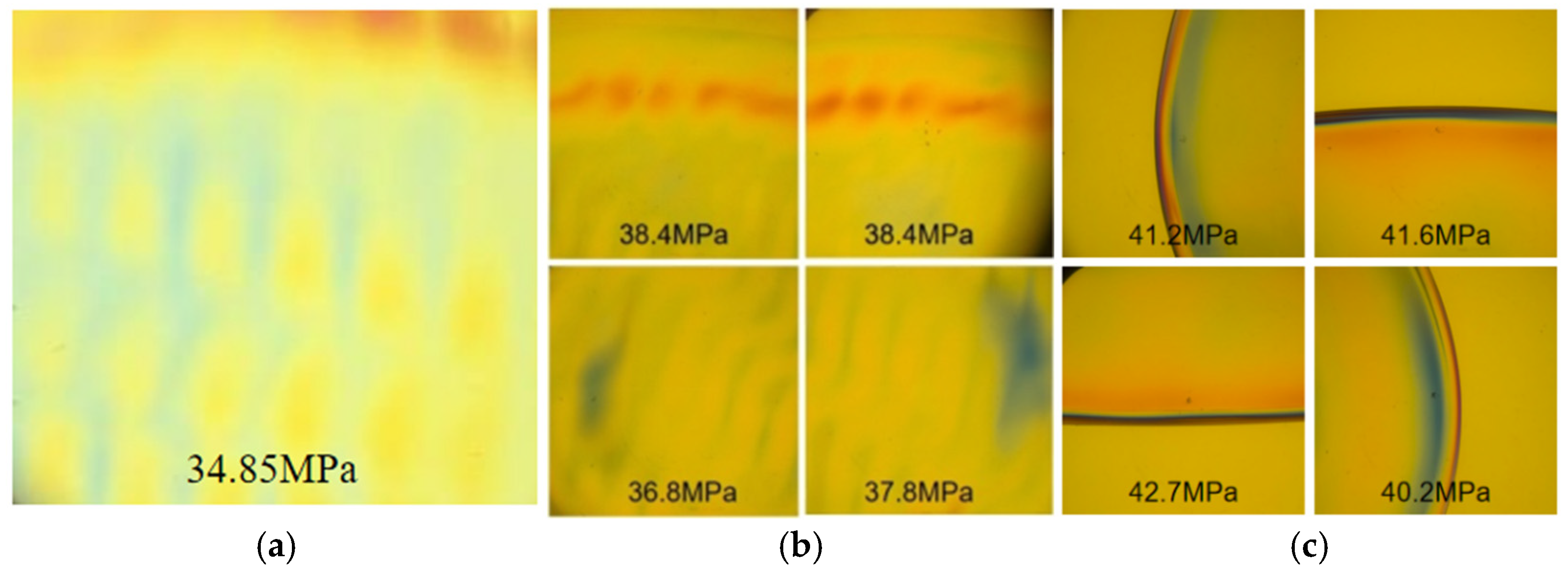
| Center point | 35.35 | 35.35 |
| Center-Top | 38.98 | 38.21 |
| Center-Bottom | 38.80 | |
| Center-Left | 37.28 | |
| Center-Right | 37.78 | |
| Rim-Top | 41.20 | 41.56 |
| Rim-Bottom | 42.16 | |
| Rim-Left | 42.02 | |
| Rim-Right | 40.84 |
| Region | Experimental Value (MPa) | Simulated Value (MPa) | Absolute Error (MPa) | Relative Error (%) |
|---|---|---|---|---|
| Center point | 35.35 | 36.99 | 1.64 | 4.6 |
| Inner surface | 38.21 | 36.19 | 2.02 | 5.3 |
| Rim region | 41.56 | 41.81 | 0.35 | 0.8 |
| Mesh Size | Experimental Value (MPa) | Simulated Value (MPa) | Absolute Error (MPa) | Relative Error (%) |
|---|---|---|---|---|
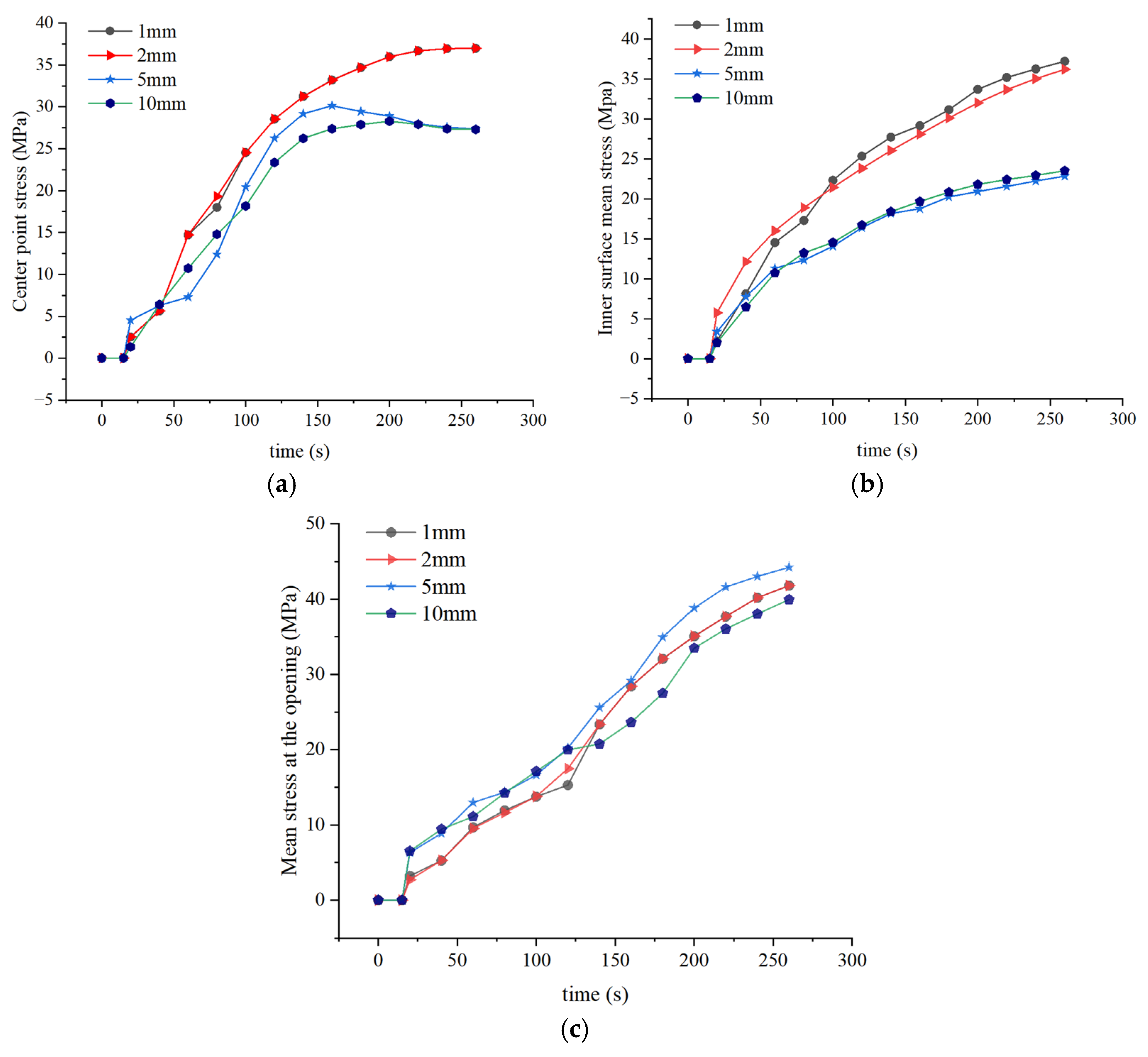
| 1 mm | 35.35 | 37.00 | 1.65 | 4.6 |
| 2 mm | 36.99 | 1.64 | 4.6 | |
| 5 mm | 27.36 | 7.99 | 22.6 | |
| 10 mm | 27.31 | 8.04 | 22.7 |
| Mesh Size | Experimental Value (MPa) | Simulated Value (MPa) | Absolute Error (MPa) | Relative Error (%) |
|---|---|---|---|---|
| 1 mm | 38.21 | 37.21 | 1 | 2.6 |
| 2 mm | 36.19 | 2.02 | 5.3 | |
| 5 mm | 22.83 | 15.38 | 40.3 | |
| 10 mm | 23.51 | 14.7 | 38.5 |
| Mesh Size | Experimental Value (MPa) | Simulated Value (MPa) | Absolute Error (MPa) | Relative Error (%) |
|---|---|---|---|---|
| 1 mm | 41.56 | 41.80 | 0.24 | 0.6 |
| 2 mm | 41.81 | 0.25 | 0.6 | |
| 5 mm | 44.24 | 2.68 | 6.5 | |
| 10 mm | 39.94 | 1.62 | 3.9 |
Disclaimer/Publisher’s Note: The statements, opinions and data contained in all publications are solely those of the individual author(s) and contributor(s) and not of MDPI and/or the editor(s). MDPI and/or the editor(s) disclaim responsibility for any injury to people or property resulting from any ideas, methods, instructions or products referred to in the content. |
© 2026 by the authors. Licensee MDPI, Basel, Switzerland. This article is an open access article distributed under the terms and conditions of the Creative Commons Attribution (CC BY) license.
Share and Cite
An, K.; Zheng, H.; Qin, C.; Zhang, P.; Zhang, Y.; Dong, W. Fluid–Thermal–Structure Coupled Analysis on the Tempering Characteristics of Glassware During Air Cooling. Materials 2026, 19, 2794. https://doi.org/10.3390/ma19132794
An K, Zheng H, Qin C, Zhang P, Zhang Y, Dong W. Fluid–Thermal–Structure Coupled Analysis on the Tempering Characteristics of Glassware During Air Cooling. Materials. 2026; 19(13):2794. https://doi.org/10.3390/ma19132794
Chicago/Turabian StyleAn, Kang, Hao Zheng, Chi Qin, Pengfei Zhang, Yajing Zhang, and Wenbin Dong. 2026. "Fluid–Thermal–Structure Coupled Analysis on the Tempering Characteristics of Glassware During Air Cooling" Materials 19, no. 13: 2794. https://doi.org/10.3390/ma19132794
APA StyleAn, K., Zheng, H., Qin, C., Zhang, P., Zhang, Y., & Dong, W. (2026). Fluid–Thermal–Structure Coupled Analysis on the Tempering Characteristics of Glassware During Air Cooling. Materials, 19(13), 2794. https://doi.org/10.3390/ma19132794

