Review: Trace and Residual Rare-Earth Effects on Inclusion Evolution and Nb-Ti-V Precipitation in Microalloyed Steels



Abstract
1. Introduction
2. Trace and Residual Rare Earth as a Hidden Metallurgical Variable in Microalloyed Steels
2.1. Occurrence States and Localized Action Characteristics of Trace Rare Earth
2.2. Interfacial Regulation Effect of Trace Rare Earth on Microalloy Precipitates
3. How Trace and Residual Rare Earths Rewrite Inclusion Inheritance
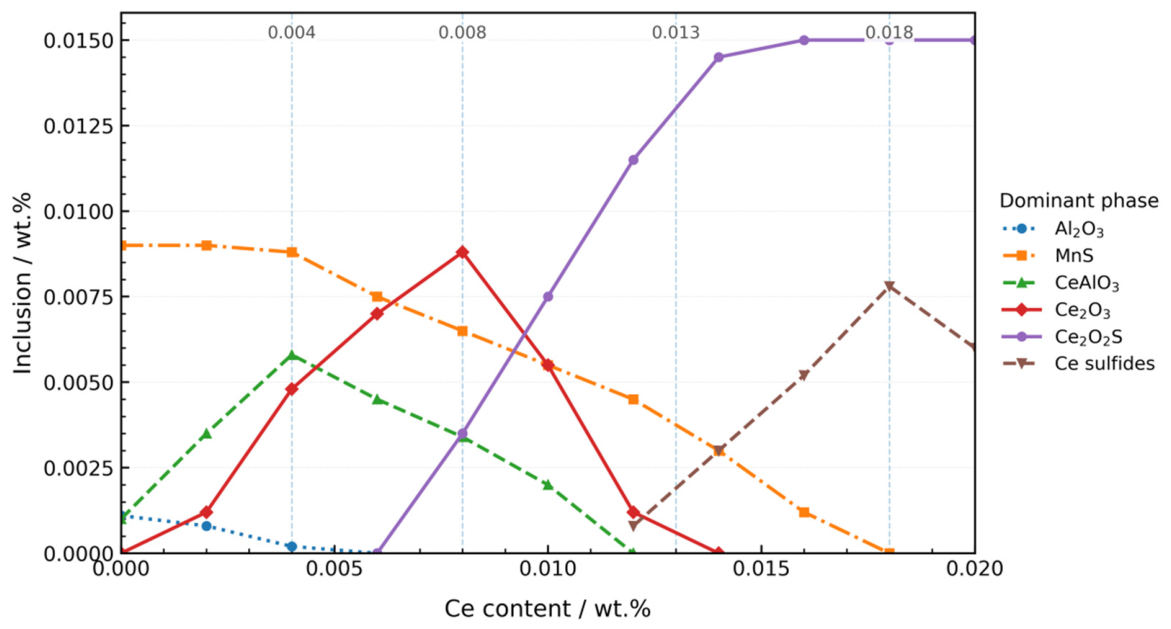
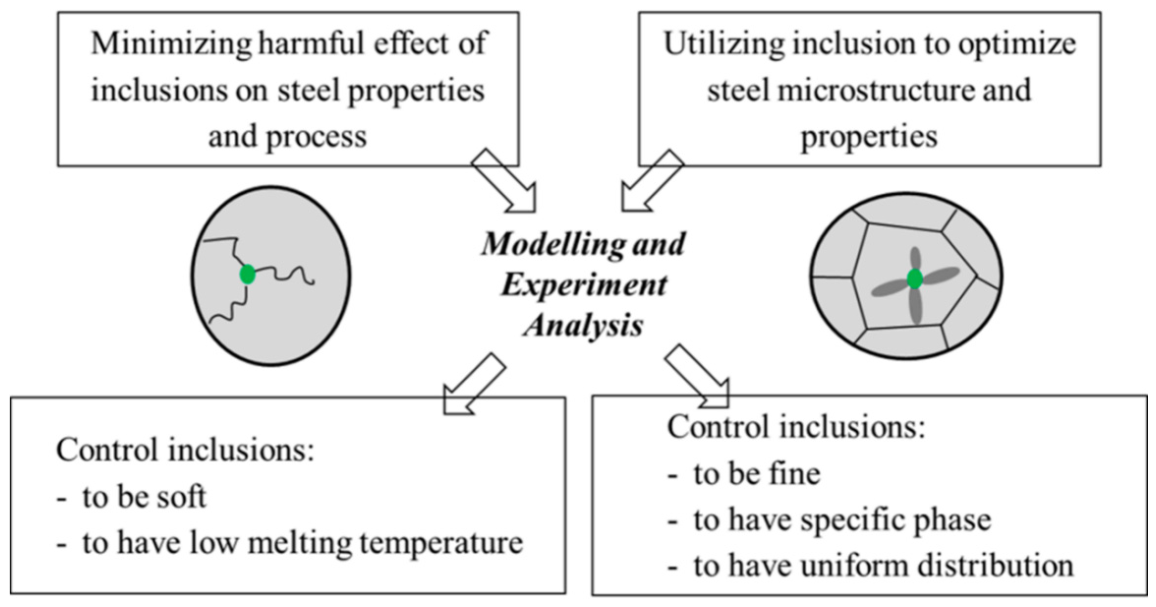
3.1. Rare Earth Reconstructs Inclusion Evolution During Solidification
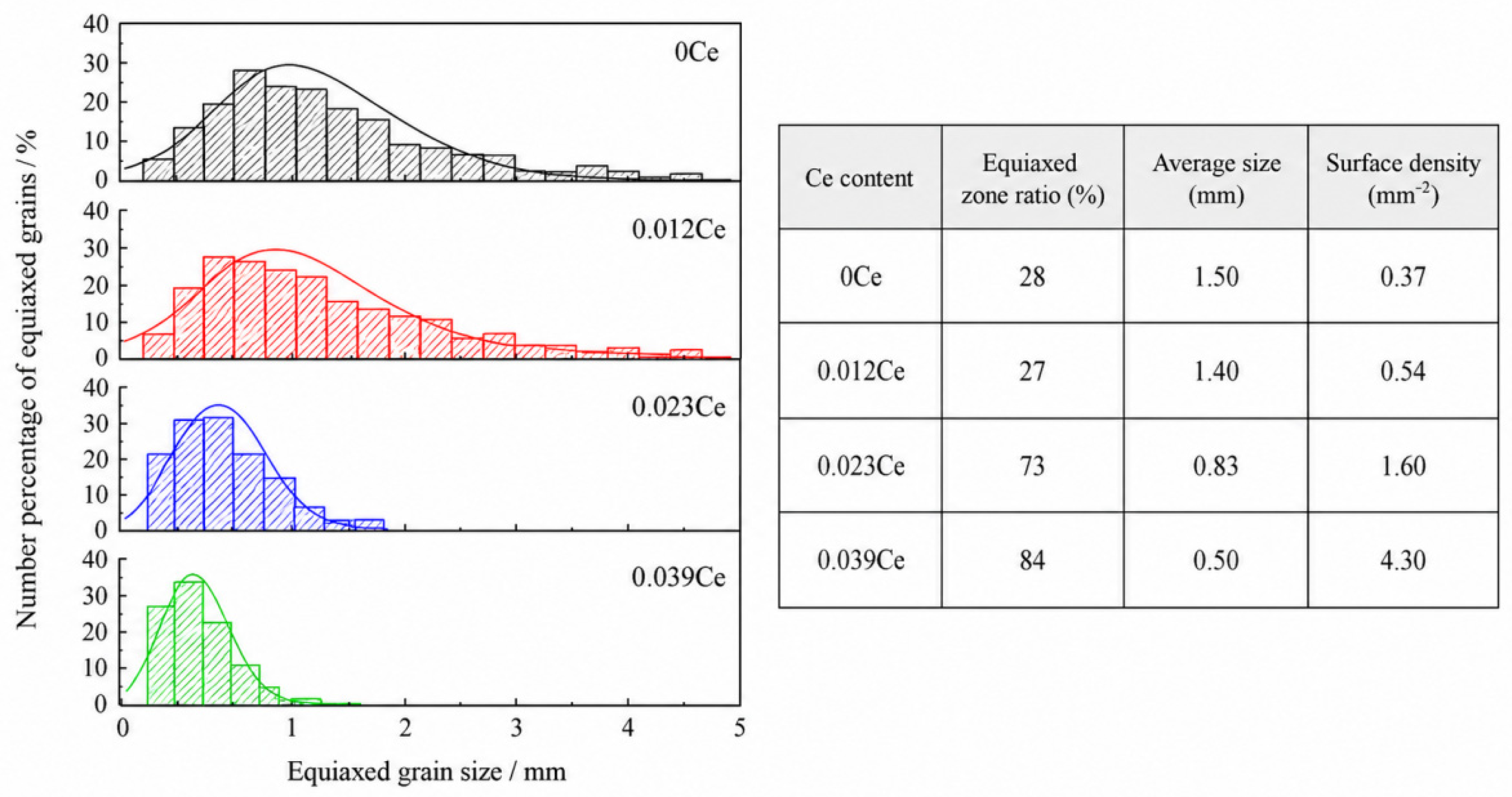
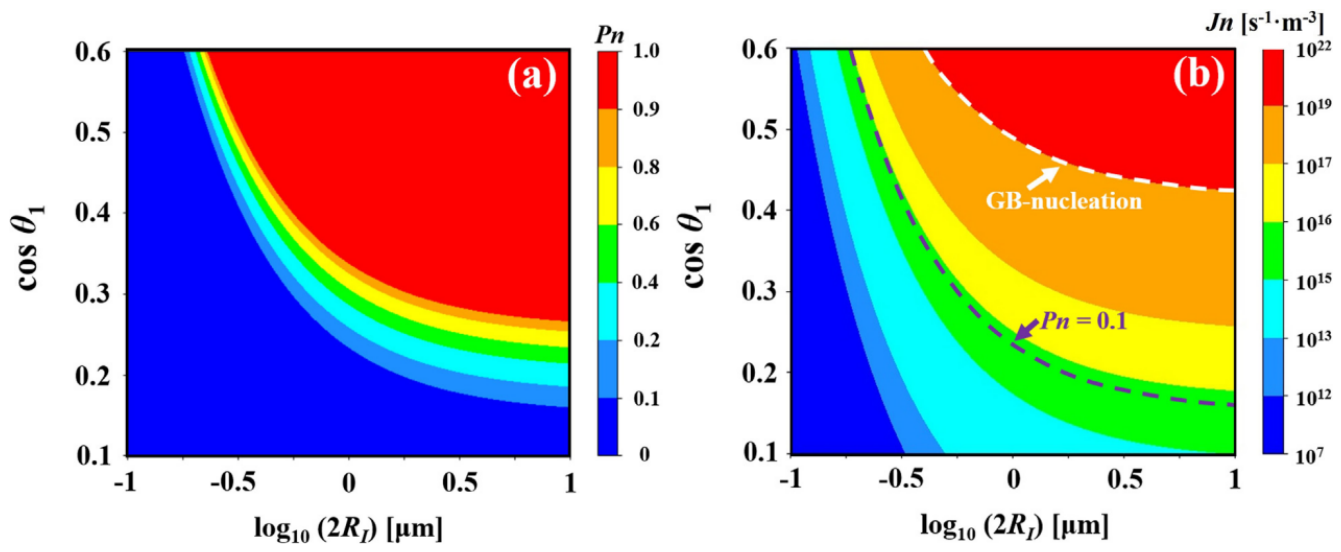
3.2. Effective Rare-Earth Inclusions and Their Role in Solidification Nucleation
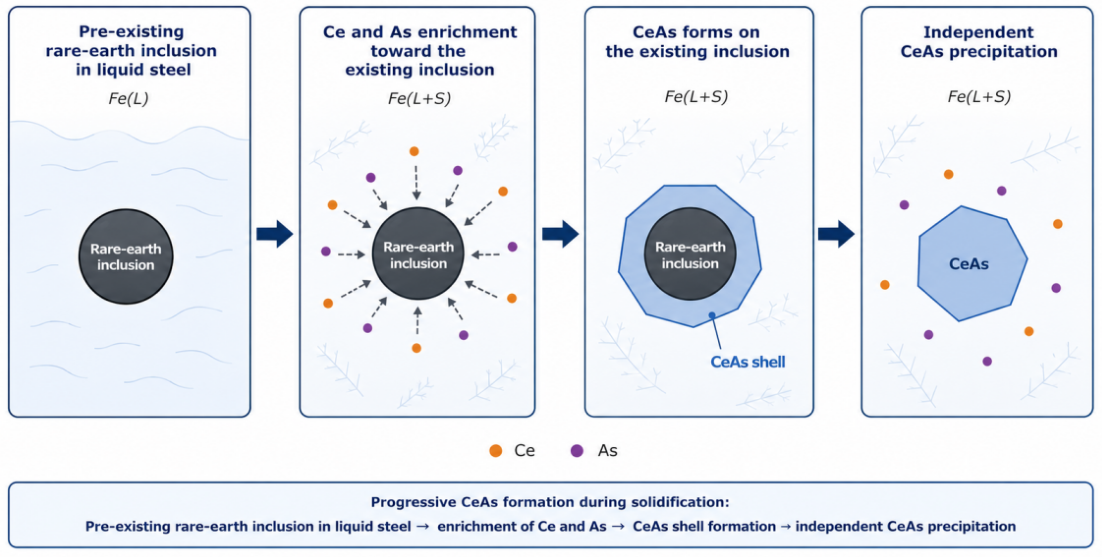
3.3. Residual Elements Further Complicate Inclusion Evolution
4. Inclusion-Controlled Precipitation Under Trace Rare Earth
4.1. Inclusion-Mediated Heterogeneous Nucleation of Microalloy Precipitates
4.2. Hierarchical Core–Shell Precipitation and Inheritance Effects
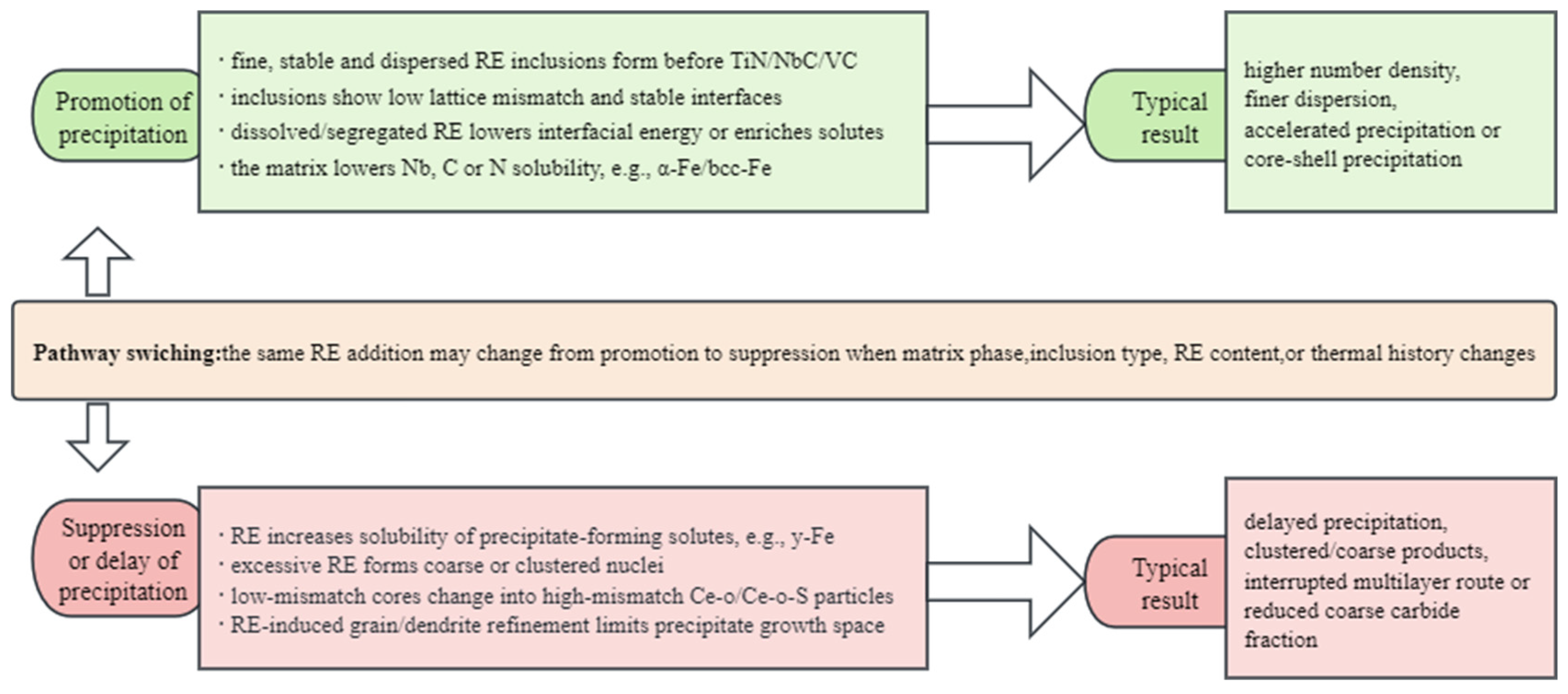
4.3. Promotion, Suppression and Pathway Switching
4.4. Beyond Inclusion Nucleation: Interfacial Segregation and Local Partitioning
5. Why the Reported Precipitation Responses Are Contradictory
5.1. Contradiction Is Intrinsic to a Path-Dependent Process Rather than Experimental Scatter
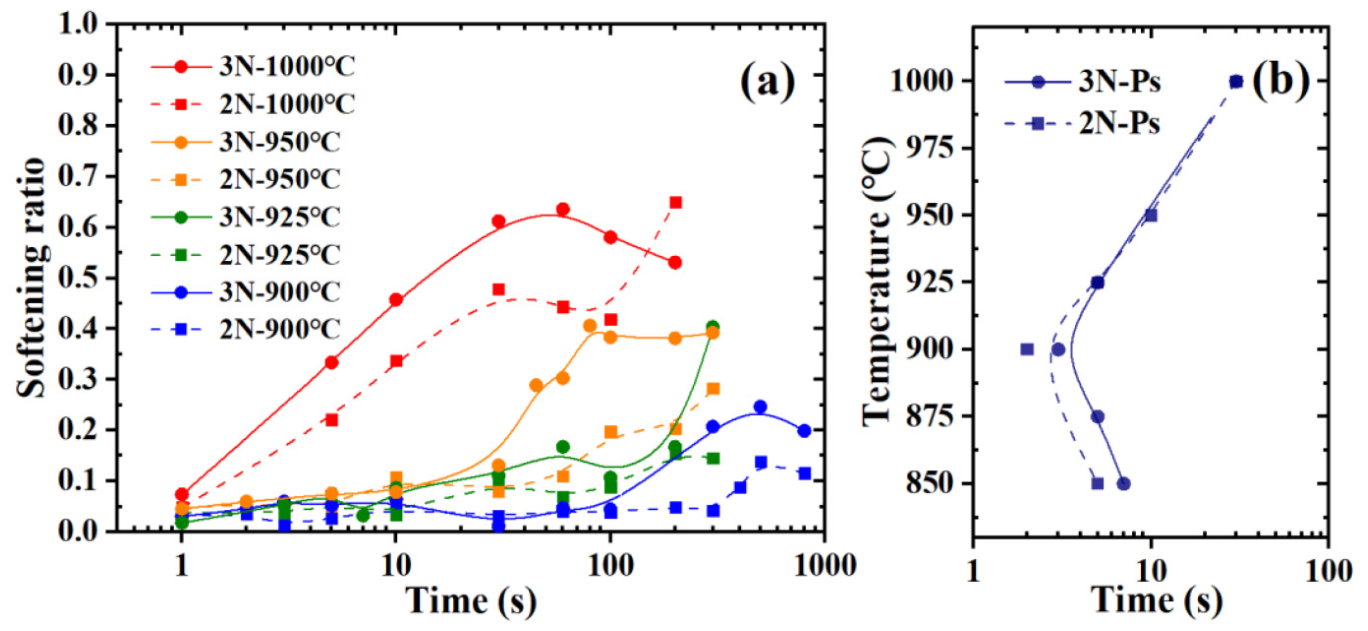
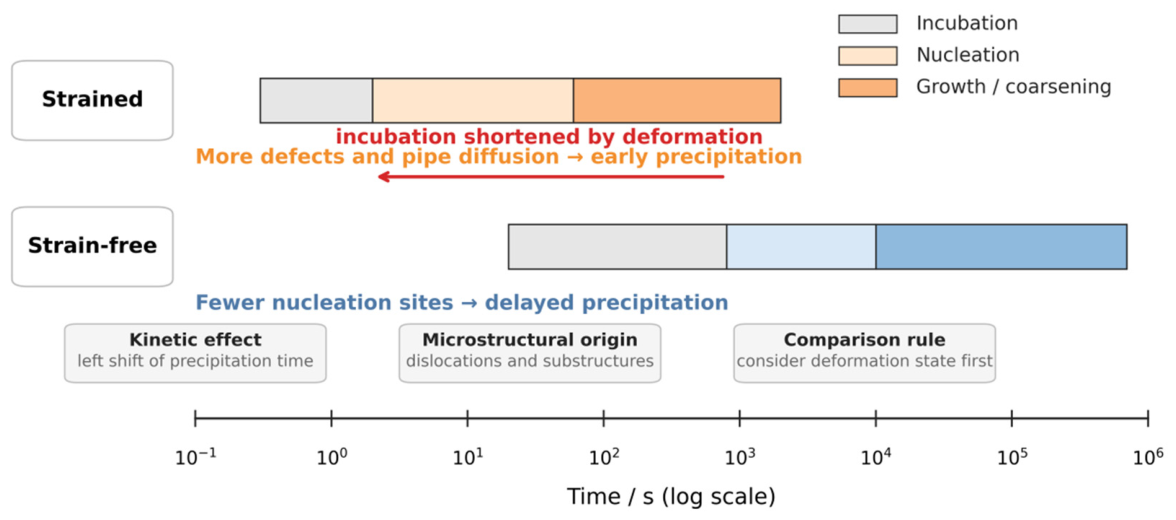
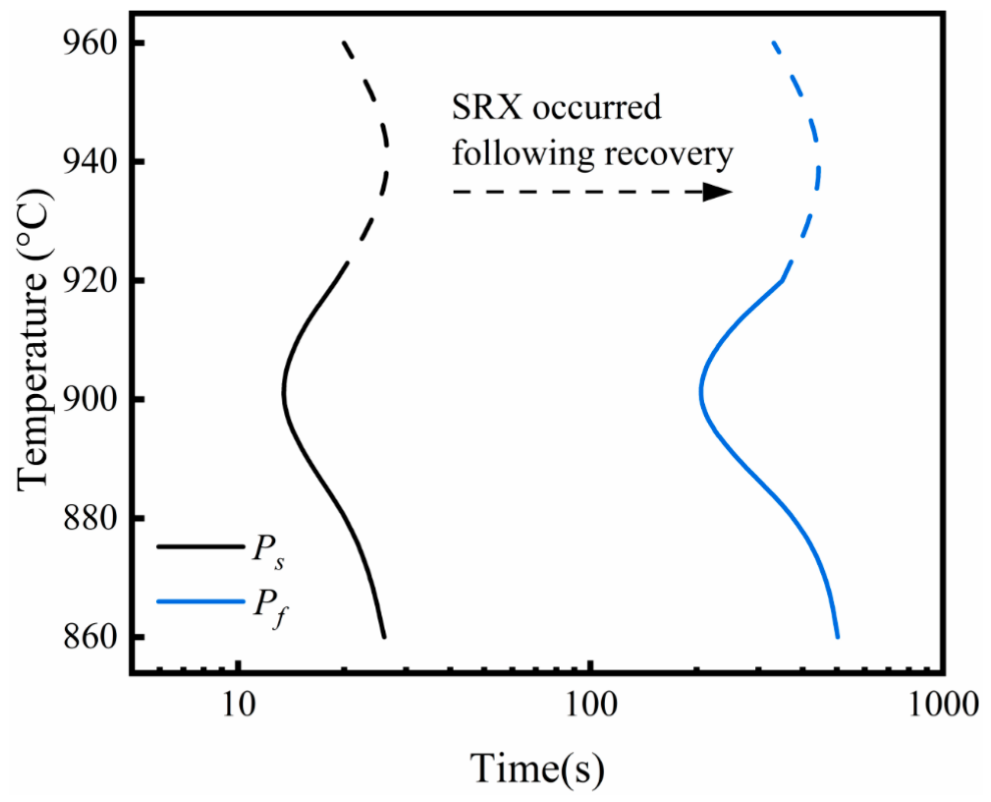
5.2. Influence of Pre-Precipitation Austenite State on Precipitation Behavior
5.3. Thermodynamic Permissibility Does Not Guarantee Kinetic Accessibility
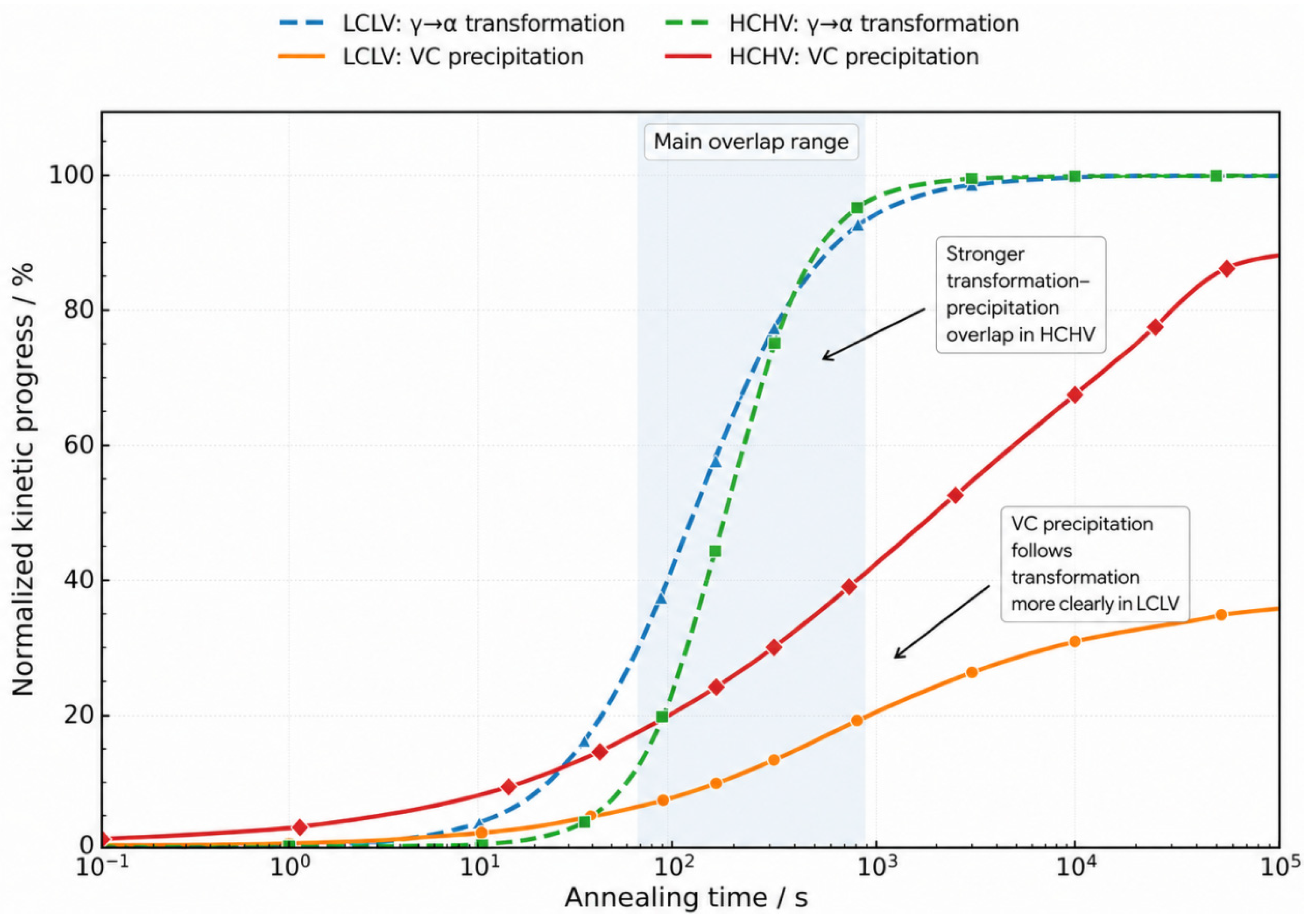
5.4. Phase Transformation Rewrites the Precipitation Range
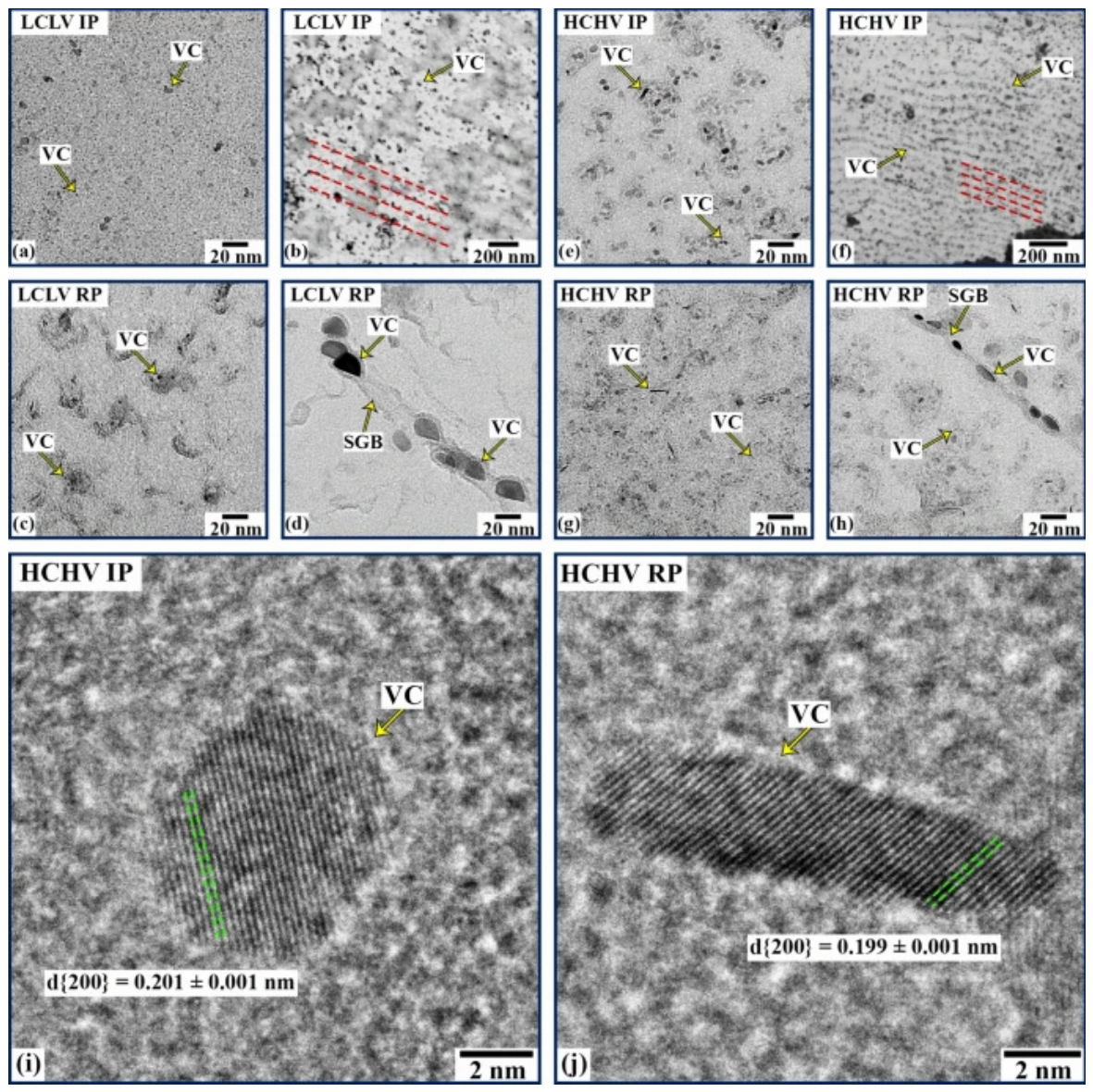
5.5. Interphase Precipitation and Random Precipitation Are Not Equivalent Strengthening States
5.6. Different Characterization Methods Observe Different Segments of the Same Precipitation Trajectory
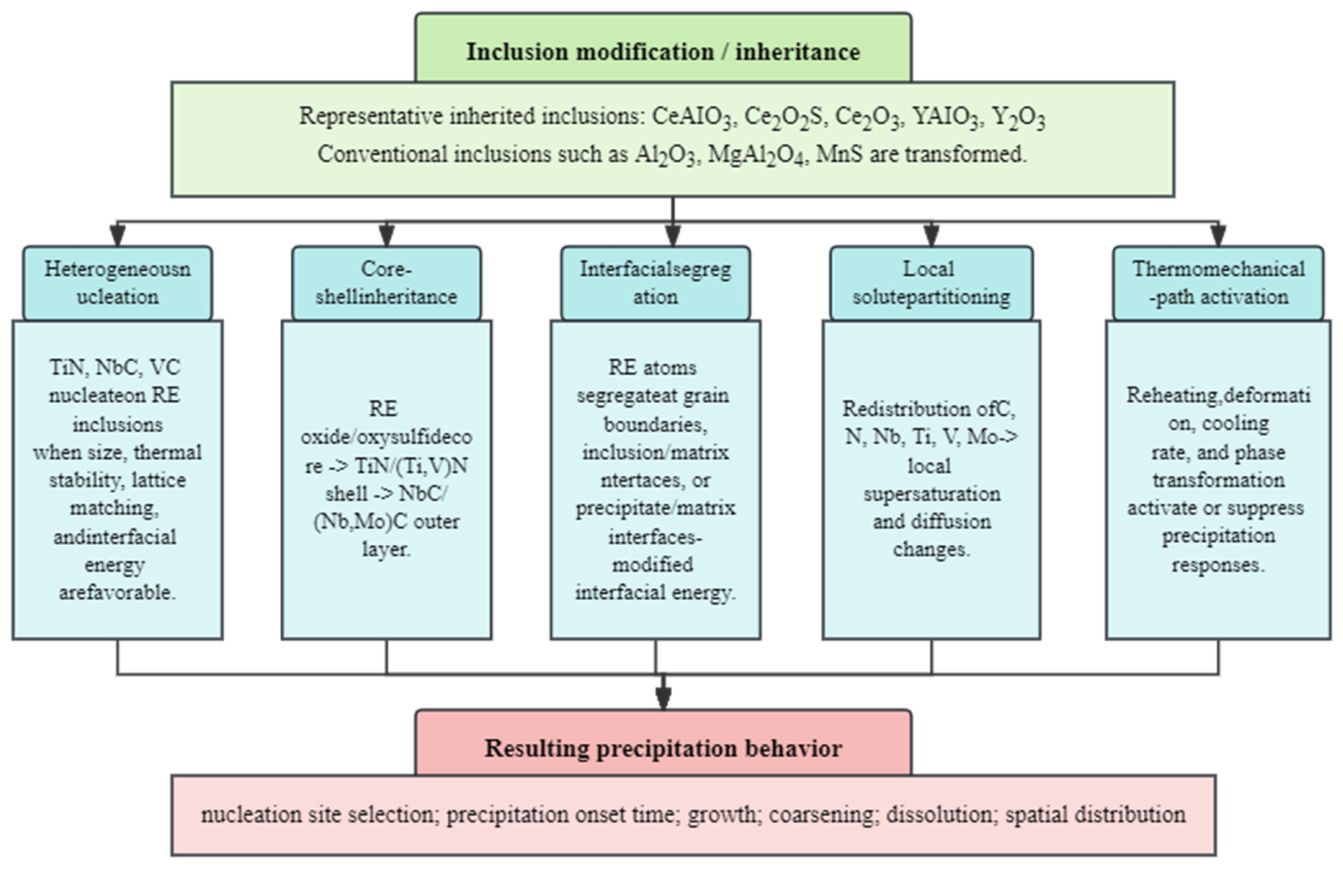
6. A Conceptual Framework for Inclusion–Precipitation Coupling in Microalloyed Steels
7. Conclusions
- (1)
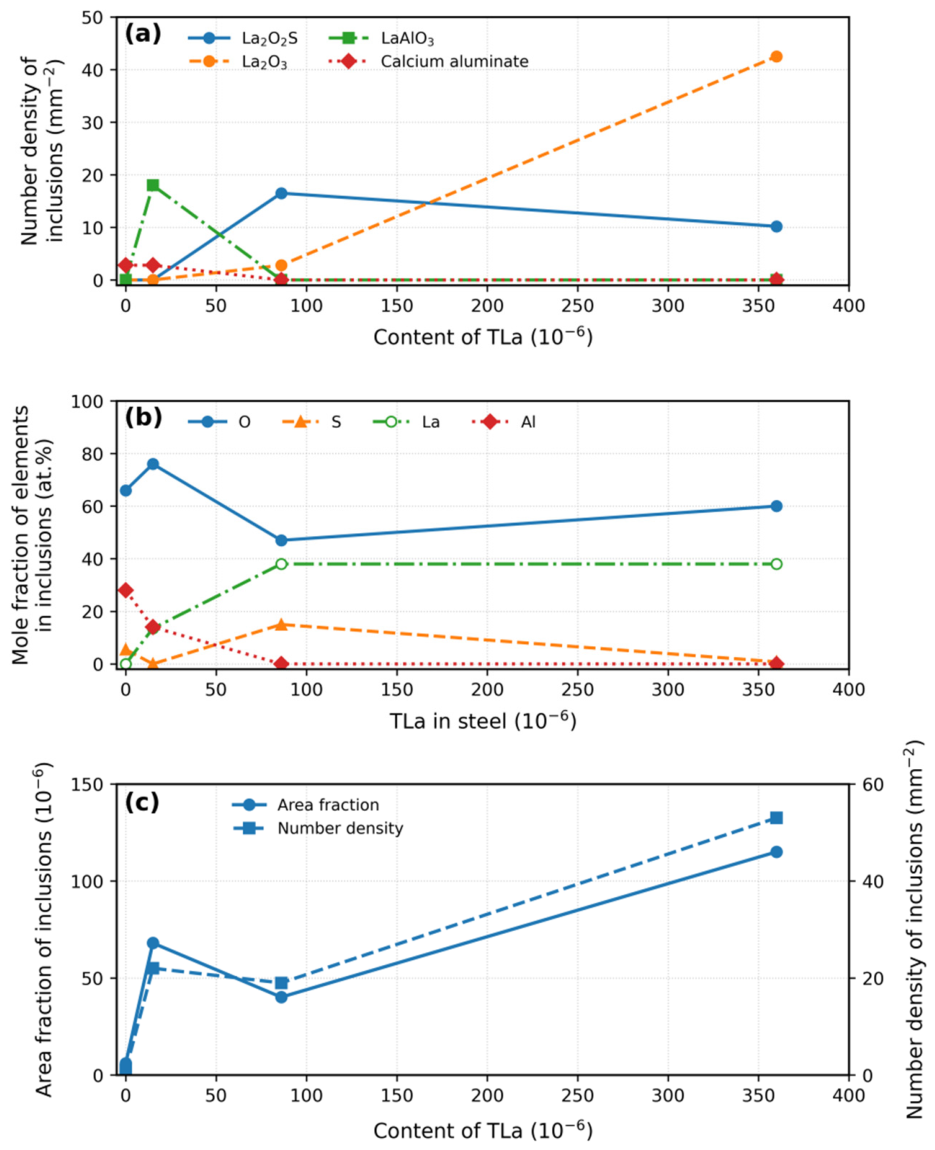
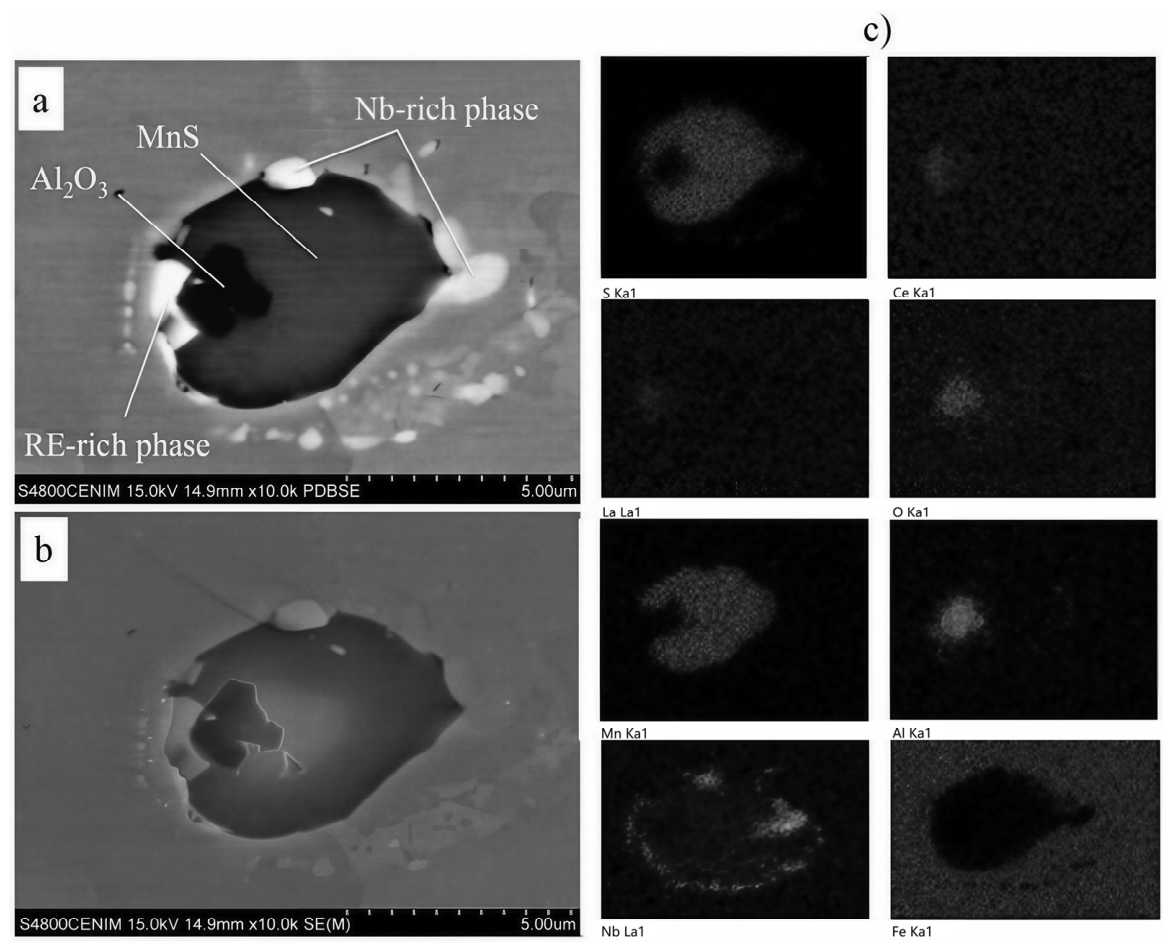
- Trace rare-earth elements alter not only the final morphology of inclusions, but also their evolution pathways and inheritance mechanisms during solidification and cooling. With the addition of La or Ce, inclusions in steel can gradually transform from conventional types such as Al2O3 and MnS into rare-earth oxides and oxysulfides. This transformation further changes the size, interfacial structure, and thermal stability of inclusions, thereby reshaping the foundation for subsequent microstructural evolution.
- (2)
- The influence of rare-earth elements on the precipitation behavior of Nb-, Ti-, and V-bearing carbonitrides does not follow a simple and universal pattern of promotion or inhibition. Rare-earth-modified inclusions may act as effective heterogeneous nucleation sites and promote precipitation, or they may alter the precipitation location, timing, and coarsening behavior through interfacial segregation, interfacial energy restructuring, and local solute redistribution. Therefore, the discrepancies among reported results in the literature essentially arise from differences in interfacial states, local solute environments, and thermomechanical pathways.
- (3)
- Based on existing research, trace rare-earth elements first alter the inherited inclusion lineage, then reconfigure the interfacial energy and local solute field at the inclusion/matrix interface, and ultimately lead to systematic changes in the precipitation behavior and microstructural properties of Nb-, Ti-, and V-microalloyed steels under specific heat-treatment and cooling conditions. Future research should move beyond inclusion modification alone and further consider the regulation of interfacial states and precipitation behavior, while strengthening the integration of in situ characterization and multiscale simulation.
- (4)
- A key requirement for future research is to establish direct correlations among inclusion chemistry, interfacial structure, local rare-earth segregation, and precipitation kinetics. This requires integrated characterization approaches combining total rare-earth analysis, inclusion extraction, automated SEM–EDS inclusion statistics, high-resolution TEM/STEM–EDS or APT interfacial characterization, and precipitation-kinetics measurements such as SANS, electrical resistivity, or in situ thermomechanical characterization. Such correlated evidence is necessary to clarify whether rare earths act mainly through inclusion-controlled nucleation, solute-state effects, segregation-controlled interfacial regulation, or their combined action.
Author Contributions
Funding
Data Availability Statement
Conflicts of Interest
References
- Liang, W.; Geng, R.; Zhi, J.; Li, J.; Huang, F. Oxide metallurgy technology in high strength steel: A review. Materials 2022, 15, 1350. [Google Scholar] [CrossRef] [Scilit] [PubMed]
- Torkamani, H.; Raygan, S.; García Mateo, C.; Rassizadehghani, J.; Vivas, J.; Palizdar, Y.; San-Martin, D. The influence of La and Ce addition on inclusion modification in cast niobium microalloyed steels. Metals 2017, 7, 377. [Google Scholar] [CrossRef] [Scilit]
- Chen, F.; Liu, S.; Peng, J.; Yang, F.; Liu, L. Study on the Synchronous Modification of TiN and MnS Inclusions in BT700L Automotive Beam Steel by Trace Rare Earth La. Metall. Mater. Trans. B 2025, 56, 5391–5400. [Google Scholar]
- Geng, R.; Li, J.; Shi, C.; Zhi, J.; Lu, B. Effect of Ce on microstructures, carbides and mechanical properties in simulated coarse-grained heat-affected zone of 800-MPa high-strength low-alloy steel. Mater. Sci. Eng. A 2022, 840, 142919. [Google Scholar]
- Wang, Y.; Li, Y.; Jiang, Z.; Sun, M.; Mao, Y.; Li, T. Optimization of Inclusion and Microstructure of As-Cast Nonquenched and Tempered Steel F38MnVS with Trace Ce. Steel Res. Int. 2025, 96, 2400454. [Google Scholar]
- Gao, X.; Ren, H.; Wang, H.; Chen, S. Effect of lanthanum on the precipitation and dissolution of NbC in microalloyed steels. Mater. Sci. Eng. A 2017, 683, 116–122. [Google Scholar] [CrossRef] [Scilit]
- Gao, X.; Ren, H.; Wang, H.; Chen, S. Effect of lanthanum on the precipitation of NbC in bcc Fe. Mater. Sci. Technol. 2017, 33, 1366–1371. [Google Scholar] [CrossRef] [Scilit]
- Ji, Y.; Zhang, M.X.; Ren, H. Roles of lanthanum and cerium in grain refinement of steels during solidification. Metals 2018, 8, 884. [Google Scholar] [CrossRef] [Scilit]
- Ge, Z.Y.; Feng, C.; Yang, Y.K.; Zhou, J.; Qiu, G.X.; Li, X.M.; Zhan, D.P. Review of heterogeneous nucleation to microstructure refinement in steel induced by second phase. J. Iron Steel Res. Int. 2026, 33, 26. [Google Scholar]
- Chen, J.; Liu, T.; Liu, Y.; Han, Z.; Tian, L.; Wang, P.; Li, D. Study of solid solution rare earth content in steels. J. Mater. Res. Technol. 2025, 38, 6177–6190. [Google Scholar] [CrossRef] [Scilit]
- Li, Z.; Song, X.; Yu, J.; Geng, W.; You, X.; Jia, J. Achieving High Strength and Plasticity by Controlling the Volume Fractions of Martensite and Ferrite in Rare Earth, Micro-Alloyed Dual-Phase Steel. Metals 2025, 15, 310. [Google Scholar]
- Liu, P.; Yang, C.; Hou, X.; Zheng, C.; Luan, Y.; Chen, H.; Ma, J.; Li, D. Towards the understanding of rare earth microalloying on the improvement of thermal stability of intragranular austenite and mechanical property of TRIP steels. Mater. Sci. Eng. A 2024, 914, 147135. [Google Scholar] [CrossRef] [Scilit]
- Wei, G.; Li, M.; Fang, Q.; Sun, W.; Jin, Z. Effect of ‘genetic’rare earth on alloy dissolution behavior in micro-alloyed steel. Mater. Res. Express 2021, 8, 056511. [Google Scholar]
- Liu, Y.; Li, J.; Geng, R.; Zhi, J.; Lu, B. Effect of Cerium Content on Precipitation Behavior of Inclusions in High-Strength Low-Alloy Steel. Metallogr. Microstruct. Anal. 2022, 11, 560–568. [Google Scholar]
- Zhao, B.; Wu, W.; Yang, F.; Zeng, J.; Liang, Z.; He, J. Effect of Cerium Element on Non-metallic Inclusions Formation During Molten and Solidification Processes of Q355 Microalloy Structural Steel. Metall. Mater. Trans. B 2024, 55, 1244–1260. [Google Scholar] [CrossRef] [Scilit]
- Liu, C.; Zhang, J.; Ren, Q.; Zhang, L.F. Influence of lanthanum on inclusions and as-cast microstructures in a low-alloy high-strength steel. J. Iron Steel Res. Int. 2023, 30, 2471–2481. [Google Scholar]
- Gao, S.; Wang, M.; Guo, J.L.; Wang, H.; Zhi, J.G.; Bao, Y.P. Characterization transformation of inclusions using rare earth Ce treatment on Al-killed titanium alloyed interstitial free steel. Steel Res. Int. 2019, 90, 1900194. [Google Scholar]
- Wang, Y.; Song, G.; He, J.; Fu, J. The Effect of La, Ce Rare-Earth Elements on the MnS Inclusion Precipitation and Distribution in U75V Heavy-Rail Steel. Steel Res. Int. 2025, 96, 2400604. [Google Scholar]
- Meng, Q.; Wang, Y.; Wang, W.; He, J.Z.; Fu, J.X. Modification of inclusion and heterogeneous nucleation behavior in heavy rail steel treated with rare earth. J. Iron Steel Res. Int. 2026, 33, 143. [Google Scholar] [CrossRef] [Scilit]
- Song, C.; Xiang, L.; Shi, C.; Qiao, J.; Liu, J.; Qiu, S. Effect of rare earth La–Ce on solidification structure of 3.2% Si-0.9% Al non-oriented silicon steel. ISIJ Int. 2024, 64, 1000–1009. [Google Scholar]
- Zhang, J.; Ren, Y.; Huang, R.; Huang, Z.; Huang, R.; Zhang, L. Effects of Cerium Addition on Inclusions and Solidification Structure of a Low-Nickel Si–Mn-Killed Stainless Steel. Steel Res. Int. 2023, 94, 2200956. [Google Scholar]
- Bao, D.; Cheng, G.; Huang, Y.; Qiao, T. Effect of rare earth ce on the solidification structure of Fe–18Cr–0.8 Si ferritic stainless steel. Metall. Mater. Trans. B 2023, 54, 944–958. [Google Scholar]
- Zheng, D.; Ma, G.; Li, J.; Cho, J.W.; Xiang, Z.; Liu, M.; Zhu, J. Effect of cerium on the primary carbides and inclusions in electroslag remelted M35 high speed steel. J. Mater. Res. Technol. 2023, 24, 8252–8266. [Google Scholar] [CrossRef] [Scilit]
- Wang, C. Role and Application of Rare Earth Elements in Steel. In Theory and Application of Rare Earth Materials; Springer Nature: Singapore, 2023; pp. 125–146. [Google Scholar]
- Yang, J.; Xie, B.; Sun, M. Cerium Addition Enhances Impact Energy Stability in S355NL Steel by Tailoring Microstructure and Inclusions. Metals 2025, 15, 802. [Google Scholar] [CrossRef] [Scilit]
- Jonšta, P.; Jonšta, Z.; Brožová, S.; Ingaldi, M.; Pietraszek, J.; Klimecka-Tatar, D. The effect of rare earth metals alloying on the internal quality of industrially produced heavy steel forgings. Materials 2021, 14, 5160. [Google Scholar] [CrossRef] [Scilit] [PubMed]
- Lu, B.; Chen, F.; Zhi, J.; Geng, R. Enhanced welding properties of high strength steel via rare earth oxide metallurgy technology. Acta Metall. Sin. 2020, 56, 1206–1216. [Google Scholar]
- Perla, S.; Verma, G.K.; Verma, K.K.; Tripathi, M.K. Synergistic Inclusion Modification in Steel Using Calcium, Magnesium, Rare Earths, and Hybrid Treatments: A Review. Steel Res. Int. 2026, 97, 2397–2420. [Google Scholar]
- Xin, W.; Song, B.; Song, M.; Song, G. Effect of cerium on characteristic of inclusions and grain boundary segregation of arsenic in iron melts. Steel Res. Int. 2015, 86, 1430–1438. [Google Scholar] [CrossRef] [Scilit]
- Song, S.; Sun, S. Effect of Rare-Earth Cerium on Impurity Tin-Induced Hot Ductility Deterioration of SA508-III Reactor Pressure Vessel Steel. Steel Res. Int. 2016, 87, 1435–1443. [Google Scholar] [CrossRef] [Scilit]
- Guo, Y.; Zhao, Y.; Wang, K.; Song, S. A comparative study of hot ductility of unadded and Ce-added SA508-4N RPV steels. J. Mater. Res. Technol. 2020, 9, 16038–16050. [Google Scholar]
- Zeng, W.; Tan, C.; Hu, X.; Cui, J.; Wang, Z.; Wang, Q.; Li, D. Unravelling the mechanism of Ce microalloying on the mechanical properties of EH460 marine steel. Mater. Sci. Eng. A 2025, 947, 149186. [Google Scholar] [CrossRef] [Scilit]
- Wang, S.; Wang, Y.; Zhang, Y.; Fang, F.; Zhang, E.; Zhang, X.; Yuan, G. The Effect of Rare Earth Y on the Inhibitor Precipitation Behavior of Strip-Cast Grain-Oriented Silicon Steel. Steel Res. Int. 2024, 95, 2400022. [Google Scholar]
- Liu, W.; Zhang, W.; Li, J.; Dong, H.; Wang, L. Yttrium-Induced Modulation of Solute Partition and σ-Phase Suppression in the Solidification of 7Mo Super-Austenitic Stainless Steel. Steel Res. Int. 2025, 96, 13–23. [Google Scholar]
- Chaus, A.S. Application of bismuth for solidification structure refinement and properties enhancement in as-cast high-speed steels. ISIJ Int. 2005, 45, 1297–1306. [Google Scholar]
- Pan, F.; Zhang, J.; Chen, H.L.; Su, Y.H.; Su, Y.H.; Hwang, W.S. Thermodynamic calculation among cerium, oxygen, and sulfur in liquid iron. Sci. Rep. 2016, 6, 35843. [Google Scholar] [CrossRef] [Scilit] [PubMed]
- Wang, J.; Peng, J.; Zhang, F.; Li, Y.; Zhang, X.; An, S. Effects of Ce-modified TiN inclusions on the fatigue properties of gear steel 20CrMnTi. Crystals 2023, 13, 1071. [Google Scholar]
- Wang, Y.; Liu, C. Effect of cerium and magnesium addition on evolution and particle size of inclusions in Al-killed molten steel. ISIJ Int. 2022, 62, 1852–1861. [Google Scholar] [CrossRef] [Scilit]
- Shi, Z.; Liu, S.; Zhou, Y.; Xing, X.; Ren, X.; Yang, Q. Structure and properties of YAlO3/NbC heterogeneous nucleation interface: First principles calculation and experimental research. J. Alloys Compd. 2019, 773, 264–276. [Google Scholar] [CrossRef] [Scilit]
- Hao, Y.; Cheng, G.; Ma, Q. Effect of rare earth addition on the heterogeneous nucleation behavior of TiN in duplex stainless steel. Metall. Res. Technol. 2017, 114, 603. [Google Scholar] [CrossRef] [Scilit]
- Zhang, J.; Xu, X.; Zhang, S.; Kuang, S.; Zhang, L. Precipitation and growth mechanism of TiN on Y2O3 (110) and (100) surfaces of yttrium-containing T4003 stainless steel. Phys. B Condens. Matter 2024, 684, 415980. [Google Scholar]
- Lu, N.; Xia, M.; Zhang, J.; Huang, X.; Yan, Q. The formation of triple-core-shell precipitate and its refining to primary MX phase in Y-containing 11Cr F/M steel. Mater. Sci. Technol. 2025. [Google Scholar] [CrossRef] [Scilit]
- Huang, Y.; Cheng, G.; Li, S.; Dai, W. Effect of cerium on the behavior of inclusions in H13 steel. Steel Res. Int. 2018, 89, 1800371. [Google Scholar] [CrossRef] [Scilit]
- Ren, J.; Tian, J.; Jiang, Z.; Wang, L.; Jiang, C. Effect of Mg–Ce Treatment on Cleanliness and Primary Carbides of H13 Hot Work Die Steel. Metall. Mater. Trans. B 2025, 56, 5100–5115. [Google Scholar] [CrossRef] [Scilit]
- Jiang, Y.X.; Hu, S.Y.; Wang, D.Y.; Chen, Z.P.; Zhou, X.Z.; Li, Y.K.; Wang, R.Z.; Qu, T.P. Effect of nitrogen content and magnesium-cerium treatment on inclusions in interstitial free steel. Ironmak. Steelmak. 2025. [Google Scholar] [CrossRef] [Scilit]
- Chen, R.; Chen, L.; Wang, Z.; Guan, R.; Kang, H. Heterogeneous nucleation of carbides attached to Y2O3 in Y-modified H13 steel. Mater. Charact. 2023, 200, 112891. [Google Scholar]
- Gao, Z.; Xu, L. Effects of trace Ce addition on critical cooling rate and Ti (CN) precipitation of ultra high strength steel plate. Mater. Res. Express 2020, 7, 106525. [Google Scholar] [CrossRef] [Scilit]
- Shi, Z.; Liu, S.; Guo, J.; Zhao, C.; Zhou, Y.; Xing, X.; Yang, Q. Investigation on heterogeneous nucleation substrate of Y2O3 as NbC in hypereutectic Fe–Cr–C hardfacing coating by experiment and first-principles calculation. J. Mater. Sci. 2019, 54, 10102–10118. [Google Scholar]
- Yang, R.; Tan, C.; Ma, H.; Ma, S.; Hu, X.; Li, D. Effects of Ce on the precipitation behaviors and creep properties in 316LN austenitic stainless steel. Mater. Sci. Eng. A 2024, 899, 146435. [Google Scholar] [CrossRef] [Scilit]
- Zhuang, Y.; Zhang, X.; Zhang, X.; Peng, T.; Yan, Q. Microstructure and mechanical properties of the new cladding austenitic stainless steel of 15–15Ti–Y after aging at 500–700 °C for up to 1000 h. Mater. Sci. Eng. A 2023, 868, 144767. [Google Scholar]
- Hansen, S.S.; Sande, J.V.; Cohen, M. Niobium carbonitride precipitation and austenite recrystallization in hot-rolled microalloyed steels. Metall. Trans. A 1980, 11, 387–402. [Google Scholar] [CrossRef] [Scilit]
- Dutta, B.; Palmiere, E.J.; Sellars, C.M. Modelling the kinetics of strain induced precipitation in Nb microalloyed steels. Acta Mater. 2001, 49, 785–794. [Google Scholar] [CrossRef] [Scilit]
- Tsao, T.C.; Chiu, P.H.; Tseng, C.Y.; Tai, C.L.; Chen, H.R.; Chung, T.F.; Chen, C.Y.; Wang, S.H.; Tsai, Y.T.; Yang, J.R. Investigation of Strain-Induced Precipitation of Niobium Carbide in Niobium Micro-Alloyed Steels at Elevated Temperatures. Metals 2022, 12, 1619. [Google Scholar]
- Zhang, Q.; Huo, X.; Li, L.; Chen, S.; Lu, C. Correlation between precipitation and recrystallisation during stress relaxation in titanium microalloyed steel. Metals 2022, 12, 1920. [Google Scholar] [CrossRef] [Scilit]
- Speer, J.G.; Michael, J.R.; Hansen, S.S. Carbonitride precipitation in niobium/vanadium microalloyed steels. Metall. Mater. Trans. A 1987, 18, 211–222. [Google Scholar] [CrossRef] [Scilit]
- Hong, S.G.; Kang, K.B.; Park, C.G. Strain-induced precipitation of NbC in Nb and Nb–Ti microalloyed HSLA steels. Scr. Mater. 2002, 46, 163–168. [Google Scholar]
- Pandit, A.; Murugaiyan, A.; Podder, A.S.; Haldar, A.; Bhattacharjee, D.; Chandra, S.; Ray, R.K. Strain induced precipitation of complex carbonitrides in Nb–V and Ti–V microalloyed steels. Scr. Mater. 2005, 53, 1309–1314. [Google Scholar]
- Gong, P.; Palmiere, E.J.; Rainforth, W.M. Characterisation of strain-induced precipitation behaviour in microalloyed steels during thermomechanical controlled processing. Mater. Charact. 2017, 124, 83–89. [Google Scholar] [CrossRef] [Scilit]
- Ioannidou, C.; Arechabaleta, Z.; Navarro-López, A.; Rijkenberg, A.; Dalgliesh, R.M.; Kölling, S.; Bliznuk, V.; Pappas, C.; Sietsma, J.; van Well, A.A.; et al. Interaction of precipitation with austenite-to-ferrite phase transformation in vanadium micro-alloyed steels. Acta Mater. 2019, 181, 10–24. [Google Scholar]
- Zou, H.; Kirkaldy, J.S. Carbonitride precipitate growth in titanium/niobium microalloyed steels. Metall. Trans. A 1991, 22, 1511–1524. [Google Scholar] [CrossRef] [Scilit]
- Pan, T.; Chai, X.Y.; Wang, J.G.; Su, H.; Yang, C.F. Precipitation behavior of VN microalloyed steels during normalizing. J. Iron Steel Res. Int. 2015, 22, 1037–1042. [Google Scholar] [CrossRef] [Scilit]
- Ioannidou, C.; Navarro-López, A.; Dalgliesh, R.M.; Rijkenberg, A.; Zhang, X.; Kooi, B.; Geerlofs, N.; Pappas, C.; Sietsma, J.; van Well, A.A.; et al. Phase-transformation and precipitation kinetics in vanadium micro-alloyed steels by in-situ, simultaneous neutron diffraction and SANS. Acta Mater. 2021, 220, 117317. [Google Scholar] [CrossRef] [Scilit]
- Khan, Z.Z.; Parnell, S.R.; Offerman, S.E.; Venero, D.A.; Ghorabaei, A.S.; Kooi, B.J.; van Dijk, N. Interphase and random nanoscale carbide precipitation in vanadium micro-alloyed steels studied using SANS. J. Mater. Sci. 2025, 60, 7002–7019. [Google Scholar] [CrossRef] [Scilit] [PubMed]
- Bramfitt, B.L. The effect of carbide and nitride additions on the heterogeneous nucleation behavior of liquid iron. Metall. Trans. 1970, 1, 1987–1995. [Google Scholar] [CrossRef] [Scilit]
- Shim, J.H.; Cho, Y.W.; Chung, S.H.; Shim, J.D.; Lee, D.N. Nucleation of intragranular ferrite at Ti2O3 particle in low carbon steel. Acta Mater. 1999, 47, 2751–2760. [Google Scholar] [CrossRef] [Scilit]
- Koseki, T.; Thewlis, G. Overview Inclusion assisted microstructure control in C–Mn and low alloy steel welds. Mater. Sci. Technol. 2005, 21, 867–879. [Google Scholar] [CrossRef] [Scilit]
- Medina, S.F.; Quispe, A.; Gómez, M. Precipitation model in microalloyed steels both isothermal and continuous cooling conditions. Rev. Metal. 2015, 51, e506. [Google Scholar] [CrossRef] [Scilit]
- You, D.; Michelic, S.K.; Presoly, P.; Liu, J.; Bernhard, C. Modeling inclusion formation during solidification of steel: A review. Metals 2017, 7, 460. [Google Scholar] [CrossRef] [Scilit]
- Suh, J.-Y.; Byun, J.-S.; Shim, J.-H.; Oh, Y.-J.; Cho, Y.W.; Shim, J.-D.; Lee, D.N. Acicular ferrite microstructure in titanium bearing low carbon steels. Mater. Sci. Technol. 2000, 16, 1277–1281. [Google Scholar] [CrossRef] [Scilit]
- Xuan, C.; Mu, W. New insights of heterogeneous nucleation and anisotropic growth of acicular ferrite on non-metallic inclusion. Mater. Des. 2022, 221, 110892. [Google Scholar] [CrossRef] [Scilit]
- Grajcar, A.; Różański, M.; Kamińska, M.; Grzegorczyk, B. Study on non-metallic inclusions in laser-welded TRIP-aided Nb-microalloyed steel. Arch. Metall. Mater. 2014, 59, 1163–1169. [Google Scholar]
- Kumar, V.; Deva, A.; Chattopadhyay, K. Effect of addition of rare earth element cerium on the microstructure and mechanical properties of microalloyed peritectic grade steel. Trans. Indian Inst. Met. 2024, 77, 3751–3758. [Google Scholar] [CrossRef] [Scilit]
- Tuttle, R. Industrial trial of rare earth based grain refinement of a steel casting. Trans. Am. Foundry Soc. 2013, 121, 535–545. [Google Scholar]
- Zhang, L.; Yu, Y.; Zhang, J.; Mao, W.; Wang, S.; Sun, Z.; Wan, Y. Effect of cerium on inclusion evolution and pitting corrosion of Nb-microalloyed steel. Langmuir 2024, 40, 15001–15012. [Google Scholar] [CrossRef] [Scilit] [PubMed]
- Torkamani, H.; Raygan, S.; García Mateo, C.; Rassizadehghani, J.; Palizdar, Y.; San-Martin, D. Contributions of rare earth element (La,Ce) addition to the impact toughness of low carbon cast niobium microalloyed steels. Met. Mater. Int. 2018, 24, 773–788. [Google Scholar] [CrossRef] [Scilit]
- Tang, M.; Wu, K.; Liu, J.; Cheng, L.; Zhang, X.; Chen, Y. Mechanism understanding of the role of rare earth inclusions in the initial marine corrosion process of microalloyed steels. Materials 2019, 12, 3359. [Google Scholar] [CrossRef] [Scilit] [PubMed]
- Liu, X.; Yang, C.; Ren, H.; Li, Y.; Jin, Z.; Zhang, F.; Yang, J. Origin mechanism of pitting corrosion induced by cerium inclusions. J. Rare Earths 2023, 41, 1448–1458. [Google Scholar] [CrossRef] [Scilit]
- Zheng, W.; Yan, X.; Xiong, S.; Wang, G.; Li, G. Pitting corrosion behavior of cerium treated HSLA steel induced by sulfide inclusions in 3.5 wt% NaCl solution. J. Rare Earths 2021, 39, 348–356. [Google Scholar] [CrossRef] [Scilit]
- Xiao, J.; Yan, L.; Zhang, P.; Li, G.; Li, B.; Zhao, T.; Wang, H.; Chen, L.; Wang, D. Effects of minor Ce doping on the microstructure and mechanical performances of a EH47 grade HSLA steel for ship and ocean engineering. Mater. Charact. 2023, 201, 112931. [Google Scholar] [CrossRef] [Scilit]
- Chu, R.; Mu, S.; Liu, J.; Li, Z. The influence of high heat input and inclusions control for rare earth on welding in low alloy high strength steel. In IOP Conference Series: Materials Science and Engineering; IOP Publishing: Bristol, UK, 2017; Volume 242, p. 012065. [Google Scholar]
- Cheng, S.; Hou, T.; Zheng, Y.; Yin, C.; Wu, K. Effect of rare earth elements on microstructure and tensile behavior of Nb-containing microalloyed steels. Materials 2024, 17, 1701. [Google Scholar] [CrossRef] [Scilit] [PubMed]
- Wang, K.; Lu, Q.; Jiang, Z.; Yi, Y.; Yi, J.; Niu, B.; Ma, J.; Hu, H. Effect of rare-earth elements on the corrosion resistance of flux-cored arc-welded metal with 10CrNi3MoV steel. Int. J. Corros. 2018, 2018, 4071352. [Google Scholar]
- Yin, C.; Cheng, L.; Wang, Z.; Zhao, T.; Cheng, S.; Hu, S.; Liu, Z.; Luo, D.; Xiao, D.; Jin, X.; et al. Local corrosion behaviors in the coarse-grained heat-affected zone in a newly developed Zr–Ti–Al–RE deoxidized high-strength low-alloy steel. Materials 2023, 16, 876. [Google Scholar] [PubMed]
- Wang, H.; Bao, Y.; Zhao, M.; Wang, M.; Yuan, X.; Gao, S. Effect of Ce on the cleanliness, microstructure and mechanical properties of high strength low alloy steel Q690E in industrial production process. Int. J. Miner. Metall. Mater. 2019, 26, 1372–1384. [Google Scholar] [CrossRef] [Scilit]
- Sha, S.; Yang, F.; He, J.; Liu, Z.; Fu, T.; Wang, B.; Chen, X.; Jia, S.; Liu, Q. Revealing the corrosion resistance mechanism of plain carbon steel micro-alloyed by La in simulated industrial atmosphere. Materials 2024, 17, 4467. [Google Scholar] [CrossRef] [Scilit] [PubMed]
- Zhang, X.; Wei, W.; Cheng, L.; Liu, J.; Wu, K.; Liu, M. Effects of niobium and rare earth elements on microstructure and initial marine corrosion behavior of low-alloy steels. Appl. Surf. Sci. 2019, 475, 83–93. [Google Scholar] [CrossRef] [Scilit]
- Díaz-Martínez, G.Y.; Mejía, I.; García-García, V.; Bedolla-Jacuinde, A. Metallographic, structural and mechanical characterization of REM-containing Fe–30Mn–8Al–1.8C low density steel in as-cast condition. MRS Adv. 2018, 3, 3957–3962. [Google Scholar]
- Huang, Y.; Jin, X.; Cai, G. Evolution of microstructure and mechanical properties of a new high strength steel containing Ce element. J. Mater. Res. 2017, 32, 3894–3903. [Google Scholar] [CrossRef] [Scilit]
- Gao, X.; Ren, H.; Li, C.; Wang, H.; Tan, H. First-principles study of the effect of lanthanum on the niobium diffusion in fcc Fe. Int. J. Mod. Phys. B 2016, 30, 1650157. [Google Scholar] [CrossRef] [Scilit]
- Laha, K.; Kyono, J.; Shinya, N. Copper, boron, and cerium additions in type 347 austenitic steel to improve creep rupture strength. Metall. Mater. Trans. A 2012, 43, 1187–1197. [Google Scholar]
- Wang, H.; Ren, H.; Yang, H.; Wang, S.; Li, D. Effect of rare earth addition on dynamic recrystallization and precipitation behavior of a niobium-containing microalloy steel. Mater. Sci. Forum 2013, 762, 189–194. [Google Scholar] [CrossRef] [Scilit]
- Wei, H.; Wang, H.; Gao, X.; Zhi, J. Effect of rare earth La on super-cooled austenite transformation of low carbon copper-containing steel and its mechanism. Metall. Res. Technol. 2024, 121, 614. [Google Scholar]
- Dong, H.; Lian, X.; Hu, C.; Lu, H.; Peng, W.; Zhao, H.; Xu, D. High performance steels: The scenario of theory and technology. Acta Metall. Sin. 2020, 56, 558–582. [Google Scholar]
- Zhou, W.; Zhu, J.; Zhang, Z. Austenite grain growth behaviors of La-microalloyed H13 steel and its effect on mechanical properties. Metall. Mater. Trans. A 2020, 51, 4662–4673. [Google Scholar] [CrossRef] [Scilit]
- Li, Z.; Li, C.; Wang, P.; Zhang, S.; Chen, L.; Du, W. Superfine Ce oxide-induced precipitation behavior of copper in steel. In IOP Conference Series: Materials Science and Engineering; IOP Publishing: Bristol, UK, 2019; Volume 472, p. 012037. [Google Scholar]
- Wang, H.; Yu, P.; Jiang, S.; Wang, Y. Effect of heterogeneous nucleation on removal of arsenic from molten steel by rare earth addition. Metals 2020, 10, 664. [Google Scholar] [CrossRef] [Scilit]
- Wang, Y.; Hu, S.; Wang, D.; Zhou, X.; Jiang, Y.; Li, Y.; Fan, L.; Qu, T. Effect of residual element tin on the inclusion characteristics and the interaction between lanthanum and tin in interstitial free steel. ISIJ Int. 2025, 65, 925–936. [Google Scholar] [CrossRef] [Scilit]
- Liang, Y.; Xin, W.; Zhang, J.; Meng, Q.; Jiang, Y.; Deng, Y. Hot ductility improvement of copper–arsenic steel by rare earth cerium. Metall. Res. Technol. 2022, 119, 504. [Google Scholar] [CrossRef] [Scilit]
- Ji, Y.; Kang, L.; Song, Y.; Qu, W.; Ren, H. Crystallographic calculation about heterogeneous nucleation potency of RE2O3 in liquid steel. Rare Met. Mater. Eng. 2017, 46, 2889–2894. [Google Scholar]
- Zhou, Y.; Ji, Y.; Li, Y.; Qi, J.; Xin, H.; Ren, H. Crystallographic calculations and first-principles calculations of heterogeneous nucleation potency of γ-Fe on La2O2S particles. Materials 2022, 15, 1374. [Google Scholar] [PubMed]
- Zhou, X.; Wang, D.; Li, X.; Qu, T.; Hou, D.; Hu, S.; Zhang, Z.; Wang, H. Mechanism for TiN refinement and resultant heterogeneous nucleation of δ-Fe in magnesium-rare earth-treated ultrapure ferritic stainless steel. Mater. Charact. 2023, 205, 113250. [Google Scholar] [CrossRef] [Scilit]
- Zhou, X.; Wang, D.; Wang, H.; Wang, Y.; Zhang, Z.; Qu, T.; Tian, J.; Li, X. Refining mechanism for TiN and solidification structure through a nucleating chain in magnesium-yttrium-treated ultrapure ferritic stainless steel. J. Mater. Res. Technol. 2023, 27, 8164–8180. [Google Scholar] [CrossRef] [Scilit]
- Zeng, F.; Wang, L.; Gao, R.; Wang, J.; Li, J.; Chen, C.; Ran, X. Effect of nano-ZrO2 addition on heterogeneous nucleation behavior and morphology control of MnS inclusions in steel. J. Mater. Res. Technol. 2025, 39, 9061–9069. [Google Scholar] [CrossRef] [Scilit]
- Zhou, F.; Zhang, T.; Yang, J.; Sun, H.; Tang, X.; Li, Z. The effect of cerium addition on the growth mechanism of manganese sulfide in free cutting steel. Ceram. Int. 2025, 51, 10628–10642. [Google Scholar]
- Laha, K.; Kyono, J.; Shinya, N. Suppression of creep cavitation in precipitation-hardened austenitic stainless steel to enhance creep rupture strength. Trans. Indian Inst. Met. 2010, 63, 437–441. [Google Scholar] [CrossRef] [Scilit]
- Guo, Y.; Wang, K.; Song, S. Abnormal influence of impurity element phosphorus on the hot ductility of SA508Gr.4N reactor pressure vessel steel. Mater. Sci. Eng. A 2020, 792, 139837. [Google Scholar]
- Xin, W.; Zhang, J.; Luo, G.; Wang, R.; Meng, Q.; Song, B. Improvement of hot ductility of C–Mn steel containing arsenic by rare earth Ce. Metall. Res. Technol. 2018, 115, 403. [Google Scholar]
- Li, M.; Li, J.; Qiu, D.; Zheng, Q.; Wang, G.; Zhang, M.X. Crystallographic study of grain refinement in low and medium carbon steels. Philos. Mag. 2016, 96, 1556–1578. [Google Scholar] [CrossRef] [Scilit]
- Song, M.; Song, B.; Zhang, S.; Xue, Z.; Yang, Z.; Xu, R. Role of lanthanum addition on acicular ferrite transformation in C–Mn steel. ISIJ Int. 2017, 57, 1261–1267. [Google Scholar] [CrossRef] [Scilit]
- Song, M.; Song, B.; Xin, W.; Sun, G.; Song, G.; Hu, C. Effects of rare earth addition on microstructure of C–Mn steel. Ironmak. Steelmak. 2015, 42, 594–599. [Google Scholar] [CrossRef] [Scilit]
- Jiang, X.; Song, S.H. Enhanced hot ductility of a Cr–Mo low alloy steel by rare earth cerium. Mater. Sci. Eng. A 2014, 613, 171–177. [Google Scholar] [CrossRef] [Scilit]
- Liu, J.; Li, G.; Shi, C.; Tang, Z.; Jia, L.; Zhao, Y.; Wang, S.; He, X. Effect of Ce–Y composite addition on the inclusion evolution in T91 heat-resistant steel. Materials 2025, 18, 1459. [Google Scholar] [PubMed]
- Duan, C.; Ning, L.; Zhu, Y.; Tan, Z.; Liu, E.; Tong, J.; Li, H.; Wang, Z.; Zheng, Z. Effects of cerium addition on solidification structure and mechanical properties of Cr30Mo2 super ferritic stainless steel. Rare Met. Mater. Eng. 2021, 50, 3288–3294. [Google Scholar]
- Ji, Y.; Ren, H.; Hou, J.; Song, Y.; Liu, X. Microstructure evolution of low-alloy bainite wear-resistant cast steel with rare earth in tempering process. Rare Met. Mater. Eng. 2018, 47, 1261–1265. [Google Scholar]
- Memarpour, A.; Brabie, V.; Jönsson, P. Studies of effect of glass/silicon powder coatings on clogging behaviour of submerged entry nozzles when using REM alloyed stainless steels. Ironmak. Steelmak. 2011, 38, 229–239. [Google Scholar] [CrossRef] [Scilit]
- Yang, C.; Li, Z.; Liu, P.; Luan, Y.; Li, D.; Li, Y.; Tariq, N.U. Influence of trace rare earth elements on very high cycle fatigue behavior of hot rolled bearing steel. Int. J. Fatigue 2023, 176, 107877. [Google Scholar] [CrossRef] [Scilit]
- Dong, R.; Zhou, P.; Chen, J.; Lei, Y.; Yang, X.; Wu, Y.; Guo, J.; Cui, Q. Effect of trace rare earth element cerium (Ce) on microstructure and mechanical properties of high strength marine engineering steel. Crystals 2024, 14, 863. [Google Scholar] [CrossRef] [Scilit]
- Dong, R.; Li, H.; Deng, X.; Liu, Z. Effect of ultra-trace rare earth elements on continuous cooling transformation curve of low carbon steel. Mater. Res. Express 2020, 7, 125801. [Google Scholar] [CrossRef] [Scilit]
- Wan, Z.; Dong, R.; Yang, Y.; Cui, Q. Synergistic regulation of microstructural evolution and plastic instability by trace Ce in automotive steels for new energy vehicles. J. Mater. Eng. Perform. 2026, 35, 19665–19674. [Google Scholar] [CrossRef] [Scilit]
- Zhao, Q.; Dong, R.; Lu, Y.; Yang, Y.; Wang, Y.; Yang, X. Effect of trace rare-earth element Ce on the microstructure and properties of cold-rolled medium manganese steel. Metals 2023, 13, 116. [Google Scholar]
- Guo, F.; Niu, Y.; Fu, B.; Qiao, J.; Qiu, S. Influence mechanisms of trace rare-earth Ce on texture development of non-oriented silicon steel. Materials 2025, 18, 3493. [Google Scholar] [PubMed]
- Guo, S.; Ma, H.; Bao, X.; Sun, J.; Tang, X.; Wang, X. The cooling phase transition behavior of 30MnNbRE steel studied based on TMCP. Crystals 2025, 15, 327. [Google Scholar]
- Han, J.; Wang, K.; Wang, Z.; Yu, H. Tailoring the strength and low-temperature toughness of HSLA structural steel by adding trace Ce. Mater. Today Commun. 2024, 40, 109789. [Google Scholar] [CrossRef] [Scilit]
- Wu, H.; Xiao, T.; Xu, Y.; Liu, X.; Liu, W.; Li, X.; Li, J. Effect of rare earth cerium on inclusions and contact fatigue properties in high-carbon chromium bearing steel. Metall. Mater. Trans. B 2026, 57, 65–74. [Google Scholar]



| Steel System | Main Occurrence State of Rare Earth | Main Action Site | Key Implication | Ref. |
|---|---|---|---|---|
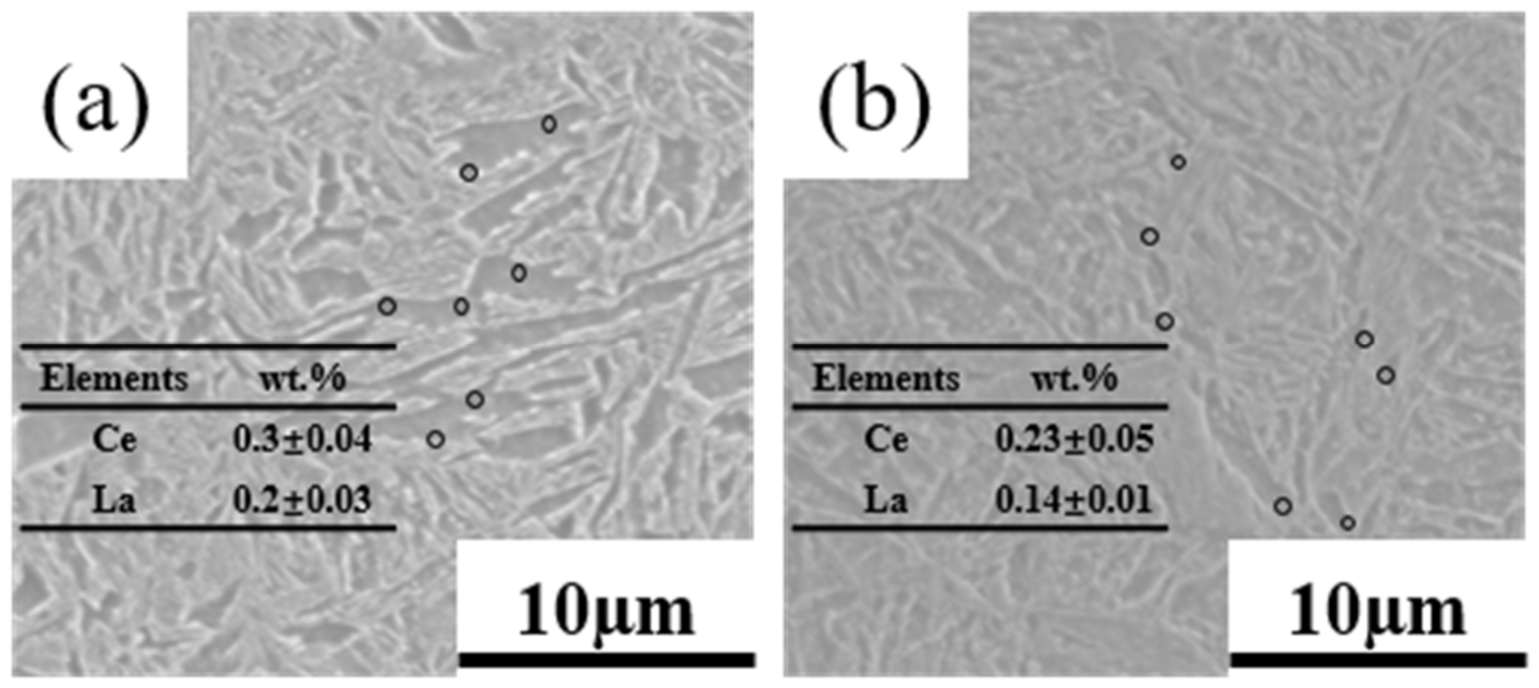
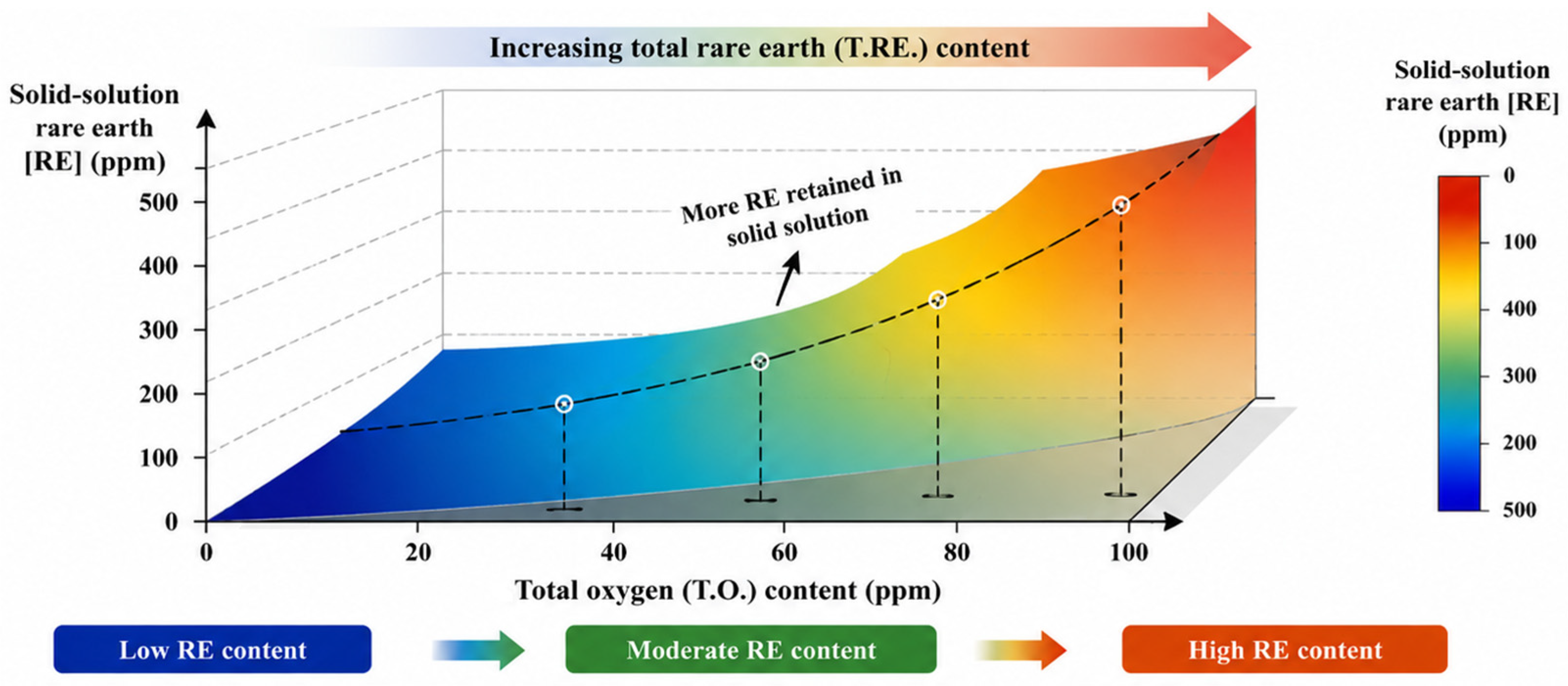
| Experimental steels with different T.RE. | RE inclusions + solid-solution RE | Matrix and inclusions | Total rare earth content does not directly represent effective rare earth content; effective rare earth content is significantly influenced by total rare earth content, O, S, Al, and thermal history | [10,13] |
| High-strength wheel steels | RE oxides/sulfides, solid-solution Ce, Ce-rich nanoclusters, Ce–S–As/Ce–S–As–P inclusions | Inclusions, grain boundaries, local defect regions | The evolution of rare earth elements from a compound state to a solid solution and impurity-coupled state confirms that rare earth elements are dynamic state variables rather than simple compositional variables | [11] |
| TRIP steels | RE clusters and solid-solution RE | Ferrite matrix, dislocations, phase boundaries | Rare earth elements can directly contribute to local diffusion and the stabilization of carbide-related microstructures, rather than merely acting through modified inclusions | [12] |
| Fe melts containing As | Ce–S–As/CeAs-type inclusions | Grain boundaries and impurity-segregated regions | Residual rare earth elements can restore the local chemical environment by immobilizing harmful residual elements such as arsenic | [29] |
| SA508-III steel | Grain-boundary segregated Ce | Grain boundaries | Even at extremely low average concentrations, trace amounts of Ce can strengthen grain boundaries through segregation | [30] |
| SA508-4N steel | Segregated/dissolved Ce | Grain boundaries | Trace rare earth elements exhibit localized effects rather than effects of average distribution | [31] |
| Rare-Earth-Related Substrate | Precipitate/Nucleating Phase | Reported Lattice Mismatch (%) | Nucleation Implication | Ref. |
|---|---|---|---|---|
| CeAlO3 | TiN | 7.55 | Moderate lattice matching; effective heterogeneous nucleation site for TiN | [39] |
| Ce2O2S | TiN | 7.90 | Moderate lattice matching; effective heterogeneous nucleation site for TiN | [39] |
| Al2O3 | TiN | 10.91 | Conventional oxide reference; lower nucleation potency than CeAlO3 and Ce2O2S | [39] |
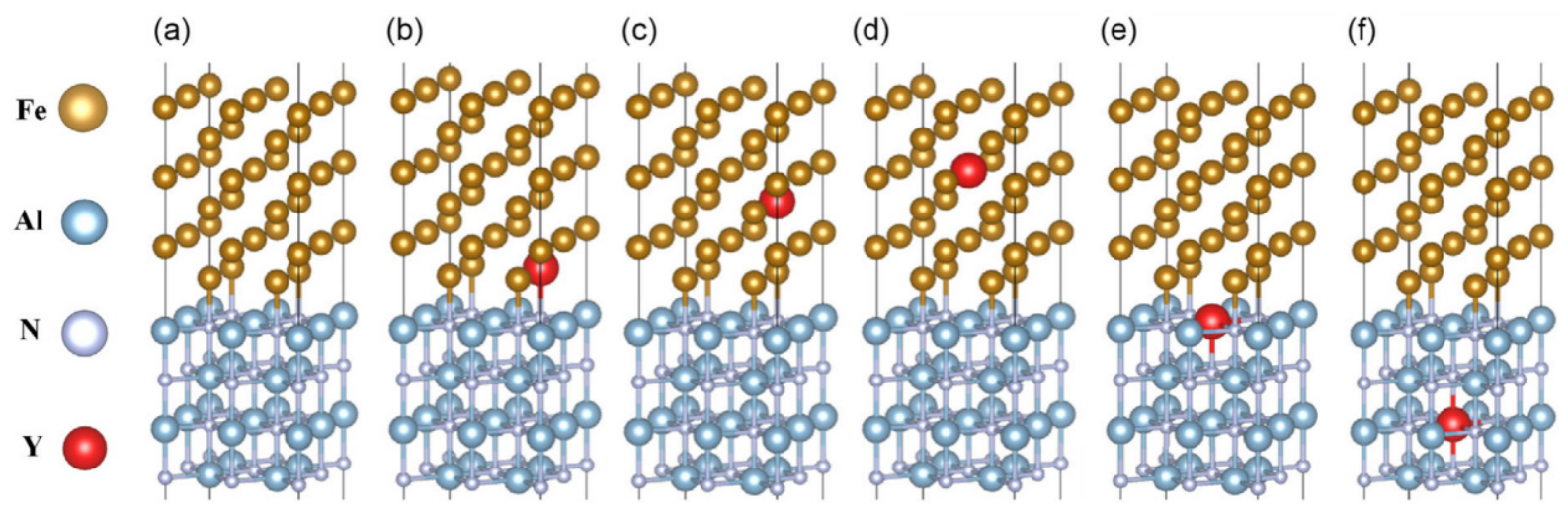
| YAlO3 | NbC | ~5.4 | Low mismatch; favorable heterogeneous nucleation substrate for NbC | [38] |
| Y2O3 | VC | 3.63 | Very low mismatch; strong nucleation potency for VC | [46] |
| Y2O3 | NbC | 6.8 | Moderate lattice matching; potential heterogeneous nucleation substrate for NbC | [48] |
| Dominant Scenario | Rare-Earth-Related Target | Observed Response | Underlying Mechanism | Ref. |
|---|---|---|---|---|
| Promotion of fine TiN/NbC/VC precipitation | Fine CeAlO3, Ce2O2S, YAlO3, and Y2O3 particles | Increased number density, reduced particle size, and more dispersed distribution | Low lattice mismatch heterogeneous nucleation and reduced interfacial energy | [38,39,46,48] |
| Promotion of coarse composite precipitates | Coarse Ce-rich clustered cores | Formation of TiN clusters or large composite precipitates | Although nucleation sites increase, clustered cores promote encapsulation-type coarsening | [39,45] |
| Suppression of multilayer carbonitride precipitation | High-mismatch Ce-O and Ce-O-S particles | Reduced multilayer (Ti,V)(C,N) structures and fewer coarse precipitates | Original heterogeneous nucleation pathways are disrupted | [43] |
| Initial promotion followed by suppression | Ce2O3/Ce2O2S particles combined with dendrite refinement | Area fraction of primary carbides first increases and then decreases | Competition between heterogeneous nucleation promotion and microstructure-refinement-induced suppression | [44] |
| Rare-Earth-Related Inclusion/State | Main Associated Precipitate | Primary Role | Resulting Effect | Ref. |
|---|---|---|---|---|
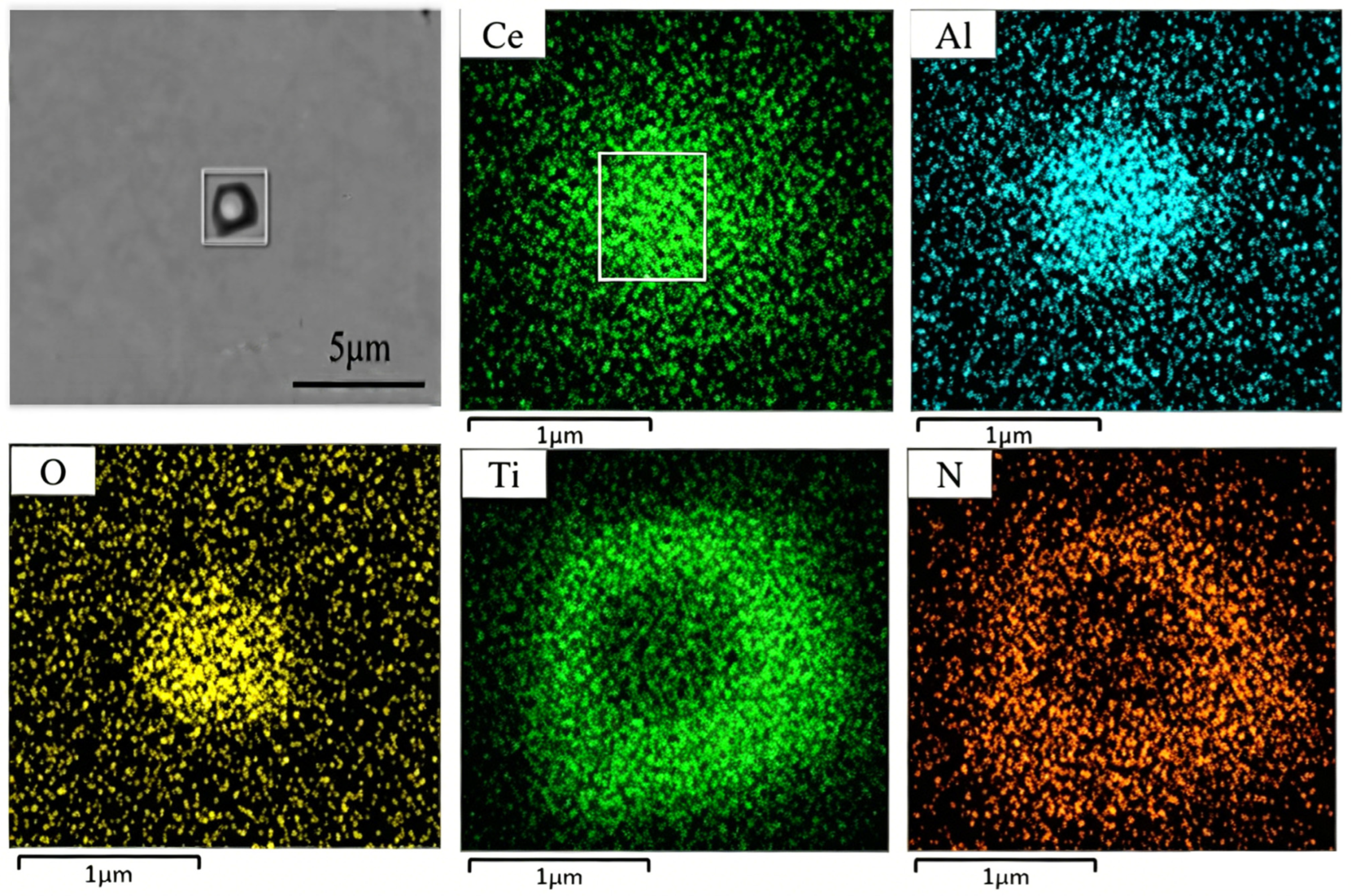
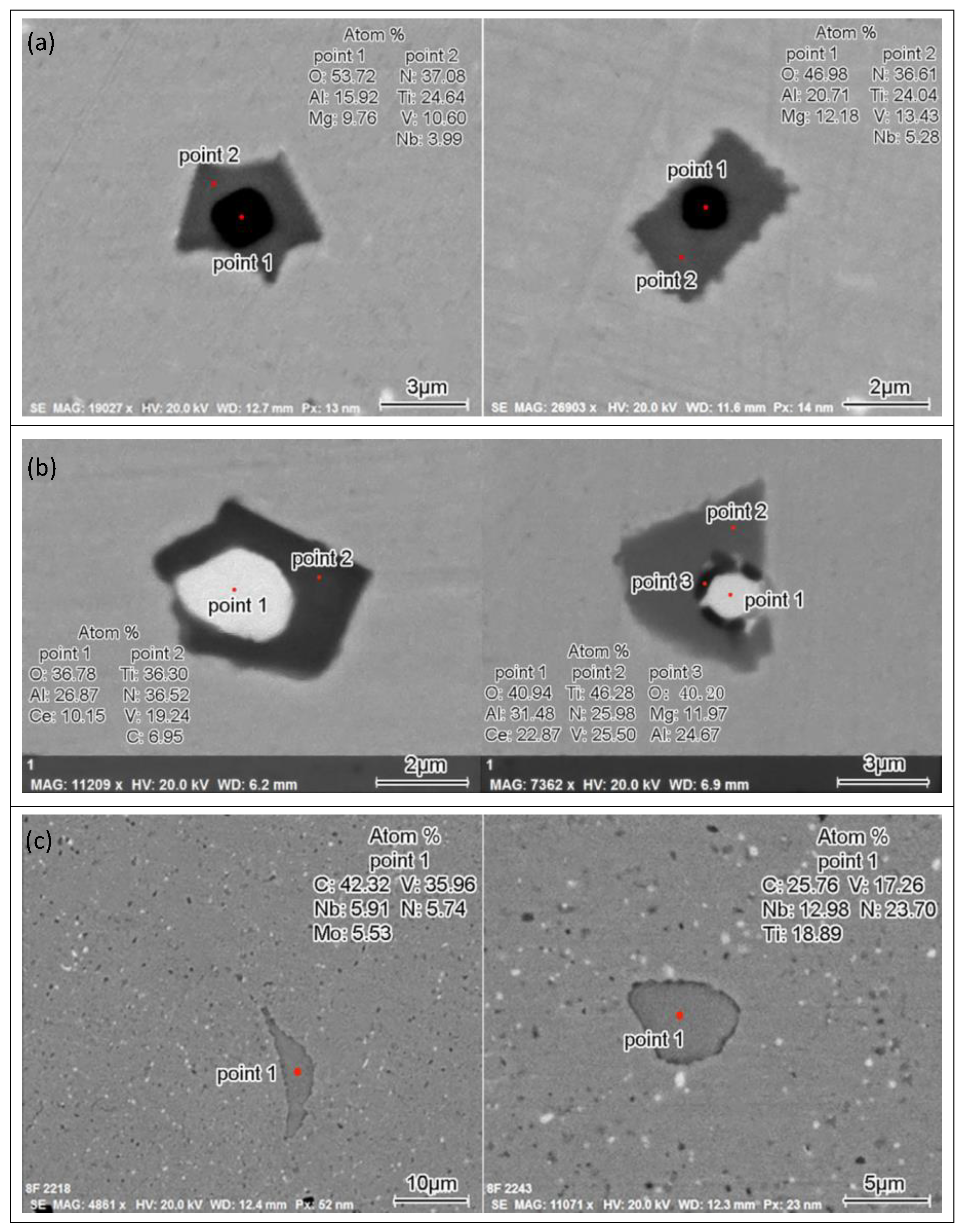
| CeAlO3, Ce2O2S | TiN | Heterogeneous nucleation core | Reduced TiN nucleation barrier, increased number density, and refined particle size | [39,40] |
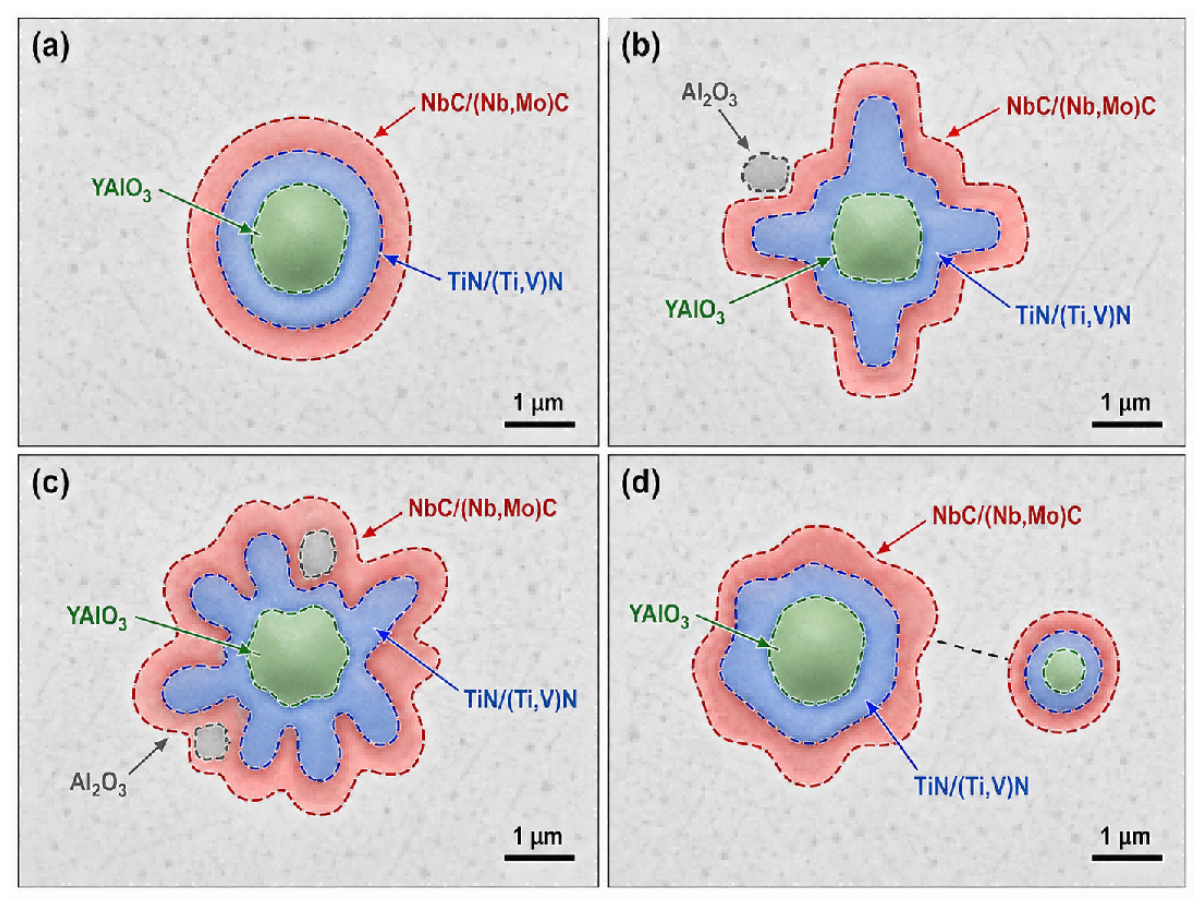
| YAlO3 | TiN, NbC | YAlO3 first serves as a heterogeneous nucleation substrate for TiN, which subsequently provides nucleation sites for NbC precipitation | Formation of multilayer structures such as YAlO3-TiN/(Ti,V)N-NbC/(Nb,Mo)C | [42] |
| YAlO3 | NbC | Low-misfit stable interface | Low lattice mismatch and interfacial energy at the YAlO3/NbC interface enable direct NbC nucleation | [38] |
| Y2O3 | VC, Cr23C6 | Coupled heterogeneous nucleation and interfacial diffusion | Provides nucleation sites while promoting interfacial interdiffusion and stacking-fault structures | [46] |
| Ce–O, Ce–O–S | (Ti,V)(C,N), etc. | Suppression of heterogeneous nucleation | Rare-earth oxides/oxysulfides do not always promote precipitation; some suppress multilayer carbonitride formation | [43] |
| Dissolved/segregated Ce and Y | Laves phase, M23C6, etc. | Modification of interfacial segregation and precipitation sensitivity | Rearrangement of precipitation behavior through grain-boundary site competition, selective solute attraction, and altered local diffusion pathways | [49,50] |
| Steel Grade | RE | RE Content (wt.%) | Inclusion/Nucleation Site | Precipitate Phase | Reported Observation | Dominant Kinetic Stage Affected | Proposed Mechanism | Ref. |
|---|---|---|---|---|---|---|---|---|
| Nb-microalloyed steel | La | 0.0048 | — | NbC | Strain-induced NbC precipitation in austenite was delayed | Dissolution/solubility control; nucleation delay | Increased solubility of Nb and C in γ-Fe | [6] |
| Nb-microalloyed steel | La | 0.0048 | — | NbC | NbC precipitation in ferrite was accelerated | Nucleation and early growth acceleration | Reduced solubility of Nb and C in α-Fe | [7] |
| Ultra-high-strength steel | Ce | 0.009 | — | Ti(C,N) | Area fraction increased and particle size decreased | Nucleation enhancement and growth refinement | Enhanced precipitation tendency and refinement | [45] |
| High-Ti steel | Ce | 0.0015–0.0165 | CeAlO3, Ce2O2S | TiN | Number density increased from 38.6 to 105.8 mm−2 | Heterogeneous nucleation; possible coarsening at high Ce | Heterogeneous nucleation on RE inclusions | [39] |
| H13 steel | Y | 0.013 | Y2O3 | VC | VC preferentially precipitated on Y2O3 particles | Heterogeneous nucleation and interface-controlled growth | Low lattice mismatch and interfacial nucleation | [34] |
| H13 steel | Y | 0.013 | Y2O3 | Cr23C6 | Attached precipitation observed | Interface-controlled nucleation and growth | Coupled interfacial diffusion and heterogeneous nucleation | [34] |
| 11Cr ferritic/martensitic steel | Y | 0.10 | YAlO3 | TiN → NbC/(Nb,Mo)C | Hierarchical multilayer precipitation structure formed | Sequential nucleation and shell growth | Sequential heterogeneous nucleation | [33] |
| Fe-Cr-C alloy | Y | — | YAlO3 | NbC | Direct nucleation of NbC on YAlO3 | Heterogeneous nucleation | Low lattice mismatch (~5.4%) | [32] |
| 316LN stainless steel | Ce | 0.032 | TiN | Laves phase | Fine Laves phase precipitation increased | Nucleation enhancement and pathway selection | Heterogeneous nucleation and phase-selection effect | [47] |
| 316LN stainless steel | Ce | 0.032 | — | σ phase | Sigma-phase precipitation suppressed | Pathway switching/suppression of competing phase | Modification of precipitation pathway | [47] |
| Apparent Contradiction | Hidden State Variable | Metallurgical Nature | Ref. |
|---|---|---|---|
| In the same microalloyed system, some studies report that deformation strongly promotes precipitation, whereas others suggest only limited promotion | Whether unrecrystallized austenite is retained after deformation; retention of dislocation density and substructures | Deformation not only increases nucleation-site density, but also modifies growth/coarsening pathways through pipe diffusion along dislocations; once recrystallization occurs first, precipitation is markedly delayed | [51,52,56,59] |
| Thermodynamic calculations predict precipitation, but experiments still show weak or undetectable precipitation after prolonged holding | Kinetic accessibility; diffusion pathways; whether phase transformation has initiated | Equilibrium phase diagrams only provide thermodynamic limits and do not guarantee precipitation within finite holding times; high-temperature regions are often “thermodynamically allowed but kinetically sluggish” | [58,60] |
| High V/C contents are sometimes considered to promote precipitation, but in other studies are reported to delay precipitation | Final precipitation amount and precipitation-start timing are not equivalent indicators | Increased V/C can raise the final precipitate fraction or number density, while simultaneously delaying the γ→α transformation and thus postponing the observable onset of precipitation | [58,60,61] |
| Different studies on the same steel grade report different precipitate types and compositions | Different fractions of dissolved solute after reheating; whether undissolved TiN/(Ti,Nb)(C,N) particles remain | Undissolved particles act both as solute sinks and heterogeneous nucleation substrates, thereby altering subsequent precipitation composition and spatial distribution | [53,55,57,62] |
| Some studies consider interphase precipitation most beneficial, whereas others emphasize the importance of random precipitation | Different precipitation mechanisms; different evaluation criteria | Interphase precipitation and random precipitation differ fundamentally in number density, size distribution, preferential location, and strengthening mechanism, and therefore cannot be evaluated using a single metric | [63] |
| Method | Information to Which the Method Is Most Sensitive | Main Advantage | Main Limitation | Ref. |
|---|---|---|---|---|
| Stress relaxation/softening analysis | Precipitation-start time; recrystallization–precipitation coupling | Effective for capturing the kinetic onset of strain-induced precipitation | Cannot directly provide the actual size distribution or chemical composition of precipitates | [51,52,56,58] |
| Electrical resistivity measurement | Solute depletion and precipitation initiation/progression | Sensitive to precipitation onset and suitable for constructing PTT curves quantitatively | Cannot directly distinguish different nucleation sites or precipitate types | [52,58,61] |
| TEM/carbon extraction replica | Nucleation sites, morphology, orientation relationships, and local particle size | Enables direct observation of grain-boundary, dislocation, and interphase precipitates | Limited statistical volume; constrained resolution for extremely fine or early-stage precipitates | [53,54,55,56,57,58,63] |
| Atom probe tomography (APT) | Atomic-scale compositional gradients and core–shell evolution | Most suitable for revealing stoichiometry and elemental segregation | Small sampling volume and insufficient for overall statistical representation | [59] |
| Small-angle neutron scattering (SANS) | Average radius, volume fraction, number density, and size distribution | Large statistical sampling volume and suitable for precipitation kinetics quantification | Requires TEM/APT support for shape and composition assumptions | [59,60,63] |
| Thermodynamic equilibrium calculation | Equilibrium phases, solubility, and theoretical upper limit of precipitate fraction | Useful for identifying potential precipitation regions and equilibrium limits | Does not account for actual kinetic retardation or defect-related effects | [36,59,60] |
Disclaimer/Publisher’s Note: The statements, opinions and data contained in all publications are solely those of the individual author(s) and contributor(s) and not of MDPI and/or the editor(s). MDPI and/or the editor(s) disclaim responsibility for any injury to people or property resulting from any ideas, methods, instructions or products referred to in the content. |
© 2026 by the authors. Licensee MDPI, Basel, Switzerland. This article is an open access article distributed under the terms and conditions of the Creative Commons Attribution (CC BY) license.
Share and Cite
Wei, G.; Li, M.; Cui, B.; Li, H.; Sarman, A.M. Review: Trace and Residual Rare-Earth Effects on Inclusion Evolution and Nb-Ti-V Precipitation in Microalloyed Steels. Materials 2026, 19, 2768. https://doi.org/10.3390/ma19132768
Wei G, Li M, Cui B, Li H, Sarman AM. Review: Trace and Residual Rare-Earth Effects on Inclusion Evolution and Nb-Ti-V Precipitation in Microalloyed Steels. Materials. 2026; 19(13):2768. https://doi.org/10.3390/ma19132768
Chicago/Turabian StyleWei, Guomin, Minghe Li, Bo Cui, Hongrui Li, and Asmawan Mohd Sarman. 2026. "Review: Trace and Residual Rare-Earth Effects on Inclusion Evolution and Nb-Ti-V Precipitation in Microalloyed Steels" Materials 19, no. 13: 2768. https://doi.org/10.3390/ma19132768
APA StyleWei, G., Li, M., Cui, B., Li, H., & Sarman, A. M. (2026). Review: Trace and Residual Rare-Earth Effects on Inclusion Evolution and Nb-Ti-V Precipitation in Microalloyed Steels. Materials, 19(13), 2768. https://doi.org/10.3390/ma19132768