Advanced Carbon Nanomaterials for Electrochemical Sensing in the Determination of Trace V(V) Concentrations


Abstract
1. Introduction
2. Experimental
2.1. Apparatus and Reagents
2.2. Analytical Procedure
3. Results and Discussion
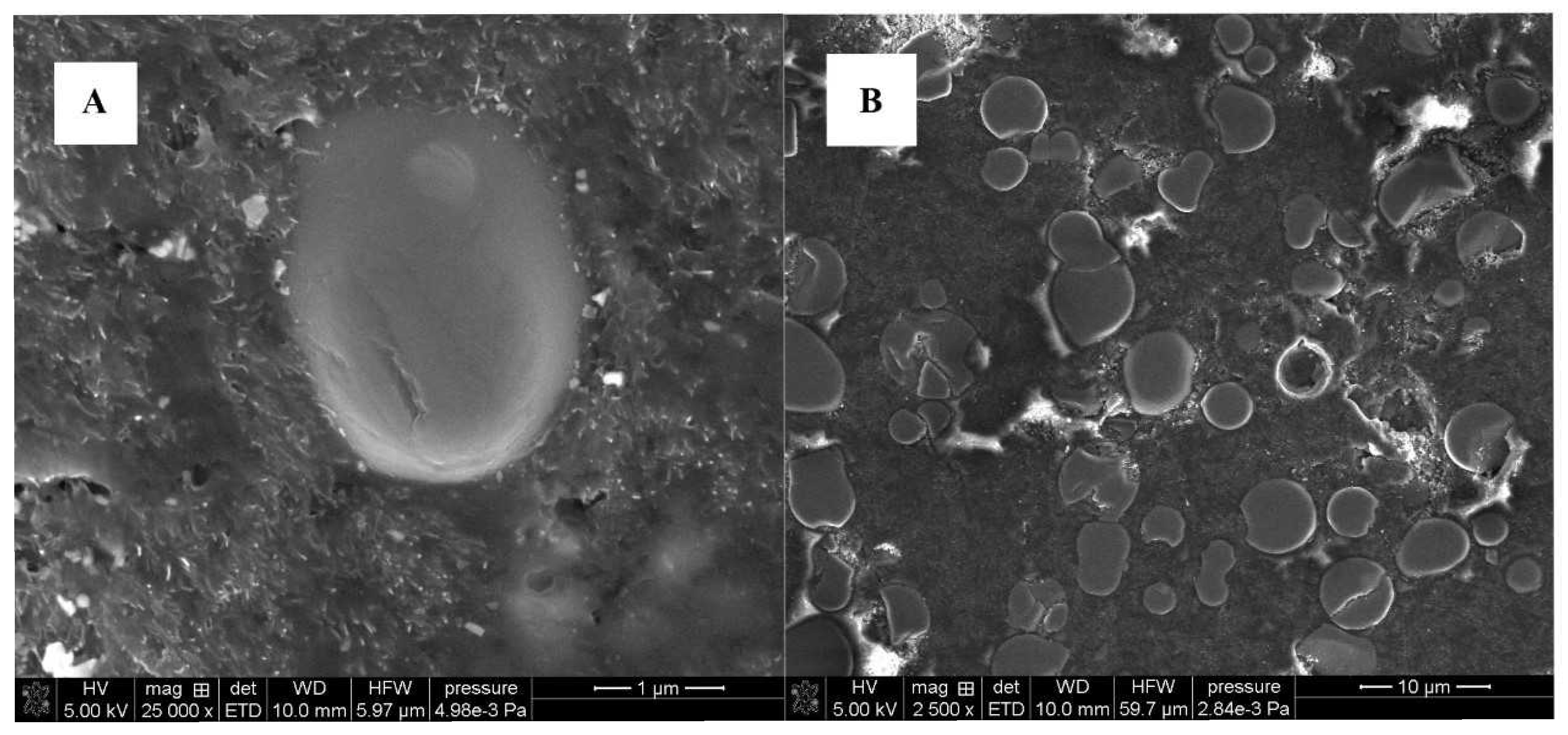
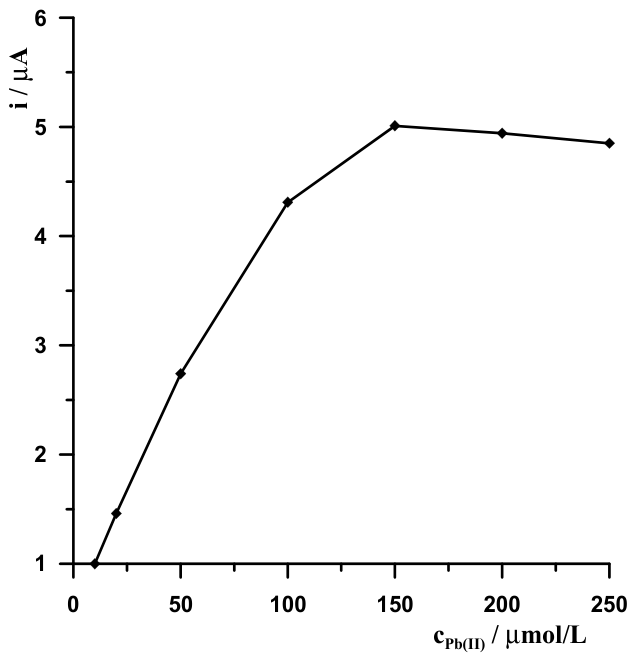
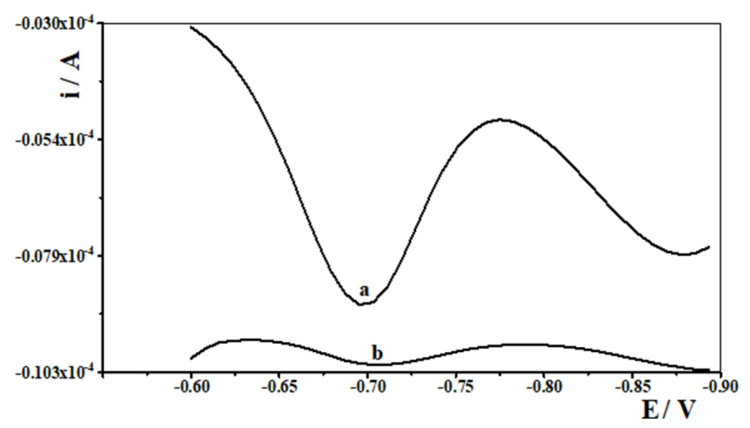
3.1. Modification of the CNTs/SGC Electrode
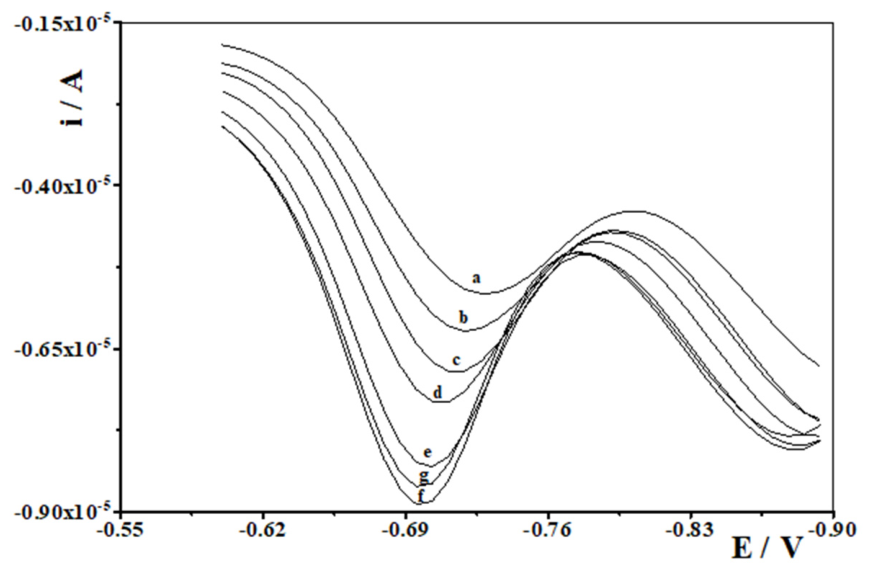
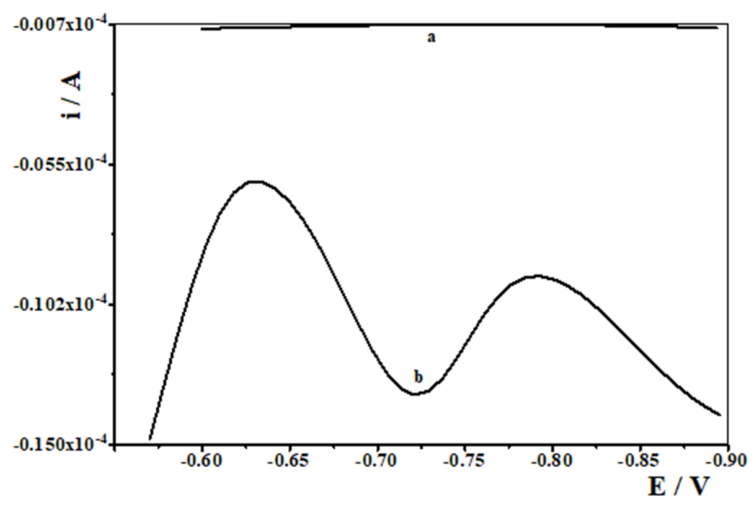
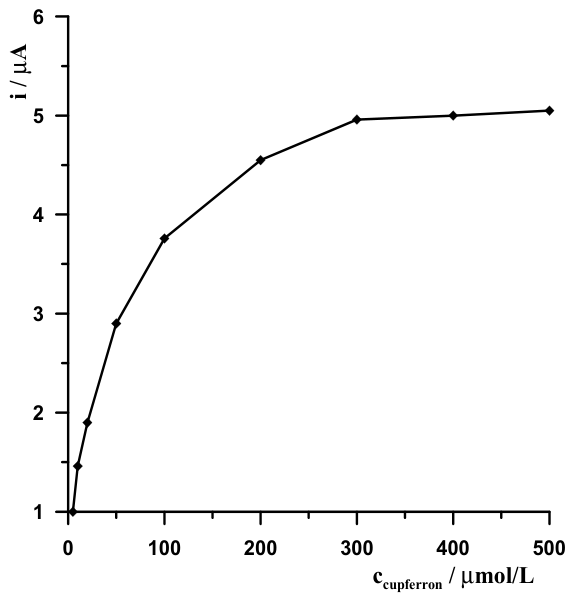
3.2. Cupferron as a Complexing Agent for V(V)
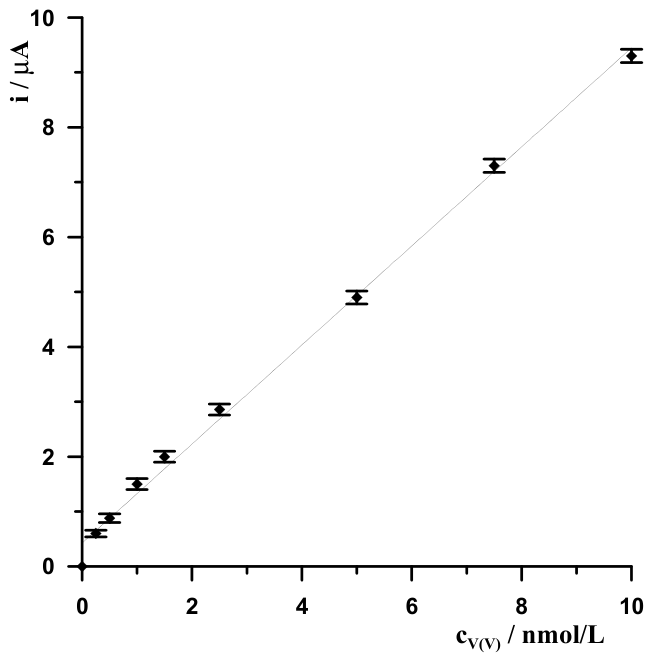
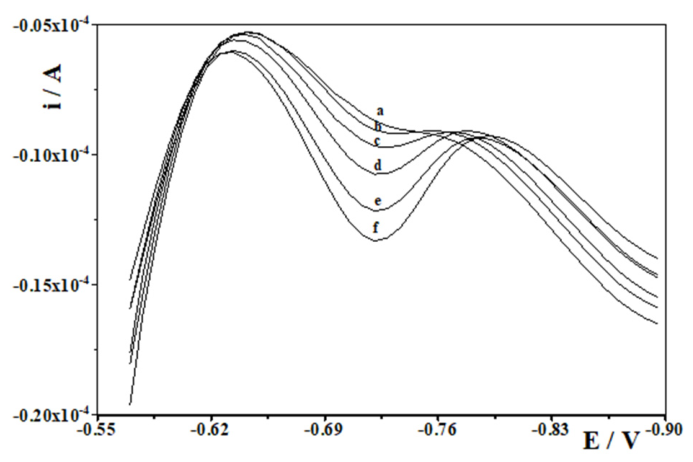
3.3. Calibration and Detection Limit
3.4. The Repeatability and Precision
3.5. Selectivity
3.6. Single-Level Spike-Recovery Study
4. Conclusions
- -
- A lead-film-modified CNTs/SGC electrode may offer a valuable alternative for the determination of V(V) using stripping voltammetry;
- -
- A low detection limit of 0.08 nmol/L was achieved, combined with good repeatability and precision;
- -
- The procedure exhibits good selectivity for the determination of V(V) relative to many other metal ions;
- -
- The developed procedure is simple and rapid; thanks to the combination of electrode modification and analyte accumulation in a single step, the total measurement time is just over a minute;
- -
- As demonstrated, direct analysis of environmental water samples is possible.
Author Contributions
Funding
Institutional Review Board Statement
Informed Consent Statement
Data Availability Statement
Conflicts of Interest
References
- Peng, H.; Guo, J.; Li, B.; Huang, H. Vanadium properties, toxicity, mineral sources and extraction methods: A review. Environ. Chem. Lett. 2022, 20, 1249–1263. [Google Scholar] [CrossRef] [Scilit]
- Naseer, M.U.H.; Pan, B.; Wang, S.; Lyu, Y.; Liu, B.; Li, L.; Qi, J.; Du, H. A comprehensive review of advancements in vanadium electrolyte preparation for Vanadium Redox Flow Batteries. J. Environ. Chem. Eng. 2025, 13, 118402. [Google Scholar] [CrossRef] [Scilit]
- Jang, J.; Wang, Y.; Gao, X.; Zuo, R.; Song, L.; Jin, C.; Wang, J.; Teng, Y. Vanadium: A review of different extraction methods to evaluate bioavailability and speciation. Minerals 2022, 15, 642. [Google Scholar]
- Khalifa, H.; El-Kady, A. Effects of vanadium on structure and tensile properties of tempcore steel bars. Mater. Sci. Appl. 2022, 13, 342–357. [Google Scholar]
- Ferreira, S.C.; Pereira, J.; Almeida, L.C.; Santoa, L.B.; Lemos, V.A.; Novaes, C.G.; de Oliveira, O.M.C.; Queiroz, A.F.S. Strategies for inorganic speciation analysis employing spectrometric techniques–Review. Microchem. J. 2020, 153, 104402. [Google Scholar] [CrossRef] [Scilit]
- Gonzalez, E.B.; Sanz-Medel, A. Chapter 4 Liquid chromatographic techniques for trace element speciation analysis. Compr. Anal. Chem. 2000, 33, 81–121. [Google Scholar] [CrossRef] [Scilit]
- Han, H.; Pan, D. Voltammetric methods for speciation analysis of trace metals in natural waters. Trends Environ. Anal. Chem. 2021, 29, e00119. [Google Scholar] [CrossRef] [Scilit]
- Barek, J.; Fogg, A.G.; Muck, A.; Zima, J. Polarography and voltammetry at mercury electrodes. Crit. Rev. Anal. Chem. 2001, 31, 291–309. [Google Scholar] [CrossRef] [Scilit]
- Puglia, M.K.; Bowen, P.K. Cyclic voltammetry study of noble metals and their alloys for use in implantable electrodes. ACS Omega 2022, 7, 2c03563. [Google Scholar] [CrossRef] [Scilit]
- Kangmennaa, A.; Forkuo, R.B.; Agorku, E.S. Carbon-based electrode materials for sensor application: A review. Sens. Technol. 2024, 2, 2350174. [Google Scholar]
- Dansby-Sparks, R.; Chambers, J.Q.; Xue, Z.L. Trace vanadium analysis by catalytic adsorptive stripping voltammetry using mercury-coated micro-wire and polystyrene-coated bismuth film electrodes. Anal. Chim. Acta 2009, 643, 19–25. [Google Scholar] [PubMed]
- Grabarczyk, M.; Adamczyk, M.; Wlazlowska, E. The use of a solid bismuth microelectrode for vanadium quantification by adsorptive stripping voltammetry in environmental water samples. Molecules 2022, 27, 2168. [Google Scholar] [CrossRef] [Scilit] [PubMed]
- Steimecke, M.; Rummler, S.D.; Kuhhirt, M.; Bron, M. A linear sweep voltammetric procedure applied to scanning electrochemical microscopy for the characterization of carbon materials towards the vanadium(IV)/(V) redox system. ChemElectroChem 2016, 3, 318–322. [Google Scholar]
- Li, Y.H.; Wang, Y.X.; Huang, M.H. Determination of trace vanadium by adsorptive stripping voltammetry at a carbon paste electrode. Electroanalysis 2008, 13, 1440–1444. [Google Scholar] [CrossRef] [Scilit]
- Grabarczyk, M.; Adamczyk, M. Application of electrochemical sensor based on lead film electrode in trace Vanadium(V) determination by adsorptive stripping voltammetry. IEEE Sens. J. 2019, 19, 5916–5922. [Google Scholar]
- Wang, J.; Lu, D.; Thongngamdee, S.; Lin, Y.; Sadik, O.A. Catalytic adsorptive stripping voltammetric measurements of trace vanadium at bismuth film electrodes. Talanta 2006, 69, 914–917. [Google Scholar] [CrossRef] [Scilit] [PubMed]
- Tyszczuk–Rotko, K.; Gorylewski, D.; Kozak, J. Supporting electrolyte manipulation for simple improvement of the sensitivity of trace Vanadium(V) determination at a lead–coated glassy carbon electrode. Sensors 2022, 22, 8209. [Google Scholar] [PubMed]
- Deng, P.H.; Fei, J.J.; Feng, Y.L. Determination of trace vanadium(V) by adsorptive anodic stripping voltammetry on an acetylene black paste electrode in the presence of alizarin violet. J. Electroanal. Chem. 2010, 648, 85–91. [Google Scholar] [CrossRef] [Scilit]
- Shooshtari, M.; Salehi, A. An electronic nose based on carbon nanotube-titanium dioxide hybrid nanostructures for detection and discrimination of volatile organic compounds. Sens. Actuators B Chem. 2022, 357, 131418. [Google Scholar] [CrossRef] [Scilit]
- Shooshtari, M.; Sacco, L.N.; Van Ginkiel, J.; Vollebreght, S.; Salehi, A. Enhancement of room temperature ethanol sensing by optimizing the density of vertically aligned carbon nanofibers decorated with gold nanoparticles. Materials 2022, 15, 1383. [Google Scholar] [CrossRef] [Scilit] [PubMed]
- Porto, L.S.; Silva, D.N.; Ferreira de Oliveira, A.E.; Pereira, A.C.; Borges, K.B. Carbon nanomaterials: Synthesis and applications to development of electrochemical sensors in determination of drugs and compounds of clinical interest. Rev. Anal. Chem. 2020, 38, 20190017. [Google Scholar]
- Deng, P.H.; Fei, J.J.; Li, J.N. Trace determination of vanadium(V) using anodic adsorptive voltammetry at a glassy carbon electrode modified with multi-walled carbon nanotubes. Microchim. Acta 2009, 165, 211–216. [Google Scholar]
- Grabarczyk, M.; Wlazłowska, E.; Adamczyk, M. Carbon nanotubes as a suitable material for electrochemical sensor used in voltammetric determinations of titanium. Appl. Nanosci. 2023, 13, 6841–6848. [Google Scholar] [CrossRef] [Scilit]
- Chen, G.; Liu, H. Understanding the reduction kinetics of aqueous vanadium(V) and transformation products using rotating ring-disk electrodes. Environ. Sci. Technol. 2017, 51, 11643–11651. [Google Scholar]
- Wang, J.; Tian, B.; Lu, J. Adsorptive–catalytic stripping measurements of ultratrace vanadium in the presence of cupferron and bromate. Talanta 1992, 39, 1273–1276. [Google Scholar] [PubMed]
- Vega, M.; van den Berg, C.M. Determination of vanadium in sea water by catalytic adsorptive cathodic stripping voltammetry. Anal. Chim. Acta 1994, 293, 19–28. [Google Scholar] [CrossRef] [Scilit]
- Ensafi, A.A.; Khayamian, T.; Khaloo, S.S. Simultaneous determination of trace amounts of vanadium and molybdenum in water and foodstuff samples using adsorptive cathodic stripping voltammetry. Int. J. Food Sci. Technol. 2008, 43, 416–422. [Google Scholar] [CrossRef] [Scilit]
- Vukomanovic, D.V.; Vanloon, G.W. Voltammetric determination of vanadium with adsorptive preconcentration of the pyrocatechol violet complex. Talanta 1994, 14, 387–394. [Google Scholar] [CrossRef] [Scilit]
- Rojas–Romo, C.; Arancibia, V.; Costa, D.M.; Tapia, R.A. Highly sensitive determination of Vanadium(V) by catalytic adsorptive stripping voltammetry. Substituent effect on sensitivity III. Sens. Actuators B Chem. 2015, 224, 772–779. [Google Scholar]
- Adeloju, S.B.O.; Pablo, F. Adsorptive cathodic stripping voltammetric determination of ultra–trace concentrations of vanadium on a glassy carbon mercury film electrode. Anal. Chim. Acta 1994, 288, 157–166. [Google Scholar]
- Povar, I.; Cazac, T.; Chiriac, L.; Sandulescu, R. Catalytic–adsorptive determination of vanadium in solutions of 2,3–dihydroxybenzaldehide and bromate–ions. J. Electroanal. Chem. 2011, 661, 275–279. [Google Scholar]
- Li, H.; Smart, R.B. Catalytic stripping voltammetry of vanadium in the presence of dihydroxynaphthalene and bromate. Anal. Chim. Acta 1996, 333, 131–138. [Google Scholar] [CrossRef] [Scilit]
- Stadlober, M.; Kalcher, K.; Raber, G. Anodic stripping voltammetric determination of vanadium(V) using a carbon paste electrode modified in situ with cetyltrimethylammonium bromide. Electroanalysis 1997, 9, 225–230. [Google Scholar] [CrossRef] [Scilit]
- Greenway, G.M.; Woleauer, G. On–line determination of vanadium by adsorptive stripping voltammetry. Anal. Chim. Acta 1995, 312, 15–25. [Google Scholar]
- Abbasi, S.; Khani, H.; Sahraei, R. A highly sensitive adsorptive stripping voltammetric method for simultaneous determination of lead and vanadium in foodstuffs. Food Anal. Methods 2012, 5, 272–278. [Google Scholar]
- Bobrowski, A.; Nowak, K.; Zarebski, J. Novel voltammetric methods for vanadium determination by exploitation of catalytic adsorptive vanadium–chloranilic acid–bromate system. Anal. Chim. Acta 2005, 543, 150–155. [Google Scholar]
- Piech, R.; Baś, B.; Paczosa–Bator, B.; Kubiak, W.W. Adsorptive stripping voltammetric determination of vanadium(V) witch chloranilic acid using cyclic renewable mercury film silver based electrode. J. Electroanal. Chem. 2009, 633, 333–338. [Google Scholar] [CrossRef] [Scilit]
- Sander, S. Simultaneous adsorptive stripping voltammetric determination of molybdenum(VI), uranium(VI), vanadium(V), and antimony(III). Anal. Chim. Acta 1999, 394, 81–89. [Google Scholar]



| Sample | Concentration of V(V) [nmol/L] | Recovery [%] | RSD (n = 3) [%] | ||
|---|---|---|---|---|---|
| Original | Added | Found | |||
| River water | - | 2.50 | 2.42 | 96.8 | 5.2 |
| Lake water | - | 2.50 | 2.38 | 95.2 | 6.1 |
| Mineral water | - | 2.50 | 2.47 | 98.8 | 4.4 |
Disclaimer/Publisher’s Note: The statements, opinions and data contained in all publications are solely those of the individual author(s) and contributor(s) and not of MDPI and/or the editor(s). MDPI and/or the editor(s) disclaim responsibility for any injury to people or property resulting from any ideas, methods, instructions or products referred to in the content. |
© 2026 by the authors. Licensee MDPI, Basel, Switzerland. This article is an open access article distributed under the terms and conditions of the Creative Commons Attribution (CC BY) license.
Share and Cite
Grabarczyk, M.; Wardak, C. Advanced Carbon Nanomaterials for Electrochemical Sensing in the Determination of Trace V(V) Concentrations. Materials 2026, 19, 2769. https://doi.org/10.3390/ma19132769
Grabarczyk M, Wardak C. Advanced Carbon Nanomaterials for Electrochemical Sensing in the Determination of Trace V(V) Concentrations. Materials. 2026; 19(13):2769. https://doi.org/10.3390/ma19132769
Chicago/Turabian StyleGrabarczyk, Malgorzata, and Cecylia Wardak. 2026. "Advanced Carbon Nanomaterials for Electrochemical Sensing in the Determination of Trace V(V) Concentrations" Materials 19, no. 13: 2769. https://doi.org/10.3390/ma19132769
APA StyleGrabarczyk, M., & Wardak, C. (2026). Advanced Carbon Nanomaterials for Electrochemical Sensing in the Determination of Trace V(V) Concentrations. Materials, 19(13), 2769. https://doi.org/10.3390/ma19132769