Mechanical and Microstructural Behavior of Drinking Water Treatment Sludge Stabilized with Eggshell-Derived Hydrated Lime and Commercial Lime

 , , , and
Abstract
1. Introduction
2. Materials and Methods
2.1. Materials
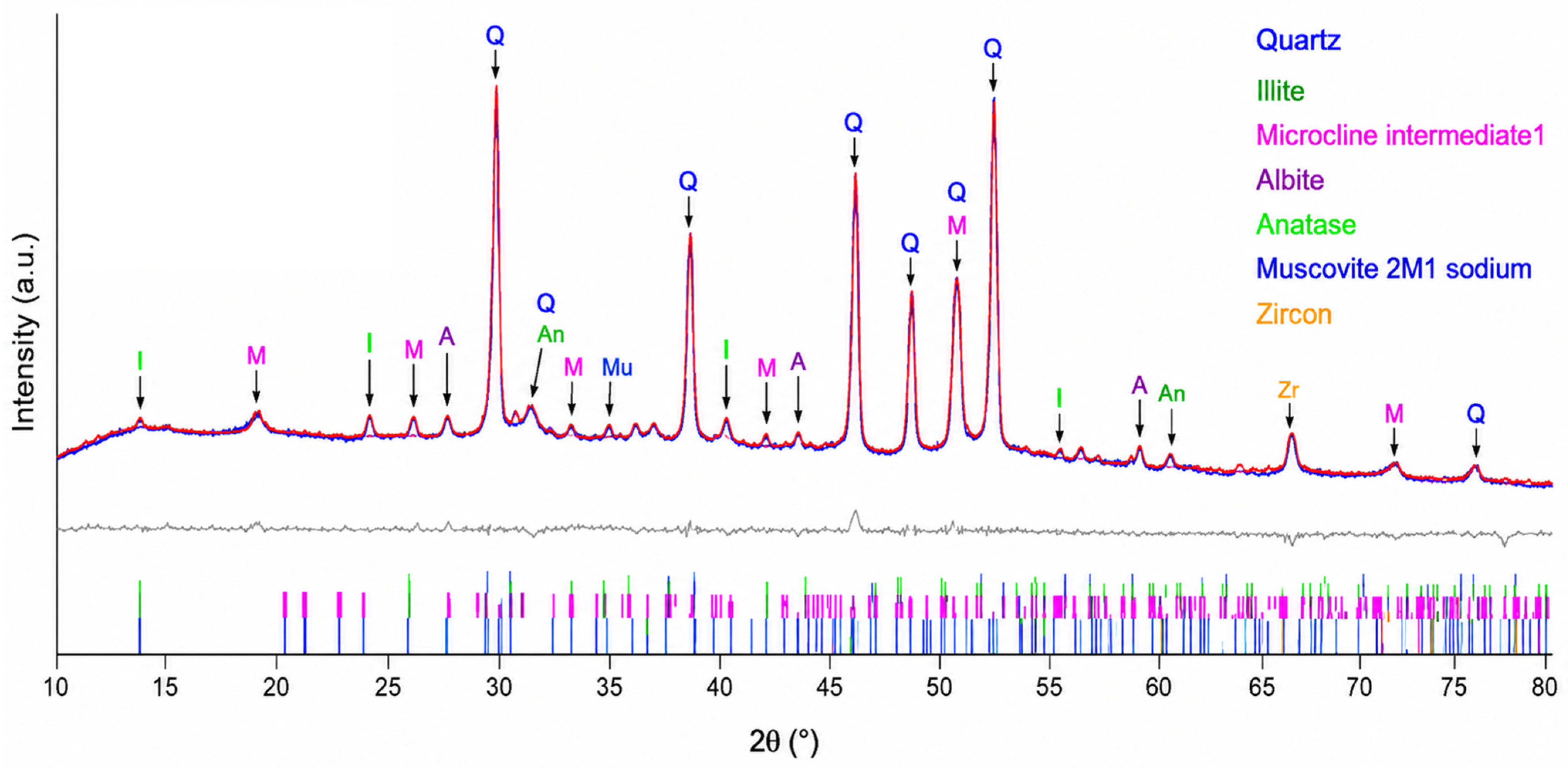
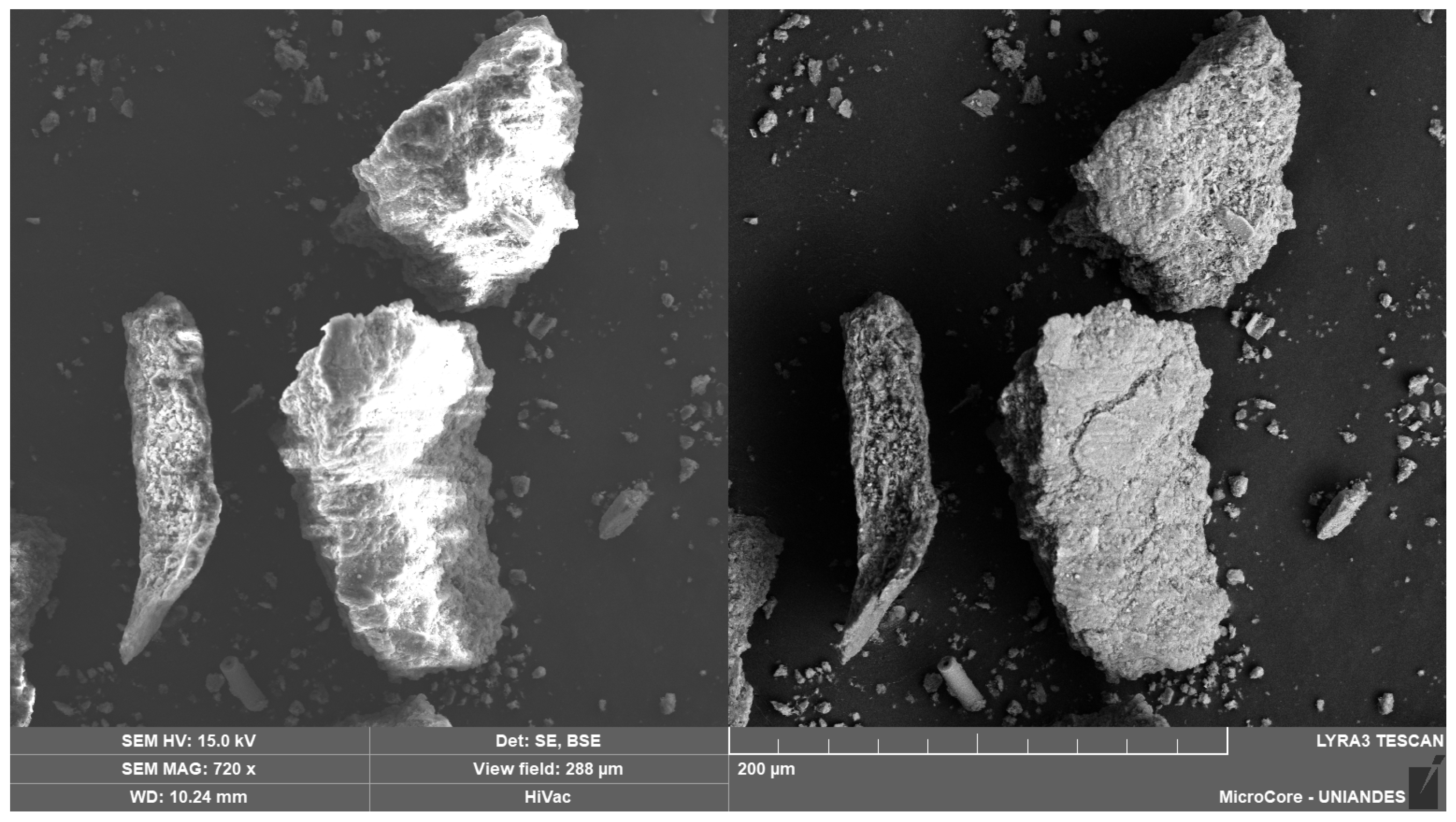
2.1.1. Drinking Water Treatment Sludge
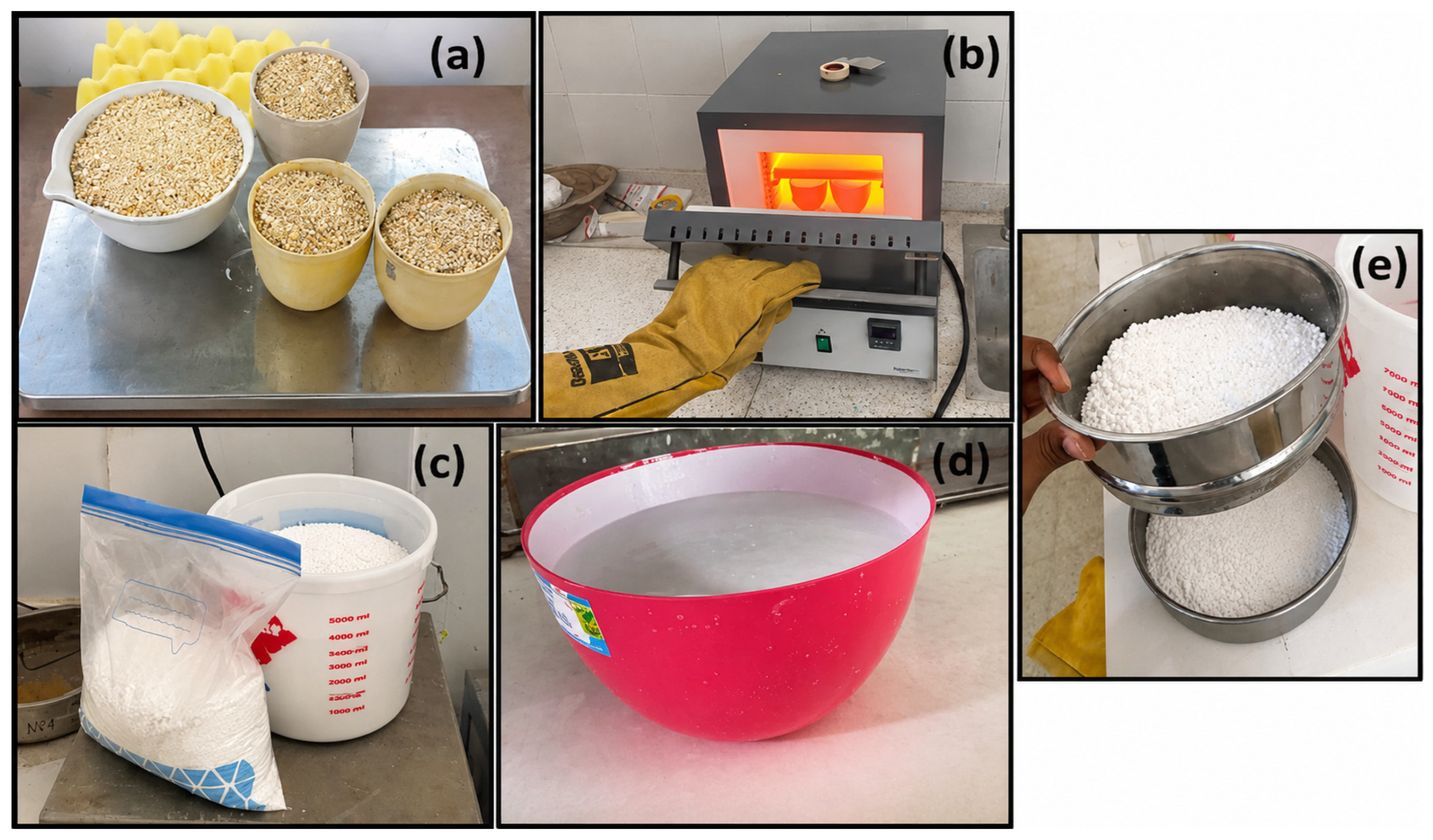
2.1.2. Eggshell-Derived Lime
2.1.3. Commercial Lime
2.1.4. Alkaline Activator
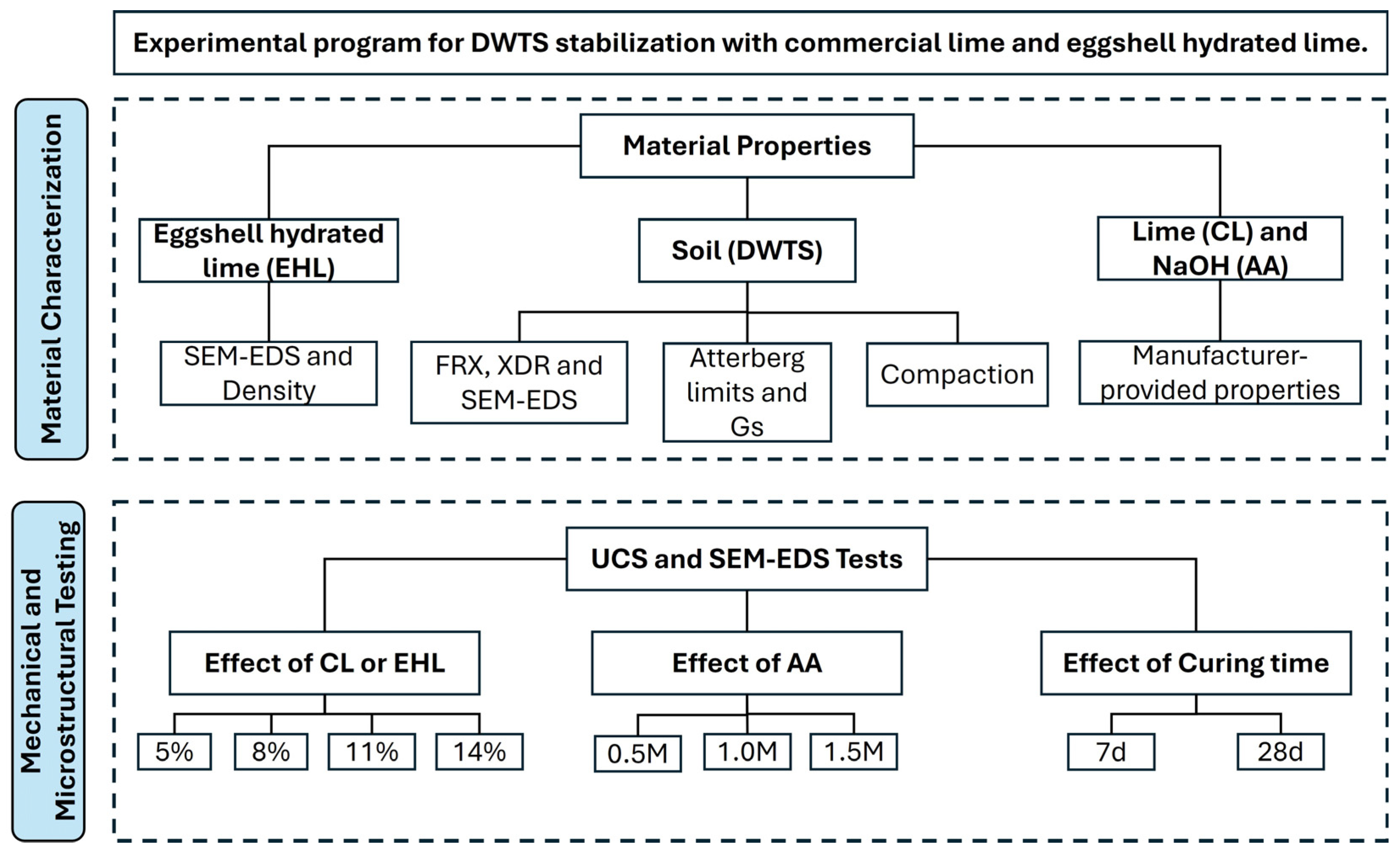
2.2. Methodology
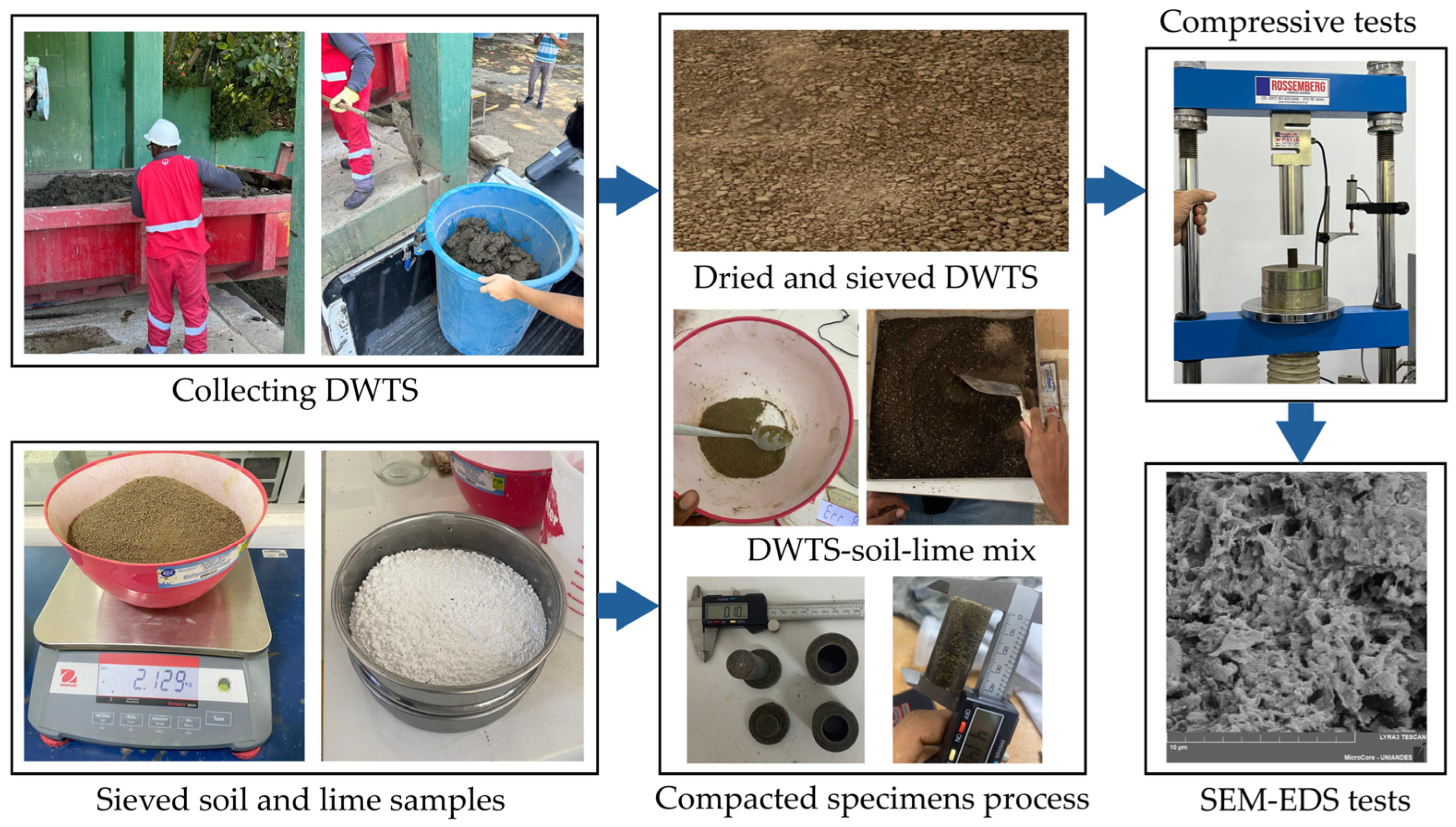
2.2.1. Specimen Molding and Preparation
2.2.2. The qu Test
2.2.3. Statistical Analysis
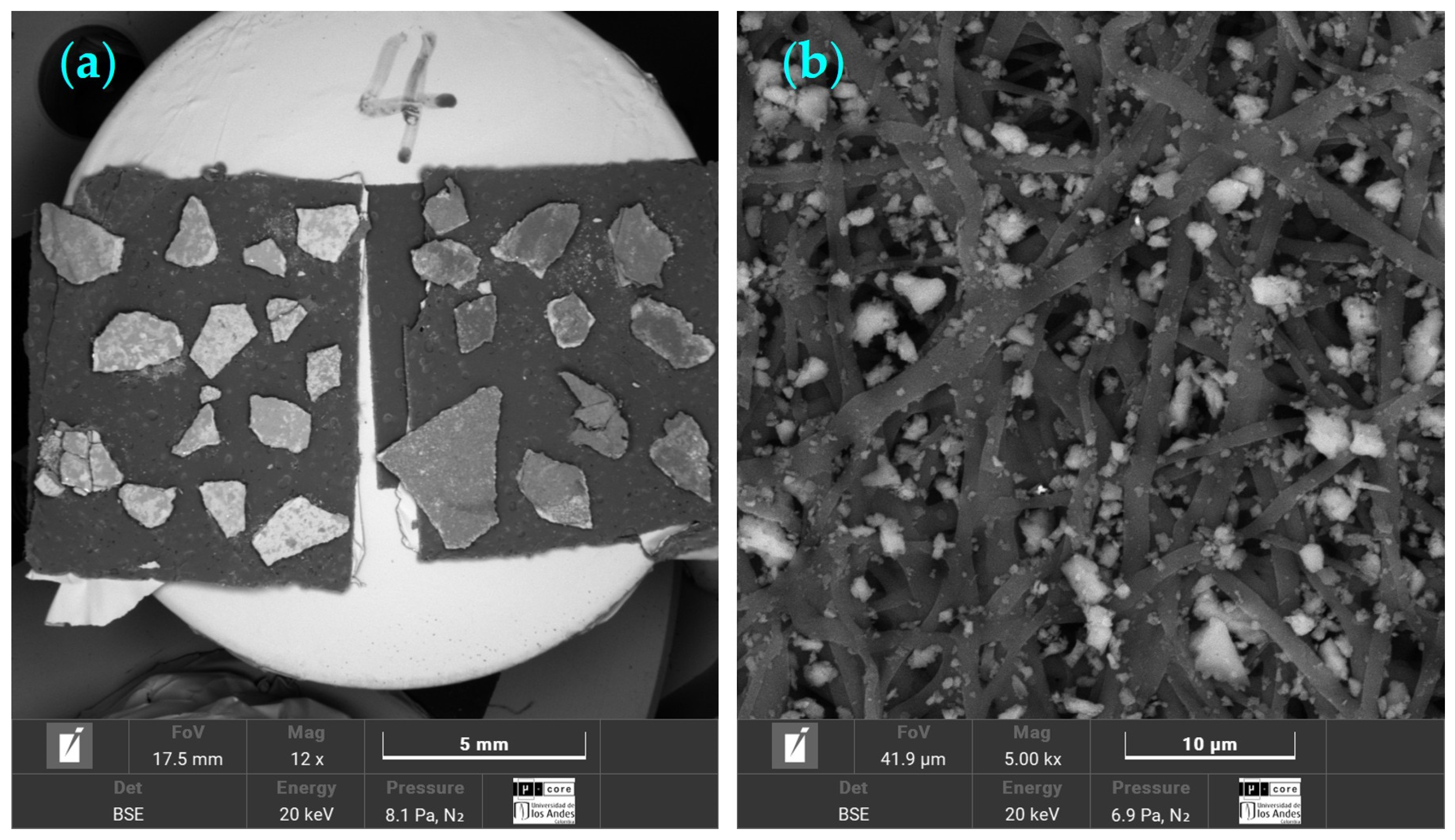
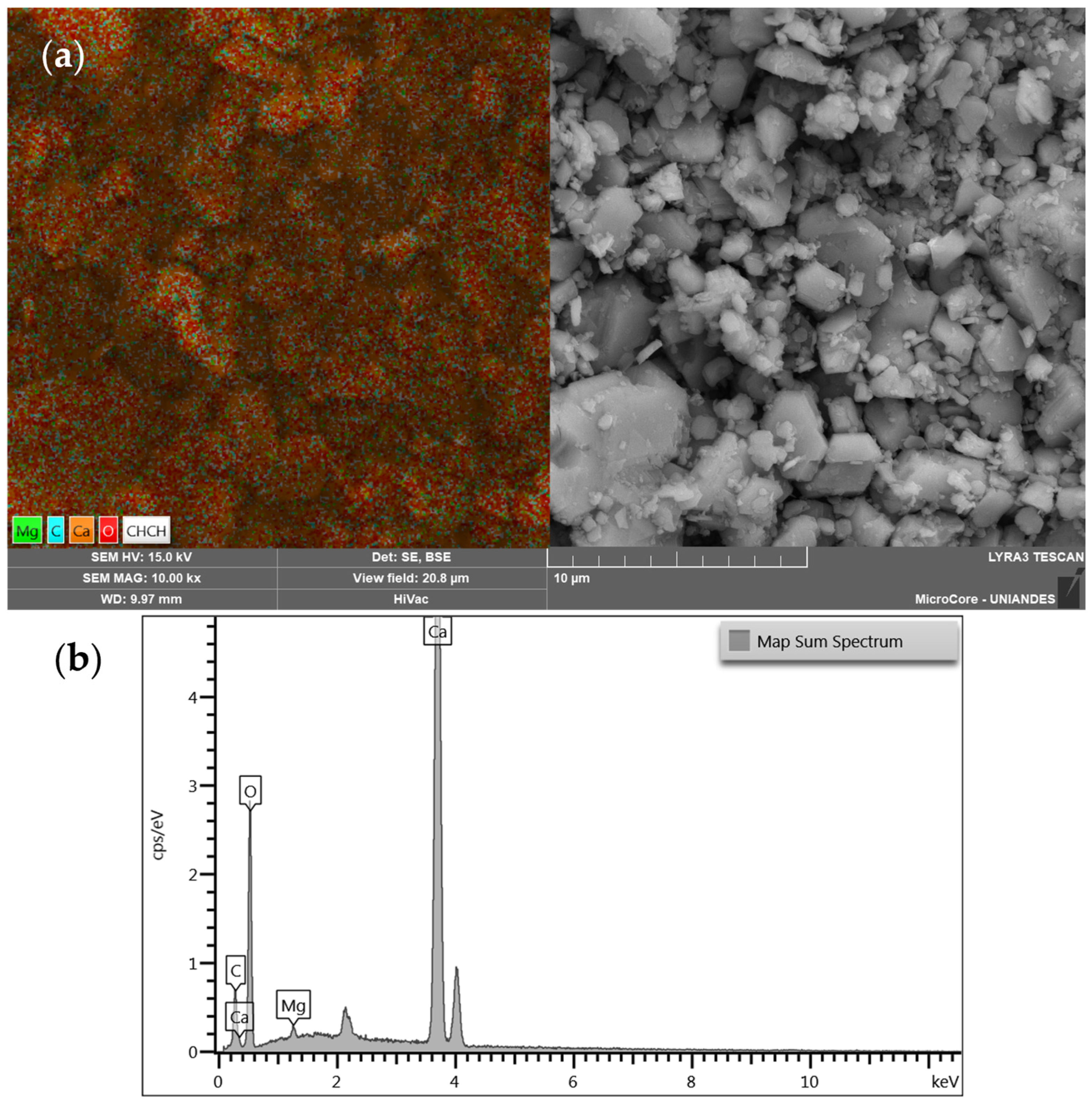
2.2.4. Microstructural Analysis
3. Results and Discussion
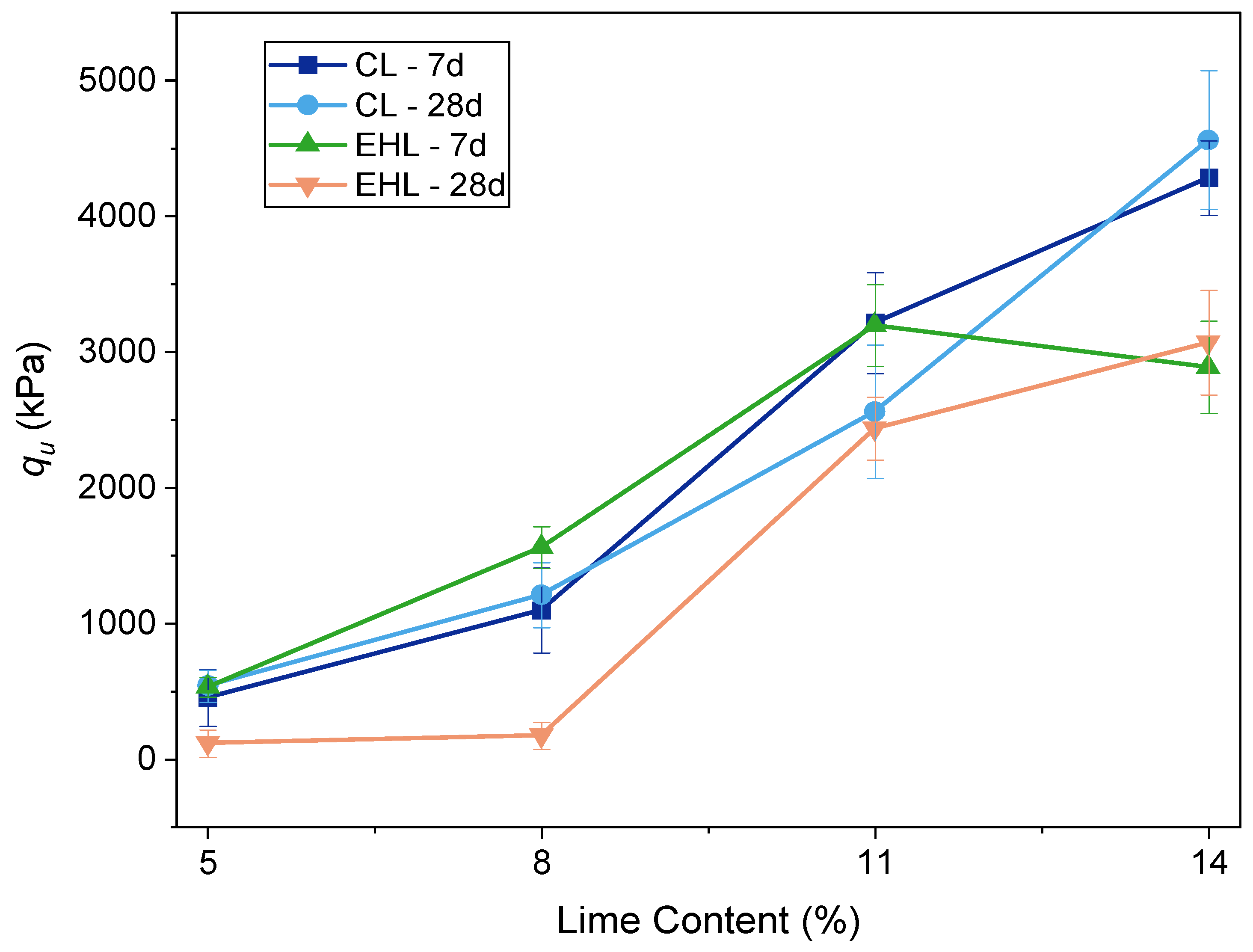
3.1. Comparison of DWTS Samples Stabilized with CL and EHL Without NaOH at 7 and 28 Days of Curing
3.2. Influence of NaOH as an Alkaline Activator in DWTS–EHL Mixtures
3.3. Failure Pattern
3.4. Statistical Analysis of DWTS Stabilized with Alkaline-Activated EHL After 7 and 28 Days of Curing
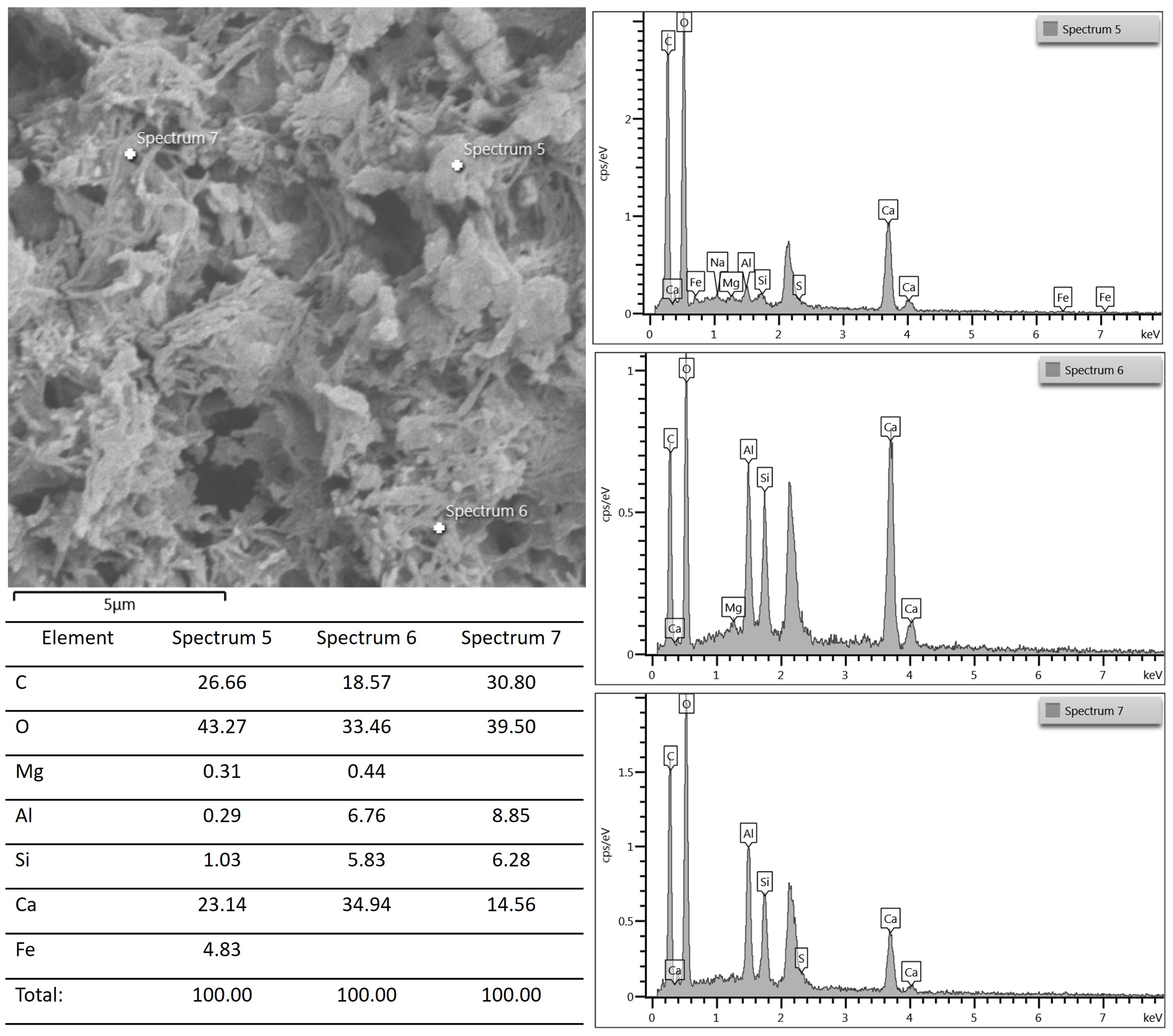
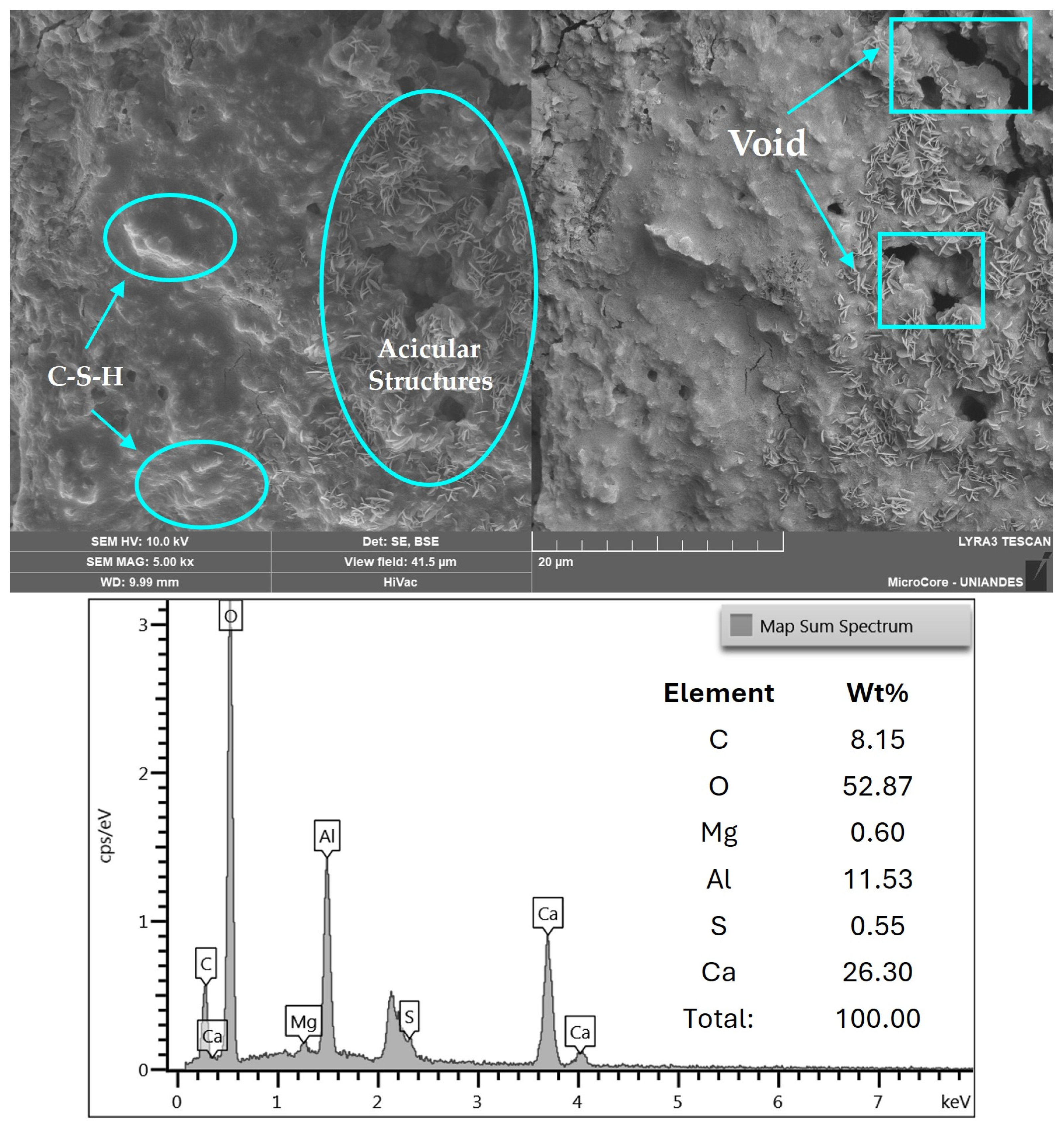
3.5. SEM-EDS Microanalysis
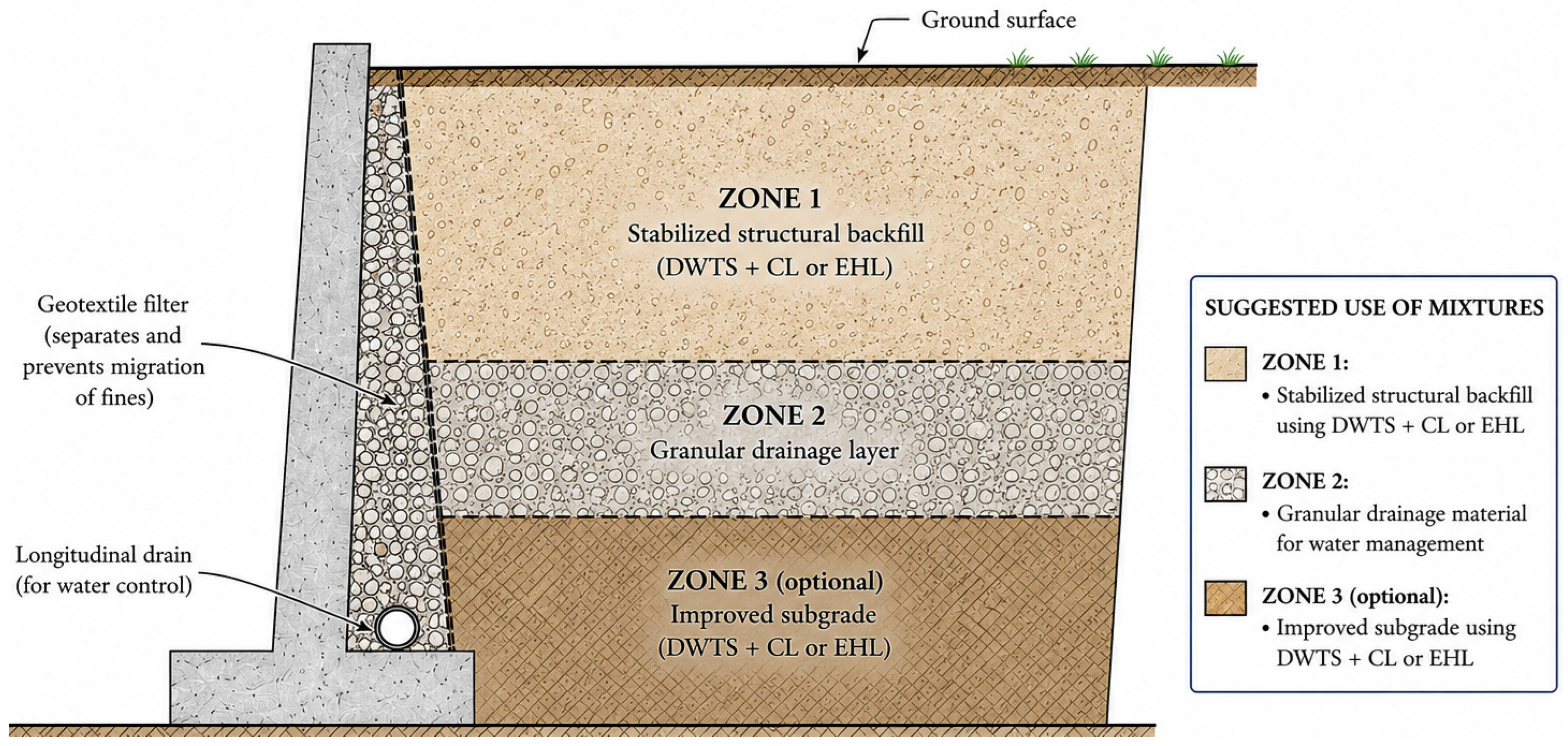
4. Engineering Applications of Improved DWTS
5. Conclusions
- −
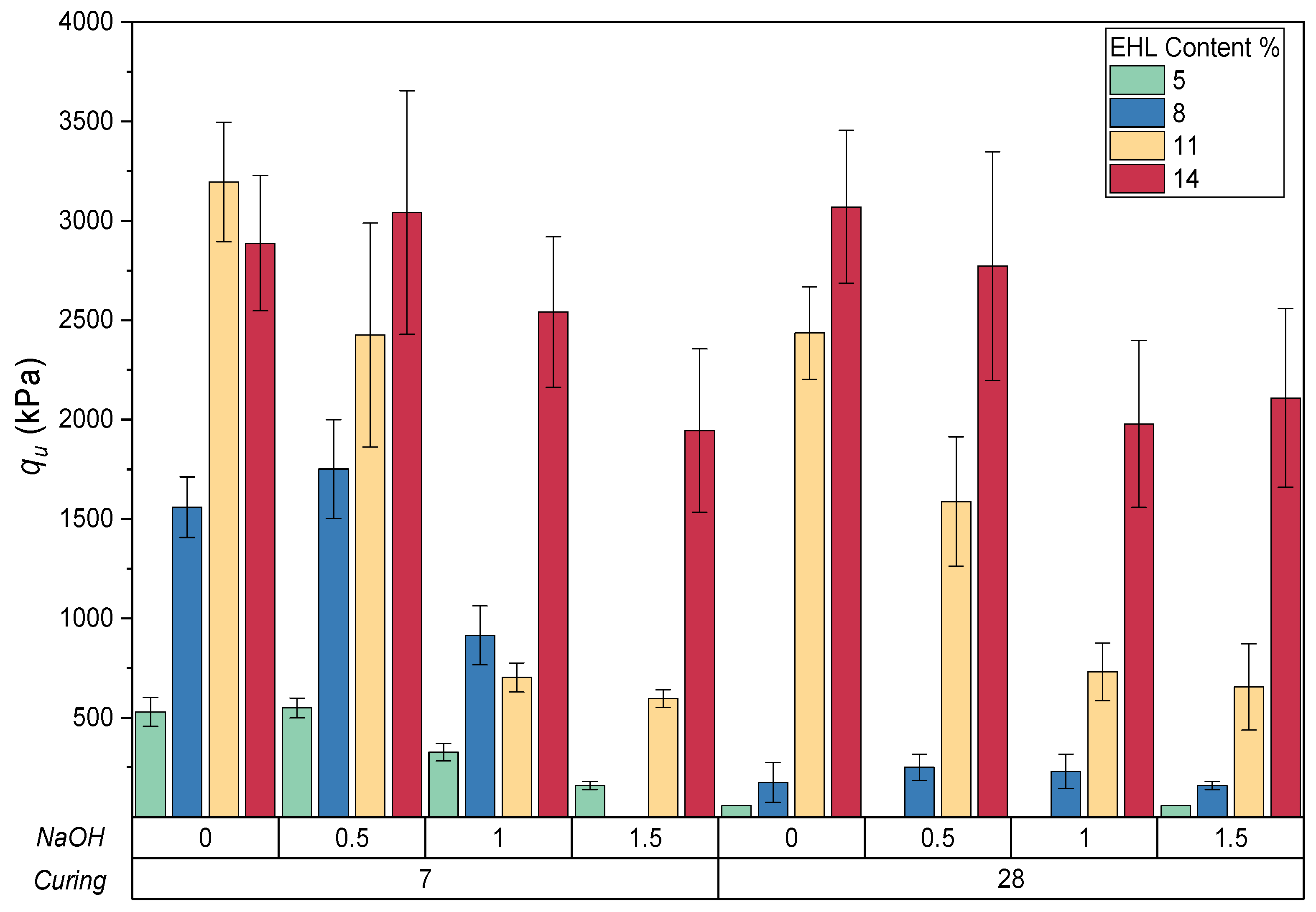
- Commercial lime exhibited the best overall mechanical performance, reaching a maximum unconfined compressive strength of 4561.72 kPa with 14% addition after 28 days of curing. In contrast, EHL showed a competitive, although less uniform, behavior. The highest qu obtained with this material was 3195.13 kPa with 11% EHL after 7 days, while at 28 days the maximum value reached 3070.02 kPa with 14% EHL. These results indicate that eggshell waste can serve as an alternative calcium source for DWTS stabilization, particularly at medium and high levels.
- −
- Alkaline activation with NaOH did not improve the performance of the DWTS–EHL system. Increasing NaOH molarity progressively reduced the qu, particularly at 1.0 and 1.5 M, suggesting that, under the evaluated conditions, NaOH does not act as an efficient activator for this type of sludge. This behavior may be attributed to the low CaO content, the high aluminosilicate fraction, the elevated plasticity, and the presence of microcracks, organic matter, and salts, all of which limit the formation of a continuous cementitious matrix.
- −
- The most suitable stabilization route for this DWTS is calcium-based rather than sodium-alkaline. Commercial lime at 14% provided the highest mechanical strength, while EHL without NaOH emerges as a technically and environmentally viable alternative. Nevertheless, life cycle assessment and sustainability analyses are recommended to comprehensively validate the reuse of both DWTS and EHL in stabilization applications.
- −
- This study was limited to a single DWTS source and short-term curing periods. Additional studies evaluating durability, permeability, cyclic wet–dry performance, and field-scale applicability are required.
Author Contributions
Funding
Institutional Review Board Statement
Informed Consent Statement
Data Availability Statement
Acknowledgments
Conflicts of Interest
Abbreviations
| AA | Alkaline activator |
| AFt | Alumina–ferric oxide–trisulfate phase |
| ANOVA | Analysis of variance |
| ASTM | American Society for Testing and Materials |
| BSE | Backscattered electrons |
| C–A–H | Calcium aluminate hydrate |
| C–A–S–H | Calcium aluminosilicate hydrate |
| C–S–H | Calcium silicate hydrate |
| CBR | California Bearing Ratio |
| CEC | Cation exchange capacity |
| CL | Commercial lime |
| DWTS | Drinking water treatment sludge |
| EDS | Energy-dispersive X-ray spectroscopy |
| EHL | Eggshell-derived hydrated lime |
| ESP | Eggshell powder |
| FA | Fly ash |
| GGBS | Ground granulated blast-furnace slag |
| Gs | Specific gravity |
| LOI | Loss on ignition |
| NaOH | Sodium hydroxide |
| OPC | Ordinary Portland cement |
| P.I. | Plasticity index |
| P.L. | Plastic limit |
| ppm | Parts per million |
| qu | Unconfined compressive strength |
| R2 | Coefficient of determination |
| SE | Secondary electrons |
| SEM | Scanning electron microscopy |
| SEM–FIB | Scanning electron microscopy–focused ion beam |
| SPSS | Statistical Package for the Social Sciences |
| SS/SH | Sodium silicate/sodium hydroxide ratio |
| WDS-XRF | Wavelength-dispersive X-ray fluorescence |
| wt.% | Weight percent |
| WTS | Water treatment sludge |
| XRD | X-ray diffraction |
| XRF | X-ray fluorescence |
References
- Bakiroglu, G.; Yaras, A. Utilization of Drinking Water Treatment Sludge and Eggshells as Clay Substitute in Porous Brick Manufacturing: Target Zero Waste. Constr. Build. Mater. 2025, 495, 143708. [Google Scholar] [CrossRef] [Scilit]
- Li, P.; Sun, F.; Dong, Y.; Wen, L.; Lin, L.; Li, X. Utilization of Drinking Water Treatment Sludge with Coal Fly Ash to Make Permeable Bricks for Low Impact Development. Resour. Conserv. Recycl. 2025, 212, 107932. [Google Scholar] [CrossRef] [Scilit]
- Gencel, O.; Kazmi, S.M.S.; Munir, M.J.; Sutcu, M.; Erdogmus, E.; Yaras, A. Feasibility of Using Clay-Free Bricks Manufactured from Water Treatment Sludge, Glass, and Marble Wastes: An Exploratory Study. Constr. Build. Mater. 2021, 298, 123843. [Google Scholar] [CrossRef] [Scilit]
- Rabab’ah, S.R.; Al Hattamleh, O.H.; Taamneh, M.M.; Al-Manaseer, S.F.; Taamneh, M.O.; Alshorman, Y.M. Enhancing Sustainability in Pavement Construction: Investigating the Impact of Water Treatment Sludge on Lime-Stabilized Soil Properties. Innov. Infrastruct. Solut. 2025, 10, 451. [Google Scholar] [CrossRef] [Scilit]
- Liu, Y.; Zhuge, Y.; Chow, C.W.K.; Keegan, A.; Li, D.; Pham, P.N.; Huang, J.; Siddique, R. Utilization of Drinking Water Treatment Sludge in Concrete Paving Blocks: Microstructural Analysis, Durability and Leaching Properties. J. Environ. Manag. 2020, 262, 110352. [Google Scholar] [CrossRef] [Scilit] [PubMed]
- Boscov, M.E.G.; Tsugawa, J.K.; Montalvan, E.L.T. Beneficial Use of Water Treatment Sludge in Geotechnical Applications as a Sustainable Alternative to Preserve Natural Soils. Sustainability 2021, 13, 9848. [Google Scholar] [CrossRef] [Scilit]
- Nawagamuwa, U.P.; Wijesooriya, N. Use of Flyash to Improve Soil Properties of Drinking Water Treatment Sludge. Int. J. Geo-Eng. 2018, 9, 3. [Google Scholar] [CrossRef] [Scilit]
- Kafle, B.; Baghbani, A. Sustainable Soil Stabilisation Using Water Treatment Sludge: Experimental Evaluation and Metaheuristic-Based Genetic Programming. Sustainability 2025, 17, 9919. [Google Scholar] [CrossRef] [Scilit]
- Tonini de Araújo, M.; Tonatto Ferrazzo, S.; Mansur Chaves, H.; Gravina da Rocha, C.; Cesar Consoli, N. Mechanical Behavior, Mineralogy, and Microstructure of Alkali-Activated Wastes-Based Binder for a Clayey Soil Stabilization. Constr. Build. Mater. 2023, 362, 129757. [Google Scholar] [CrossRef] [Scilit]
- Duan, W.; Zhuge, Y.; Chow, C.W.K.; Keegan, A.; Liu, Y.; Siddique, R. Mechanical Performance and Phase Analysis of an Eco-Friendly Alkali-Activated Binder Made with Sludge Waste and Blast-Furnace Slag. J. Clean. Prod. 2022, 374, 134024. [Google Scholar] [CrossRef] [Scilit]
- Duan, W.; Zhuge, Y.; Pham, P.N.; Chow, C.W.K.; Keegan, A.; Liu, Y. Utilization of Drinking Water Treatment Sludge as Cement Replacement to Mitigate Alkali–Silica Reaction in Cement Composites. J. Compos. Sci. 2020, 4, 171. [Google Scholar] [CrossRef] [Scilit]
- Bourzik, O.; Baba, K.; Akkouri, N.; Meshram, R.B.; Bouyakhsass, R.; Nounah, A. Life cycle assessment and thermophysical properties of a fly ash-based geopolymer containing drinking water treatment sludge. Environ. Sci. Pollut. Res. 2023, 30, 118989–119000. [Google Scholar] [CrossRef] [Scilit]
- Lu, Q.; Hu, R.; Wu, Z.; Gao, J. Study on Mechanical Properties and Microscopic Mechanism of Expansive Soil Improved by Eggshell Ash-Silica Fume Composite. Case Stud. Constr. Mater. 2026, 24, e05666. [Google Scholar] [CrossRef] [Scilit]
- Ardejani, M.S.; Pourkhorshid, M.; Hosseinpour, I.; Ahmadi, H.; Shalchian, M.M. Sustainable Stabilization of Kaolin Clay by Waste Eggshell Powder & Hemp Fibre: Mechanical & Microstructural Study. Results Eng. 2026, 30, 110424. [Google Scholar] [CrossRef] [Scilit]
- Kalita, A.; Singh, N.K.; Goswami, G.; Basack, S.; Karakouzian, M. Microstructural Analysis and Subgrade Improvement of Silty Sand Using Xanthan Gum Biopolymer and Eggshell Powder. CivilEng 2026, 7, 11. [Google Scholar] [CrossRef] [Scilit]
- Nierwinski, H.P.; Meneguz, B.K.; Silvani, C.; de Azevedo, V.B.; Barra, B.S.; Hastenpflug, D.; Heidemann, M. Sustainable Soil Stabilization Using Eggshell-Derived Lime: A Comparative Assessment Against Commercial Lime. Sustainability 2026, 18, 1442. [Google Scholar] [CrossRef] [Scilit]
- Alqaisi, R.; Le, T.M.; Khabbaz, H. Combined Effects of Eggshell Powder and Hydrated Lime on the Properties of Expansive Soils. Aust. Geomech. J. 2021, 56, 107–118. [Google Scholar]
- Hasriana, H.; Nursamiah, N.; Nabi, A.; Setiabudhi, I. Utilization of Egg Shells in Clay Soil Mixed with Cement on California Bearing Ration (CBR) Value. AIP Conf. Proc. 2025, 3370, 050005. [Google Scholar] [CrossRef] [Scilit]
- Chen, J.; Qiu, Z.; Zhang, L.; Yu, G.; Yin, J. Microstructural and Strength Behavior of Dredged Clay Stabilized with Lime and Eggshell Powder. Mar. Georesour. Geotechnol. 2026, 44, 1297–1313. [Google Scholar] [CrossRef] [Scilit]
- Eshghi, P.; Ahmadi, H.; Pourdada, A.; Niri, H.G. Enhancing Geomechanical Properties of Clayey Soils Through the Combined Application of Polypropylene Fibers and Eggshell Powder. Iran. J. Sci. Technol. Trans. Civ. Eng. 2025. [Google Scholar] [CrossRef] [Scilit]
- Tanyıldızı, M. Investigation of Eggshell Powder Addition on the Performance of Expansive Road Subgrade Stabilized with Alkali-Activated Corn Cob Ash. Constr. Build. Mater. 2025, 488, 142177. [Google Scholar] [CrossRef] [Scilit]
- Lacheheub, L.K.; Bouteldja, F.; Morvan, M.; Breul, P. Stabilisation of Marl Soil for Use in Compacted Embankments by Eggshell Quicklime and Zeolite. Civ. Environ. Eng. 2025, 21, 990–1004. [Google Scholar] [CrossRef] [Scilit]
- Yang, B.; Yin, Z.; Hasheminezhad, A.; Alsheyab, M.A.; Ceylan, H.; Kim, S. Enhancing Soil Engineering Properties with Eggshell Powder: A Laboratory-Based Approach to Sustainable Road Construction. J. Clean. Prod. 2025, 505, 145464. [Google Scholar] [CrossRef] [Scilit]
- ASTM D4318; Standard Test Methods for Liquid Limit, Plastic Limit and Plasticity Index of Soils. ASTM International: West Conshohocken, PA, USA, 2010.
- ASTM D854; Standard Test Methods for Specific Gravity of Soil Solids by Water Pycnometer. ASTM International: West Conshohocken, PA, USA, 2014.
- ASTM C977; Specification for Quicklime and Hydrated Lime for Soil Stabilization. ASTM International: West Conshohocken, PA, USA, 2018.
- ASTM C110; Test Methods for Physical Testing of Quicklime, Hydrated Lime, and Limestone. ASTM International: West Conshohocken, PA, USA, 2020.
- Baldovino, J.A.; Parra, J.D.T.; Nuñez de la Rosa, Y.E. Effects of Sodium Chloride in Soil Stabilization: Improving the Behavior of Clay Deposits in Northern Cartagena, Colombia. Sustainability 2025, 17, 8715. [Google Scholar] [CrossRef] [Scilit]
- López, L.C.S.; Ramos, J.C.L.; de la Rosa, Y.E.N.; Bruschi, G.J.; Baldovino, J.d.J.A. Stabilization of Clay Soils Using a Lime Derived from Seashell. Materials 2025, 18, 2723. [Google Scholar] [CrossRef] [Scilit] [PubMed]
- ASTM D1632-17e1; Standard Practice for Making and Curing Soil-Cement Compression and Flexure Test Specimens in the Laboratory. ASTM International: West Conshohocken, PA, USA, 2020.
- Baldovino, J.d.J.A.; de la Rosa, Y.E.N.; Calabokis, O.P.; Vergara, J.A.A.; López, L.C.S. Geotechnical Behavior of Xanthan Gum-Stabilized Clay Reinforced with Polypropylene Fibers. Polymers 2025, 17, 363. [Google Scholar] [CrossRef] [Scilit] [PubMed]
- Baldovino, J.d.J.; dos Santos Izzo, R.L.; da Silva, É.R.; Lundgren Rose, J. Sustainable Use of Recycled-Glass Powder in Soil Stabilization. J. Mater. Civ. Eng. 2020, 32, 04020080. [Google Scholar] [CrossRef] [Scilit]
- Ordoñez Muñoz, Y.; Luis dos Santos Izzo, R.; Leindorf de Almeida, J.; Arrieta Baldovino, J.; Lundgren Rose, J. The Role of Rice Husk Ash, Cement and Polypropylene Fibers on the Mechanical Behavior of a Soil from Guabirotuba Formation. Transp. Geotech. 2021, 31, 100673. [Google Scholar] [CrossRef] [Scilit]
- ASTM D2166-03; Standard Test Method for Unconfined Compressive Strength of Cohesive Soil. ASTM International: West Conshohocken, PA, USA, 2003.
- Shaji, S.; Divya, P.V. Sustainable Ground Improvement of Soft Clay Using Eggshell Lime and Rice Husk Ash. Constr. Build. Mater. 2024, 441, 137460. [Google Scholar] [CrossRef] [Scilit]
- Hasheminezhad, A.; Yang, B.; Alsheyab, M.A.; Yin, Z.; Ceylan, H.; Kim, S. State-of-the-Art Review on Mechanisms and Microstructural Insights of Eggshell Powder for Clay Soil Stabilization. Next Mater. 2026, 11, 101658. [Google Scholar] [CrossRef] [Scilit]
- Luo, X.J.; Zhang, X.; Zhang, L.; Guo, L.L.; Nie, Z.Y.; Zhou, J.; Wang, R.Z.; Zhang, T.Y.; Miao, Y.; Ma, L.; et al. Characteristics of Clay Dispersion and Its Influencing Factors in Saline-Sodic Soils of Songnen Plain, China. Agric. Water Manag. 2024, 303, 109033. [Google Scholar] [CrossRef] [Scilit]
- Du, Y.; Brumaud, C.; Winnefeld, F.; Lai, Y.-H.; Habert, G. Mechanisms for Efficient Clay Dispersing Effect with Tannins and Sodium Hydroxide. Colloids Surf. A Physicochem. Eng. Asp. 2021, 630, 127589. [Google Scholar] [CrossRef] [Scilit]
- Lu, P.-H.; Ye, W.-M.; Wang, Q.; Chen, Y.-G. Chemical Effects on the Hydro-Mechanical Behavior of Compacted Bentonite: A Review. Environ. Earth Sci. 2025, 84, 514. [Google Scholar] [CrossRef] [Scilit]
- El Hafid, K.; Hajjaji, M.; El Hafid, H. Influence of NaOH concentration on microstructure and properties of cured alkali-activated calcined clay. J. Build. Eng. 2017, 11, 158–165. [Google Scholar] [CrossRef] [Scilit]
- Pourakbar, S.; Asadi, A.; Huat, B.B.; Fasihnikoutalab, M.H. Soil stabilisation with alkali-activated agro-waste. Environ. Geotech. 2015, 2, 359–370. [Google Scholar] [CrossRef] [Scilit]
- Nouhi, S.; Khaksar Najafi, E.; Zanganeh Ranjbar, P.; Payan, M.; Jamshidi Chenari, R. Geotechnical Performance of Alkali-Activated Uncalcined Clayey Soils with Hydroxide- and Aluminate-Based Activators. J. Mater. Civ. Eng. 2024, 36, 04024298. [Google Scholar] [CrossRef] [Scilit]
- Takao, T.W.; Bardini, V.S.; de Jesus, A.D.; Marchiori, L.; Albuquerque, A.; Fiore, F.A. Beneficial Use of Water Treatment Sludge with Stabilizers for Application in Road Pavements. Sustainability 2024, 16, 5333. [Google Scholar] [CrossRef] [Scilit]
- Pourakbar, S.; Maneshmoaveni, A.; Moazami, D.; Moretti, L.; Yousefi, A.; Cristelo, N. Stabilization of Clay Soil Using Alkali-Activated Sewage Sludge. J. Rock Mech. Geotech. Eng. 2025, 17, 3213–3224. [Google Scholar] [CrossRef] [Scilit]
- Bijalwan, A.; Mishra, A.K.; Sonowal, B. Strength, durability, and toxicity characteristics of water treatment sludge based geopolymers for subgrade application. Constr. Build. Mater. 2024, 447, 138162. [Google Scholar] [CrossRef] [Scilit]
- Isik, A. Experimental Study on Compressive Strength of Clay Soil Stabilized with Construction and Demolition Waste-Based Geopolymer. Bull. Eng. Geol. Environ. 2025, 84, 380. [Google Scholar] [CrossRef] [Scilit]
- Tonini de Araújo, M.; Tonatto Ferrazzo, S.; Jordi Bruschi, G.J.; Consoli, N.C. Mechanical and Environmental Performance of Eggshell Lime for Expansive Soils Improvement. Transp. Geotech. 2021, 31, 100681. [Google Scholar] [CrossRef] [Scilit]
- Consoli, N.C.; Caicedo, A.M.L.; Beck Saldanha, R.; Filho, H.C.S.; Acosta, C.J.M. Eggshell Produced Limes: Innovative Materials for Soil Stabilization. J. Mater. Civ. Eng. 2020, 32, 06020018. [Google Scholar] [CrossRef] [Scilit]
- ASTM D4609-08; Standard Guide for Evaluating Effectiveness of Admixtures for Soil Stabilization. ASTM International: West Conshohocken, PA, USA, 2008.
- Saldanha, R.B.; da Rocha, C.G.; Caicedo, A.M.L.; Consoli, N.C. Technical and Environmental Performance of Eggshell Lime for Soil Stabilization. Constr. Build. Mater. 2021, 298, 123648. [Google Scholar] [CrossRef] [Scilit]



| Property of DWTS | Standard/Reference | Value | Unit |
|---|---|---|---|
| Consistency limits | |||
| Plasticity limit, P.L. | [24] | 161.60 | % |
| Plastic index, P.I. | [24] | 149.67 | % |
| Specific gravity, Gs | [25] | 2.67 | - |
| pH in saturation paste | - | 6.86 | - |
| Electrical conductivity | - | 2.65 | dS/m |
| Moisture retention | - | 10.1 | % |
| Cation exchange capacity | - | 8.40 | Meq/100 g |
| Total oxidizable organic carbon | - | 1.91 | % |
| Optimum moisture content | - | 29.3 | % |
| Maximum dry unit weight | - | 1.66 | g/cm3 |
| Density, dry basis | - | 0.996 | g/cm3 |
| Loss on ignition (LOI) | - | 6.30 | % |
| Major Oxides | Content (% w/w) | Trace Elements | Content (ppm) |
|---|---|---|---|
| SiO2 | 40.9 | Rb | 1228 |
| Al2O3 | 19.9 | Bi | 783 |
| Fe2O3 | 4.1 | V | 238 |
| TiO2 | 1.3 | Th | 224 |
| CaO | 2.0 | Pb | 158 |
| K2O | 1.9 | Zn | 137 |
| P2O5 | <1.0 | Sr | 65 |
| Zr | 62 | ||
| Mo | 38 |
| Binder System | Binder Content (%) | NaOH (M) | Dry Unit Weight (kN/m3) | Moisture Content (%) | Curing Time (Days) | Number of Specimens |
|---|---|---|---|---|---|---|
| DWTS-CL | 5, 8, 11, 14 | — | 15.6 | 29.3 | 7 and 28 | 24 |
| DWTS-EHL | 5, 8, 11, 14 | 0 | 15.6 | 29.3 | 7 and 28 | 24 |
| DWTS-AA-EHL | 5, 8, 11, 14 | 0.5 | 15.6 | 29.3 | 7 and 28 | 24 |
| DWTS-AA-EHL | 5, 8, 11, 14 | 1.0 | 15.6 | 29.3 | 7 and 28 | 24 |
| DWTS-AA-EHL | 5, 8, 11, 14 | 1.5 | 15.6 | 29.3 | 7 and 28 | 24 |
| Source | Sum of Squares | Degrees of Freedom | Mean Squares | Z | p-Value | Significance (p-Value < 0.05) |
|---|---|---|---|---|---|---|
| Molarity (NaOH) | 1.98071 × 10⁷ | 3 | 6,602,381.7564 | 63.55012 | <0.0001 | yes |
| %EHL | 7.27827 × 10⁷ | 3 | 2.42609 × 10⁷ | 233.51922 | <0.0001 | yes |
| Curing time (t) | 5,282,769.7501 | 1 | 5,282,769.7501 | 50.84842 | <0.0001 | yes |
| NaOH × %EHL | 9,738,402.94338 | 9 | 1,082,044.77149 | 10.41504 | <0.0001 | yes |
| NaOH × t | 1,788,908.07135 | 3 | 596,302.69045 | 5.73961 | 0.00153 | Yes |
| %EHL × t | 1,382,124.42908 | 3 | 460,708.14303 | 4.43447 | 0.00679 | Yes |
| NaOH × %EHL × t | 2,550,459.91674 | 9 | 283,384.43519 | 2.72767 | 0.0093 | yes |
| Model | 1.13333 × 10⁸ | 31 | 3,655,887.2962 | 35.18913 | <0.0001 | yes |
| Error | 6,649,120.74193 | 64 | 103,892.51159 | |||
| Corrected Total | 1.19982 × 10⁸ | 95 |
Disclaimer/Publisher’s Note: The statements, opinions and data contained in all publications are solely those of the individual author(s) and contributor(s) and not of MDPI and/or the editor(s). MDPI and/or the editor(s) disclaim responsibility for any injury to people or property resulting from any ideas, methods, instructions or products referred to in the content. |
© 2026 by the authors. Licensee MDPI, Basel, Switzerland. This article is an open access article distributed under the terms and conditions of the Creative Commons Attribution (CC BY) license.
Share and Cite
Castro, C.A.C.; Batista, C.A.A.; López, L.C.S.; Nuñez de la Rosa, Y.E.; Saba, M.; Eljaiek-Urzola, M.; Baldovino, J.A. Mechanical and Microstructural Behavior of Drinking Water Treatment Sludge Stabilized with Eggshell-Derived Hydrated Lime and Commercial Lime. Materials 2026, 19, 2692. https://doi.org/10.3390/ma19132692
Castro CAC, Batista CAA, López LCS, Nuñez de la Rosa YE, Saba M, Eljaiek-Urzola M, Baldovino JA. Mechanical and Microstructural Behavior of Drinking Water Treatment Sludge Stabilized with Eggshell-Derived Hydrated Lime and Commercial Lime. Materials. 2026; 19(13):2692. https://doi.org/10.3390/ma19132692
Chicago/Turabian StyleCastro, Camilo Andrés Cabarcas, Camilo Andrés Angulo Batista, Luis Carlos Suárez López, Yamid E. Nuñez de la Rosa, Manuel Saba, Monica Eljaiek-Urzola, and Jair Arrieta Baldovino. 2026. "Mechanical and Microstructural Behavior of Drinking Water Treatment Sludge Stabilized with Eggshell-Derived Hydrated Lime and Commercial Lime" Materials 19, no. 13: 2692. https://doi.org/10.3390/ma19132692
APA StyleCastro, C. A. C., Batista, C. A. A., López, L. C. S., Nuñez de la Rosa, Y. E., Saba, M., Eljaiek-Urzola, M., & Baldovino, J. A. (2026). Mechanical and Microstructural Behavior of Drinking Water Treatment Sludge Stabilized with Eggshell-Derived Hydrated Lime and Commercial Lime. Materials, 19(13), 2692. https://doi.org/10.3390/ma19132692