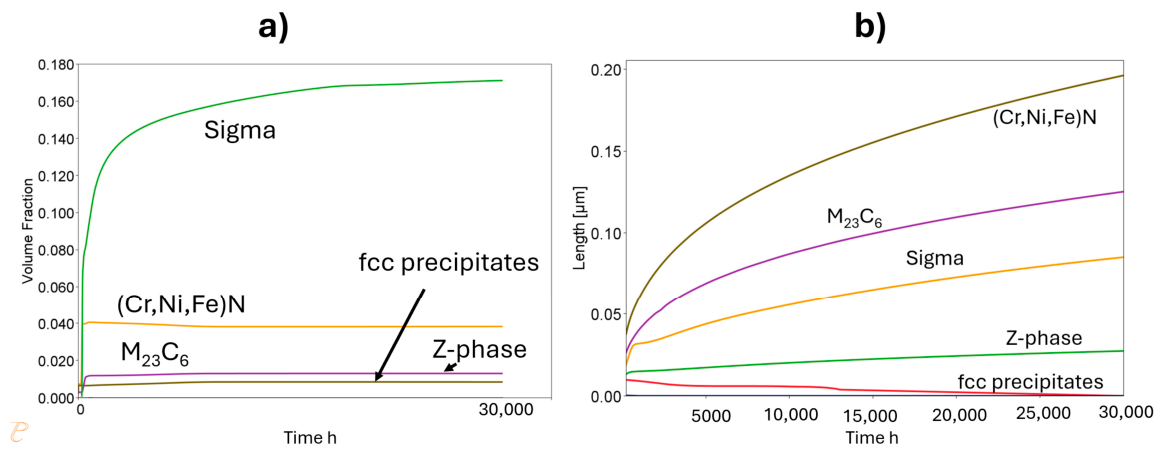
This section first addresses the bulk precipitation state after long-term exposure, interpreted with the support of Thermo-Calc/TC-PRISMA simulations of phase stability and precipitation evolution, and second, the oxidation-induced near-surface microstructural changes associated with chromium depletion beneath the oxide scale.
3.1. Bulk Precipitation State After 30,000 h at 700 °C
The following paragraph refers to the microstructural changes in the region away from the oxidized surface, where the influence of oxidation is negligible. The analysis focuses on phase identification, phase morphology, and their distribution after 30,000 h of annealing. Light microscopy observations (
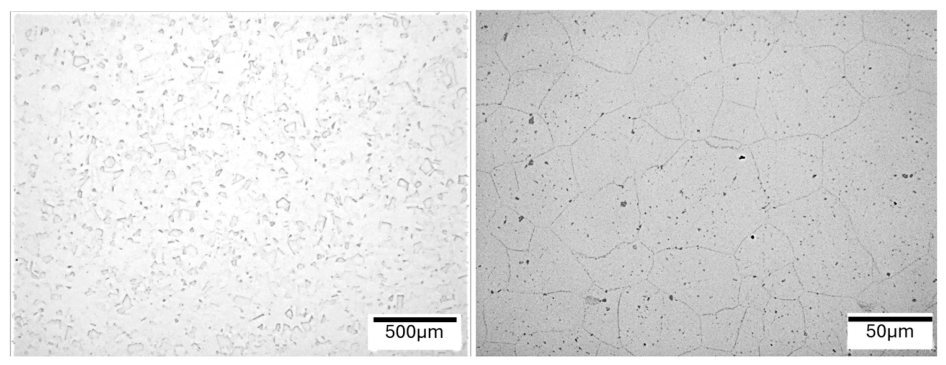
Figure 1) reveal numerous precipitates at grain boundaries and within the austenitic matrix grains. Precipitates are homogenously distributed within the observed area.
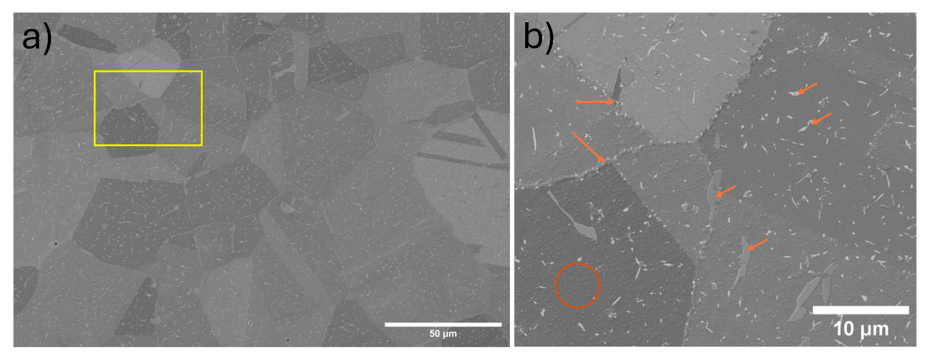
Results of SEM observations are presented in
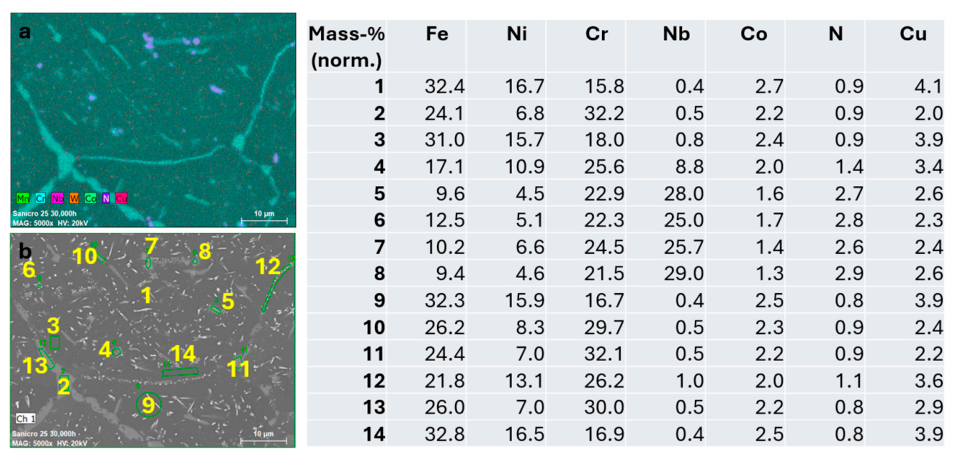
Figure 2, and results of SEM-EDS microanalysis are presented in
Figure 3.
Based on high-magnification SEM-BSE images acquired over an analyzed area (
Supplementary Materials) of 13.61 µm
2, the precipitate fraction was estimated to be 9.8% by thresholding the BSE signal intensity. This experimentally determined value was lower than the phase fraction predicted by CALPHAD calculations.
In the microstructure of the analyzed sample, numerous precipitates are present, differing in both morphology and chemical composition. At grain boundaries, chromium-rich M23C6 carbides were observed. Precipitates of the sigma phase and (Cr,Ni,Fe)N are also observed. They are uniformly distributed across the area under investigation.
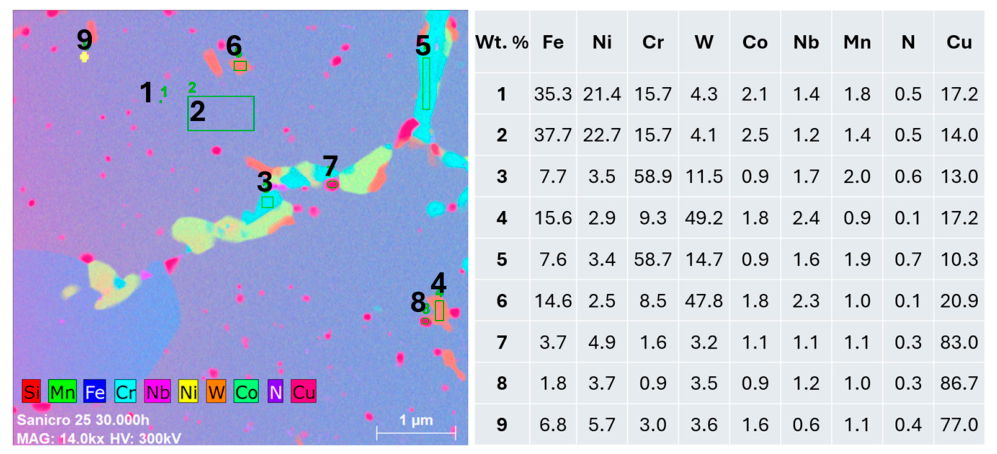
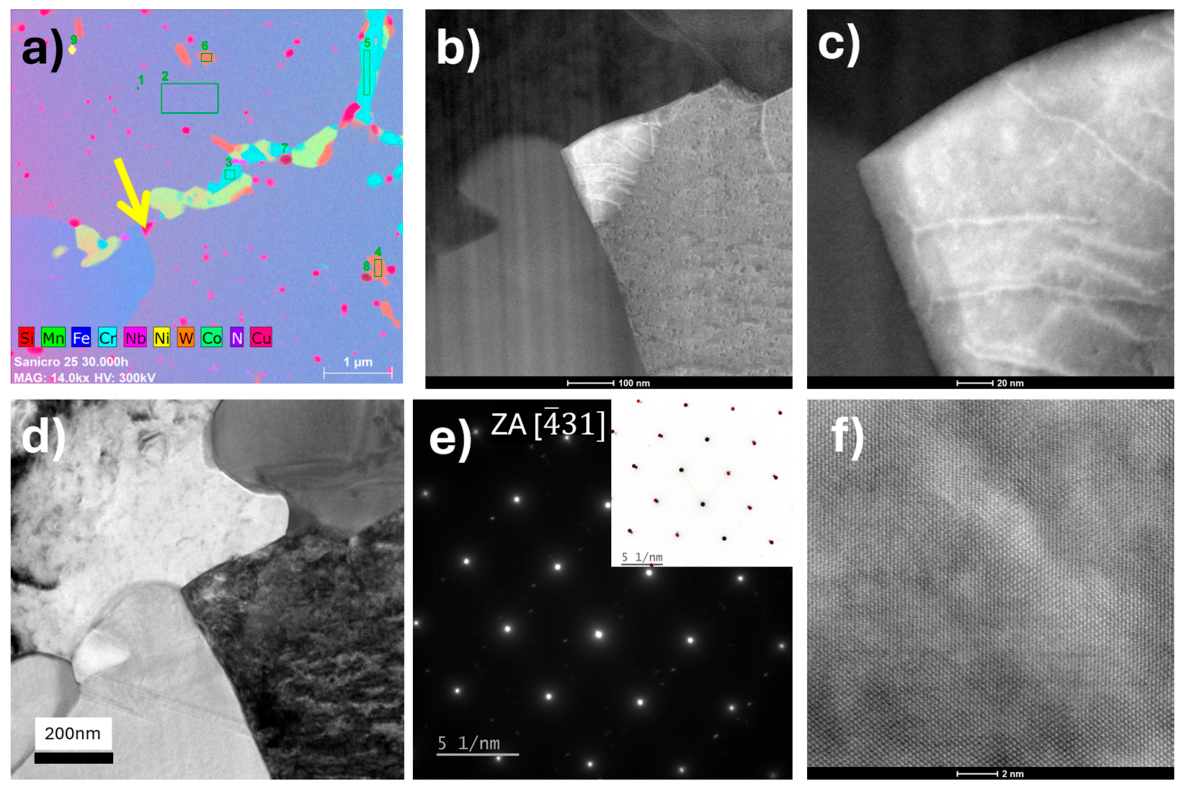
To obtain an accurate understanding of the phase composition of Sanicro 25 after long-term annealing, TEM analysis was performed. Owing to the small volume of the sample interacting with the electron beam, it is possible to investigate the chemical composition of fine precipitates and determine their crystalline structure using SAED and high-resolution HAADF-STEM imaging. The STEM-EDX elemental map is presented in
Figure 4.
Based on the STEM-EDX elemental map, several areas were selected for further investigation. The analysis was carried out in a region of the sample that exhibited significant copper enrichment (such as areas 7 and 8 in
Figure 4). These precipitates were observed in HAADF-STEM contrast as bright, spherical features.
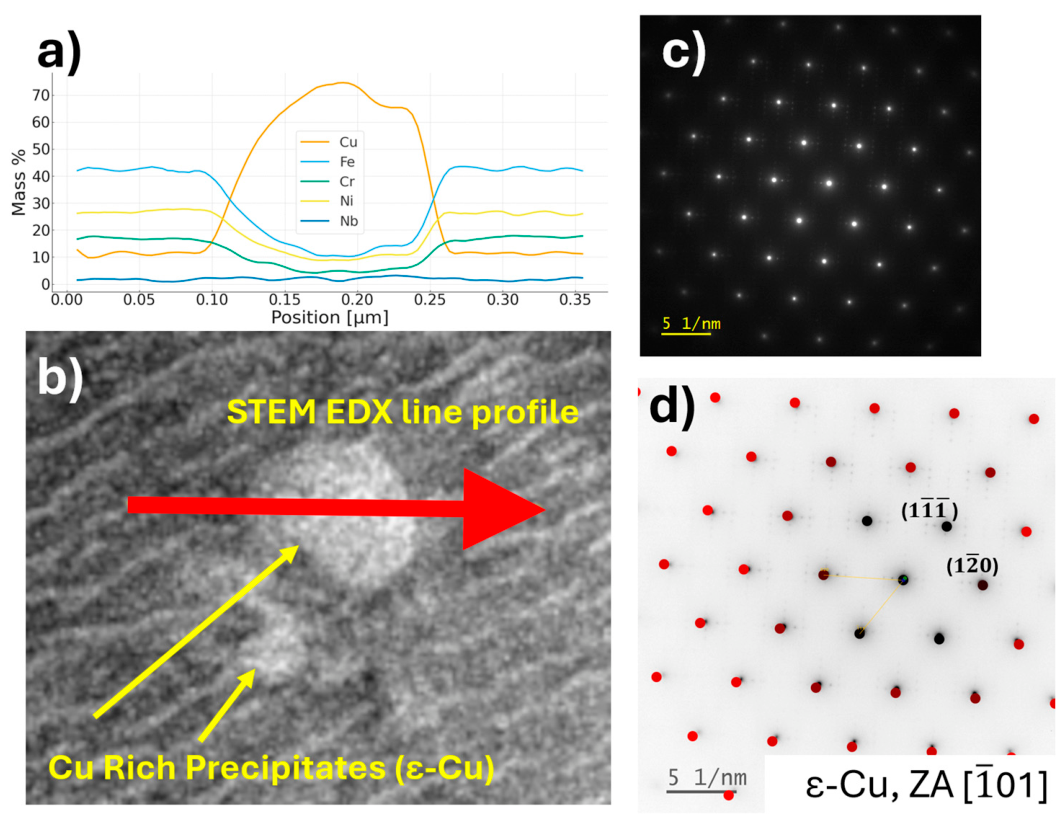
A STEM-EDX line profile (
Figure 5a,b) shows strong copper enrichment and a low content of other alloying elements of Sanicro 25 steel. SAED measurements enabled the identification of these precipitates as the ε-Cu phase. These precipitates, as further confirmed by HAADF-STEM observations, are coherent with the austenitic matrix of Sanicro 25 steel (HAADF-STEM and FFT from the area of the grain boundary are presented in
Supplementary Materials). Cu precipitates exhibit a spherical shape due to a low diameter (~100 nm) to the very small difference in the lattice parameters of the Fe–Cr–Ni austenitic matrix (≈3.59 Å) and copper (≈3.61 Å) [
25,
26,
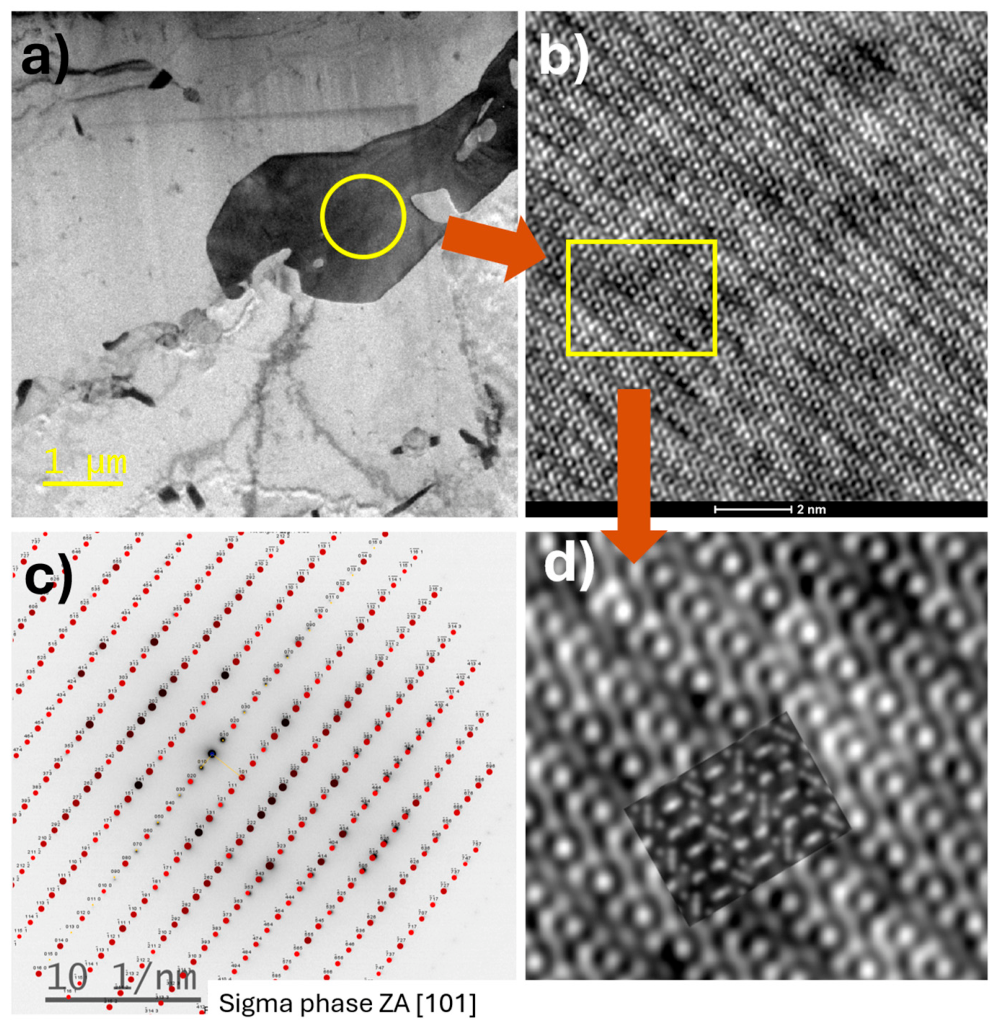
27]. TEM investigations also confirmed the presence of the Fe–Cr σ phase. Semi-quantitative TEM-EDS analysis indicated that this phase contained 35.1 wt.% Cr, 31.8 wt.% Fe, 11.6 wt.% W, 9.3 wt.% Cu, 7.9 wt.% Ni, 1.6 wt.% Co, and 1.2 wt.% Mn, while Nb, N, and Si were each below 1 wt.%.
Figure 6 presents a BF-TEM image of the matrix region containing the σ phase. The area selected for SAED, EDS, and high-resolution TEM analyses is marked schematically in
Figure 6a.
SAED analysis confirmed the presence of the σ phase, whereas EDX analysis provided its chemical composition. The experimentally determined composition was generally in good agreement with the CALPHAD prediction, with the exception of W. The measured W content was 11.3 wt.%, markedly lower than the simulated value of 23.4 wt.%. This difference may be related to the irregular morphology of the σ-phase particle, since the surrounding matrix can also be excited during EDX acquisition, resulting in an apparent underestimation of the W content. Moreover, the local composition near the precipitate/matrix interface may differ from that in the precipitate core [
4,
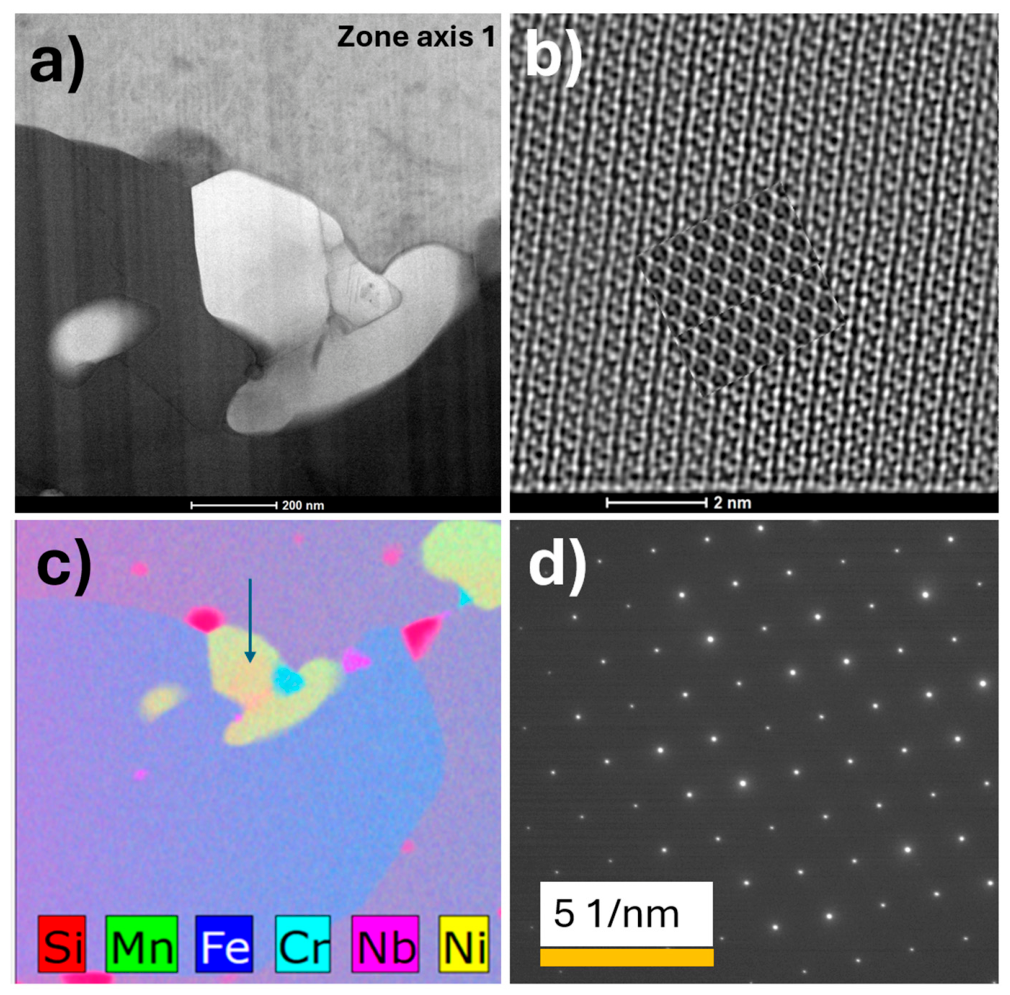
28]. Within the microstructure, some precipitates with complex chemical compositions were observed (
Figure 7).
Semi-quantitative TEM-EDS analysis indicated that the investigated precipitate contained 30.3 wt.% Cr, 27.4 wt.% Ni, 21.9 wt.% Cu, 9.3 wt.% W, 3.4 wt.% Si, 2.3 wt.% N, 1.8 wt.% Nb, and 1.8 wt.% Fe. The lattice parameter can be estimated using the chemical composition obtained from EDS measurements based on Vegard’s law [
29]. In this case, assuming the literature values of the lattice parameters of chromium, nickel, and copper, the lattice parameter can be calculated using the equation
. For the chemical composition determined by EDX, this parameter would be approximately 0.36 nm. However, this value does not match the experimental diffraction pattern, which excludes this phase. Another phase, predicted by the thermodynamic simulations, is the (Cr, Ni, Fe)N, beta-Mn-type A13 phase, since it is a model phase, the lattice parameters are not determined experimentally. To confirm the presence of this phase, a simulated series of diffraction patterns of beta-Mn-type A13 structure was generated. A satisfactory match of the reflections was obtained for the Zone Axis [214] of the (Cr, Ni, Fe)N phase after adjusting the lattice parameters of beta-Mn to the experimental image. After the determination of the zone axis, it was possible to simulate a STEM-HAADF image of this phase. Simulated image corresponds to the experimental one, as shown in
Figure 7b. Since this phase has an FCC structure, based on the equation:
. It was possible to establish the lattice parameter for this phase, which equals 0.86 nm. Z-phase (Nb–Cr-type nitride) precipitates were also observed in the analyzed microstructure. Z-phase precipitates are also observed in ferritic steels, for example, in martensitic steels from the 9–12 wt.% Cr group, such as P91 and P92 steels. In the case of these steels, their presence is detrimental, as they replace fine MX-type precipitates that are responsible for providing creep resistance [
30,
31,
32]. In austenitic steels, including Sanicro 25 steel, Z-phase precipitates may occur at grain boundaries and twin boundaries. The morphology of these precipitates varies depending on their nucleation sites and the crystallographic orientation of the adjacent phases. In austenitic steels, including Sanicro 25, the Z phase contributes to high-temperature mechanical properties by precipitation strengthening, particularly when present as fine and dispersed precipitates. In steels such as S31042 (TP310HCbN), this phase has been reported to provide the major contribution to precipitation strengthening, thereby supporting good creep resistance [
18,
33,
34]. The microstructure of Sanicro 25 with Z-phase precipitates is presented in
Figure 8.
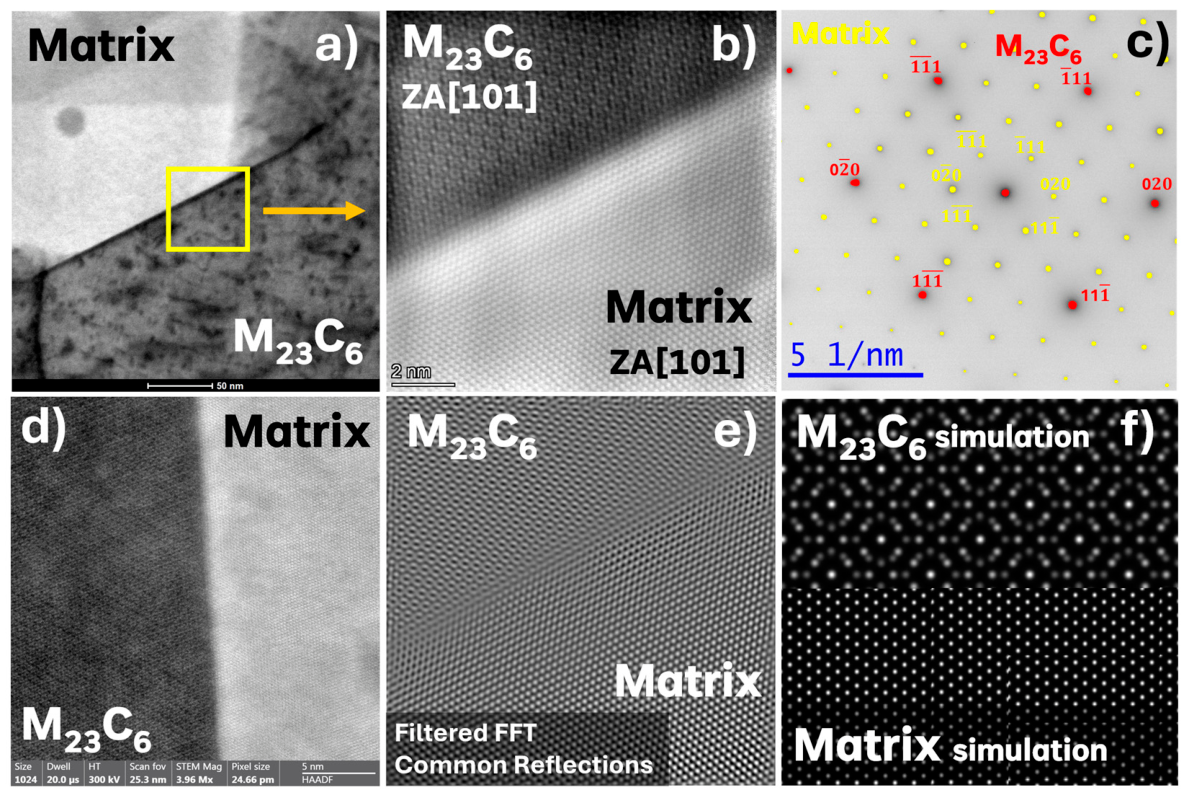
In the microstructure of the analyzed specimen, M
23C
6-type carbides were observed (
Figure 9). Although the carbon content in Sanicro 25 is relatively low, 0.064 wt.% corresponds to approximately 0.3 at.% C. This may explain the presence of numerous carbide precipitates along grain boundaries. In Sanicro 25, these precipitates contain, in addition to chromium, other elements such as Ni, Fe, W, and Nb, as confirmed by STEM–EDX. At the service temperature of Sanicro 25 (approximately 700 °C), M
23C
6. Precipitates can form already at the early stages of annealing, which is attributed to the high diffusivity of carbon along grain boundaries and the high chromium content in the austenitic matrix. In some austenitic steels, the formation of such carbides may promote intergranular corrosion due to chromium depletion adjacent to grain boundaries [
35,
36,
37]. However, in the present material, no chromium-depleted zone near the grain boundaries was observed, because the reduction in chromium concentration at the grain boundaries caused by the formation of chromium-rich carbides is compensated by diffusion of this element from regions farther away from the grain boundary. The observed M
23C
6 precipitates exhibit a rounded morphology, and their size is up to 200 nm.
The carbide/austenite interface may initially be coherent or semi-coherent with one of the neighboring austenite grains. During prolonged exposure above 600 °C, carbide coarsening and matrix grain growth may progressively weaken this crystallographic relationship. As a result, larger carbides formed after long-term aging or extended service are often assumed to have incoherent interfaces with the austenitic matrix [
38,
39]. In Sanicro 25, isothermally aged for 30,000 h at 700 °C, M
23C
6 carbides were observed to remain common orientation (
Figure 9) with the austenitic matrix, exhibiting the following parallel/cube-on-cube orientation relationship:
, where a small shift between reflections of M23C6 and the matrix was also observed on experimental SAED patterns.
In the investigated region (
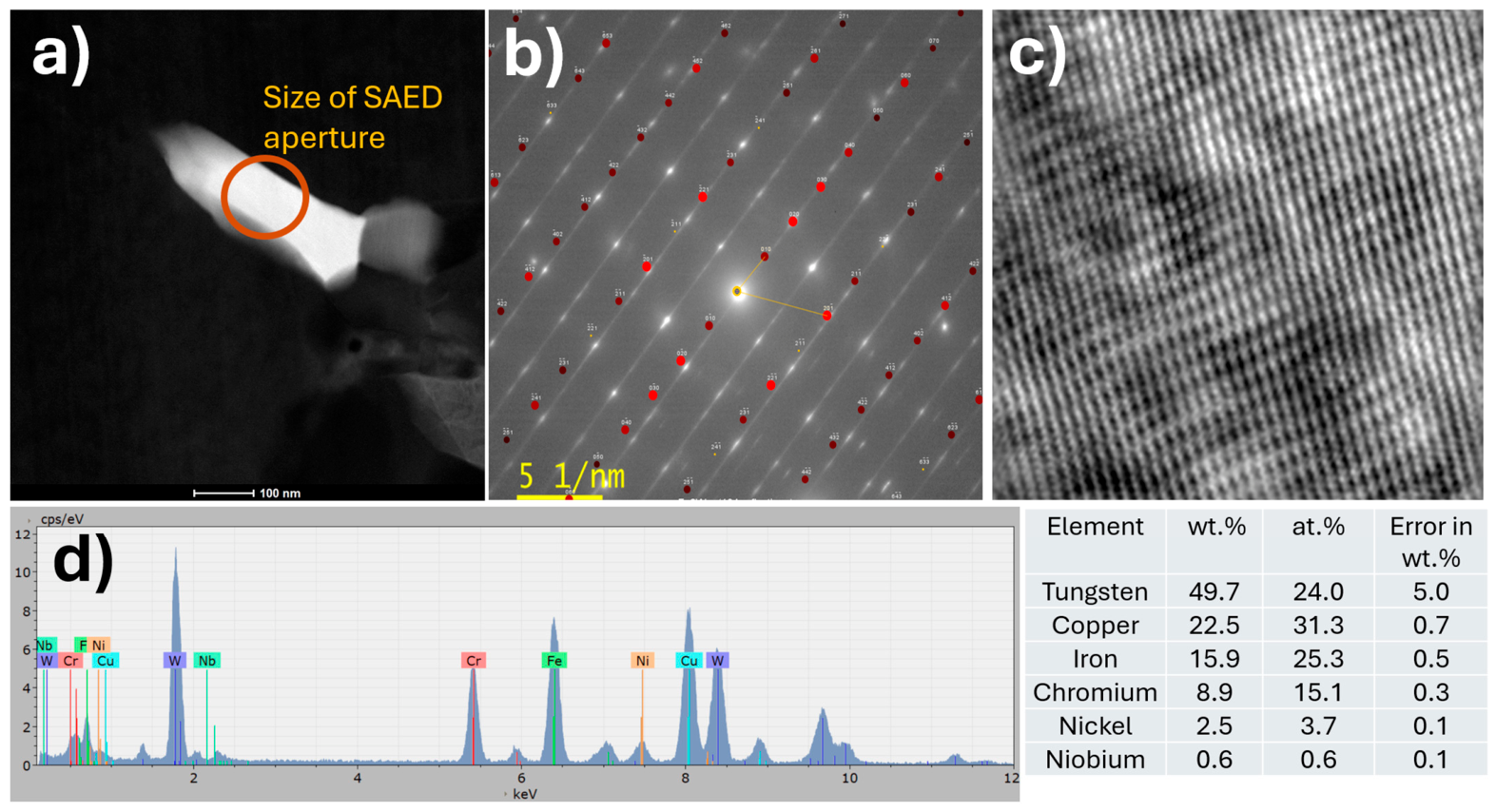
Figure 10), a very bright precipitate was observed in STEM–HAADF, indicating enrichment in heavy elements; consistent with this, local STEM–EDS acquired from the precipitate revealed a pronounced W enrichment together with Fe–Cr–Ni, supporting the formation of a W-rich intermetallic phase after 30,000 h of exposure at 700 °C. The selected-area electron diffraction (SAED) pattern was recorded using an effective aperture size of about 100 nm, slightly larger than the precipitate; therefore, the diffraction signal represents a superposition of reflections from the FCC γ-austenite matrix and the precipitate. Besides the FCC matrix reflections, the pattern contains an additional subset of reflections with large d-spacings (≈0.38 nm, 0.224–0.228 nm and ≈0.188 nm) and pronounced streaking, which cannot be explained by the FCC matrix alone; the spacing relationships are compatible with reflections of a hexagonal lattice (including ≈ 0.188 nm ≈ ½·0.38 nm), while the streaking indicates a high density of planar faults/stacking disorder within the precipitate. Based on HAADF-STEM contrast and local chemistry, and the non-FCC diffraction subset attributed to the precipitate, the observed W-rich phase is most consistent with a topologically close-packed (TCP) intermetallic precipitate, possibly of Laves type Fe
2W type, exhibiting significant faulting after long-term aging at 700 °C. Although Laves phases may tolerate limited substitution by a third alloying element, the measured composition with 22.5 wt.% Cu is not typical of the W-rich Fe
2W-type Laves phase usually reported for Sanicro 25.
3.2. CALPHAD/TC-PRISMA Interpretation of Bulk Phase Stability During 30,000 h of Aging at 700 °C
It is essential to acknowledge that simulating multicomponent systems, such as Sanicro 25, inherently involves uncertainties. There are several reasons for this, primarily its chemical composition, which contains more than 12 elements and several phases. Not all phenomena that occur during Sanicro 25 annealing at 700 °C for 30,000 h can be calculated using a mean-field framework. The casting and production process for commercial Sanicro 25 pipes, followed by heat treatment, may result in some compositional heterogeneity. Additionally, the primary precipitates (precipitated during casting) are not fully dissolved during the final 1 h anneal at 1210 °C. Mean-field models, used during CALPHAD simulations, assume spatial uniformity of the material. Nucleation of phases typically occurs at dislocations, subgrains, twins, or grain boundaries. However, the specific values of these parameters are not well known and are often treated as variables. Additionally, interfacial energies can vary and be uncertain, particularly with changes in temperature. There are also uncertainties in the orientation-dependent kinetics of the precipitation process when calculated using mean-field models, largely due to the spherical assumptions inherent in the model. Including a large number of elements, such as carbon, boron, and nitrogen, increases uncertainties regarding mobility and predictions of thermodynamic phases. Furthermore, relatively rapid cooling from a supersaturation temperature of 1210 °C can pose challenges for simulations. Nevertheless, these results are valuable, particularly for identifying trends, predicting existing phases, and characterizing them. In this study, a CALPHAD simulation was performed for a 30,000 h long-term anneal at 700 °C to compare results with those from the experimental long-term oxidation and annealing performed for 30,000 h. For simulation, a chemical composition from the manufacturer’s certificate was used, and the initial gran size was measured on a test piece (in as-received state) using light microscopy methods. Equilibrium condition simulations for this steel were previously performed and are presented in [
13,
40]. Equilibrium conditions simulation at 700 °C predicts the presence of the following phases: austenite (solid solution) with an FCC structure, the σ-phase with a close-packed, tetragonal P4
2/mnm structure [
28], Cr-Ni Nitrides, P4/132, and a CrNbN: Z-phase with a P4/mnm structure. Moreover, a very small amount of the M
2B phase is predicted. The volume fraction of precipitated phases, calculated using the TC-PRISMA module of the Thermocalc package under non-equilibrium conditions, differs from the equilibrium value and is shown in
Figure 11.
The apparent discrepancy between the phase fractions predicted by Thermocalc and those determined experimentally after 30,000 h should be considered in the context of the assumptions and limitations of the simulation approach. The CALPHAD/TC-PRISMA calculation represents a closed, spatially homogeneous bulk system aged at 700 °C, using the nominal chemical composition of Sanicro25 and idealized assumptions concerning nucleation, diffusion-controlled growth, coarsening, and particle geometry. In contrast, the experimental microstructure results from a complex thermal and oxidation history, including the production route of the commercial pipe, incomplete dissolution of primary precipitates during solution annealing followed by quenching, possible local chemical heterogeneity, and chromium redistribution caused by long-term steam oxidation. In particular, the near-surface region cannot be treated as a closed bulk system, because Cr is continuously consumed during protective oxide-scale formation, producing local chemical gradients that are not directly included in the standard mean-field precipitation model. Therefore, the CALPHAD/TC-PRISMA results should not be interpreted as an exact quantitative reproduction of the experimentally measured phase fractions. Instead, they are used here as a semi-quantitative tool to identify the most probable phases, to evaluate general precipitation and coarsening trends, and to support the interpretation of how chromium depletion may affect the local stability of Cr-rich M23C6 carbides and the Nb–Cr–N-type Z phase. This limitation has been taken into account when discussing the relationship between the calculated phase stability and the experimentally observed near-surface microstructural reconstruction.
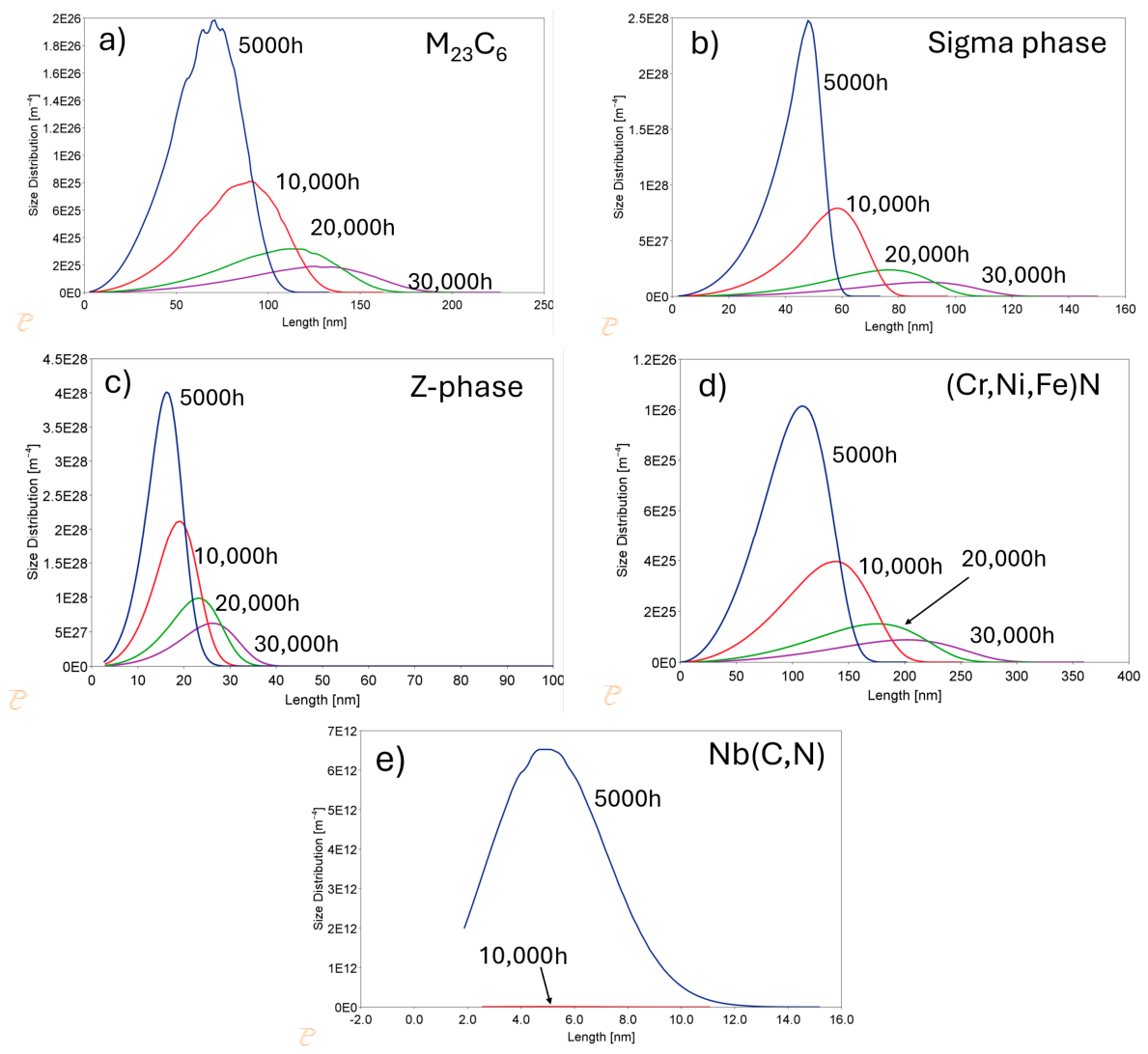
Taking into account the volume fraction of precipitate phases, the volume fraction stabilizes and remains constant after approximately 1000 h. It does not mean that there are no changes in the microstructure. There are significant and continuous changes in the mean precipitate size. The (Cr,Ni,Fe)N, M
23C
6, Sigma, and Z-phase precipitates are continuously increasing in size, whereas only the FCC precipitates Nb(C,N) are decreasing in size. Cu rich phase precipitates are not predicted, either by equilibrium conditions or by TC-PRISMA calculations; however, it should be noted that such Cu rich precipitates were observed in previous investigations [
12,
40,
41,
42]. The results of size distribution simulations are presented in
Figure 12.
The above-presented particle size distribution plots represent the number of precipitates that exist as a function of the precipitate radius. The
x-axis represents particle radius in nm, assuming that precipitates are circular in shape, and the
y-axis represents a density distribution that is represented by the following equation:
. This means it represents a number of particles per unit radius, per unit, where f(r)—value on the Y axis [m
−4]; V—volume of analyzed sample; N
i—number of particles in a given interval; and Δr—width of the radius interval (e.g., 20 nm). Based on Lifshitz–Slyozov–Wagner (LSW) coarsening law [
43,
44,
45], it is possible to establish the phase coarsening rate constant K for all phases. Based on the calculations performed, the kinetic parameters of Ostwald ripening for precipitates in Sanicro 25 can be determined during aging at 700 °C for 30,000 h, as predicted by Thermocalc. From calculations performed for each phase, the volume-weighted mean radius
was computed and fitted to the classical Lifshitz–Slyozov–Wagner (LSW) relationship:
where
is the mean particle radius,
is the aging time in seconds,
is the coarsening rate constant, and
corresponds to the initial size. Results are presented in
Table 2.
The calculation predicts high morphological stability for σ because this phase has the lowest K constant. Both M23C6 and Z-phase show an intermediate K constant. Thermocalc predicts the highest coalescence of (Cr,Ni,Fe)N phase due to nitrogen diffusion and high austenite/(Cr,Ni,Fe)N interfacial energy.
During prolonged annealing, the precipitation process also alters the matrix’s chemical composition. The main changes are presented in
Table 3 and in
Figure 3.
The main changes in matrix composition include depletion of Chromium and Tungsten in the matrix and, therefore, an increase in Nickel and Copper concentration. Observations made by others confirm the presence of Copper-rich particles in the Sanicro 25 microstructure under various conditions, suggesting a significant role in the high-temperature strength properties [
3,
10,
12,
13,
14,
15,
16,
40,
41,
42,
46,
47]. This phase is not predicted using CALPHAD simulations for the equilibrium conditions of Sanicro 25, as it dissolves at a temperature slightly below 650 °C. Considering the changes in the matrix composition—specifically, a significant reduction in chromium content due to the precipitation process—it was possible to perform simulations of the equilibrium phase composition for a chromium-depleted matrix. According to the calculations, this change in composition increases the stability of the copper-rich FCC phase by approximately 20 K. It is essential to note that the interfacial energy values between the copper-rich FCC phase and the austenitic matrix may contain some inaccuracies; therefore, it can be concluded that this phase is not accurately predicted due to these errors. Additionally, the calculations indicate that changes in the matrix composition resulting from the precipitation process increase the stability of copper-rich precipitates at higher temperatures.
3.3. Oxide Scale Morphology, Its Chemical Composition, and the Chromium-Depleted Near-Surface Region
In the case of Sanicro 25, as well as other austenitic steels, resistance to long-term oxidation (30,000 h in the present study) depends on the stability of the oxide scale, and in particular on its transport properties. Thermocalc calculations for equilibrium phase composition for Sanicro 25 in the presence of oxygen predict almost pure Cr
2O
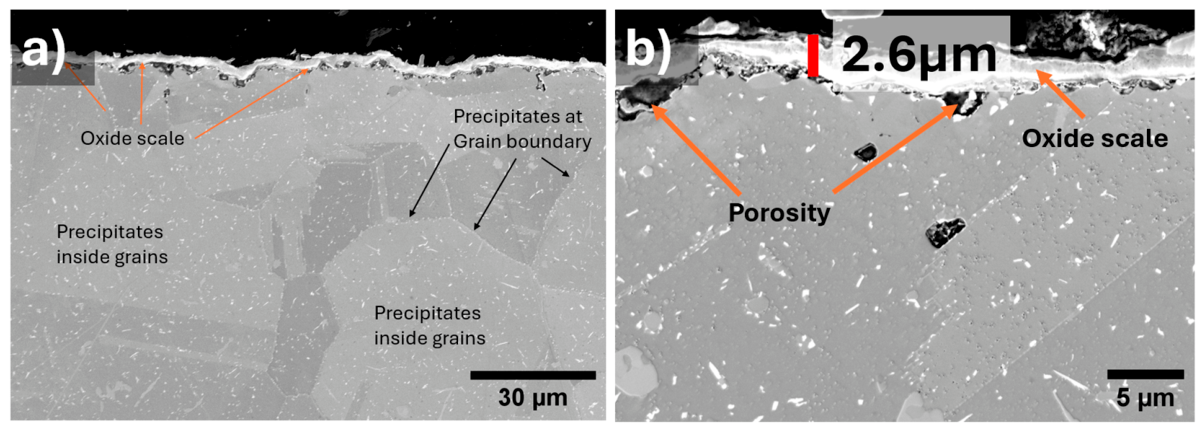
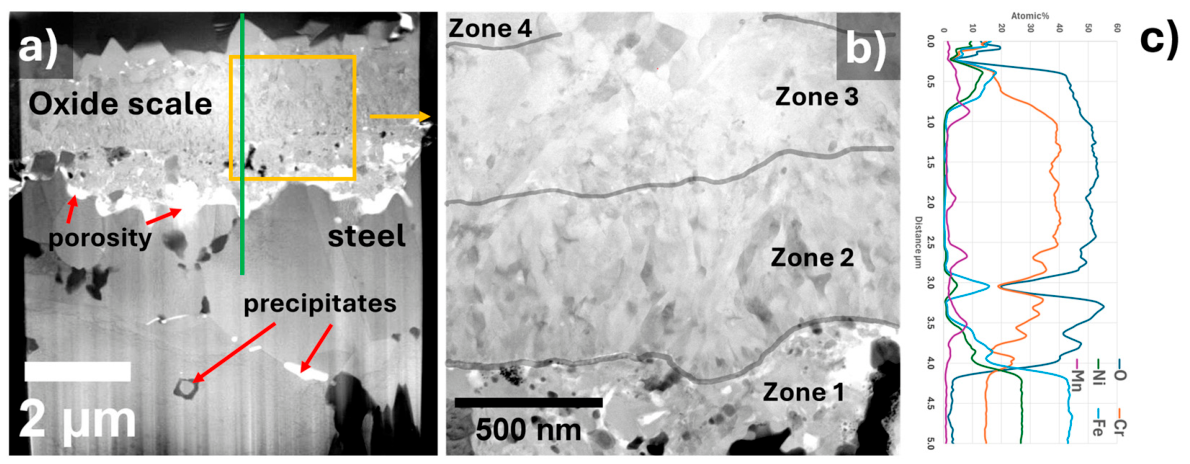
3 and an almost iron-free Cr-Mn spinel. For microstructural observations, SEM samples and TEM lamellae were also prepared from the near-surface region of the specimen, where the microstructural evolution was influenced not only by the elevated temperature but also by corrosion processes occurring in a steam atmosphere at 700 °C. A sample cross-section from the surface area is presented in
Figure 13 and
Figure 14.
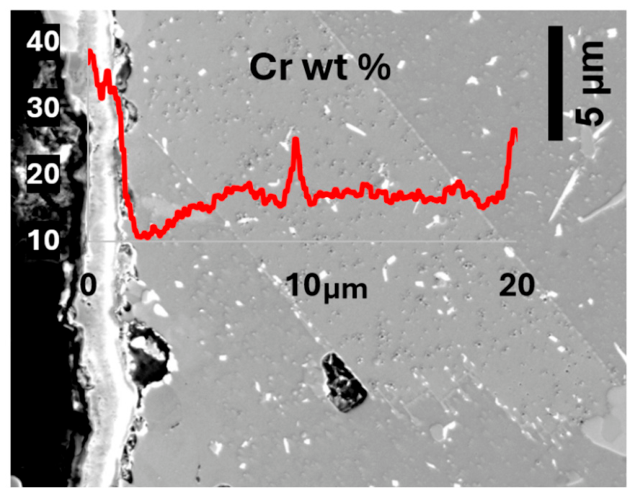
The oxide scale thickness is approximately 2.6 µm, and porosity is observed within the oxide scale. Since the present work examines the final state after 30,000 h of exposure, the oxide-growth kinetics cannot be directly determined from these data. Therefore, the reported scale thickness should be treated as the final oxide thickness after long-term exposure rather than as a time-dependent oxidation-rate measurement. Similar features are noted at a distance from the surface. The depth of a Cr depleted zone under the oxide scale was estimated to be about 6.5 µm based on an SEM-EDX line scan, as shown in
Figure 14. The Cr-depleted zone is smaller when compared to the sample tested for 25,000 h. An increase in Cr concentration above the mean for the matrix comes from the presence of carbon-rich precipitates within the investigated SEM-EDX line. TEM observations reveal information not available using SEM only. An oxide scale has a complex microstructure. As shown in
Figure 15. The chemical composition distribution results (shown in
Figure 16) indicate that the chromium content in the steel layer directly beneath the oxide scale stabilizes relatively quickly, and no increase in chromium concentration is observed at greater distances from the scale. It should be noted that the chromium content in this region is significantly lower than both the nominal composition of Sanicro 25. The observed decrease in chromium concentration results from intensive precipitation processes and from the stabilization of the matrix composition at a level close to the equilibrium composition. In addition, the chromium content in this region is further reduced due to the diffusion of this element into the oxide scale.
Near the specimen surface, relatively large Cr
2O
3 crystals, approximately 1 µm in size, with a flake-like morphology, were observed. Beneath this region, smaller chromium oxides were present (
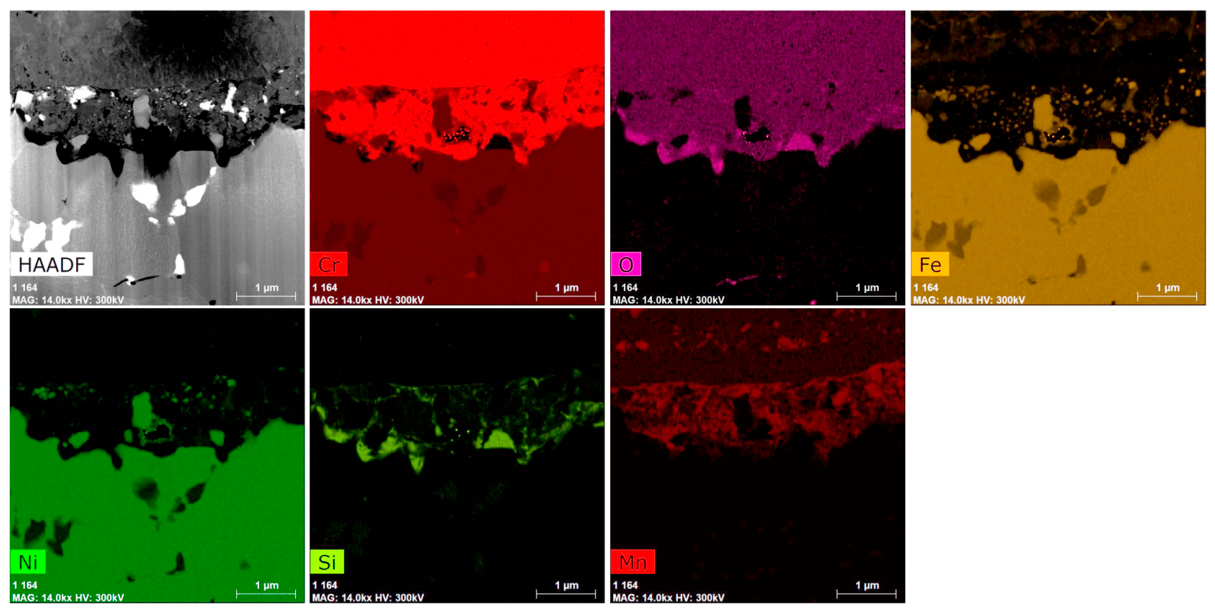
Figure 15, Zone 3). Below this oxide layer, a region with a heterogeneous microstructure was found, with crystallite sizes reaching up to several hundred nanometers. The corresponding STEM-EDX chemical composition map is shown in
Figure 16.
In the region beneath the main oxide layer, Mn enrichment was observed (
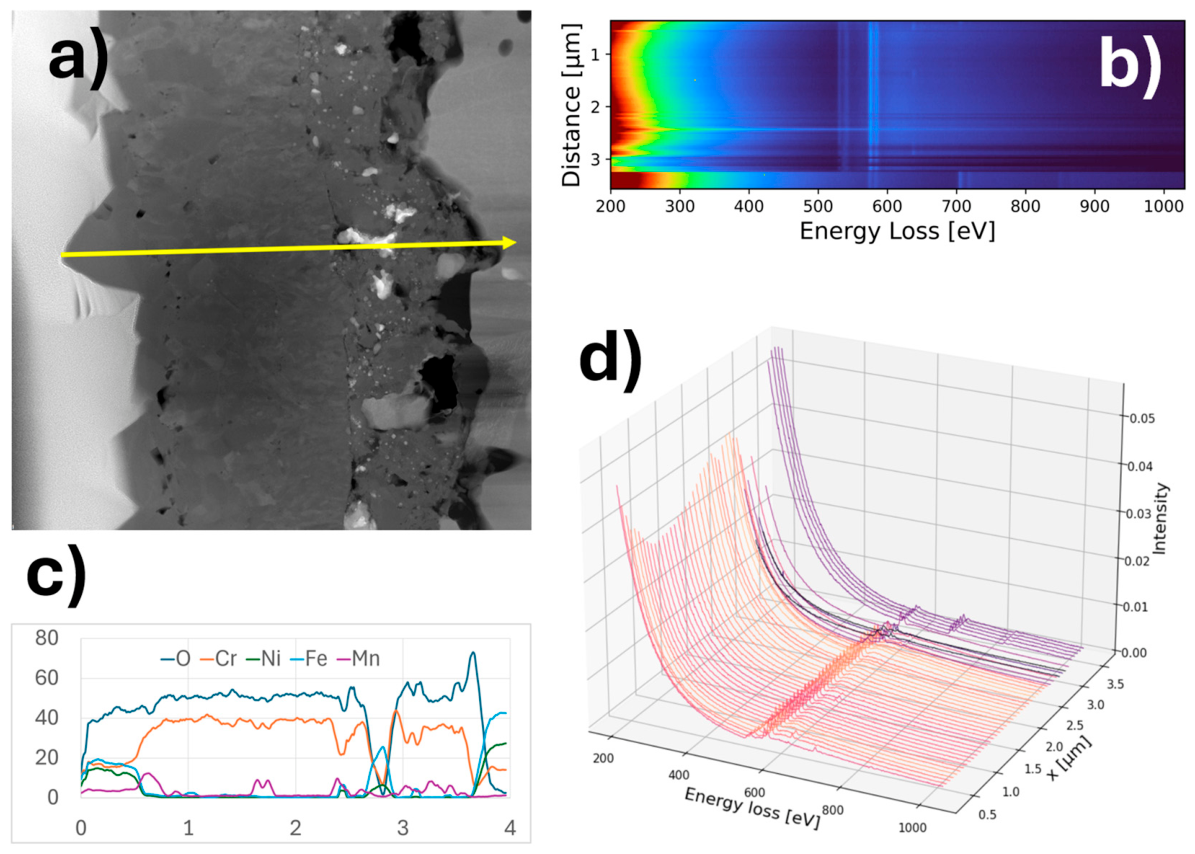
Figure 16, elemental map), suggesting the presence of mixed oxides with a Cr–Mn spinel structure. At the interface between the oxidized region and the steel substrate, local Si enrichment was also detected. However, no continuous silica layer was observed; instead, only discontinuous Si-rich regions were present. Voids were also found in this area. These voids occurred in two locations: first, at the interface between the metallic steel and the mixed oxide layer, and second, at the boundary between the mixed oxide region and the layer composed predominantly of fine-grained chromium oxides. To determine the phase composition of the oxide scale, electron loss spectroscopy investigations were performed. EELS analysis was performed along the line profile, which originated at the top of the oxide scale and finished in the steel substrate. Results of the analysis are shown in
Figure 17.
No strong evidence for a significant chromium oxidation-state gradient across the oxide scale was found. Manganese was present in several regions of the analyzed oxide scale, including the outermost surface oxide and areas located approximately 1.4 µm and 2.8 µm beneath it. However, no measurable shift in the Mn-L edge energy or significant differences in the L3/L2 intensity ratio were observed between these regions, indicating that no detectable change in the oxidation state of manganese occurred within the sensitivity of the present analysis.
3.4. FIB-SEM Tomography of Oxide/Metal Interface and Interfacial Voids
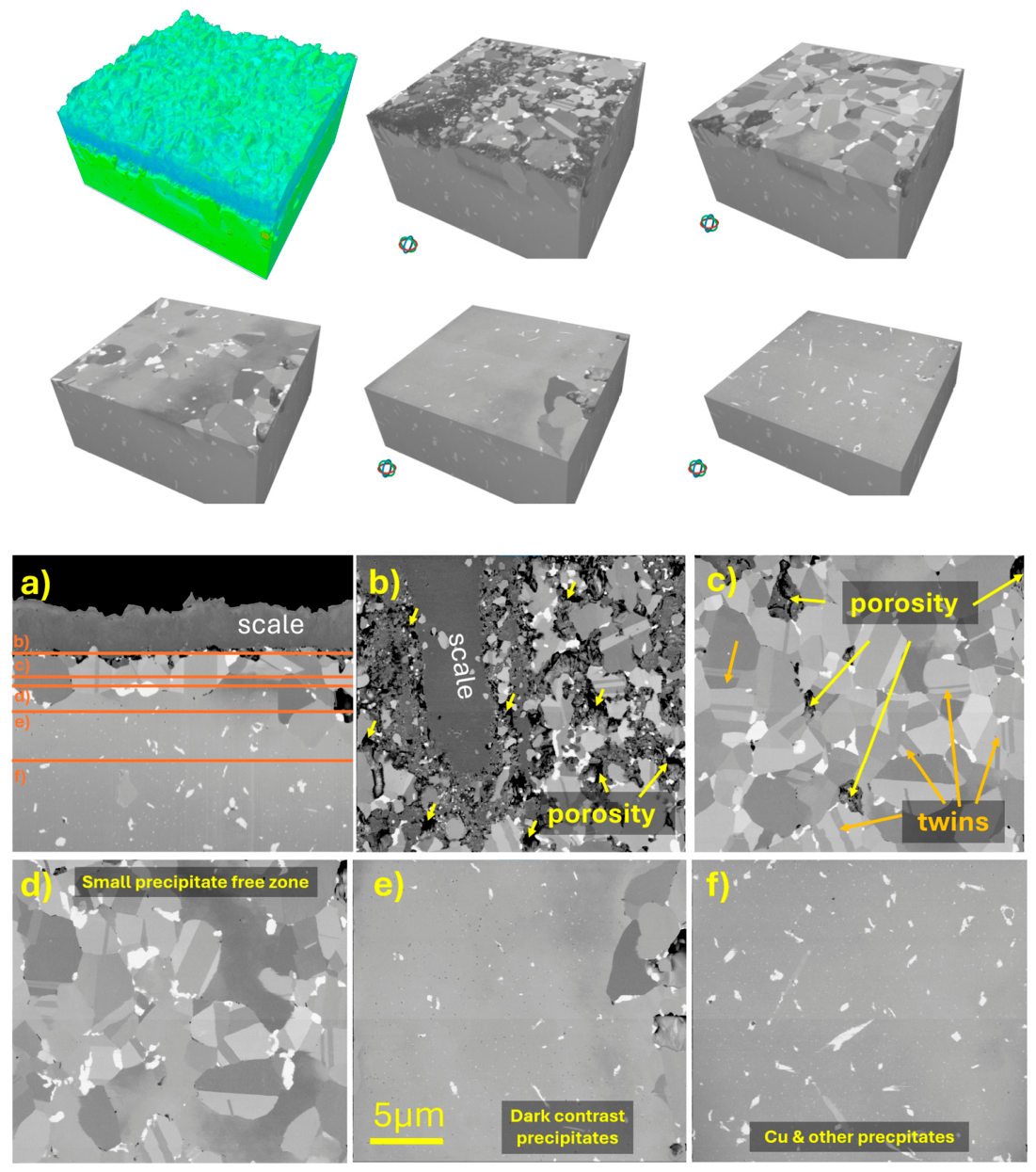
In the case of the oxidized Sanicro 25 surface, the pronounced spatial heterogeneity and complex three-dimensional morphology limit the representativeness of conventional stereological analysis. Therefore, FIB-SEM serial sectioning tomography was employed to directly reconstruct the microstructure in three dimensions. After digital reconstruction, it was possible to analyze the entire specimen region in three dimensions. Large crystallites were observed at the surface. These were identified using TEM methods as the Cr
2O
3 scale. The entire oxide layer on the steel surface was continuous; no pores or voids were observed within it or at the crystallite grain boundaries (
Figure 18a). A significant number of voids were observed at the interface between the scale and the metallic substrate (
Figure 18a,b). However, despite the presence of a considerable amount of voids, these do not appear to impair the adhesion of the oxide layer to the substrate, since no scale spallation was observed. Directly beneath the oxide layer, there is a region with grains that are significantly smaller than those located deeper in the specimen. Numerous twin boundaries can be observed within these grains (
Figure 18c,d). In general, this zone is free of fine precipitates. However, relatively large precipitates enriched in heavier elements are present in this region, giving rise to a bright contrast in SEM-BSE observations.
Below this layer, fine precipitates enriched in lighter elements were observed (
Figure 18e), exhibiting dark contrast in SEM-BSE images. Further into the specimen, copper precipitates were observed, and at a distance of approximately 10 µm from the scale, a variety of precipitates belonging to several different phases were identified (
Figure 18f). However, even in this region, no Cr
23C
6 carbides were observed at the grain boundaries. Thermodynamic simulations (
Supplementary Materials), assuming a reduction in chromium concentration as a result of oxidation processes, indicate that chromium-rich Cr
23C
6 carbides and the Z-phase (Nb–Cr-type nitride) cease to be stable when the chromium concentration in the matrix falls below approximately 13.8 wt.% Cr.
The above observations suggest that the chromium content in the austenitic matrix of Sanicro 25 is substantially lower than its nominal level. This decrease may be related to two overlapping effects. First, precipitation processes occurring at 700 °C can reduce the Cr concentration in the matrix during the initial stage of exposure; according to the simulations, the matrix Cr content decreases to approximately 15.83 wt.%. Second, in the near-surface region, the Cr concentration may be further reduced by outward Cr diffusion associated with the formation of the Cr-rich protective oxide scale. The diffusion of Cr from regions located farther from the surface appears to be insufficient to fully compensate for the depletion caused by oxidation. After 30,000 h of exposure, the Cr content in the near-surface region, as determined by EDX, was approximately 10 wt.%, i.e., about 6 wt.% lower than in the matrix region not directly affected by the oxidizing atmosphere. The chromium concentration in the metallic substrate stabilizes at a depth of approximately 8 µm. Under such Cr-depleted conditions, CALPHAD simulations suggest that the thermodynamic stability of Cr-rich M23C6 carbides and the Nb–Cr–N-type Z phase may be reduced. Therefore, the local dissolution or reduced stability of these precipitates in the chromium-depleted matrix can be considered a plausible interpretation of the observed precipitate-depleted near-surface region. At the same time, Nb released from the possible destabilization of Z-phase precipitates may contribute to the formation of NbN-type precipitates, which are observed as small dark precipitates below the precipitate-depleted zone. The presence of fine grains and numerous twin boundaries in this region may also be associated with local microstructural reconstruction, possibly promoted by changes in precipitate stability; however, further quantitative analysis would be required to confirm this mechanism.