
Physicochemical and Thermo–Mechanical Characterization of Sheep Wool/Phenolic Novolac Panels for Sustainable Thermal Insulation
 ,
,  , ,
, ,
Abstract
1. Introduction
2. Materials and Methods
2.1. Research Methods
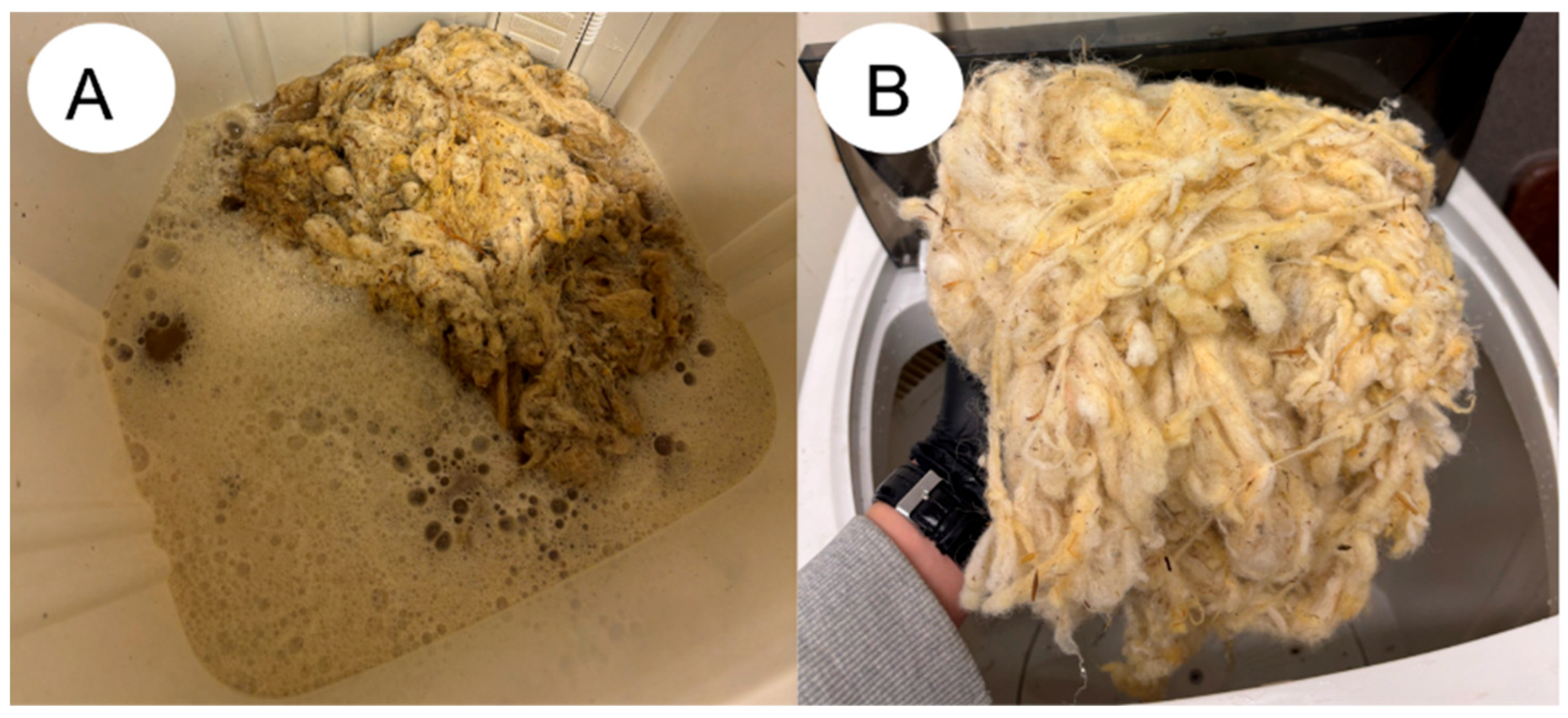
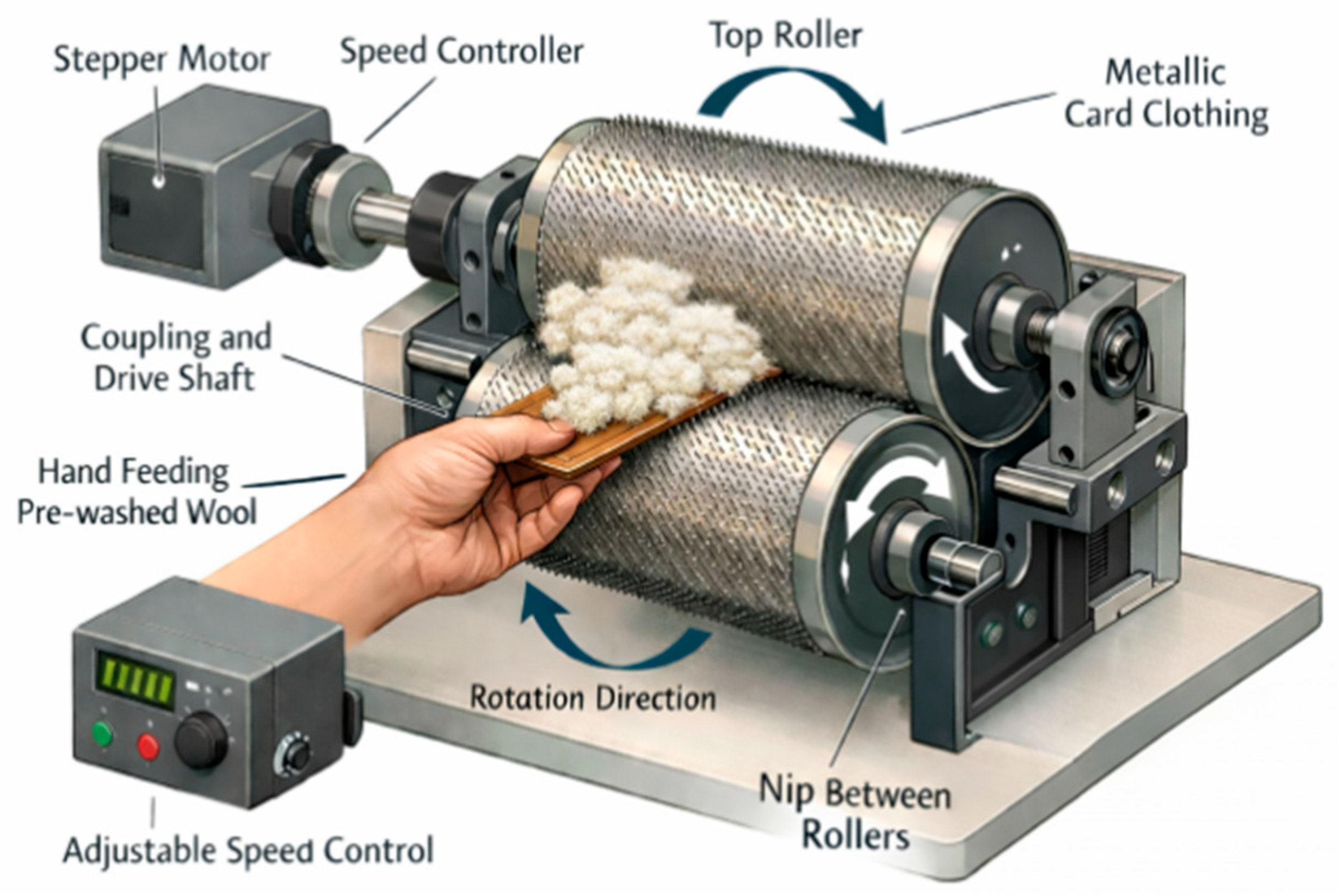
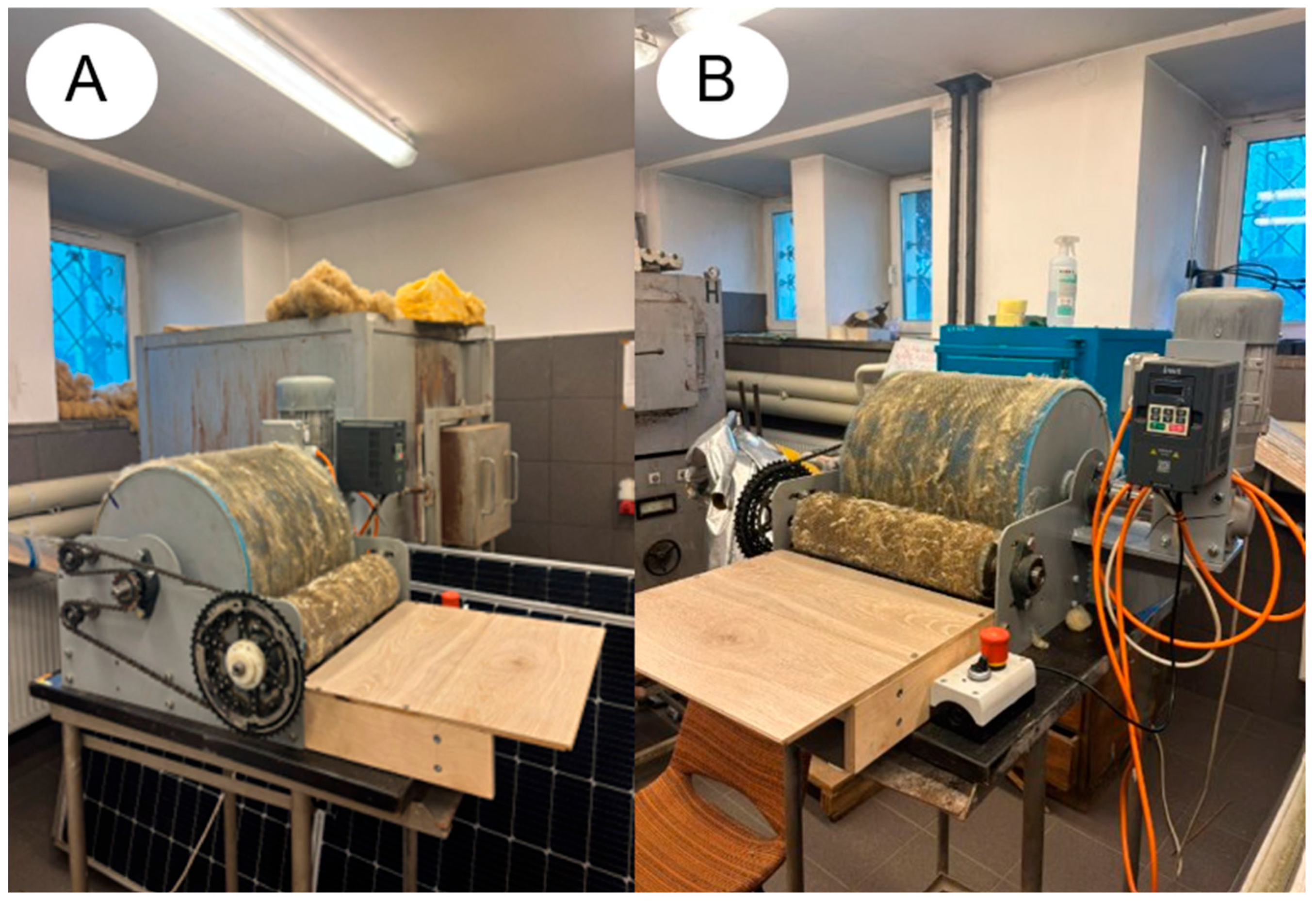
2.2. Materials and Production of Composite Samples
3. Results and Discussion
3.1. Chemical Composition of Wool Fibers
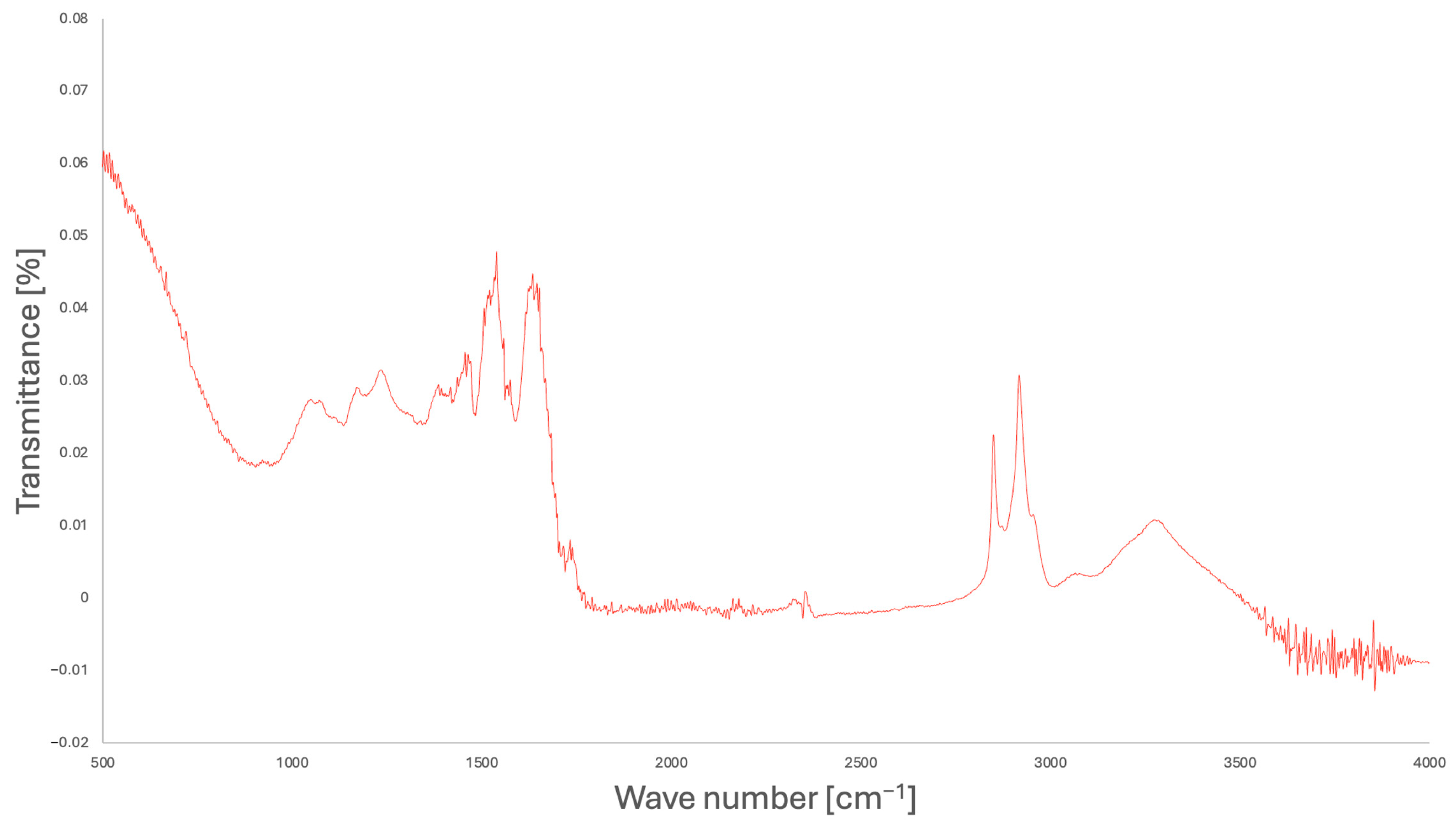
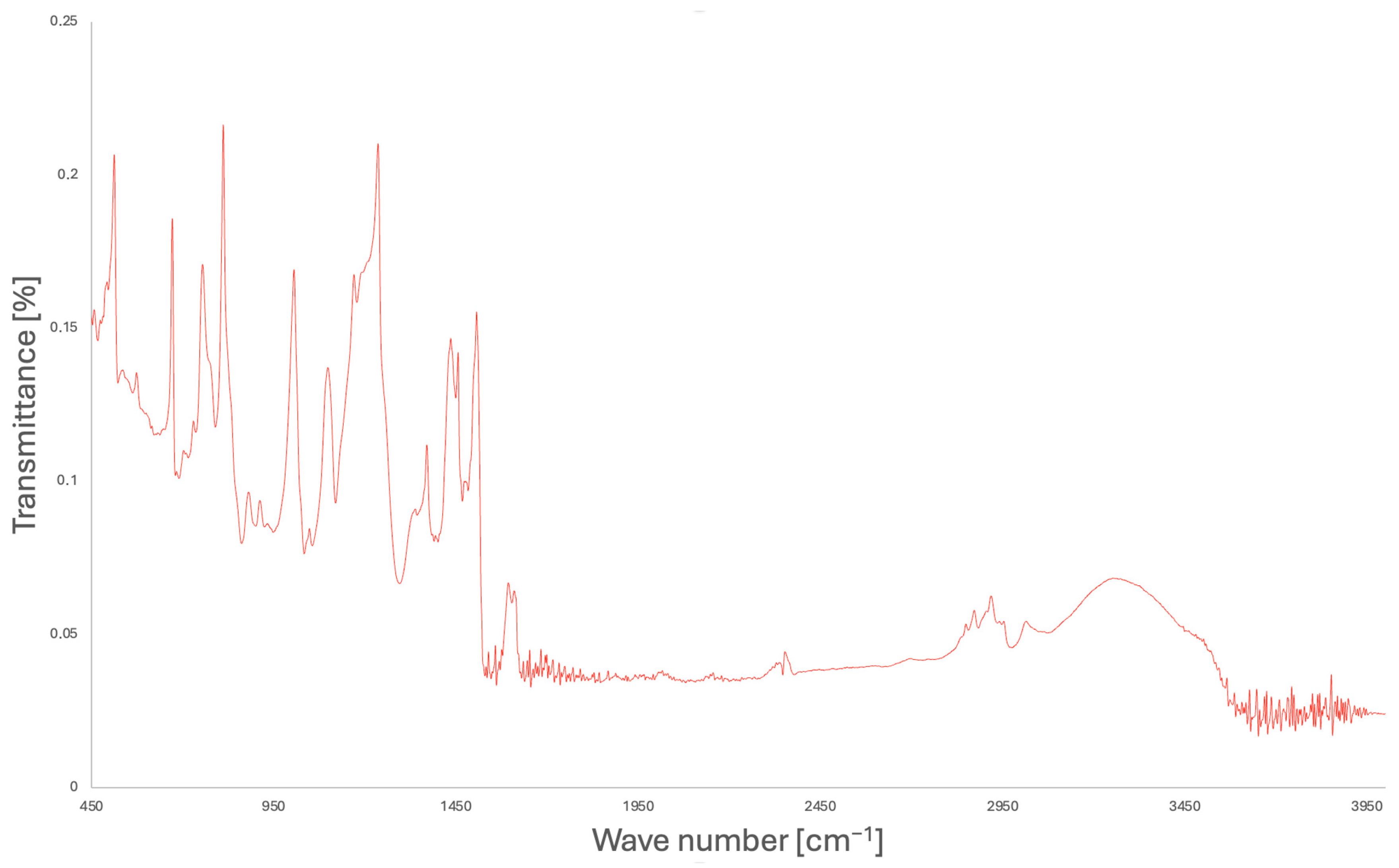
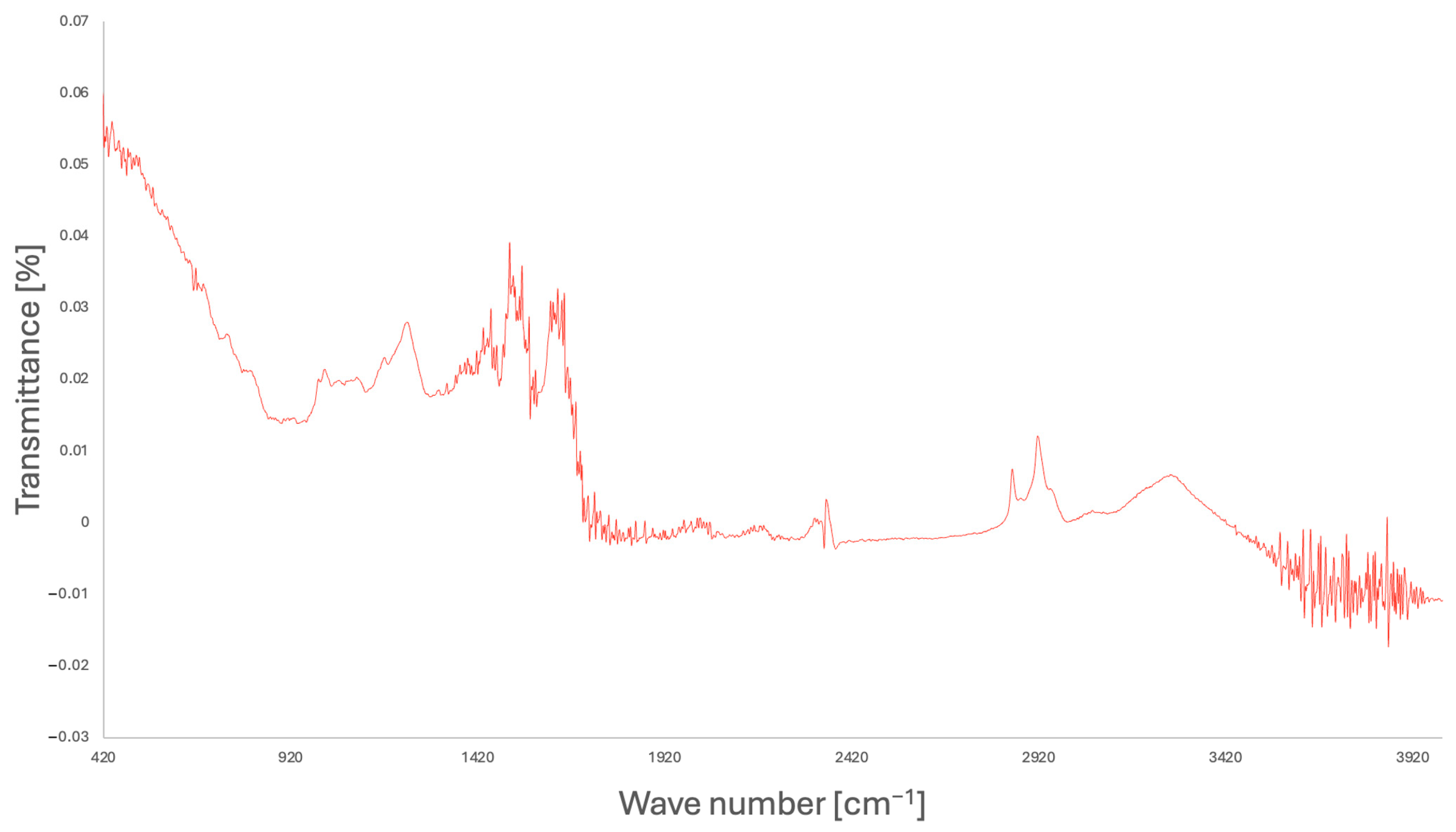
3.2. FTIR Analysis—Molecular Structure
3.3. Mechanical Test Results
3.3.1. Bending Strength Results for Wool/Novolac Resin Panel Samples
3.3.2. Shear Strength Results for Wool/Novolac Resin Panel Samples
3.4. Thermal Analysis (TGA/DSC)
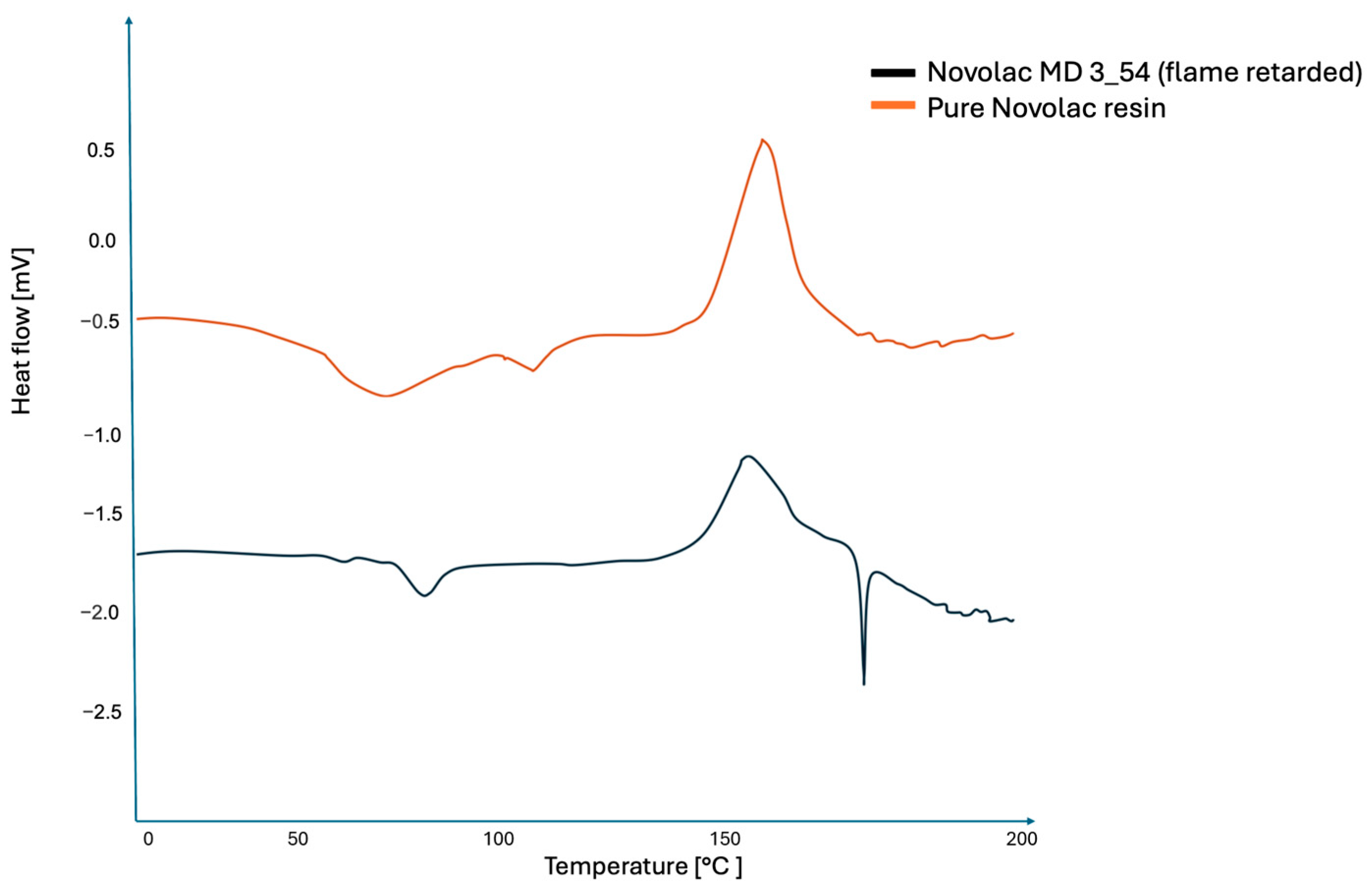
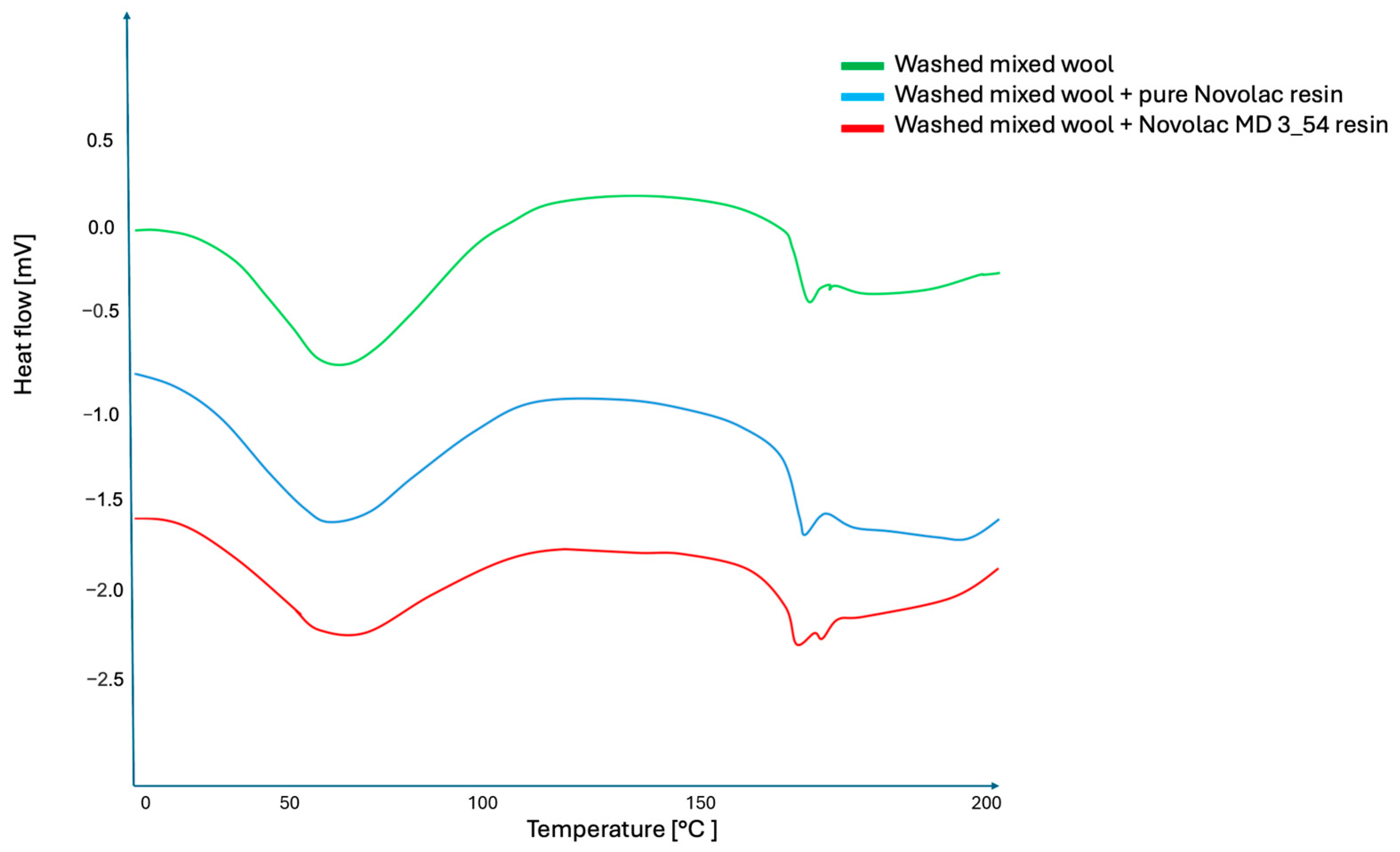
3.4.1. Differential Scanning Calorimetry (DSC) Tests
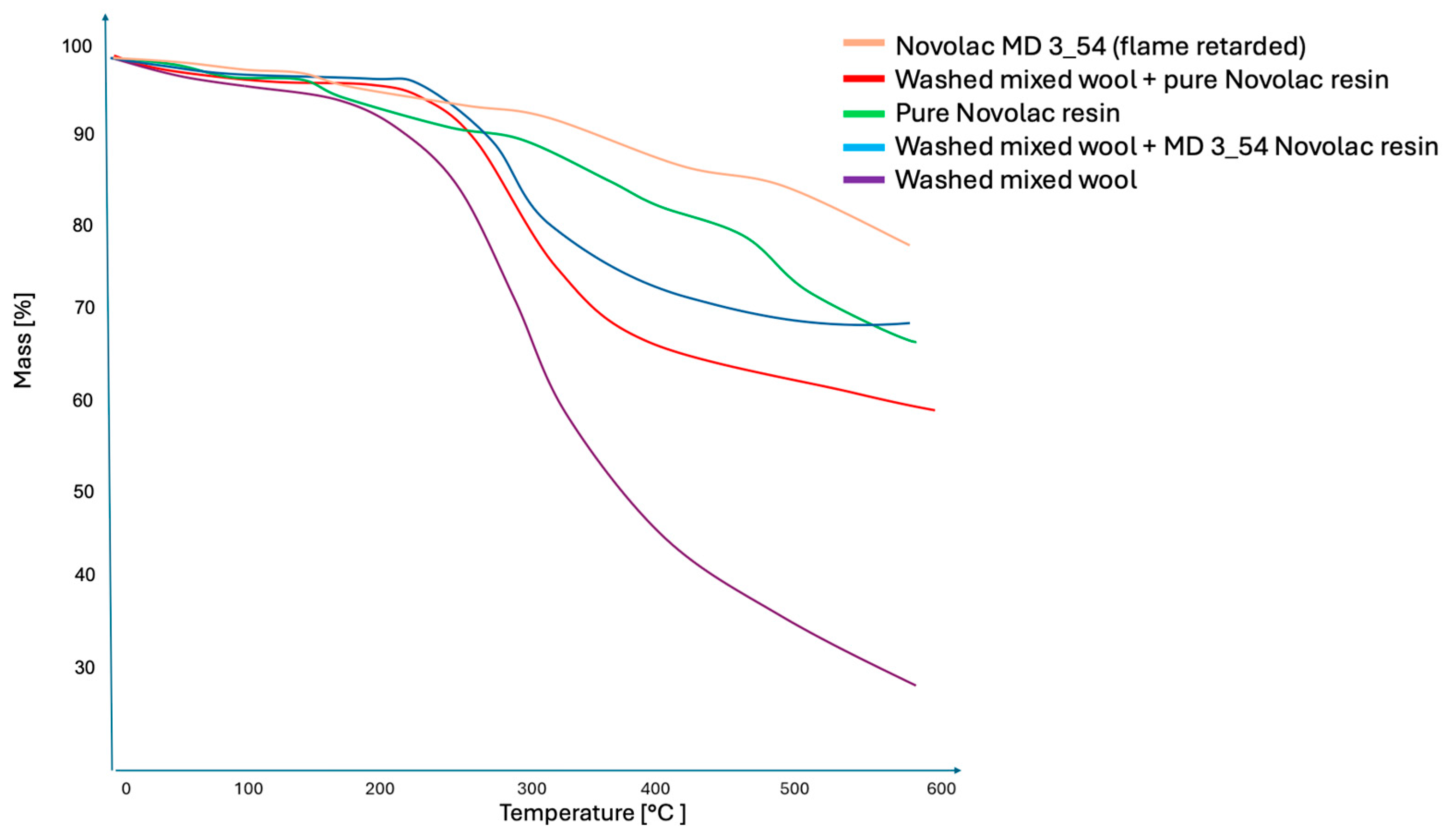
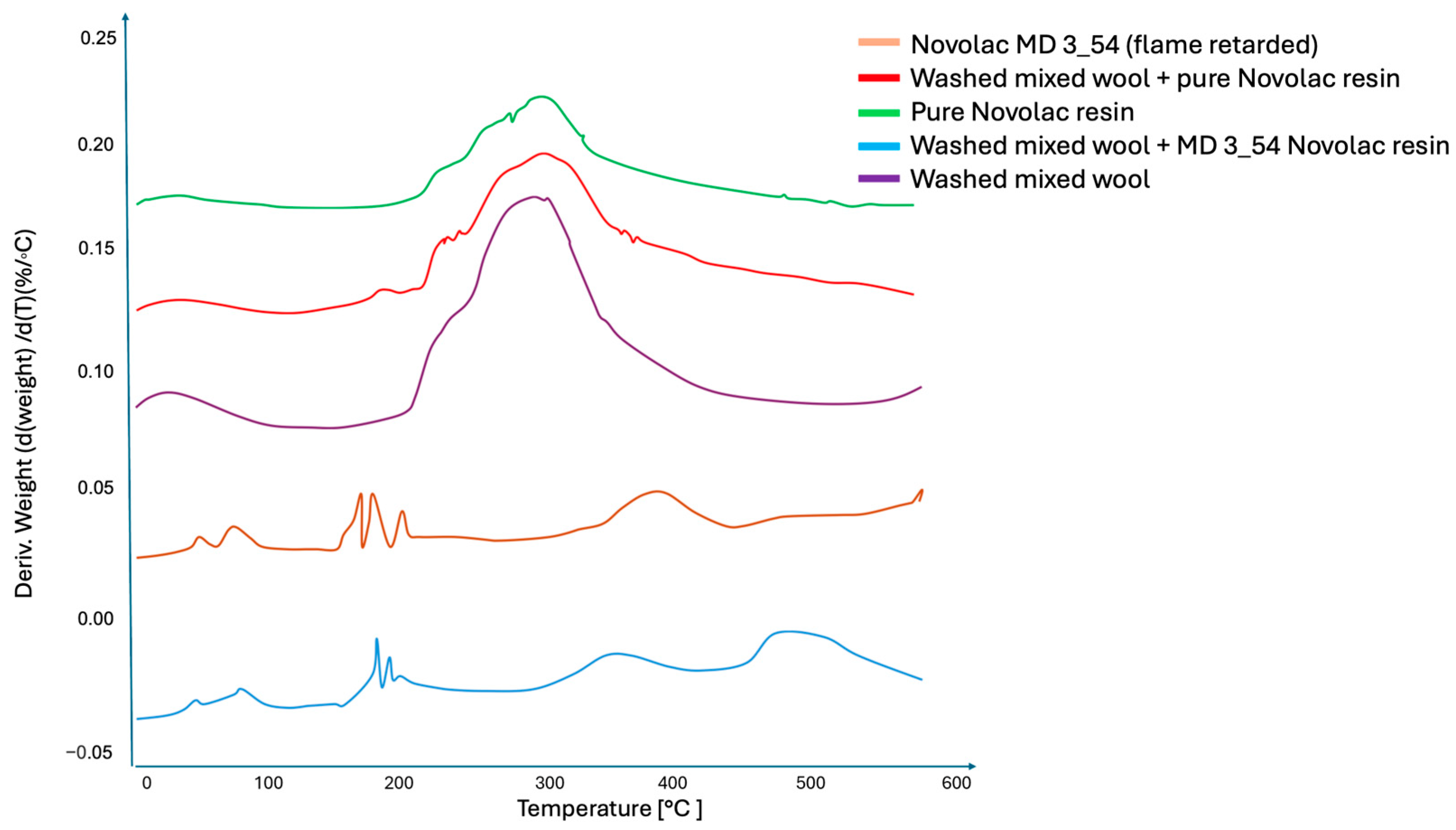
3.4.2. Thermogravimetric Analysis
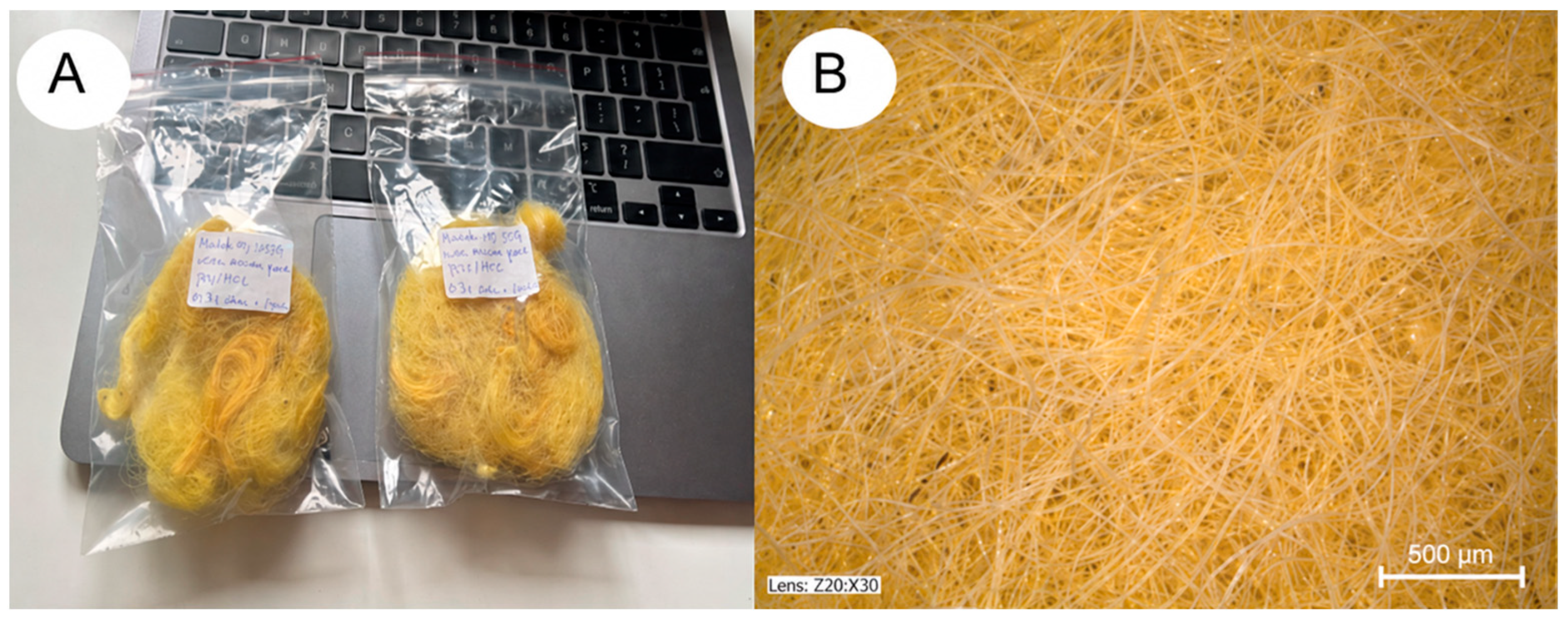
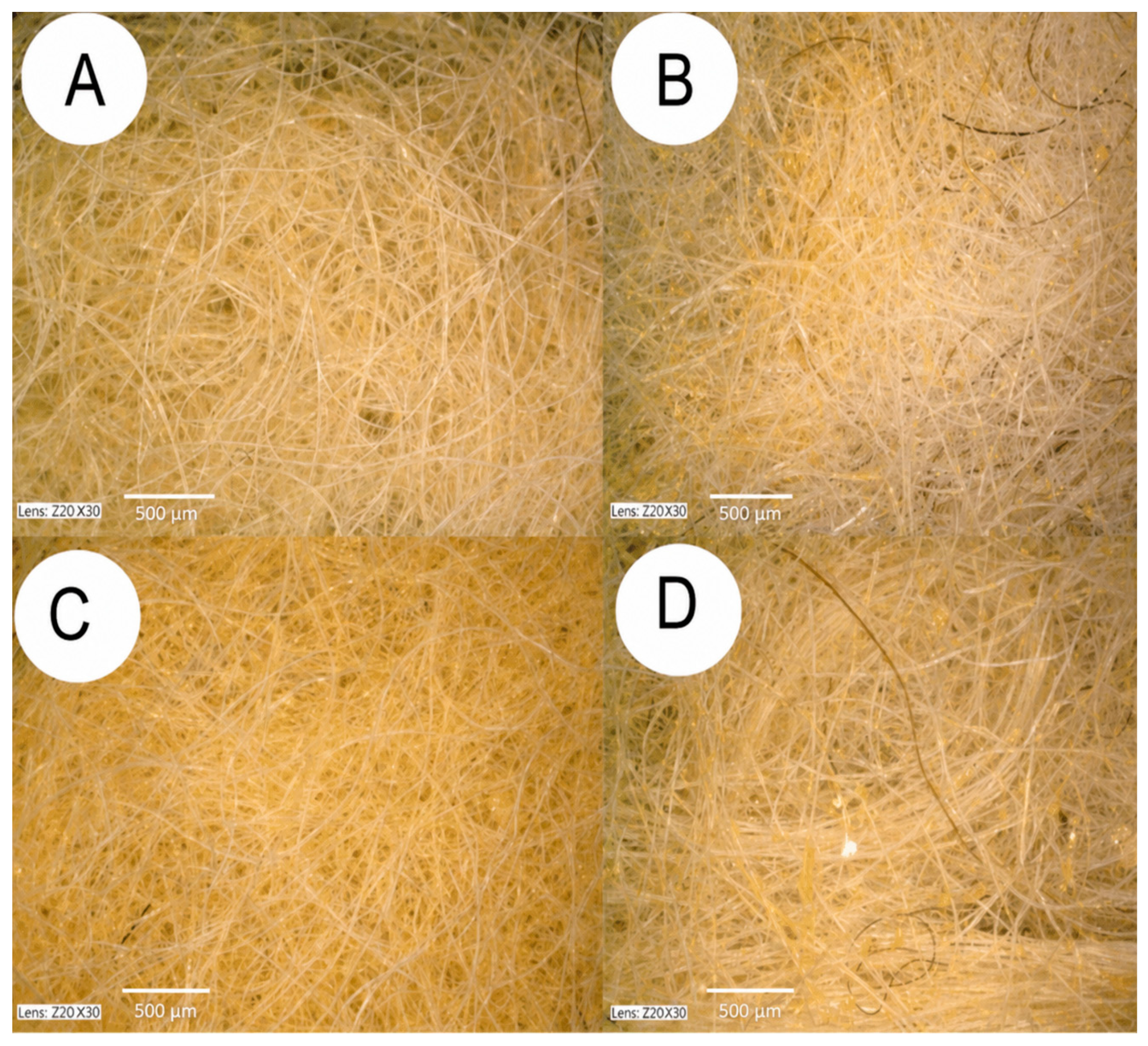
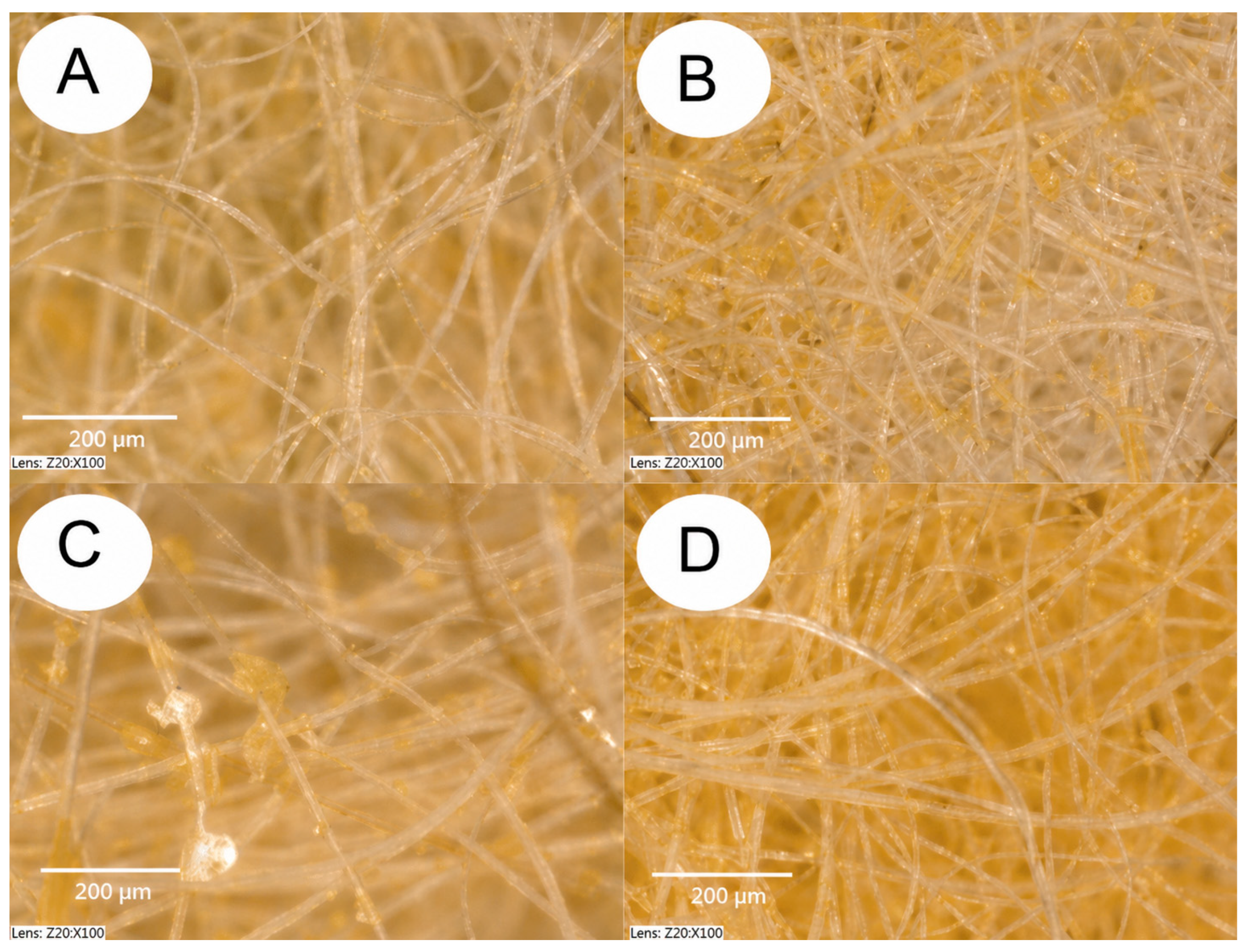
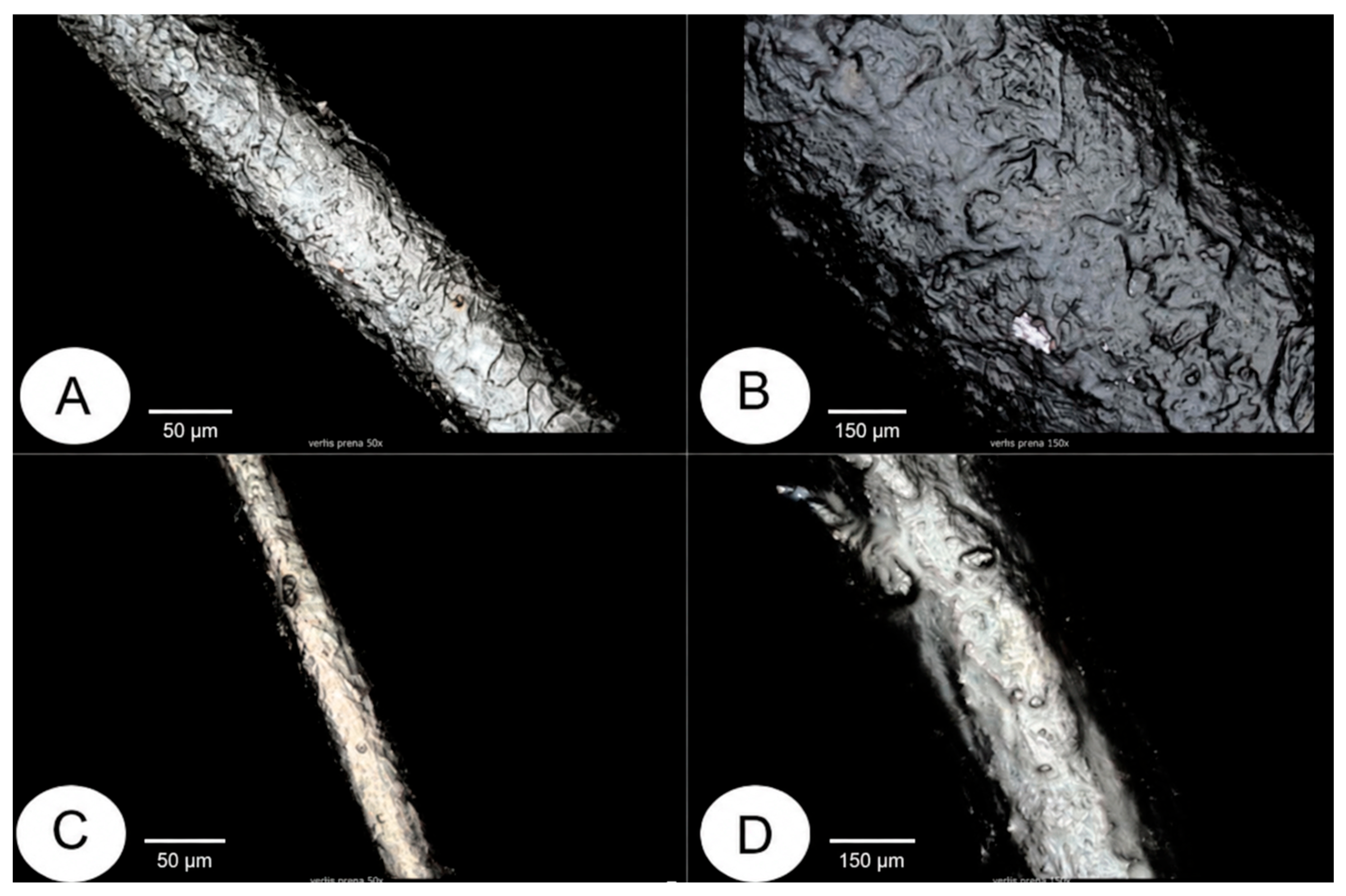
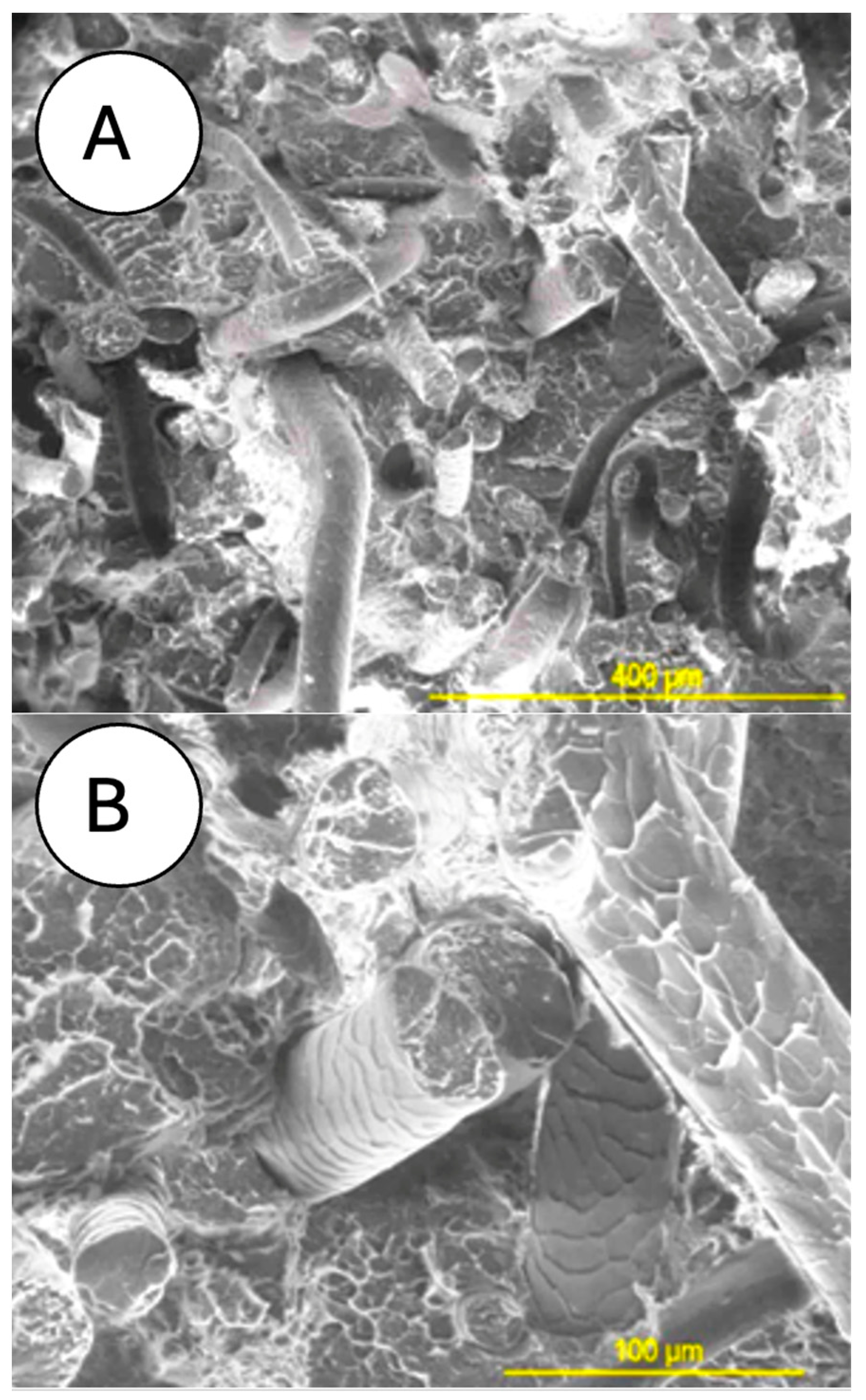
3.5. Fiber Morphology (Laser/Optical Microscopy)
3.6. Results of Thermal Conductivity Tests
4. Conclusions
Author Contributions
Funding
Data Availability Statement
Acknowledgments
Conflicts of Interest
References
- Caggiano, A. Energy in Construction and Building Materials. Materials 2023, 16, 504. [Google Scholar] [CrossRef] [PubMed]
- Vėjelis, S.; Vaitkus, S.; Skulskis, V.; Kremensas, A.; Kairytė, A. Performance Evaluation of Thermal Insulation Materials from Sheep’s Wool and Hemp Fibres. Materials 2024, 17, 3339. [Google Scholar] [CrossRef]
- Garcia, J.F.; Kranzl, L. Ambition Levels of Nearly Zero Energy Buildings (nZEB) Definitions: An Approach for Cross-Country Comparison. Buildings 2018, 8, 143. [Google Scholar] [CrossRef]
- Zandonella Callegher, C.; Grazieschi, G.; Wilczynski, E.; Oberegger, U.F.; Pezzutto, S. Assessment of Building Materials in the European Residential Building Stock: An Analysis at EU27 Level. Sustainability 2023, 15, 8840. [Google Scholar] [CrossRef]
- Superti, V.; Forman, T.V.; Houmani, C. Recycling Thermal Insulation Materials: A Case Study on More Circular Management of Expanded Polystyrene and Stonewool in Switzerland and Research Agenda. Resources 2021, 10, 104. [Google Scholar] [CrossRef]
- Neri, M.; Pilotelli, M.; Traversi, M.; Levi, E.; Piana, E.A.; Bannó, M.; Cuerva, E.; Pujadas, P.; Guardo, A. Conversion of End-of-Life Household Materials into Building Insulating Low-Cost Solutions for the Development of Vulnerable Contexts: Review and Outlook towards a Circular and Sustainable Economy. Sustainability 2021, 13, 4397. [Google Scholar] [CrossRef]
- Olsø, B.G.; Haukø, A.M.; Risholt, B. Experimental Study of Fire Exposed Expanded Polystyrene (EPS) Insulation Protected by Selected Coverings. Heliyon 2024, 10, e26309. [Google Scholar] [CrossRef]
- Dénes, T.-O.; Iştoan, R.; Tǎmaş-Gavrea, D.R.; Manea, D.L.; Hegyi, A.; Popa, F.; Vasile, O. Analysis of Sheep Wool-Based Composites for Building Insulation. Polymers 2022, 14, 2109. [Google Scholar] [CrossRef]
- Hegyi, A.; Bulacu, C.; Szilagyi, H.; Lăzărescu, A.V.; Meiţă, V.; Vizureanu, P.; Sandu, M. Improving Indoor Air Quality by Using Sheep Wool Thermal Insulation. Materials 2021, 14, 2443. [Google Scholar] [CrossRef] [PubMed]
- Korjenic, A.; Klarić, S.; Hadžić, A.; Korjenic, S. Sheep Wool as a Construction Material for Energy Efficiency Improvement. Energies 2015, 8, 5765–5781. [Google Scholar] [CrossRef]
- Szczecina, J.; Szczepanik, E.; Barwinek, J.; Szatkowski, P.; Niemiec, M.; Zhakypbekovich, A.I.; Molik, E. Sheep Wool as Biomass: Identifying the Material and Its Reclassification from Waste to Resource. Energies 2025, 18, 5185. [Google Scholar] [CrossRef]
- Hegyi, A.; Vermeșan, H.; Lăzărescu, A.-V.; Petcu, C.; Bulacu, C. Thermal Insulation Mattresses Based on Textile Waste and Recycled Plastic Waste Fibres, Integrating Natural Fibres of Vegetable or Animal Origin. Materials 2022, 15, 1348. [Google Scholar] [CrossRef]
- Fischer, H.; Korjenic, A. Hygrothermal Performance of Bio-Based Exterior Wall Constructions and Their Resilience under Air Leakage and Moisture Load. Buildings 2023, 13, 2650. [Google Scholar] [CrossRef]
- Vėjelis, S.; Skulskis, V.; Kremensas, A.; Vaitkus, S.; Kairytė, A. Performance of Thermal Insulation Material Produced from Lithuanian Sheep Wool. J. Nat. Fibers 2023, 20, 2237682. [Google Scholar] [CrossRef]
- Kicińska-Jakubowska, A.; Broda, J.; Zimniewska, M.; Bączek, M.; Mańkowski, J. Effect of Blend Composition on Barrier Properties of Insulating Mats Produced from Local Wool and Waste Bast Fibres. Materials 2023, 16, 459. [Google Scholar] [CrossRef] [PubMed]
- Parlato, M.C.M.; Porto, S.M.C. Organized Framework of Main Possible Applications of Sheep Wool Fibers in Building Components. Sustainability 2020, 12, 761. [Google Scholar] [CrossRef]
- Galaska, M.L.; Sqrow, L.D.; Wolf, J.D.; Morgan, A.B. Flammability Characteristics of Animal Fibers: Single Breed Wools, Alpaca/Wool, and Llama/Wool Blends. Fibers 2019, 7, 3. [Google Scholar] [CrossRef]
- Mattiello, S.; Guzzini, A.; Del Giudice, A.; Santulli, C.; Antonini, M.; Lupidi, G.; Gunnella, R. Physico-Chemical Characterization of Keratin from Wool and Chicken Feathers Extracted Using Refined Chemical Methods. Polymers 2023, 15, 181. [Google Scholar] [CrossRef] [PubMed]
- Richter, M.; Horn, W.; Juritsch, E.; Klinge, A.; Radeljic, L.; Jann, O. Natural Building Materials for Interior Fitting and Refurbishment—What about Indoor Emissions? Materials 2021, 14, 234. [Google Scholar] [CrossRef]
- Cheng, X.-W.; Guan, J.-P.; Chen, G.; Yang, X.-H.; Tang, R.-C. Adsorption and Flame Retardant Properties of Bio-Based Phytic Acid on Wool Fabric. Polymers 2016, 8, 122. [Google Scholar] [CrossRef]
- Atbir, A.; Taibi, M.; Aouan, B.; Khabbazi, A.; Ansari, O.; Cherkaoui, M.; Cherradi, T. Physicochemical and Thermomechanical Performances Study for Timahdite Sheep Wool Fibers Application in the Building’s Insulation. Sci. Rep. 2023, 13, 5038. [Google Scholar] [CrossRef]
- Sun, M.; Chen, M.; Li, S.; Dai, C.; Chen, Y. Study on Structure and Properties of Hu Sheep Wool. J. Nat. Fibers 2022, 20, 2160405. [Google Scholar] [CrossRef]
- Gül, S.; Dikme, M. Investigation of Some Physical and Morphological Characteristics of Wool of Malya Sheep. J. Nat. Fibers 2023, 20, 2166646. [Google Scholar] [CrossRef]
- Adnan, M.A. Synthesis of Polyurethane Based on (Resol Novolac Resin-Polyethylene Glycol) Copolymer and Their Analytical Study. J. Kufa-Phys. 2019, 11, 133–147. [Google Scholar] [CrossRef]
- Szatkowski, P.; Barwinek, J.; Zhakypbekovich, A.I.; Szczecina, J.; Niemiec, M.; Pielichowska, K.; Molik, E. The Use of Sheep Wool Collected from Sheep Bred in the Kyrgyz Republic as a Component of Biodegradable Composite Material. Appl. Sci. 2025, 15, 13054. [Google Scholar] [CrossRef]
- Tiuc, A. A Novel Acoustic Sandwich Panel Based on Sheep Wool. Coatings 2020, 10, 148. [Google Scholar] [CrossRef]
- Semitekolos, D.; Pardou, K.; Georgiou, P.; Koutsouli, P.; Bizelis, I.; Zoumpoulakis, L. Investigation of Mechanical and Thermal Insulating Properties of Wool Fibres in Epoxy Composites. Polym. Polym. Compos. 2021, 29, 1412–1421. [Google Scholar] [CrossRef]
- Jóźwiak-Niedźwiedzka, D.; Fantilli, A.P. Wool-Reinforced Cement Based Composites. Materials 2020, 13, 3590. [Google Scholar] [CrossRef] [PubMed]
- Pederneiras, C.M.; Veiga, R.; de Brito, J. Rendering Mortars Reinforced with Natural Sheep’s Wool Fibers. Materials 2019, 12, 3648. [Google Scholar] [CrossRef] [PubMed]
- Tripathy, P.; Biswas, S. Mechanical and Thermal Properties of Mineral Fiber Based Polymeric Nanocomposites: A Review. Polym.-Plast. Technol. Mater. 2022, 61, 1385–1410. [Google Scholar] [CrossRef]
- Domínguez, J.C.; Alonso, M.V.; Oliet, M.; Rojo, E.; Rodríguez, F. Kinetic Study of a Phenolic-Novolac Resin Curing Process by Rheological and DSC Analysis. Thermochim. Acta 2010, 498, 39–44. [Google Scholar] [CrossRef]
- Zhang, H.; Wang, B.; Wang, Y.; Zhou, H. Novolac/Phenol-Containing Phthalonitrile Blends: Curing Characteristics and Composite Mechanical Properties. Polymers 2020, 12, 126. [Google Scholar] [CrossRef] [PubMed]
- Sadroddini, M. Enhanced Mechanical and Thermal Properties of Polyester/Glass/Sheep Wool Fiber Hybrid Composites by Successful Replacement Glass with Wool. Sci. Rep. 2026, 16, 2662. [Google Scholar] [CrossRef]
- Simpson, A.; Rattigan, I.; Kalavsky, E.; Parr, G. Thermal Conductivity and Conditioning of Grey Expanded Polystyrene Foams. Cell. Polym. 2020, 39, 238–262. [Google Scholar] [CrossRef]
- Awoyera, P.O.; Olofinnade, O.; Olojede, S.; Onyelowe, K. Enhancing the Thermal Performance of Expanded Polystyrene with Radiant Barrier Foil Boards for Improved Building Insulation. Sci. Rep. 2025, 15, 21567. [Google Scholar] [CrossRef]
- Hill, C.; Norton, A.; Dibdiakova, J. A Comparison of the Environmental Impacts of Different Categories of Insulation Materials. Energy Build. 2018, 162, 12–20. [Google Scholar] [CrossRef]
- Füchsl, S.; Rheude, F.; Röder, H. Life Cycle Assessment (LCA) of Thermal Insulation Materials: A Critical Review. Clean. Mater. 2022, 5, 100119. [Google Scholar] [CrossRef]
- Schulte, M.; Lewandowski, I.; Pude, R.; Wagner, M. Comparative life cycle assessment of bio-based insulation materials: Environmental and economic performances. GCB Bioenergy 2021, 13, 979–998. [Google Scholar] [CrossRef]
- Islam, S.; Bhat, G.; Mani, S. Life cycle assessment of thermal insulation materials produced from waste textiles. J. Mater. Cycles Waste Manag. 2024, 26, 1071–1085. [Google Scholar] [CrossRef]



| Element | Element Content in Washed Sheep Wool Fibers [mg/kg] |
|---|---|
| Aluminum (Al) | 27.23 |
| Arsenic (As) | 0.14 |
| Calcium (Ca) | 2003.42 |
| Iron (Fe) | 65.02 |
| Potassium (K) | 1016.68 |
| Magnesium (Mg) | 339.96 |
| Phosphorus (P) | 113.07 |
| Lead (Pb) | 0.43 |
| Sulphur (S) | 18,315.96 |
| Zinc (Zn) | 72.75 |
| Element | Element Content in Washed Sheep Wool Fibers [%] |
|---|---|
| Nitrogen (N) | 14.82 |
| Carbon (C) | 47.80 |
| Sample | Ef | Sx1 | Sx2 | Sx3 | SfM | efM |
|---|---|---|---|---|---|---|
| [MPa] | [MPa] | [MPa] | [MPa] | [MPa] | [%] | |
| Washed mixed wool + pure novolac resin (MWP) | 1425.50 +/− 71.28 | 15.66 +/− 0.78 | 30.63 +/− 1.53 | 45.03 +/− 2.25 | 51.75 +/− 2.59 | 4.30 +/− 0.22 |
| Washed mixed wool (MW) | 117.29 +/− 5.86 | 1.40 +/− 0,07 | 2.77 +/− 0.14 | 4.05 +/− 0.20 | 4.45 +/− 0.22 | 3.36 +/− 0.17 |
| Washed mixed wool + MD 3_54 Novolac resin (MW3_54) | 843.73 +/− 42.19 | 10.09 +/− 0.50 | 23.85 +/− 1.19 | 37.72 +/− 1.89 | 48.16 +/− 2.41 | 4.37 +/− 0.22 |
| Sample | Ef | Efb | WfB |
|---|---|---|---|
| [MPa] | [%] | [Nmm] | |
| Washed mixed wool + MD 3_54 novolac resin (MW3_54) | 18.00 +/− 0.90 | 50.15 +/− 2.51 | 2854.97 +/− 142.75 |
| Washed mixed wool + pure novolac resin (MWP) | 25,00 +/− 1.25 | 30.22 +/− 1.51 | 4346.06 +/− 217.303 |
| Washed mixed wool (MW) | 0.72 +/− 0.04 | 105.23 +/− 5.26 | 245.88 +/− 12.29 |
| Sample Name | Temp. Max Peak of Dehydration Wool [°C] | Heat of Evaporation [J/g] | Temp. of Start Degradation [°C] | Resin Initial Crosslinking Temperature [°C] | Resin Crosslinking Energy [J/g] | Melting Start Temperature [°C] | Max Melting Energy of Resin [J/g] |
|---|---|---|---|---|---|---|---|
| Pure Novolac resin | - | - | - | 139.82 | 48.62 | 45.33 | 18.31 |
| Novolac MD 3_54 | - | - | - | 137.99 | 42.55 | 50.06 | 8.80 |
| Washed mixed wool | 78.56 | 173.74 | 218.58 | - | - | - | - |
| Washed mixed wool + pure Novolac resin | 72.77 | 175.34 | 215.17 | - | - | - | - |
| Washed mixed wool + MD 3_54 Novolac resin | 76.04 | 191.20 | 216.19 | - | - | - | - |
| Sample Name | Mass Loss at Temp. 100 °C [%] | Weight Loss During Processing [%] | Degradation Onset Temperature [°C] | Temperature of the Onset of Major Degradation [°C] | Maximum DTG Peak of the Degradation Process [°C] | Residue [%] |
|---|---|---|---|---|---|---|
| Washed mixed wool | 4.31 | 5.68 | 247.15 | 229.11 | 322.55 | 27.68 |
| Pure novolac resin | 0.74 | 2.22 | 202.11 | 180.85 | 208.09 | 68.50 |
| Novolac MD 3_54 | 0.78 | 2.20 | 204.32 | 189.34 | 210.53 | 70.21 |
| Washed mixed wool + pure novolac resin | 1.37 | 2.27 | 241.44 | 188.59 | 331.19 | 62.14 |
| Washed mixed wool + MD 3_54 novolac resin | 0.92 | 1.42 | 251.13 | 236.91 | 329.42 | 79.03 |
| Sample | Thermal Conductivity |
|---|---|
| [W/m*K] | |
| Washed mixed wool + pure novolac resin | 0.071 +/− 0.005 |
| Washed mixed wool | 0.061 +/− 0.005 |
| Washed mixed wool + MD 3_54 novolac resin | 0.074 +/− 0.006 |
| Expanded polystyrene | 0.04 [34] |
Disclaimer/Publisher’s Note: The statements, opinions and data contained in all publications are solely those of the individual author(s) and contributor(s) and not of MDPI and/or the editor(s). MDPI and/or the editor(s) disclaim responsibility for any injury to people or property resulting from any ideas, methods, instructions or products referred to in the content. |
© 2026 by the authors. Licensee MDPI, Basel, Switzerland. This article is an open access article distributed under the terms and conditions of the Creative Commons Attribution (CC BY) license.
Share and Cite
Barwinek, J.; Szatkowski, P.; Szczecina, J.; Borowicz, W.; Czulak, A.; Molik, E. Physicochemical and Thermo–Mechanical Characterization of Sheep Wool/Phenolic Novolac Panels for Sustainable Thermal Insulation. Materials 2026, 19, 2488. https://doi.org/10.3390/ma19122488
Barwinek J, Szatkowski P, Szczecina J, Borowicz W, Czulak A, Molik E. Physicochemical and Thermo–Mechanical Characterization of Sheep Wool/Phenolic Novolac Panels for Sustainable Thermal Insulation. Materials. 2026; 19(12):2488. https://doi.org/10.3390/ma19122488
Chicago/Turabian StyleBarwinek, Jakub, Piotr Szatkowski, Julita Szczecina, Wiktoria Borowicz, Andrzej Czulak, and Edyta Molik. 2026. "Physicochemical and Thermo–Mechanical Characterization of Sheep Wool/Phenolic Novolac Panels for Sustainable Thermal Insulation" Materials 19, no. 12: 2488. https://doi.org/10.3390/ma19122488
APA StyleBarwinek, J., Szatkowski, P., Szczecina, J., Borowicz, W., Czulak, A., & Molik, E. (2026). Physicochemical and Thermo–Mechanical Characterization of Sheep Wool/Phenolic Novolac Panels for Sustainable Thermal Insulation. Materials, 19(12), 2488. https://doi.org/10.3390/ma19122488